Composting Calculator: Genius Carbon-Nitrogen & Bin Size Planner
Find out your pile’s real carbon-to-nitrogen ratio, whether it’s too wet or too dry, and how much finished compost you’ll actually get, using the same formula composting scientists use.

Never miss an update — choose FarmFoodFamily as your preferred source on Google.
How it works: Tap the button below to open Google’s settings page, then check the box next to FarmFoodFamily.
Tap the checkbox to turn it blue — that’s how you know it’s set.
Composting Calculator
Add every material going into your pile, and get a real weighted carbon:nitrogen ratio, moisture check, bin-size guidance, and a finished-compost estimate, sourced from Cornell Waste Management Institute’s own formula.
Your Pile, Analyzed
Carbon:nitrogen ratios and the weighted-mixture formula are sourced from Cornell Waste Management Institute’s “On-Farm Composting Handbook” (Richard & Trautmann). This calculator assumes a standard ~48% carbon content by dry weight for organic materials generally, a simplifying convention used across composting science, and derives each material’s nitrogen percentage from its published C:N ratio. Moisture and bulk-density figures are industry-standard estimates aggregated from multiple extension sources, not single-study figures, since they vary with how tightly material is packed. Shrinkage and timeline ranges are industry-standard estimates. This tool is a planning guide, not a lab analysis.
Quick Answer
A composting calculator estimates your pile’s carbon-to-nitrogen ratio by weighing how much “brown” material (dry leaves, cardboard, straw) and “green” material (grass clippings, food scraps, coffee grounds) you’re adding, then checking that ratio against the ideal range of 25 to 35 to 1. Most home guidance simplifies this to “3 parts browns to 1 part green by volume,” but the real math, developed by Cornell Waste Management Institute, also accounts for each material’s moisture content, since a pile’s moisture matters just as much as its carbon and nitrogen balance. Compost needs at least 1 cubic yard (a 3-foot cube) to heat up properly, moisture around 50 to 60 percent (like a wrung-out sponge), and finished compost typically ends up at 30 to 50 percent of your starting volume. Hot composting takes 4 to 8 weeks, cold composting 6 to 18 months, and vermicomposting 8 to 12 weeks.
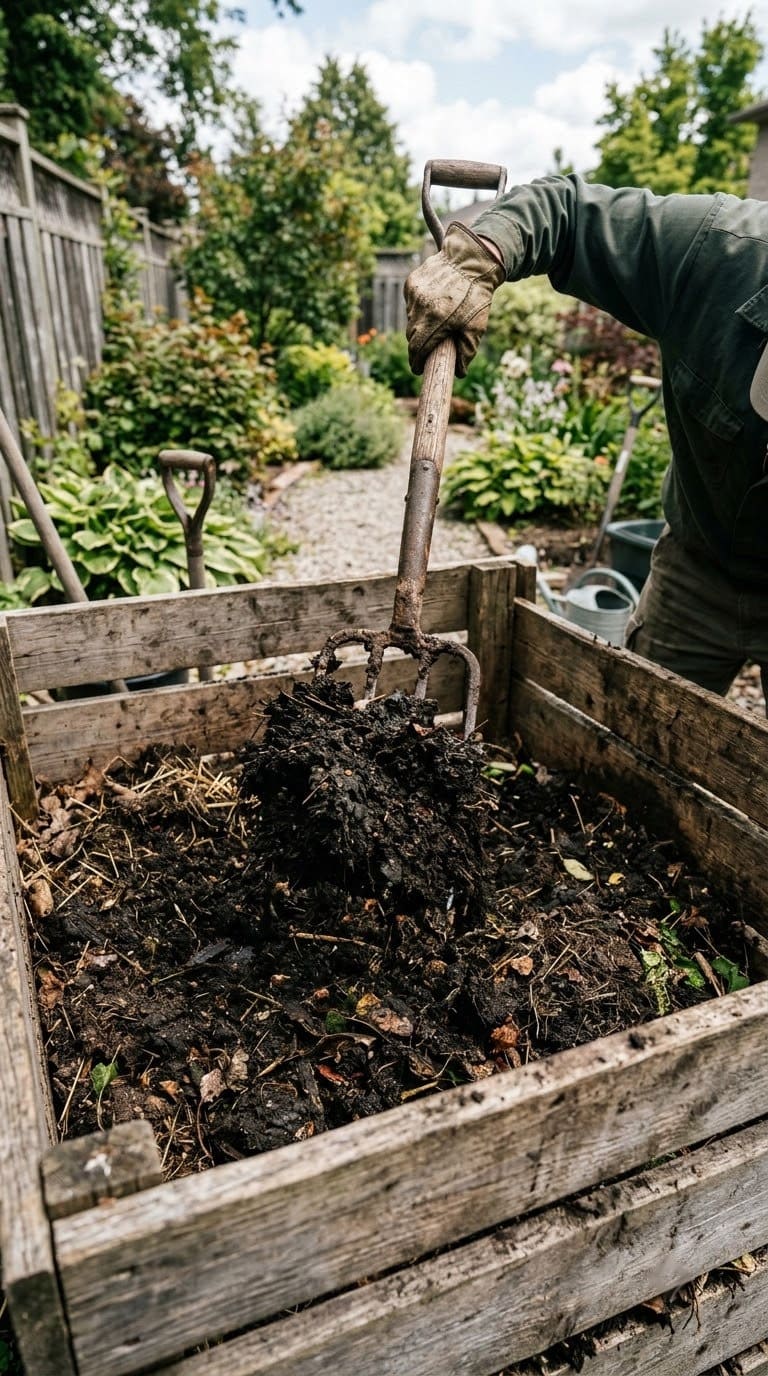
Why Most Compost Calculators Get the Ratio Wrong
Search for a compost ratio calculator and you’ll mostly find one of two things. One is a simple “3 parts brown to 1 part green” rule with no real math behind it. The other is a scientific tool that asks you to already know the exact carbon and nitrogen percentages of your materials, numbers no home composter has on hand.
Neither one works well alone. The volume rule is a fine starting point, but it misses how much materials vary. Cardboard’s carbon-to-nitrogen ratio runs about 30 times higher than grass clippings.
This calculator runs the real formula instead, built by Cornell Waste Management Institute for exactly this problem. Pick your materials from a list, and you never have to know a lab percentage yourself.


How This Calculator Works
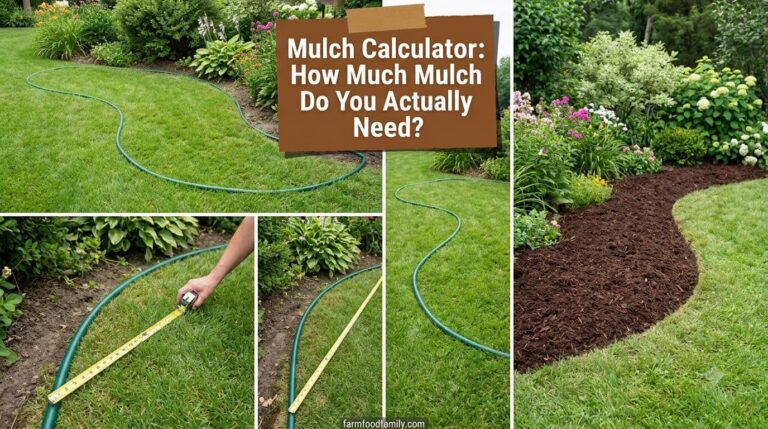
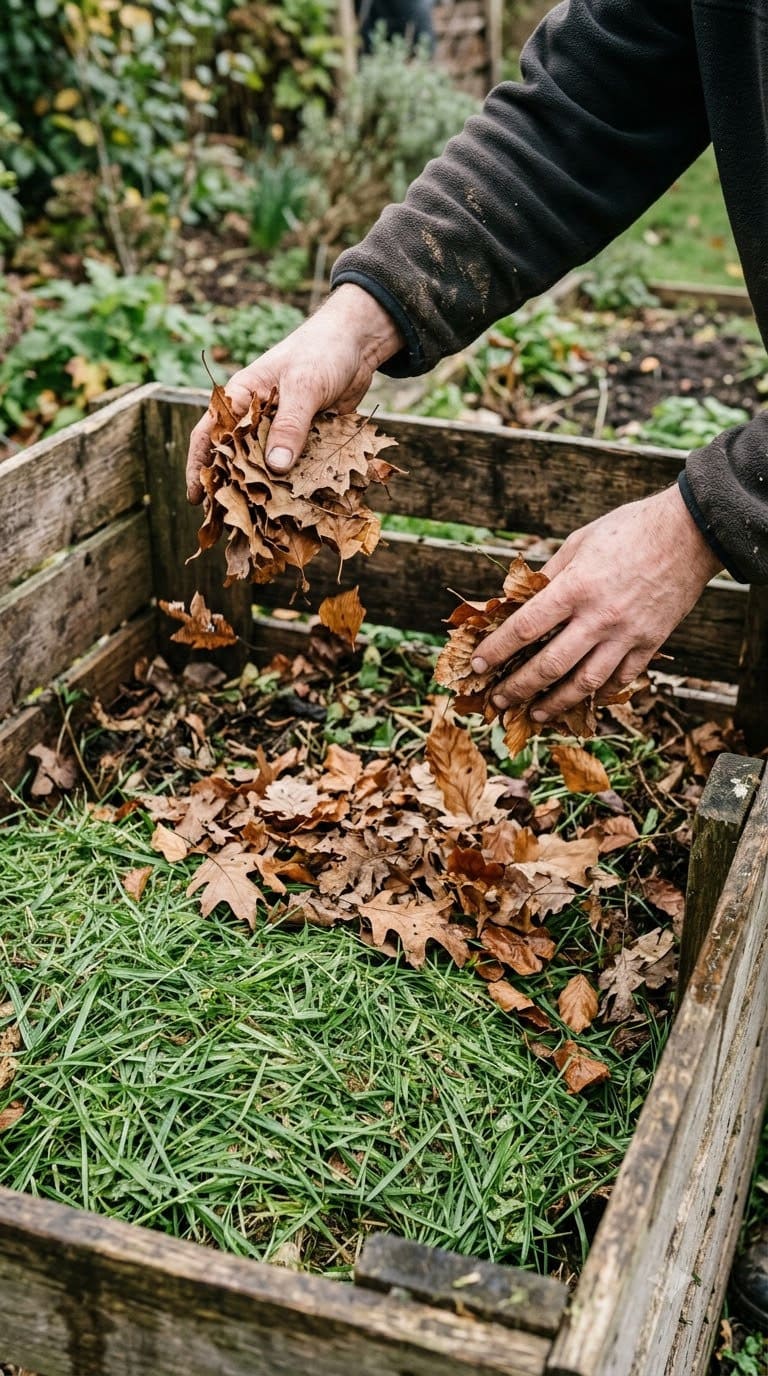
Step 1: Pick your materials and volumes. Choose from common browns and greens, and enter how much of each you’re adding in cubic feet. A 5-gallon bucket is about 0.7 cubic feet, and a standard wheelbarrow load is roughly 6 cubic feet.
Step 2: The calculator converts volume to weight. Each material has a different bulk density, wet grass clippings weigh far more per cubic foot than dry leaves. This conversion is what lets the calculator work from what you can actually measure at home.
Answer 4 quick questions and get matched to the exact fix for your yard — drainage, budget, layout, or something else entirely.
Take the Free QuizStep 3: It applies Cornell’s weighted carbon-to-nitrogen formula. Rather than just averaging C:N ratios, the real formula weighs each material’s contribution by its dry mass, correcting for moisture content along the way. This is the same math behind the most rigorous compost calculators used by researchers and composting facilities.
Step 4: Moisture gets checked separately. A mix can have a perfect C:N ratio and still fail if it’s too wet or too dry. This calculator checks both, since Cornell’s own research shows they don’t always point in the same direction.
Where the Numbers Actually Come From
This calculator uses a standard simplifying assumption from composting science: most organic materials run close to 48 percent carbon by dry weight, whether it’s a dry leaf or a grass clipping. Carbon content barely varies across plant-based material.
Nitrogen is what actually drives the difference in C:N ratio between materials. So instead of needing a lab test, the calculator derives each material’s nitrogen percentage from its published C:N ratio, using that steady 48 percent carbon figure as the anchor.
This is the same shortcut composting researchers use when exact lab data isn’t available for a specific material. It won’t be lab-precise, but it’s far more accurate than a flat volume rule that ignores material differences entirely.
Understanding Your C:N Ratio Results
| Material | Type | Approx. C:N ratio |
|---|---|---|
| Dry leaves | Brown | 40-80:1 |
| Straw | Brown | 50-150:1 |
| Shredded cardboard | Brown | 600:1 |
| Wood chips | Brown | 200-1,300:1 |
| Grass clippings | Green | 10-25:1 |
| Fruit and vegetable scraps | Green | 10-50:1 |
| Coffee grounds | Green | 20:1 |
| Fresh chicken manure | Green | 7-10:1 |
A ratio under 20:1 usually means too much nitrogen. Expect an ammonia smell, and add more browns.
A ratio over 40:1 means too much carbon. The pile will break down slowly, sometimes taking a year or more for straight wood or cardboard alone. The sweet spot of 25 to 35:1 gives microbes what they need without excess of either.
Most yard problems trace back to one specific, fixable cause. Find yours in 4 quick questions.
Take the Free Quiz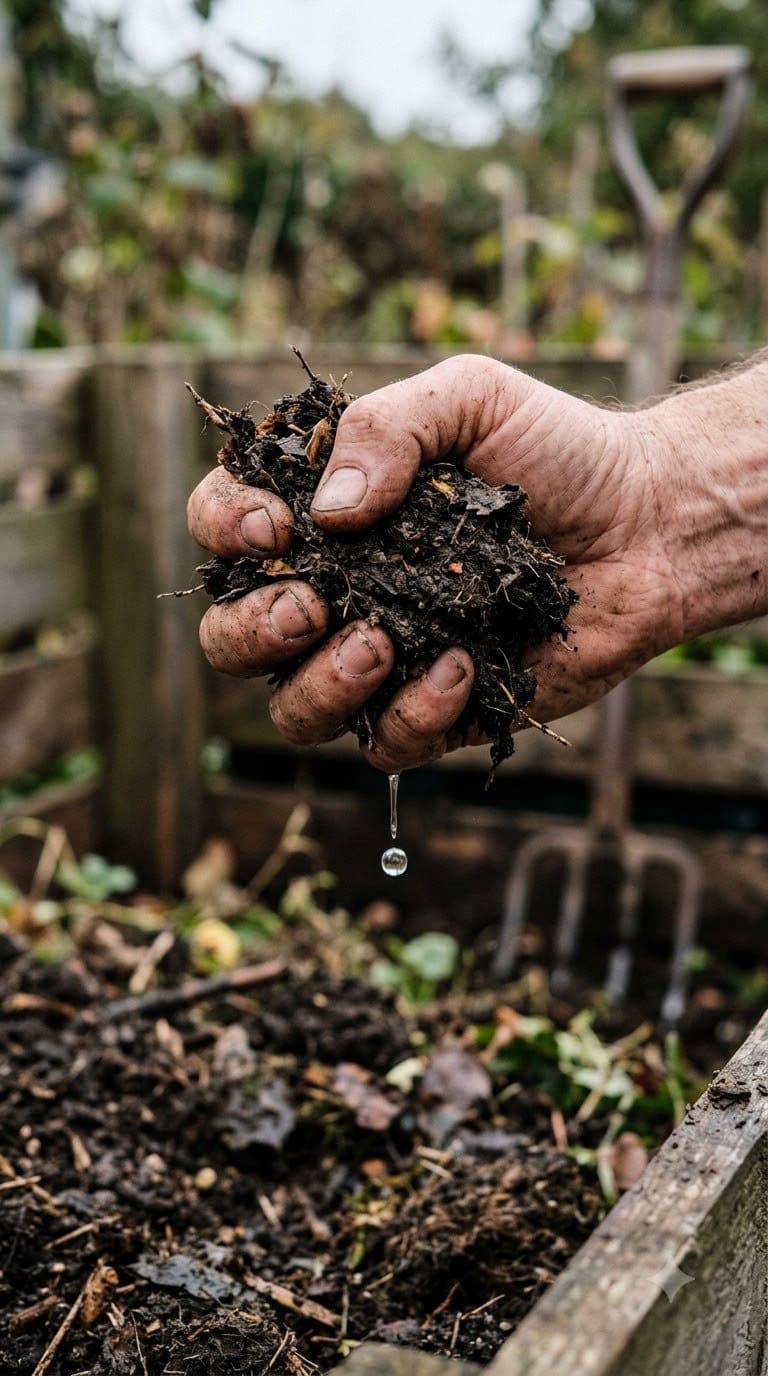
Why Moisture Matters Just as Much as Carbon and Nitrogen
A well-balanced C:N ratio doesn’t guarantee a healthy pile. Cornell’s own research found that when a mix runs wet, moisture becomes the priority to fix first, even if the C:N ratio would technically call for less material.
The standard target is 50 to 60 percent moisture, commonly described as feeling like a wrung-out sponge. Squeeze a handful, and only a drop or two of water should come out.
Materials vary enormously here too. Fresh grass clippings run around 80 percent moisture, while dry leaves sit closer to 40 percent, which is exactly why leaves are such a reliable balancing material when a pile runs too wet.
How Big Should Your Pile Actually Be?
Size matters more than most new composters expect. A pile smaller than about 1 cubic yard, roughly a 3-foot cube, struggles to hold in enough heat to reach the internal temperatures that speed up decomposition and kill weed seeds.
On the other end, piles larger than about 5 cubic yards get genuinely hard to turn by hand and can develop compacted, oxygen-starved pockets in the center. If your pile is outgrowing that range, splitting it into two active piles works better than one oversized one.
This calculator checks your total input volume against both thresholds and lets you know where you land.
How Much Finished Compost Will You Actually Get?
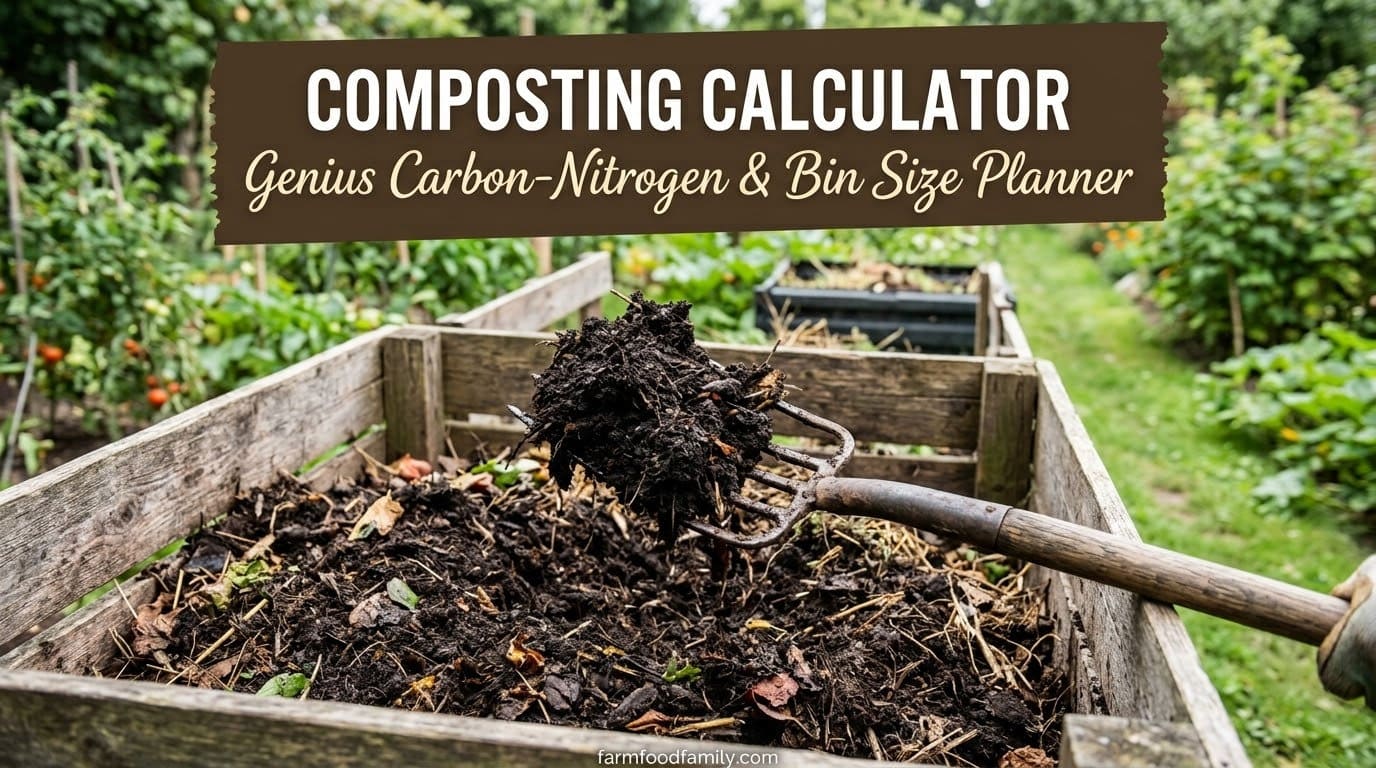
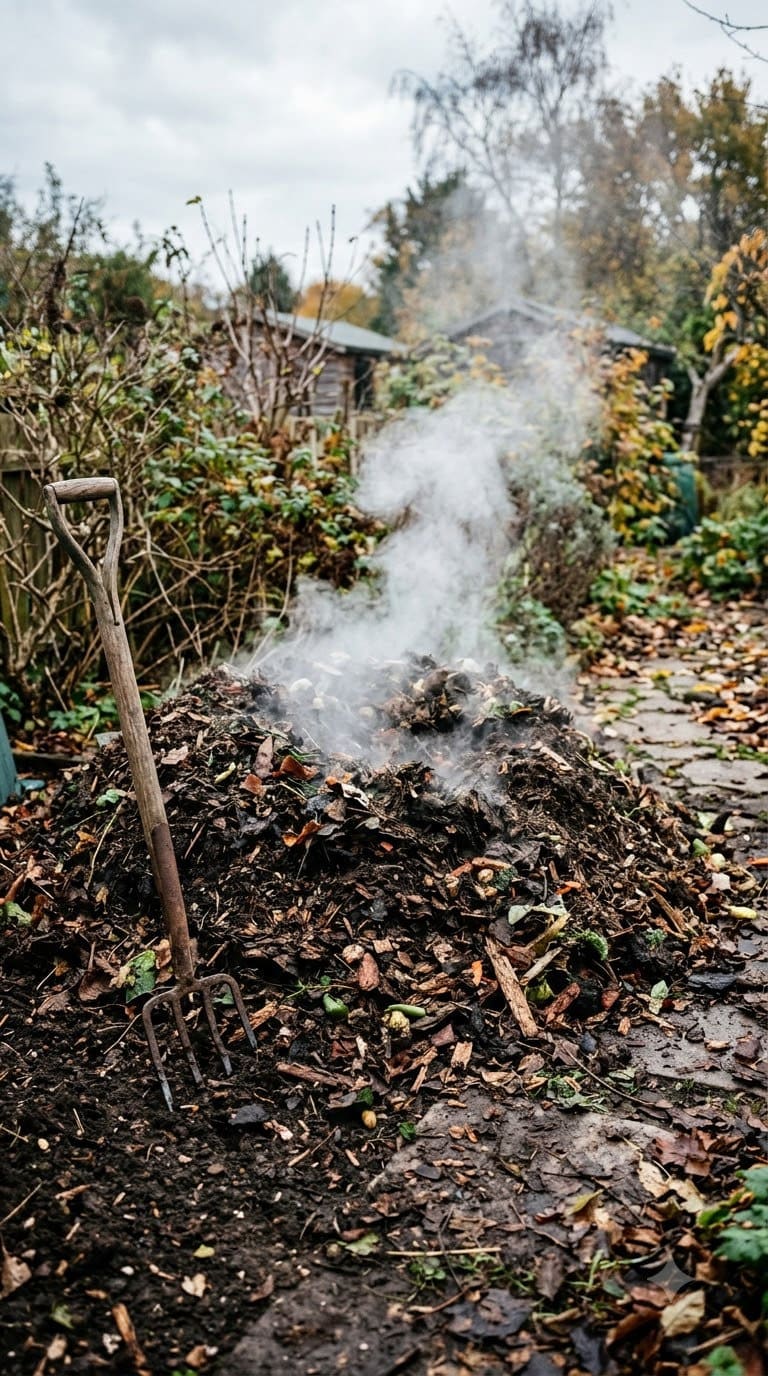
This surprises almost every new composter. As organic material breaks down, water leaves as vapor and solid structure collapses, so finished compost typically ends up at just 30 to 50 percent of your starting volume.
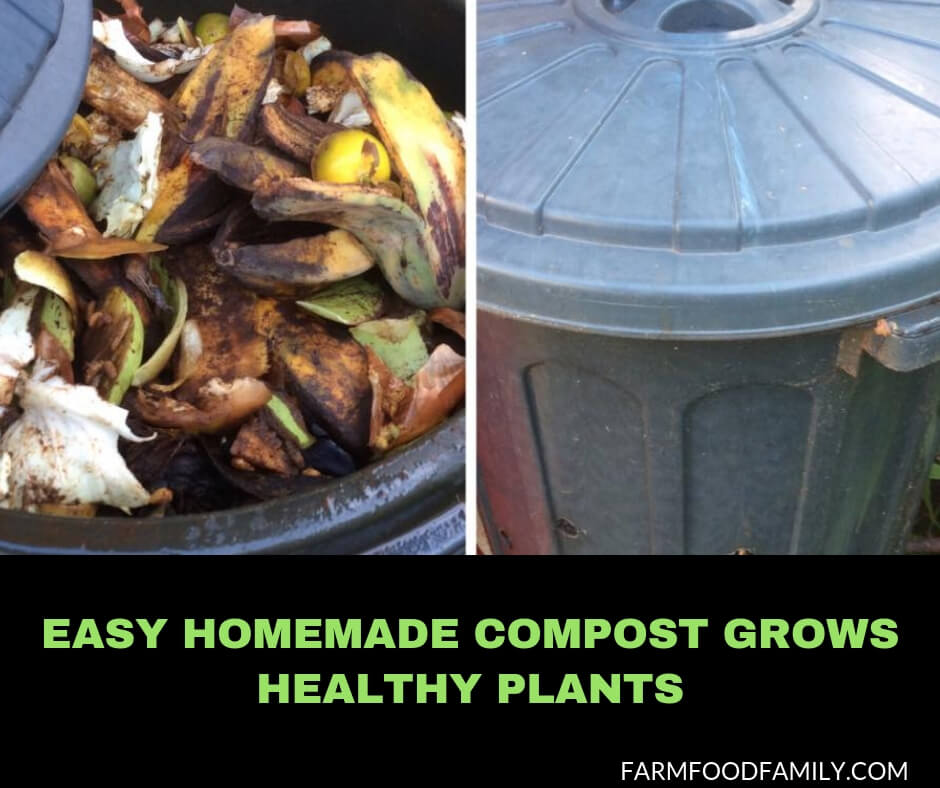
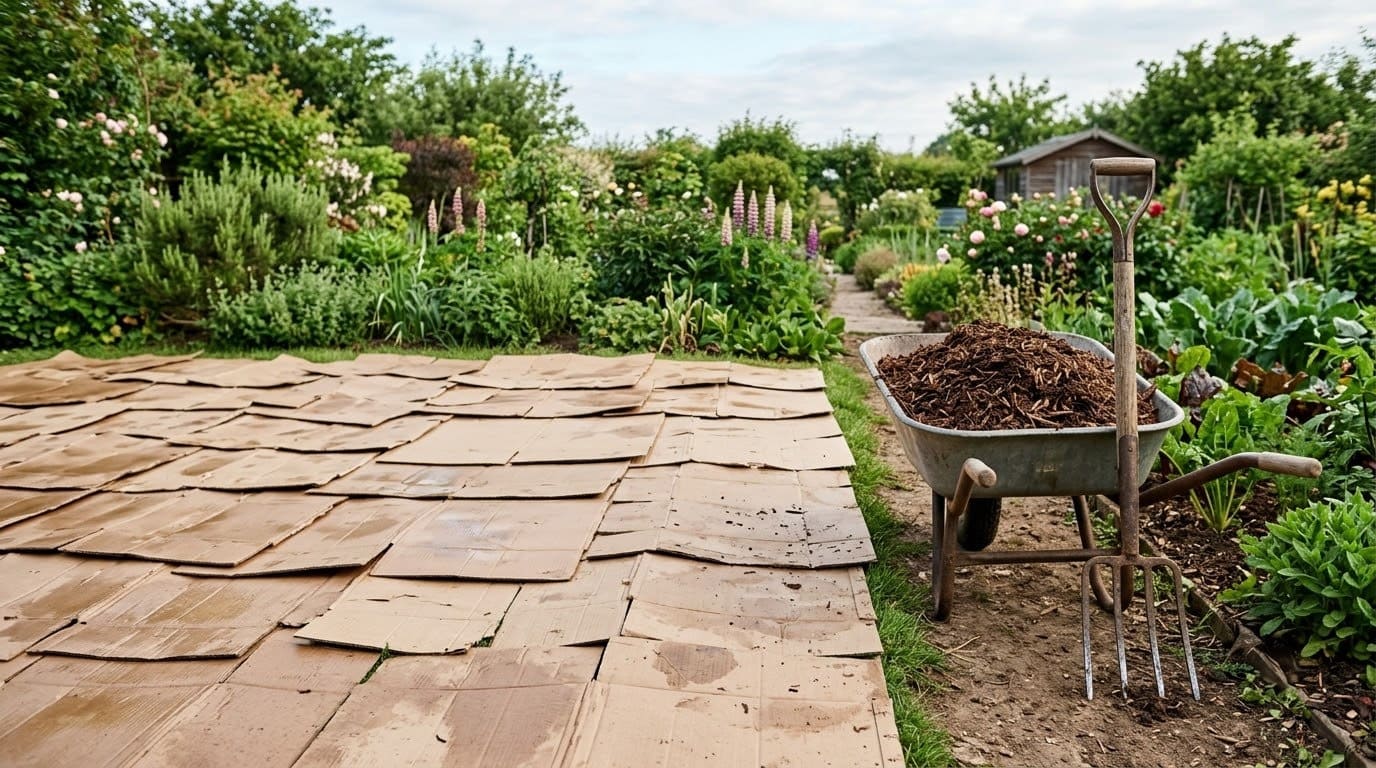
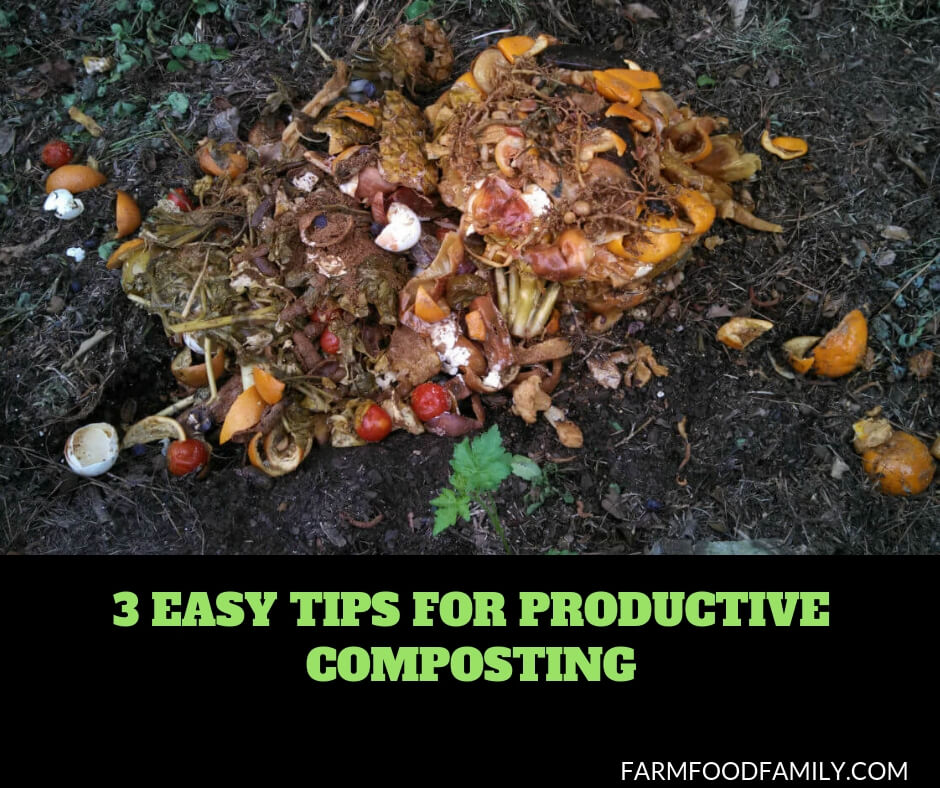
A full wheelbarrow of raw materials might produce less than half a wheelbarrow of finished compost. That’s not a sign anything went wrong. It’s simply what decomposition does, and it’s worth planning your pile size around the finished amount you actually want, not the other way around.
Hot, Cold, or Worms: Which Method Fits Your Timeline?
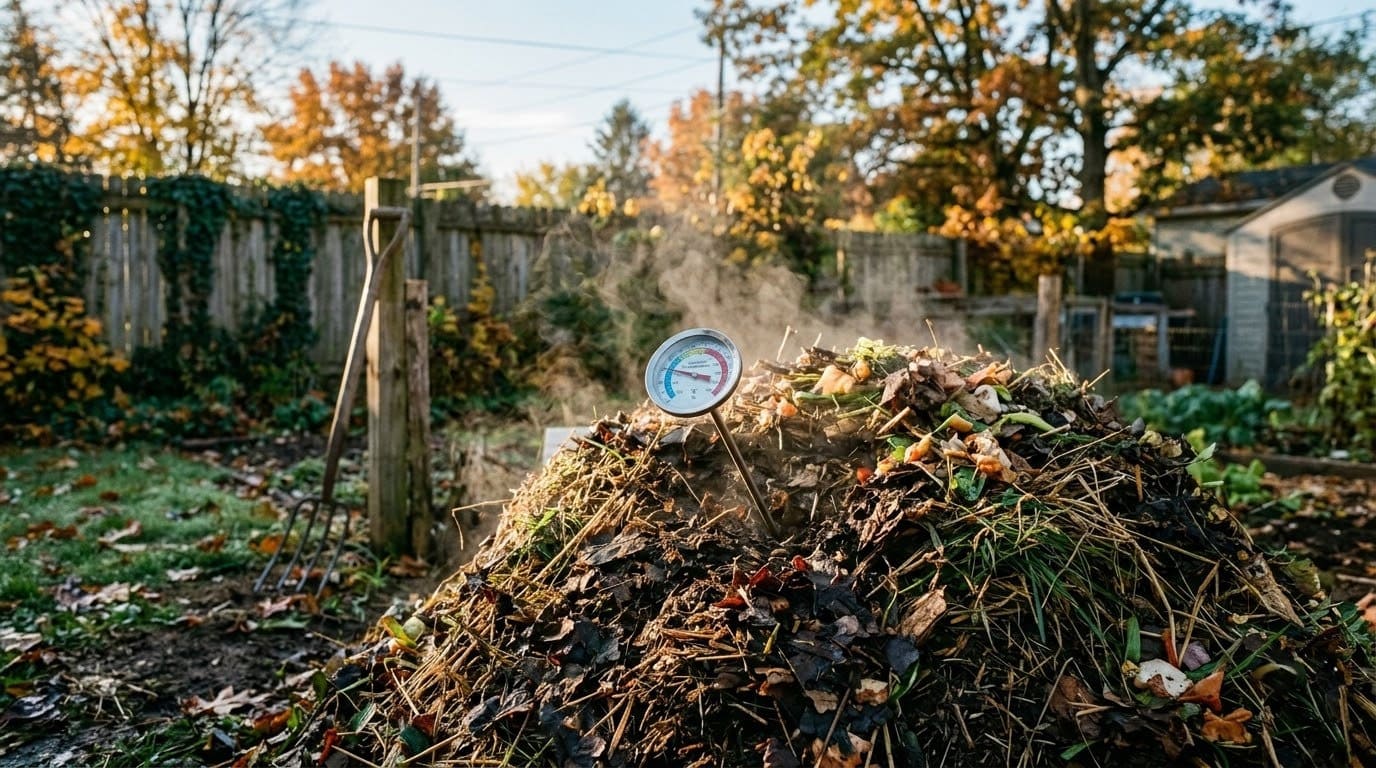
Hot composting is the fastest route, 4 to 8 weeks under good conditions. It requires regular turning, enough pile mass to self-insulate, and close attention to the C:N ratio and moisture this calculator checks.
Cold composting asks for almost nothing. Pile materials up and let them break down on their own timeline, typically 6 to 18 months, sometimes longer for woody material.
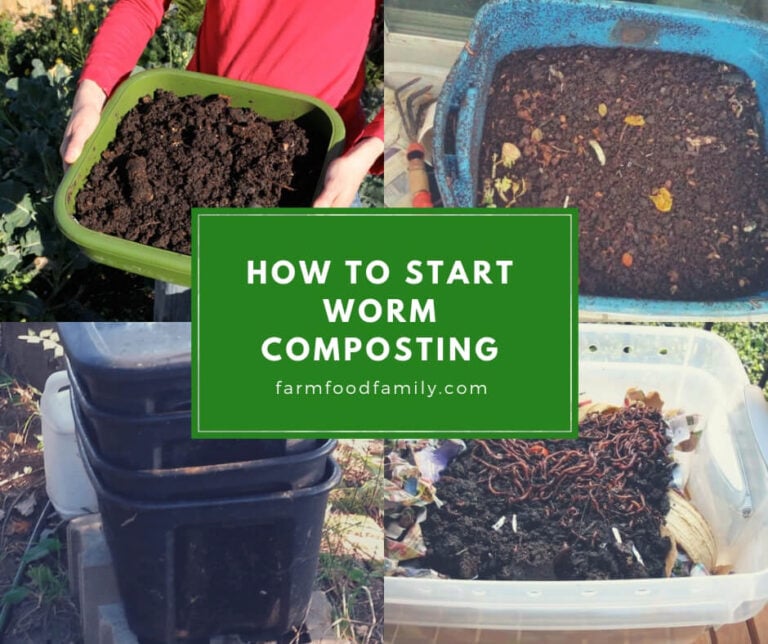
Vermicomposting uses red worms in a contained bin to process food scraps, usually finishing in 8 to 12 weeks. It’s well suited to kitchen scraps specifically and works indoors year-round, which makes it a strong option for anyone without much outdoor space.
The average homeowner spends $616/year on yard fixes that don't address the real problem. Find out what yours actually is — before you spend another dollar.
Take the Free Quiz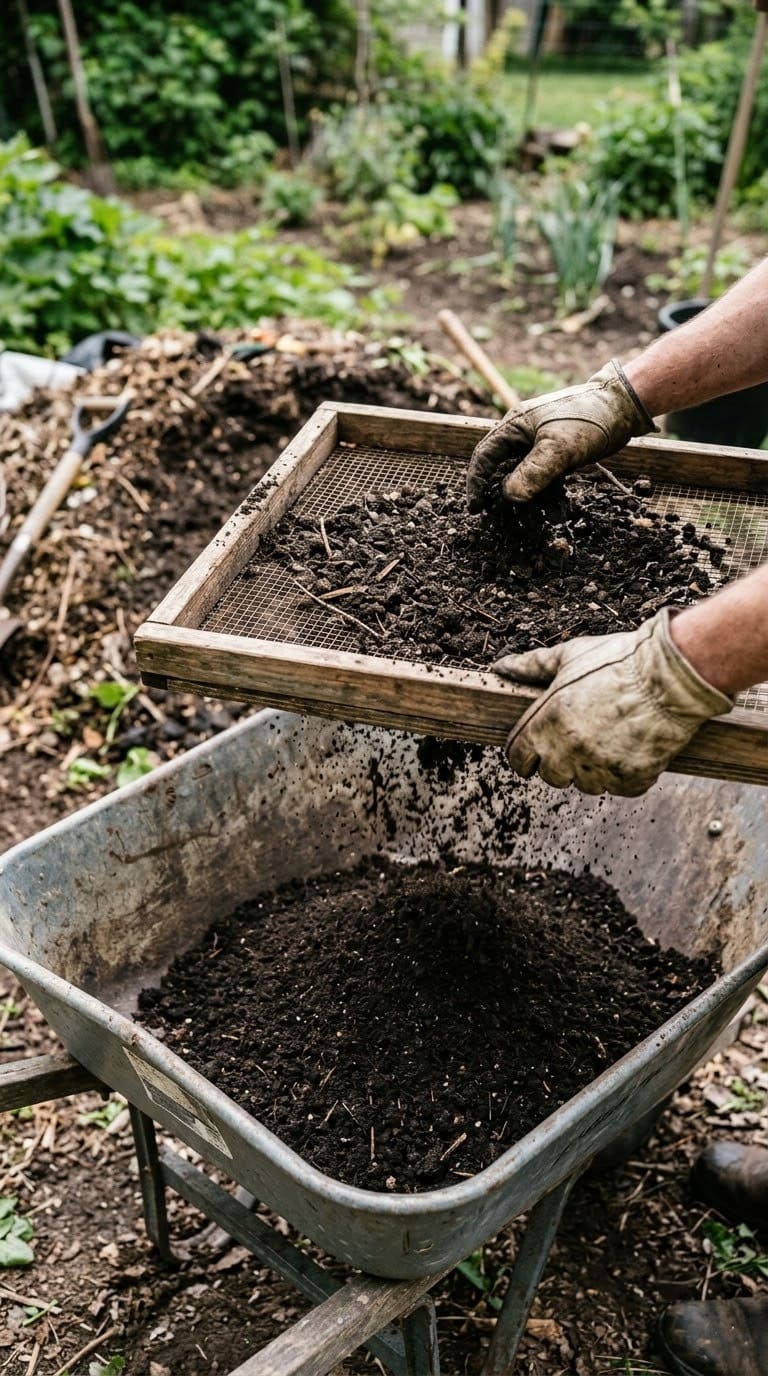
Troubleshooting Your Pile
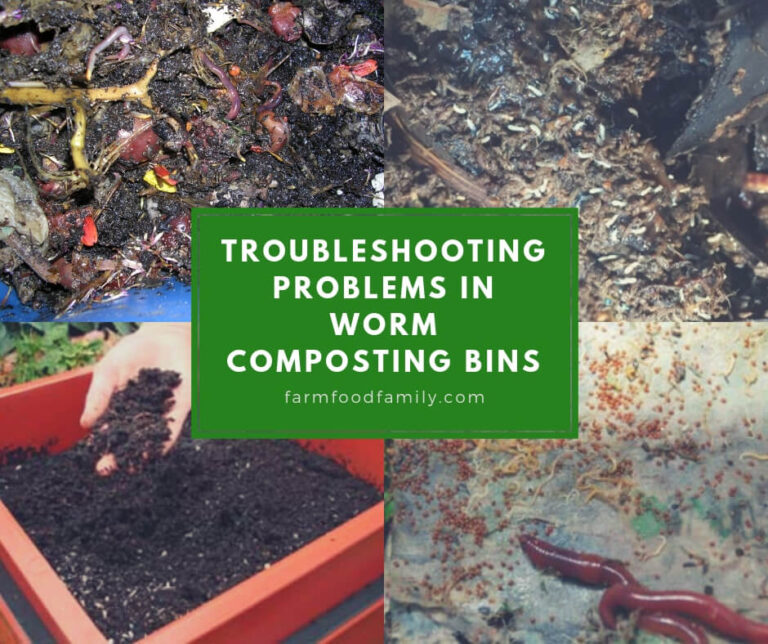
Ammonia smell means too much nitrogen relative to carbon. Turn the pile to vent it, and mix in more browns like shredded cardboard or dry leaves.
Rotten egg smell signals anaerobic conditions, almost always from too much moisture or a pile that’s too compacted for air to move through. Turn it, and add dry, bulky material to open up airflow.
A pile that won’t heat up is usually too small, too dry, or short on nitrogen. Check that it’s at least 1 cubic yard, confirm the wrung-out-sponge moisture test, and add greens if it’s mostly browns.
Pests like rodents or raccoons almost always trace back to meat, dairy, or oily food scraps. These don’t belong in a home compost pile regardless of your C:N ratio, and burying fresh food scraps under a layer of browns helps even with plant-based waste.
What Shouldn’t Go in Your Compost
Meat, dairy, and oily foods attract pests and can create odor problems even in an otherwise well-balanced pile. Pet waste from cats and dogs carries pathogens that home composting temperatures typically don’t reach high enough to kill.
Diseased plant material can reintroduce the same disease into your garden once the compost gets used. And weeds that spread by seed or root, like bindweed or Bermuda grass, can survive composting and come back stronger than before.
Putting Your Finished Compost to Work
Once your pile is ready, spreading it the right way matters. A thin, even layer worked into the top few inches of soil beats one thick pile dumped in one spot. See how to spread compost for the full method.
Pile acting up? Common compost problems covers hands-on fixes for pests, smell, and moisture, the kind of issues a formula alone can’t fully solve.
No yard space or a dedicated bin? Vermicomposting is worth a look. It handles kitchen scraps well and fits in a small indoor setup.
Want your pile to move faster? Tips for productive composting cover turning, layering, and other tricks that speed things up.
No bin yet? Composting without a bin covers trench, straw-bale, and simple pile methods that need no equipment at all.
Frequently Asked Questions
What is the ideal carbon-to-nitrogen ratio for compost? Around 25 to 35 to 1, with 30:1 commonly cited as the textbook ideal. Ratios below 20:1 tend to smell like ammonia, and ratios above 40:1 break down very slowly.
How much brown material do I need compared to green? The common rule of thumb is 3 parts browns to 1 part green by volume, though the exact ratio needed depends heavily on which specific materials you’re using, since C:N ratios vary widely even within the brown and green categories.
Why does my compost smell bad? An ammonia smell usually means too much nitrogen (too many greens). A rotten egg smell means the pile has gone anaerobic, usually from excess moisture or compaction, and needs to be turned.
How small can a compost pile be and still work? Piles smaller than roughly 1 cubic yard (a 3-foot cube) generally can’t hold enough heat for true hot composting, though cold composting still works at a smaller scale, just more slowly.
How much finished compost will I get from my pile? Expect roughly 30 to 50 percent of your starting volume once the material fully breaks down. A full wheelbarrow of raw ingredients typically finishes at less than half a wheelbarrow.
How long does composting actually take? Hot composting with regular turning takes about 4 to 8 weeks. Cold, passive composting takes 6 to 18 months. Vermicomposting with worms typically finishes in 8 to 12 weeks.
What moisture level should my compost pile have? Around 50 to 60 percent, commonly described as feeling like a wrung-out sponge. Too dry and the pile won’t decompose; too wet and it can go anaerobic and smell.
Can I compost meat, dairy, or pet waste? No. Meat, dairy, and oily foods attract pests, and pet waste from cats and dogs can carry pathogens that typical home compost temperatures don’t reliably kill.
Glossary
Bulk density: The weight of a material per unit of volume (such as pounds per cubic foot), used to convert a volume measurement into an approximate weight.
Carbon:Nitrogen (C:N) ratio: The ratio of carbon-rich to nitrogen-rich material in a compost mix, a key factor in how quickly and cleanly it decomposes.
Cold composting: A passive composting method with little or no turning, typically taking 6 to 18 months to finish.
Hot composting: An active composting method using regular turning and sufficient pile mass to reach thermophilic (heat-generating) temperatures, typically finishing in 4 to 8 weeks.
Thermophilic: Describes the heat-generating stage of active composting, where internal pile temperatures can reach 120 to 160°F.
Vermicomposting: A composting method using red worms in a contained bin to process organic waste, especially well suited to food scraps.
Wrung-out sponge test: The standard way to judge compost moisture by feel, aiming for material damp enough to release only a drop or two of water when squeezed.
Sources & References
- Cornell Waste Management Institute: On-Farm Composting Handbook, Chapter 3 (Getting the Right Mix)
- Cornell Composting: Compost Chemistry
- Cornell Composting: Carbon to Nitrogen Ratio Calculator
Never miss an update — choose FarmFoodFamily as your preferred source on Google.
How it works: Tap the button below to open Google's settings page, then check the box next to FarmFoodFamily.
Tap the checkbox to turn it blue — that's how you know it's set.