8 Perennials You Should Divide in August Before They Outgrow Their Space (Free Plants Included)
August is the right window to divide some perennials for free plants, but the wrong month for a few common ones people divide anyway, and this guide sorts out which is which.

Never miss an update — choose FarmFoodFamily as your preferred source on Google.
How it works: Tap the button below to open Google’s settings page, then check the box next to FarmFoodFamily.
Tap the checkbox to turn it blue — that’s how you know it’s set.
Late summer is when a lot of perennial beds start looking crowded, floppy, or just tired. Some of that is normal end-of-season fatigue.
But some of it is a real signal that a clump has outgrown its space and needs to be split, which also happens to be the cheapest way to get new plants for the rest of the yard. Free plants, basically, from a job you were going to have to do anyway.
Not every perennial wants this in August though. Divide the wrong one now and you can set it back a full year, or kill it outright. This guide covers the 8 that genuinely benefit from an August split, plus the handful you should leave alone until a different season.
This builds on the site’s broader roundup of easy-going perennials for a full growing season rather than repeating it, so check there first if the goal is picking new plants rather than dividing existing ones.
Quick answer: which perennials should you divide in August?
August is the right division window for perennials that finish blooming by midsummer and have clumping or fleshy roots, like bearded iris, daylily, hardy geranium, garden phlox, yarrow, shasta daisy, and astilbe. Bearded iris is the clearest case.
Clemson Cooperative Extension and University of Illinois Extension both put its ideal split window anywhere from a month after bloom through early fall, which lands squarely in August.
Answer 4 quick questions and get matched to the exact fix for your yard — drainage, budget, layout, or something else entirely.
Take the Free QuizMost other clumping perennials divide best on a cool, overcast day, at least four to six weeks before the ground freezes, so northern gardeners should start now while southern gardeners have more room to wait.
Oriental poppy is the exception that trips people up. It goes summer-dormant around late July, and that dormancy, not the calendar month, is the actual signal to dig it. Skip dividing peonies, hostas, and taprooted plants like butterfly weed in August entirely.
August division checklist
| Perennial | Signs it’s overdue | Division method | Realistic free-plant yield |
|---|---|---|---|
| Bearded iris | Hollow, woody center; fewer blooms | Lift and cut rhizomes with a knife, keep a fan of leaves per piece | 4-8 fans from one mature clump |
| Daylily | Dense crown, smaller flowers, 3-6+ years old | Two garden forks back to back, pried apart | 3-6 divisions, more from an old, wide clump |
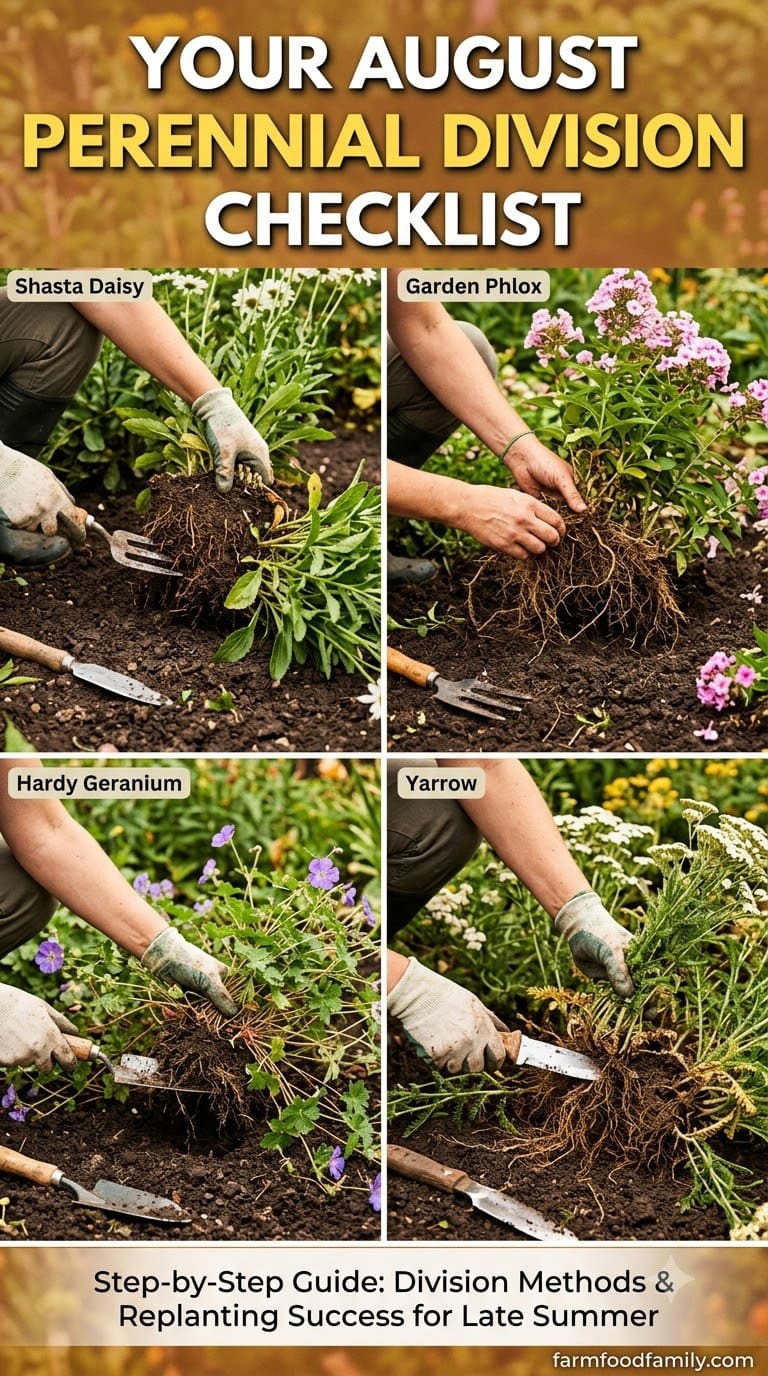
| Hardy geranium | Bare, woody center; sprawling mat | Cut through the crown or pull sections with a hori-hori knife | 3-5 rooted sections |
| Oriental poppy | Foliage yellows and disappears (summer dormancy) | Dig the taproot while dormant, cut into sections with an eye | 2-4 root sections |
| Shasta daisy | Leggy, hollow-centered, flopping | Pull apart by hand or slice with a spade | 4-6 rooted clumps |
| Garden phlox | Powdery mildew, weak air circulation, dense crown | Slice with a sharp spade into wedges | 3-5 wedges |
| Yarrow | Woody, dead center; thin ring of growth | Pull apart by hand, discard the dead middle | 4-8 rooted pieces |
| Astilbe | Congested crown, fewer plumes | Two forks back to back through the thick crown | 3-4 divisions |
Should you divide bearded iris in August?
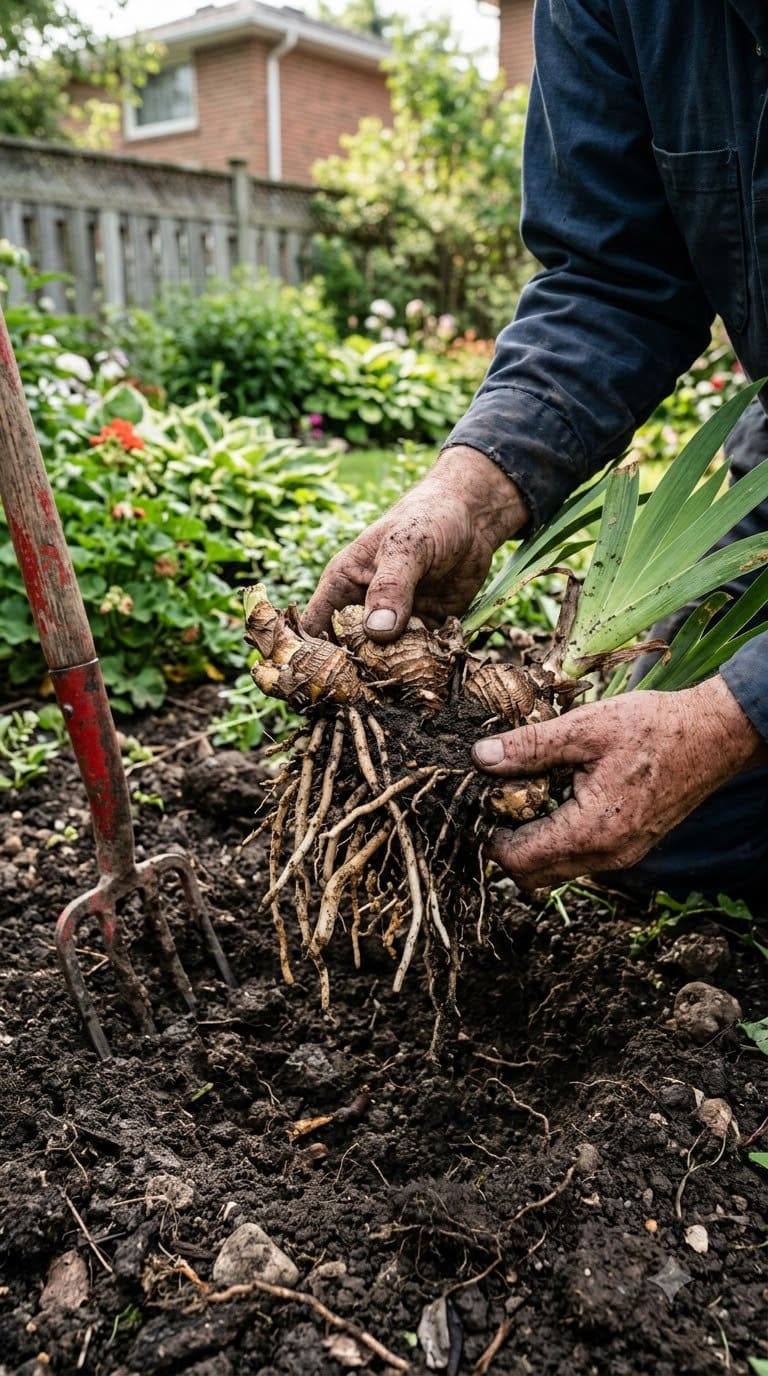
Yes, and this is the one where August is the textbook answer, not a stretch. Clemson HGIC’s Robert F. Polomski, PhD, Associate Extension Specialist in Environmental Horticulture and Arboriculture, notes bearded iris can be divided any time from about a month after flowering through early fall, a window that lines up with August almost exactly.
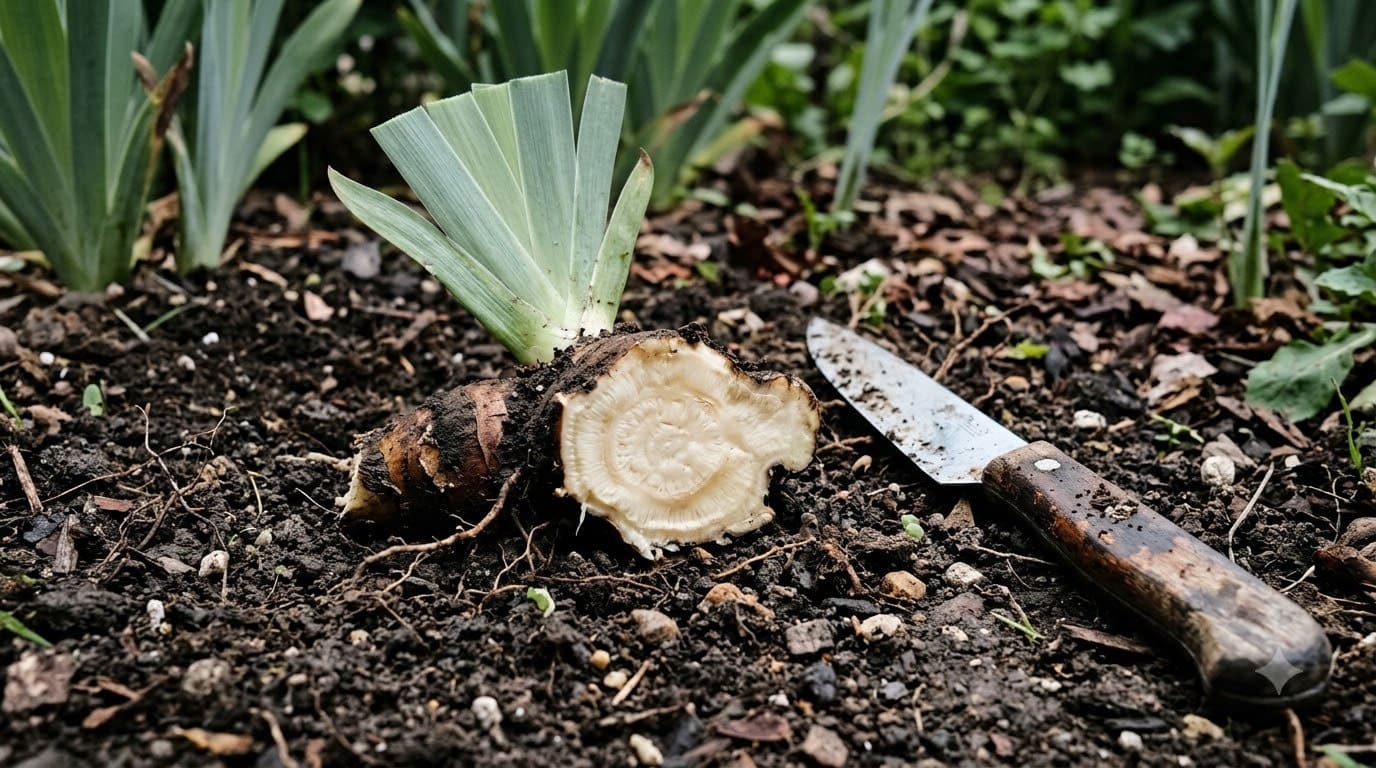
The signal to look for is a hollow or woody center with new growth only around the outer ring. Lift the whole clump with a garden fork, then use a clean knife to cut the rhizomes apart, keeping one fan of leaves per section and discarding any soft, mushy, or borer-damaged pieces.
Trim the leaf fan down to about 4-6 inches before replanting, which reduces water loss while the cut rhizome grows new roots. Set the rhizome so its top is barely exposed at soil level, not buried, since bearded iris rots if planted too deep.
Water in once, deeply, right after planting. After that, ease off. Transplant shock on iris usually shows up as leaves that yellow at the tip or a fan that doesn’t push new growth within 3-4 weeks, and it’s often a sign the rhizome was planted too deep or watered too much rather than too little.
A mature clump that’s been in place 3-4 years typically yields 4 to 8 usable fans, plenty to fill in a bare patch elsewhere or trade with a neighbor. If bearded iris colors and patterns are still being sorted out for a bed, a walkthrough of how to read iris bloom color patterns is worth a look before deciding which divisions to keep.
Most yard problems trace back to one specific, fixable cause. Find yours in 4 quick questions.
Take the Free Quiz
4.8 stars, 9.4K ratings, the highest-reviewed hori-hori on Amazon; cuts through geranium and iris crowns cleanly and doubles as a digging tool for the oriental poppy taproot
Shop NowThis post contains affiliate links. We may earn a commission on qualifying purchases at no extra cost to you.
When is the best time to divide daylilies?
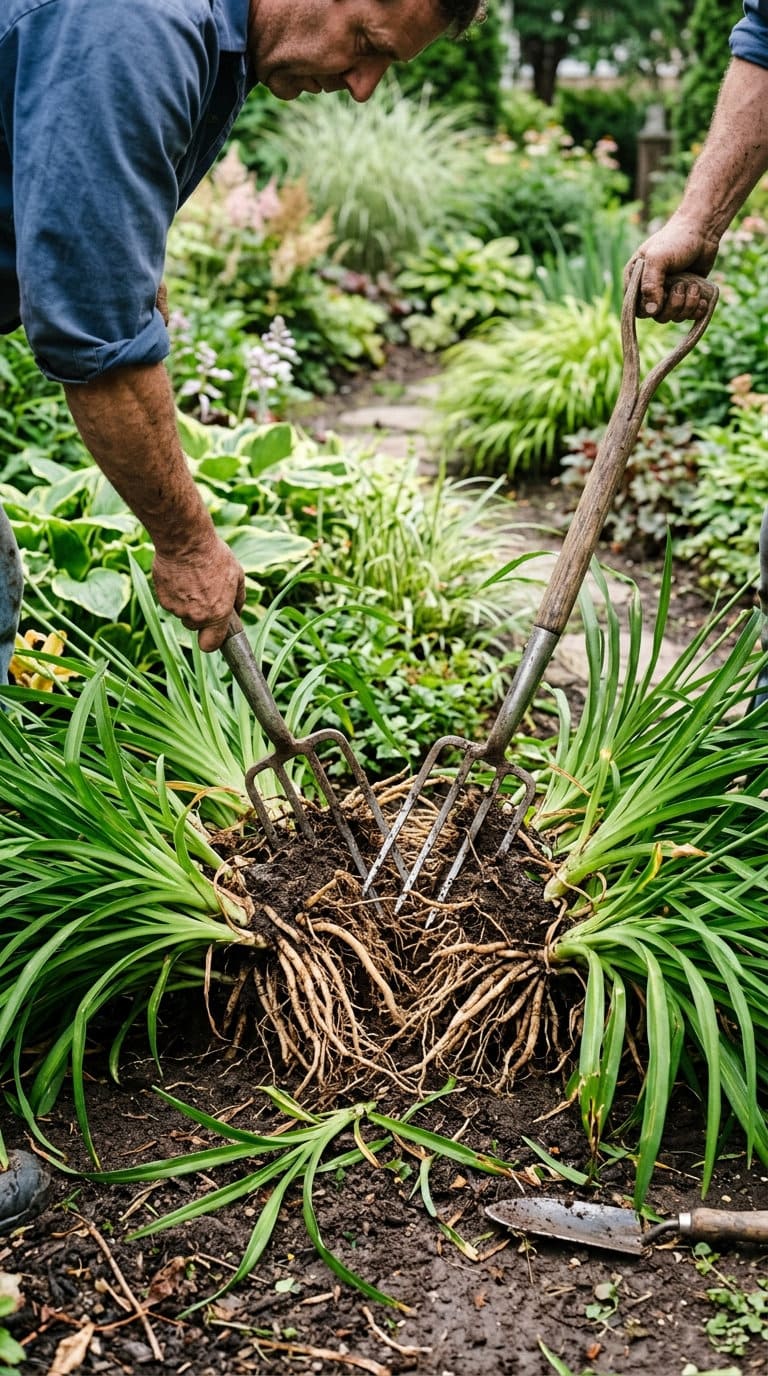
Daylilies tolerate almost any division timing, but late summer after the last flush of bloom is the easiest on the plant, since it isn’t spending energy on flowers anymore and still has warm weeks left to root in before frost. Clemson HGIC recommends dividing every 3 to 6 years, or sooner if bloom count is dropping and the crown feels solid and congested.
The back-to-back fork method is the standard approach for a reason. Push two garden forks into the center of the clump so the tines interlock, then pull the handles apart to split the root mass without slicing through it, which is gentler on the fleshy roots than a knife.
Aim for divisions with at least 3 fans and a healthy chunk of root each, since Clemson notes that fans with 3 or more shoots tend to bloom again sooner than single-fan splits. Cut the foliage back to about a third of its height before replanting to cut down on water loss.
Water deeply right after planting and keep the soil evenly moist for the first 2 weeks. Wilted or yellowing foliage that doesn’t perk back up within a week of consistent watering usually means the roots dried out during the move, not that the plant is dying.
An established, overgrown daylily clump routinely yields 3 to 6 solid divisions, sometimes more if it’s an old, wide clump nobody has touched in years. For more on layering daylilies into a bigger design plan, this site’s daylily landscaping roundup covers pairing and placement.
Can you divide hardy geraniums in August?
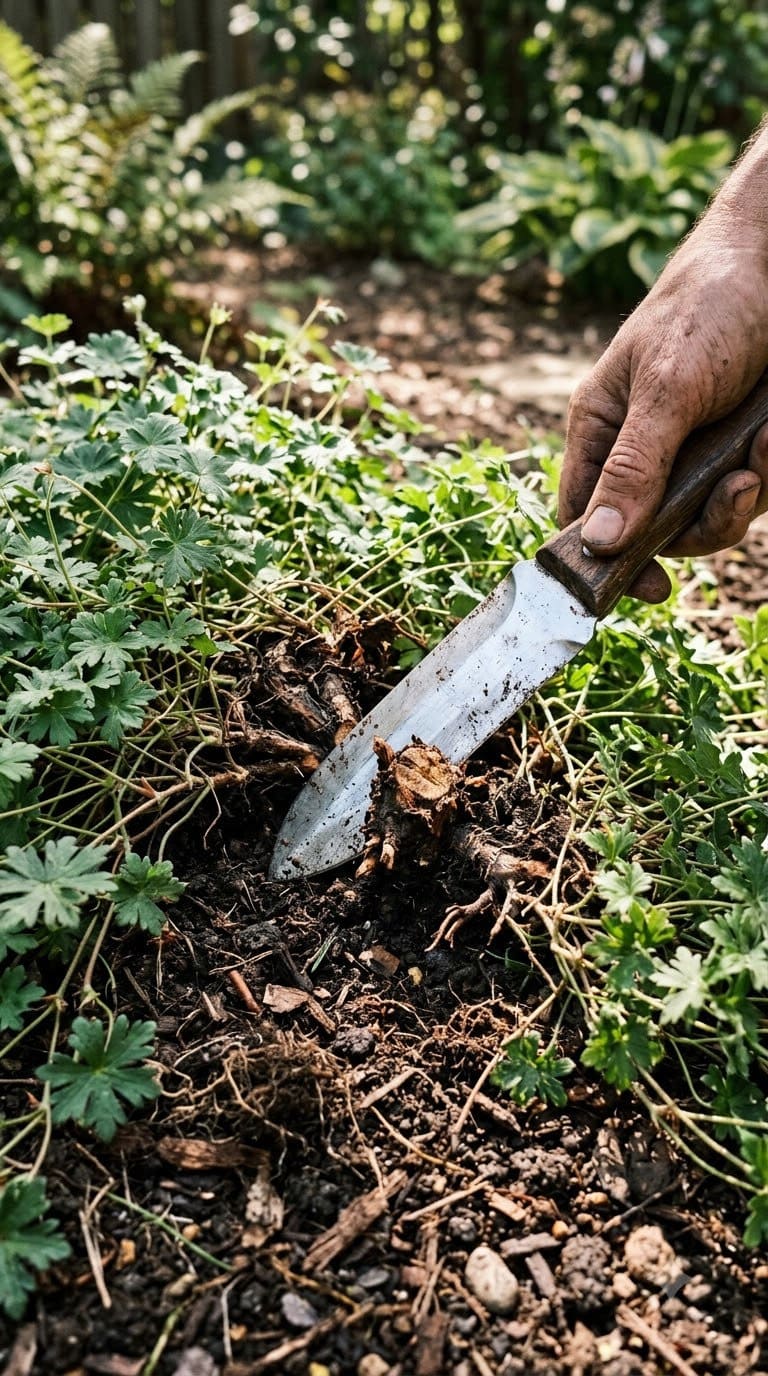
Yes, and August is actually one of the better windows for it, since hardy geranium (not to be confused with tender annual geraniums, which are technically pelargoniums) has fibrous roots that split cleanly while the plant still has warm weeks left to establish.
The tell is a bare, woody patch in the middle of the mat with all the healthy growth pushed out to the edges, a classic sign a clump has outgrown its space. Cut straight down through the crown with a sharp spade or hori-hori knife, or pull sections apart by hand, making sure each piece keeps at least one growing eye or bud.
Replant divisions at the same depth they were growing before, water in immediately, and keep the soil lightly moist (not soggy) for the first couple of weeks. A geranium division that wilts hard in the first few days but recovers by evening is normal transplant stress. One that stays wilted through a cool morning is a sign it dried out or was planted too deep.
A single sprawling mat usually breaks into 3 to 5 solid rooted sections, which is enough to start a low, spreading edge along a different bed. The site’s full rundown of geranium varieties is a useful next stop for matching a division’s bloom color to where it’s headed.
The average homeowner spends $616/year on yard fixes that don't address the real problem. Find out what yours actually is — before you spend another dollar.
Take the Free QuizWhy is August actually the right time to dig up oriental poppies?
This is the exception that catches people off guard, and the two extension sources used for this article actually frame it differently. University of Illinois Extension lists oriental poppy alongside other fall-division perennials in general. Clemson HGIC lists it among plants to avoid dividing in “late summer.”
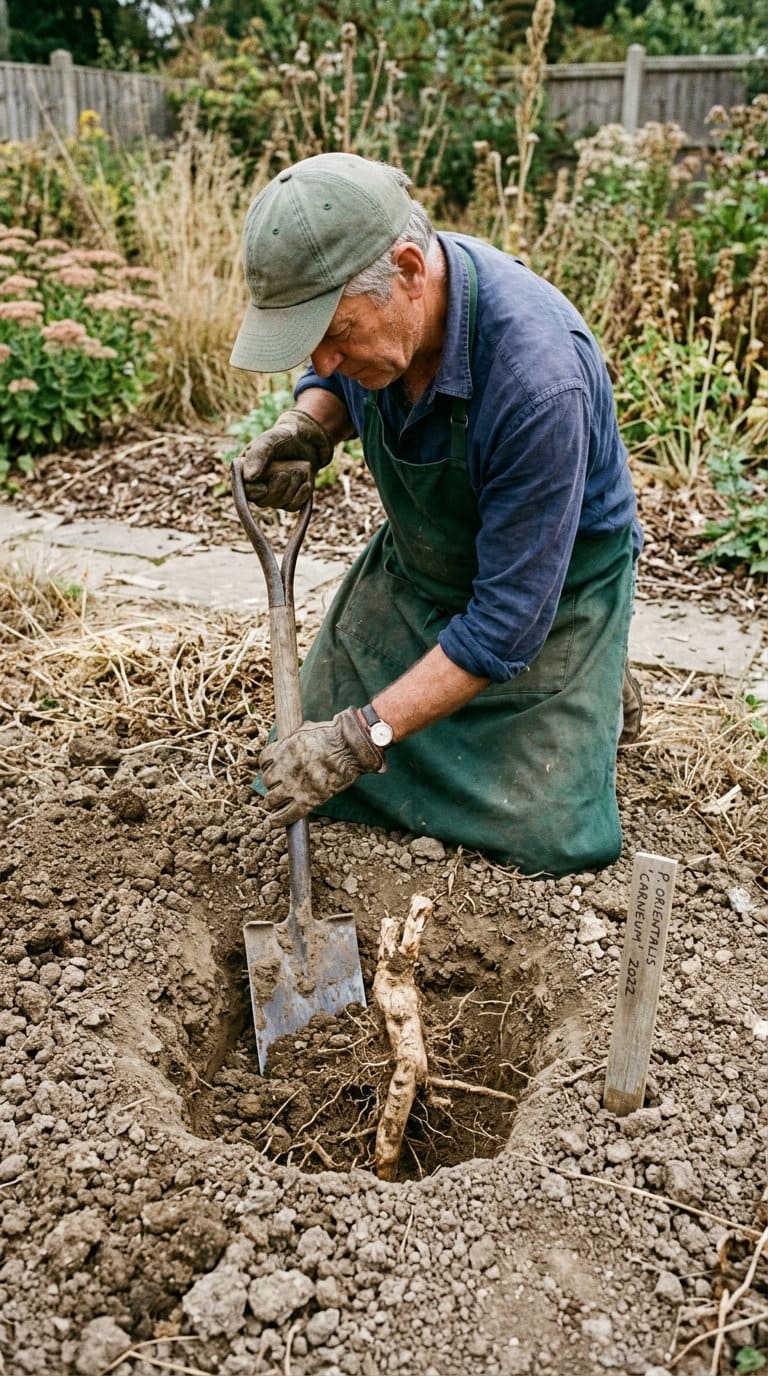
Both are right, just talking about different things. Oriental poppy goes fully dormant in midsummer, its foliage yellows and disappears completely by late July into August, and that dormancy window, not a fixed date on the calendar, is the actual signal for when to dig it.
Digging it while it’s visibly growing (spring) stresses it. Digging it while dormant (which often falls in August) doesn’t.
Because the foliage is gone, mark the spot before it disappears, or you’ll be digging blind. Lift the whole taproot with a spade, going deep since oriental poppy roots run long and brittle. Cut the root into sections with a sharp knife, making sure each piece has at least one visible bud or eye, then replant immediately since exposed poppy roots dry out fast.
Water in once and then leave it alone. There’s no foliage to watch for wilting, so the real test of success is whether new growth appears the following spring, not anything visible this season.
A mature oriental poppy taproot typically yields only 2 to 4 usable sections, fewer than the fibrous-rooted plants on this list, since the whole point is working with one thick root rather than a spreading clump.
How do you know a Shasta daisy needs dividing?
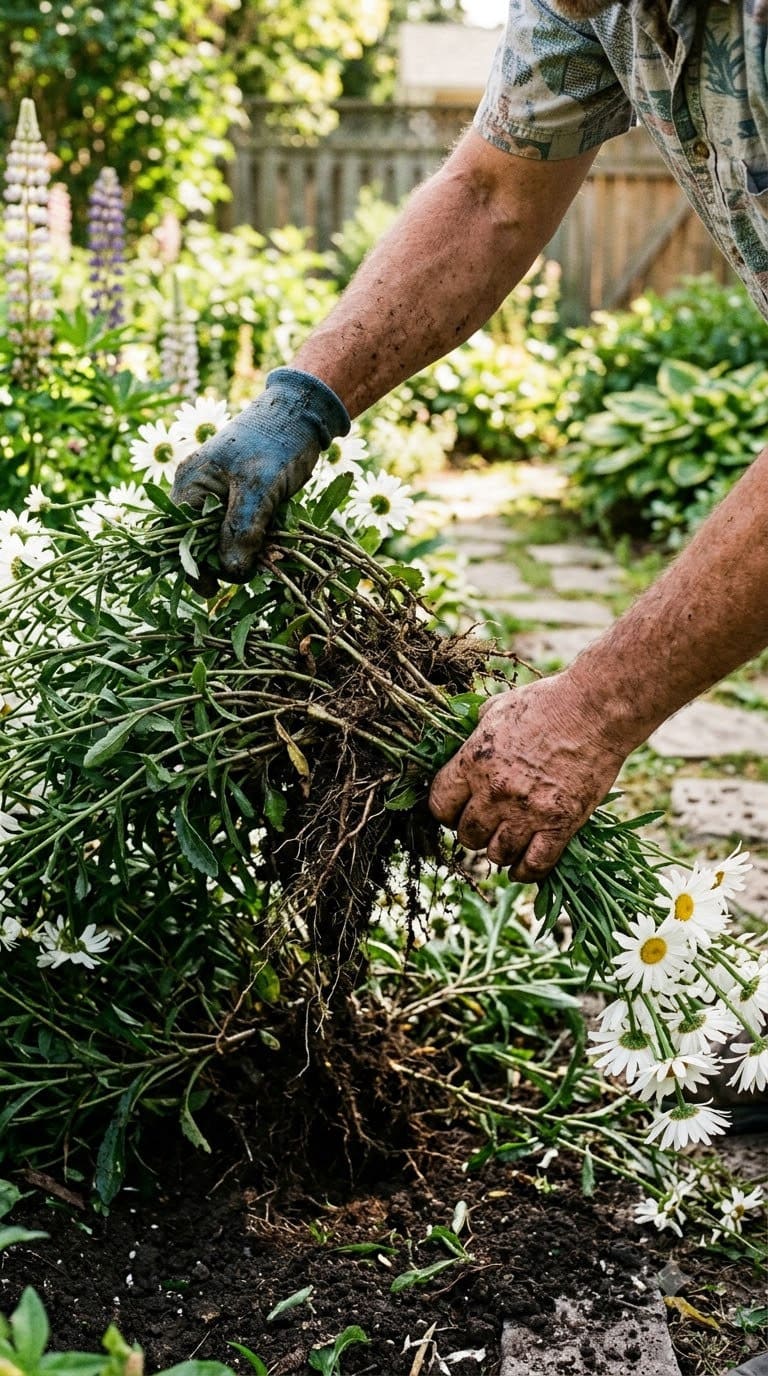
A Shasta daisy that’s gone leggy, splayed open in the middle, or stopped blooming as heavily as it did a couple of years ago is telling you it’s overdue. This is a fast-multiplying perennial, and tinygardenhabit.com’s practical field guide to August division puts its ideal cycle at every 2 to 3 years, shorter than most of the other plants on this list.
The good news is it’s one of the easiest divisions here. Established clumps often pull apart by hand into rooted sections with almost no tools needed, though a spade works fine for older, denser clumps that resist hand-splitting.
Replant divisions at the same soil depth, water in well, and expect a short wilt period the first few days, especially if the split happens on a hot, sunny afternoon rather than a cooler morning or overcast day. A division that’s still limp after a week of consistent watering probably lost too much root in the split and may not make it, which is normal attrition, not something to fix.
A single overgrown clump usually yields 4 to 6 rooted divisions, and because Shasta daisies are so willing to re-establish, this is a good one to hand off to a neighbor who’s new to dividing perennials.
What’s the right way to divide garden phlox?
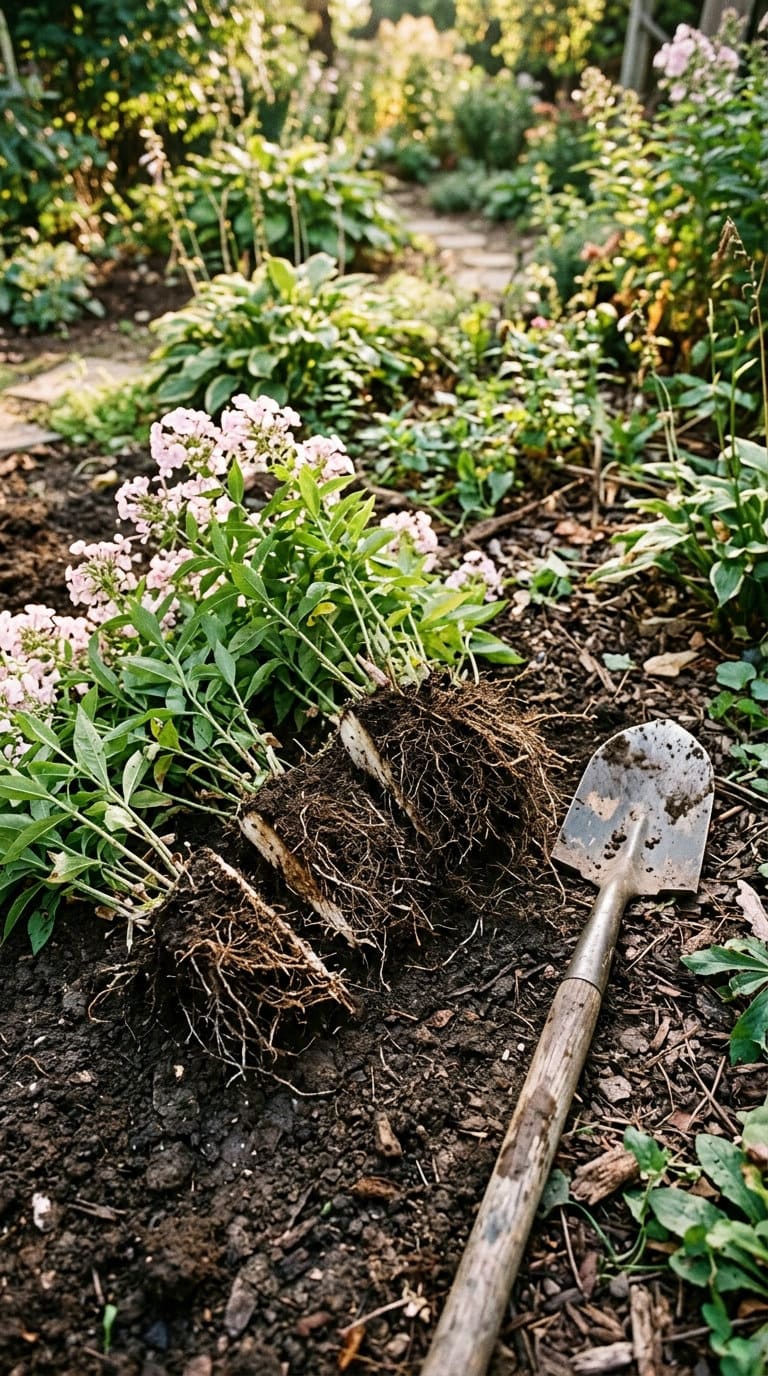
Garden phlox division solves two problems at once: an overcrowded clump, and the powdery mildew that thrives in phlox beds with poor air circulation. University of Illinois Extension lists phlox among its recommended fall-division perennials, and thinning a dense clump in August gets ahead of the humid stretch when mildew pressure peaks.
Slice straight down through the root mass with a sharp spade, cutting it into wedges the way you’d cut a pie, rather than trying to pull the tough, fibrous roots apart by hand. Each wedge should keep a solid chunk of root and at least a few healthy stems.
Space the new divisions further apart than the original clump was, since crowding is exactly what caused the mildew problem in the first place. Water deeply after planting and keep the soil consistently moist while new roots establish, usually 2 to 3 weeks.
Watch for leaves that stay droopy well past morning as the main sign of transplant stress, distinct from mildew’s telltale gray-white powder coating. A mature phlox clump typically splits into 3 to 5 wedges with enough root mass to take off on their own.
How do you divide yarrow without killing it?
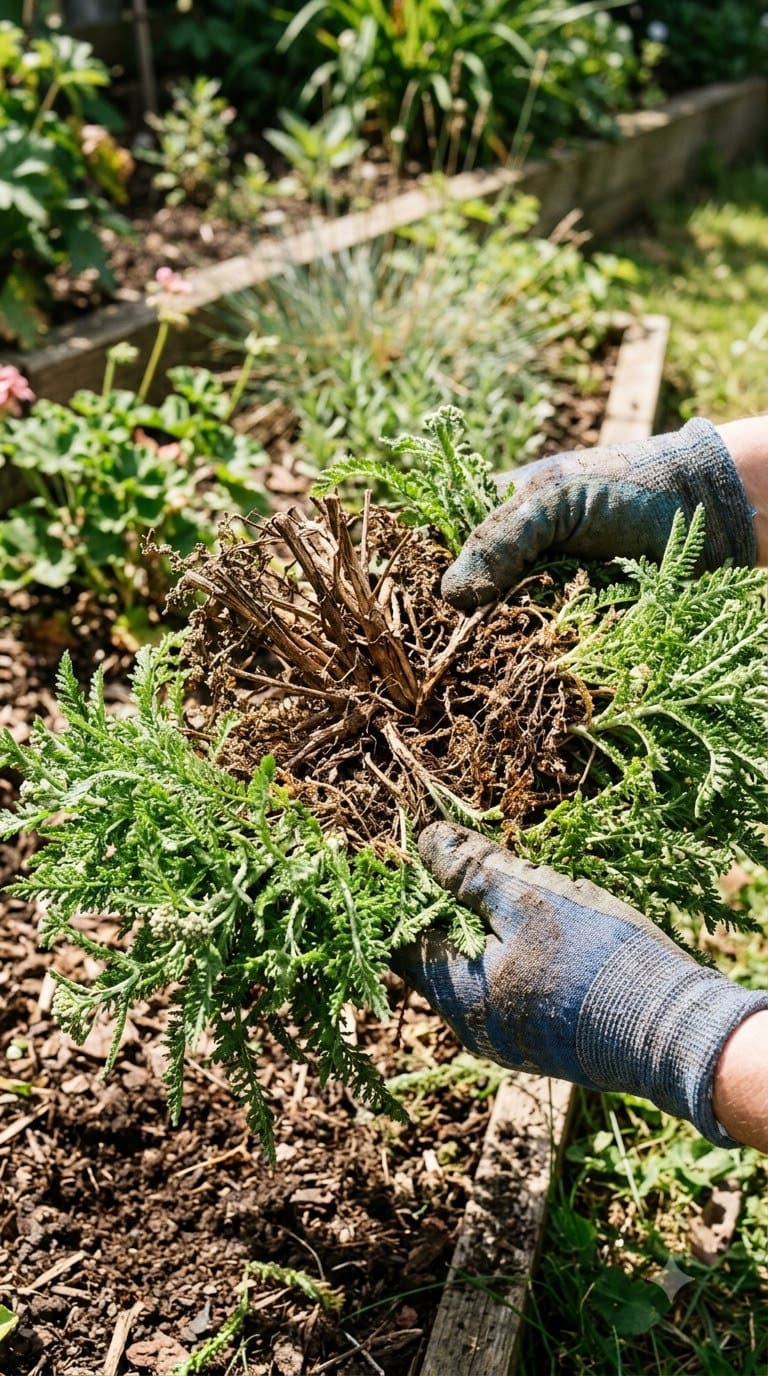
Yarrow spreads fast and, left alone, eventually turns into a ring of healthy growth around a dead, woody center, the exact pattern tinygardenhabit.com’s guide flags as the sign it’s overdue. It’s a drought-tolerant, low-maintenance plant otherwise, which makes this the one real bit of upkeep it needs.
Pull the clump apart by hand, which is usually all it takes since yarrow’s fibrous roots separate easily, and discard the dead center section entirely rather than trying to replant it. Keep only the vigorous outer pieces.
Replant divisions in full sun with well-draining soil, since yarrow that sits in heavy, wet soil is far more likely to struggle than one that gets too little water. Water in at planting, then taper off since overwatering is the bigger risk for this particular plant.
Because yarrow spreads so readily, transplant shock is rare and mild here, usually just a few days of slightly flatter foliage before new growth resumes. A single overgrown patch can yield 4 to 8 usable pieces, more than almost anything else on this list, which makes it one of the best “free plants” candidates for filling a long border cheaply.
When should you split an astilbe clump?
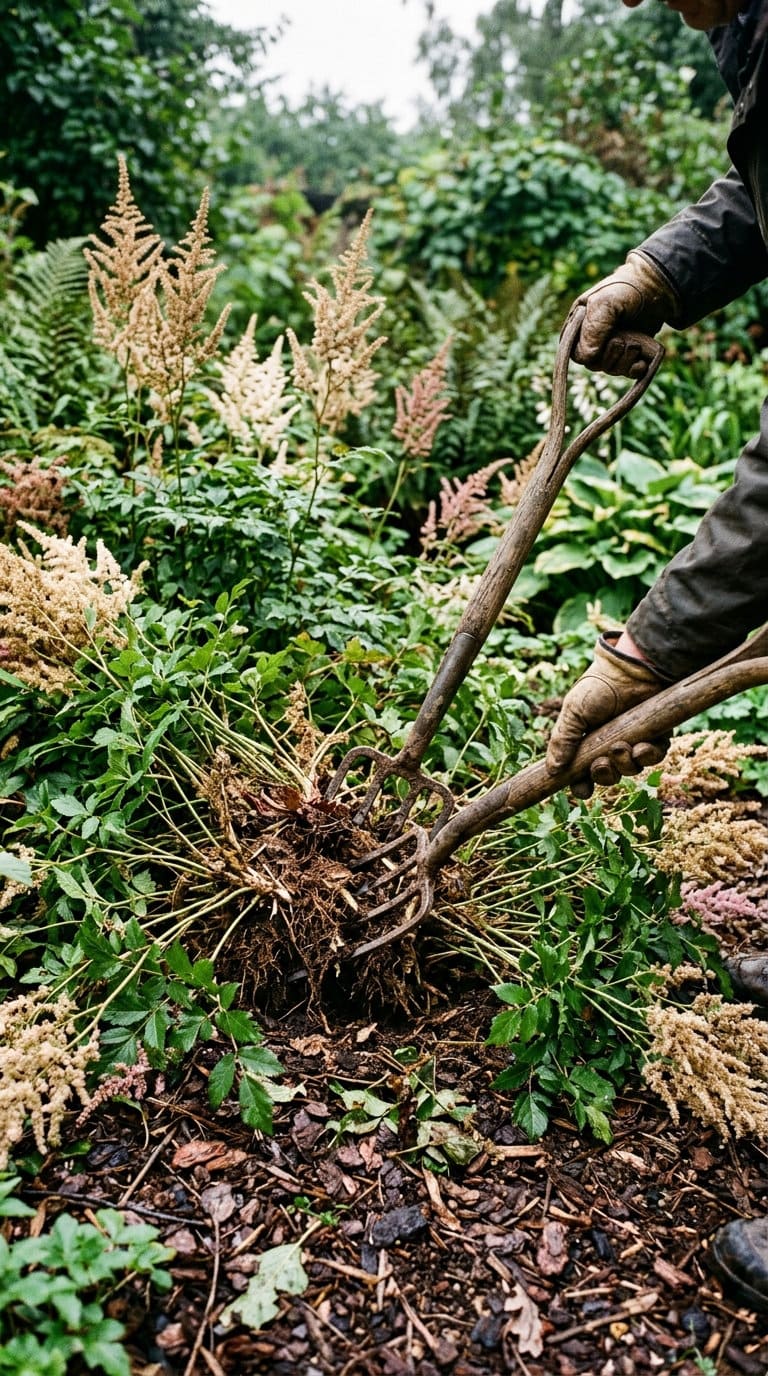
Astilbe has one of the densest, toughest crowns on this list, which is exactly why the fork-split method matters here more than anywhere else. Piedmont Master Gardeners’ Pat Chadwick groups astilbe with other tightly packed, clumping-root perennials like daylily and larger hosta, where hand-pulling just isn’t going to work.
The sign it’s overdue is a congested crown throwing fewer plumes than it used to, even with otherwise good care. Insert two garden forks back to back into the thick crown and pull the handles apart to force it open, the same technique used on daylily but generally requiring more effort given how densely astilbe roots pack together.
Astilbe is a moisture-lover, so keep the soil consistently damp, never dry, for the first couple of weeks after replanting, more attentive watering than most of the other plants here need. A division that browns at the leaf edges is usually drying out rather than struggling to root, and it’s the clearest transplant-stress signal on this whole list.
A mature astilbe clump usually yields only 3 to 4 divisions, on the lower end for this article, since the crown has to be forced apart rather than teased apart, and forcing too many cuts risks damaging the buds each piece needs to regrow.
Which perennials should you NOT divide in August?
Skipping this section is how a lot of perennials get killed by well-meaning gardeners applying one rule to every plant. A few common ones need a different season or a different approach entirely.
Peonies. Clemson HGIC is specific here: peonies should only be divided in September or October, and even then, sparingly. They resent being disturbed and can sulk for a full season or two after a split, so August is simply too early.
Hostas. Clemson notes hostas rarely need dividing at all and reach their best form left alone. If a hosta genuinely needs splitting, spring, before it leafs out fully, is the gentler window. This site’s guide to hosta varieties is a better stop right now than a division how-to.
Taprooted perennials like butterfly weed and balloon flower. Piedmont Master Gardeners flags these as poor candidates for division at any time of year, since a taproot doesn’t regenerate the way a fibrous or rhizomatous root does. Propagate these from seed instead.
Woody subshrubs like lavender and Russian sage. These aren’t true herbaceous perennials in the division sense. Cuttings, not clump-splitting, are the way to multiply them.
Does division timing change by region?
Where a garden sits changes how much runway there is between an August split and the first hard freeze, and that changes how aggressive to be about timing.
| Region type | Timing guidance | Bigger risk | Priority move |
|---|---|---|---|
| Cold-winter North (Upper Midwest, New England, Mountain West) | Divide early August, not late | Not enough time to root before frost | Get divisions in the ground by mid-August at the latest |
| Hot-humid South (Southeast, mid-Atlantic) | Can wait until late August or early September | Heat stress on fresh divisions | Divide on an overcast day, water more often than northern gardens need to |
| Dry Southwest / interior West | Anytime in August works, but shade divisions for the first week | Fast moisture loss from wind and low humidity | Mulch immediately after planting to hold moisture in |
The four-to-six-weeks-before-ground-freeze rule from Piedmont Master Gardeners’ guidance is the anchor point for all three. Work backward from a local first-frost date, then divide, don’t just pick a date off a calendar without checking it against where the garden actually is.
What I’ve learned dividing perennials in August
The mistake I made for years was treating every perennial the same way. I’d walk the border with a spade on a random Saturday and split whatever looked crowded, iris, hosta, peony, didn’t matter.
The hosta always sulked. Took me embarrassingly long to connect that to the fact that Clemson’s own guidance says leave hostas alone unless they truly need it, and spring is gentler on them anyway.
The other thing nobody tells you: the plant that looks the most pathetic right before dividing, oriental poppy with its foliage completely vanished, is usually the one handling the process best. It’s already dormant. There’s nothing to stress about because there’s nothing actively growing to stress.
And honestly, the yarrow surprised me the most. I expected the woody center to mean the whole clump was struggling. It wasn’t, it was just old, and pulling it apart by hand took maybe ten minutes for eight new plants I didn’t have to buy.
If there’s one thing worth doing differently from how I started, it’s checking a plant’s bloom timing and root type before grabbing the spade, not after. A five-minute check against a source like Clemson’s factsheet saves a full growing season on the wrong plant.
FAQs
Can I divide perennials in August if it’s still really hot where I live? Yes, but pick an overcast day or divide in the early morning or evening, and water more than you think you need to for the first two weeks. Piedmont Master Gardeners specifically recommends cutting back foliage by half and providing temporary shade if summer division can’t be avoided.
How do I know if a perennial has clumping roots versus taproots? Clumping-root plants (iris, daylily, phlox, astilbe, hosta) form a dense, fibrous mass that can be cut or pulled apart into multiple pieces, each capable of regrowing. Taproot plants (butterfly weed, balloon flower) have one thick central root that doesn’t survive being sectioned, which is why those get propagated from seed instead.
What tools do I actually need to divide perennials? A garden fork or two (for the back-to-back method on daylily and astilbe), a sharp knife or hori-hori knife for rhizomes and crowns, and a spade for slicing dense clumps like phlox. None of it is specialized equipment most gardeners don’t already own.
Is it normal for a division to wilt right after replanting? A few days of mild wilting, especially in afternoon heat, is normal transplant stress and usually resolves once new roots establish. Wilting that persists past a week of consistent watering, or foliage that browns and doesn’t recover, usually means the division lost too much root in the split.
Related Posts
- How to Find Free Plants for Your Flower Garden
- Perennial Flowers That Bloom All Season
- Fast-Growing Perennials Worth Adding to a Border
Products We Recommend
This post contains affiliate links. We may earn a commission on qualifying purchases at no extra cost to you.
NISAKU NJP650 Hori-Hori Weeding Knife, 7.25" Blade
4.8 stars, 9.4K ratings, the highest-reviewed hori-hori on Amazon; cuts through geranium and iris crowns cleanly and doubles as a digging tool for the oriental poppy taproot
Shop Now
Spear & Jackson Neverbend Professional Digging Fork
4.5 stars, 418 ratings, forged carbon steel; needed in pairs for the back-to-back split method on daylily and astilbe
Shop Now
Spear Head Spade SHFD3 40" Garden Spade Shovel
4.9 stars, 1.5K ratings, steel-reinforced fiberglass handle; needed for slicing phlox wedges and lifting bearded iris rhizomes
Shop NowNever miss an update — choose FarmFoodFamily as your preferred source on Google.
How it works: Tap the button below to open Google's settings page, then check the box next to FarmFoodFamily.
Tap the checkbox to turn it blue — that's how you know it's set.