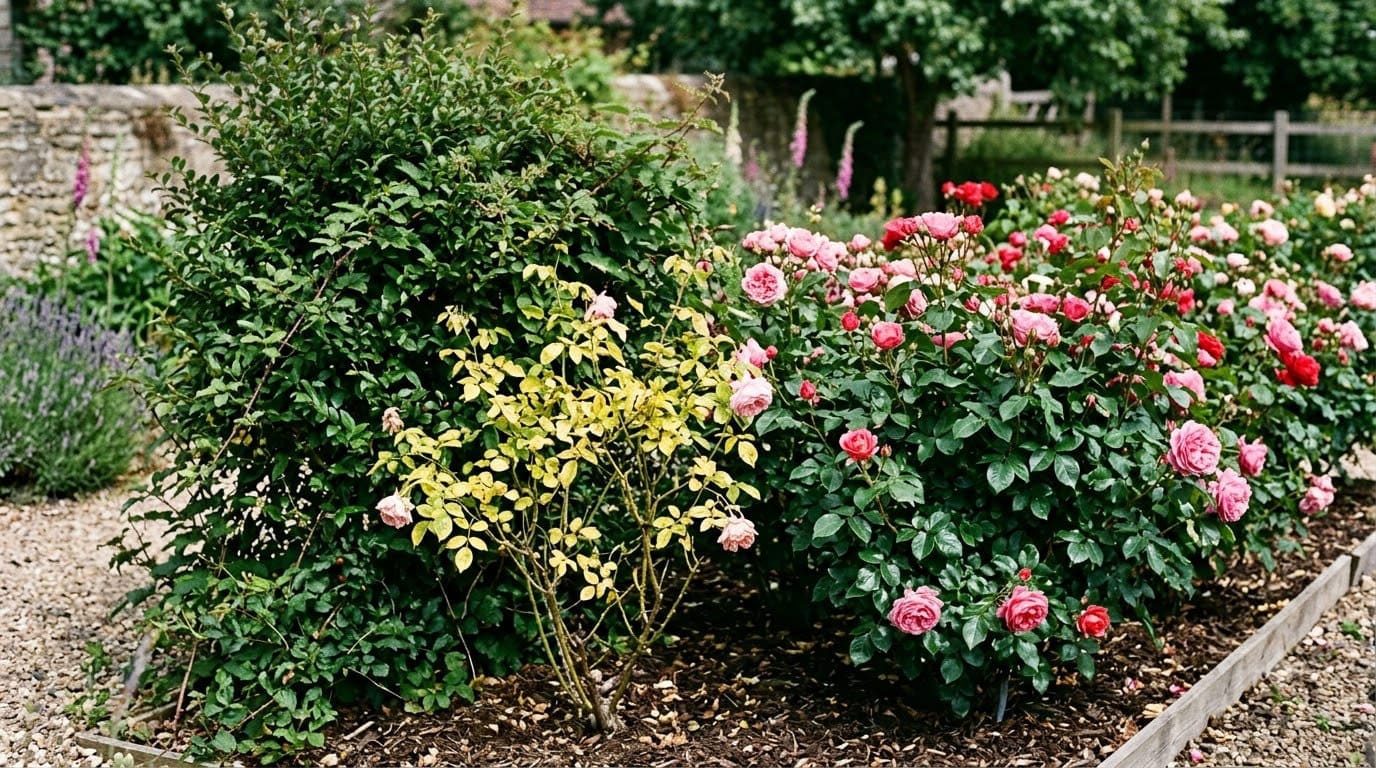
8 Sneaky Plants You Should Never Plant Next to Roses
The wrong neighbor can quietly starve, poison, or infect a healthy rose bush within a season, so knowing which 8 plants to keep away is cheaper than replacing the rose.

Never miss an update — choose FarmFoodFamily as your preferred source on Google.
How it works: Tap the button below to open Google’s settings page, then check the box next to FarmFoodFamily.
Tap the checkbox to turn it blue — that’s how you know it’s set.
Roses get blamed for being “difficult,” but a lot of the time the rose isn’t the problem, the plant three feet away from it is.
A rose bush that keeps yellowing, stalling out, or breaking with black spot every July often has a bad neighbor doing the damage slowly enough that it’s easy to miss, and it’s worth ruling this out before you assume the basics of keeping a rose healthy are the problem.
Below are the 8 plants that cause the most real, documented trouble next to roses, why each one actually causes it, and what to do if you already planted one of them too close.
Quick answer: Never plant black walnut, garlic and other alliums, fennel, mint, potatoes (or tomatoes and peppers), snapdragons, lilac, or sunflowers within a few feet of roses. Each one hurts roses through a different, specific mechanism: black walnut and fennel release chemicals that are directly toxic to nearby plant roots (allelopathy), potatoes and snapdragons share the same fungal diseases roses already struggle with (black spot, powdery mildew, rust), mint and sunflowers out-compete roses for water and nutrients through aggressive root systems, and lilac both competes for root space and carries its own powdery mildew problem into the bed.
The American Rose Society’s own placement guidance centers on giving roses full sun and open airflow, and every plant on this list violates one of those two conditions in a different way. Garlic is the one exception worth remembering: it’s genuinely useful a few feet away from a rose bed as a general pest deterrent, it’s only a problem in the same hole or immediately at the rose’s root zone.

Why Does It Actually Matter What You Plant Next to a Rose?
Roses are needy in a specific way: full sun (six-plus hours), consistent moisture at the root zone, and open air circulation around the canes so leaves dry out between waterings.
Answer 4 quick questions and get matched to the exact fix for your yard — drainage, budget, layout, or something else entirely.
Take the Free QuizAlmost every plant on this list breaks one of those three requirements, and it’s worth knowing which mechanism is at play before you plant, because the fix is different for each one.
There are five real ways a neighboring plant can hurt a rose, and they’re not interchangeable:
- Allelopathy: the plant releases a chemical compound (through roots, fallen leaves, or hulls) that’s directly toxic to the rose. This is the most severe category because it isn’t about competition, the rose can be poisoned even with plenty of water and sun available.
- Disease-sharing: the plant is a host for the exact same fungal or bacterial disease that already threatens roses (black spot, powdery mildew, rust), so planting it nearby increases the odds spores jump from one to the other.
- Root competition: an aggressive or deep root system outcompetes the rose’s shallower roots for water and nutrients in the same soil volume.
- Water/sun competition: a tall, wide, or thirsty neighbor shades the rose below its six-hour sun minimum or draws down the water available in the bed.
- Pest attraction: the plant draws in insects (aphids, spider mites, thrips) that then move onto the rose; if this is already an ongoing problem in your yard, a rundown of the insects that do the most damage to home gardens is worth a look before you plant anything new nearby.
The American Rose Society’s own placement guidance for roses centers on exactly those same first two needs, full sun and airflow, which is the practical reason spacing and neighbor choice matters as much as soil prep.
It’s also worth being honest about the evidence: some of what gets repeated about companion planting is closer to garden folklore than hard science, and the resource-competition items on this list (mint, sunflowers) rest on plainer physics, i.e. two plants can’t both fully use the same water and nutrients in the same soil, while the allelopathy and disease-sharing items rest on a documented chemical or biological mechanism, which is the stronger and more specific claim.
1. Black Walnut (Juglans nigra)
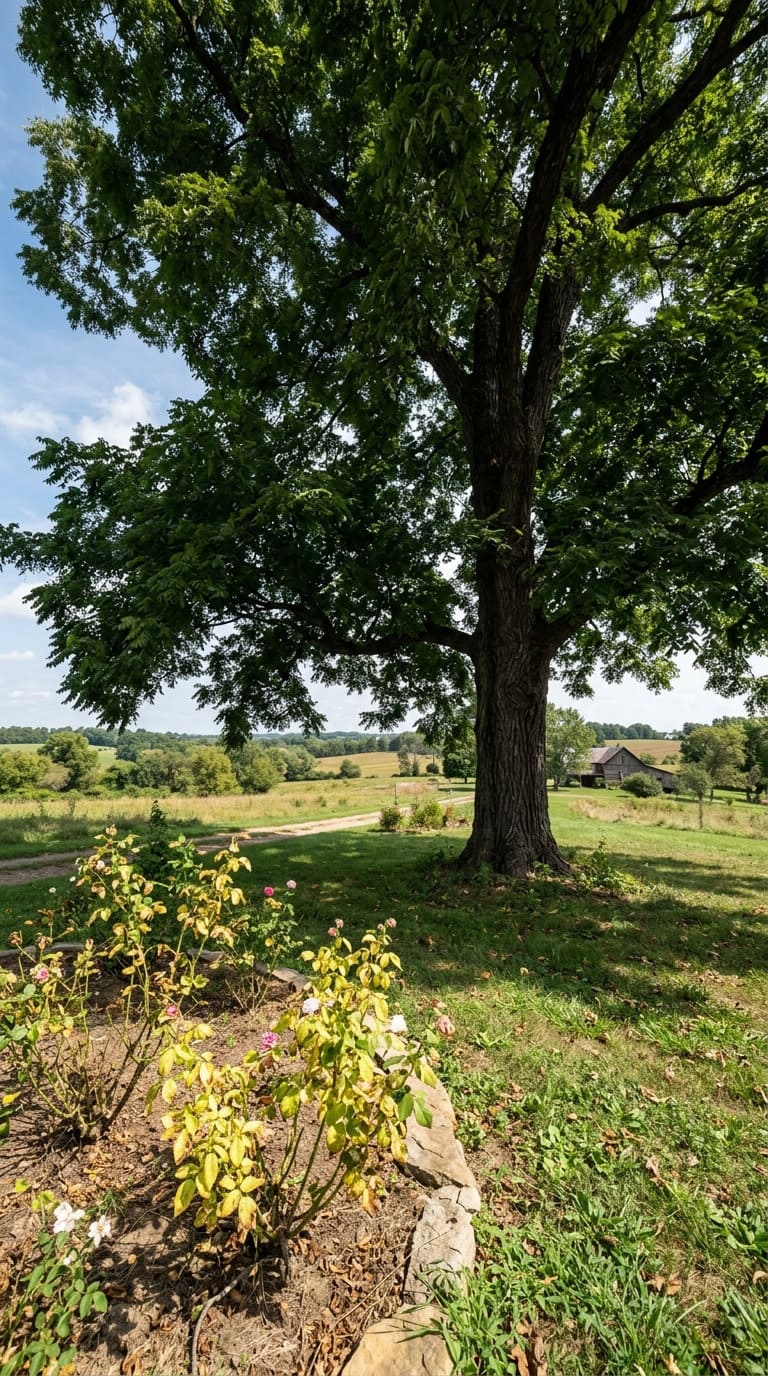
Why it’s a problem: Allelopathy, and it’s the single most severe entry on this list. Black walnut trees produce a compound called juglone in their roots, leaves, and hulls, and juglone is directly toxic to many garden plants, roses included.
According to Purdue University Extension’s publication on black walnut toxicity, the toxic zone can extend 50 to 80 feet from a mature tree’s trunk, with the highest concentration directly under the canopy (the dripline).
Purdue specifically lists roses among the juglone-sensitive plants, alongside tomato, potato, peony, and lilac, several of which also show up elsewhere on this list for their own separate reasons.
Most yard problems trace back to one specific, fixable cause. Find yours in 4 quick questions.
Take the Free Quiz
A dedicated rose fertilizer to rebuild nutrients if a bad neighbor (fennel, mint, sunflowers) has been competing for them
Shop NowThis post contains affiliate links. We may earn a commission on qualifying purchases at no extra cost to you.
Minimum distance: Outside the dripline of a mature tree if at all possible, meaning 50 feet or more from a full-grown black walnut. A young walnut sapling is less of a threat, but the safe distance grows every year as the tree matures.
If you already planted too close: Don’t try to amend your way out of juglone with fertilizer, it doesn’t neutralize the compound.
A raised bed (at least 18 inches deep) lined to separate it from the native soil, filled with clean topsoil, and kept clear of fallen walnut leaves and hulls is the realistic fix if you can’t relocate the rose or the tree.
Budget-wise this is a bigger-investment fix, expect to spend on lumber or a prefab raised bed plus soil, not a weekend patch.
2. Garlic and Other Alliums
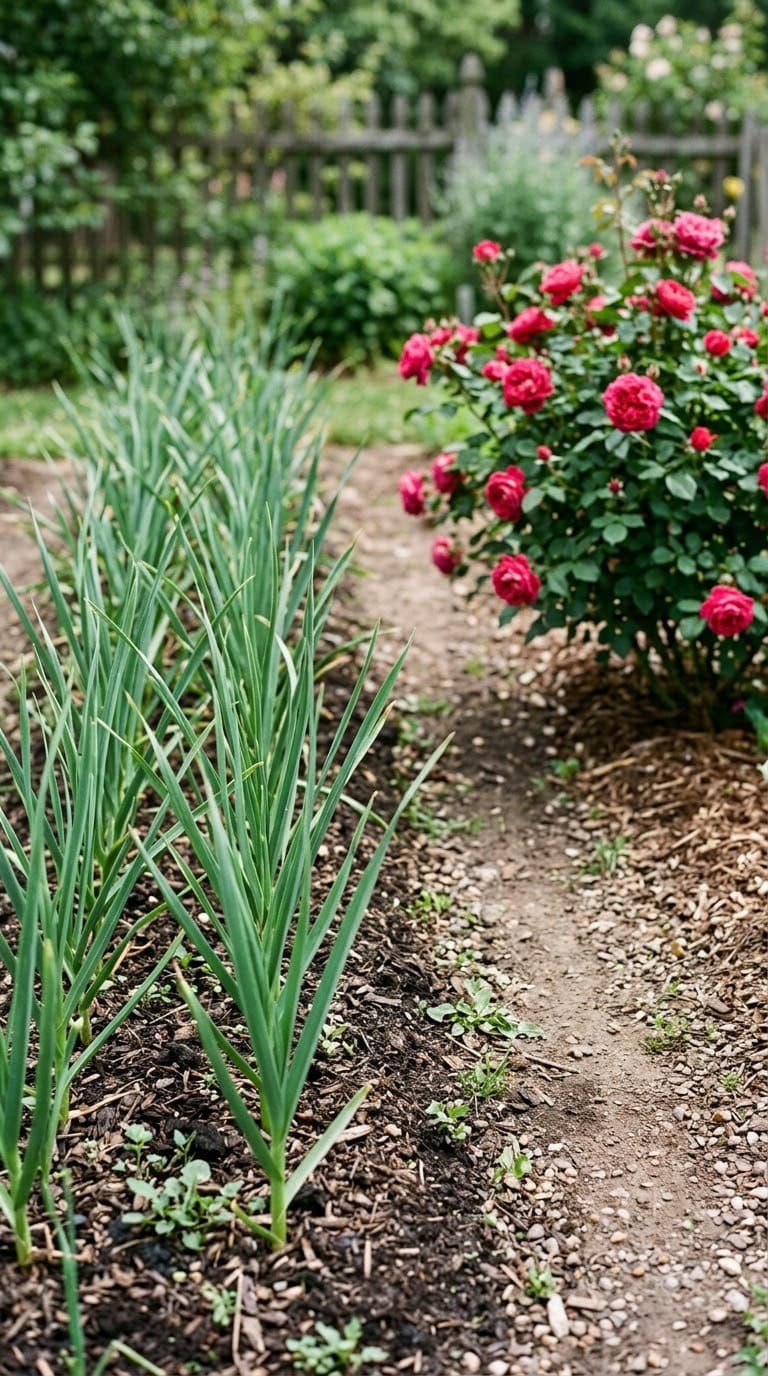
Why it’s a problem: Also allelopathic, but through a different chemical pathway than walnut. Garlic (and other alliums like onions and chives, though less intensely) releases sulfur compounds into the surrounding soil as it grows, and those compounds can interfere with a rose’s ability to take up nutrients at close range.
Garlic’s own root system is shallow and aggressive at the same time, so it’s competing for the same topsoil layer roses feed from while also chemically working against them there.
Minimum distance: A foot or more from the rose’s root zone is generally fine, this is a much shorter-range problem than black walnut. Garlic planted a few feet out in the same bed, rather than tucked right against the rose’s base, is where most gardeners actually see success, some even use it as a mild pest deterrent at that distance.
If you already planted too close: This one’s an easy, cheap fix, garlic is shallow-rooted and simple to lift and relocate a foot or two away without disturbing the rose. No cost beyond your own time, and if you’re rethinking the whole bed layout while you’re at it, some layout inspiration built specifically around rose plantings can help you plan the swap.
3. Fennel
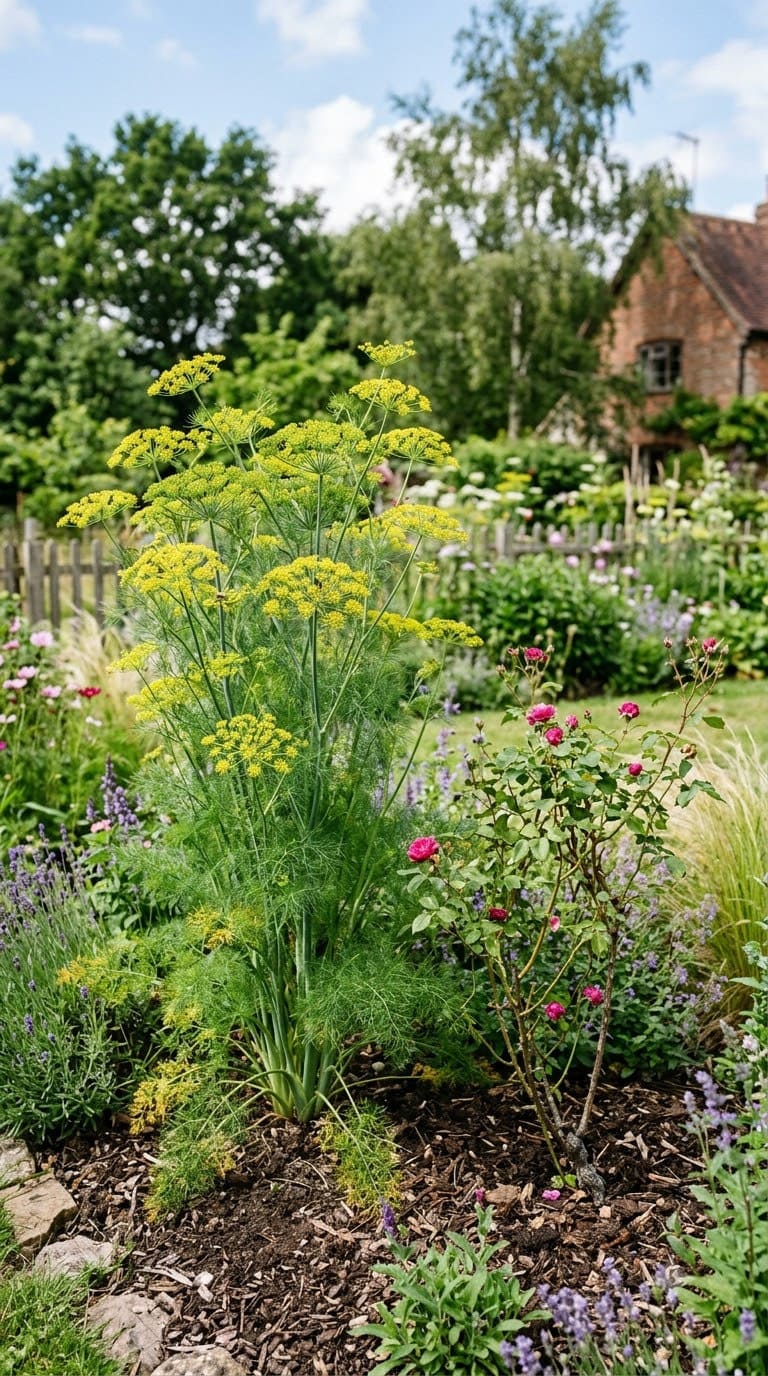
Why it’s a problem: Fennel is one of the few plants gardeners are actively warned against pairing with almost anything, because it releases root exudates that are allelopathic to many neighboring plants, roses included, and on top of that it’s an unusually heavy feeder, pulling hard on the nitrogen, phosphorus, and potassium roses need for blooming.
The average homeowner spends $616/year on yard fixes that don't address the real problem. Find out what yours actually is — before you spend another dollar.
Take the Free QuizIt’s a double hit: the chemical suppression plus straightforward nutrient theft.
Minimum distance: Several feet at minimum, and most experienced growers just keep fennel in its own dedicated bed entirely rather than mixing it into ornamental plantings.
This matters more for some rose varieties than others, since not every rose type has the same feeding demands or root depth, so a heavier feeder among roses will show fennel competition faster.
If you already planted too close: Relocate it, fennel transplants reasonably well when young. If it’s mature and heavily rooted, cutting it back hard and monitoring the rose’s next feeding cycle (does it green up normally with regular fertilizer, or stay pale) will tell you whether the fennel is still pulling nutrients away.
4. Mint
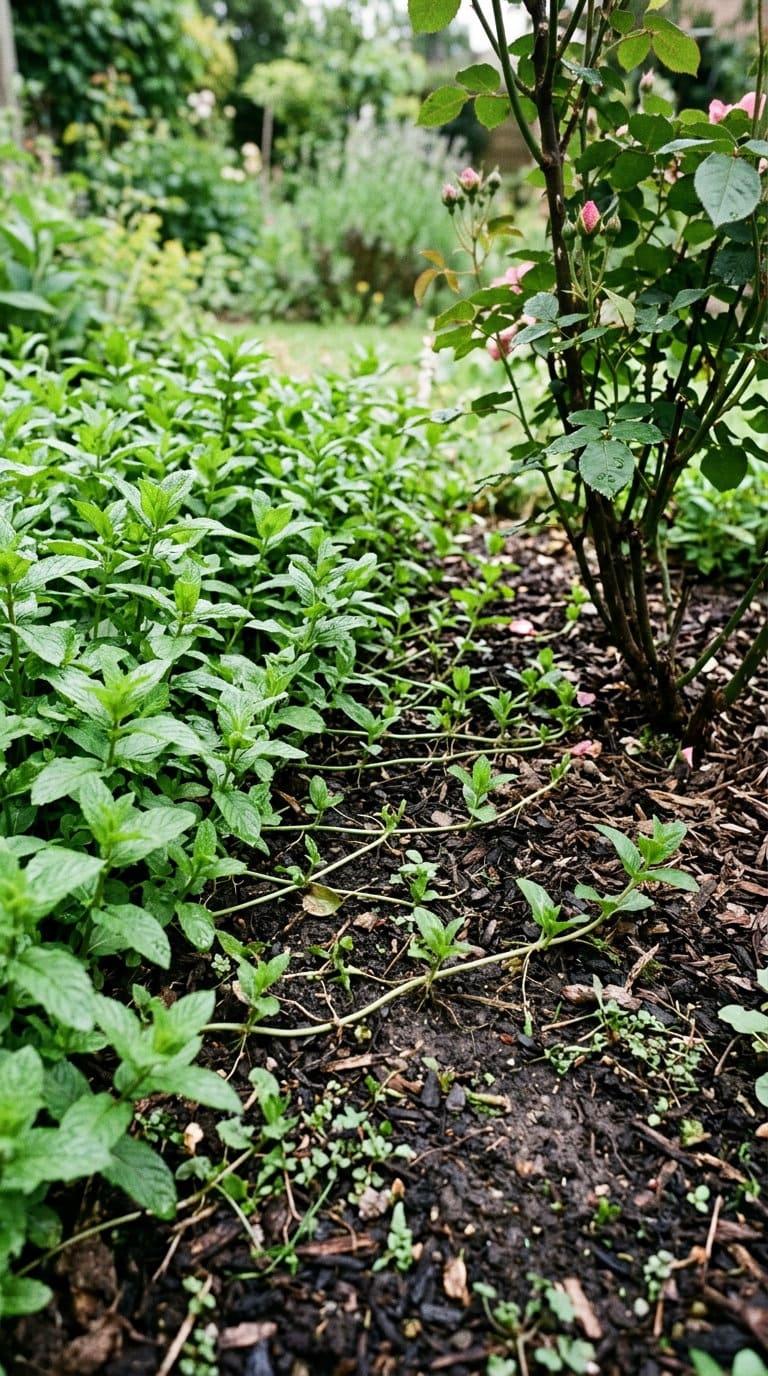
Why it’s a problem: Mint is the classic cautionary tale in any garden bed, not just rose beds, because of how it spreads. Its rhizomes run just under the soil surface and can colonize a rose’s entire root zone within a season or two, competing directly for water and nutrients and physically crowding out the rose’s own shallow feeder roots.
Kristen Smith, Rose Evaluation Manager at Star Roses and Plants, has pointed out that mint’s rapid spreading habit is exactly the kind of aggressive growth that overwhelms a slower-establishing rose before the gardener even notices it happening.
Minimum distance: Don’t plant mint in the open ground anywhere near a rose bed, full stop, it will find its way in. If you want mint’s pest-deterrent scent nearby, grow it in a buried container with the bottom cut out only partially, or better, a container that sits entirely above ground.
If you already planted too close: This is one of the more labor-intensive fixes on the list. You’ll likely need to dig out the entire root mat, not just the visible top growth, and check back the following season since a missed rhizome fragment regrows easily. Budget it as a half-day project, not a five-minute pull.
5. Potatoes, Tomatoes, and Peppers (Nightshades)
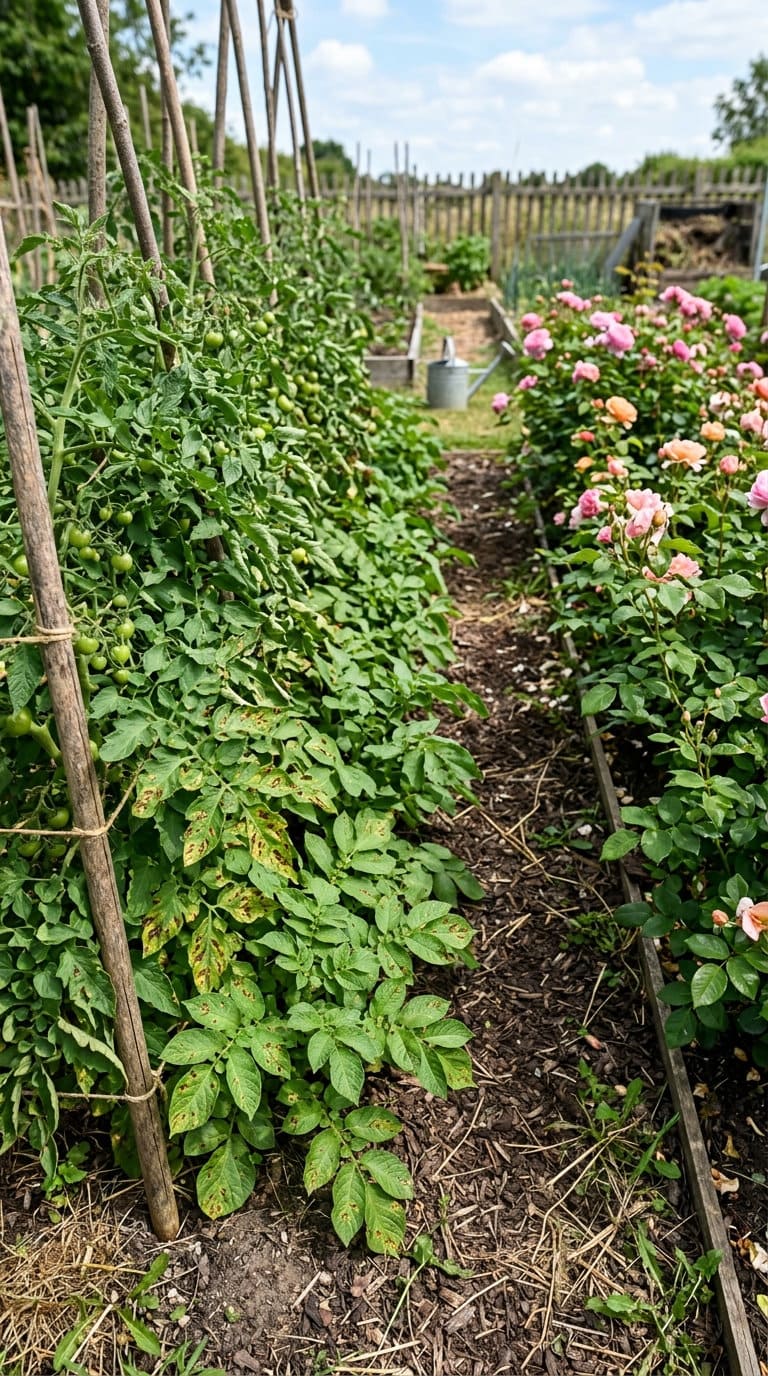
Why it’s a problem: Disease-sharing, and it’s one of the better-documented mechanisms on this list. Potatoes, tomatoes, and peppers are all nightshades, and they’re susceptible to several of the exact same problems that already threaten roses, including verticillium wilt and fungal issues that overlap with black spot symptoms.
They also attract the same pests, aphids and spider mites, which means an infestation on one plant becomes a launching point onto the other. This pairing matters most if you’re a gardener who grows both roses and a kitchen garden in the same yard and is tempted to tuck a tomato plant into an open gap in the rose bed.
Minimum distance: Keep them in separate beds where practical. If space forces them close, at least several feet of separation and good airflow between the two groupings reduces the disease-jump risk noticeably.
If you already planted too close: Watch both plants closely through the season rather than relocating immediately, since a single season of proximity without symptoms doesn’t guarantee a problem, but the first sign of aphids, spider mites, or fungal spotting on either plant is your signal to separate them before it spreads further.
6. Snapdragons
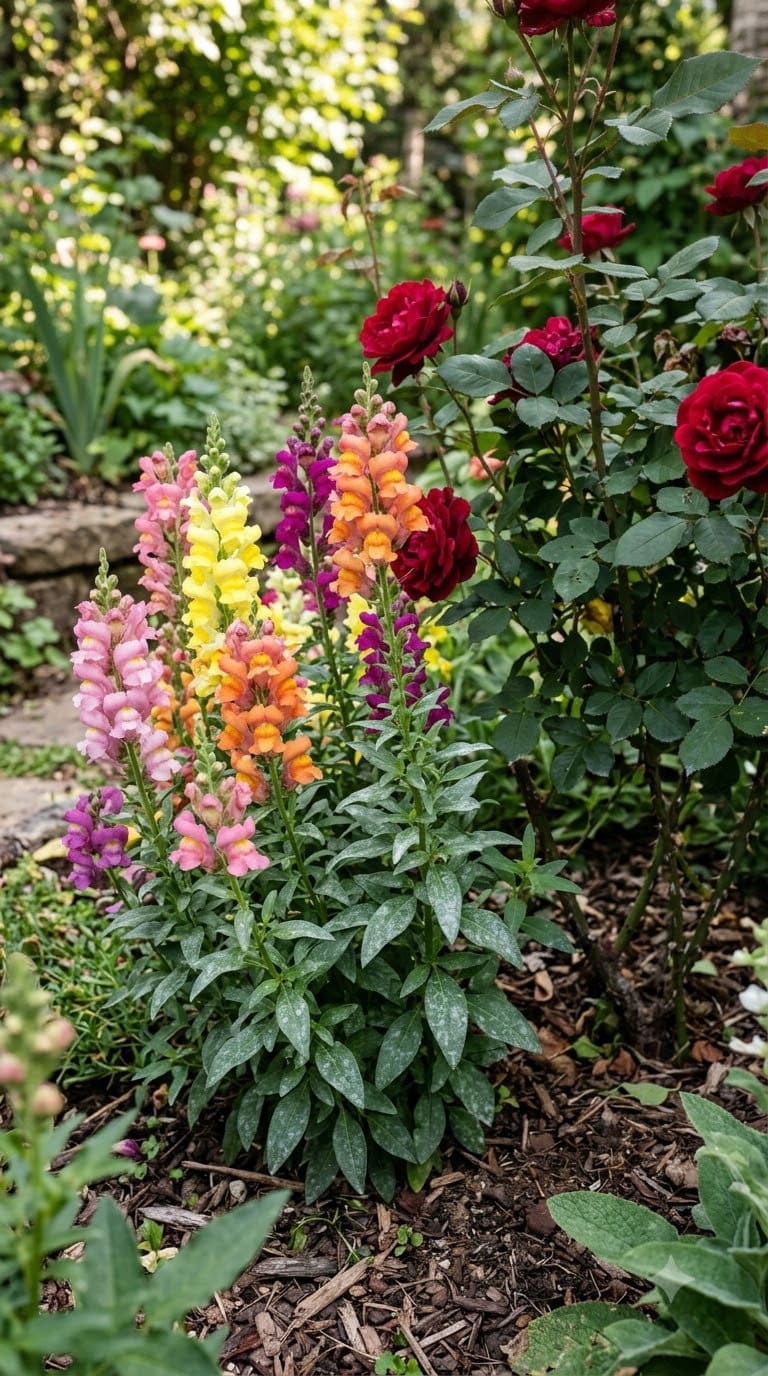
Why it’s a problem: Snapdragons are extremely susceptible to both powdery mildew and rust, the same two fungal diseases that are already a rose gardener’s biggest ongoing headache.
Planting them close together essentially doubles the surface area for those spores to establish and spread between plants, especially in humid climates or a bed with poor airflow.
Minimum distance: If you love snapdragons, keep them in a separate bed or at least several feet away with something less disease-prone (lavender or catmint, for example) buffering the space between.
If you already planted too close: Watch both plants at the first sign of powdery mildew’s telltale white coating or rust’s orange pustules on leaf undersides, and treat or remove the infected plant promptly rather than waiting, since fungal spores spread on wind and water splash and won’t stay contained to one plant for long.
A walkthrough of how to catch and treat fungal outbreaks early covers the same identify-and-act approach in more depth.
7. Lilac
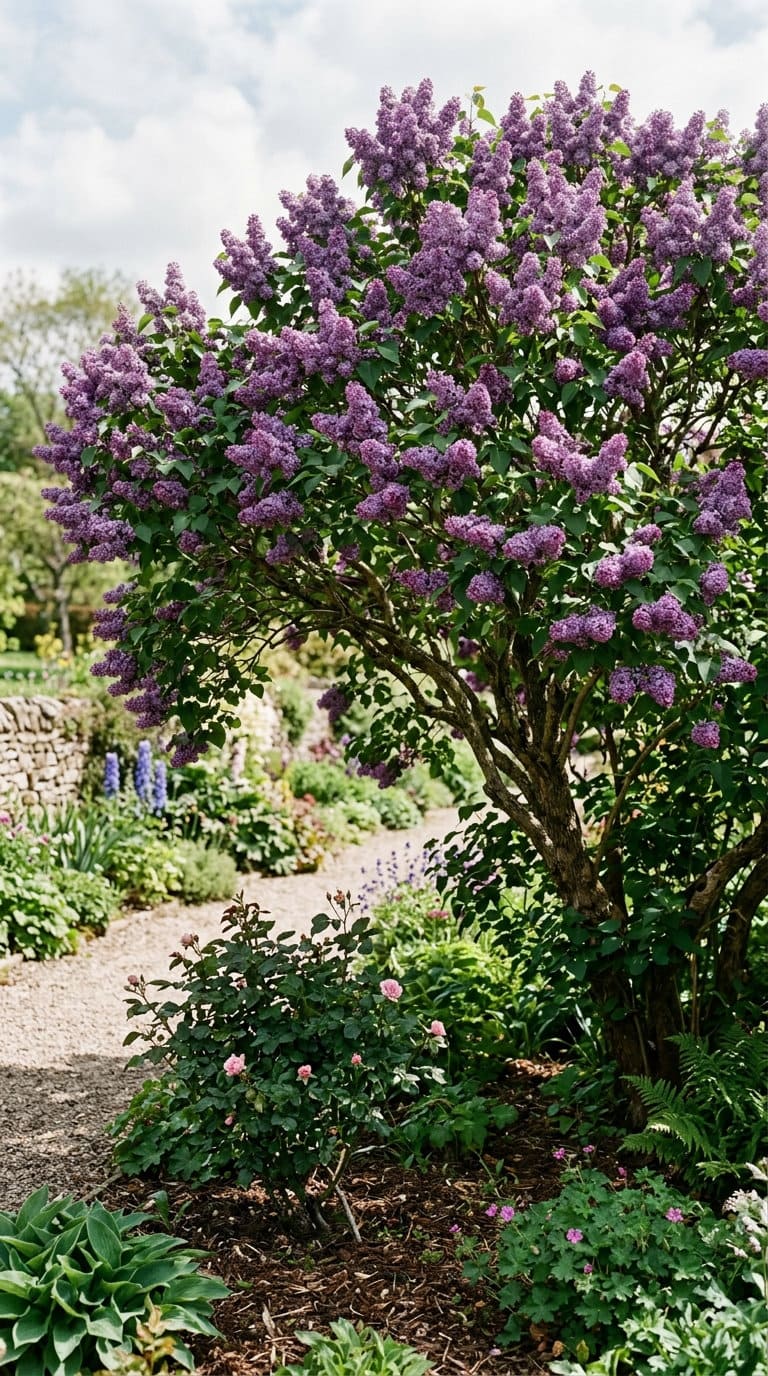
Why it’s a problem: Two mechanisms stacked on top of each other. Lilac is a large, woody shrub with an extensive root system that will outcompete a rose for water and nutrients over time, the same root-competition problem as several other large woody plants.
On top of that, lilac carries its own real susceptibility to powdery mildew, so it functions as a disease reservoir sitting right next to roses that are already fighting the same fungus.
Minimum distance: Several feet at minimum, and treat lilac more like a background hedge or specimen shrub than a rose-bed companion. Its mature size (many varieties reach 8 to 15 feet) also means it’ll eventually shade whatever’s planted too close.
If you already planted too close: Relocating a mature lilac is a genuine bigger-investment project, root balls on established shrubs are large and heavy, so this is often a case where pruning the lilac back hard to control its spread and improving airflow between the two plants is more realistic than digging it out.
8. Sunflowers
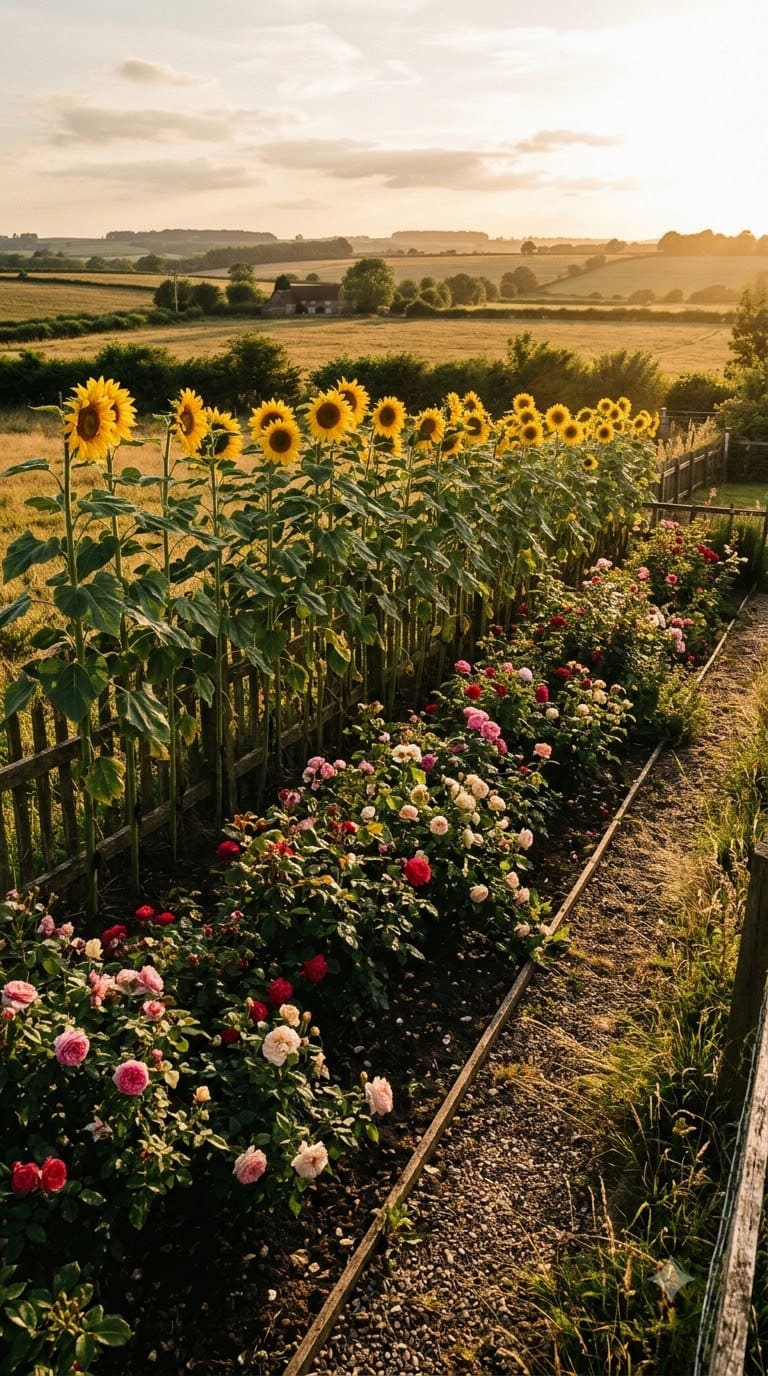
Why it’s a problem: Sunflowers are fast, tall, and thirsty, which sounds harmless until you remember roses need consistent water and a full six hours of unobstructed sun.
A stand of sunflowers planted too close will pull hard on the shared water supply through their own wide-spreading roots, and their height will start shading the rose bed as the season progresses, right when roses need peak sun for their strongest bloom cycle.
Minimum distance: Plant sunflowers on the north side of a rose bed if you want them nearby at all, so their shadow falls away from the roses rather than across them, and give several feet of separation regardless.
If you already planted too close: Sunflowers are annuals, so the easiest fix is often just not replanting them in that spot next year and giving the rose a full season to recover its water and light access. If the shading was severe, expect the rose to need a season to bounce back to full bloom, not an overnight recovery.
How the 8 Plants Compare
| Plant | Main Conflict Mechanism | Severity | Safe Minimum Distance |
|---|---|---|---|
| Black walnut | Allelopathy (juglone) | Severe | 50+ ft (outside dripline) |
| Garlic/alliums | Allelopathy + shallow root competition | Mild | 1-2 ft |
| Fennel | Allelopathy + heavy nutrient draw | Moderate | Several feet, separate bed preferred |
| Mint | Aggressive root/rhizome spread | Moderate to severe | Container only, no open ground |
| Potatoes/tomatoes/peppers | Disease-sharing + shared pests | Moderate | Several feet, separate bed preferred |
| Snapdragons | Disease-sharing (mildew, rust) | Moderate | Several feet with a buffer plant |
| Lilac | Root competition + disease reservoir | Moderate to severe | Several feet, treat as background shrub |
| Sunflowers | Water/nutrient competition + shading | Moderate | Several feet, plant on the north side |
What We Learned the Hard Way
The mistake most people make isn’t picking an obviously bad plant on purpose, it’s not realizing what’s happening until the rose has already been struggling for a season.
A yellowing, stunted rose planted along a property line, with no obvious pest and no obvious disease, is one of the most confusing situations a home gardener can run into, and more often than people expect, the actual cause is a black walnut tree on the other side of the fence, sometimes on a neighbor’s property where you can’t even see the trunk.
Purdue Extension’s own guidance is clear that juglone’s toxic radius reaches well past where most people assume a tree’s “influence” stops, which is exactly why this one catches gardeners off guard more than any other plant on this list.
The second most common real-world mistake isn’t about a specific bad-neighbor plant at all, it’s simple overcrowding within the rose bed itself. Roses planted too close together, even to other roses, cut off the airflow that keeps leaves dry between waterings, and that’s often the actual trigger behind a black spot outbreak that a gardener blames on “bad luck” or weather.
If you’re troubleshooting a struggling rose bed, don’t only look at what’s planted around the roses, take an honest look at whether the roses themselves have enough breathing room too.
If you’ve already got a bad pairing in the ground, the honest answer is that not every mistake needs the same fix. A garlic bulb planted too close is a five-minute relocation. A mature lilac competing with a rose bed is a multi-season project that might mean living with reduced vigor rather than digging out an established shrub.
Match the fix to the actual severity in the table above rather than assuming every “wrong neighbor” situation calls for the same drastic response, and when in doubt, a season of close observation (checking for the specific symptoms tied to that plant’s mechanism, yellowing for allelopathy, spotting for disease-sharing, stunted growth for competition) will tell you more than guessing.
Frequently Asked Questions
Does mint really take over a rose bed that fast? Yes, mint’s underground rhizomes are aggressive enough to spread through an entire bed within one to two growing seasons if left unchecked in open ground. Container growing (with the container fully above ground, not buried) is the standard fix if you want mint’s scent nearby without letting it compete with your roses.
Can I plant tomatoes near my roses if I keep an eye on them? You can, but it’s a real risk rather than a myth, since tomatoes and roses share several of the same pests and some overlapping fungal issues. If you do it anyway because of limited yard space, give several feet of separation and good airflow, and treat the first sign of aphids or spotting on either plant as your cue to act.
How far away is actually safe for a black walnut tree? Purdue University Extension’s guidance puts the juglone toxic zone at 50 to 80 feet from a mature tree’s trunk, with the strongest concentration directly under the canopy. If a walnut is closer than that to your rose bed, a lined raised bed with clean soil is the more realistic fix than trying to relocate a mature tree.
Is garlic actually bad for roses, since I’ve read it’s a good companion plant? Garlic is a genuine exception on this list. It’s a problem right at the rose’s root zone due to its sulfur compounds and shallow, competing roots, but planted a foot or more away in the same bed, many gardeners use it successfully as a mild pest deterrent. Distance is the whole difference here.
What’s the single biggest thing to check if my rose is struggling and I can’t tell why? Start with airflow and sun before assuming disease or pests: is anything within a few feet tall enough to shade the rose below six hours of sun, and is anything crowding the base closely enough to trap moisture around the canes. Those two conditions, more than any single “bad neighbor” plant, are what the American Rose Society’s own placement guidance centers on, and they’re the fastest thing to rule in or out.
Better Companions Instead
If you’re pulling out a bad neighbor from this list, marigolds are a genuinely solid replacement, they’re a well-documented pest deterrent, they share roses’ sun and water needs closely enough not to compete, and they don’t carry any of the disease or allelopathy risks above.
If you haven’t grown them before, a beginner-friendly guide to getting marigolds established covers the basics, and pairing them with a short list of plants that specifically help push aphids away from a bed rounds out a rose bed that actually works in the rose’s favor instead of against it.
Related Posts
Products We Recommend
This post contains affiliate links. We may earn a commission on qualifying purchases at no extra cost to you.
Espoma Organic Rose-Tone 4-3-2 Fertilizer
A dedicated rose fertilizer to rebuild nutrients if a bad neighbor (fennel, mint, sunflowers) has been competing for them
Shop Now
Bonide Captain Jack's Copper Fungicide, Ready-to-Use
Treats black spot and powdery mildew if a disease-sharing neighbor (snapdragons, tomatoes, lilac) has already spread spores to your roses
Shop Now
Burpee Triple Treat Marigold Seeds
A genuinely good companion to replace a bad neighbor with, pest-deterrent without the competition risk
Shop NowNever miss an update — choose FarmFoodFamily as your preferred source on Google.
How it works: Tap the button below to open Google's settings page, then check the box next to FarmFoodFamily.
Tap the checkbox to turn it blue — that's how you know it's set.