6 Cozy Outdoor Rug Ideas That Instantly Warm Up a Patio for Fall
A rug does more for a fall patio than any pumpkin display, here’s exactly which one, sized and placed correctly, for six real patio setups.

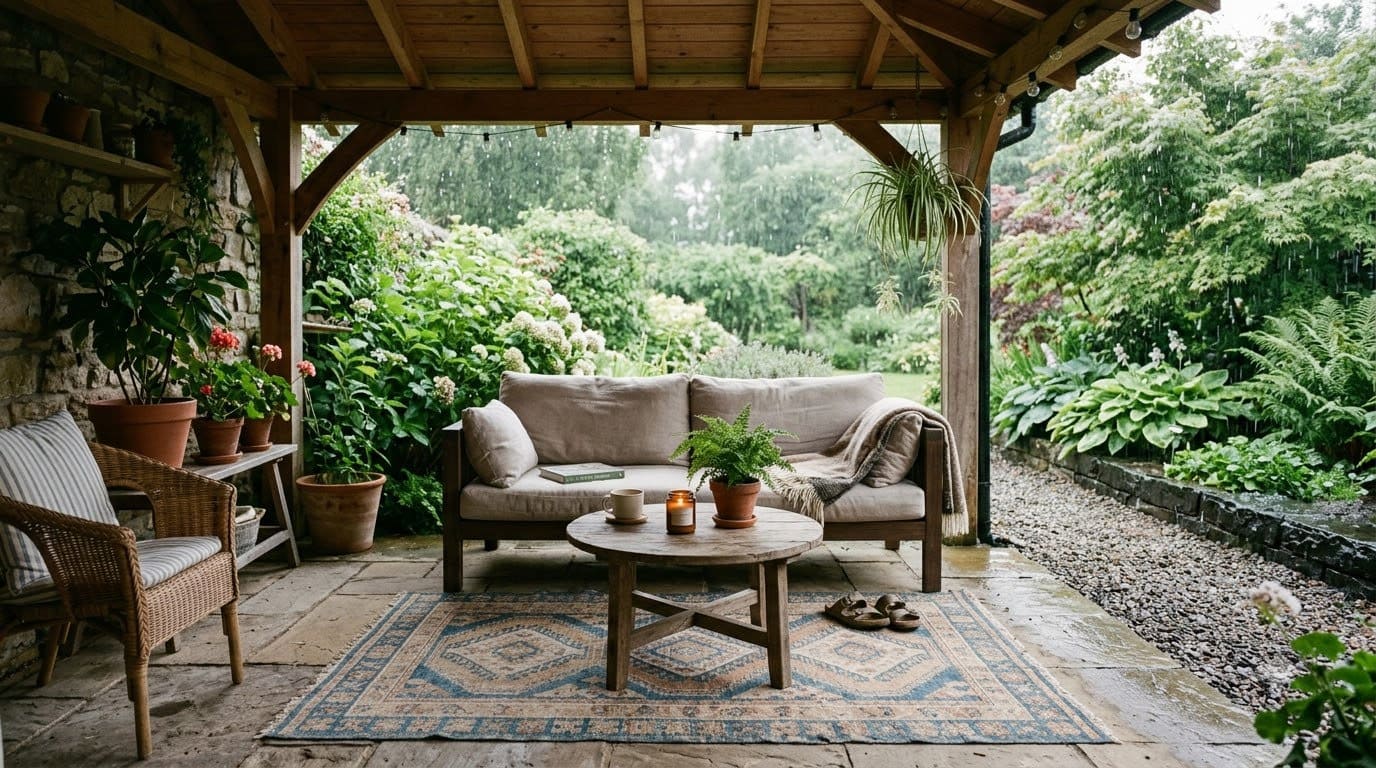


Never miss an update — choose FarmFoodFamily as your preferred source on Google.
How it works: Tap the button below to open Google’s settings page, then check the box next to FarmFoodFamily.
Tap the checkbox to turn it blue — that’s how you know it’s set.
An outdoor rug is the fastest way to make a fall patio feel finished, but most people get the size and material wrong before they even think about color. Interior designer Brittny Button says a rug “needs to frame the furniture,” with front chair legs sitting on it, not floating in empty space beside it.
Designers like Marlene Friedberg and Rochelle Lee point to polypropylene or recycled PET for real weather resistance, not natural fiber, which breaks down fast once actual rain and sun hit it outdoors.
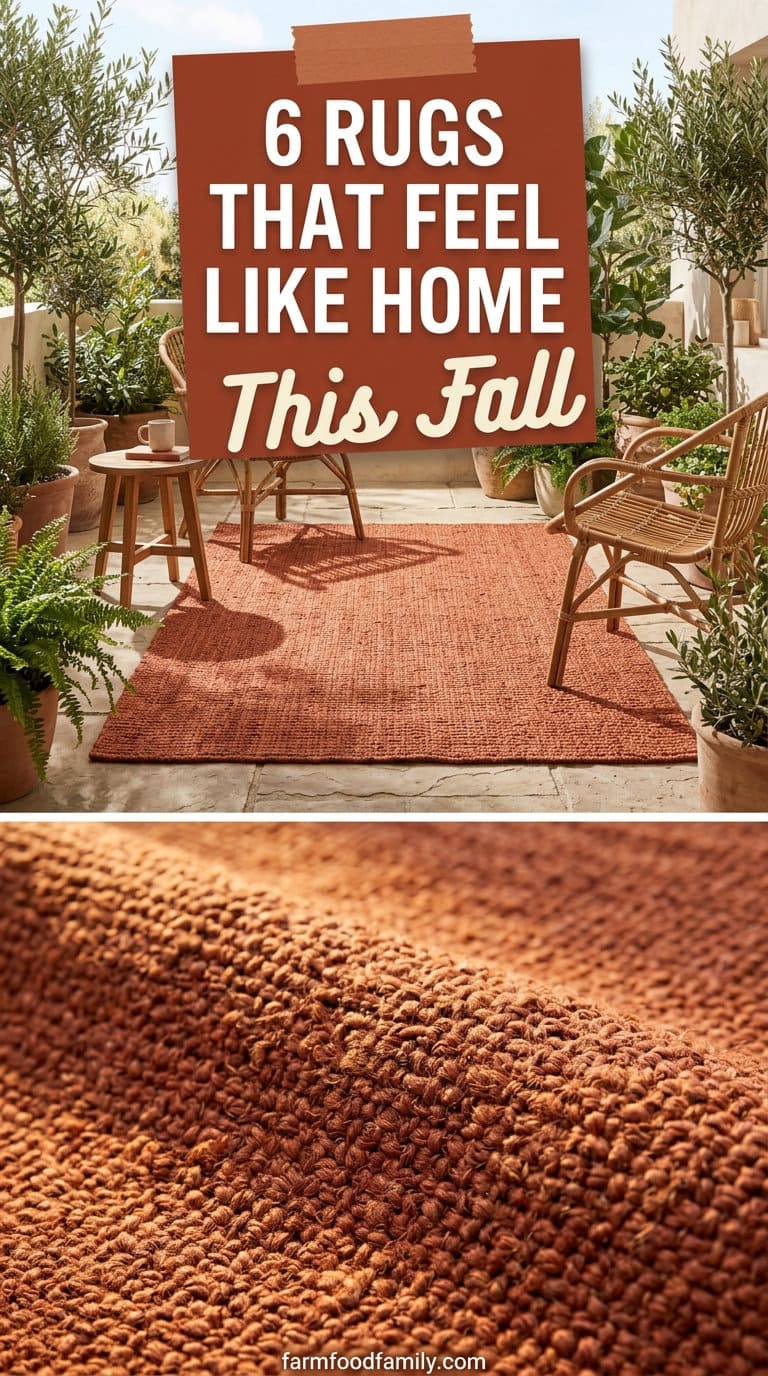
These 6 rug ideas cover a properly-sized seating rug, a bold terracotta color pick, a durable covered-patio material, a grass-edge option, a balcony runner, and a dining-zone anchor, each tied to a real designer’s own reasoning and a specific, currently-available product rather than a generic style suggestion.
At a Glance: 6 Rug Ideas for Fall
| Idea | Best For | Material | Approx. Size |
|---|---|---|---|
| 1. Properly-sized seating rug | Anchoring a furniture grouping | Polypropylene | 5×7 |
| 2. Bold terracotta stripe | Fall color warmth | Polypropylene flatweave | 3×5 |
| 3. Washable braided pick | Covered patios, high traffic | Polypropylene | 3×5 |
| 4. Recycled plastic rug | Lawn-adjacent patios | Recycled PET | 5×8 |
| 5. Patterned no-fringe runner | Narrow balconies, walkways | Polypropylene | 2×8 |
| 6. Large dining-zone rug | Under a patio table | Polypropylene blend | 8×10 |
Why Sizing Comes Before Style
Every fall, patio roundups jump straight to color and pattern. The part that actually makes or breaks the look is sizing, and it’s the part most people skip.
Interior designer Brittny Button, founder of Button Atelier in Los Angeles, put it directly: “an exterior rug needs to frame the furniture.” Her rule is simple: measure the seating group first, then buy a rug large enough that at least the front legs of every chair and sofa sit on it.
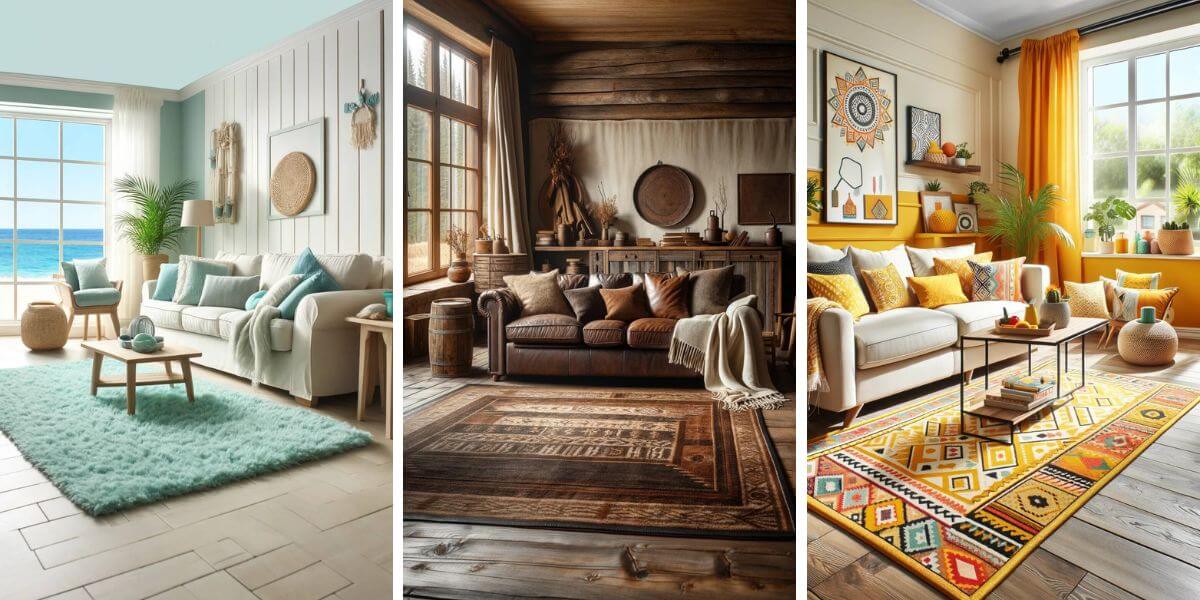

A rug that floats in the middle of a seating area, too small for the furniture around it, reads as an afterthought no matter how nice the pattern is.
That’s why sizing comes first in every idea below, before color or material.
1. Get the Size Right Before Anything Else
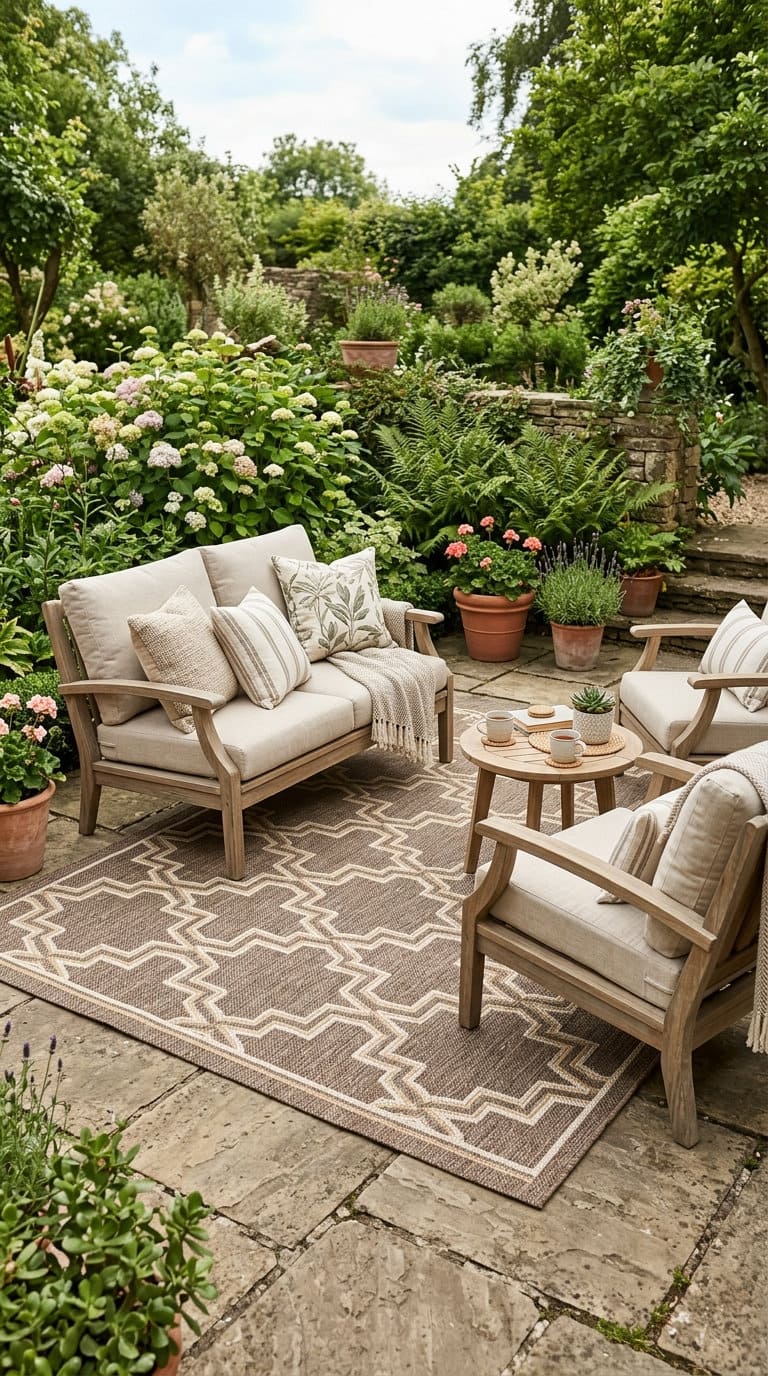
A too-small rug is the single most common outdoor styling mistake, and it’s an easy one to avoid once you know the rule.
The fix: Measure your seating group’s outer edges first, not the patio itself. For a loveseat plus two chairs, that’s typically a 5×7 or 6×9 rug, per Button’s framing rule: front legs on the rug, back legs can sit just off the edge.
If you’re between two sizes, size up. A rug that’s slightly too big still reads intentional. A rug that’s even a few inches too small snaps back to looking like an afterthought the moment someone sits down and their chair legs miss the edge entirely.
Once the size is locked in, the actual placement work is fast: center the rug under the seating group’s midpoint, not the patio’s, then slide furniture in until front legs land on the rug consistently. Uneven placement, where one chair’s legs are on and another’s are off, is the second-most common version of this mistake, and it’s just as noticeable in photos as a too-small rug is in person.
Rug pick: MontVoo Polypropylene Patio Rug, 5×7, Boho Geometric costs $44.99, 4.6★ across 144 ratings, 100+ bought in the past month. Neutral brown tone works as a base layer under almost any fall color scheme, and the textured weave hides dirt between cleanings better than a flat solid color would.
Answer 4 quick questions and get matched to the exact fix for your yard — drainage, budget, layout, or something else entirely.
Take the Free QuizBudget tier: DIY-cheap.

This post contains affiliate links. We may earn a commission on qualifying purchases at no extra cost to you.
2. Trade Faded Terracotta for a Bolder Version
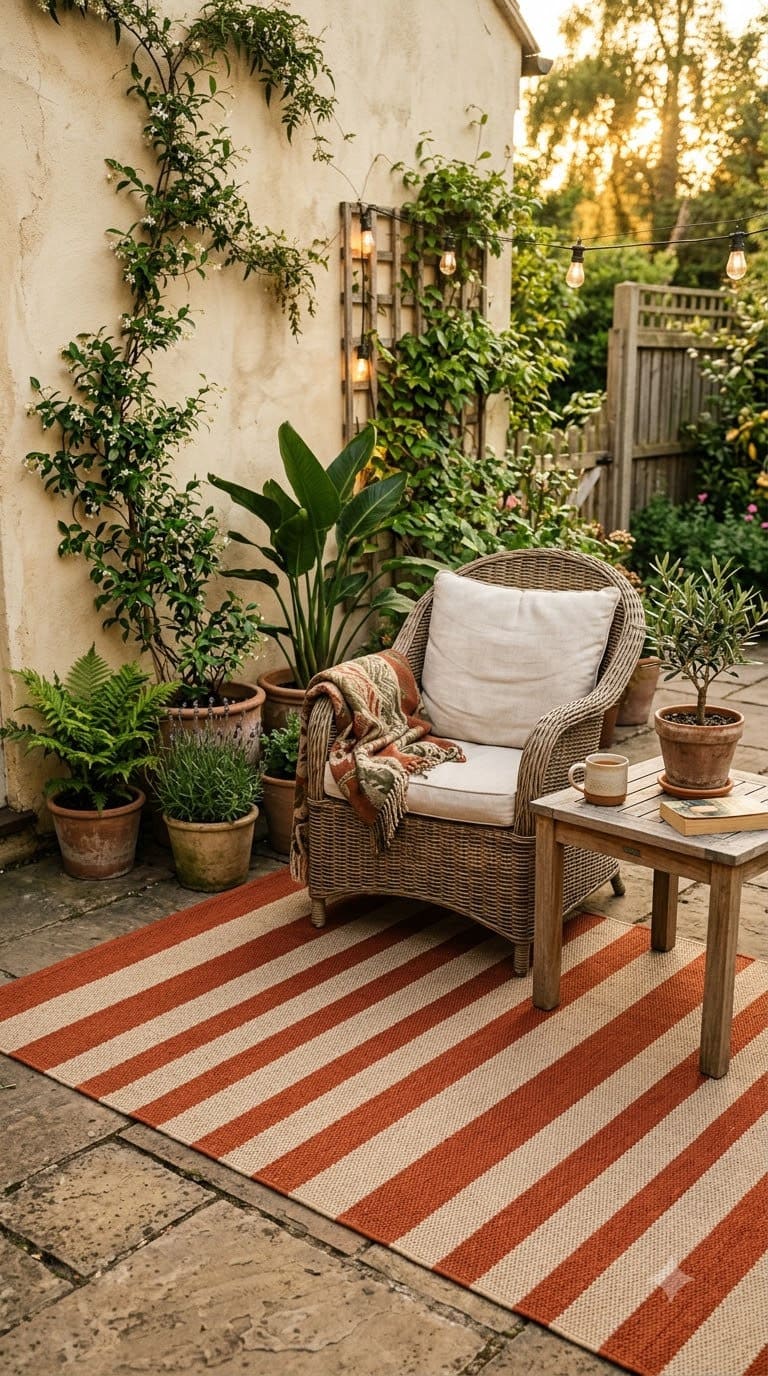
Washed-out terracotta has dominated patio color for a few years running. The fall 2026 shift is toward richer, more saturated earth tones: deep terracotta, ochre, and rust, not the pale, sun-bleached version that’s been everywhere since around 2022.
The fix: A bold striped terracotta rug does more to warm up a space than a solid pale one, especially once the golden late-afternoon light hits it. The two-tone stripe pattern also does practical work a solid color can’t: it breaks up visual monotony on a small patio and hides the kind of everyday grit (leaf debris, dropped food, pollen dust) that shows up fast on a flat pale surface.
Where this trend actually lives is in the accessories around the rug, not just the rug itself. Pair it with one or two solid-color cushions in mustard or cream rather than a second pattern, since two bold patterns on a small patio compete instead of complementing each other.
A single terracotta-toned planter or a stack of chunky-knit throws nearby extends the same warm palette without repeating the exact stripe.
Rug pick: JONATHAN Y Negril Two-Tone Wide Stripe Rug, Orange/Beige costs $32.17, 4.2★ across 85 ratings. Flatweave construction, easy to hose off, and light enough at 3×5 to reposition seasonally without needing two people to move it.
Most yard problems trace back to one specific, fixable cause. Find yours in 4 quick questions.
Take the Free QuizBudget tier: DIY-cheap.
3. Choose a Real Weather-Resistant Material for Covered Patios
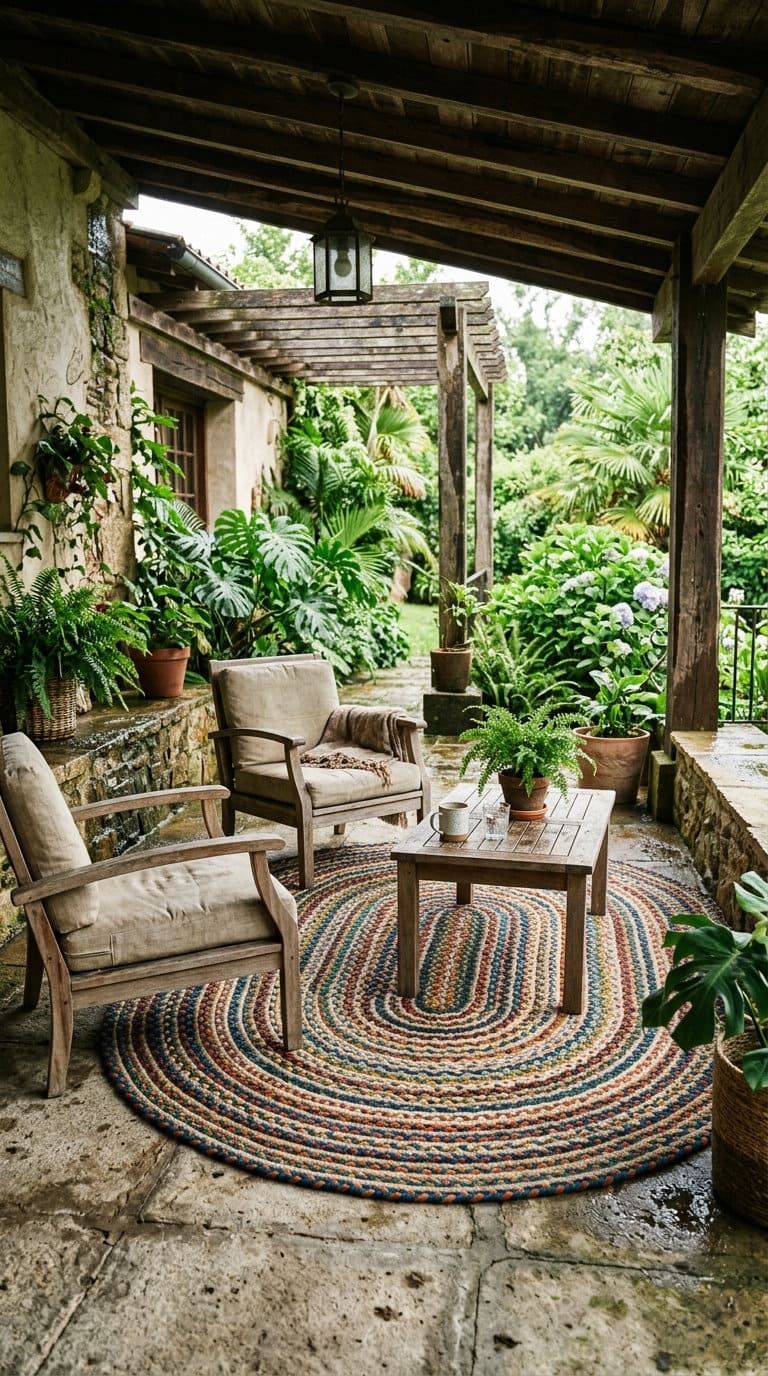
Marlene Friedberg, of Marlene Interiors & Design, calls polypropylene “the superior choice overall” for outdoor rugs: UV-resistant, budget-friendly, and easy to clean. Rochelle Lee, an interior designer, adds that synthetic materials specifically “repel moisture while resisting mildew” on concrete and wood surfaces.
The fix: For a covered patio that still gets splashback from rain or humidity, skip natural fiber entirely. Jute and sisal look nice in photos but break down fast once real weather hits them, and a covered patio is deceptively risky for this exact reason: people assume “covered” means “protected,” but wind-driven rain and ambient humidity still reach most covered spaces regularly.


Construction matters here almost as much as material. Flatweave or low-pile rugs (under 1/4 inch) dry within hours after getting damp, while high-pile rugs can trap moisture for days, exactly the environment mildew needs.
A braided or tightly-woven flatweave in polypropylene checks both boxes at once: the right material, in a construction that actually dries fast.
Rug pick: Safavieh Braided Indoor/Outdoor Washable Accent Rug, 3×5, Multi costs $58.79, 4.6★ across 42 ratings. Machine washable, a real advantage for a covered space that still collects pollen and dust between cleanings, and the low-pile braided construction dries fast after the rain gets in sideways.
Budget tier: Moderate.
4. Pick Recycled Plastic for a Grass-Adjacent Edge
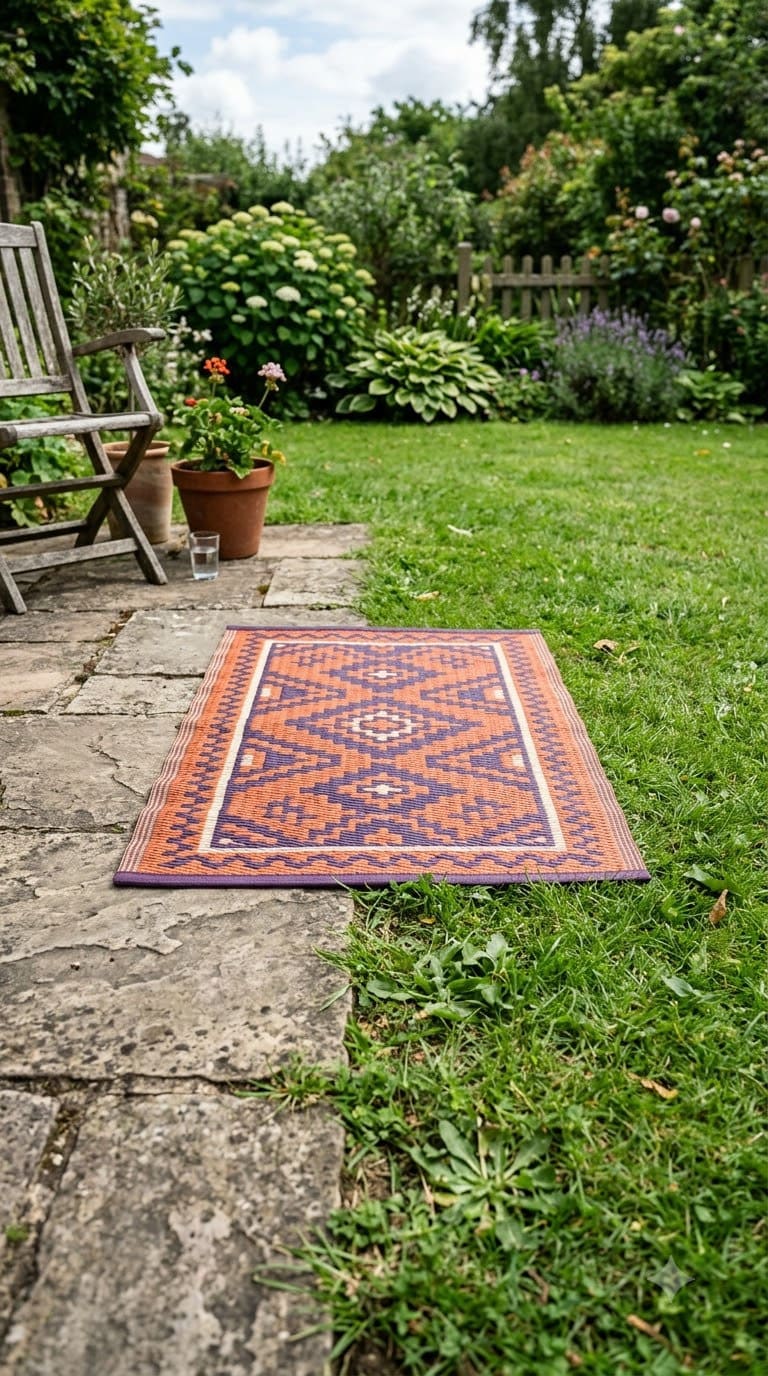
The fix: A patio that borders lawn takes more grass clippings, dirt, and moisture than one surrounded by hardscape, and mower overspray on mowing day is a real, recurring issue that hardscape-only patios never deal with.
Friedberg recommends recycled PET (plastic) rugs specifically for this situation, since they’re naturally fade-resistant, lightweight, and quick-drying compared to woven synthetics.
The reversible construction most recycled-PET rugs use is the actual reason they work well here, not just a nice-to-have. One side takes the brunt of grass stains and sun exposure for a season, and when it starts to look worn, flipping it buys another full season before replacement, something a one-sided woven rug can’t offer.
They’re also light enough to shake out or hose down in place, which matters more on a grass edge than almost anywhere else on the patio, since that’s where debris actually accumulates fastest.
The average homeowner spends $616/year on yard fixes that don't address the real problem. Find out what yours actually is — before you spend another dollar.
Take the Free QuizRug pick: Fab Habitat Recycled Plastic Outdoor Rug, Lhasa, Orange & Violet, 5×8 costs $102.99, 4.6★ across 8,492 ratings, Amazon’s Choice. Reversible, so a faded side can be flipped rather than replaced, and the two-color pattern hides mower-season grass stains better than a single flat tone would.
Budget tier: Moderate to bigger investment.
5. Use a Patterned Runner for a Narrow Balcony
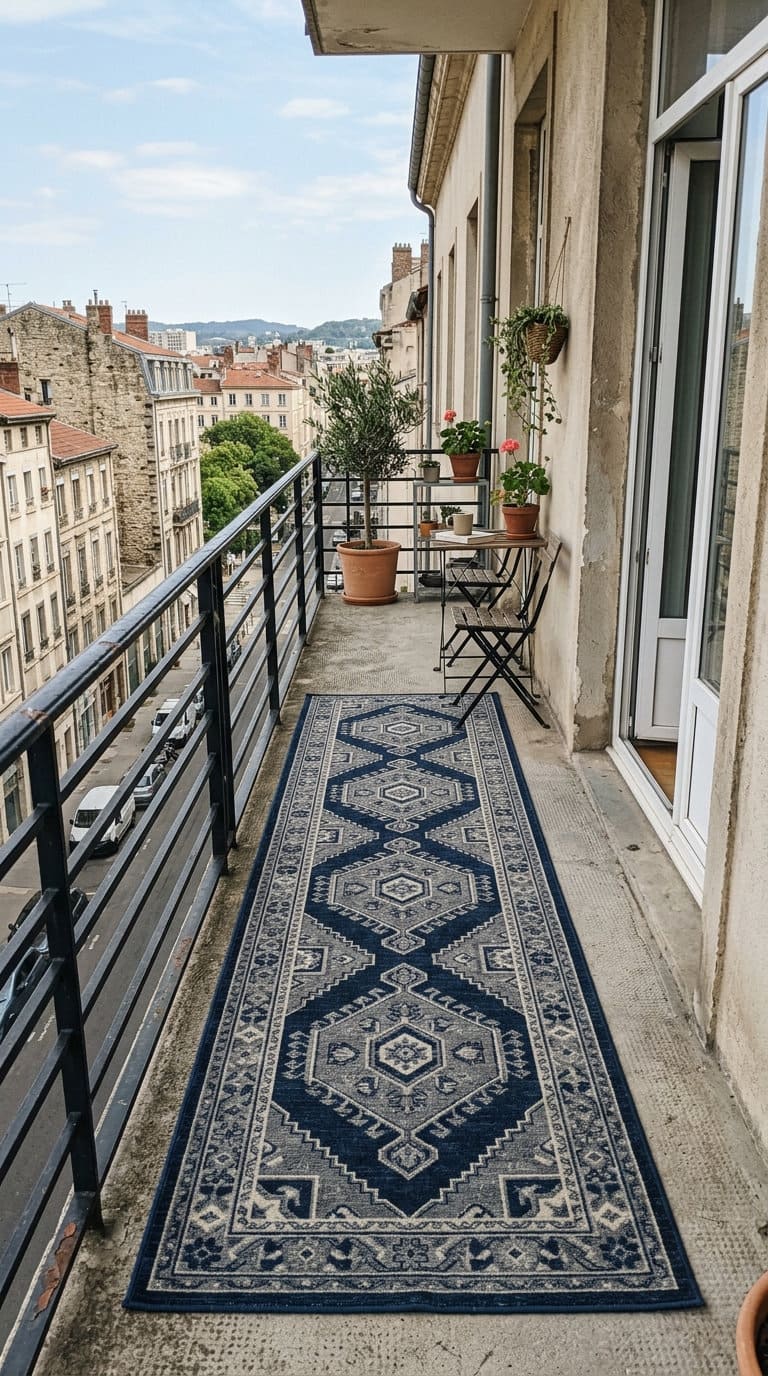
Larina Kase, a designer, recommends patterned rugs without fringe for high-traffic outdoor spots, since fringe catches debris and pattern hides everyday dirt between cleanings.
The fix: A narrow balcony or walkway needs a runner, not a scaled-down area rug, and this is where the sizing rule from idea #1 flips: instead of framing furniture, a runner needs to frame the walkway itself, with a few inches of bare floor visible on each long side rather than wall-to-wall coverage.
Rug Branch’s own sizing guidance puts balcony runners in the 2×6 to 2×10 range depending on the space, and going a size longer than the exact walkway length usually reads better than an exact match, since a runner cut precisely to the space can look accidental rather than chosen.
Fringe is worth avoiding for a reason beyond looks: on a balcony specifically, wind catches loose fringe and works it loose from the backing faster than foot traffic alone would.
A flatweave medallion or geometric pattern does the same visual job (breaking up a long narrow space) without that failure point, and it hides the scuffed, high-traffic wear pattern that develops down the center of any runner within the first season.
Rug pick: JONATHAN Y Estrella Boho Medallion Runner, 2×8, Navy/Gray costs $40.99, 4.7★ across 2,407 ratings. No fringe, flatweave pattern that hides foot traffic marks, and the navy/gray colorway works as a cooler counterpoint if the rest of the patio leans warm.
Budget tier: DIY-cheap.
6. Anchor a Fall Dining Zone With a Large Rug
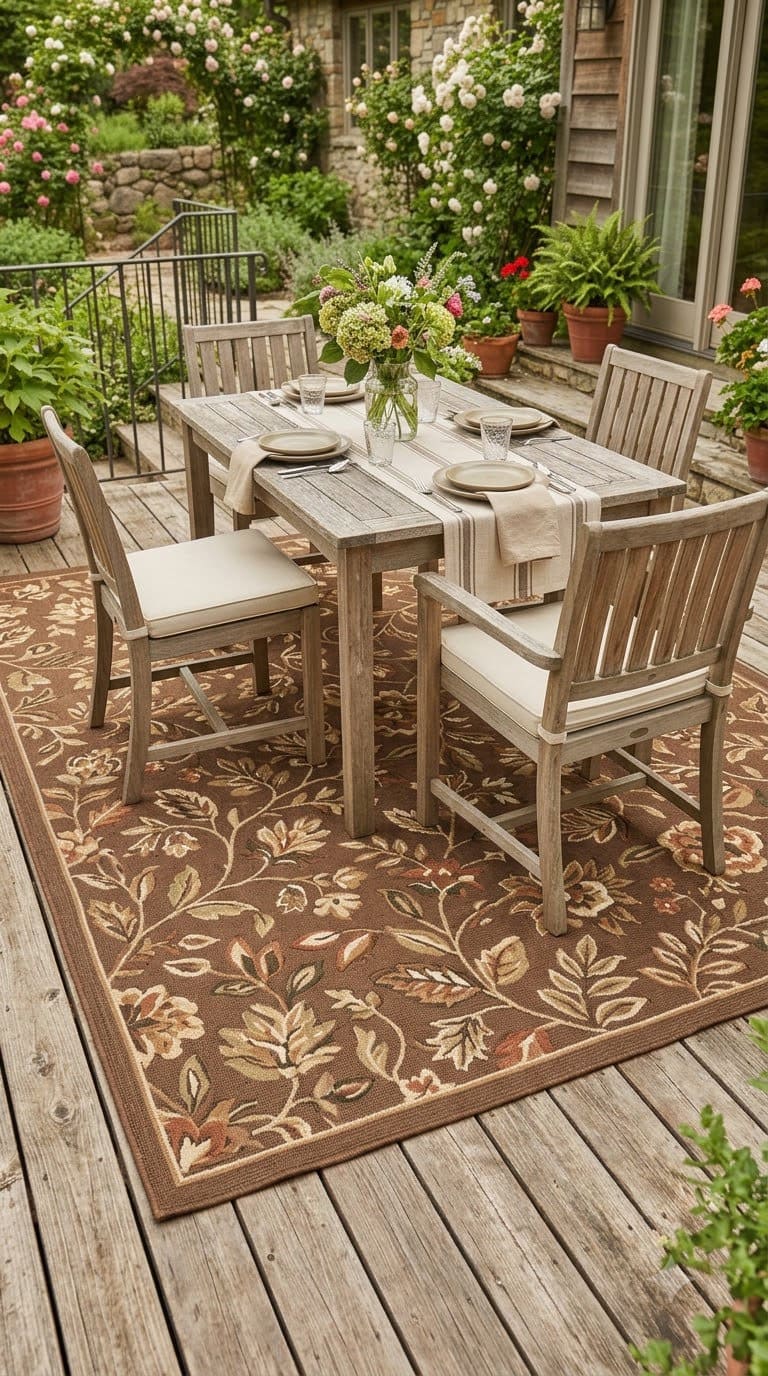
Kelsey Clark, Design Editor at Havenly, notes that outdoor rugs work both functionally and aesthetically, and a dining-specific rug is where that dual role matters most.
The fix: A 4-seat outdoor table needs at least a 6×9, per Rug Branch’s sizing chart, and an 8-seat table needs 9×12 or larger. The real test isn’t the table’s footprint, it’s the chairs pulled fully out: every chair leg should still land on the rug when someone pushes back from the table, not just when the chairs are tucked in.
Leave 8-12 inches of bare decking visible around the rug’s edge on all sides for a framed, intentional look rather than a rug that runs edge to edge.
A dining rug also takes the hardest wear of any rug on the patio, since it’s directly under a table where food and drinks actually get spilled, not just tracked across. Washability isn’t optional here the way it might be for a purely decorative accent rug elsewhere on the patio.
Stain resistance and a quick machine-wash or hose-down option should be treated as a requirement, not a bonus feature, before anything else about color or pattern.
Rug pick: Large Indoor/Outdoor Floral Area Rug, 8×10, Brown costs $157.79, 4.6★ across 588 ratings. Washable and stain-resistant, a real requirement under a table that sees fall meals, and the brown floral pattern hides crumbs and wine spills between actual washes far better than a light solid would.
Budget tier: Bigger investment.
The Real Mistake: Buying the Rug Before Measuring the Space
Here’s what actually derails most outdoor rug purchases: falling for a color or pattern online, buying it, and only then realizing it’s two sizes too small for the furniture it’s supposed to anchor.
I’ve done exactly this, ordered a 5×7 because it looked right in a product photo, and watched it disappear under a sectional built for an 8×10, all four legs floating well past the edge on three sides.
Return shipping on a large rug isn’t cheap, and a lot of retailers charge a restocking fee on top of it, so the mistake is expensive in a way a wrong throw pillow simply isn’t.
Measure first, before browsing colors at all. Every designer quoted above starts with sizing, not style, for a real reason. And once the size is right, color and material become the easy part, not the hard one.
The second-biggest regret pattern shows up with material, not size: buying a natural-fiber rug for a fully exposed patio because it photographed well, then watching it mildew or fray within one real rainy season. That’s not a styling mistake so much as a material mismatch, and it’s just as avoidable once you check “covered or exposed” against the material guidance in idea #3 before checkout.
Shop This Guide at a Glance
| Rug | Best For | Price |
|---|---|---|
| MontVoo Polypropylene Patio Rug 5×7 | Properly-sized seating anchor | $44.99 |
| JONATHAN Y Negril Terracotta Stripe 3×5 | Bold fall color | $32.17 |
| Safavieh Braided Washable Rug 3×5 | Covered, high-traffic patios | $58.79 |
| Fab Habitat Recycled Plastic Rug 5×8 | Grass-adjacent patios | $102.99 |
| JONATHAN Y Estrella Runner 2×8 | Narrow balconies | $40.99 |
| Large Floral Indoor/Outdoor Rug 8×10 | Dining-table zones | $157.79 |
Frequently Asked Questions
What size outdoor rug do I need for a patio seating area?
For a loveseat plus two chairs, 5×7 or 6×9. For a larger sectional, 8×10 minimum, or 9×12 for a more generous layout. The front legs of every piece of furniture should sit on the rug.
What’s the best material for an outdoor rug that gets full sun?
Polypropylene, specifically solution-dyed polypropylene, per multiple designers quoted above. It resists UV fading and repels moisture better than natural fiber materials like jute or sisal, which are only suitable for fully covered areas.
Can I use a recycled plastic rug on a patio next to grass?
Yes, and it’s actually the better choice there. Recycled PET rugs are naturally fade-resistant, lightweight, and dry quickly, which matters more on a lawn-adjacent patio that picks up more moisture and debris than a fully hardscaped one.
How much bare patio should show around the edge of an outdoor rug?
8 to 12 inches on all sides, per standard sizing guidance. That framing gap is what makes a rug read as an intentional design choice instead of something that just happens to be there.
Related Reading on FarmFoodFamily
For more ways to layer texture and warmth into a patio beyond the rug itself, see our guide to patio and garden pattern decor ideas, which covers mixing prints across cushions, planters, and flooring.
If you’re planning a fuller patio refresh, patio extension ideas covers layout and structure beyond just decor. And for the indoor side of rug shopping, our complete guide to types of rugs breaks down material and weave differences in more depth.
Products We Recommend
This post contains affiliate links. We may earn a commission on qualifying purchases at no extra cost to you.


Never miss an update — choose FarmFoodFamily as your preferred source on Google.
How it works: Tap the button below to open Google's settings page, then check the box next to FarmFoodFamily.
Tap the checkbox to turn it blue — that's how you know it's set.