7 Trees That Drop a Mess All Over Your Yard Every Year
Some of the prettiest trees at the nursery turn into a fall-long cleanup job, and one of them is now illegal to plant in three states, here’s how to tell before you dig the hole.

Never miss an update — choose FarmFoodFamily as your preferred source on Google.
How it works: Tap the button below to open Google’s settings page, then check the box next to FarmFoodFamily.
Tap the checkbox to turn it blue — that’s how you know it’s set.
If you’re staring at a bare spot in the yard wondering what to plant, or standing under a tree that’s already dumping gumballs on your lawn every October, this is for you. Either way, honestly, the tree itself usually isn’t a villain. It’s a mismatch between what it naturally does and where somebody put it.
A silver maple isn’t wrong for growing shallow, spreading roots. It’s wrong for a 20-foot lot line next to a sidewalk. An oak dropping a few thousand acorns isn’t a design flaw, it’s the tree feeding half the squirrels and turkeys in the neighborhood.
This guide covers 7 trees homeowners regret most, why each one actually makes a mess (not just “it drops stuff”), and what to do if you already have one and removal isn’t realistic this year.
For tree identification by leaf shape and bark pattern rather than mess potential, a full guide to common tree types by leaf and bark covers that differently, it’s a naming reference, not a should-I-plant-this-or-not guide like this one.
Quick answer: which trees make the biggest mess, and should you remove one you already have?
Bradford (Callery) pear, sweetgum, silver maple, cottonwood, sycamore, catalpa, and oak are the seven most common messy-tree regrets, but they’re messy for different reasons: seed spread, gumballs, surface roots, cotton fluff, constant leaf drop, seed pods, and acorns.


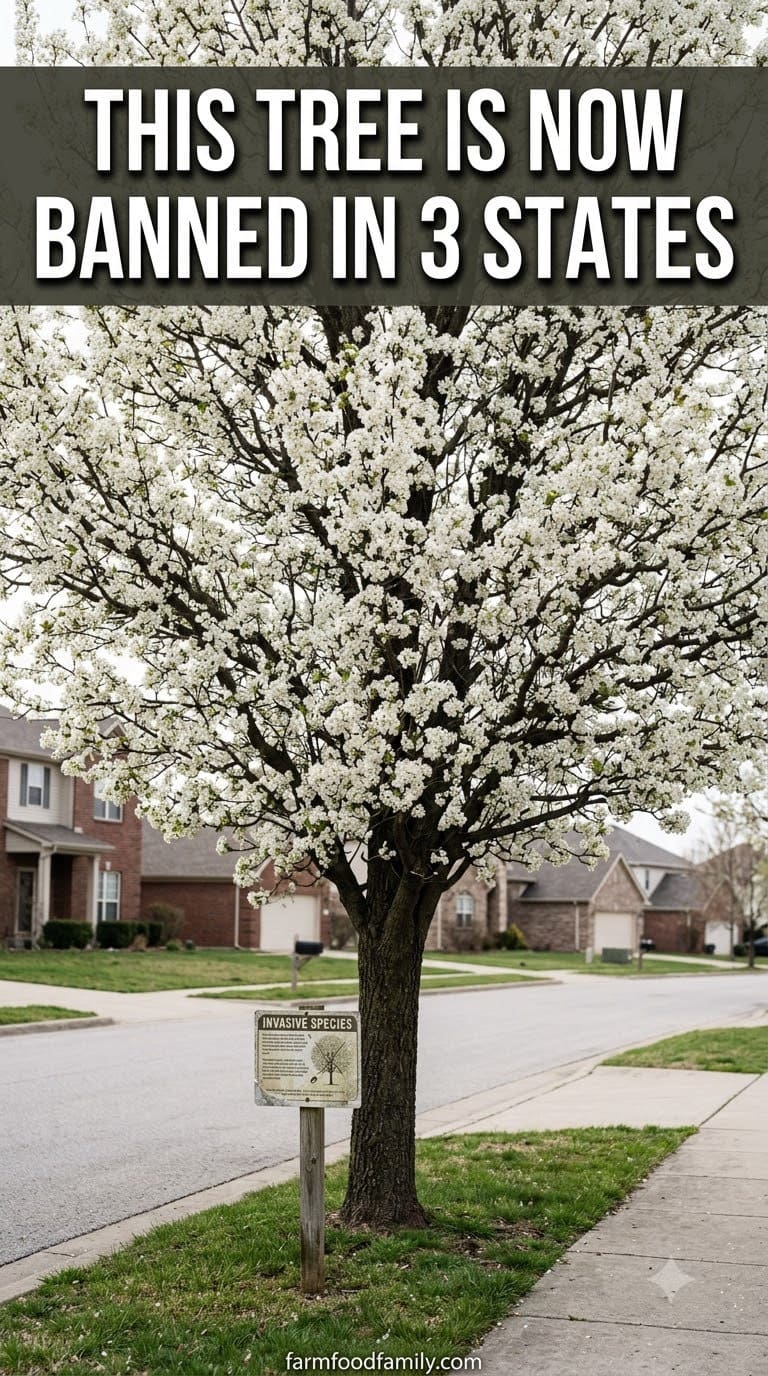
Bradford pear is the one that’s actually illegal to sell or plant in Ohio (since January 2023), South Carolina (since October 2024), and Pennsylvania (added to its noxious weed list in 2021), because it escapes into wild areas and crowds out native trees.
Answer 4 quick questions and get matched to the exact fix for your yard — drainage, budget, layout, or something else entirely.
Take the Free QuizIf you already have one of the other six, removal usually isn’t necessary. A raking schedule matched to that tree’s actual drop window, gutter guards, and smarter hardscape placement handle most of the day-to-day mess without cutting anything down.
Oak and sweetgum are worth a second thought before removal specifically, since both feed real wildlife (acorns and gumball seeds alike) in a way that’s easy to overlook when you’re just annoyed about raking on a Saturday.
The 7 messiest trees at a glance
| Tree | What it drops | Worst season | Real mitigation or alternative |
|---|---|---|---|
| Bradford (Callery) pear | Foul-smelling blooms, weak branches that split in storms, invasive seed spread | Spring (bloom/branch failure), year-round (seedlings) | Removal recommended; check state law first, banned for sale in OH, SC, PA |
| Sweetgum | Spiky “gumball” seed pods | Fall through winter | Rake weekly during drop; some newer cultivars are fruitless |
| Silver maple | Surface roots that heave sidewalks and driveways | Year-round root growth, worst after wet springs | Plant 20+ ft from foundations/walks; root barriers for existing trees |
| Cottonwood | Cottony seed fluff, constant twig/branch litter | Late spring (cotton), year-round (litter) | Choose a male cultivar if replanting; gutter guards for existing trees |
| Sycamore | Leaves shed all summer from anthracnose, peeling bark | Early summer through fall | Rake continuously; fungicide rarely worth it for a shade tree |
| Northern catalpa | Long seed pods, caterpillar frass | Late summer into fall | Site away from patios/walkways; caterpillars are a feature for some gardeners (fish bait) |
| Oak | Acorns, some years far heavier than others | Fall, worse in “mast years” | Rake or mow-mulch; leave some for wildlife rather than bagging all of it |
Should you actually remove a tree just because it’s messy?
Not automatically, and this is where a lot of advice oversimplifies. If the tree is Bradford pear, yes, seriously consider it, both for the storm-damage risk and because it’s actively spreading into wild spaces near you.
For oak, sweetgum, catalpa, cottonwood, silver maple, or sycamore, removal is a real option but not the only one. A raking schedule during the tree’s specific drop window, gutter guards year-round, and keeping patios/driveways clear of the drop zone solve most of the actual daily annoyance.
The math that actually matters: professional removal of a mature shade tree commonly runs into four figures depending on size, access, and whether stump grinding is included. Compare that against an hour of raking a week for 6-8 weeks a year before deciding.
1. Bradford (Callery) pear: the one that’s actually banned in some states
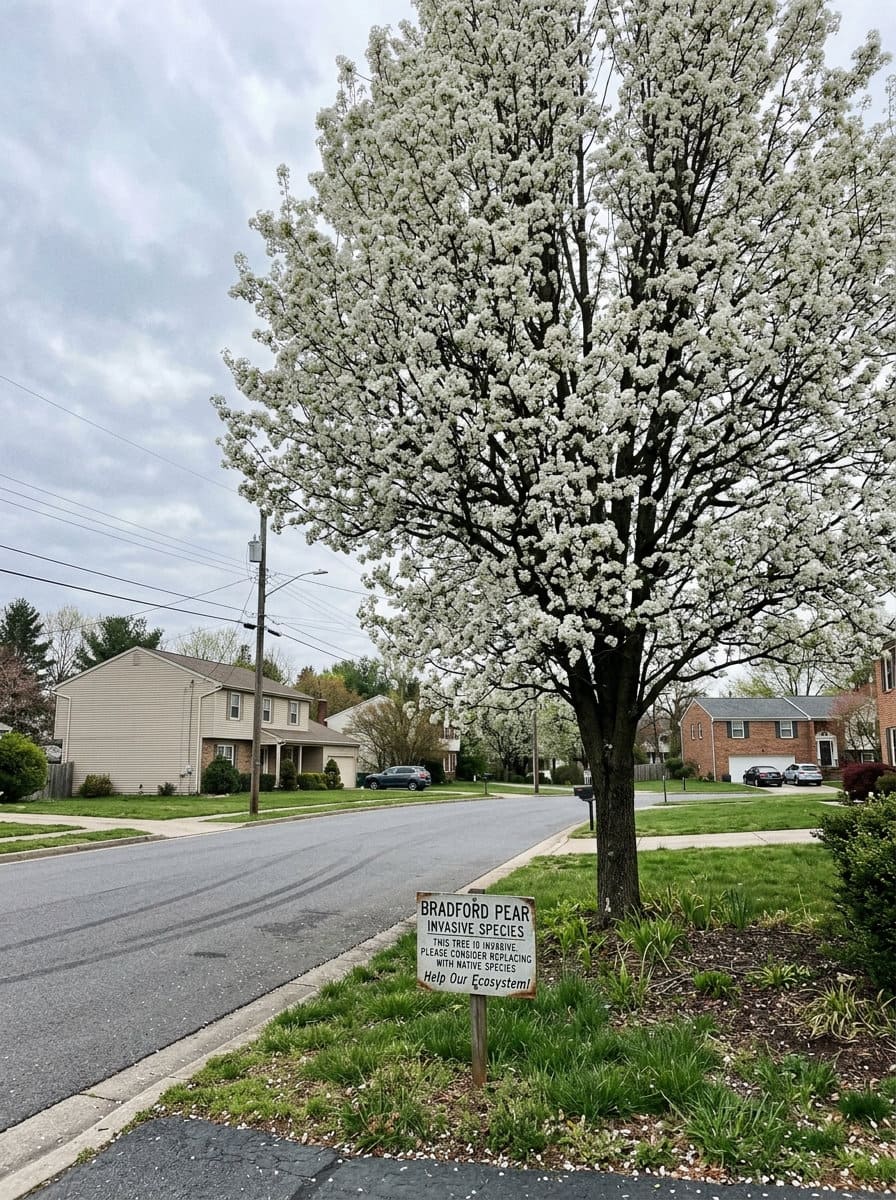
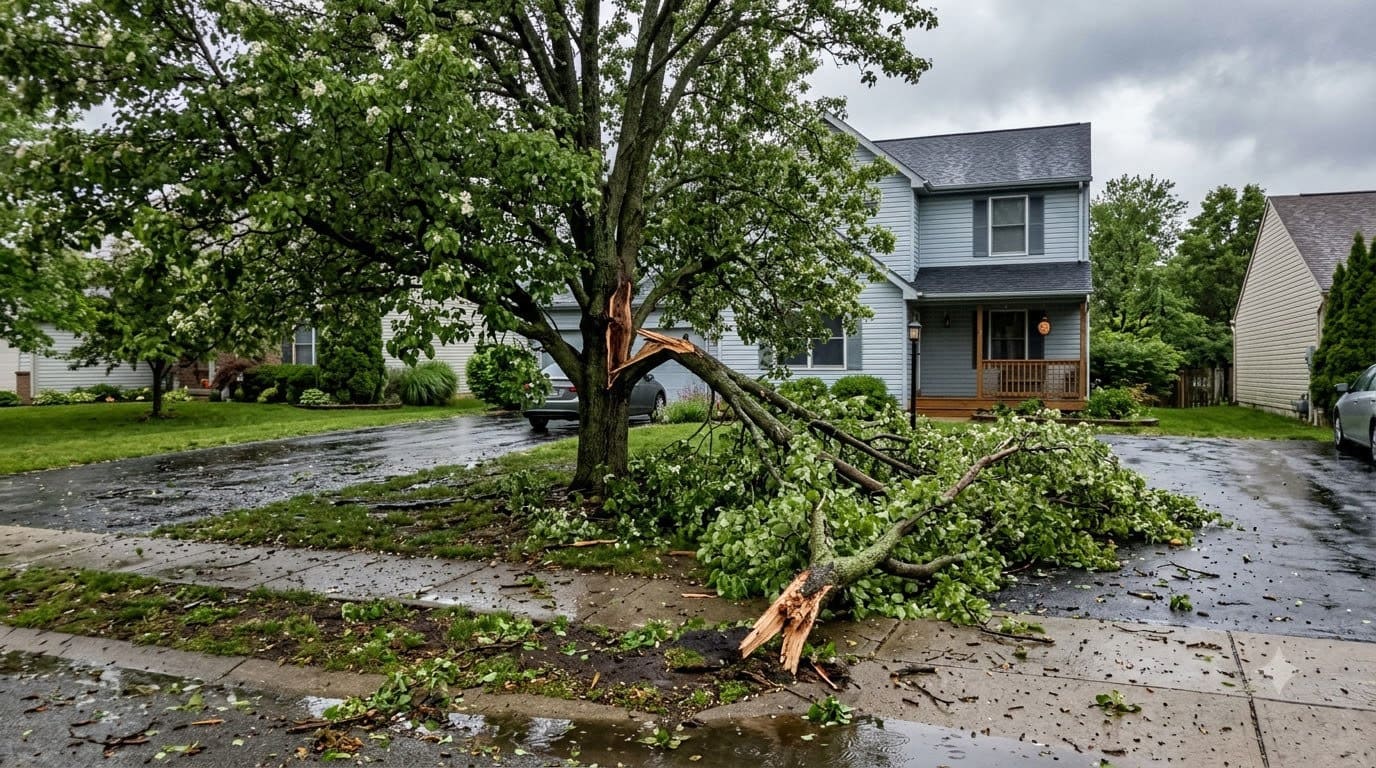
Bradford pear looks harmless, even pretty, for about three weeks every spring. White blooms everywhere, fast growth, cheap at the nursery. That’s exactly why it got planted on so many streets starting in the 1960s.
The mess starts two ways. First, the branch structure is genuinely weak, splitting apart in wind and ice storms is common enough that it’s a known liability, not a rare fluke. Second, and this is the bigger issue, Bradford pear cross-pollinates with other Callery pear cultivars nearby and produces fertile seed that birds spread into fields, roadsides, and forest edges, where it forms dense, thorny thickets that crowd out native trees.
Most yard problems trace back to one specific, fixable cause. Find yours in 4 quick questions.
Take the Free Quiz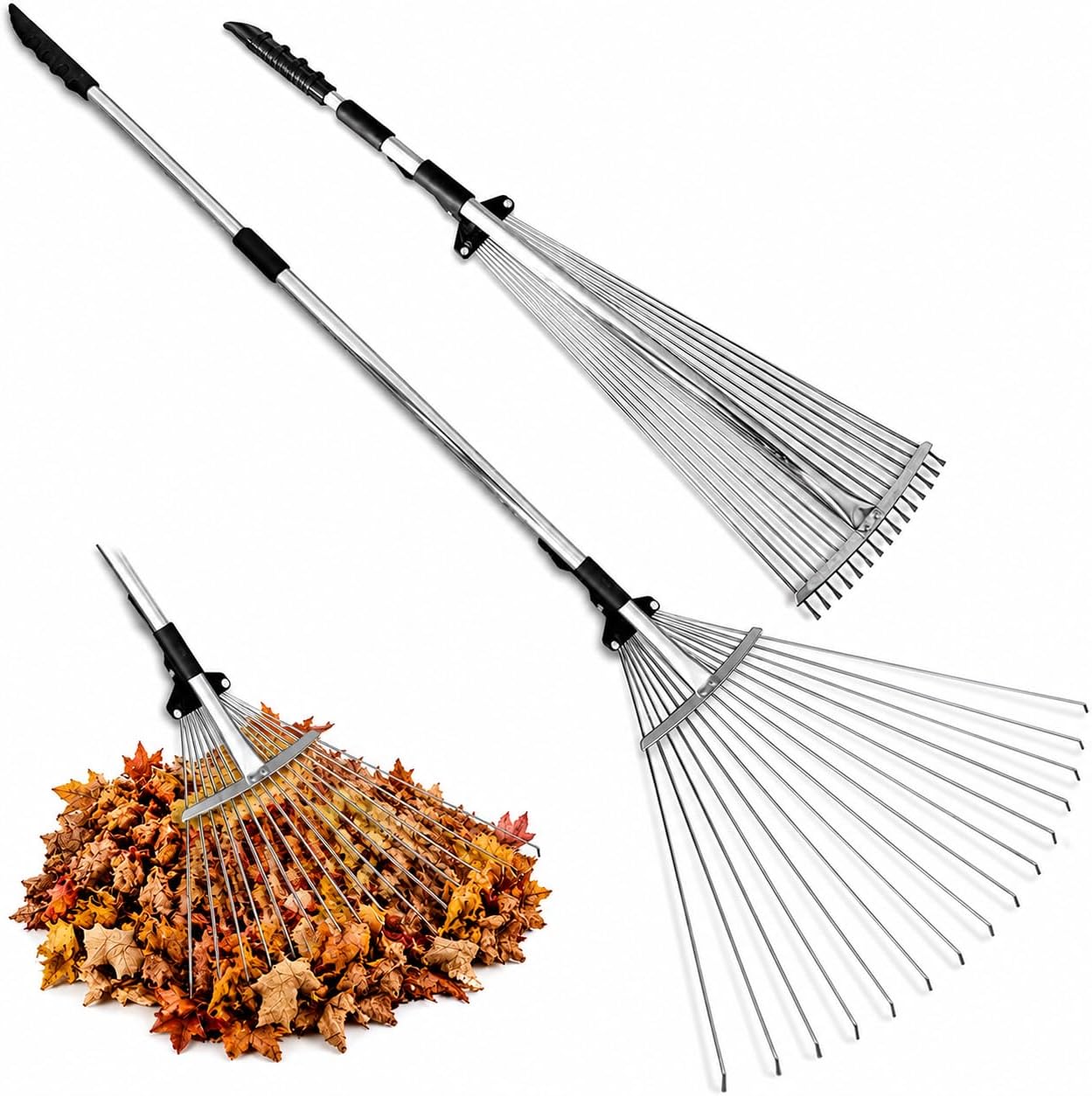
4.6 stars, 2.5K ratings; for weekly cleanup during a tree's peak drop window (sweetgum, oak, catalpa)
Shop NowThis post contains affiliate links. We may earn a commission on qualifying purchases at no extra cost to you.
That’s not a “some people find it invasive” opinion. Ohio made it illegal to sell, grow, or plant Callery pear starting January 1, 2023, after giving nurseries five years of notice to phase it out.
South Carolina banned nursery sales of Bradford pear and other pear trees on Callery rootstock starting October 1, 2024. Pennsylvania added Bradford pear to its official noxious weed list in November 2021, making it illegal to propagate or sell there too.
If you’re outside those three states, it’s worth checking your own state or county’s invasive plant list before planting one, this is a fast-moving area of state policy, several other Midwestern states have discussed similar bans as of 2026.
If you already have a mature Bradford pear, replacing it isn’t just a mess fix, it’s arguably the single highest-impact swap on this whole list for actual ecological reasons, not just cleanup convenience.
2. Sweetgum: gorgeous fall color, brutal gumball cleanup
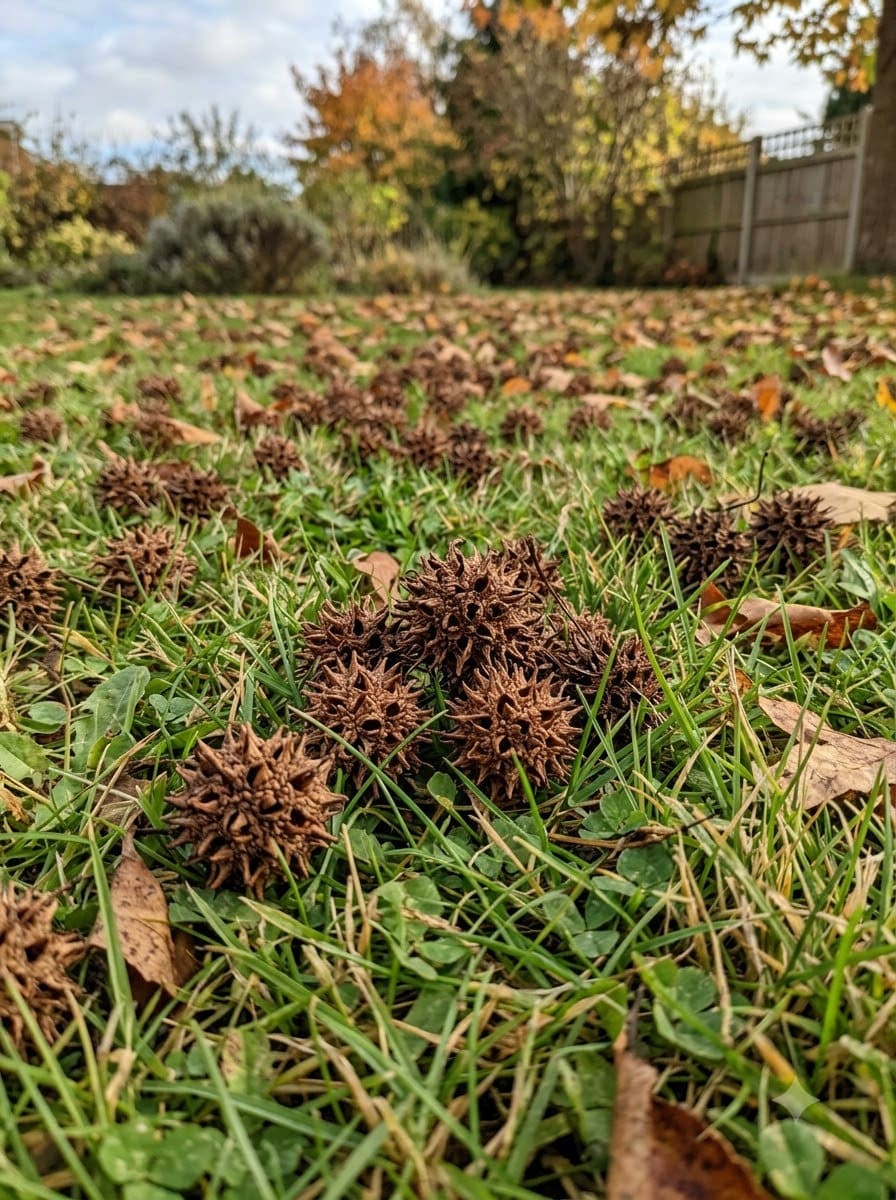
Sweetgum earns its spot on basically every messy-tree list for one specific reason: the seed pods, spiky, golf-ball-sized, and genuinely hard to walk on barefoot.
Gerald Klingaman, retired Extension Horticulturist at the University of Arkansas Cooperative Extension Service, put it about as plainly as an extension publication gets: “Newcomers to sweetgum country usually have tales of sweetgum balls being impossible to compost, chew up with a lawn mower or even effectively rake up in their copious quantity.”
But Klingaman also makes the tradeoff case directly: “Were it not for the production of the golf ball-sized fruit… the plant would make an ideal landscape tree.” It grows fast in heavy clay where fussier trees struggle, and the fall color runs red, orange, and maroon, genuinely one of the better displays available.
If you already have one, weekly raking during the drop window (roughly October through winter, depending on your region) keeps it manageable. If you’re planting new, some fruitless sweetgum cultivars exist specifically to dodge this problem while keeping the fall color.

3. Silver maple: the roots do more damage than the leaves
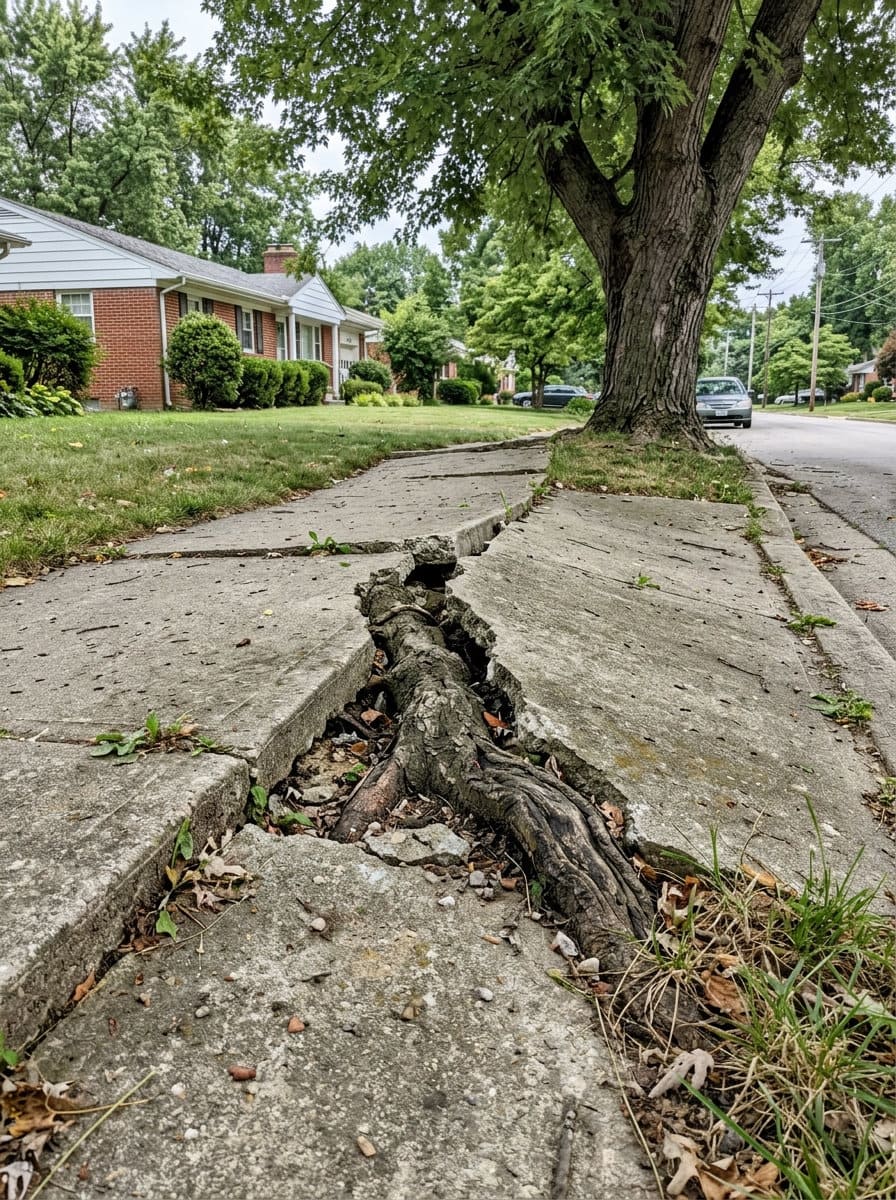
Silver maple’s mess isn’t really about what falls from the canopy. It’s underground, and it’s expensive.
The average homeowner spends $616/year on yard fixes that don't address the real problem. Find out what yours actually is — before you spend another dollar.
Take the Free QuizBert Cregg, Michigan State University Extension, Departments of Horticulture and Forestry, names silver maple specifically as one of the fast-growing species most likely to cause sidewalk and foundation damage, and cites real data behind it: a Cincinnati street tree study found the likelihood of finding a tree root under a sidewalk decreased by 13 percent for every one-yard increase in the width of the tree lawn (the strip of grass between sidewalk and curb).
In plain terms, distance is the actual fix, not the species alone. A silver maple planted 30 feet from the foundation is a different proposition than one 10 feet away.
The rule of thumb landscapers use, plant a tree as far from structures as its mature height, holds up well here. Silver maples commonly reach 50-80 feet, so that’s a real setback, not a token gesture.
For an existing silver maple already lifting a sidewalk or driveway, Cregg’s guidance points toward root barriers (professionally installed, trenched to around 60 inches) as the more reliable fix over grinding roots back repeatedly, which just invites regrowth in the same spot.
4. Cottonwood: cotton fluff, weak wood, and roots that find pipes
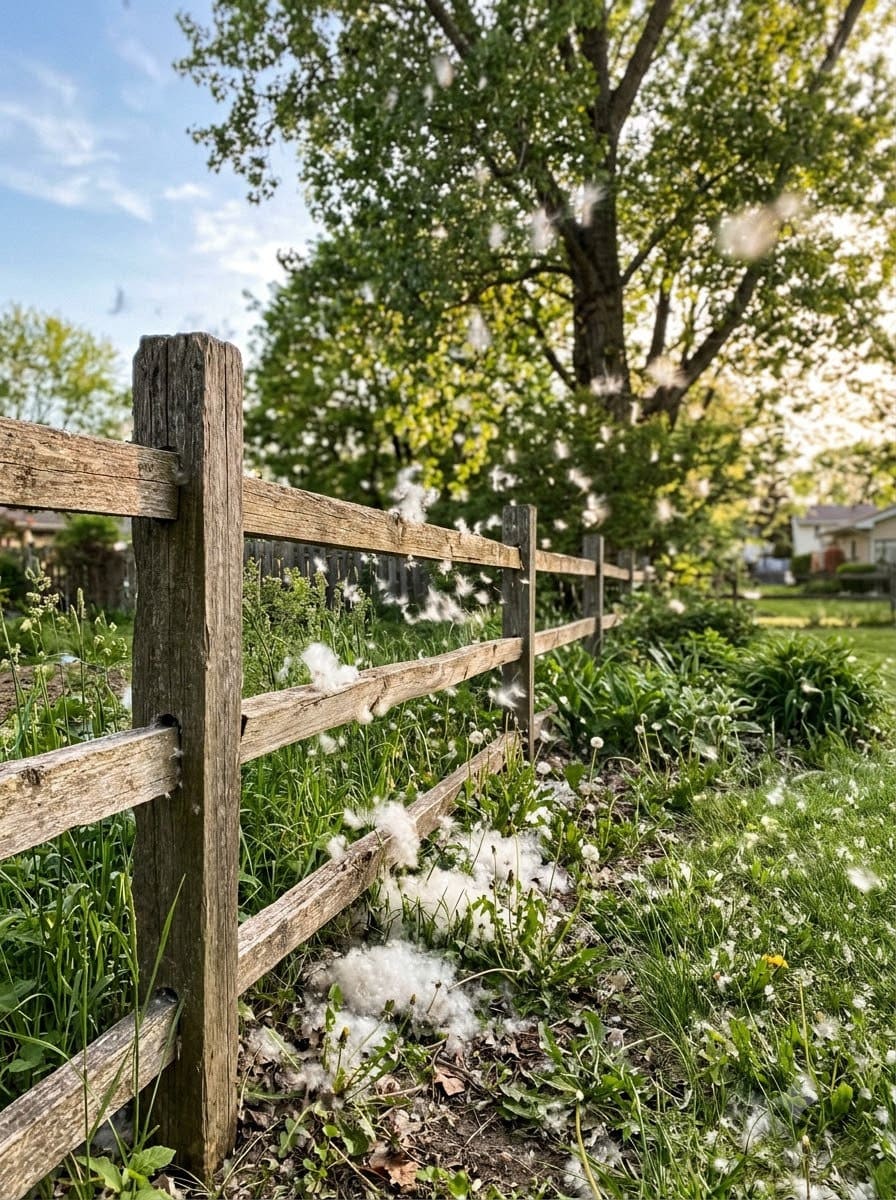
Cottonwood’s mess comes in two very different forms depending on the season. In late spring, female trees release drifts of cottony seed fluff that piles up against fences, clogs window screens, and works its way into outdoor AC units.
Year-round, cottonwood also drops twigs and small branches constantly, its wood is genuinely weak and brittle compared to slower-growing hardwoods, and the same aggressive, water-seeking root system that made it a fast, tough shade tree also makes it a common cause of cracked sewer lines and water pipes.
If you’re planting new and want the fast growth without the cotton, male cultivars exist that skip seed production entirely, ask specifically for a male selection at the nursery, not just “cottonwood.”
For an existing cottonwood near the house, gutter guards handle the cotton-and-litter combination reasonably well, and keeping an eye on any nearby sewer line for slow drains is worth doing before a real backup happens.
5. Sycamore: the leaves fall all summer, not just autumn
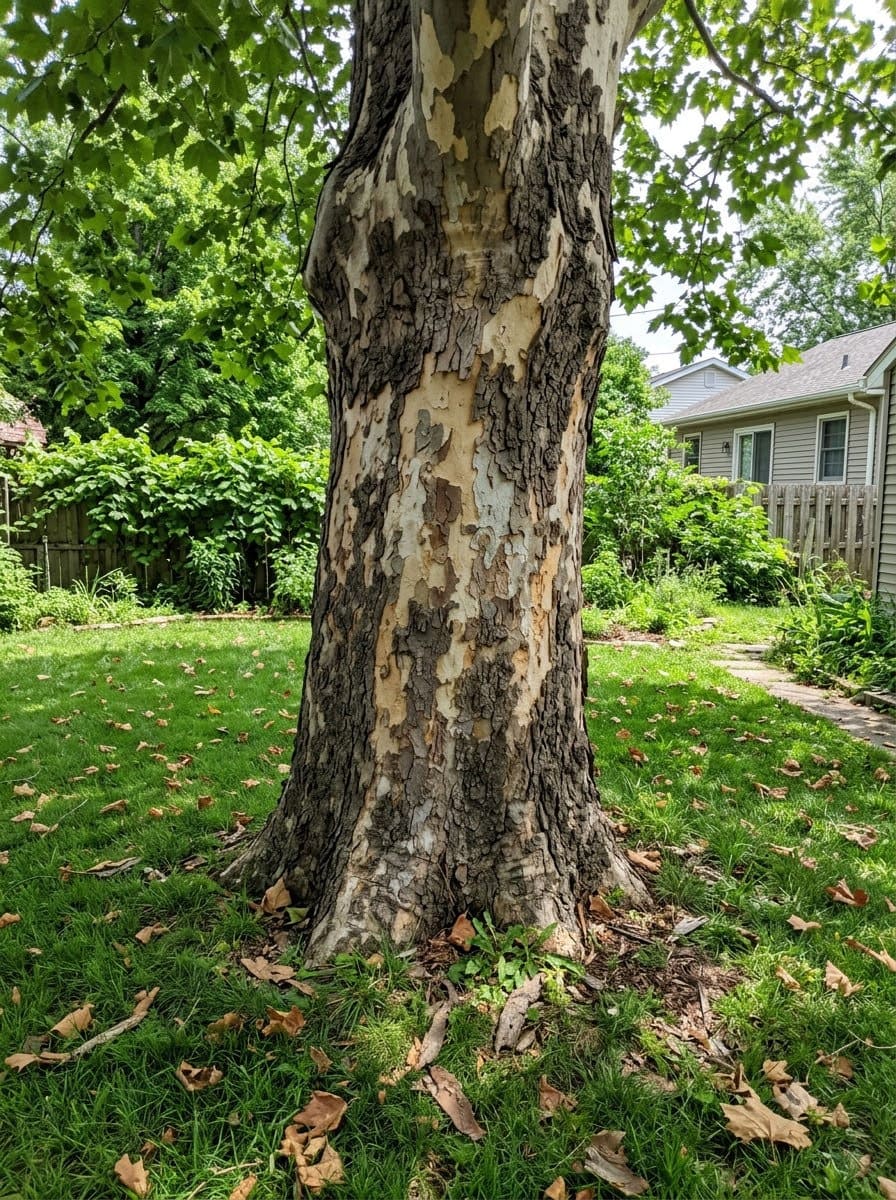
Sycamore (American planetree) breaks the usual “rake once in October” expectation entirely. It’s prone to anthracnose, a fungal disease that causes early leaf drop through spring and summer, not just a normal autumn shed.
That means the lawn under a mature sycamore can be collecting leaf litter from May through November, a much longer window of upkeep than almost anything else on this list. The bark peels in patches too, which looks striking on the tree itself but adds another layer of yard debris.
Fungicide treatment exists but is rarely worth the cost or effort for a shade tree that isn’t in visible decline, most extension guidance treats anthracnose as cosmetic-plus-litter, not a tree-killing emergency in most years.
Practically, this is a tree to keep raking through, not a tree to treat. If the constant leaf drop lands right on a patio or pool, that’s the stronger case for reconsidering the planting site next time rather than fighting the disease itself.
6. Northern catalpa: seed pods a foot long, and caterpillars that strip leaves
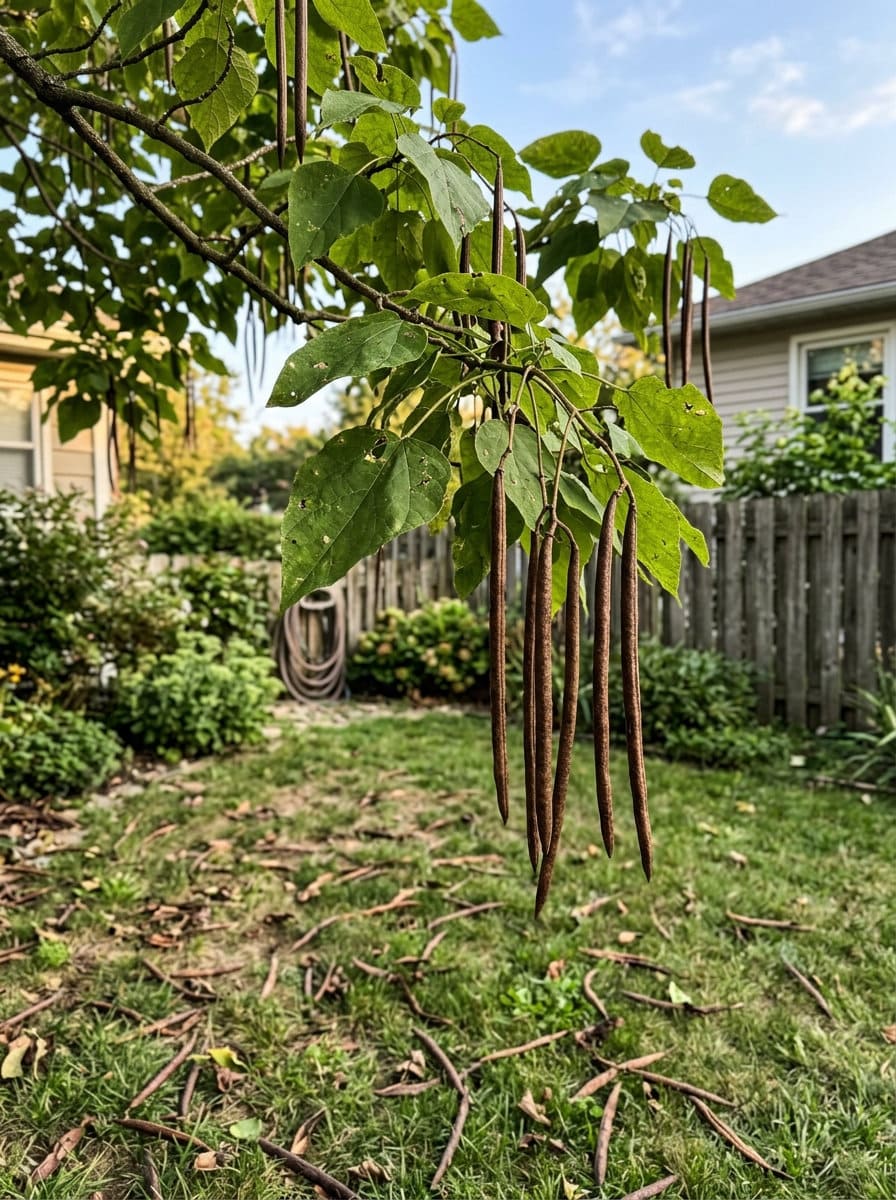
Catalpa’s mess is genuinely distinctive: seed pods that grow 12-18 inches long, hanging in clusters through late summer and into fall, then dropping in a pile that doesn’t break down quickly.
On top of the pods, catalpa is the preferred host for catalpa sphinx moth caterpillars, which can strip a tree’s large leaves in a bad year, leaving frass (caterpillar droppings) scattered under the canopy along with the pods.
Here’s the twist most messy-tree lists skip: those caterpillars are prized live bait by a lot of freshwater anglers, some people plant catalpa specifically to have a reliable caterpillar supply for fishing season. What reads as a pest problem to one homeowner is a feature to another.
If catalpa’s mess bothers you and the caterpillar angle doesn’t change your mind, siting it away from patios, walkways, and parking areas, and away from anywhere pods will be tracked indoors, handles most of the practical annoyance without removing a mature tree.
7. Oak: acorns everywhere, but this is the tradeoff worth understanding
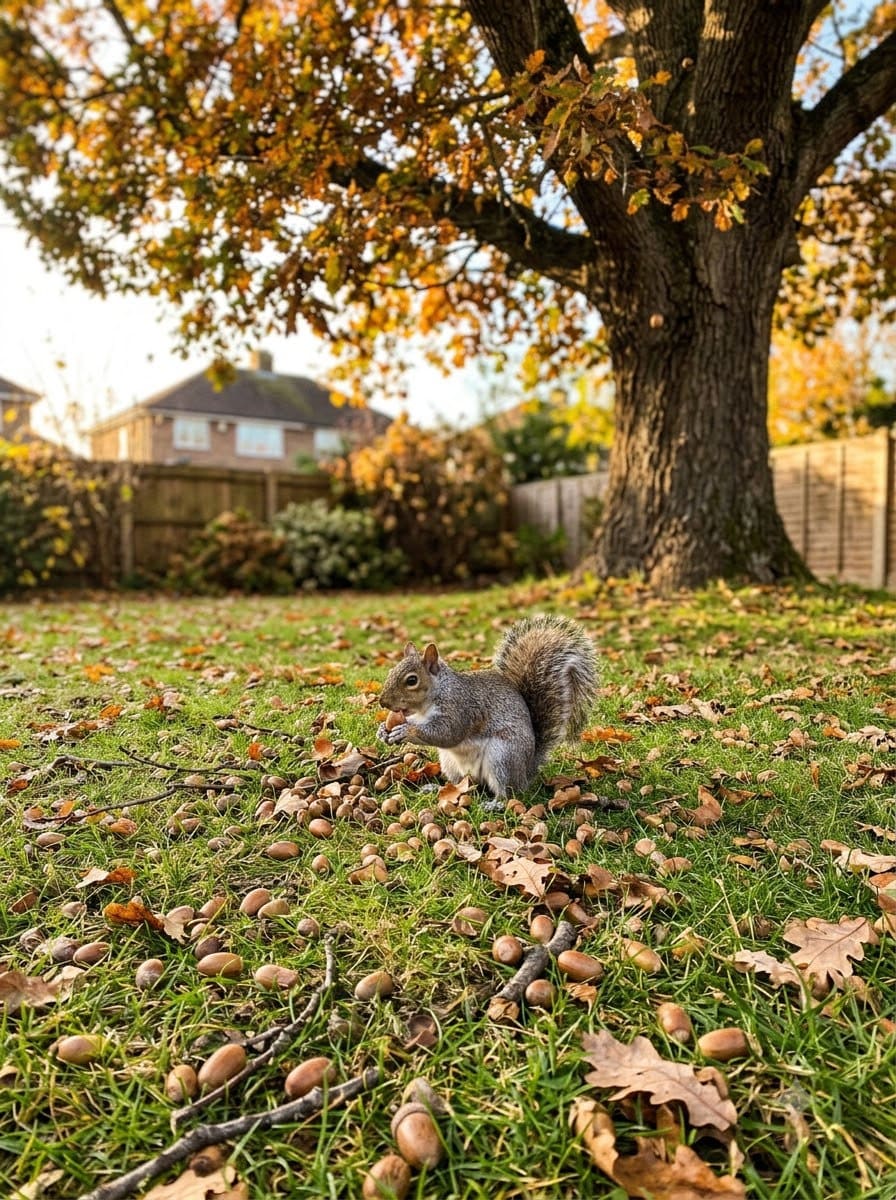
Oak is the tree where “messy” and “valuable” collide the hardest, and it deserves more nuance than a straight “avoid this” listing gives it.
Acorn drop varies a lot year to year. Oaks have “mast years,” periodic seasons of unusually heavy acorn production, driven by weather and the tree’s own reproductive cycles, not something you can predict or control by pruning.
The tradeoff is real, not a marketing line. Acorns are a genuine food source for white-tailed deer, wild turkeys, squirrels, and a long list of songbirds and small mammals, per wildlife extension research out of the University of Florida’s forestry program. An oak in a yard is doing real ecological work that a purely ornamental tree isn’t.
That doesn’t mean live with unlimited acorns underfoot if it’s a real problem. Raking or mow-mulching handles the volume in most years, and leaving a portion for wildlife rather than bagging every acorn is a genuinely reasonable middle ground, not just an excuse to skip yard work.
If a mature oak is already established on your property, this is one of the clearer cases on this list where “messy” shouldn’t be the only factor in a removal decision.
Managing the mess if you already have one of these trees
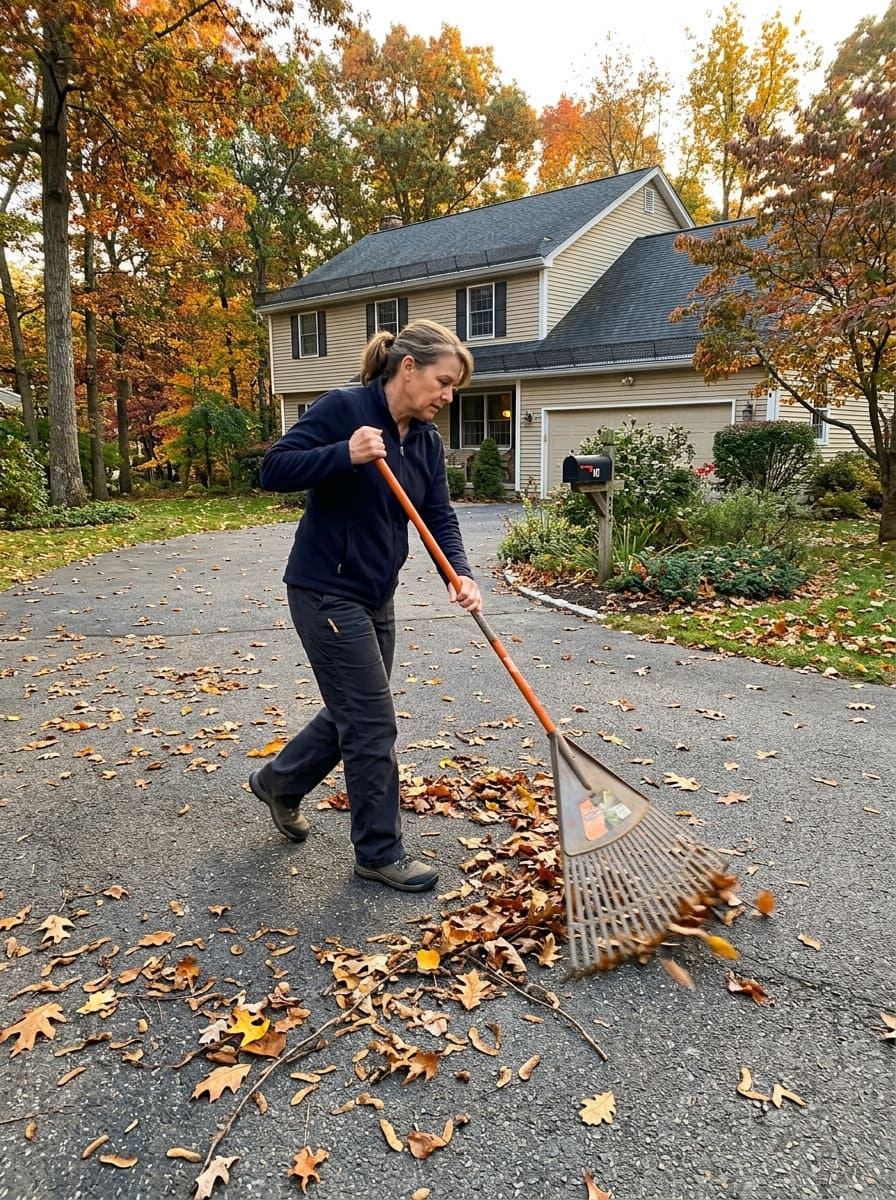
Removal is the last resort on this list, not the first move, for six of the seven trees here. A few things actually move the needle for people who already have a messy tree and aren’t cutting it down this year.
A consistent raking schedule matched to that specific tree’s drop window matters more than raking whenever you happen to notice the mess. Sweetgum and oak both concentrate their drop into a few weeks, catching that window with weekly cleanup beats letting three months build up.
Gutter guards handle cottonwood fluff, small twigs, and general leaf litter before it clogs downspouts and causes water damage, arguably the most expensive hidden cost of a messy tree if ignored.
Keeping hardscape (patios, walkways, driveways, parking areas) clear of the actual drop zone when you’re planning new plantings avoids most of this problem before it starts. And for root issues specifically, distance from foundations and sidewalks at planting time is worth more than any amount of root-pruning years later.
What I’ve actually dealt with under a sweetgum
We had a sweetgum in the backyard of a rental years back, and I genuinely underestimated it. First fall, I figured I’d rake it once in November like everybody does with a normal tree.
By the second week of October the yard already looked like a driveway full of tiny spiked landmines, and my dog, who is not smart about these things, stepped on one and refused to walk on that side of the yard for about two days.
I switched to raking every weekend through the drop window instead of once at the end, and it genuinely made the difference between “annoying chore” and “unusable yard.” Took maybe 25 minutes each time instead of an entire exhausting Saturday in November.
I’ll be honest, I still think the fall color on that tree was worth it. But I also don’t blame anyone who looks at three months of gumball cleanup and decides it isn’t for them. Both reactions are reasonable, this genuinely comes down to how much you value the tradeoff.
FAQ
Should I remove a tree just because it’s messy? Not automatically. For Bradford pear, yes, seriously consider it, both for storm-damage risk and its documented invasive spread. For oak, sweetgum, catalpa, cottonwood, silver maple, or sycamore, a raking schedule, gutter guards, and smart hardscape placement handle most of the day-to-day mess without removing the tree.
Is Bradford pear actually illegal to plant? It’s banned for sale, planting, or propagation in Ohio (since January 2023), South Carolina (since October 2024), and listed as a noxious weed in Pennsylvania (since 2021). Check your own state’s invasive plant list if you’re elsewhere, more states have discussed similar bans.
How far should I plant a silver maple or cottonwood from my house? A commonly used rule of thumb is planting as far from structures as the tree’s expected mature height, and specifically avoiding the area within 20 feet of foundations, sidewalks, or underground pipes for aggressive-root species like silver maple, willow, and cottonwood.
Are acorns from oak trees actually good for anything, or just a mess? They’re a genuine wildlife food source, deer, turkeys, squirrels, and many bird species rely on acorns, especially in the fall and through mast years when production is unusually heavy. That real ecological value is worth weighing against the raking effort before deciding to remove a mature oak.
Which messy tree is the worst if I have kids or pets who go barefoot in the yard? Sweetgum’s spiky gumballs are the most immediate physical hazard underfoot, followed by catalpa’s dropped pods. Both are manageable with a consistent raking schedule during the drop window rather than removal.
Related Posts
- 42+ Common Types of Trees With Names, Facts, and Pictures
- Edging Around Trees Ideas
- 8 Plants You Should Never Plant Next to Roses
Products We Recommend
This post contains affiliate links. We may earn a commission on qualifying purchases at no extra cost to you.
J16A Adjustable Metal Leaf Rake, Expandable Head
4.6 stars, 2.5K ratings; for weekly cleanup during a tree's peak drop window (sweetgum, oak, catalpa)
Shop Now
14FT Pole Saw for Tree Trimming, 2-in-1
4.4 stars, 2.3K ratings; for removing low seed-pod-heavy branches (catalpa) without a ladder
Shop Now
DURASACK Heavy Duty 48-Gallon Yard Bags, Reusable
4.7 stars, 2.4K ratings; for bagging gumballs and acorns during peak drop
Shop NowNever miss an update — choose FarmFoodFamily as your preferred source on Google.
How it works: Tap the button below to open Google's settings page, then check the box next to FarmFoodFamily.
Tap the checkbox to turn it blue — that's how you know it's set.