How to Plant Tomatoes in a Trench: 7 Steps to Stronger Roots
Trench planting turns a tall, leggy tomato transplant into a sturdy plant by laying the stem sideways so it grows roots along its length.

Never miss an update — choose FarmFoodFamily as your preferred source on Google.
How it works: Tap the button below to open Google’s settings page, then check the box next to FarmFoodFamily.
Tap the checkbox to turn it blue — that’s how you know it’s set.
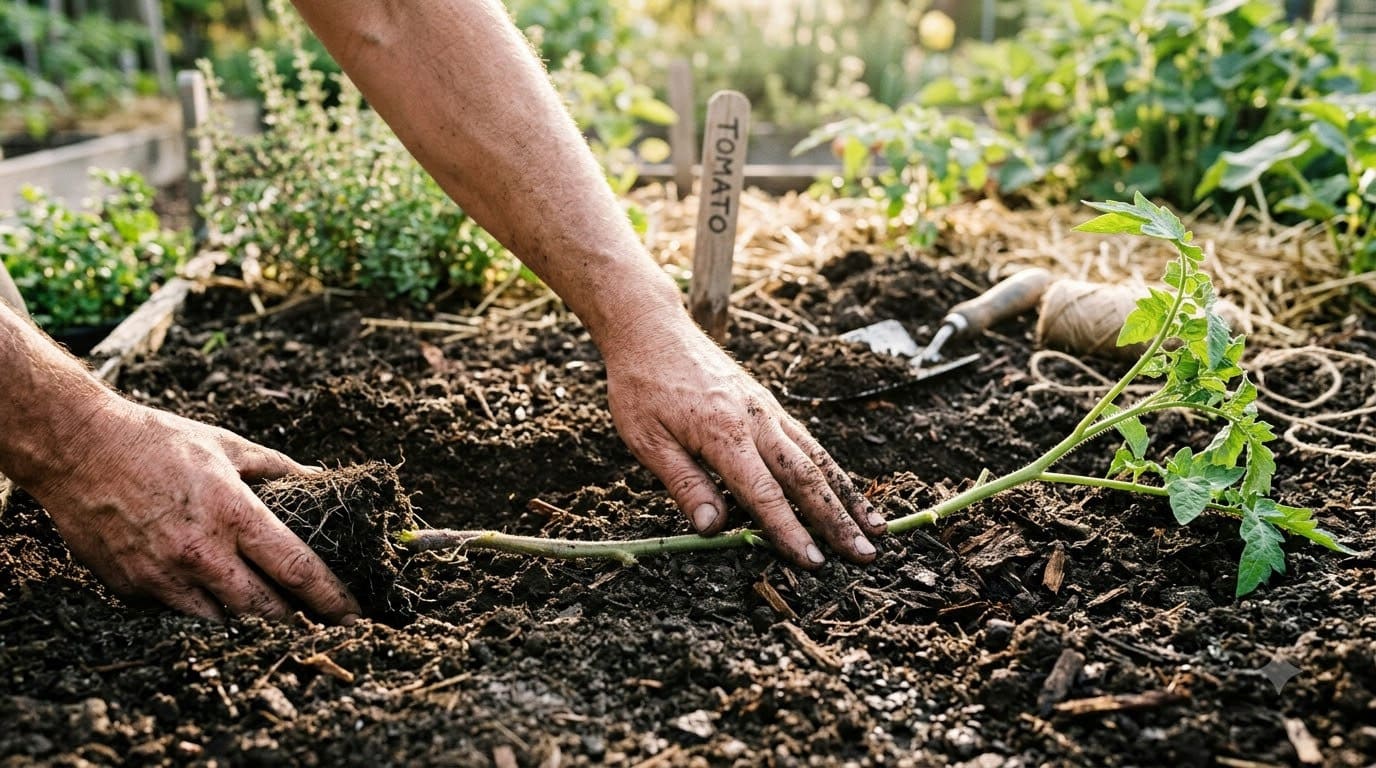
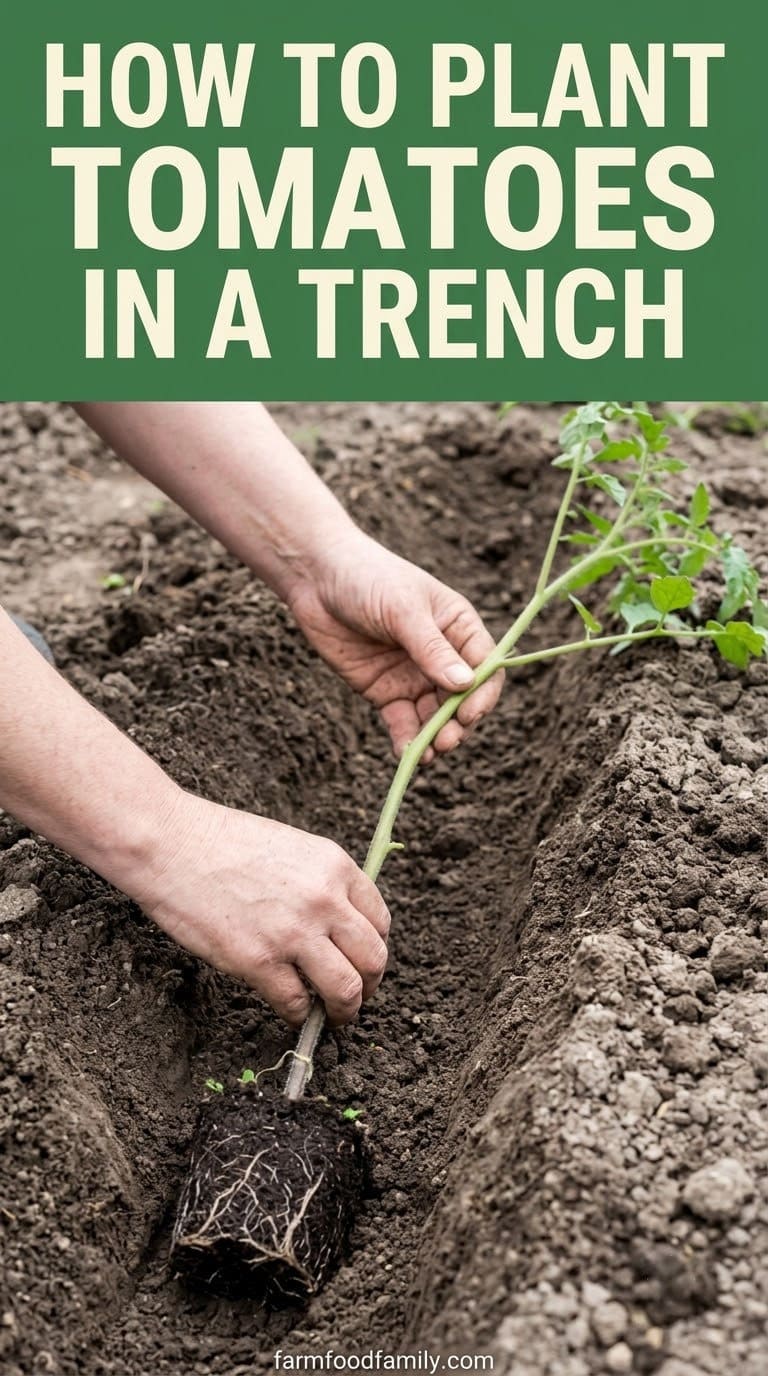
Trench planting means burying a tomato’s stem sideways instead of straight down. Colorado State University Extension says to dig a trench 2 to 3 inches deep, lay the plant horizontally, and leave only the top two or three sets of leaves above the soil. Pinch off the lower leaves first.
It works because tomato stems grow roots wherever they touch soil. That gives you a bigger root system and a stronger plant.
But wait until the soil is above 55°F, because cold soil stalls transplants. Harden the seedlings off for about a week first, so they handle sun, wind, and cooler air.
Then water well, stake the plant at planting, and mulch. The rest of this guide walks you through each step in detail, including how to choose between a trench and a deep hole.
What is trench planting, and why does it work?
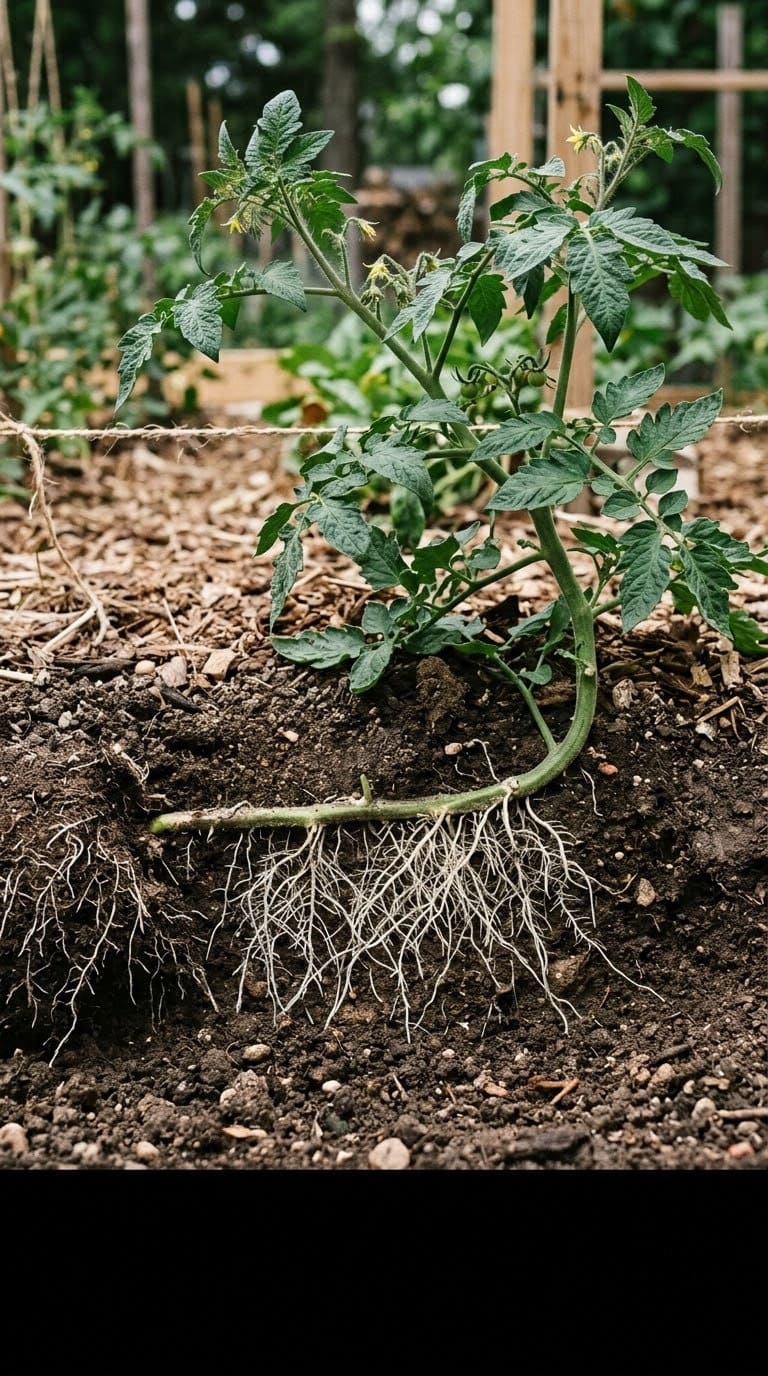
A tomato stem is full of root potential. Penn State Extension says tomatoes can root from any part of the stem that touches the soil. More stem underground means more roots.
A leggy transplant is a tall, stretched seedling with a long bare stem. Planting it straight down would need a very deep hole. A shallow trench solves that.
Answer 4 quick questions and get matched to the exact fix for your yard — drainage, budget, layout, or something else entirely.
Take the Free QuizThe result is a plant with a bigger root system. Penn State says burying more stem increases the root structure.
Should you use a trench or a deep hole?
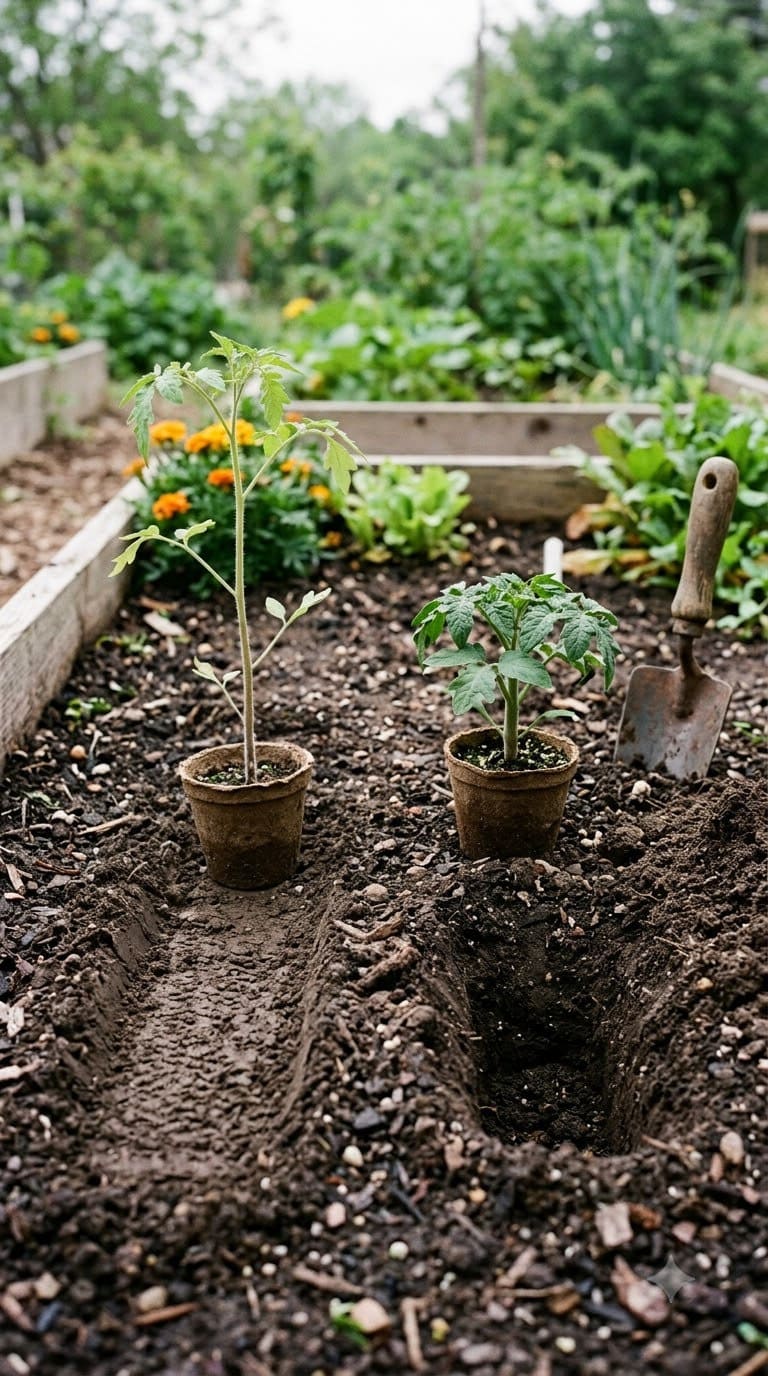
Match the method to the plant.
| Your transplant | Best method | Source |
|---|---|---|
| Tall and leggy with a long bare stem | Trench, 2 to 3 inches deep | Colorado State |
| Normal size, 6 to 8 inches tall with 5 to 7 true leaves | Straight hole, 5 to 6 inches deep after stripping lower leaves | Penn State |
| Grafted tomato | Same depth as in its pot, with the graft at least 1 inch above ground | NC State |
Colorado State says the ideal transplant is dark grass green, six to eight inches tall, with at least five to seven true leaves. If yours looks like that, a deep hole is fine. If it’s taller and floppy, use a trench.
Never bury a grafted plant’s graft point. Keep it at least 1 inch above the soil.
For the full growing story, read our guide on how to grow tomatoes.
What do you need for trench planting?
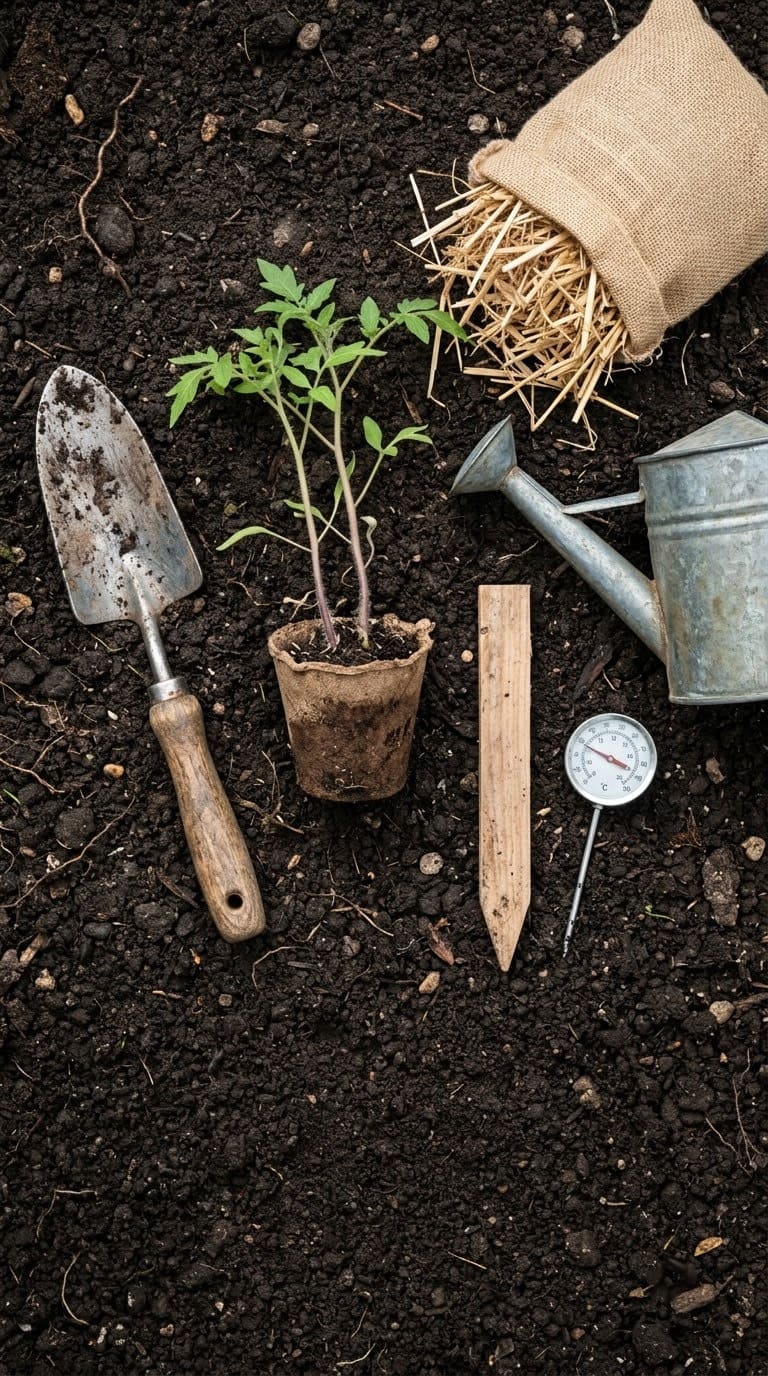
The supply list is short.
- Hardened-off tomato transplants
- A trowel or small spade
- A soil thermometer
- A 6-foot stake
- A watering can or hose
- Straw or another mulch
For digging basics, see our list of tools needed to raise vegetables.
Most yard problems trace back to one specific, fixable cause. Find yours in 4 quick questions.
Take the Free Quiz
An analog dial thermometer that reads soil temperature from 20 to 180°F, with no batteries. Use it to confirm the soil is above 55°F before you plant.
Shop NowThis post contains affiliate links. We may earn a commission on qualifying purchases at no extra cost to you.
When should you plant tomatoes outside?
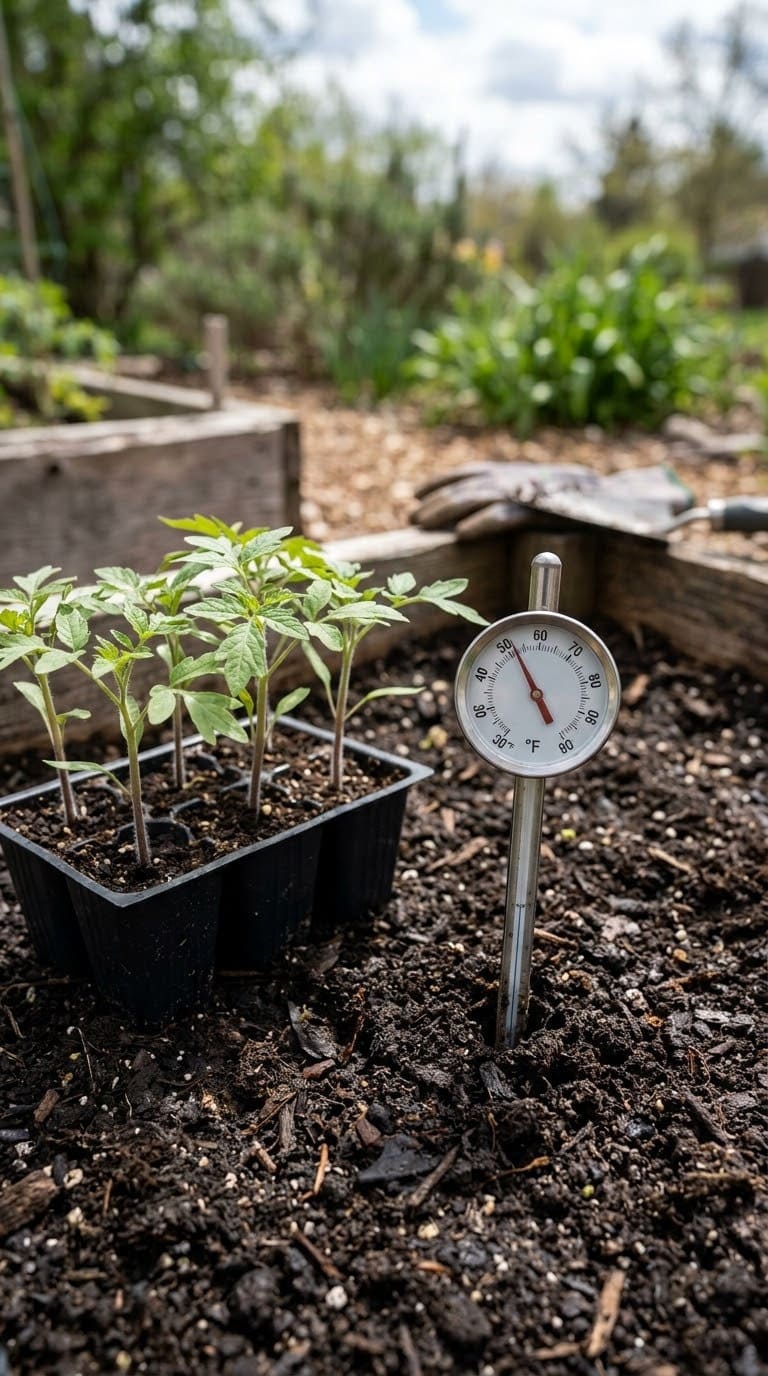
Wait for warm weather. Colorado State says the soil must be above 55°F, with nights above 52°F and days above 60°F.
Frost kills tomatoes. Penn State says blossoms drop if nights fall below 55°F or days rise above 75°F, and that late May and early June soil is warm enough in its region.
Check your own last-frost date. Then use a soil thermometer rather than the calendar.
Step 1: How do you harden off the seedlings?
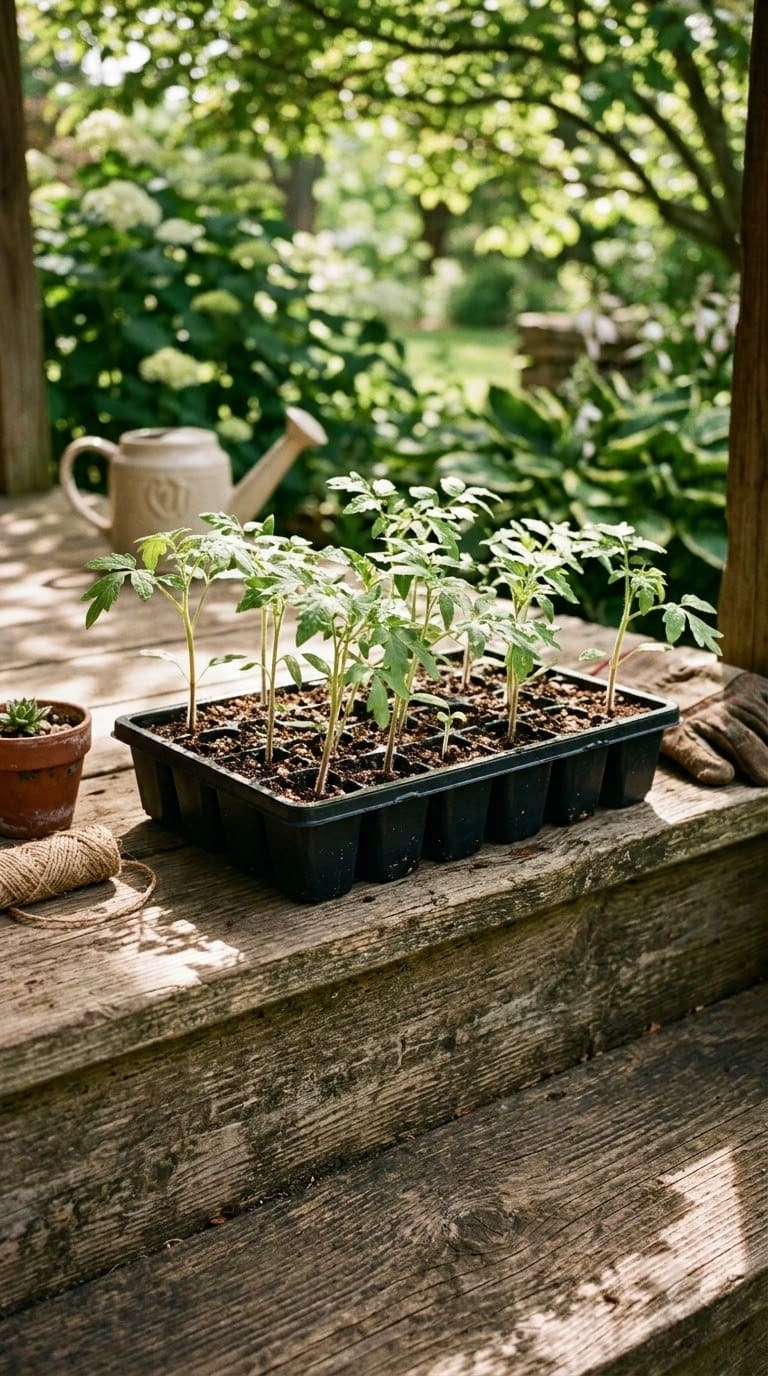
Put the seedlings outside for a week before planting. Start with a short time in shade, and add more sun and wind each day.
Penn State says a gradual increase in sun and wind exposure over about a week prepares seedlings for outdoor conditions. Bring the tray in if frost is forecast.
Step 2: How do you check the soil and prep the bed?
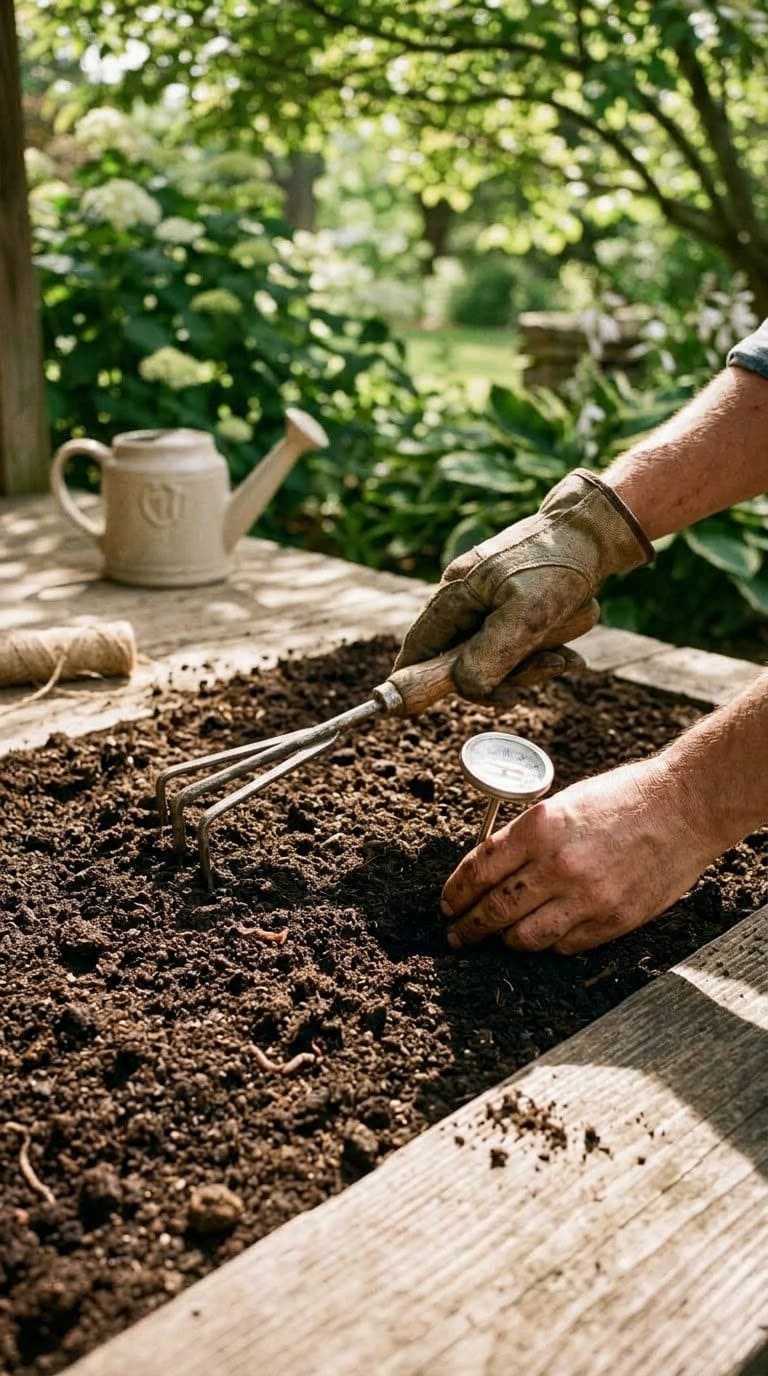
Push a soil thermometer into the bed. Plant only when the soil is above 55°F.
Pick a sunny spot and loosen the soil where the trench will go. Then mark the row so each plant has room. Space plants 2 feet apart if they’ll be staked or caged.
Step 3: How do you dig the trench?
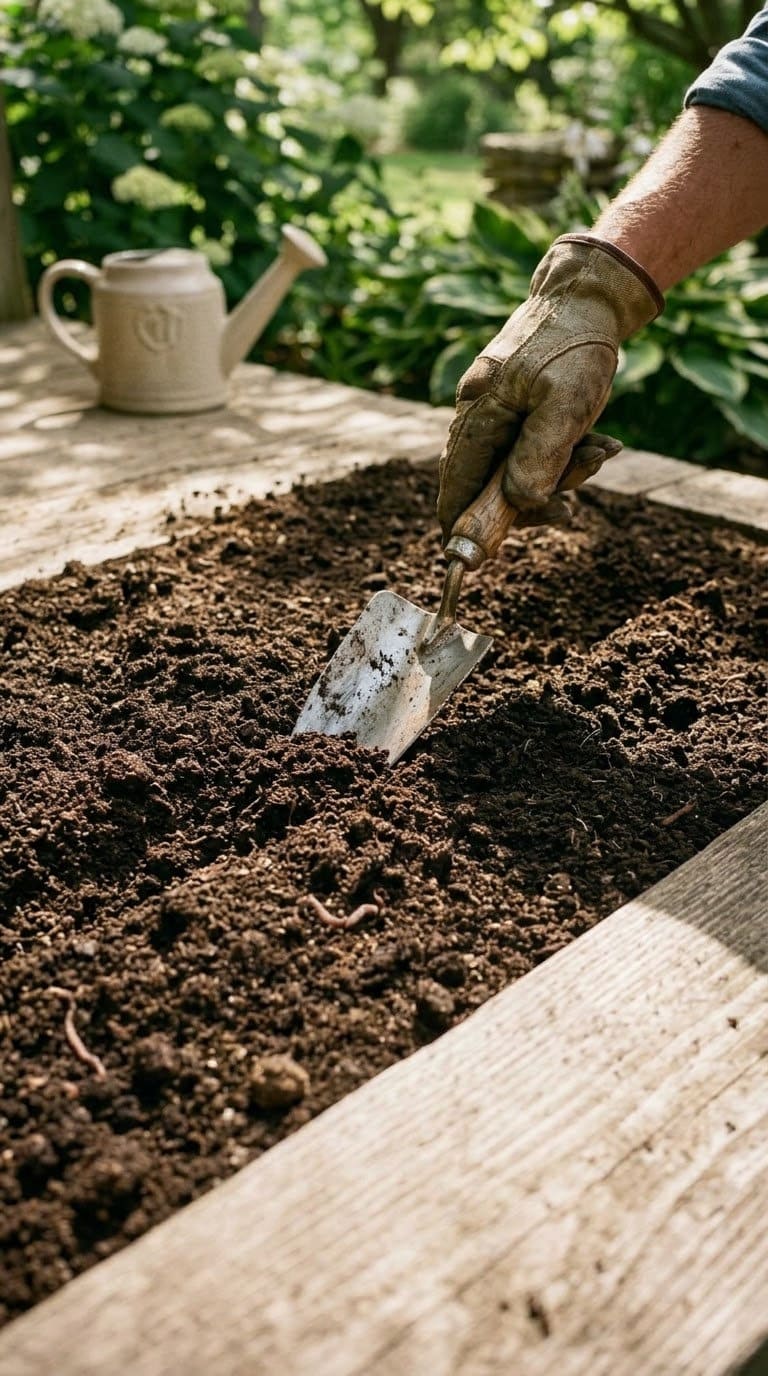
Dig a trench 2 to 3 inches deep. Make it long enough to lay the plant flat, from the root ball to the top leaves.
Step 4: How do you strip the lower leaves?
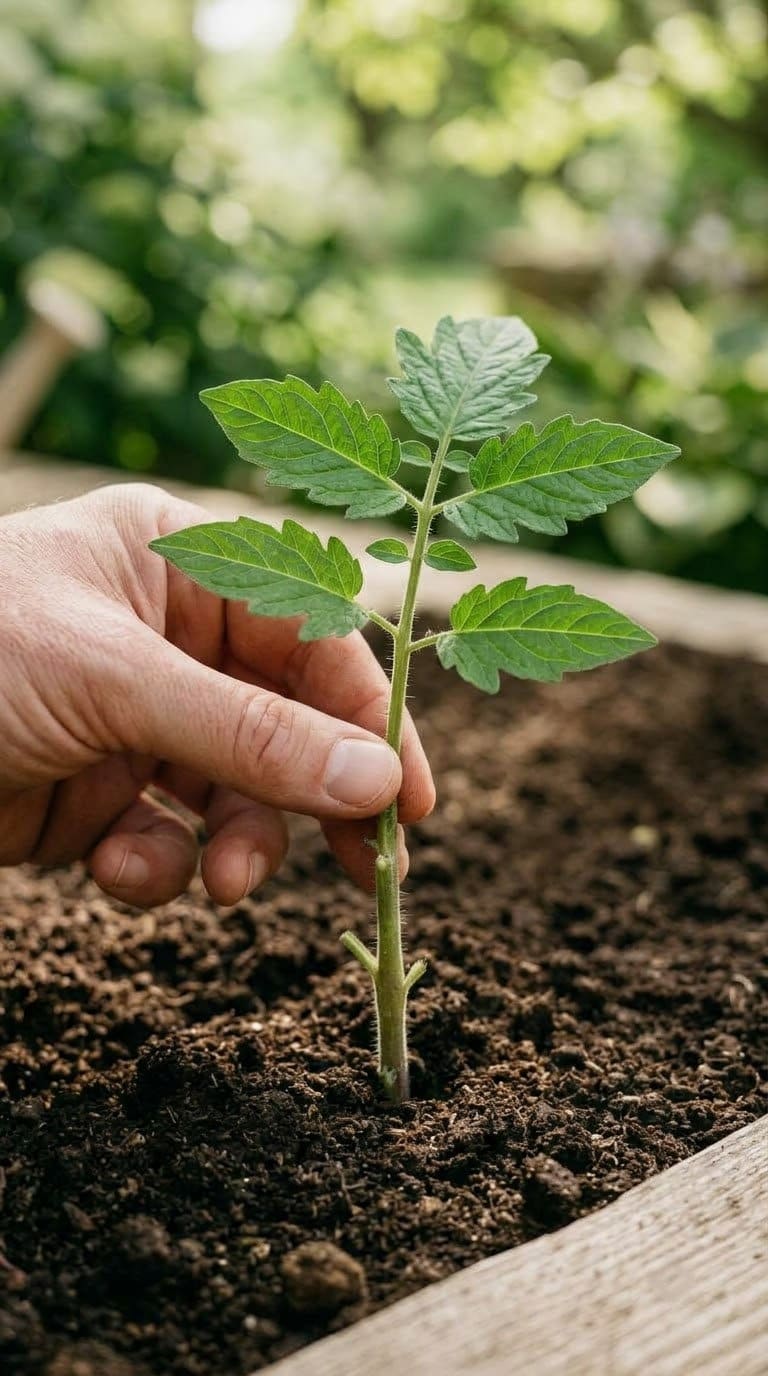
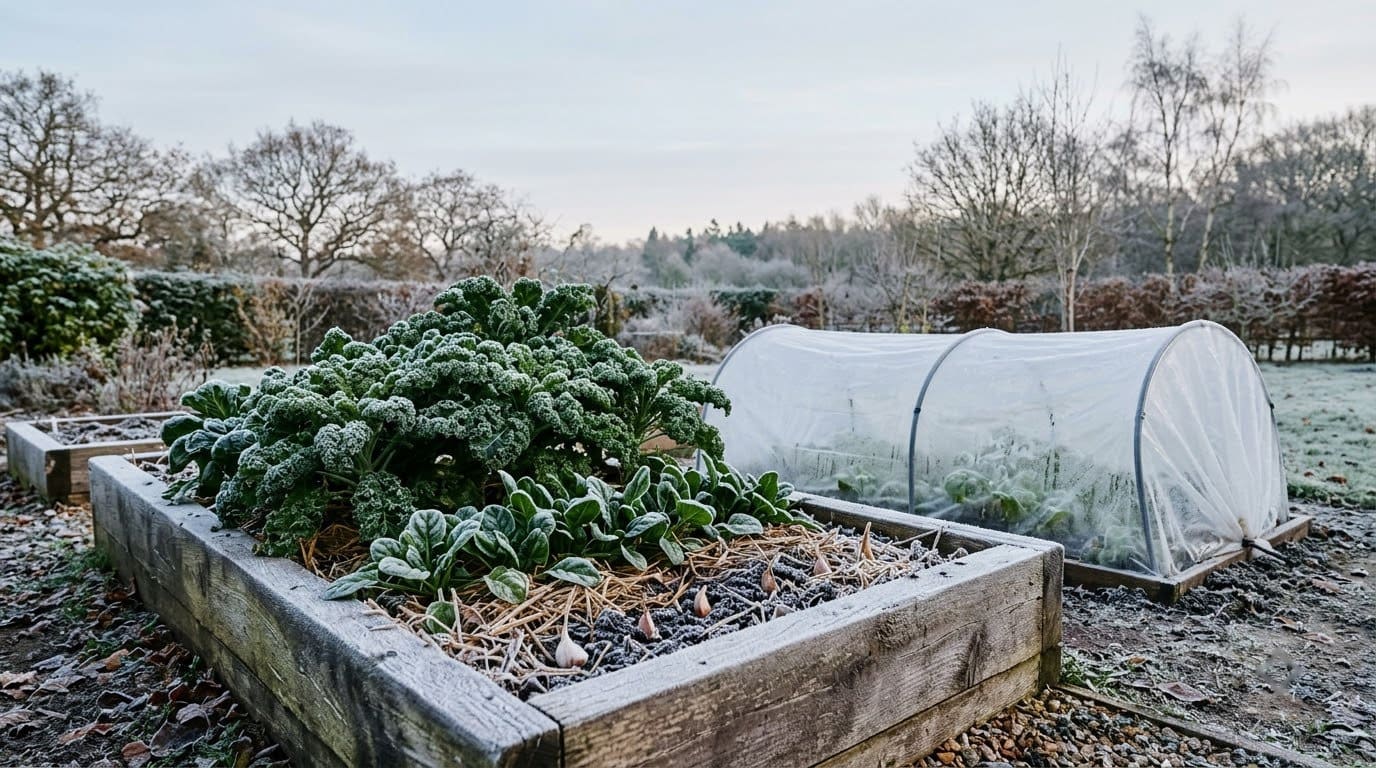
Pinch off every leaf on the stem that will go underground. Leave only the top two or three sets of leaves.
The average homeowner spends $616/year on yard fixes that don't address the real problem. Find out what yours actually is — before you spend another dollar.
Take the Free QuizDo this gently. Colorado State says to pinch off the lower leaves below the soil line before planting.
Step 5: How do you lay the plant in the trench?
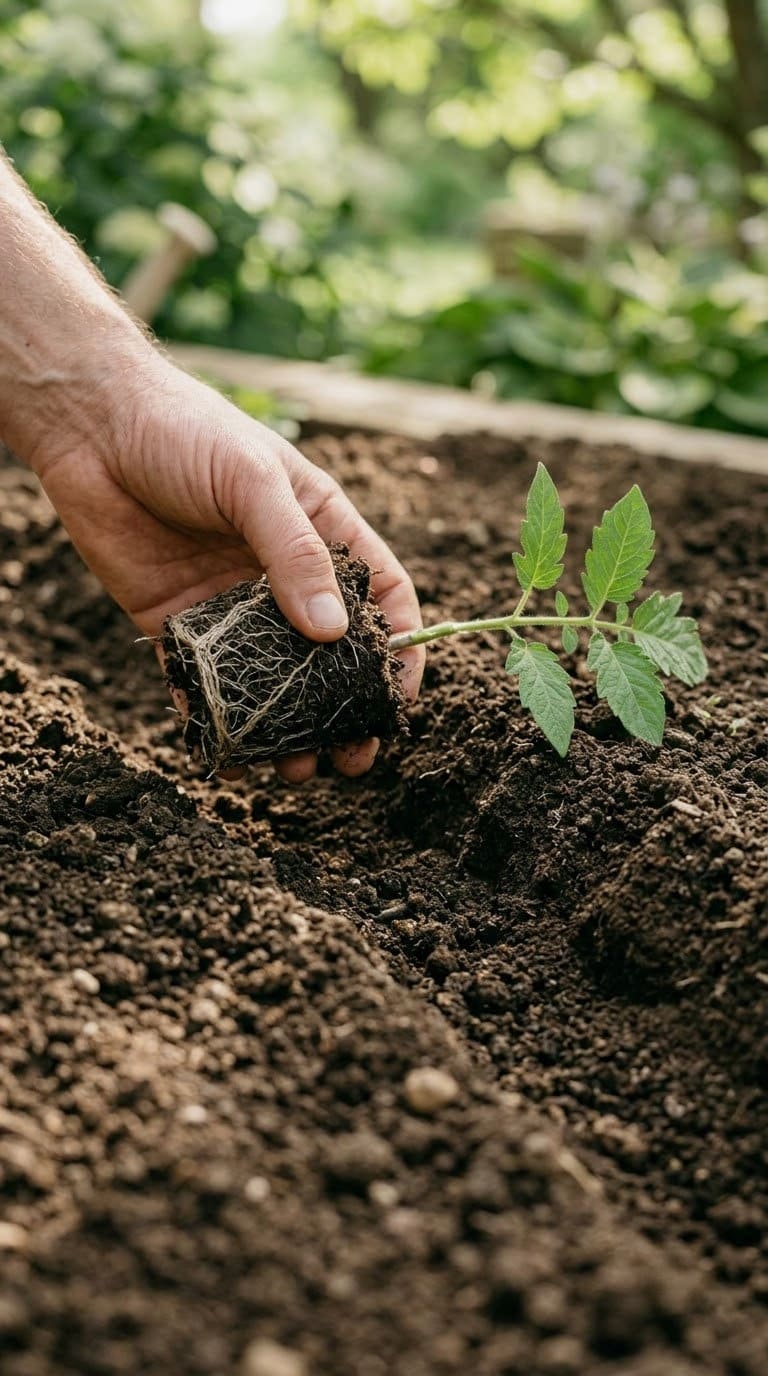
Lay the plant sideways with the root ball at one end. Cover the roots and bare stem with 2 to 3 inches of soil, up to the top leaf cluster.
Handle it by the roots or the leaves. NC State Extension says not to hold a tomato by the stem, since it’s easy to damage.
Firm the soil gently. The top few sets of leaves should stay above ground and point up.
Step 6: How do you water and feed the new plant?
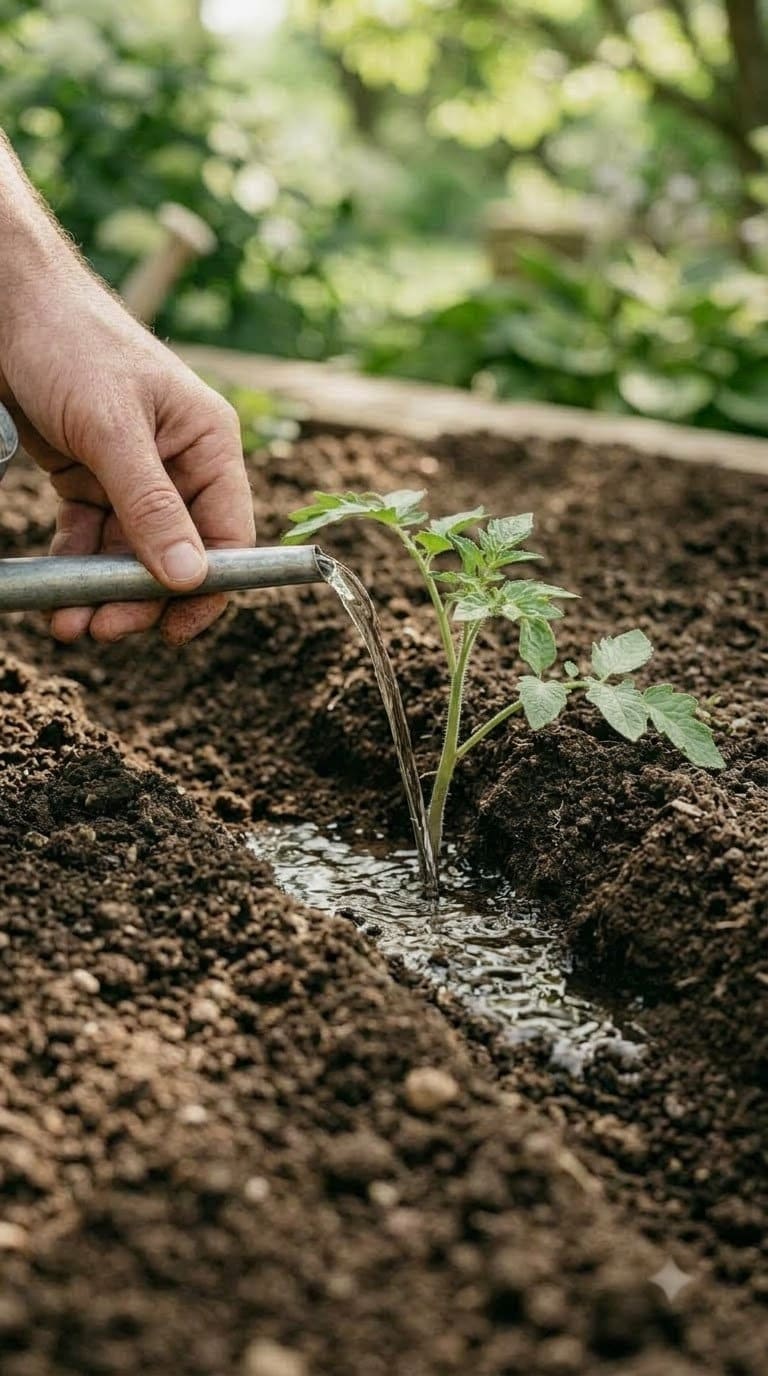
Make a small well near the stem and water thoroughly. Use a diluted liquid starter fertilizer that’s high in phosphorus, as Penn State advises.
After that, water deeply about once a week. Soak the soil 6 to 8 inches deep, and keep water off the leaves.
Step 7: How do you stake and mulch the tomato?
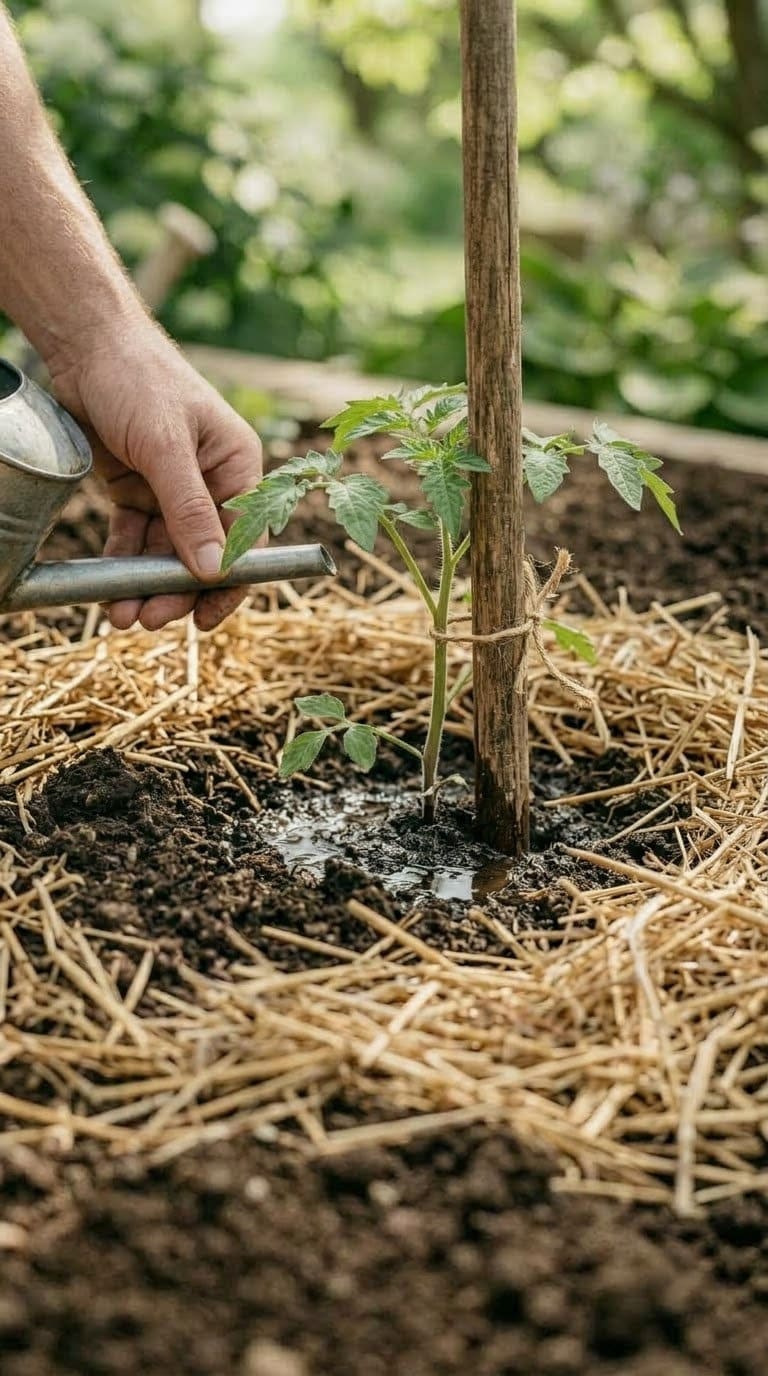
Drive the stake in right at planting. Place it 3 to 4 inches from the stem, and push it about 12 inches into the ground.
Then spread straw or composted leaves around the plant, because mulch conserves soil moisture. For more on mulch, see why to use mulch in the garden.
Where do the experts disagree, and what should you do?
Extension sources differ on a few numbers. None will decide whether your tomato lives. Here is each one, with the choice we made in the steps.
| Detail | What sources say | What we chose |
|---|---|---|
| Night temperature | Above 52°F (Colorado State), above 60°F (Penn State) | Wait for the soil to hit 55°F and nights to stay above 52°F |
| Spacing | 2 feet for determinates and 3 feet for indeterminates (Penn State), 1.5 to 2 feet in the row (NC State), 2 feet minimum for trellised (Colorado State) | 2 feet apart for staked or caged plants |
| Stake position | 3 to 4 inches from the stem (Penn State), 3 to 5 inches (NC State) | 3 to 4 inches |
| Stake depth | 12 inches (Penn State), about 1 foot (NC State) | 12 inches |
| Normal-size transplants | Bury 5 to 6 inches deep (Penn State), or just cover the pot rim by 1 inch (NC State) | Bury deeper by stripping lower leaves |
What can go wrong with trench planting?
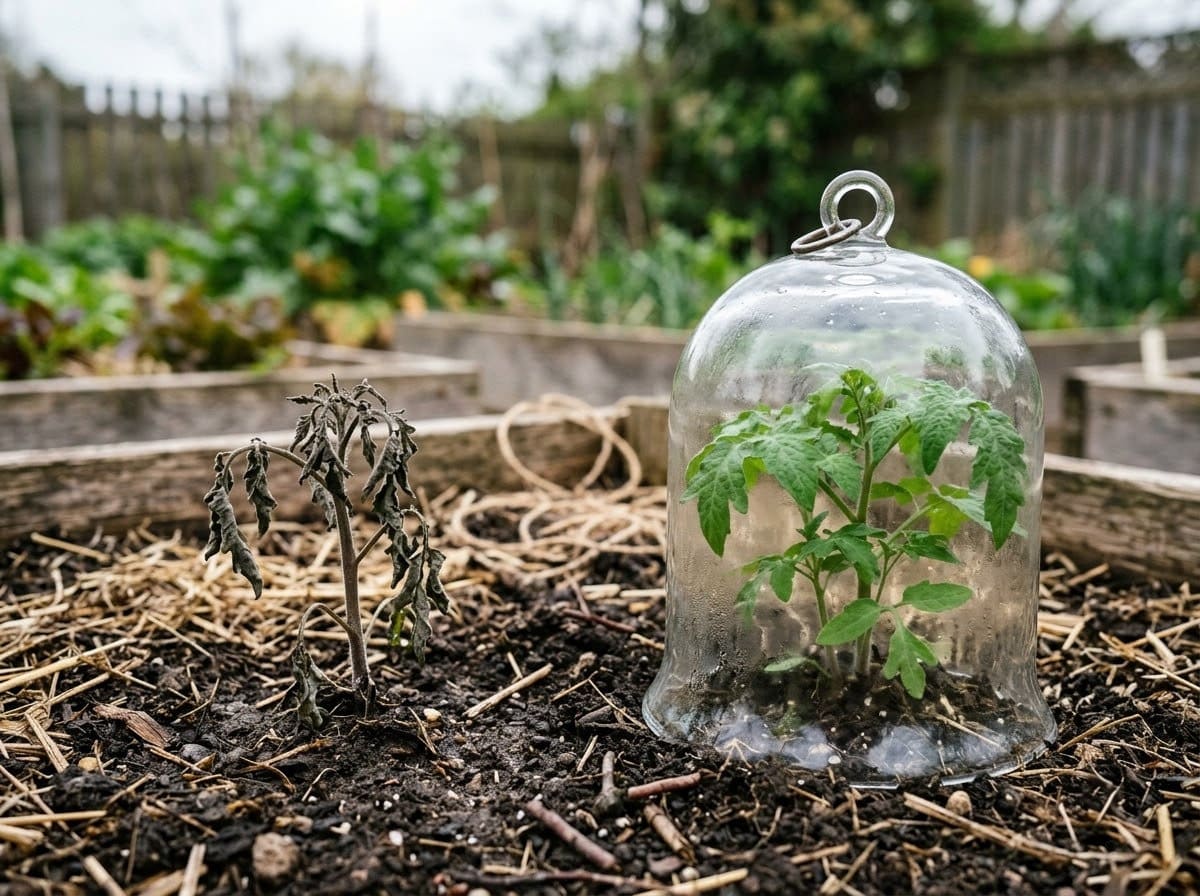
Most problems come down to timing and handling.
| Problem | Why it happens | Fix |
|---|---|---|
| Plant stalls after planting | Soil is too cold | Wait until soil is above 55°F |
| Frost damage | Planted before the last frost | Cover plants or plant later |
| Blossoms drop | Nights below 55°F or days above 75°F | Plant when temperatures are steady |
| Broken stem | Held by the stem | Lift by the roots or leaves |
| Leaves left below the soil line | Skipped the stripping step | Pinch off the lower leaves before planting |
The temperature numbers come from Penn State and Colorado State.
How do you grow transplants that are ready for a trench?
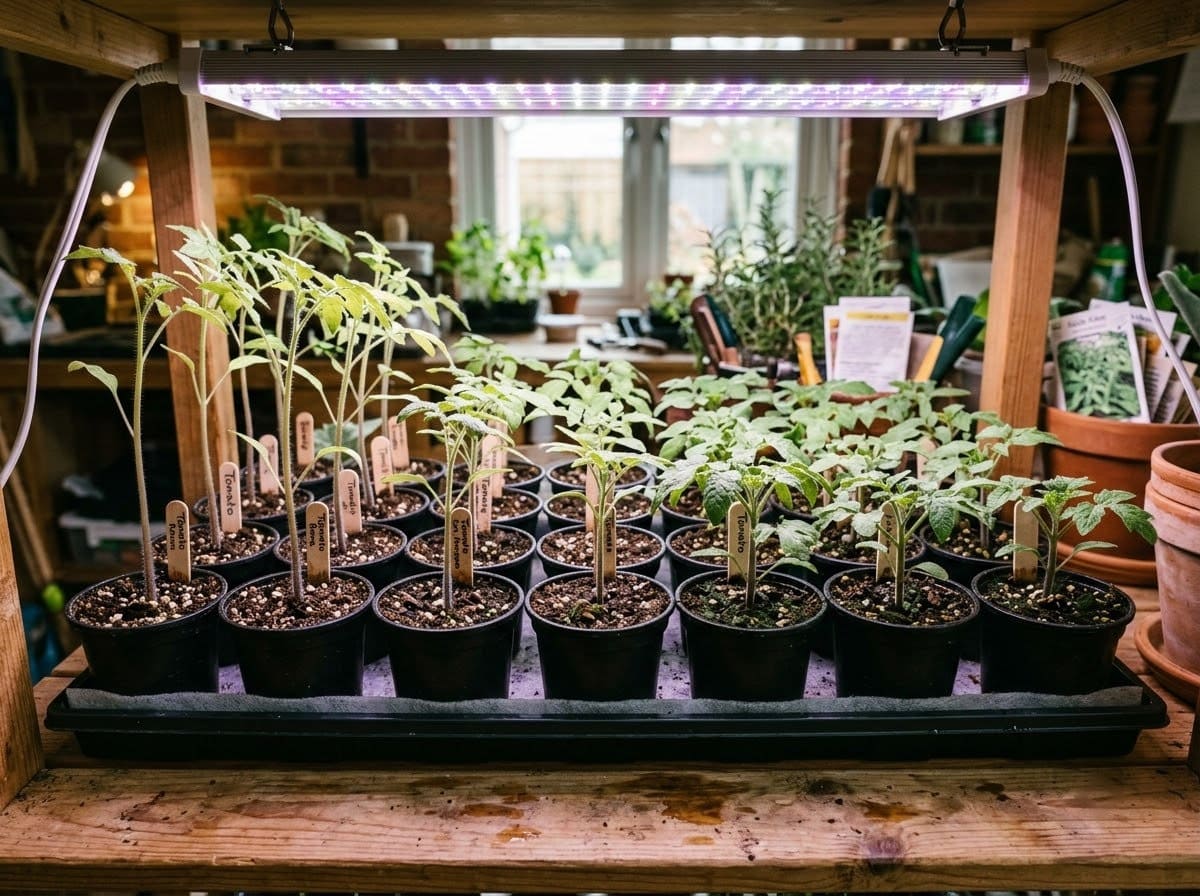
Start early. NC State says to sow seeds in individual pots six to ten weeks before the last frost.
Leggy seedlings happen when plants stretch for light. Colorado State says the ideal transplant is dark grass green and six to eight inches tall, with at least five to seven true leaves.
If yours grow tall anyway, don’t throw them out. That’s the plant the trench was made for.
What if your transplant is in a peat pot?
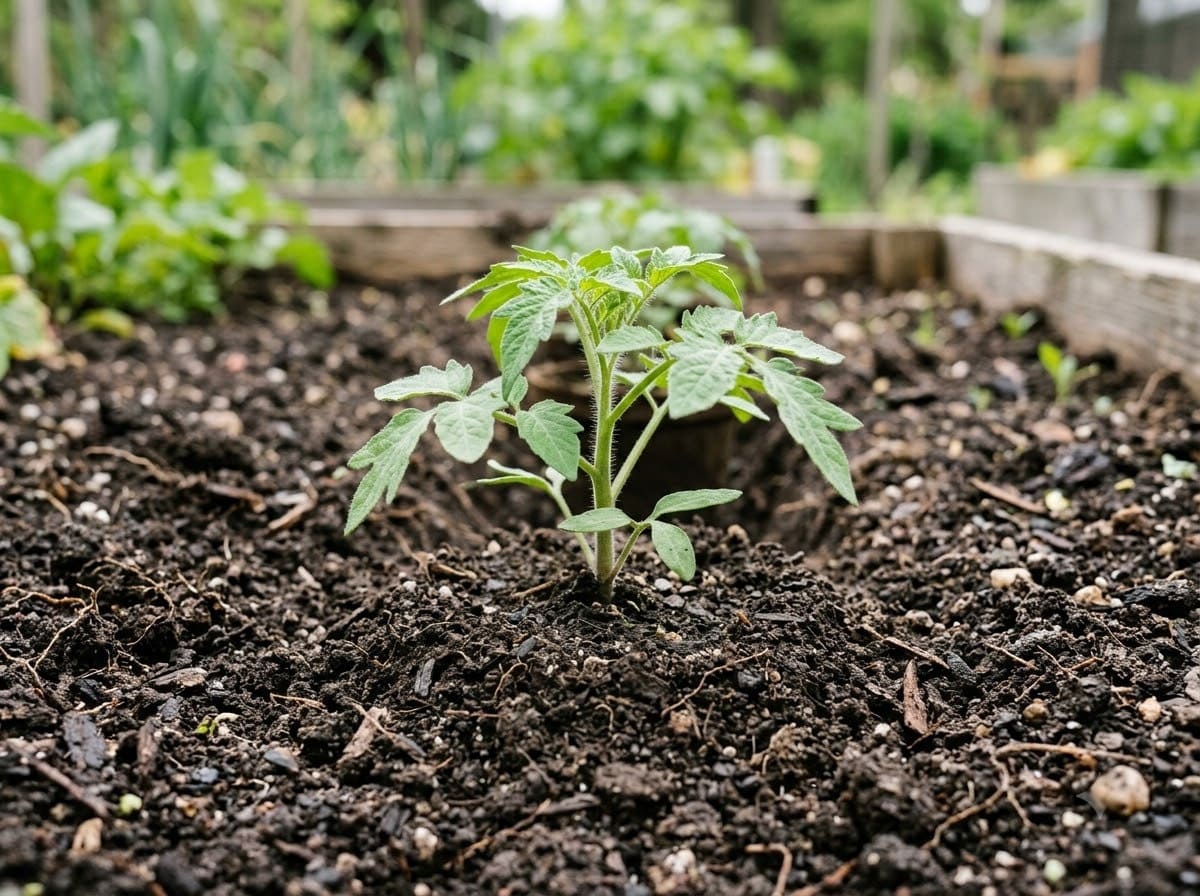
Bury the pot with the plant, but keep its rim below the soil. NC State says to cover the top of a peat pot with 1 inch of soil.
NC State also says the pot should sit at least 1 inch below the soil surface. As always, lift the plant by the roots or leaves, not the stem.
How far apart should you plant trenched tomatoes?
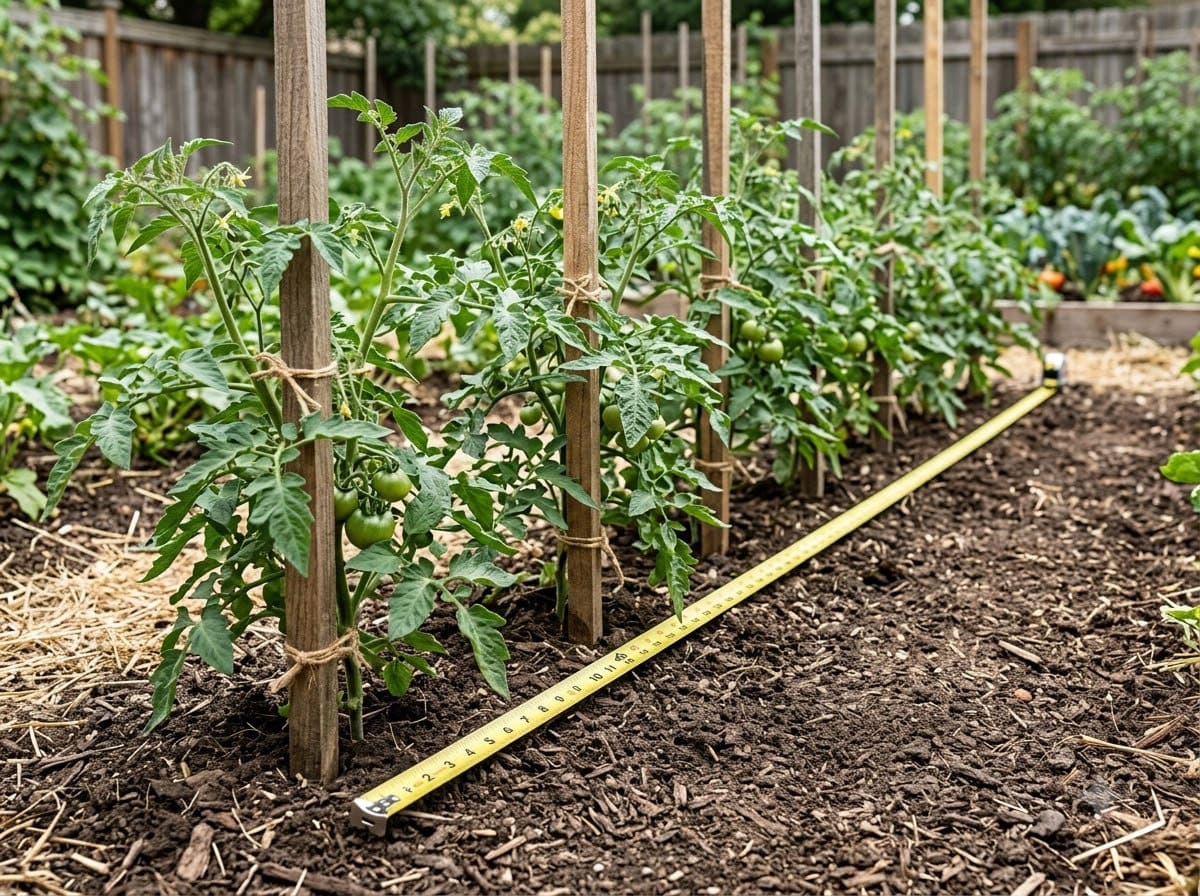
Give each plant room to grow. Penn State gives spacing by plant type.
| Type | Spacing |
|---|---|
| Determinate varieties | 2 feet apart |
| Indeterminate varieties | 3 feet apart |
| Staked tomatoes | 18 to 24 inches apart |
We’d use 2 feet for most staked or caged plants and 3 feet if you have indeterminate varieties and space. NC State also says to leave 3 to 4 feet between rows.
How can you protect early tomatoes from cool weather?
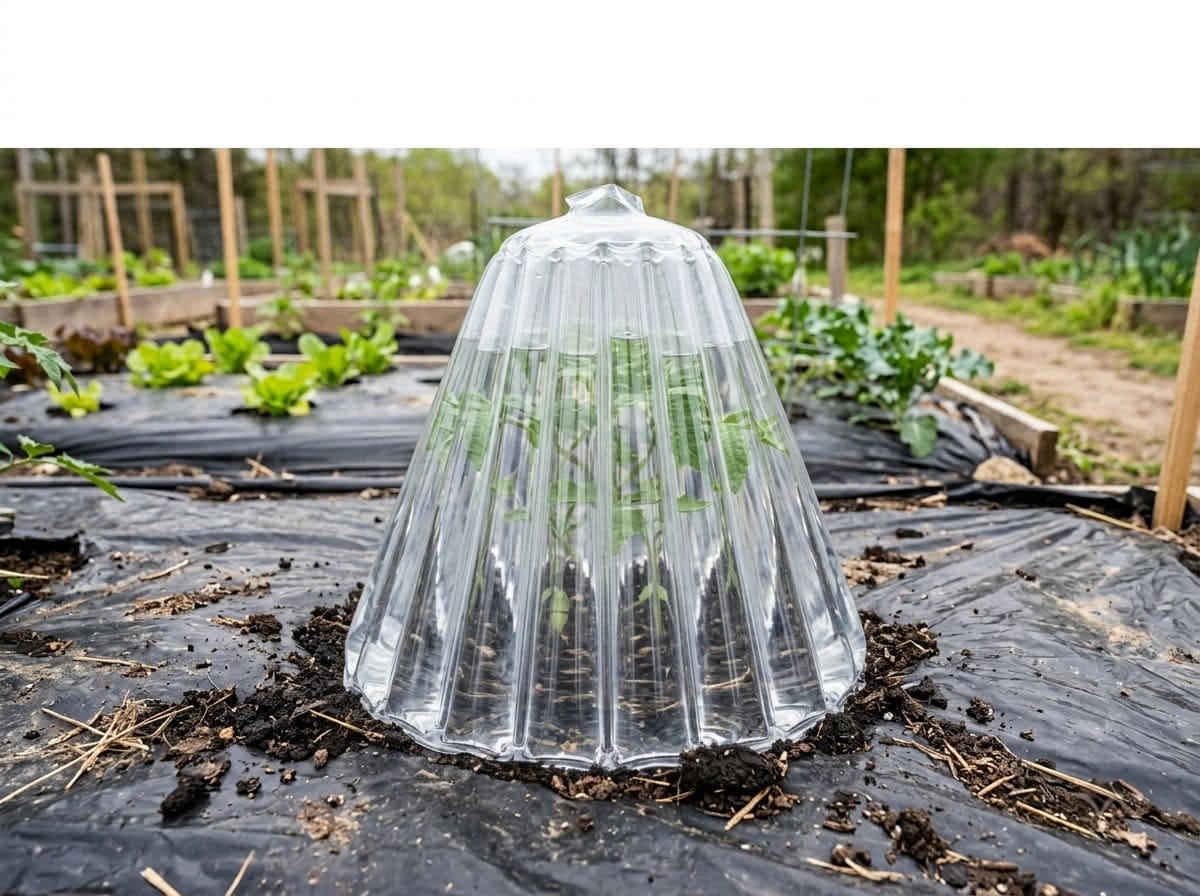
You can warm the bed first. Colorado State says black plastic mulch warms the soil and can push production two to three weeks earlier.
For a late frost, use a wall-of-water. Colorado State lists it as a frost protection technique for early plantings.
Trench planting doesn’t change these rules. The soil still needs to be warm, and frost still kills the plant.
What do gardeners get wrong about planting tomatoes?
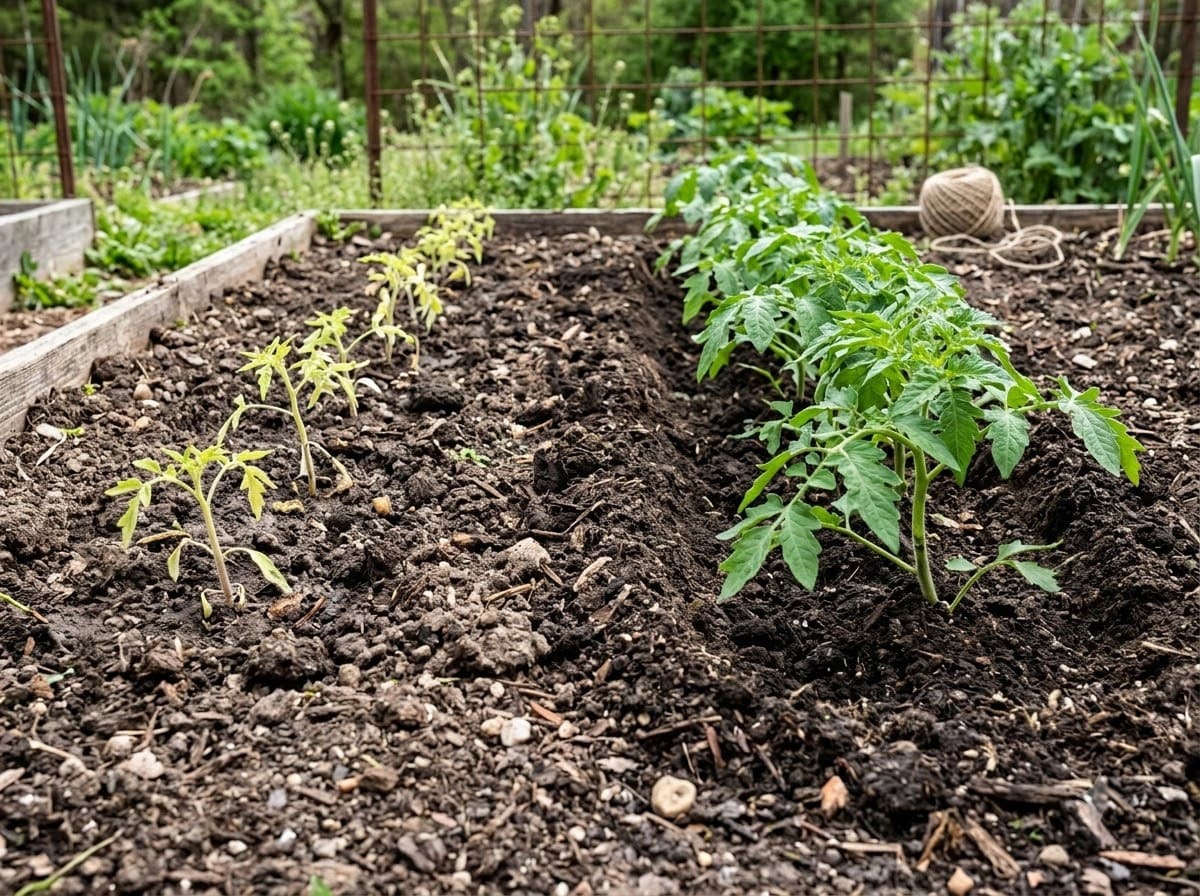
Planting too early is the top mistake. Cold soil stalls the plant even if the weather looks mild.
Burying too much foliage is another. Leave the top two or three sets of leaves above ground.
Skipping the stake is a third. Penn State says to insert stakes at planting.
We’d start with one leggy plant. Try the trench on a spare seedling, and compare it to a normal hole by midsummer.
What does the whole process look like at a glance?
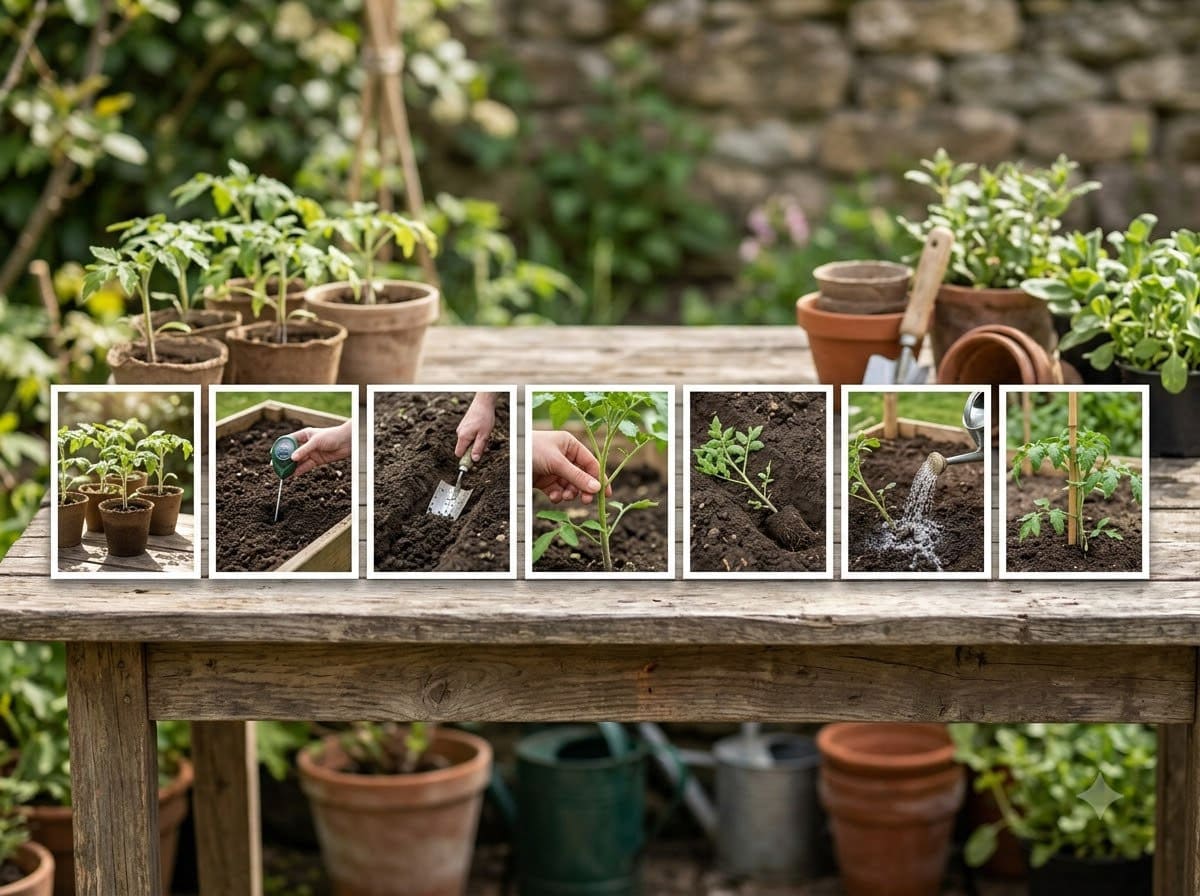
Use this recap as a checklist on planting day.
| Step | What to do | Key number |
|---|---|---|
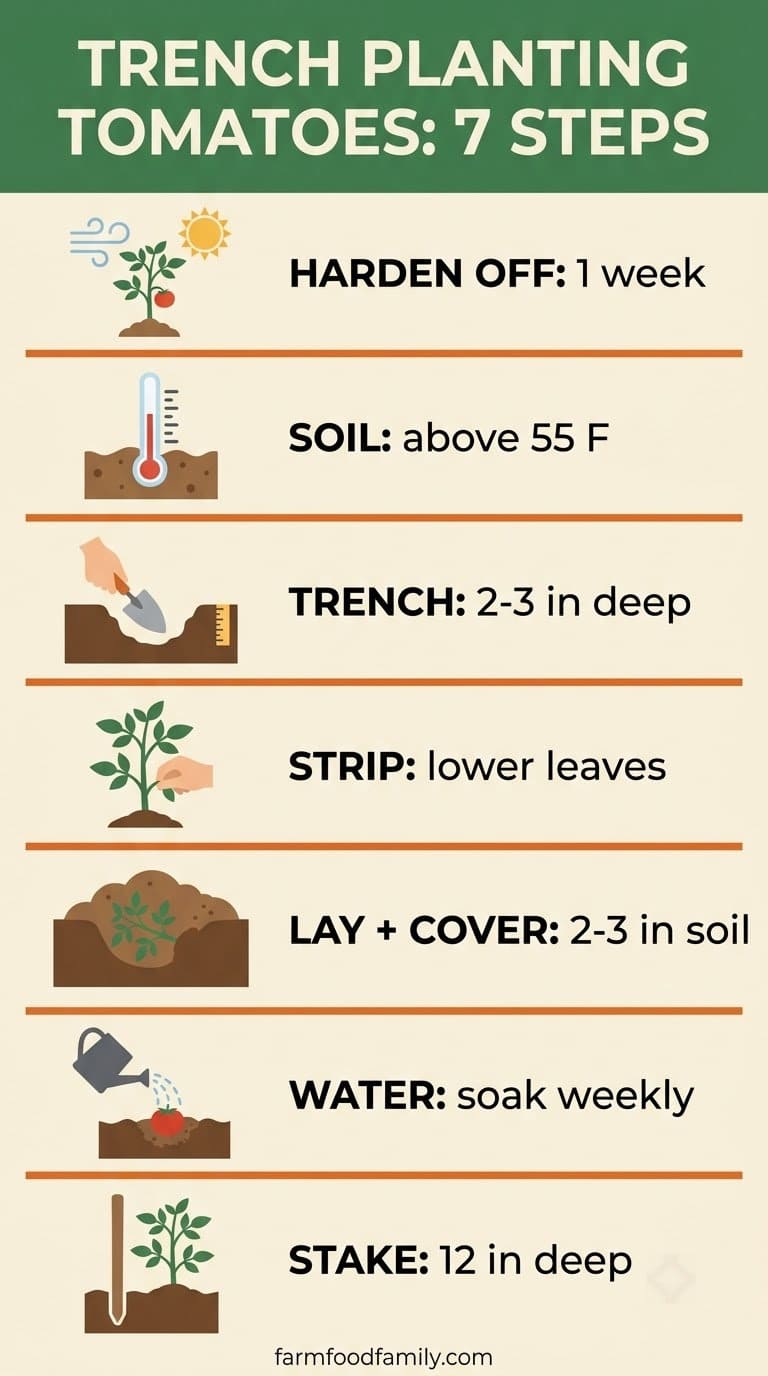
| 1 | Harden off the seedlings | About one week |
| 2 | Check the soil and prep the bed | Soil above 55°F |
| 3 | Dig the trench | 2 to 3 inches deep |
| 4 | Strip the lower leaves | Keep the top 2 or 3 sets |
| 5 | Lay the plant and cover it | 2 to 3 inches of soil |
| 6 | Water and feed | Soak 6 to 8 inches, once a week |
| 7 | Stake and mulch | Stake 3 to 4 inches from the stem, 12 inches deep |
Frequently asked questions
Can you trench plant any tomato?
Yes. It suits leggy transplants best, but it works on other plants too. Colorado State says to use it when the plant is tall.
How deep should the trench be?
2 to 3 inches deep. Colorado State says to leave only the top two or three sets of leaves above the soil.
Should I remove the lower leaves?
Yes. Pinch off the leaves that go underground, as Colorado State advises. The bare stem then grows roots.
Do I bury a grafted tomato?
No. NC State says to plant grafted tomatoes at the same level as in the pot, with the graft at least 1 inch above the ground.
When can I plant tomatoes outside?
When the soil is above 55°F and nights stay above 52°F, per Colorado State. Also wait until after your last frost.
Should I water right after planting?
Yes. Make a small well near the stem and water thoroughly, as Penn State advises. Then keep watering deeply about once a week.
How far apart should trench-planted tomatoes be?
2 feet apart for staked or caged plants. Give indeterminate varieties more room if you can.
Related Posts
Products We Recommend
This post contains affiliate links. We may earn a commission on qualifying purchases at no extra cost to you.
Taylor Soil Thermometer
An analog dial thermometer that reads soil temperature from 20 to 180°F, with no batteries. Use it to confirm the soil is above 55°F before you plant.
Shop Now
Fiskars Ergo Garden Trowel
A sturdy hand trowel for cutting a shallow trench and lifting a root ball.
Shop NowNever miss an update — choose FarmFoodFamily as your preferred source on Google.
How it works: Tap the button below to open Google's settings page, then check the box next to FarmFoodFamily.
Tap the checkbox to turn it blue — that's how you know it's set.