7 Essential Tomato Tasks Every August (Plus a Checklist to Keep Your Harvest From Splitting, Rotting, or Stalling)
August makes or breaks a tomato harvest, and the difference usually comes down to water, nitrogen, and how fast you catch a spider mite before it wrecks a whole plant.

Never miss an update — choose FarmFoodFamily as your preferred source on Google.
How it works: Tap the button below to open Google’s settings page, then check the box next to FarmFoodFamily.
Tap the checkbox to turn it blue — that’s how you know it’s set.
Tomato plants hit their busiest, most fragile stretch in August. Fruit is loading up on the vine right as heat spikes and rain gets unpredictable, which is exactly the combination that causes splitting, blossom end rot, and stalled ripening.
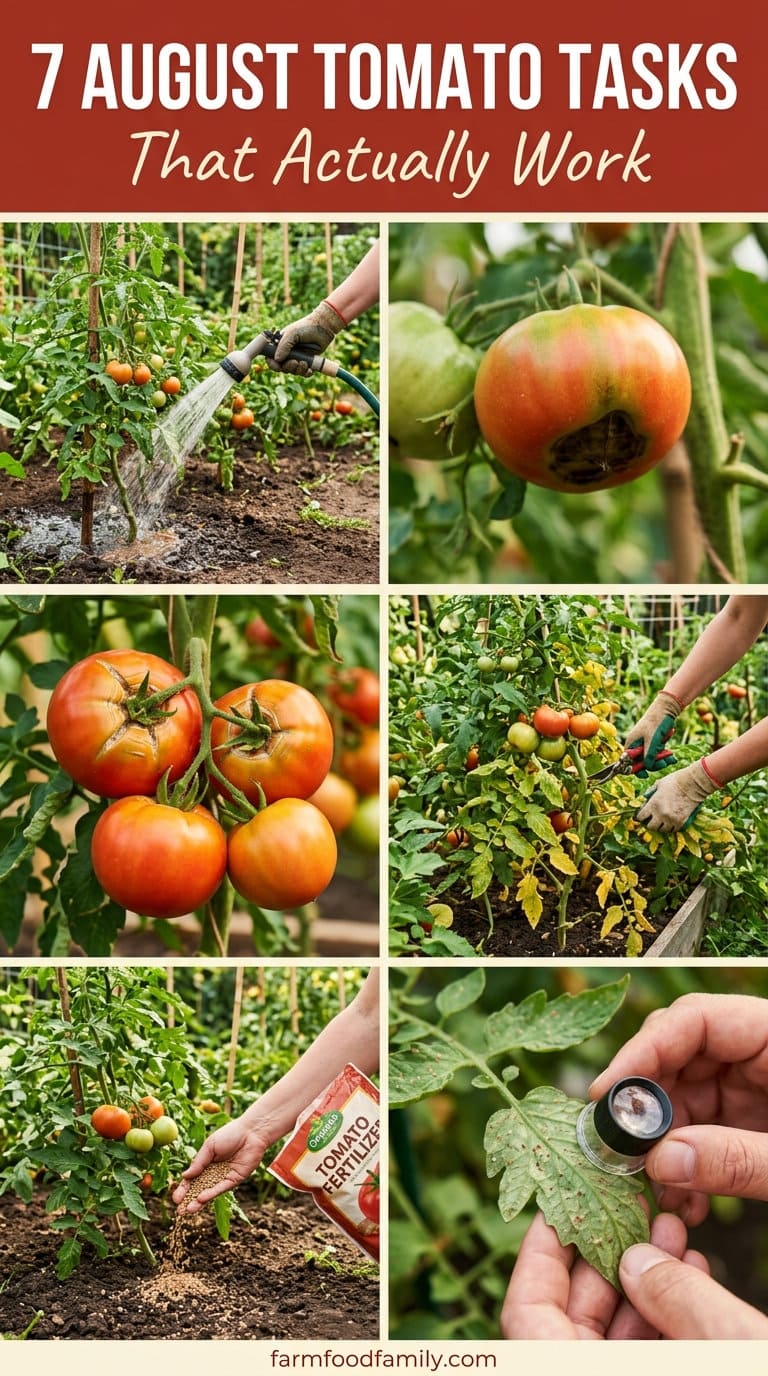
Most “August tomato tips” lists stop at five generic bullet points. This one doesn’t. Below are 7 real tasks, each tied to actual university extension research or a named specialist, plus a checklist you can run through in five minutes on a Saturday morning.
This builds on the site’s broader rundown of tomato-growing basics rather than repeating it, so if a plant is struggling with something more foundational than an August-specific issue, that’s the better starting point.
Quick answer: what do tomato plants need in August?
Tomato plants need consistent deep watering (roughly 1 to 2 inches, or 2 to 3 gallons per plant, per week), not sporadic soaking, because irregular moisture is the root cause of both blossom end rot and fruit cracking.
They need less nitrogen and more potassium and phosphorus as the season goes on, since extra nitrogen late in summer pushes leafy growth instead of fruit.
They need their lower canopy thinned gradually, not stripped all at once, to improve airflow without exposing fruit to sunscald. And they need a morning pest check for spider mites, which thrive in the same hot, dry stretches that make watering inconsistent in the first place.
Answer 4 quick questions and get matched to the exact fix for your yard — drainage, budget, layout, or something else entirely.
Take the Free QuizGet those four things right and most of the other August problems (cracked skins, blossom-end lesions, stalled fruit set) mostly take care of themselves.
August tomato checklist
| Task | How often | Watch for | Source |
|---|---|---|---|
| Deep watering | 1-2x/week, deep soak | Wilting midday vs. wilting all day | UMD Extension, UConn Extension |
| Blossom end rot check | Weekly, inspect undersides | Dark, sunken spot on fruit bottom | UMD Extension |
| Cracking check | After any heavy rain | Radial or ring-shaped splits | Kansas State Research and Extension |
| Leaf stripping | Weekly, one layer at a time | Yellowing or spotted lower leaves | UNH Extension pruning guidance |
| Fertilizing | Every 7-10 days, taper nitrogen | Lush leaves, few flowers | Lynn Brandenberger, OSU Extension |
| Spider mite scouting | Every morning | Stippled leaves, fine webbing | Ric Bessin, UK Extension |
| Support and harvest | 2-3x/week | Sagging stems, breaker-stage color | Field-tested technique |
Task 1: How much water do tomato plants need in August?
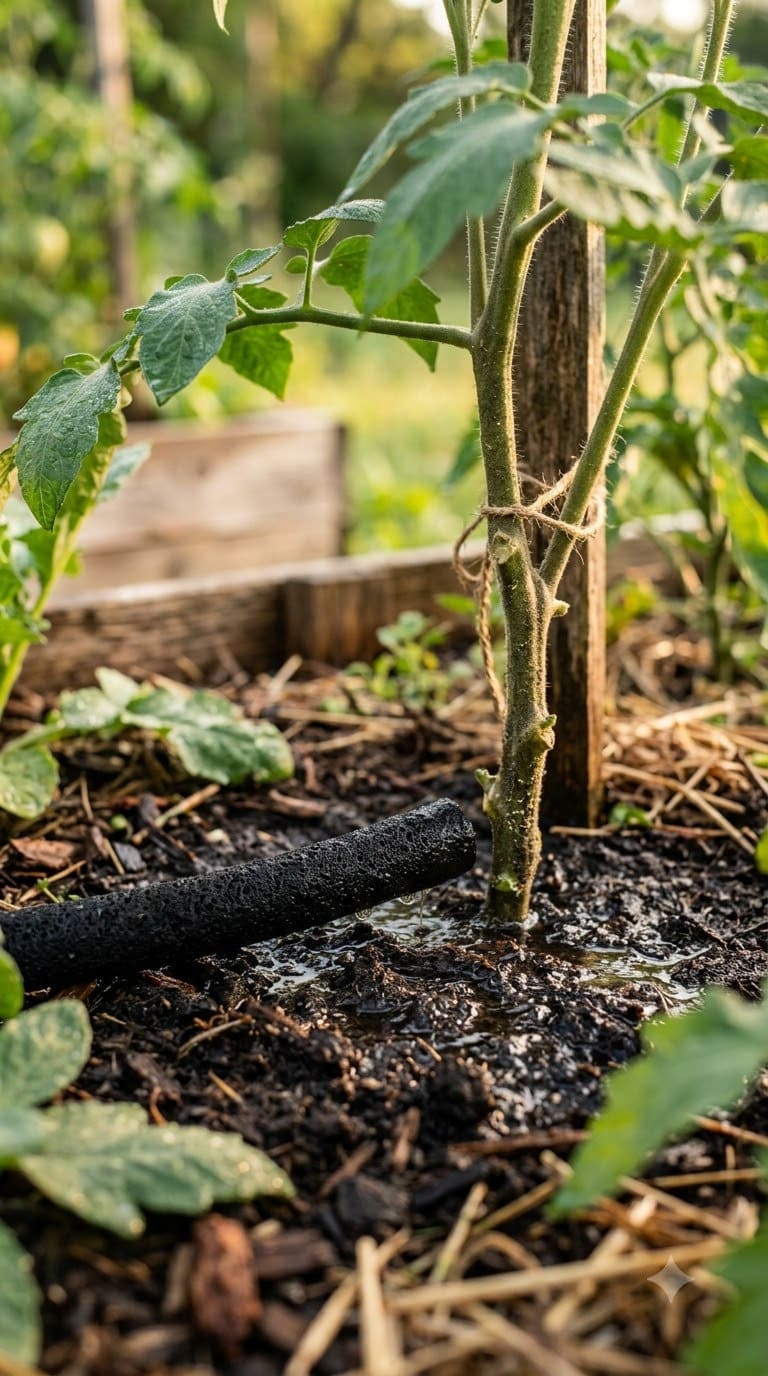
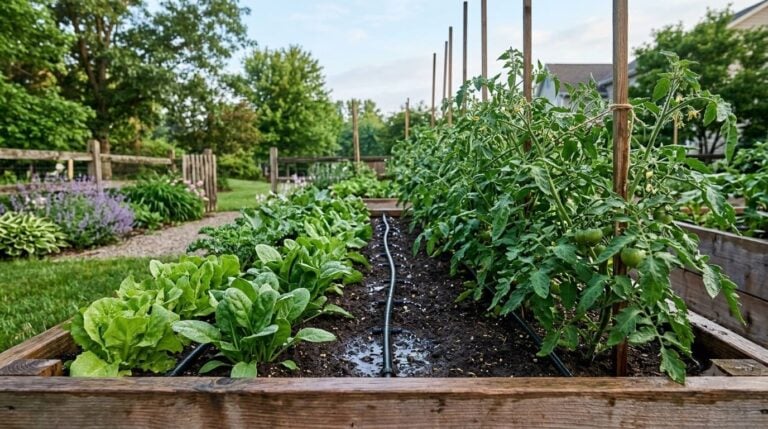
Tomato plants need roughly 1 to 2 inches of water a week during August, which works out to about 2 to 3 gallons per plant according to the University of Maryland Extension. That number assumes no meaningful rainfall that week, so a normal thunderstorm can cover part of it.
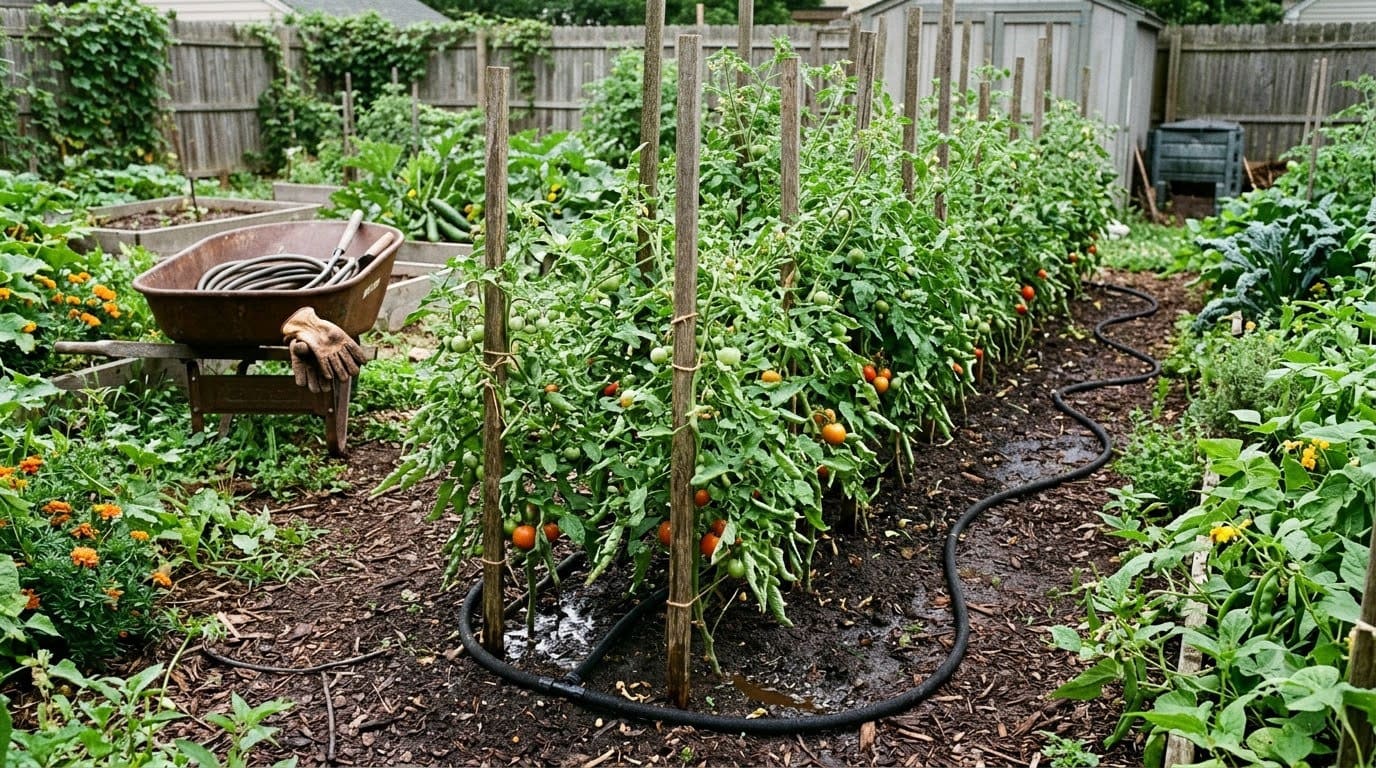
The mistake most people make isn’t underwatering. It’s watering shallow and often, which trains roots to stay near the surface where they dry out fast between waterings. A slow, deep soak at soil level, aimed at the whole root zone rather than a single spot next to the stem, does more good than a quick daily splash.
The University of Connecticut’s Home Garden Education Office makes the same point from a different angle: it’s the swing between bone-dry and soaked, not the total weekly amount, that causes the most damage. Mulch helps flatten that swing out. A 2-3 inch layer of straw or shredded bark keeps soil moisture more even between waterings, which matters more in August than any other month.
For anyone still hand-watering with a hose every evening, a smarter setup for getting water to the root zone without wasting it is worth the half-day it takes to install before peak summer heat, not after.
Task 2: Why do tomatoes get blossom end rot in August?
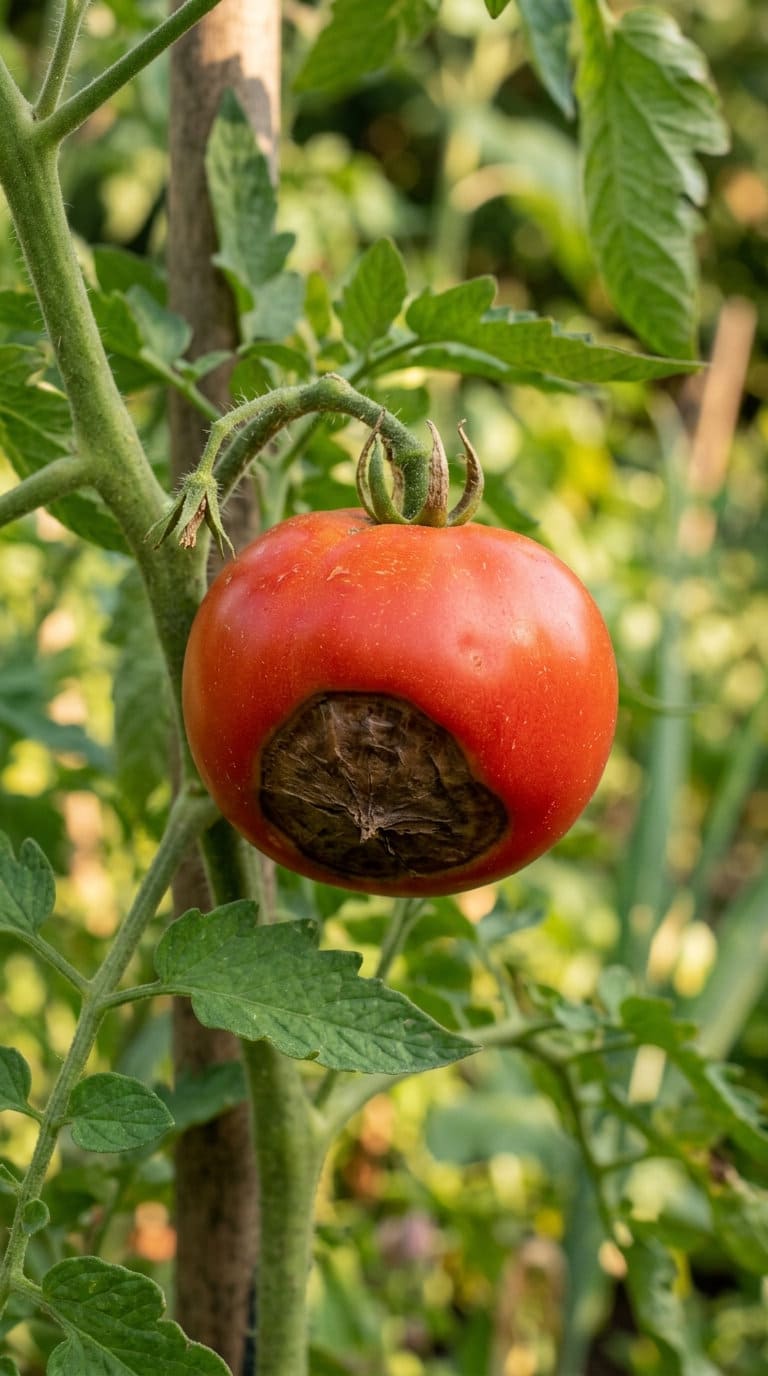
Blossom end rot looks like a calcium deficiency, and technically it is one, but the actual cause is almost always inconsistent watering, not a lack of calcium in the soil. University of Maryland Extension is blunt about it: calcium only moves through a plant dissolved in water, so a dry stretch means the fruit can’t pull in the calcium it needs even if the soil has plenty.
This is why the fix isn’t usually a calcium spray on the leaves, which barely gets absorbed anyway. It’s fixing the watering pattern from Task 1. UMD’s own recommendation for new plantings is to mix a quarter cup of gypsum into the soil at planting time as cheap insurance, and to skip high-nitrogen fertilizers like urea, which can make the problem worse.
Most yard problems trace back to one specific, fixable cause. Find yours in 4 quick questions.
Take the Free Quiz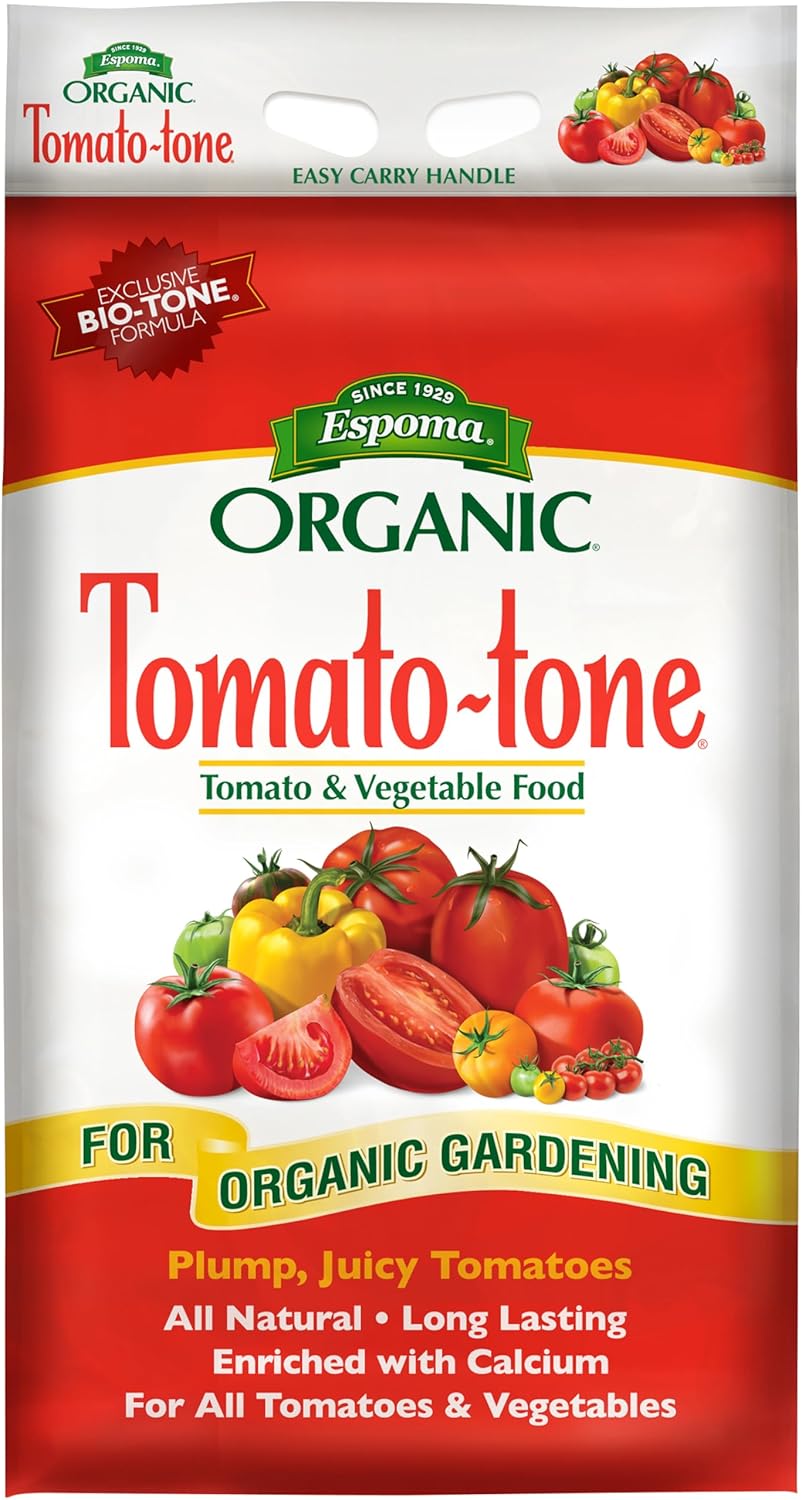
Slow-release organic fertilizer with 8% calcium and a lower nitrogen ratio built for fruiting-stage tomatoes, matches the taper-nitrogen approach in Task 5
Shop NowThis post contains affiliate links. We may earn a commission on qualifying purchases at no extra cost to you.
Here’s the part that trips people up: blossom end rot on the first few fruits of the season doesn’t necessarily mean every fruit after will have it. Once watering evens out, later fruit clusters often come in clean.
Task 3: Why do tomatoes split after it rains?
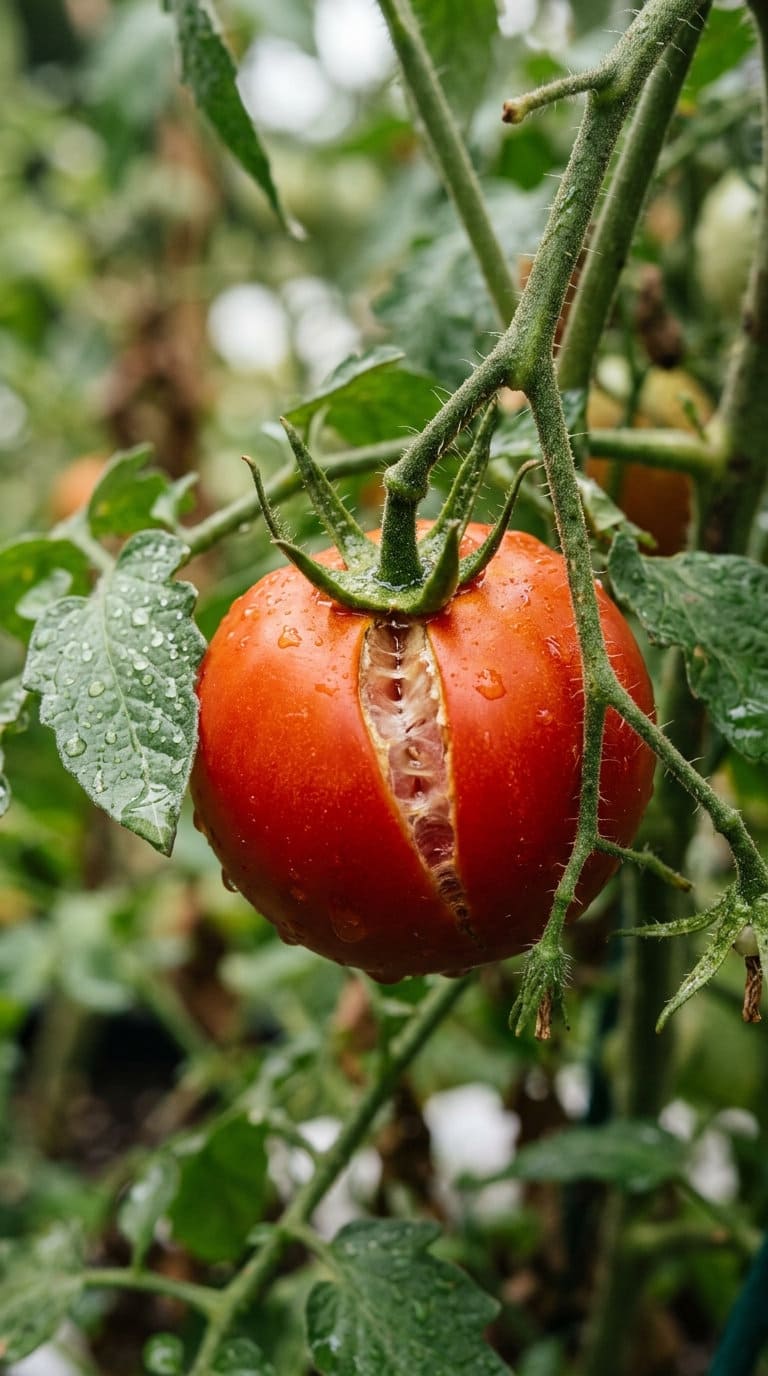
Fruit cracking has a different mechanism than blossom end rot, even though both trace back to water. Kansas State Research and Extension explains it as a timing problem: a dry stretch hardens the tomato’s skin, and when a heavy rain or big watering session follows, the fruit’s interior swells faster than that hardened skin can stretch.
There are two crack patterns worth knowing apart. Radial cracks run in lines down from the stem, and concentric cracks form rings around the stem end like tree bark. Either way, the fix is the same one as blossom end rot: keep soil moisture level instead of letting it swing between drought and flood.
Cherry and grape varieties tend to crack less than big beefsteak types simply because there’s less surface area to stretch. If a particular plant cracks every single year regardless of watering, it’s worth looking at crack-resistant cultivars next season instead of fighting genetics.
Task 4: How do you strip lower tomato leaves the right way?
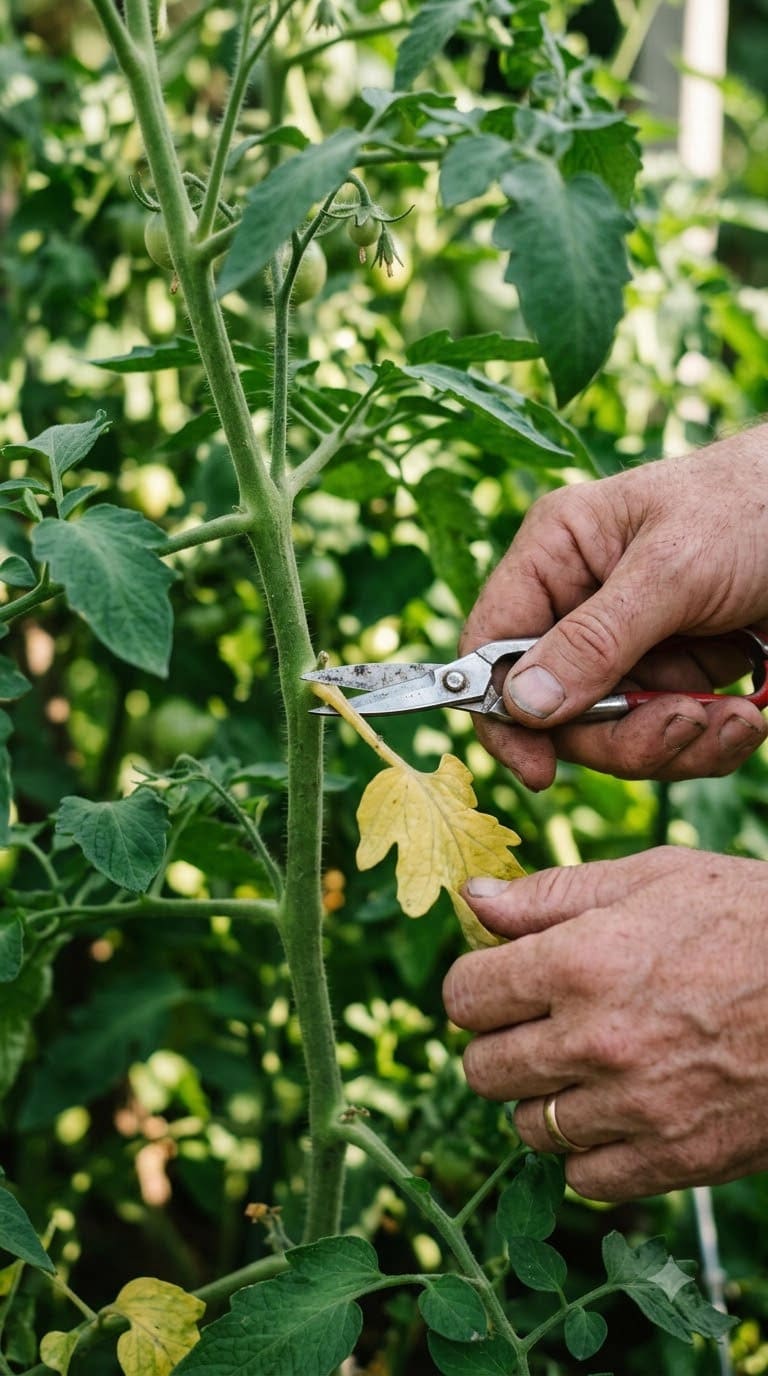
Stripping the bottom leaves off an indeterminate tomato plant does two real things: it improves airflow through the canopy, and it stops soil-borne fungal spores from splashing up onto healthy leaves during rain or overhead watering. Both matter more in August, when humidity and disease pressure both peak.
The mistake is doing it all at once. Removing more than about 20% of a plant’s foliage in a single pass stresses the plant and can expose ripening fruit to direct sun it isn’t used to, which causes sunscald, basically a sunburn that shows up as a pale, papery patch on the fruit’s shoulder.
The better approach is gradual: pull 2 to 3 older, yellowing, or spotted leaves per plant per week, working from the bottom up, using snips wiped down with rubbing alcohol between plants so you’re not spreading disease from one to the next. Determinate (bush-type) tomatoes need far less of this, since they set their whole crop in one flush and rely on more of their foliage to fuel it.
Task 5: Should you fertilize tomatoes in August?
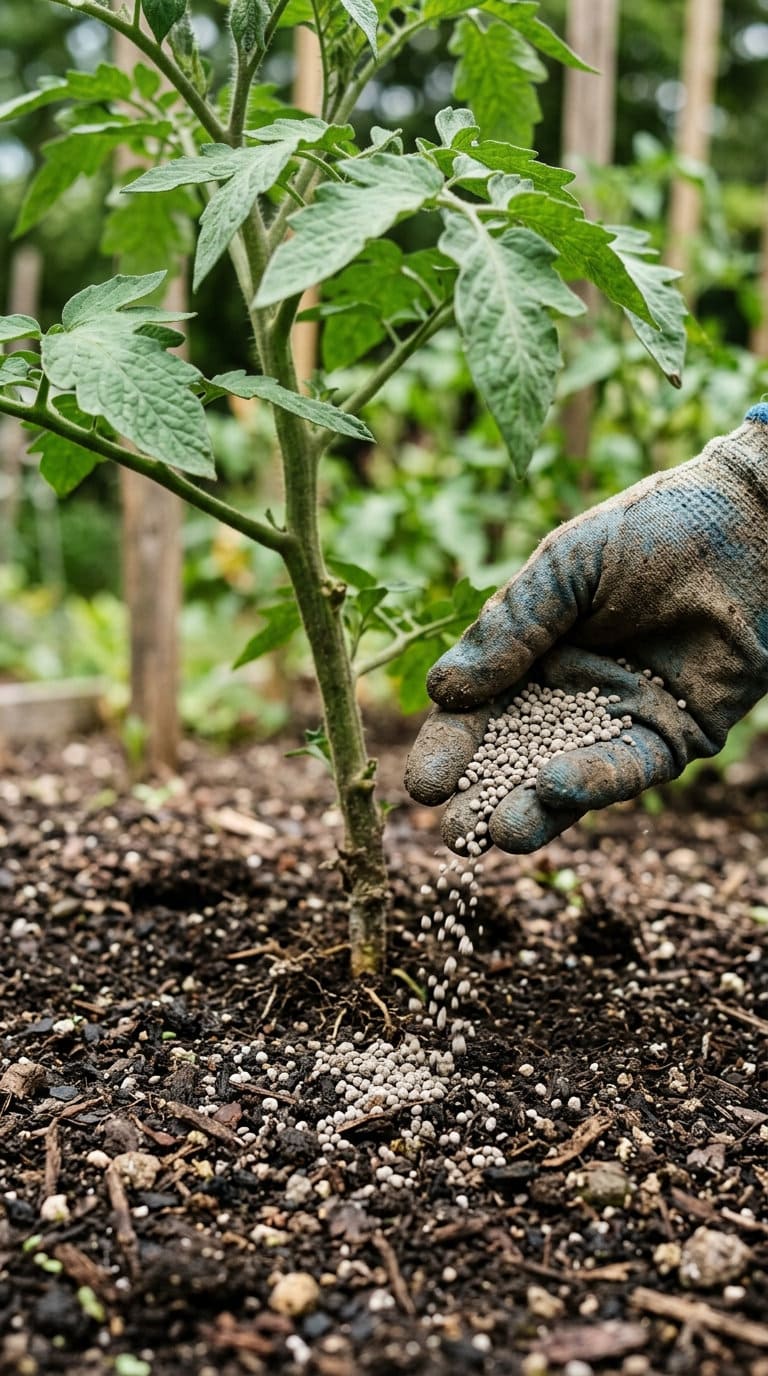
Yes, but the mix matters more than the timing. Lynn Brandenberger, a food crops extension specialist with Oklahoma State University Cooperative Extension, has long recommended front-loading phosphorus and potassium early, then tapering nitrogen as the season goes on rather than feeding a flat, all-purpose blend every week straight through August.
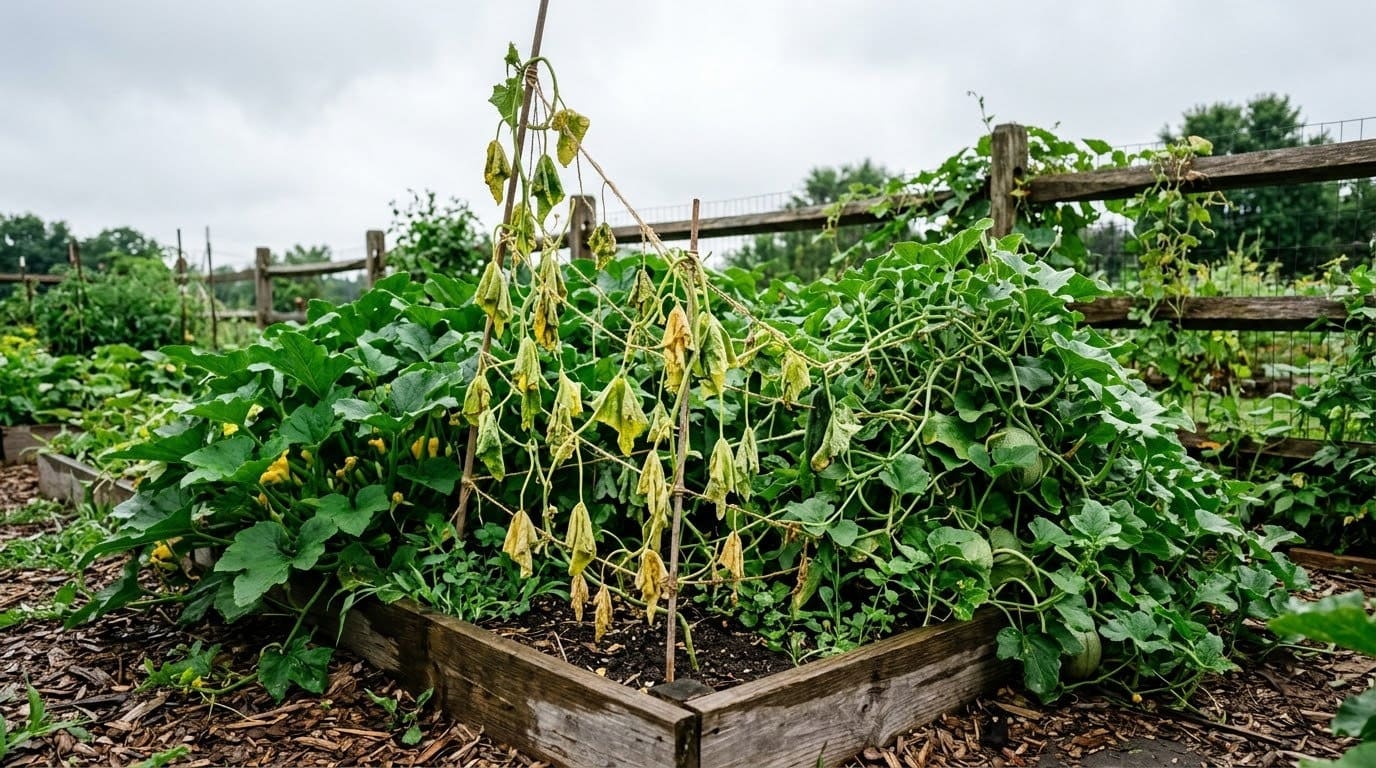
Too much nitrogen late in the season pushes the plant into growing more leaves and stems instead of ripening what’s already set. If a plant looks lush and green with plenty of foliage but few new flowers, that’s usually the tell that it’s had enough nitrogen for the season and could use a fertilizer with a lower first number (nitrogen) and higher second and third numbers (phosphorus and potassium) instead.
The average homeowner spends $616/year on yard fixes that don't address the real problem. Find out what yours actually is — before you spend another dollar.
Take the Free QuizFeeding every 7 to 10 days with a diluted liquid fertilizer works better than one big monthly dose, since tomatoes take up nutrients more efficiently in smaller, steadier amounts, similar to the logic behind steady watering. A few of the most common late-summer feeding mistakes, including this exact over-nitrogen trap, show up again and again in a rundown of what to avoid when fertilizing a home garden.
Task 6: How do you know if you have spider mites?
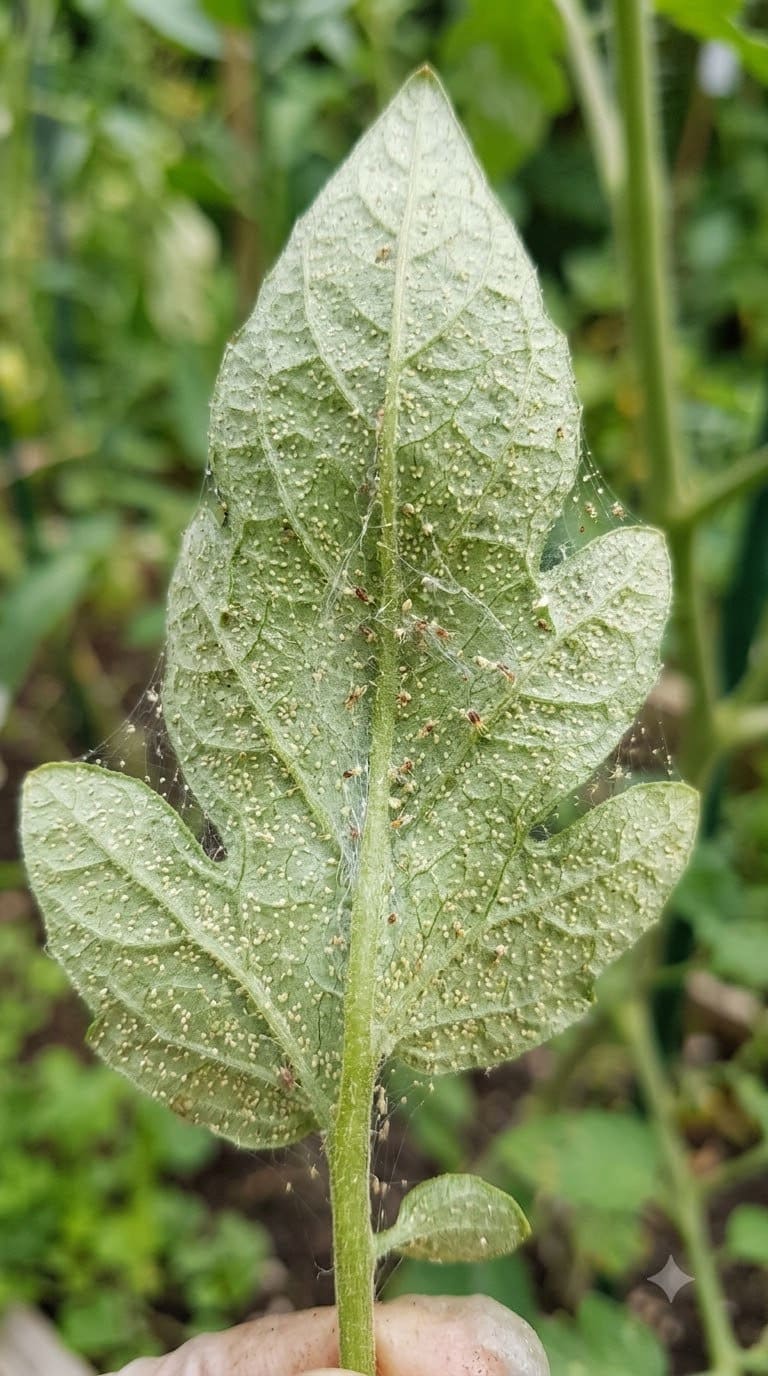
Spider mites are one of the few tomato problems that genuinely gets worse in a heat wave. Ric Bessin, an extension entomologist with the University of Kentucky College of Agriculture, Food and Environment, describes two-spotted spider mites as “occasional pests that can cause serious damage to some vegetable crops during hot dry weather,” and August is usually the hottest, driest stretch most gardens see all year.
They’re genuinely hard to spot with the naked eye. The reliable test is holding a sheet of white paper under a suspect leaf and tapping it. If tiny specks fall onto the paper and start crawling around, that’s mites, not just dust or garden debris.
Early damage shows up as light stippling, tiny pale dots, on the top of leaves, with fine webbing visible on the underside if the infestation has had time to build. A hard spray of water on the underside of leaves knocks mite populations down significantly and is often enough on its own if you catch it early; insecticidal soap is the next step up if spraying alone isn’t keeping pace.
Spider mites are just one entry on a longer list of things that show up in August gardens. A broader walkthrough of the pests most likely to be causing damage this time of year is worth a skim if a plant is struggling and mites don’t seem to be the culprit.
Task 7: How do you support heavy branches and harvest at the right time?
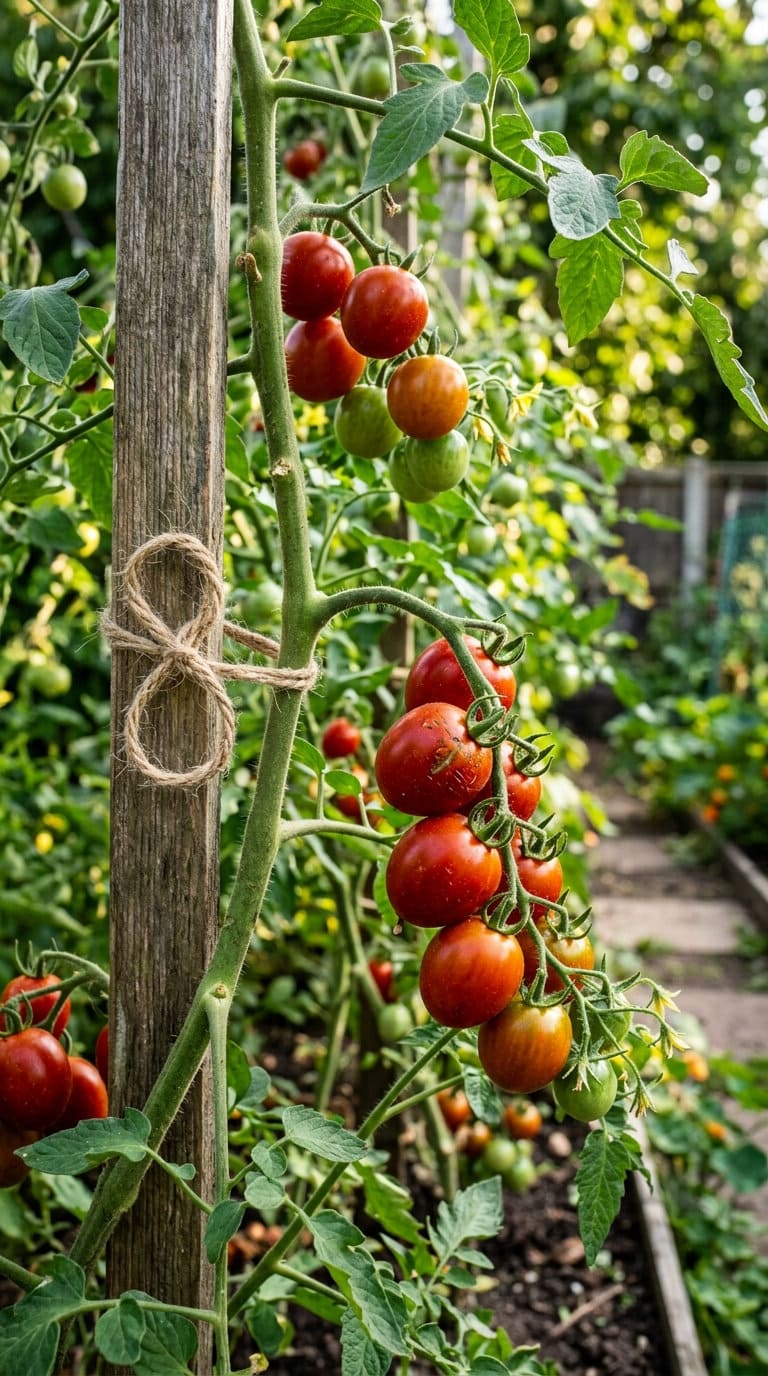
By August, fruit clusters on a healthy plant get heavy enough to snap a stem that looked plenty sturdy back in June. Walking the row every few days with soft cloth strips or garden twine, and loosely tying sagging branches to a stake using a figure-eight loop (twine around the stake, then a looser loop around the stem so it isn’t cinched tight), prevents a lot of late-season losses from one gust of wind or a heavy rain.
For harvest timing, picking at “breaker stage,” the point where a green tomato just starts showing a blush of color at the blossom end, actually helps the plant put energy into new flowers and fruit instead of finishing the one tomato already on the vine. Ripen picked fruit indoors, stem-side up, out of direct sun, and it develops nearly the same flavor as vine-ripened fruit within a few days.
What August actually breaks in a tomato patch
I’ve killed more tomato plants in August than any other month, and it’s never from neglect. It’s from doing too much at once, usually a heavy prune on a 95-degree afternoon followed by a big drink of water because the plant “looked thirsty.”
The two mistakes I see repeated most are overcorrecting on nitrogen and confusing spider mite damage with plain sun stress. Both look similar from a few feet away, pale, stressed-looking foliage, but the fixes are opposite.
One needs less fertilizer and more consistent water. The other needs a hard spray of water on the leaf undersides and, if it’s bad, insecticidal soap.
And honestly, the splitting fruit problem is the one that stings the most, because it usually shows up right after the best rain of the summer, the one you were happy about. From what I’ve seen, keeping a boring, consistent watering schedule through a heat wave is less satisfying than rescuing a wilted plant with a big soak, but it’s the thing that actually works.
Does August tomato care change by region?
Care does shift by climate, and treating a humid Southeast garden the same as a dry Southwest one wastes effort in the wrong direction.
| Region type | Bigger risk | Smaller risk | Priority task |
|---|---|---|---|
| Hot, humid (Southeast, mid-Atlantic) | Late blight, fungal leaf spot | Spider mites (humidity slows them) | Leaf stripping for airflow (Task 4) |
| Hot, dry (Southwest, interior West) | Spider mites, cracking after rare rain | Fungal disease | Mite scouting and deep mulch (Tasks 3, 6) |
| Early-frost regions (Upper Midwest, Mountain West, New England) | Season running out before fruit ripens | Late blight less of an issue if season ends early | Topping plants 4-6 weeks before first frost |
If a first frost date is coming up in the next month or so, cutting the growing tip off indeterminate plants (topping) redirects the plant’s energy into ripening what’s already set instead of starting fruit that won’t have time to mature.
Gardeners in short-season regions should also start planning ahead for the first cold snap, since a surprise early frost can undo a month of careful August work overnight.
FAQs
Should I remove all the suckers from my tomato plant in August? Not all at once. Suckers (the shoots that grow in the crotch between the main stem and a branch) are fine to pinch off weekly on indeterminate varieties, but skip suckering determinate tomatoes entirely since they ripen their whole crop in one flush and need the extra foliage to fuel it.
Is it too late to fertilize tomatoes in August? No, but the mix should shift toward lower nitrogen and higher phosphorus and potassium as the month goes on, per OSU Cooperative Extension’s late-season guidance, rather than stopping fertilizer entirely.
Why are my tomato leaves curling in August heat? Leaf curl during a heat wave is often just the plant protecting itself from moisture loss, not a disease, especially if it uncurls again once temperatures drop in the evening. Persistent curling paired with stippled or webbed leaves points to spider mites instead, and a deeper look at getting rid of them for good covers the follow-up treatment steps this article doesn’t have room for.
Can I still start new tomato plants in August? In warmer regions with a long fall growing window, a fast-maturing determinate variety can still work, but check the days-to-maturity against the local first frost date first since most varieties need 60-90 days from transplant to first ripe fruit.
Related Posts
- Raised Vegetable Garden Bed Ideas
- Pollinator-Friendly Plants for Your Garden
- The Ultimate Guide to Summer Fertilizer
Products We Recommend
This post contains affiliate links. We may earn a commission on qualifying purchases at no extra cost to you.
Espoma Organic Tomato-Tone 3-4-6 Fertilizer, 18 lb
Slow-release organic fertilizer with 8% calcium and a lower nitrogen ratio built for fruiting-stage tomatoes, matches the taper-nitrogen approach in Task 5
Shop Now
Fiskars SoftGrip Bypass Pruning Shears
Sharp bypass snips for the weekly lower-leaf stripping in Task 4, small enough for precise cuts near fruit clusters
Shop Now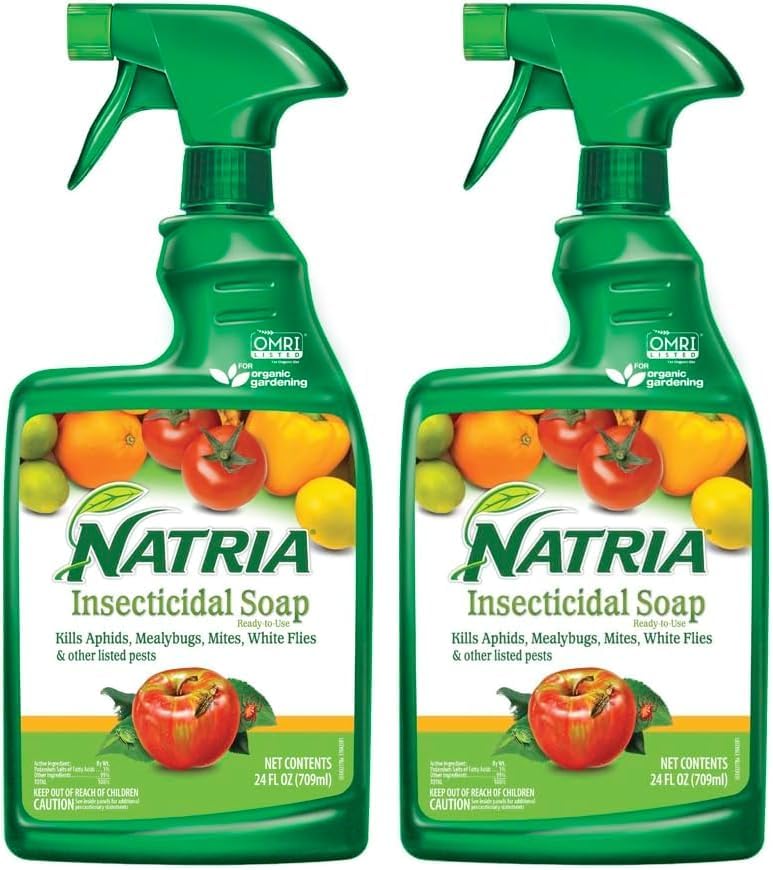
Natria Insecticidal Soap, Ready-to-Use
Ready-to-use spray for spider mite outbreaks that don't clear up with a plain water spray, referenced in Task 6
Shop NowNever miss an update — choose FarmFoodFamily as your preferred source on Google.
How it works: Tap the button below to open Google's settings page, then check the box next to FarmFoodFamily.
Tap the checkbox to turn it blue — that's how you know it's set.