The Real Vegetable Garden Fertilizing Schedule (Not the Vague “Feed Regularly” Advice)
A real fertilizing schedule can double your harvest, but only if you time it to your soil and your containers instead of a generic bag label.

Never miss an update — choose FarmFoodFamily as your preferred source on Google.
How it works: Tap the button below to open Google’s settings page, then check the box next to FarmFoodFamily.
Tap the checkbox to turn it blue — that’s how you know it’s set.
Most fertilizer bags tell you to feed “every two weeks” and leave it at that. That advice ignores three things that actually decide whether fertilizing works: how cold your soil still is in early spring, which growth stage your specific crop is in, and whether your plants are in the ground, a raised bed, or a pot.
Get the timing wrong and you either waste money feeding roots that can’t use it yet, or you push so much nitrogen into a tomato plant that it grows into a leafy green wall with no fruit on it.
This is a real, usable schedule built from university extension research, not a repeat of the same “monthly feeding” line every gardening site publishes.
Before You Start: Get the Pre-Plant Feeding Right
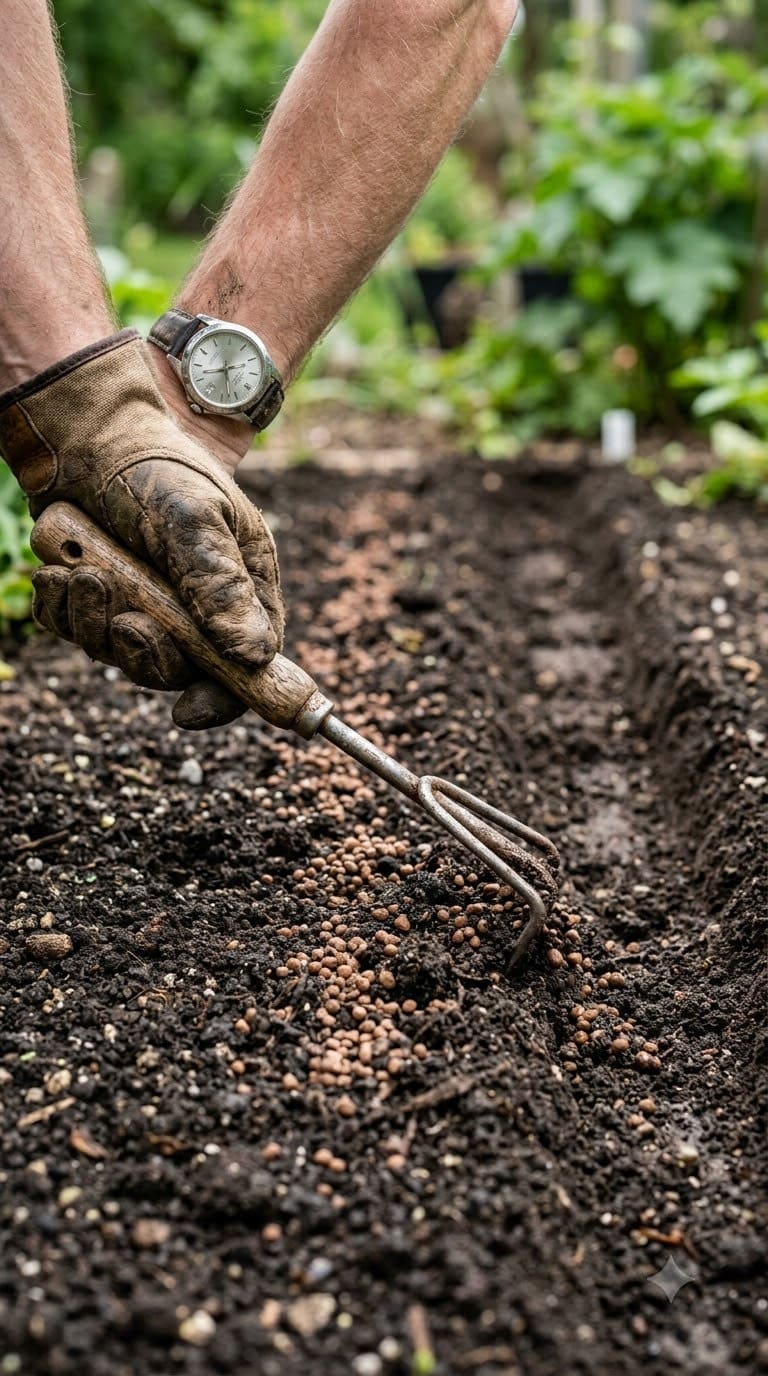
Apply your first round of fertilizer shortly before you plant, worked into the soil rather than just scattered on the surface.
If you’re direct-seeding instead of transplanting, Virginia Cooperative Extension recommends banding it in furrows 2 to 3 inches to the side of the seed row and 1 to 2 inches deeper than the seed itself, not directly under it, since seedling roots can be burned by fertilizer sitting right against the seed.
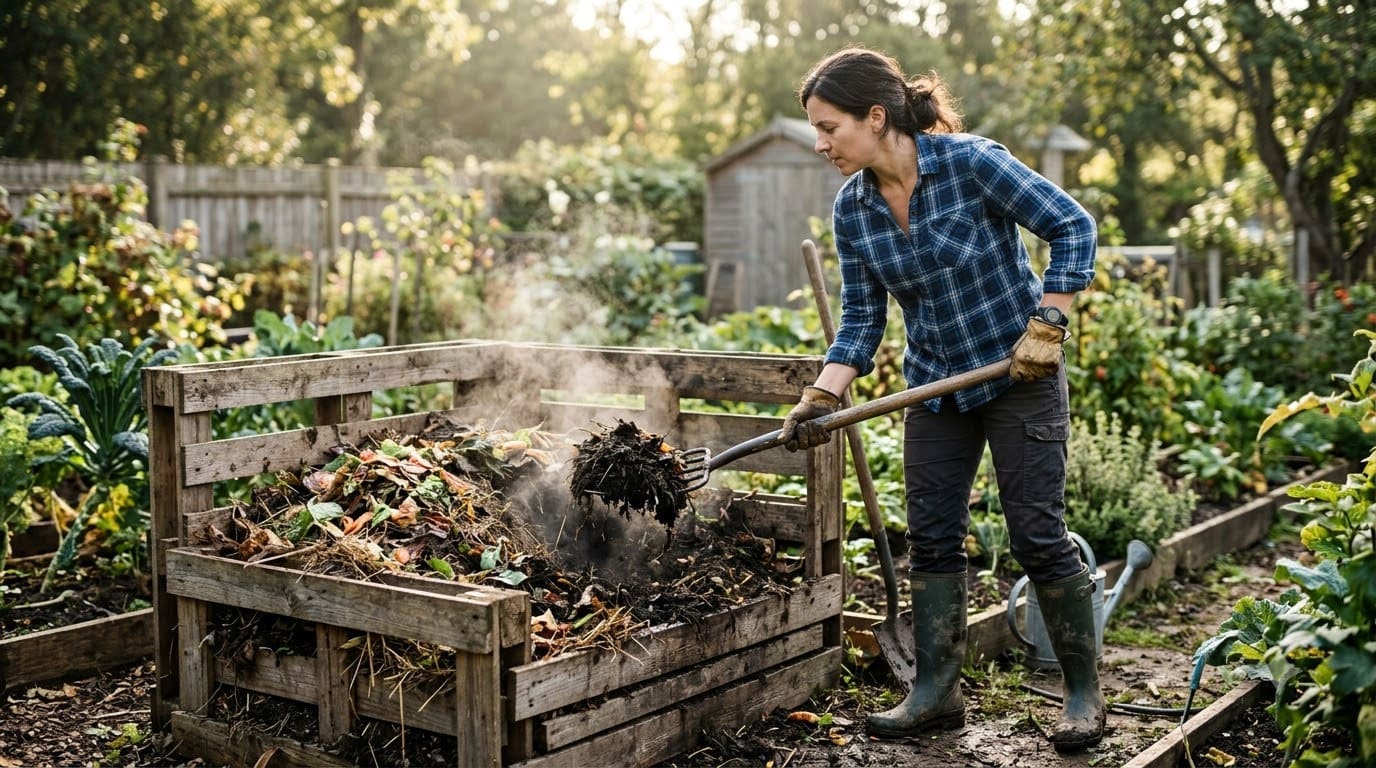

For broadcast application over a wider bed, Virginia Cooperative Extension’s general rate guidance is roughly 1 pound of 10-10-10 (or 2 pounds of 5-10-5) per 100 feet of row, worked into the soil with a rototiller or spade before planting.
Answer 4 quick questions and get matched to the exact fix for your yard — drainage, budget, layout, or something else entirely.
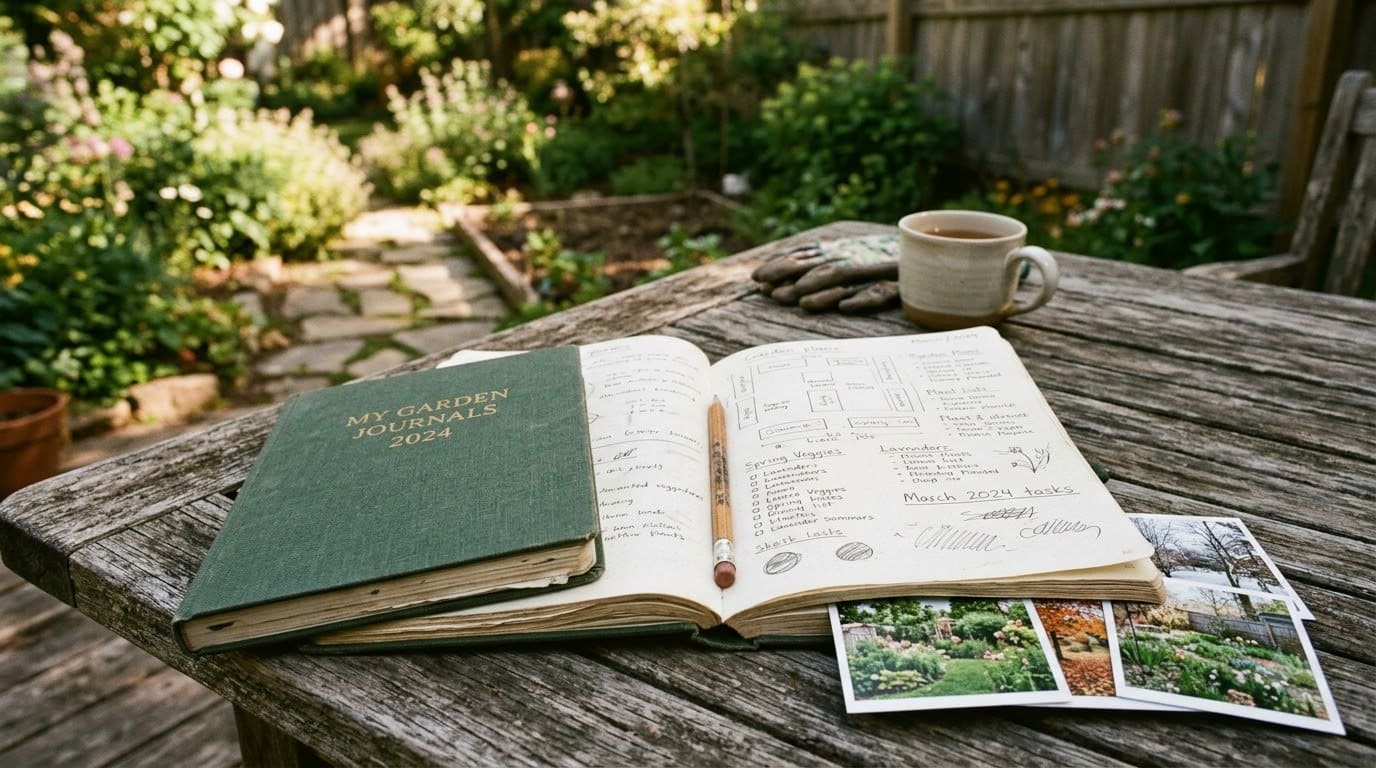
Take the Free QuizIf you’re still finalizing where each crop will actually sit before you start feeding anything, mapping out the bed first makes the sidedressing steps below much easier to follow row by row. A soil test is worth the $15 to $20 it costs through your local extension office before you guess at a ratio.
Without one, a balanced granular fertilizer (something like 10-10-10) applied at roughly 1 pound per 100 feet of row is a reasonable starting point for most vegetable beds.
Is Your Garden In-Ground, a Raised Bed, or in Containers?
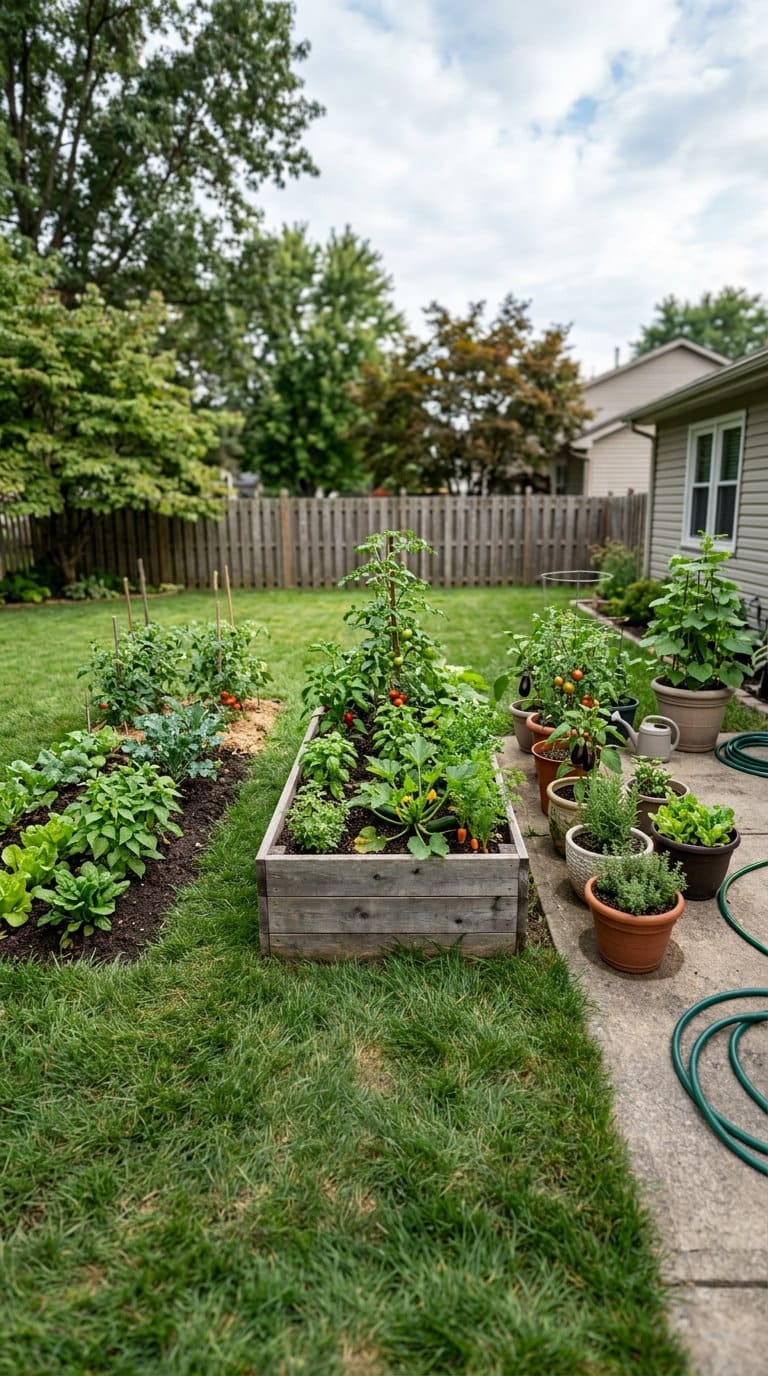
This is the split almost every generic fertilizing schedule skips, and it’s the reason two gardeners can follow “the same” advice and get different results.
Nutrients wash out of soilless container mix and free-draining raised bed soil much faster than they do out of an in-ground bed with real soil structure underneath it.
| Garden type | Why it drains differently | Feeding frequency | Best fertilizer form |
|---|---|---|---|
| In-ground, amended with compost | Natural soil structure holds nutrients longer | Every 3 to 4 weeks during active growth | Granular, worked into the soil |
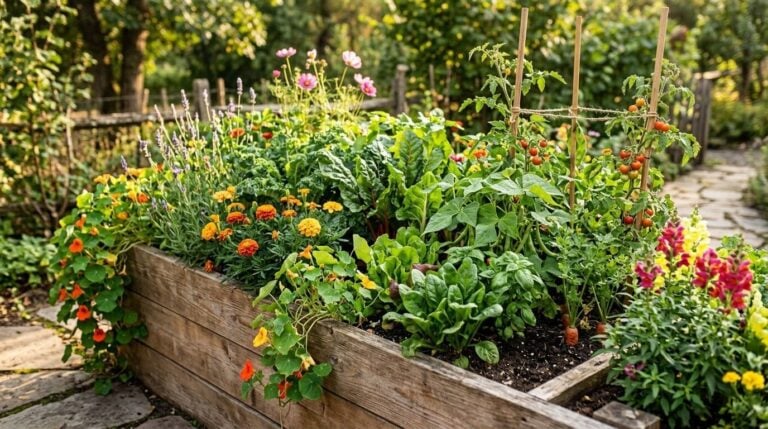
| Raised bed | Loose, well-draining mix flushes nutrients faster than native soil | Every 2 to 3 weeks | Granular plus an occasional liquid boost during fruiting |
| Containers | Soilless potting mix has almost no nutrient-holding capacity, and frequent watering washes it straight through | Every 10 to 14 days | Diluted liquid fertilizer, smaller doses more often |
If you’re growing the same tomato variety in a raised bed and in a pot on the patio, don’t be surprised if the container plant needs feeding almost twice as often just to keep up. For anyone specifically working with pots, the timing gets even more specific during peak summer heat, which the site’s own container gardening calendar for August walks through in more depth.
The Month-by-Month Schedule That Actually Works
Here’s the real sequence, not a generic “feed monthly” instruction. Fertilize once shortly before planting, worked into the soil.
Most yard problems trace back to one specific, fixable cause. Find yours in 4 quick questions.
Take the Free Quiz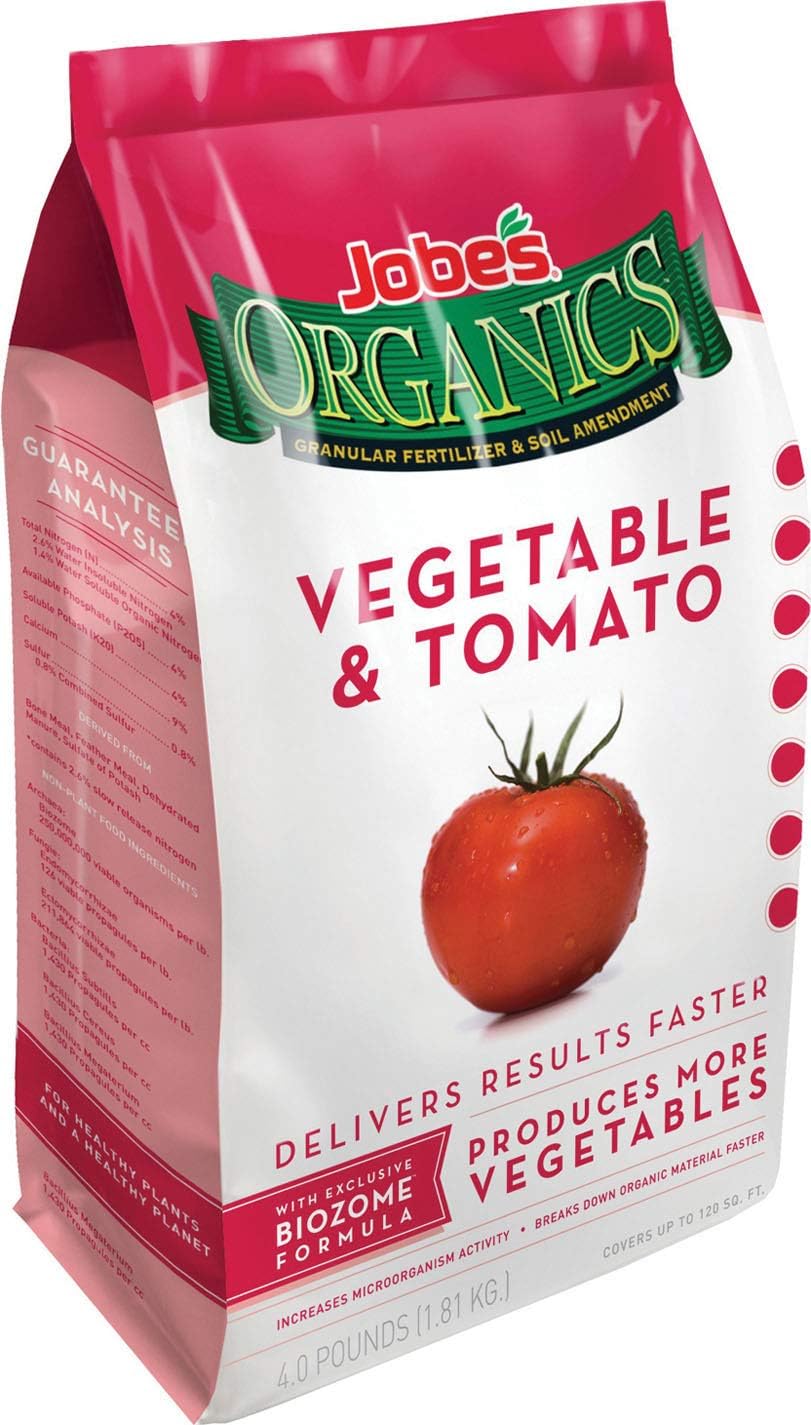
A slow-release OMRI-listed granular organic fertilizer sized for pre-plant and sidedress applications on in-ground and raised bed vegetable gardens
Shop NowThis post contains affiliate links. We may earn a commission on qualifying purchases at no extra cost to you.
Hold off on more fertilizer for the first few weeks after that even if the calendar says it’s time, since University of Maryland Extension notes that cool spring soil limits how much of it your plants can actually use regardless of when you apply it.
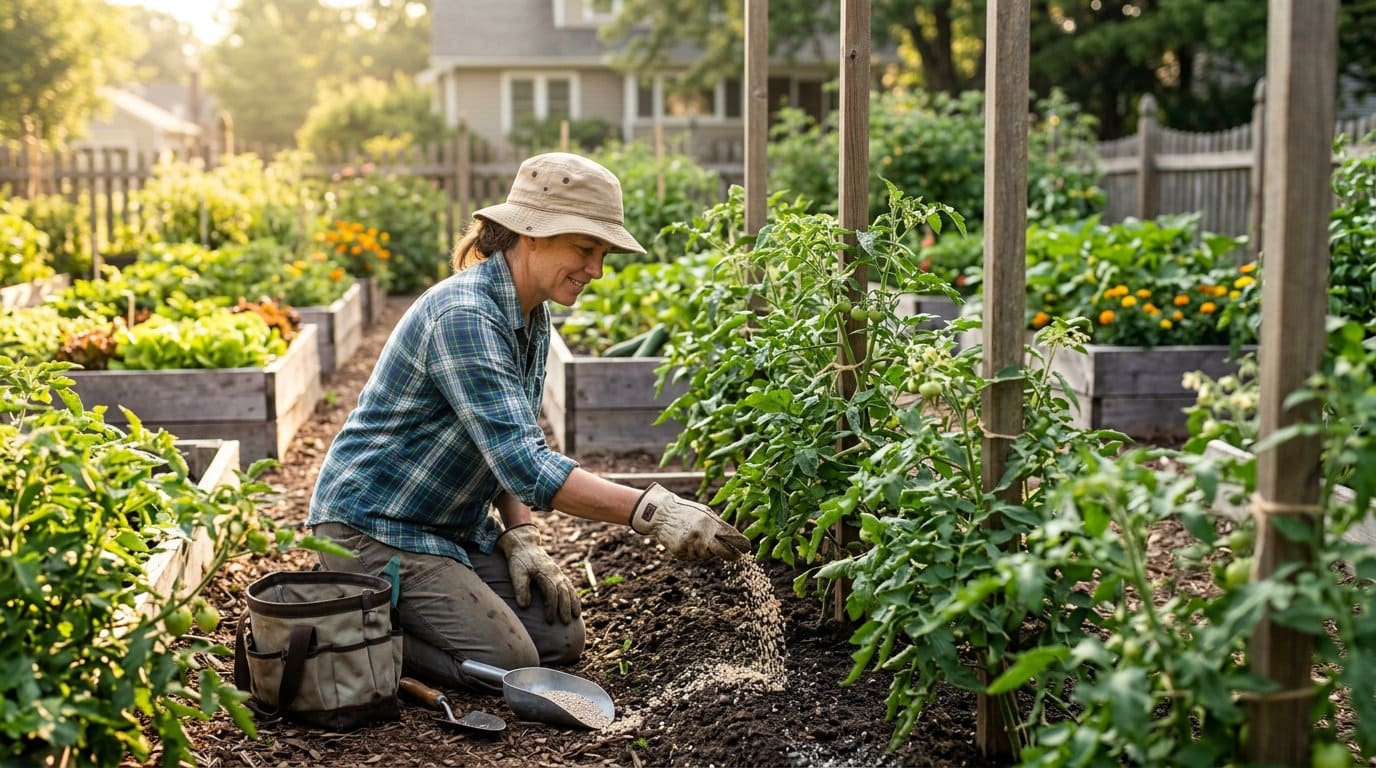
The real second window opens roughly 6 to 8 weeks after plants are established, per general extension sidedressing guidance: scatter fertilizer 6 to 8 inches from the stem, the same distance Virginia Cooperative Extension recommends for this step, and water it in. From there, heavy feeders like corn and squash want another round roughly every 4 weeks, while tomatoes and peppers do best fed again about 2 weeks after first fruit and once more a month later.
Stop feeding 3 to 4 weeks before your expected first frost, since late new growth just gets killed by cold instead of turning into harvest.
Which Crops Need Extra Feeding, and Which Don’t
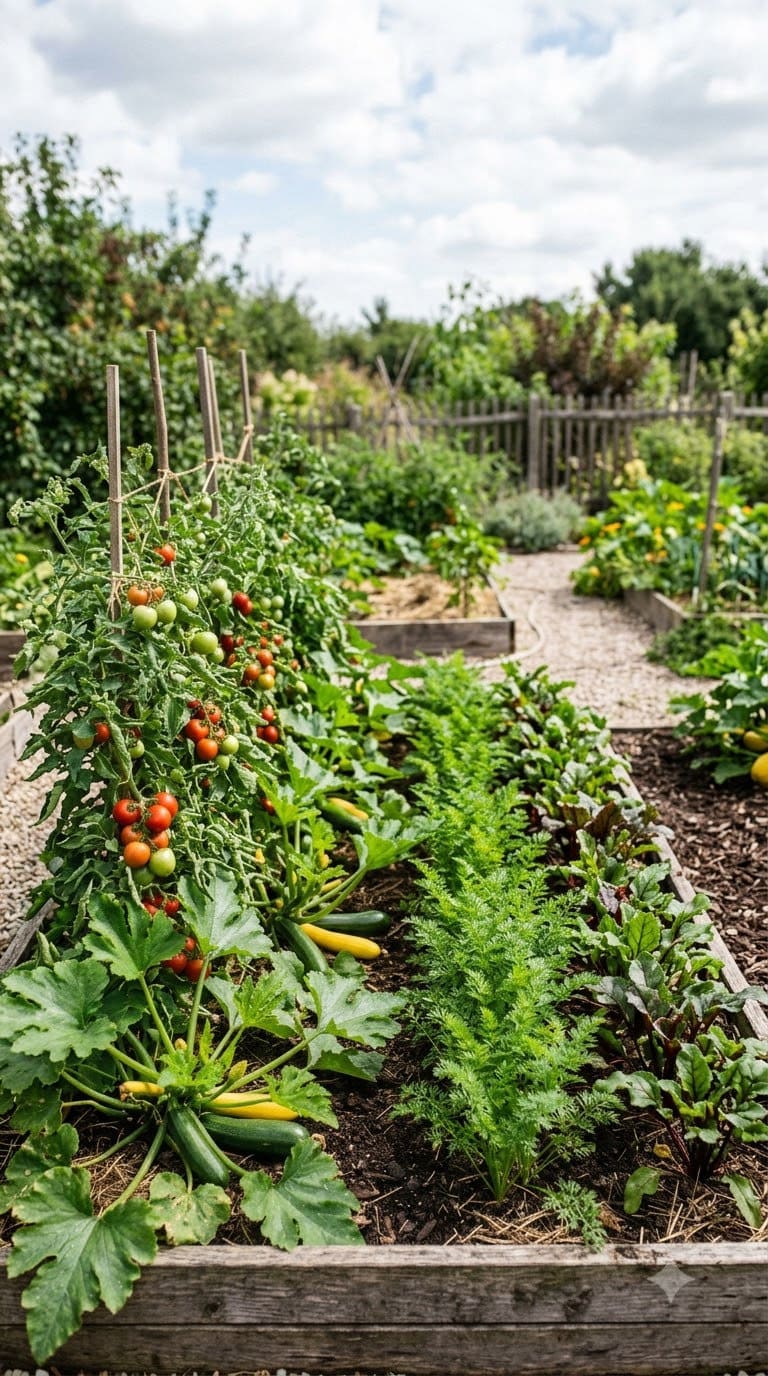
Heavy feeders that genuinely benefit from the extra rounds above include corn, squash, tomatoes (if you’re still working out the basics of getting a tomato plant established before you worry about feeding it, the full growing walkthrough covers that from the start), peppers, cabbage-family crops (which respond well to a feeding about 3 weeks after transplanting), and cucumbers and beans once they start blossoming.
A shorter list matters just as much: sweet potatoes, watermelon, carrots, beets, turnips, parsnips, and lettuce should not get extra nitrogen pushed on them. On root crops, extra nitrogen builds lush leaves at the expense of the actual root you’re growing.
On lettuce, it can make the leaves grow fast and bitter instead of full and tender. If you’re not sure which category something falls into, the general rule from both extension sources checked here holds: crops grown for their leaves or fruit usually want the nitrogen, crops grown for their roots usually don’t need more than what’s already in a balanced pre-plant application.
Organic vs. Synthetic Fertilizer: Does the Timing Change?
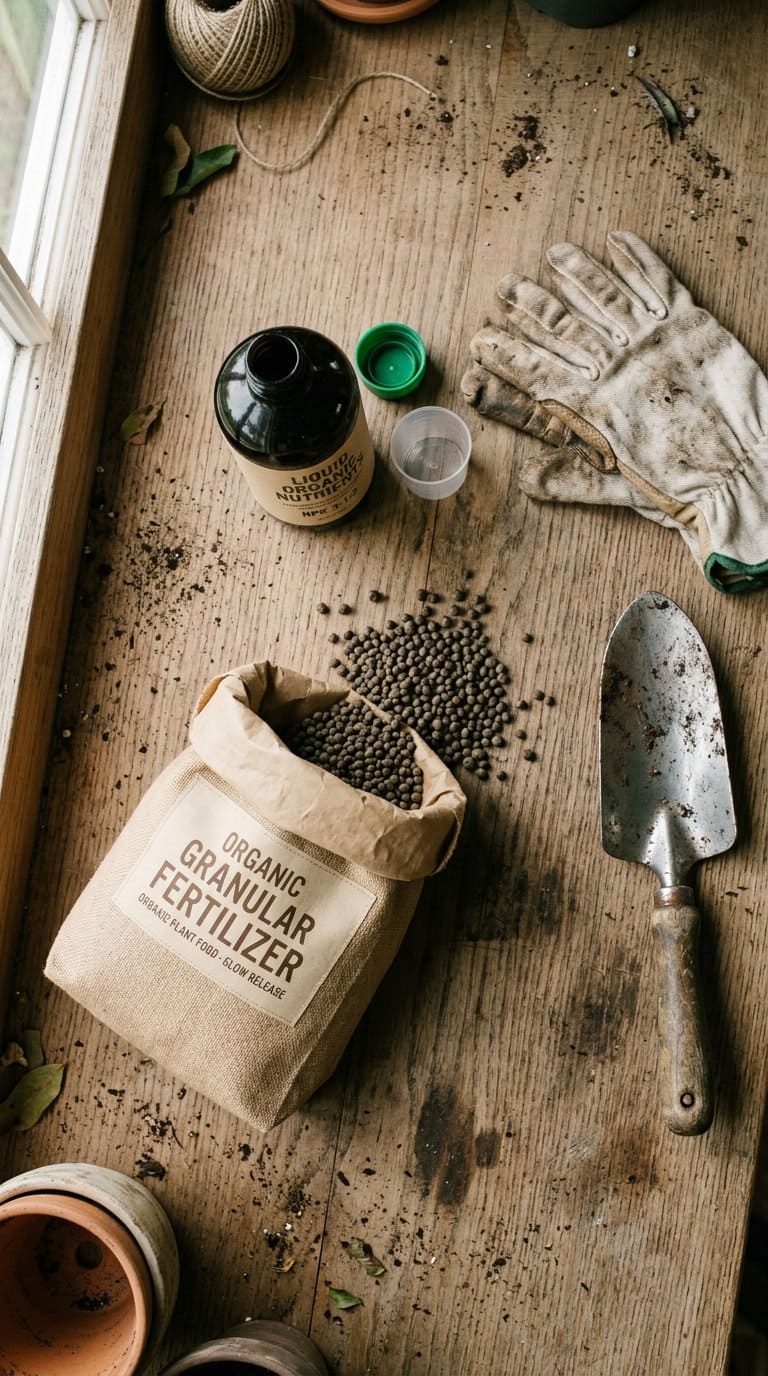
Yes, and this is worth knowing before you pick a product off the shelf. Soluble, synthetic fertilizers get absorbed fast, which is useful if you’re trying to fix a visible deficiency quickly, but that speed cuts both ways since the nutrients also leach out of the soil faster and need more frequent reapplication.
Organic, granular fertilizers release nutrients gradually as soil microbes break them down, which is more forgiving of a missed week but reacts too slowly to rescue a plant that’s already showing a deficiency right now.
In practice, a lot of gardeners end up using both: granular organic fertilizer as the steady baseline feeding, with a diluted liquid synthetic or fish emulsion kept on hand as a fast fix if a plant is visibly struggling and you don’t want to wait two or three weeks for microbes to catch up.
The average homeowner spends $616/year on yard fixes that don't address the real problem. Find out what yours actually is — before you spend another dollar.
Take the Free QuizThat baseline feeding matters even more if your soil started out depleted, which is exactly what building real soil health with compost helps prevent before you ever reach for a bag of fertilizer.
Signs You Fertilized Too Much (and How to Fix It)
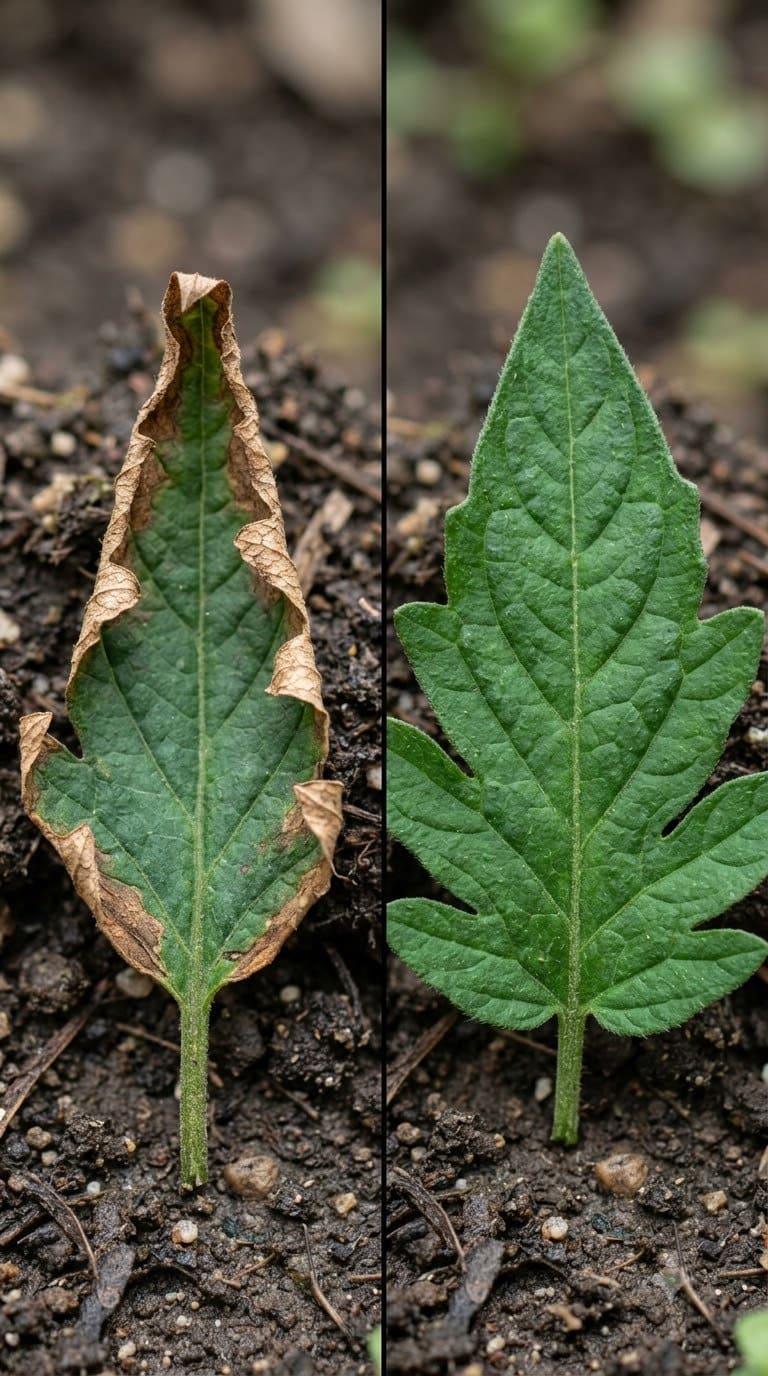
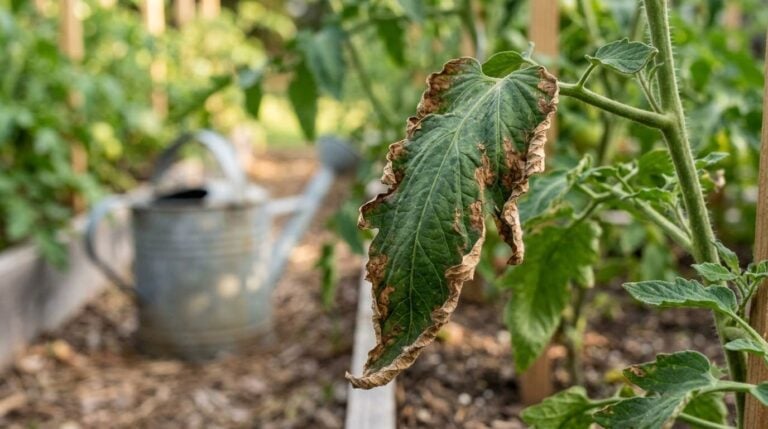
Scorched, browning leaf edges are usually the first visible sign of fertilizer burn, and on tomatoes and peppers specifically, watch for a plant that’s putting out huge amounts of leafy growth but very little fruit, sometimes described as going “all vine and no fruit.”
Excess synthetic nitrogen in particular can also cause root desiccation and, per Virginia Cooperative Extension, contributes to soil acidification and can harm earthworm populations over time with repeated heavy applications.
If you’ve already over-fertilized, water deeply and thoroughly to help flush excess salts out of the root zone, and stop feeding entirely until new growth looks normal again, usually 2 to 3 weeks.
Don’t add more fertilizer to try to “fix” a plant that’s struggling from too much, since that’s the instinct that caused the problem in the first place.
Mistakes That Cost Us a Harvest
The first year we ran a real fertilizing schedule instead of guessing, we still got it wrong twice, and both mistakes are common enough that they’re worth saying out loud instead of glossing over.
The first mistake was fertilizing on the calendar date instead of the soil temperature. We fed a bed of transplants in early spring right on schedule, and nothing visibly happened for almost three weeks, not because the fertilizer failed but because the soil was still too cold for the plants to use much of it, exactly the pattern University of Maryland Extension describes. If your soil hasn’t warmed up yet, an on-time feeding can look like a wasted one.
The second mistake was treating a container tomato the same as an in-ground one. We fed both on the same 3-to-4-week schedule, and the potted plant started yellowing between feedings every time, because the potting mix was flushing nutrients out with every watering far faster than garden soil does. But switching the container plant to a lighter, more frequent liquid feed every 10 to 14 days fixed it within about two weeks, give or take a few days since I honestly wasn’t tracking it that closely at first.
That whole season happened to be the same summer our neighbor’s dog kept digging up the marigolds we’d planted along the bed border, which had nothing to do with fertilizer but is the kind of detail that sticks in your head more than the actual lesson does. And the lesson is a simple one, even if it took two ruined harvests to learn it: “fertilize regularly” isn’t one schedule, it’s at least three different ones depending on where your plants are actually growing.
I think a lot of gardeners skip the container-versus-ground distinction because it feels like overkill, but it’s really not.
FAQs
How often should I fertilize my vegetable garden? It depends on the growing method: every 3 to 4 weeks for in-ground beds, every 2 to 3 weeks for raised beds, and every 10 to 14 days for containers with a diluted liquid feed, according to Virginia Cooperative Extension and University of Maryland Extension guidance.
Can you over-fertilize a vegetable garden? Yes. Signs include scorched leaf edges, heavy leafy growth with little fruit on tomatoes and peppers, and root desiccation. Flush the soil with a deep watering and stop feeding for 2 to 3 weeks if you see these signs.
Should I fertilize right after transplanting? Wait until plants are established, generally 3 weeks for cabbage-family crops or 6 to 8 weeks for most other vegetables, rather than feeding immediately at transplant time, since young roots can be damaged by fertilizer applied too close or too soon.
Do root vegetables need fertilizer? They need a balanced pre-plant application, but avoid pushing extra nitrogen on carrots, beets, turnips, parsnips, and sweet potatoes specifically, since it grows more leaf at the expense of the root.
Mistakes worth avoiding, one more time
A quick self-check before your next feeding: know your garden type (in-ground, raised bed, or container), know your crop’s actual growth stage rather than the calendar date, and know whether that specific crop is a heavy feeder or one that does better left alone. Get those three right and the schedule above works on its own.
Related Posts
- How to Fertilize Soil for a Vegetable Garden
- Grow Vegetables in Containers
- Urban Gardening: The Raised Bed Method
Products We Recommend
This post contains affiliate links. We may earn a commission on qualifying purchases at no extra cost to you.
Jobe's Organics Vegetable & Tomato Granular Fertilizer
A slow-release OMRI-listed granular organic fertilizer sized for pre-plant and sidedress applications on in-ground and raised bed vegetable gardens
Shop Now
Espoma Organic Garden-Tone 3-4-4 Plant Food, 4 lb. Bag
A balanced 3-4-4 all-purpose granular fertilizer for cool and warm season vegetables, works for both pre-plant and monthly refeed rounds
Shop Now
Miracle-Gro Water Soluble All Purpose Plant Food, 5 lb.
A 24-8-16 liquid feed fertilizer suited to container vegetables that need a diluted feeding every 10 to 14 days
Shop NowNever miss an update — choose FarmFoodFamily as your preferred source on Google.
How it works: Tap the button below to open Google's settings page, then check the box next to FarmFoodFamily.
Tap the checkbox to turn it blue — that's how you know it's set.