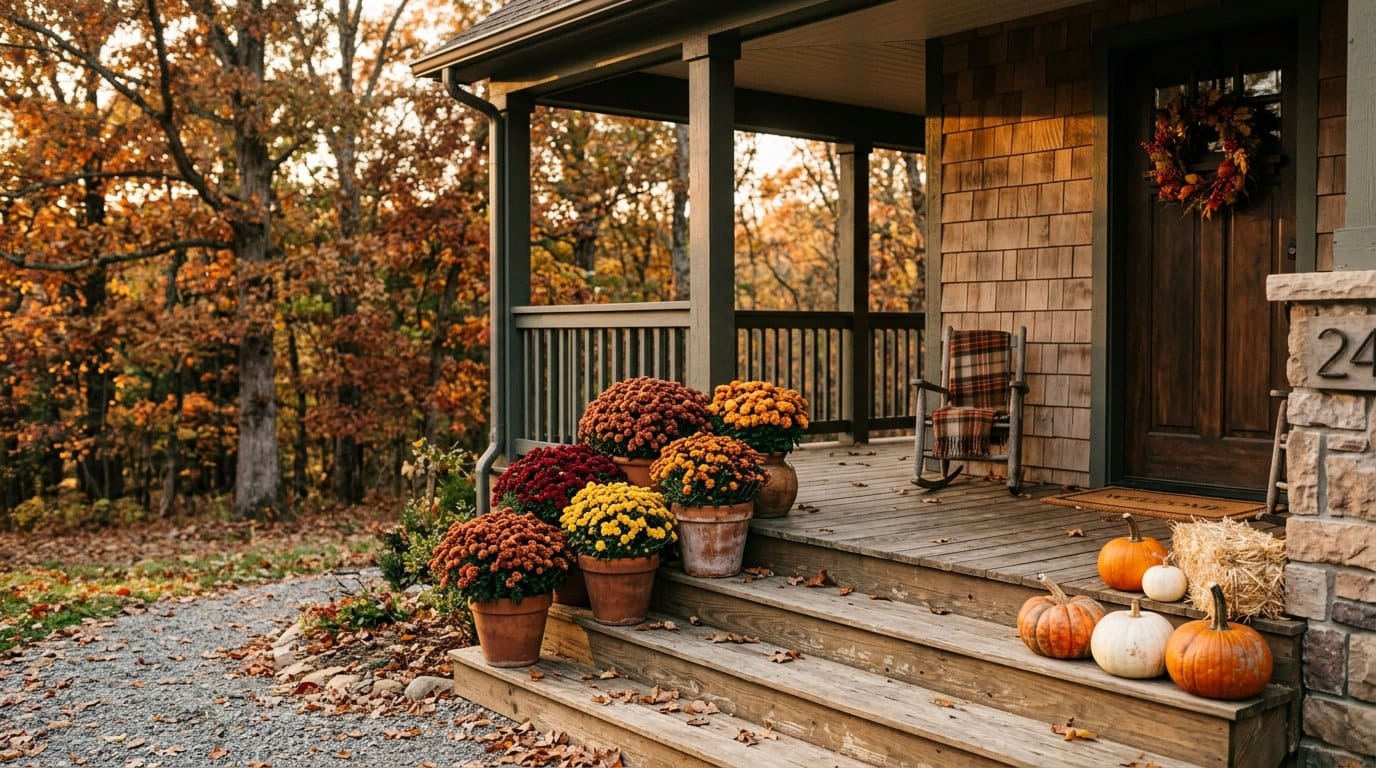
6 Plants Feng Shui Experts Say You Should Never Grow Near Your Front Door
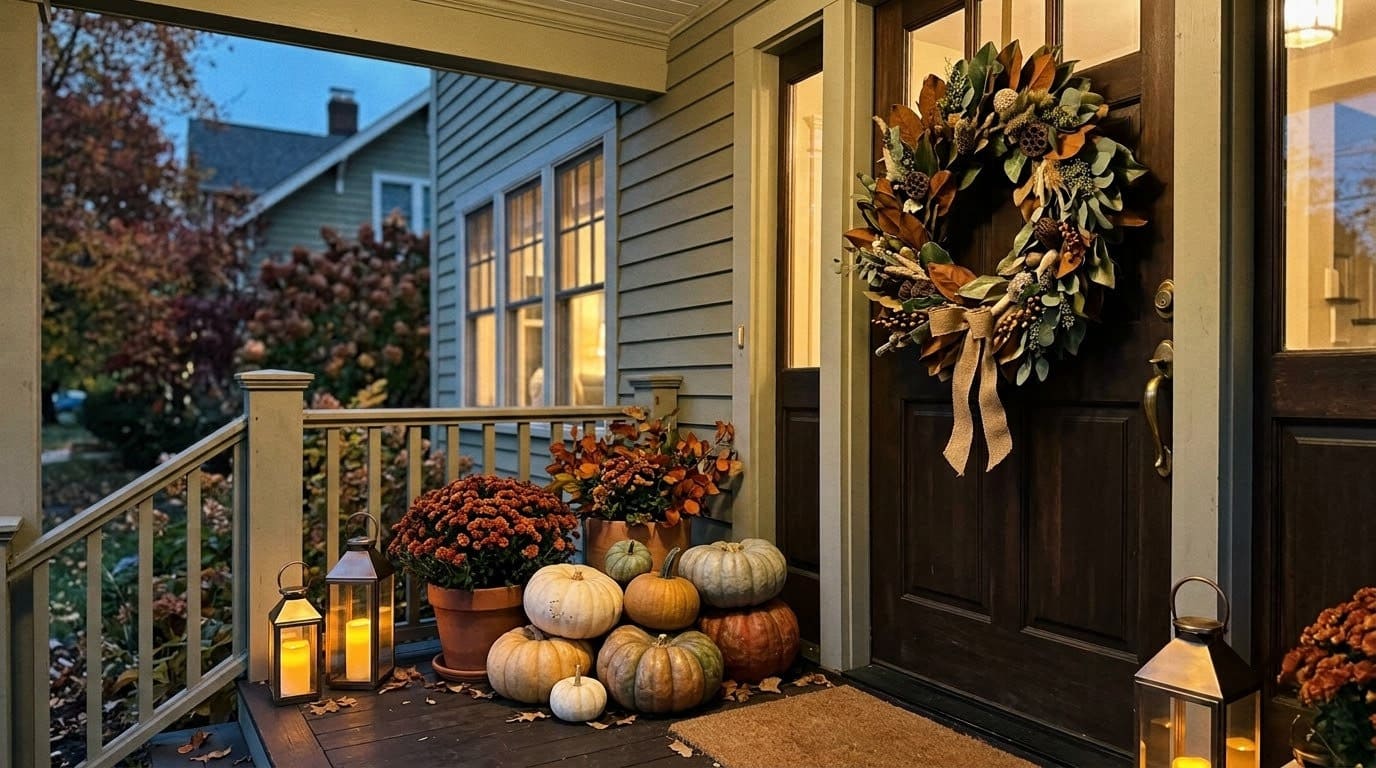
Your front door is the “mouth of chi” in feng shui, the point where energy enters your home, and the wrong plant sitting right next to it isn’t just bad symbolism, in a few of these cases it’s a genuine safety problem too.

Never miss an update — choose FarmFoodFamily as your preferred source on Google.
How it works: Tap the button below to open Google’s settings page, then check the box next to FarmFoodFamily.
Tap the checkbox to turn it blue — that’s how you know it’s set.
Feng shui gives a lot of weight to whatever’s physically closest to your entrance, since that’s the first thing energy (and every visitor) encounters.
Most guides to “unlucky” front door plants stop at the symbolism: this one means grief, that one means stunted growth.
What they skip is that several of the most commonly warned-against plants also carry real, documented risks, toxicity to pets, invasive roots, physical injury, that have nothing to do with energy flow and everything to do with why you actually shouldn’t plant them by your door.
1. Cactus
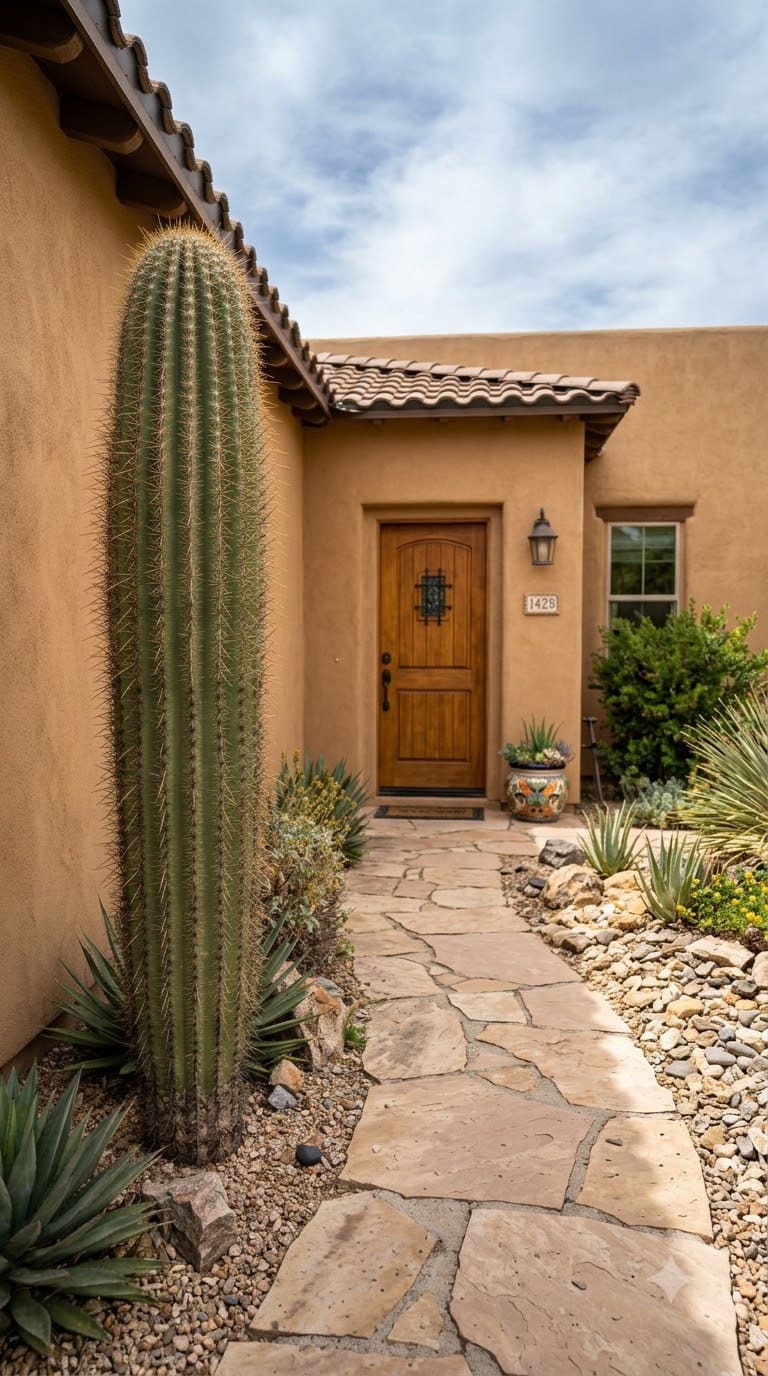
Diana Hathaway, Interior Designer, Color Consultant, and Feng Shui Expert at Gorgeous Color, points to sharp-edged and spiky plants as a classic feng shui “poison arrow,” their pointed forms are read as projecting aggressive, cutting energy at anything they face, including your front door and anyone walking through it.
There’s a real practical overlap here too: a cactus planted right along a walkway is a genuine trip-and-brush injury risk, for kids running past, for pets, for a mail carrier or delivery driver not watching their step.


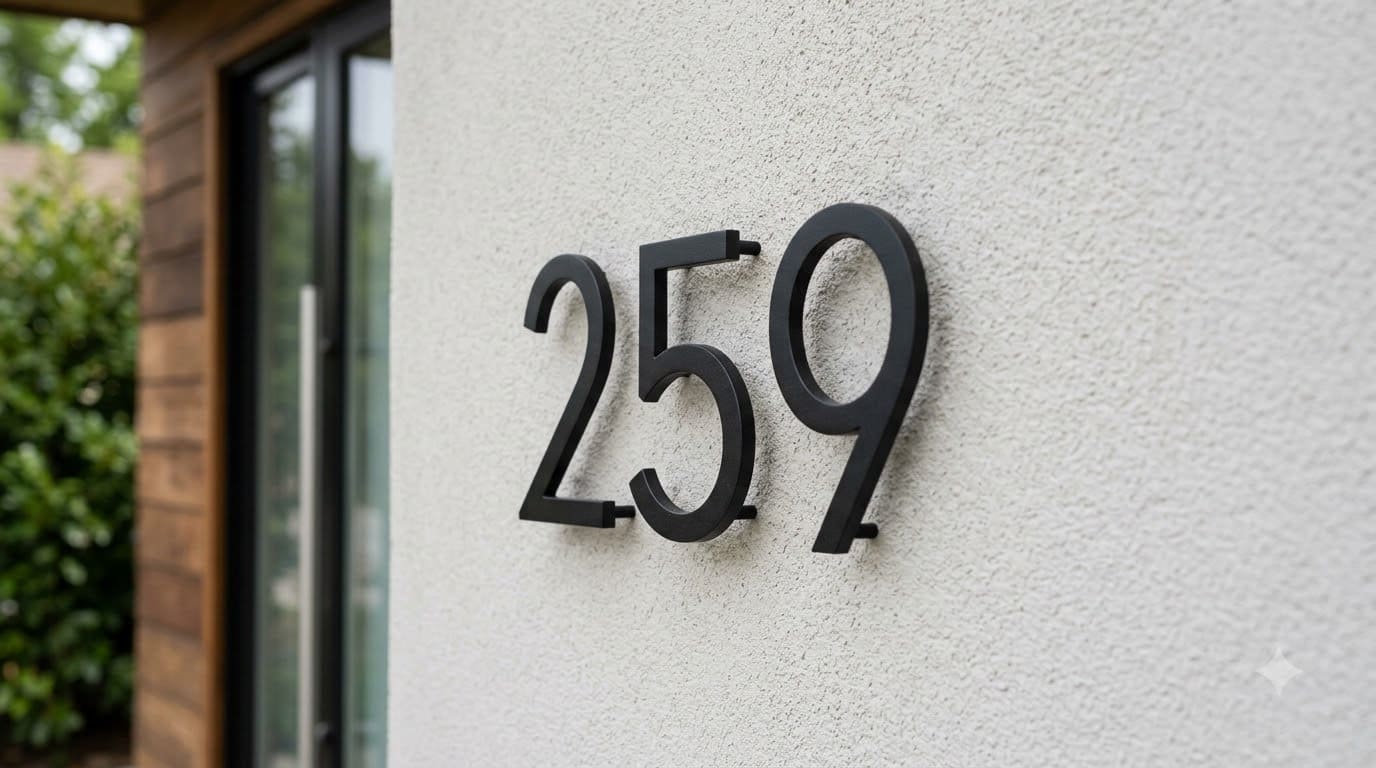
If you love cacti, keep them in a side bed or a raised container away from the direct path to your door instead of skipping them entirely, our types of succulents guide has softer-profile options that scratch the same itch.
Answer 4 quick questions and get matched to the exact fix for your yard — drainage, budget, layout, or something else entirely.
Take the Free Quiz2. Weeping willow

Willow’s drooping, downward-hanging branches are tied to melancholy and grief in feng shui tradition, the opposite of the upward, inviting energy an entrance is supposed to project.
What most feng shui guides don’t mention: willows are also genuinely one of the more aggressive-rooted trees you can plant near a house.
Their root systems are commonly cited among the worst offenders for seeking out and damaging underground pipes, septic systems, and foundations, root systems can extend well beyond the tree’s canopy chasing moisture, and standard planting-distance guidance keeps them at least 30 feet from any structure or buried pipe.
A weeping willow anywhere near a front entrance isn’t just a symbolic mismatch, it’s a real long-term risk to your home’s foundation and plumbing.
3. Oleander
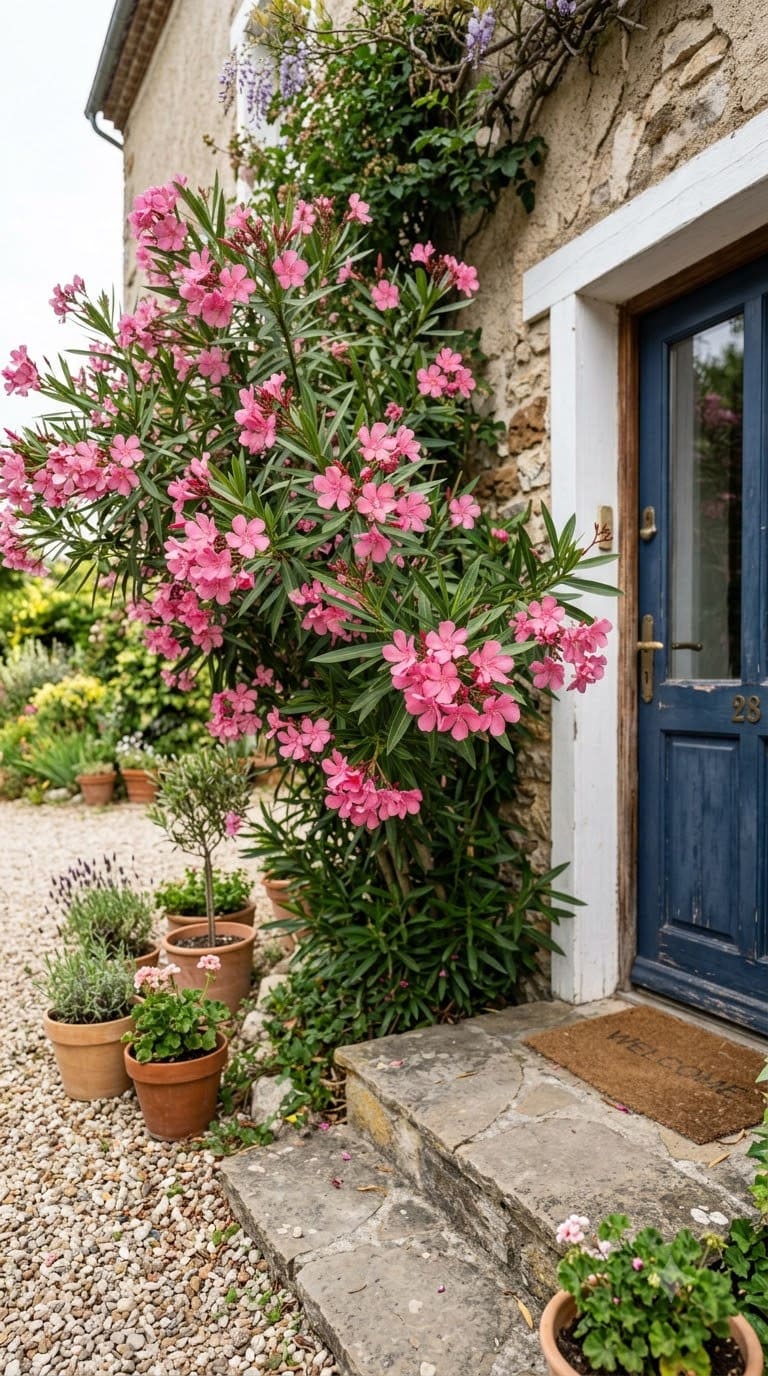
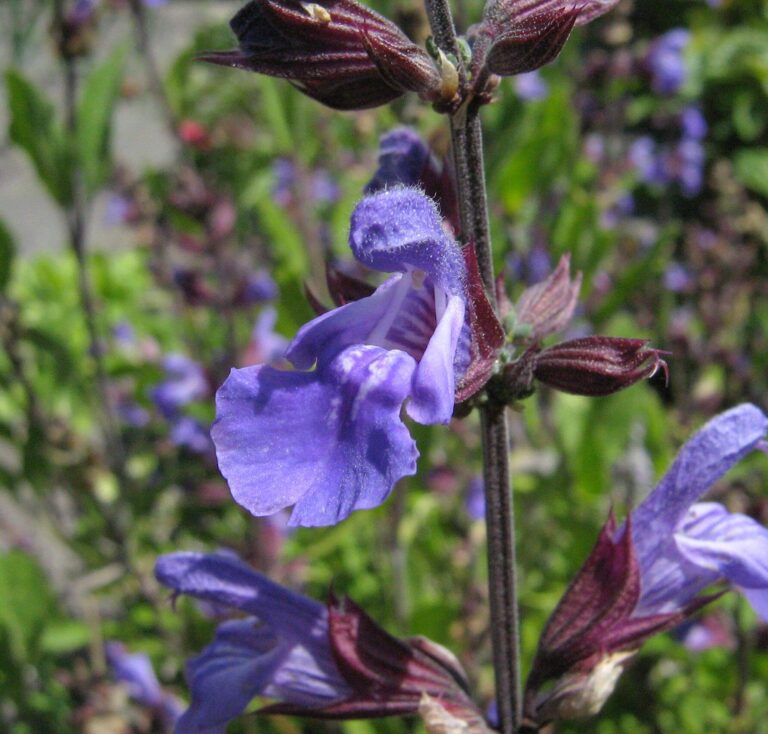
Oleander shows up on feng shui “avoid” lists for its association with hidden danger and deceit, an attractive flowering shrub with a poisonous reputation baked into its symbolism.
This is one of the rare cases where the feng shui folklore and the real science land in the same place. Oleander causes genuine cardiac toxicity in both dogs and cats according to the ASPCA, and it’s toxic to humans if ingested as well.
Planting it directly beside a front door, exactly where pets and small children spend the most unsupervised time, is a real hazard independent of anything feng shui has to say about it.
Most yard problems trace back to one specific, fixable cause. Find yours in 4 quick questions.
Take the Free Quiz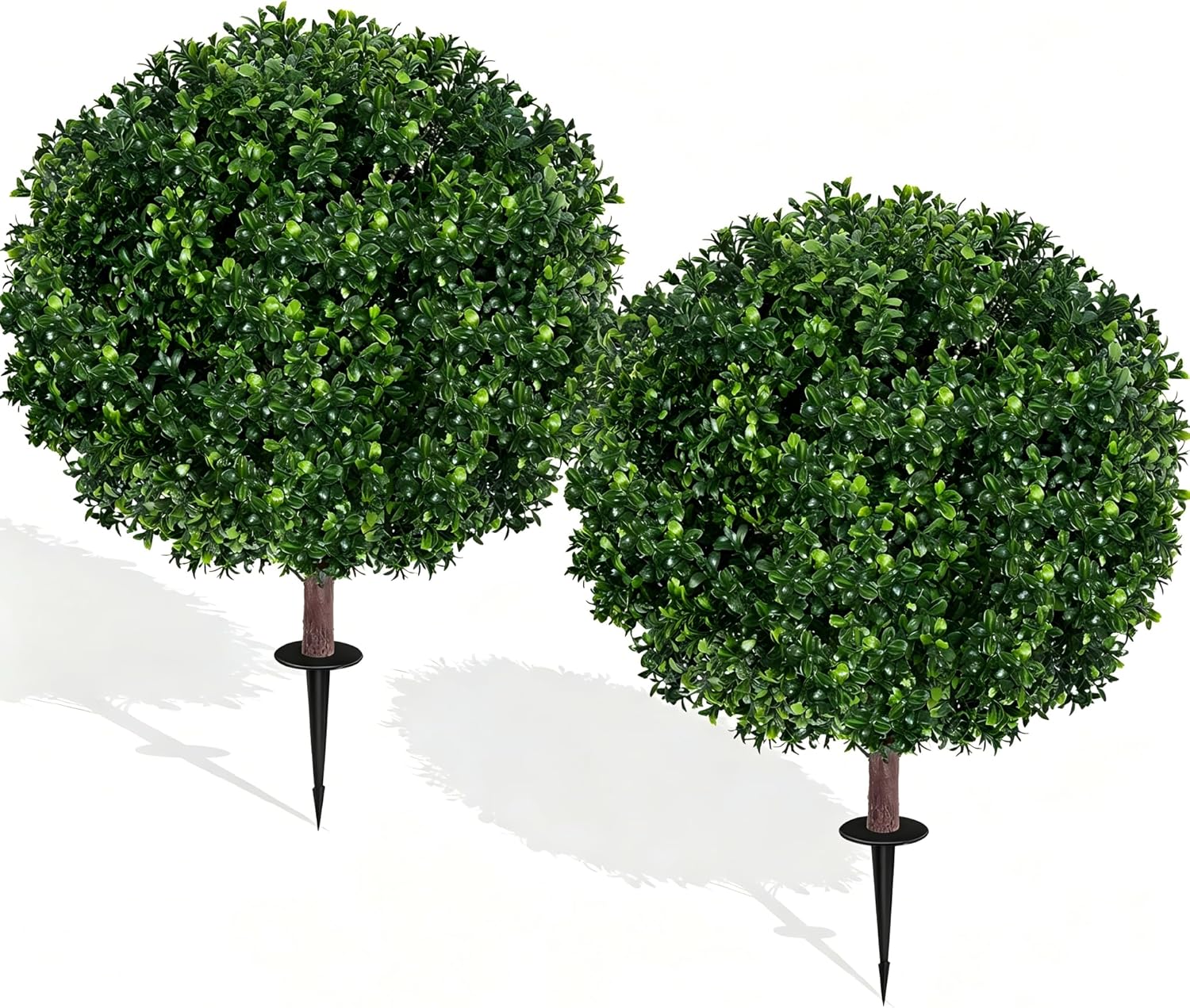
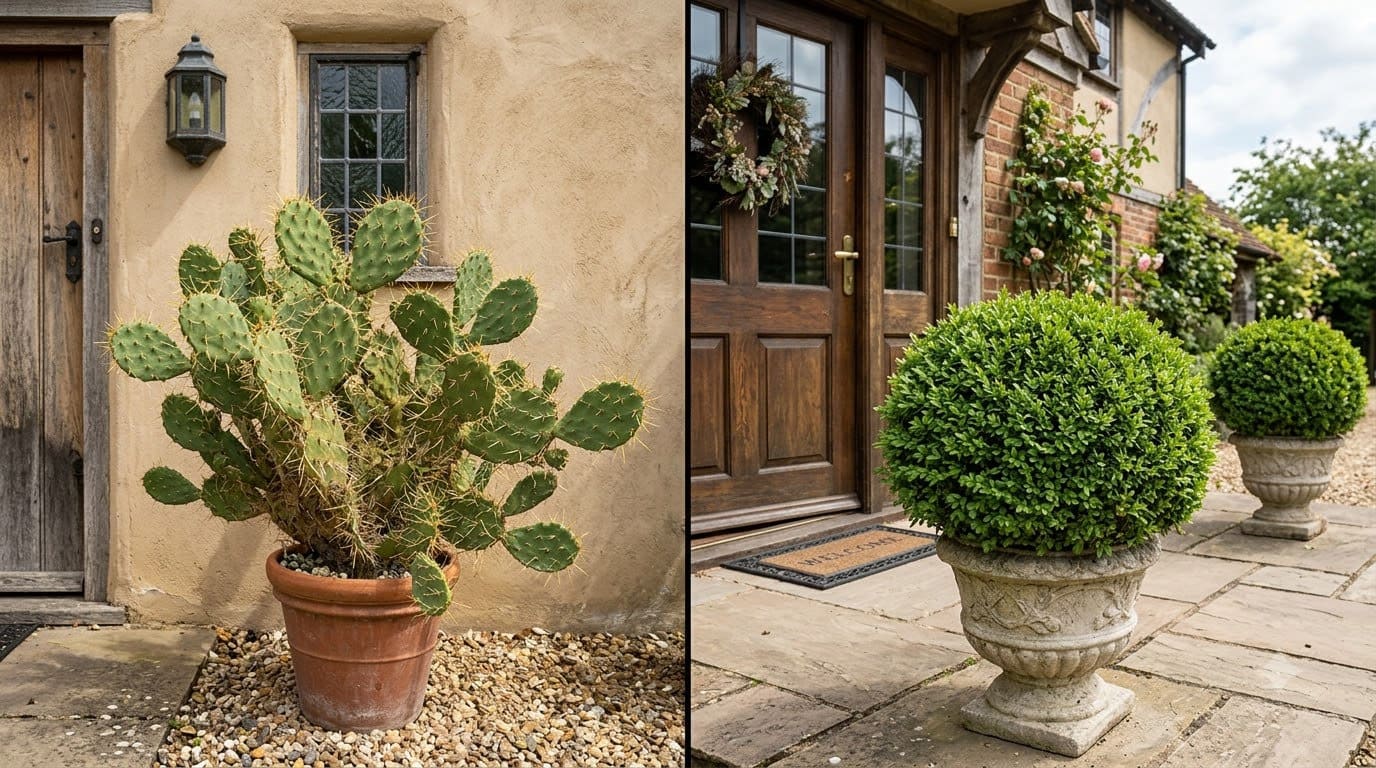
A rounded, thorn-free, zero-maintenance swap for cactus or pampas grass right by the door
Shop NowThis post contains affiliate links. We may earn a commission on qualifying purchases at no extra cost to you.
4. Lilies
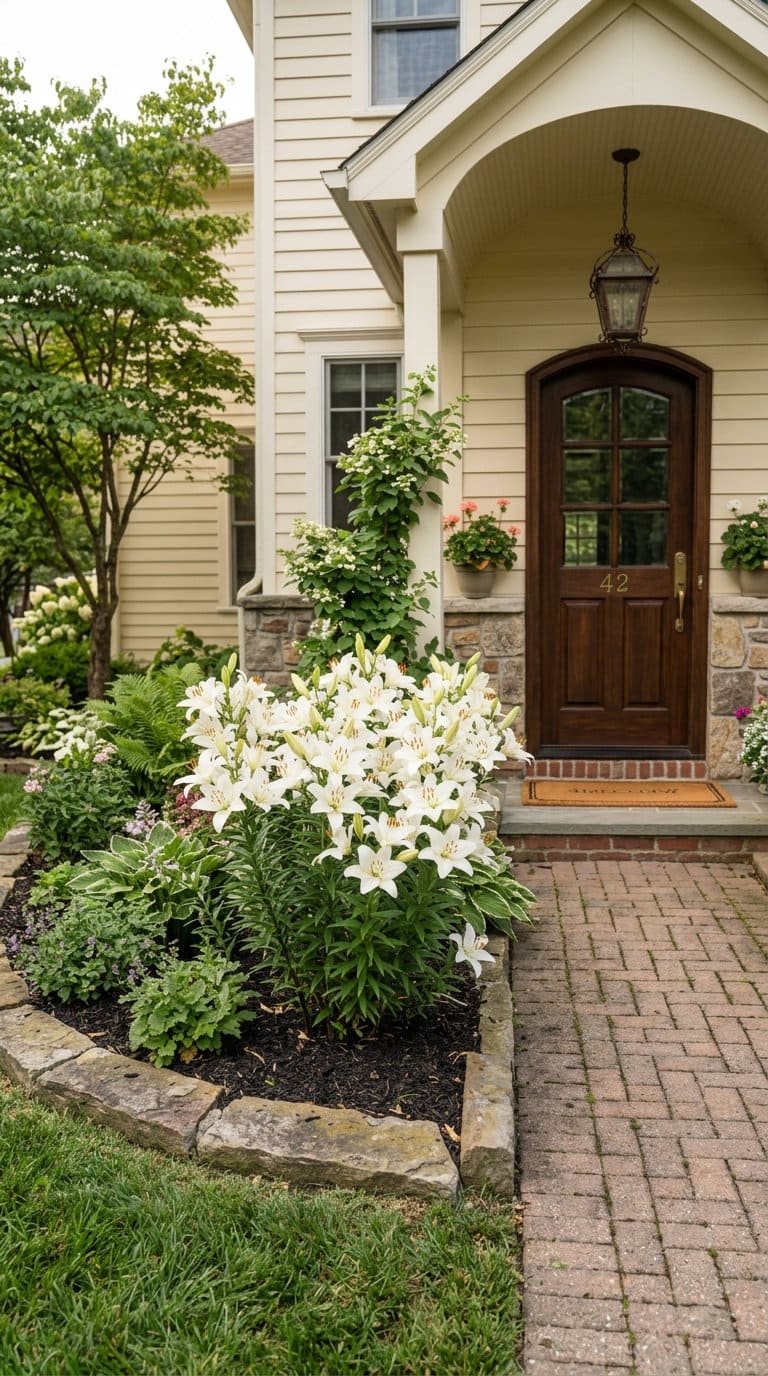
Lilies are tied to funerals and mourning across many cultures, and feng shui treats that association literally: a flower linked to death and grief isn’t considered appropriate at the one spot meant to welcome life and opportunity into your home.
The real-world case against lilies by the door is arguably stronger than the symbolic one. Per the ASPCA, lilies (including Asiatic lilies and daylilies) are severely toxic to cats specifically, even pollen brushing against a cat’s fur, later licked off during grooming, can cause kidney failure and death.
If there’s any chance a cat has outdoor access near your entrance, this is the plant on this list with the highest real stakes.
5. Bonsai
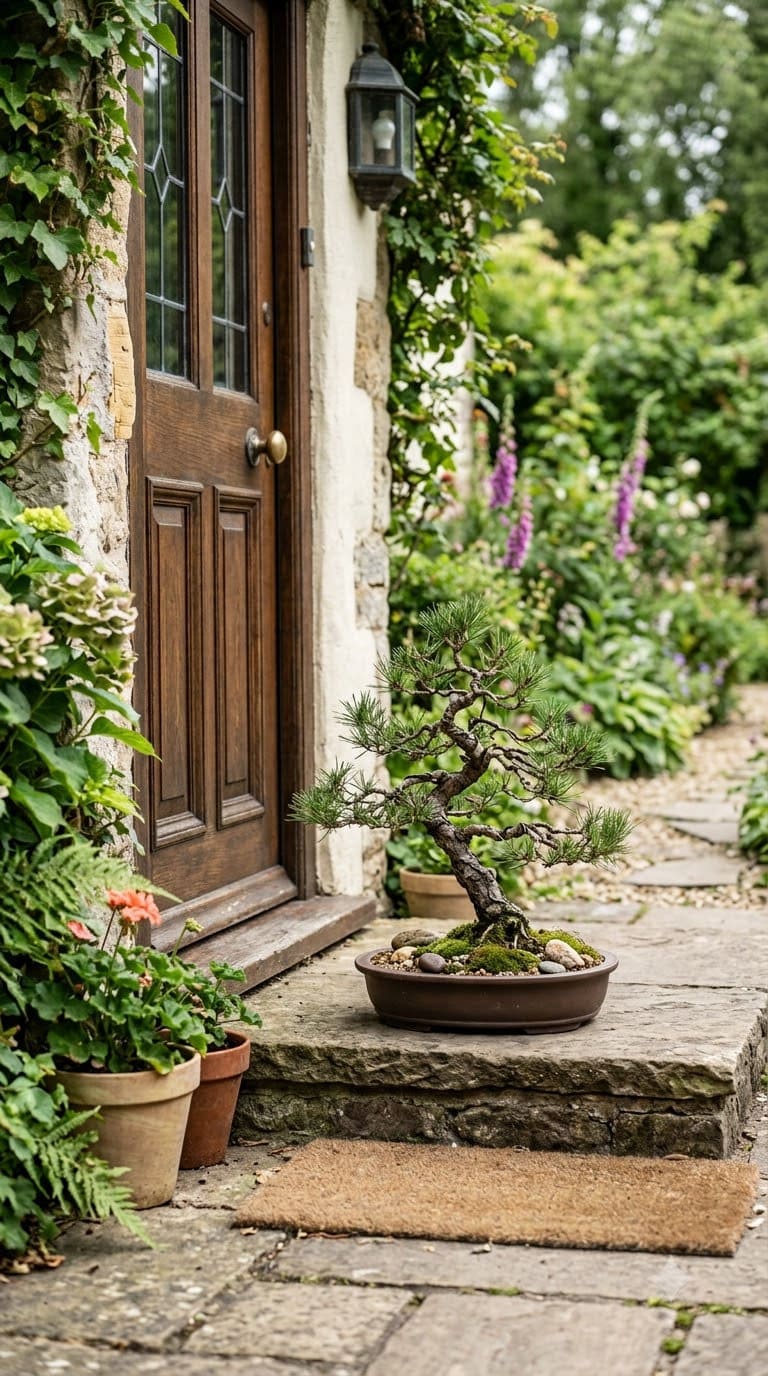
A bonsai’s whole design premise, a tree deliberately kept small and restricted through pruning, is read in feng shui as a symbol of stunted growth and constrained opportunity, not the message you want planted at your home’s main energetic entry point.
There’s no real toxicity or structural concern with bonsai specifically, the objection here is purely symbolic.
If you love bonsai, the practical compromise both feng shui sources agree on is simple: display it somewhere else in the home, a study, a shelf, anywhere except the direct entrance sightline, swap it out front for something from our front door flower pot ideas instead.
6. Pampas grass

Pampas grass’s jagged, saw-edged blades and its wild, ungroomed plume are read in feng shui as chaotic and conflict-associated energy, the opposite of the settled, welcoming feel an entrance wants.
The practical overlap: pampas grass blades are genuinely sharp enough to cause skin cuts on contact, a real consideration if it’s planted anywhere someone might brush against it reaching for a doorknob or navigating a narrow walkway.


It’s also an aggressive self-seeder in many climates, showing up as an invasive species concern in several U.S. states, worth checking your local extension office’s guidance before planting it anywhere on the property, not just by the door.
The average homeowner spends $616/year on yard fixes that don't address the real problem. Find out what yours actually is — before you spend another dollar.
Take the Free QuizThe 6 plants at a glance
| Plant | Feng shui concern | Real-world risk |
|---|---|---|
| Cactus | Poison arrow, sharp spiky energy | Trip-and-brush injury near a walkway |
| Weeping willow | Melancholy, drooping downward energy | Aggressive roots damage pipes/foundations; keep 30+ feet away |
| Oleander | Hidden danger, deceit | ASPCA: genuine cardiac toxicity to pets and humans |
| Lilies | Tied to funerals and mourning | ASPCA: severely toxic to cats, even from pollen |
| Bonsai | Stunted growth, constrained opportunity | None, purely symbolic |
| Pampas grass | Chaotic, conflict-associated energy | Sharp blades cut skin; invasive self-seeder in several states |
What we learned the hard way
The pet-toxicity angle catches more people off guard than any of the symbolic reasoning. Homeowners who’d never plant something explicitly labeled “poisonous” often don’t realize oleander and lilies, both common, attractive, garden-center staples, carry real ASPCA warnings, because the plant tag at the store rarely mentions it.
The willow root problem is the other one that surprises people, specifically because it takes years to show up.
A willow planted as a small, pretty specimen near the entrance can look completely fine for the first five to ten years before root damage to a nearby pipe or foundation edge becomes obvious, by which point the fix is a real excavation project, not a quick swap.
FAQs
I already have one of these plants by my front door. Do I need to remove it? For the symbolic-only entries (bonsai, pampas grass), that’s your call, feng shui offers a preference, not a mandate. For oleander and lilies specifically, if pets or small children have regular access to that area, the ASPCA toxicity data is worth taking seriously regardless of feng shui.
Is a willow tree safe if it’s already mature and close to my house? Not necessarily. Root damage from an established willow can still be actively progressing even if you haven’t noticed symptoms yet. If it’s within 30 feet of your foundation or known pipe lines, it’s worth having an arborist assess it rather than waiting for a visible problem.
What should I plant near my front door instead? Rounded, upward-growing, non-toxic plants are the standard feng shui recommendation, think boxwood, jade plant, or flowering shrubs without thorns. The goal is soft, welcoming shapes with no sharp points aimed at the doorway, see our bushes to plant in front of house and front yard flower bed ideas for real combinations that fit this brief.
Are all spiky or sharp plants automatically bad feng shui? Not everywhere in the yard, just in direct sightline of the entrance or a walkway. A cactus bed off to the side, away from foot traffic, doesn’t trigger the same “poison arrow” concern as one planted right along the path to your door.
Related reading on farmfoodfamily.com: for the “poison arrow” concept applied to hardscaping instead of plants, see our feng shui garden pathway guide.
Related Posts
- 45+ Bold Front Door Colors for Gray House That Will Wow Your Neighbors
- 20 Stunning Cedar Fence Ideas That Will Transform Your Yard
- Bushes to Plant in Front of House
- Front Door Flower Pot Ideas
- Front Yard Flower Bed Ideas
- Types of Succulents
Products We Recommend
This post contains affiliate links. We may earn a commission on qualifying purchases at no extra cost to you.
Artificial Boxwood Topiary (Set of 2, UV-Resistant)
A rounded, thorn-free, zero-maintenance swap for cactus or pampas grass right by the door
Shop Now
Artificial Jade Plant (Real-Touch)
The classic feng shui-favorable look recommended in the FAQ, without any pet-toxicity risk at all
Shop Now
"Pet-Safe Houseplants" Guide Book
Helps homeowners double-check toxicity before planting anything near an entrance pets or kids use
Shop NowNever miss an update — choose FarmFoodFamily as your preferred source on Google.
How it works: Tap the button below to open Google's settings page, then check the box next to FarmFoodFamily.
Tap the checkbox to turn it blue — that's how you know it's set.