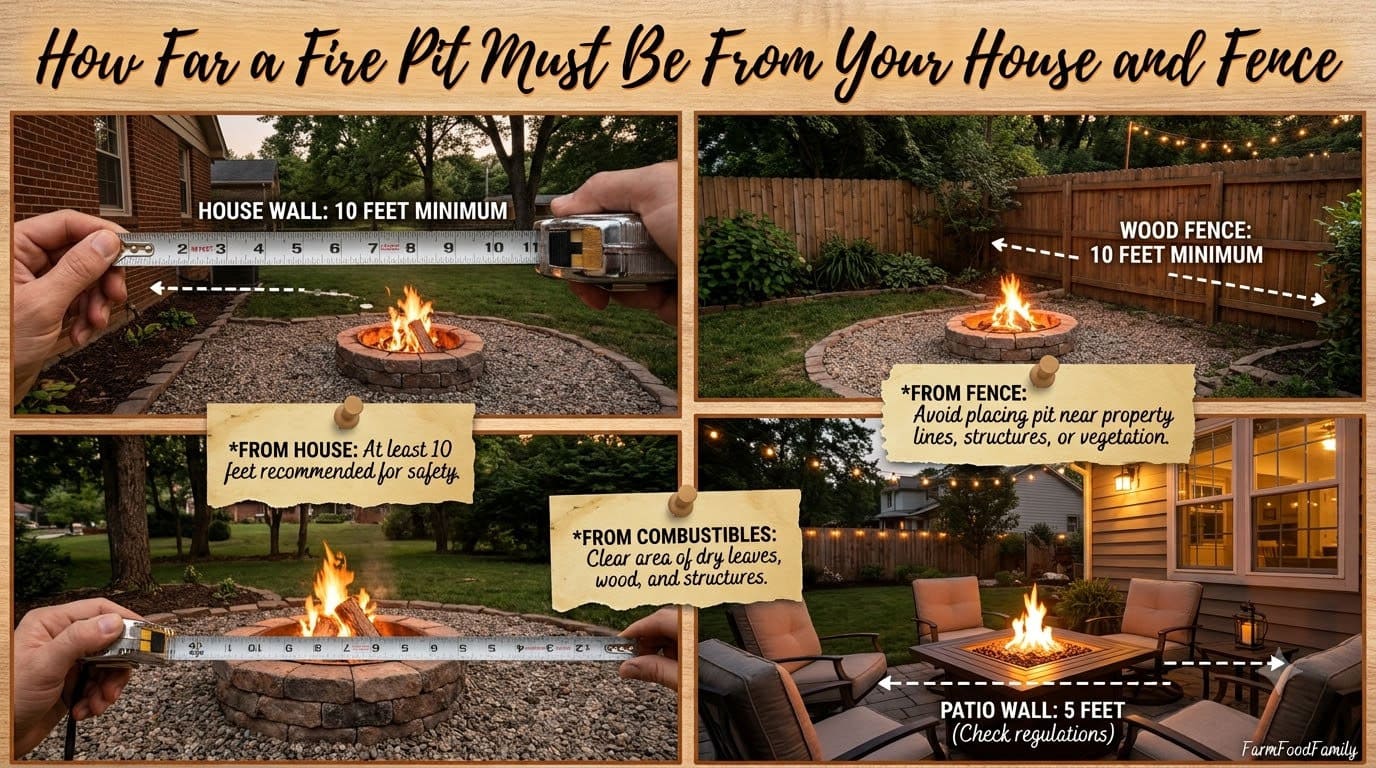
How Far a Fire Pit Must Be From Your House and Fence: 5 Genius Clearance Rules That Actually Match Fire Code
A fire pit built too close to your house or fence isn’t just a fine waiting to happen. It’s a real ember risk, and the safe distance depends on more than one number you saw on Pinterest.

Never miss an update — choose FarmFoodFamily as your preferred source on Google.
How it works: Tap the button below to open Google’s settings page, then check the box next to FarmFoodFamily.
Tap the checkbox to turn it blue — that’s how you know it’s set.
You’ve picked the spot. It’s close enough to the patio to feel cozy. Close enough to the kitchen that grabbing drinks isn’t a hike.
Then you start digging, or unboxing the fire pit, and a different question shows up. Is this actually far enough from the house?
It’s a fair question. The honest answer is it depends on what kind of fire pit you’re building and where you live. But there’s a real number to work from, not a guess, and it comes from actual fire code, not a rule of thumb someone repeated in a Facebook group.
Quick Answer: For a wood-burning fire pit, keep at least 25 feet between the fire and your house, garage, shed, fence, or any other combustible structure. That’s the model fire code used by real fire departments like Austin, Texas, based on NFPA 1, the national fire code most local rules copy. Portable gas fire pits can often sit closer, sometimes as little as 10 feet, but only if the model’s own manual says so. Some cities set a lower local minimum. Pflugerville, Texas, allows 15 feet from both structures and property lines. Your real number depends on your city and your fire pit type, not one national code alone. Call your local fire department before you dig or buy, and treat 25 feet as your starting assumption until they tell you otherwise. It’s a five-minute call that can save you a rebuild.
At a Glance: Fire Pit Distance Rules by Type
| Fire Pit Type | Distance From House/Fence | Source |
|---|---|---|
| Wood-burning, in-ground or built-in | 25 feet (model code) | NFPA 1, Section 10.11, cited by Austin Fire Dept |
| Wood-burning, local minimum example | 15 feet from structures and property lines | Pflugerville Fire ESD 2 |
| Portable gas fire pit | Often 10 feet, but check the manual | Manufacturer clearance specs |
| Gas fire pit on a rated deck-safe unit | 0 inches below, per manual only | Manufacturer clearance specs |
| Open burning (brush, debris, not recreational) | 75 feet, seasonal permit only | Massachusetts DEP, 310 CMR 7.07 |
Rule #1: Wood-Burning Fire Pits Need 25 Feet, Not 10
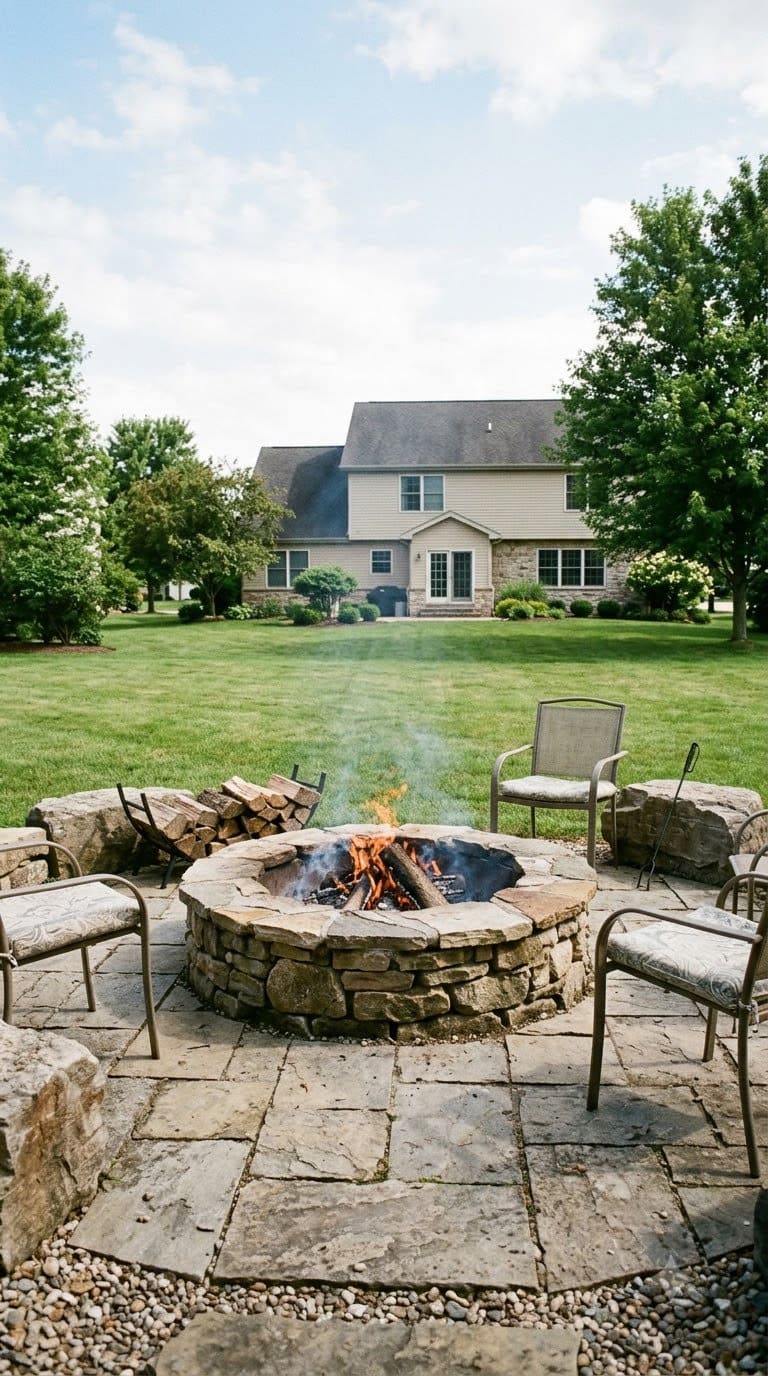
This is the number that surprises most people. A lot of fire pit blogs throw out “10 feet” as the safe distance. That’s not what real fire code says for an open, wood-burning recreational fire.



Austin’s fire department applies the same model code most US cities reference. Its own guidance states plainly that a recreational fire “must be at least 25 feet from structures and other combustible materials.” That includes your house, your garage, your shed, and your fence. Dry grass and leaves need to be cleared back another 10 feet around the fire itself, on top of that 25-foot setback.
Answer 4 quick questions and get matched to the exact fix for your yard — drainage, budget, layout, or something else entirely.
Take the Free QuizThe fuel pile is capped too. Under this same code, the burning area can’t be more than 3 feet across or 2 feet tall. That’s a real limit on backyard fire size, not a suggestion.
Quick tip: Measure from the outer edge of the fire pit’s bowl or ring, not its center, when you check the 25-foot distance. On a 3-foot-wide fire pit, that’s an extra 18 inches of margin most people forget.
Rule #2: Your City’s Actual Number Might Be Lower Than 25 Feet

Fire code isn’t federal. It’s a patchwork of state fire marshal codes, county rules, and city ordinances. They don’t all copy the same number.
Pflugerville, Texas, just outside Austin, sets its own local minimum at 15 feet from structures and fencing, plus 15 feet from property lines separately. That’s 10 feet less than Austin’s rule, in the same metro area. This isn’t a small technicality. The safe distance genuinely changes depending on which side of a city line your yard sits on.
Before you dig a permanent fire pit or pour a concrete pad, call your local fire department or check your city’s website. Most cities that regulate outdoor burning publish the exact number, and it’s usually a five-minute call.
Quick tip: Search “[your city] plus fire department plus recreational fire” instead of “fire pit.” Most municipal code uses that specific term, and you’ll land on the real regulation page faster.
Rule #3: Fences Get Treated the Same as Your House
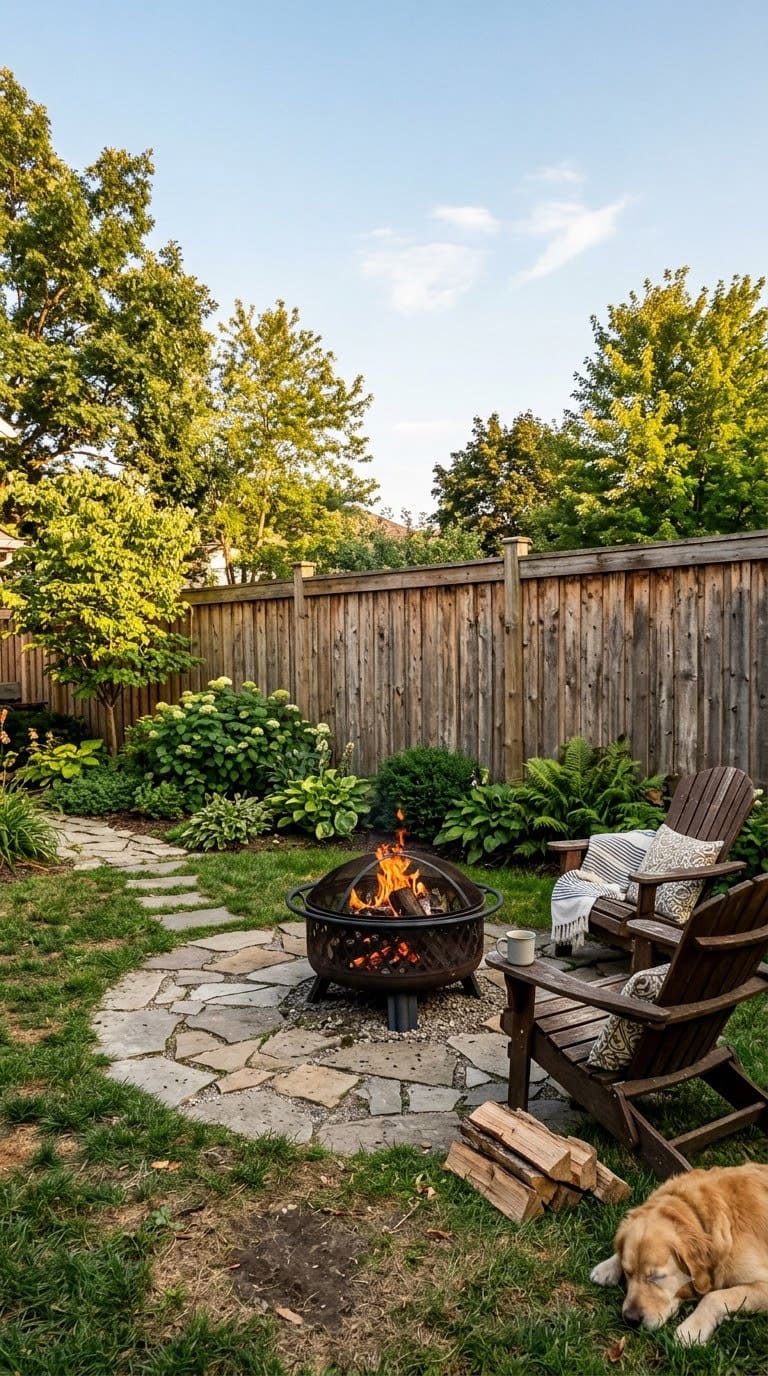
A lot of people assume the house is what matters and a fence is just a boundary line, not a real fire risk. Fire departments don’t draw that distinction. Both Austin and Pflugerville’s published rules list “fence” right alongside house, garage, and shed as a structure the clearance applies to.
Most yard problems trace back to one specific, fixable cause. Find yours in 4 quick questions.
Take the Free Quiz
Cuts down the stray-ember risk covered in Rule #5, especially useful on any yard tighter than the full 25-foot clearance
Shop NowThis post contains affiliate links. We may earn a commission on qualifying purchases at no extra cost to you.
Think about the material for a second. A wood privacy fence, a vinyl fence, or a composite fence panel is combustible or heat-sensitive in exactly the way siding is. A stray ember on dry wood fencing can smolder for a while before anyone notices, especially at night after the fire’s out and everyone’s gone inside.
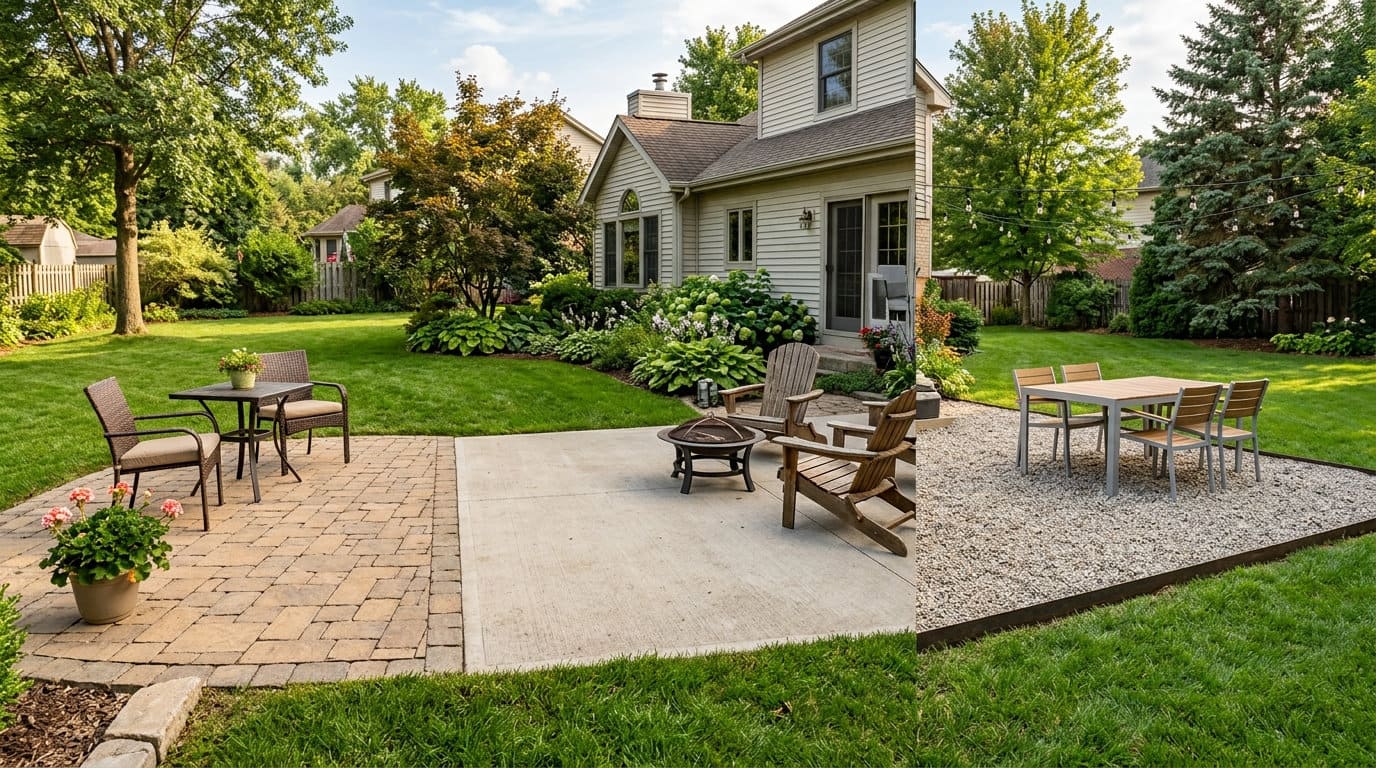
If your yard is narrow and the fence line is the only spot that gives you 25 feet from the house, you may not have a wood-burning fire pit anymore. A smaller, code-compliant gas unit with a tighter manufacturer clearance becomes the safer choice, not just the more convenient one.
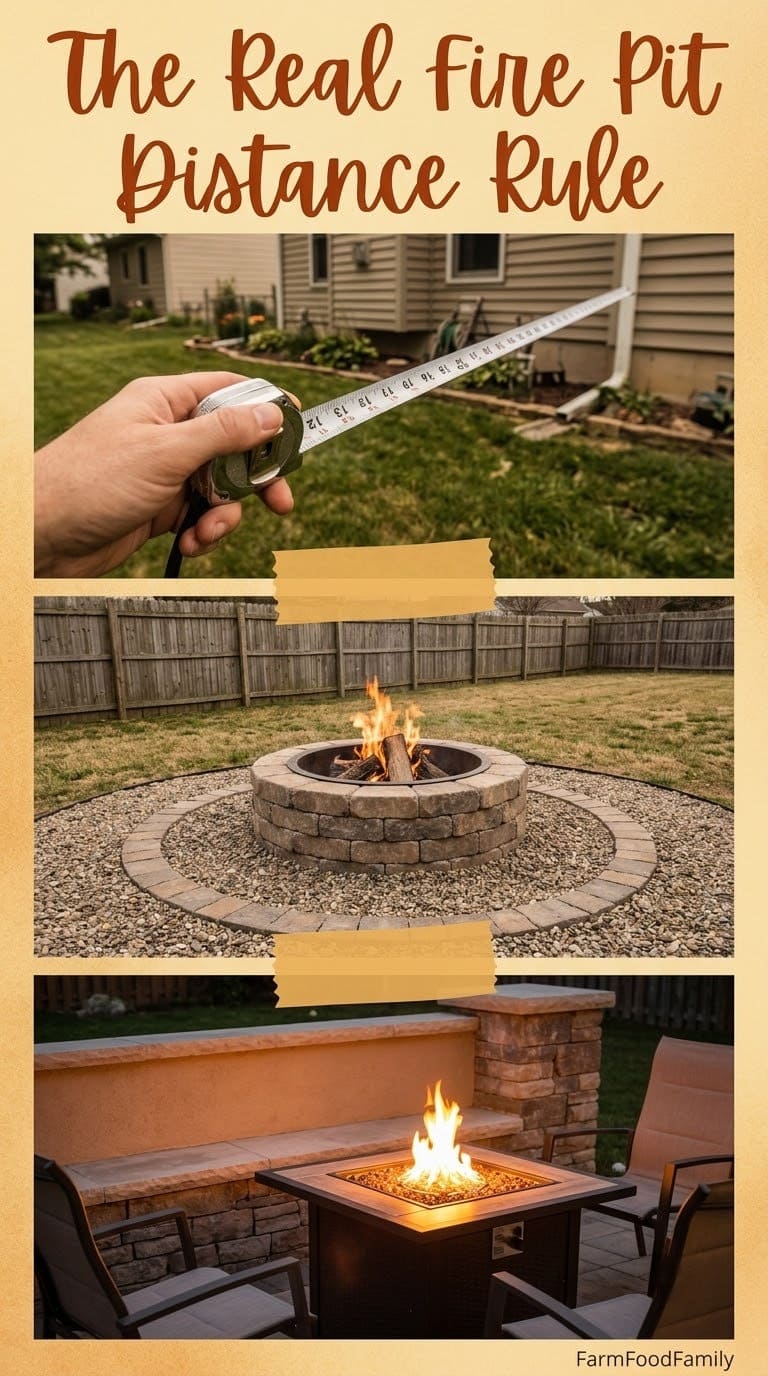
Quick tip: Walk the actual 25-foot distance off with a tape measure or a long rope before you commit to a spot. Most backyards look bigger than they measure. Eyeballing “that looks far enough” is the most common way people end up under code without realizing it.
Rule #4: Gas and Portable Fire Pits Play by Different Rules Than Wood
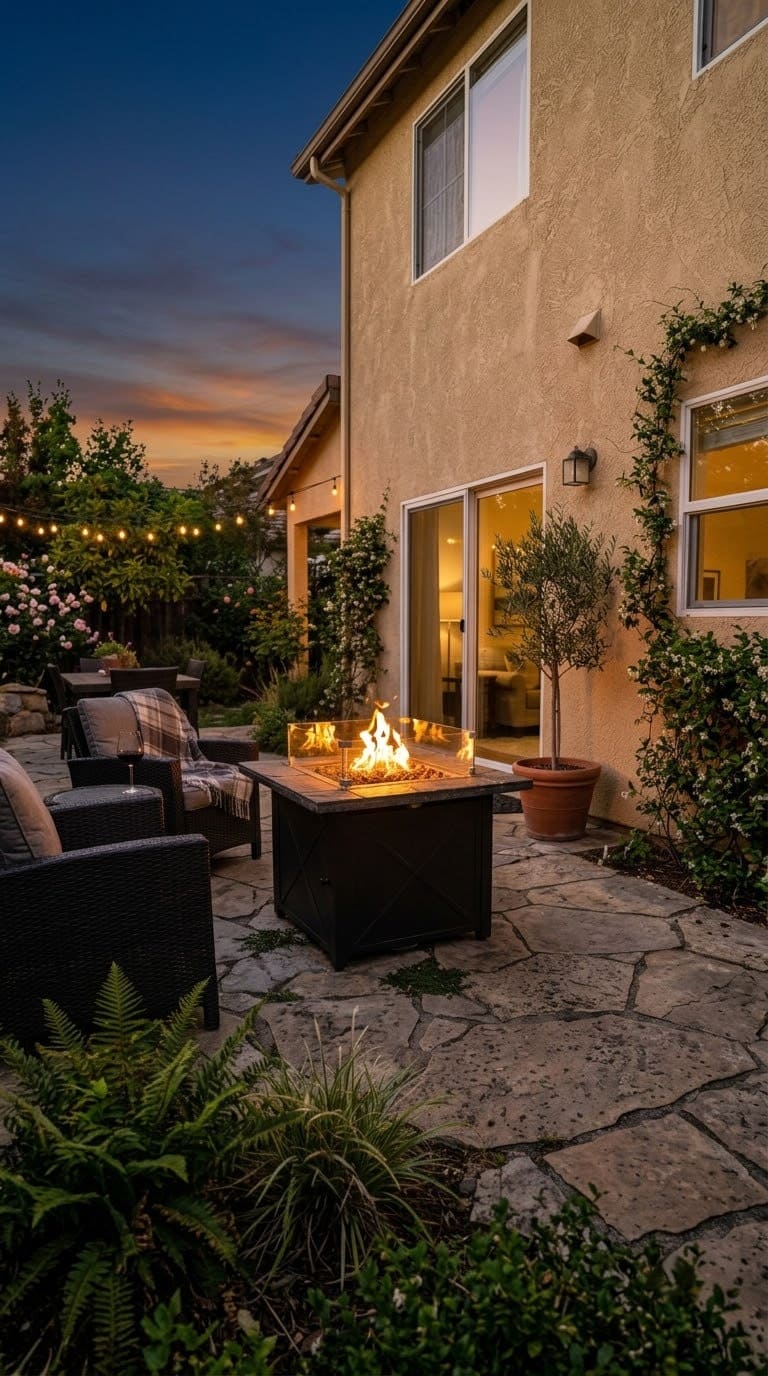
The 25-foot number applies to open, wood-burning recreational fires. It doesn’t automatically apply to a manufactured gas fire pit, and this is where a lot of confusion comes from.
Gas and propane fire pit tables are engineered products with a real clearance spec printed in the manual. Manufacturers test their own units for exactly this. Many gas fire pits list a minimum clearance around 36 inches, or 3 feet, from a combustible wall or railing, far tighter than the wood-fire number. Some units are rated for “0 inches below unit,” meaning they’re built to sit directly on a combustible deck surface, as long as you use the required heat mat underneath.
That’s a real, useful distinction. But it only holds if you actually read the manual for your specific model. Two gas fire pits that look nearly identical can carry different clearance ratings depending on how they’re insulated and shielded underneath.
Quick tip: If your gas fire pit’s manual is long gone, search the model number plus “owner’s manual” on the manufacturer’s site. Nearly every brand posts a free PDF, and the clearance spec is usually on the first page, not buried deep in the document.
Rule #5: Wind, Screens, and a Real Extinguishing Plan Matter as Much as Distance
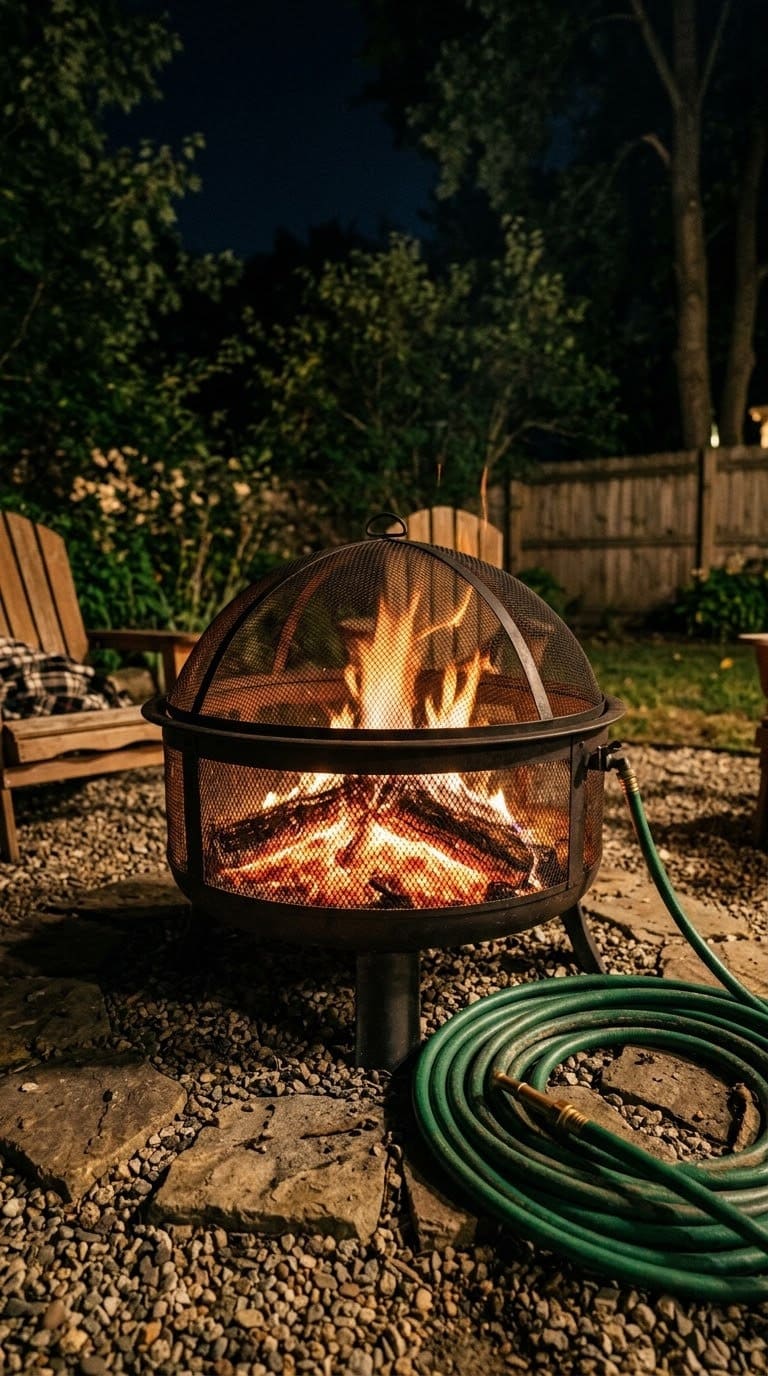
Distance alone doesn’t make a fire pit safe if the wind is blowing embers straight at your siding from 20 feet away. Every fire code above pairs the distance rule with two other requirements people skip. Constant adult supervision, and a real way to put the fire out within reach, not just “the hose is somewhere in the yard.”



A mesh spark screen earns its keep here. It won’t fix a fire pit that’s too close to a structure, but it cuts down the stray-ember problem that turns a technically legal distance into a real risk on a windy night. Check your yard’s typical wind direction before you finalize the spot, and keep the downwind side clear of anything you’d hate to lose.
The average homeowner spends $616/year on yard fixes that don't address the real problem. Find out what yours actually is — before you spend another dollar.
Take the Free QuizThe Consumer Product Safety Commission has warned about a related hazard on small tabletop and liquid-fuel fire pits. Refueling a still-warm unit can cause the fuel container itself to ignite, a hazard the agency calls “flame jetting.” That’s not a distance-from-house issue. It’s a product safety one. But it shows why “keep flammable things out of range” applies to more than just your siding.
Quick tip: Keep a Class A or multipurpose fire extinguisher, rated at least 4-A, within reach of the fire pit every time it’s lit, not stored in the garage. That’s the exact extinguisher rating Austin’s fire code requires, and a small kitchen extinguisher usually doesn’t meet it.
Do You Need a Permit Before You Build?
Many cities require a permit for a permanent, built-in fire pit, especially one poured into a patio or attached to gas lines. A portable fire pit you can pick up and carry is far less likely to need one, but it still has to follow the same distance and supervision rules any time it’s lit.
Check with your local fire marshal’s office before you commit to a permanent design, not after. A permit review can also flag setback rules from your specific property line, which sometimes differ from the general structure-distance rule covered above.
Quick tip: Ask about HOA rules in the same call. Plenty of HOAs restrict open flame or require gas-only fire pits, and that restriction won’t show up in any fire code search.
What We Learned Moving Our Own Fire Pit Twice
We built our first fire pit 12 feet from the back of the house because a random blog post said that was fine. It looked reasonable. It wasn’t, once we called the city and found out the real local rule was 25 feet for a wood-burning pit in our zone.
Moving a finished stone fire pit is genuinely annoying, and we did it twice. The second time was after realizing the new spot was still inside a property-line setback we hadn’t checked. The lesson that actually stuck: call before you build, not after. A five-minute conversation with the fire marshal’s office would have saved us two weekends of moving pavers.
And honestly, we still second-guess the spark screen decision some nights. It’s a small thing, but it’s the cheapest insurance on this whole list.
What It Actually Costs to Get This Wrong
Moving a finished fire pit isn’t just annoying. It’s real money. Breaking out a poured concrete pad and pavers, moving them, and repouring is a genuine demolition-and-rebuild job, not a weekend touch-up, and the cost scales with pad size and whether you hire it out. [EDITOR NOTE: get a local contractor quote for your specific pad size before citing a dollar figure here, no verified cost data was sourced this pass.]
Compare that to the cost of checking first. A phone call to your local fire marshal is free. Measuring your yard with a $10 tape measure takes ten minutes. That’s the whole trade, a few minutes of homework against a weekend of demolition.
There’s a safety cost too, and it’s the one that actually matters most. A fire pit set up outside your local code’s required distance isn’t just a citation risk. It’s the exact scenario the distance rule exists to prevent in the first place, an ember or a wall of radiant heat reaching your siding, your fence, or a neighbor’s property. [EDITOR NOTE: check with your specific homeowners insurance carrier about whether a code-violating fire pit placement affects claim coverage, this varies by policy and wasn’t independently verified against a named insurer this pass.]
Frequently Asked Questions
How far does a fire pit need to be from a wood fence?
Treat a fence the same as your house for clearance purposes. Most model fire code puts that at 25 feet for a wood-burning fire pit, though your specific city may set a different local minimum. Confirm the exact number with your fire department before building.
Can I put a small gas fire pit closer than 25 feet to my house?
Often yes, but only within whatever clearance the manufacturer’s manual specifies for that exact model, commonly around 3 feet for tabletop and patio gas units. The 25-foot rule is for open wood-burning fires, not engineered gas appliances. Confirm your specific unit’s rating rather than assume.
Is it legal to put a fire pit on a wood deck?
Only if the fire pit is rated for it. Look for a “0 inches clearance below unit” spec in the manual, and use the manufacturer’s required heat-resistant mat underneath. A wood-burning fire pit, or an unrated gas unit, should never sit directly on a combustible deck surface.
Does the 25-foot rule apply to my neighbor’s fence too?
Property line setbacks are usually listed separately from structure setbacks in local code, and they can be a different number, like Pflugerville’s 15-foot property-line rule. Check both numbers for your city rather than assuming they’re the same.
Related Posts
- 20+ Genius Fire Pit Ideas That Work Perfectly on a Sloped Yard
- Front Yard Fire Pit Ideas
- Backyard Fire Pit Lounge Ideas
Products We Recommend
This post contains affiliate links. We may earn a commission on qualifying purchases at no extra cost to you.
RGJ Fire Pit Spark Screen
Cuts down the stray-ember risk covered in Rule #5, especially useful on any yard tighter than the full 25-foot clearance
Shop Now
DocSafe 48" Round Fire Pit Mat
The physical mat manufacturers require for a "0 inches below unit" deck-rated gas fire pit in Rule #4
Shop Now
BUCKEYE Fire Extinguisher, 4A:80B:C, 10 lb.
The exact 4-A extinguisher rating Austin's fire code requires within reach of a lit fire pit
Shop NowNever miss an update — choose FarmFoodFamily as your preferred source on Google.
How it works: Tap the button below to open Google's settings page, then check the box next to FarmFoodFamily.
Tap the checkbox to turn it blue — that's how you know it's set.