20 Vinyl Fence Ideas That Actually Hold Up (Plus the Real Cost and Frost-Line Numbers)
Twenty real vinyl fence styles, plus the actual cost-per-foot, lifespan, and installation numbers most “vinyl fence ideas” galleries skip.

Never miss an update — choose FarmFoodFamily as your preferred source on Google.
How it works: Tap the button below to open Google’s settings page, then check the box next to FarmFoodFamily.
Tap the checkbox to turn it blue — that’s how you know it’s set.
Vinyl has quietly become the default upgrade pick for homeowners tired of repainting a wood fence every few years, but most idea galleries stop at pretty photos and never explain what makes one vinyl fence outlast another, or why some installations fail within a couple of winters regardless of how good the material itself is.
Is Vinyl Fencing Actually Worth the Higher Upfront Cost?
Every vinyl fence gallery shows the styles. Almost none show the real numbers behind them.
Quick answer: Vinyl fencing costs more upfront than wood, typically $15 to $40 per linear foot professionally installed versus wood’s $11 to $45 per linear foot, but it usually wins on total cost of ownership.
Quality vinyl meeting the ASTM F964 industry standard lasts 30 or more years with no painting, staining, or sealing, while a well-maintained wood fence typically needs replacing after 15 to 20 years.
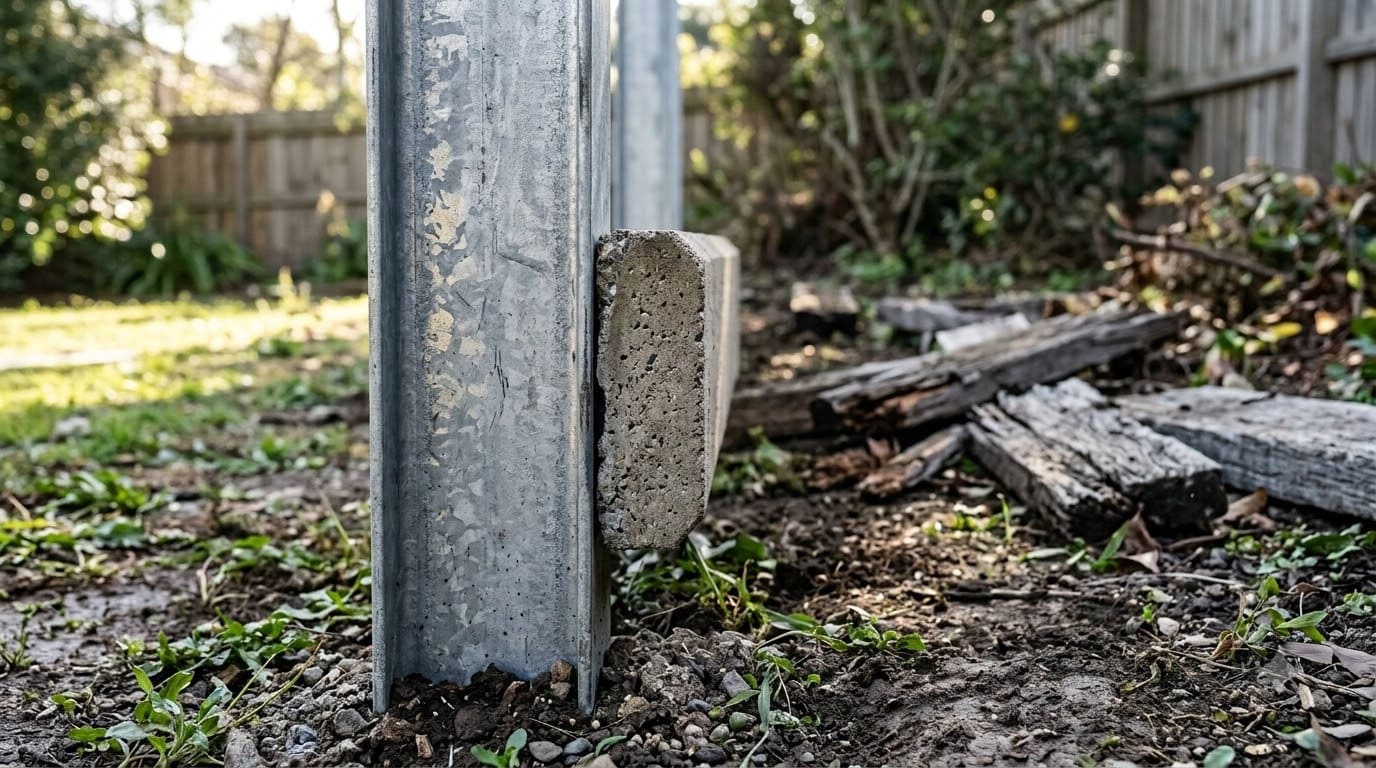
The real risk isn’t the material, it’s installation: posts need to be set below your region’s frost line, roughly 36 inches in the mid-South up to 60 inches in northern states, with a gravel drainage base underneath, or the ground’s freeze-thaw cycle can push posts upward over time regardless of how good the vinyl itself is.
Most reputable manufacturers back the material with a lifetime warranty, though the fine print matters, some cover the fence’s lifespan, others only the original purchaser.

Two more things worth knowing before you pick a style. First, HOA rules on vinyl fencing are specific and worth checking directly rather than assuming: most cap backyard fences at 6 feet and front yards at 3 to 4 feet, and commonly restrict approved colors to white, tan, or clay, with an architectural review board sign-off often required before installation.
Second, look for vinyl that meets ASTM F964, the real industry specification covering impact resistance, warp, and weatherability for PVC fencing profiles, Illusions Vinyl Fence, manufactured by Eastern Wholesale Fence LLC for nearly 50 years, is one real example of a manufacturer building to that standard rather than a generic unrated import.
How Does Vinyl Really Compare to Wood, Composite, and Aluminum?
| Material | Cost Per Foot (Installed) | Typical Lifespan | Maintenance | Warranty |
|---|---|---|---|---|
| Vinyl | $15-40 | 30+ years | None (no paint/stain/seal) | Often lifetime on material, check fine print |
| Wood | $11-45 | 15-20 years | Repaint/stain every 2-3 years | Typically none on the wood itself |
| Composite | $25-45 | 25-30 years | Occasional cleaning | Often 20-25 years |
| Aluminum | $20-35 | 20-30 years | Very low, occasional touch-up paint | Often 20 years+ |
Which Privacy-Style Vinyl Fences Work Best?
1. Solid vertical privacy fence
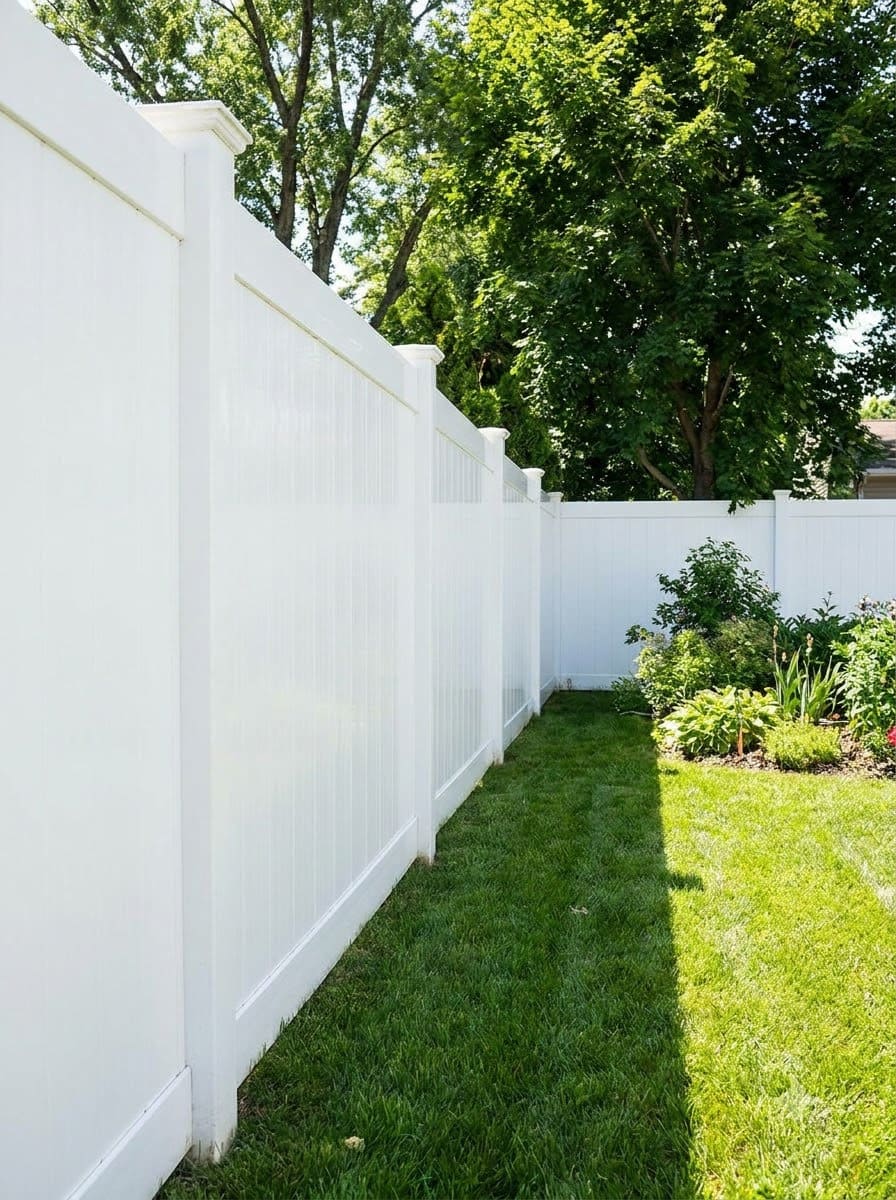
The most common vinyl fence style, tongue-and-groove vertical panels, typically built from 5-6 inch wide interlocking boards, give full sightline blocking with no gaps, a straightforward choice when total privacy is the goal.
Standard height caps out around 6 feet in most HOAs, with posts set on roughly 8-foot centers for the standard panel width. Budget tier: moderate, the baseline vinyl privacy option most quotes are built around.
Answer 4 quick questions and get matched to the exact fix for your yard — drainage, budget, layout, or something else entirely.
Take the Free Quiz2. Horizontal solid privacy fence
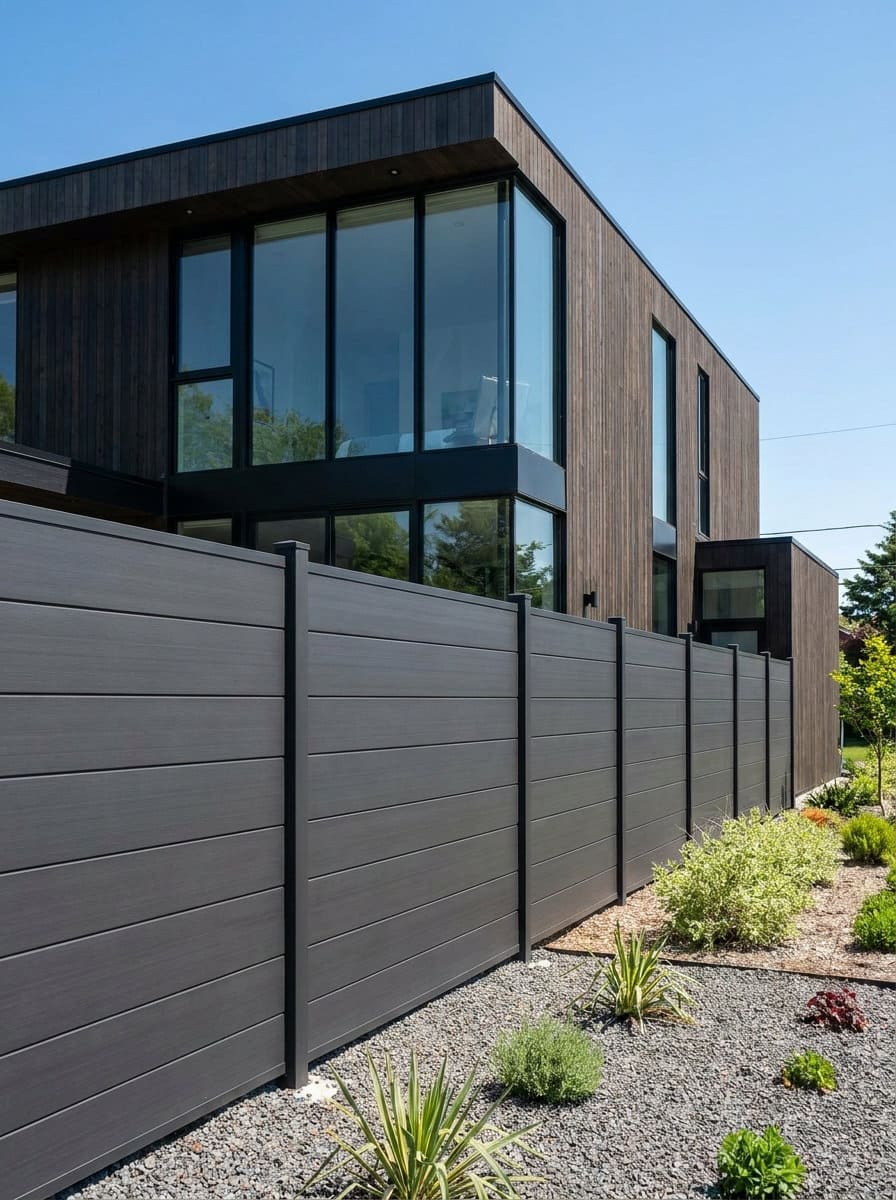
Horizontal panels, usually 6-8 inch wide boards stacked in a single frame, read as the more contemporary version of the same solid-privacy concept, and pair especially well with modern architecture.
The tradeoff is a slightly higher material cost since horizontal installations typically need more structural blocking between posts (an internal support rail roughly every 2 feet of height) to keep long horizontal spans from sagging over time.
Pairs well with idea 12’s mixed-material approach if you want a modern look with masonry accents. Budget tier: moderate to bigger investment.
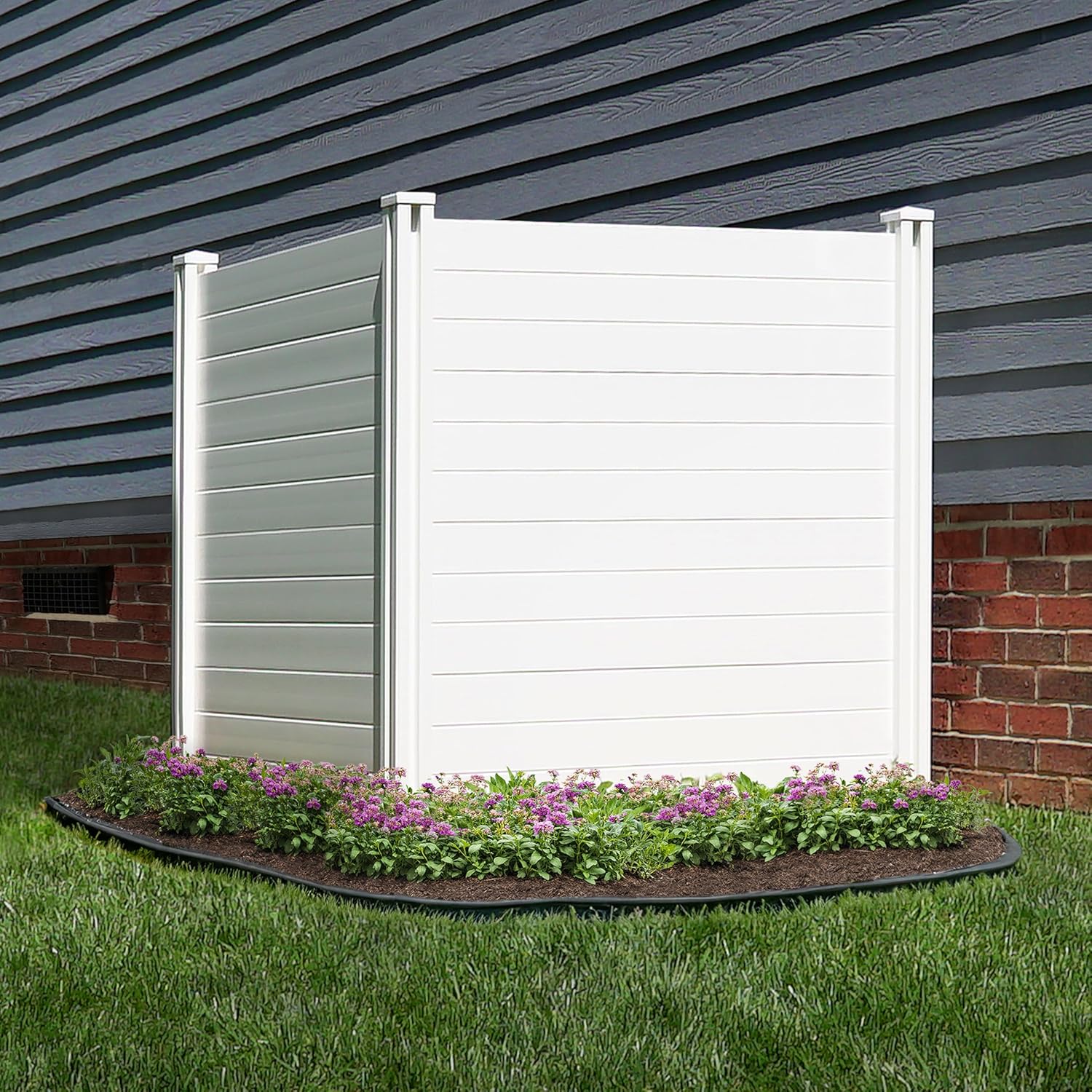
Real starting point for pricing out idea 1/3's privacy-style DIY section, 4.4 stars / 2,658 ratings, live-verified
Shop NowThis post contains affiliate links. We may earn a commission on qualifying purchases at no extra cost to you.
3. Semi-privacy slatted fence
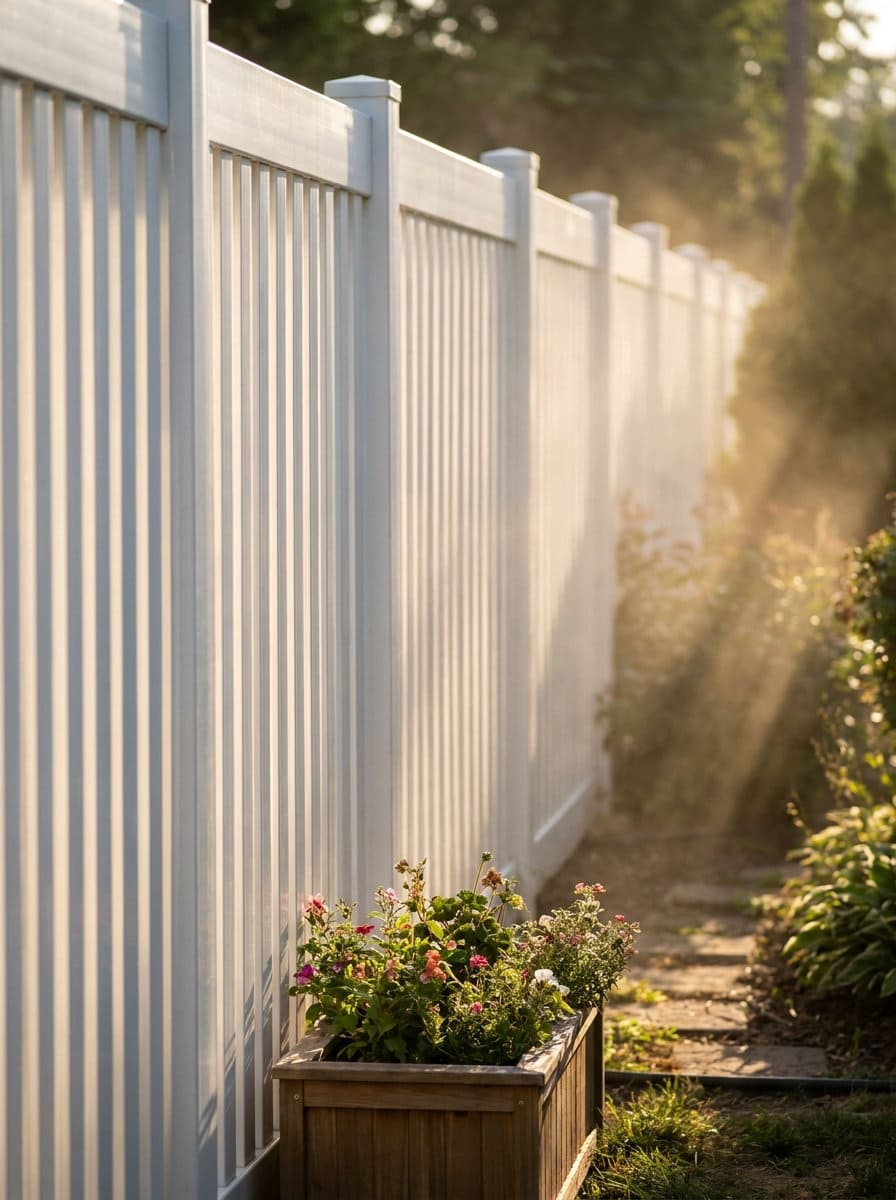
Narrow half-inch to one-inch gaps between vertical boards let light and airflow through while still blocking direct sightlines, a good middle ground for anyone who wants privacy without the fully enclosed feeling of a solid panel. Budget tier: moderate.
4. Lattice-top privacy fence
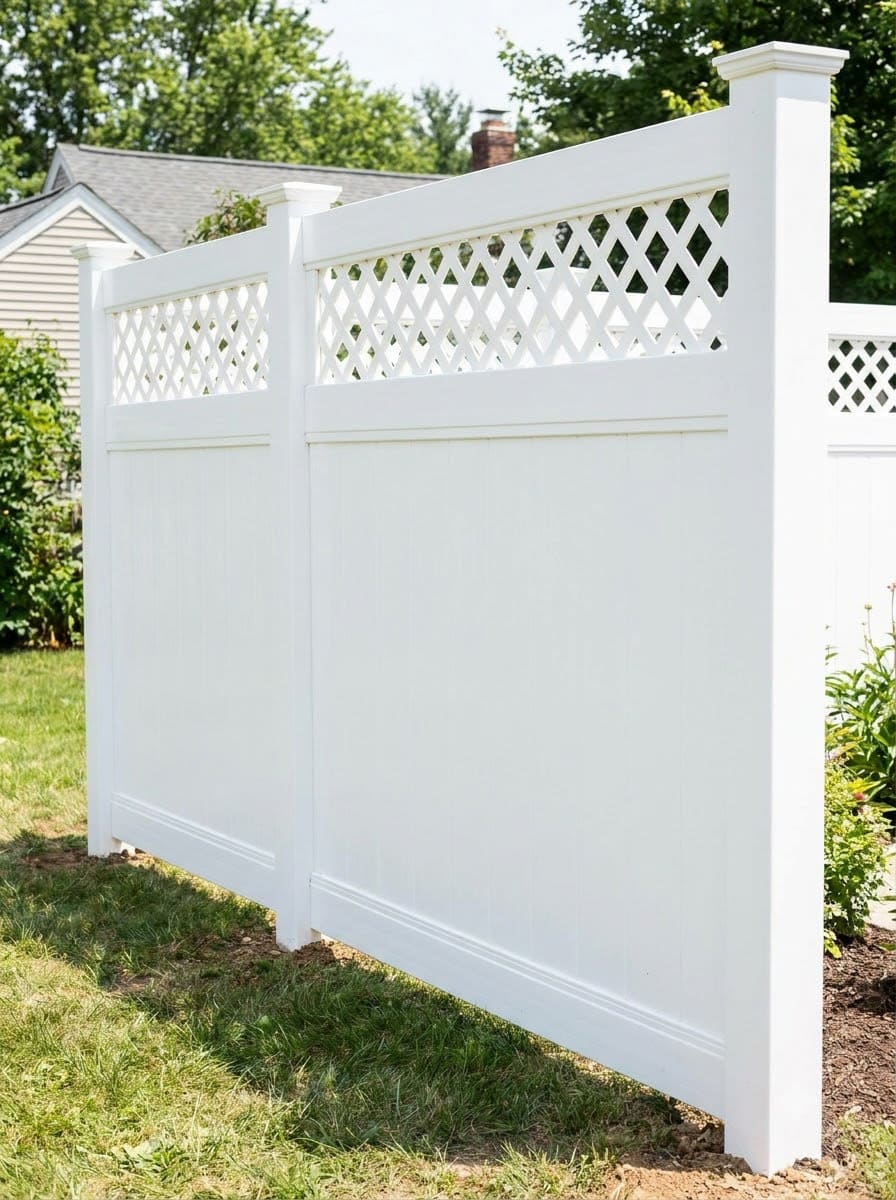
A solid privacy base, typically 4-5 feet of the total 6-foot height, topped with 12-18 inches of decorative lattice softens the look of a tall fence and often helps it read as less imposing to neighbors and HOA reviewers alike, without giving up the privacy of the solid section below. Budget tier: moderate to bigger investment.
Most yard problems trace back to one specific, fixable cause. Find yours in 4 quick questions.
Take the Free Quiz5. Shadowbox fence
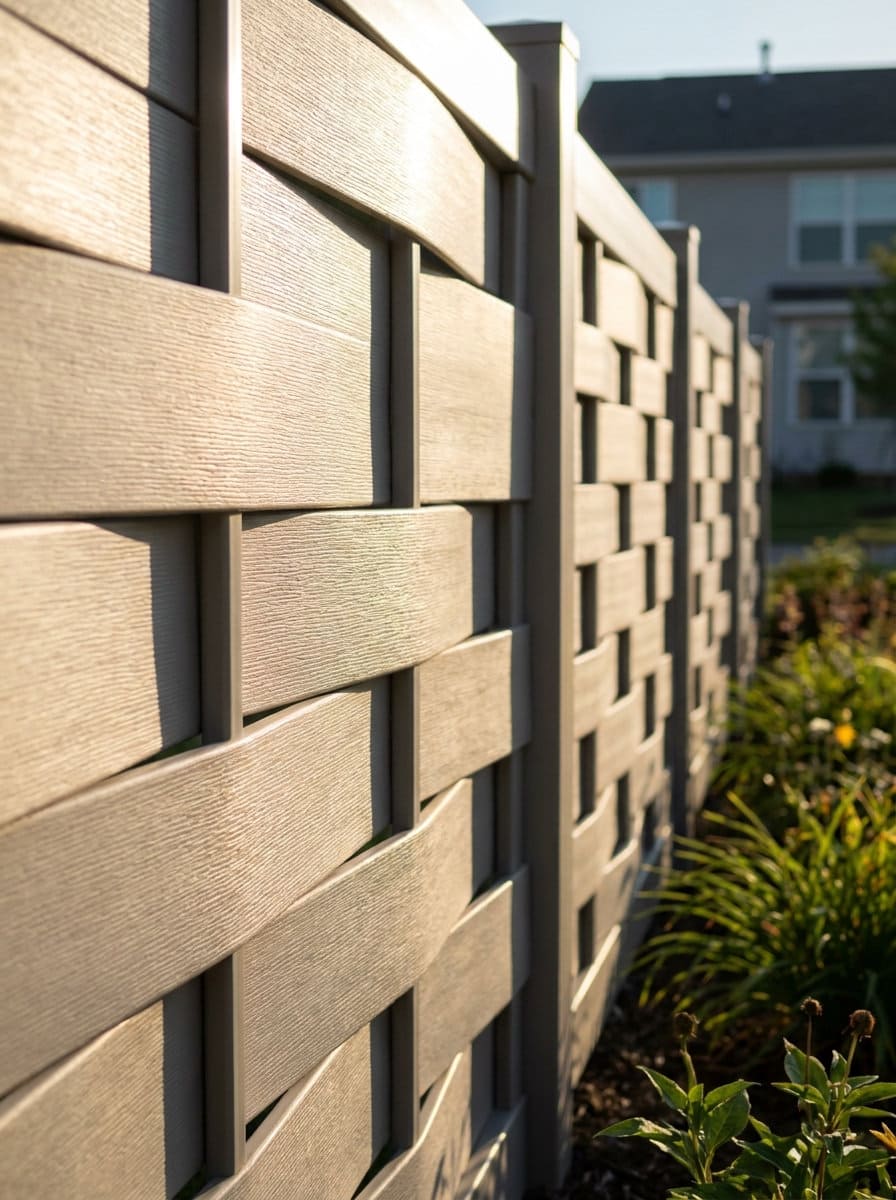
Alternating boards, typically 5-6 inches wide, on opposite sides of the rail create a woven, semi-private look that’s identical from both sides of the fence, a detail neighbors on the other side genuinely appreciate compared to a one-sided privacy panel that only looks finished from one direction. Budget tier: moderate.
Which Classic and Decorative Vinyl Styles Suit a Front Yard?
6. Classic picket fence
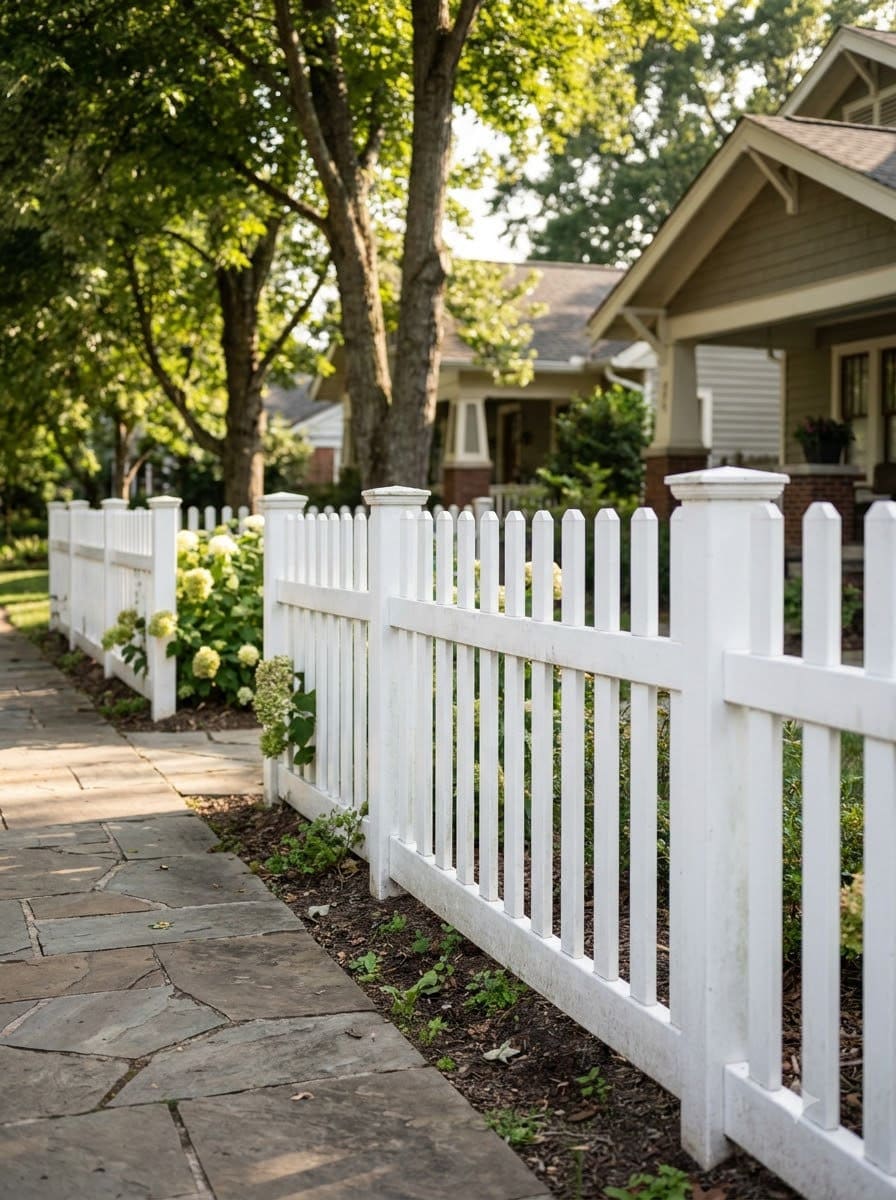
The traditional low picket look translates well to vinyl, with pickets typically 3-4 inches wide spaced 2-3 inches apart on a 3 to 4-foot-tall run, keeping the charm of a wood picket fence with zero repainting.
Works especially well for front yards where most HOAs cap height at 3 to 4 feet anyway. Budget tier: DIY-cheap to moderate, one of the least expensive vinyl styles.
7. Scalloped Victorian picket
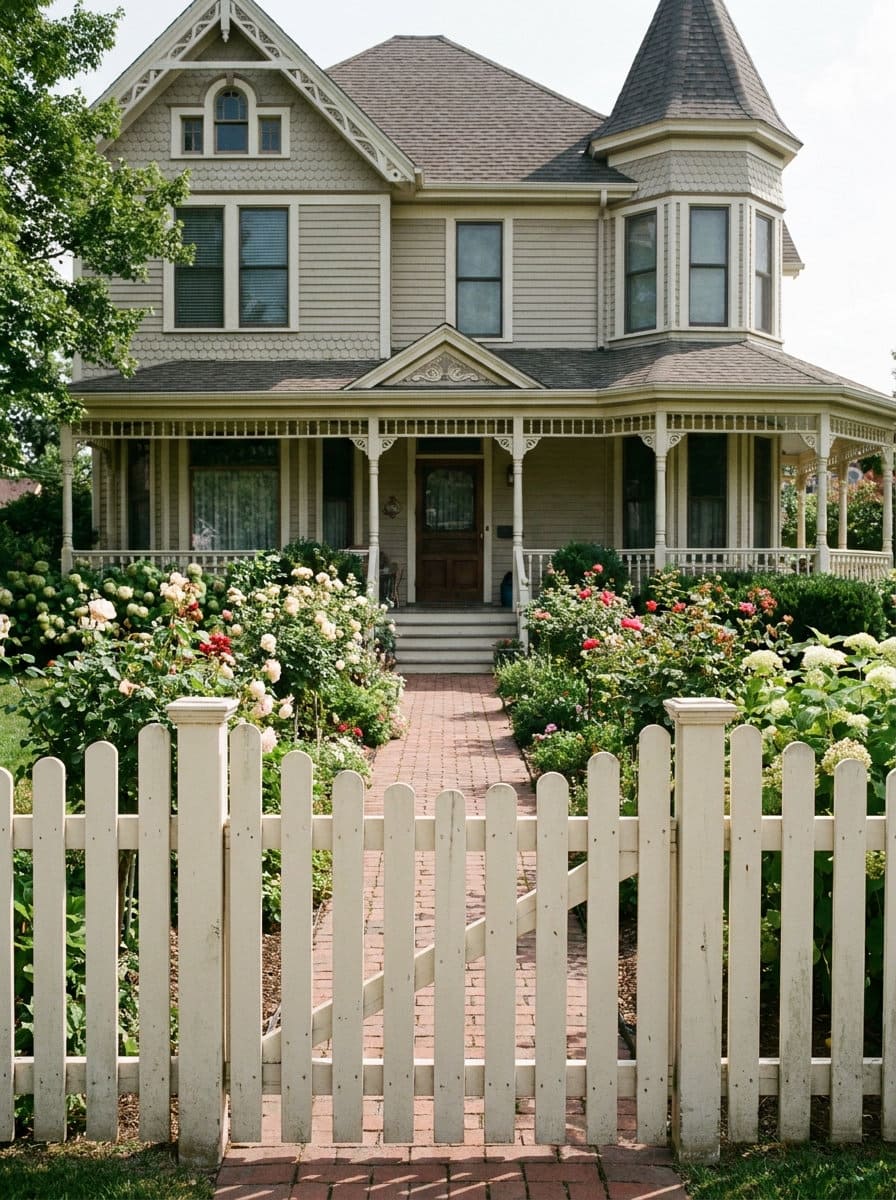
Curved, scalloped picket tops, typically dropping 4-6 inches from the highest point of each picket to the lowest point of the curve between them, add real architectural detail to an older or Victorian-style home, a step up from the standard flat-top picket without the cost of a fully custom design. Budget tier: moderate.
8. Lattice fence (square or diagonal pattern)
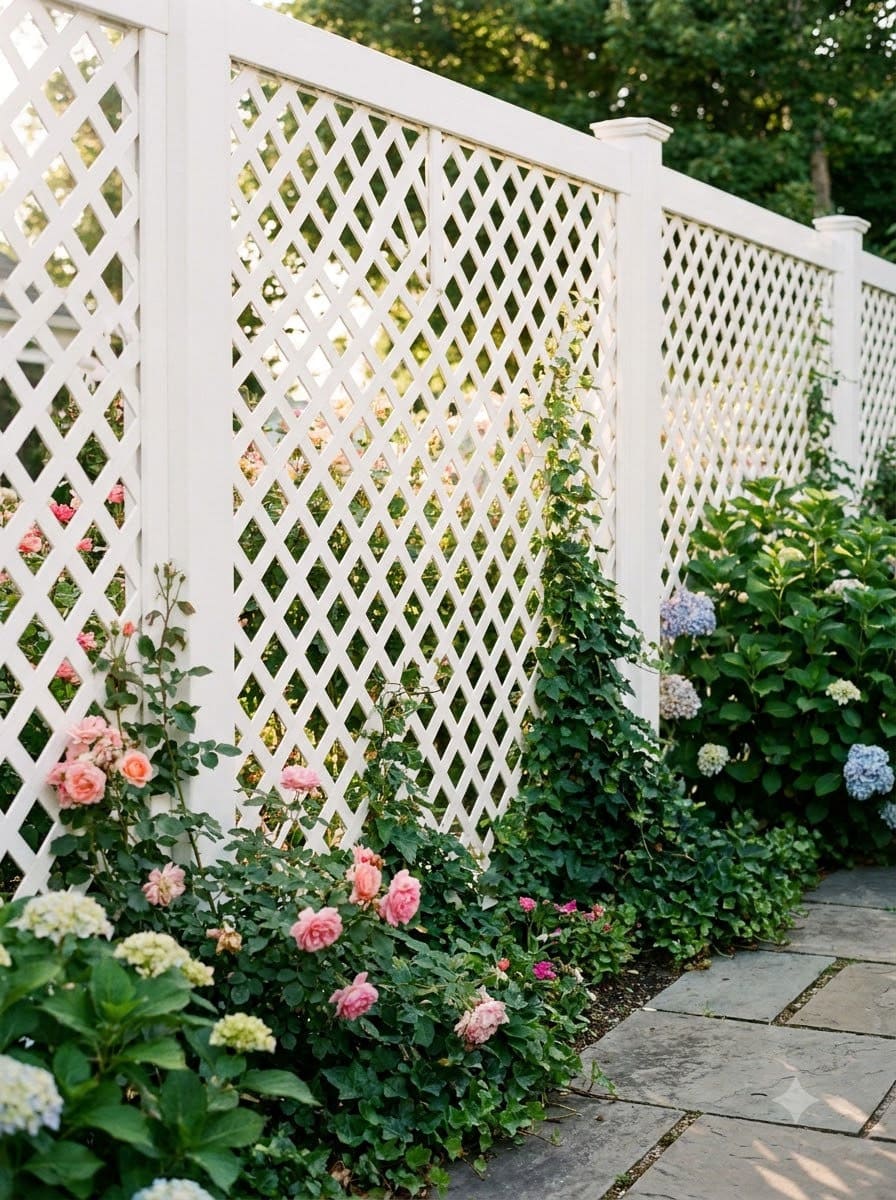
An all-lattice vinyl fence, built in standard 1×1 or 2×2 inch grid spacing, gives a garden-style, airy look best suited to marking a boundary or supporting climbing plants rather than providing real privacy.
Pairs well with idea 18’s planting-bed combination for a cottage-garden feel. Budget tier: DIY-cheap to moderate.



9. Basketweave fence
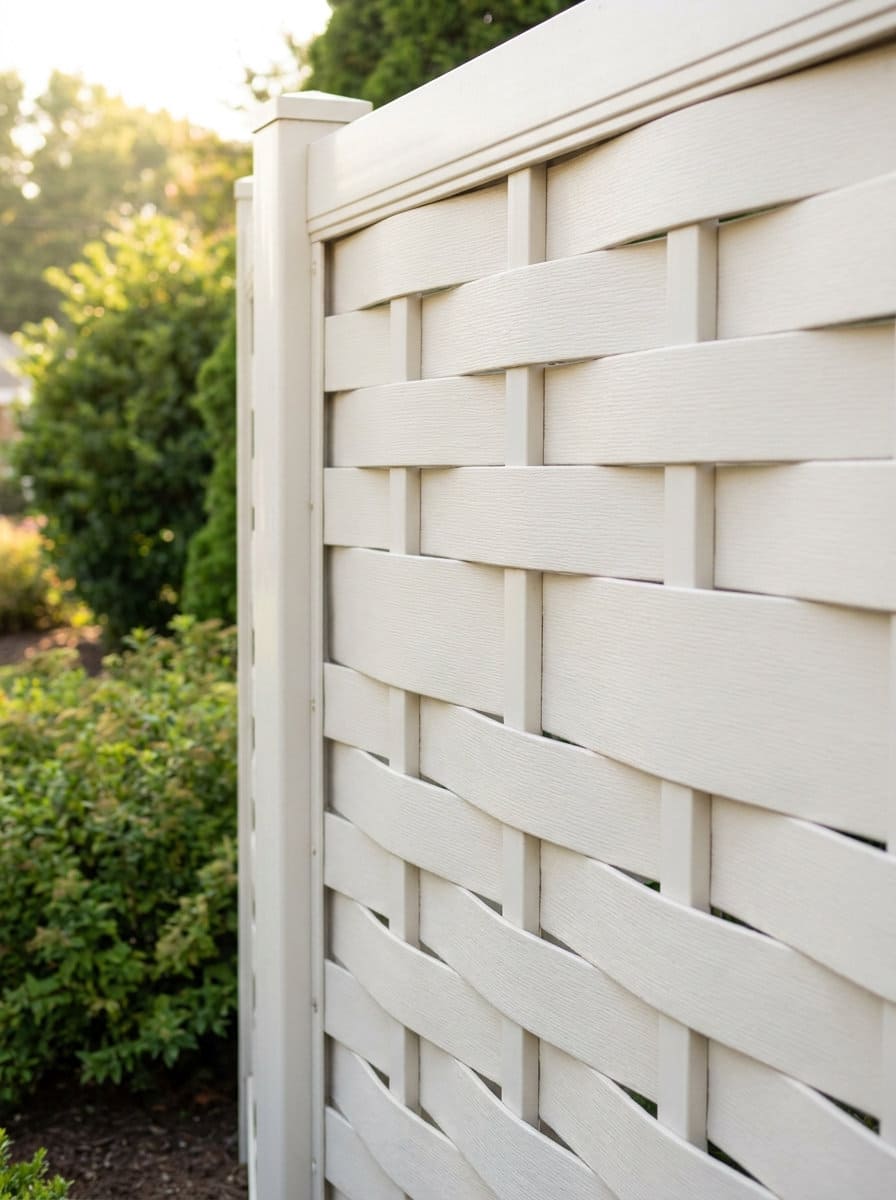
Woven horizontal slats, typically 4-6 inches wide, alternating over-and-under between vertical supports every couple of feet, create a textured, distinctive look that stands out from the flat-panel styles most vinyl fences default to, while still functioning as a semi-solid privacy option. Budget tier: moderate.
10. Post-and-rail ranch style
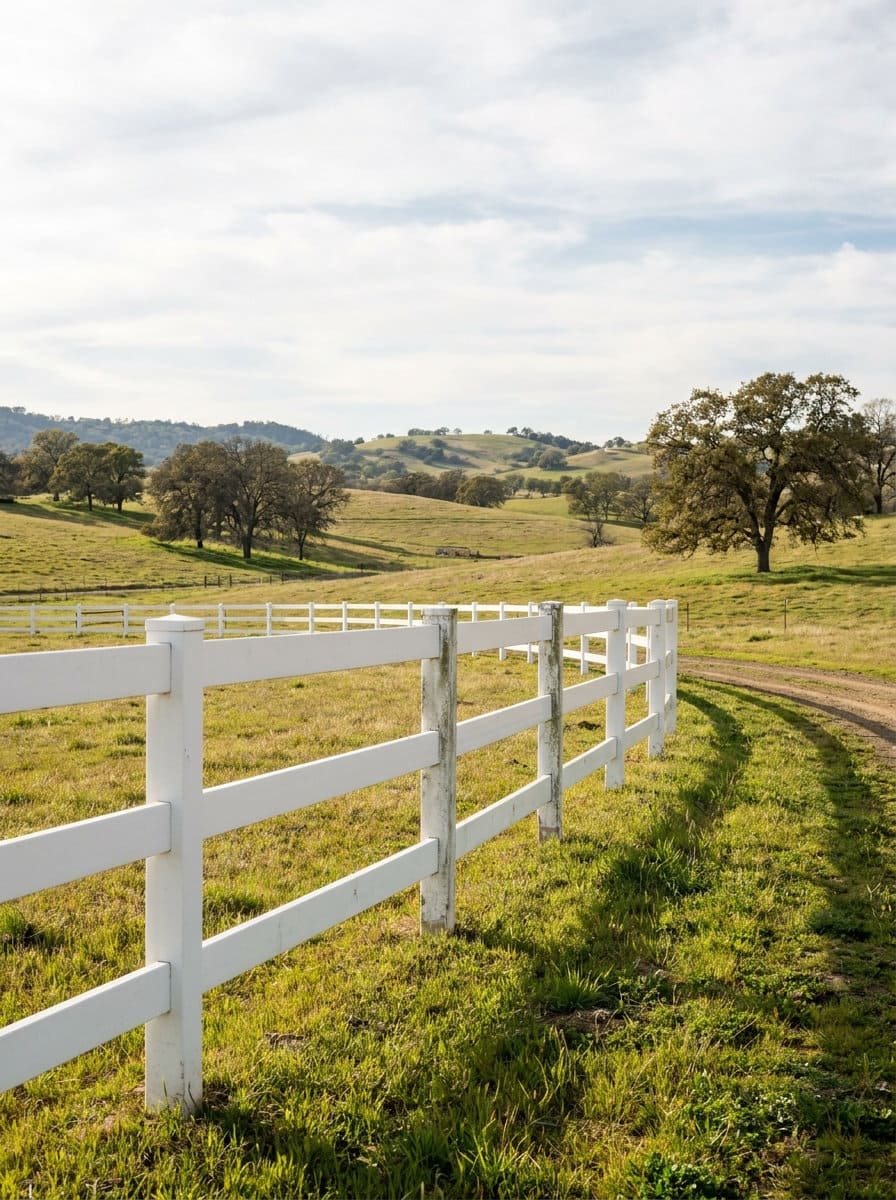
Two or three horizontal rails, spaced evenly across a 4 to 5-foot post height, with no infill panels at all gives an open, ranch-style boundary marker, common on larger properties where full privacy isn’t the goal and open sightlines actually matter for the look.
Posts on this style can often be spaced wider, up to 8-10 feet apart, than a privacy fence since there’s no panel weight to support between them. Budget tier: DIY-cheap, one of the least expensive vinyl options since it uses the least material.
Which Modern Colors and Finishes Are Trending?
11. Matte black or charcoal modern fence
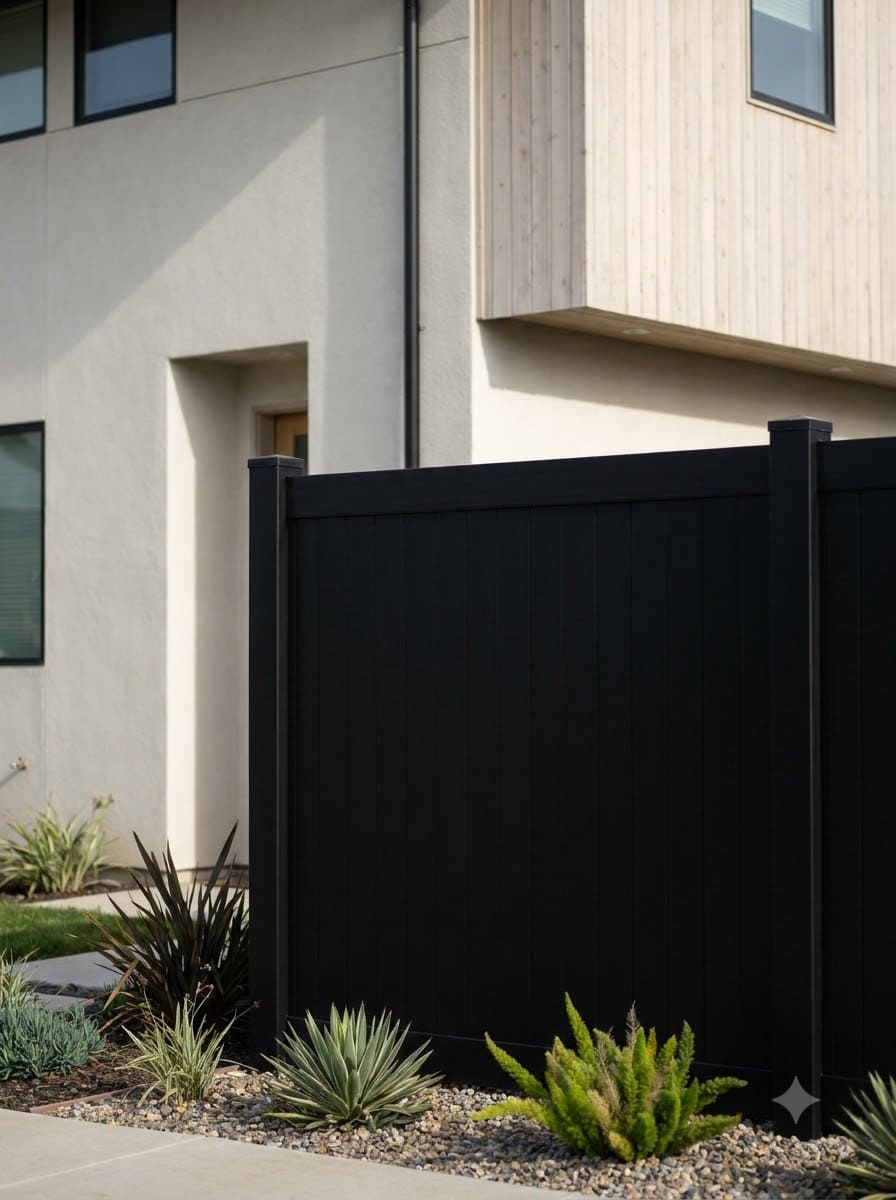
Dark finishes are the standout color trend in vinyl fencing right now, giving bold contrast against a light-colored house exterior.
Dark colors also absorb more heat than white, expect a matte black panel to run noticeably hotter to the touch on a sunny afternoon, which some manufacturers address with a heat-reflective additive in darker formulations, worth asking about specifically.
The average homeowner spends $616/year on yard fixes that don't address the real problem. Find out what yours actually is — before you spend another dollar.
Take the Free QuizConfirm your HOA actually permits non-white/tan colors before committing, this is the style most likely to need an architectural review exception. Budget tier: moderate to bigger investment, dark finishes often cost more than standard white.
12. Two-tone color combination
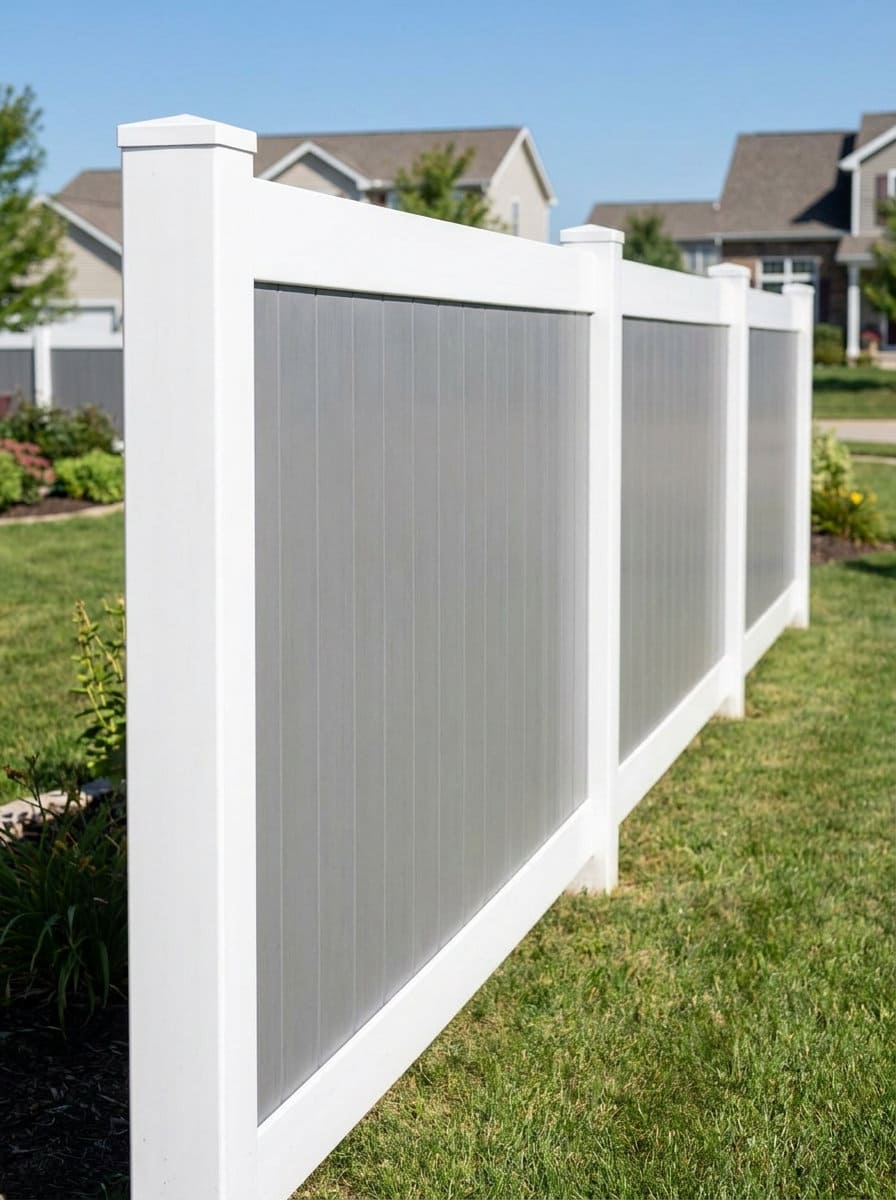
White or tan posts and rails paired with a contrasting panel color (gray or tan) adds visual interest without the full commitment of an all-dark fence, and tends to clear HOA review more easily than a solid dark color, since the structural framework stays in an already-approved neutral. Budget tier: moderate.
13. Wood-grain textured vinyl
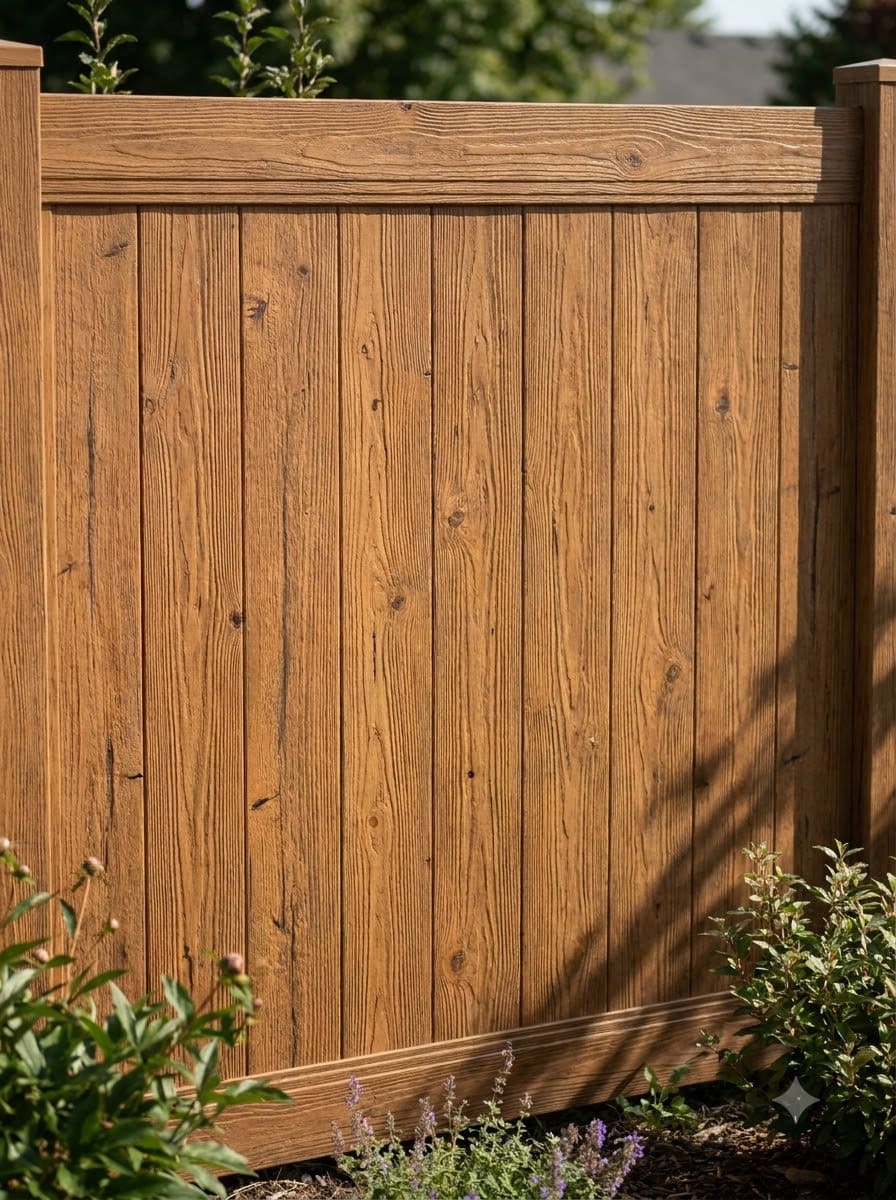
Textured, wood-grain vinyl panels, produced with an embossed surface pattern rather than a printed one so the texture doesn’t wear off over time, deliver the warmth of a real wood fence’s look with none of the repainting cycle, genuinely one of the fastest-growing style categories as the texturing technology has improved. Budget tier: moderate to bigger investment.
14. Mixed-material fence with stone or aluminum columns
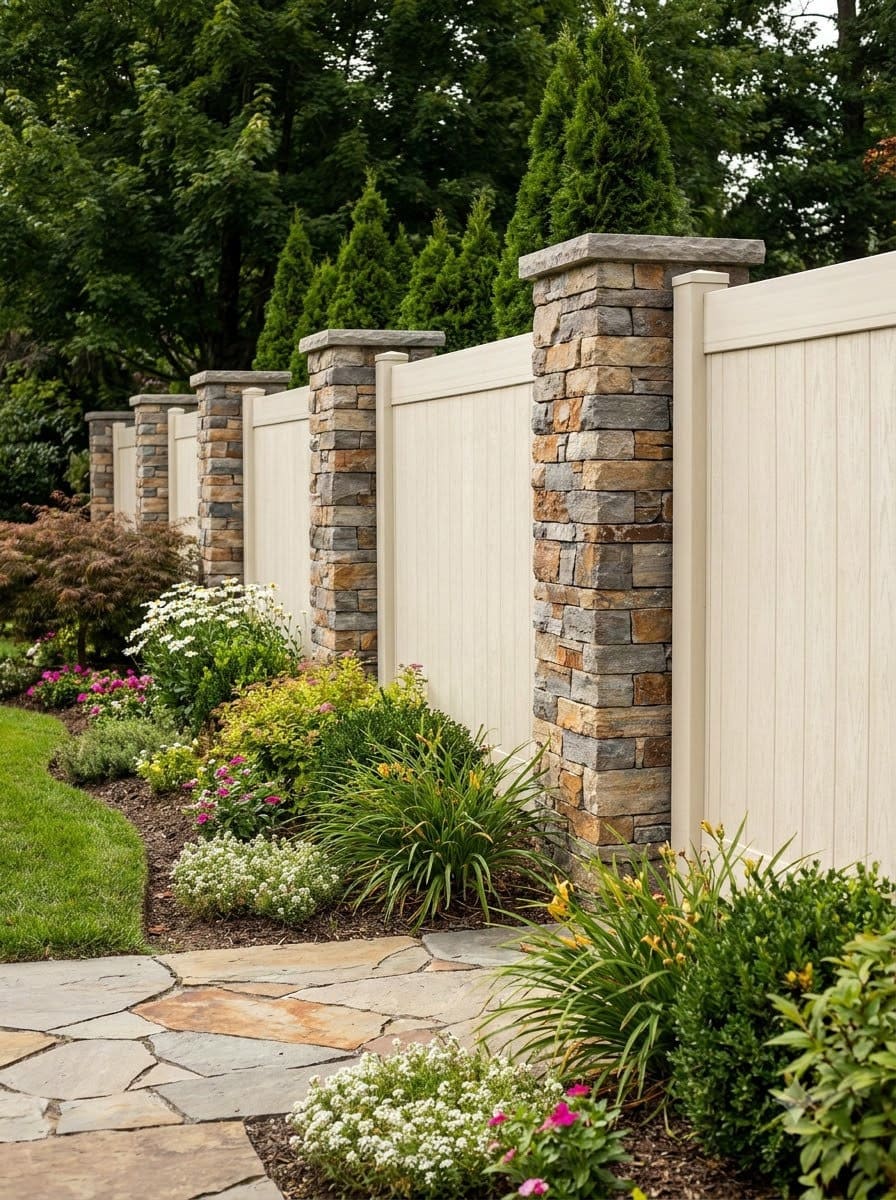
Combining vinyl panels with masonry or aluminum accent columns, typically spaced every 8-12 feet at each post location, at intervals creates a layered, higher-end look than an all-vinyl run, popular for front-yard installations where making a strong first impression from the street matters most. Budget tier: bigger investment.
15. Decorative post caps
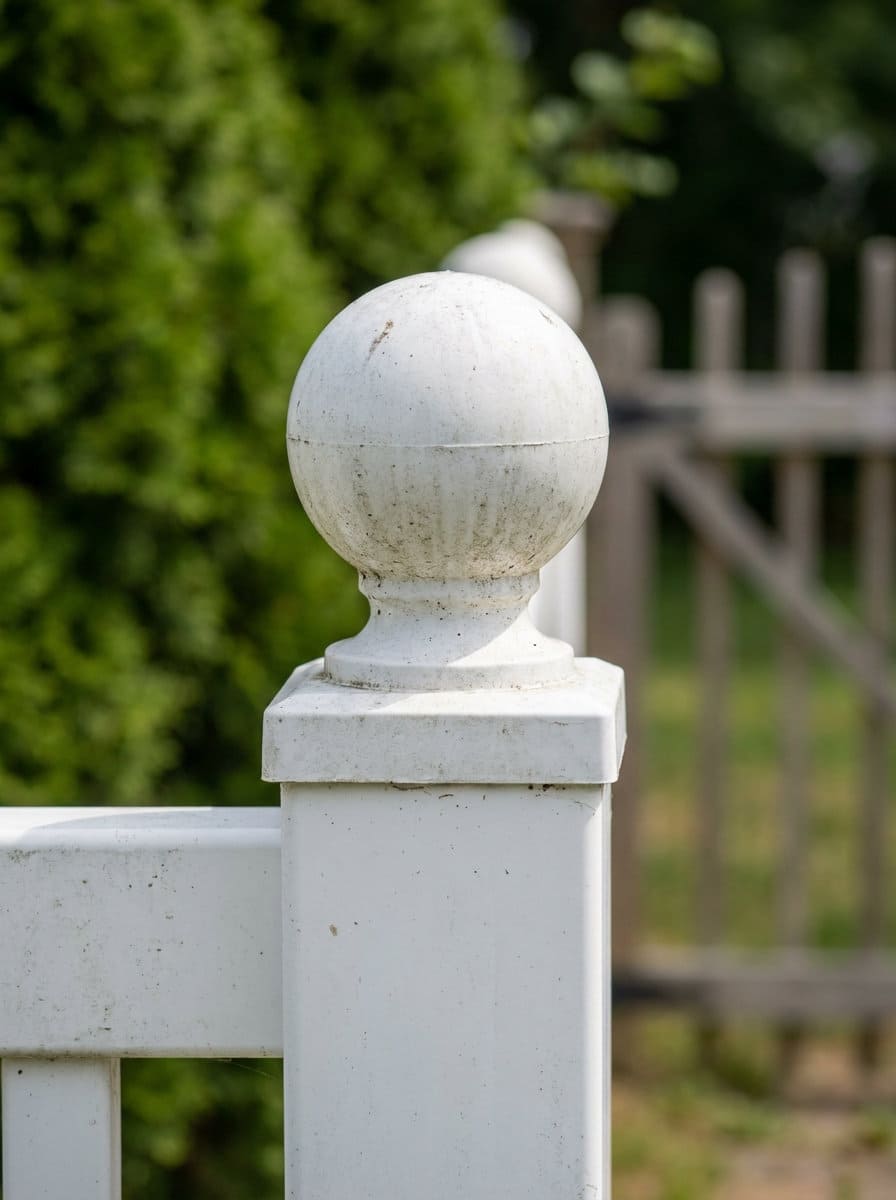
Solar-lit, ball-top, or pyramid-style post caps, sized to fit standard 4×4 or 5×5 inch vinyl post tops, are a low-cost way to add a finished, custom look to an otherwise standard vinyl fence run, and solar caps double as functional path lighting after dark.
Budget tier: DIY-cheap, an easy add-on to any style above.
Which Functional Vinyl Fence Upgrades Are Worth It?
16. Pool-code compliant privacy fence
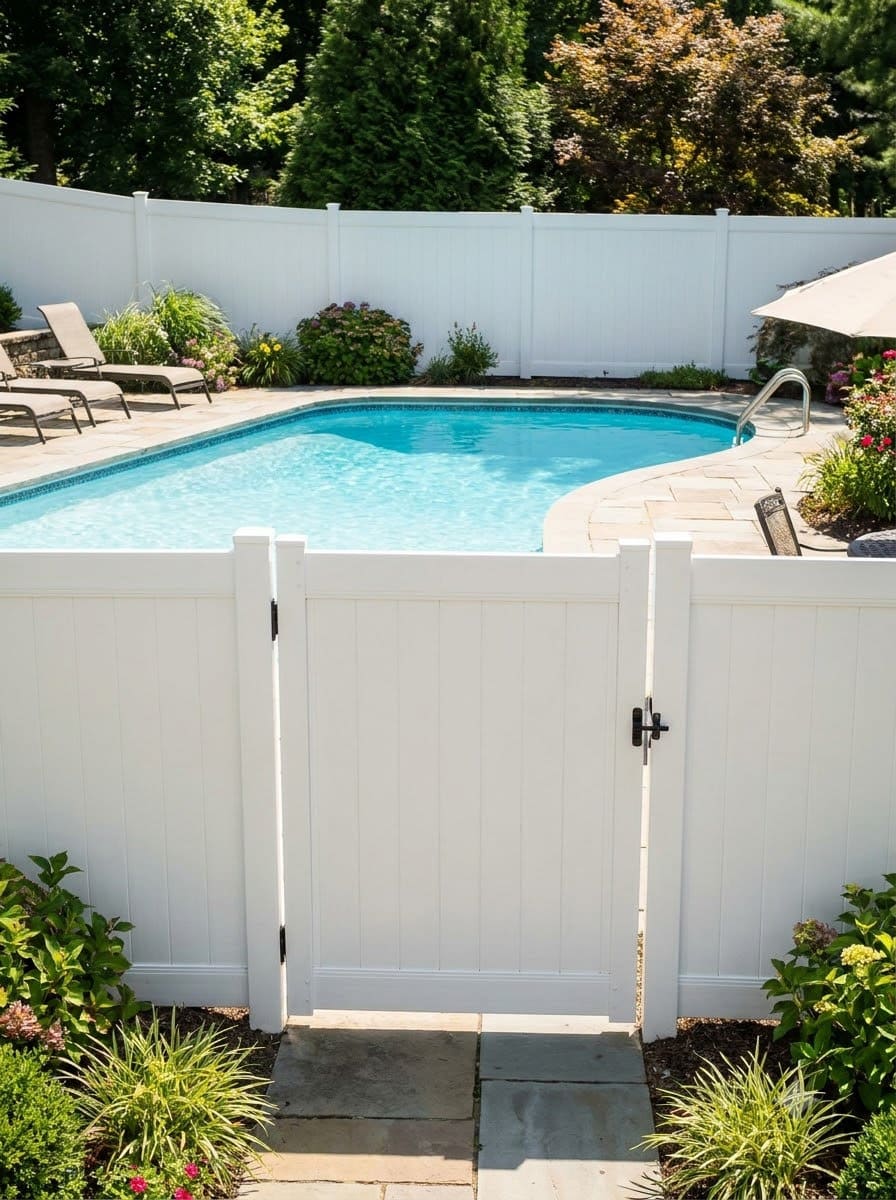
If the fence is enclosing a pool, most jurisdictions require a minimum height (commonly 4 feet), no footholds or handholds a child could climb, gaps no wider than 4 inches if the fence isn’t solid, and a self-closing, self-latching gate with the latch mounted at least 54 inches up, real code requirements that vary by location and are worth confirming before installation, not an optional style choice.
There’s more elsewhere on the site about coordinating a pool fence with the surrounding plantings and hardscape if that’s the setting. Budget tier: moderate to bigger investment depending on height and gate hardware.
17. Puppy-picket pet containment style
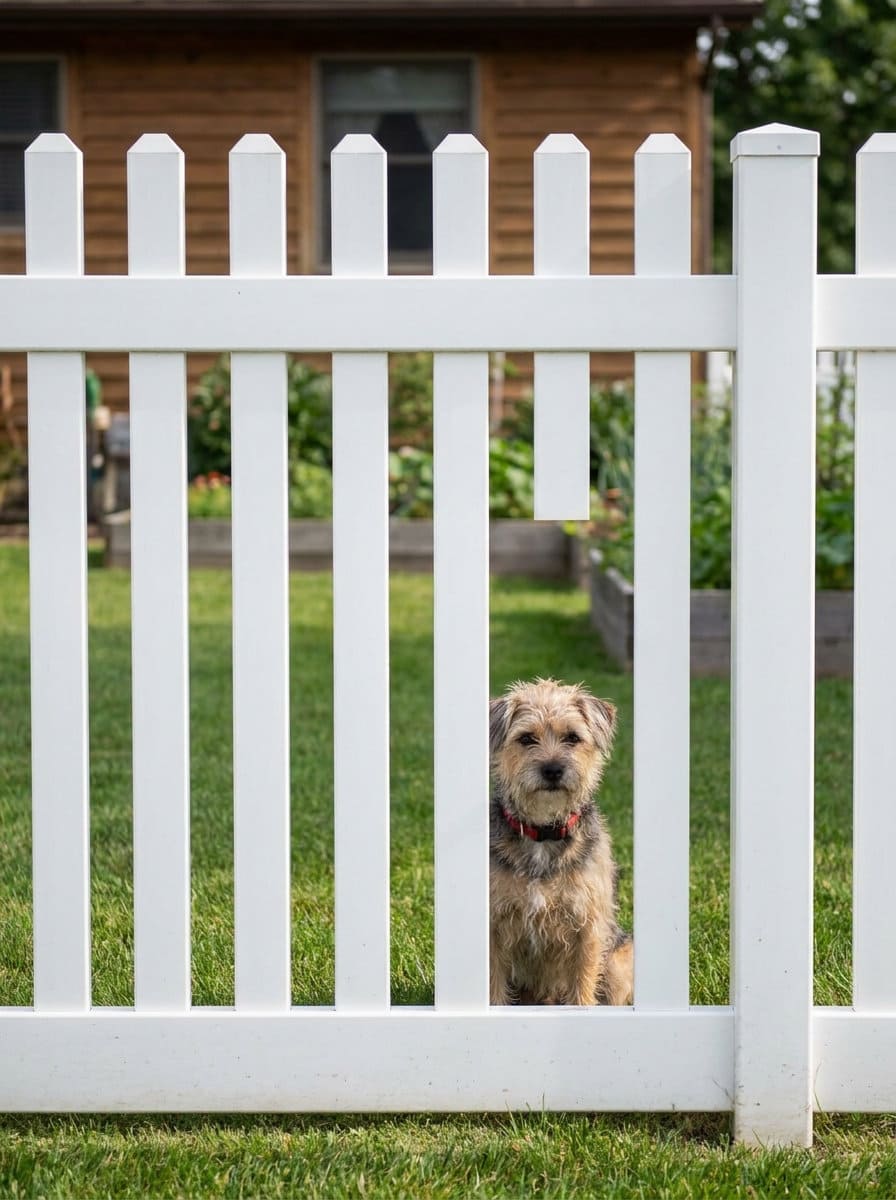
A version of the standard picket with gaps narrowed to 1-1.5 inches (versus the standard 2-3 inch picket spacing) keeps small pets from squeezing through while keeping the classic picket look, a real functional upgrade over standard spacing for households with small dogs. Budget tier: moderate.
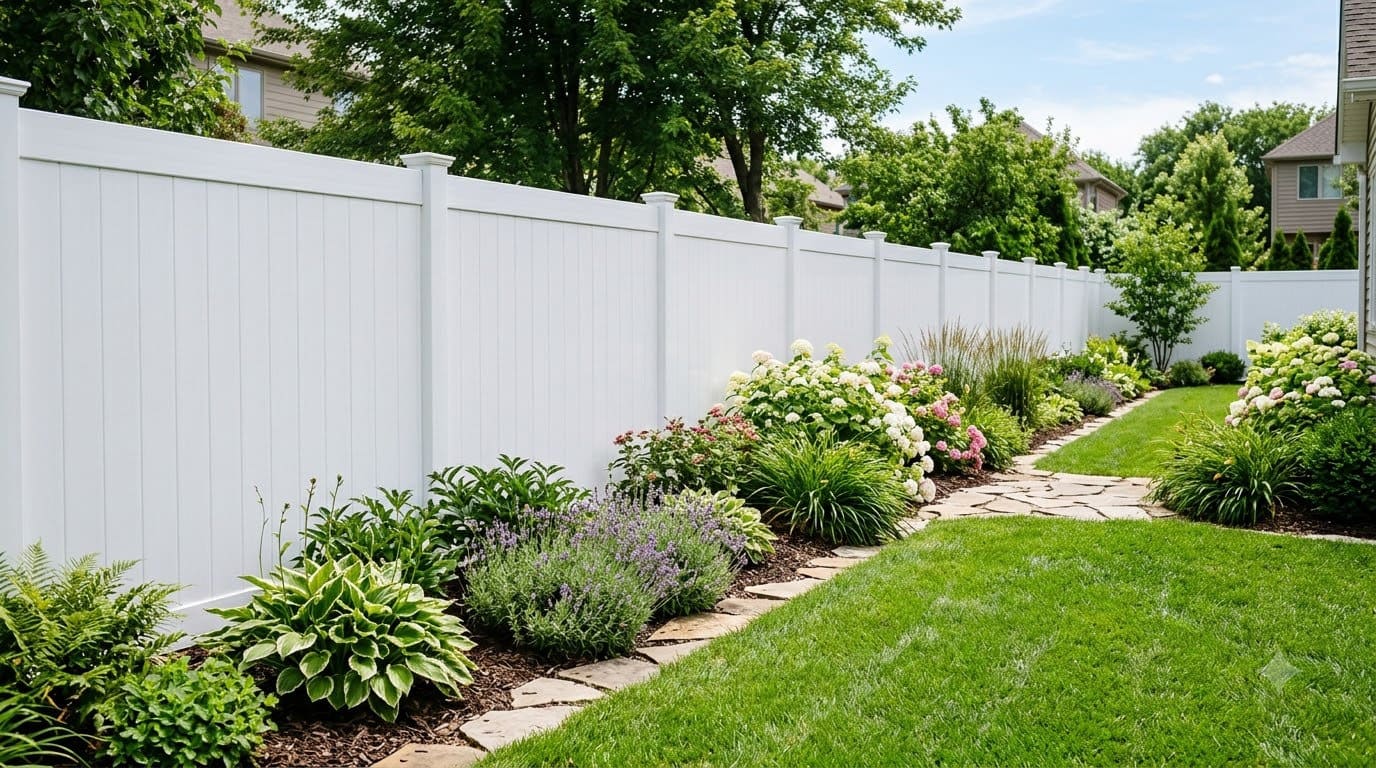
18. Vinyl fence paired with a planting bed
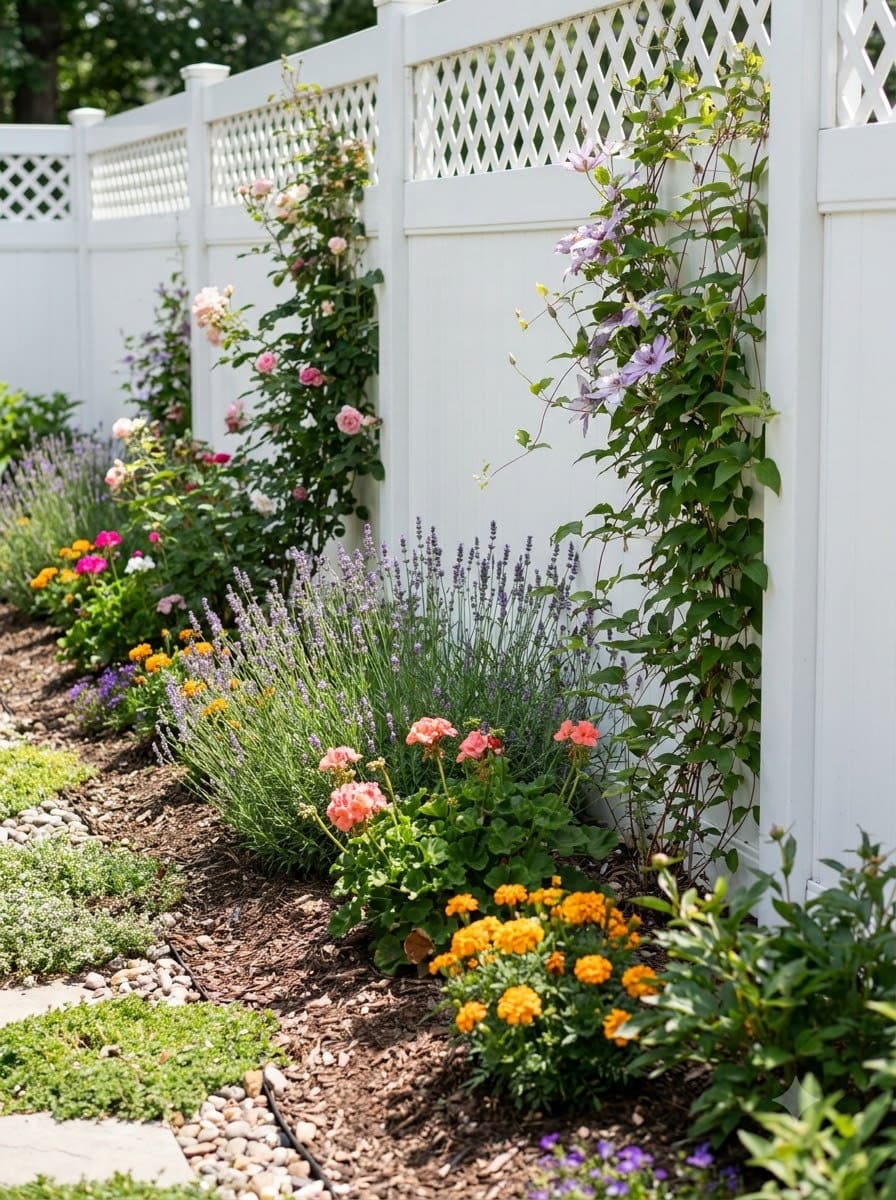
Running a narrow 12-18 inch planting bed along the base of the fence, especially with a lattice or picket style, softens the hard line of the fence itself and gives climbing plants something to grow on. Pairs well with idea 8’s lattice fence.
Budget tier: DIY-cheap for the planting, on top of whichever fence style you choose.
19. Arched or decorative gate
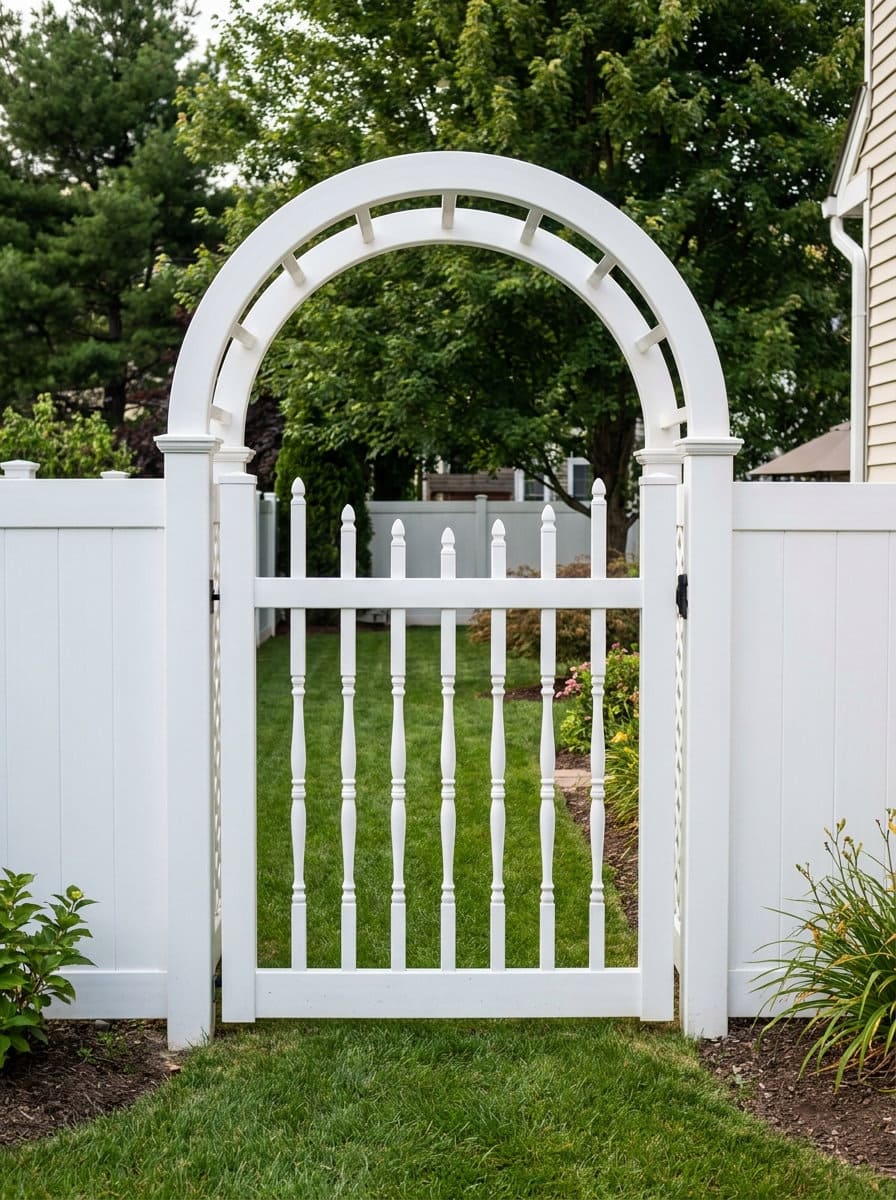
A single or double gate with an arched top rail, rather than a flat-top match to the rest of the fence, turns the entry point into a real design feature.
Confirm the gate hardware is rated for the gate’s actual weight, most residential vinyl gate hinge kits are rated for gates up to 100-130 pounds, an undersized hinge relative to that weight is the single most common vinyl gate failure and leads to sagging within a season or two.
20. Solar-lit fence panels or cap lighting
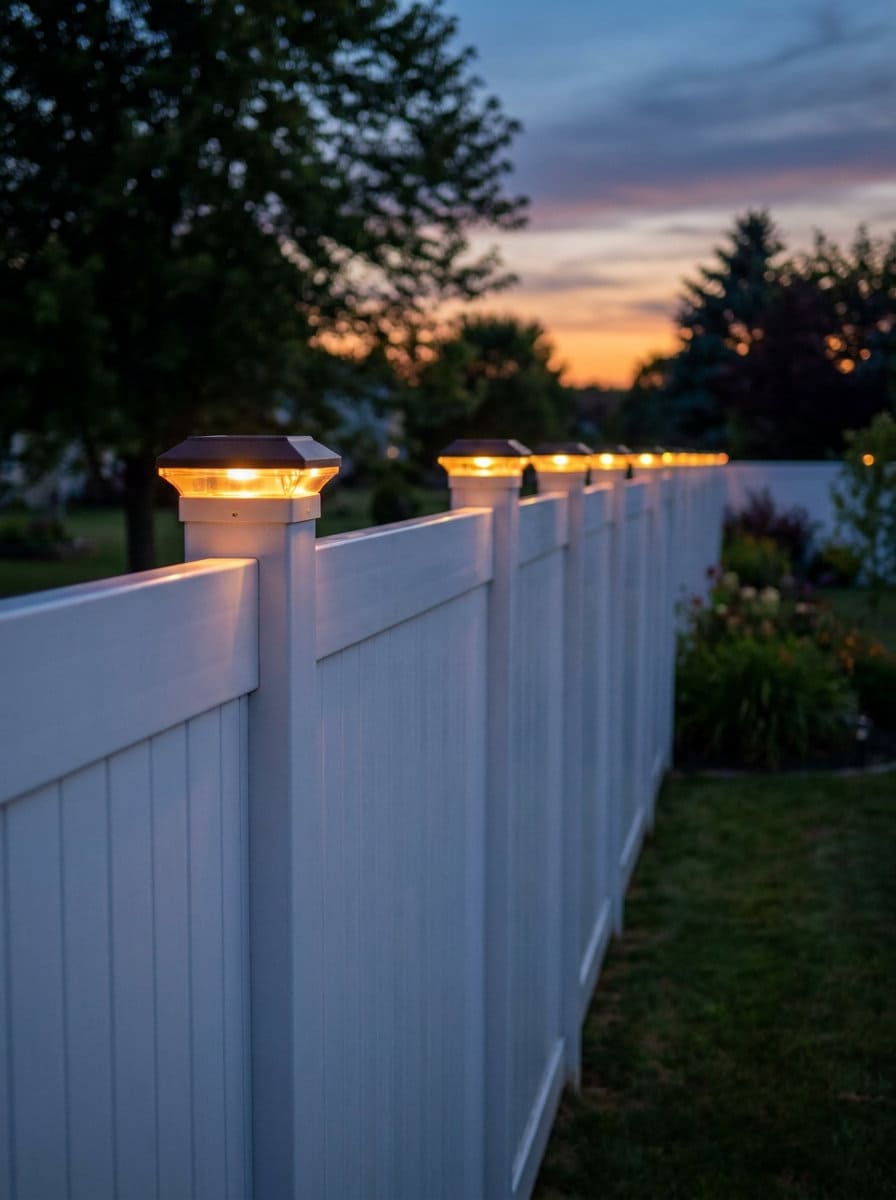
Integrated solar lighting along the fence line or in post caps, typically providing 8-12 hours of runtime on a full daytime charge, adds nighttime visibility and curb appeal without any wiring, a genuinely low-effort upgrade compatible with almost any style above.
Budget tier: DIY-cheap to moderate depending on the lighting system chosen.
What We Learned the Hard Way
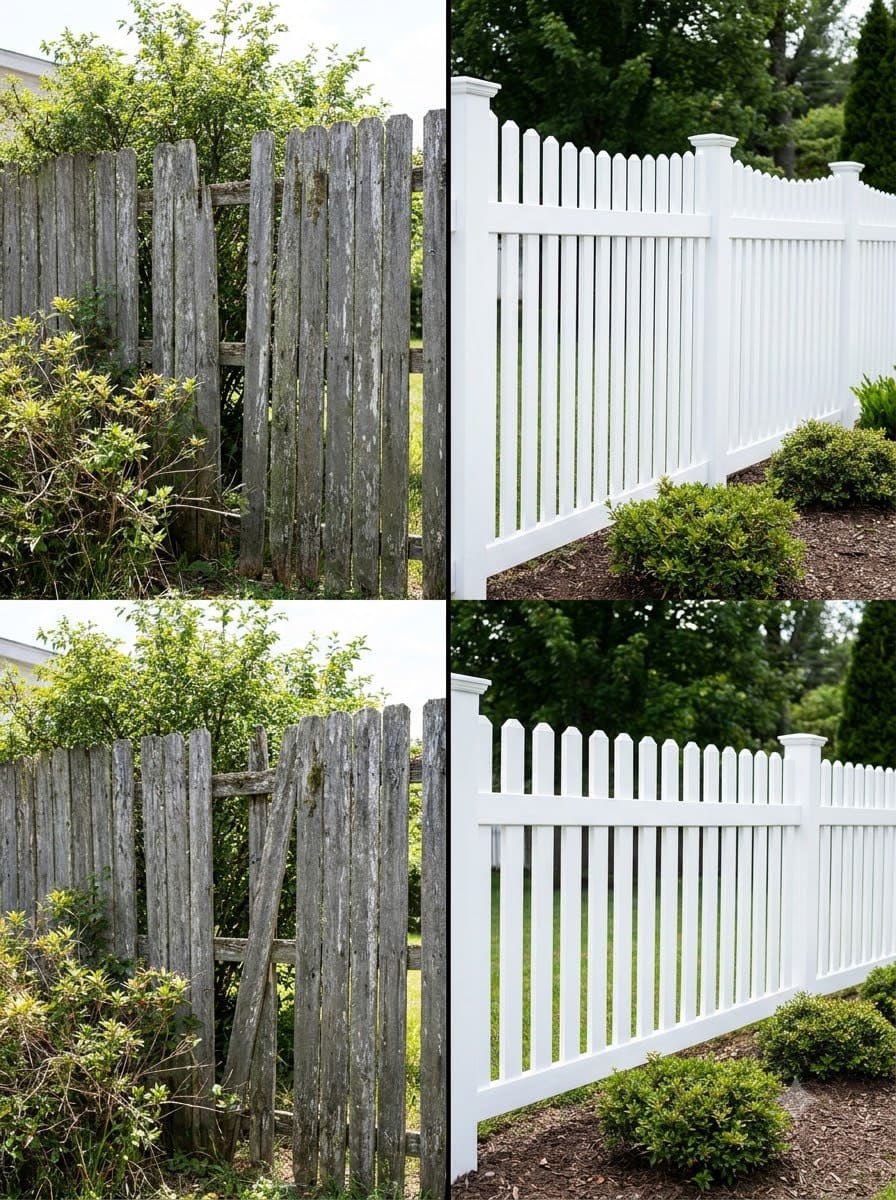
The most common installation mistake isn’t a bad fence panel, it’s posts set too shallow for the local frost line. A post that looks perfectly plumb the day it’s installed can visibly heave upward after a single hard winter if it wasn’t set below the actual frost depth for the region, with a gravel base underneath for drainage.
If there’s one thing worth double-checking before the concrete goes in, it’s the real frost-line depth for your specific area, not a generic “a few feet should be fine” guess.
The second mistake is picking a color before checking the HOA paperwork. We’ve seen homeowners fall in love with a matte black fence, order the material, and then find out their community’s architectural guidelines only approve white, tan, or clay, turning an exciting upgrade into a costly do-over.
Check the actual approved-colors list in your HOA’s architectural guidelines document, not just the general covenants, before ordering anything.
And the one that shows up within the first year: gate sag. A gate that looked fine on installation day starts dragging on the ground or won’t latch cleanly a few months later almost always comes down to undersized hinge hardware for the gate’s actual weight, not a defect in the vinyl itself.
FAQs
Is vinyl fencing actually cheaper than wood in the long run? Usually, yes, if you own the home long enough to benefit. Vinyl costs more upfront ($15-40 per linear foot installed versus wood’s $11-45) but needs no repainting and lasts 30+ years versus wood’s typical 15-20, which usually makes vinyl the lower total-cost option over time.
How deep do vinyl fence posts need to be set? Below your region’s frost line, roughly 36 inches in the mid-South up to 60 inches in northern states, with a gravel drainage base beneath the post to prevent water pooling and freeze damage.
Will my HOA let me install a vinyl fence in a dark color? Maybe, but check first. Most HOAs default to approving white, tan, or clay and require architectural review board approval for anything else, including matte black or charcoal finishes.
What does the ASTM F964 standard actually mean for a vinyl fence? It’s the real industry specification covering material properties, impact resistance, warp resistance, and weatherability for PVC fencing profiles. Vinyl fencing built to that standard is a genuinely different quality tier than an unrated generic import.
What’s the cheapest vinyl fence style? Post-and-rail ranch style and classic picket use the least material and are typically the least expensive true vinyl fence styles, both well under the cost of a full solid privacy panel run.
Does idea 6’s classic picket look appeal to you in wood instead? There’s more on picket spacing and styling in traditional lumber worth comparing. Want the farmhouse look without the maintenance?
A style direction that pairs especially well with idea 13’s wood-grain textured vinyl gets its own farmhouse-style fence roundup elsewhere. And if a front-yard installation is the goal, other material options for that same spot round out the picture beyond vinyl.
Related Posts
- Picket Fence Ideas
- Farmhouse Fence Ideas
- Contemporary Fence Ideas
- Front Yard Fence Ideas
- Curb Appeal Ideas
- Landscaping Ideas for Pool Areas
Products We Recommend
This post contains affiliate links. We may earn a commission on qualifying purchases at no extra cost to you.
Enclo Premium White Vinyl Privacy Screen (No-Dig Kit, 4ft x 4ft, 2 panels)
Real starting point for pricing out idea 1/3's privacy-style DIY section, 4.4 stars / 2,658 ratings, live-verified
Shop Now
Bosceos Solar Post Cap Lights (12-Pack, fits 4x4/4.5x4.5/5x5 vinyl or wood posts)
Direct product match for idea 15/20, 4.4 stars / 259 ratings, live-verified $71.99
Shop Now
EVCUHASL Self-Closing Heavy Duty Gate Hinges (90-degree adjustable, 2-pack)
Direct fix for the gate-sag failure mode described in What We Learned the Hard Way, 4.4 stars / 45 ratings, live-verified
Shop NowNever miss an update — choose FarmFoodFamily as your preferred source on Google.
How it works: Tap the button below to open Google's settings page, then check the box next to FarmFoodFamily.
Tap the checkbox to turn it blue — that's how you know it's set.