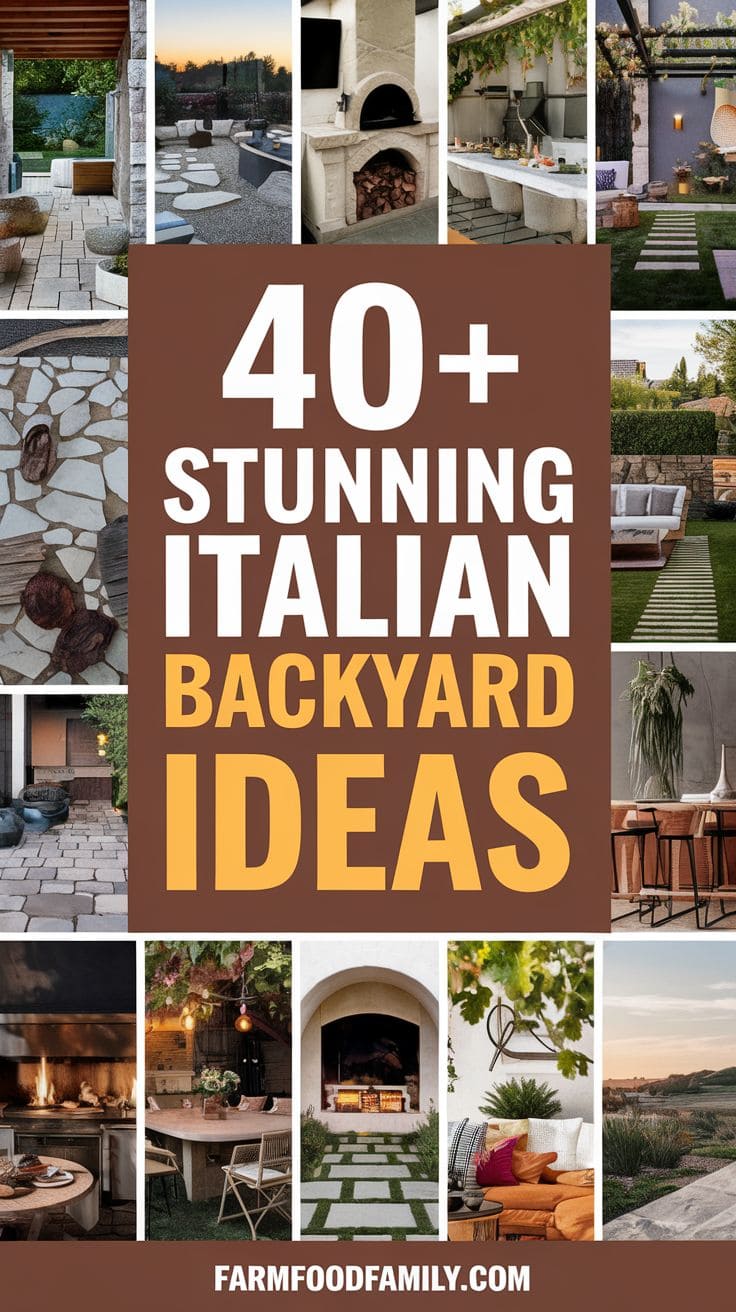
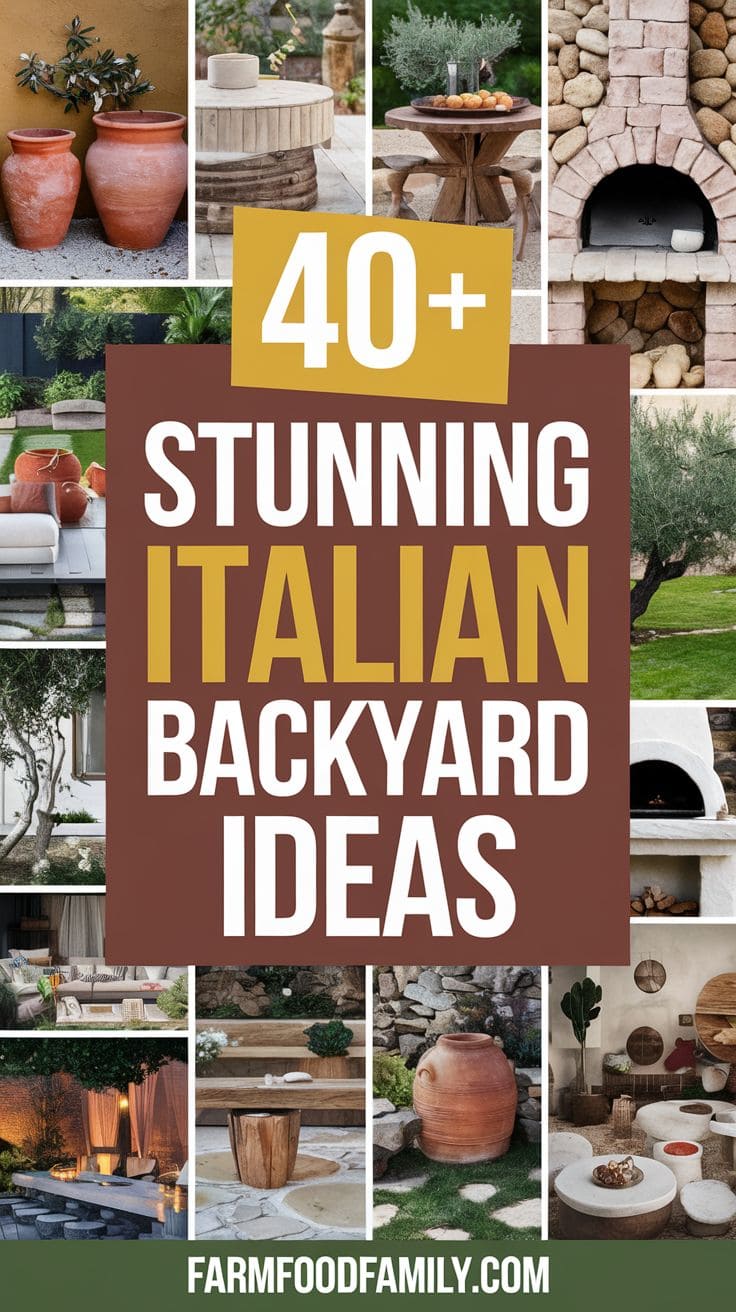
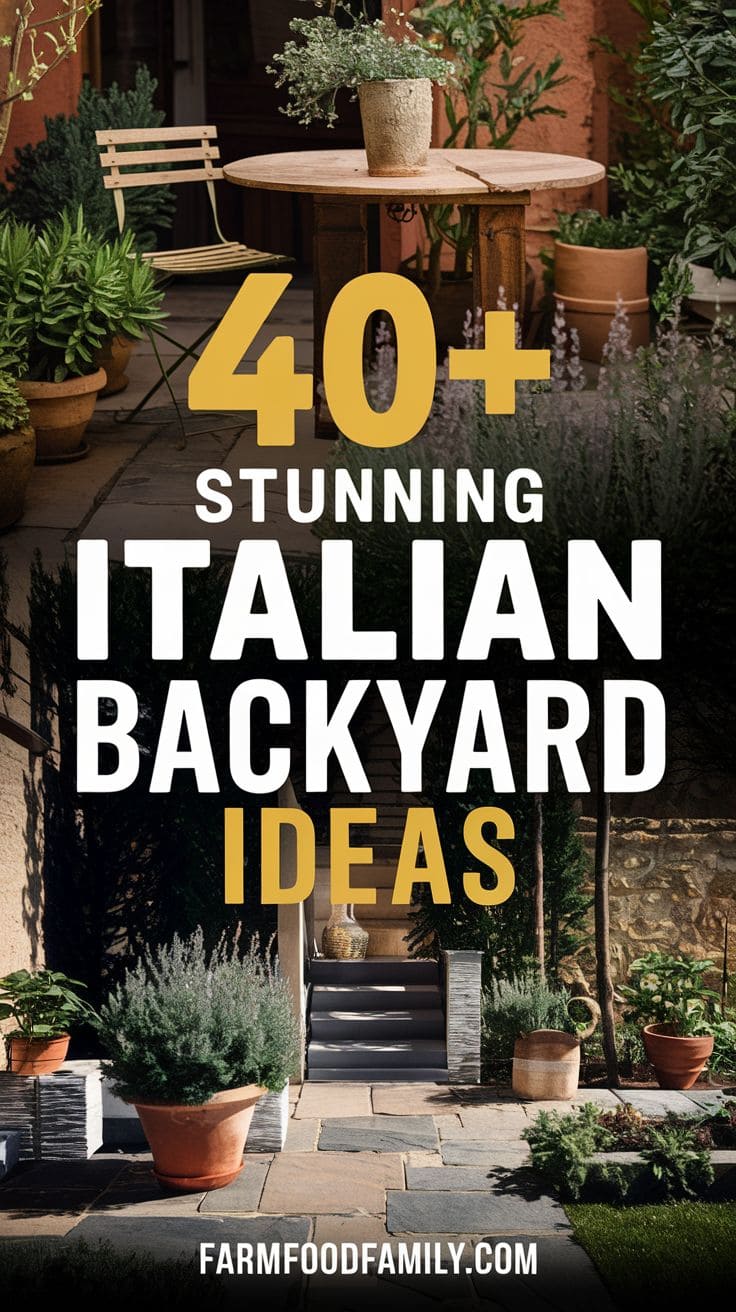
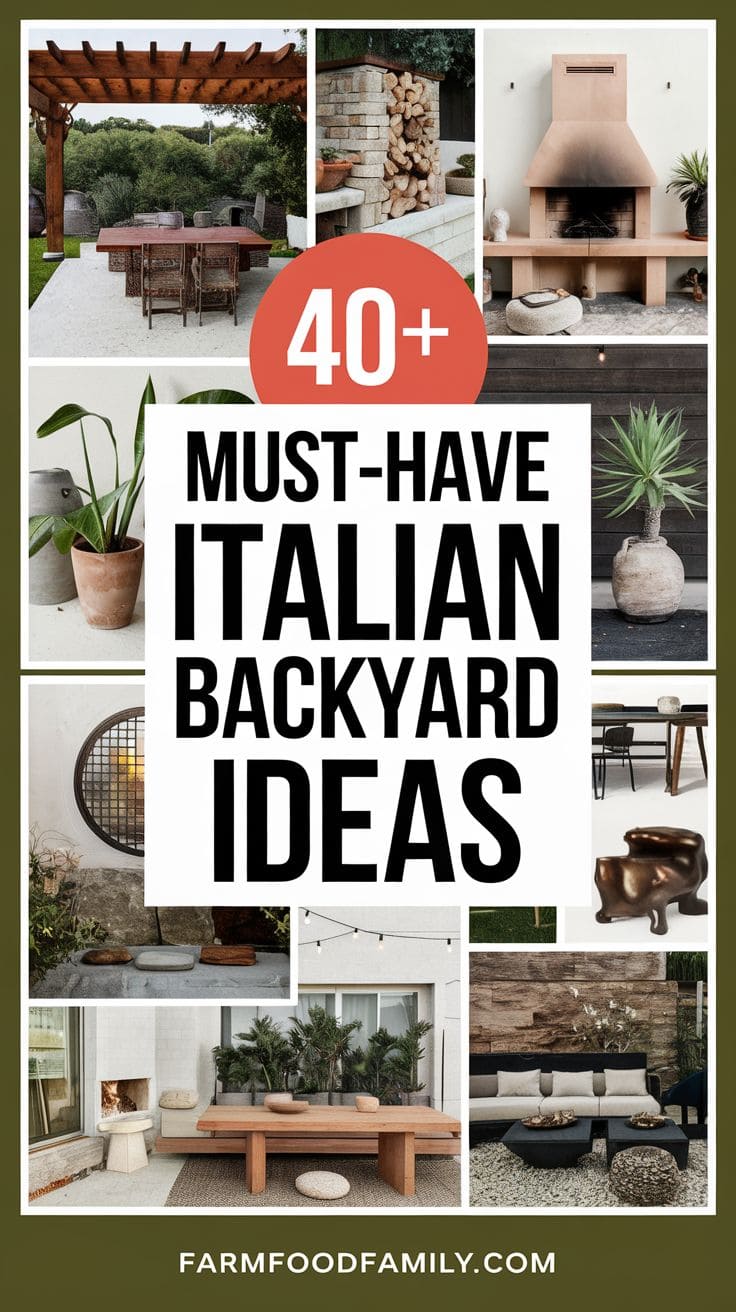
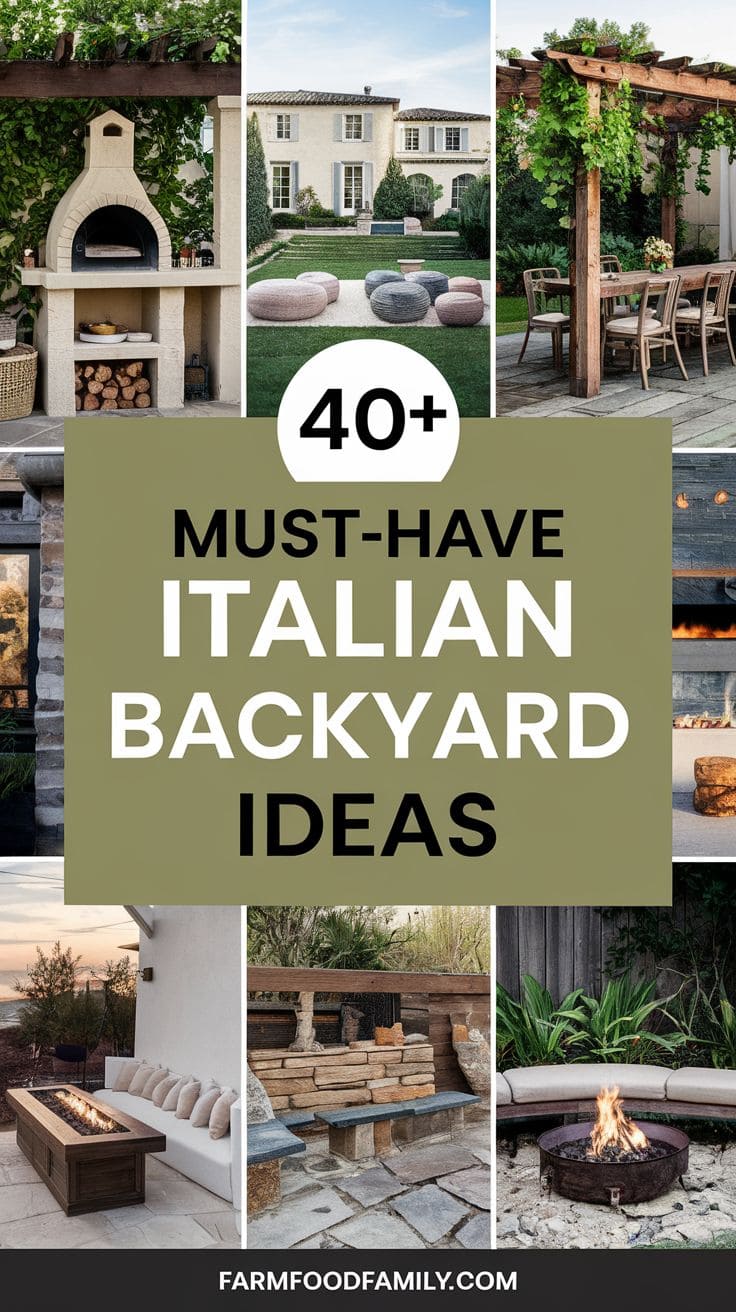
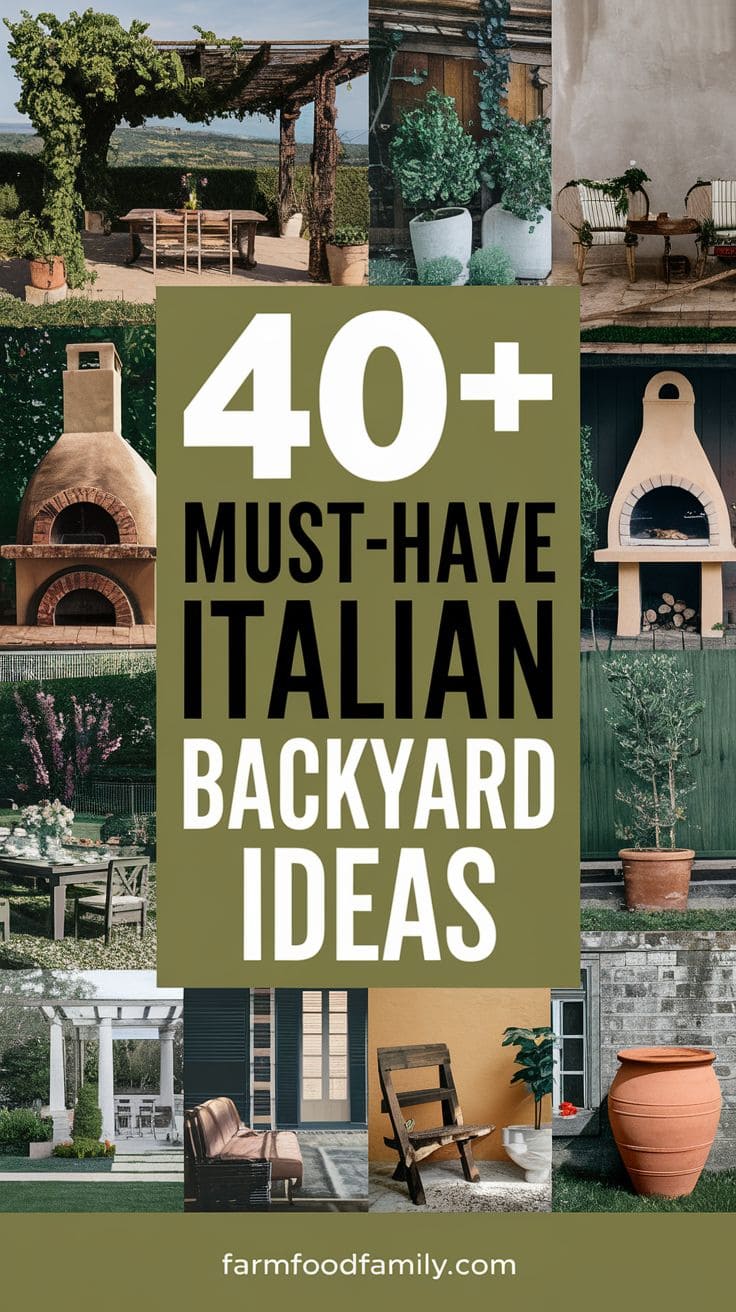
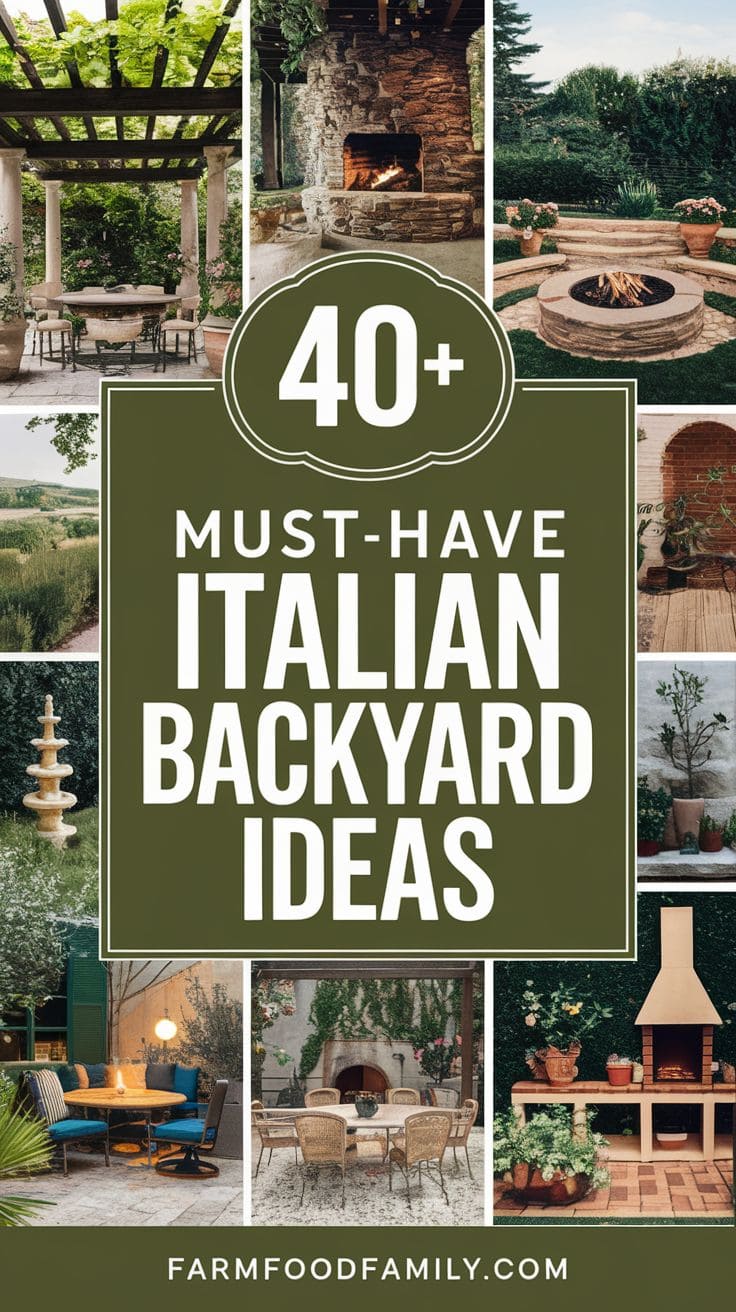
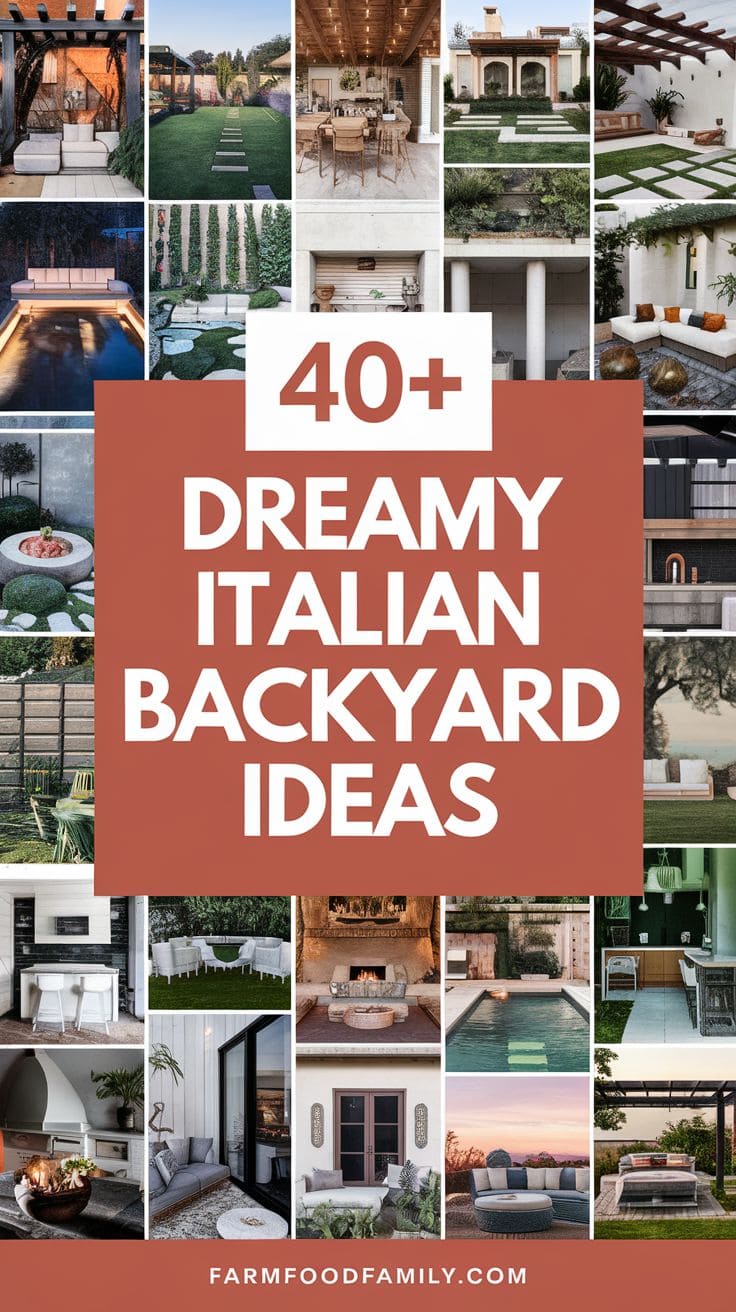
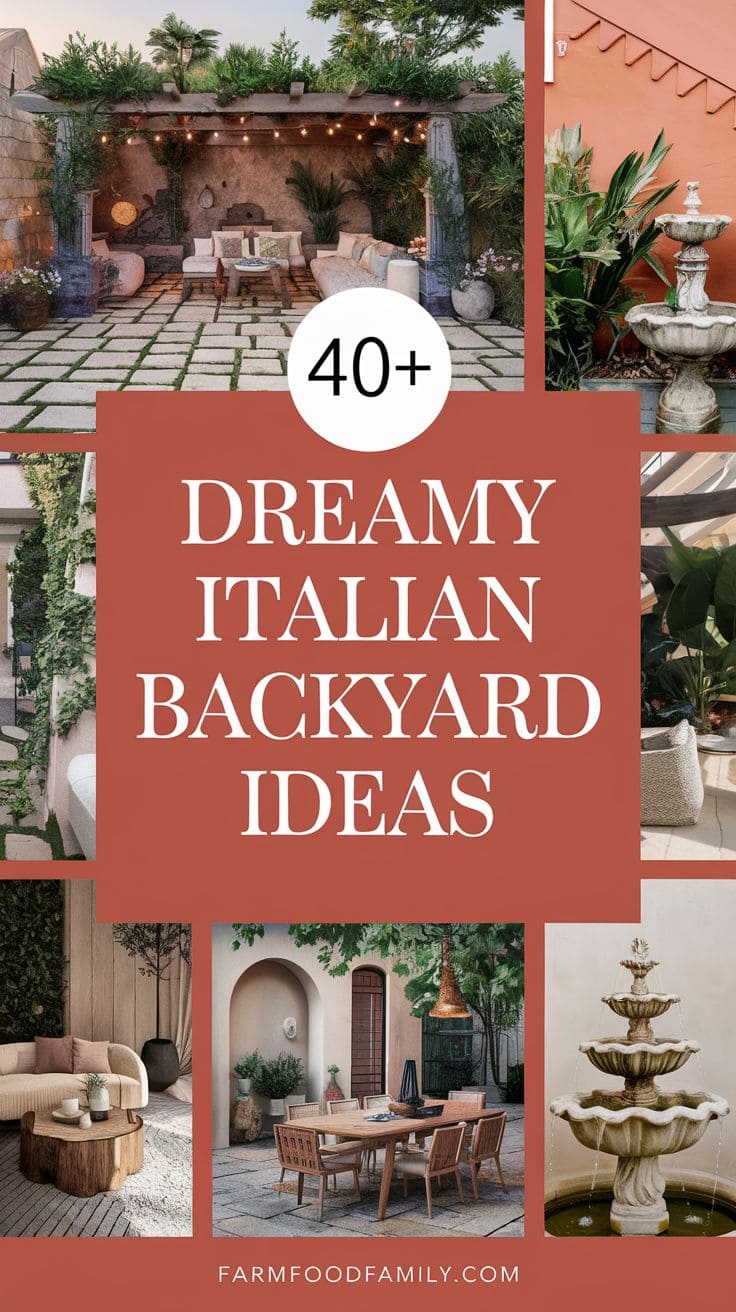
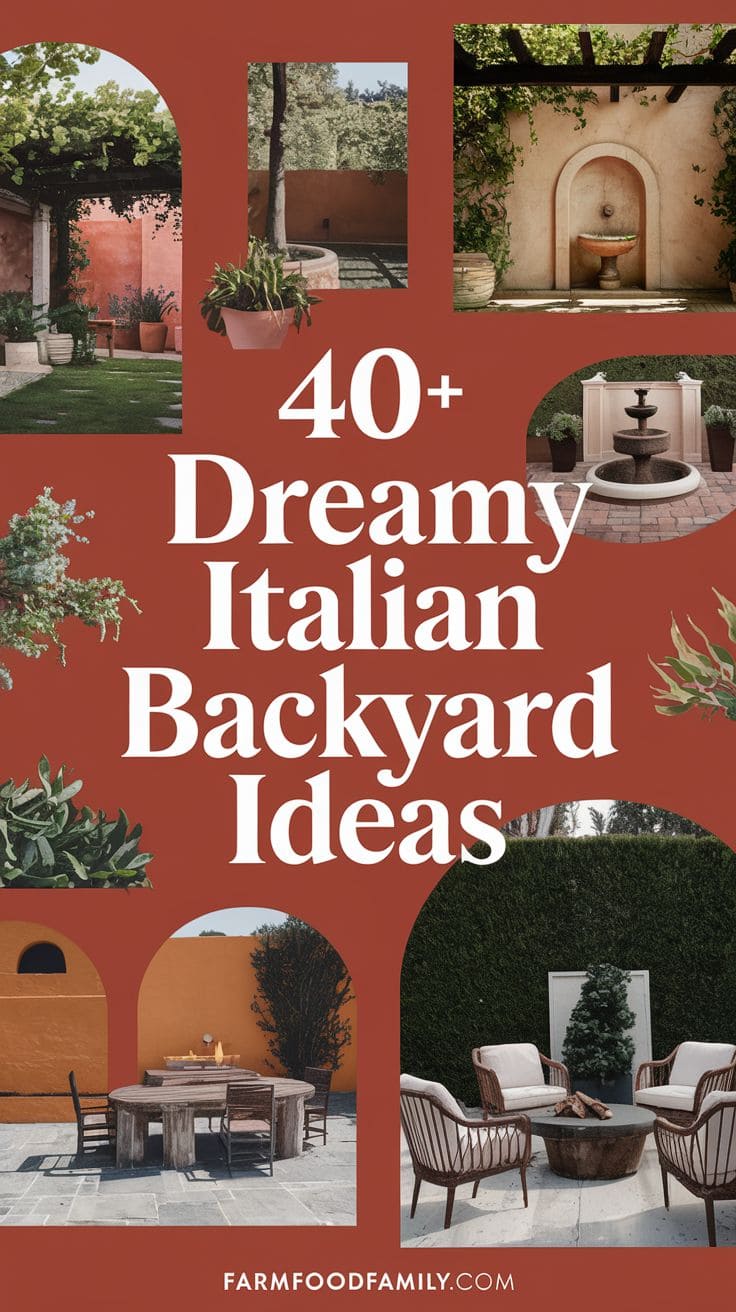
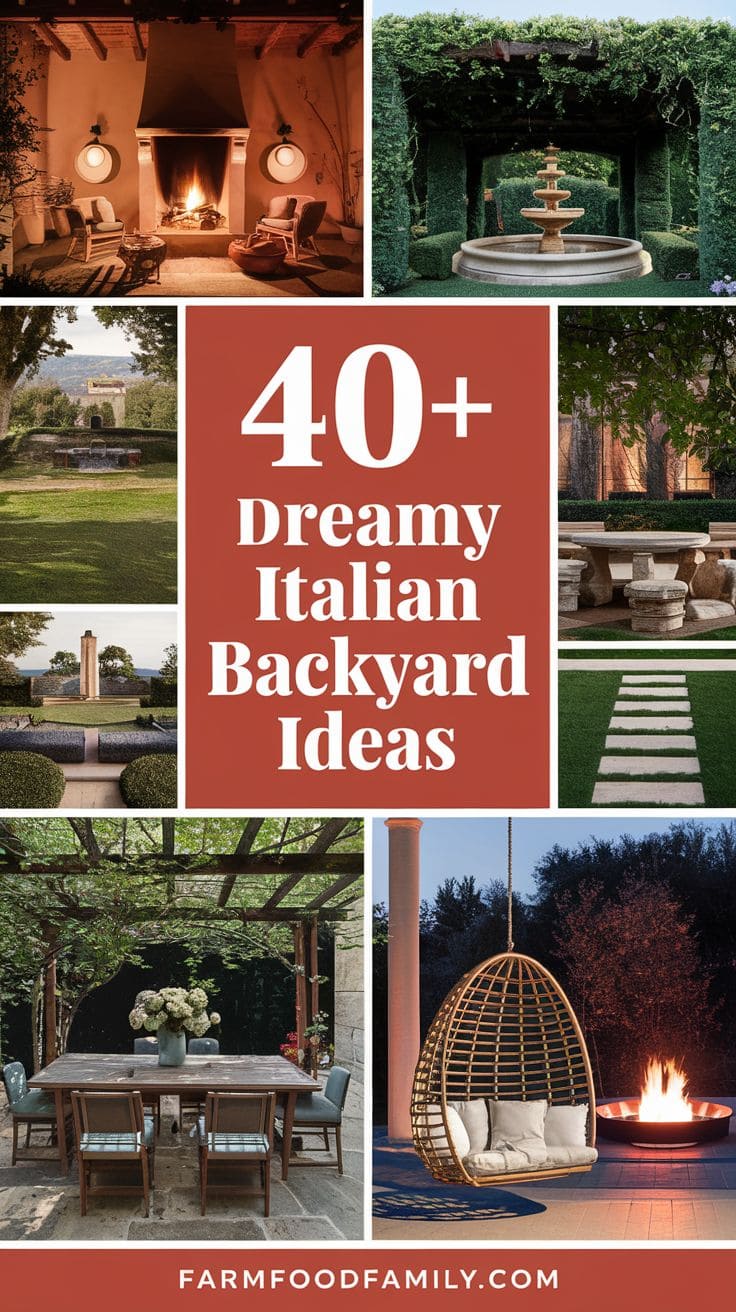
40+ Dreamy Italian Backyard Ideas With Real Tuscan Character
I spent a week in a rented farmhouse outside Siena a few years back, and the thing that stuck with me wasn’t the fountain in the courtyard, it was how little any of it looked “designed.” Terra cotta pots sat wherever they’d been useful, the gravel path had gone slightly uneven, and nobody had trimmed…

Never miss an update — choose FarmFoodFamily as your preferred source on Google.
How it works: Tap the button below to open Google’s settings page, then check the box next to FarmFoodFamily.
Tap the checkbox to turn it blue — that’s how you know it’s set.
I spent a week in a rented farmhouse outside Siena a few years back, and the thing that stuck with me wasn’t the fountain in the courtyard, it was how little any of it looked “designed.”
Terra cotta pots sat wherever they’d been useful, the gravel path had gone slightly uneven, and nobody had trimmed the rosemary into a shape. That’s honestly the whole trick to this style: it reads as inherited, not installed.
“An established landscape uses half as much water as a lawn, and takes so much less care,” says Gabriel Frank, landscape designer and owner of Gardens by Gabriel. “Plus, creating garden rooms or different environments makes your space more versatile and fun to use.” That’s the real appeal of an Italian-style backyard beyond the look, it’s a design philosophy built around distinct zones you actually use, not one big lawn you mow.
Italian backyard ideas
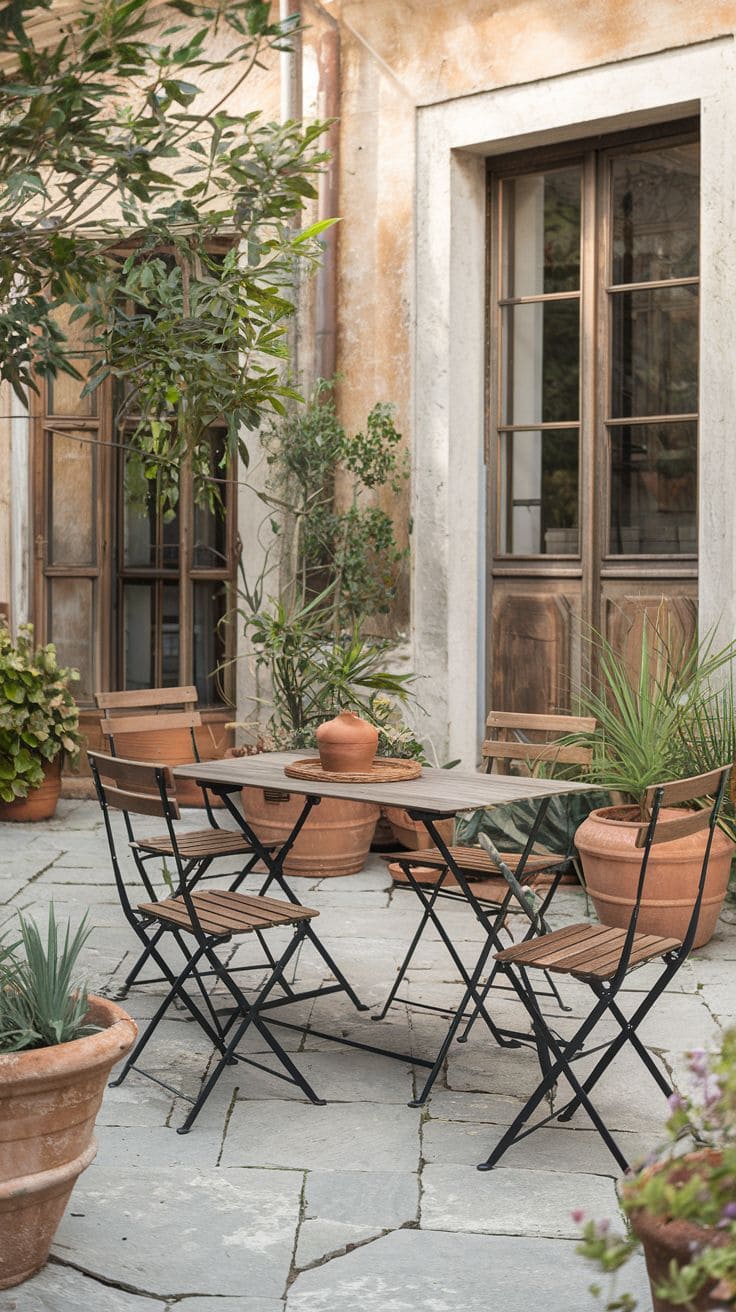
1. Get a Stone Patio for a Rustic Base
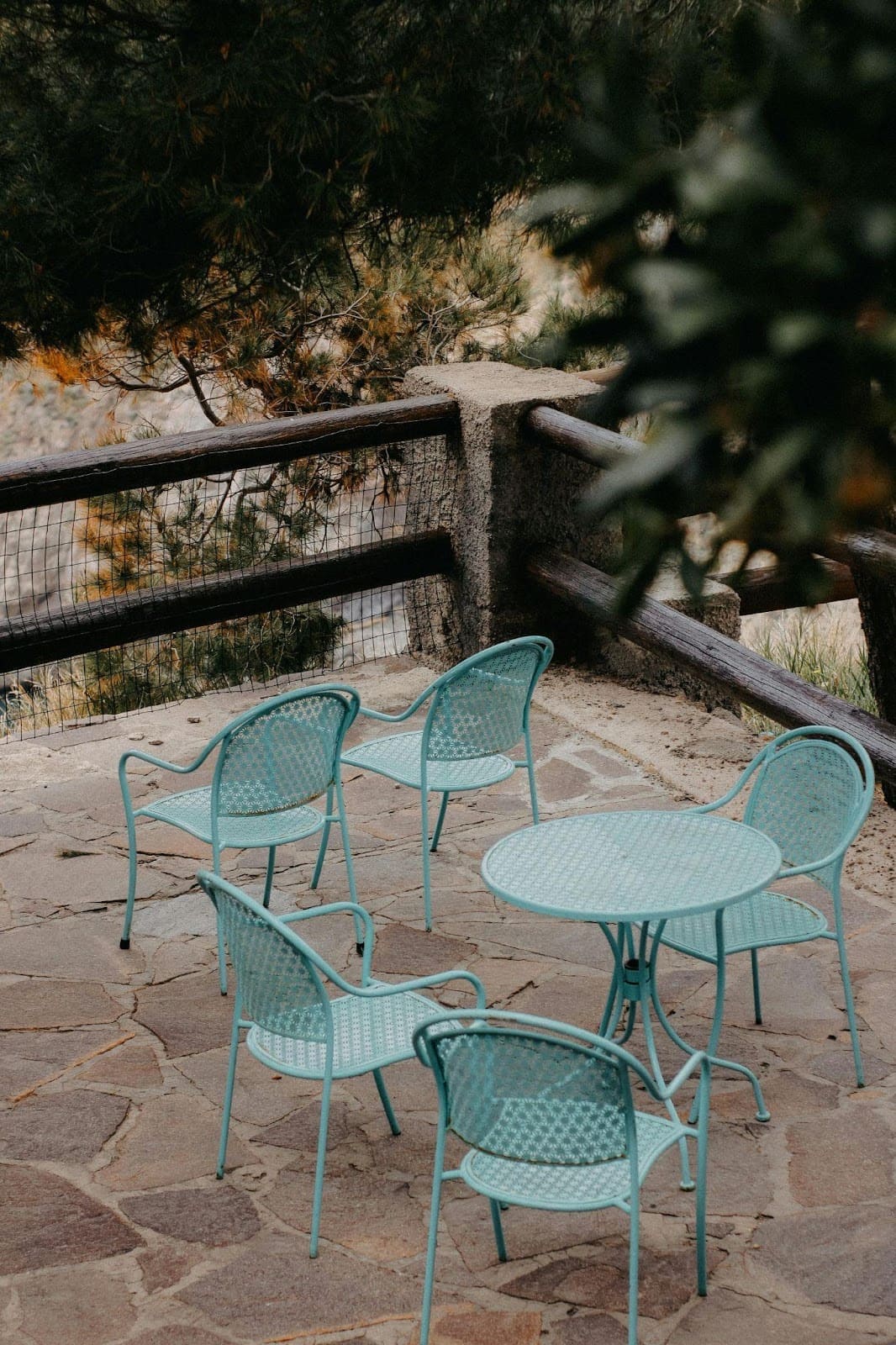
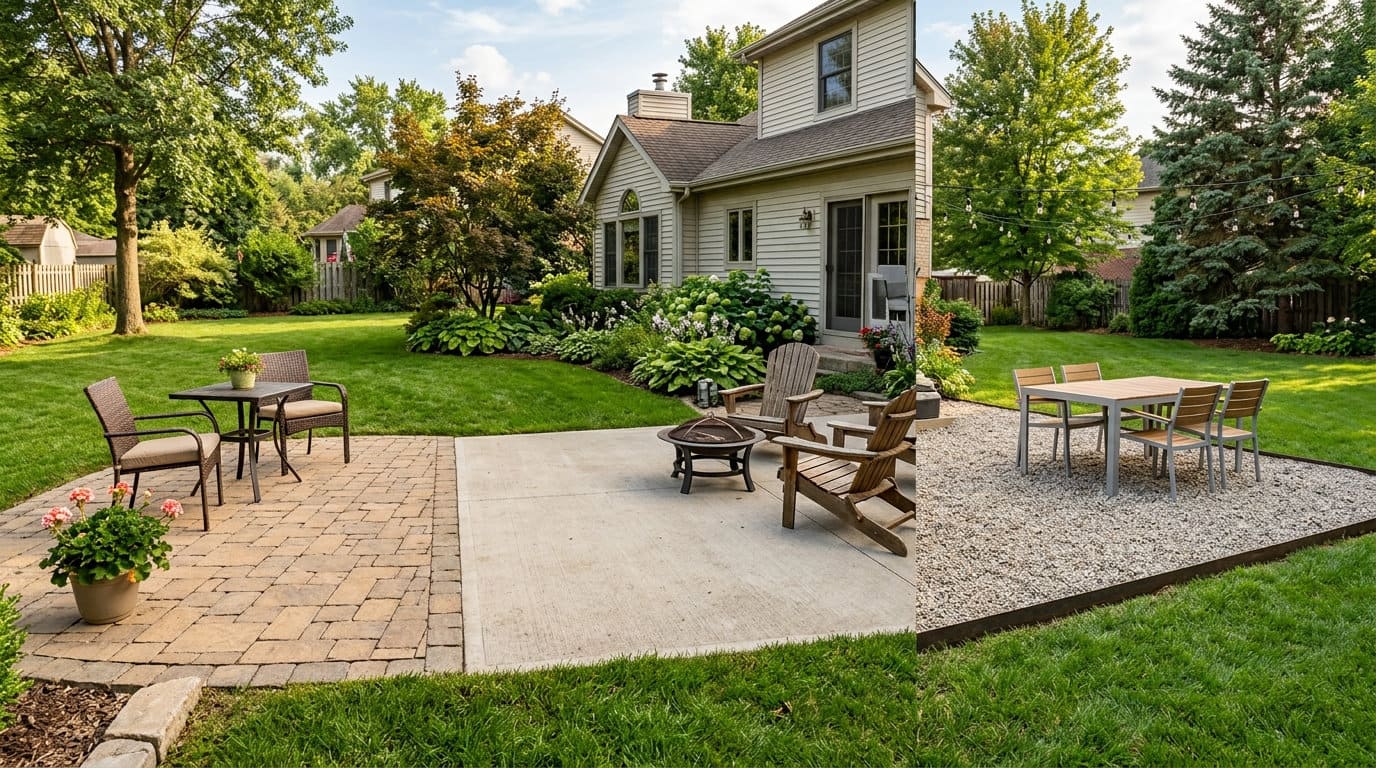
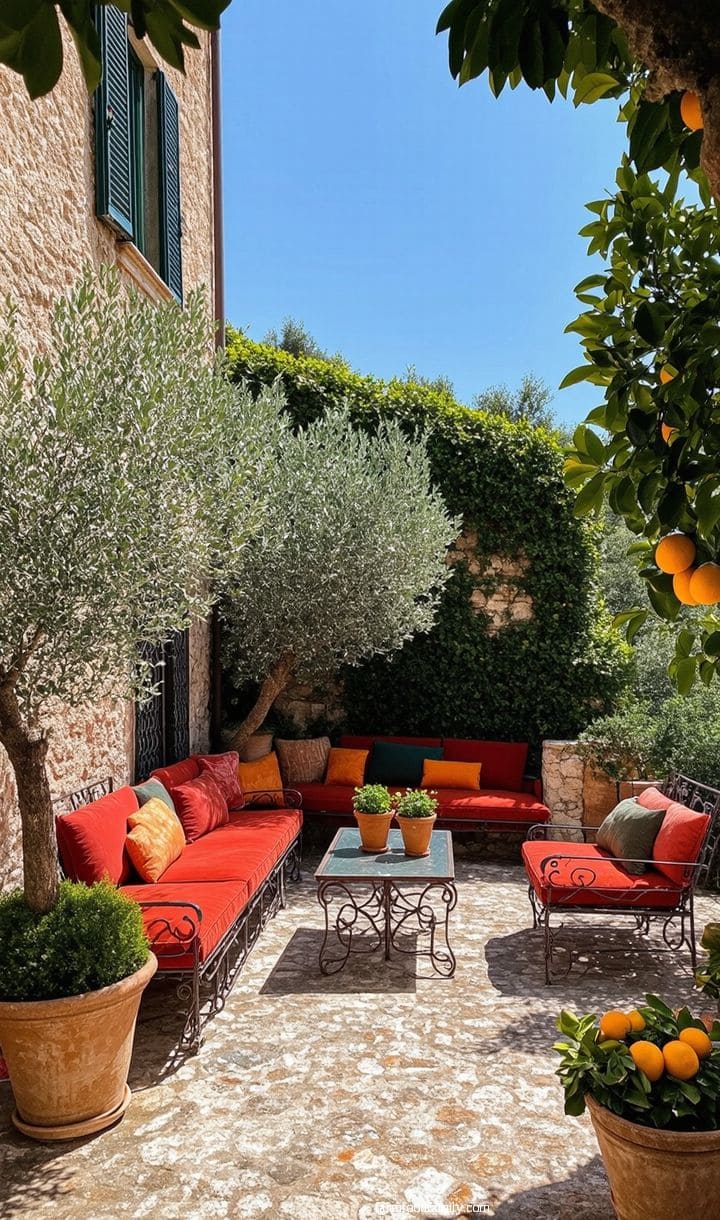
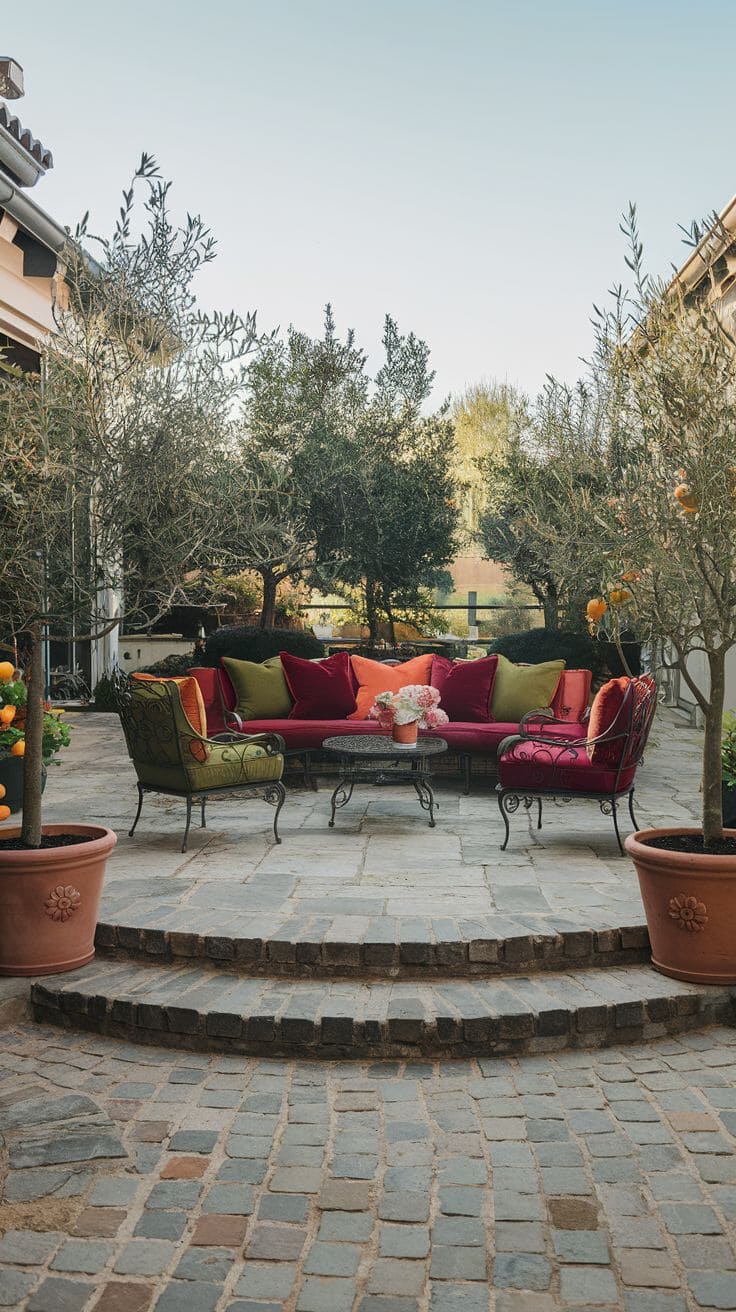
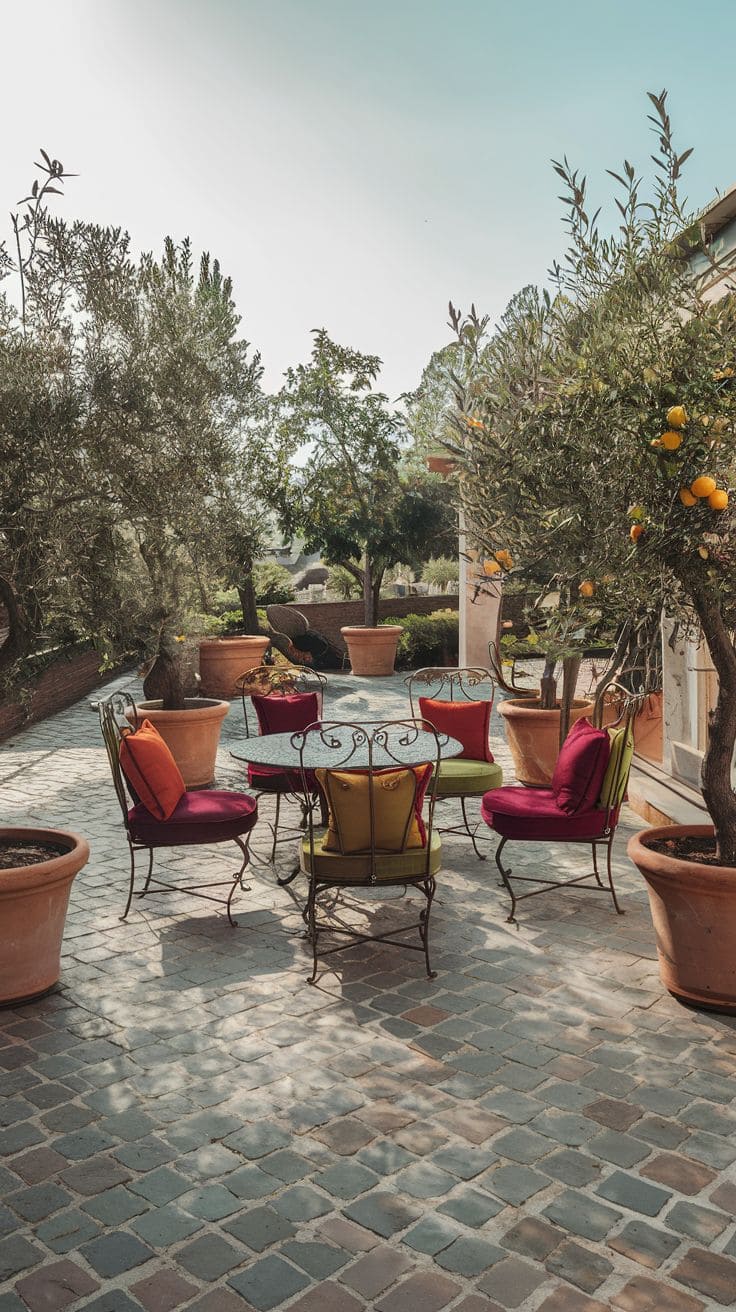
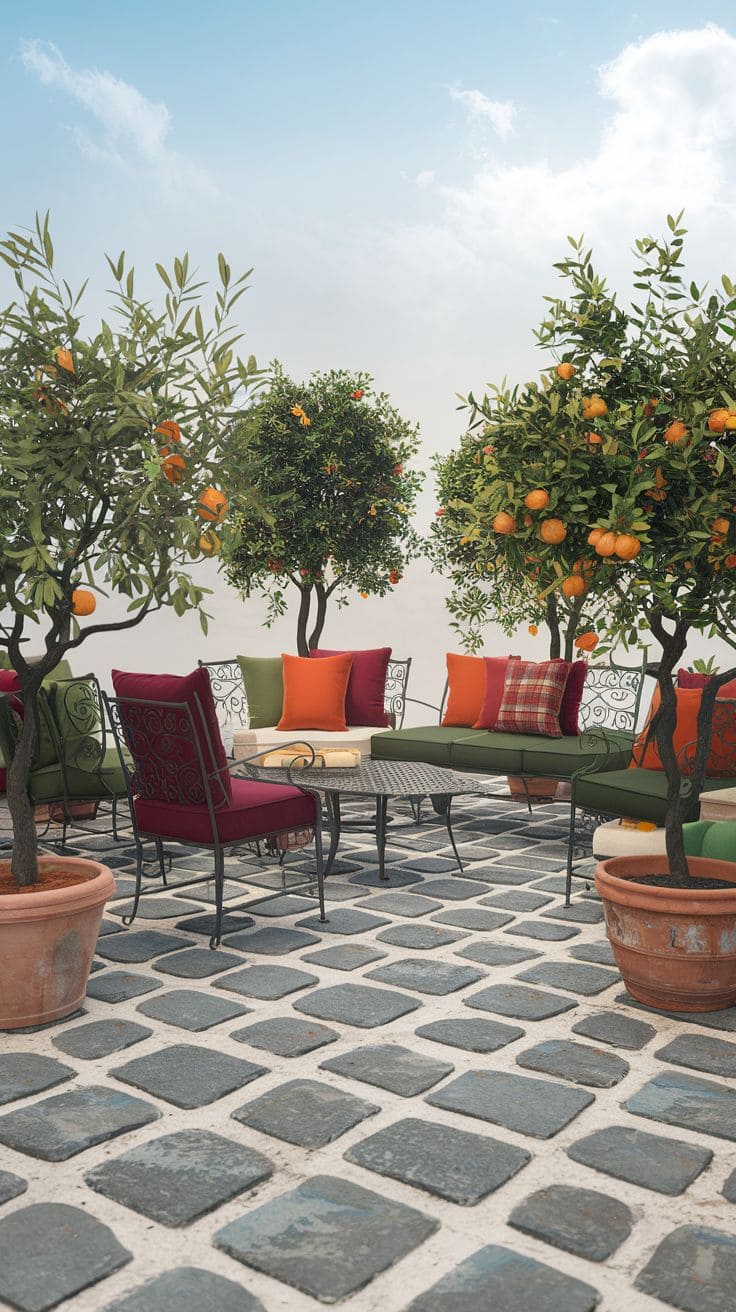
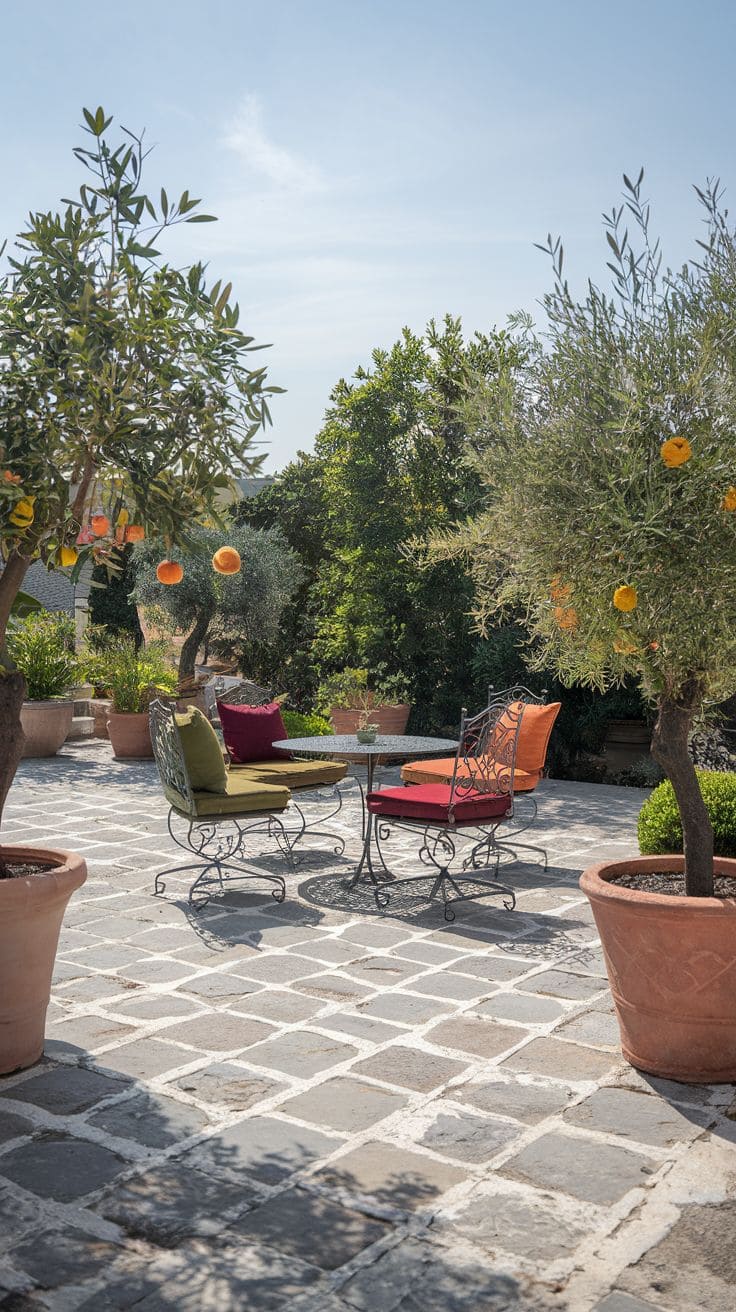
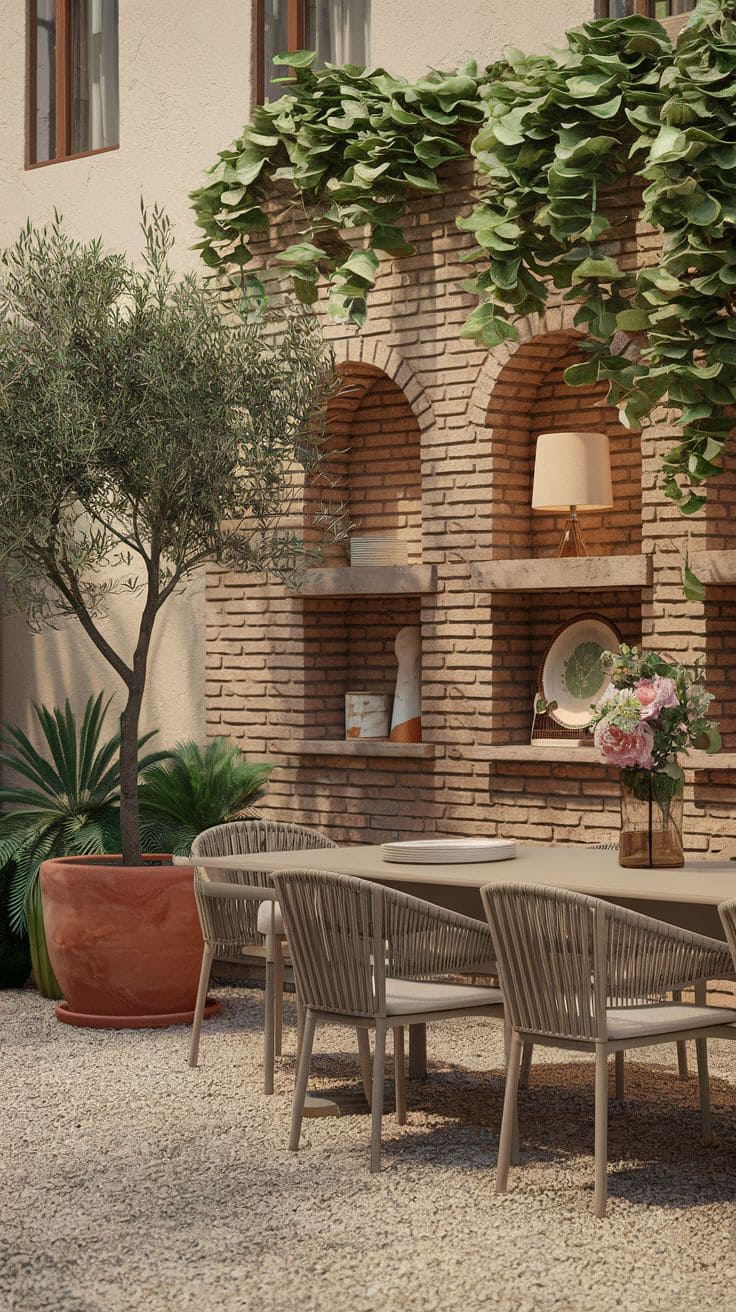
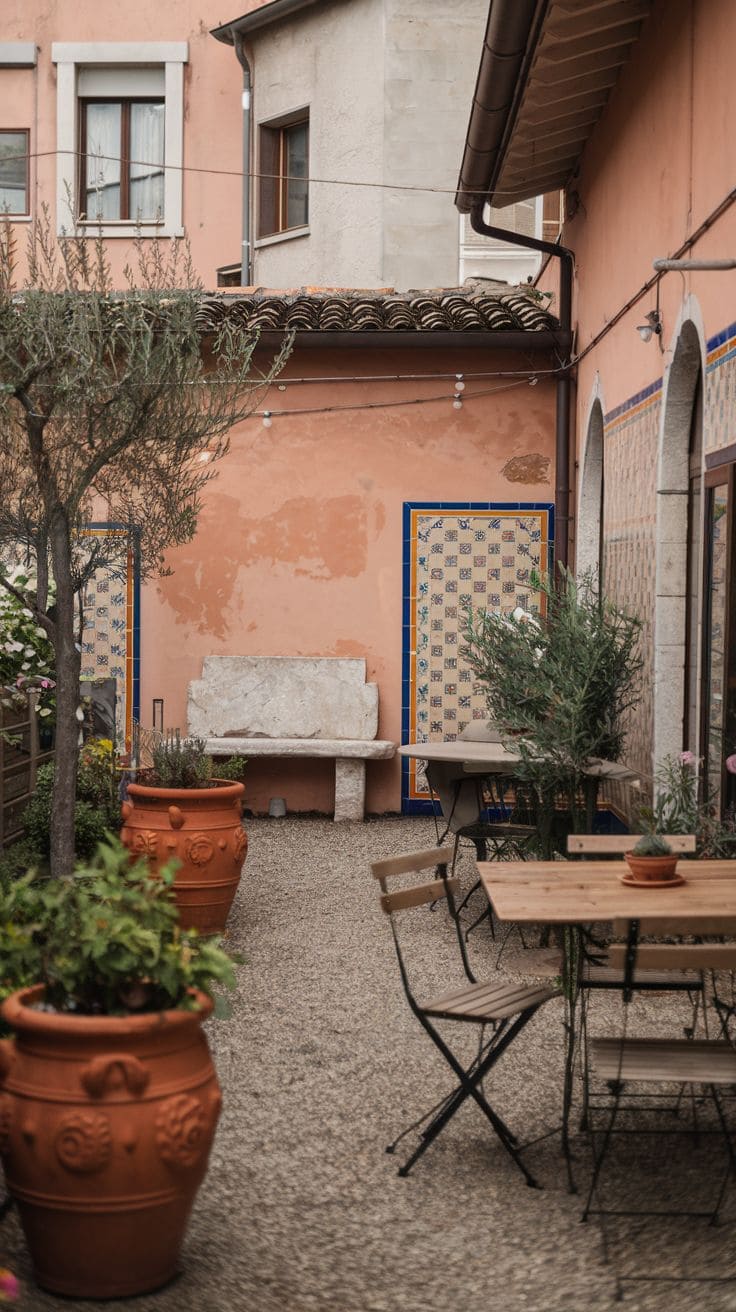
A stone patio is an integral component of an Italian backyard. Choose materials such as travertine, terracotta, or cobblestone to create a warm and rustic foundation.
These natural materials have timeless appeal and provide a long-lasting surface for seating and dining areas.
Sprinkle a few potted olive trees or citrus plants around the patio for a Mediterranean vibe.
Answer 4 quick questions and get matched to the exact fix for your yard — drainage, budget, layout, or something else entirely.
Take the Free QuizTo add an authentic Italian flair, pair the space with wrought-iron furniture and colorful pillows in crimson, orange, or deep green.
This setup makes a gorgeous and functional centerpiece for your backyard.
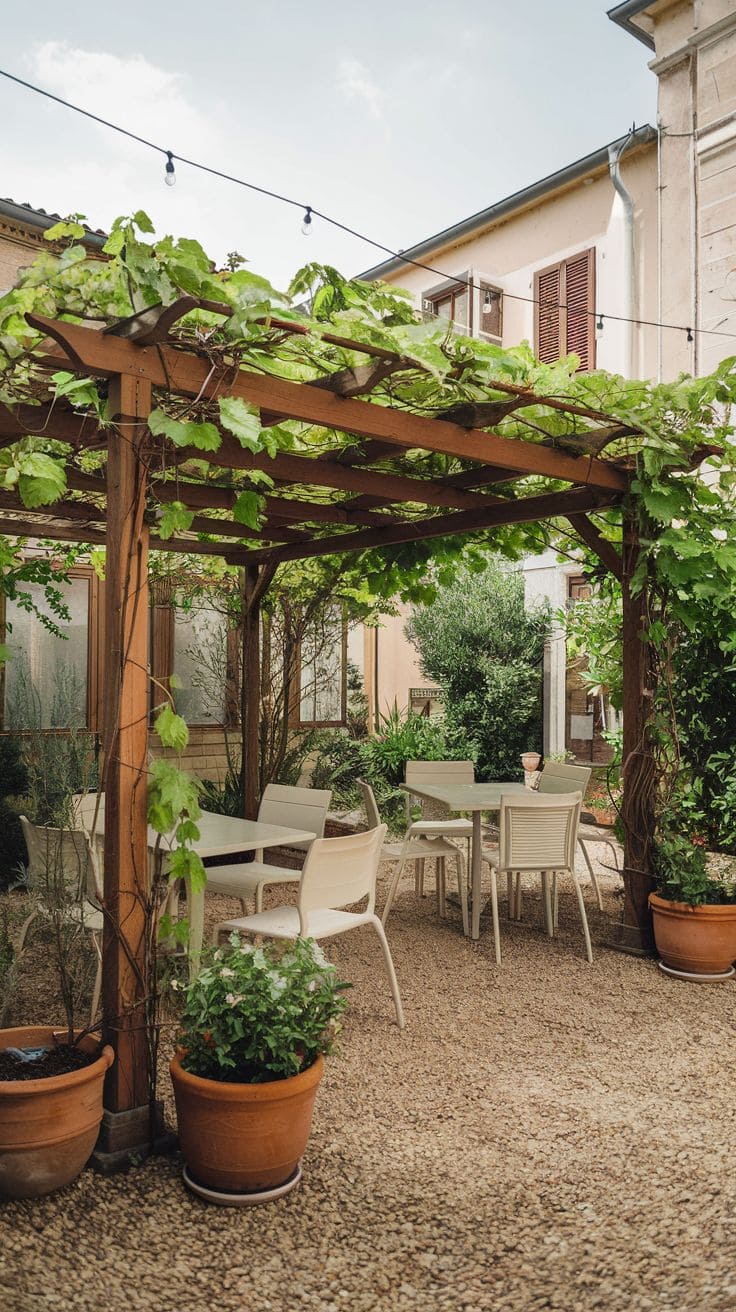
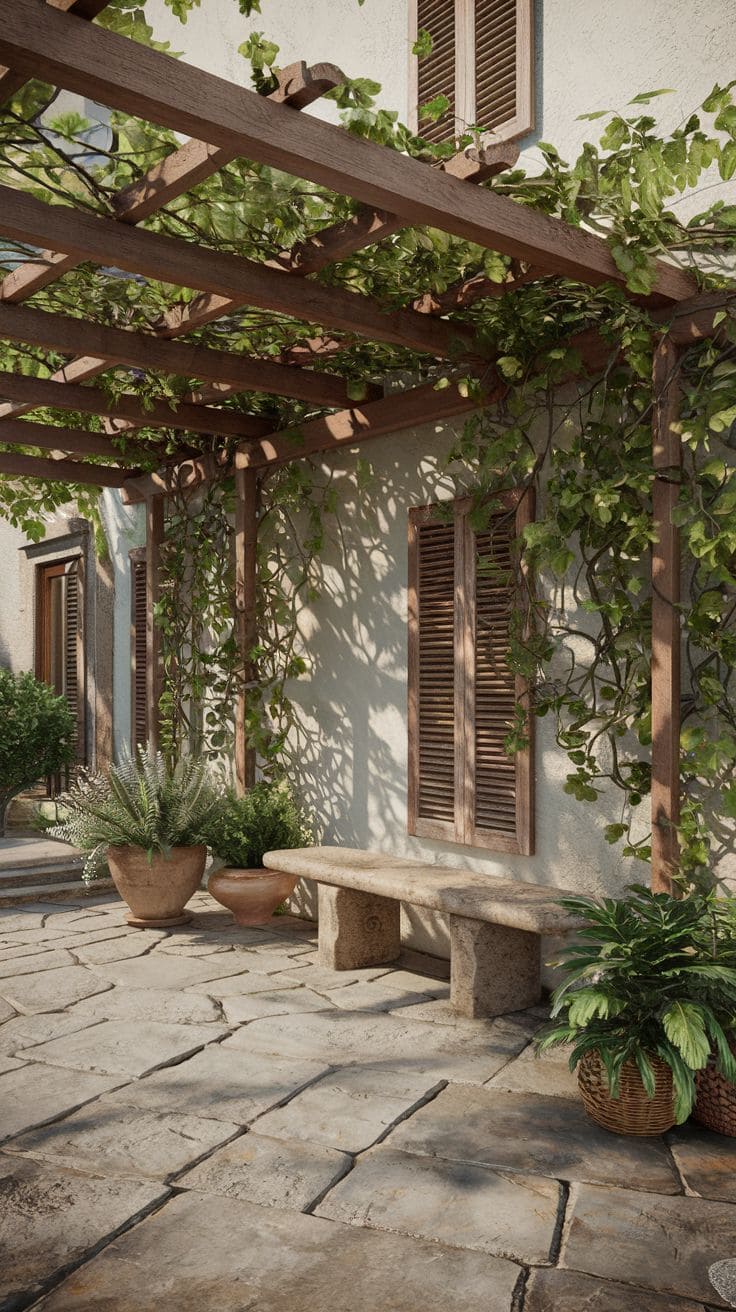
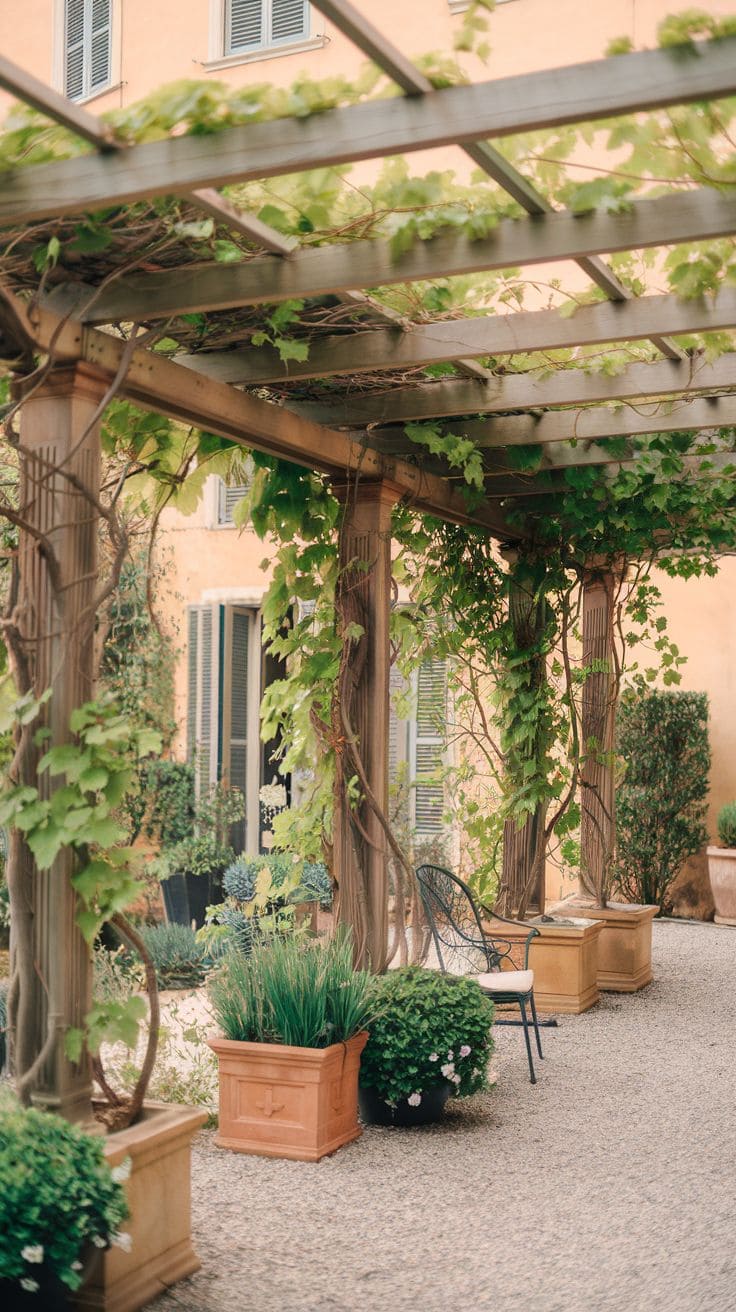
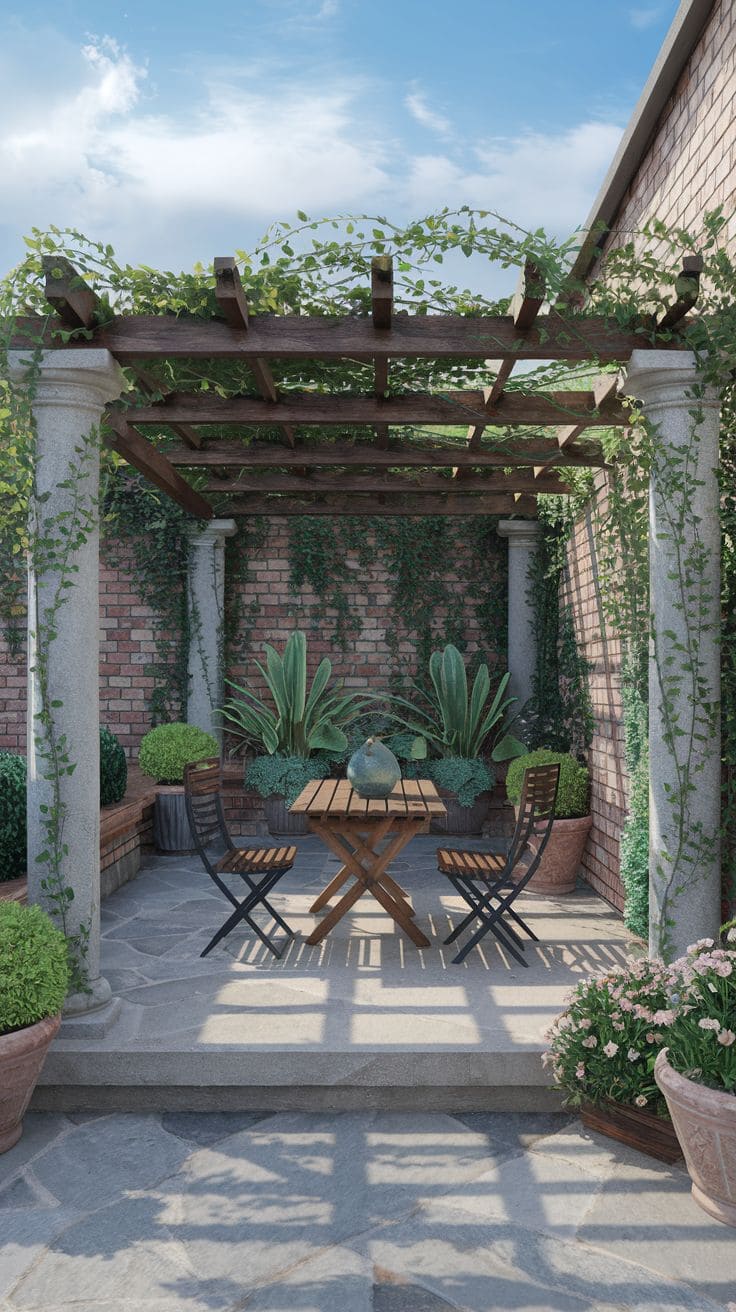
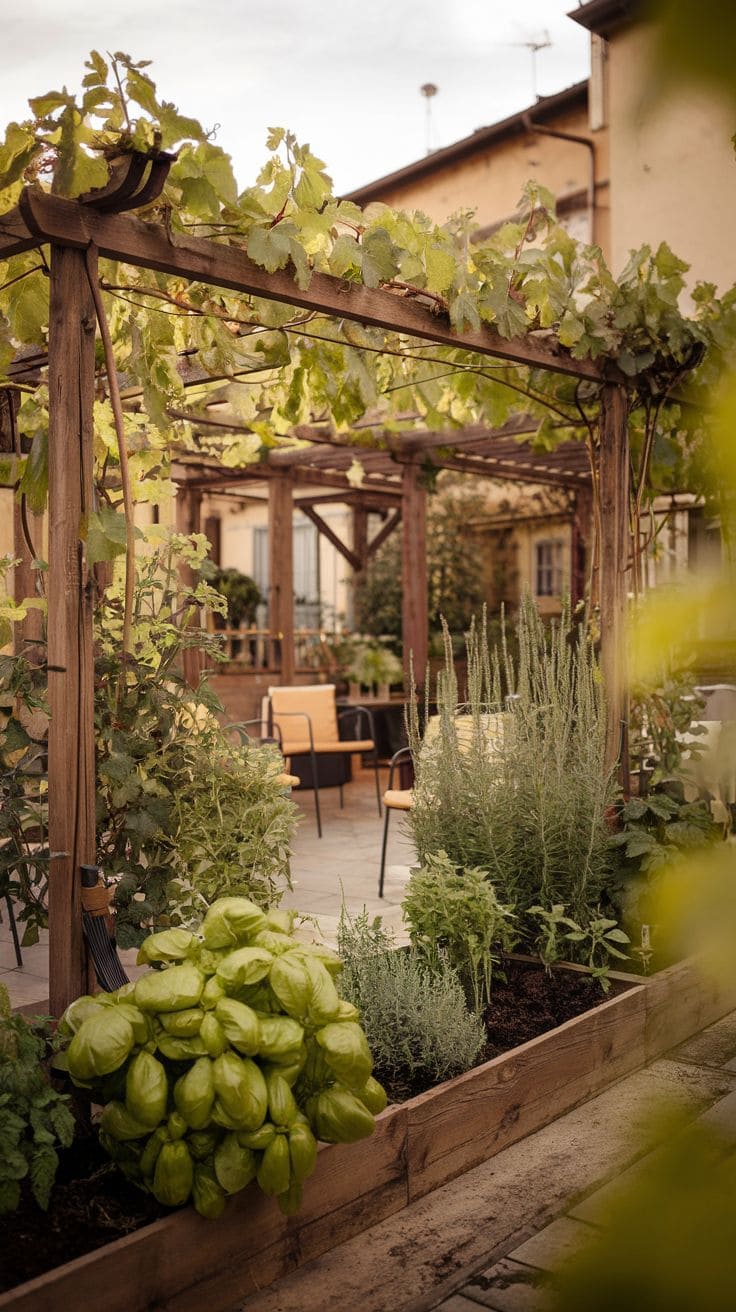
2. Install A Pergola and Drape It With Climbing Vines
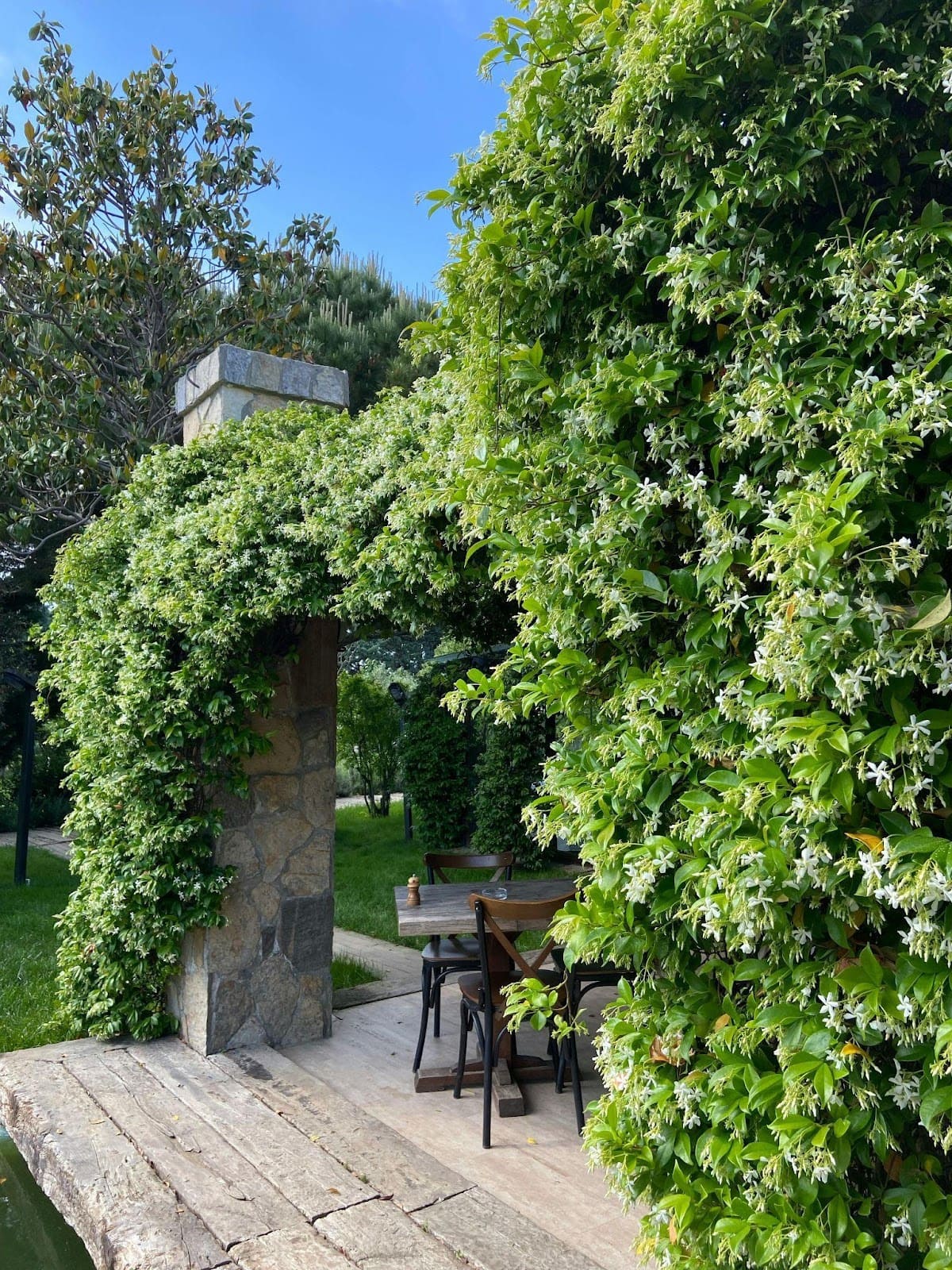
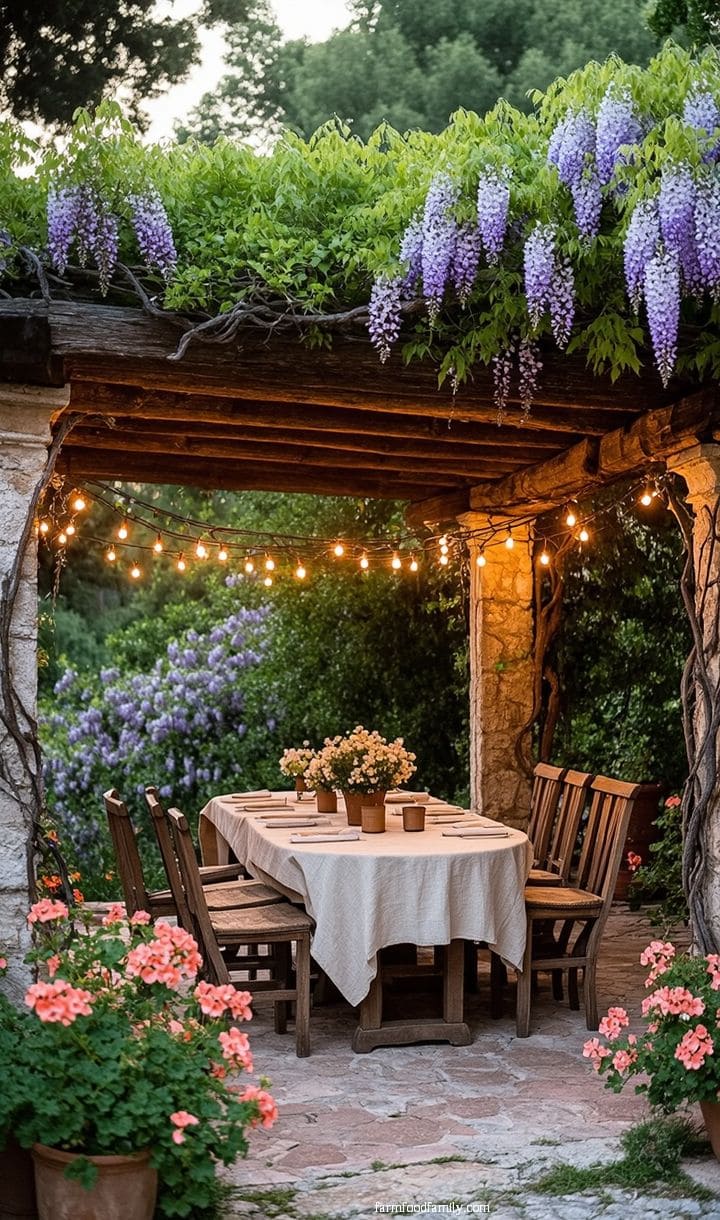
A pergola or arbor draped in climbing plants like grapevines, wisteria, or jasmine is a common feature in an Italian garden.
These buildings give shade and create a beautiful, old-world atmosphere in the space.
Position the pergola above a dining table or lounge area to create a functional focal point.
String soft lights across the beams to create a lovely ambiance at night. The vines grow and entangle, forming a natural canopy that adds intimacy and beauty to your backyard.
3. Implement a Water Feature or Fountain
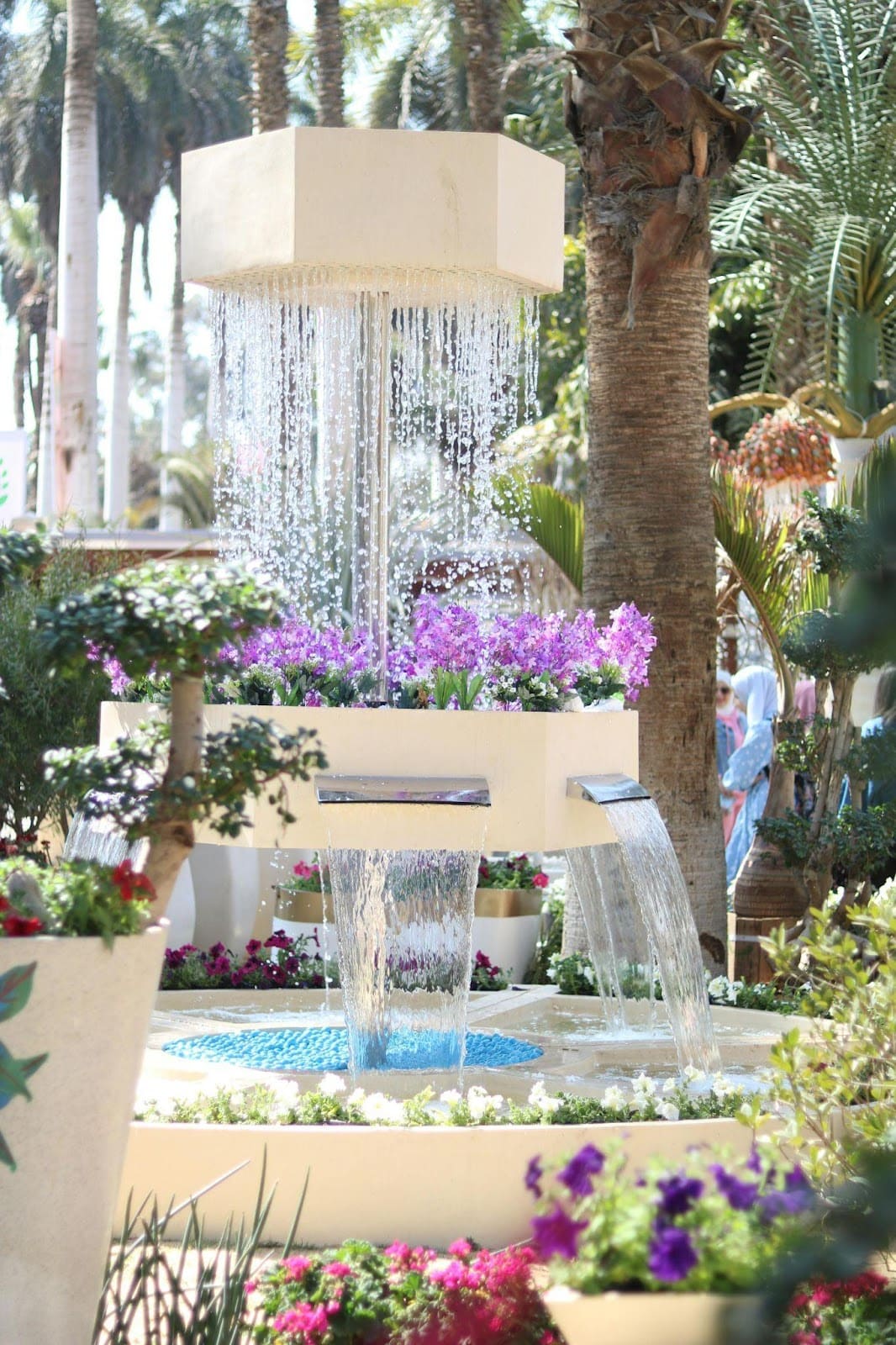
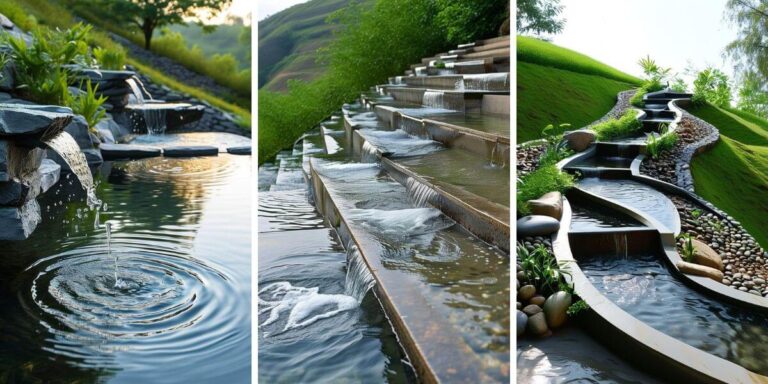
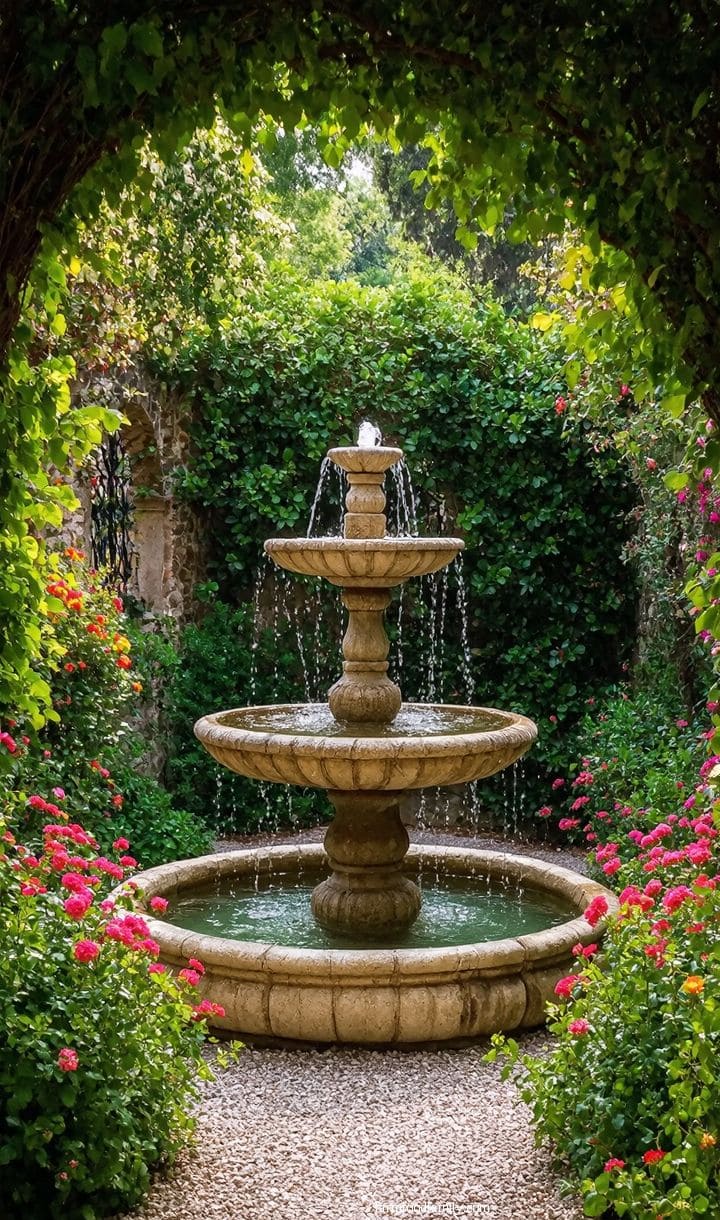
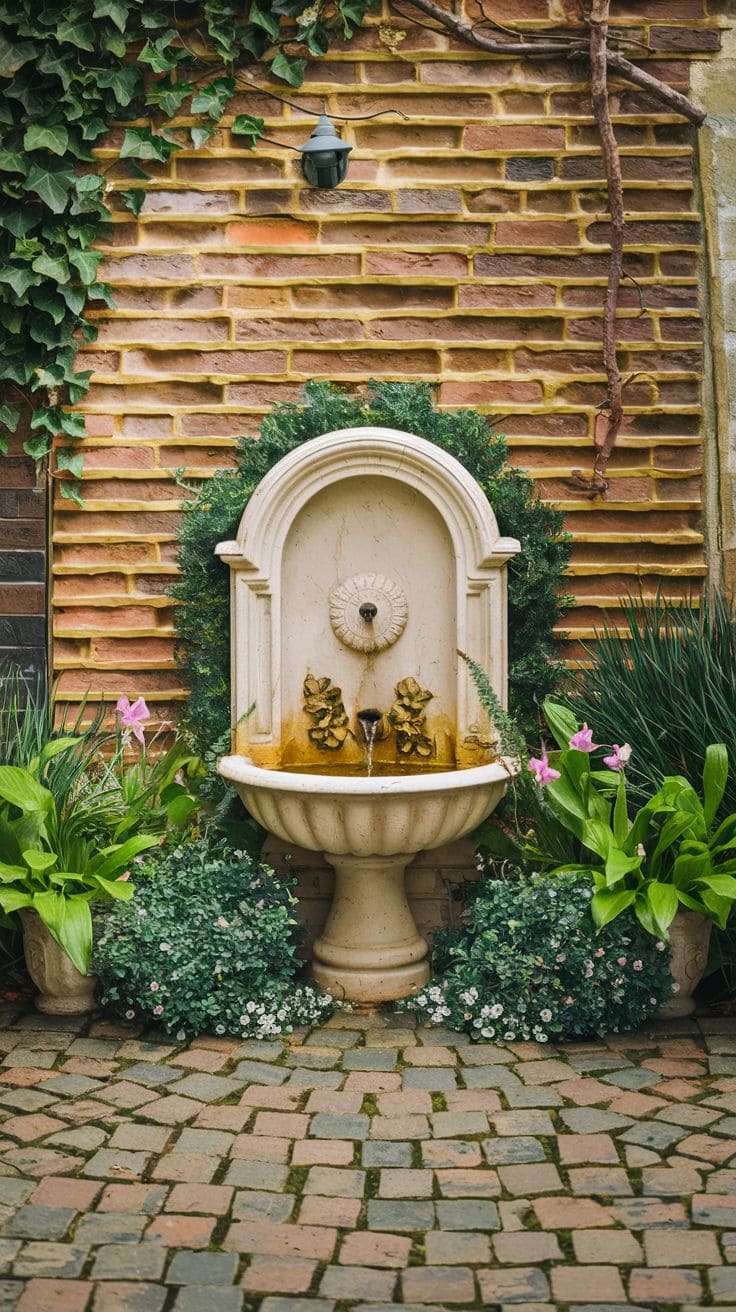
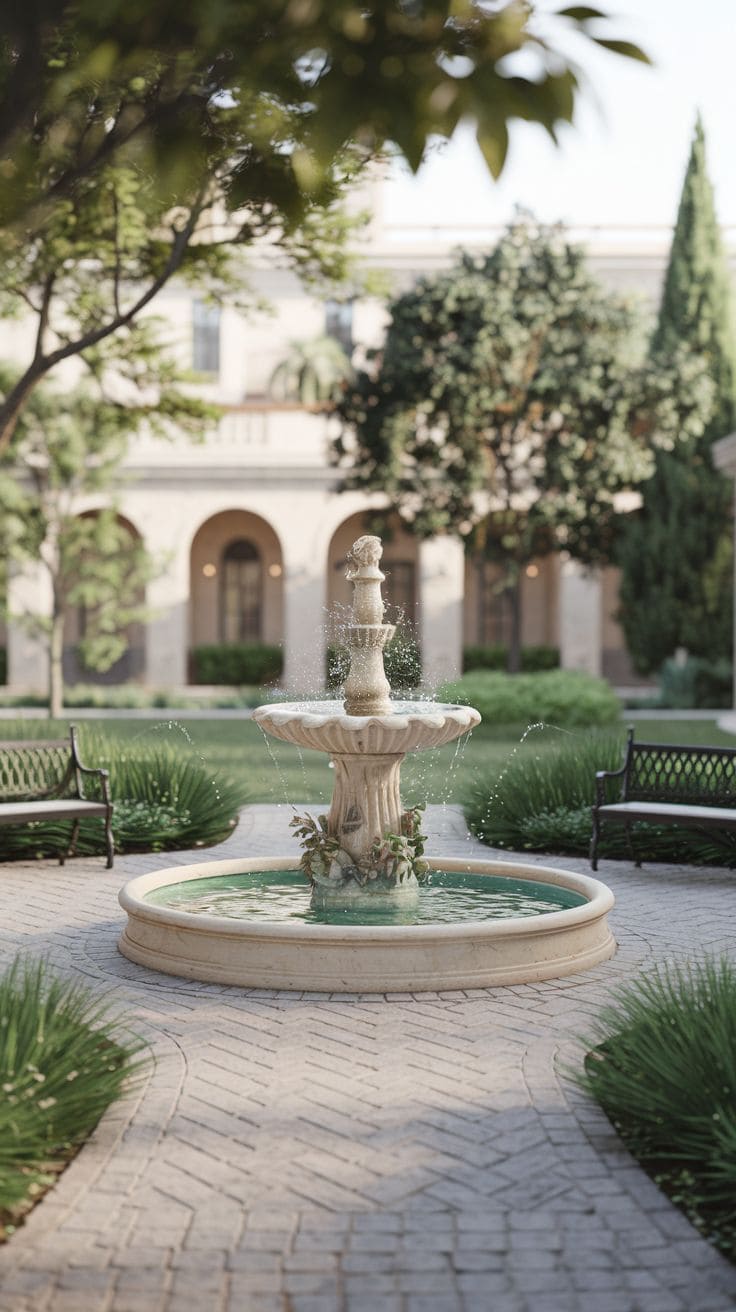
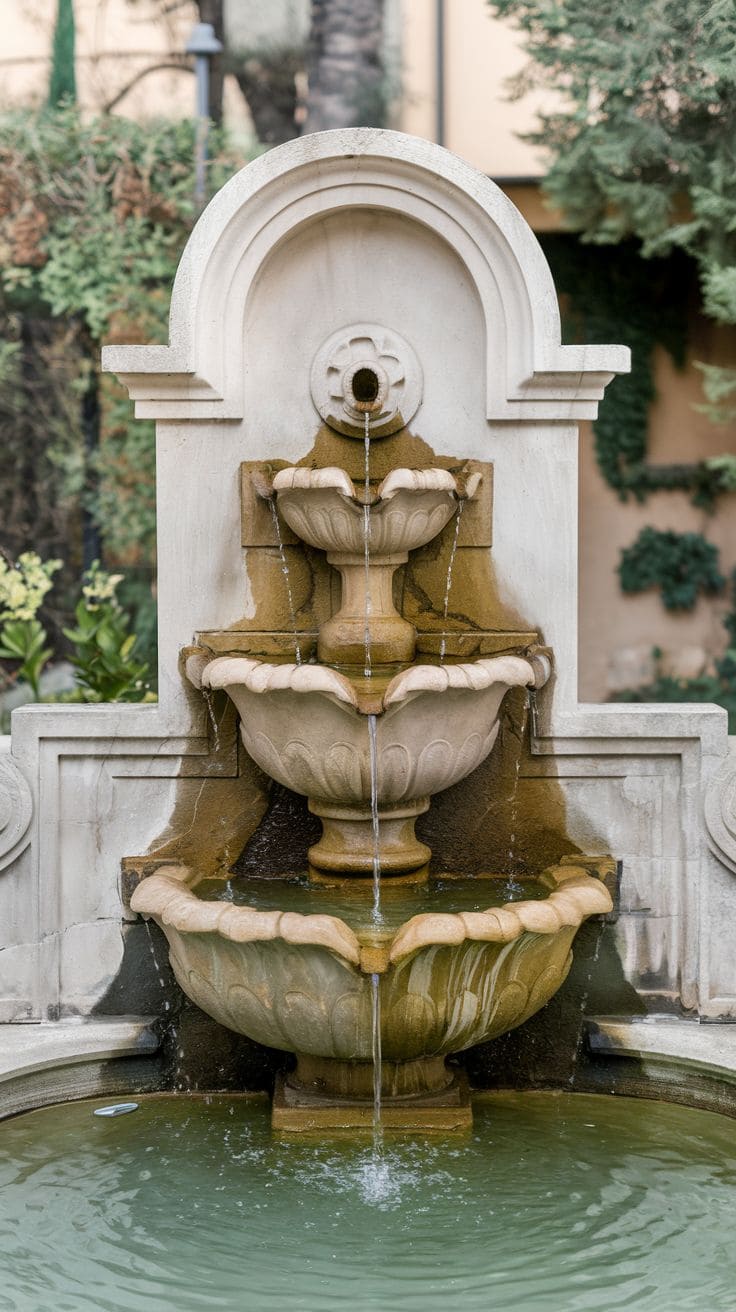
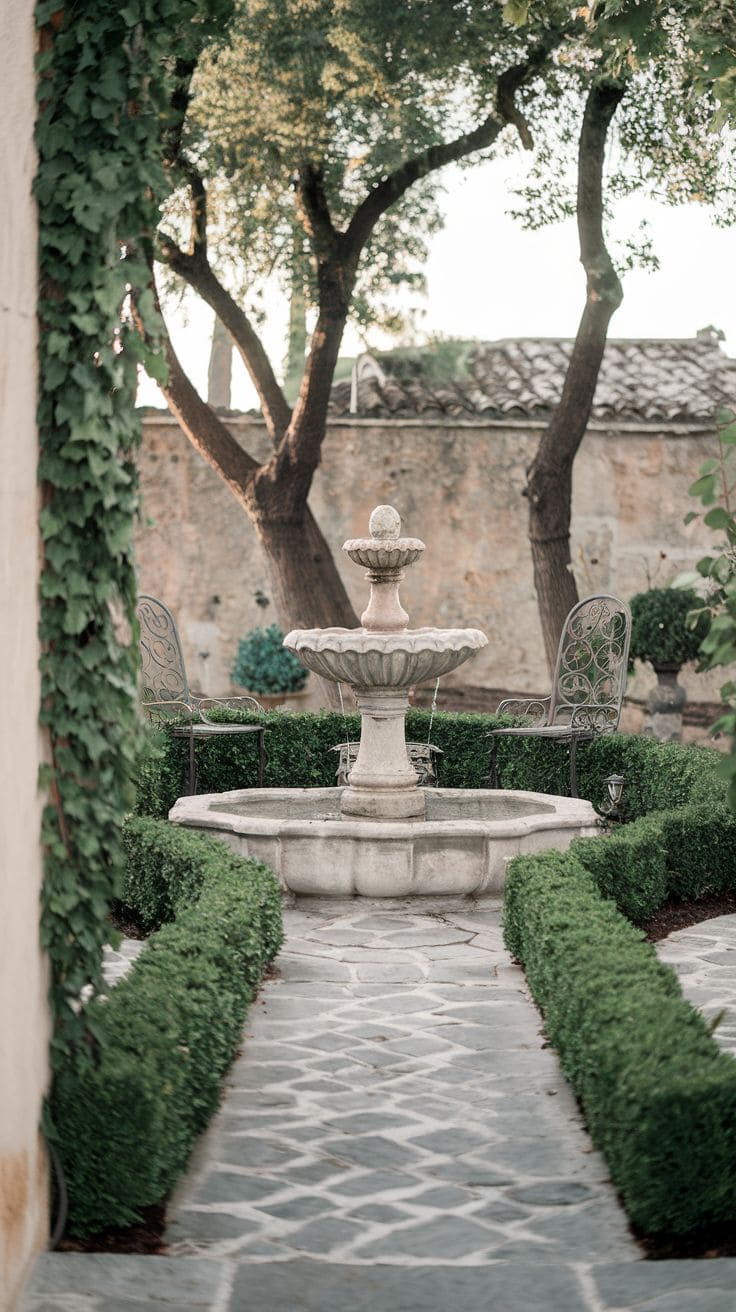
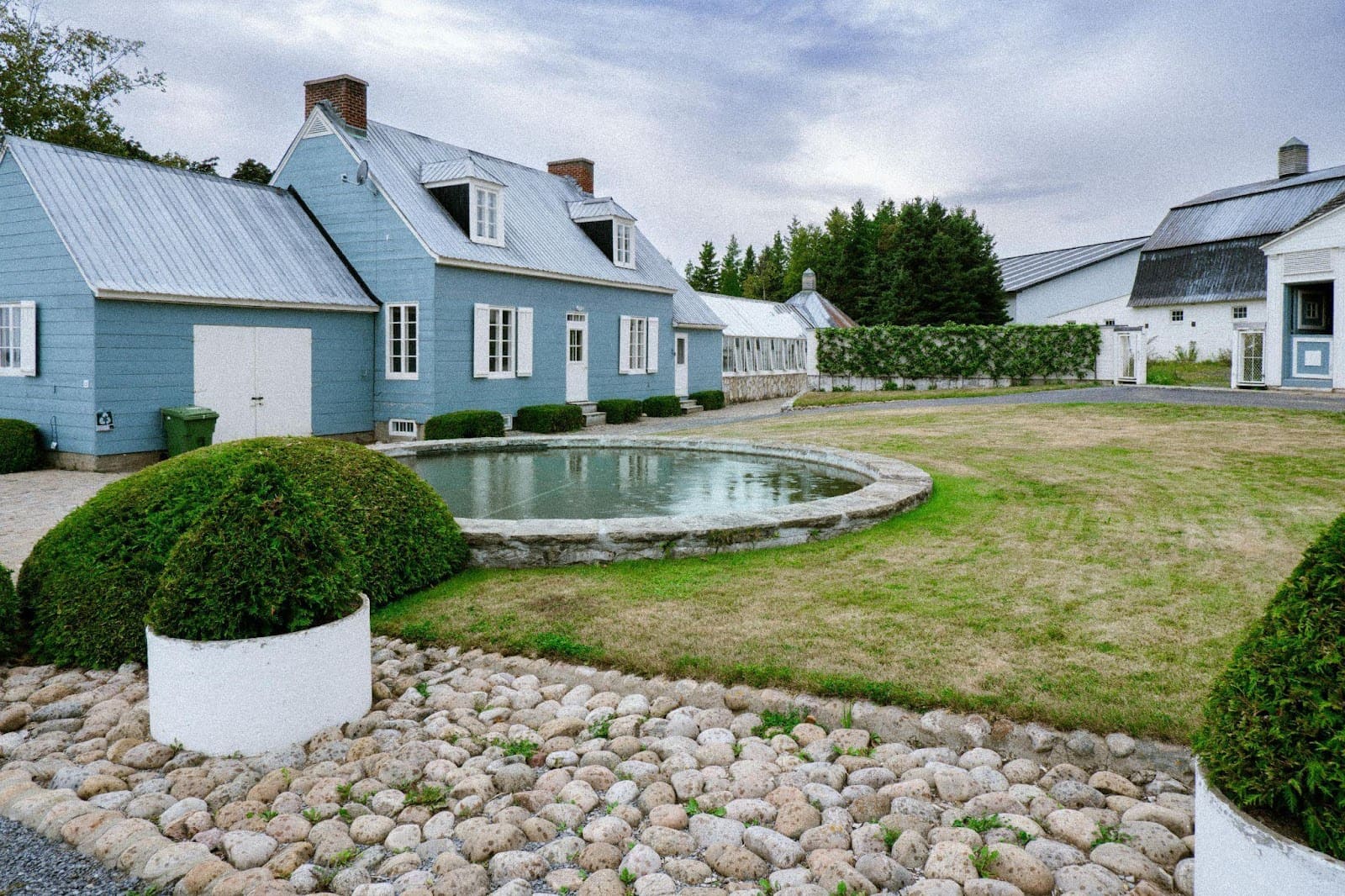
A water element, such as a classic tiered fountain, is a defining characteristic of Italian gardens. As the focal point of your yard, surround it with lush vegetation or gravel walks.
Most yard problems trace back to one specific, fixable cause. Find yours in 4 quick questions.
Take the Free QuizIt’ll add a nice ambience to the yard while making it look much more sophisticated.
If you have the space, consider a small reflecting pool or an ornamental pond with floating lilies for a more dramatic impact.
The pleasant sound of running water not only adds elegance but also creates a calming atmosphere in your outdoor refuge.
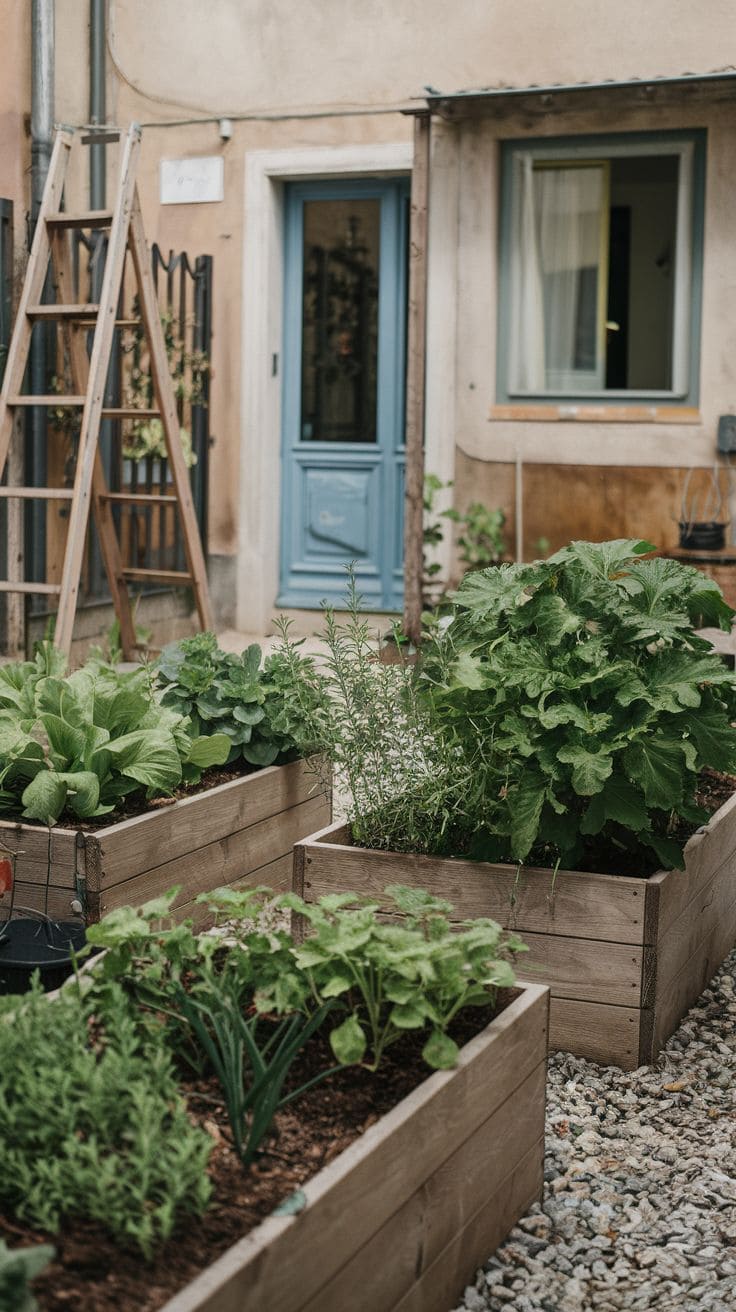
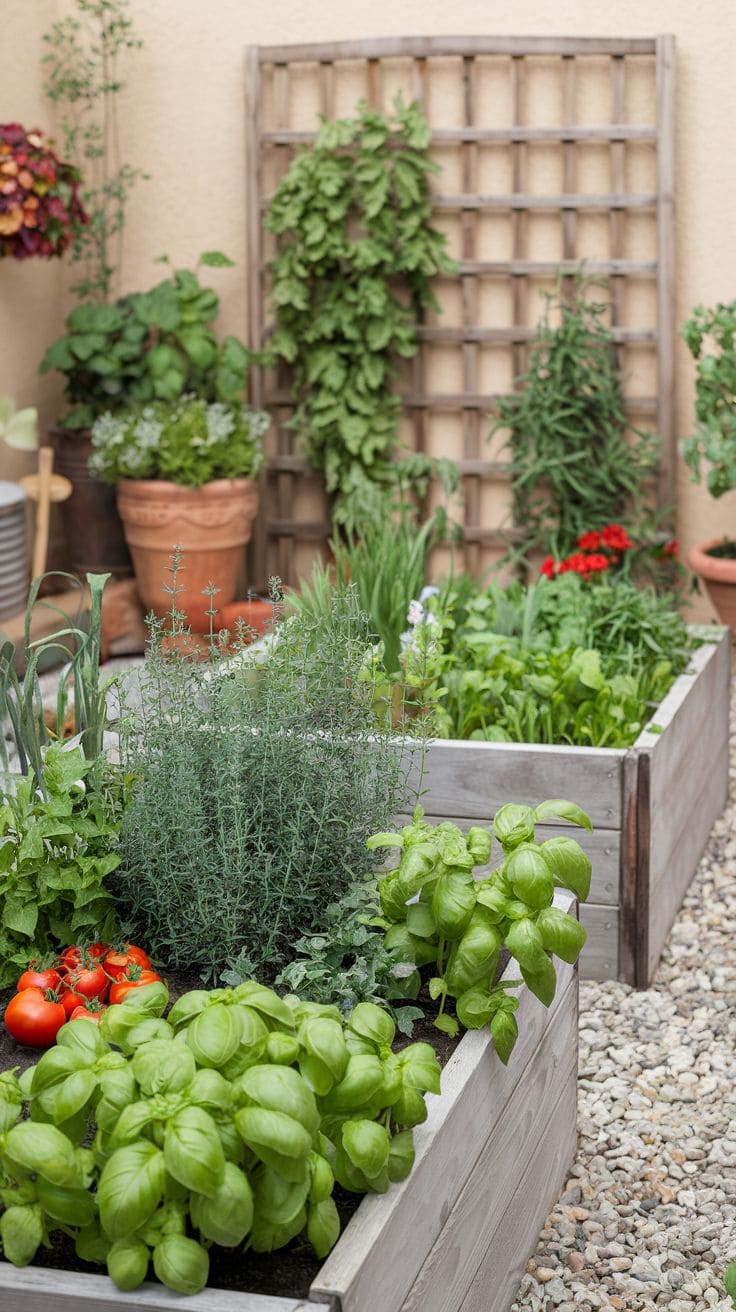
4. Grow a Herb and Vegetable Garden
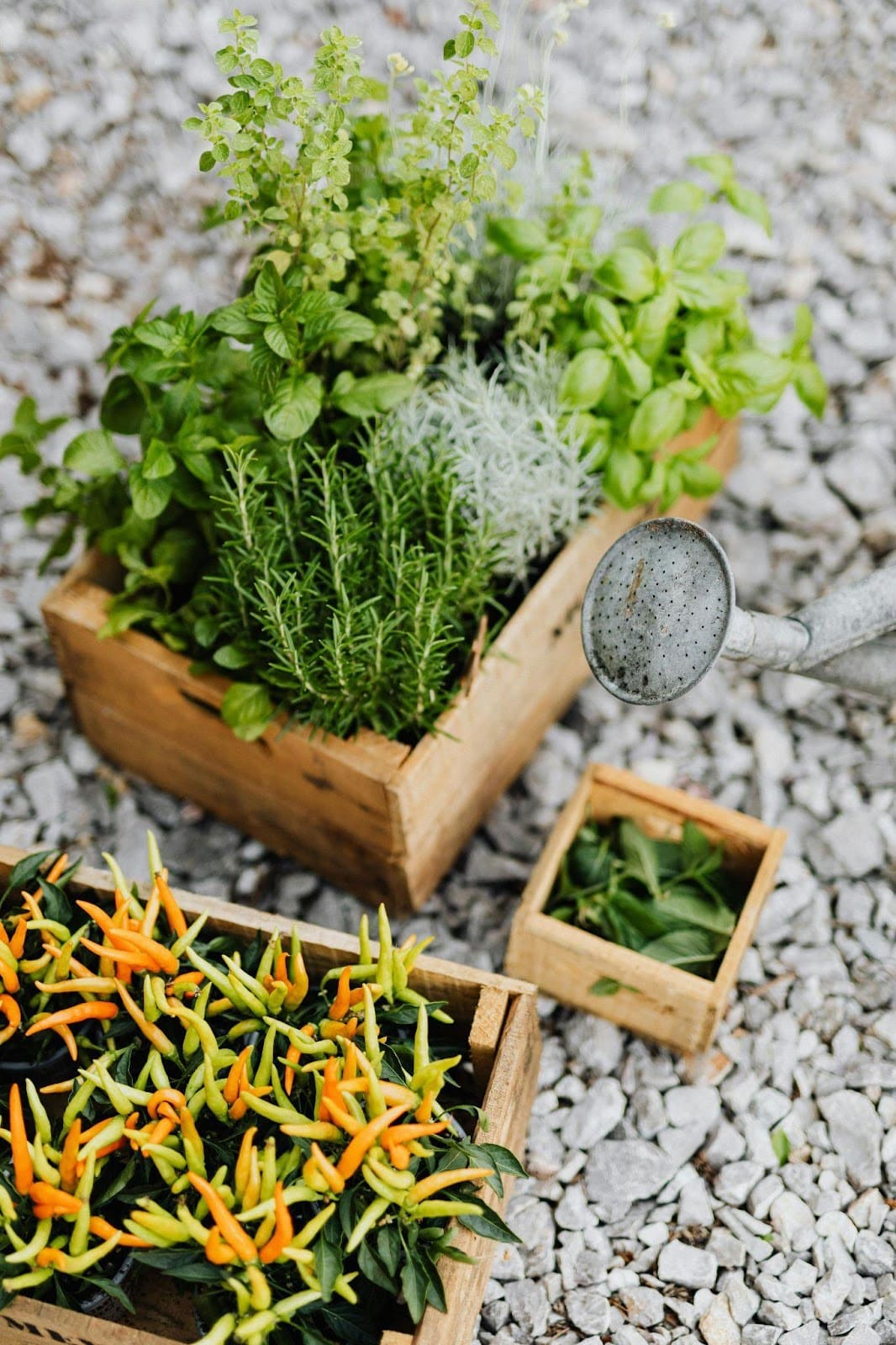
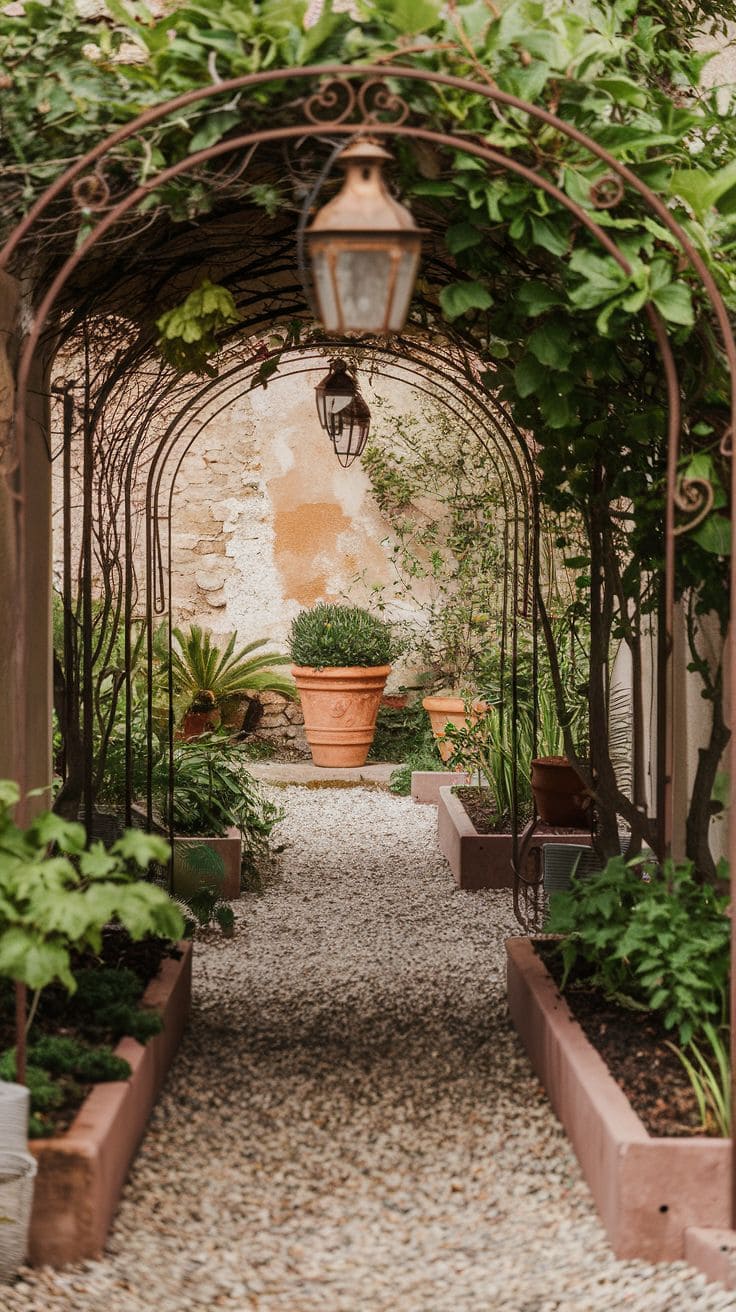
Italian food is based on fresh ingredients, so dedicating a portion of your backyard to a herb and vegetable garden is both functional and gorgeous.
For a culinary touch, include herbs such as basil, oregano, rosemary, and parsley, as well as tomato plants and peppers.
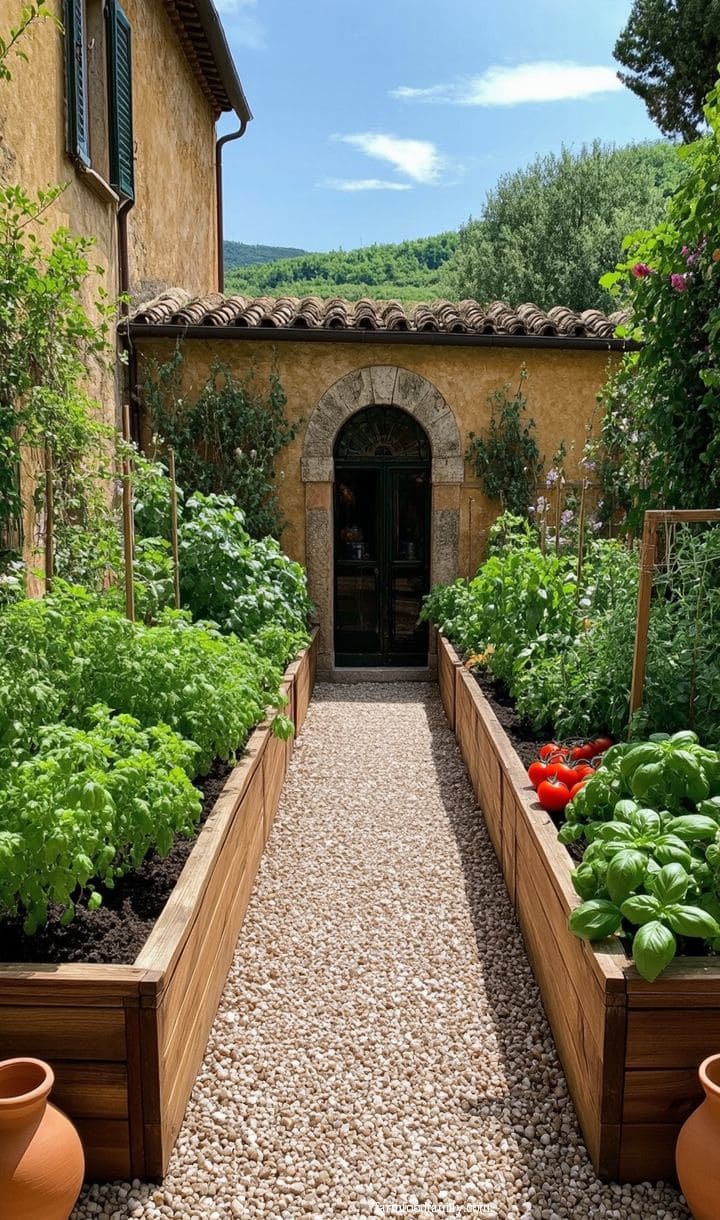
Raised beds or terracotta pots provide a neat and realistic appearance.
Place the garden near your outdoor cooking or eating area for easy access, and finish with a gravel or stone pathway to complete the rustic look.
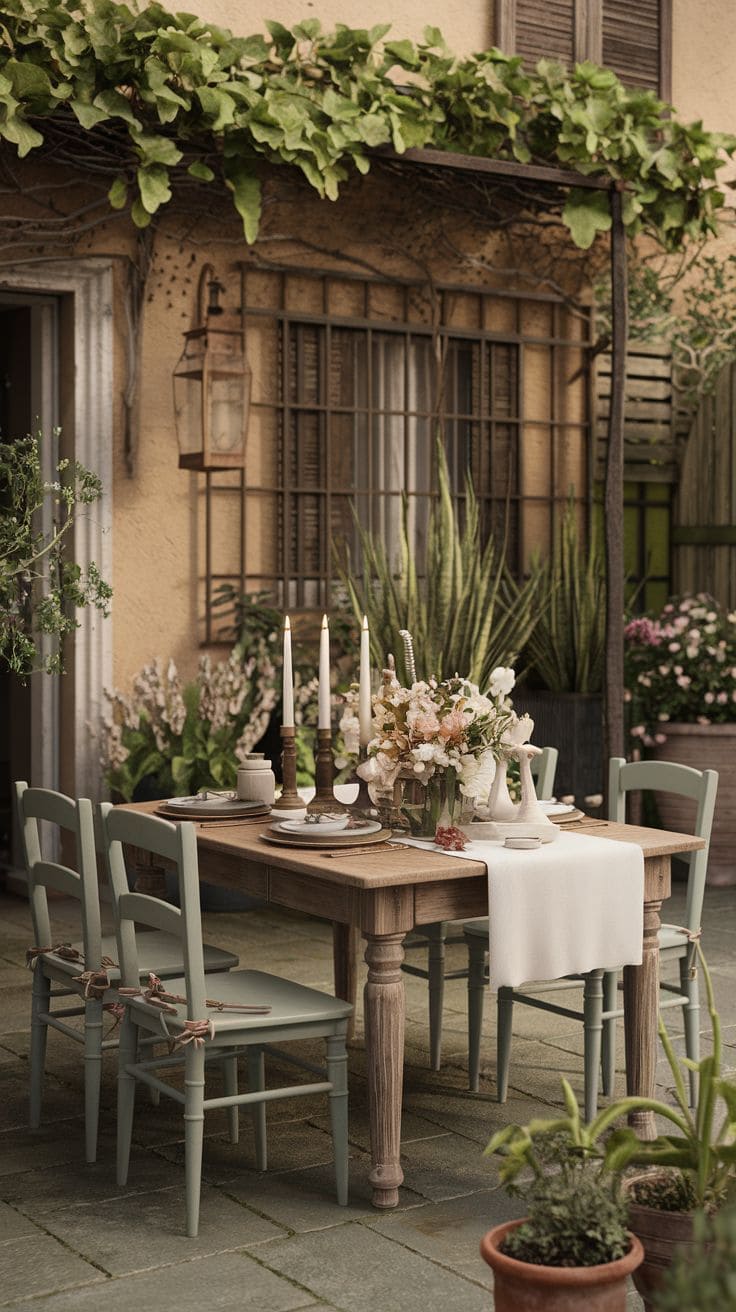
5. Establish an Outdoor Dining Area
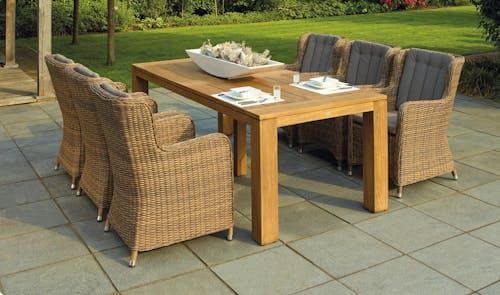
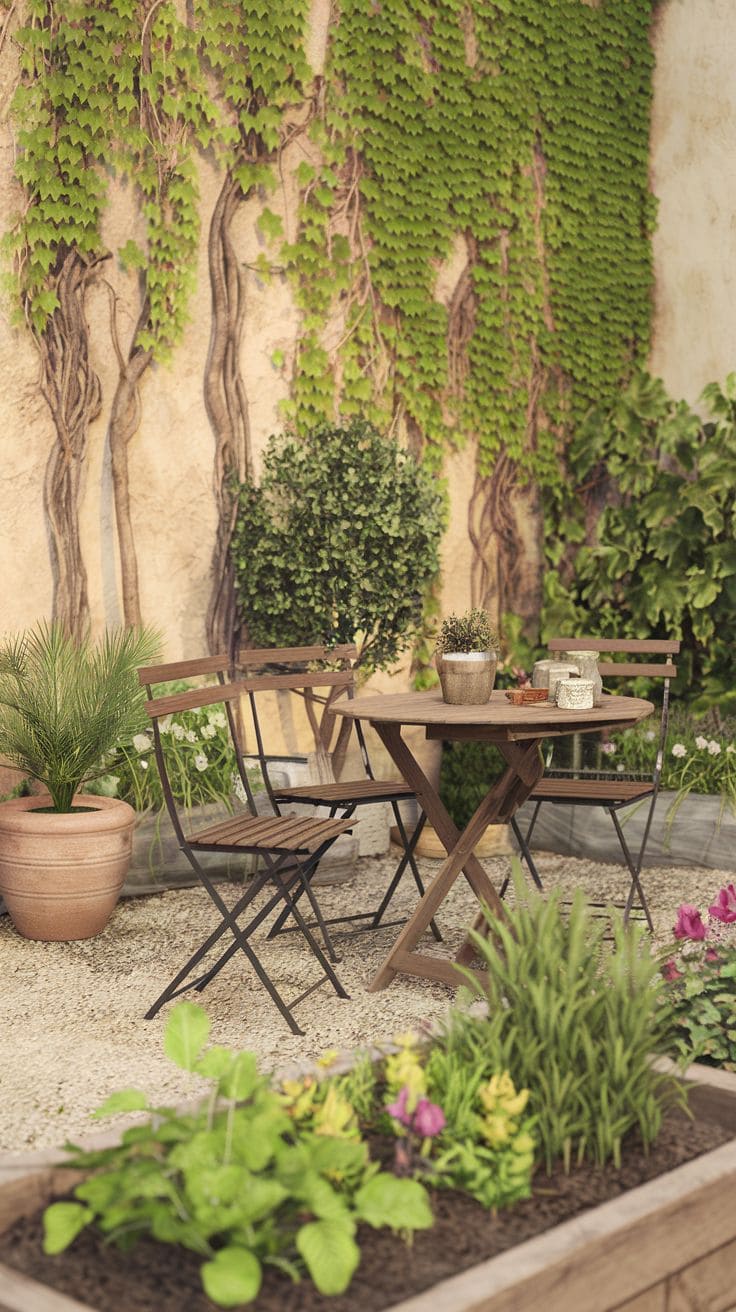
An Italian backyard is incomplete without a designated dining area. Choose a large wooden or wrought-iron table with comfy chairs and place it beneath a pergola or shaded area.
If you prefer, you may keep it out in the open to have more sunlight shining upon the dining area.
Decorate the table with simple but attractive components like a linen tablecloth, ceramic plates, and glass candle holders.
Surround the area with flowering plants and soft lighting to create an attractive setting for outdoor dinners with family and friends.
The average homeowner spends $616/year on yard fixes that don't address the real problem. Find out what yours actually is — before you spend another dollar.
Take the Free Quiz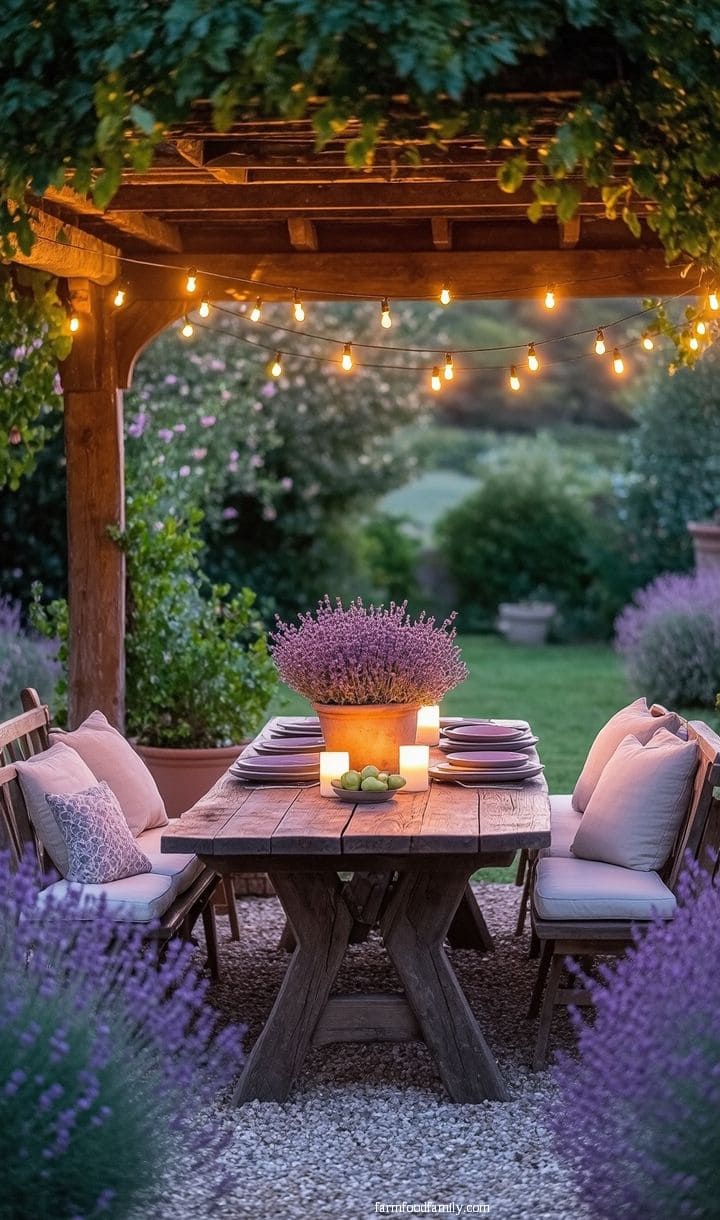
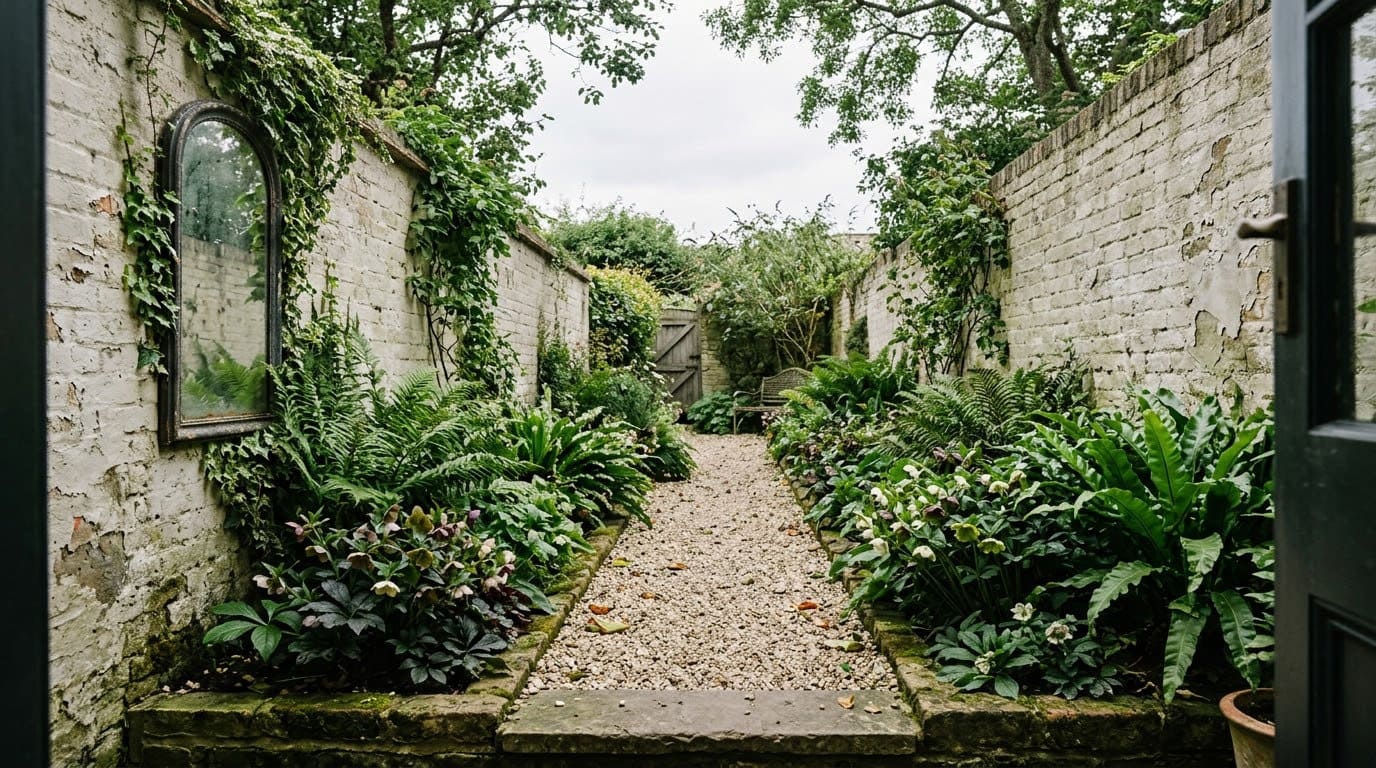
6. Line Pathways and Borders with Gravel
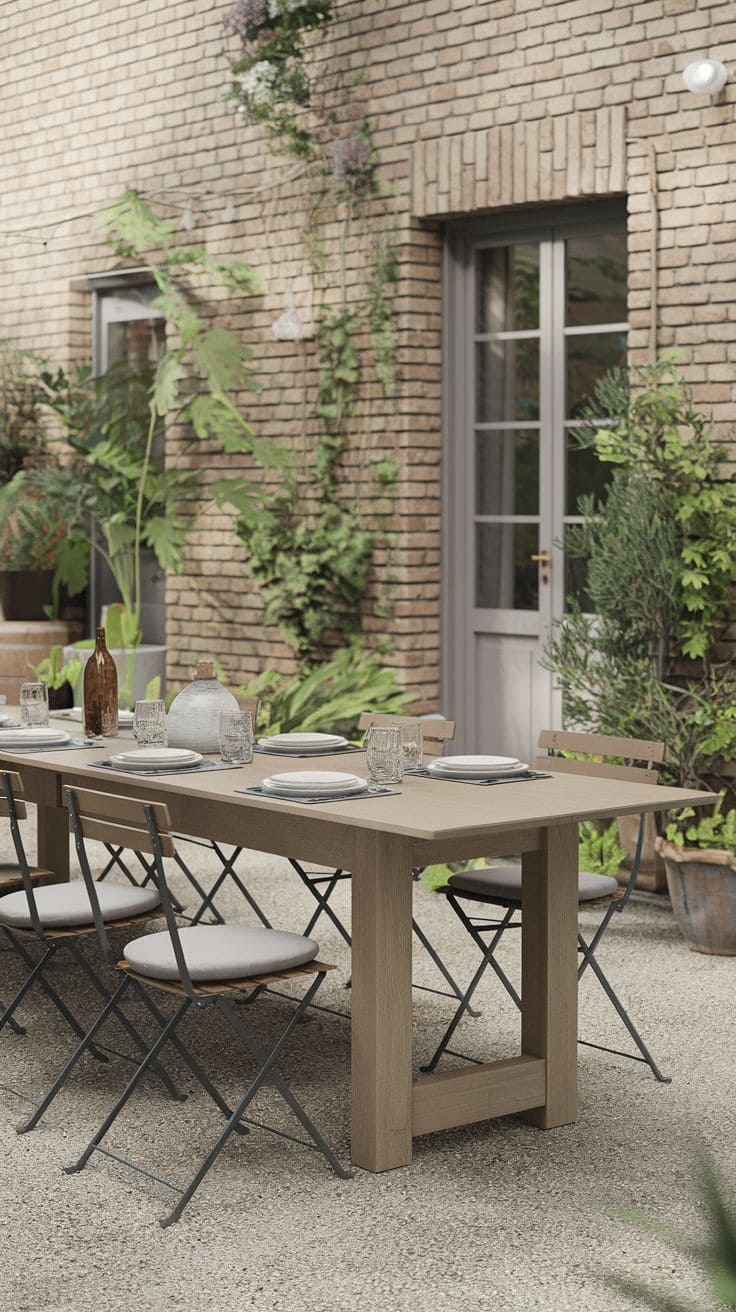
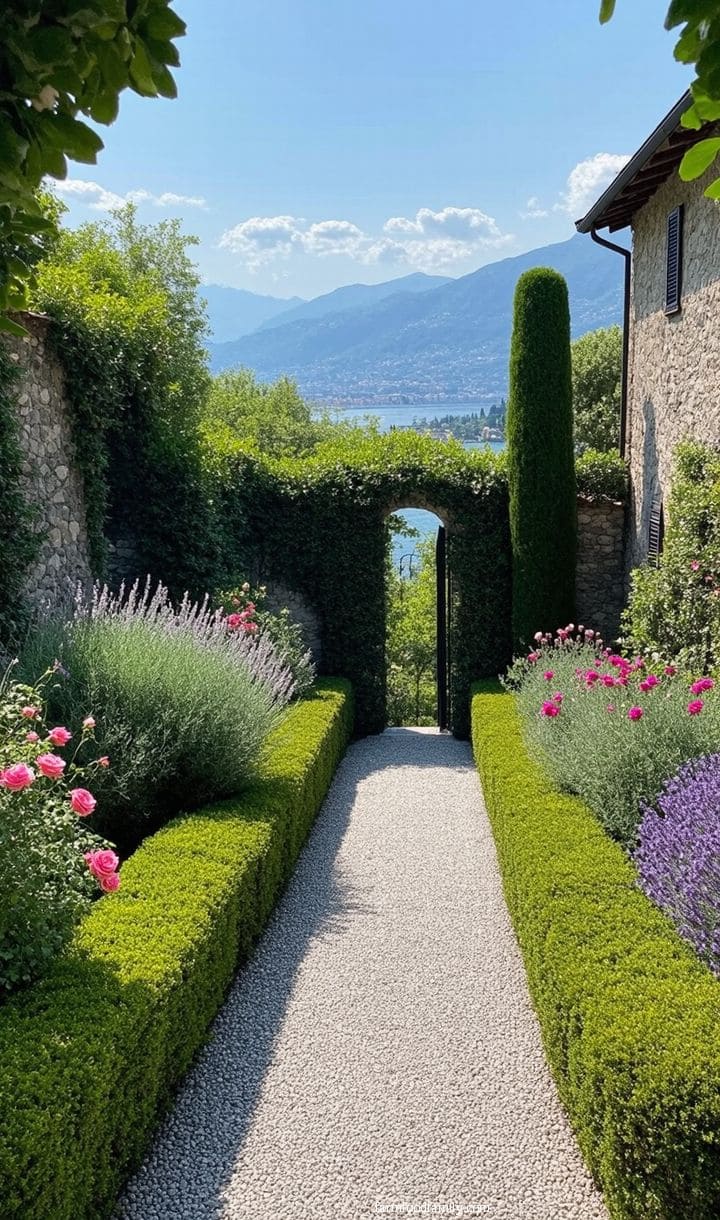
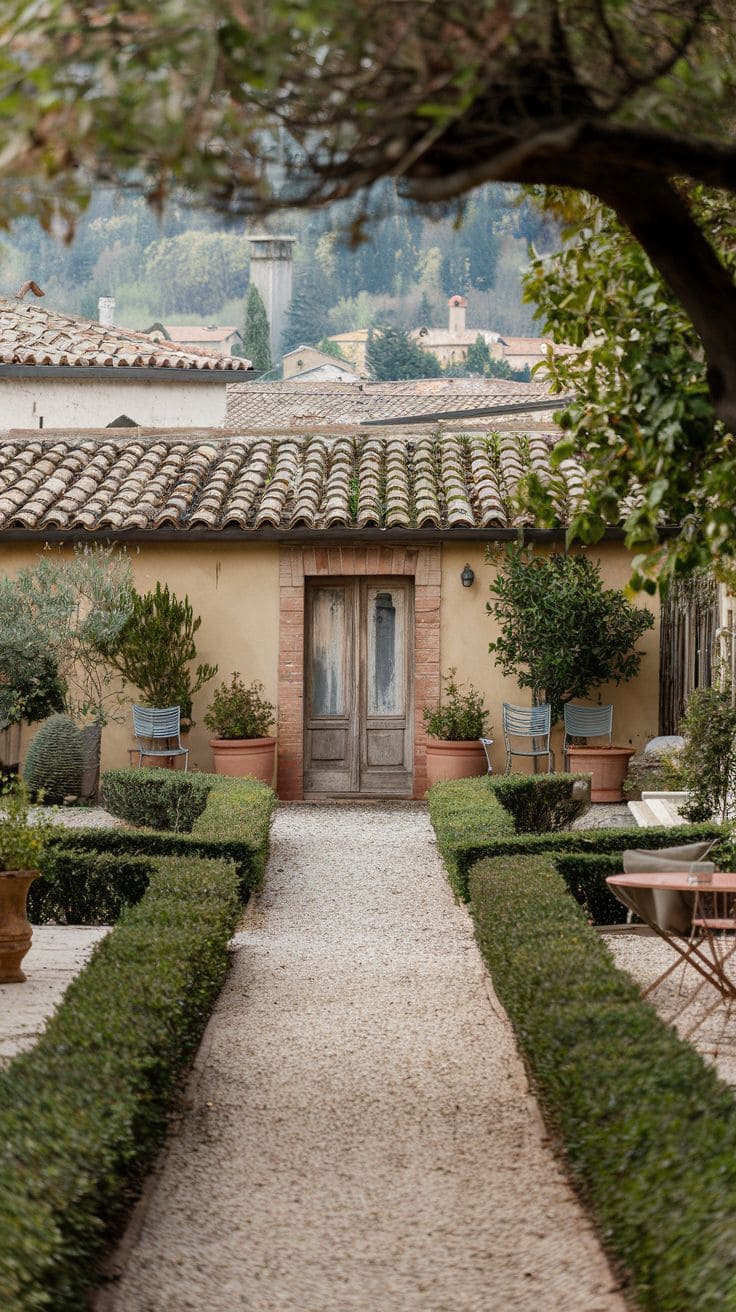
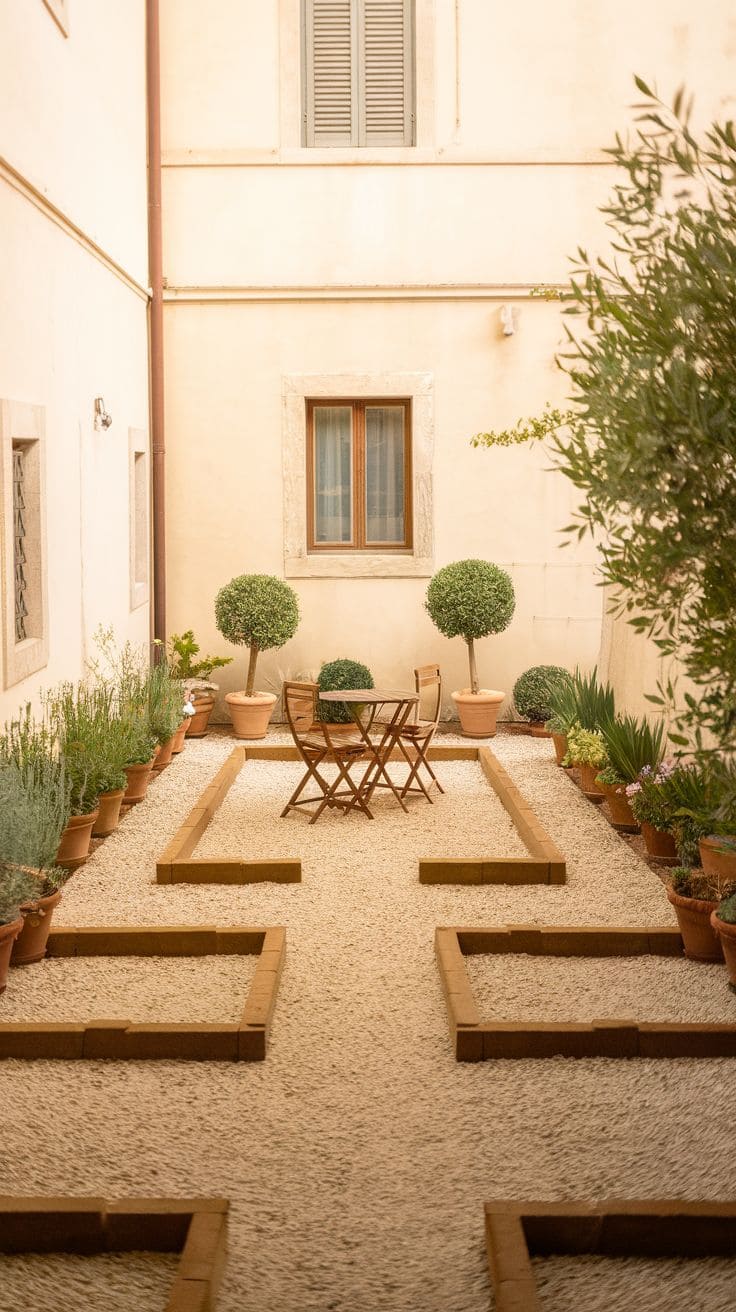
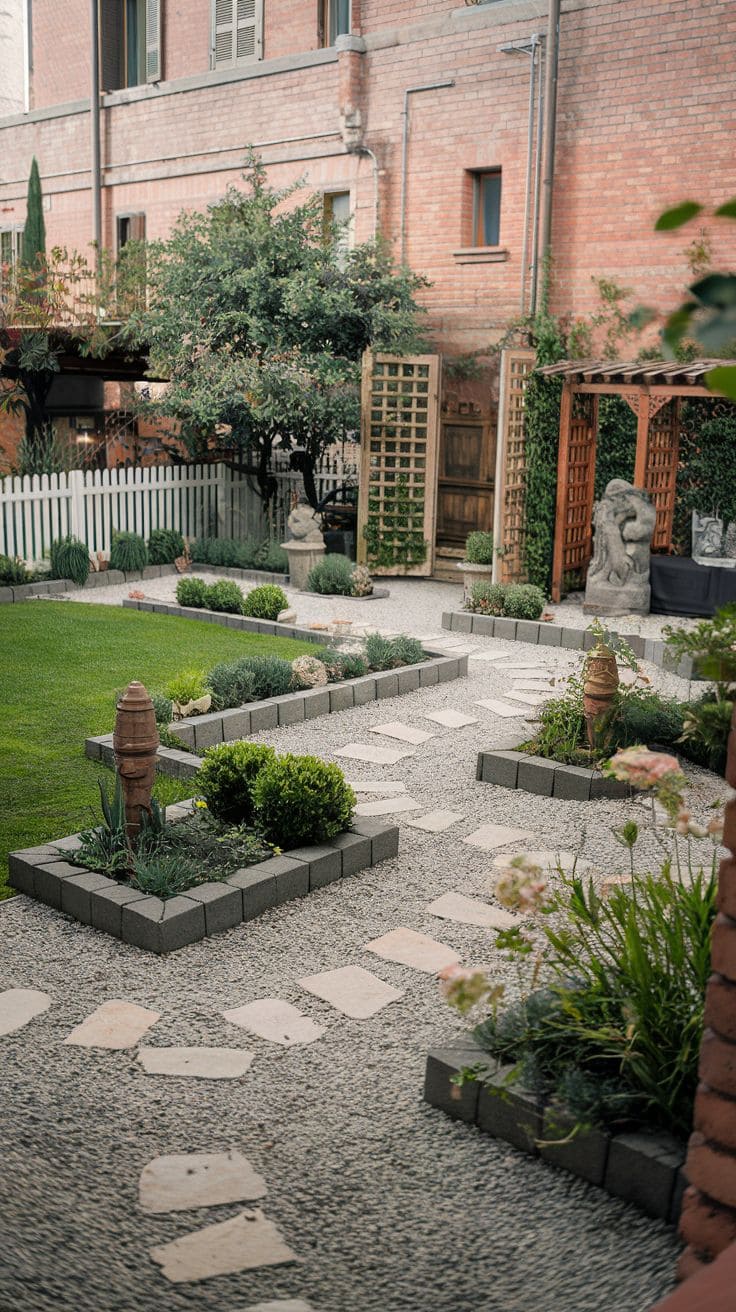
Gravel walkways bordered by boxwood hedges or low stone walls are popular features in Italian gardens.
These walkways provide structure and guide the flow of the yard, while their crunchy texture underfoot enhances the sensory experience.
To add beauty and smell, frame the walks with flowering plants such as roses, hydrangeas, or lavender.
The defined borders help to keep your lawn looking neat and orderly while also boosting its natural appeal.
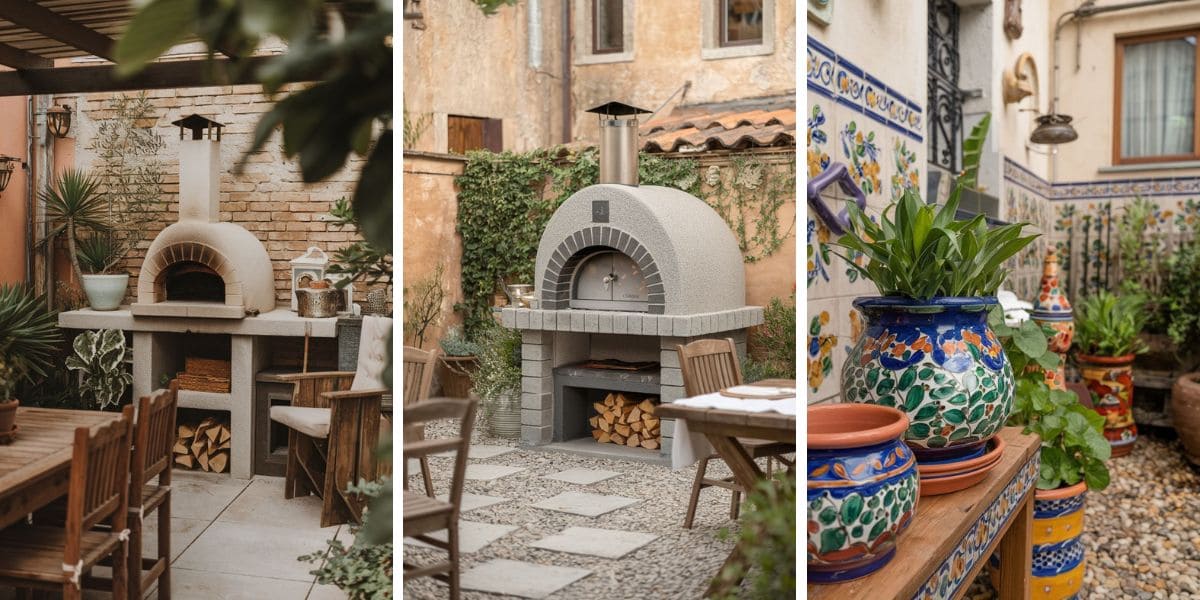
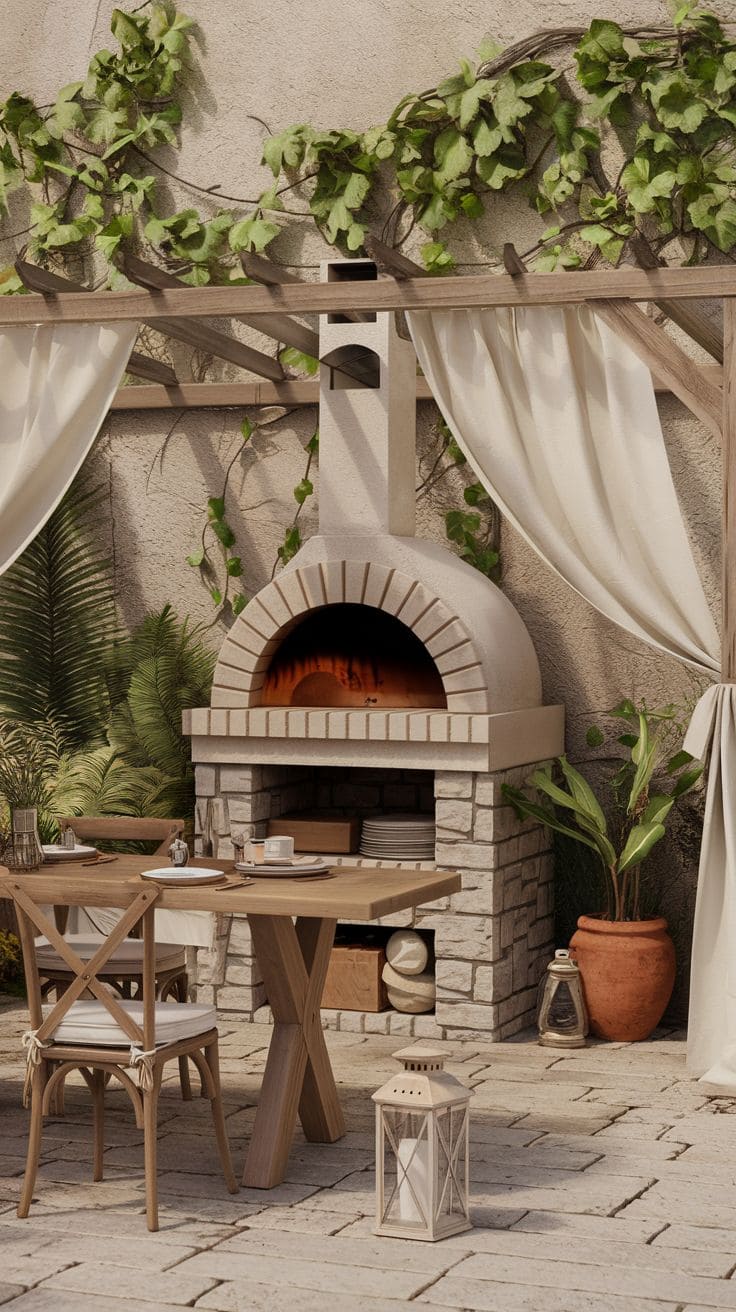
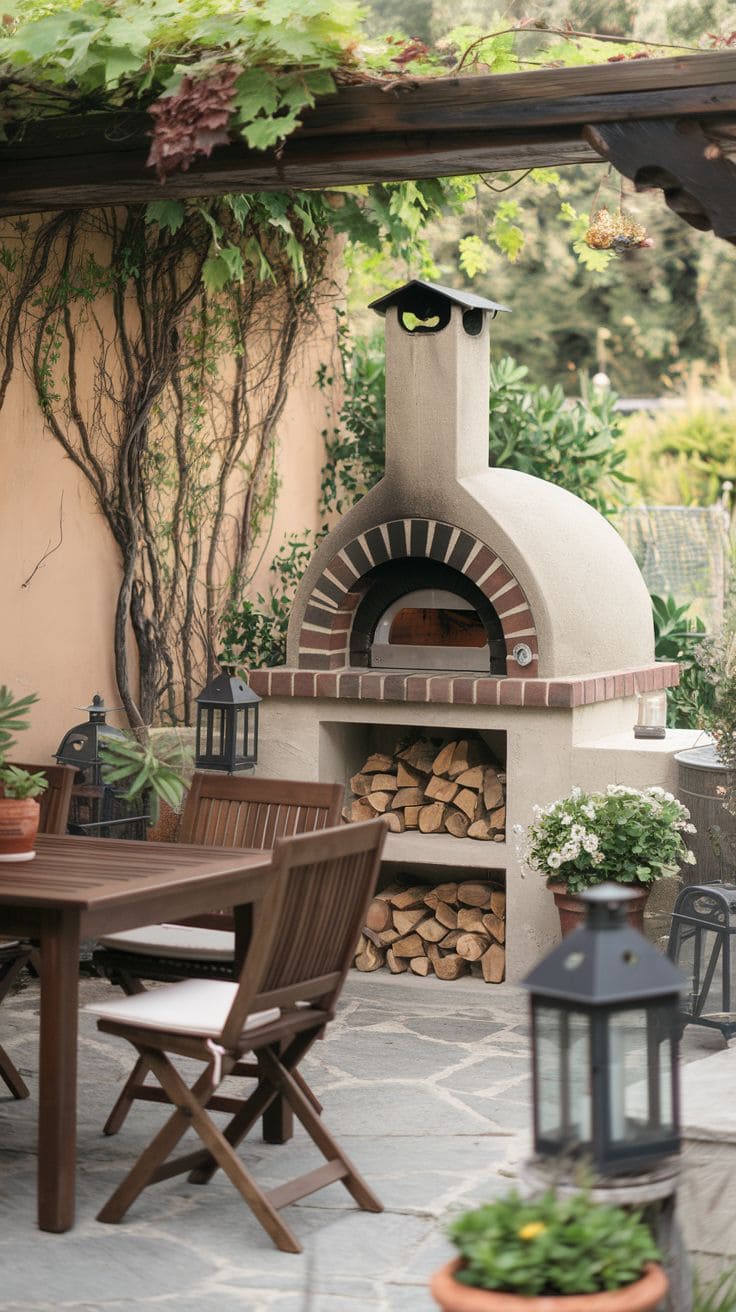
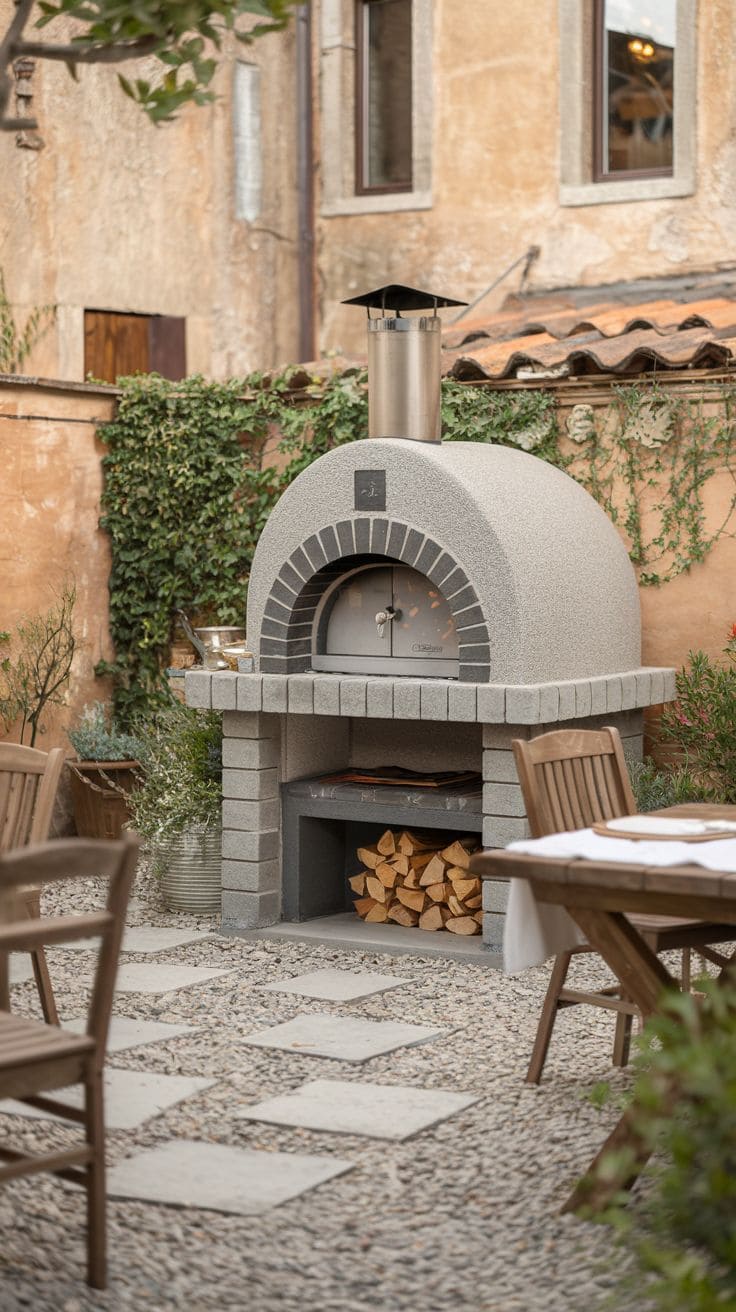
7. Stone Pizza Oven
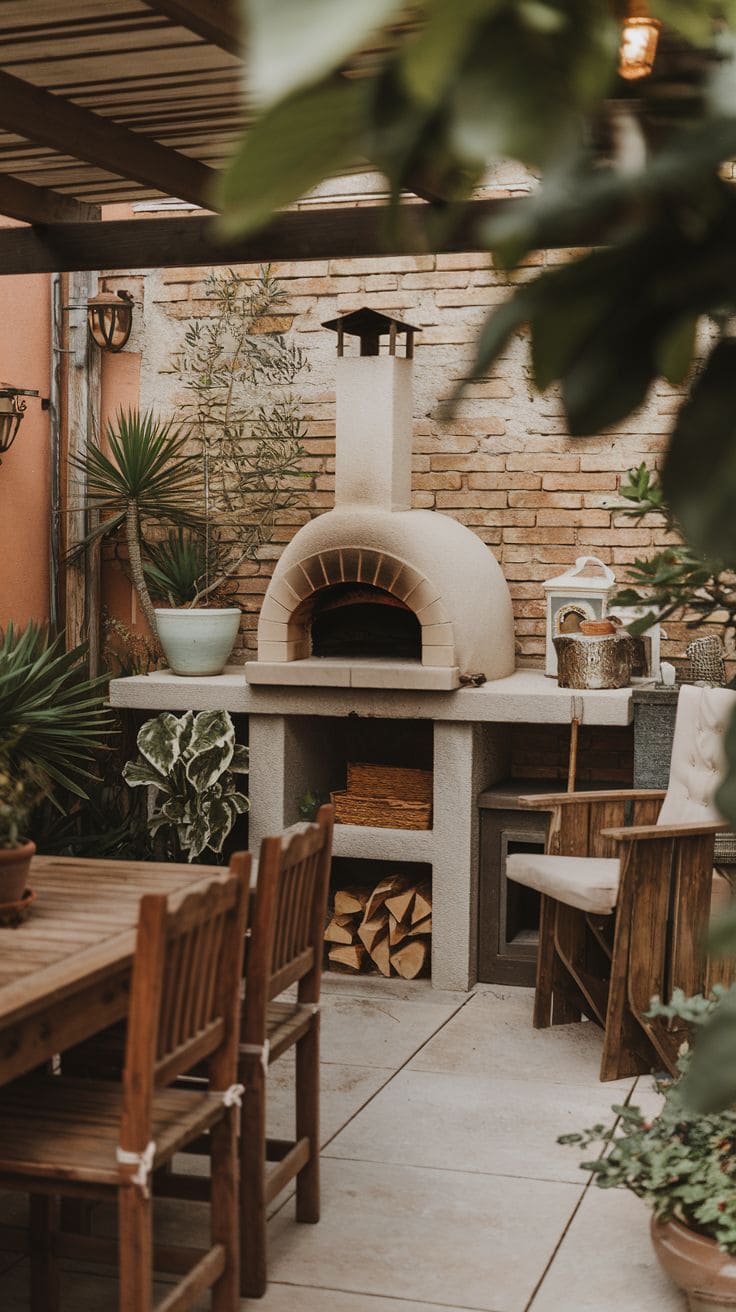
Here’s the part most articles skip: a wood-fired pizza oven is a genuinely big commitment, and it’s not automatically worth it for everyone.
A home oven that hits 550°F is honestly enough for most pizza, the real case for a dedicated wood-fired oven is if you specifically want authentic Neapolitan-style results, since that style depends on the higher heat and smoke flavor a home oven can’t produce.
If you do build one, get the clearances right from the start. Per the International Residential Code (IRC R1006), outdoor masonry ovens and fireplaces need a minimum 10-foot clearance from any combustible structure, fence, or overhang, and Authentic Pizza Ovens publishes detailed safety-compliance guidance worth reading before you pour a foundation.
And build the oven itself before you build a surrounding outdoor kitchen around it, not after, a mistake real builders have run into once the kitchen structure is already in place and there’s no good way to fit the oven in.
8. Colorful Ceramic Decor
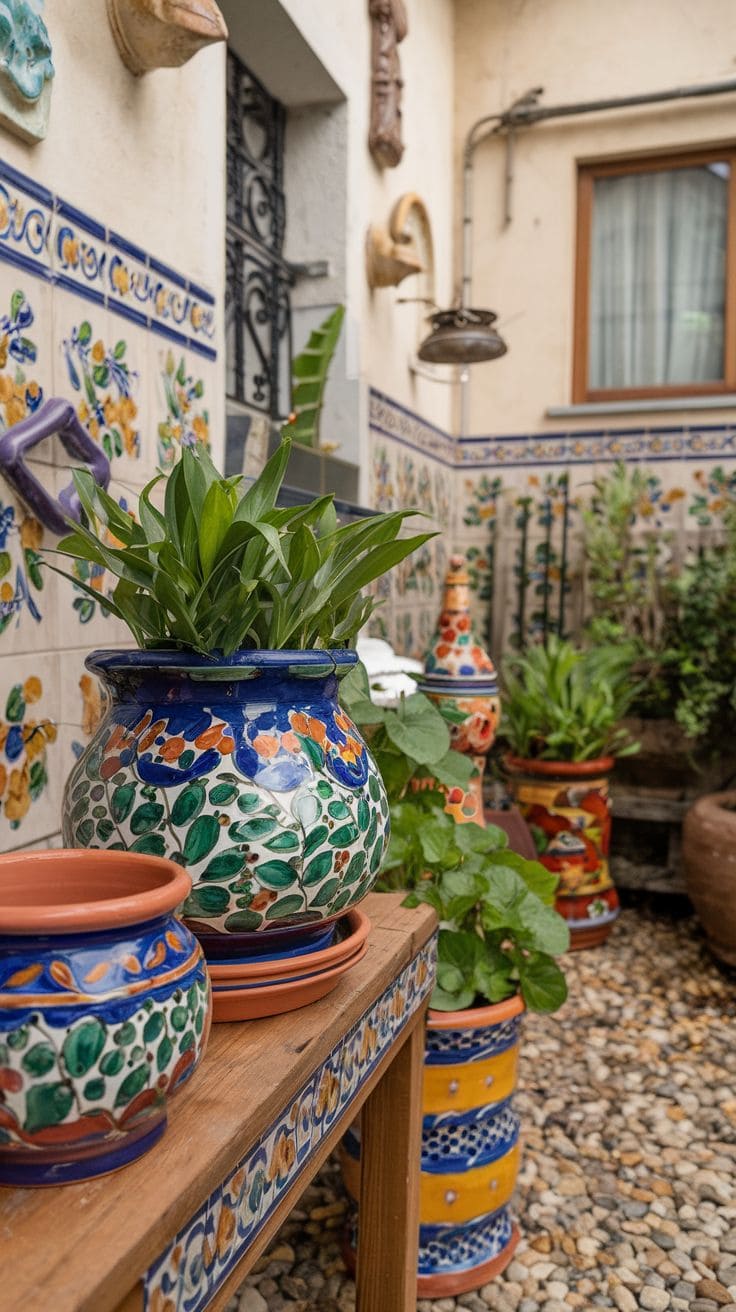
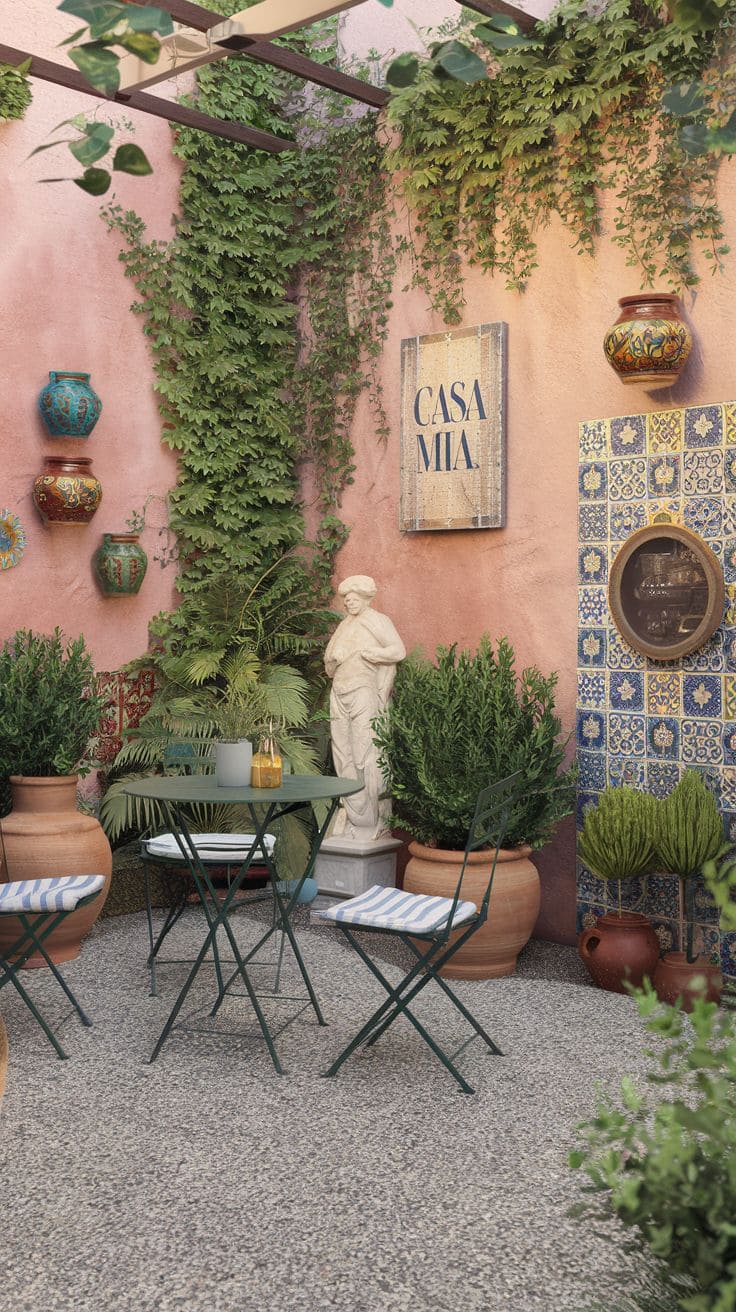
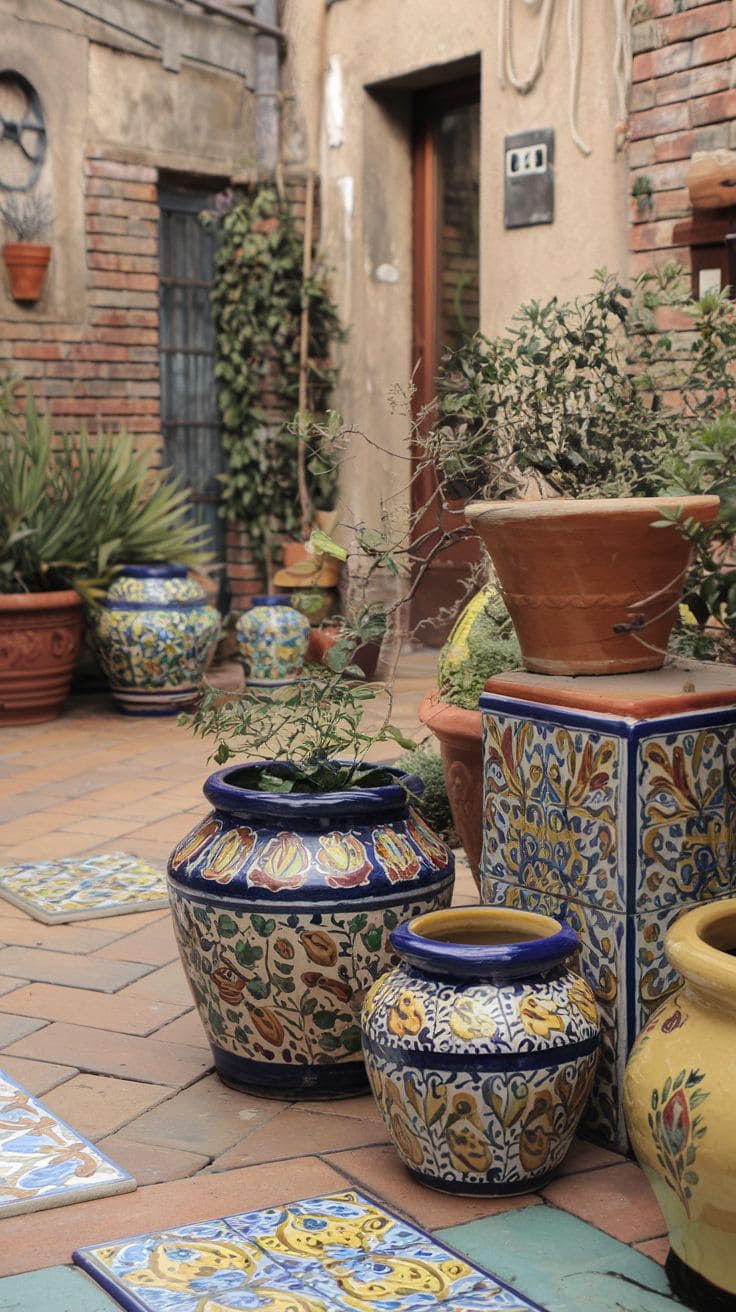
Add Italian hand-painted ceramic pots, tiles, or wall art to brighten up any corner of the yard.
Look for majolica-style glazed pottery specifically, deep blues, yellows, and greens on a white base, since that’s the specific regional style most associated with Italian garden decor rather than generic terra cotta.
A single striking piece placed at eye level does more than scattering several small pieces around.
9. Olive and Lemon Trees
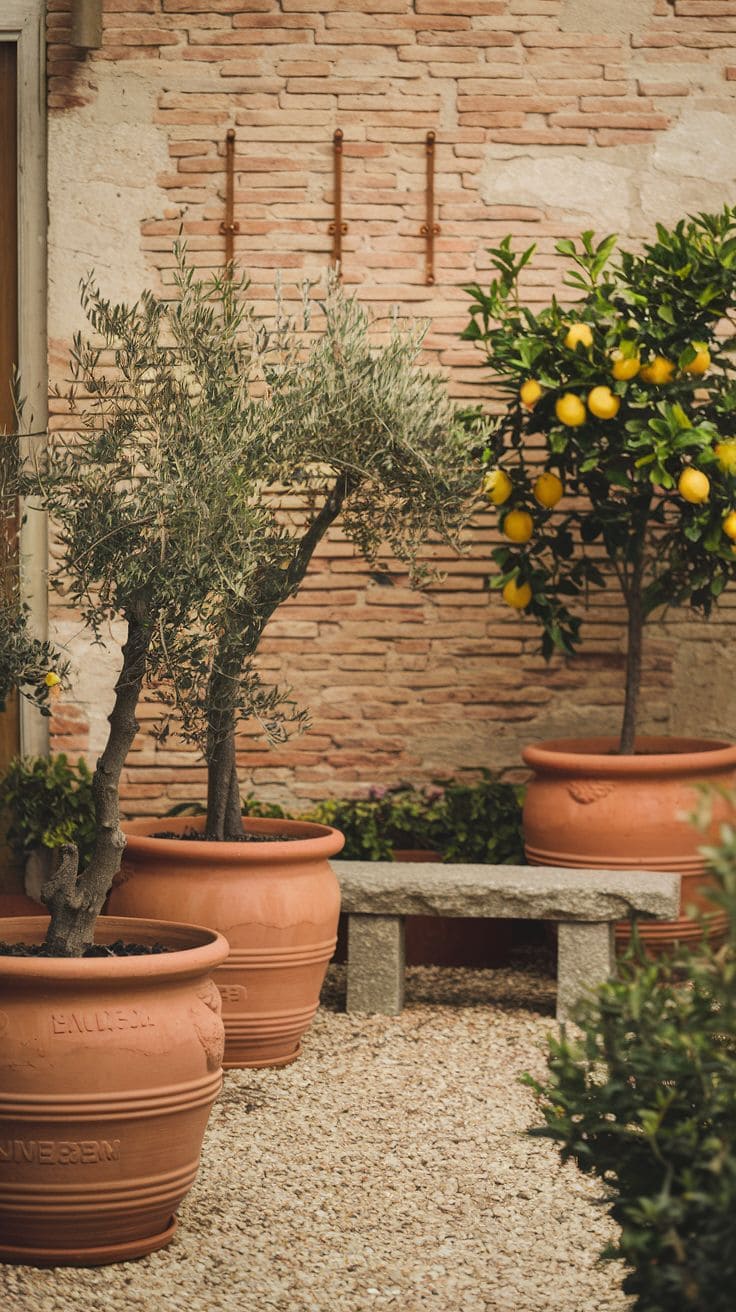
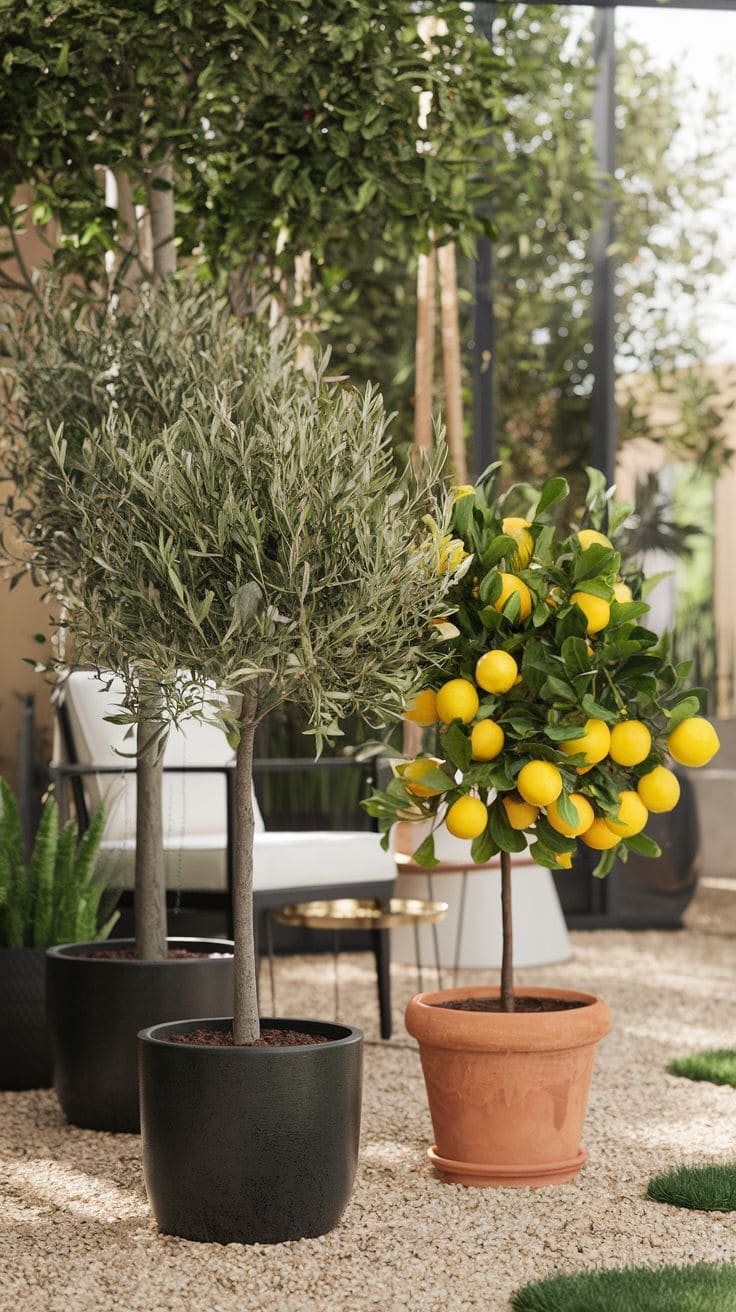
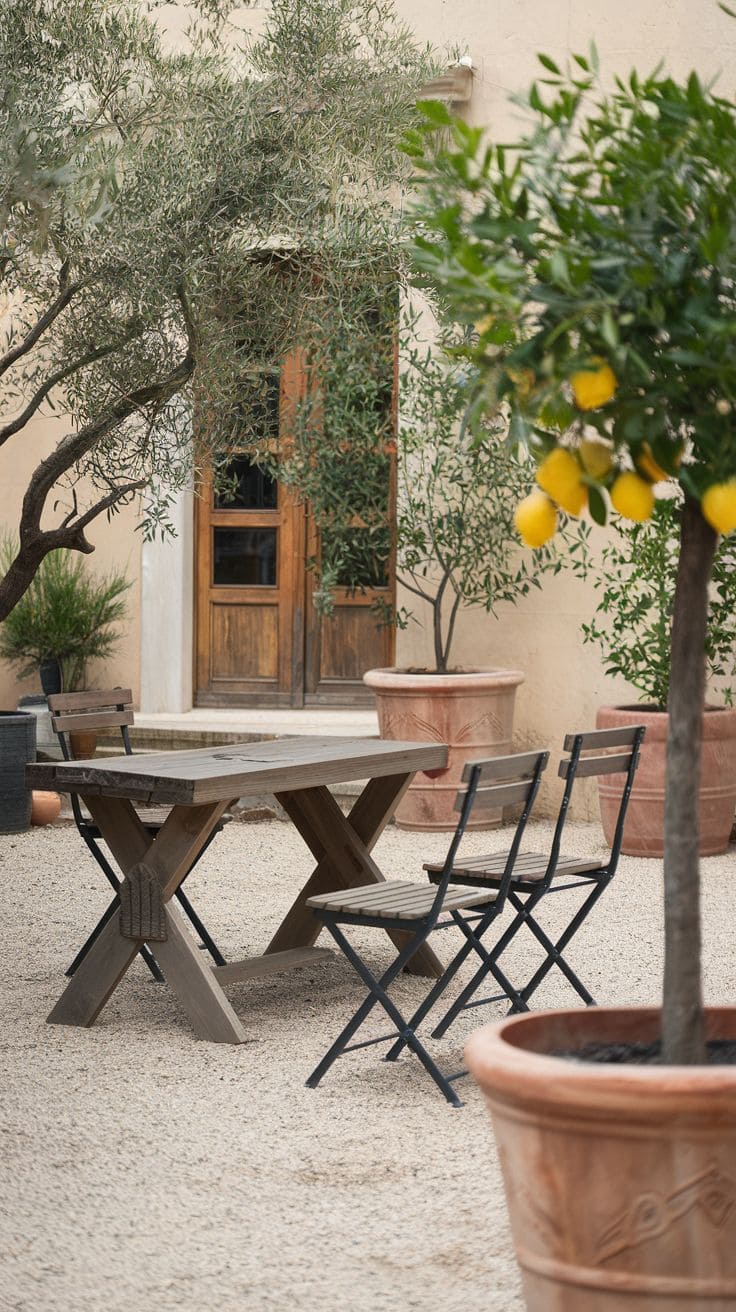
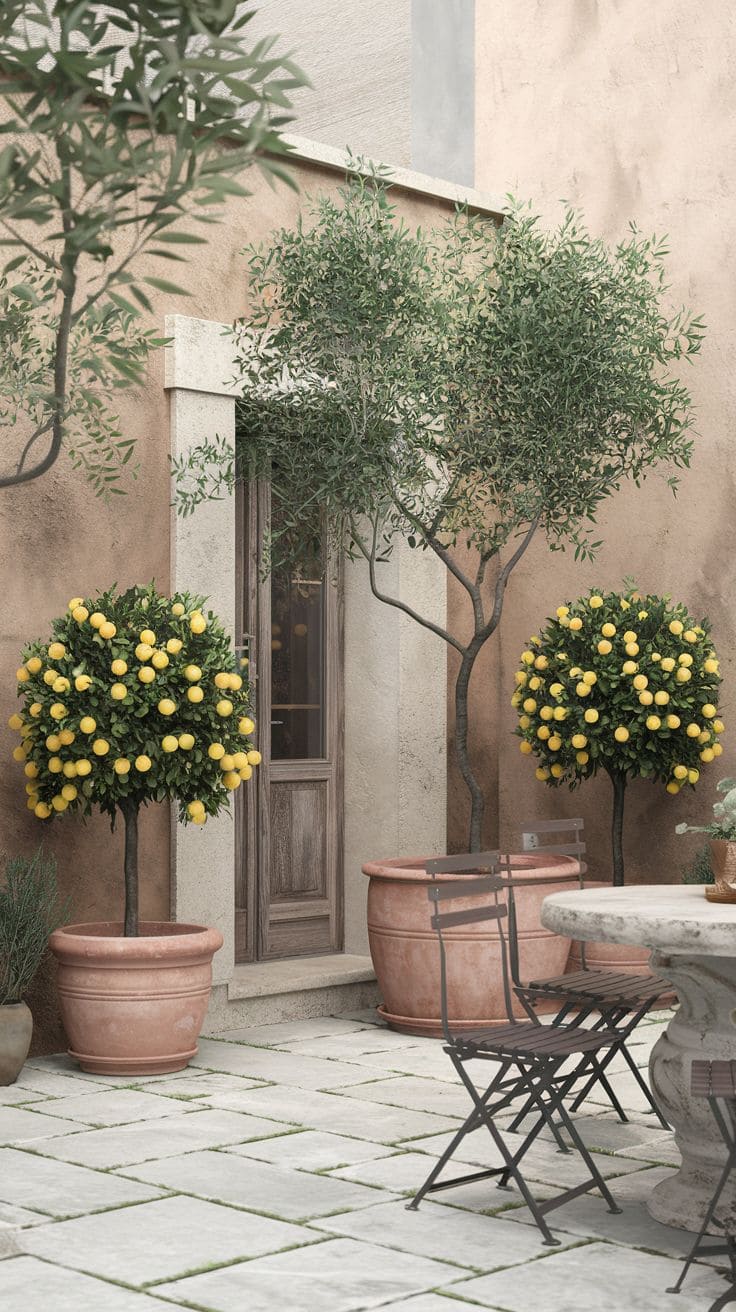
Plant potted olive trees or dwarf lemon trees to evoke the Italian countryside, but check your climate first. Olive trees generally do well planted directly in the ground in USDA hardiness zones 8-11, established trees risk real damage below roughly 15-17°F.
If you’re in a colder zone, keep them in containers so you can move them indoors or into a garage during freezing stretches, which is exactly how a lot of growers in zones 6-7 manage it successfully. Dwarf lemon trees follow a similar logic and do best in movable containers outside of zones 9-11.
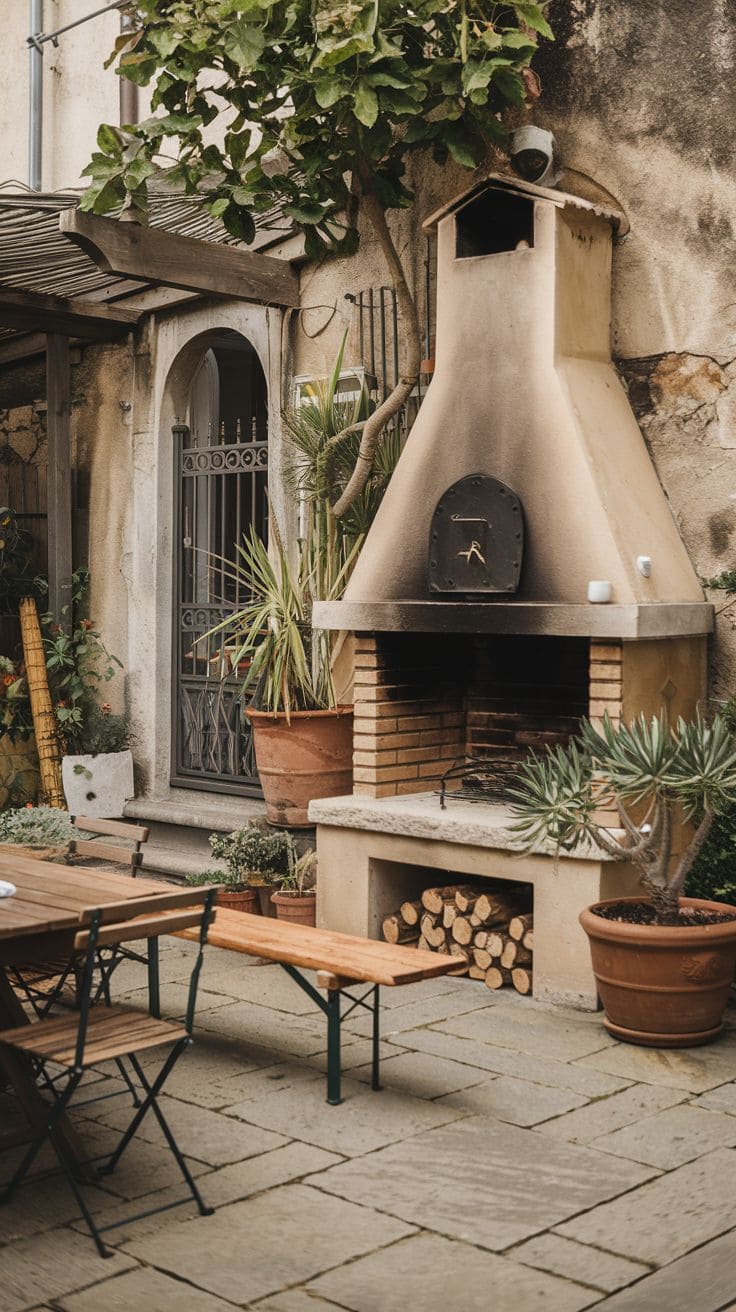
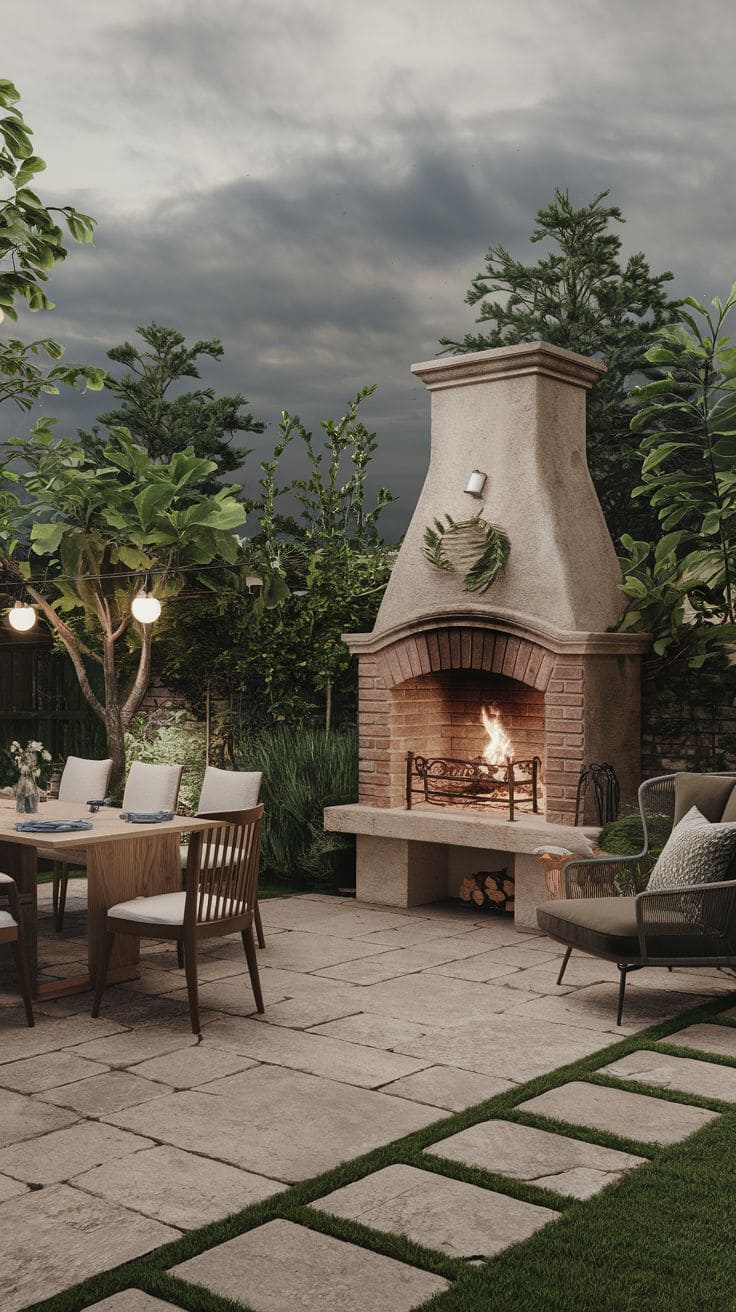
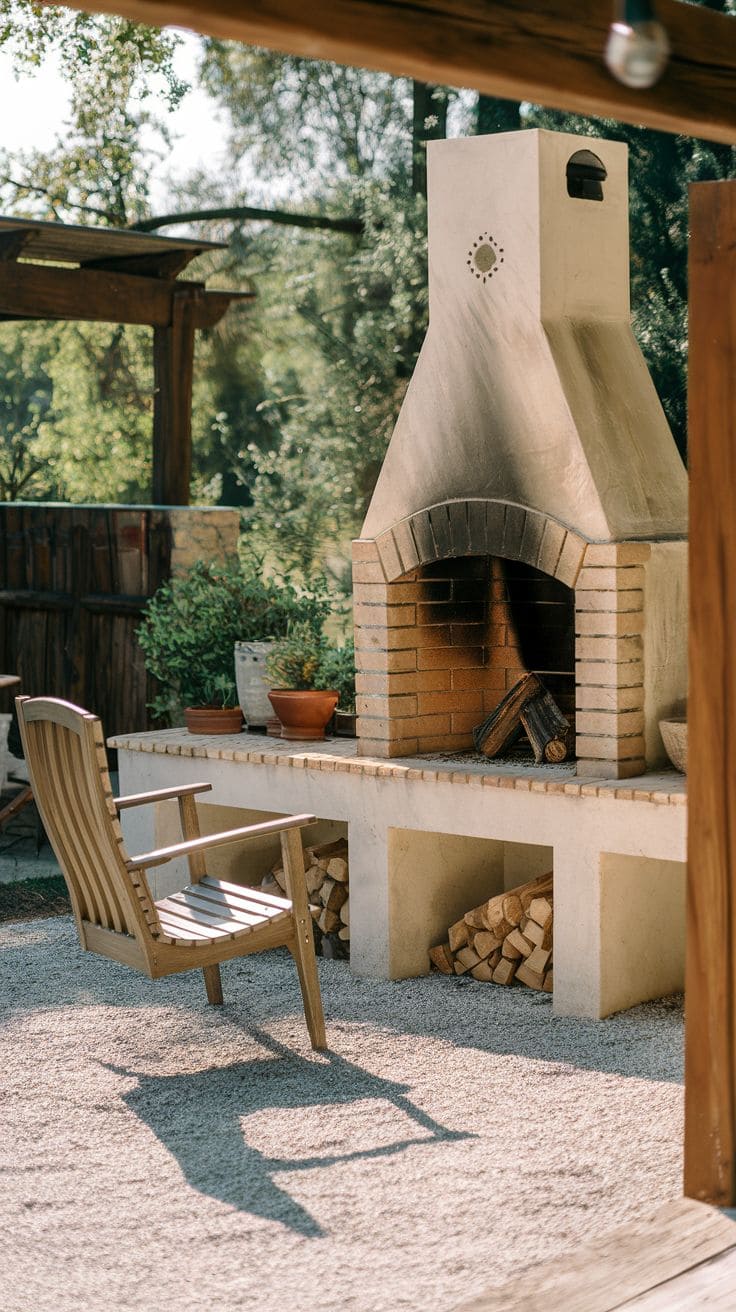
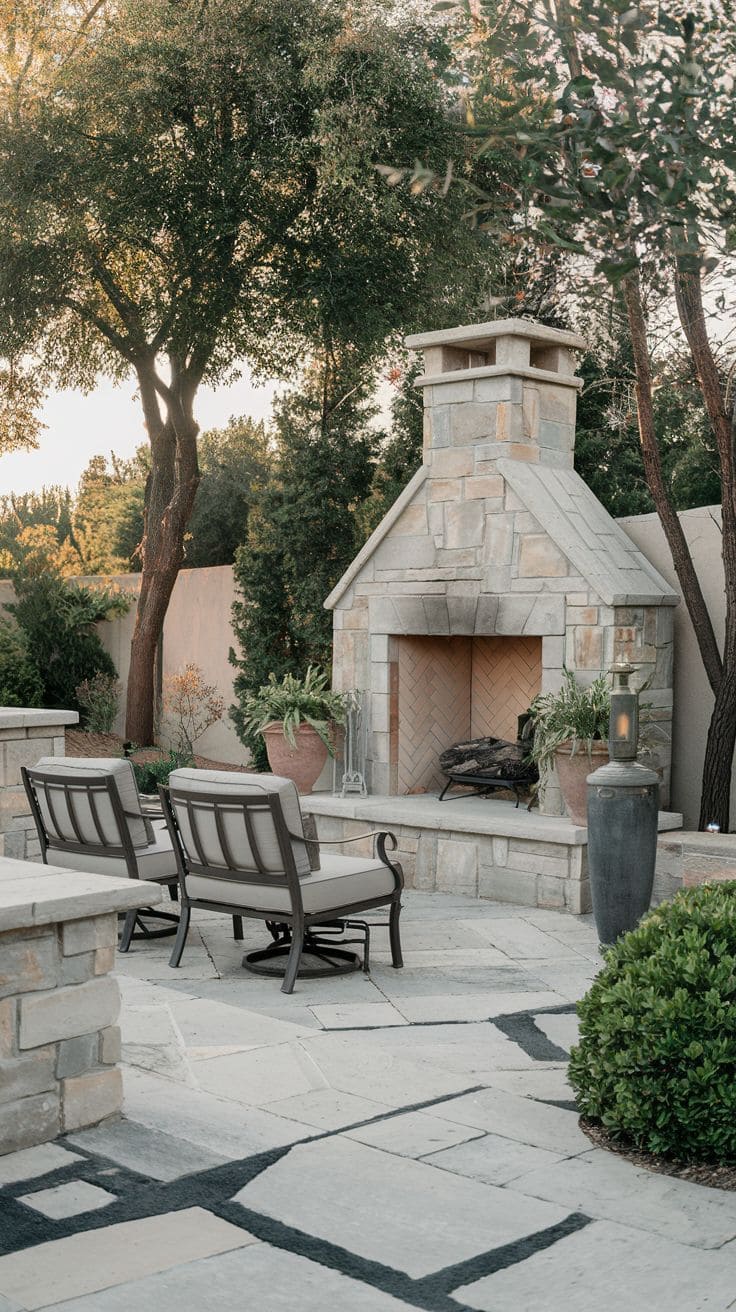
10. Outdoor Fireplace
A stone or brick fireplace adds warmth and is a cozy gathering spot once the sun goes down, extending how late you can actually use the backyard into the evening.
The same clearance principle from the pizza oven idea above applies here too, keep it well clear of fences, overhangs, and anything combustible, and check your local code before building since requirements vary by jurisdiction.
11. Terra cotta urns along the pathway
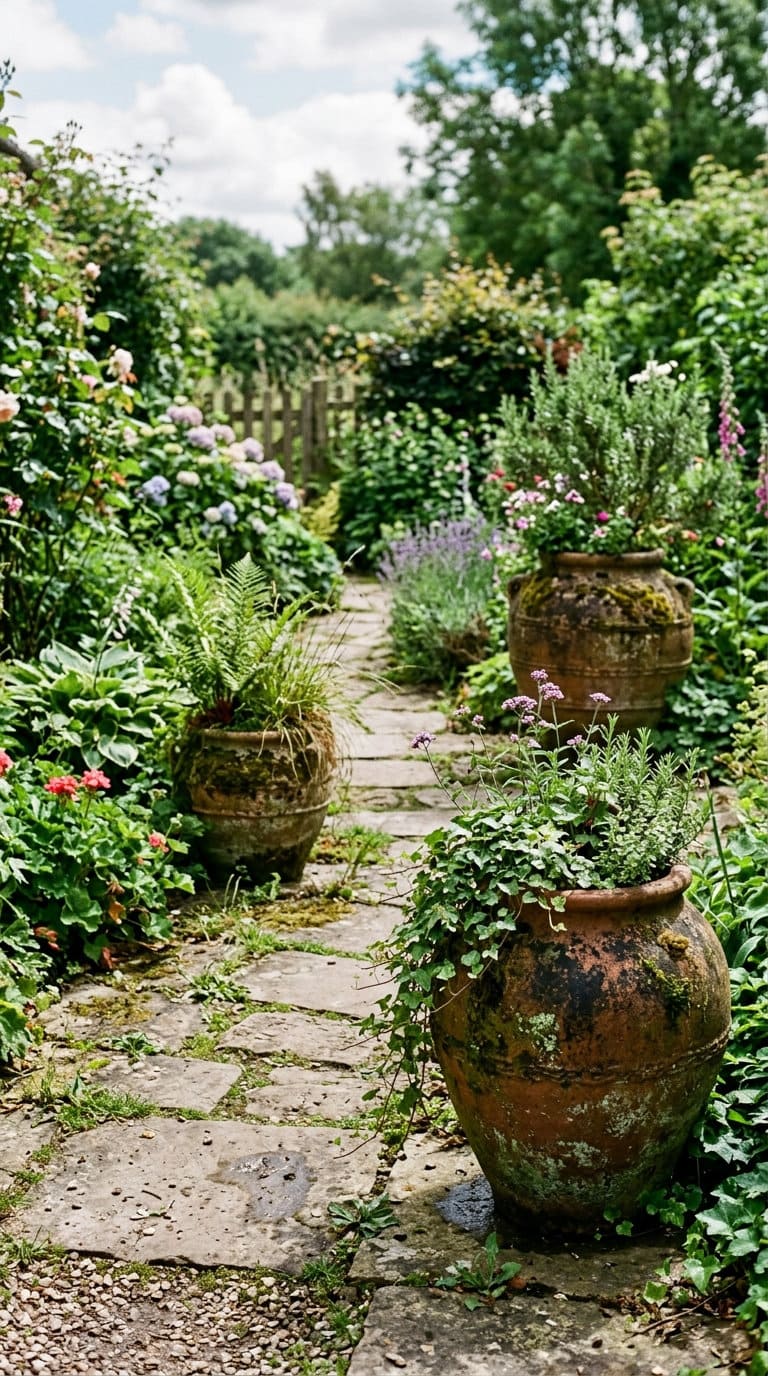
Place substantial terra cotta urns asymmetrically along garden pathways rather than in a matched, evenly spaced row, real Tuscan gardens lean into a slightly imperfect placement rather than symmetry.
Leave the urns unsealed and let moss and lichen develop naturally over a season or two, that weathered look is what actually reads as authentic rather than newly installed.
12. Italian cypress and lavender border
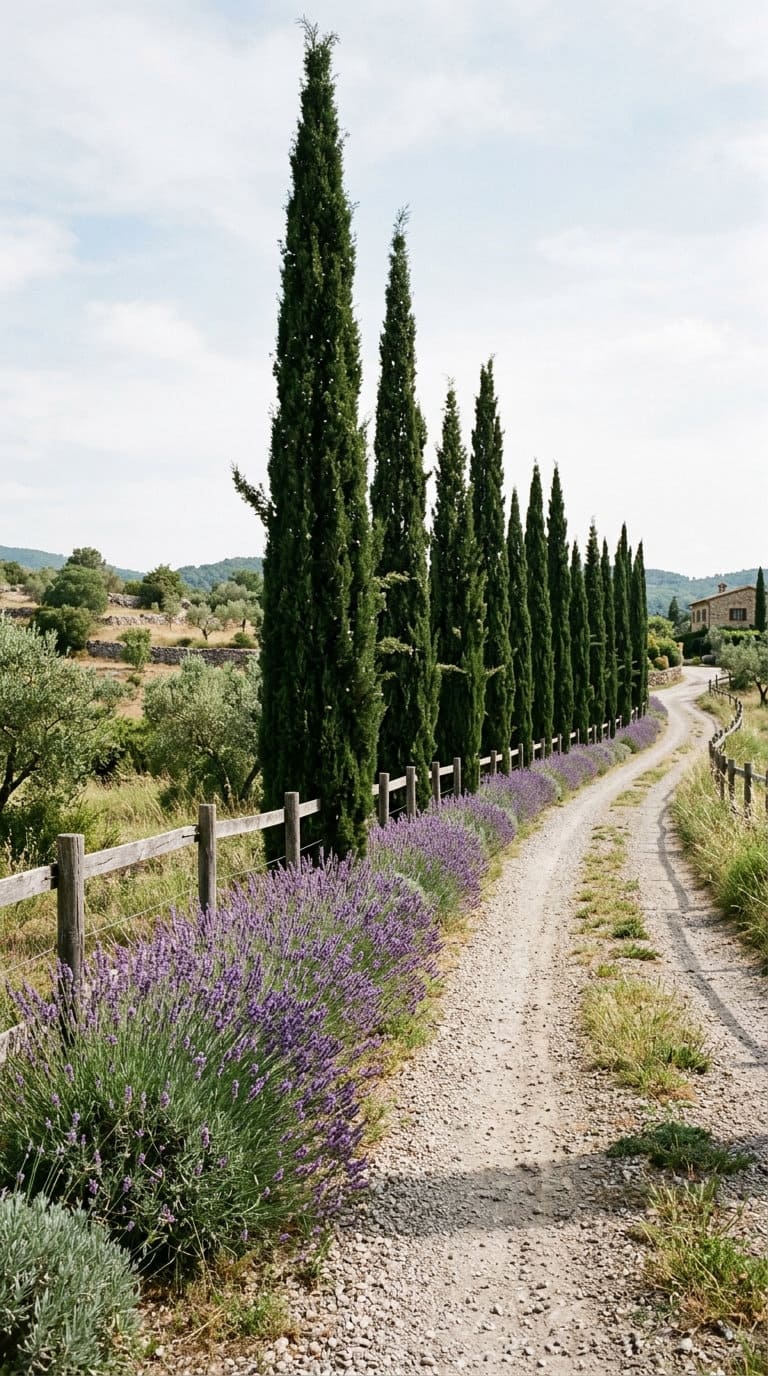
Tall, narrow Italian cypress trees planted in a row create the vertical rhythm most associated with Tuscan landscapes at a glance, and they work well as a backdrop along a fence line or driveway.
Underplant with lavender for color, scent, and a genuinely low-maintenance groundcover once established, both plants tolerate dry conditions well, which matters if you’re not interested in a high-water landscape.
13. Low stone wall or covered loggia
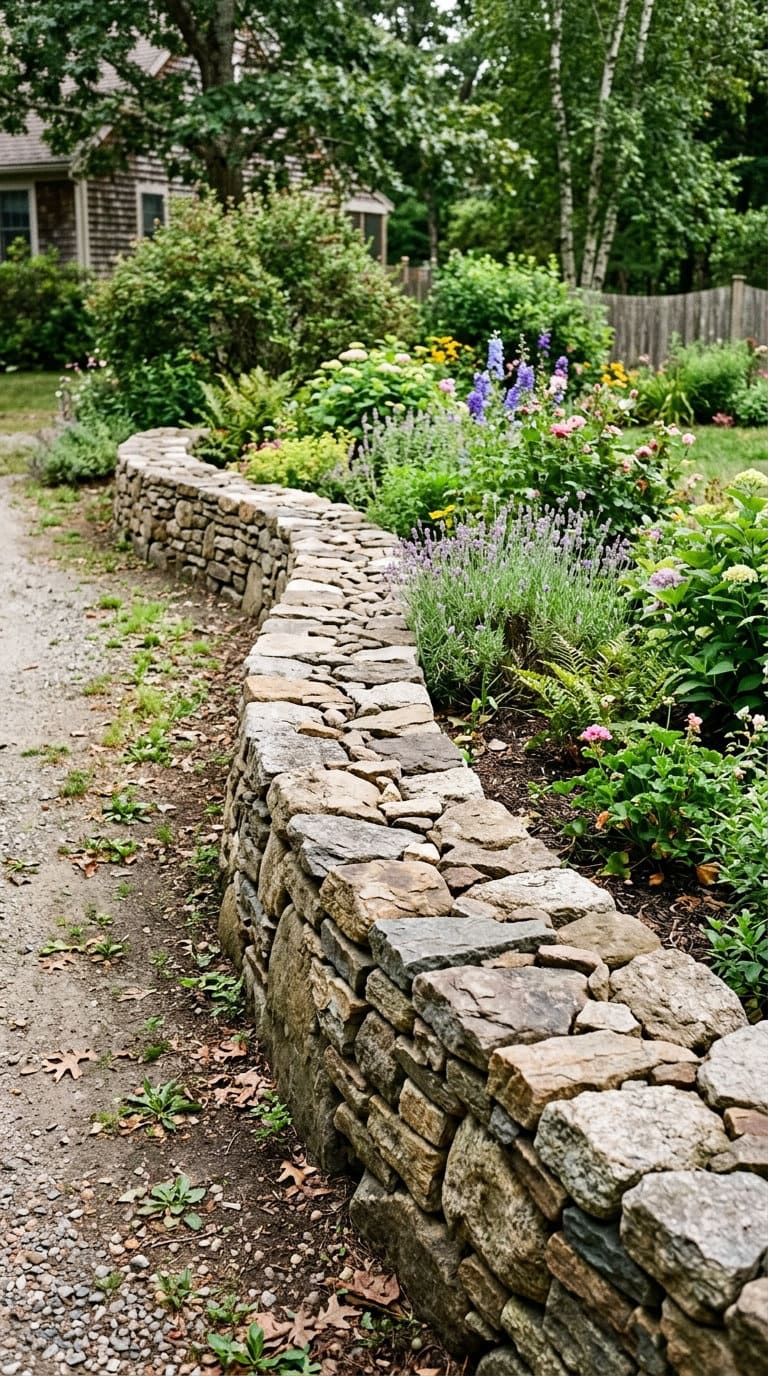
A low, dry-stacked stone wall (no mortar, stones fit closely together) defines a garden bed or seating area without blocking the view across the yard.
If you want something more substantial, a covered loggia, essentially a roofed, open-sided porch extension, gives you shaded outdoor space that works in rain as well as sun, unlike a pergola alone.
14. Outdoor kitchen or wine nook
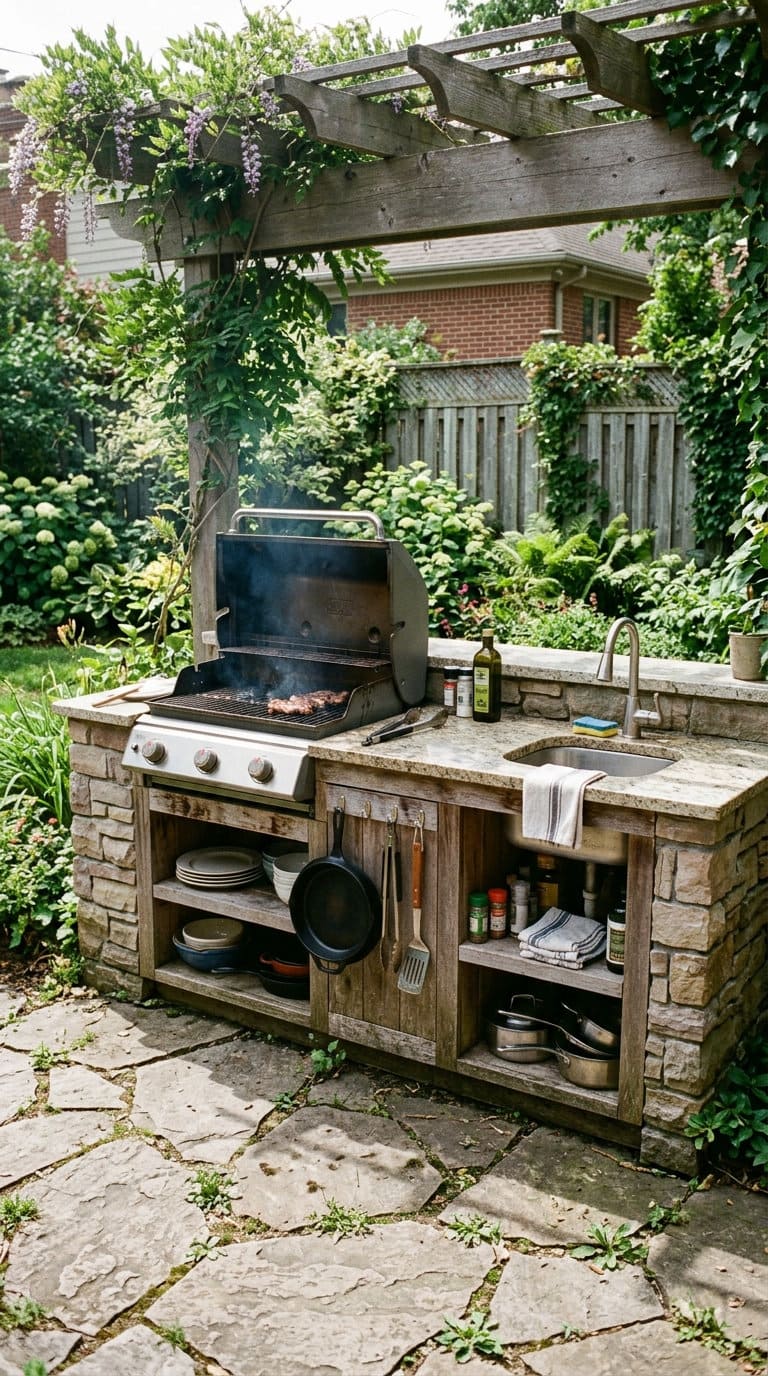
A small built-in counter with a grill, sink, and some open shelving turns the patio into a functional cooking space rather than just a place to eat.
For something smaller-scale, a simple wine nook, a wall-mounted rack and a narrow counter, works even in a modest backyard and fits the theme without the scope of a full outdoor kitchen build.
15. String lights and lantern-style garden lighting
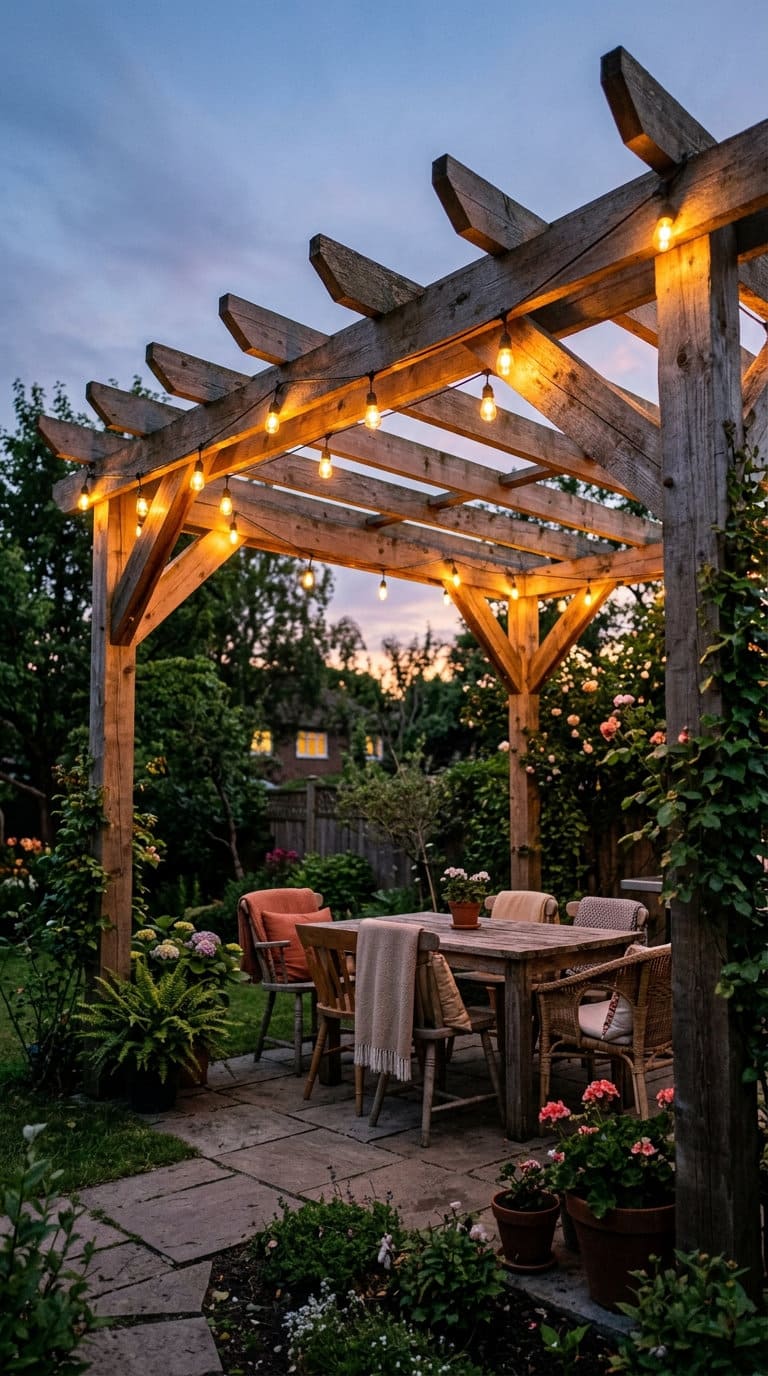
Warm white string lights strung between the pergola posts or along a fence line extend the backyard’s usable hours into the evening, and lantern-style fixtures along the gravel path (idea #6) add a softer, more intimate light than a floodlight would. Solar options avoid running wiring if you’re not ready for an electrician.
Related reading: our European backyard ideas article covers a broader range of continental styles beyond Italian specifically, and our Mediterranean pool ideas piece is worth a look if you’re combining this style with a pool project.
FAQs on Italian backyard ideas
Is an outdoor pizza oven actually worth it?
It depends on what you’re after. A home oven that reaches 550°F handles most pizza styles just fine, and plenty of people who’ve bought a dedicated pizza oven will say it isn’t necessary unless you specifically want authentic Neapolitan-style results, which need higher heat and real wood smoke. If that’s genuinely the style you’re after, it’s worth it. If you just want good pizza more often, a steel or stone insert in your existing oven gets you most of the way there for a fraction of the cost and effort.
What’s the minimum safe clearance for a pizza oven or outdoor fireplace?
Per the International Residential Code (IRC R1006), outdoor masonry fireplaces and ovens need a minimum 10-foot clearance from any combustible structure, fence, or overhang. Local codes can add further requirements on top of that, so check with your building department before pouring a foundation, not after.
Will olive or lemon trees actually survive in a colder climate?
Olive trees planted directly in the ground do best in USDA hardiness zones 8-11, and established trees can take real damage below roughly 15-17°F. If you’re in zone 6 or 7, container growing is the practical answer, keep the tree potted and move it into a garage or unheated indoor space during freezing stretches. Dwarf lemon trees work the same way outside of zones 9-11.
How do you keep an Italian-style backyard low-maintenance?
Lean into drought-tolerant plants that are already core to the style, lavender, rosemary, and Italian cypress all tolerate dry conditions well once established. As Gabriel Frank puts it, “an established landscape uses half as much water as a lawn, and takes so much less care.” The gravel pathways and stone hardscaping in most of the ideas above also cut down on the lawn area you’d otherwise need to mow and water.
An Italian-inspired backyard is all about celebrating beauty, nature, and connection. By combining rustic materials, lush greenery, and functional spaces for dining and relaxation, you can create a harmonious retreat that reflects the charm of the Mediterranean.
Whether it’s a stone patio, a pergola wrapped in vines, or an herb garden brimming with fresh ingredients, each element adds to the authenticity and warmth of the design. With the right touches, your backyard will become a timeless escape filled with the spirit of Italy.
Never miss an update — choose FarmFoodFamily as your preferred source on Google.
How it works: Tap the button below to open Google's settings page, then check the box next to FarmFoodFamily.
Tap the checkbox to turn it blue — that's how you know it's set.