6 Signs Your Vegetable Garden Has a Pest Problem Right Now — And the August Fix for Each
Six real diagnostic signs, six non-pest lookalikes that fool most gardeners, and the specific August fix for each, so you stop guessing and start treating the actual problem.

Never miss an update — choose FarmFoodFamily as your preferred source on Google.
How it works: Tap the button below to open Google’s settings page, then check the box next to FarmFoodFamily.
Tap the checkbox to turn it blue — that’s how you know it’s set.
Quick answer: how do you know if your vegetable garden has a pest problem?
Six real signs point to an active pest problem in a vegetable garden: irregular holes in leaves, a sticky shiny film with black sooty mold, stippled or bronzed leaf color, wilting despite adequate water, frass or eggs on leaf undersides, and stems severed at soil line overnight.
Texas A&M AgriLife’s Dr. Joe Masabni recommends scouting the garden daily rather than spraying on a hunch, since several of these signs have a non-pest twin. Stippled leaves can be sunscald instead of spider mites.
Yellowing can be nitrogen deficiency instead of aphids. Cornell Cooperative Extension separates a true “sign” (visible pest evidence) from a “symptom” (the plant’s reaction), and that distinction is the fastest way to tell a real infestation from a look-alike problem. August heat speeds up mite and aphid reproduction specifically, so the window for catching a real pest problem before it spreads is shorter this month than in spring or fall.
I walked my own tomato bed three mornings in a row last week before I’d let myself call it spider mites and not just August sun stress. Turned out to be both, honestly, a little of each on different plants.
Diagnostic checklist: sign, likely pest, lookalike cause, August fix
| Sign | Likely pest | Lookalike non-pest cause | August fix |
|---|---|---|---|
| Irregular holes in leaves | Caterpillars (hornworms, loopers), beetles, slugs | Wind or hail tearing | Hand-pick at dusk, apply Bt for caterpillars specifically |
| Sticky, shiny film with black sooty mold | Aphids, whiteflies, scale (honeydew) | Rare, but check for sap drip from a nearby tree first | Strong water spray plus insecticidal soap, applied every 7-14 days |
| Stippled, bronzed, or bleached leaf color | Spider mites, thrips | Sunscald, nitrogen or iron deficiency | Hose-blast leaf undersides, add shade cloth if it’s actually sunscald |
| Wilting despite adequate water | Squash vine borer, cucumber-beetle bacterial wilt, root grubs | Normal afternoon heat wilt, verticillium wilt (a disease) | Check stem base for frass, float row cover before the second-generation window |
| Frass, droppings, or eggs on leaf undersides | Hornworm, cutworm eggs | Mulch or compost debris caught in foliage | Nightly flashlight check, hand-pick before damage escalates |
| Stems severed at soil line overnight | Cutworms, slugs, or larger animals | Damping-off disease, transplant shock | Cardboard or foil collars around stems, beer traps for slugs |
Are those irregular holes in your leaves actually a pest?
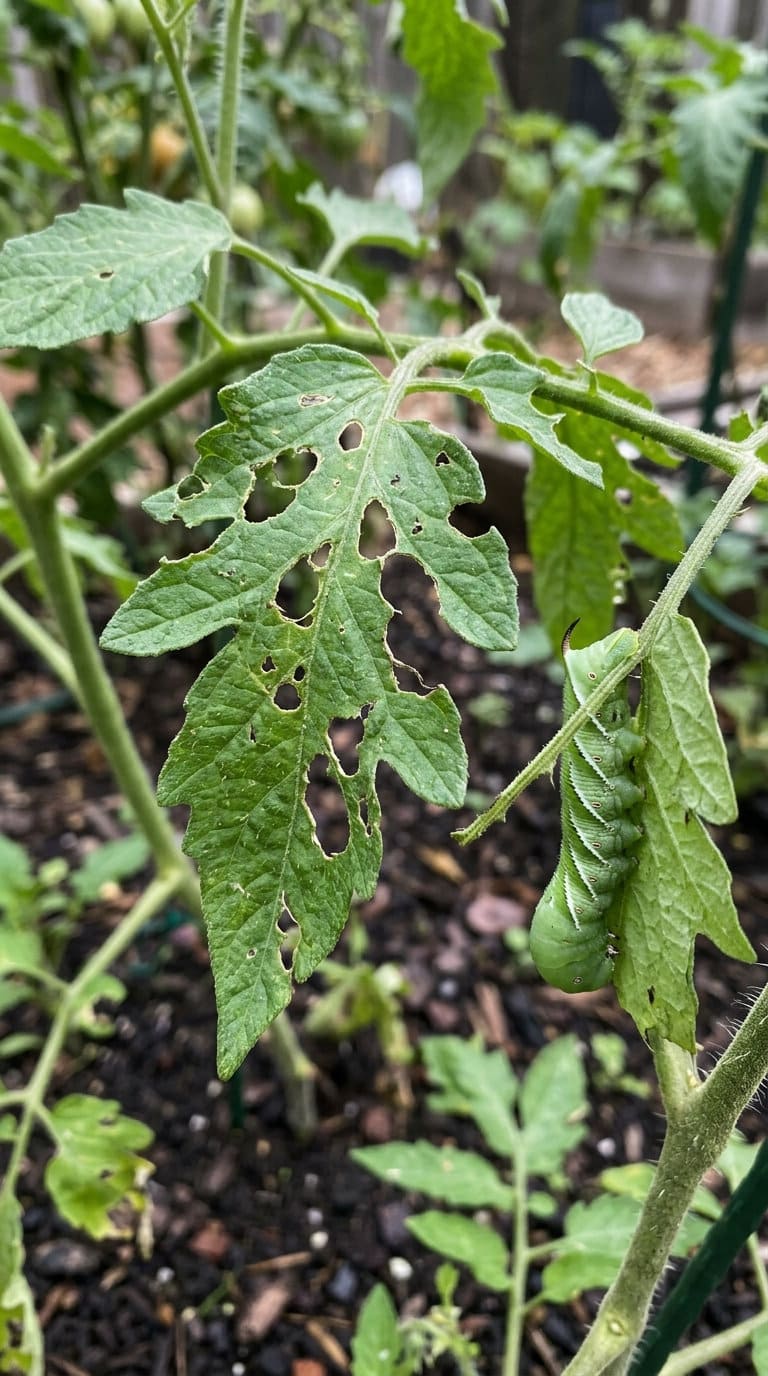
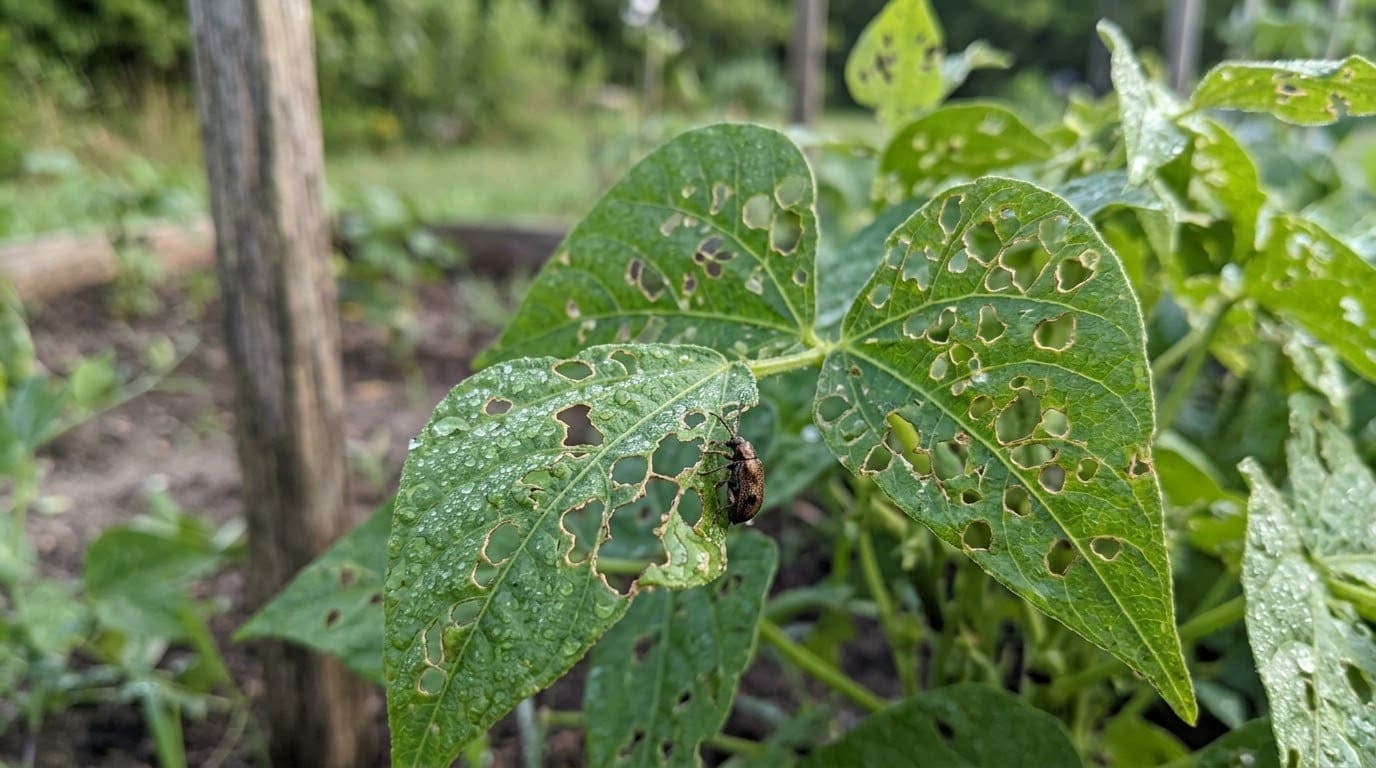
Yes, most of the time, if the holes are ragged and irregular rather than a clean tear. Dr. Masabni’s own AgriLife scouting guidance groups tomato hornworms, loopers, and various beetles as the usual suspects for leaf-margin and interior holes, since they chew rather than suck.
The lookalike to rule out first is weather damage. Wind-whipped leaves and hail leave torn or shredded edges that follow the direction of the wind, not the random, meandering path a caterpillar leaves as it feeds across a leaf surface.
Answer 4 quick questions and get matched to the exact fix for your yard — drainage, budget, layout, or something else entirely.
Take the Free QuizCheck the underside of the leaf before doing anything else. Hornworms are large by August, easy to spot once you know to look, and their frass (small dark pellets) sits right below wherever they’ve been feeding.
The August fix is hand-picking at dusk or early morning, when hornworms and loopers are most active and easiest to see against the leaf. For anything beyond hand-picking capacity, Bt (Bacillus thuringiensis) targets caterpillars specifically without harming bees, which matters in August when a lot of vegetable gardens still have flowering squash and beans nearby. a few companion plantings that naturally keep pest pressure down can make this less of a recurring chore.
What does a sticky film on your plants mean?
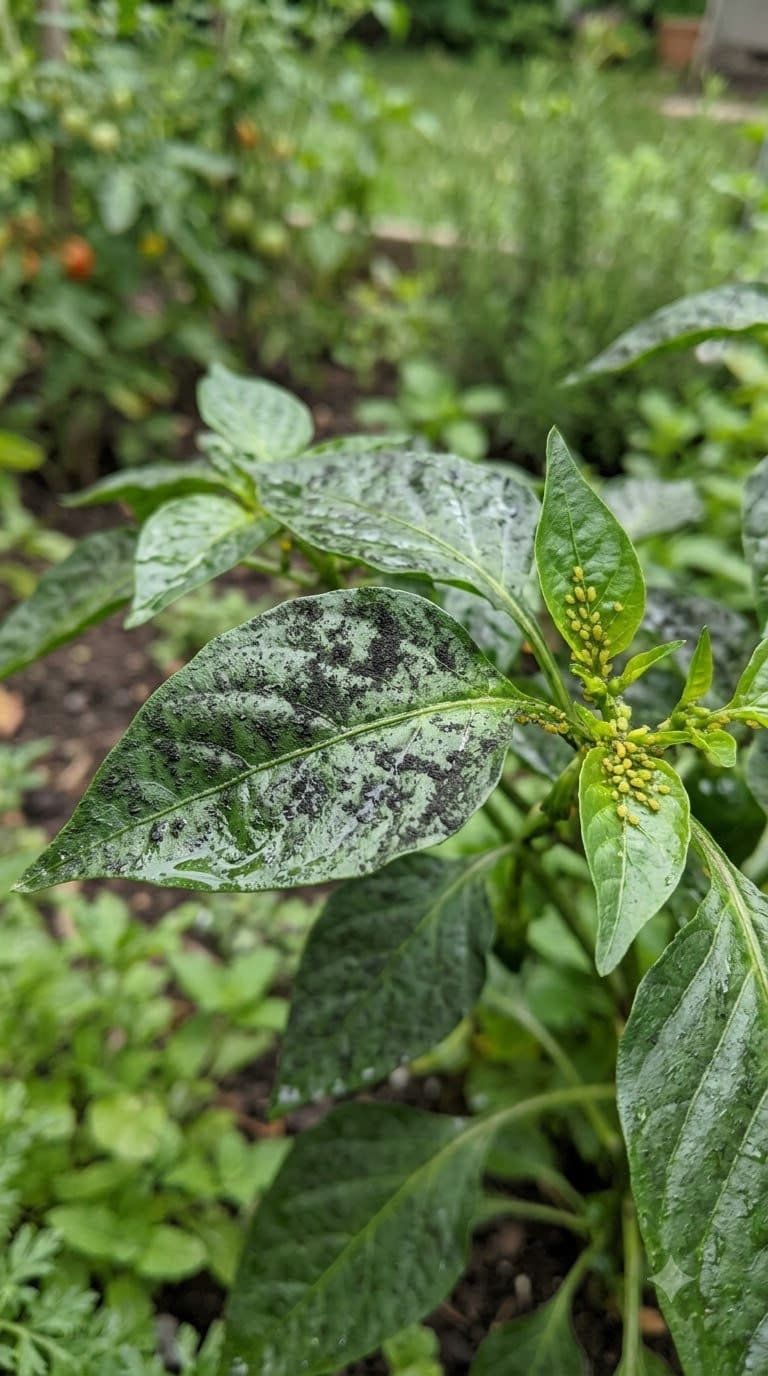
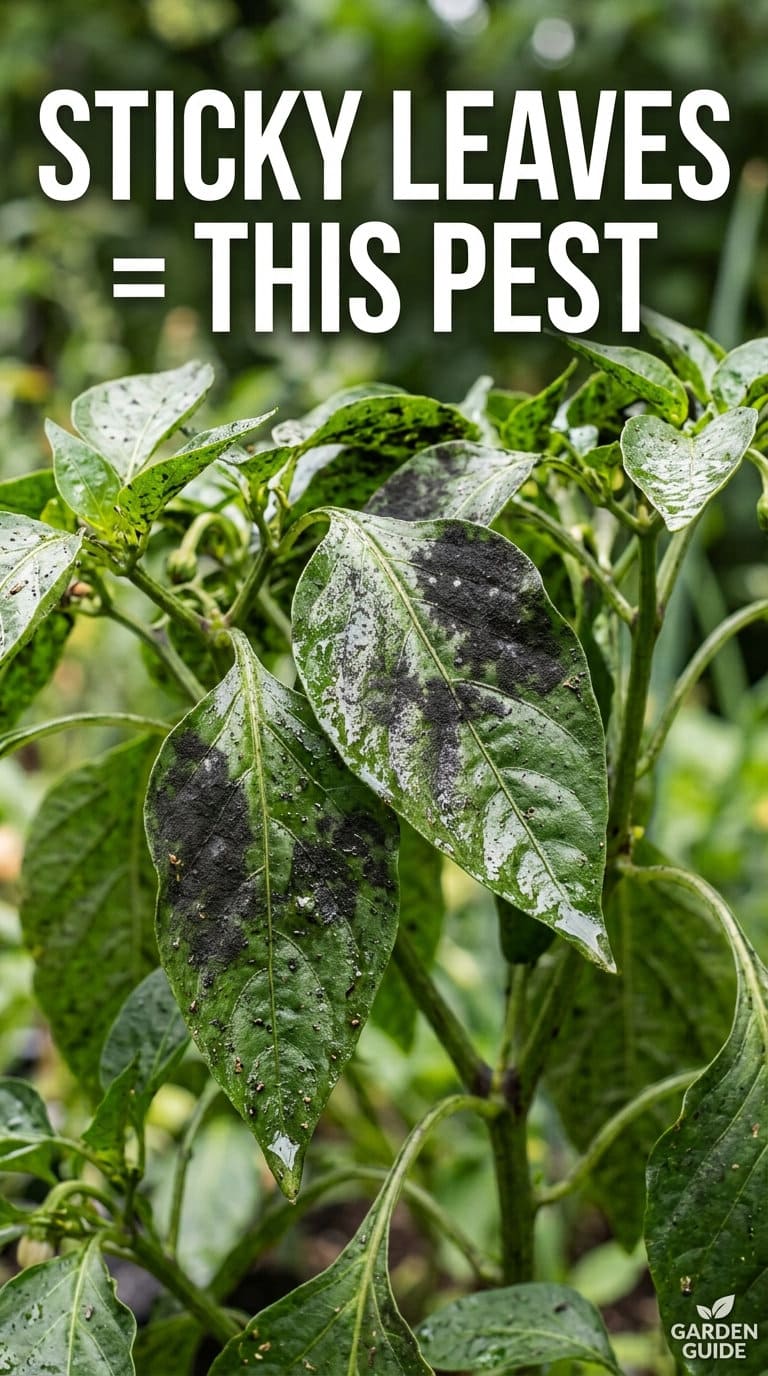
A shiny, tacky coating on leaves and stems is honeydew, the sugary waste aphids, whiteflies, and scale insects leave behind after feeding on plant sap. Left alone, that honeydew grows black sooty mold, which looks alarming but is mostly a byproduct, not the actual infection.
There is not much of a real non-pest lookalike for this one. About the only thing worth double-checking is sap dripping down from a tree overhead onto plants below, which happens more often near maples and can mimic aphid honeydew on a quick glance.
Flip a few leaves over. Aphid colonies cluster on the undersides and new growth tips, soft-bodied and easy to squash between two fingers if you want direct confirmation.
The August fix starts with a strong water spray to knock the colony down, followed by insecticidal soap applied directly to the undersides where they’re hiding. AgriLife’s rotation guidance calls for reapplying every 7 to 14 days depending on rainfall, since a single treatment rarely gets every egg.
August heat shortens aphid reproduction cycles considerably, so a colony that looked manageable a week ago can double before the next spray if it’s skipped. A rundown of plants that repel aphids naturally is worth planting nearby for next season if this keeps recurring.
Most yard problems trace back to one specific, fixable cause. Find yours in 4 quick questions.
Take the Free Quiz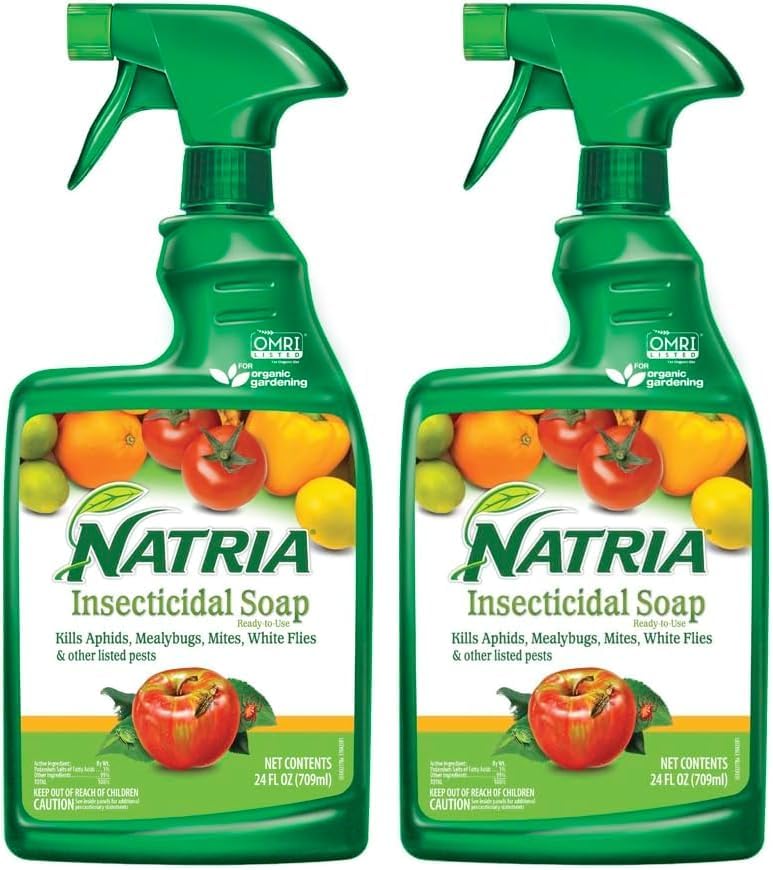
4.2 stars, 8.6K ratings; referenced for aphid, whitefly, and scale treatment
Shop NowThis post contains affiliate links. We may earn a commission on qualifying purchases at no extra cost to you.
Are stippled or bronzed leaves a pest problem or something else?
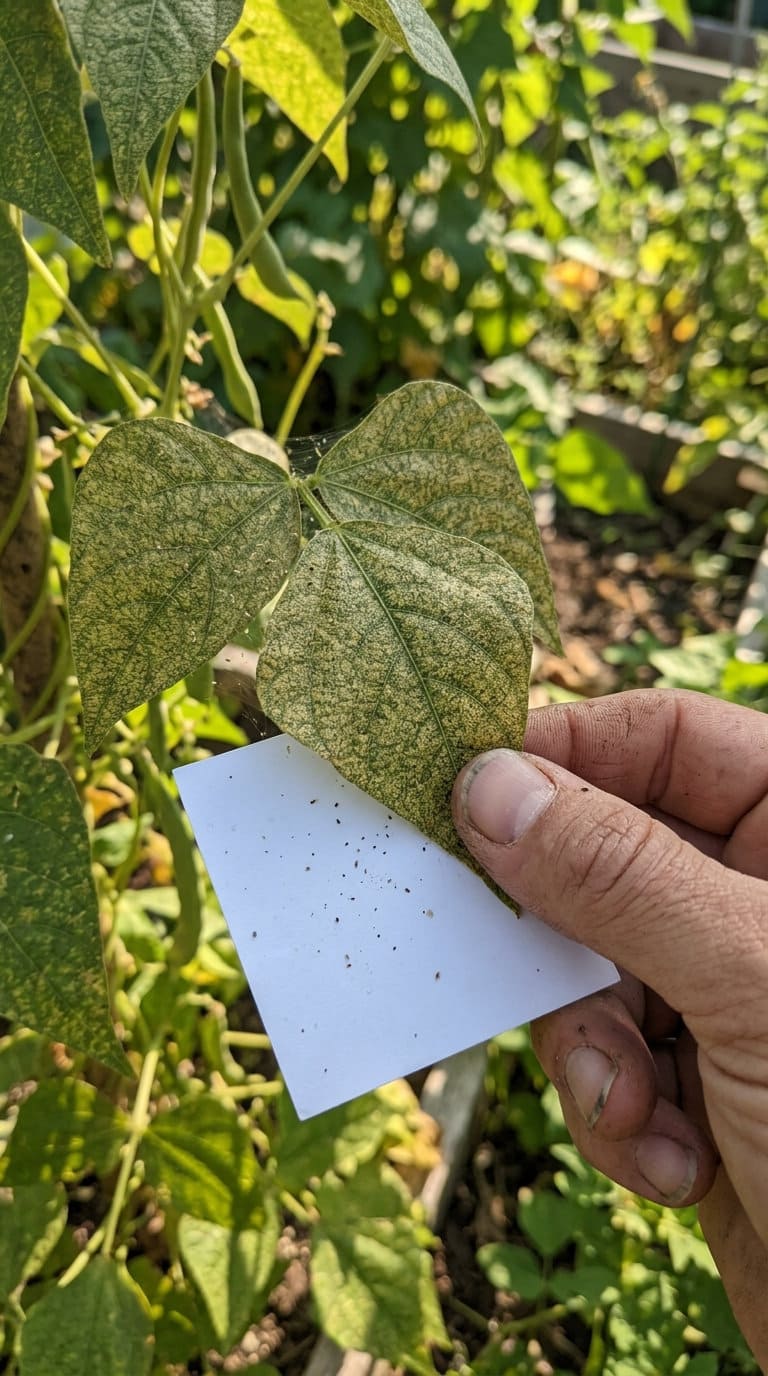
This is the sign most likely to get misdiagnosed in August, and it’s worth slowing down on. Spider mites and thrips both cause a fine, dusty stippling that gives leaves a bronzed or bleached look, especially on the older, lower foliage first.
But two real non-pest causes produce a similar look, and both are common in August specifically. Sunscald, per Missouri Botanical Garden’s plant-health guidance, shows up as pale or papery patches limited to the most sun-exposed side of a leaf or fruit, distinct from the more evenly distributed stippling mites cause across a whole leaf.
Nutrient deficiency is the other lookalike. UC IPM’s diagnostic criteria describe interveinal chlorosis (yellowing between the veins while the veins stay green) from iron or manganese deficiency on new growth, and overall pale chlorosis from nitrogen deficiency on older leaves, neither of which involves the fine textured stippling mites leave.
The fastest field test is a piece of white paper. Hold it under a suspect leaf and tap the leaf hard. Tiny moving specks on the paper confirm mites, since they’re too small to see clearly on the plant itself.
The August fix depends on which one it actually is. For mites, a hard water spray to the leaf undersides breaks up colonies (mites hate humidity and thrive in hot, dry conditions, which is exactly what most of the country has in August). For sunscald, shade cloth over exposed fruit and leaves for the rest of the season prevents new damage, though existing scald patches won’t reverse.
Why is your plant wilting even though you’re watering it?
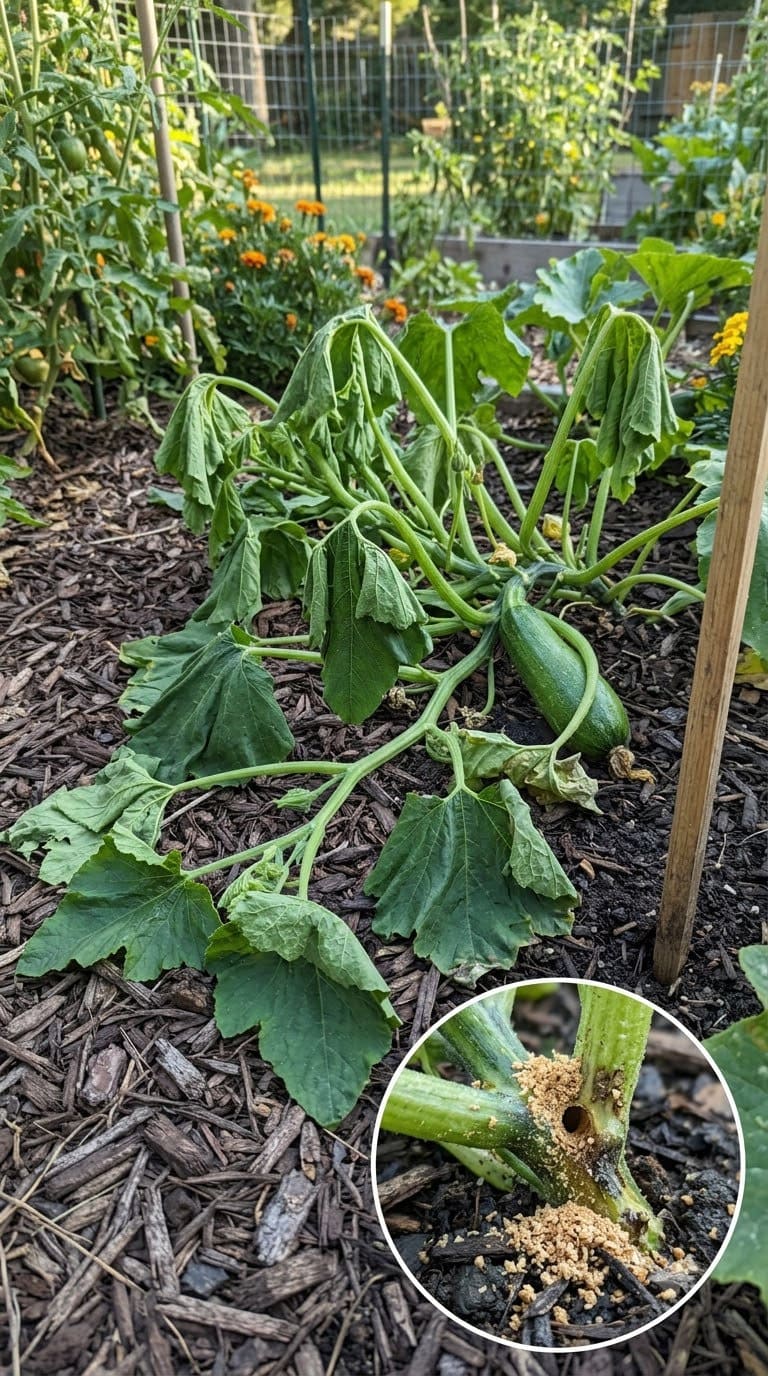
Wilting despite consistent watering is the sign that sends the most people straight to a chemical spray, and it’s also the one where slowing down matters most. Squash vine borers tunnel into the stem base, cutting off water flow from the inside, and cucumber beetles carry bacterial wilt that does something similar through the plant’s vascular system.
The lookalike here is almost too easy to fall for. Squash and cucumber leaves genuinely do wilt hard on a hot August afternoon and bounce back by evening, a completely normal heat response, not a pest problem at all.
The tell is timing. A plant that’s wilted and stayed wilted past a cool morning, not just through a hot afternoon, has a real problem, either a borer, bacterial wilt, or (less commonly at this point in the season) verticillium wilt, a soil-borne disease rather than a pest.

Check the stem base at soil level for a small entry hole and sawdust-like frass, the clearest sign of squash vine borer. If it’s there, slit the stem lengthwise near the hole with a sharp knife, remove the borer, and mound moist soil over the wound so the stem can re-root.
The average homeowner spends $616/year on yard fixes that don't address the real problem. Find out what yours actually is — before you spend another dollar.
Take the Free QuizThe August fix for prevention going forward is floating row cover over young squash and cucumber plants, since this timing lines up with the second-generation borer window in warmer growing zones. Remove the cover once plants flower so pollinators can reach them. A similar stem-check habit worth building for tomato and pepper beds too is worth adding to the routine.
Should you worry about frass or eggs on your leaves?
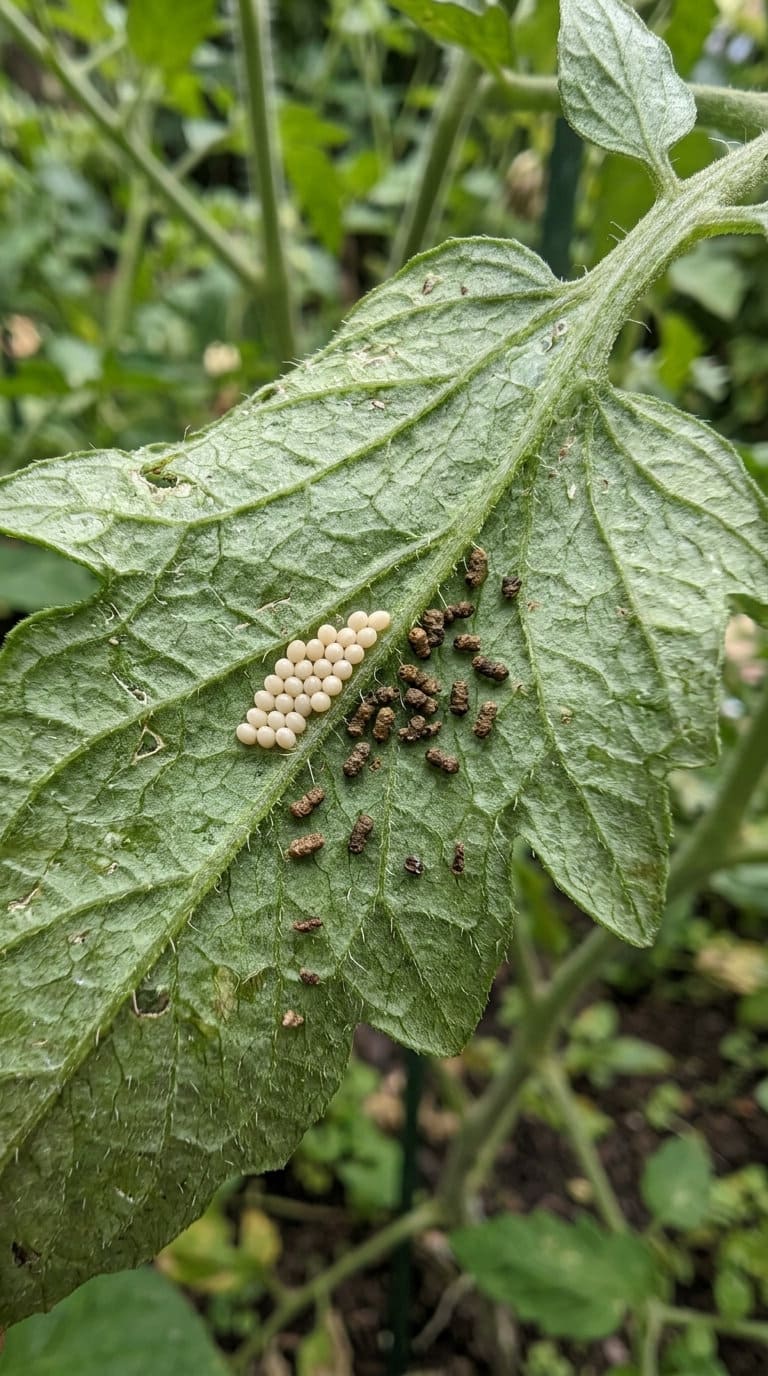
Yes, this is one of the more reliable early-warning signs, and it’s exactly the kind of thing Cornell Cooperative Extension’s scouting framework calls a true “sign,” physical evidence the pest is present, rather than a “symptom” that’s already visible plant damage.
Frass looks like small, dark, roughly cylindrical pellets, usually found on the leaf directly below wherever a caterpillar has been feeding. Eggs vary by pest but tend to cluster in small groups on the undersides of leaves, away from direct sun and rain.
There isn’t much of a real lookalike here beyond ordinary mulch or compost debris that’s blown or splashed onto foliage, which tends to look more irregular and doesn’t concentrate directly under active feeding damage the way frass does.
The August fix is a nightly flashlight check, since a lot of the caterpillars responsible (hornworms especially) feed at night and are far easier to spot with a light than during the day. Catching frass and eggs before the caterpillar has done real damage is the whole point of scouting daily instead of waiting for visible holes.
What’s cutting your seedlings off at the soil line overnight?
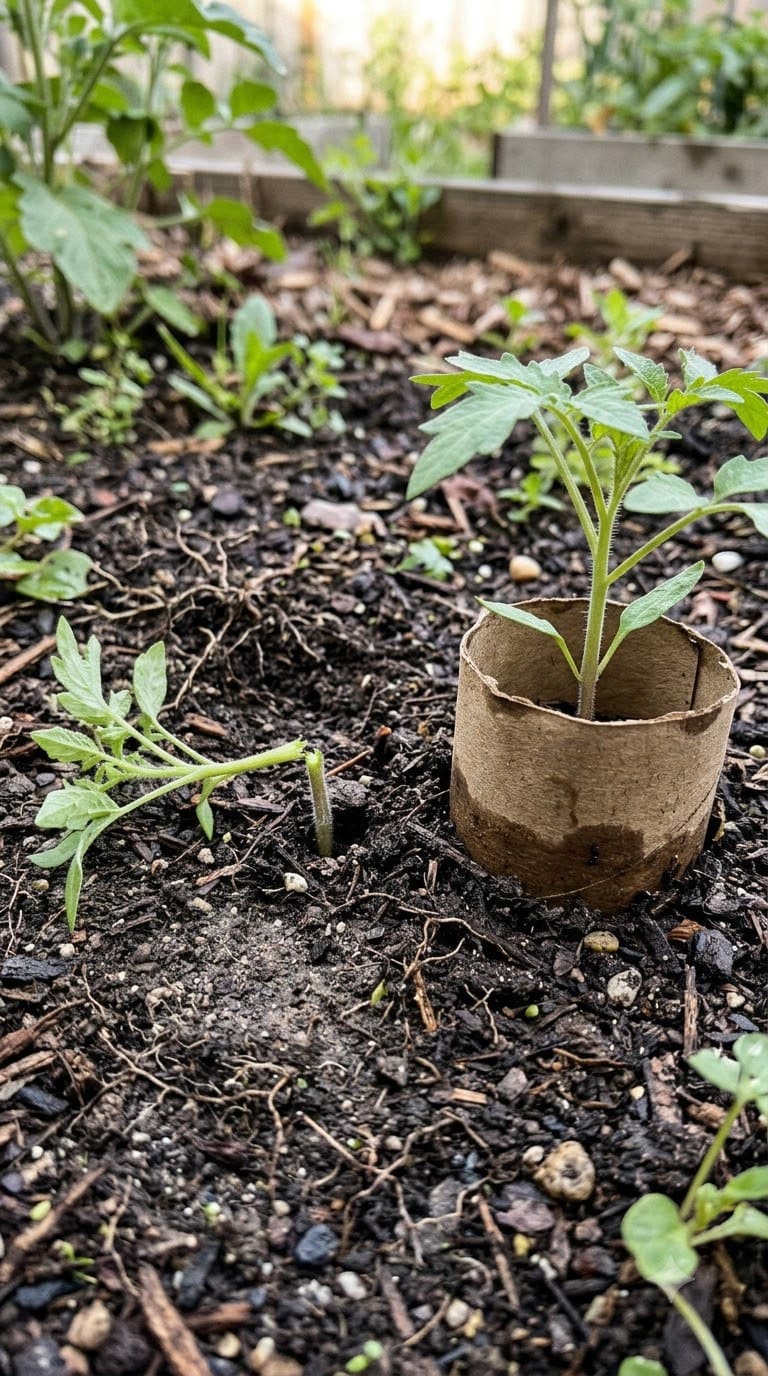
A seedling that was fine yesterday and is now lying flat, severed cleanly near the soil line, with no chewed leaves elsewhere on the plant, points to cutworms almost every time. They feed at night, cut the stem, and often drag part of the plant down into their burrow.
Slugs cause a related but distinguishable version, usually a more ragged bite through the stem rather than a clean cut, and often with a slime trail visible in early morning light. Larger animals, rabbits especially, tend to take multiple seedlings in a row rather than one isolated plant.
The main lookalike to rule out is damping-off, a soil-borne fungal disease that also kills young seedlings at the base but causes a thin, water-soaked, pinched stem rather than a clean or ragged cut. Damping-off also tends to hit several seedlings in a tray or row all at once, right after germination, rather than one plant overnight in an established bed.
The August fix, since most direct-sown fall crops (lettuce, spinach, brassicas) go in the ground this month in a lot of growing zones, is a simple cardboard or aluminum foil collar pushed an inch into the soil around each new stem. For slugs specifically, a shallow dish of beer sunk level with the soil surface works as a real, if slightly unglamorous, trap. Fencing off the bed entirely is a useful next stop if rabbits turn out to be the actual cause.
What I got wrong before I learned to slow down and check
The mistake I made for two summers running was treating every leaf problem as a spray-first situation. Bronzed tomato leaves in July, straight to the neem oil, no real diagnosis first.
Turned out about half of what I’d been treating as spider mites was sunscald, from pruning too much foliage off a tomato plant and exposing fruit and leaves that weren’t hardened to direct sun. The neem oil did nothing for that, obviously, because there was never a pest there to kill.
Dr. Masabni’s advice about scouting daily rather than reacting to a single bad-looking leaf changed how I actually walk the garden now. And honestly, the daily walk-through takes maybe five minutes, way less time than I’d assumed before I started doing it.
The other misdiagnosis that got me was yellowing lower leaves on my peppers, which I was sure meant aphids since I’d had an aphid problem the year before on the same bed. It was nitrogen deficiency, confirmed after I finally did a proper soil check instead of guessing from memory of last year’s problem.
If there’s one habit worth building from this, it’s the white-paper tap test for anything that looks like stippling before reaching for a spray bottle. It takes twenty seconds and it’s the difference between treating an actual mite colony and wasting a Saturday morning on a plant that just needed some shade cloth.
FAQs
Should I spray my whole garden as a precaution if I see one damaged leaf? No. Dr. Masabni’s own AgriLife guidance frames scouting and identification as the first step, not blanket spraying, since a broad-spectrum spray also kills the beneficial insects (ladybugs, lacewings, parasitic wasps) that keep pest populations in check on their own.
Why do pest problems seem to get worse specifically in August? Heat speeds up insect reproduction cycles, especially for spider mites and aphids, which can go from a manageable few dozen to a full colony in under two weeks during hot, dry stretches. It is also when several pests reach their second generation of the season in warmer growing zones.
Can I tell a pest problem apart from a plant disease without a lab test? Often, yes, using the signs-vs-symptoms approach Cornell Cooperative Extension recommends: look for physical evidence of the pest itself (frass, eggs, the insect) rather than just the plant’s visible reaction, since diseases produce symptoms with no accompanying pest evidence.
Is it too late in the season to plant a floating row cover? No, and August is actually a good time to add one for fall crops, both to block egg-laying adults ahead of the second-generation pest window and to protect newly seeded lettuce, spinach, and brassicas from cutworms while they establish.
Related Posts
- Top 10 Worst Garden Pests & How to Control Them
- Herbs That Naturally Repel Vegetable Garden Pests
- Plants That Repel Aphids
Products We Recommend
This post contains affiliate links. We may earn a commission on qualifying purchases at no extra cost to you.
NATRIA Insecticidal Soap, Ready-to-Use
4.2 stars, 8.6K ratings; referenced for aphid, whitefly, and scale treatment
Shop Now
Floating Row Cover, 10ft x 30ft, Reusable
4.3 stars, 1.6K ratings, listed for both frost and pest protection; referenced for squash vine borer and cutworm prevention on fall seedlings
Shop Now
Bonide Captain Jack's Thuricide BT, 128 oz Ready-to-Use
4.6 stars, 5K ratings; referenced for caterpillar-specific treatment without harming pollinators
Shop NowNever miss an update — choose FarmFoodFamily as your preferred source on Google.
How it works: Tap the button below to open Google's settings page, then check the box next to FarmFoodFamily.
Tap the checkbox to turn it blue — that's how you know it's set.