6 Costly Deadheading Mistakes That Are Robbing You of a Second Bloom This August
Most deadheading advice stops at “snip the dead flower,” but the real damage happens at the cut location, the timing, and the plants you shouldn’t be cutting at all.

Never miss an update — choose FarmFoodFamily as your preferred source on Google.
How it works: Tap the button below to open Google’s settings page, then check the box next to FarmFoodFamily.
Tap the checkbox to turn it blue — that’s how you know it’s set.
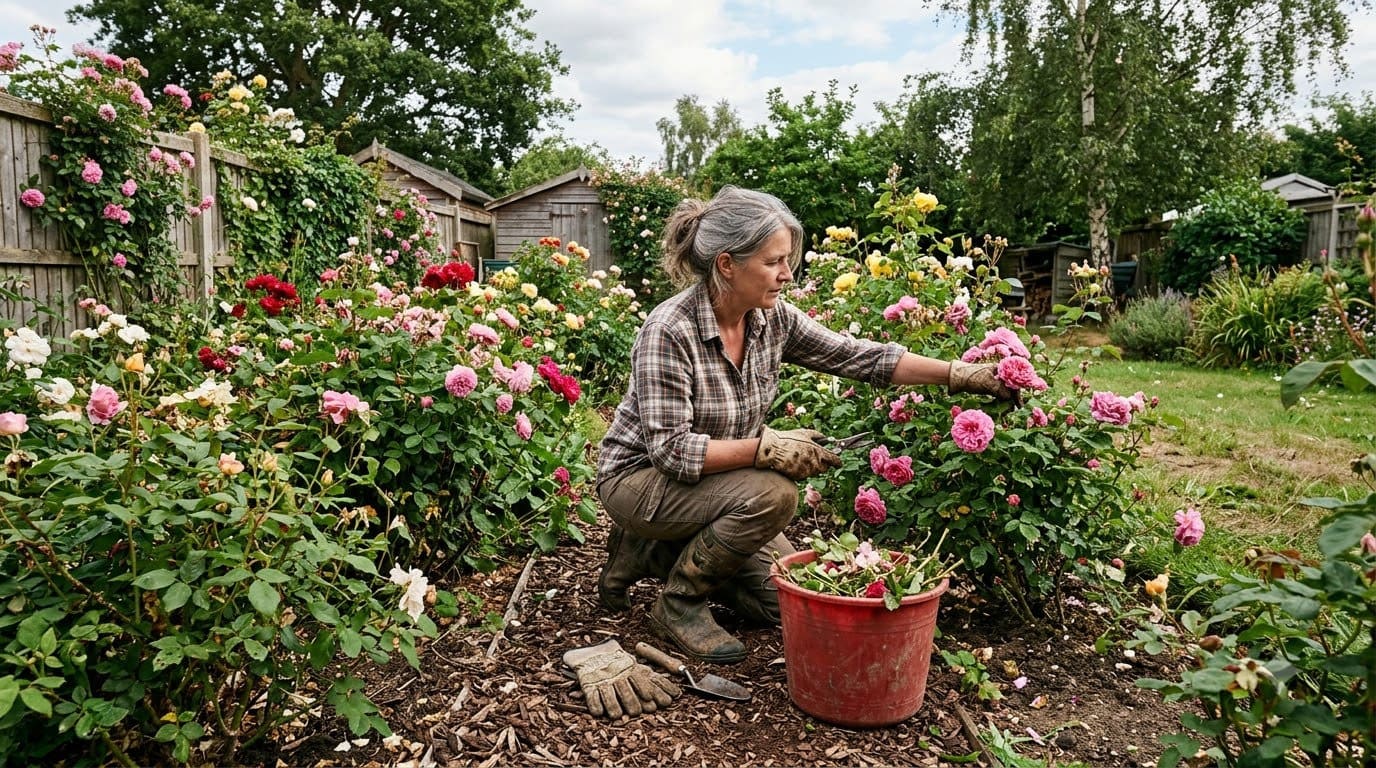
August is prime deadheading season, and it’s also when most of the year’s deadheading damage actually gets done. Not because people forget to do it. Because they do it wrong in ways that don’t show up until next spring.
A rose gets snipped at the wrong node and pushes a weak, floppy stem instead of a strong one. A delphinium spike gets topped instead of removed whole, and half its remaining buds go with the trash. A hydrangea gets a “tidy up” in late August that quietly erases next year’s first flush.
This guide covers the six mistakes that quietly cost gardeners their next round of blooms, plus a scannable table showing exactly where to cut on each plant, and a decision framework for the plants you shouldn’t be deadheading in the first place.
Deadheading works in the first place because most plants read a faded flower as “mission accomplished, time to make seed,” according to Matt McKernan, a Kansas State University Extension horticulture expert.
Cut that flower off before it sets seed, and many plants redirect the energy into another round of blooms instead. That mechanism is exactly why the cut location and timing in the six mistakes below actually matter, not just tidiness.

Quick answer: the 6 deadheading mistakes to fix this August
The biggest deadheading mistakes are cutting in the wrong spot or the wrong season, not having the wrong idea about deadheading in general. Cut roses above an outward-facing five-leaflet leaf at a 45-degree angle, not straight across or too low, and skip deadheading once-blooming ramblers entirely since next year’s flowers are already forming on this year’s wood.
Answer 4 quick questions and get matched to the exact fix for your yard — drainage, budget, layout, or something else entirely.
Take the Free QuizRemove an entire spent salvia or delphinium spike once most florets have faded, not just the top bloom, or the whole spike stops producing. Stop deadheading reblooming bigleaf and oakleaf hydrangeas by mid-August since they set next year’s buds on old wood, according to Monrovia’s growing guidance.
Let a daylily’s flower stalk finish its full run of buds before cutting it at the base. Leave coneflower and rudbeckia seedheads standing through fall instead, since the Xerces Society for Invertebrate Conservation notes they feed birds and shelter overwintering insects all winter. Shear lavender into leafy growth, never bare wood, which rarely regrows.
Plant / correct cut location / common mistake / consequence
| Plant | Correct cut location | Common mistake | Consequence |
|---|---|---|---|
| Roses (repeat-blooming) | Just above an outward-facing 5-leaflet leaf, 45-degree angle | Cutting straight across or too close to the leaf | Weak regrowth, water pools on the cut and invites disease |
| Rambling/climbing roses (once-blooming) | Skip deadheading after the single bloom flush | Cutting back right after bloom like a repeat-bloomer | Removes next year’s flower buds, already forming on this year’s wood |
| Salvia and delphinium | Whole spent spike, cut to a lower leaf set or side branch | Snipping just the top faded floret | Leaves a browning stub, no second flush |
| Reblooming hydrangea (bigleaf, oakleaf) | Individual spent blooms only, stop by mid-August | Cutting back hard in late summer | Removes old-wood buds already set for next year |
| Daylily | Whole flower stalk at the base, after the full bud run finishes | Cutting the stalk after the first few blooms fade | Loses remaining unopened buds on that stalk |
| Coneflower, rudbeckia | Deadhead through midsummer, then stop | Deadheading straight through fall | Removes seedheads birds rely on for winter food |
| Lavender | Whole flower spikes into leafy growth, just above where stems emerge | Shearing into bare, woody stem | Can kill the plant, lavender rarely regrows from old wood |
Mistake #1: Cutting roses in the wrong spot
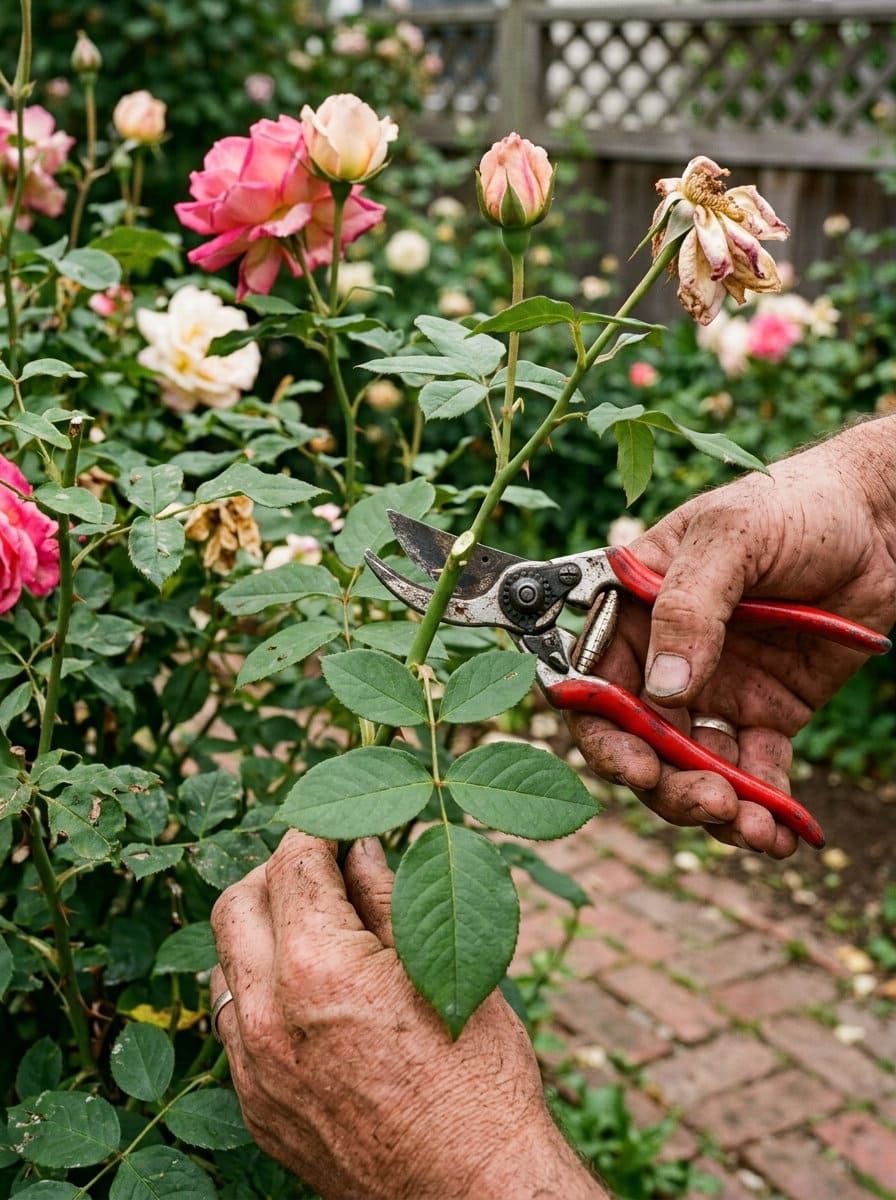
Most rose deadheading advice gets one thing right and one thing wrong. The right part: cut above a leaf node, not mid-stem. The wrong part is which leaf node, and the fact that this rule doesn’t apply to every rose the same way.
For repeat-blooming roses (hybrid teas, floribundas, most modern shrub roses), cut just above the first outward-facing leaf with five leaflets, at roughly a 45-degree angle. The outward angle sheds water away from the cut instead of pooling on it, which matters more than people think in a humid August. A flat, straight-across cut holds water against the wound and gives fungal disease a way in.
Where this gets missed entirely: rambling and once-blooming climbing roses set next year’s flowers on this year’s wood, often within weeks of finishing their single big bloom flush.
Deadhead one of these the way you’d deadhead a repeat-bloomer, cutting back hard right after bloom, and there’s a real chance of cutting off next year’s flowers before they’ve even formed. If a rose only blooms once a season, leave it alone after that flush rather than tidying it up.
Knowing which rose varieties rebloom versus bloom once is worth checking before pruning anything, since that distinction changes the whole approach here. And if the deeper question is general rose upkeep beyond deadheading, a season-long rose care routine covers the rest of what a bed needs.
Most yard problems trace back to one specific, fixable cause. Find yours in 4 quick questions.
Take the Free Quiz
4.5 stars, 1.6K ratings; needed for the clean 45-degree rose cuts and spike removal on salvia/delphinium
Shop NowThis post contains affiliate links. We may earn a commission on qualifying purchases at no extra cost to you.
Mistake #2: Topping the spike instead of removing it
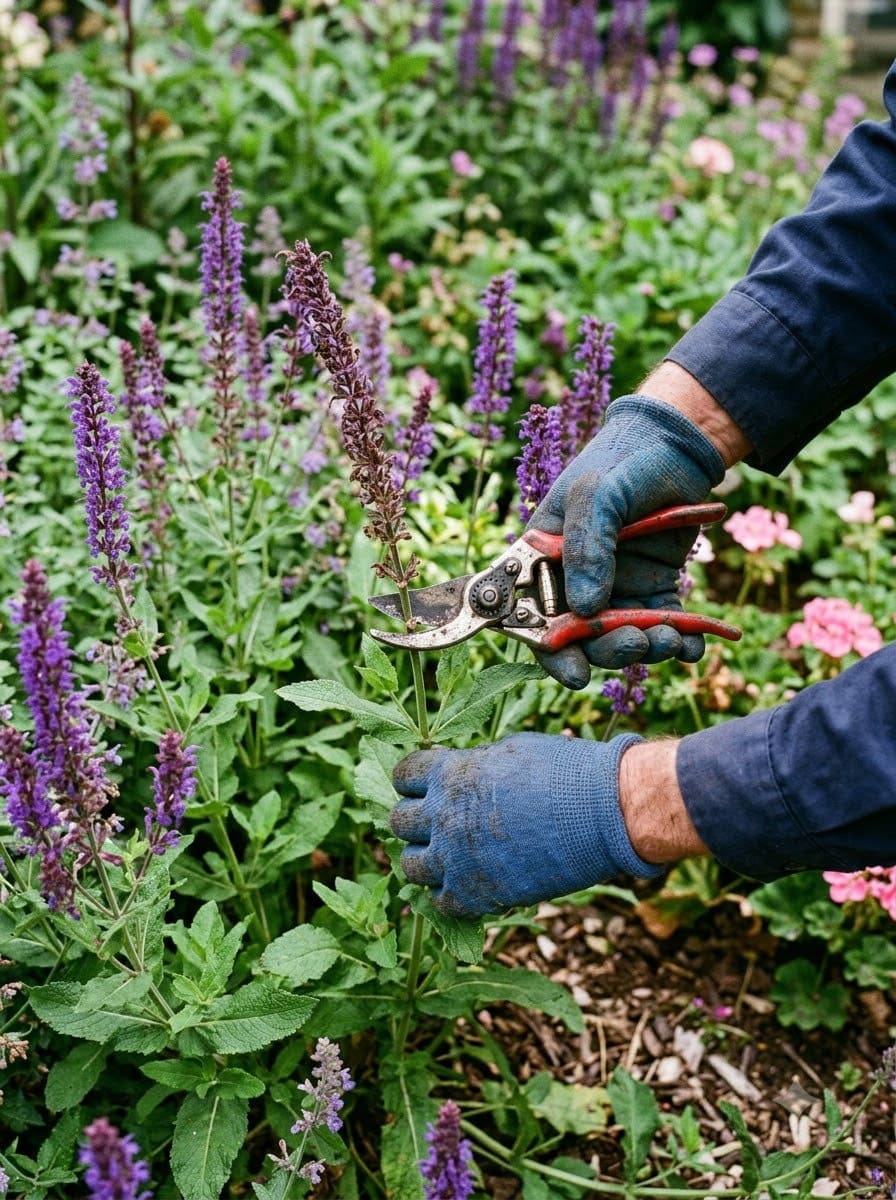
This one is specific to spike-form flowers like salvia and delphinium, and it’s the mistake that costs the most blooms for the least visible reason.
The instinct is to snip off the top faded floret the way you’d deadhead a single rose bloom. But a salvia or delphinium spike carries dozens of individual flowers stacked along one stem, and once the top third or so has browned, the whole spike is done contributing new blooms even if a few lower florets still look decent.
The fix is to remove the entire spent spike, cutting back to a lower set of healthy leaves or a side branch where new growth can develop. That cut is what actually triggers a second flush. Topping just the worst-looking part leaves a stub that produces nothing and looks worse than the spike did before.
Timing matters here too. Once roughly a third of a salvia spike has turned brown, it’s time to cut, not wait for the whole thing to fade. Waiting too long wastes the plant’s energy holding onto a spike that’s already spent.
Mistake #3: Deadheading reblooming hydrangeas too late
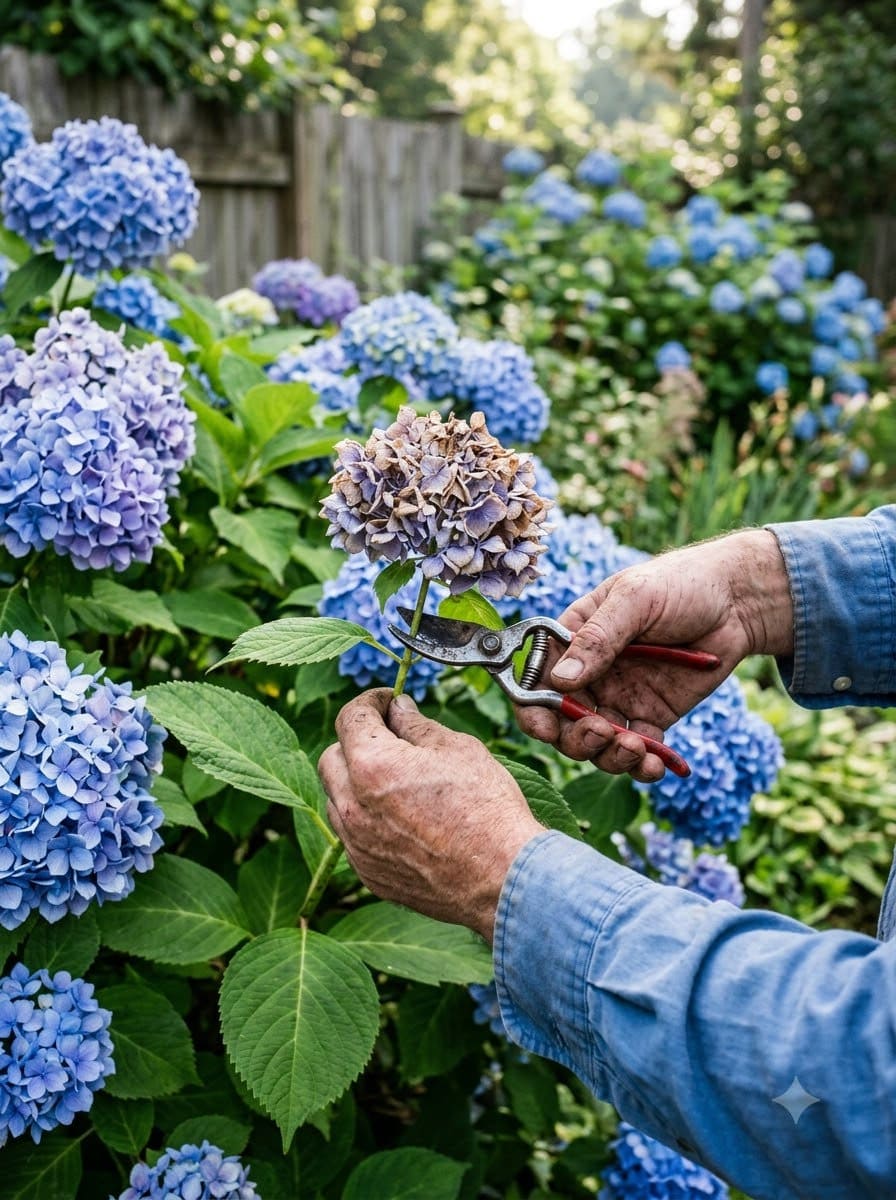
Hydrangeas are where a well-meaning “late summer tidy-up” backfires the hardest, and it’s a mistake specific to certain types, not all hydrangeas.
Bigleaf and oakleaf hydrangeas set their flower buds for next year on old wood, meaning stems that already exist this year, and they typically do this by late summer.
According to growing guidance from the nursery brand Monrovia, deadheading reblooming hydrangeas past roughly mid-August risks removing the very buds that were about to form for next year’s first flush.
Panicle and smooth hydrangeas don’t have this problem. Those bloom on new wood, stems that grow fresh each spring, so their timing is far more forgiving.


The practical fix: know which type is in the yard before reaching for pruners in late summer. If it’s a bigleaf or oakleaf variety and it’s past mid-August, leave the spent blooms alone rather than risk the plant’s next bloom cycle for the sake of tidiness. pairing companion plants around an established shrub instead is a more useful next step.
The average homeowner spends $616/year on yard fixes that don't address the real problem. Find out what yours actually is — before you spend another dollar.
Take the Free QuizMistake #4: Cutting a daylily’s stalk too early
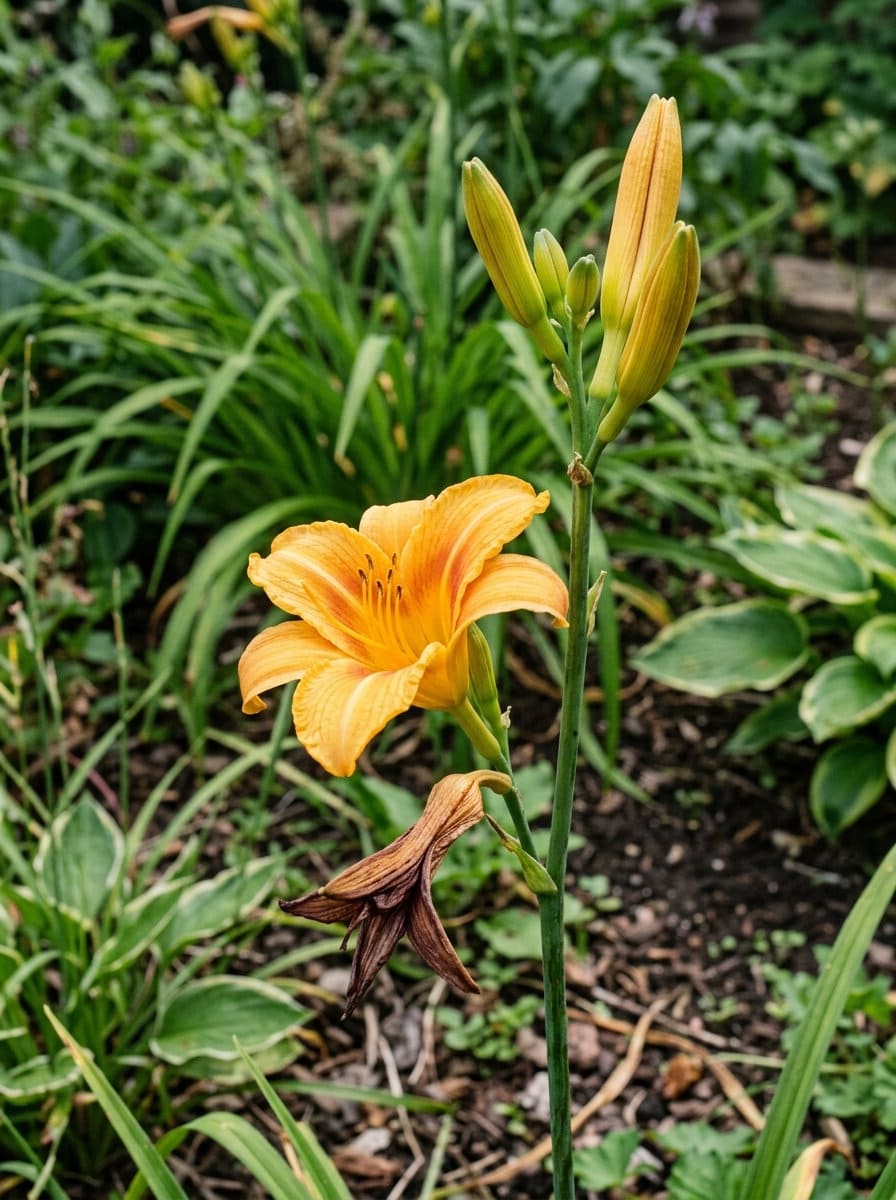
A single daylily flower lasts about a day, which is exactly why this mistake happens. People see the first few blooms fade on a flower stalk (called a scape) and cut the whole thing down, not realizing that one scape often has several more buds still queued up to open.
The individual spent bloom can be snipped or pinched off any time, that part is low-stakes. The scape itself is the part that needs patience. Leave it standing until it’s finished its entire run of buds for the season, which can be another week or two past when the first flowers faded, then cut it at the base.
Cutting the scape early doesn’t just waste those remaining buds, it also means less color from a plant that was already committed to producing it. layering different bloom times into one bed is worth exploring if the goal is stretching color further into the season anyway.
Mistake #5: Deadheading coneflower and rudbeckia straight through fall
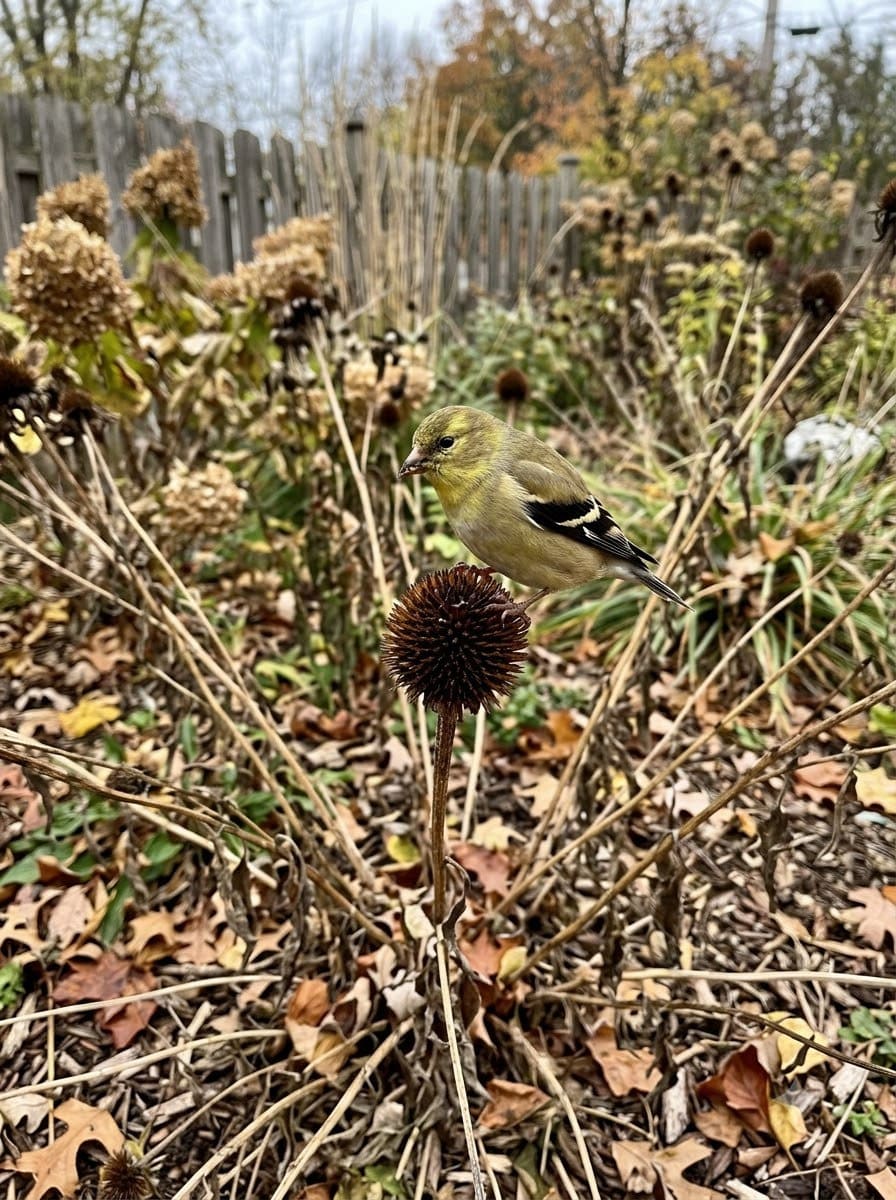
This is the mistake competitors barely mention, and it’s the one with the clearest tradeoff.
Deadheading coneflower (echinacea) and rudbeckia (black-eyed Susan) through midsummer does extend their bloom, since removing the spent flower stops the plant from putting energy into seed instead of new buds. But that logic breaks down once the season turns toward fall.
The Xerces Society for Invertebrate Conservation, a nonprofit focused on invertebrate habitat, notes that leaving seedheads standing rather than deadheading them through fall gives goldfinches and other birds a real winter food source, and gives overwintering insects a place to shelter through the cold months.
The real answer here is a seasonal switch, not a fixed rule. Deadhead through midsummer for more blooms.
Then stop by late summer or early fall and let the last round of flowers go to seed on purpose. It looks messier through winter. That’s the point, not a failure to keep up with yard work.
Mistake #6: Shearing lavender into bare wood
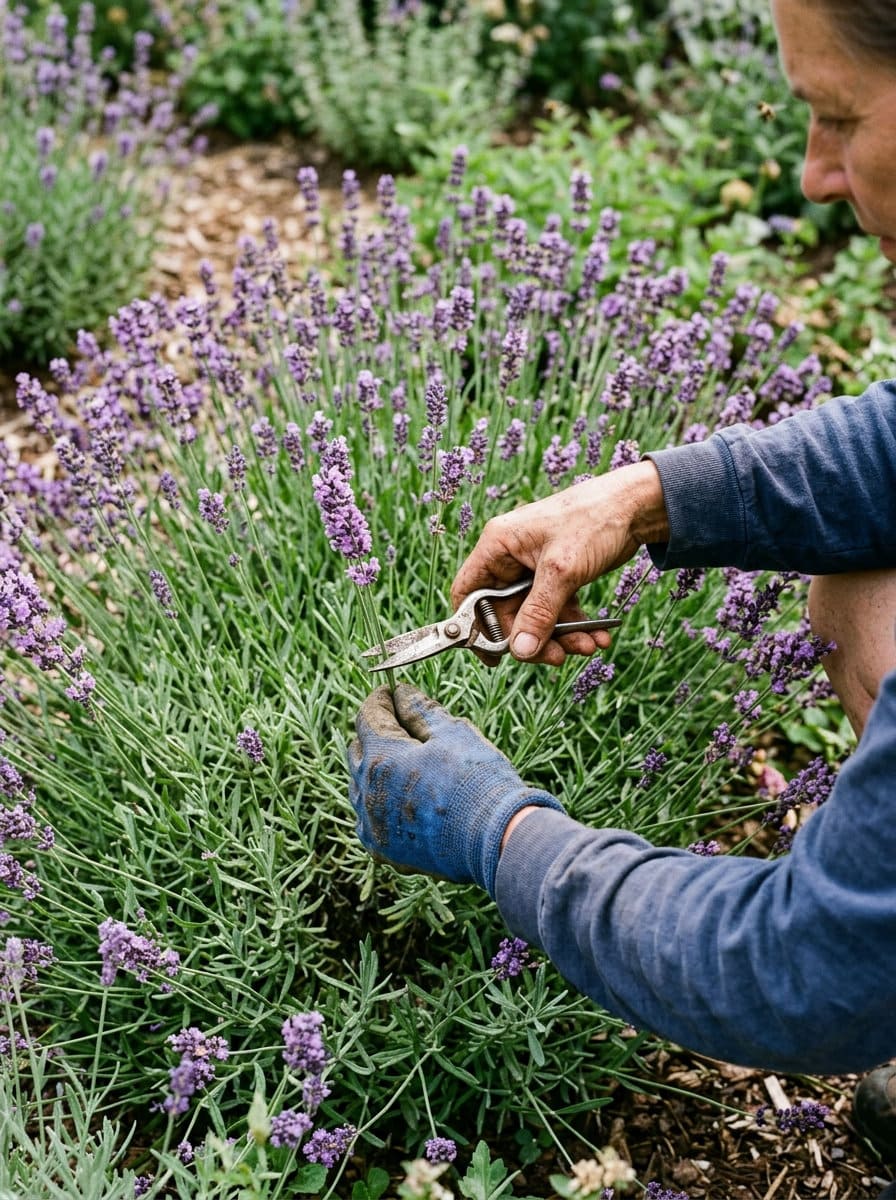
Lavender gets treated like a shrub that can handle a hard prune, and that assumption kills more lavender plants than pests or drought combined.
The correct approach is to shear off the whole flower spikes after the first bloom flush, cutting into the leafy, gray-green growth just above where the flower stems emerge from the foliage. That’s a shallow cut, closer to a haircut than a hard prune.
The mistake is cutting lower, into the bare, woody part of the stem below the leafy growth. Lavender is notoriously bad at regrowing from old wood. A cut that goes too deep can leave a permanent bald patch, or kill the whole plant outright if it happens across the entire shrub in one pass.
If it’s ever unclear where leafy growth ends and woody stem begins, cut higher than feels necessary. A little extra height on the plant costs nothing, and a cut into bare wood can cost the whole shrub.
Comparing compact lavender varieties against the leggier types is worth doing first, since compact types are more forgiving of a slightly harder cut.
Does deadheading timing change by region?
| Region type | Practical cutoff guidance | Bigger risk | Priority move |
|---|---|---|---|
| Cold-winter North (Upper Midwest, New England, Mountain West) | Stop deadheading reblooming hydrangeas and roses by early-to-mid August | Not enough season left for new buds to harden off before frost | Shift focus from “more blooms” to “let the plant wind down” starting mid-August |
| Hot-humid South (Southeast, mid-Atlantic) | Can keep deadheading roses and salvia into September | Fungal disease on cuts made during humid, still air | Deadhead in the morning after dew dries, not evening |
| Mild Pacific Northwest / coastal | Longer bloom window overall, hydrangea old-wood cutoff still applies | Assuming the mild climate means no cutoff at all | Track hydrangea type specifically, old-wood varieties still need the mid-August-ish stop regardless of mild weather |
| Dry Southwest / interior West | Deadhead lavender and salvia earlier in the day to reduce plant stress | Heat stress on freshly cut stems in afternoon sun | Water the evening before a deadheading session, not right after |
Should I even deadhead this? A quick decision framework
Not every spent bloom needs to go, and treating every plant the same way is how a few of these mistakes happen in the first place. Before reaching for pruners, run through this:
Is it a once-blooming rambler or climbing rose? If yes, skip deadheading after the single flush. The plant is already building next year’s flowers on this year’s wood.
Is it a bigleaf or oakleaf hydrangea, and is it past mid-August? If yes, leave it. The old-wood buds for next year are likely already forming.
Is it coneflower, rudbeckia, or another seed-bearing native, and is it past midsummer? If yes, let it go to seed on purpose. The birds and overwintering insects get more use out of it than a tidier bed does.
Is it hollyhock or foxglove, and do you want it to come back next year without buying new plants? If yes, leave at least a few seedheads to self-sow.
If none of those apply, deadheading is almost always the right call. The plants on this list are the specific exceptions, not the rule.
What topping a delphinium spike actually cost me
I made this exact mistake two Augusts ago, on a delphinium that had been the best thing in that bed all summer. The top third of the spike had browned, so I snipped just that part off, the same way I’d deadhead a rose.
It looked tidy for about four days. Then the rest of the spike, the part I’d left standing, just sat there.
No second flush, no new growth, nothing. I’d cut off the growing point, and the lower florets that still looked fine weren’t going anywhere without it.
It took me embarrassingly long to realize the mistake wasn’t the timing, it was the location. I’d treated a compound flower spike like a single bloom. The fix, once I actually looked it up, was to cut the whole spent spike back to a lower leaf set, not shave the top off and call it done.
The plant did eventually push a second, smaller flush from lower down the stem, about three and a half weeks later. But it was a fraction of the first bloom, and I’m fairly sure I lost that second flush’s full potential by waiting too long to make the full cut once I realized what I’d done wrong.
And honestly, the coneflower lesson hit different. I used to deadhead everything on the same Saturday afternoon sweep, no distinction between plants.
Once I read what the Xerces Society had to say about seedheads and winter birds, I started leaving the coneflowers standing on purpose starting around Labor Day. The bed looks a little rougher through winter. But there were more goldfinches at that patch last February than I’d ever noticed before, and I don’t think that’s a coincidence.
If there’s one thing worth doing differently, it’s checking whether a plant is a spike-former, an old-wood bloomer, or a seed-bearer before making the first cut, not after.
FAQs
How do I know if my rose reblooms or blooms only once? Reblooming (remontant) roses, most hybrid teas, floribundas, and modern shrub roses, flower in flushes throughout the season and can be deadheaded after each flush. Once-blooming roses, many old garden roses and true ramblers, put on one big show and are done for the year, so skip deadheading them and let that wood carry into next season.
Is it bad to deadhead too often? Not for most repeat-blooming annuals and perennials, more frequent deadheading generally means more blooms during the active season. The exceptions are the plants covered in this guide (old-wood hydrangeas, once-blooming roses, coneflower/rudbeckia after midsummer), where the timing and cut location matter more than the frequency.
What tools do I actually need for deadheading? A pair of sharp bypass pruners covers roses, hydrangeas, and salvia/delphinium spikes. Fingers work fine for soft-stemmed annuals like petunias and marigolds, a distinction Kristine Lang, Assistant Professor and Consumer Horticulture Extension Specialist at South Dakota State University Extension, draws explicitly between pinching thin stalks and pruning thicker, woodier ones. Clean pruners between plants, especially roses, since dirty blades can spread disease from one plant to the next.
Should I stop deadheading everything once fall gets close? Not everything, but shift the goal. Keep deadheading repeat-blooming roses and salvia as long as they’re still flowering in a mild-fall climate. Stop on coneflower, rudbeckia, hollyhock, and foxglove earlier, by late summer, so they can set seed for birds and next year’s self-sown plants.
Related Posts
- Everything to Know About Growing and Choosing Rose Varieties
- What to Plant With Hydrangeas for a Fuller Bed
- Daylily Landscaping Ideas Worth Copying
Products We Recommend
This post contains affiliate links. We may earn a commission on qualifying purchases at no extra cost to you.
Fiskars SoftGrip Bypass Pruning Shears
4.5 stars, 1.6K ratings; needed for the clean 45-degree rose cuts and spike removal on salvia/delphinium
Shop Now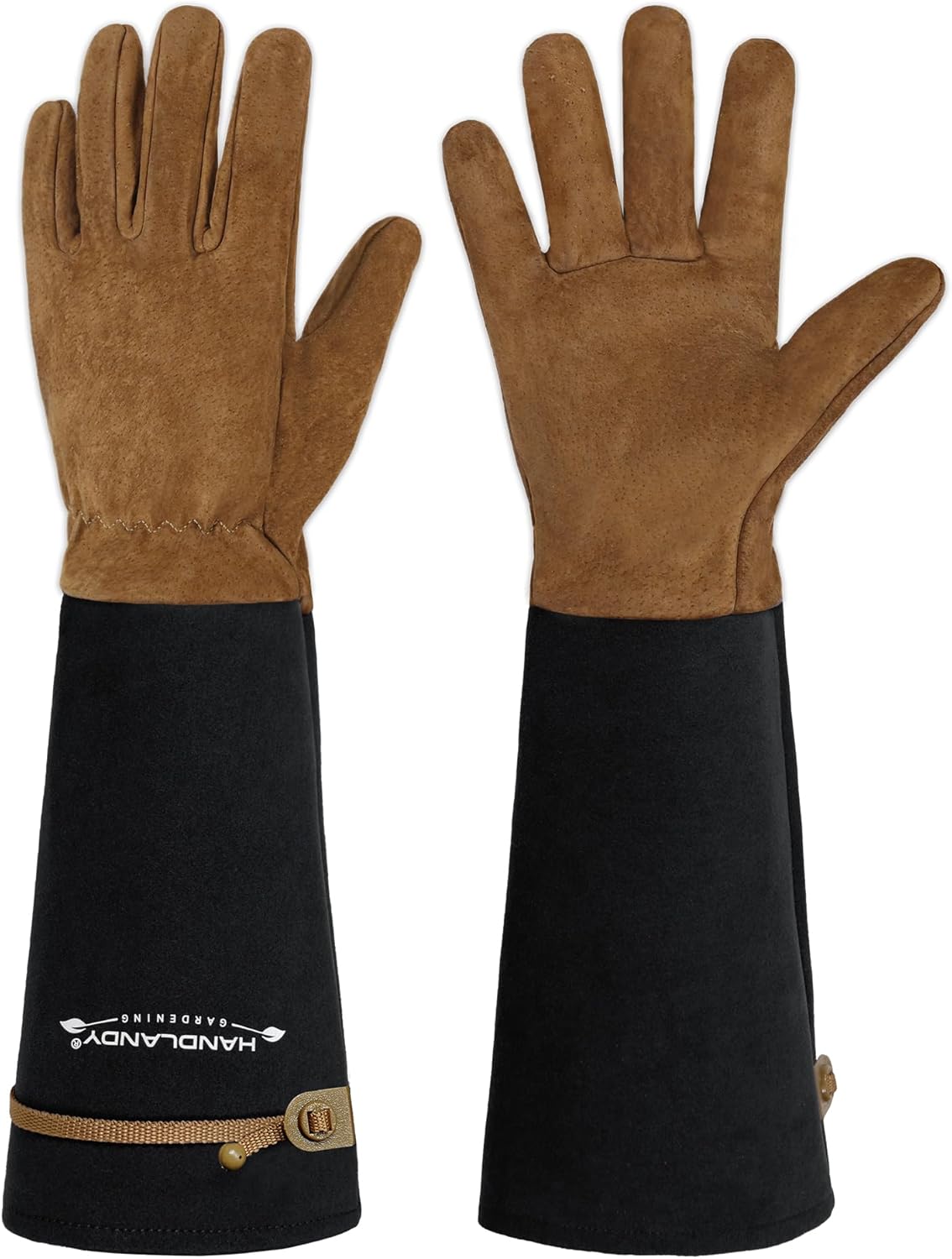
HANDLANDY Long Pigskin Leather Rose Pruning Gloves
4.6 stars, 13.1K ratings, thorn-proof gauntlet style; needed for rose deadheading specifically
Shop Now
Fiskars 6" Non-Stick Pruning Snips
4.7 stars, 11.8K ratings; for soft-stemmed daylily and lavender work where full-size pruners are overkill
Shop NowNever miss an update — choose FarmFoodFamily as your preferred source on Google.
How it works: Tap the button below to open Google's settings page, then check the box next to FarmFoodFamily.
Tap the checkbox to turn it blue — that's how you know it's set.