The Glow Garden Trend: 8 Ways to Make Your Yard Genuinely Magical After Dark This August
A glow garden turns your yard into something worth stepping outside for after sunset, as long as you plant the right pale-colored varieties and skip the paint tricks that fade in an hour.

Never miss an update — choose FarmFoodFamily as your preferred source on Google.
How it works: Tap the button below to open Google’s settings page, then check the box next to FarmFoodFamily.
Tap the checkbox to turn it blue — that’s how you know it’s set.
August evenings are long enough to actually sit outside, and that is exactly when most yards go dark and boring. The glow garden trend fixes that with plant choices, not just plug-in fixtures: white and silver-leaved plants that catch whatever light is around, plus a few honest glow-in-the-dark tricks that work if you use them right.
This is a design and plant-selection guide, not an electrical how-to. If you’re here for wiring string lights or LED strips, the site’s fence, deck, and pool lighting guides cover that ground already (linked in the table below).
Quick answer: how do you make a garden glow at night?
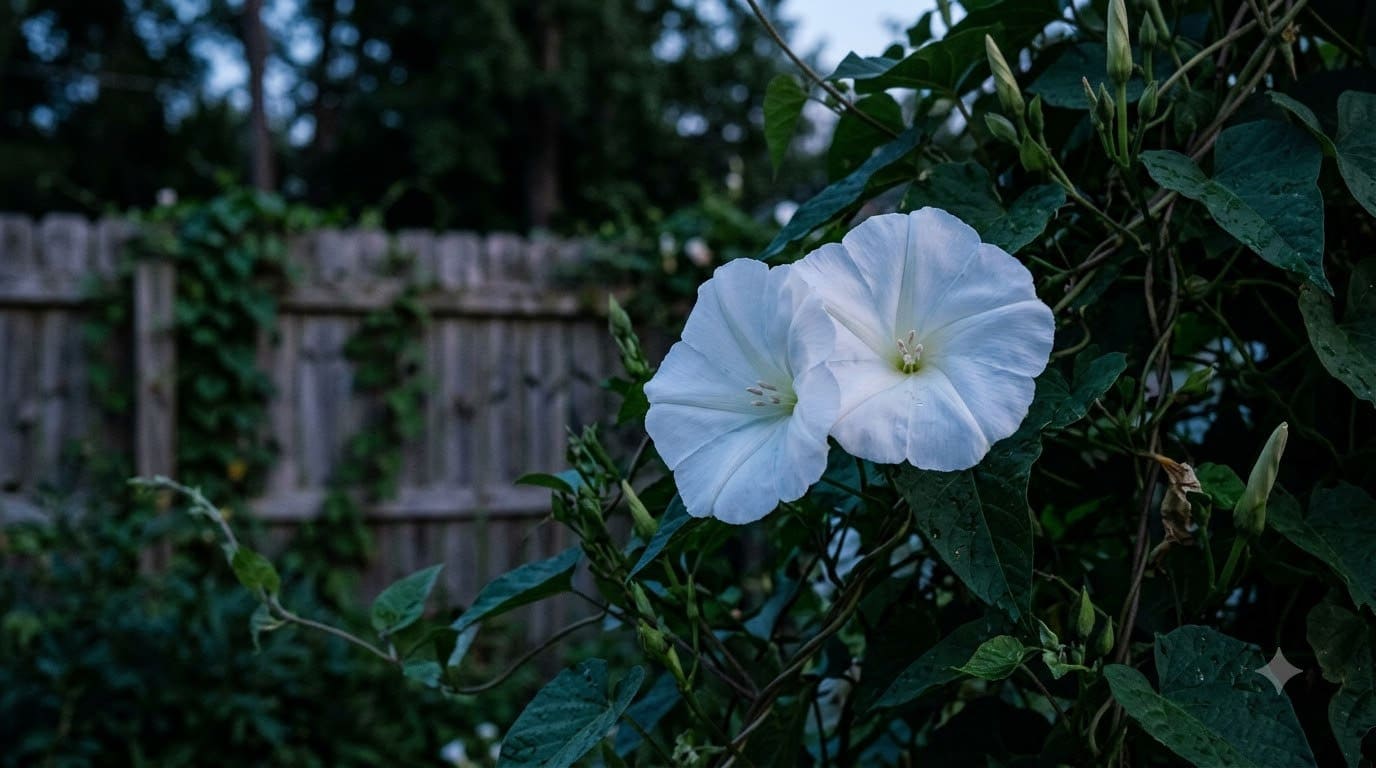
A garden looks like it glows at night mostly through plant choice, not electronics. White and pale flowers (moonflower, white coneflower, white hydrangea) and silver-toned foliage (artemisia, dusty miller) reflect ambient moonlight and porch light far better than green foliage does, because their surfaces scatter light instead of absorbing it.
Group them together instead of scattering single plants through a bed, since a cluster of pale color reads clearly at dusk while a single white bloom disappears into the dark. Solar accent lights and glow-in-the-dark paint or pebbles add a real secondary layer, but both depend on real daylight charging first and neither replaces the plants.
Colorado State University Extension also flags a genuine tradeoff: harsh artificial light can disrupt the moths that pollinate many of these same night-blooming flowers, so restraint matters as much as the plant list itself.
How this is different from a lighting-fixture guide
A lot of “garden glow” content is actually a lighting-fixture buying guide wearing a garden-design headline. This one is not that. The table below shows the difference plainly, and if you landed here looking for wiring or fixture-mounting instructions, the linked articles cover that specific ground better than this one would.
Answer 4 quick questions and get matched to the exact fix for your yard — drainage, budget, layout, or something else entirely.
Take the Free Quiz| This article | The fixture-focused articles |
|---|---|
| Plant selection for reflective/pale color and night fragrance | Physical installation of lights on a structure |
| Glow-in-the-dark paint and pebbles as a design layer | LED strip wiring, post-cap lights, motion sensors |
| Moon-garden siting, bloom timing, pollinator impact | Electrical safety, waterproof ratings, power draw |
| No wiring or electrical work required | Fence lighting, deck lighting, and pool lighting cover the wiring side |
If a full-scale wired lighting overhaul is actually the goal here, a roundup built around Halloween night lighting is a decent jumping-off point too, even outside the Halloween season, since a lot of the fixture logic carries over.
Glow garden elements at a glance
| Element | How it glows | Light source needed | Best placement | Maintenance |
|---|---|---|---|---|
| Moonflower vine | White trumpet blooms open at dusk | None, reflects ambient light | Trellis or fence near a seating area | Water regularly, deadhead spent blooms |
| White coneflower + hydrangea | Pale petals hold visible color into evening | None | Perennial bed, part sun to full sun | Low, typical perennial care |
| Silver artemisia + dusty miller | Felted silver leaves scatter light | None | Border edge, front of bed | Low, drought-tolerant |
| Glow pathway pebbles | Phosphorescent pigment | Direct sun or bright light for hours during the day | Along walkways, bed edges | Rinse off dirt occasionally, recharges daily |
| Glow-in-the-dark paint | Same phosphorescent principle, applied to planters/edging | Same daytime charging requirement | Planters, stepping stones, edging | Repaint as glow fades over seasons |
| Angel’s trumpet + night jasmine | Pale, fragrant flowers open at night | None | Containers near patios, away from pet/kid reach | Bring indoors before frost in cold zones |
| Solar accent lights | Battery charged by sun, LED at night | Full sun exposure during the day | Anywhere not shaded midday | Wipe solar panel clean, check battery yearly |
| Multi-sensory layering | Combined light, scent, and sound | Mixed, depends on elements chosen | Wherever people actually sit at night | Ongoing, seasonal |
1. Does a moonflower vine actually glow at dusk?
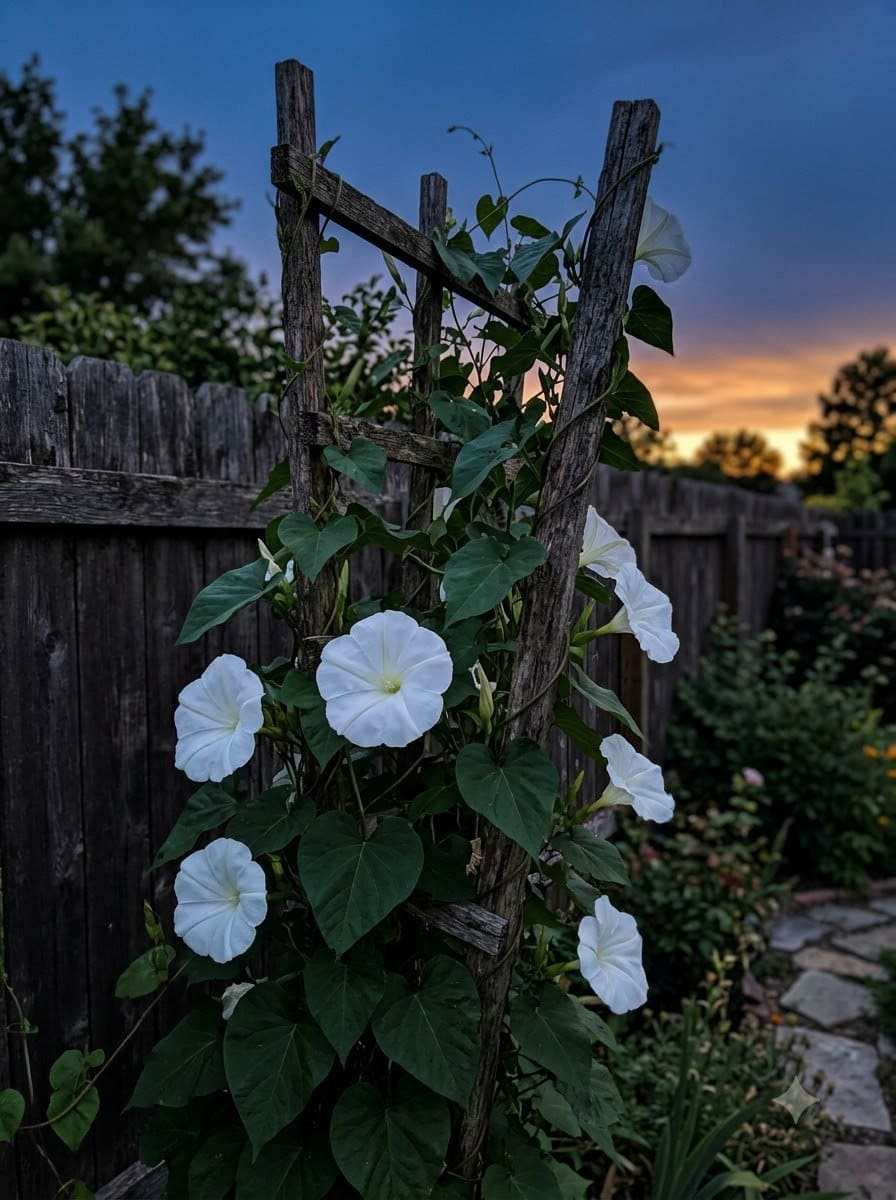
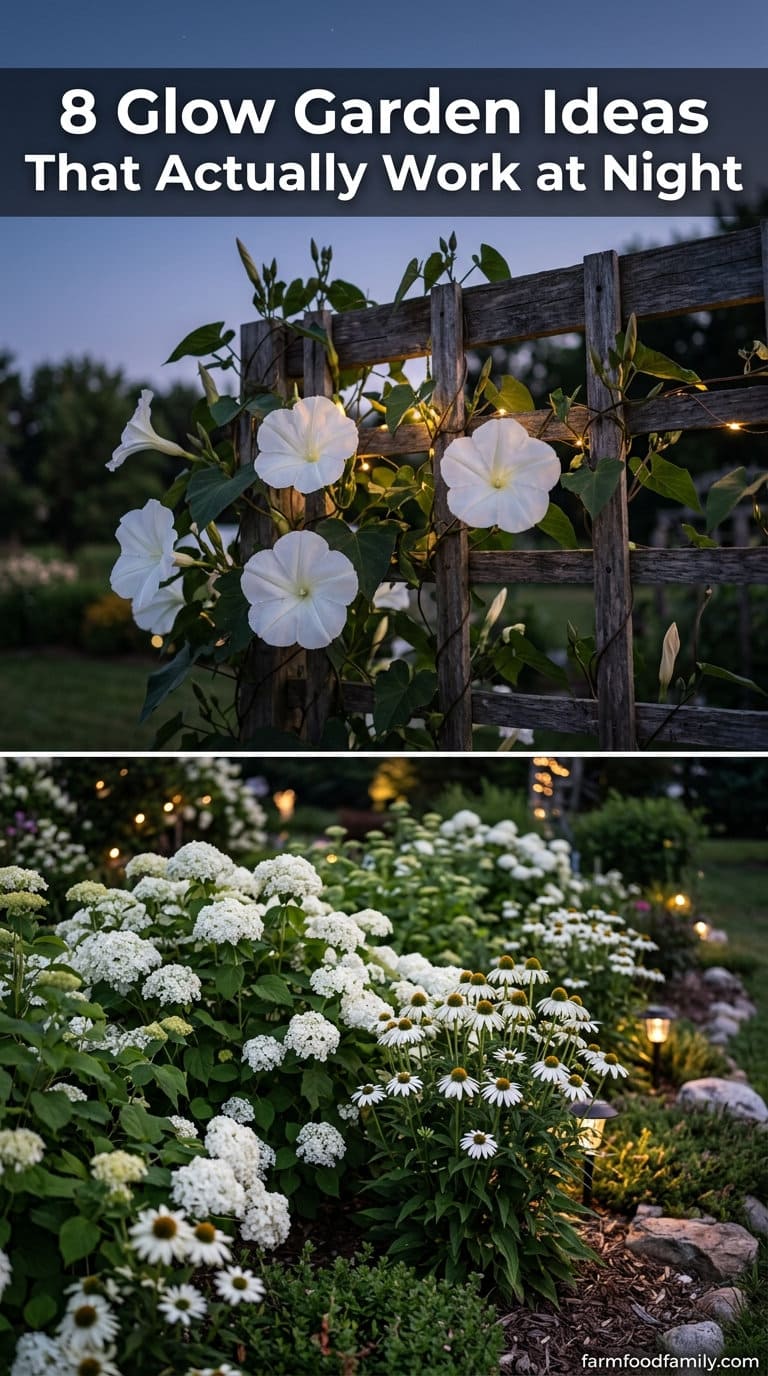
Moonflower (Ipomoea alba) is the closest thing to a genuinely glowing plant that exists without a battery. Its huge white trumpet blooms open right around dusk and stay open through the night, closing again by mid-morning.
The flower’s white surface catches whatever light is around, moonlight, porch light, even starlight on a clear night, and reflects it back with real brightness. It also has a sweet, heavy fragrance that draws sphinx and hawk moths after dark.
Give it a trellis, fence, or arbor, since it’s a fast climbing annual vine that can reach 10 feet or more in one season. Plant it somewhere you’ll actually sit in the evening, a patio corner or a spot visible from a window, since the whole point is watching it open.
Clemson Cooperative Extension’s Home & Garden Information Center recommends siting a moon-garden vine like this one where it gets real evening foot traffic or a clear view from indoors, not tucked in a back corner nobody visits after dark.
2. Which perennials hold their glow the longest into evening?
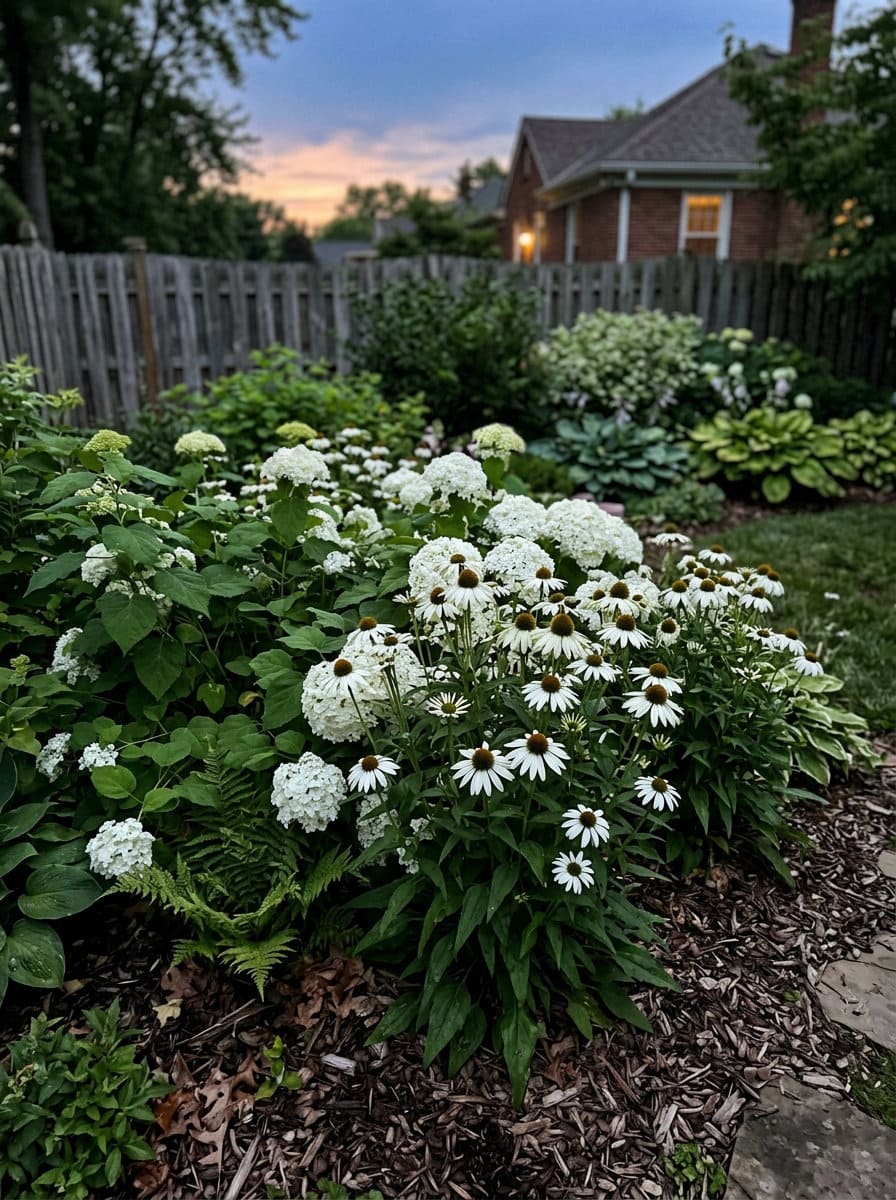
White coneflower (a variety like ‘White Swan’) and white hydrangea are the two most reliable pale perennials for this effect, and they bloom on different schedules so one picks up as the other fades. Coneflower peaks mid-to-late summer with flat white petals around a raised cone; hydrangea’s large mophead blooms hold their white color well into the evening light thanks to their sheer bulk and density.
Group them in clusters of three or more rather than scattering single plants through a mixed bed. A lone white bloom among green foliage reads as a faint dot at dusk, but a clustered mass of white catches the eye from across a yard.
Most yard problems trace back to one specific, fixable cause. Find yours in 4 quick questions.
Take the Free Quiz
4.5 stars, 9.3K ratings; referenced in idea 7 for restrained, low-profile ambient accent lighting among pale foliage
Shop NowThis post contains affiliate links. We may earn a commission on qualifying purchases at no extra cost to you.
Hydrangea wants part shade and consistent moisture; coneflower tolerates more sun and drought once established. Pairing the two covers a wider range of yard conditions than either alone.
3. Why do silver and gray-leaved plants seem to glow without any flowers at all?
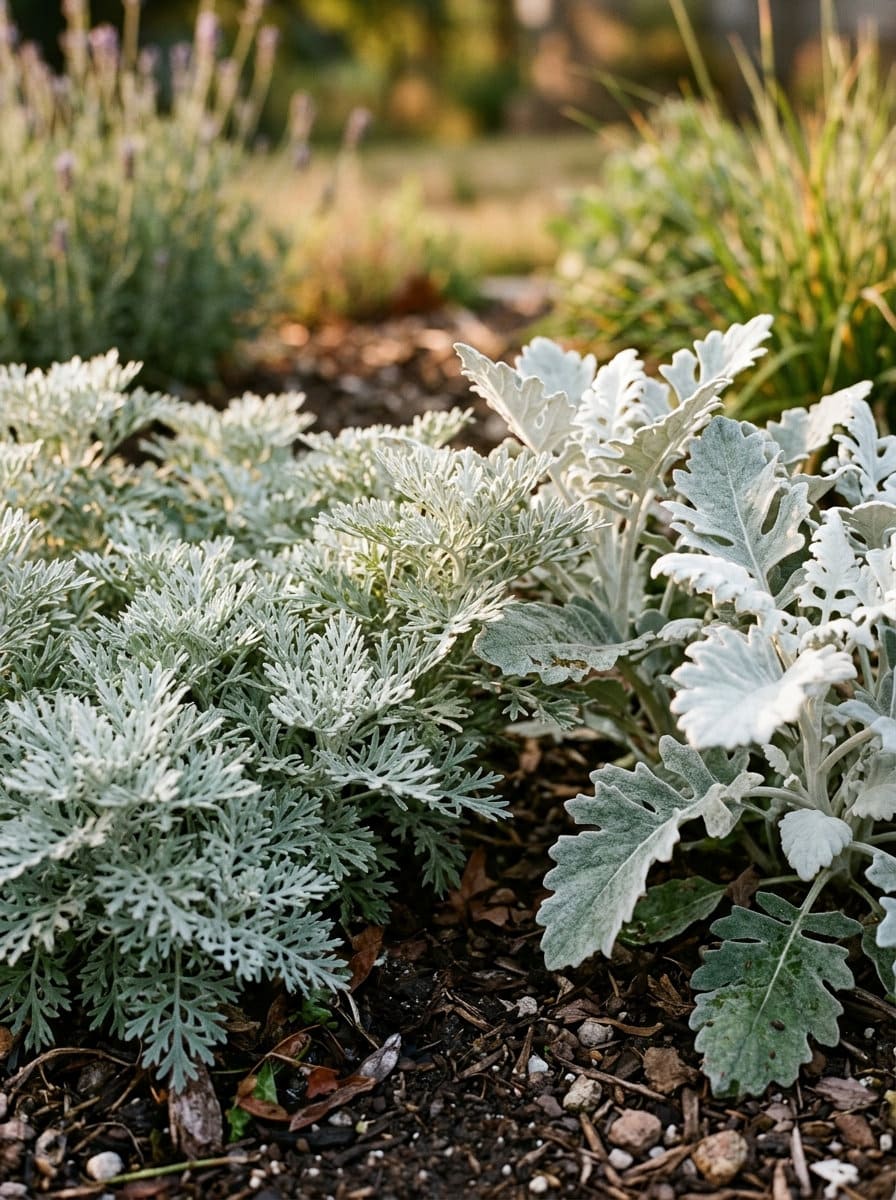
Silver Mound artemisia and dusty miller both owe their color to a dense layer of tiny hairs on the leaf surface, and that same hairy structure is what scatters light instead of absorbing it the way smooth green foliage does. That’s the actual mechanism, not a trick of the eye, and it’s why these plants keep working as a glow element even after their small, unremarkable flowers are long gone.
Both are genuinely low-maintenance. Artemisia is a perennial that tolerates poor soil and drought once established, and dusty miller, usually grown as an annual outside the warmest zones, handles heat and neglect about as well as any bedding plant on the market.
Use them as a border or edging layer in front of taller white bloomers, not as the star. The silver foliage layer is what makes the white blooms above it look intentional instead of scattered.
4. Do glow-in-the-dark pathway pebbles actually work?
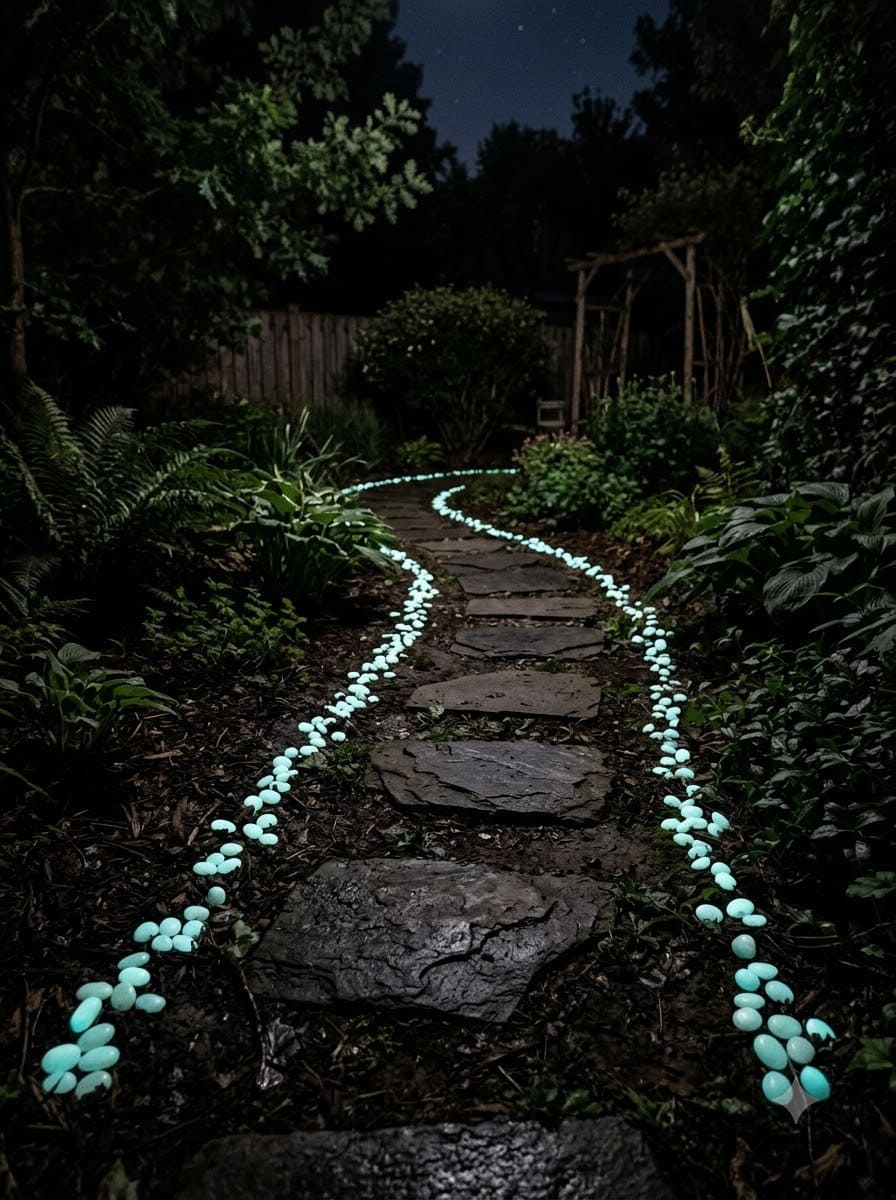
Yes, but only with real daylight exposure first, and that’s the part most Pinterest photos leave out. Glow pebbles use a phosphorescent pigment, usually strontium aluminate or zinc sulfide, that has to absorb several hours of direct sun or bright light during the day before it glows at night.
A shaded path under trees will barely charge the pebbles at all, and the resulting glow will be faint and short-lived, fading well before midnight. Full-sun paths and open beds are the only spots where this actually delivers the effect shown in photos online.
Modern glow pigments are not radioactive and are not considered toxic under normal outdoor use. Small stones are still a swallowing hazard the same way any small garden decor item is, so keep them away from areas where a toddler or a dog that eats everything spends unsupervised time.
5. Is glow-in-the-dark paint safe to use in a garden with plants, pets, or kids?
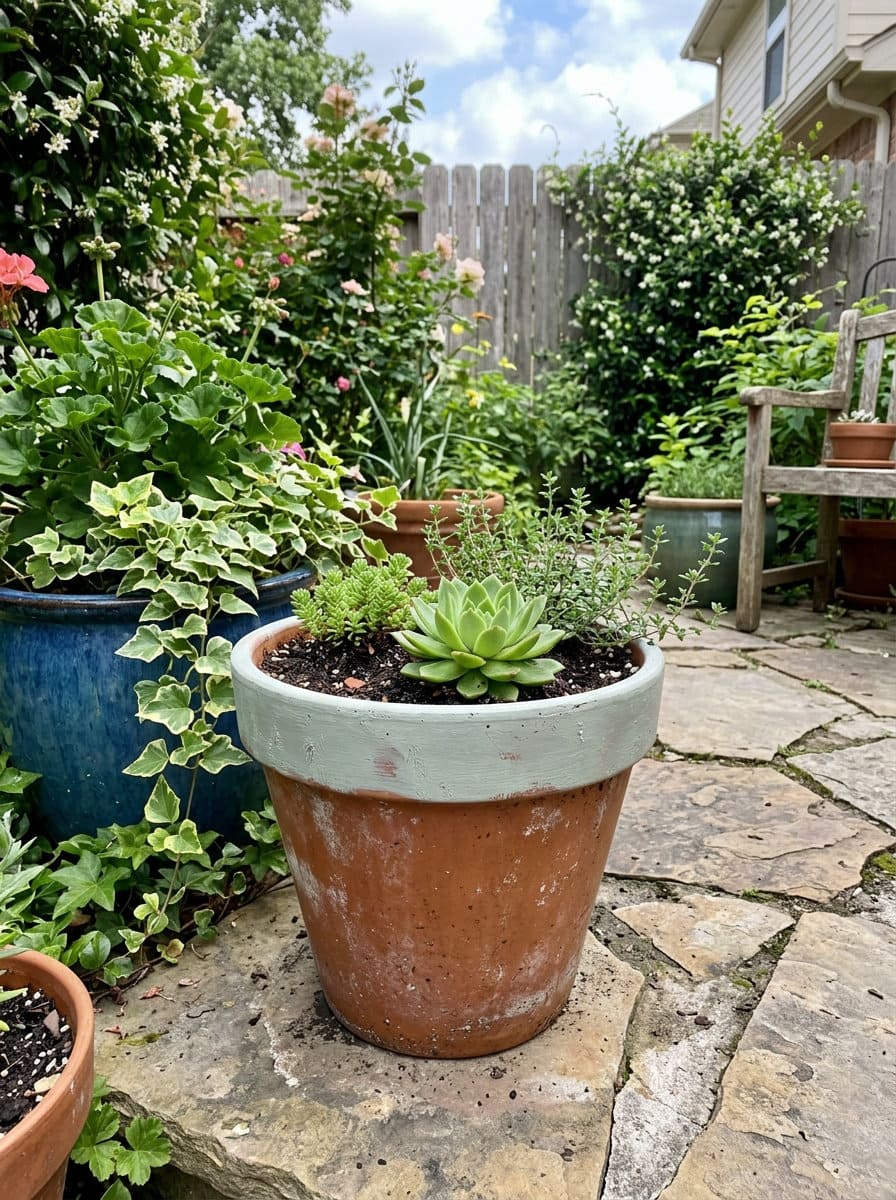
Mostly, with two real caveats worth knowing before buying a can. Conventional spray-on glow paints can release VOCs while drying, and those fumes can genuinely irritate nearby plants, so painting stepping stones or planters away from the actual garden bed, then moving them into place once fully cured, is the safer sequence.
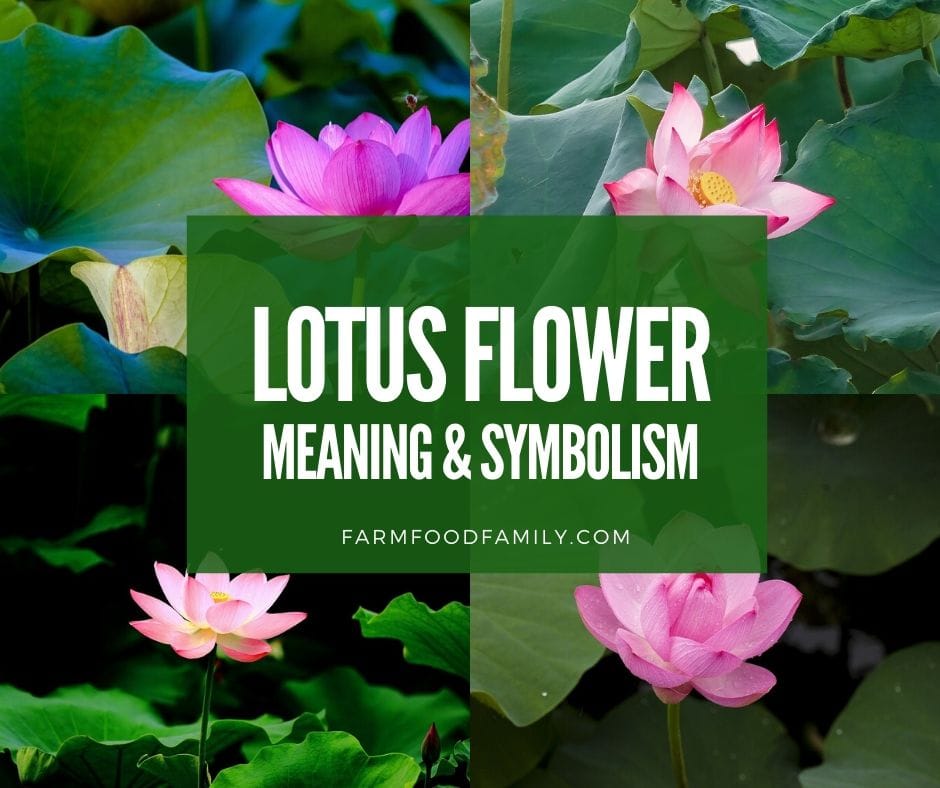
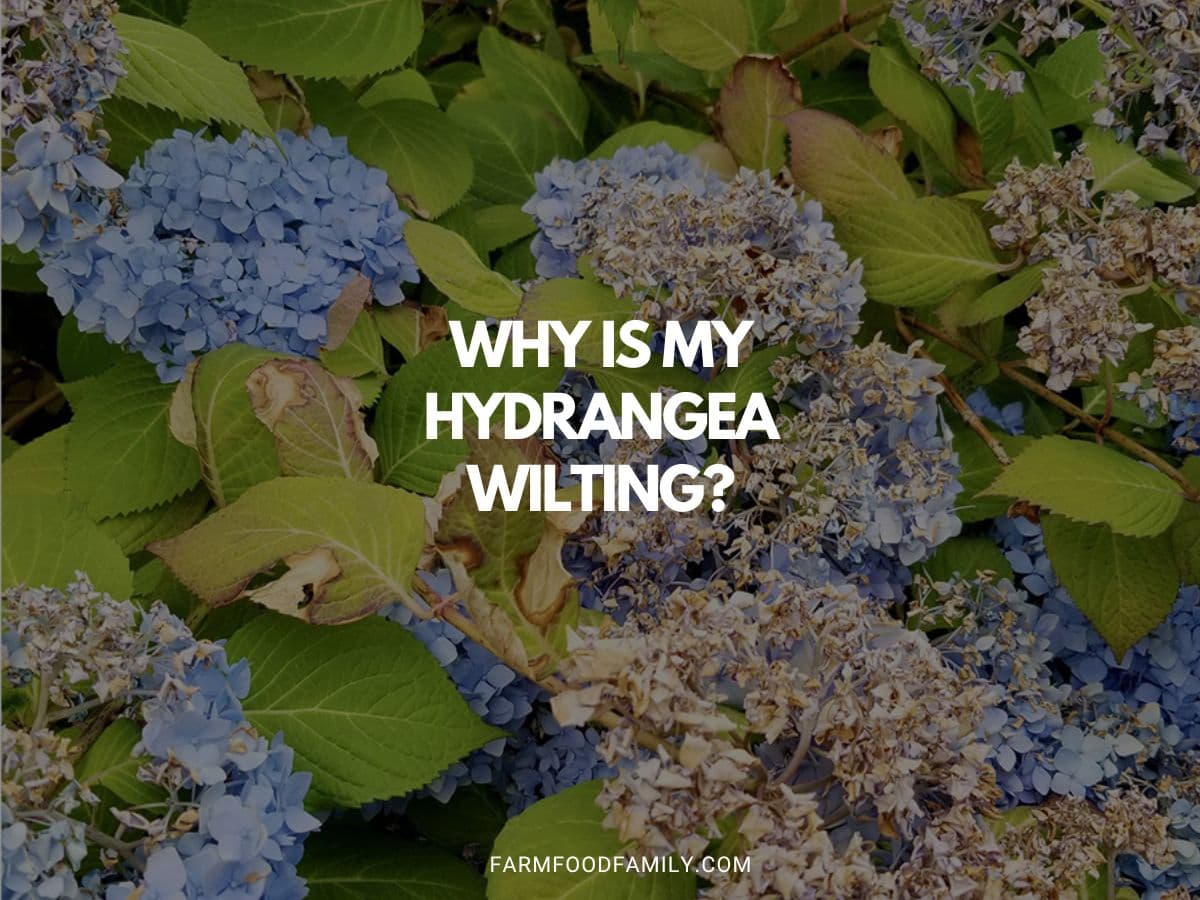
Once fully dry, most modern glow pigments (zinc sulfide with copper, or strontium aluminate with europium) are not considered toxic under normal use. Low-VOC or zero-VOC acrylic formulas exist specifically for projects near kids and pets, and they’re worth the small price difference over a generic craft-store can.
The average homeowner spends $616/year on yard fixes that don't address the real problem. Find out what yours actually is — before you spend another dollar.
Take the Free QuizSet expectations honestly: painted surfaces glow dimmer and fade faster than dedicated glow pebbles or resin products, since a thin paint layer holds less pigment. This is a decorative accent, not the main light source for a path anyone actually needs to see by.
6. Which fragrant night-blooming plants are worth the extra care?
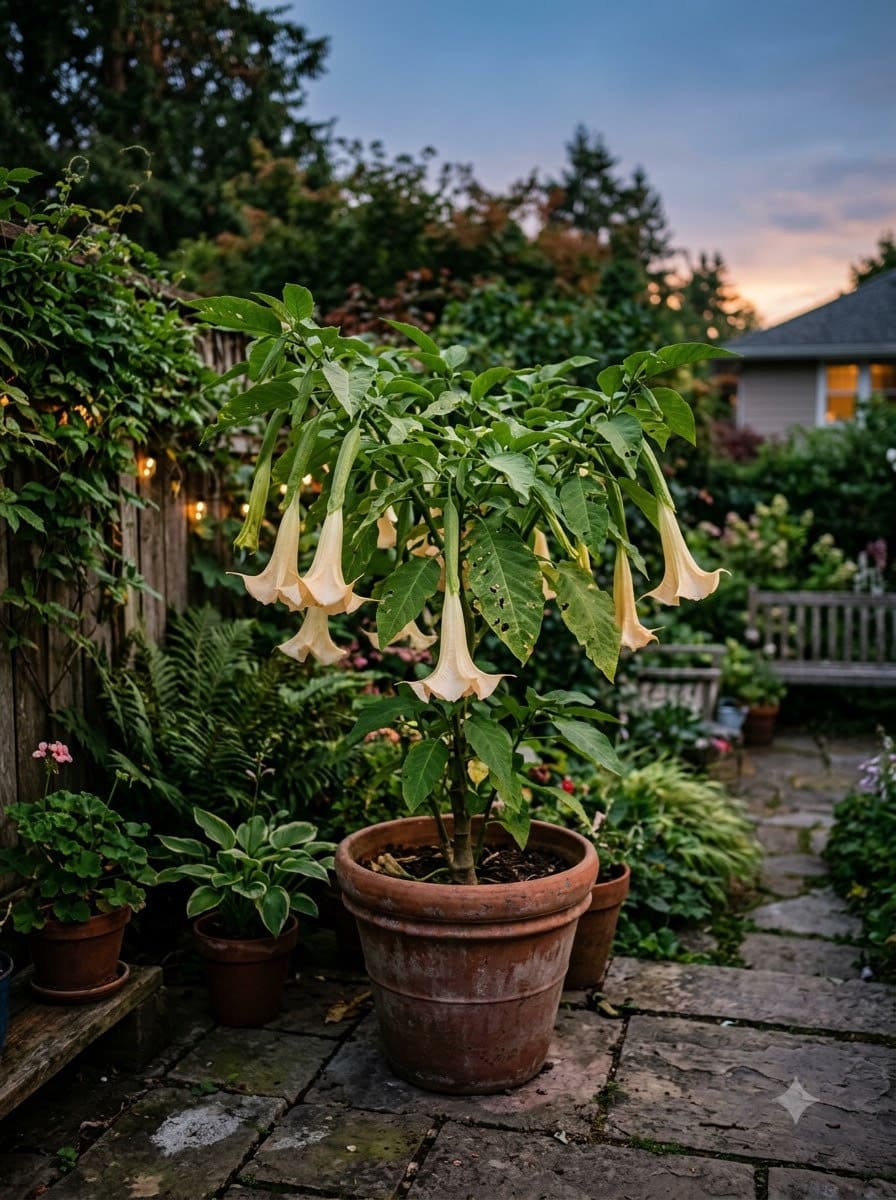
Angel’s trumpet (Brugmansia) and night-blooming jasmine (Cestrum nocturnum) are the two most fragrant options for a glow garden, and both come with a real tradeoff worth stating plainly. Angel’s trumpet produces enormous pendulous white-to-pale trumpet flowers that open in the evening and carry a heavy sweet scent, but every part of the plant is toxic if ingested.
Keep it in a container out of reach of pets and small children rather than a ground bed near a play area. Night-blooming jasmine is less dangerous but still worth checking against any known allergies in the household, since its fragrance is genuinely intense at close range, more suited to a patio corner than a spot right outside a bedroom window.
Both are tender in colder climates and need to come indoors or into a garage before the first frost. Treat them as container plants from the start if winters in your area regularly drop below freezing.
7. How do solar accent lights fit into a glow garden without looking like a fixture install?
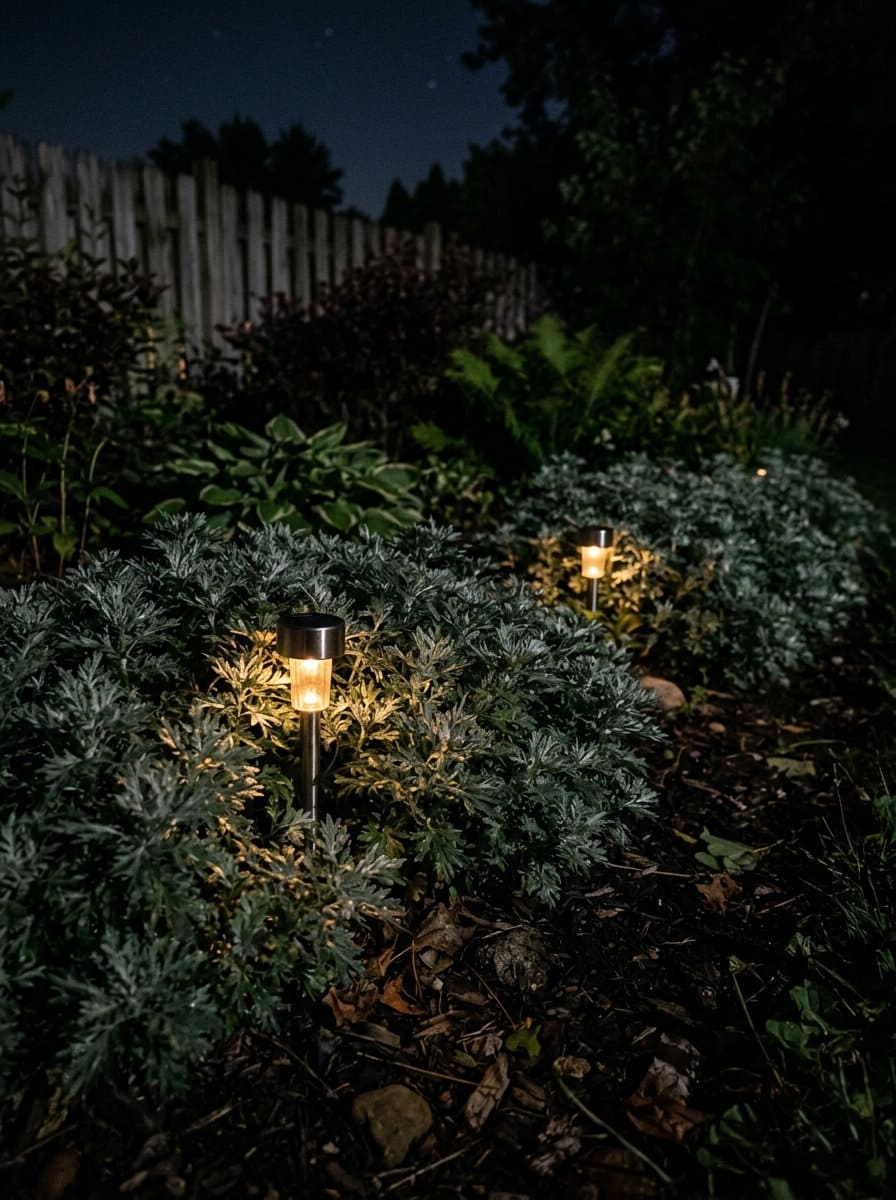
Solar accent lights are the one purely electronic element that still fits a plant-first glow garden, as long as they’re used sparingly. A few low, warm-toned solar stakes tucked among artemisia or dusty miller reads as ambient glow rather than a lit walkway, which keeps the plant-driven effect as the star.
Placement matters more than the light itself. A solar light shaded by a tree canopy or a fence most of the day will barely charge and will die out well before midnight, the same daylight-dependency problem glow pebbles have.
Check the actual sun exposure of a spot across a full day before committing to it, not just at the moment you’re installing the light. Wipe the solar panel clean of dust and pollen every few weeks, since a dirty panel charges noticeably worse than a clean one.
8. What does “multi-sensory” actually mean for a glow garden?
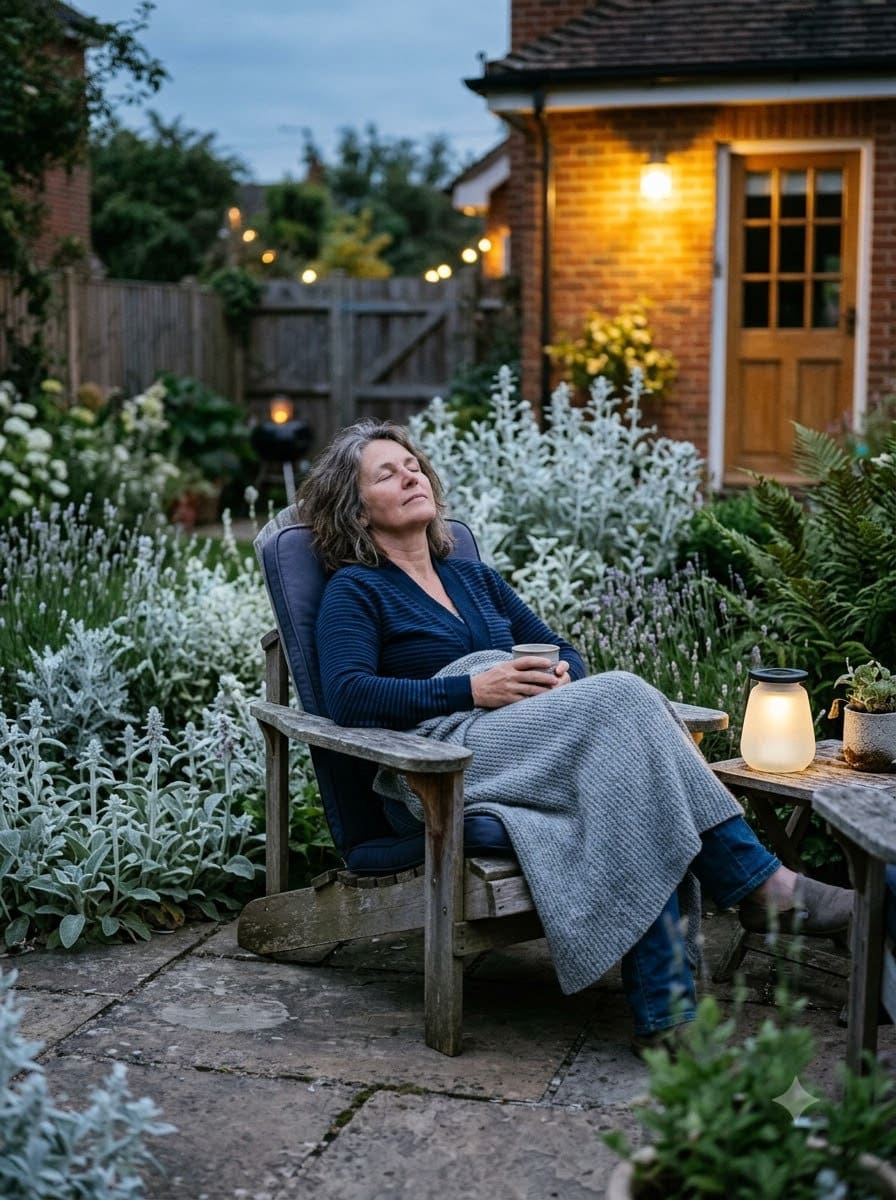
The trend’s real appeal isn’t just visual. A well-planned glow garden layers scent (moonflower, night jasmine), sound (a small water feature or wind chimes), and light (pale foliage plus a few restrained solar accents) so the space works for more than one sense at once.
That layering is also why restraint matters so much. Colorado State University Extension’s guidance on moon gardens specifically warns against harsh, overpowering artificial light, since it disrupts the moths and other nocturnal insects that actually pollinate many night-blooming flowers in the same bed.
A yard that leans on 2 or 3 well-chosen elements, one pale plant cluster, one fragrance source, one restrained light, tends to feel more intentional after dark than one crammed with every glow trick at once.
What a glow garden actually looks like after the first season (real talk)
I painted a set of terra cotta planters with a bargain glow-in-the-dark spray can the first summer I tried this, and by 9 p.m. they were basically invisible. The can promised a “brilliant nighttime glow.”
What I actually got was a faint gray shimmer that lasted about 20 minutes before fading to nothing.
The problem wasn’t the product. It was placement. Those planters sat under a covered porch roof that blocked most of the direct afternoon sun, and glow paint without real daylight charging is just gray paint after dark.
The fix that actually worked was moving the same planters to a spot that gets 4 to 5 hours of unobstructed afternoon sun, and pairing them with a real moonflower vine on the fence behind them instead of relying on the paint alone. And honestly, the moonflower did more visual work by itself than every can of glow paint I bought that year combined.
There’s a real light-pollution angle here too, and it’s not just aesthetic hand-wringing. Xerces Society research on moths as nocturnal pollinators found that nocturnal plant visits dropped by roughly 62 percent in areas with artificial illumination compared to genuinely dark ones.
If part of the appeal of a glow garden is watching moths work a moonflower bloom at dusk, a floodlight aimed at the same bed defeats the purpose.
So the honest answer to “does this actually work or is it just Pinterest fantasy” is that the plants genuinely work, reliably, from the first season they establish. The paint and pebble tricks work too, but only in real sun, and only as a supporting accent, never the main event.
Does a glow garden work in every climate zone?
Not identically everywhere, and the plant list needs adjusting by region.
| Region type | What thrives easily | What needs container treatment |
|---|---|---|
| Warm zones (roughly USDA 8 and warmer) | Moonflower, angel’s trumpet, night jasmine can stay in the ground year-round | Little adjustment needed |
| Cold-winter zones (roughly USDA 7 and colder) | Artemisia, dusty miller, white coneflower, white hydrangea all handle winter fine | Moonflower, angel’s trumpet, and night jasmine need container growing and an indoor spot before frost |
| Hot, dry regions | Artemisia and dusty miller thrive with minimal water | Hydrangea needs consistent irrigation or afternoon shade to avoid wilting |
Gardeners in a cold-winter zone shouldn’t skip the tender plants entirely. Growing moonflower, angel’s trumpet, or night jasmine in a large container that gets wheeled into a garage or bright indoor spot before the first frost is a normal, common approach, not a compromise.
FAQs
Do I need any electricity for a glow garden? No. The core plant-based effect (white and silver-toned plants reflecting ambient light) needs zero electrical work, which is exactly what separates this approach from the site’s wired lighting-fixture articles.
How long does glow-in-the-dark paint actually last outdoors? Expect fading over one to two seasons of sun and weather exposure, with the nightly glow itself lasting a few hours at most after a full day of direct charging, not all night.
Is a moon garden the same thing as a glow garden? A moon garden is the plant-focused core of a glow garden. The broader “glow garden” trend adds glow paint, pebbles, and solar accents on top of that same pale-plant foundation.
Are any of these plants dangerous for pets? Angel’s trumpet is toxic if ingested by pets or people, so keep it contained and out of reach. The other plants on this list (moonflower, coneflower, hydrangea, artemisia, dusty miller, night jasmine) are not considered significant toxicity risks, though as with any plant, it’s worth checking against a specific pet’s known sensitivities.
Will bright solar lights or floodlights ruin the moon-garden effect? Yes, in two ways. Overly bright light washes out the subtle glow of pale plants, and per Colorado State University Extension’s guidance, it can also disrupt the moths that pollinate many night-blooming flowers in the same bed.
Related Posts
- Fence Lighting Ideas
- Deck Lighting Ideas
- Pool Lighting Ideas
- Fragrant Perennial Plants for Your Garden
- Pollinator-Friendly Plants for Your Garden
- Creative Garden Design Ideas
- What to Plant With Hydrangeas
Products We Recommend
This post contains affiliate links. We may earn a commission on qualifying purchases at no extra cost to you.
DenicMic Solar Pathway Lights, 10-Pack, Warm/Cool White
4.5 stars, 9.3K ratings; referenced in idea 7 for restrained, low-profile ambient accent lighting among pale foliage
Shop Now
Artecho Neutral Glow-in-the-Dark Acrylic Paint, 17 oz
4.7 stars, 2.4K ratings, non-toxic craft-grade formula; referenced in idea 5's glow-paint section
Shop NowNever miss an update — choose FarmFoodFamily as your preferred source on Google.
How it works: Tap the button below to open Google's settings page, then check the box next to FarmFoodFamily.
Tap the checkbox to turn it blue — that's how you know it's set.