What NPK Numbers Actually Mean (So You Stop Guessing at the Store)
Those three numbers on every fertilizer bag aren’t random, they’re a real formula, and once you can read it you’ll never grab the wrong bag out of confusion again.

Never miss an update — choose FarmFoodFamily as your preferred source on Google.
How it works: Tap the button below to open Google’s settings page, then check the box next to FarmFoodFamily.
Tap the checkbox to turn it blue — that’s how you know it’s set.
Every fertilizer bag has three numbers stamped on the front, something like 10-10-10 or 24-8-16, and if you’ve ever stood in the aisle unsure what actually separates one bag from another before heading home to work it into a prepared bed, you’re not alone.
The numbers aren’t marketing, they’re a legally required label, and once you know what they mean, choosing the right bag stops being a guess.
What Do the Three Numbers Actually Mean?
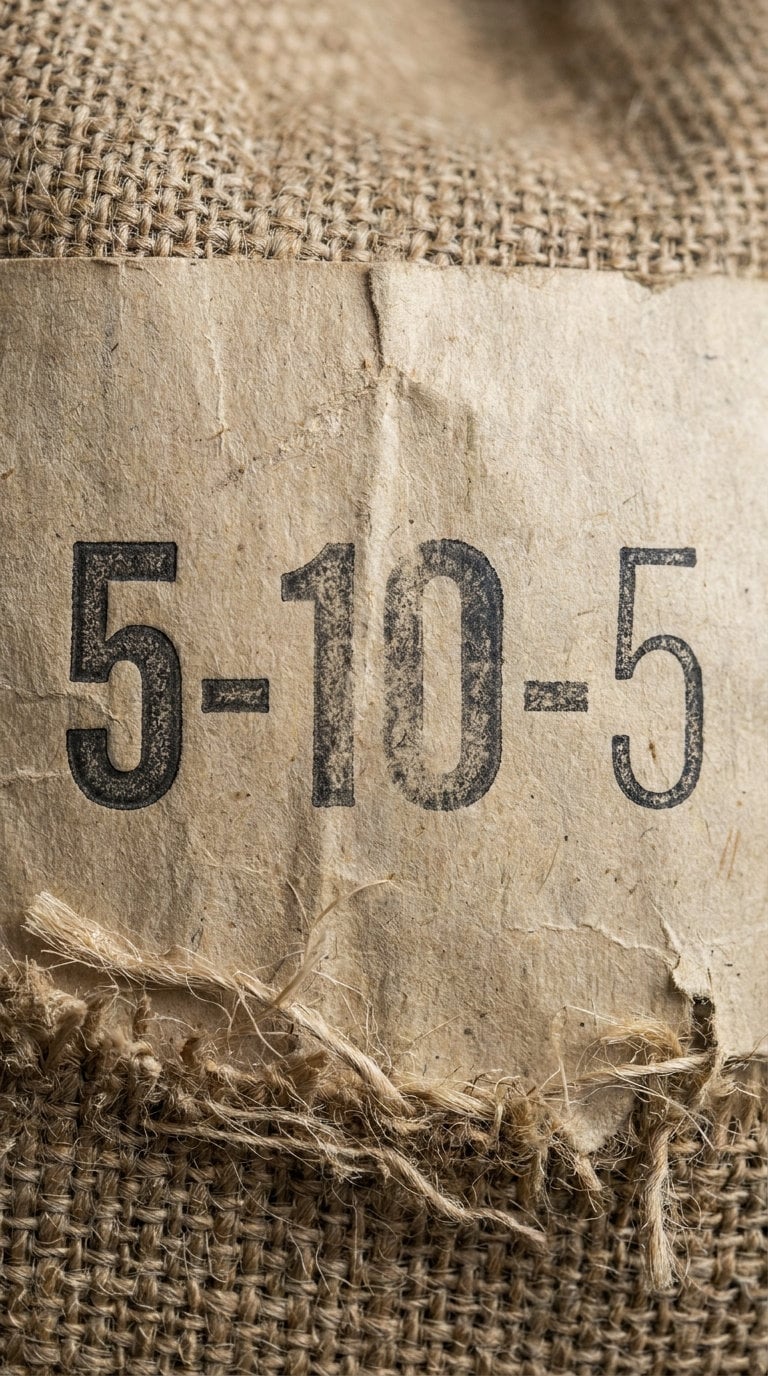
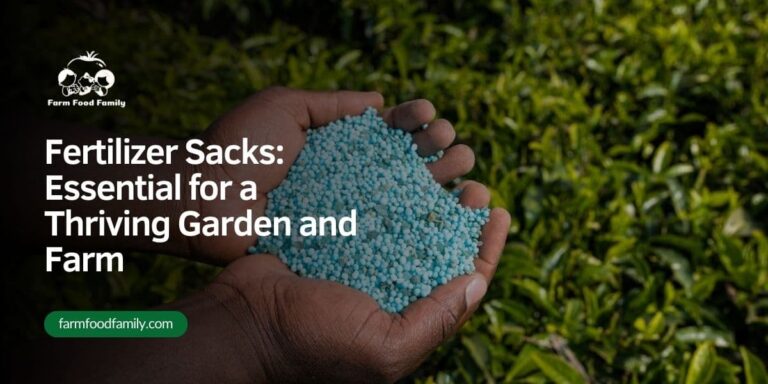
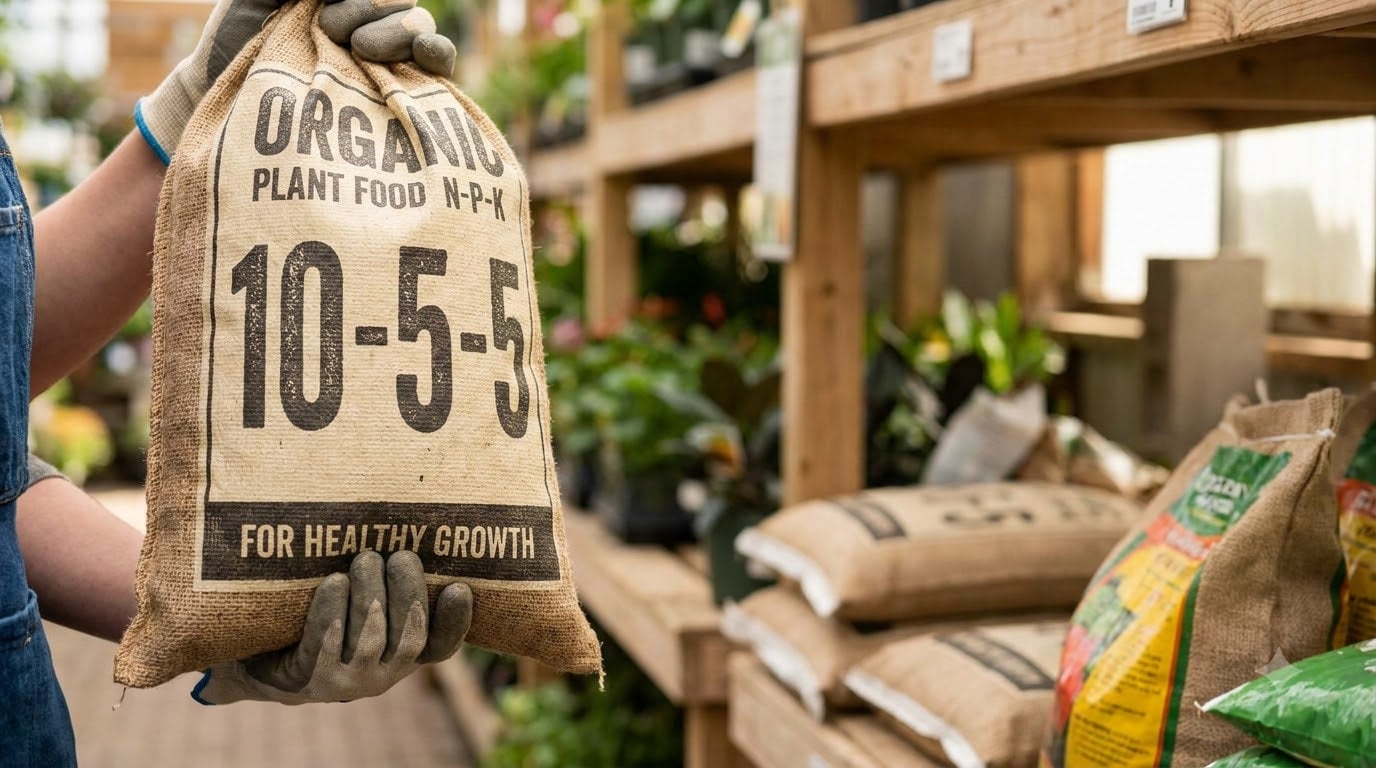
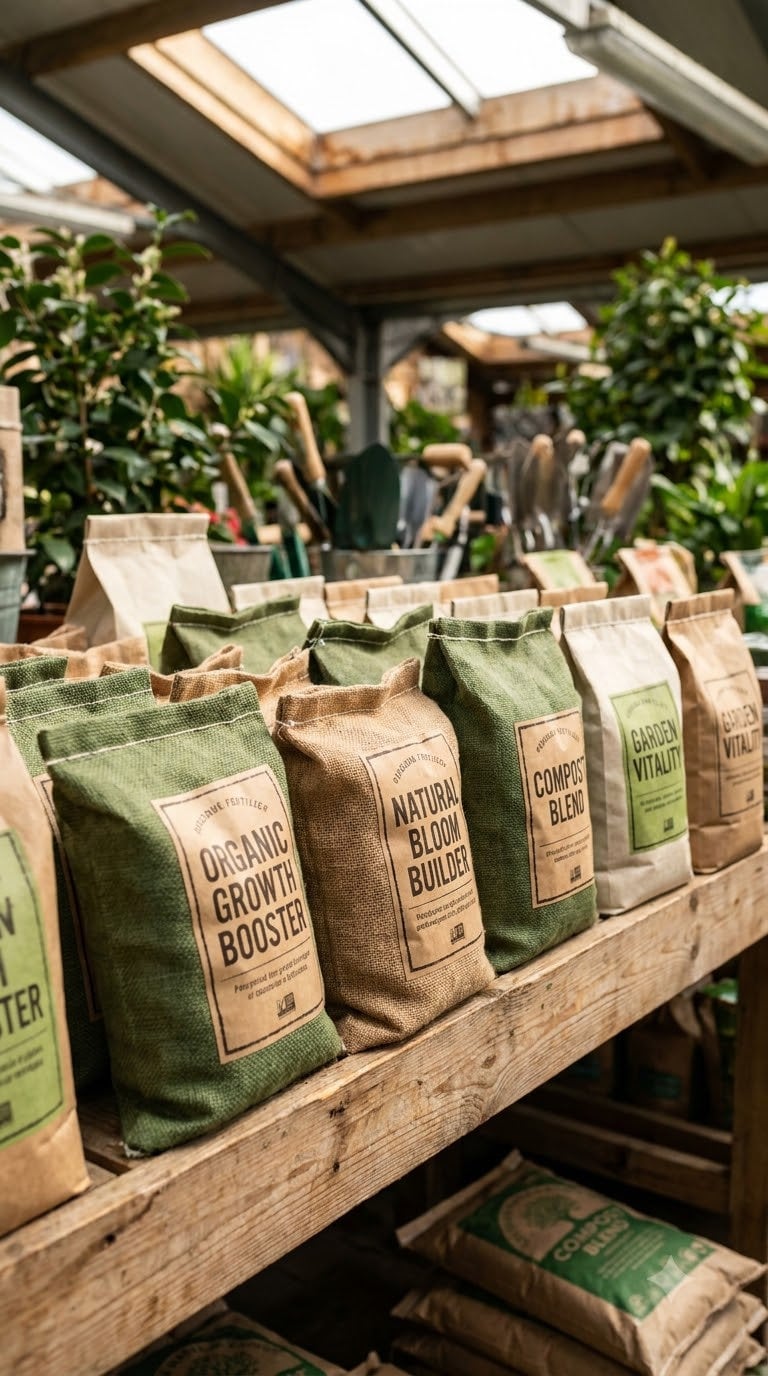
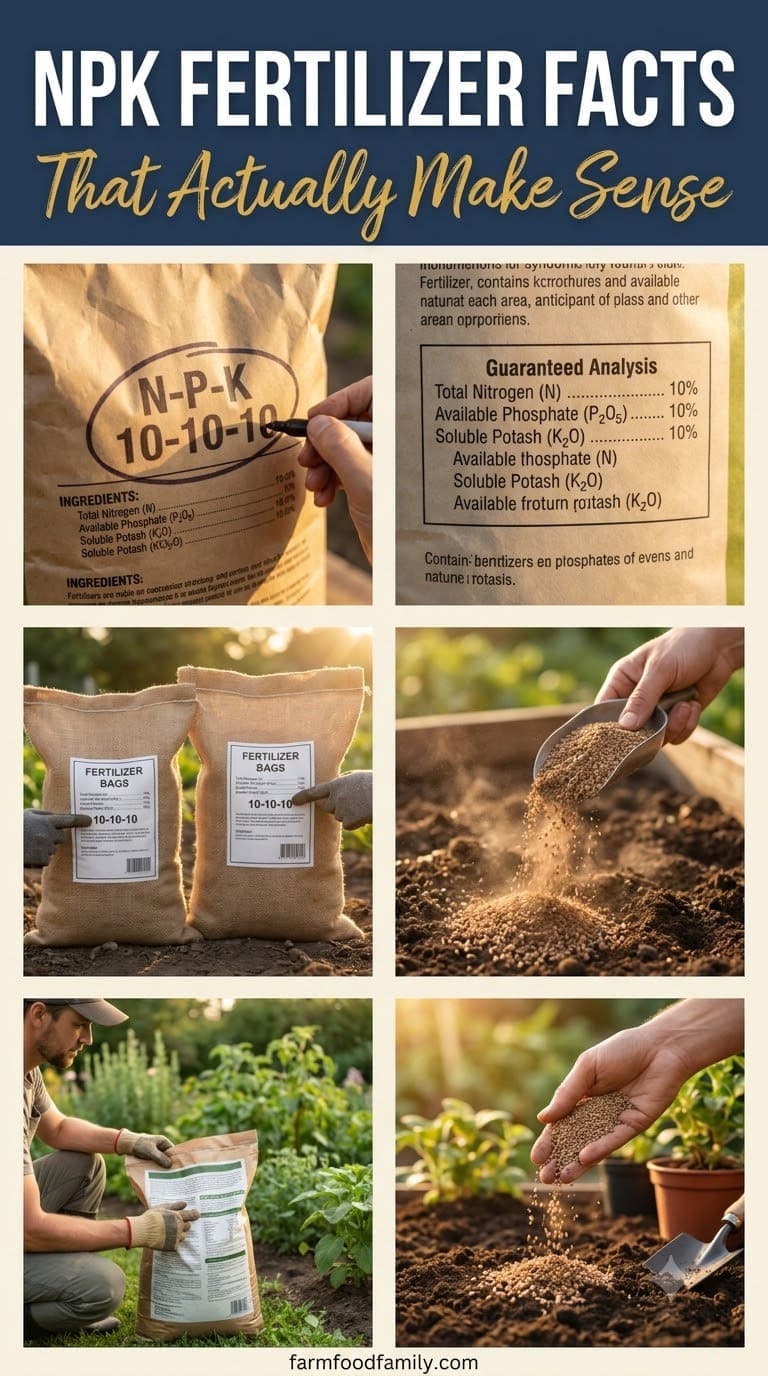
The three numbers always appear in the same order, nitrogen, phosphorus, potassium, and they represent the percentage by weight of each nutrient in the bag.
A bag labeled 10-10-10 is 10% nitrogen, 10% phosphorus, and 10% potassium by weight, with the rest made up of filler material. Here’s the part almost nobody explains: per Clemson University HGIC, the nitrogen number is elemental nitrogen directly, no conversion needed, but the phosphorus and potassium numbers aren’t actually elemental phosphorus and potassium at all.
They’re expressed as phosphate (P2O5) and potash (K2O), the chemical forms these nutrients exist in within the product. That distinction is why comparing raw nutrient content between two products isn’t always as simple as comparing the numbers directly.

Balanced, Complete, or Incomplete: What’s the Difference?
These three terms get used loosely online, but per UC Marin Master Gardeners, they actually mean specific, different things.
Answer 4 quick questions and get matched to the exact fix for your yard — drainage, budget, layout, or something else entirely.
Take the Free Quiz| Term | Example | What it means |
|---|---|---|
| Balanced | 10-10-10 | Equal parts of nitrogen, phosphorus, and potassium |
| Complete | 12-4-8 | Contains all three macronutrients, but in different proportions, not equal |
| Incomplete | e.g. 20-0-0 | Missing one or two of the three primary nutrients entirely |
A balanced fertilizer is also technically complete, since it has all three nutrients, just in equal amounts. An incomplete fertilizer isn’t a lesser or defective product, it’s often a deliberate choice worth making the same way you’d choose an organic amendment for a specific soil gap, more on that below.
The Trick to Comparing Two Different Fertilizers Fairly
Two bags with completely different-looking numbers can actually represent the same underlying ratio, and there’s a simple way to check. Take the three numbers and divide all of them by the smallest one.
An 18-4-10 fertilizer, for example, divided by its smallest number (4), works out to roughly 4.5-1-2.5, a ratio that tells you nitrogen is being applied at about 4.5 times the rate of phosphorus and 2.5 times the rate of potassium.
Line that same math up against a different bag labeled something like 9-2-5, and you’ll find it simplifies to almost the same ratio, meaning the two products are functionally similar even though the numbers on the front look nothing alike.
This is genuinely useful when you’re standing between two products trying to figure out if a price difference actually reflects a meaningfully different formula or just a different concentration of the same one.
Which Ratio Do You Actually Need?
The honest answer is that it depends on what a real soil test says you’re missing, not a generic rule of thumb. Per Clemson HGIC, choosing a deliberately incomplete fertilizer, one missing a nutrient entirely, makes real sense specifically when a soil test shows your soil already has plenty of that particular nutrient and adding more would be wasted or even harmful.
Without a soil test to guide you, a balanced fertilizer like 10-10-10 is a reasonable, low-risk default for general garden use, while a higher first number (more nitrogen relative to phosphorus and potassium) tends to suit leafy vegetables and lawns that prioritize green growth, and a higher middle or last number tends to suit flowering and fruiting plants that need more of a push toward blooms and roots, the same logic behind a real crop-specific feeding schedule rather than one bag for everything.
Most yard problems trace back to one specific, fixable cause. Find yours in 4 quick questions.
Take the Free Quiz
A real, balanced-leaning fertilizer example for general vegetable garden use, illustrates a complete but not perfectly balanced ratio
Shop NowThis post contains affiliate links. We may earn a commission on qualifying purchases at no extra cost to you.
The Time I Bought the Wrong Bag Because I Didn’t Understand the Numbers
Early on, I grabbed a high-nitrogen lawn fertilizer for my vegetable garden because it was on sale and I figured fertilizer was fertilizer. My tomatoes, planted in a bed I’d otherwise laid out carefully, grew into enormous, leafy plants that season and produced almost nothing worth eating, which I now recognize as a textbook nitrogen-heavy result, all that pushed growth went into leaves instead of fruit.
What actually fixed it wasn’t a better product, it was understanding what I was looking at on the label in the first place. Once I started checking the actual ratio instead of just grabbing whatever bag was cheapest or most available, and matching a lower-nitrogen, higher-phosphorus product to what a fruiting plant like tomatoes actually needs, the difference the following season was obvious.
The numbers were never confusing on purpose, I just never learned to read them, and that one gap cost me an entire season’s tomato harvest for something that takes about five minutes to actually understand, right up there with finally understanding what a real container feeding routine actually needs compared to an in-ground bed.
FAQs
What do the three numbers on a fertilizer bag mean? They represent the percentage by weight of nitrogen, phosphorus, and potassium, always in that order. A 10-10-10 fertilizer is 10% nitrogen, 10% phosphorus, and 10% potassium by weight.
Is the phosphorus number on a fertilizer label the actual amount of phosphorus? Not exactly. Per Clemson University HGIC, the phosphorus number is expressed as phosphate (P2O5) and the potassium number as potash (K2O), the chemical forms these nutrients take in the product, not raw elemental phosphorus or potassium.
What’s the difference between a balanced and a complete fertilizer? A balanced fertilizer has equal parts of all three nutrients (like 10-10-10). A complete fertilizer has all three nutrients present but in different proportions (like 12-4-8). A balanced fertilizer is technically also complete, but not all complete fertilizers are balanced.
How do I compare two fertilizers with different NPK numbers? Divide all three numbers on each bag by its own lowest number to find the real simplified ratio. Two products with very different-looking labels can turn out to represent nearly the same underlying nutrient ratio.

Related Posts
- Best Soil for a Landscape Project
- The Critical Role of Fertilizer in Soil Firming
- Step-by-Step Guide to Making Garden Compost
Products We Recommend
This post contains affiliate links. We may earn a commission on qualifying purchases at no extra cost to you.
Espoma Organic Garden-Tone 3-4-4 Plant Food, 4 lb. Bag
A real, balanced-leaning fertilizer example for general vegetable garden use, illustrates a complete but not perfectly balanced ratio
The average homeowner spends $616/year on yard fixes that don't address the real problem. Find out what yours actually is — before you spend another dollar.
Take the Free Quiz
Miracle-Gro Water Soluble All Purpose Plant Food (24-8-16)
A real higher-nitrogen example, illustrates a ratio suited to leafy growth over blooms or fruit
Shop Now
Luster Leaf 1601 Rapitest Soil Test Kit (pH, N, P, K)
A real way to actually find out which nutrients your soil needs before choosing a ratio based on guessing
Shop NowNever miss an update — choose FarmFoodFamily as your preferred source on Google.
How it works: Tap the button below to open Google's settings page, then check the box next to FarmFoodFamily.
Tap the checkbox to turn it blue — that's how you know it's set.