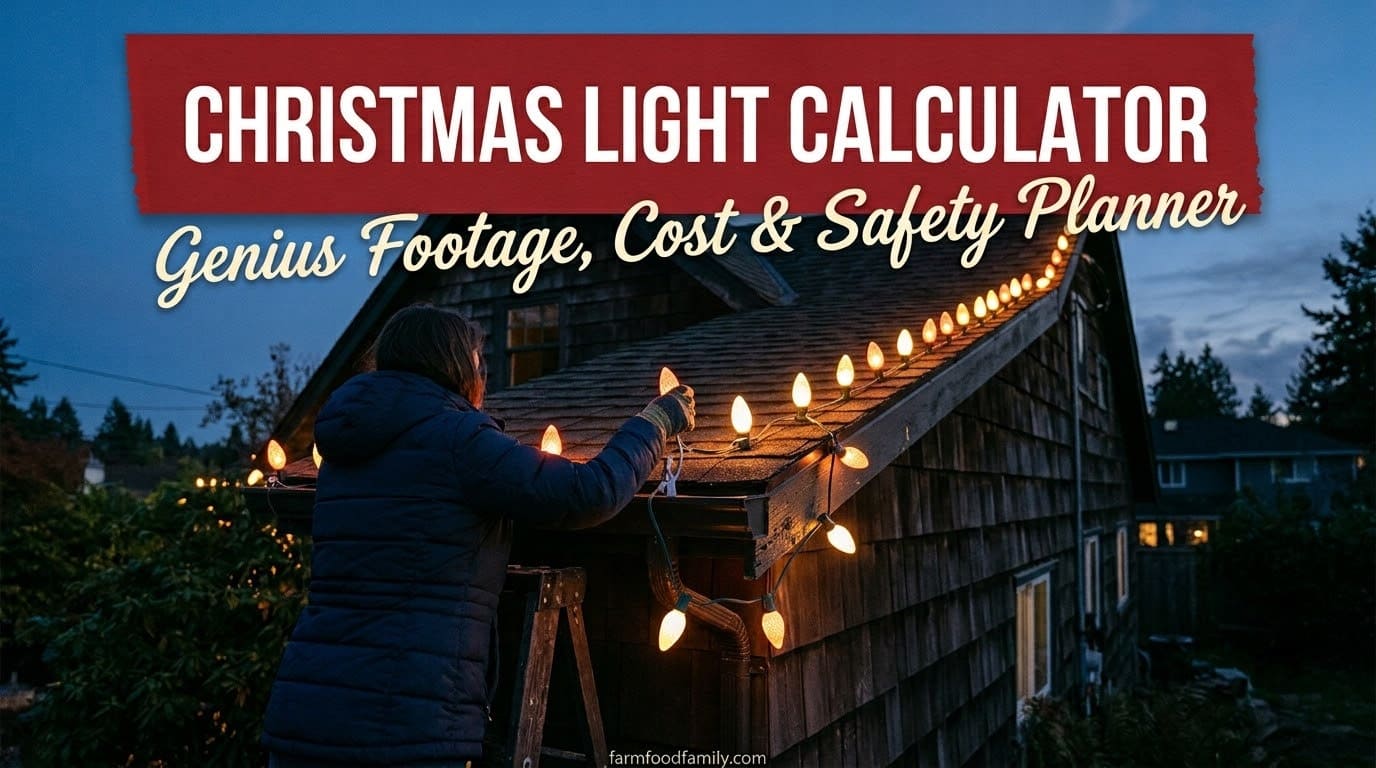
Christmas Light Calculator: Genius Footage, Cost & Safety Planner
Find out exactly how many strands to buy, whether your circuit can handle the load, and what LED versus incandescent actually costs to run, before you touch a ladder.

Never miss an update — choose FarmFoodFamily as your preferred source on Google.
How it works: Tap the button below to open Google’s settings page, then check the box next to FarmFoodFamily.
Tap the checkbox to turn it blue — that’s how you know it’s set.
Christmas Light Calculator
Add every part of your display, and get sourced footage, strand count, a real electrical load check, and a LED-vs-incandescent cost comparison in one pass.
Project Totals
| Same bulb count, if you used | Season operating cost |
|---|
Spacing conventions and end-to-end connection limits sourced from Christmas Lights Etc’s published watts/amps guidance and standard 22-gauge wire ratings. The 80% circuit-load rule follows NEC continuous-load provisions as summarized by Electrical Safety Foundation International (ESFI). Sag/drape and roof-complexity buffers are industry-standard estimates, not a single university or code citation. Purchase and operating costs are editable defaults, not live pricing, since both vary by retailer and local electricity rate. This tool is an estimate — always check your specific product’s label for its actual maximum connection rating, and use only outdoor-rated, GFCI-protected circuits for exterior lighting.
Quick Answer
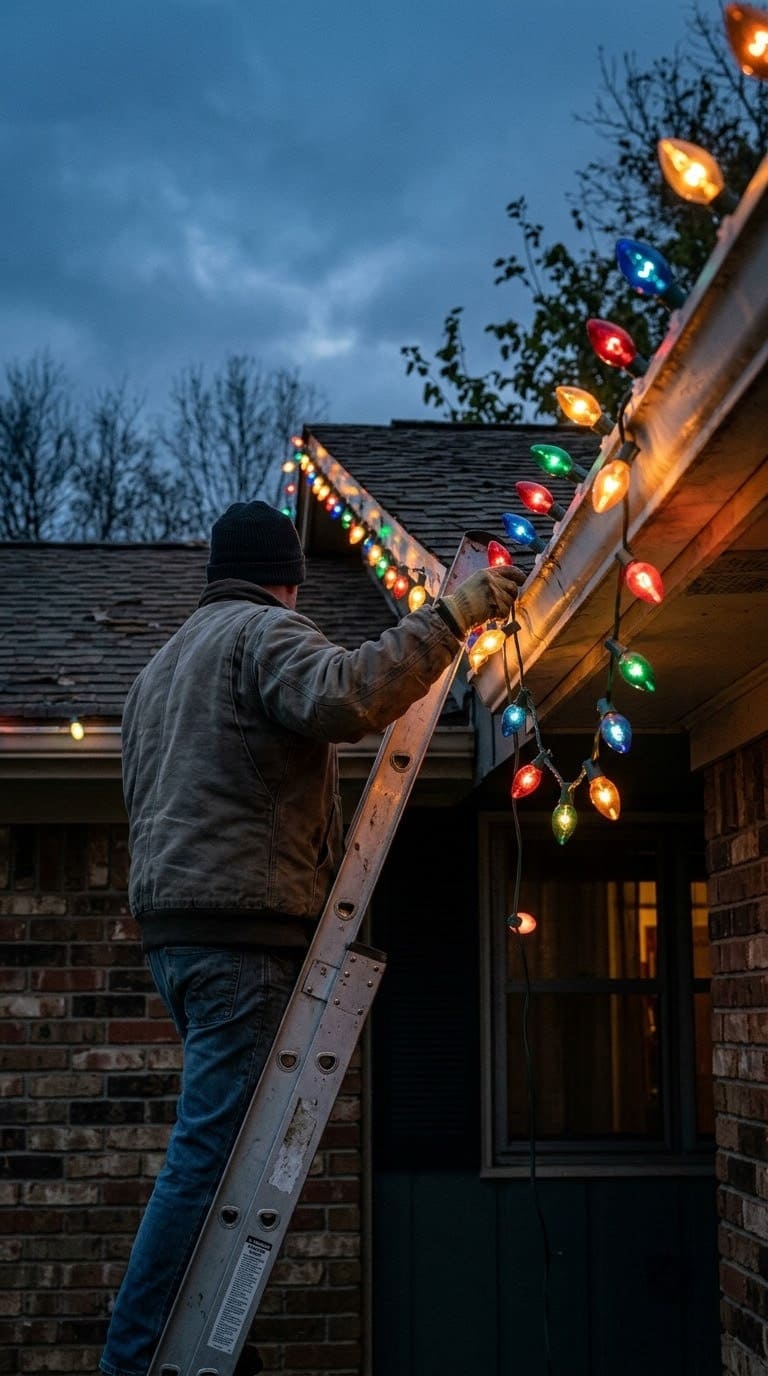
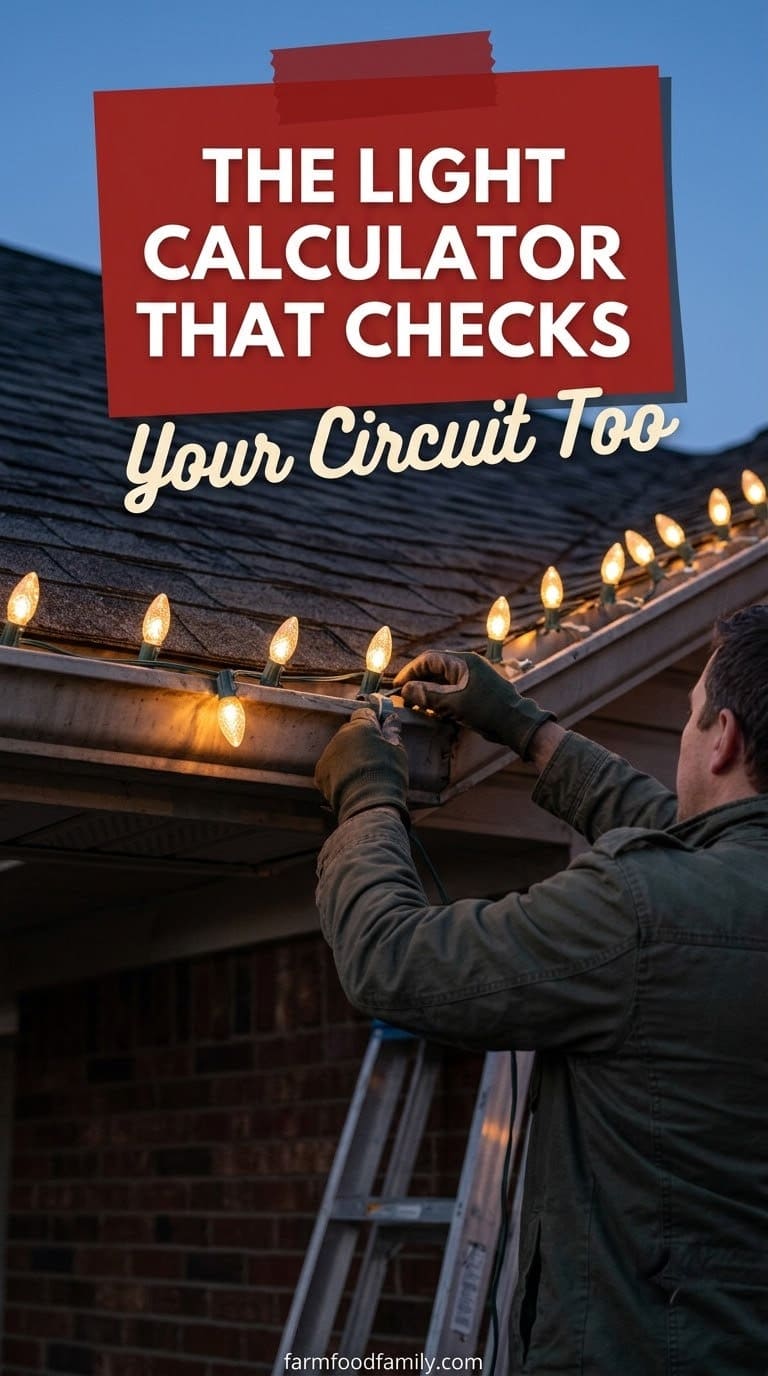
A Christmas light calculator estimates how many strands you need by measuring each part of your display, roofline, windows, trees, bushes, railings, and walkways, then converting that footage into bulb count using standard spacing (4 inches for mini lights, 12 inches for C7 and C9). Add 10 percent for corners and windows, and 15 to 30 percent more if your lights will drape or sag instead of running taut. A typical single-story home needs 100 to 150 feet of roofline coverage. The math doesn’t stop at footage. Total wattage divided by 120 volts gives you amps, and a standard 15-amp circuit safely handles about 1,440 watts under the 80 percent rule used for continuous loads. LED lights use roughly one-tenth the power of incandescent, which usually means the difference between needing one circuit or three.
Why Most Christmas Light Calculators Leave You Short
Search for a Christmas light calculator and you’ll find plenty of single-purpose tools. One calculates trees. Another handles rooflines.
None of them add up your whole display into one project total.
That fragmentation causes two problems. First, you end up doing separate math for every part of your house and losing track of the running total. Second, almost none of these tools touch the question that actually causes house fires and tripped breakers: how much power your finished display draws.
This calculator handles your entire project, roofline, windows, trees, bushes, railings, and walkway, in one pass. It also calculates your real electrical load against a standard 15-amp or 20-amp circuit, something no competing tool we reviewed does end to end.
How the Footage Math Actually Works
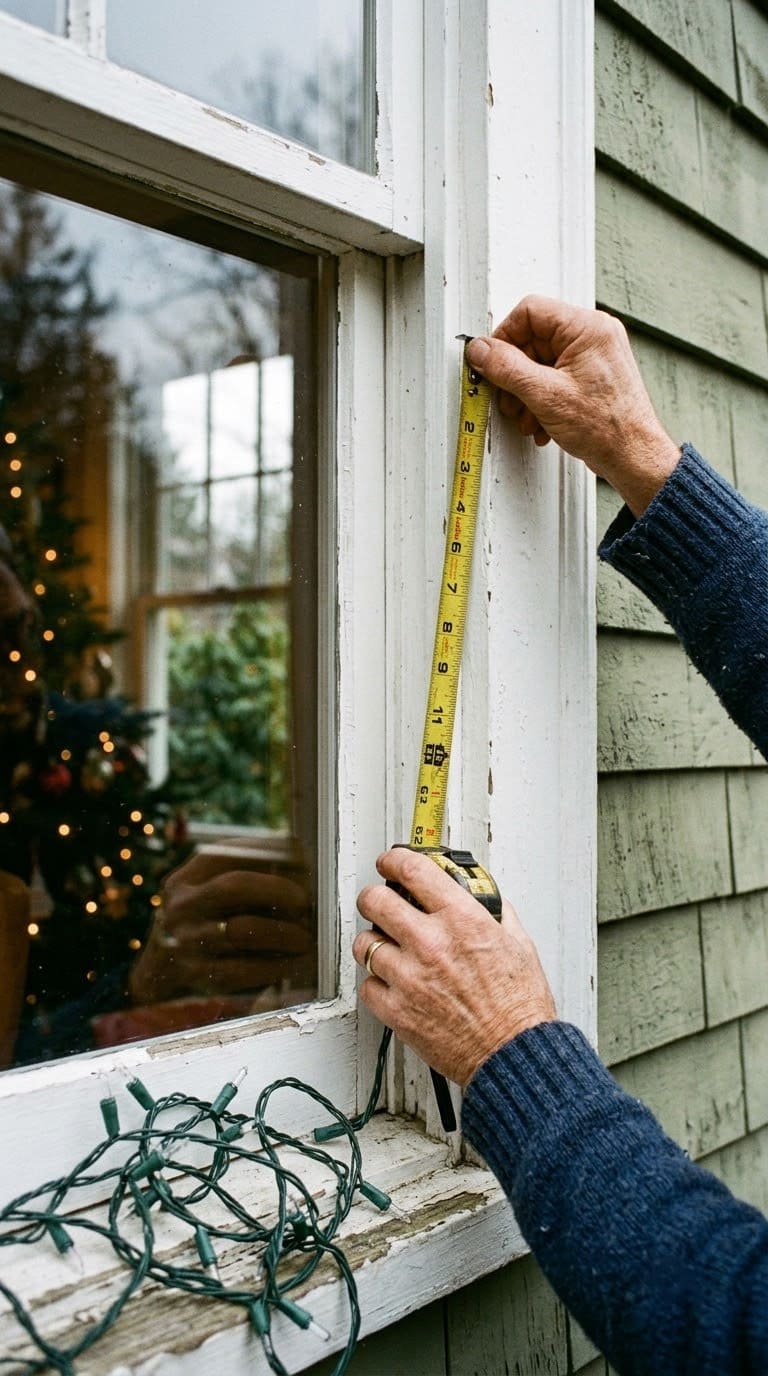
Step 1: Measure each area separately. Roofline and eaves get measured in linear feet. Windows and doors get measured by their full perimeter, not just width. Trees get measured by height, and trunks by circumference.
Step 2: Apply the right buffer for how you’re hanging the lights. A taut, straight run needs no extra footage. A gentle drape between hooks adds about 15 percent. A deep swag adds closer to 30 percent, since the lights travel further between anchor points than the straight-line distance suggests.
Step 3: Add a buffer for corners and complexity. Windows and doors get a standard 10 percent added for turning corners cleanly. Rooflines with several peaks need about 15 percent extra, and steep, multi-gable roofs can need 30 percent more just to follow the roofline accurately.
Step 4: Convert footage into bulb count and strand count. Divide your total footage by your light type’s spacing (4 inches for mini lights, 12 inches for C7 and C9) to get bulb count, then divide by bulbs per strand to know how many boxes to buy.
Choosing Your Light Type: Mini, C7, or C9
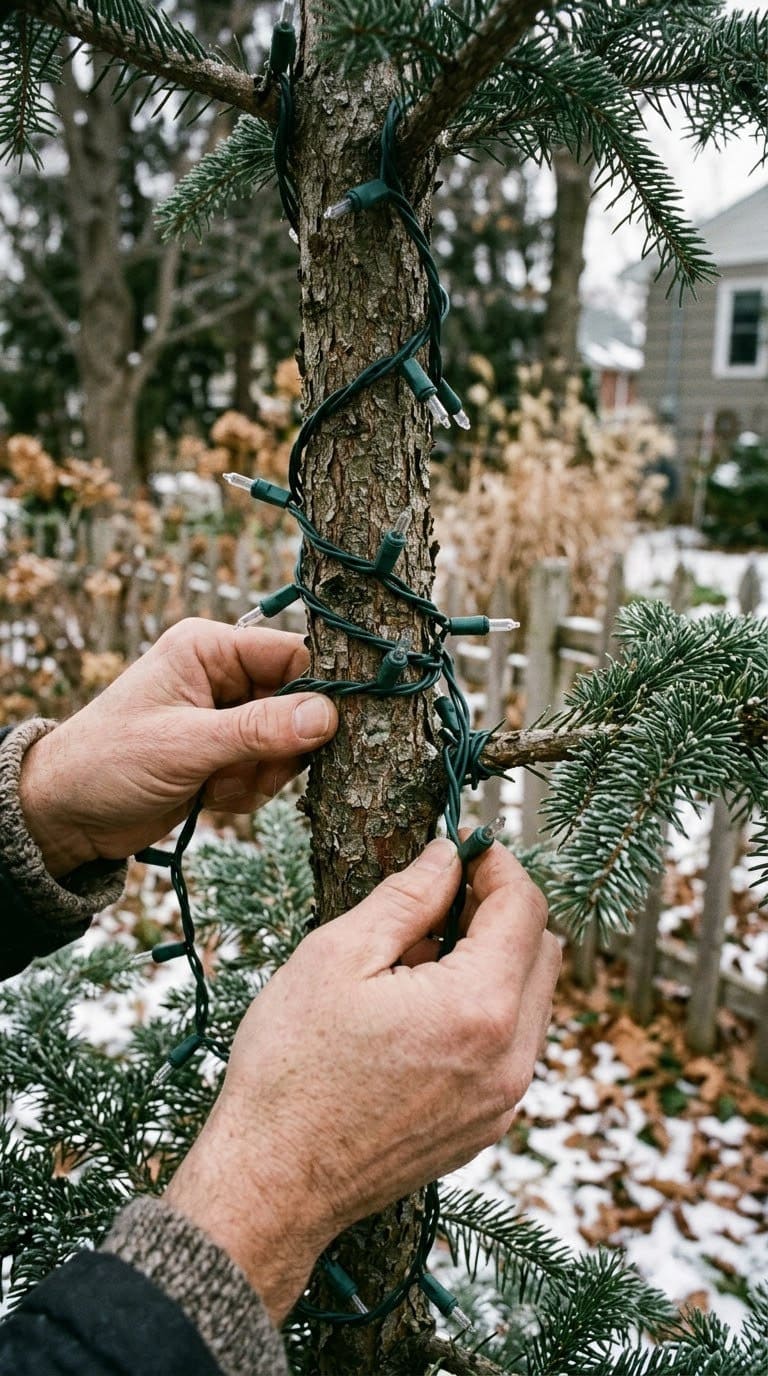
Mini lights space bulbs every 4 inches, giving the densest, twinkliest look. They’re the standard choice for wrapping trees and bushes, where a fuller look matters more than bold individual bulbs.
C7 bulbs are a mid-size bulb spaced every 12 inches, giving a classic look without the intensity of a C9. They work well along rooflines and railings where you want visible individual bulbs but not maximum brightness.
C9 bulbs are the largest common option, also spaced every 12 inches, and read as bold, traditional, and bright even from the street. They’re the standard for rooflines on larger homes.
Every one of these comes in both incandescent and LED versions, and that choice matters more than most people realize once you get to the electrical math below.
| Light type | Bulb spacing | Watts per bulb (incandescent / LED) | Best for |
|---|---|---|---|
| Mini lights | 4 in | 0.45W / 0.06W | Trees, bushes, garland |
| C7 | 12 in | 5W / 0.75W | Rooflines, railings |
| C9 | 12 in | 7W / 0.7W | Rooflines on larger homes |
Don’t Skip the Electrical Math
This is the part almost every online calculator skips, and it’s the part that actually protects your house. Total wattage divided by 120 volts (standard household voltage) gives you amps.
Electrical code treats holiday lighting as a continuous load, meaning it runs for 3 or more hours at a stretch. Continuous loads are only supposed to use 80 percent of a circuit’s rated capacity, which works out to about 1,440 usable watts on a 15-amp circuit and 1,920 watts on a 20-amp circuit.
Go over that threshold and you’re not just risking a tripped breaker. You’re pushing wiring and connections harder than they’re rated for, which is exactly the kind of overload that shows up in home electrical fire statistics every winter.
There’s a second, less obvious limit worth knowing. Most light strands are only rated to be safely connected end to end in a limited series, commonly around 210 watts total on standard 22-gauge wire before voltage drop and heat become real concerns.
For incandescent C9 lights, that can mean as few as 1 to 3 strands connected in a row. For LED mini lights, it can mean 30 or more, since each strand draws so little power.
This calculator computes both numbers automatically, your percentage of a single circuit’s safe capacity and your safe end-to-end connection limit for whichever light type you choose, so you’re not guessing or relying on a sticker you may have already thrown away.
LED vs. Incandescent: What It Actually Costs to Run
The purchase price gap between LED and incandescent lights is real, LED strands typically cost more upfront. The operating cost gap is bigger, and it runs the other direction.

A 100-count incandescent mini light strand draws around 40 to 45 watts. The LED version of that same strand draws roughly 4 to 5 watts, about one-tenth as much power for the same visual coverage.
Run a modest display 6 hours a night for a 35-night season, and that difference adds up to real money, often the gap between a few dollars and $30 or more depending on your display’s size and local electricity rate. This calculator runs that exact comparison using your actual bulb count, not a generic estimate.
There’s a safety upside too. Because LED draws so much less power, a display that would overload a single circuit on incandescent bulbs often fits comfortably on one circuit with LED, which is one of the simplest ways to solve an electrical capacity problem without adding a second outlet run.
What Areas Do Homeowners Consistently Forget?
Windows and doors get skipped more often than any other feature, since they’re easy to overlook when you’re focused on the roofline. Measuring their full perimeter, not just estimating, prevents running short mid-install.
Walkways and driveways rarely make it into a homeowner’s original plan at all, even though stake lights along a path are one of the most visible parts of a display after dark. This calculator treats walkway lighting as its own category instead of an afterthought.
Trunk and canopy wrapping on trees eats far more footage than most people expect. A dense wrap commonly needs 100 to 150 feet of lights per foot of tree height, a ratio that surprises almost everyone doing this for the first time.
Safety Essentials Worth Following
Look for a UL listing on every strand you buy or reuse. UL 588 is the safety standard for holiday lights. It sets minimum rules for wire gauge, strain relief, and overload protection.
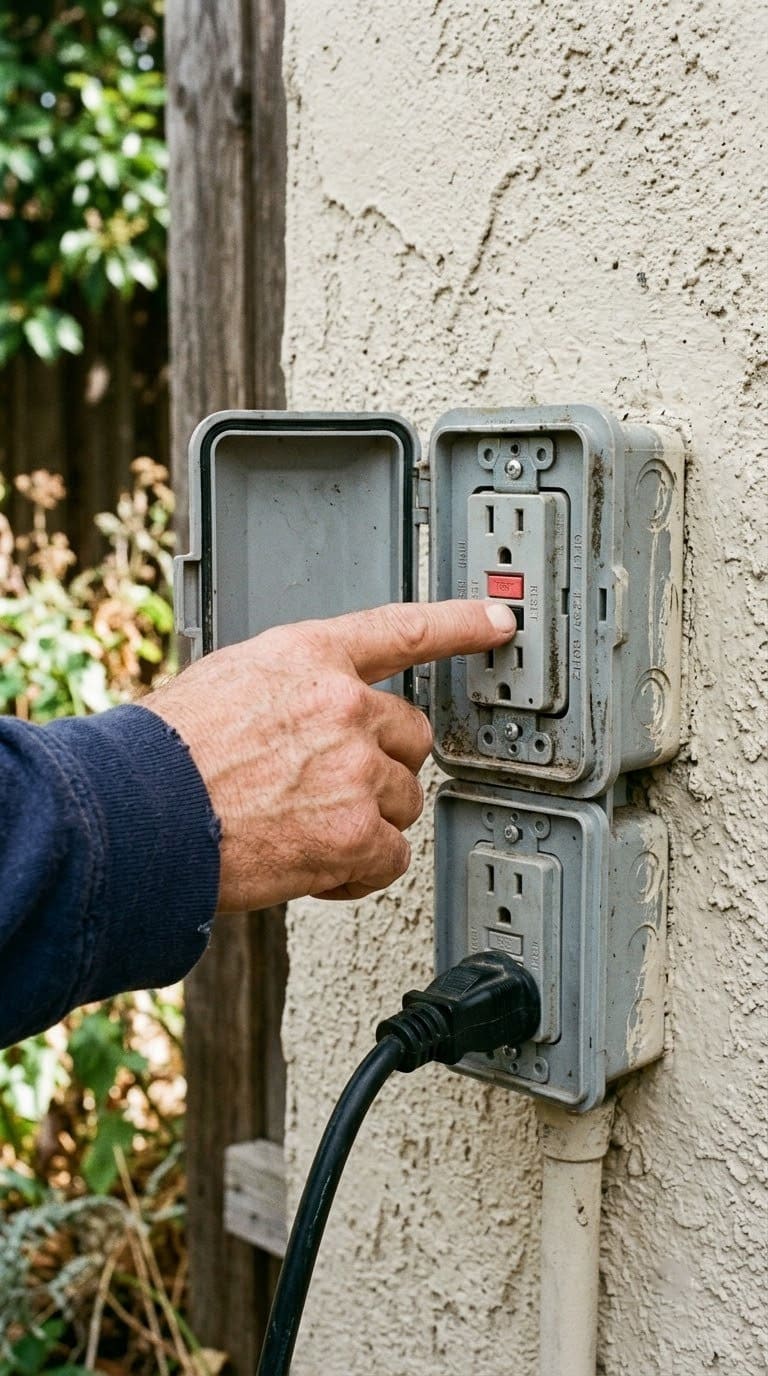
Outdoor lights need a GFCI-protected outlet. Use outdoor-rated extension cords only, never an indoor cord pressed into outdoor duty. Holiday lights alone cause roughly 150 home fires a year in the US, according to safety data from the Electrical Safety Foundation International.
Never plug one extension cord into another to reach further. If your display needs more reach, get a properly rated longer cord or add a circuit. Don’t chain shorter cords together.
Bringing the Whole Display Together
Once the math is settled, the fun part starts. What should your display actually look like?
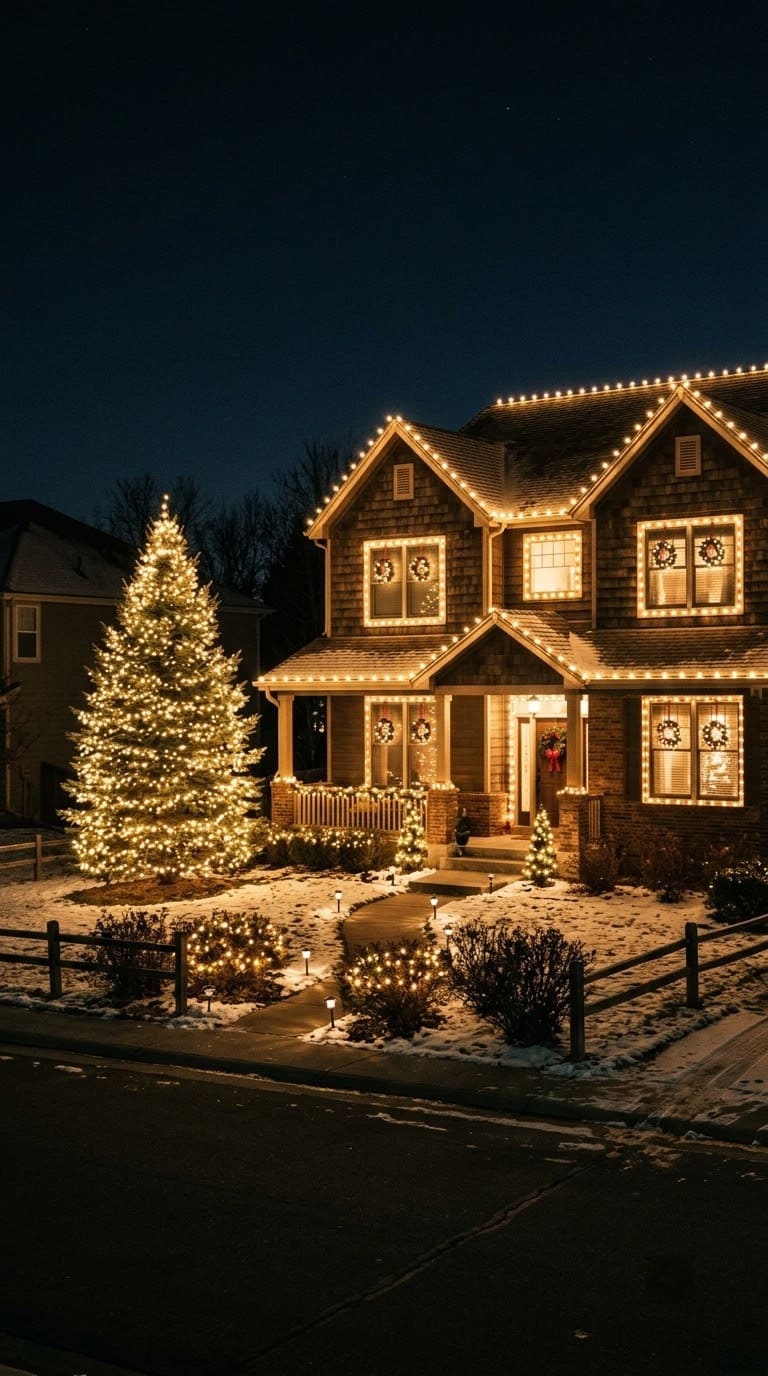
Browse outdoor Christmas light ideas before you buy. Pick a style first, warm-white and classic or fuller and multicolor, so you’re not guessing in a store aisle.
Porches are often the centerpiece of a front-yard display. Christmas porch decoration ideas cover garland, lanterns, and layered lighting that pair naturally with the railing footage this calculator already gives you.
Have a patio or backyard sitting area? Backyard string light ideas show a more relaxed, ambient look instead of a bold street-facing display.
Small touches finish a display well. A wrapped mailbox or post adds polish without changing your total footage or electrical load much. See Christmas mailbox decorating ideas for options.
Working with a balcony instead of a roofline? Christmas balcony lighting ideas use the same railing and window math this calculator already handles, just at a smaller scale.
Frequently Asked Questions
How many strands of lights do I need for my house? It depends entirely on your roofline length, window and door count, and any trees or bushes you’re including. A typical single-story home with 120 feet of roofline and a few windows commonly needs 6 to 10 C9 strands, but this calculator gives you an exact number based on your actual measurements.
How much does it cost to run Christmas lights all season? For a modest LED display run 6 hours a night for 35 nights, expect a few dollars for the whole season. The same display on incandescent bulbs can cost 10 times more to run, though both numbers depend heavily on your local electricity rate.
Can I plug multiple strands of lights into each other? Yes, but only up to a limit, commonly around 210 watts total for standard 22-gauge wire. That works out to roughly 1 to 3 incandescent C9 strands or 30-plus LED mini strands, though you should always check your specific product’s label for its exact rating.
How many amps do Christmas lights use? Divide your total wattage by 120 volts to get amps. A single incandescent C9 strand (25 bulbs at 7 watts each) draws about 1.5 amps, while the LED equivalent draws a fraction of that.
Is it safe to run Christmas lights on one outlet? Only if your total load stays under 80 percent of that circuit’s rated capacity, about 1,440 watts on a standard 15-amp circuit. Beyond that, you need a second circuit rather than a chain of extension cords off the same outlet.
How much more do LED Christmas lights cost to buy versus incandescent? LED strands typically cost more upfront than incandescent equivalents. That gap is usually recovered within one or two seasons through lower electricity use, especially for larger displays.
How many lights do I need to wrap a tree? A dense wrap uses roughly 100 to 150 mini lights per foot of tree height. A 12-foot tree wrapped densely can need well over 1,000 individual bulbs.
What gauge extension cord should I use for outdoor lights? A 16-gauge cord works for runs of 25 feet or less. For longer runs or heavier incandescent loads, use a 14-gauge cord, and confirm it’s rated for outdoor use before running it outside.
Glossary
Amps: The unit measuring electrical current, calculated by dividing total watts by voltage (120V for standard household outlets).
C7 / C9: Standard sizes of screw-in holiday light bulbs, typically spaced 12 inches apart, with C9 being the larger of the two.
Continuous load: An electrical load that runs for 3 or more hours at a stretch, which building codes require to stay under 80 percent of a circuit’s rated capacity.
End-to-end connection limit: The maximum number of light strands that can be safely plugged into each other in a series before voltage drop and heat become a concern.
GFCI: A ground-fault circuit interrupter, an outlet or breaker that shuts off power quickly if it detects a current leak, required for outdoor electrical use.
Mini lights: Small holiday light bulbs typically spaced 4 inches apart, used for dense coverage on trees, bushes, and garland.
UL 588: The safety standard specifically covering seasonal and holiday decorative lighting products, including minimum wire gauge and overcurrent protection requirements.
Sources & References
- Christmas Lights Etc: How Many Watts and Amps Do Christmas Lights Use
- Electrical Safety Foundation International: Outdoor Decoration Safety Tips
- UL Solutions: UL 588 Standard for Seasonal and Holiday Decorative Products
Never miss an update — choose FarmFoodFamily as your preferred source on Google.
How it works: Tap the button below to open Google's settings page, then check the box next to FarmFoodFamily.
Tap the checkbox to turn it blue — that's how you know it's set.