20 Smart Backpack Storage Ideas for Entryways, Bedrooms and Small Spaces
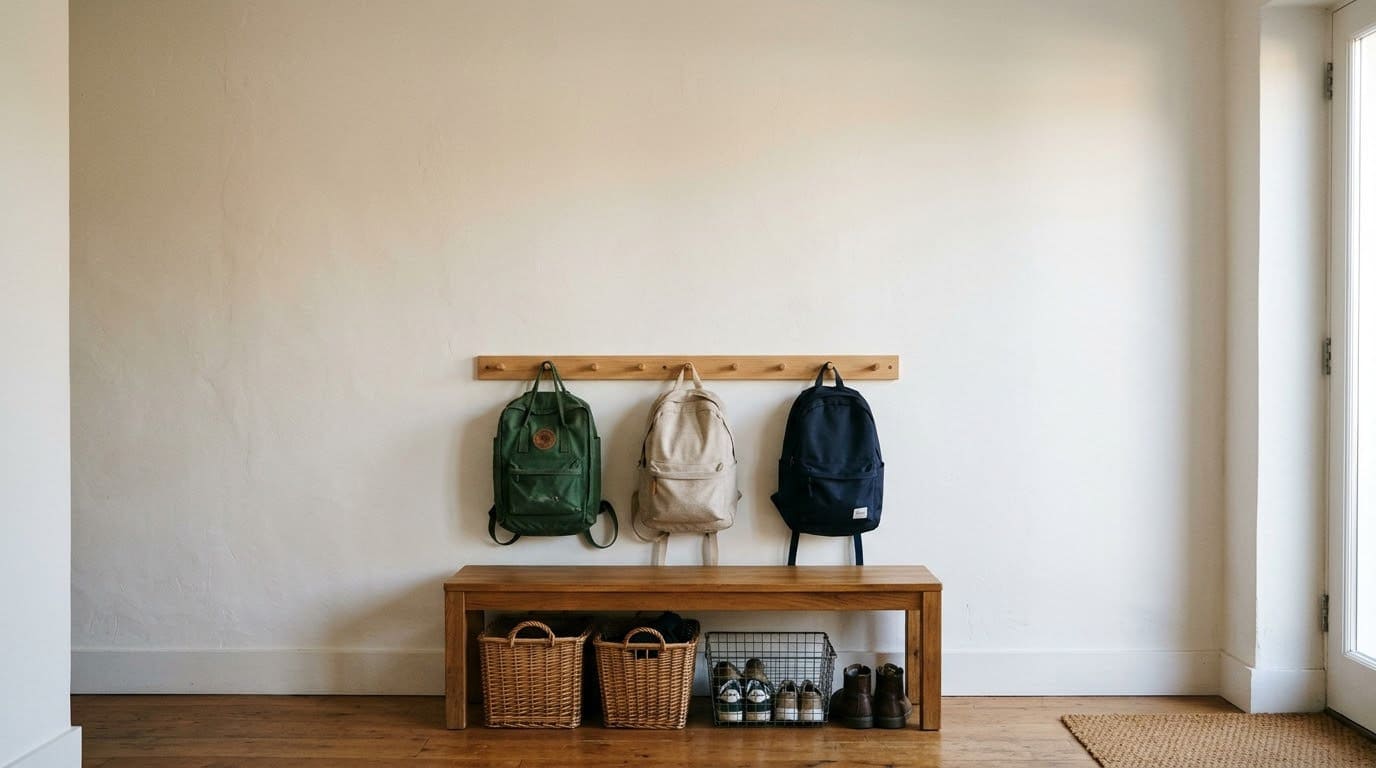
Backpack storage works when the spot is easy to reach, strong enough for a full bag, and anchored if it’s tall.

Never miss an update — choose FarmFoodFamily as your preferred source on Google.
How it works: Tap the button below to open Google’s settings page, then check the box next to FarmFoodFamily.
Tap the checkbox to turn it blue — that’s how you know it’s set.
Every family knows the pile. Backpacks hit the floor by the door, shoes land on top, and by Wednesday nobody can find a lunch box.
We looked at what organizers, a safety agency and a bone-and-joint group say, then built 20 ideas that actually hold up. Each one comes with a practical tip and the catch to know before you buy.
Quick Answer
The best backpack storage sits right where the bag comes in, at the reach of the person who owns it. Give each person one hook or one cubby, and the pile on the floor shrinks fast.
A spot that takes one second to use gets used. But a spot that takes five gets skipped, so keep it close to the door.
Build for weight. A full bag is heavy, so screw hooks into studs and anchor anything tall to the wall. The CPSC urges anchoring bookcases and dressers where children live or visit.

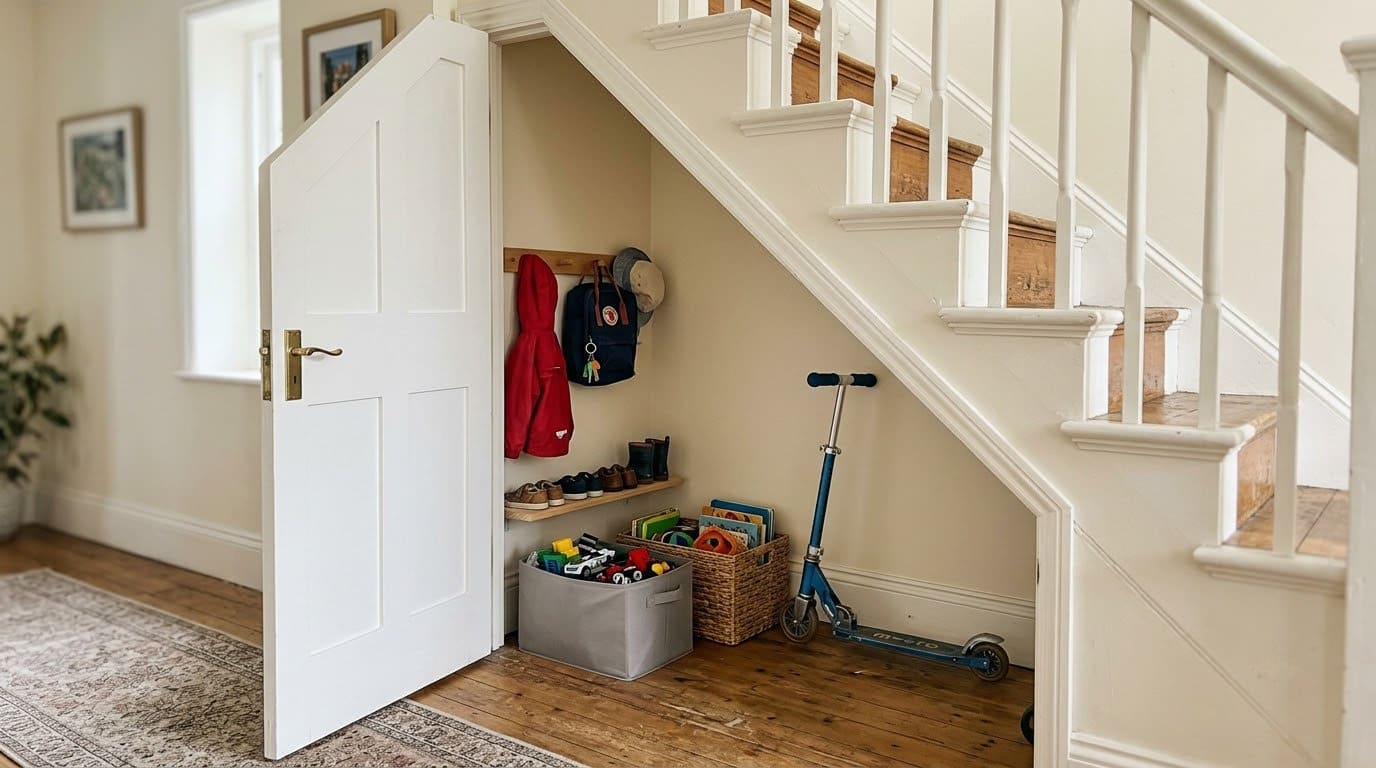
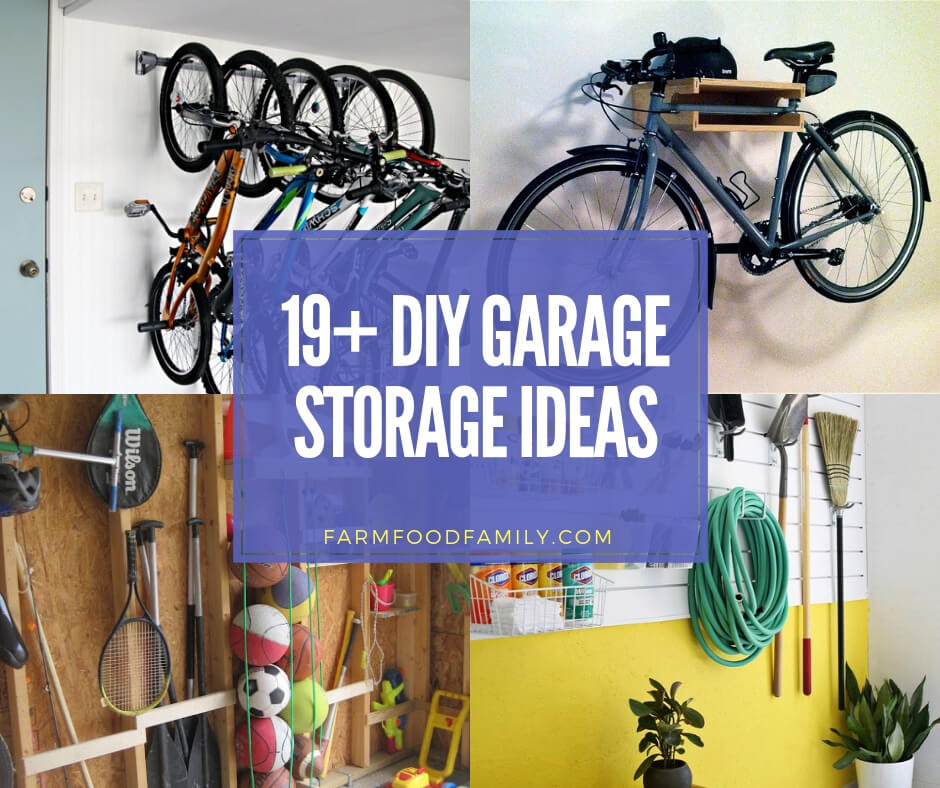
Dry bags before they go back on the hook, since damp bags grow odors. Renters can use over-the-door hooks or a freestanding hall tree and skip the drill.
Below are 20 ideas for kids, teens and adults, each with the catch to know before you buy.
Before You Start
Pick the spot first, then the hardware. The best spot is the first place the bag lands when someone walks in. That’s usually the door you use most, not the one that looks best.
Measure reach before you mount anything. For young kids, set the low row at their elbow height so they can hang a bag without help. For adults and teens, keep a second row higher.
Here’s how we’d scale it by budget.
| Level | What you do | Good for |
|---|---|---|
| Renter ($) | Over-the-door hooks, a freestanding hall tree, command-style hooks for light bags | Apartments, leases that forbid drilling |
| Refresh ($$) | Stud-mounted hook rail, a bench, wall baskets | Most family entryways |
| Build ($$$) | Built-in lockers or cubbies per person | Mudrooms, large families |
A few rules apply to every idea:
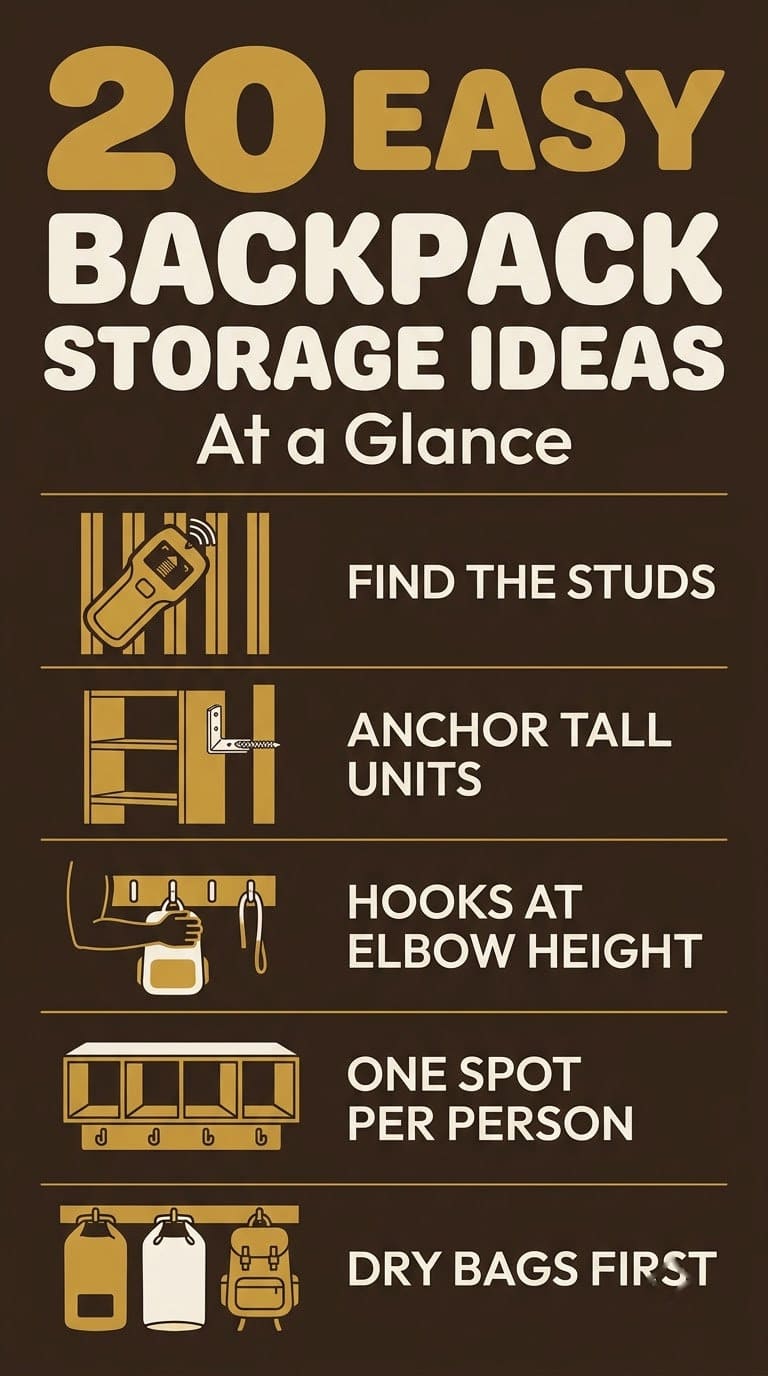
- Find the studs. A hook is only as strong as what it’s screwed into.
- Anchor tall pieces. Lockers, bookcases and cubby units can tip.
- Give each person their own spot. Shared hooks turn into dumping grounds.
Short on entry space? Our small entryway decor ideas and awkward entryway ideas help you plan the floor first.
20 Backpack Storage Ideas
1. Low Hook Rail at Kid Height
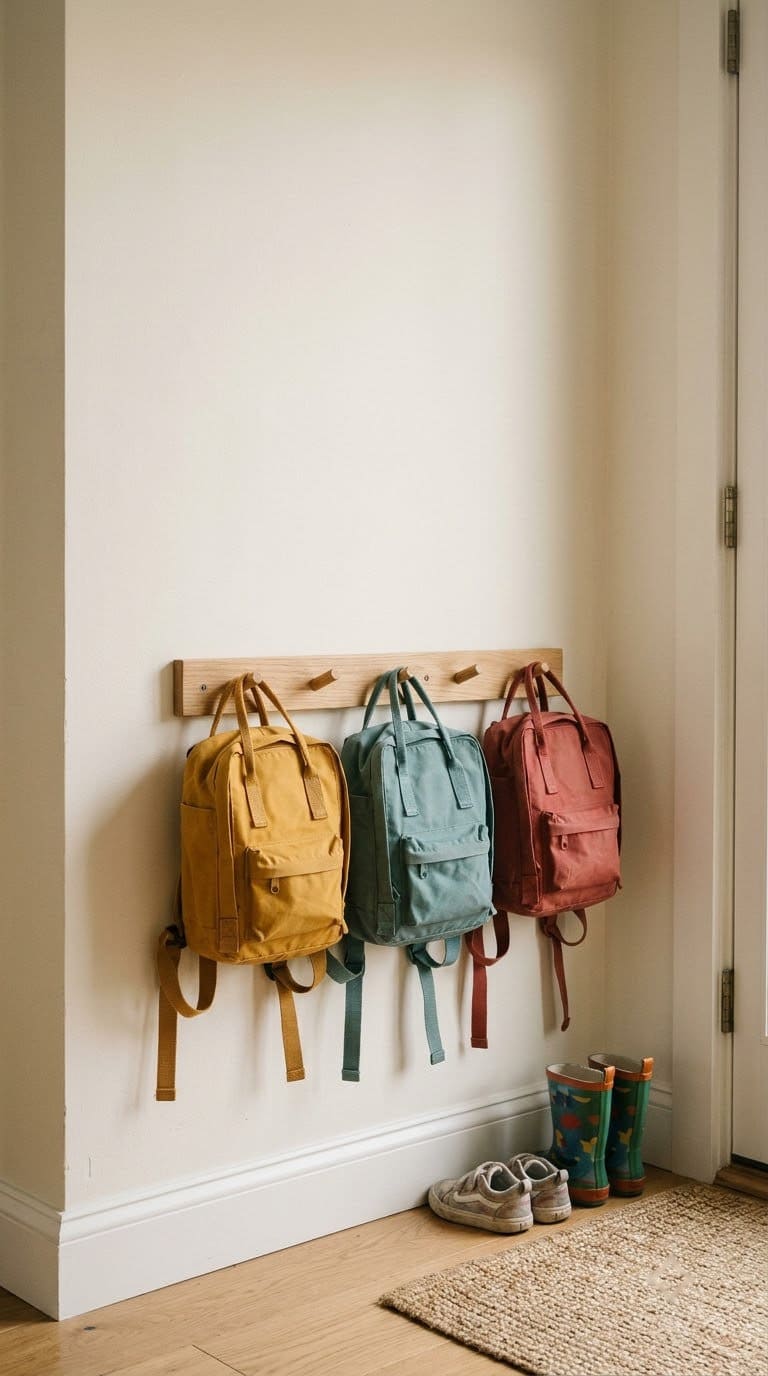
A single board with a row of hooks is one of the simplest backpack fixes there is. Mount it low enough that a young child can reach it alone. That one change moves the job from “mom does it” to “kid does it.”

Solid wood plank with 5 triple hooks, sized for 16-inch stud spacing, listed at a 100 lb capacity. It suits idea 3.
Shop NowThis post contains affiliate links. We may earn a commission on qualifying purchases at no extra cost to you.
Screw the board into studs, not just drywall. Give each child one hook for the bag and one for a jacket.
The catch is growth. Kids get taller, so plan to move the rail up in a couple of years. It pairs well with idea 5.
2. Over-the-Door Hooks
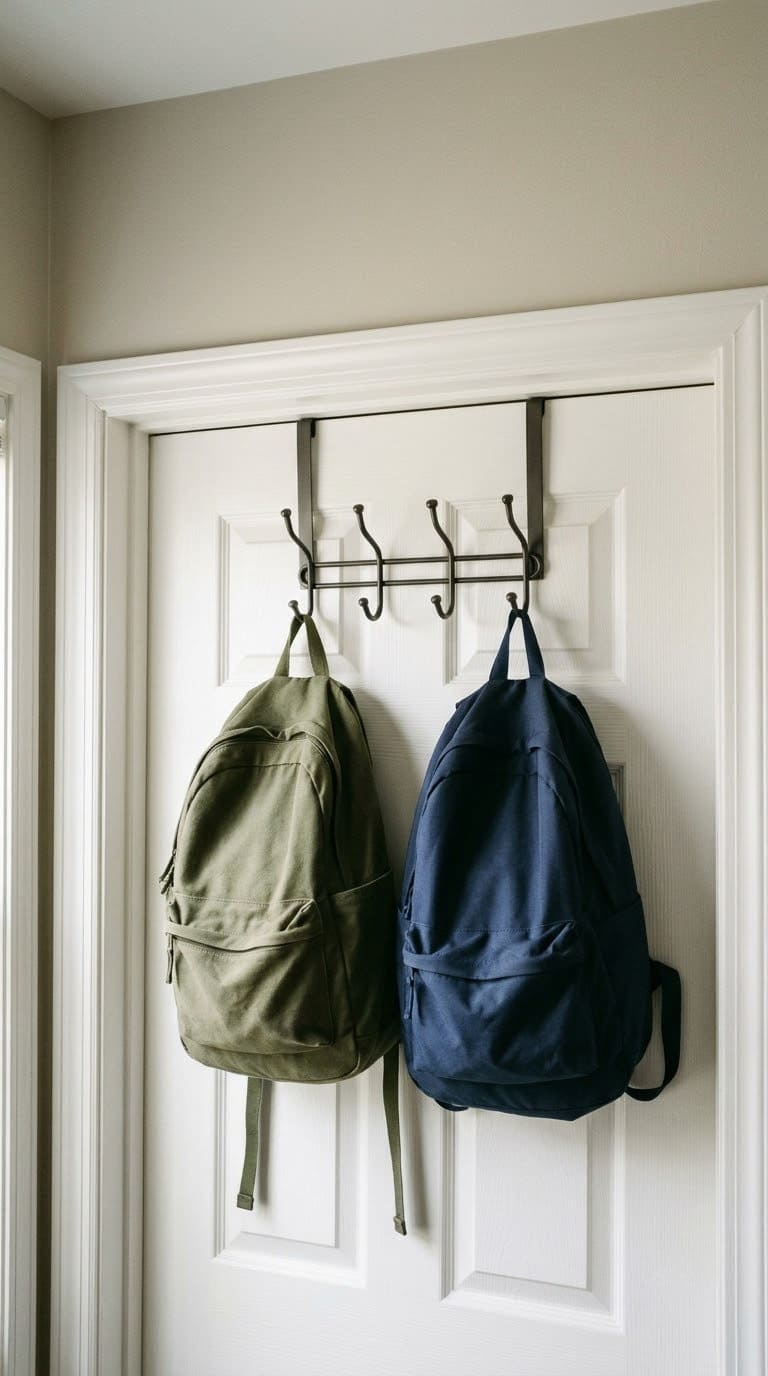
Over-the-door hooks need no tools, which makes them a top pick for renters. Hang them on a closet or bedroom door and you have storage in seconds.
Check that the door still closes. A thick hook or a heavy bag can stop a door latching, so test it with a full bag before you commit.
The downside is weight. These suit one or two light packs, not a teen’s full load of books.
3. Heavy-Duty Hooks Screwed Into Studs
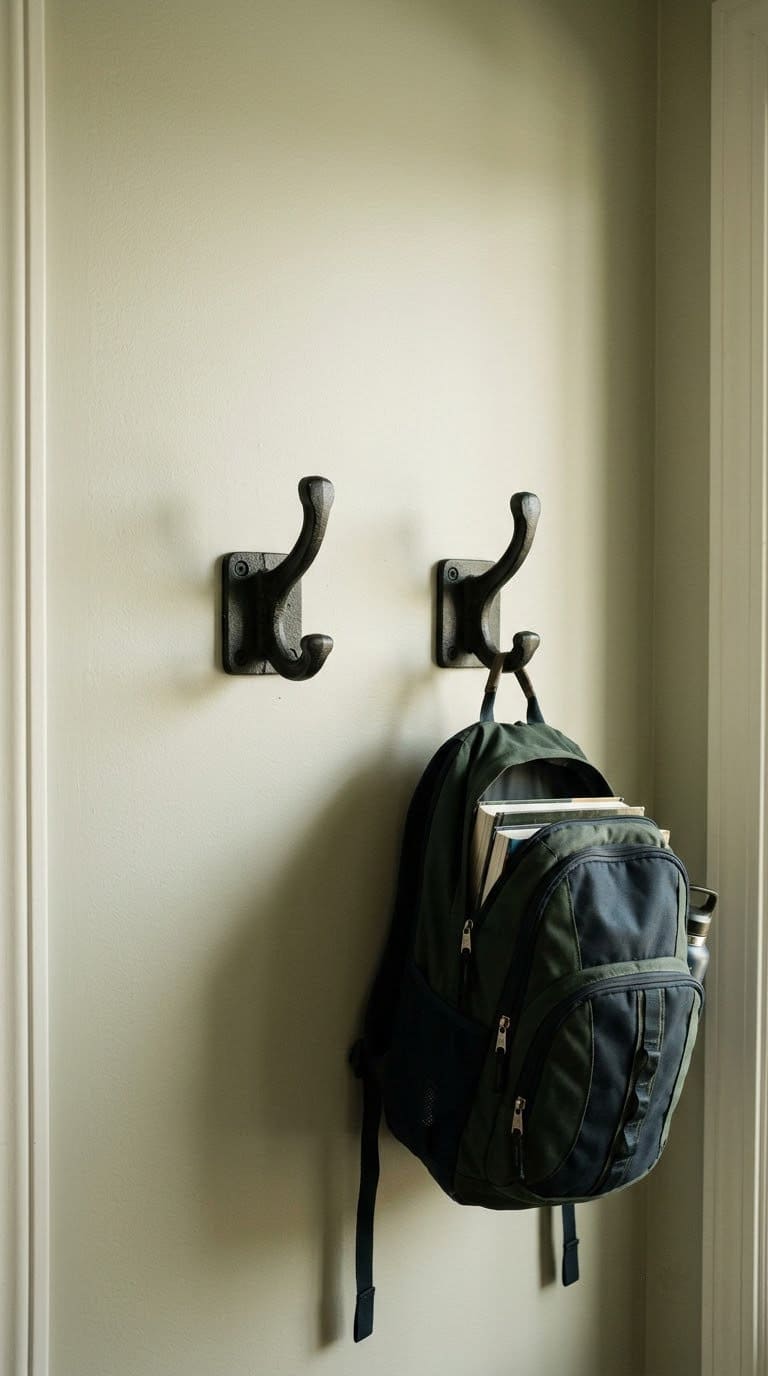
For a bag stuffed with textbooks and a laptop, use real hardware. Pick sturdy metal hooks and screw them into wall studs. Studs often sit 16 inches apart, though some homes use 24, so check before you buy a rail.
Mark the studs with a stud finder before you drill. Pre-drill small pilot holes so the wood doesn’t split.
If you have no stud where you want a hook, use a rail that spans two studs. We list one in the products section.
4. Pegboard Drop Zone With Baskets
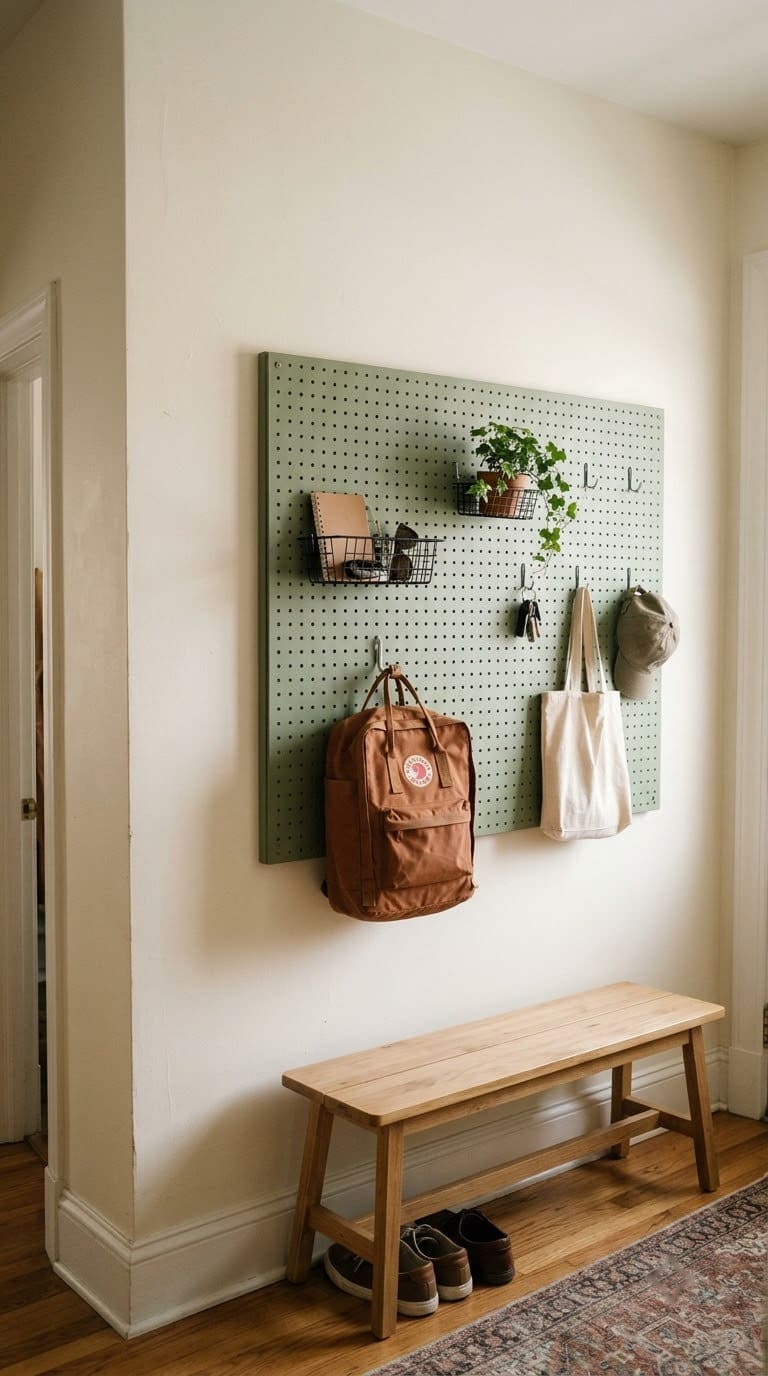
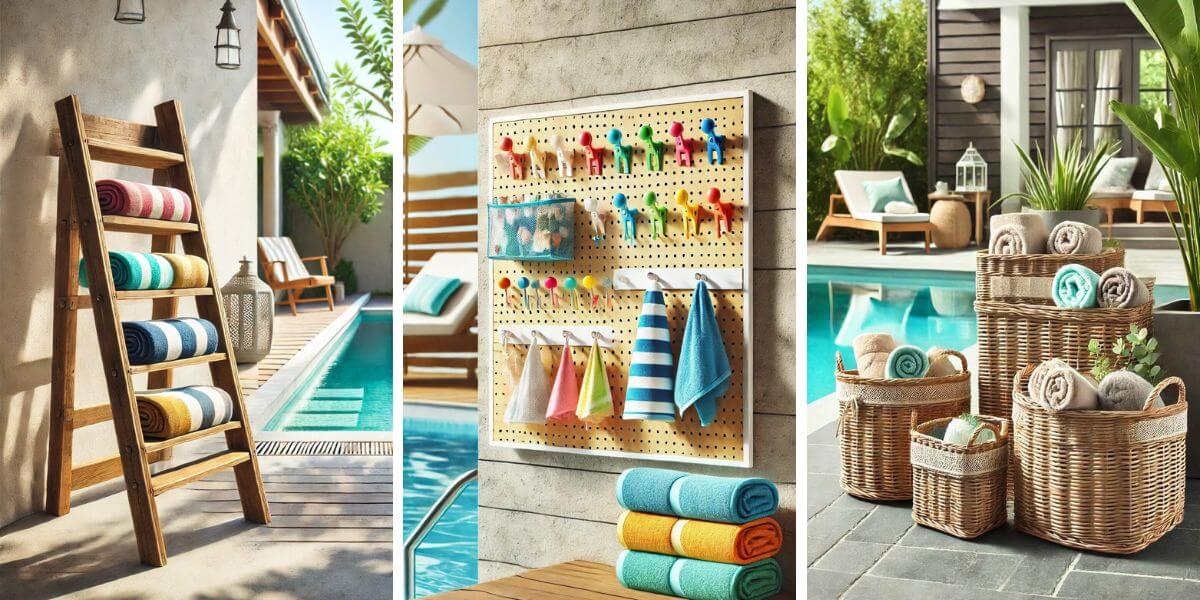
Pegboard lets you change the layout as kids grow. Add hooks for bags, a basket for hats and gloves, and a small shelf for keys.
Use pegboard hooks made for heavier loads, and mount the board into studs. Keep the accessories few, because a crowded pegboard looks messy fast.
Paint it a calm color to blend into the wall. It works best in a hallway or garage entry.
5. Cubby Bench With Hooks Above
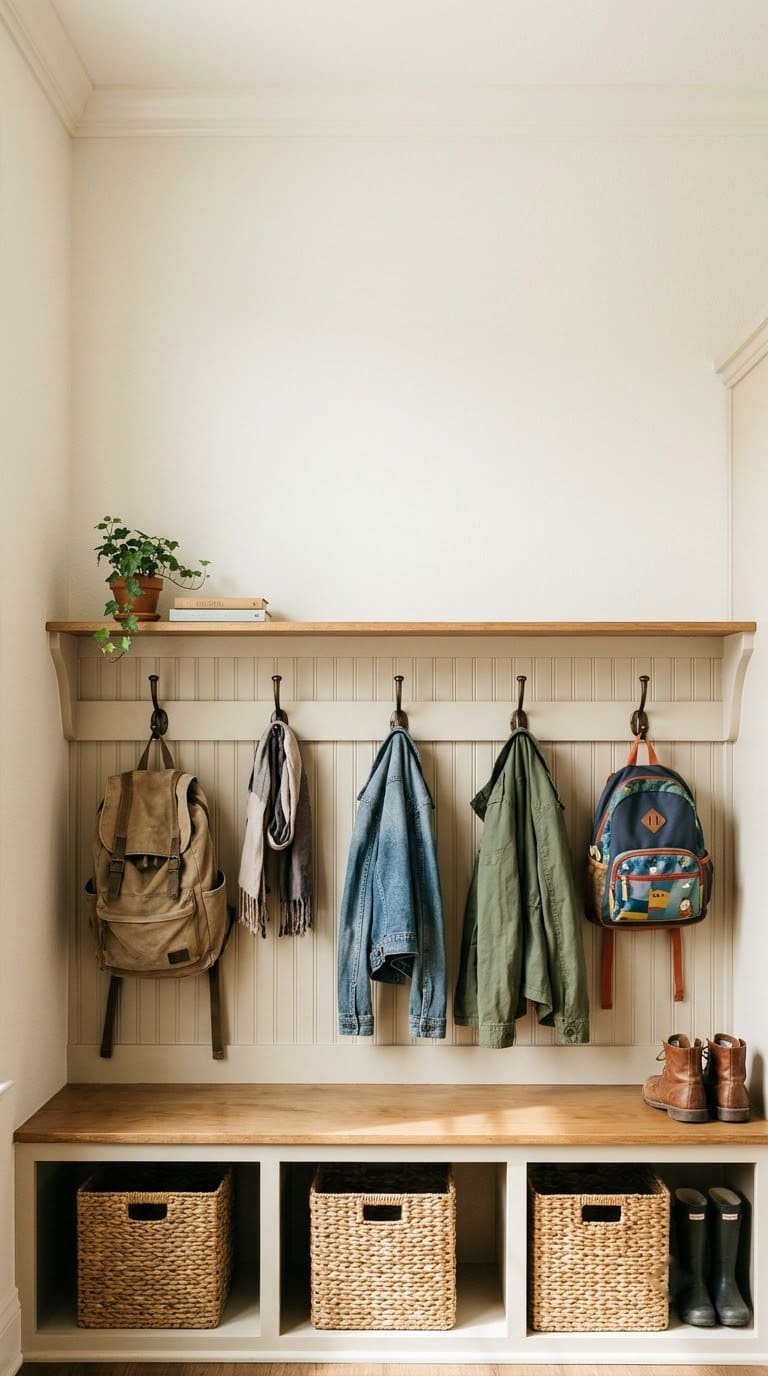
A bench with cubbies gives you a seat for shoes and a place for gear. Add a row of hooks above for the bags themselves. Baskets in the cubbies catch sports gear and loose items.
This is the classic family entry setup, and it works because everything has one home. See our cubby storage ideas for more ways to use the cubbies.
Keep the bench shallow in a narrow hall, since a deep bench blocks the walkway.
6. Mudroom Locker for Each Person
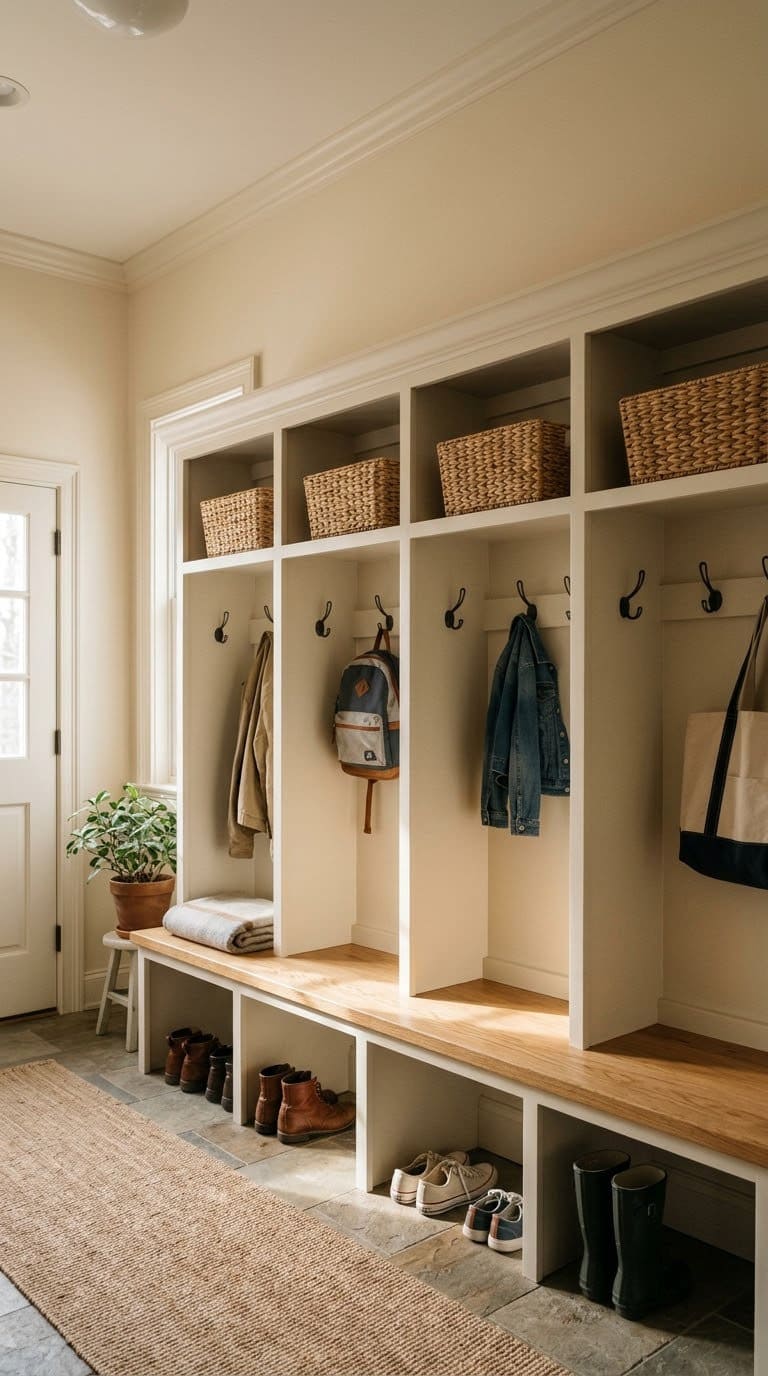
Lockers give every person a private space with a hook, a shelf and a place for shoes. They suit big families and homes with a true mudroom.
They’re also the biggest build on the list. Tall lockers can tip, so anchor them to studs. The CPSC urges anchoring furniture like bookcases and dressers, and tall lockers follow the same logic.
Label each locker so the system survives a busy week.
7. Cube Organizer With Bins
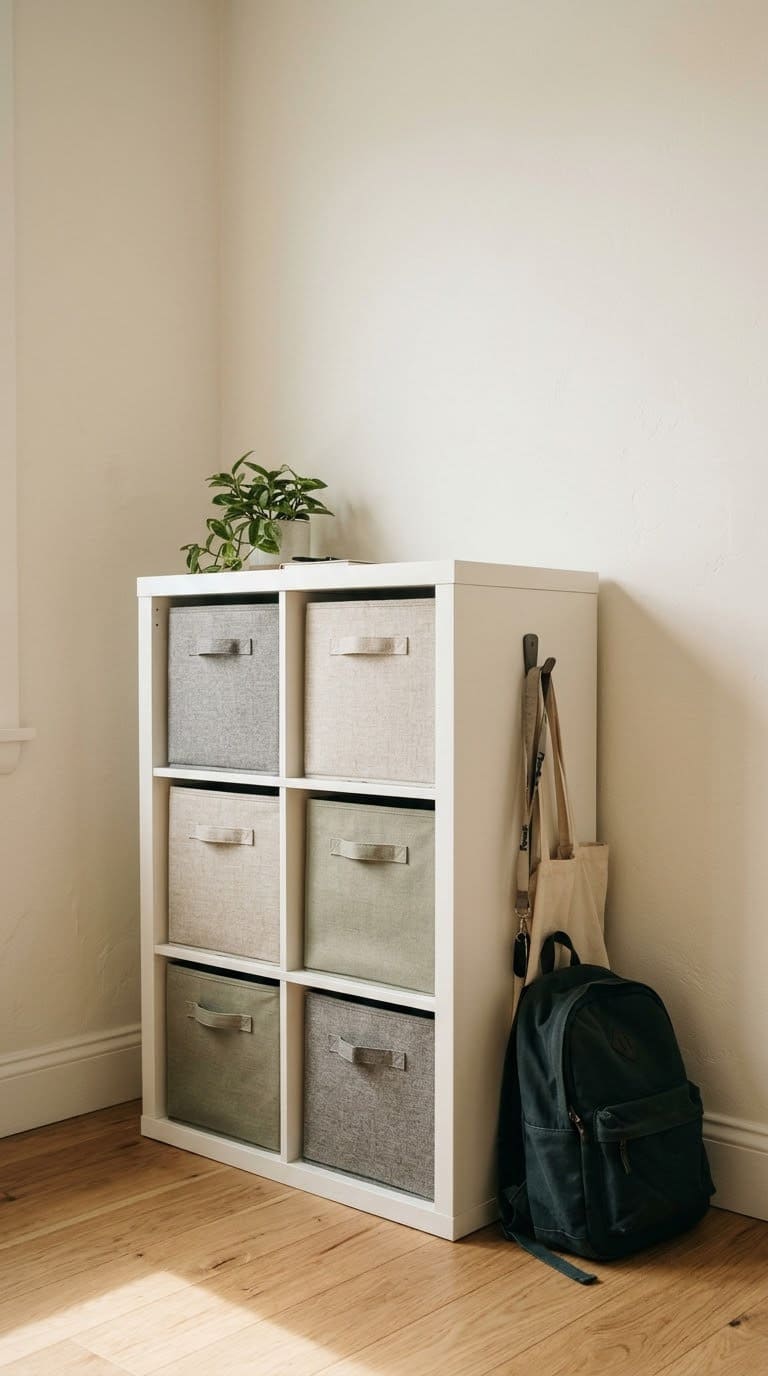
A cube organizer is a cheap way to give each child a bin. Bags go in the cube, shoes go in a lower bin, and a hook on the side holds a jacket.
It fits homes with no mudroom. Cube units are tall, so anchor them to the wall if kids are around.
The catch is bag shape. A bulky backpack won’t fit a small cube, so measure first.
8. Hall Tree
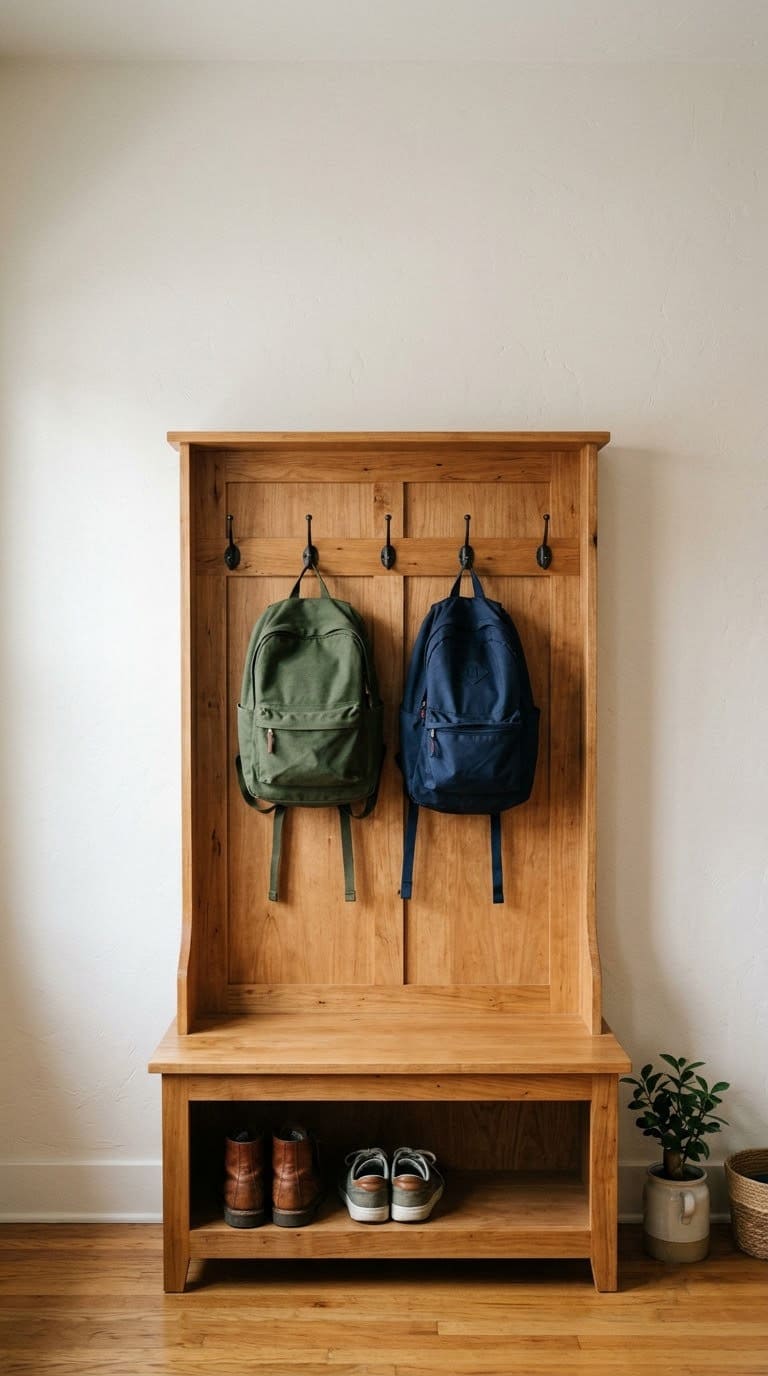
A hall tree combines a bench, hooks and a shoe shelf in one freestanding piece. It’s a good no-drill choice because you assemble it and set it against a wall.
Look for a model with an anti-tip kit, and use it. One of our picks below includes one. For style options, see our farmhouse entryway decor ideas and modern entryway ideas.
Hall trees take floor space, so check that the door can still open fully.
9. Open Shelf With a Basket
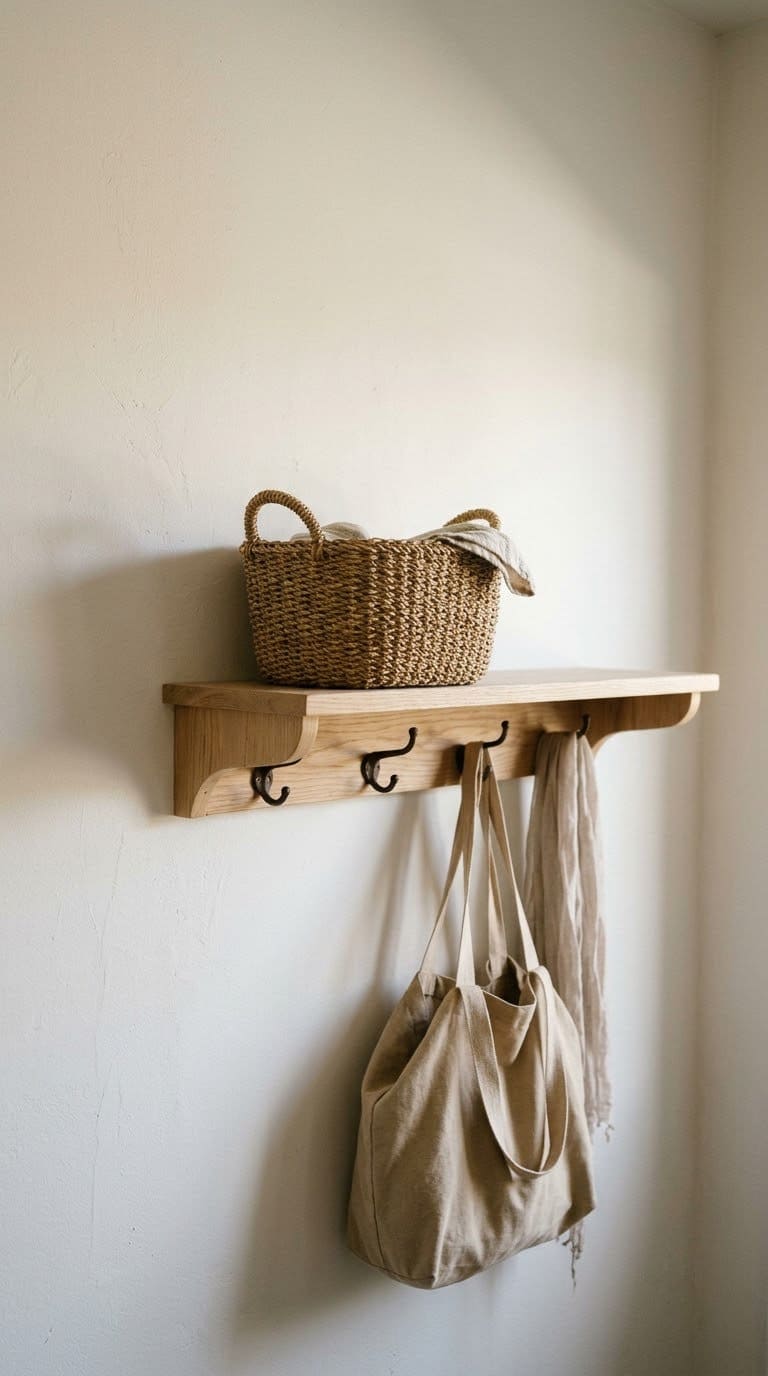
A wall shelf with hooks underneath gives you a spot for the small things that travel with the bag. Hats, keys and water bottles live on the shelf. The bag hangs below.
Use a woven basket on the shelf for loose items. Keep the shelf shallow so heads and elbows don’t catch.
This idea suits adults and teens who carry a lot of small gear.
10. Closet Door Rail
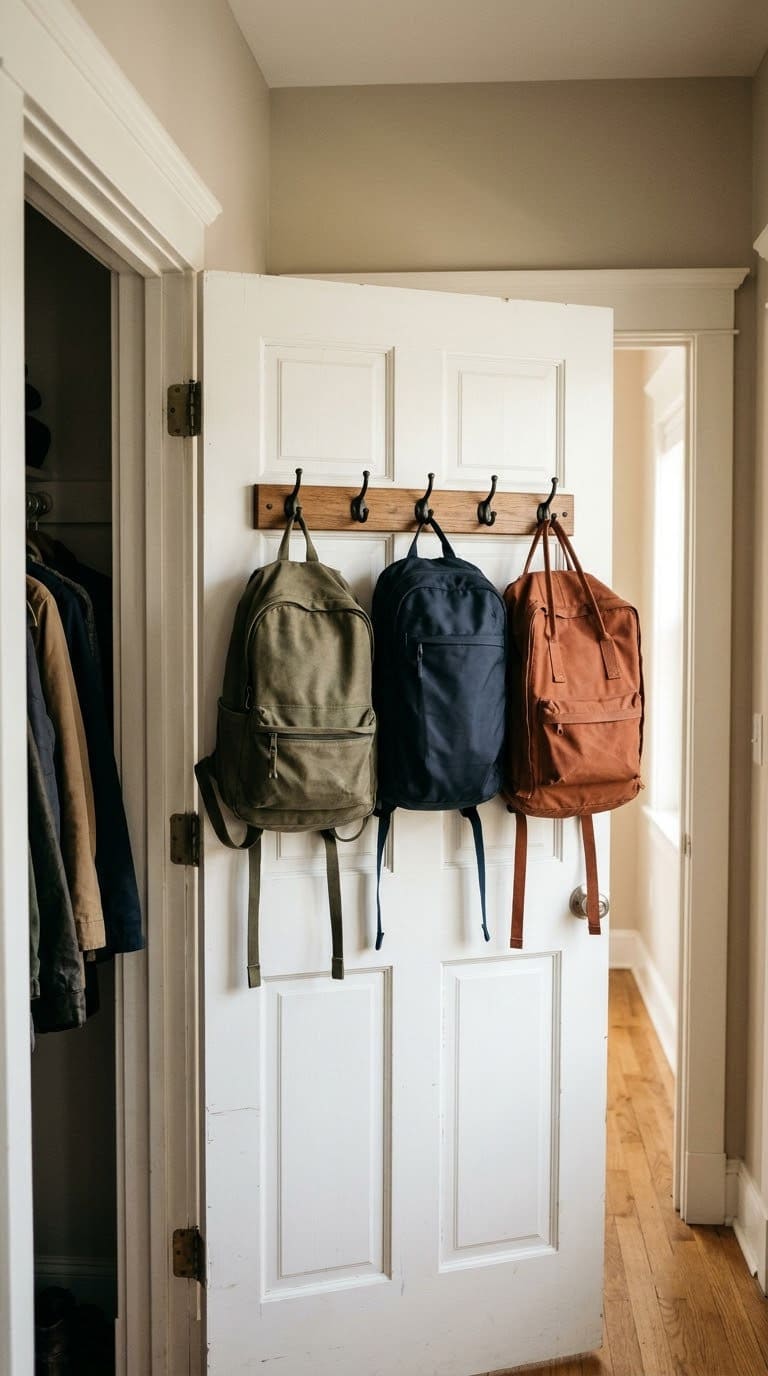
Use the inside of an entry closet door. A rail of hooks there holds bags and hides them when the door is shut. The room looks tidy even on a busy morning.
Check that bags don’t hit the shelves behind the door. A flat hook row works better than long hooks.
It’s a smart fix for a small entry with a closet but no wall space.
11. Behind-the-Door Rack in a Bedroom
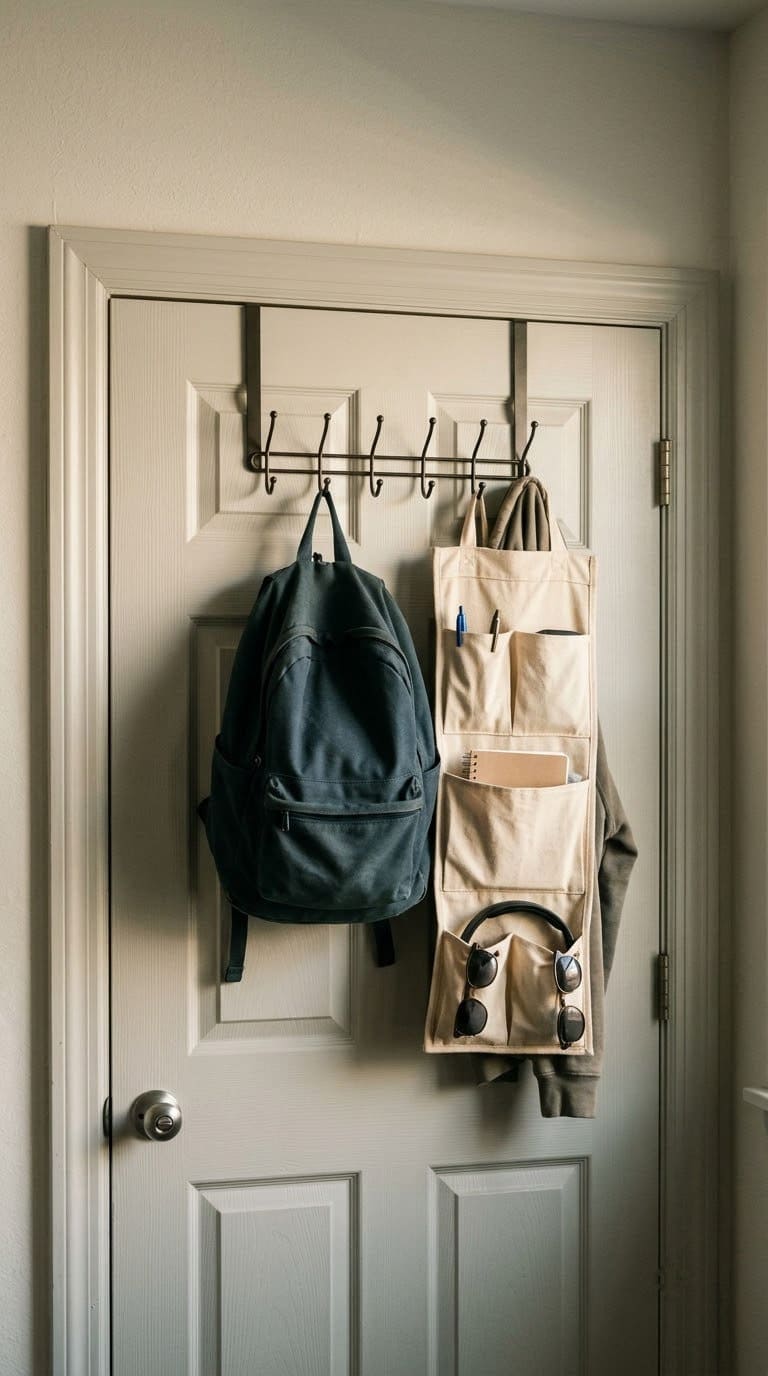
Teens often drop the bag in their room. Give it a home there with a rack or hook strip behind the door.
Add a small hanging organizer for chargers, lunch bags and sports gear. That way the bag, and what goes with it, share a place.
The tradeoff is that you’ll see less of the bag. A quick weekly check keeps old food from hiding in there.
12. Hallway Nook With Built-In Hooks
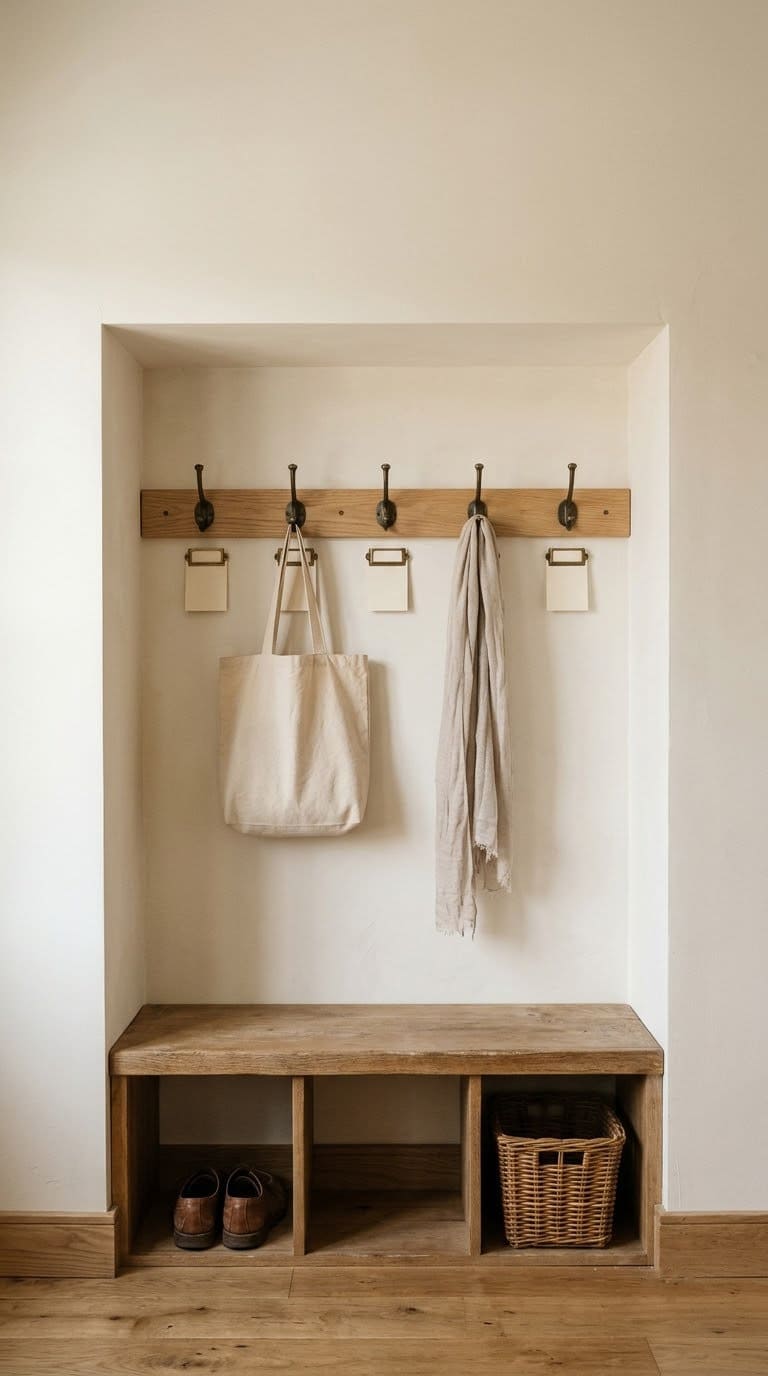
A shallow nook or the wall at the end of a hall can hold a row of hooks and a bench. It turns a dead zone into a drop zone.
Mark each person’s spot with a label or a name. Heidi Tsuruta, an interior designer at Matter of Design, told Cleveland Magazine that “everything having its own place is key.”
This idea needs a clear wall. Skip it if the hall is already narrow.
13. Rolling Cart or Garment Rack
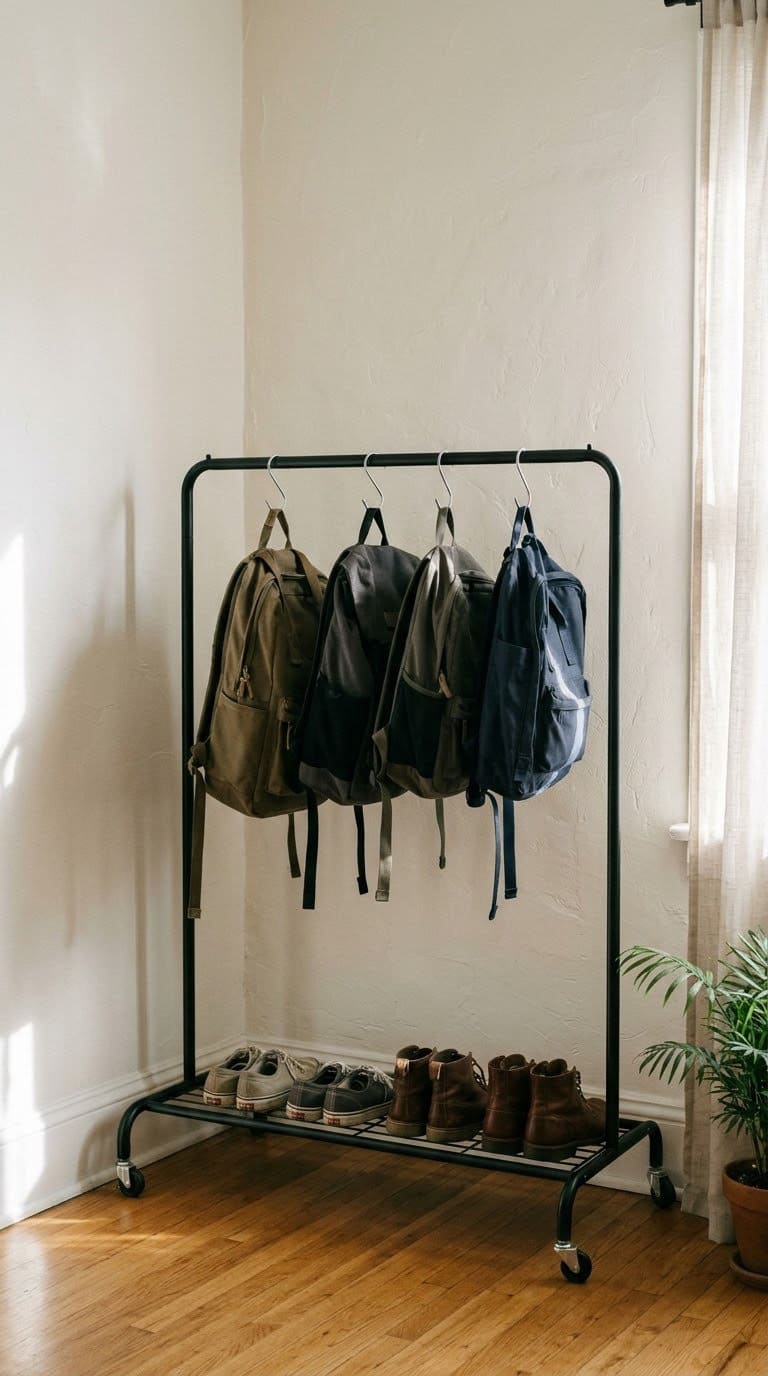
A slim rolling rack gives you storage with no wall damage. Hang bags on the rail and use the lower shelf for shoes.
It’s easy to move for cleaning or rearranging. Choose one with locking wheels so it doesn’t roll when kids grab a bag.
The downside is stability. A tall rack with heavy bags can tip, so don’t overload the top.
14. Wall-Mounted Hutch as a Drop Zone
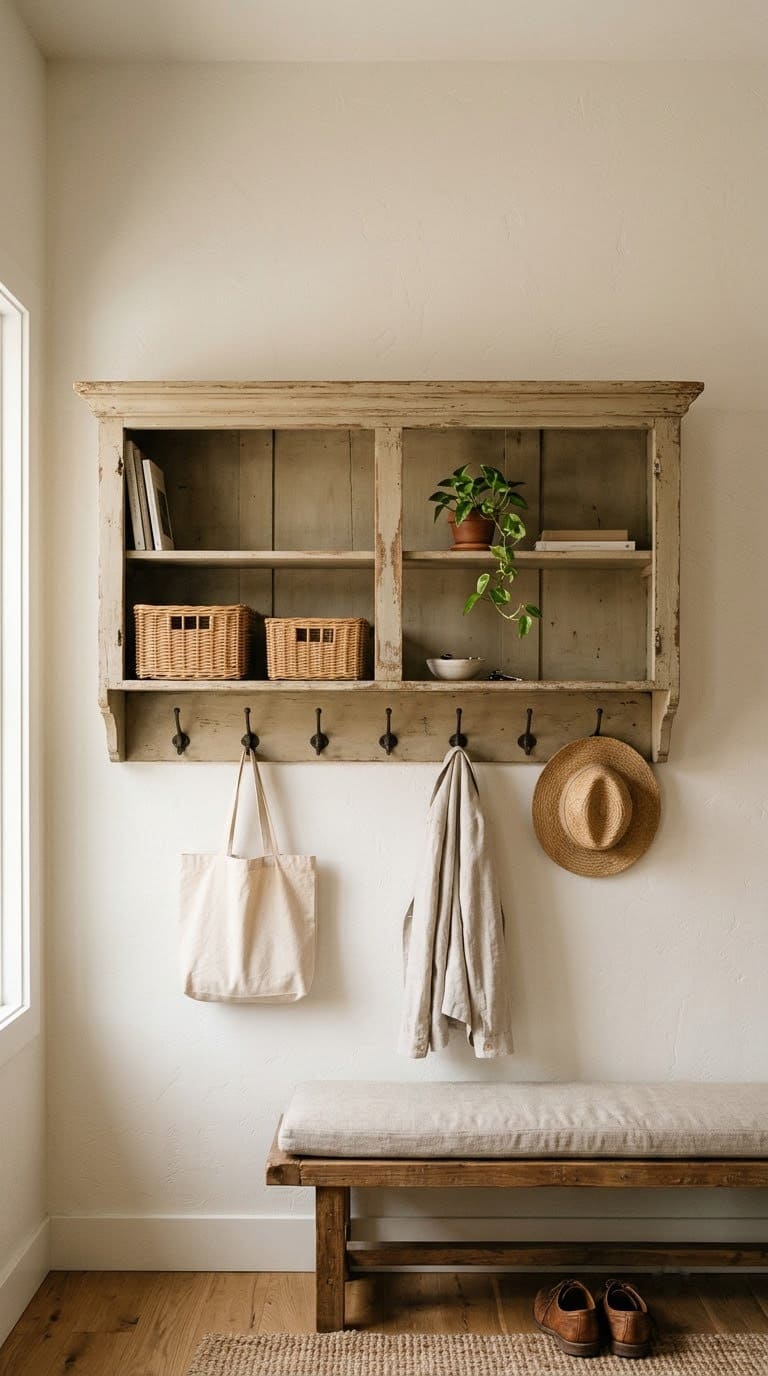
An old hutch or cabinet top can become a wall-mounted drop zone. Hang it on studs, add hooks underneath and baskets above.
Strip or paint it to match your entry. For a more rustic feel, see our rustic entryway decorating ideas.
A wall hutch is heavy before you add bags, so mount it into studs and nowhere else.
15. Bed-End Hook for Teens
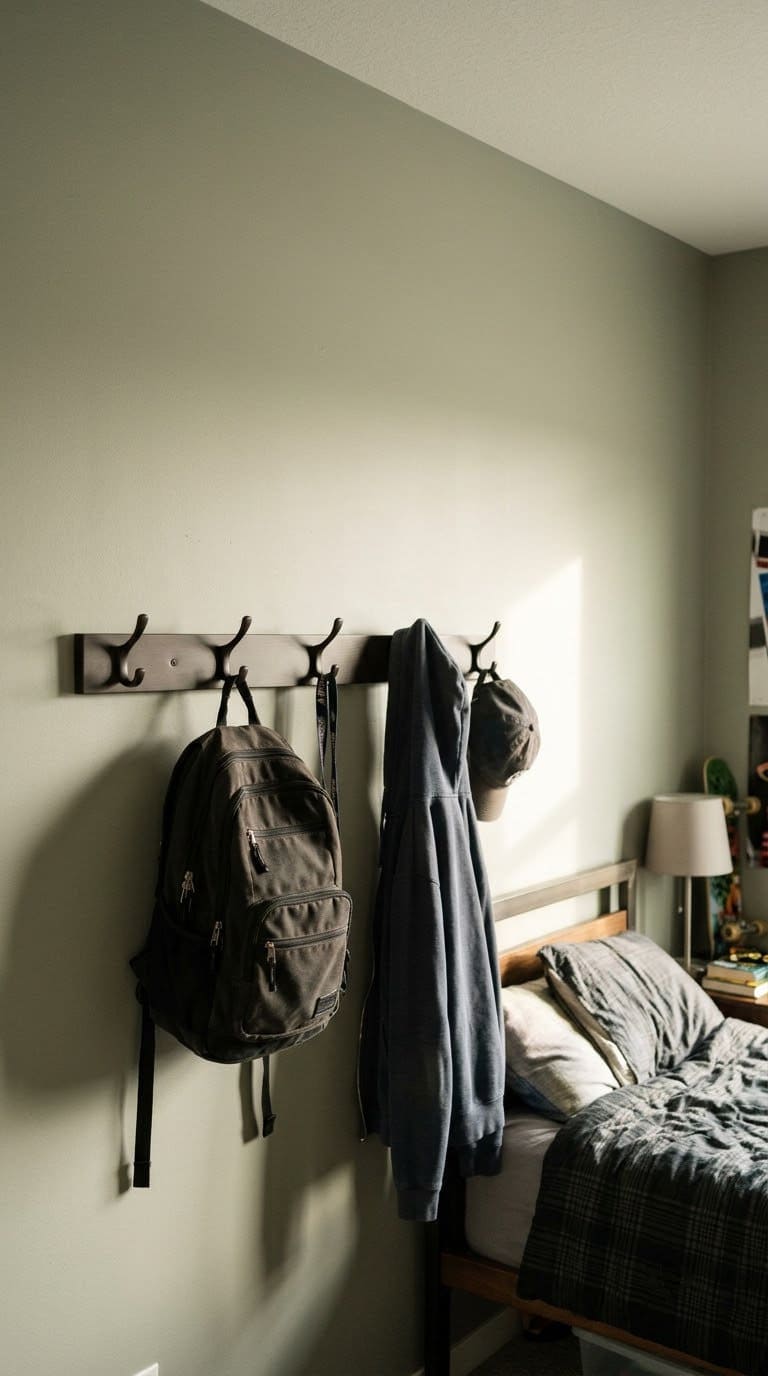
A hook strip near the bed gives a teen a quick place for the bag. It keeps the floor clear and the bag easy to grab in the morning.
Put it where the bag lands naturally, usually near the door. A strip with three or four hooks also holds hoodies.
The catch is smell. A bag with gym clothes should air out before it hangs in a bedroom.
16. Garage or Sports Gear Wall
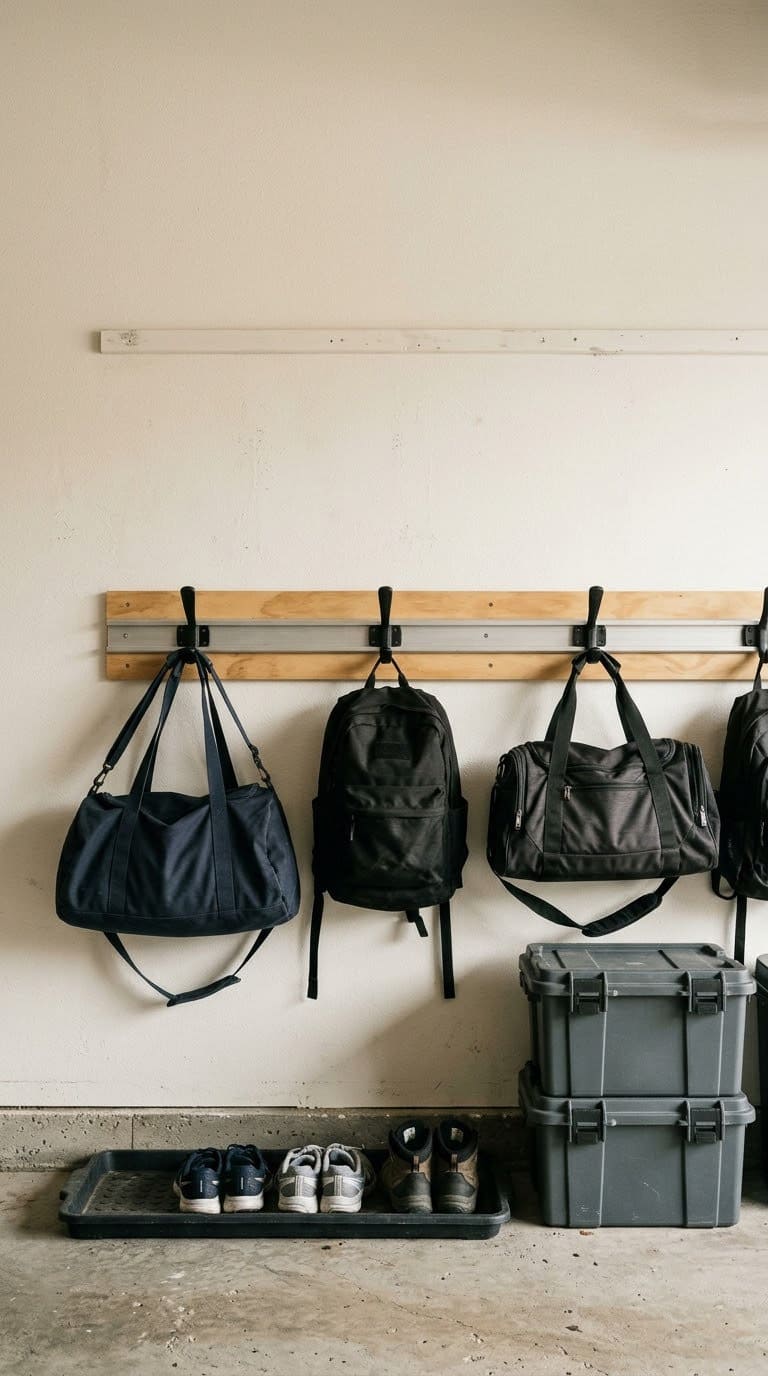
Sports bags, music cases and cleats don’t belong in the main entry. Give them a wall in the garage or a side entry.
Heavy-duty hooks and a few bins handle the load. Keep a shoe tray under the hooks for muddy gear.
Wet gear needs airflow, so avoid a sealed closet. For shoe ideas, see our entryway shoe storage hacks.
17. Adhesive Hooks for Light Bags
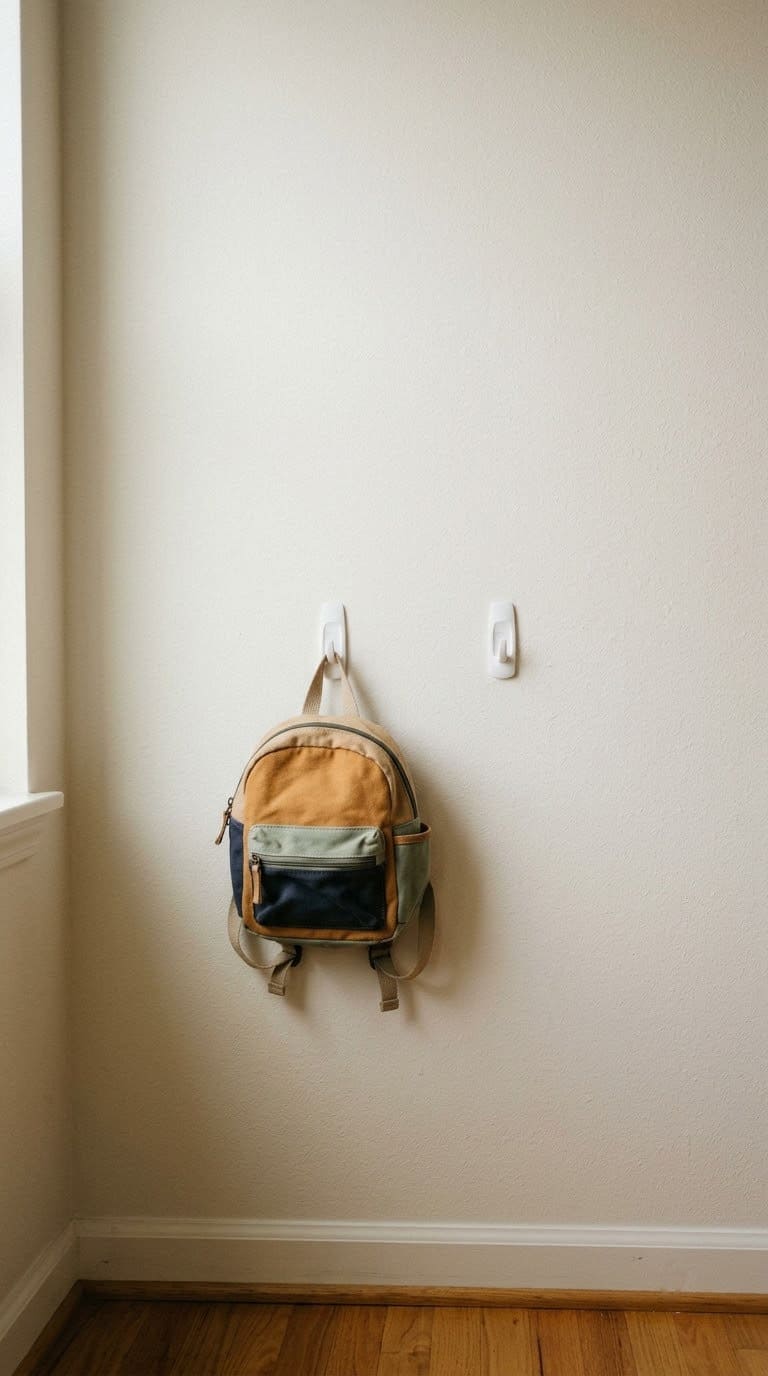
Adhesive hooks are fine for a small, light bag, like a toddler’s pack. They avoid holes in a rental wall.
They aren’t for a full school bag. Weight limits are printed on the package, and a heavy pack can pull them off. Test with the bag filled and watch for sagging over a few days.
Use them as a stopgap, not a long-term fix.
18. Hanging Organizer for Lunch and Sports Bags
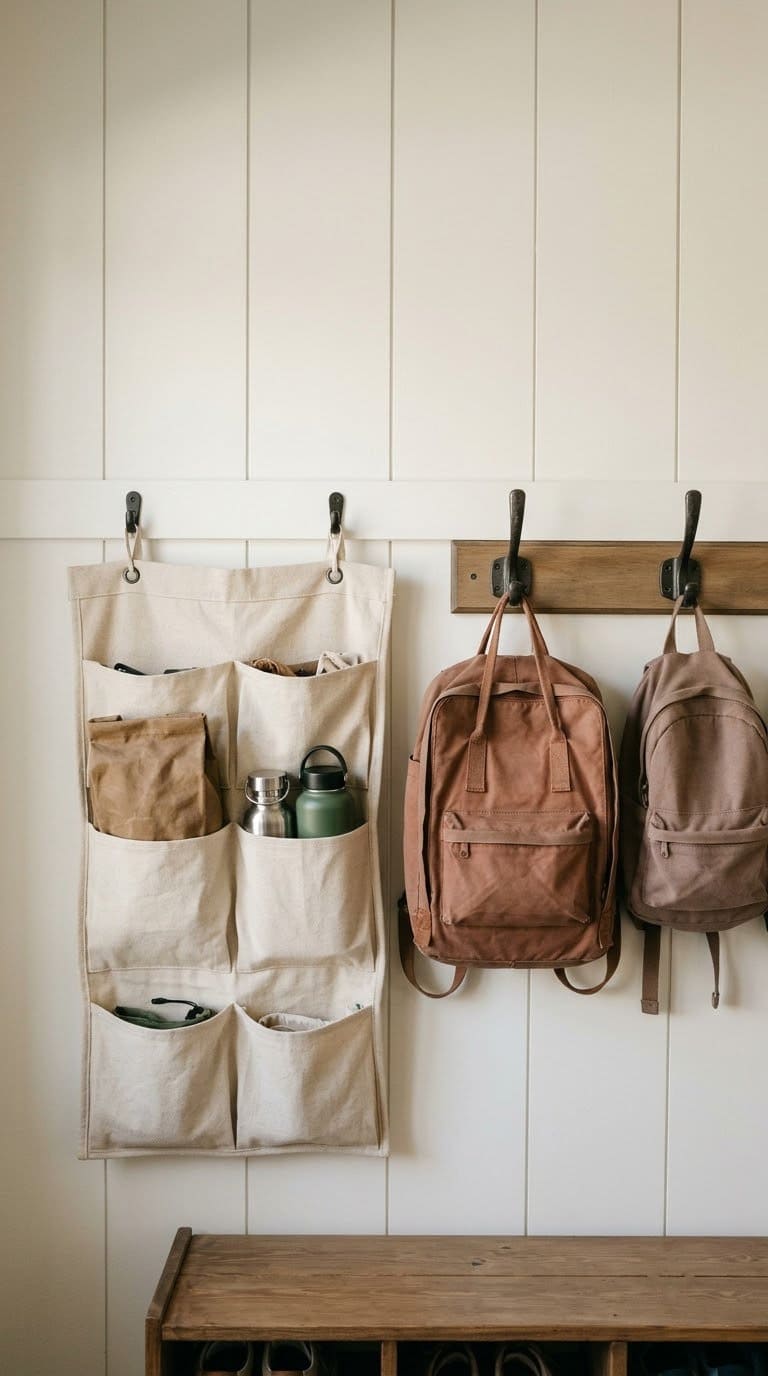
A fabric organizer with pockets next to the hooks holds lunch bags, water bottles and small gear. It keeps the backpack from carrying extras it doesn’t need.
OrthoInfo, from the American Academy of Orthopaedic Surgeons, advises packing sports gear in a separate bag that can stay put. A pocket organizer is a simple home for that.
It also encourages kids to unpack at the door.
19. Charging and Schedule Station
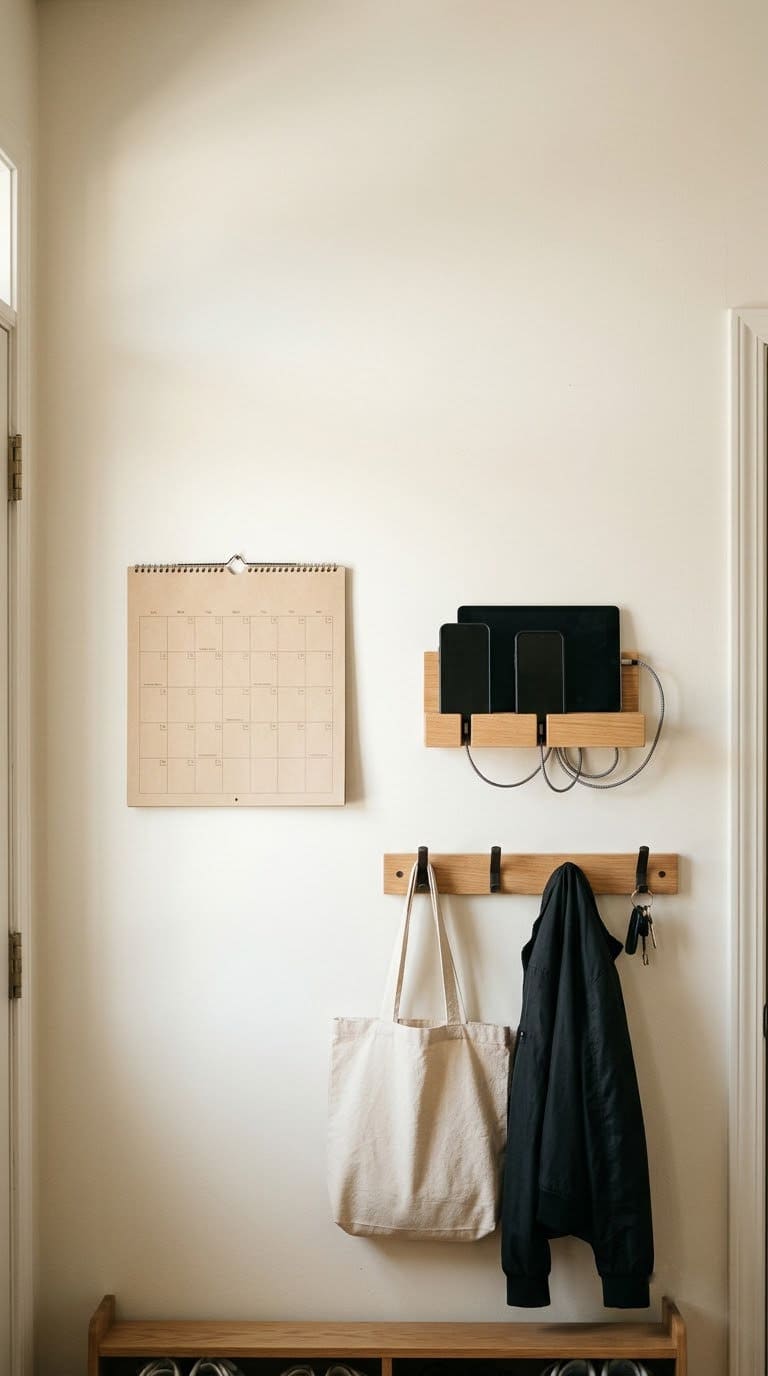
Put a small shelf or board above the hooks with a calendar and a charging spot. That gives the family one place to check the day.
Amanda Titchenal, founder of Well Organized, told Sunset to put things away as soon as you walk in. A command center makes that habit easy.
Keep cords tidy so little hands don’t pull them.
20. Seasonal Overflow for Travel and Hiking Packs
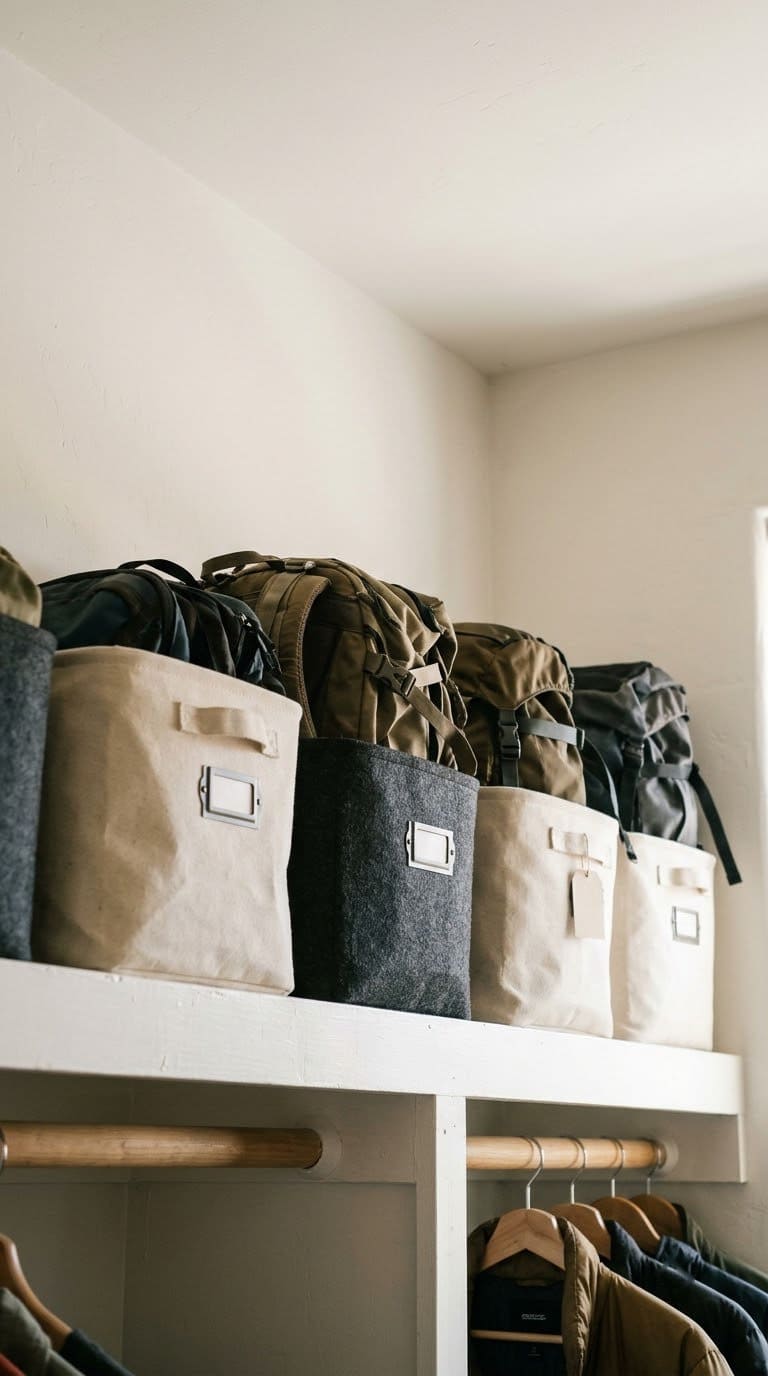
Bags you use a few times a year don’t need prime hooks. Store them on a high shelf or in a labeled bin.
Make sure they’re clean and fully dry first. Bring them down when the season starts.
This frees the best hooks for the daily bags and stops the entry from filling up.
What Goes Wrong (and What We’d Do Differently)
Most backpack systems fail in one of three ways.
The first is the pull-out. Someone mounts a hook into drywall, hangs a full bag, and the screw rips free. We’d always find a stud or use a rail that spans two.
The second is the tip-over. Tall lockers and cubby units look sturdy, and then a child climbs one. The CPSC reports 459 child deaths from furniture and TV tip-overs between 2000 and 2018, and 93 percent involved children 5 and under.
The third is the system nobody uses. If the hooks are too high, too crowded or too far from the door, the bags go back to the floor. If there’s one thing worth doing differently, it’s testing the setup with the real bags before you finish.
Check how much the bags weigh, too. OrthoInfo says to pack light, keep heavy items low and close to the back, and use both shoulder straps. It also lists back pain and trouble putting the pack on as warning signs.
Keep Bags Fresh
A wet bag on a hook is a smell waiting to happen. Empty it, open every pocket and let it air out before it goes back.
Clorox says to clean a backpack about once a month and air dry it completely, hanging upside down. Skip the dryer. Check the care label first, since some bags don’t allow bleach.
For hard surfaces, wipe them weekly in cold and flu season. A bag stored dry stays fresher all year.
Quick Comparison
| Idea | Best for | Renter-friendly | Holds a heavy bag |
|---|---|---|---|
| Over-the-door hooks | One or two light bags | Yes | Low |
| Stud-mounted hook rail | Daily school bags | No | High |
| Hall tree | No-drill entries | Yes | Varies by model |
| Lockers | Large families | No | High |
| Adhesive hooks | Toddler packs | Yes | Low |
Backpack Storage FAQs
How high should I hang hooks for kids?
Set the low row at your child’s elbow height so they can reach it alone. Measure your own child instead of relying on a chart. Add a higher row for adults.
How do I store backpacks with no mudroom?
Use a hall tree, over-the-door hooks, or a hook rail in a hallway. A cube organizer and a bench also work. None of these need a dedicated room.
How do I stop a wet backpack from smelling?
Empty it and let it air dry fully before storing. Hang it upside down in a ventilated spot and skip the dryer. Clean it about once a month.
Do I need to anchor lockers and cubbies?
Yes, if kids are in the home. The CPSC urges anchoring bookcases and dressers, and the same logic applies to tall storage units. Screw the anchor into a wall stud.
How heavy should a kid’s backpack be?
OrthoInfo gives no exact percentage. It says to pack light, put heavy items low and toward the center, and use both shoulder straps. If a child struggles to put the pack on, remove items.
Products We Recommend
This post contains affiliate links. We may earn a commission on qualifying purchases at no extra cost to you.
SKOLOO Rustic Coat Rack Wall Mount, 16-inch stud spacing
Solid wood plank with 5 triple hooks, sized for 16-inch stud spacing, listed at a 100 lb capacity. It suits idea 3.
Shop Now
QuakeHold! 4162 Furniture Strap Kit
Two 15-inch nylon straps that screw into a wall stud, for bookcases, cubby units and lockers. It suits ideas 6 and 7.
Shop Now
VASAGLE 4-in-1 Hall Tree With Shoe Bench
Bench, shoe rack, hanging rod and 9 removable hooks, 13.3 x 28.3 x 72.1 inches, with an anti-tip kit. It suits idea 8.
Shop NowNever miss an update — choose FarmFoodFamily as your preferred source on Google.
How it works: Tap the button below to open Google's settings page, then check the box next to FarmFoodFamily.
Tap the checkbox to turn it blue — that's how you know it's set.