Best Fruits And Vegetables To Use In A Cold Press Juicer For Maximum Nutrition And What To Avoid
I wasted a banana, twenty minutes of cleanup, and a chunk of my patience before I learned which produce a cold press juicer can actually handle.

Never miss an update — choose FarmFoodFamily as your preferred source on Google.
How it works: Tap the button below to open Google’s settings page, then check the box next to FarmFoodFamily.
Tap the checkbox to turn it blue — that’s how you know it’s set.
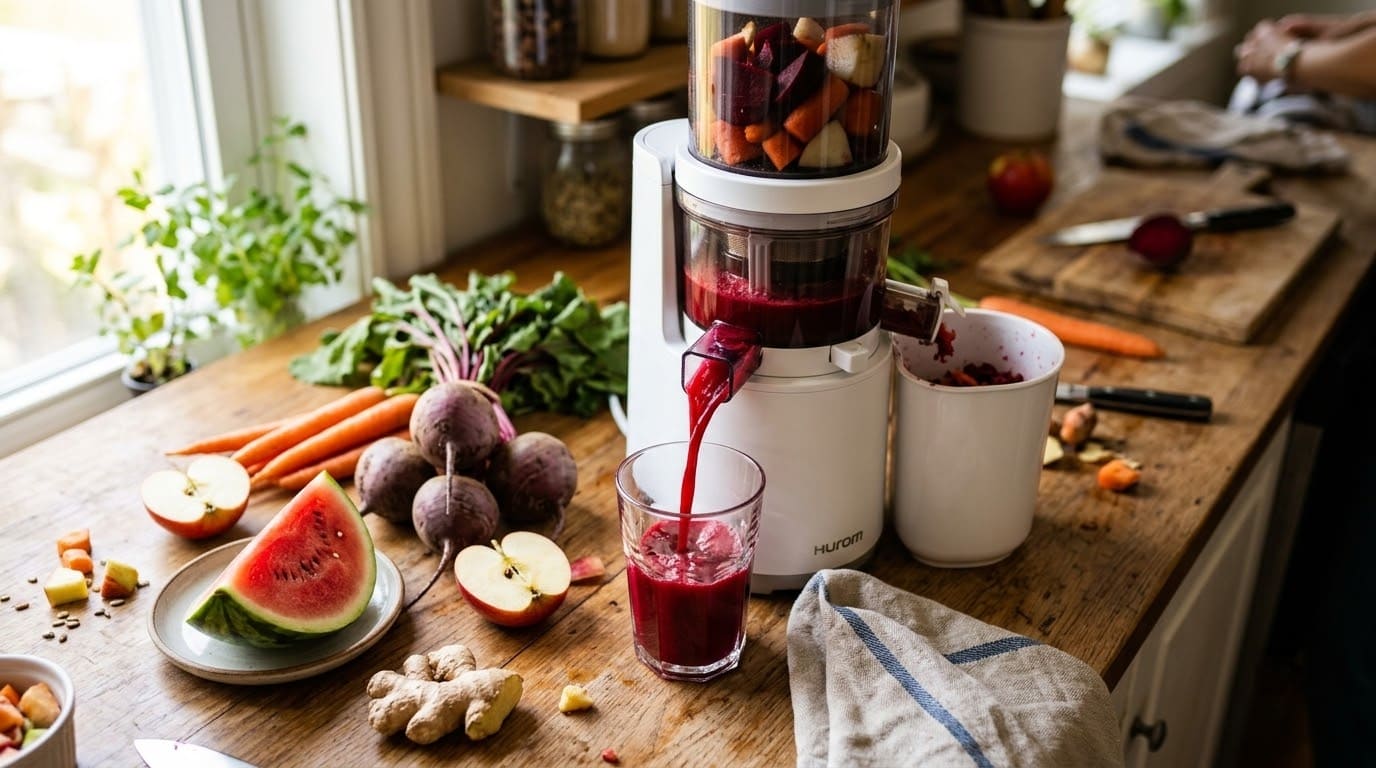
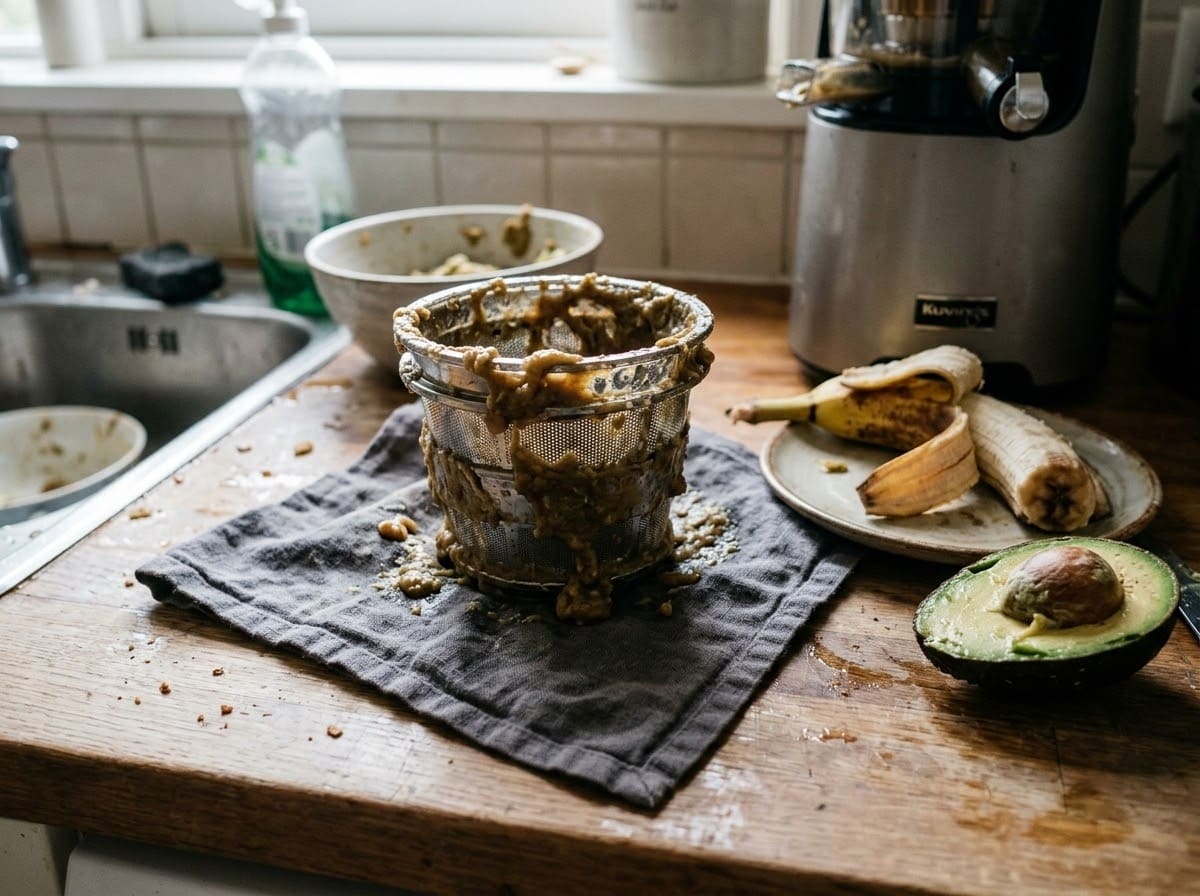
I ruined a perfectly good banana my first week with a cold press juicer. Just shoved it right in there, expecting juice. What came out was this thick brownish paste that clogged the filter screen and gave me nothing to drink. Took me twenty minutes of scrubbing to clean up the mess.
Turns out, not everything belongs in these machines. Some produce works beautifully. Other stuff? Complete waste of time and groceries. If you want the fast version of good nutrition instead, our guide on eating healthy when your schedule is a mess covers other shortcuts too. Here is what I figured out after months of trial and error so you do not have to repeat my mistakes.
How A Cold Press Juicer Actually Works
If you have only seen those loud centrifugal juicers at smoothie shops, a cold press is a completely different animal. Those fast ones spin at around 10,000 RPM. Look at any best cold press juicer on the market today and you’ll notice it barely moves. We’re talking 40 to 80 RPM. It crushes and squeezes produce slowly instead of shredding it at high speed.
That slow squeeze is the whole point. Less speed generates less heat, and less heat means your juice holds onto more of the good stuff. A comparative study on juice extraction methods found cold-pressed juice retains more vitamin C, polyphenols, and flavonoids than centrifugally extracted juice, simply because heat and oxidation break those compounds down faster in a high-speed spin.
But here is the catch. Because the auger moves so gently, it needs produce that has real structure and decent water content. Soft mushy things just collapse into paste before the press can extract anything useful.



High-Performing Fruits Every Home Juicer Should Be Using Regularly
Apples go into almost every juice I make now. They pair with literally everything. One medium apple gives you roughly 3 to 4 ounces of juice, and the green varieties add this tartness that saves vegetable-heavy blends from tasting like you are drinking your lawn.
Pineapple surprised me the most. I used to spend money on bromelain supplements for joint soreness until I learned the enzyme survives cold pressing much better than high-speed extraction. Research on pineapple bromelain shows it has a genuine anti-inflammatory effect. Now I juice the chunks with the core still attached. The core is tough and fibrous, but that is exactly where the bromelain concentrates.
Watermelon barely needs any pressure at all. You push it through and juice just floods out, and it’s one of the easiest things to grow yourself if you’re into growing your own watermelon at home. The lycopene content is impressive on its own, but here is what most people miss. That white rind part everyone tosses in the trash actually contains more citrulline than the flesh does, an amino acid linked to improved blood flow. I started juicing entire slices, rind included, and never looked back.
Oranges and grapefruits work great too. Just peel off the colored outer rind but leave the white pith intact. That spongy layer is packed with bioflavonoids that most people strip away without thinking. Pears, grapes, and kiwi rotate through my weekly lineup depending on whatever is on sale that week.
Unlocking The Full Potential Of Vegetable Juicing With A Cold Press
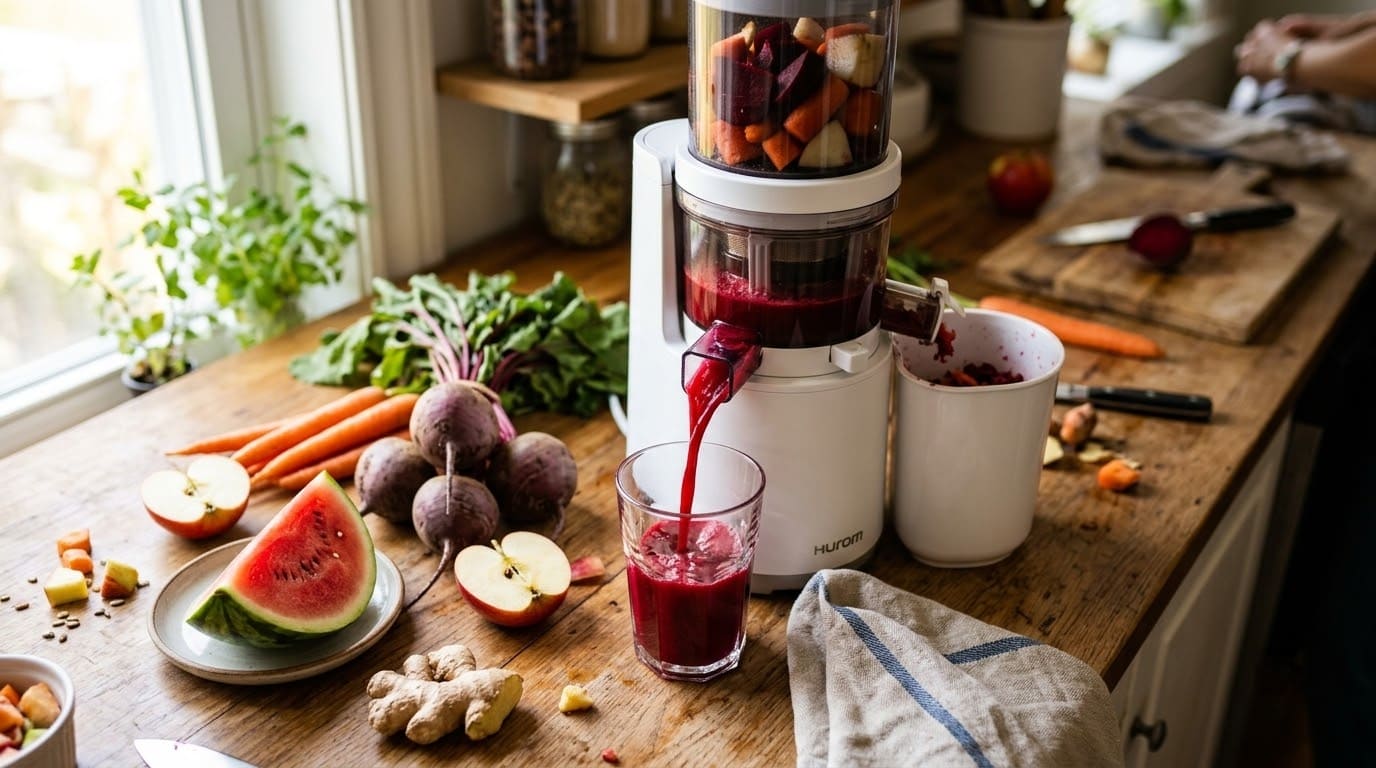
I will be honest. Vegetables are where I started understanding why some people get borderline obsessive about their cold press juicer.
Celery is a solid reliable base, and if store-bought bunches keep going limp before you use them, growing your own celery fixes that fast. Nothing flashy, just consistent yield and mild flavor. But dark leafy greens changed the game for me. Kale, spinach, and Swiss chard produce small volumes of liquid, sure. But the micronutrient concentration per ounce is genuinely wild. The trick is pairing them with something water-rich like cucumber or half an apple. Without that, you are pressing an entire bunch of kale just to fill a shot glass.
Beets became a staple fast, especially once I started growing my own beetroot instead of buying the sad pre-cooked ones at the store. One medium beet gives you this gorgeous deep red juice loaded with dietary nitrates, and a placebo-controlled clinical study found beetroot juice measurably lowers blood pressure within 30 minutes of drinking it. The only downside is that everything in your kitchen turns purple. My cutting board still has stains from six months ago.
Carrots are the workhorse I should have mentioned sooner. They juice easily, taste naturally sweet, and mellow out anything bitter you pair them with, kale, ginger, even beet greens. A pound of carrots gives a surprisingly generous yield for how cheap they are, which makes them my go-to base when I’m juicing for a whole week.
Cabbage is the one people skip because it sounds unappealing, but a small wedge blended into a beet or carrot juice barely changes the flavor and adds a real dose of vitamin C and gut-friendly compounds. Start with a quarter head max. More than that and it takes over everything.
Ginger and turmeric go into nearly every batch I make. A one-inch chunk of raw ginger creates this little shot that honestly wakes me up faster than coffee does. Fresh turmeric root gives you curcumin, though it’s worth knowing that curcumin is notoriously poorly absorbed on its own in any form, capsule or fresh root, so pairing it with black pepper or a fat source in the same juice actually helps more than the supplement bottle sitting untouched in your pantry.
If you are shopping for a machine that handles all of this without frustrating you, focus on two specs: a wide feed chute and a strong auger. Those two features determine whether juicing stays enjoyable or turns into a daily chore you eventually quit.
Produce Performance At A Glance
| Produce | Verdict | Why |
| Apples | Excellent | Goes in almost every batch, pairs with everything |
| Pineapple | Excellent | Bromelain survives cold pressing well; juice the core |
| Watermelon | Excellent | Nearly zero resistance; juice the rind too |
| Beets | Excellent | Rich in nitrates, worth the purple stains |
| Carrots | Excellent | Cheap, sweet, high yield |
| Leafy greens (kale, spinach, chard) | Good | Needs a water-rich partner like cucumber or apple |
| Cabbage | Good | Small amount adds nutrients without dominating flavor |
| Oranges/grapefruit | Good | Leave the white pith on for bioflavonoids |
| Ginger/turmeric | Good | Use small amounts as a flavor and nutrition shot |
| Bananas | Terrible | Turns to paste, clogs the filter, zero liquid |
| Avocados | Terrible | No extractable liquid, use a blender instead |
| Coconut meat | Terrible | Too dense and fibrous |
| Dried fruit | Terrible | Same density problem as coconut |
| Broccoli | Skip | Tastes off raw; roast it instead |
Stuff I Learned The Hard Way To Stop Juicing
Already mentioned the banana disaster. Avocados were mistake number two. Same problem. No extractable liquid whatsoever. Both of these belong in a blender, full stop, and honestly they’re better suited to a proper smoothie recipe anyway.
Coconut meat fooled me because it looks like something that should produce juice. It does not. Way too dense and fibrous. Dried fruits have the same issue. Do not bother.
Broccoli I tried exactly once. The taste landed somewhere between sulfur and wet cardboard. Roast it instead. Seriously.
Quick Answers
Can you juice a banana in a cold press juicer?
No. Bananas have almost no free water content, so instead of releasing liquid they turn into a thick paste that clogs the filter screen. Blend them instead.
Does cold press juice really keep more nutrients than regular juicers?
Generally, yes. The slow auger action generates far less heat and oxidation than a high-speed centrifugal blade, and both heat and oxygen exposure are the main things that degrade vitamin C and antioxidants during juicing.



How long does cold press juice actually last?
Cold press juice technically keeps up to 72 hours in the fridge in an airtight container, but nutrient levels start dropping the moment the juice is exposed to air. Drink it the same day for the best nutrition.
Should you juice the rind and pith of citrus and watermelon?
Yes, in moderation. Watermelon rind carries citrulline, and citrus pith carries bioflavonoids, both of which get thrown away by most people juicing without knowing it.
Conclusion
After experimenting for months, I landed on 60% vegetables and 40% fruit. Sweet enough that you actually enjoy drinking it, green enough that you are not just mainlining fruit sugar every morning. Go full vegetables with no fruit and you will quit within a week. I almost did.
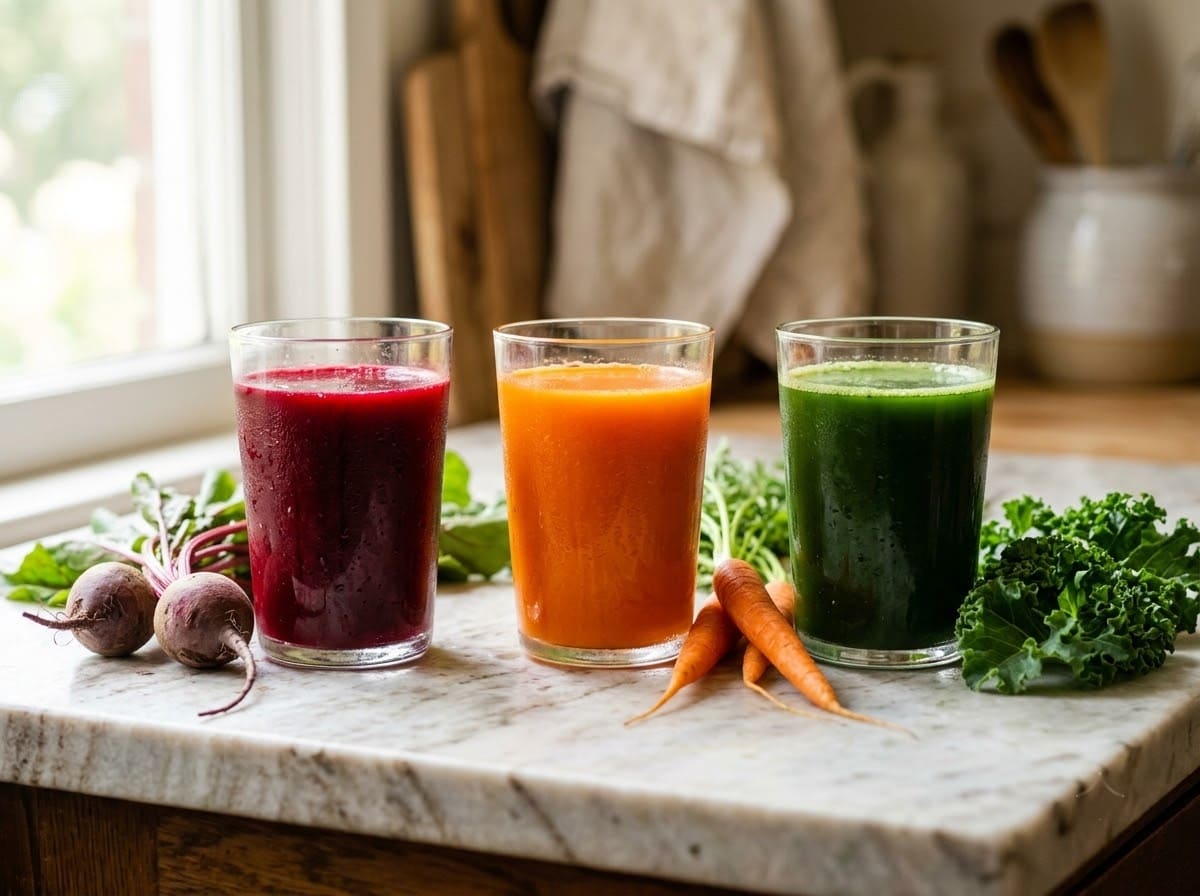
Rotate your colors throughout the week. Red from beets, green from kale, orange from carrots, purple from cabbage. Different pigments carry different phytonutrients, the same idea behind tropical detox-style green smoothies if you want a break from straight juice. Your body genuinely benefits more from variety than from drinking the same green juice on repeat.
One last thing. Drink your juice the same day you make it. Cold press juice technically keeps up to 72 hours in the fridge, but nutrients start fading the second air touches the liquid. Fresh is always better.
Never miss an update — choose FarmFoodFamily as your preferred source on Google.
How it works: Tap the button below to open Google's settings page, then check the box next to FarmFoodFamily.
Tap the checkbox to turn it blue — that's how you know it's set.