20 Smart Jewelry Storage Ideas to End Tangles and Tarnish
Good jewelry storage keeps every piece separate, dry and easy to see, so nothing tangles, scratches or goes missing.

Never miss an update — choose FarmFoodFamily as your preferred source on Google.
How it works: Tap the button below to open Google’s settings page, then check the box next to FarmFoodFamily.
Tap the checkbox to turn it blue — that’s how you know it’s set.
Most of us own more jewelry than we can find. Chains knot in a drawer, one earring vanishes, and the good silver turns dull in a bathroom cabinet.
We looked at what professional organizers, a gem lab and a jewelry insurer say, then built 20 ideas around the real problems. Each one comes with a practical tip and the catch to know before you buy.
Quick Answer
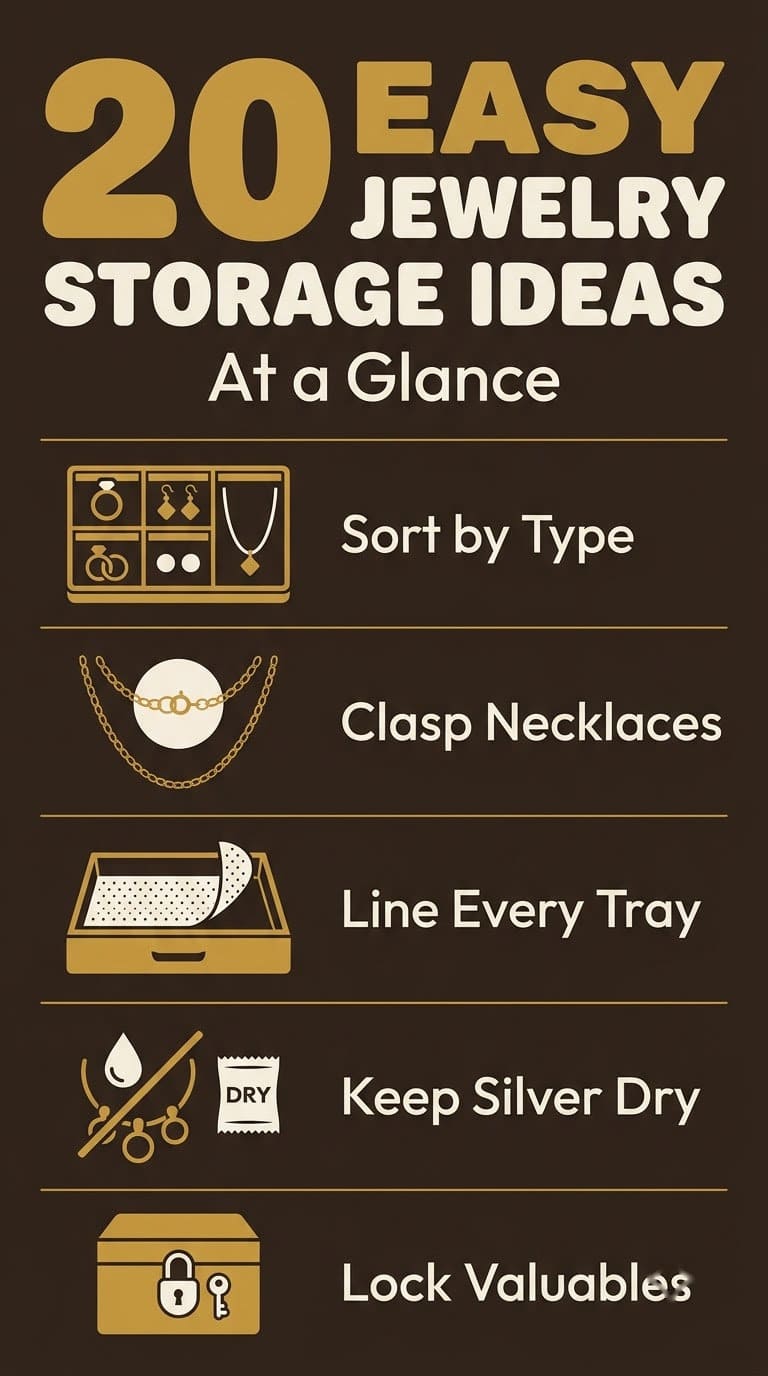
Good jewelry storage does three things. It keeps each piece apart so metal doesn’t scratch metal, it keeps pieces dry, and it keeps them in view so you wear what you own.
Start by sorting jewelry by type. Then match the storage to the piece. Hooks or long trays suit necklaces, slotted boards suit earrings, and soft-lined compartments suit rings and bracelets.
Keep silver away from bathrooms, since damp air speeds up tarnish. But don’t forget the valuable pieces. Store them in a spot that locks or hides, and photograph them for your records.


Tangles and tarnish both come from storing pieces loose. A lined, divided home for each type fixes most of it.
Below are 20 ideas for every space and budget, with the catch for each. Each idea names the catch, so you can plan the whole setup before you buy a single tray.
Before You Start
Take inventory before you buy anything. Lay every piece on a bed, sort it by type, and pull out what you never wear. You’ll often find you need less storage than you thought.
Then decide how you live. Do you grab the same five pieces daily, or rotate a big collection?
Daily wear belongs in the open. The rest belongs in closed, lined storage.
Here’s how we’d scale it by budget.
| Level | What you do | Good for |
|---|---|---|
| Renter ($) | Drawer trays, a hanging organizer, a corkboard with pins | Small rooms, no drilling |
| Refresh ($$) | Wall hooks, a necklace stand, a lined jewelry box | Most collections |
| Build ($$$) | An armoire or a custom drawer with lined inserts | Large or valuable collections |
Three rules apply to every idea:
- Separate the pieces. Metal scratches metal and chains tangle.
- Line the surfaces. Soft velvet or felt-like linings protect finishes.
- Keep small pieces out of reach of small children. Earring backs and tiny charms can be a choking risk.
If your bedroom is already tight, our bedroom organization ideas and space-saving tips for rental apartments help you find the room.

Four velvet trays with a necklace tray (8 hooks), a 24-compartment earring tray and removable dividers, 5.9 x 9.4 inches. It suits idea 17.
Shop NowThis post contains affiliate links. We may earn a commission on qualifying purchases at no extra cost to you.
20 Jewelry Storage Ideas
1. Wall Hooks or a Hanging Bar for Necklaces
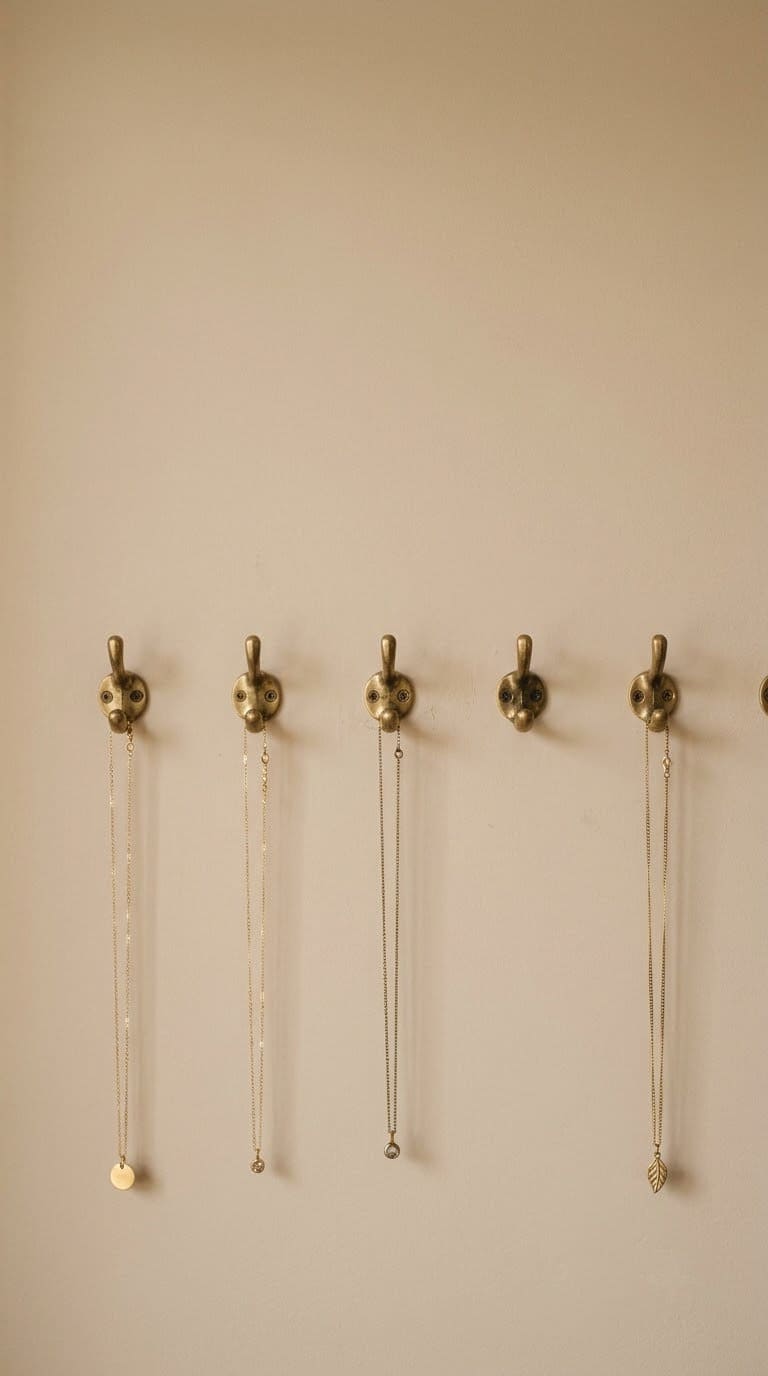
Hooks are one of the simplest fixes for tangled chains. Each necklace hangs on its own hook, so nothing twists. A short row of brass or wood hooks on a painted wall also looks like art.
Space hooks a few inches apart so pendants don’t clash. Put the row inside a closet door if you’d rather hide it.
The catch is dust and light. Open hooks collect both, so keep your best pieces in a closed spot.
Mount the hooks at eye level and hang the longest chains on the outside so they clear the shorter ones. Start with the necklaces you wear weekly and add hooks only as you need them. Everything else can go in a lined tray (idea 3).
2. Necklace Stand or Tree
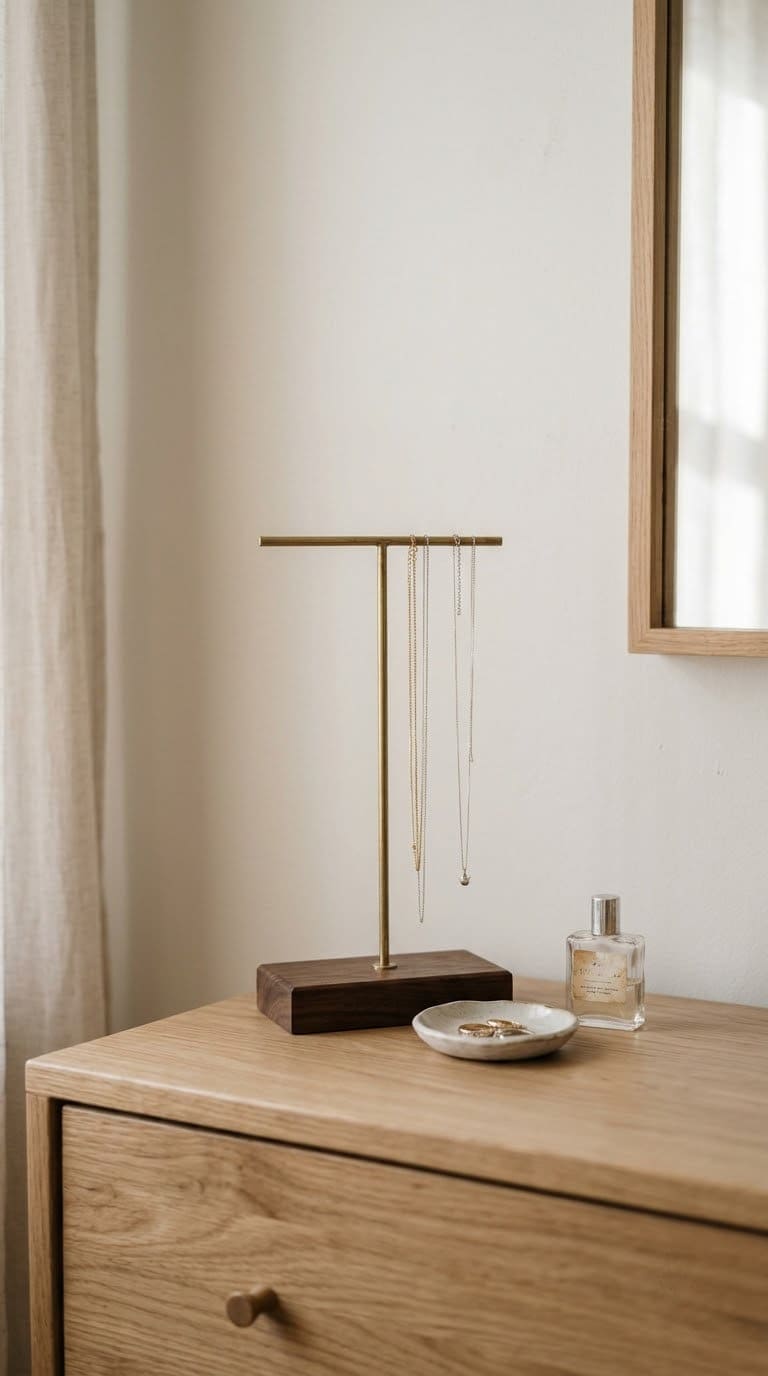
A stand puts a few favorites in easy reach on a dresser or vanity. Chains hang straight, and you can see them at a glance.
Limit it to daily pieces. A stand with a dozen necklaces turns into a tangle by Friday.
Wipe it down now and then. A stand near a window can also fade some stones, so place it out of direct sun.
Put the stand where you get dressed, so you can grab a chain without opening a drawer. Swap two or three necklaces onto it each week and return the others to a lined tray.



3. Long-Compartment Drawer Tray
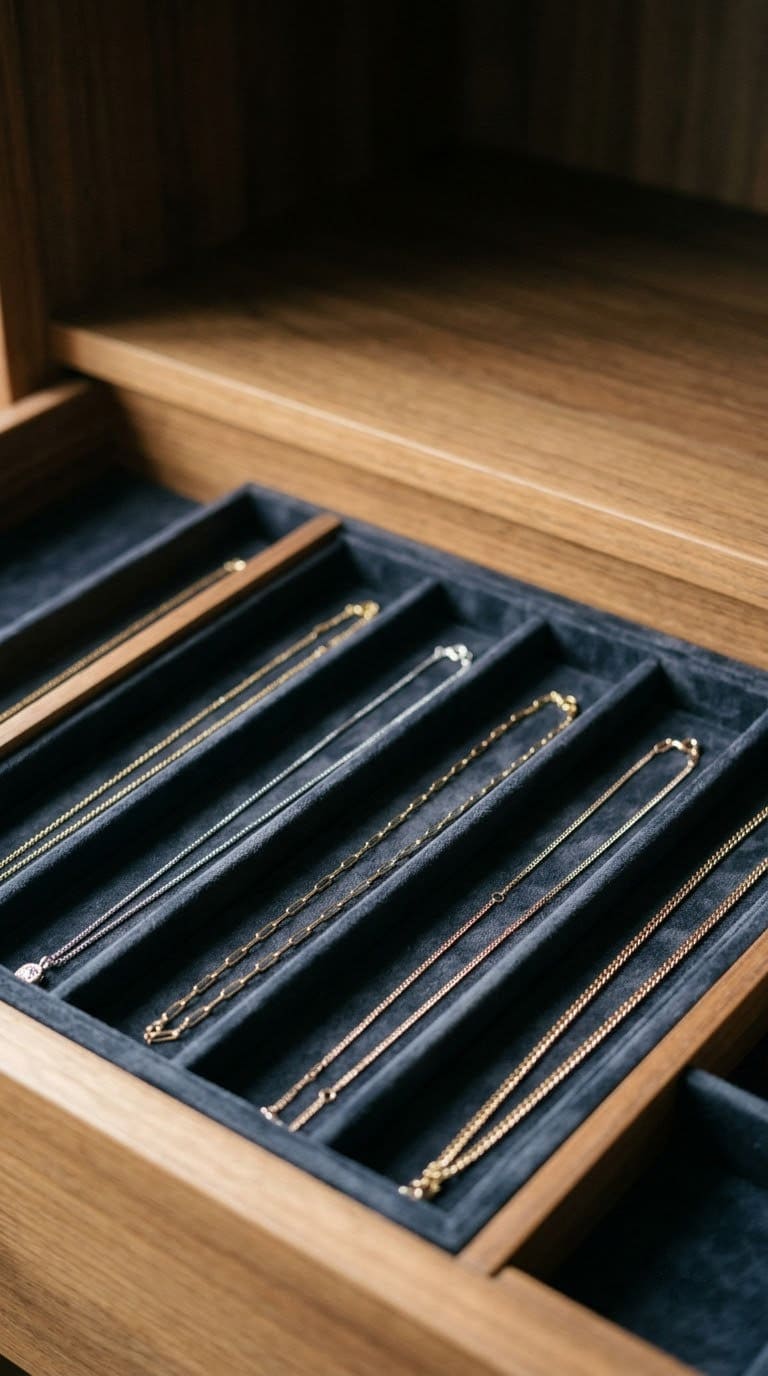
The Home Edit’s Clea Shearer told The Zoe Report that “it helps to clasp and store them separately in long compartments.” That’s the whole trick for chains in a drawer.
Choose a tray with deep, narrow slots. Clasp each chain first, then lay it flat.
Drawers hide jewelry, so you’ll forget what’s in there. Pair this with idea 17.
Set the tray in the top drawer of your dresser, closest to where you dress. Lay each chain flat in its own lane with the longest at the back, and keep pendants from overlapping.
4. Corkboard or Velvet Board With Pins
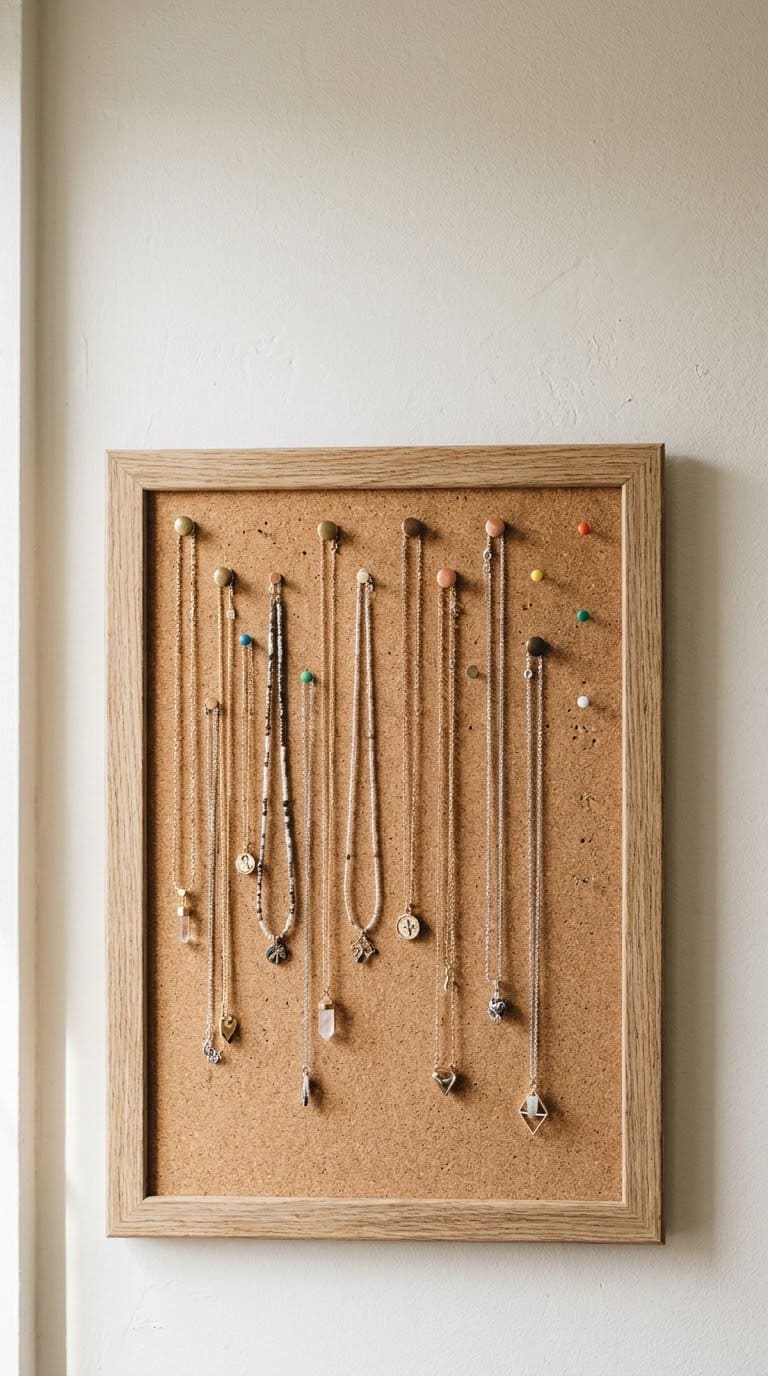
A framed corkboard turns a wall into a jewelry display. Push pins hold chains, and small hooks hold bracelets.
Use pins with smooth, rounded heads so they don’t scratch metal. Hang the board where sunlight won’t hit it.
It’s cheap and easy to move. The downside is that thin pins can bend under heavy pendants.
Cover the board with a soft cloth or felt first so chains never touch bare cork. Group necklaces by length, shortest on top, so you can lift one out without disturbing the rest.
5. Hanging Organizer With Clear Pockets
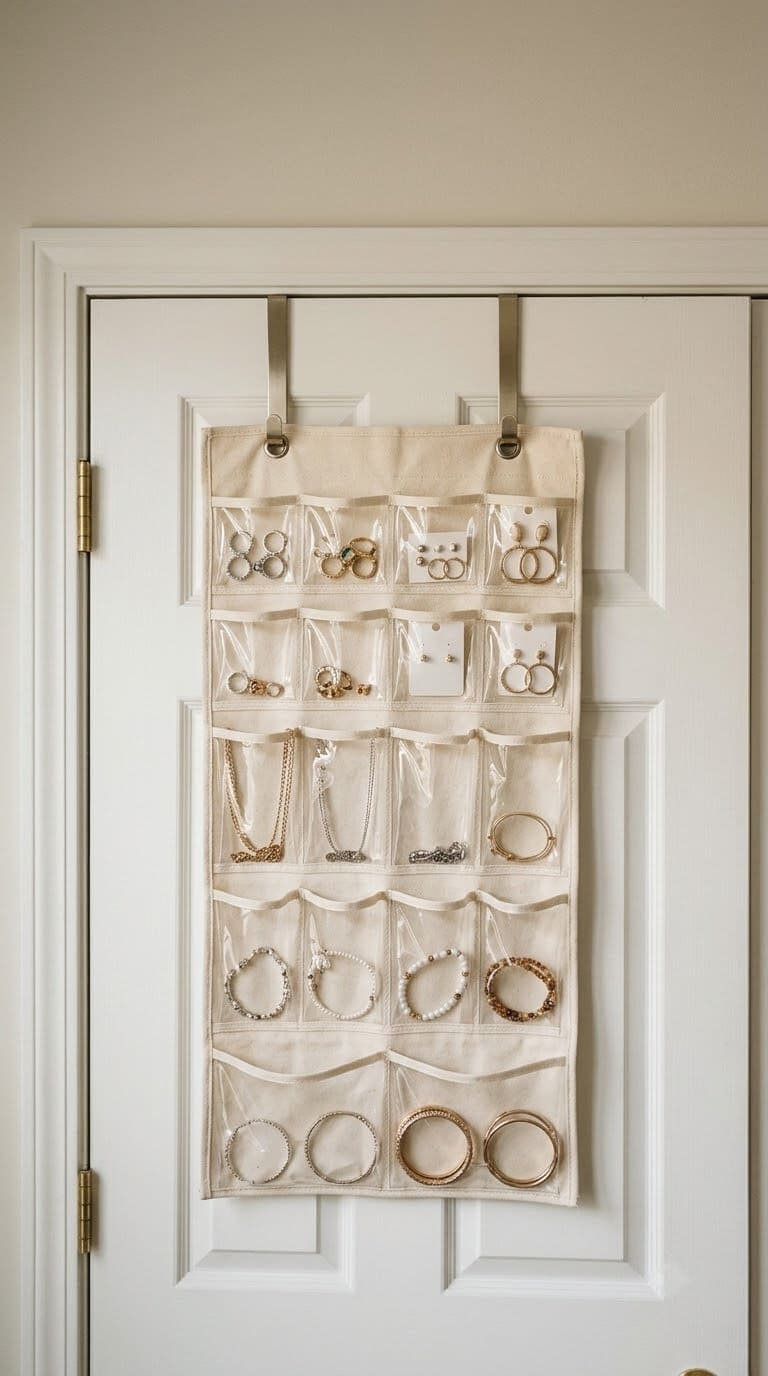
A clear pocket organizer on a closet or bedroom door holds many pieces without taking floor space. Each pocket keeps one piece, so you can see everything.
It suits renters, since it needs no tools. Choose one with a soft lining.
Dust can sneak into pockets over time. A quick shake once a month keeps it fresh.
Sort by type: rings in the bottom pockets, earrings in the middle and bracelets at the top. Choose pockets with a flap or zip if you can, and check the organizer monthly for anything that has slipped.
6. Earring Card or Screen Board
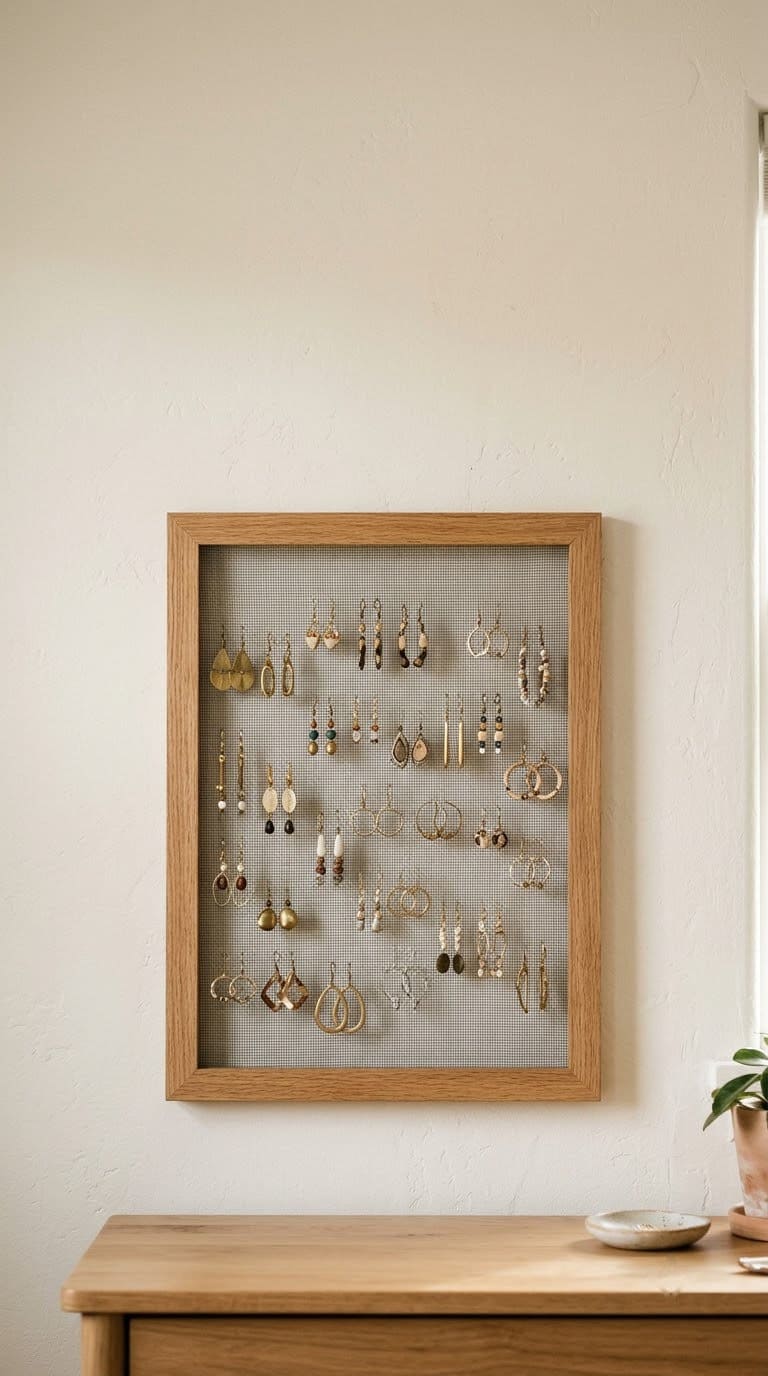
A mesh screen in a frame lets you hook earrings through the holes. Posts and wires both work, and you can see every pair at once.
Shearer’s advice is to pick a holder that secures each earring in its own slot, with the backs attached. A board does that well.
Mount it on a wall or lean it on a dresser. It holds statement earrings better than tiny studs.
Hook each pair together and put the backs on right away, as Shearer advises. Group the pairs by color across the board so you can scan it in a second.
7. Small-Compartment Case for Studs
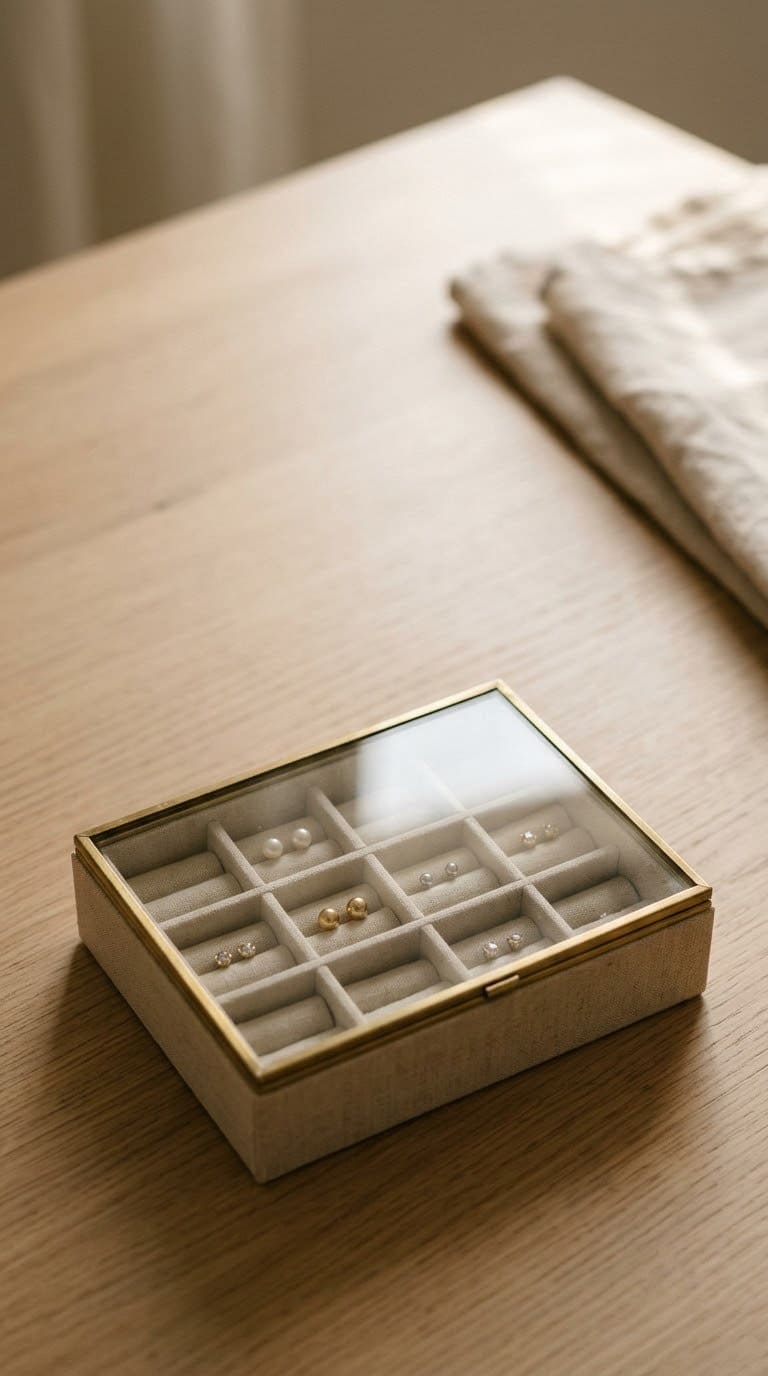
A small case with many tiny compartments keeps studs paired and safe. It also stops small backs from rolling away.
Pill organizers work in a pinch, but check that the lid closes tight. Never use a case with a loose lid around kids.
Label the lid if you use more than one. It saves a lot of digging.
Use one compartment per pair and keep the backs in the same slot. Store the case in a drawer or on a shelf away from sun, and out of reach of young children.
8. Framed Shadow Box for Earrings
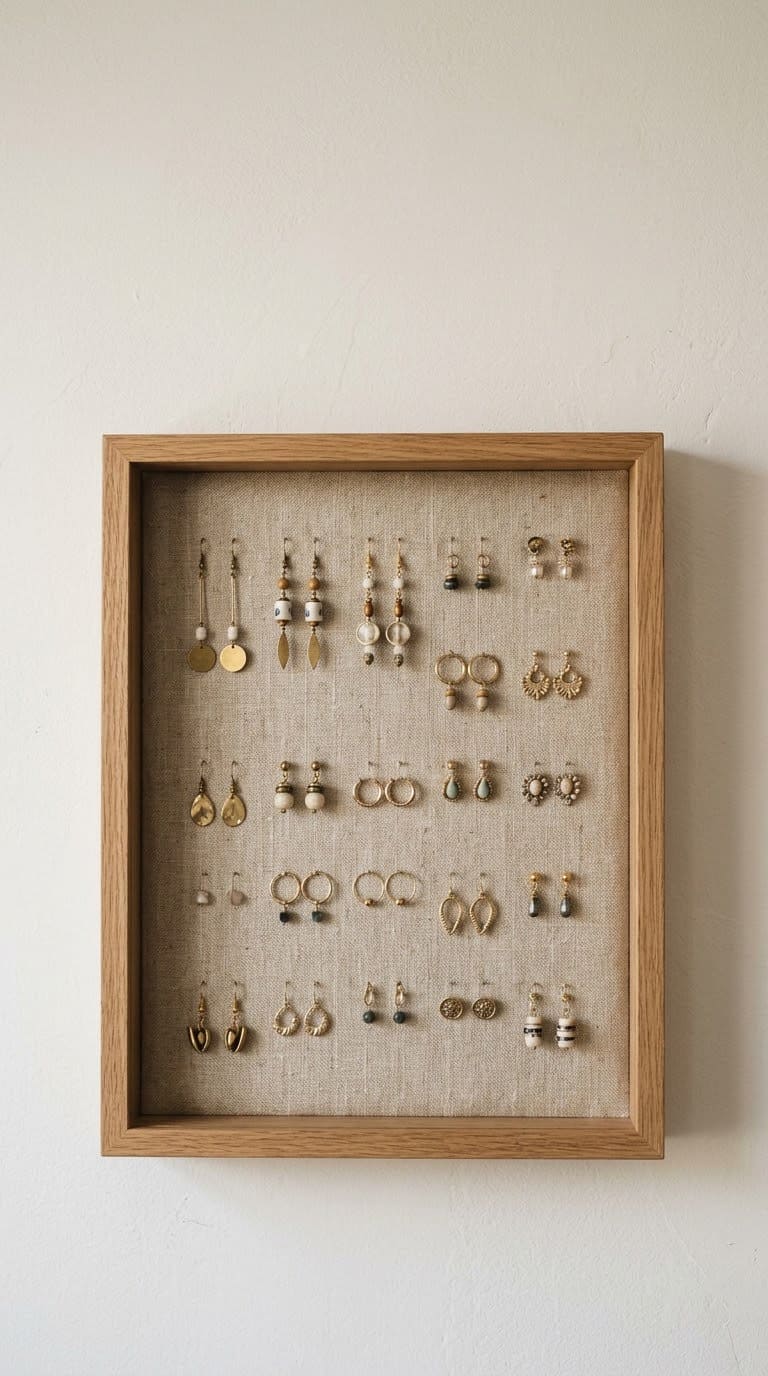
A shadow box frame lined with fabric turns earrings into wall art. Stick posts through the fabric, or hang hooks from a bar.
It’s a nice way to show off heirloom pieces. Use acid-free fabric and keep the box out of the sun.
The tradeoff is access. You’ll have to open the frame to swap pieces.
Hang only light earrings in the frame, since heavy ones can drag through the fabric. Mount it on a wall that gets no direct sun, because sun can fade fabric and some stones.
9. Stackable Acrylic Trays
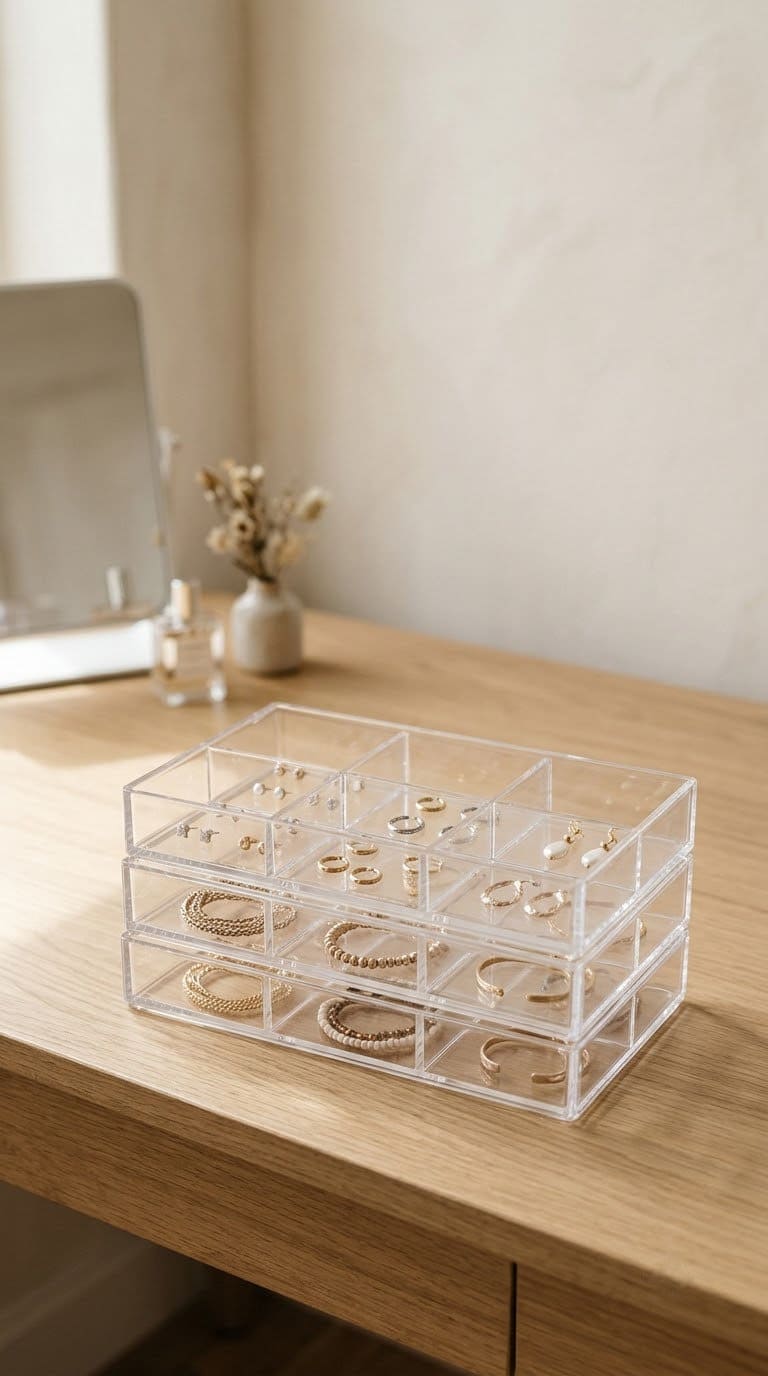
Clear acrylic trays stack neatly and let you see what’s inside. Chelsea Smith of The Organising Platform says clear acrylic organizers make you more likely to see the items you have.
Use them for earrings, rings and small bracelets. Add a thin liner to stop sliding and scratching.
Acrylic scratches easily and shows dust. Wipe it with a soft cloth.
Stack no more than three trays, with the pieces you wear weekly on top. Put a small tag on the front edge of each tray, and use a deeper tray for bracelets and a shallow one for studs.
10. Ring Tray With Foam Slots
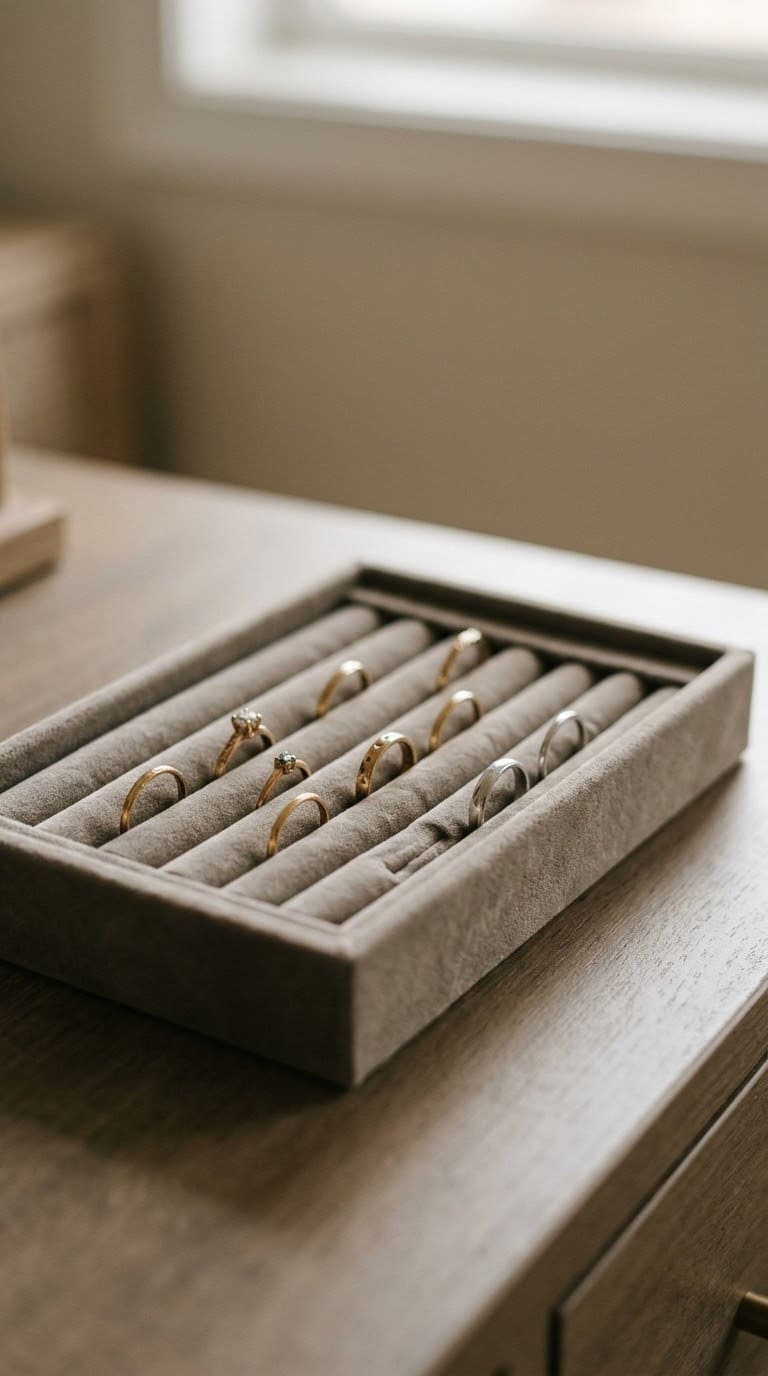
A foam-slot ring tray keeps rings upright and visible. It’s also great for stacking bands that you wear together.
Use a tray with a soft lining. Slots that are too tight can be hard on delicate settings.
Keep it in a drawer, not on a bathroom counter.
Sort rings by metal color so the stacking sets you wear together stay together. Check that each ring sits in its slot without forcing it.
11. Ring Dish by the Sink
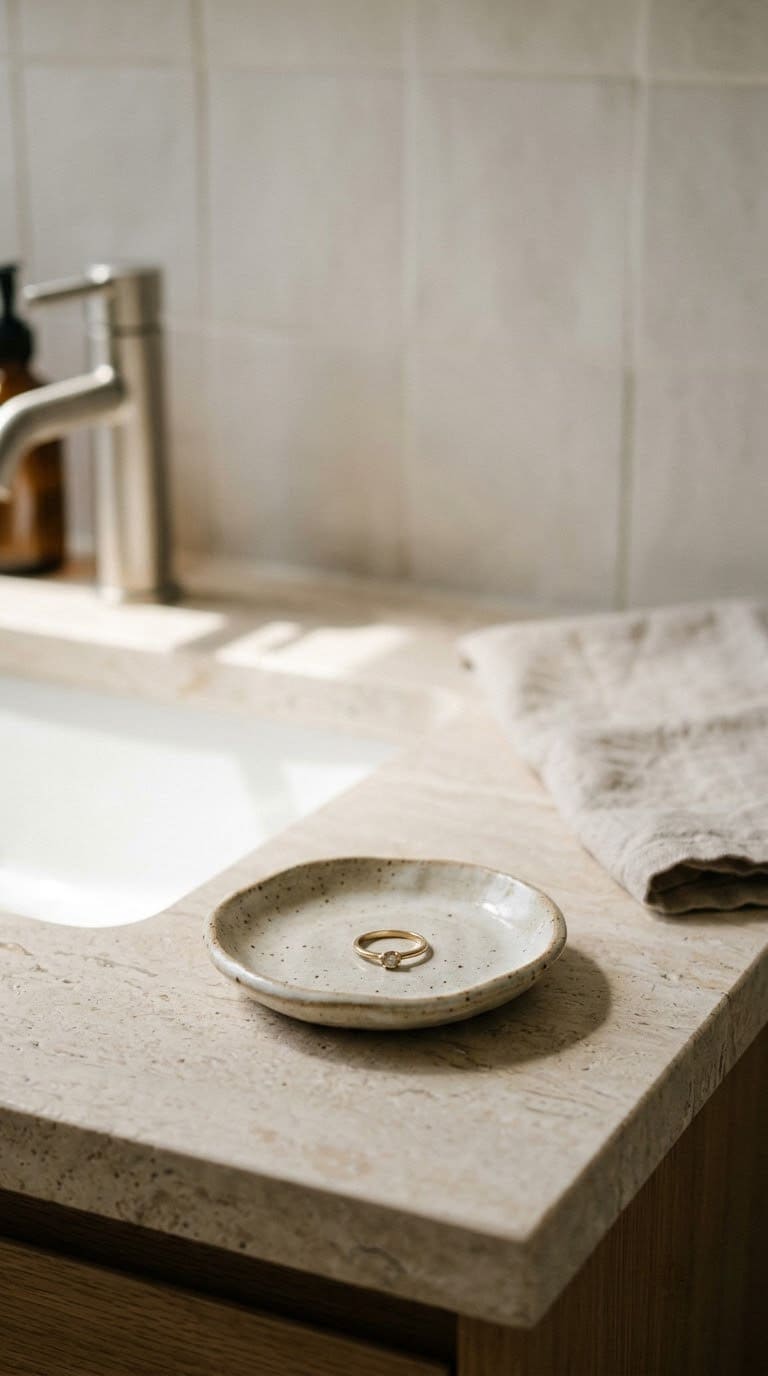
A small dish by the sink is where many rings spend the night. It’s handy, and it keeps rings from sliding off wet hands.
It’s also risky. A ring left on the edge of a sink can fall down the drain, so choose a dish with a lip and place it away from the drain.
Don’t keep silver there for days. Humid air speeds tarnish, so move good pieces back to a dry drawer at night.
Place the dish on a stable surface, away from the faucet and the drain. Put rings back in their tray each night, which also moves silver out of bathroom air.
12. Ring Cone or Bar
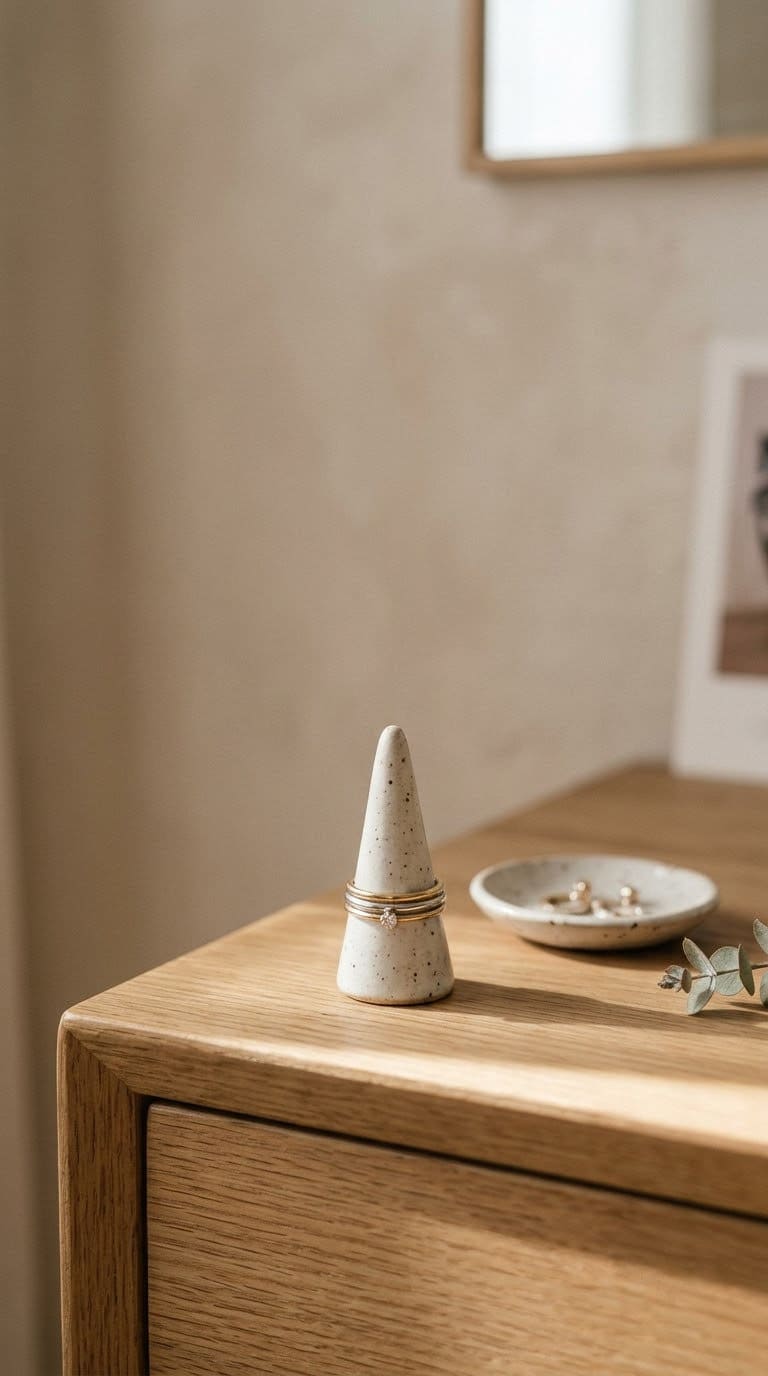
A cone or bar holds rings in plain sight on a dresser. It works best for daily rings that you put on every morning.
Pick a cone with a soft finish. Hard metal cones can scratch a band.
Keep it away from windows, where heat can warm a ring and sunlight can fade a stone.
Give diamond rings their own cone, away from softer stones. Chubb notes that diamonds can scratch all other jewellery, so don’t let them share a post.
13. Watch Roll or Bracelet Roll
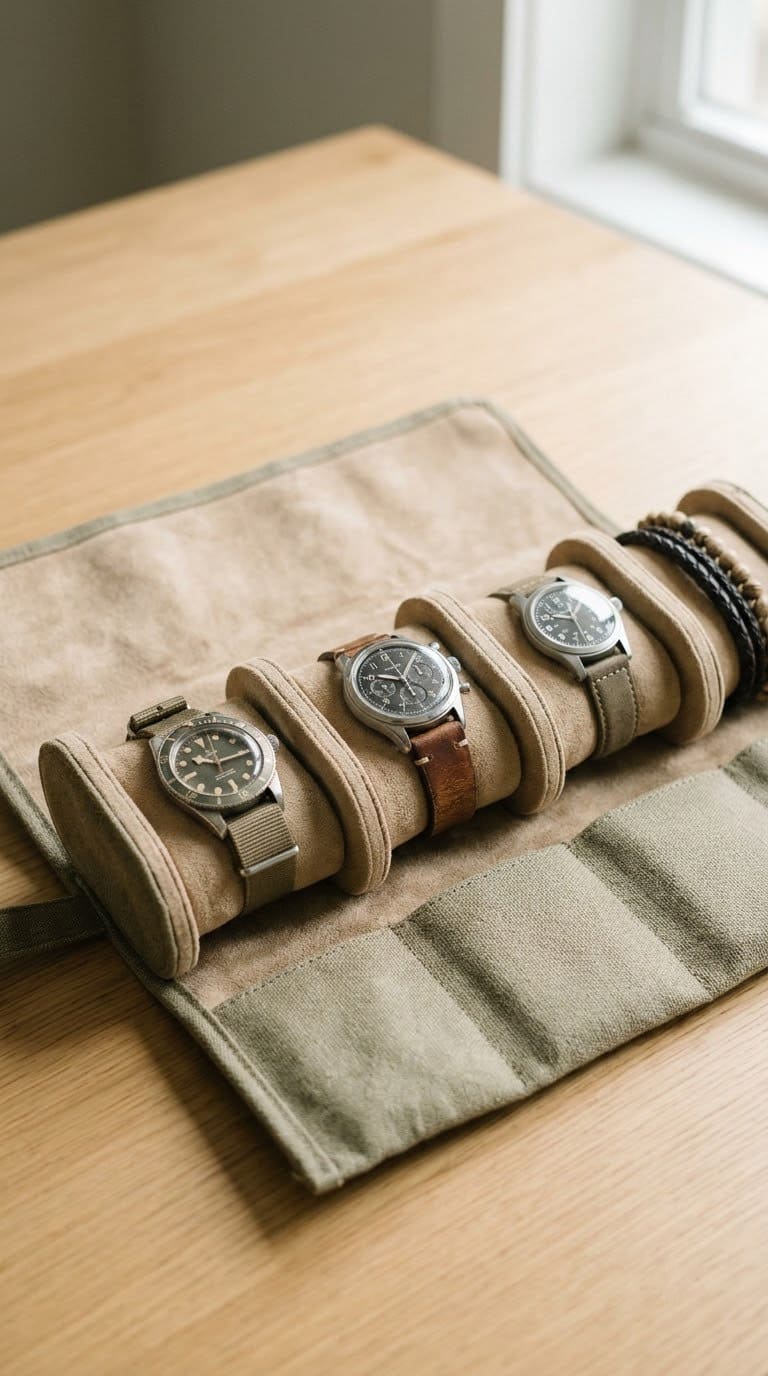
A roll holds watches and bracelets in padded slots, and it rolls up for travel. Shearer suggests separate compartments or a watch roll for bracelets.
It protects clasps and stops chains from knotting. Check the lining is soft on both sides.
Rolls can crush bulky cuffs, so use a tray for those.
Roll one watch or bracelet per slot and tie the roll closed. Keep it in a drawer instead of on a sunny shelf, and pair it with a drawer insert (idea 17).
14. Bangle Holder or Tension Rod
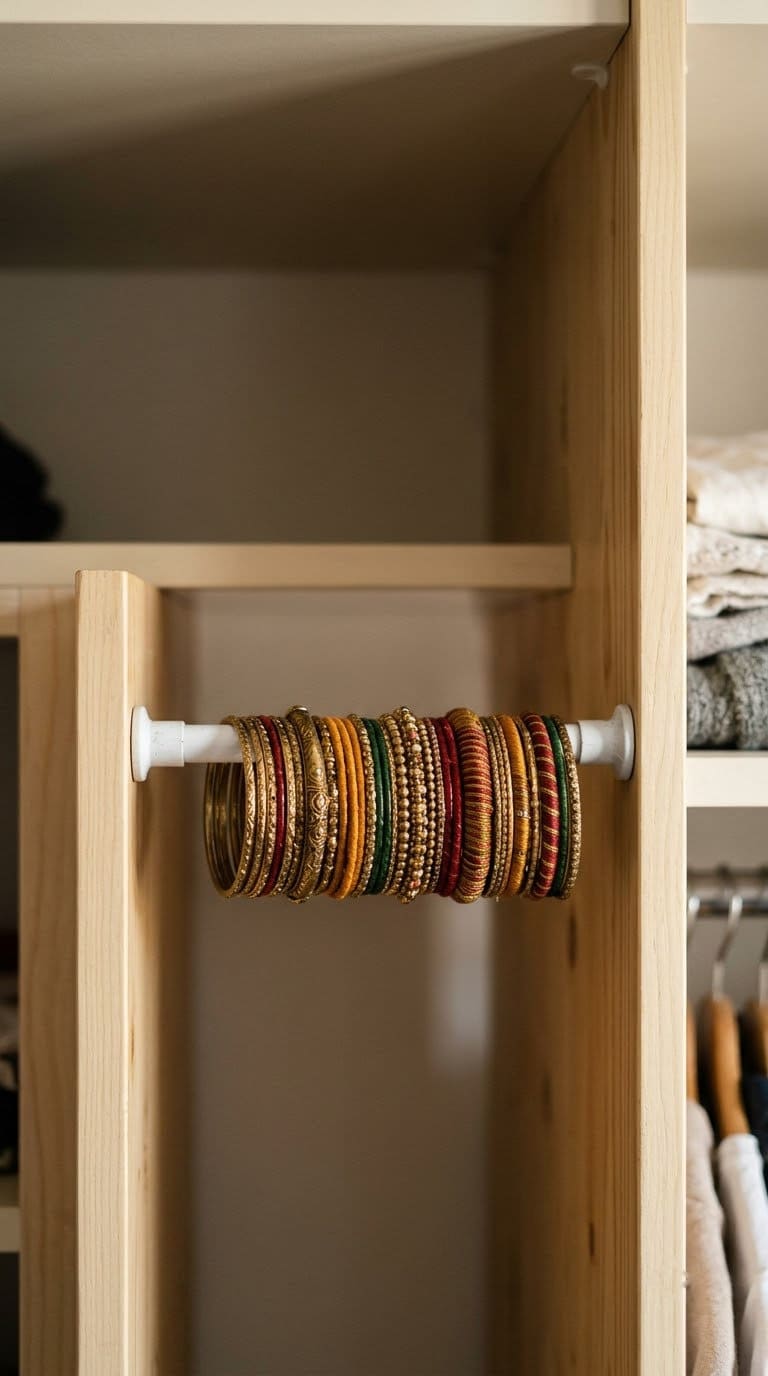
A small rod, a paper towel holder or a bangle stand keeps bangles stacked and untangled. A short tension rod inside a closet door works well too.
Group bangles by color so you can see the set you want. Keep metal and glass apart to avoid chips.
The catch is weight. A thin rod sags under many bangles, so use a sturdy one.
Measure your widest bangle before you pick a rod or stand. Stack only a few per section so the top ones don’t slide off.
15. A Repurposed Box or Tray
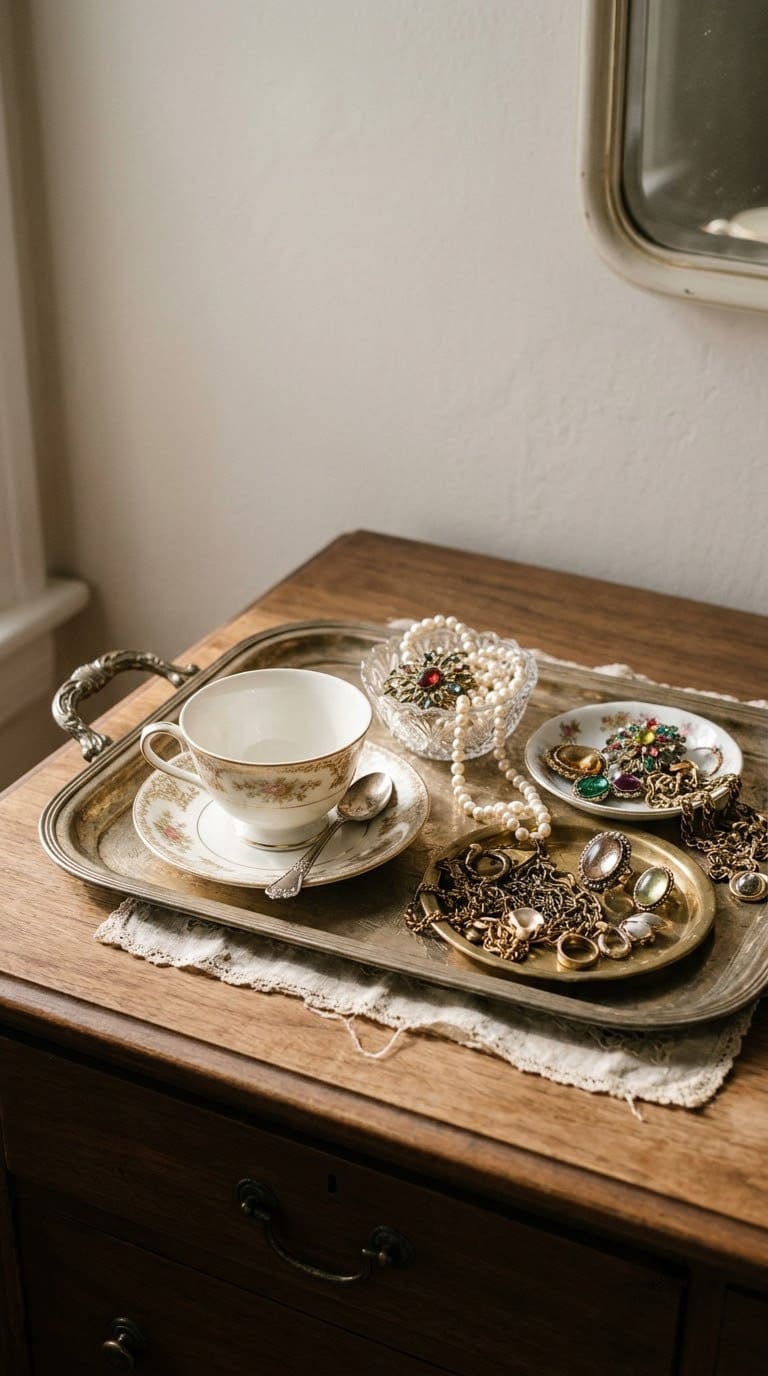
A vintage tray, a teacup or a muffin tin can hold jewelry on a dresser. It costs little and suits a cottage or rustic room. For more reuse ideas, see our mason jar organizer ideas and DIY rustic organizing projects.
Line the surface with felt or a thin cloth. Bare ceramic or metal can scratch fine pieces.
Keep it for costume or daily jewelry, not for valuable heirlooms.
Choose a tray with a soft base or add a felt liner, and keep pieces from touching. Give each type its own dish, with chains in one and earrings in another.
16. Jewelry Armoire
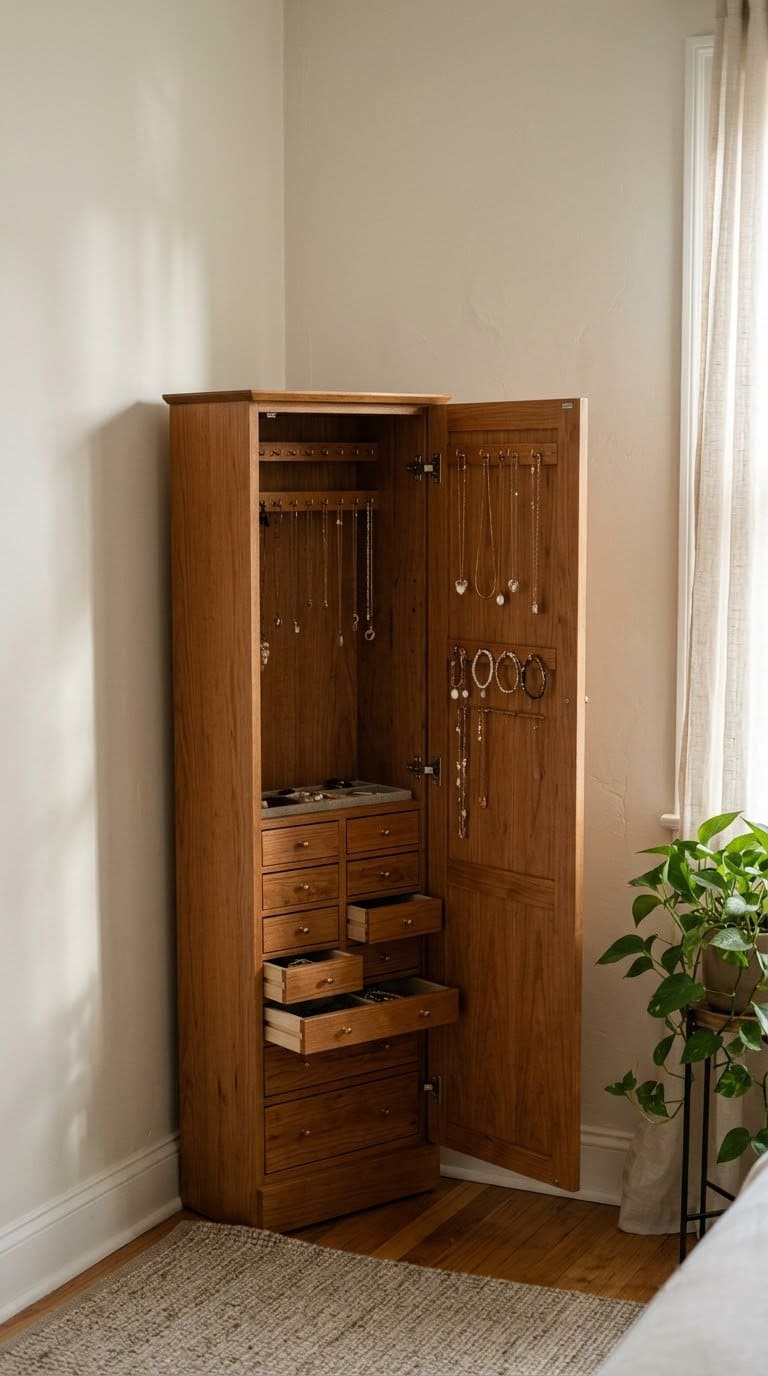
An armoire holds a big collection behind a door, with hooks, drawers and a mirror. It keeps dust off and hides your jewelry from view.
Check that every drawer has a soft lining before you buy.
An armoire takes floor space and can hold old costume pieces for years. Edit your collection first.
Use the shallow top drawers for rings and earrings, door hooks for necklaces and the bottom drawer for rarely worn pieces. Chubb recommends padded slots for rings and posts for necklaces, so check each layout before you buy.
17. Velvet Drawer Inserts
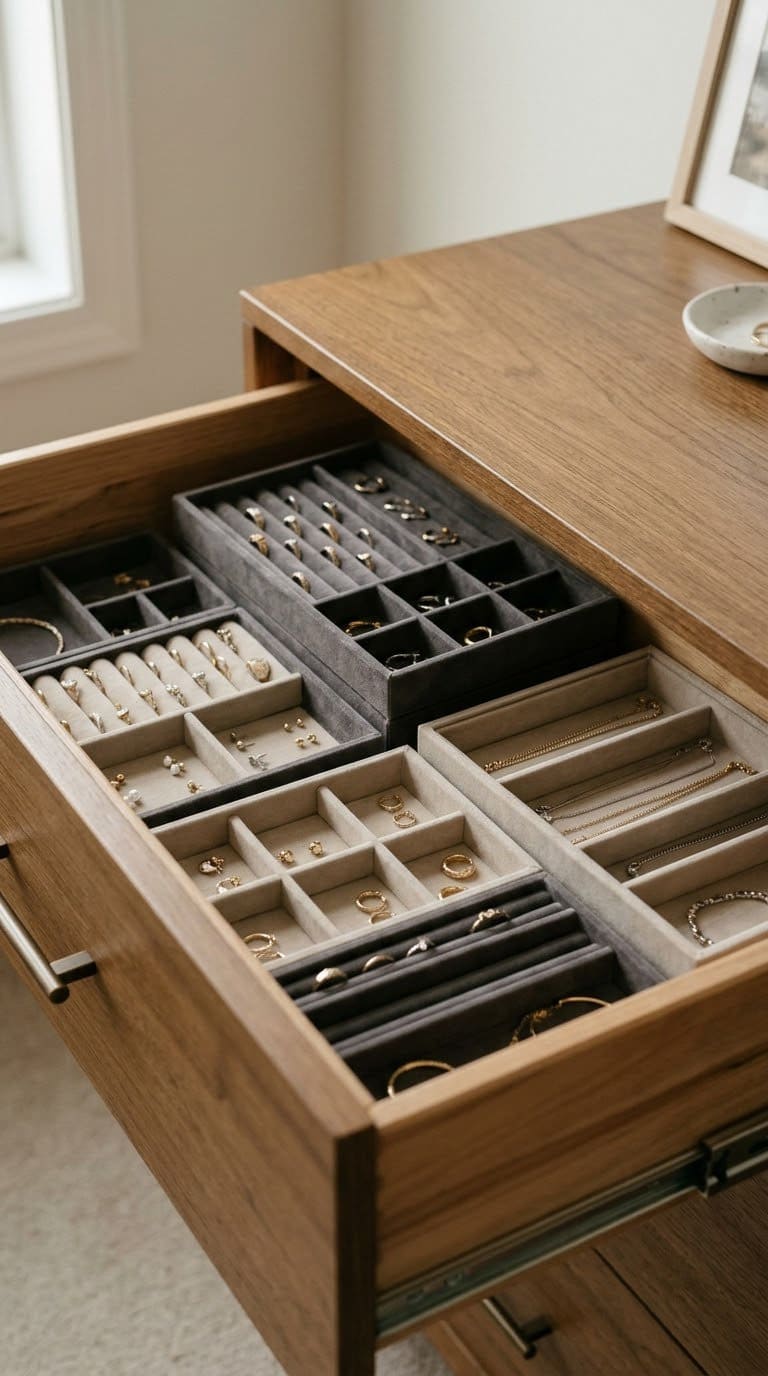
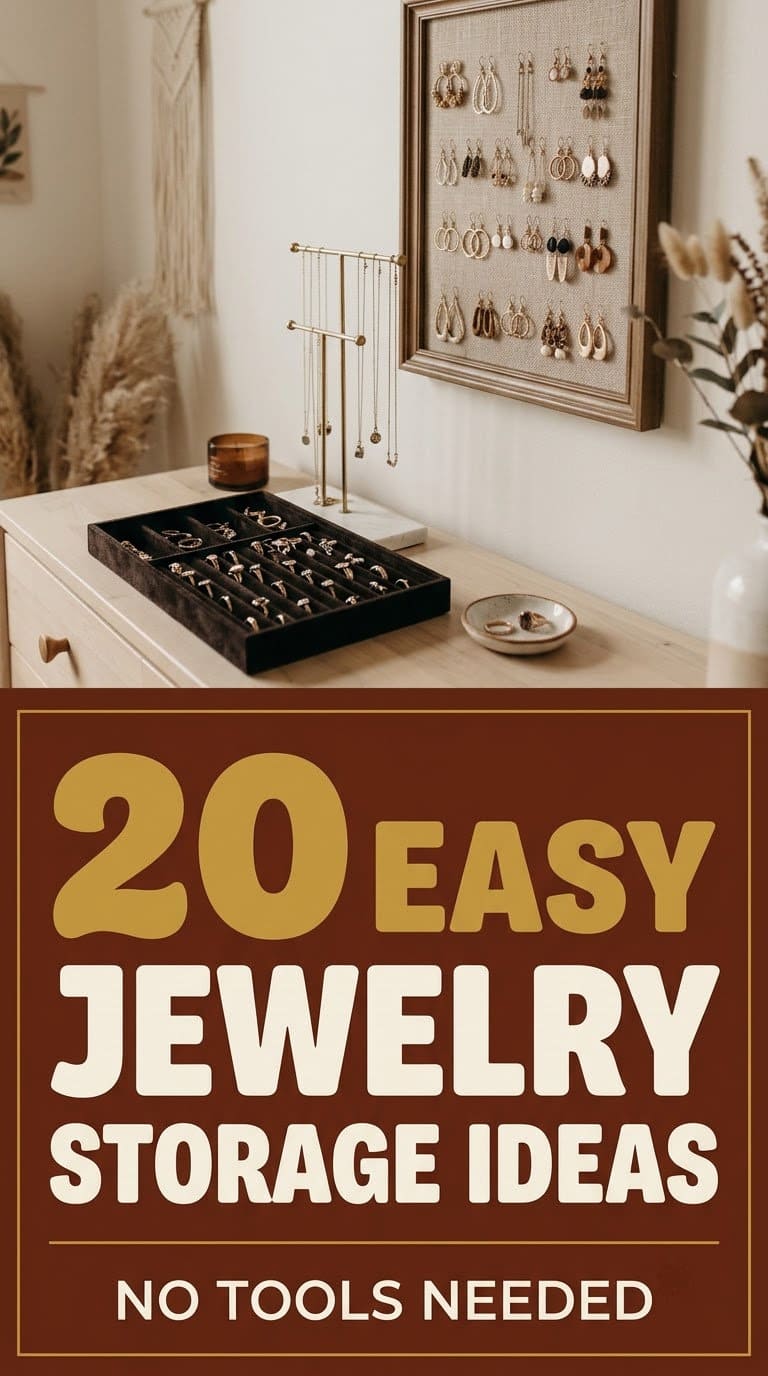
Drawer inserts turn any shallow drawer into a jewelry drawer. Stackable velvet trays have compartments for rings, earrings and necklaces.
Chubb, an insurer, recommends individually padded slots for rings and posts for hanging necklaces and bracelets. It also warns against cramming too many items into each area.
Measure your drawer before you buy. Remove dividers to make larger spots for bracelets.
Our dresser alternatives guide shows other places a jewelry drawer can live.
Measure the drawer’s length, width and depth, then buy trays that fill it with no gaps. Leave a few slots empty, since Chubb warns against cramming too many items into each area.
18. Over-the-Door or Wall Organizer
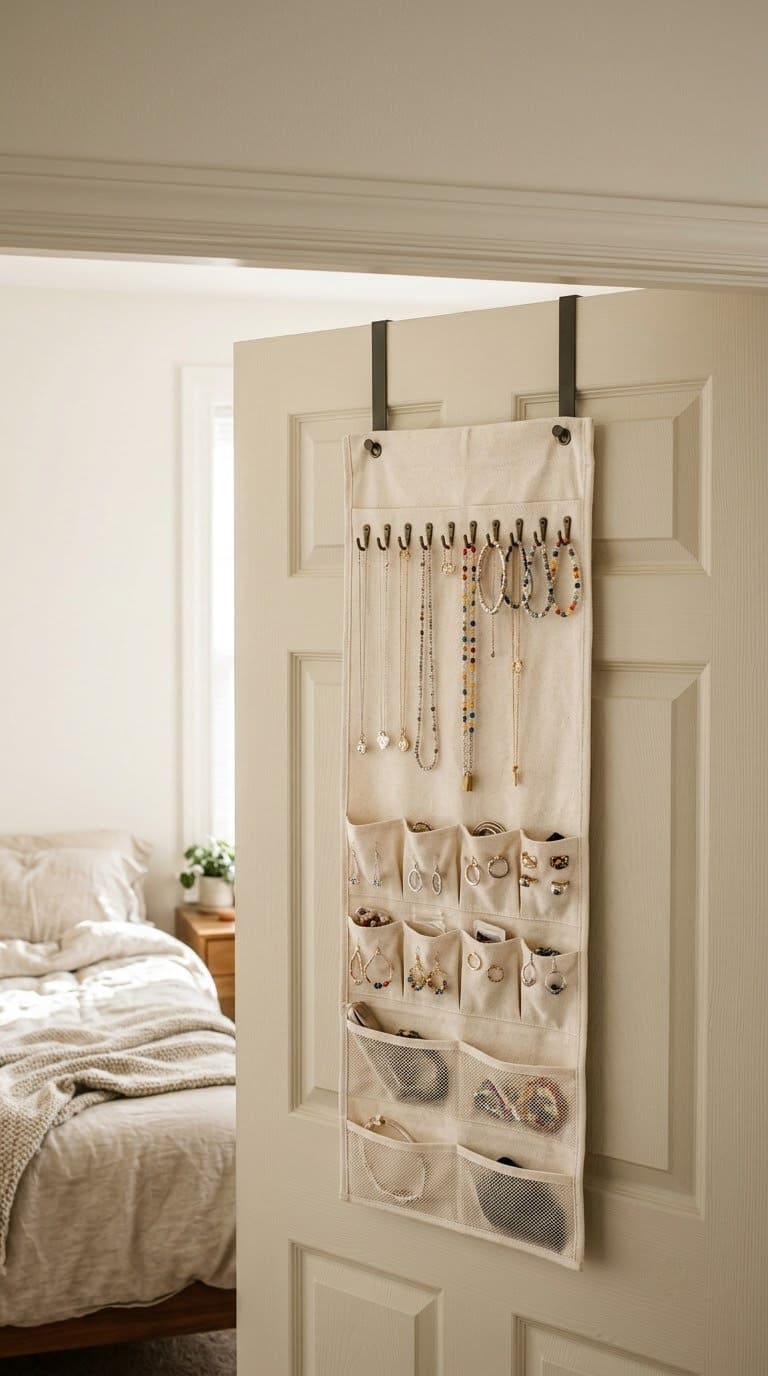
A narrow organizer on a door or wall holds a lot in a small footprint. Hooks hold necklaces, pockets hold rings and a bar holds bracelets.
It suits dorm rooms and small bedrooms. Pick one with a soft lining.
Make sure the door still closes. Weight and thickness can stop a latch.
Fix the organizer at eye level, with necklaces on the hooks and everyday pieces in the top pockets. Check weekly that nothing has snagged on a hook.
19. Hidden or Locked Storage
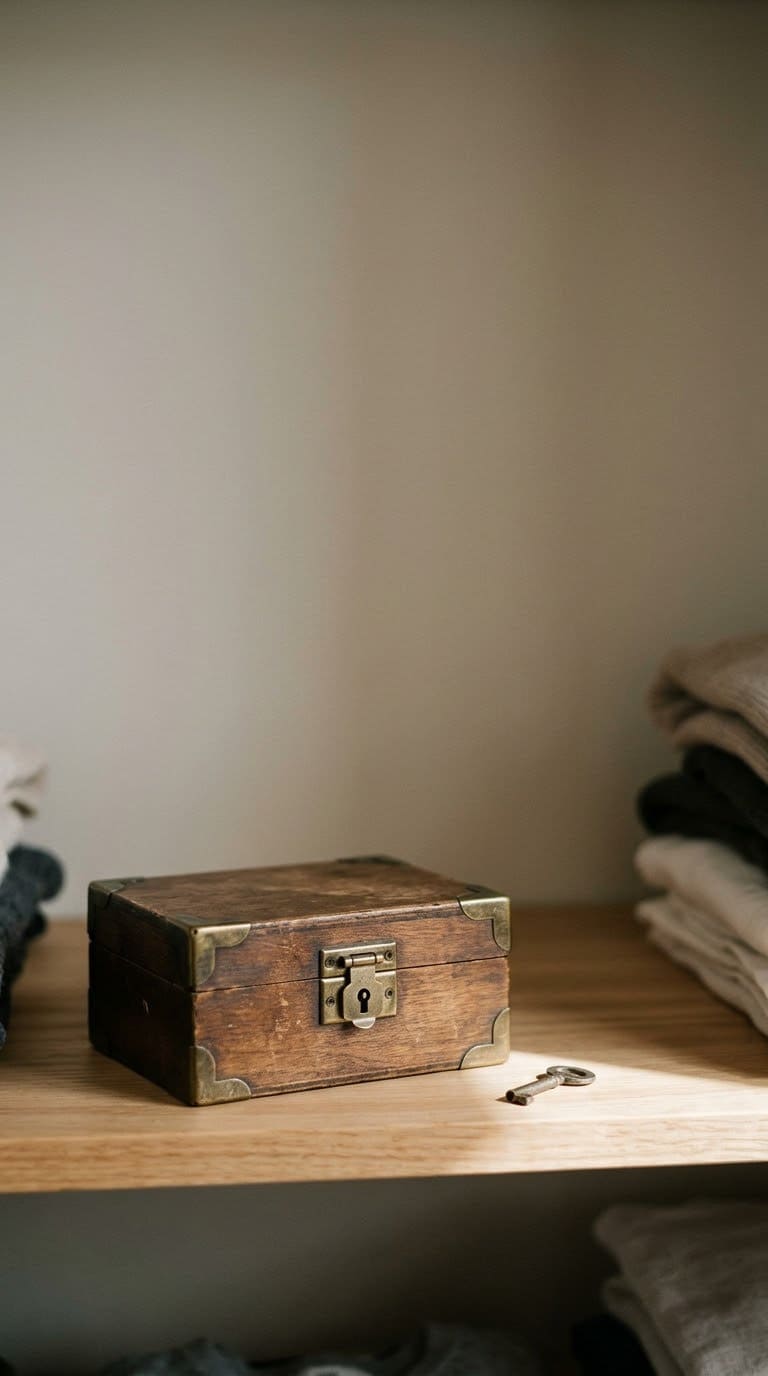
Valuable pieces need more than a pretty tray. A case with a lock, a small safe or a safe deposit box keeps them safer.
Chubb advises against leaving your most precious jewellery lying around the bedroom or jewellery box. It suggests a home safe bolted to the floor or wall, hidden from visitors.
We’d also photograph each piece and keep the photos and any appraisal in a separate safe place.
Skip obvious hiding spots like the top dresser drawer or a nightstand. They’re common first places to look.
Keep a small locked case for mid-value pieces and a bolted safe for the most valuable, as Chubb suggests. Hide the safe from visitors and limit who knows where the key or code is.
20. Travel Roll or Hard Case
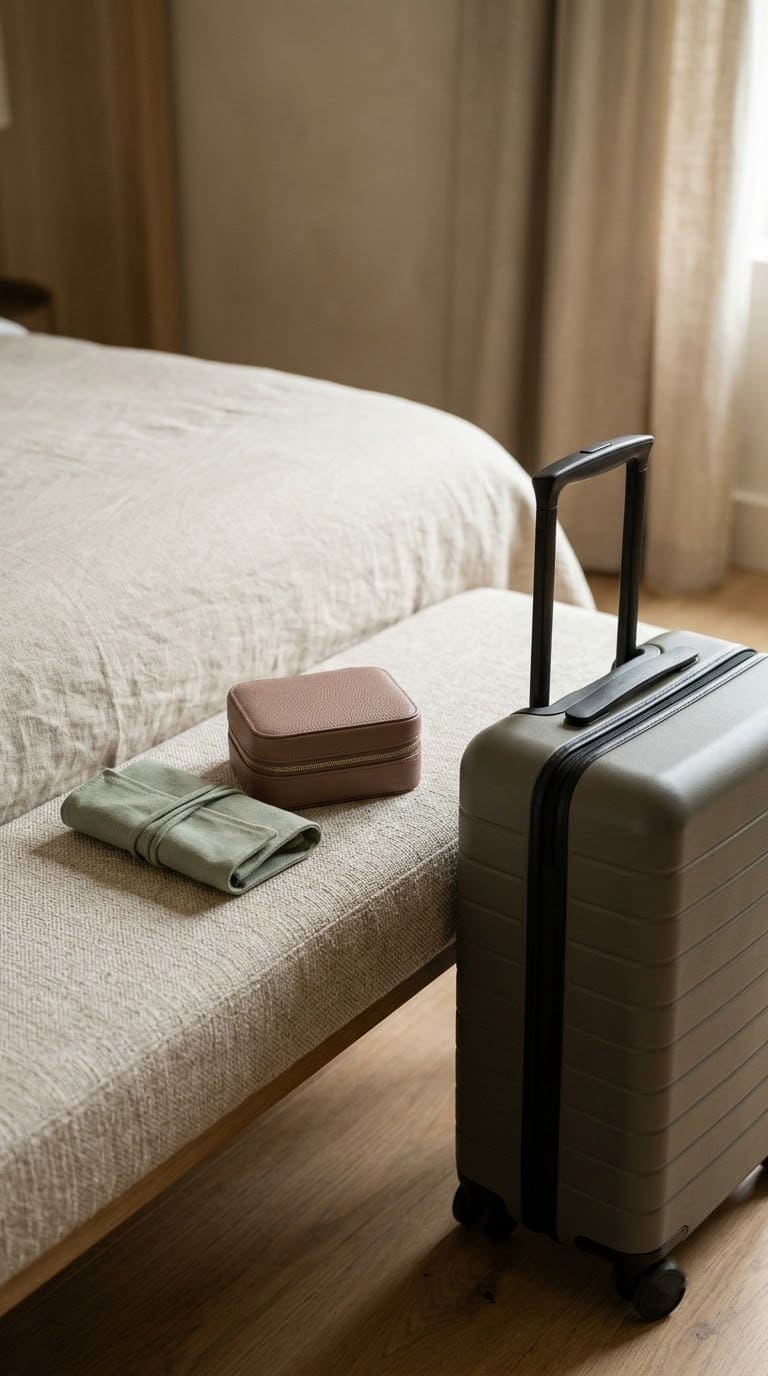
A small roll or hard case keeps travel jewelry tidy. Bring only what you’ll wear, and clasp each necklace.
Use a case with a snug lid so pieces don’t shift. Chubb says not to pack jewellery in checked luggage, so keep it in your carry-on.
Wrap silver in a soft cloth. Keep a few small tarnish strips in the case.
Pack a clasped necklace in a roll pocket, studs in a small compartment and bracelets in a fabric pouch. If you pack pearls, wipe them with a soft cloth first, as GIA advises.
What Goes Wrong (and What We’d Do Differently)
Most jewelry storage fails in one of three ways.
The first is the pile. Everything goes in one box, and chains knot around earrings. We’d divide the collection by type before buying a single organizer.
The second is the bathroom. Rings sit by the sink and silver lives in a vanity drawer. Damp air speeds up tarnish, so we’d move silver to a dry bedroom drawer.
The third is forgetting what you own. Pieces hidden in a deep drawer never get worn. If there’s one thing worth doing differently, it’s making daily pieces visible and storing the rest in lined, closed trays.
Care by Metal
This is general care advice, not a lab test. Check any maker’s guidance for fine or antique pieces.
| Piece | Store it | Avoid |
|---|---|---|
| Sterling silver | Dry, in an anti-tarnish bag or cloth, or a closed lined case with strips | Bathrooms, rubber bands, long air exposure |
| Gold | Soft pouch or lined slot, apart from harder stones | Loose piles, since Chubb says diamonds can scratch all other jewellery |
| Costume jewelry | A dry tray, kept separate | Humid spots, which can speed up green marks on some pieces |
| Pearls | Flat in a soft pouch, wiped with a soft cloth after each wear | Perfume, hairspray and cosmetics, which GIA says can damage pearls |
| Gemstones | Separate slots with soft linings | Stacking hard stones on softer ones |
Jewelry Storage FAQs
How do I stop necklaces from tangling?
Clasp each necklace and store it by itself. Use hooks or long, narrow compartments. Avoid piling chains in one box.
Where should I not store jewelry?
Avoid bathrooms, windowsills and cars. Humid air, sun and heat can speed up tarnish and fade stones. A dry drawer or closet is better.
How do I keep silver from tarnishing?
Keep it dry and in a closed, lined case. Anti-tarnish strips help. Tarnish is mostly a surface issue, so avoid polishing silver more than you need to.
Is it safe to keep jewelry in a regular drawer?
For everyday pieces, yes, with a lined tray. For valuables, use a lock or a safe place, and keep photos and appraisals separately.
What’s the best storage for a small collection?
A lined tray in a drawer or a small hanging organizer. Both are cheap and need no tools. Add hooks only if you wear necklaces daily.
Products We Recommend
This post contains affiliate links. We may earn a commission on qualifying purchases at no extra cost to you.
Velvet Jewelry Drawer Organizer Trays, 4-layer stackable set
Four velvet trays with a necklace tray (8 hooks), a 24-compartment earring tray and removable dividers, 5.9 x 9.4 inches. It suits idea 17.
Shop Now
SONGMICS 5-Layer Jewelry Box With Lock and Mirror
Four rows of necklace hooks, four drawers, a mirror and a lock with two keys. It suits ideas 16 and 19.
Shop Now
Hagerty Silver Protection Strips, 8-pack
Eight 2 x 7 inch tarnish-inhibitor strips for jewelry boxes and drawers, made in the USA. It suits ideas 11 and 20.
Shop NowNever miss an update — choose FarmFoodFamily as your preferred source on Google.
How it works: Tap the button below to open Google's settings page, then check the box next to FarmFoodFamily.
Tap the checkbox to turn it blue — that's how you know it's set.