25 Plants That Actually Thrive on a Shady Porch
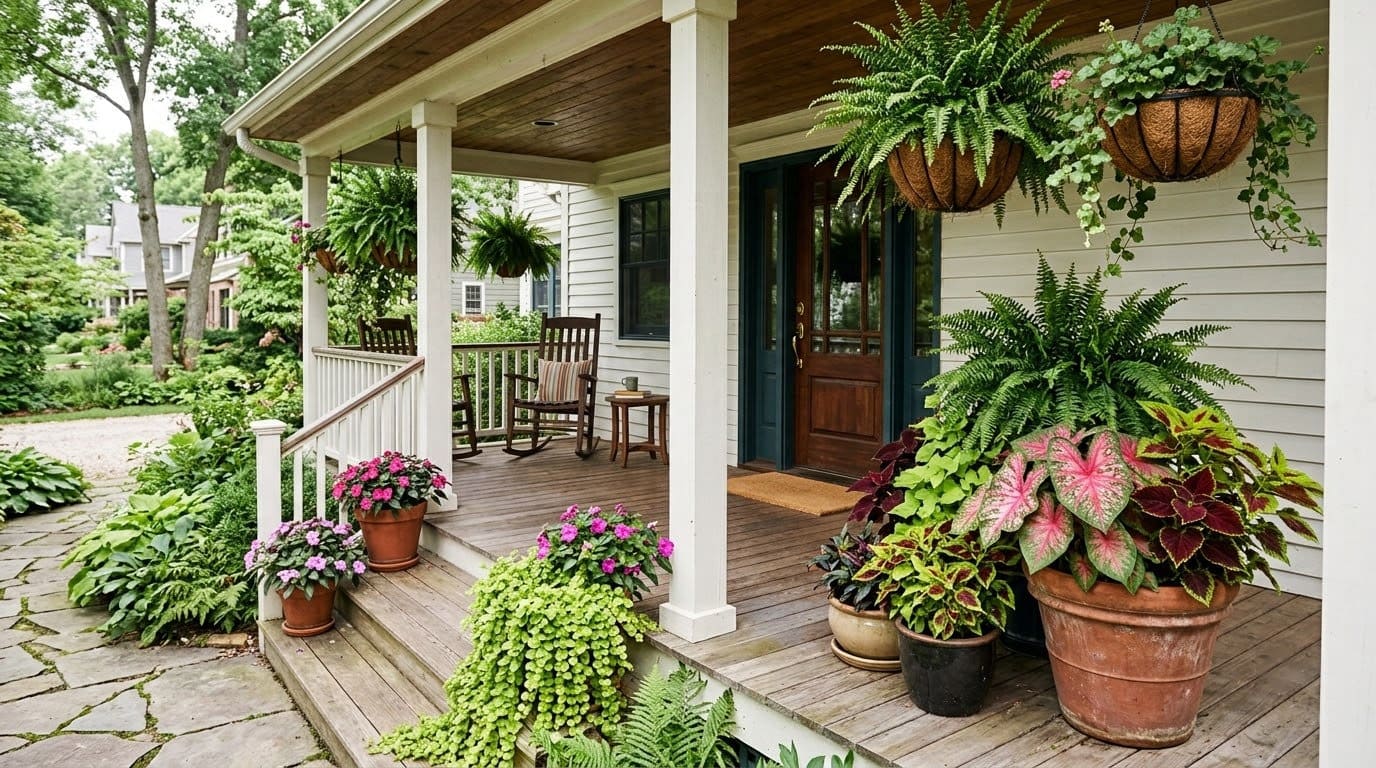
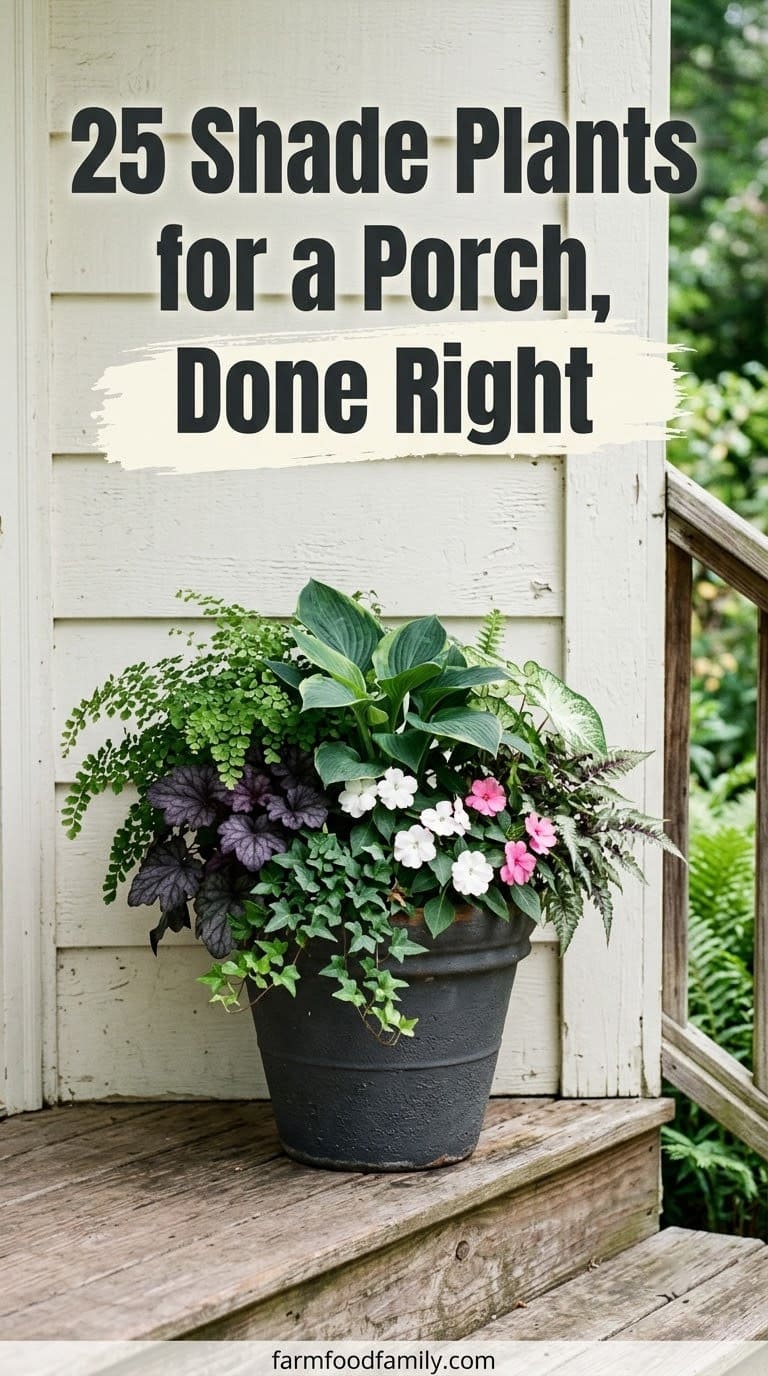
A covered porch is shadier and drier than it looks, because the roof blocks the rain along with the sun. These 25 plants handle both, grouped so you can build a pot that gives you height, color, and something spilling over the edge.

Never miss an update — choose FarmFoodFamily as your preferred source on Google.
How it works: Tap the button below to open Google’s settings page, then check the box next to FarmFoodFamily.
Tap the checkbox to turn it blue — that’s how you know it’s set.
The porch feels like the easy place to garden. It is right there, it is sheltered, and you walk past it ten times a day. Then everything you put out there stretches, goes pale, and sulks.
Two things are usually going on. The light is lower than it looks, often coming from one direction off a wall. And almost no rain reaches the pots, because the same roof that makes the shade also blocks the storm.
Fix the plant list to match, and the porch turns into the easiest spot after all. The 25 below are grouped by the job each one does in a container. It is the same way you would plan any container flower combination, so you can build a full pot instead of picking one nice leaf.
Quick Answer
A covered porch is a rain shadow with low, usually one-directional light. The plants that thrive there tolerate shade and regular hand-watering, because the roof keeps rain off even in a downpour.
Read your light first. Per University of Vermont Extension, full shade is under 3 hours of direct sun and part shade is 3 to 6 hours. Deep shade wants impatiens, ferns, hosta, and ivy, while open or bright shade also takes coleus, caladium, heuchera, and begonias.

Build the pot in three parts. Use a tall foliage anchor, a mounding filler for color, and a trailing spiller for the edge. Iowa State Extension notes container plants need checking daily in summer.
Answer 4 quick questions and get matched to the exact fix for your yard — drainage, budget, layout, or something else entirely.
Take the Free QuizWatch toxicity too. The ASPCA lists caladium, coleus, begonia, and English ivy as toxic to pets, and a porch is right where they chew.
How do I know how much shade my porch has?
Watch the porch across one clear day. Note whether any direct sunbeam lands on the floor, for how long, and at what time. Morning sun is gentle, afternoon sun is harsh, and a covered north-facing porch may get no direct beam at all.
University of Vermont Extension keeps the definitions simple. Full sun is at least six hours of direct sun, part sun or part shade is three to six hours, and full shade is “less than three hours” of direct sun a day.
Reflected light matters more than people expect. A porch with a white ceiling and pale siding bounces a lot of usable light around, while a dark brick porch with a solid railing is dimmer than the hour count suggests.
On a narrow front porch, the railing and posts can block more side light than the roof does.
Then there is water. A roof over the porch means you are the rain now.
Iowa State Extension points out that “containers need much more frequent watering than garden beds” and that they “should be checked daily (especially in summer).” A pot that has dried out completely needs to sit “in a tub of water for 20 to 30 minutes” to soak back up.
Most yard problems trace back to one specific, fixable cause. Find yours in 4 quick questions.
Take the Free Quiz
A built-in reservoir so a rain-sheltered porch pot does not dry out between waterings
Shop NowThis post contains affiliate links. We may earn a commission on qualifying purchases at no extra cost to you.
Bold foliage: your anchor plant
1. Caladium
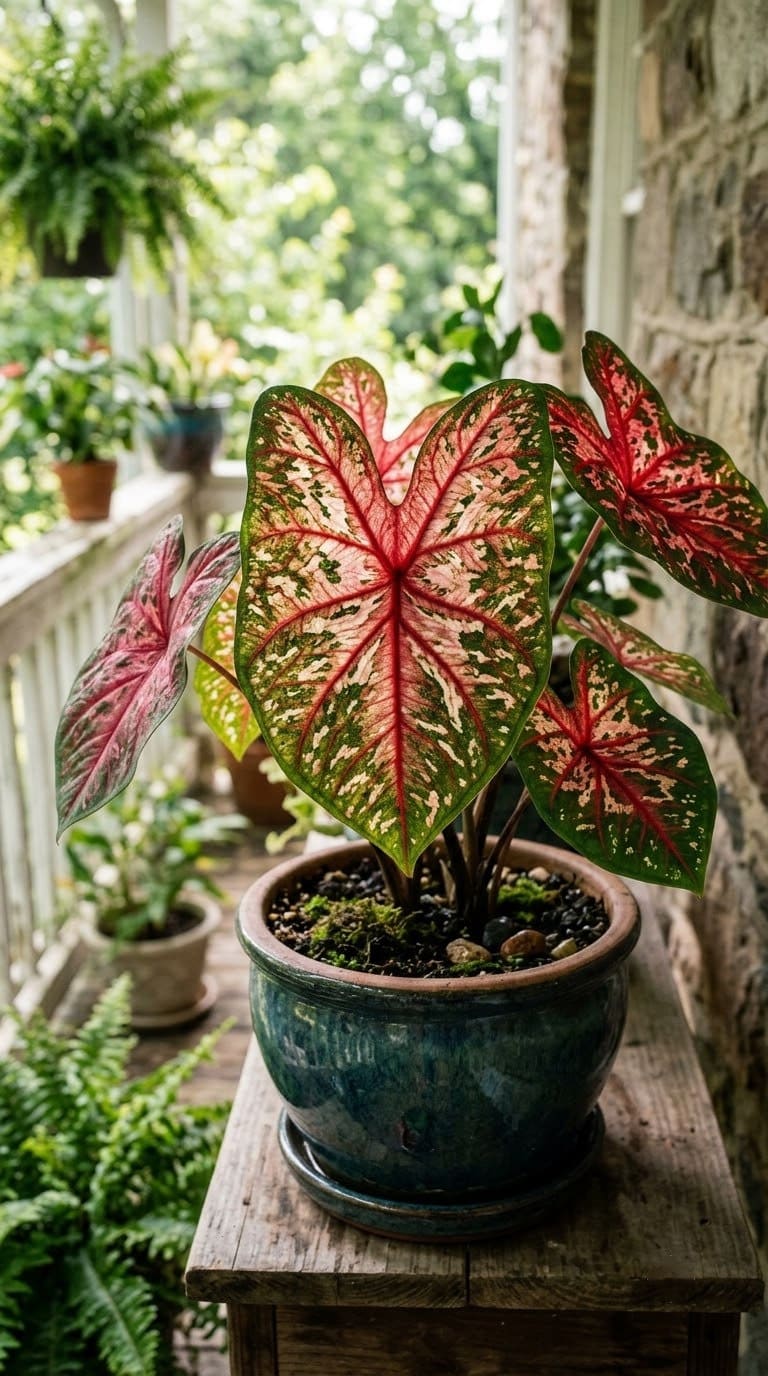
Caladium is the porch plant people stop to ask about. Iowa State lists it as shade-loving, 12 to 30 inches tall, with heart-shaped leaves splashed in “bright red, pink, white, green.” It is a tender bulb grown from a tuber, so most people treat it as a one-season plant or lift the tubers before frost.
It wants warmth and the brighter end of porch shade. And it is toxic to pets, per the ASPCA, so keep it up on a table if a dog shares the porch.
2. Coleus
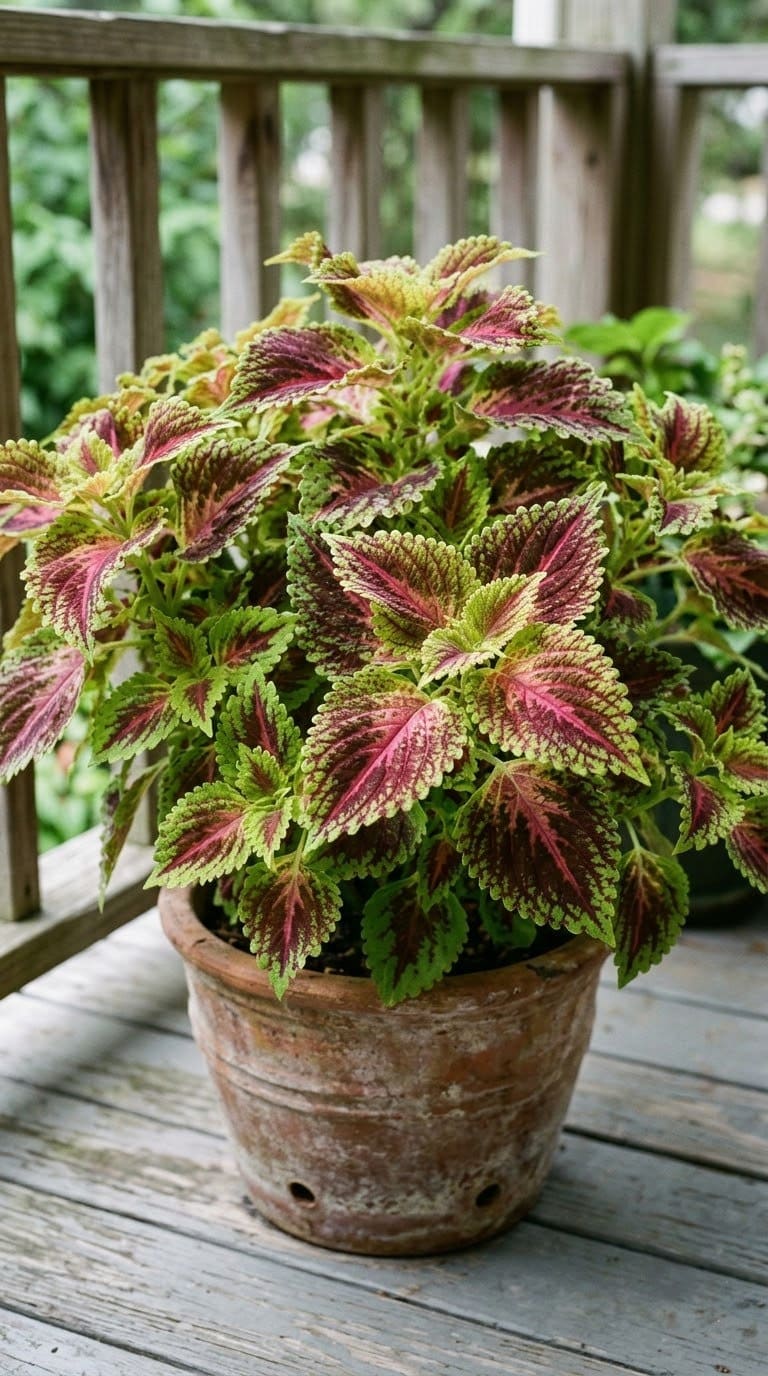
Coleus is the other foliage workhorse, and the color range is close to endless: lime, burgundy, rose, near-black, and every freckled combination. Iowa State notes it grows in “shady sites” and is “easy to root from cuttings for overwintering indoors,” so one plant can carry over into next year on a windowsill.
Pinch off the little flower spikes to keep it bushy. It is also on the ASPCA toxic list for dogs and cats.
3. Persian shield
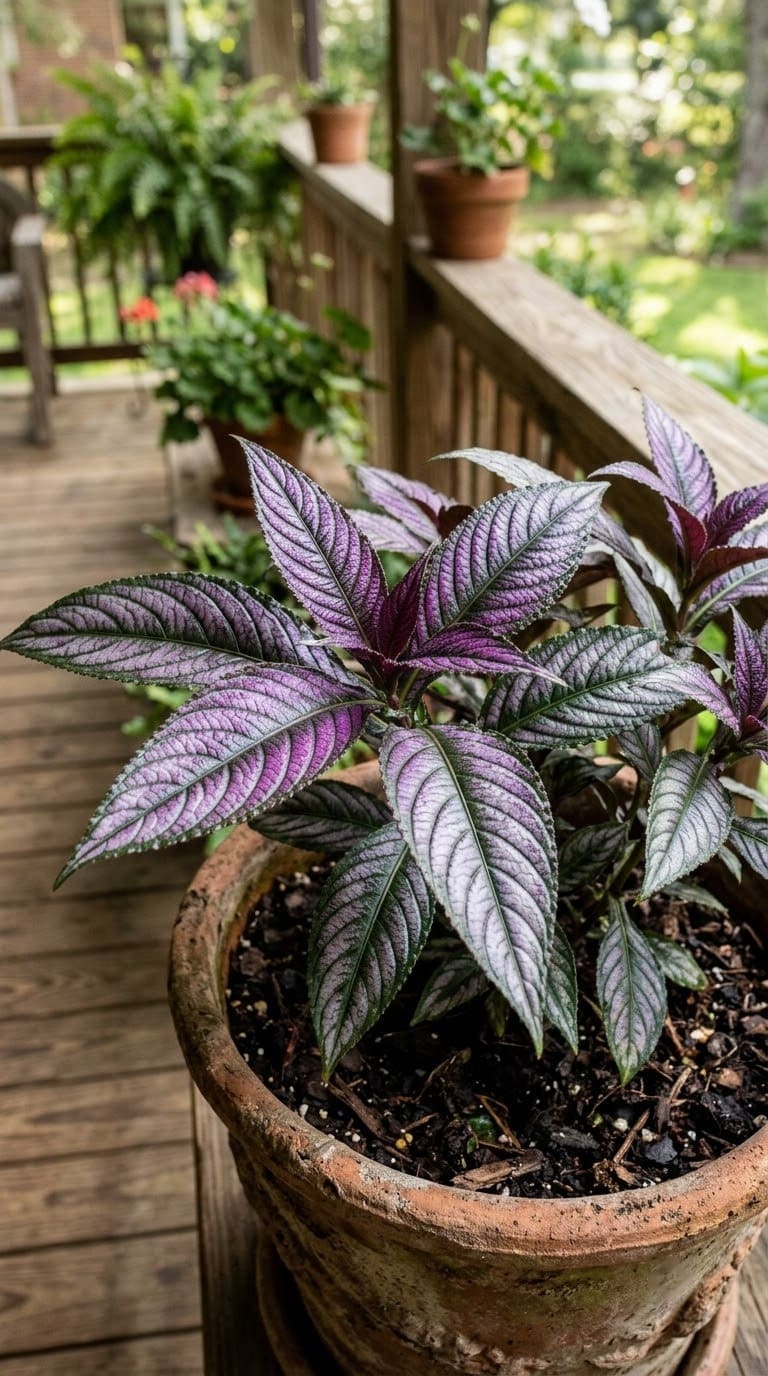
Persian shield brings a metallic purple-and-silver sheen that reads almost lit from within, especially in bright shade. It grows fast and tender, treated as an annual in most of the country.
Pinch the growing tips every few weeks or it gets leggy and bare at the base. It pairs beautifully with pink or chartreuse fillers.
4. Rex begonia
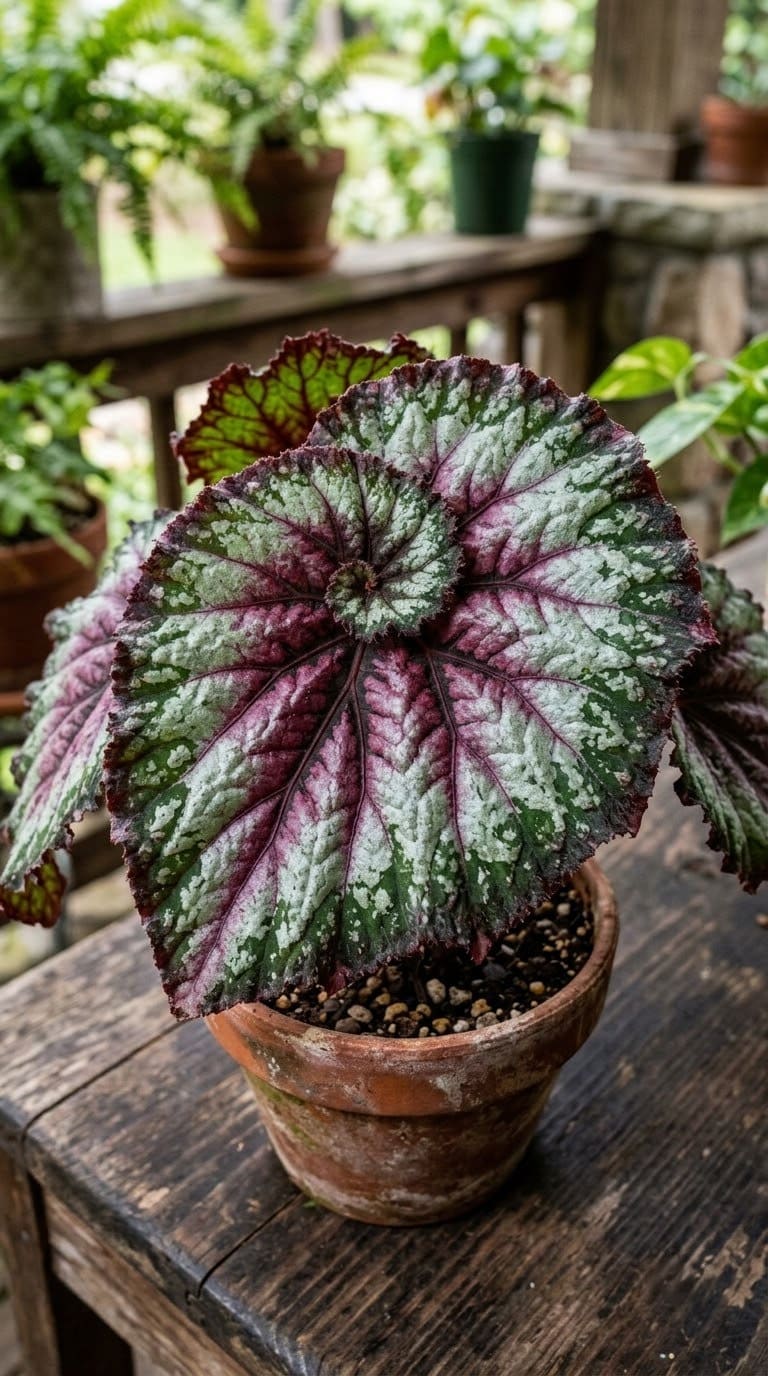
Rex begonias are grown purely for their leaves, which spiral and swirl in silver, plum, green, and pewter. They take deep to open shade and want a chunky, free-draining mix that never stays wet.


Keep water off the leaves and let the surface dry slightly between drinks. Like all begonias, it is toxic to pets per the ASPCA.
The average homeowner spends $616/year on yard fixes that don't address the real problem. Find out what yours actually is — before you spend another dollar.
Take the Free Quiz5. Hosta
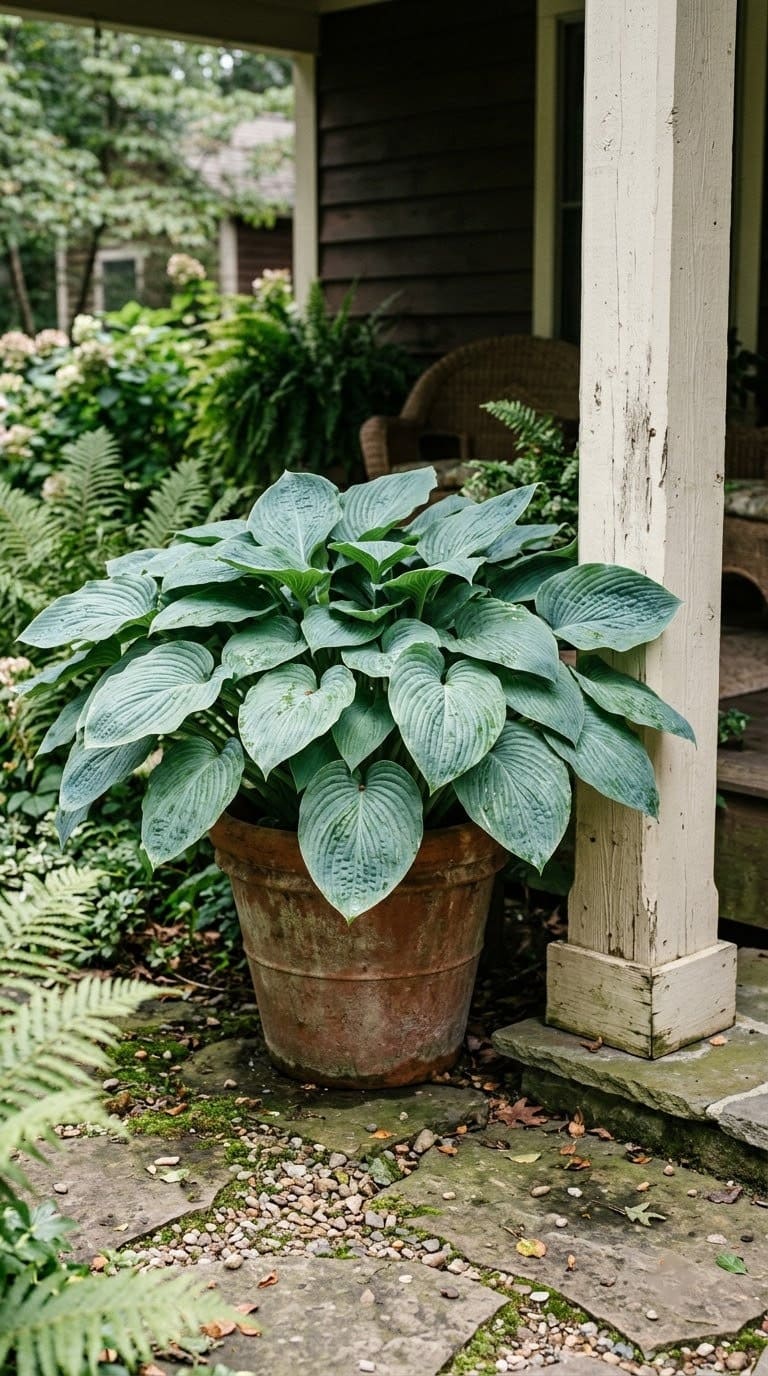
Hosta is as close to foolproof as shade foliage gets. University of Vermont Extension lists it as a full-shade perennial hardy in zones 3 to 9, in leaf colors from blue to gold to striped.
In a cold climate it can overwinter right in the pot if you push the container against the house wall or sink it in a bed for the winter. Slugs love it, and you should check it against the ASPCA list, since some sources rate it toxic to pets.
6. Japanese painted fern
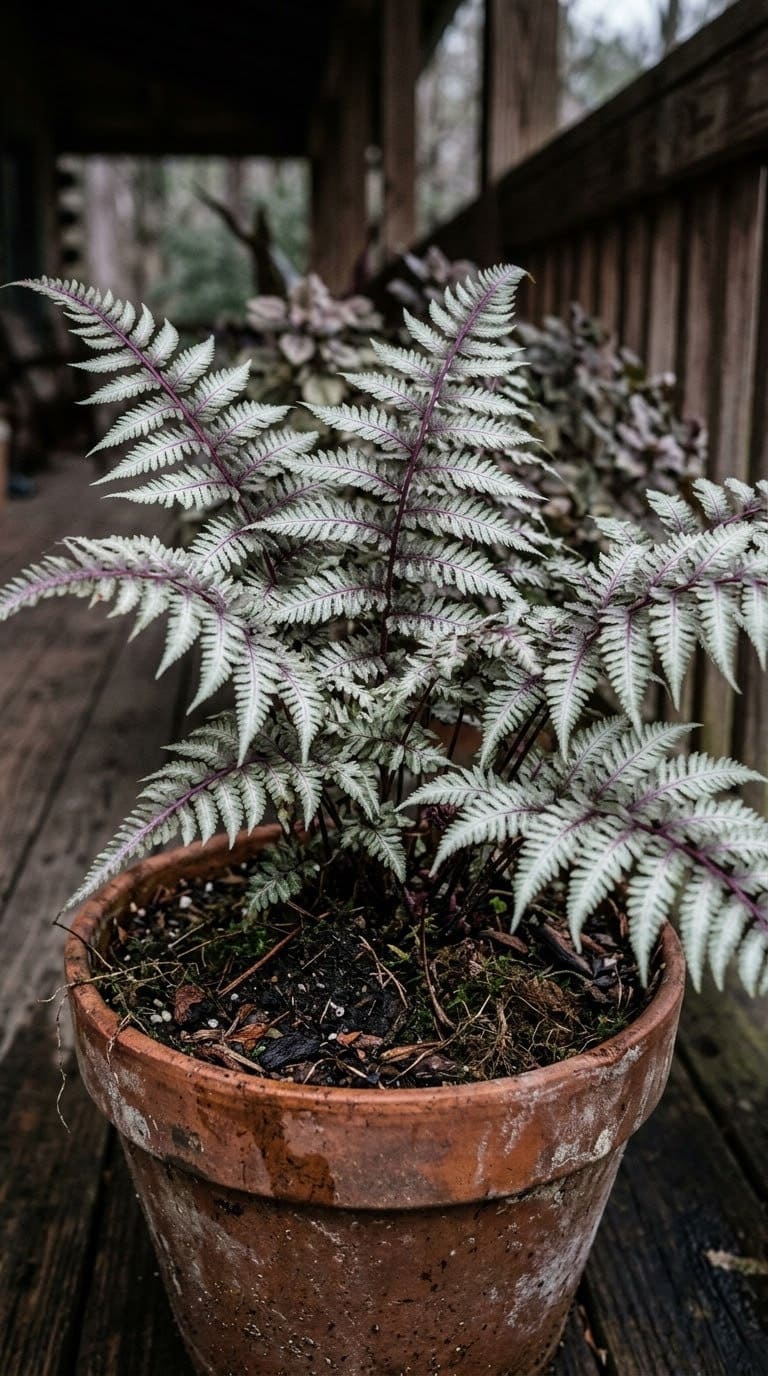
This is the fern that stops looking like every other fern. University of Vermont Extension describes it as a full-shade perennial about 18 inches tall with “silver-colored fronds,” often brushed with burgundy along the stems.
It is genuinely hardy, coming back each spring, and it holds its color best out of any direct sun. Give it steady moisture, and if you are in a cold region, our guide to shade perennials for a cold climate covers what overwinters.
7. Autumn fern
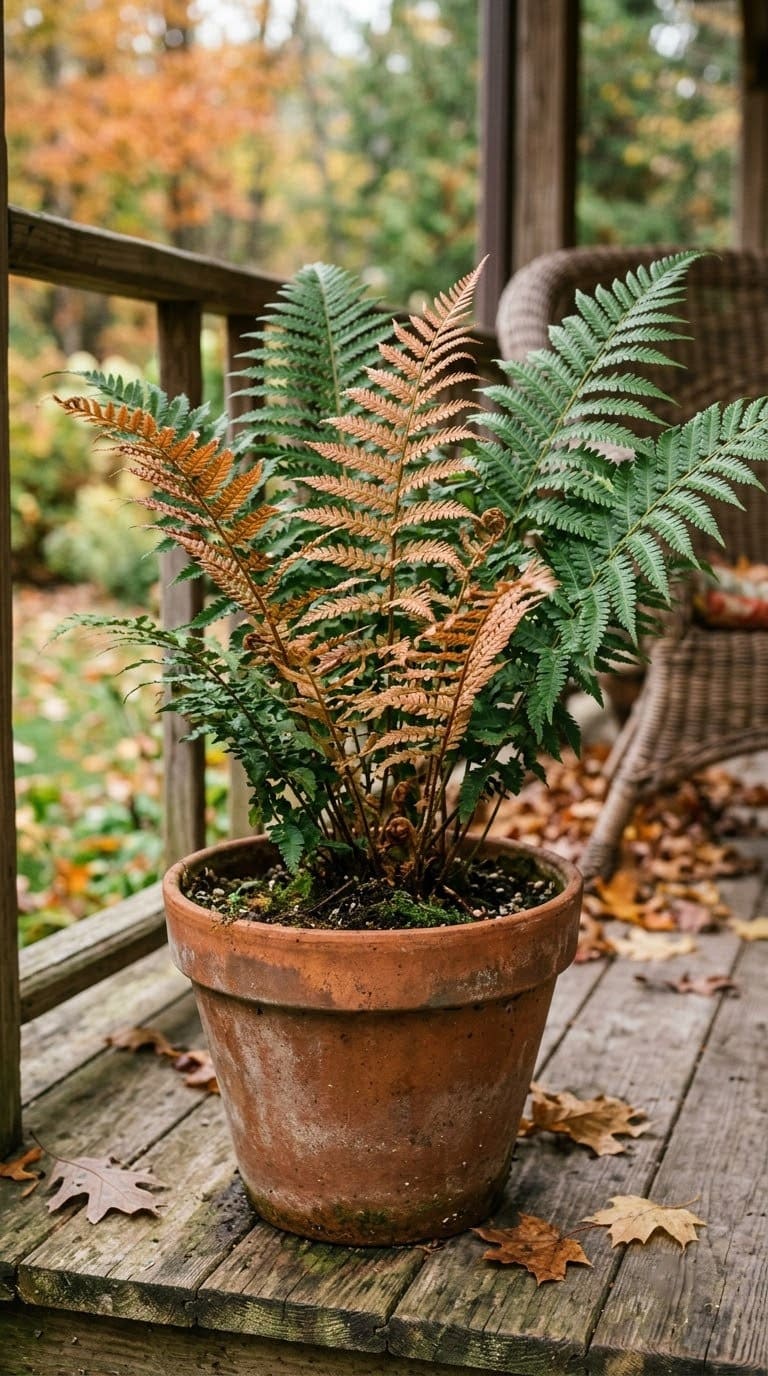
Autumn fern earns its spot with coppery-bronze new fronds that mature to glossy green, so the plant always has two tones going. It takes part to full shade and stays semi-evergreen in zones 5 to 9, holding fronds well into winter on a sheltered porch.
It is tougher about occasional dryness than most ferns, which helps under a roof.
8. Boston fern
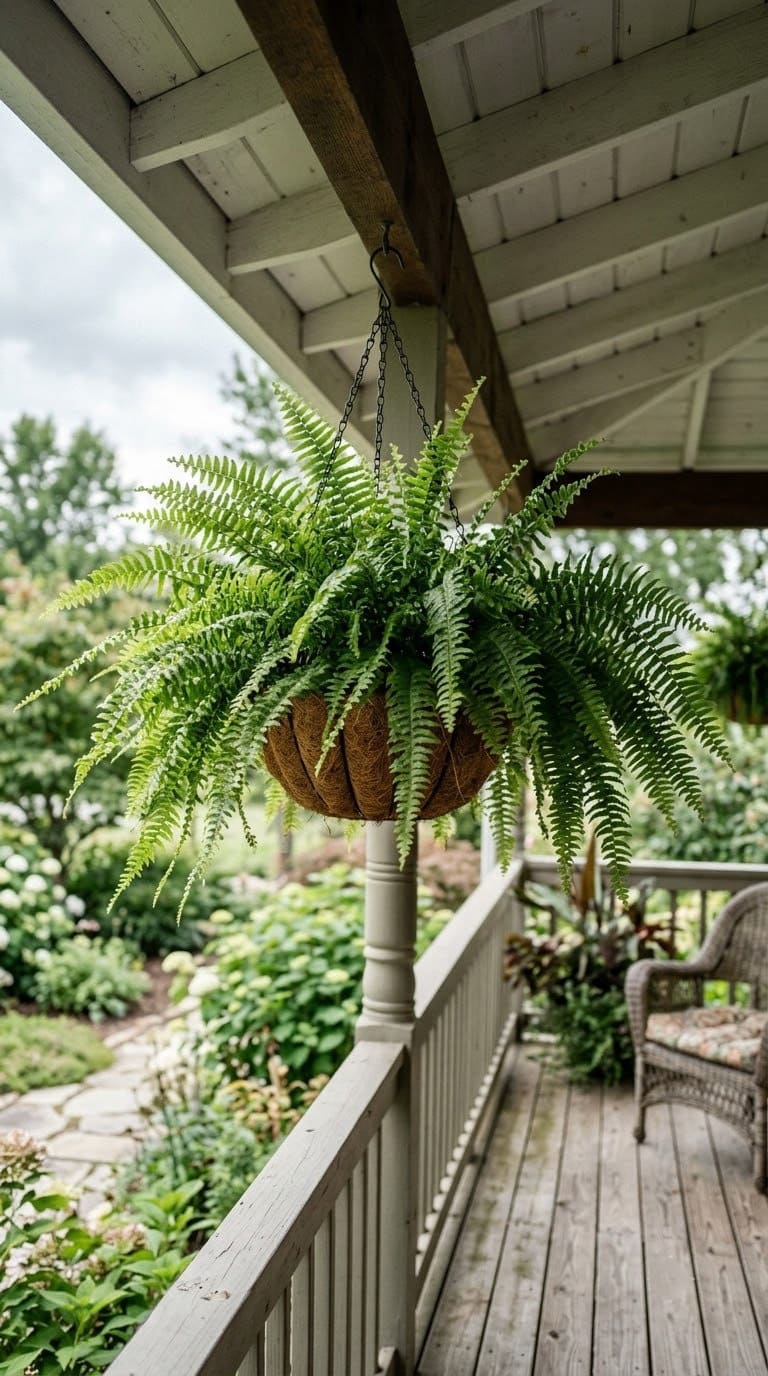
The Boston fern is the classic wraparound-porch plant for a reason: big, arching, and lush in a hanging basket. It wants open shade, steady moisture, and some humidity, and it drops leaflets fast in a hot dry draft.
Soak the basket when the top inch dries, and mist it in a heat wave. It is listed as non-toxic to dogs by the ASPCA.
9. Heuchera (coral bells)
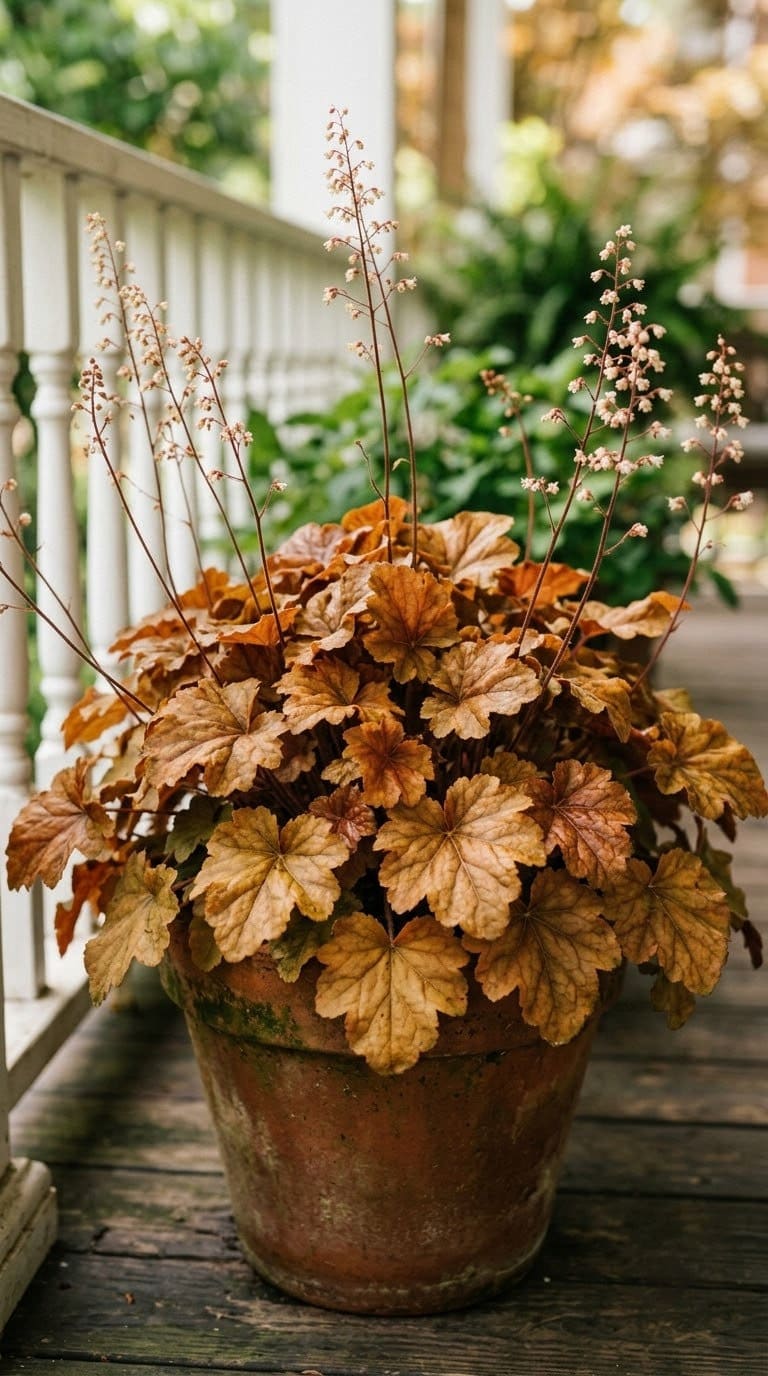
Heuchera, or coral bells, is the color anchor that also survives winter. University of Vermont Extension puts it in part sun to part shade, “4-6 hrs direct sun,” hardy in zones 4 to 9, with mounded leaves in amber, peach, rose, caramel, and near-black.
It is semi-evergreen, so the pot still looks furnished in December. The ASPCA lists it, as “Alumroot,” among non-toxic plants for dogs.
10. Elephant ear
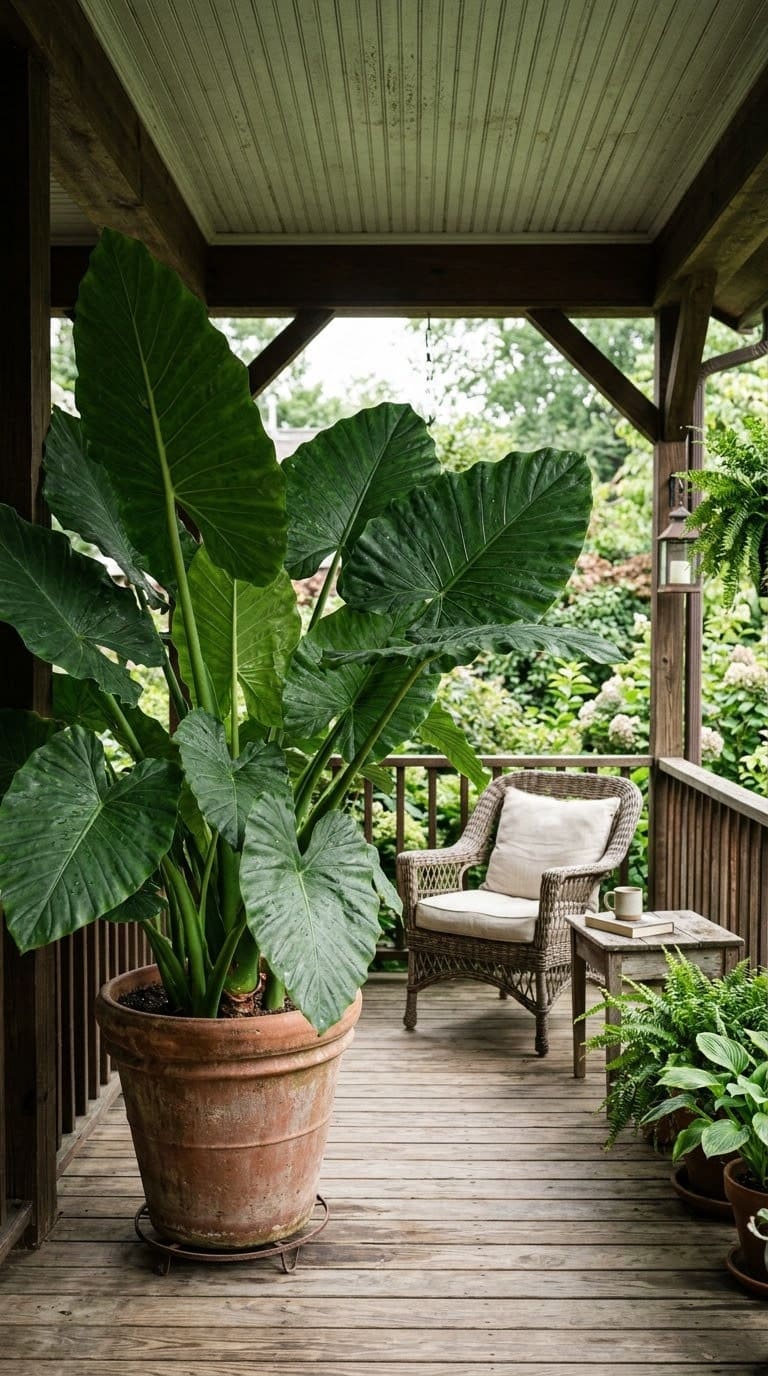
If you want instant jungle, elephant ear delivers leaves the size of a serving platter. It takes part shade, drinks heavily, and is strictly tender, so it comes in or gets replaced each year.
Give it the biggest pot on the porch and a spot out of wind, which shreds the leaves. It is toxic to pets, per the ASPCA.
Flowers that actually bloom in the shade
11. Impatiens
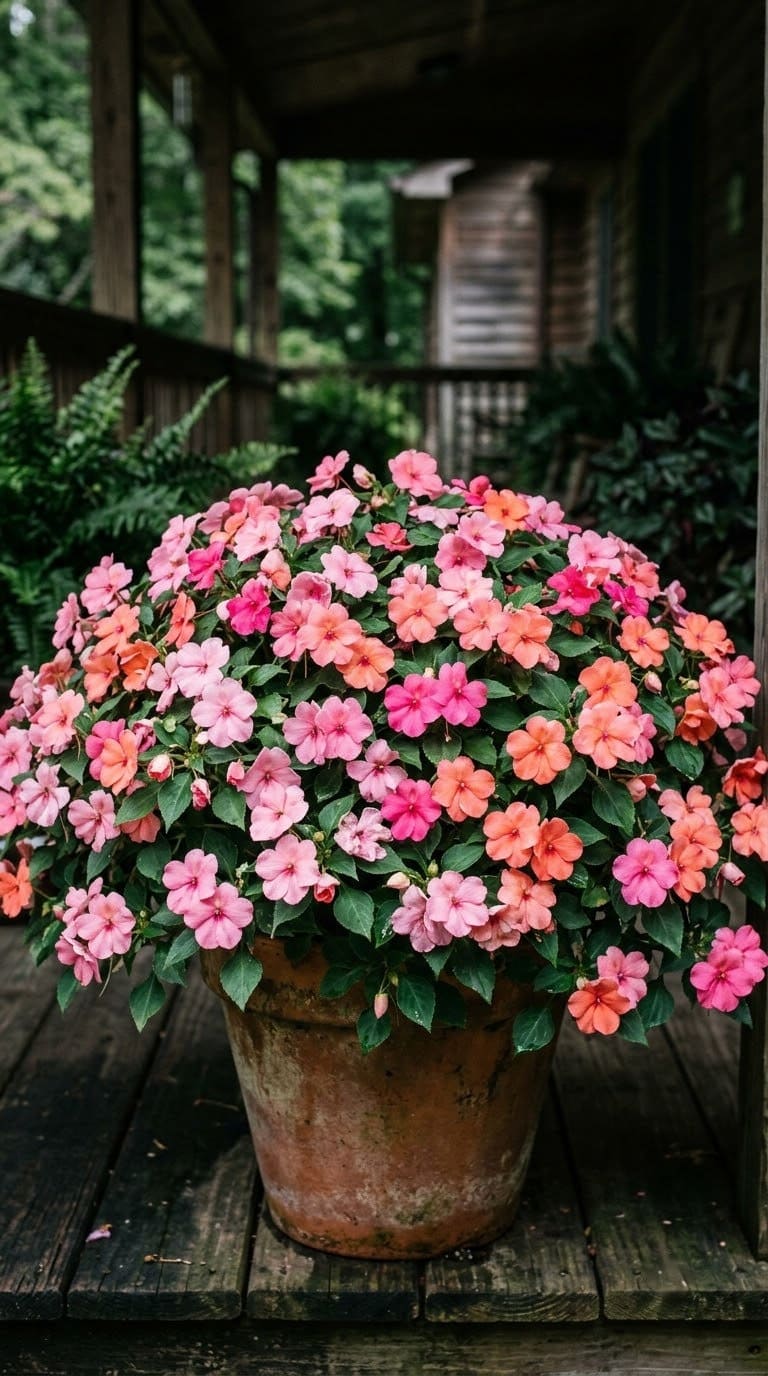
Impatiens is the reason a deep-shade porch can still have color. Iowa State lists Impatiens walleriana as shade-loving, 8 to 24 inches, in “every color except true blue, black, brown, or gold,” and calls it “ideal in containers or near buildings.”
The one rule is water. Let the pot go dry and the whole plant collapses flat, though it usually bounces back after a good soak.
12. New Guinea impatiens
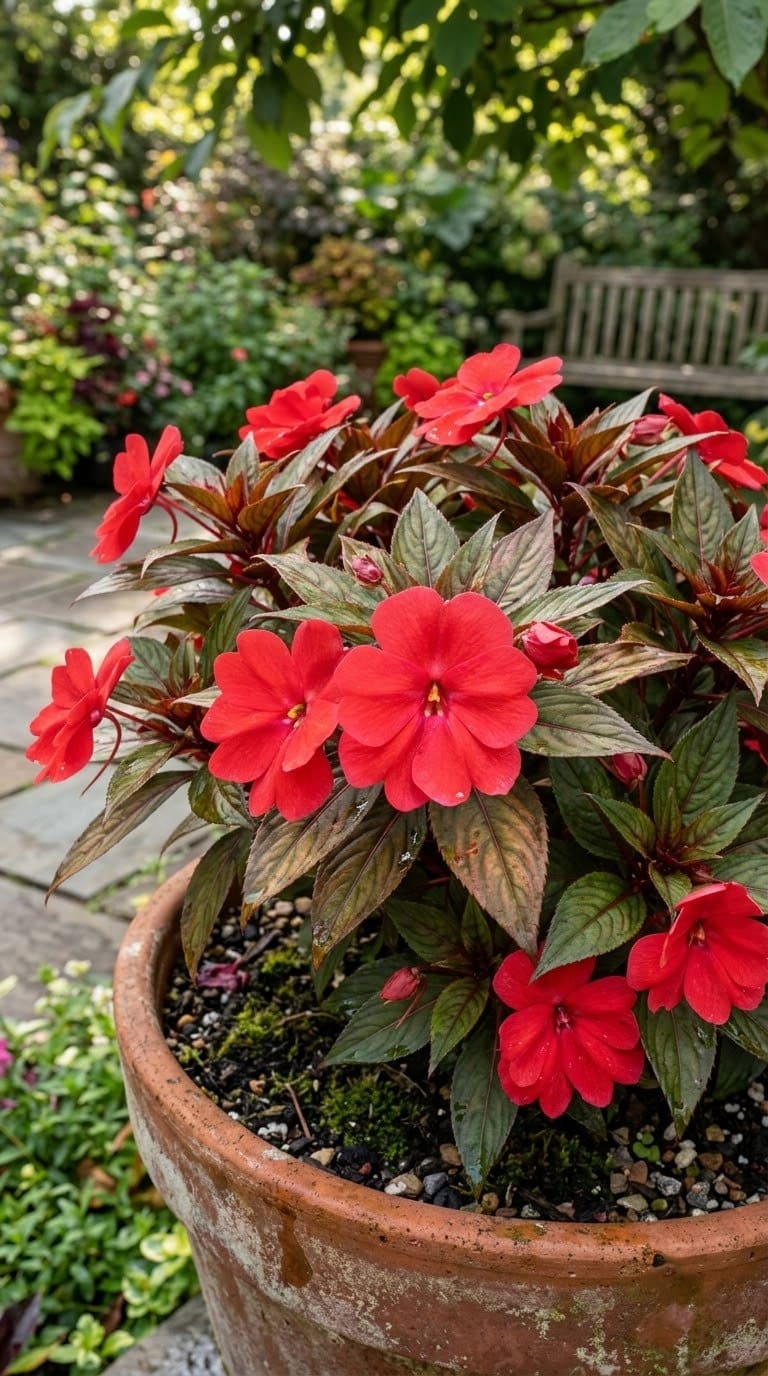
New Guinea impatiens is the bigger, bolder cousin, with larger flowers and often bronze or variegated leaves. Iowa State notes it runs 9 inches to 3 feet and performs well in containers.
It handles a little more sun and heat than regular impatiens, which makes it a good pick for a porch that gets an hour or two of morning light.
13. Wax begonia
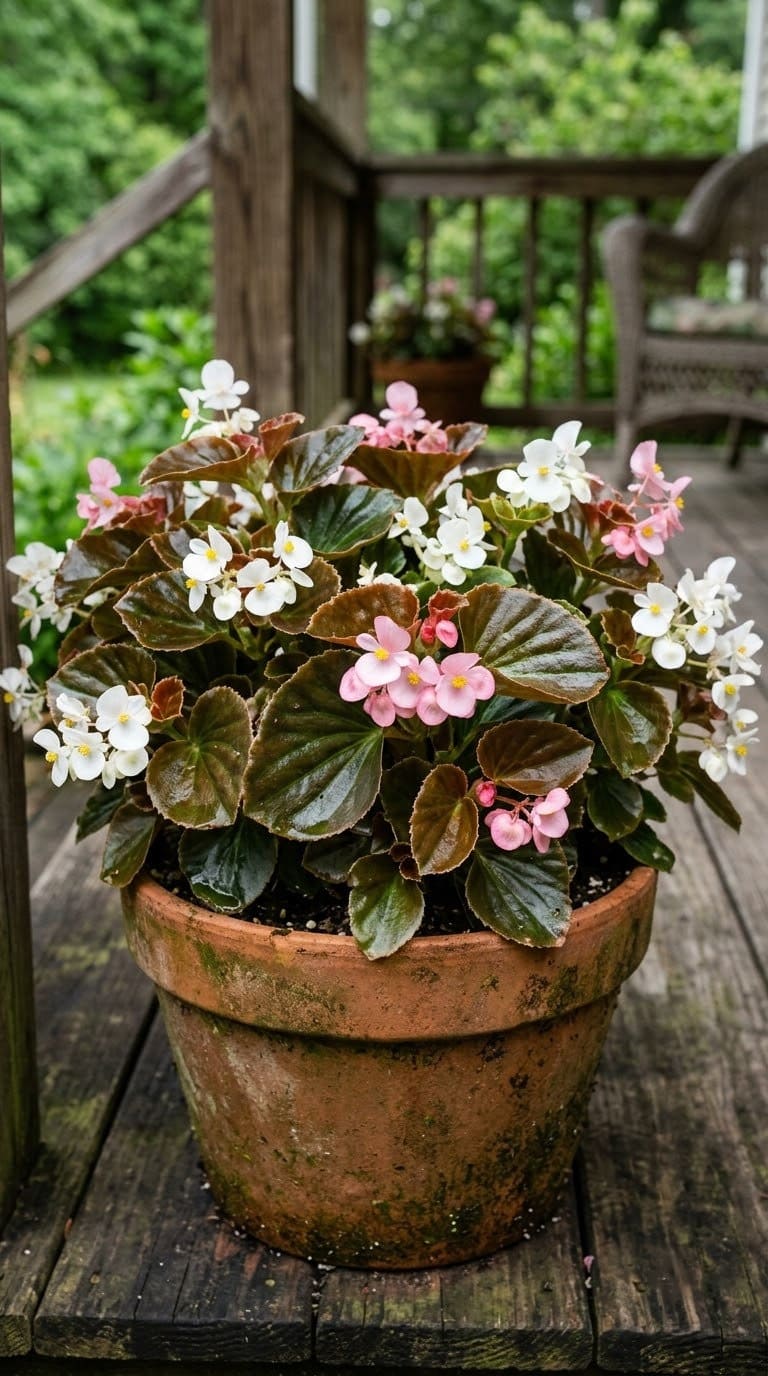
Wax begonias just work. Iowa State describes them as shade-loving, 6 to 12 inches, with glossy bronze or green leaves and flowers in white, pink, red, or salmon that “bloom all summer.”
They shrug off spots that defeat other flowers and ask for very little. They are toxic to pets, per the ASPCA.
14. Tuberous begonia
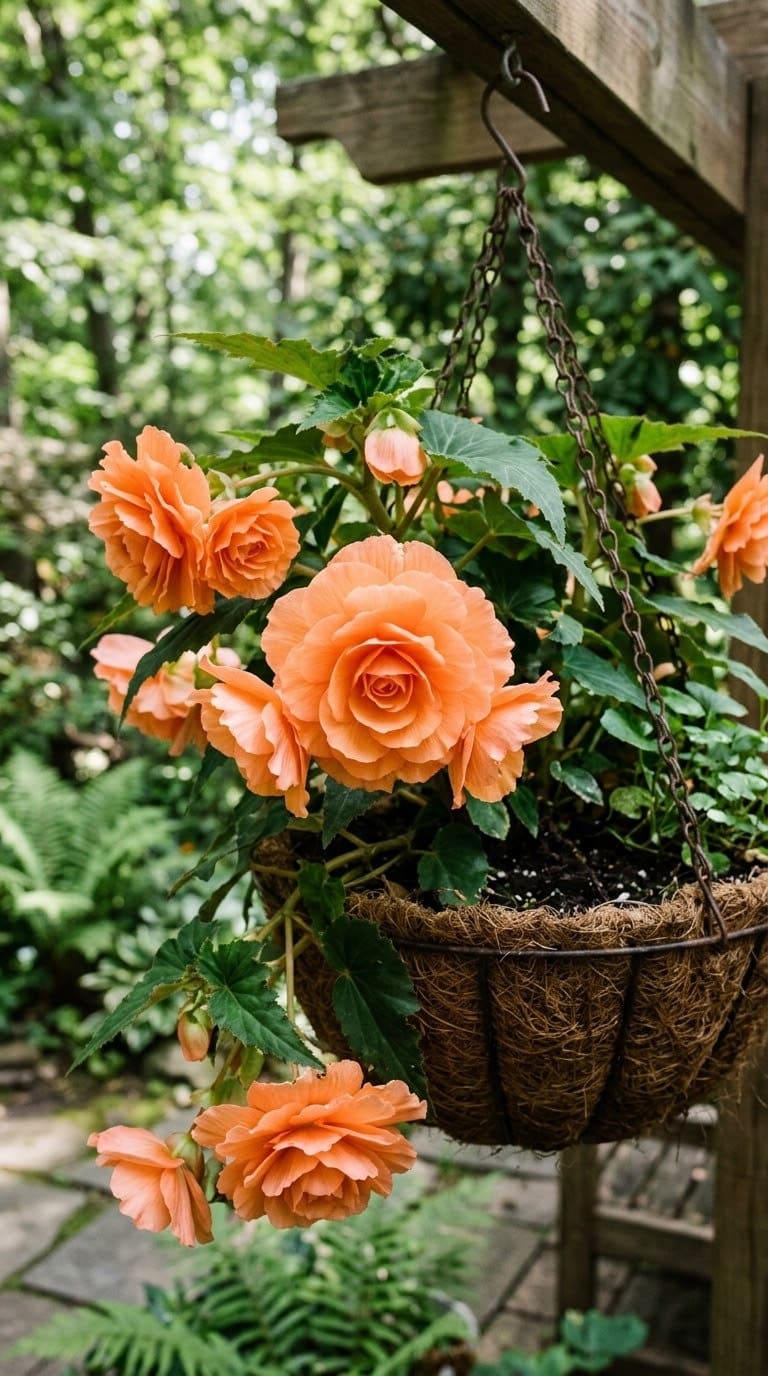
Tuberous begonias carry the showiest flowers on this list, big and ruffled like small roses or camellias. Iowa State pairs them with “containers or hanging baskets,” and they look their best in cool, bright shade.
They grow from a tuber and go dormant for winter, so you can store and regrow them. They are also on the ASPCA toxic list.
15. Fuchsia
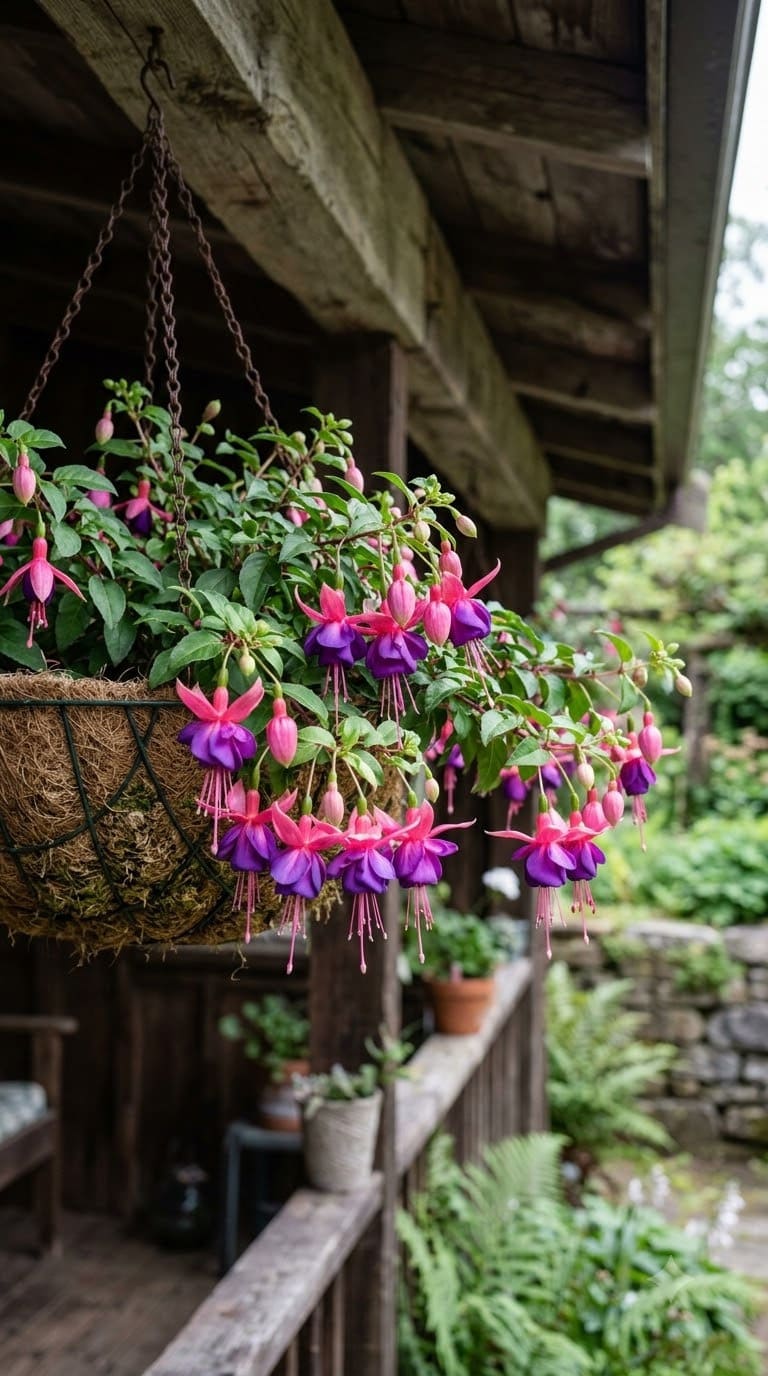
Fuchsia is the hanging-basket classic, with pendant two-tone flowers that hummingbirds chase. It wants cool, bright shade and steady moisture, and it struggles in dry summer heat.
In a heat wave, water daily and mist the plant, or move the basket to the coolest corner of the porch.
16. Browallia
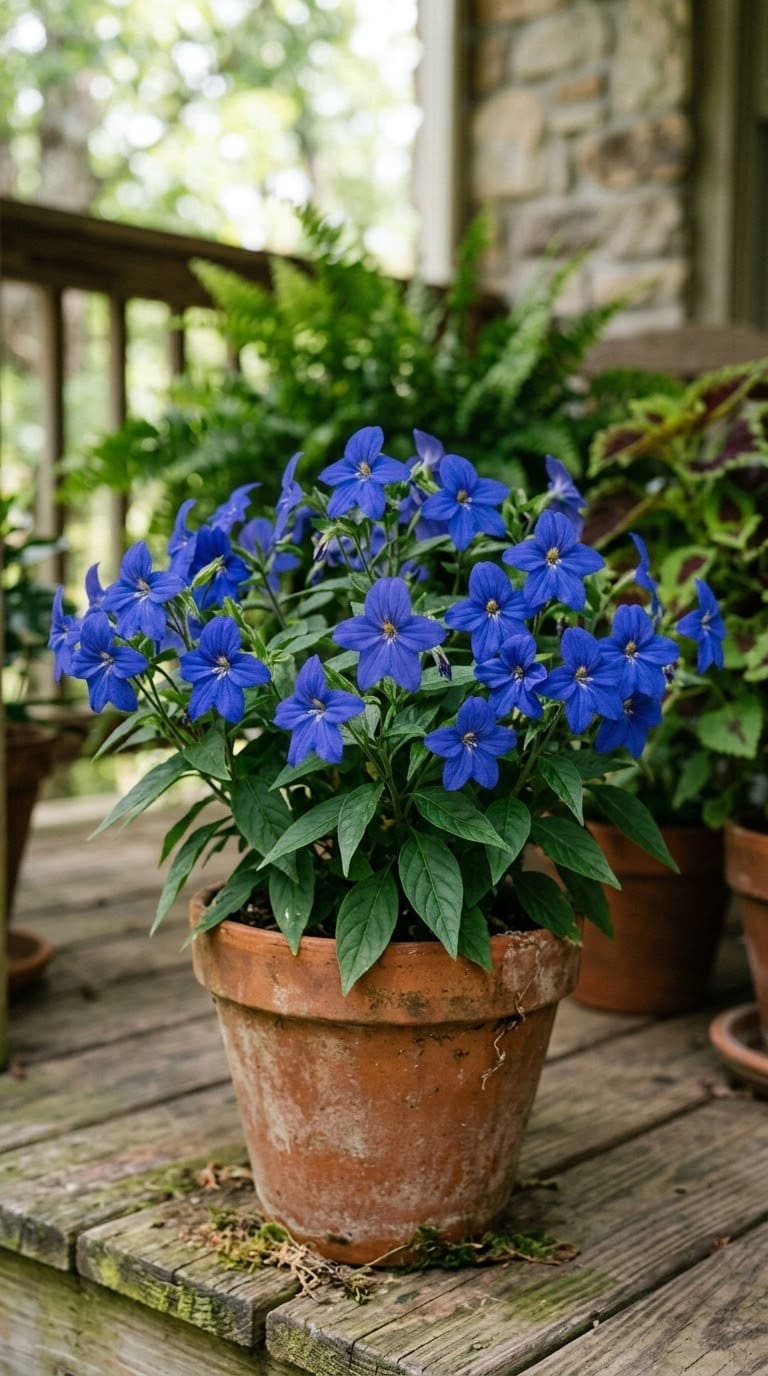
Browallia, sometimes sold as amethyst flower, gives you true blue, which is rare in shade. Iowa State lists it at 6 to 12 inches with light blue or white star-shaped flowers and calls it common “in containers or hanging baskets for shady decks/patios.”
It flowers without deadheading and mixes well with silver or chartreuse foliage.
17. Wishbone flower (Torenia)
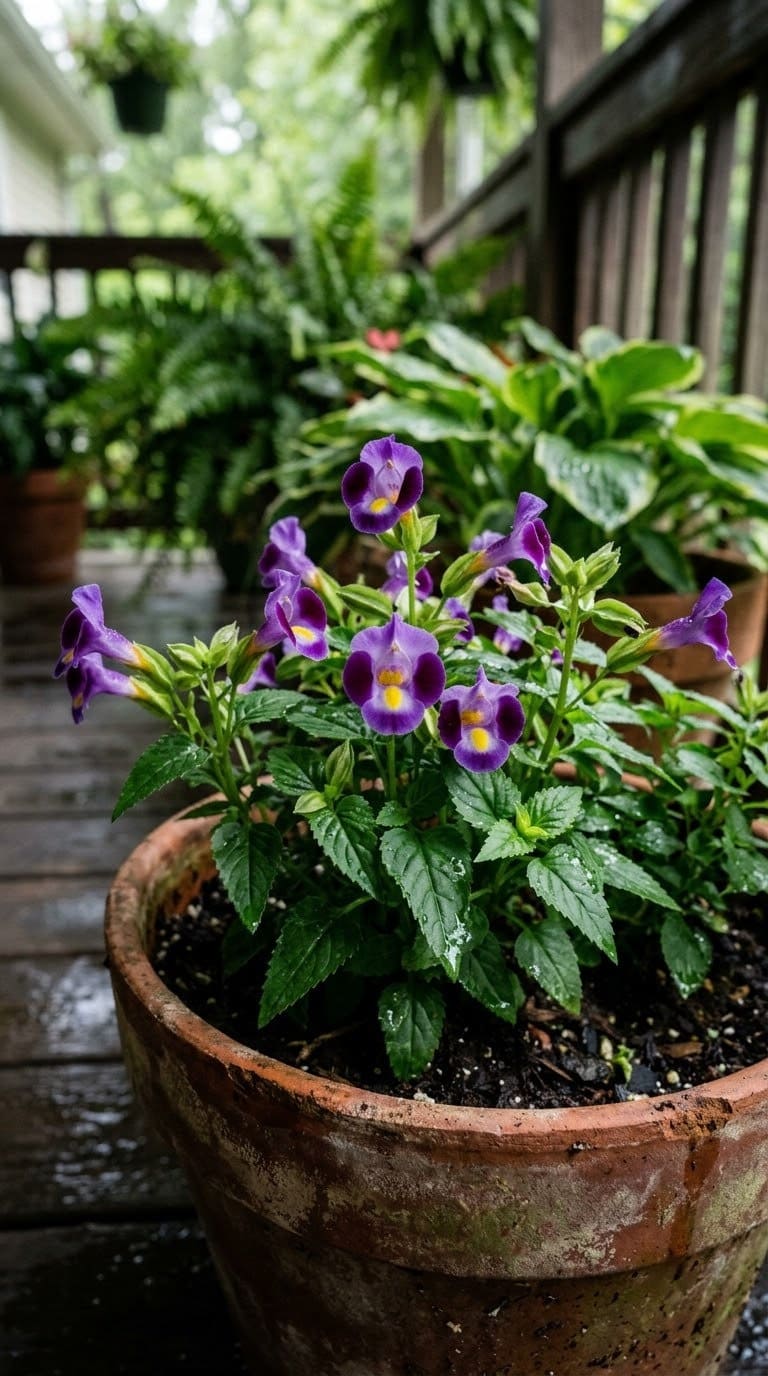
Torenia looks like a miniature snapdragon and keeps blooming in shade right through summer heat, when many shade flowers quit. Iowa State lists it at 6 to 12 inches in white, pink, purple, yellow, or blue.
It trails a little, so it works at the front edge of a mixed pot as well as on its own.
18. Trailing lobelia
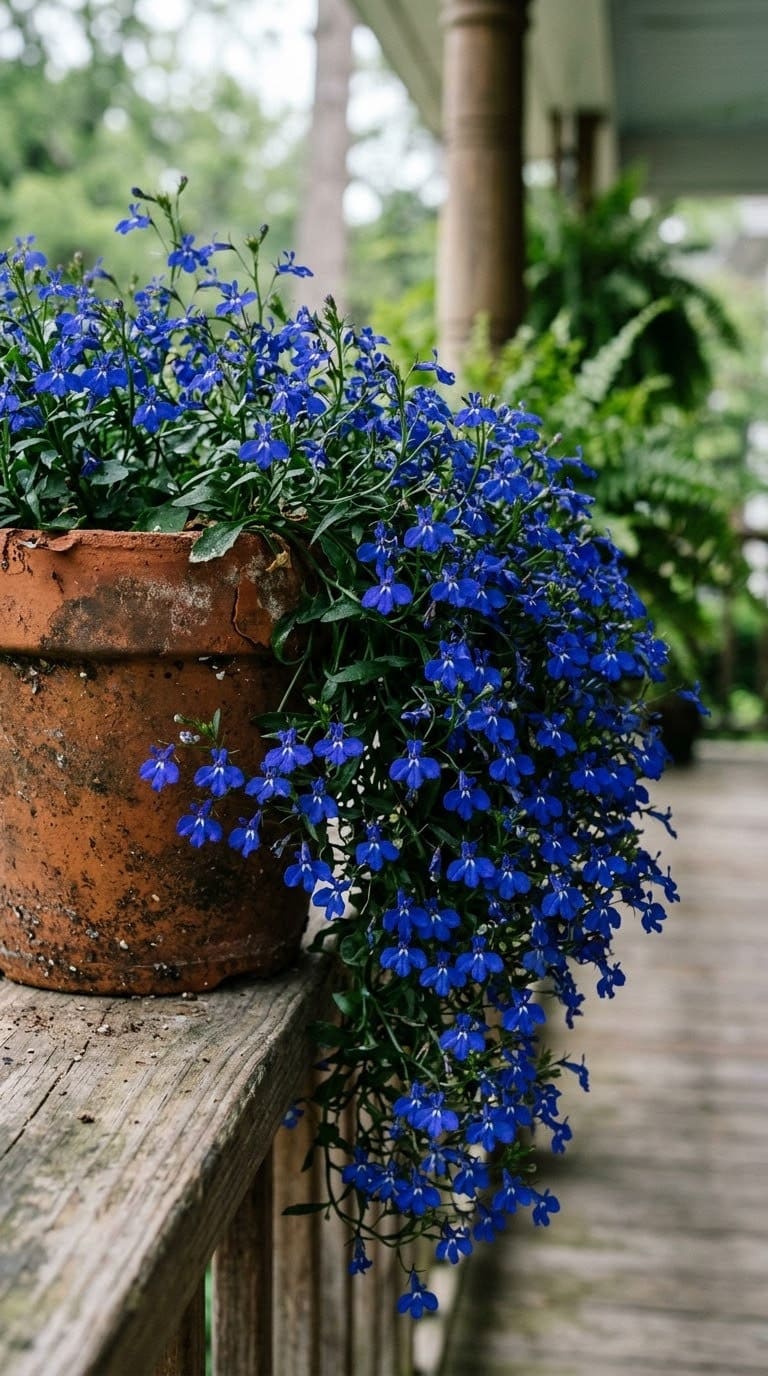
Trailing lobelia spills sheets of intense blue, white, or violet over a pot rim in cool weather. It tends to stall in midsummer heat and then flush again as nights cool in late summer.
Shear it back halfway during the slump to help it rebound. It is toxic to pets, per the ASPCA.
19. Astilbe
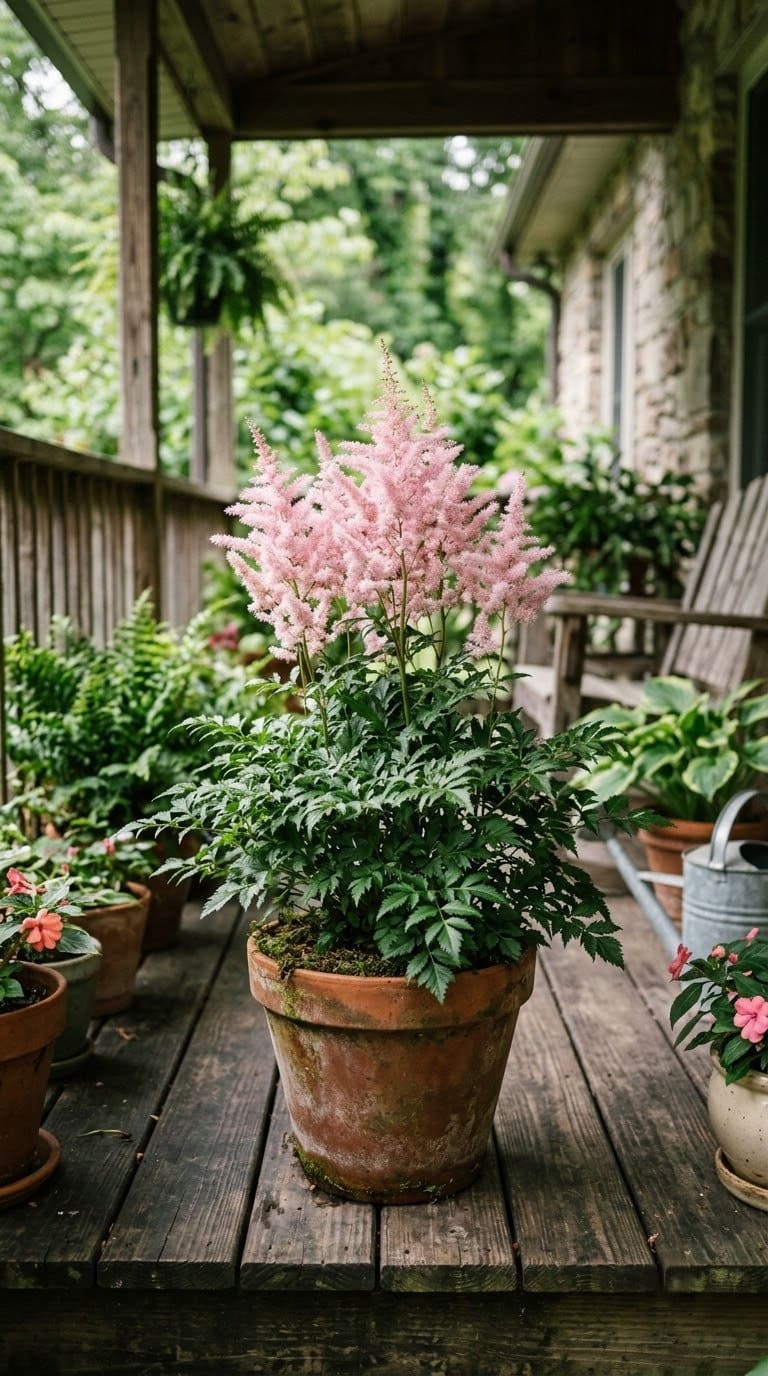
Astilbe brings vertical, feathery plumes in pink, red, lavender, and white above fern-like leaves. University of Vermont Extension lists it in part to full shade, 12 to 48 inches, hardy in zones 3 to 8.
It is a true perennial, so the pot fills again each spring. Keep the mix damp, since dry soil scorches the leaf edges brown.
20. Hydrangea in a big pot
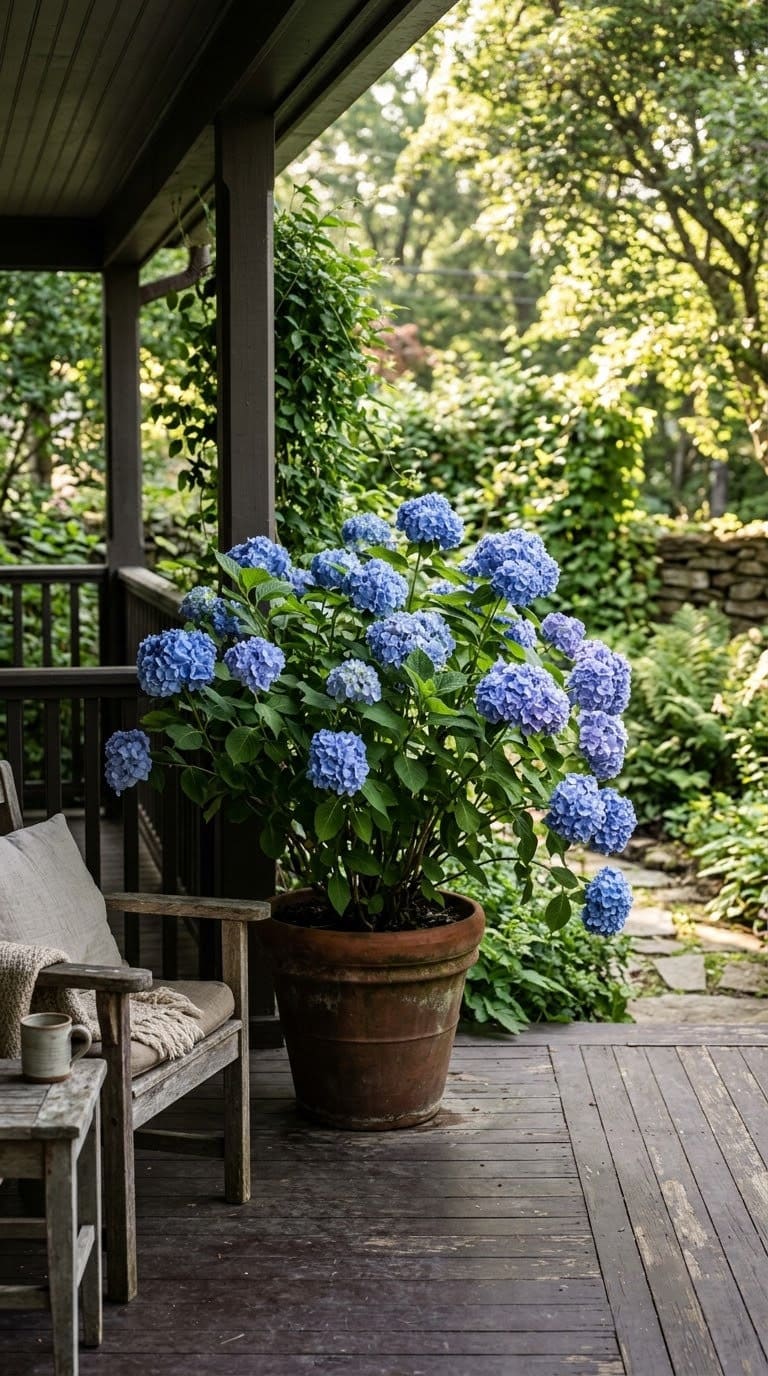
A bigleaf or mountain hydrangea in a large container gives a shady porch a full flowering shrub. Both types bloom in open shade or with morning sun, and both need heavy, consistent watering in a pot.
Overwinter the whole container somewhere sheltered, like against the house or in an unheated garage, so the flower buds survive.
Trailing spillers for the edge, the steps, and the railing
21. Creeping Jenny
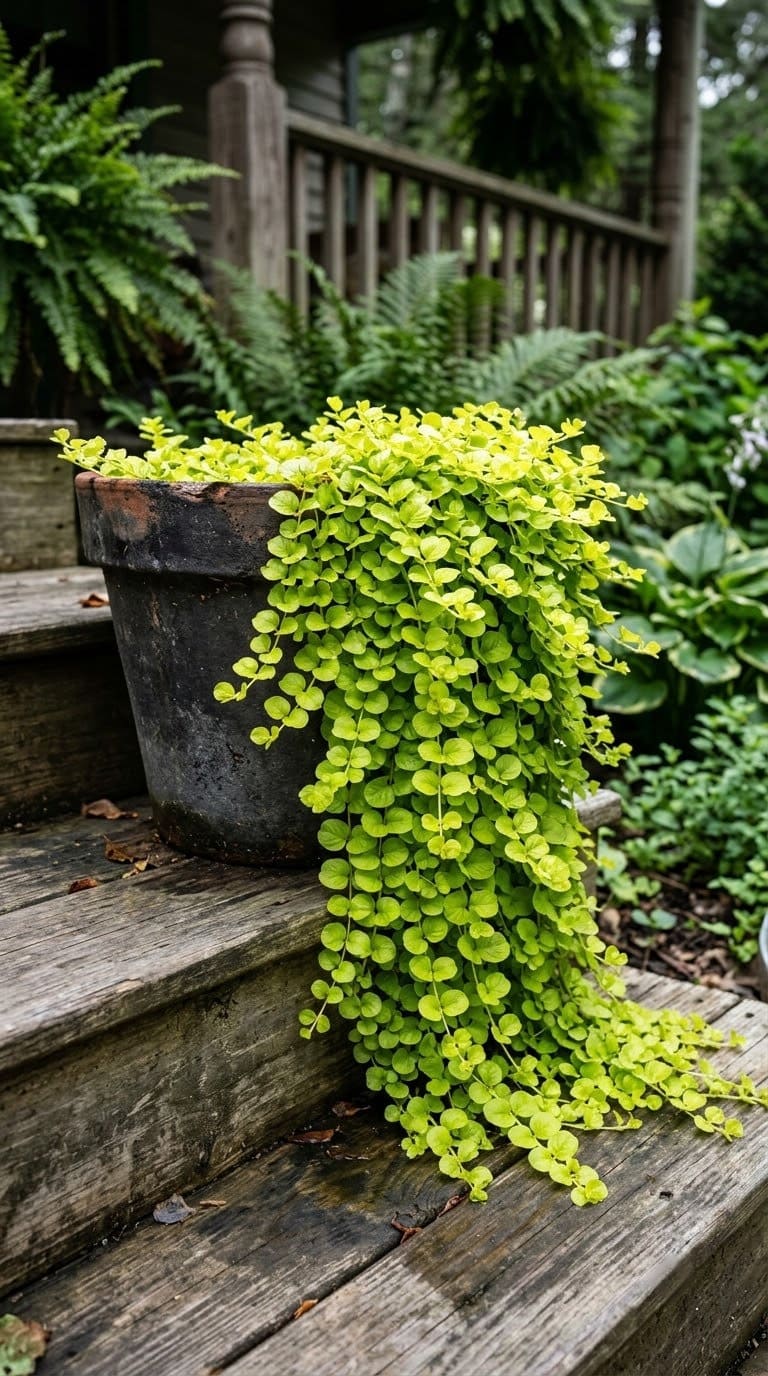
Creeping Jenny is a chartreuse mat of round coin-shaped leaves that pours over a pot edge and lights up a dark corner. It grows in sun or shade and is hardy, so it can stay outside year-round.
Keep it in the container, though. In the ground it roots wherever it touches and spreads aggressively.
22. Sweet potato vine
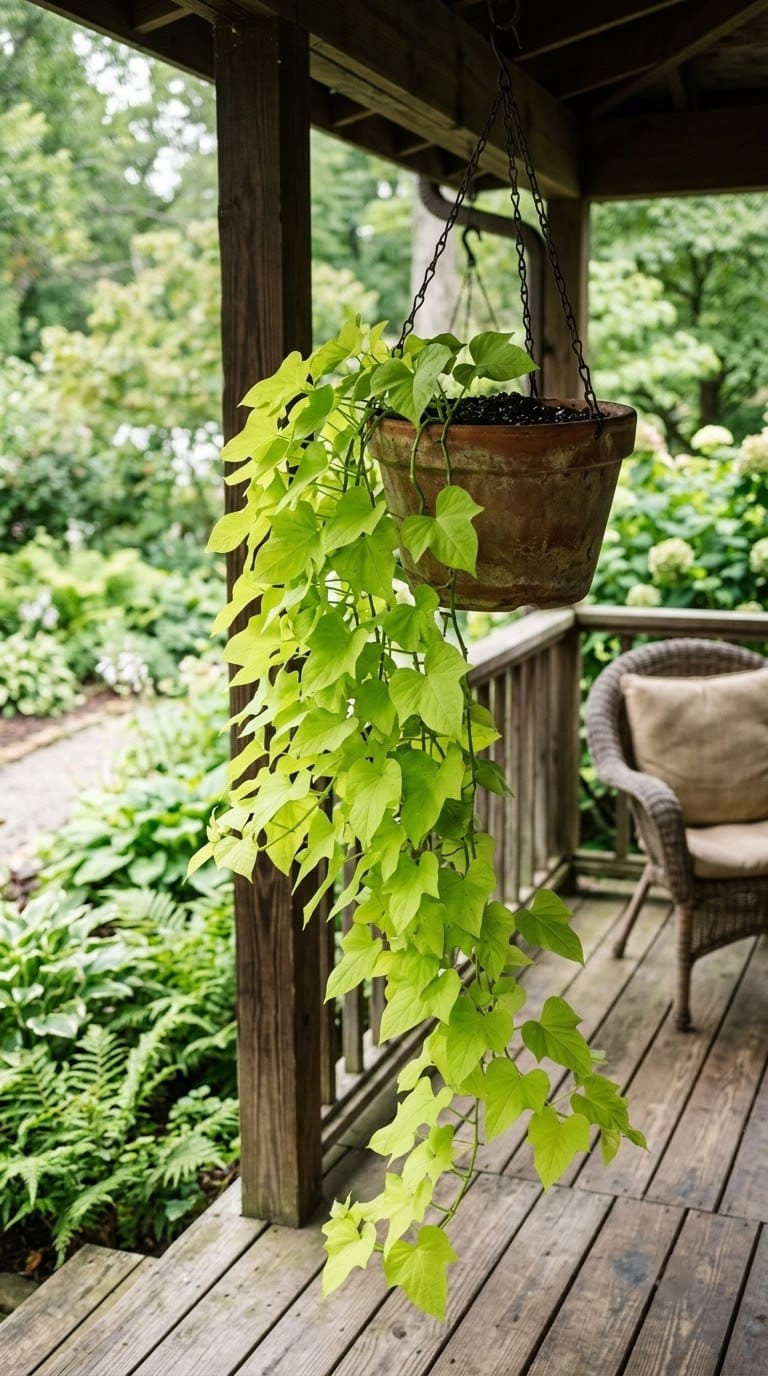
Ornamental sweet potato vine grows fast and covers ground in chartreuse, bronze, or near-black heart-shaped leaves. It tolerates shade, though the color is richest with a little light.
It is tender and vigorous, so trim it hard whenever it swamps its potmates.
23. English ivy
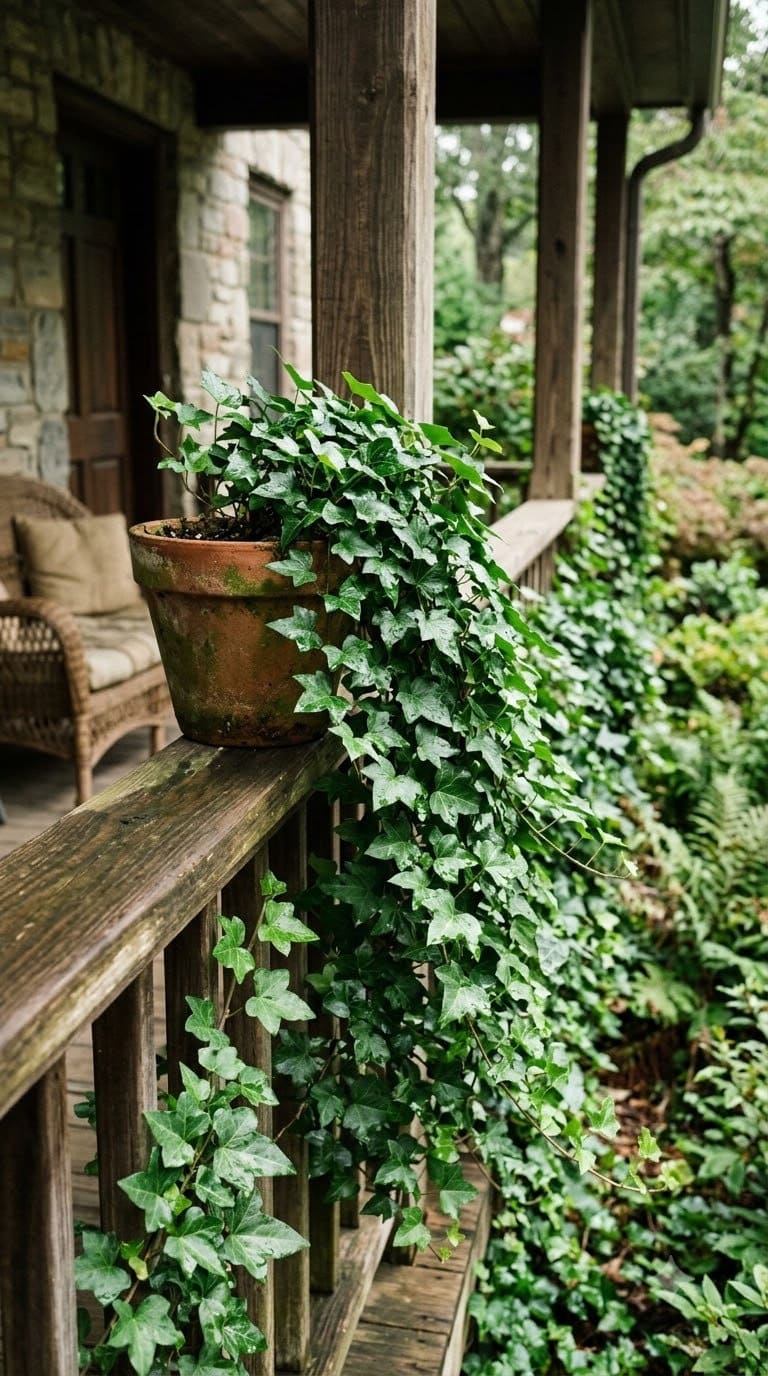
English ivy is the evergreen trailer for genuinely deep shade, and it will drape a railing or a post through winter. It also overwinters easily on a porch.
Keep it strictly in a container. English ivy is invasive in much of the country when it escapes into the ground, and it is toxic to pets, per the ASPCA.
24. Lamium (spotted dead nettle)
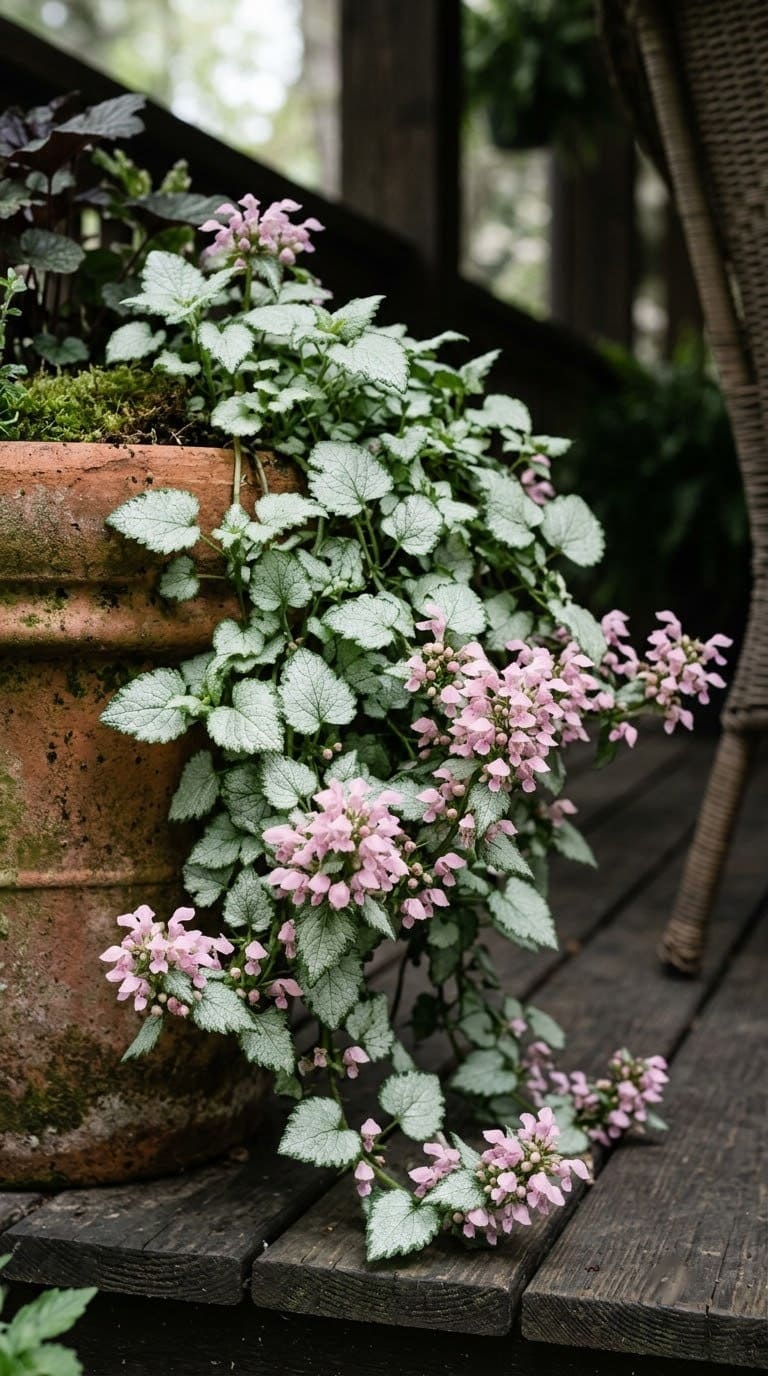
Lamium, or spotted dead nettle, has small leaves heavily frosted in silver, topped with pink or white flowers in early summer. It spills softly from a pot and, like the other foliage plants for dry shade, tolerates a rain-sheltered spot better than most trailers.
Trim it back after it flowers to keep the foliage fresh and dense.
25. Creeping fig
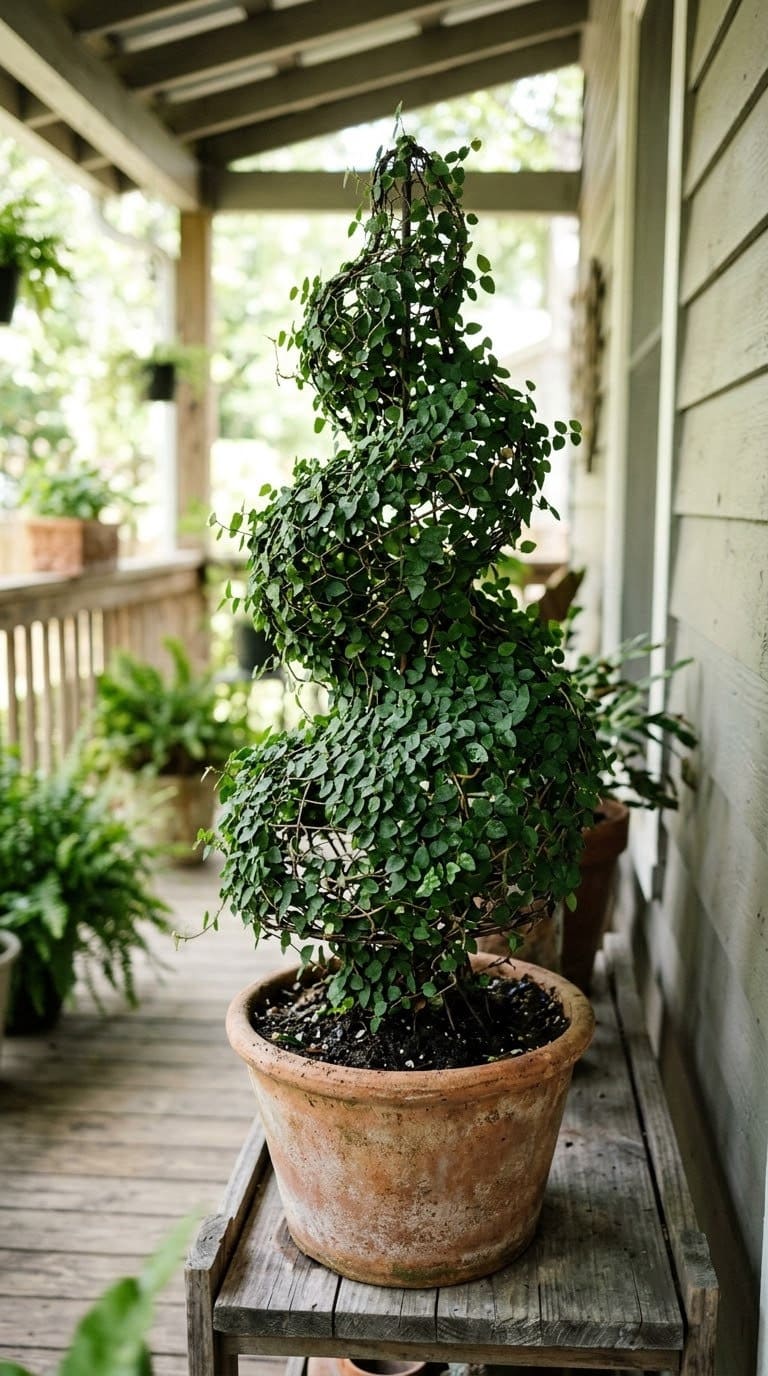
Creeping fig is a tiny-leaved evergreen climber that clings to a porch post or a wire form and gives a neat, formal green. It wants open shade and warmth, and it is tender below about zone 8, so in cold regions it comes indoors.
It is slow at first, then steady, so start with a fuller plant if you want quick cover.
The porch-pot cheat sheet
Pick one from each row and you have a balanced container.
| Role in the pot | Plants to use | Annual or perennial | Watch for |
|---|---|---|---|
| Thriller (height and drama) | Caladium, elephant ear, Persian shield, astilbe, potted hydrangea | Mixed | Toxic to pets: caladium, elephant ear |
| Filler (mass and color) | Impatiens, wax or tuberous or Rex begonia, coleus, heuchera, ferns, browallia, torenia | Mixed | Toxic to pets: begonia, coleus |
| Spiller (trails over the edge) | Creeping Jenny, sweet potato vine, English ivy, lamium, lobelia, fuchsia, creeping fig | Mixed | Toxic to pets: English ivy, lobelia |
Match the plant to your porch light
Shade is not one thing, so match the list to what your porch actually gets.
| Your porch light | What it means | Best picks | Water reality |
|---|---|---|---|
| Deep shade | North-facing, solid roof and railing, under 3 hours of any direct sun | Impatiens, hosta, Boston fern, Japanese painted fern, English ivy, lamium | Dries slowly, but still check the pots twice a week |
| Open or bright shade | Roof only, or lots of reflected light off a pale wall, no direct beam | Coleus, caladium, heuchera, wax begonia, browallia, torenia, creeping Jenny | Check daily in summer heat |
| Bright shade with morning sun | East-facing, direct sun before late morning, then shade | New Guinea impatiens, tuberous begonia, fuchsia, astilbe, potted hydrangea, lobelia | Check daily, since morning sun plus a roof dries pots fast |
A real shady-porch mistake
The first year in a house with a north-facing covered porch, I bought a flat of petunias labeled for “sun or shade” and a coleus that turned out to be a sun type. Within three weeks they had all stretched toward the steps, flopped over, and gone a sickly pale green.
The porch got maybe an hour of weak side light in the morning and nothing after that. And because the roof covered the whole thing, not one drop of rain ever hit those pots.
I started over with two ferns, a caladium, a few impatiens, and creeping Jenny trailing down the front, all in self-watering pots and watered every morning with a long-spout can. The only fussy one was the caladium, which needed the brightest end of the porch by the railing.
The lesson was simple. Match the plant to the light you actually have, not the light you wish you had, and assume from the start that you are the rain.
FAQ
What is the easiest plant for a shady porch? For flowers, wax begonia or impatiens. For foliage, a fern or a heuchera. All of them forgive low light. None of them forgive a pot that dries to dust, so the trick is watering, not the plant.
Why do my shade plants still dry out under a covered porch? Because the roof is a rain shadow. It blocks rain as well as sun, so the pots only get the water you give them. Iowa State Extension says to check containers daily in summer, and a pot that dries out completely needs a 20-to-30-minute soak in a tub to re-wet.
Can I grow any vegetables or herbs on a shady porch? Leafy herbs like mint, parsley, chives, and cilantro handle part shade, and our guide to herbs that tolerate shade covers the options. Fruiting crops like tomatoes and peppers will not produce without direct sun.
Which shady-porch plants come back every year? In a cold climate, hosta, heuchera, astilbe, and the Japanese painted and autumn ferns can overwinter if the pot is protected against the house or sunk in a bed. Coleus, caladium, impatiens, and the begonias are annuals or need to come indoors.
Are shady-porch plants safe around dogs and cats? Several are not. The ASPCA lists caladium, coleus, begonia, English ivy, and lobelia as toxic to dogs and cats. Check every plant against the ASPCA list before you buy, and raise the risky ones out of reach.
How much light counts as shade for a porch? Per University of Vermont Extension, full shade is under 3 hours of direct sun a day and part shade is 3 to 6 hours. A covered north-facing porch is usually full or deep shade, which is why the plant list matters so much.
Related Posts
- Best Shade Plants for Small North-Facing Patios
- Shade Plants That Still Flower
- Perennial Groundcovers for Shade
Products We Recommend
This post contains affiliate links. We may earn a commission on qualifying purchases at no extra cost to you.
UOUZ 12-Inch Self-Watering Planters (2-pack)
A built-in reservoir so a rain-sheltered porch pot does not dry out between waterings
Shop Now
FoxFarm Coco Loco Coco Coir Potting Mix
A coir-based container mix that holds water and re-wets easily after it dries under a roof
Shop Now
Chapin 47998 2-Gallon Watering Can
Reaches the back of a grouped porch display and hanging baskets without spilling
Shop NowNever miss an update — choose FarmFoodFamily as your preferred source on Google.
How it works: Tap the button below to open Google's settings page, then check the box next to FarmFoodFamily.
Tap the checkbox to turn it blue — that's how you know it's set.