How to Protect Cabbage and Broccoli From Cabbage Moths (Netting Setup)
A net over the bed is the one thing that reliably stops cabbage worms, but only if it goes on early, sits off the leaves, and has no gap at the ground. Here is the setup that actually holds.

Never miss an update — choose FarmFoodFamily as your preferred source on Google.
How it works: Tap the button below to open Google’s settings page, then check the box next to FarmFoodFamily.
Tap the checkbox to turn it blue — that’s how you know it’s set.
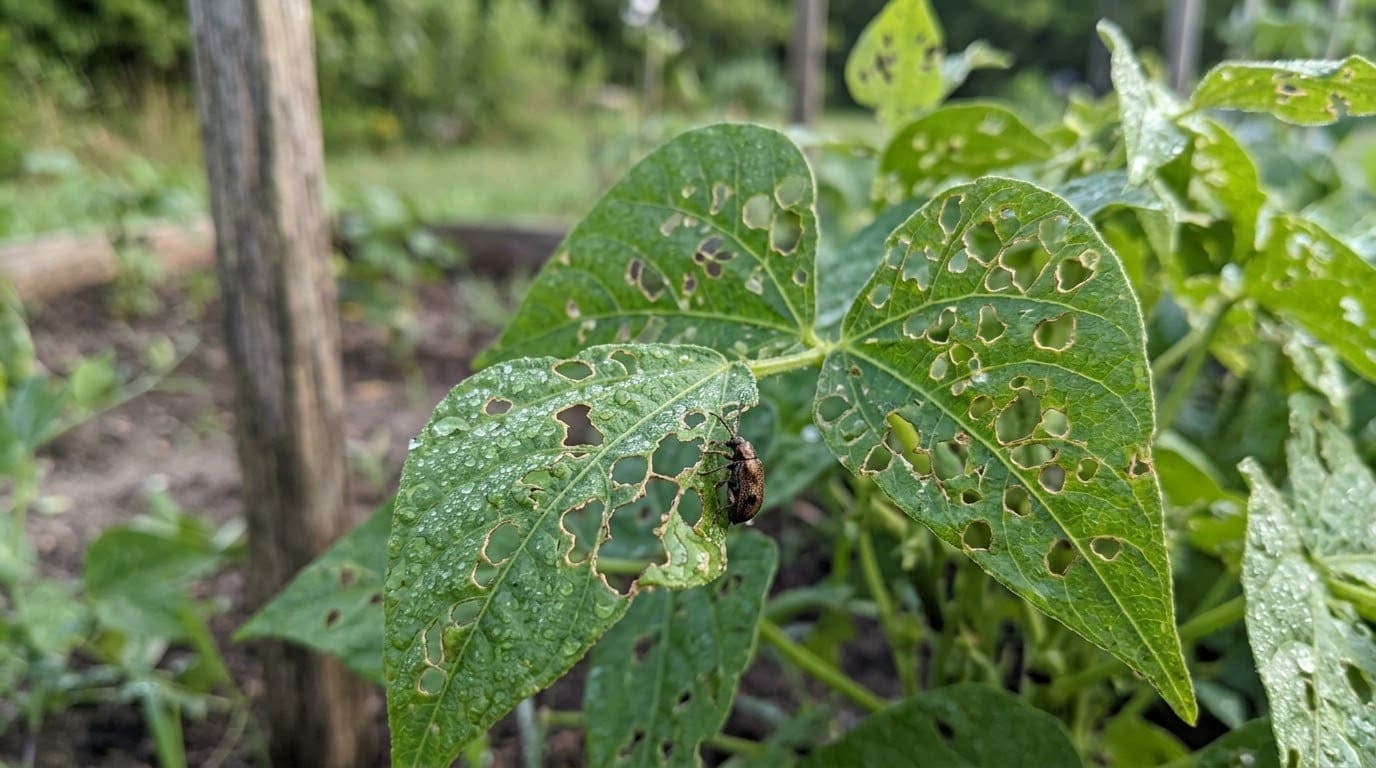
First you notice the holes. Then you find the velvety green caterpillars tucked along the midribs, and a white butterfly flitting low over the bed. By the time you are spraying, you are already behind.
A net changes the game because it works on the adults, not the caterpillars. No butterfly or moth on the plant means no eggs, which means nothing to spray.
And unlike most garden pest options, it needs no repeat timing. Broccoli, cabbage, and kale do not need pollination, so the cover can stay on from transplant to harvest.
The catch is that a net with one gap is barely better than no net at all. The setup below is built around closing every one of those gaps.
Quick Answer
Cabbage white butterflies and cabbage moths lay eggs on brassica leaves, and the caterpillars chew ragged holes and bore into the heads. The reliable fix is a physical cover that keeps the adults off the plants.

Put fine insect netting or spun row-cover fabric over the bed at transplant, before the adults are flying. Per Utah State University Extension, install it “just after planting or transplanting” and bury the edges in the soil.
Answer 4 quick questions and get matched to the exact fix for your yard — drainage, budget, layout, or something else entirely.
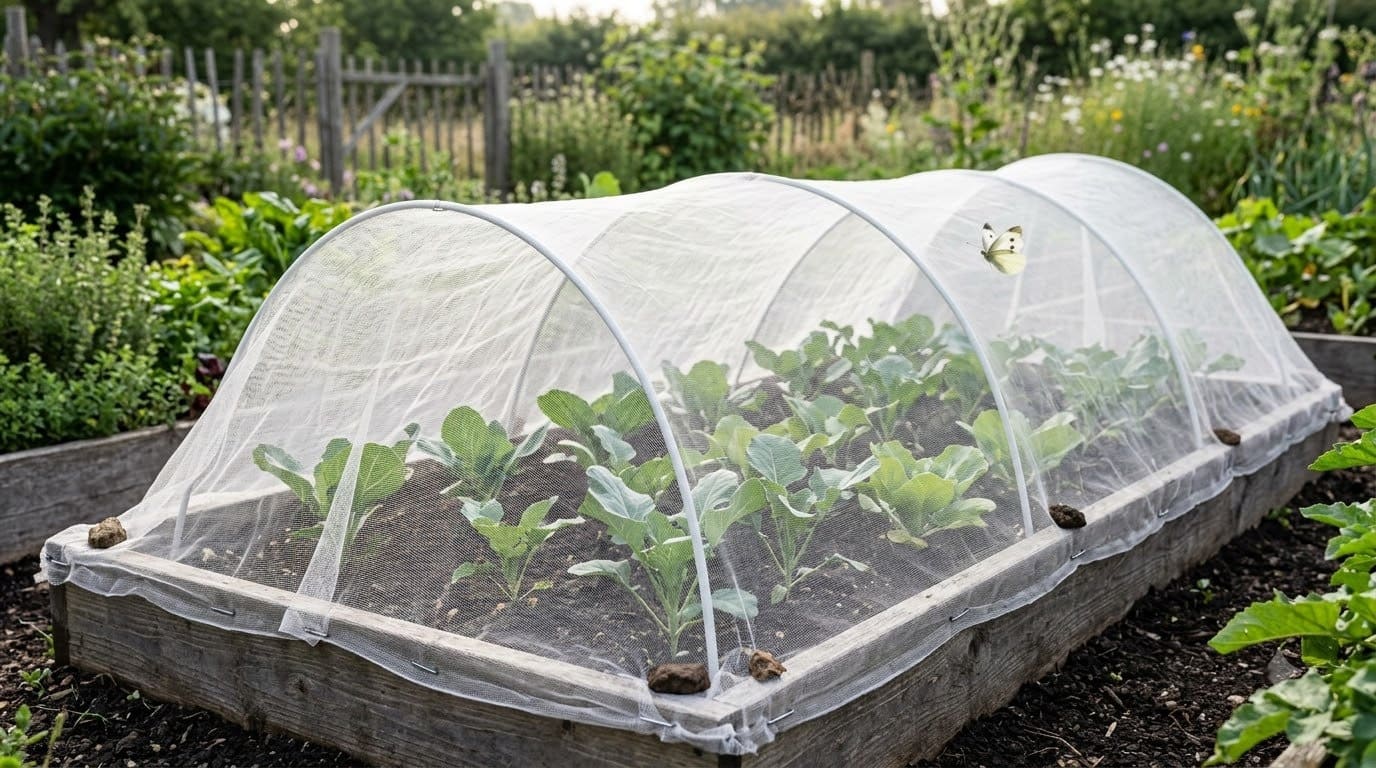
Take the Free QuizHold the net 6 to 12 inches above the leaves on hoops. Adults will lay eggs through mesh wherever a leaf presses against it, so leave the cover loose and let the plants grow into the slack.
Broccoli, cabbage, and kale set no fruit, so the net stays on all season. If any caterpillars do get in, spray Bt kurstaki on the small ones, covering the undersides of the leaves.
Which pests is the netting actually stopping?
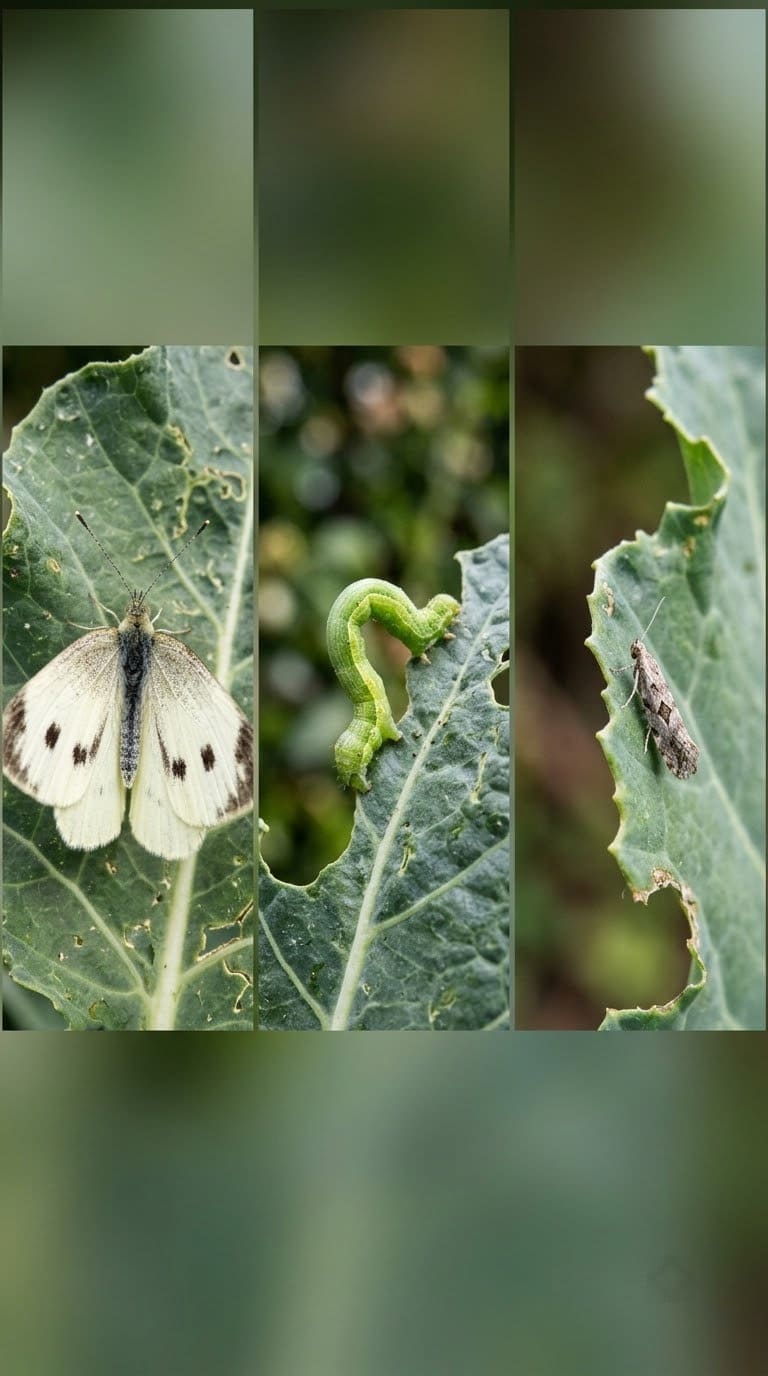
Three different insects do this damage, and it helps to know which is which.
The imported cabbageworm is the one most people picture. The adult is the white butterfly you see over the bed, with two black dots on each forewing on the female and one on the male, per University of Wisconsin-Madison Extension. The caterpillar is a “velvety green” worm up to an inch long with a faint yellow stripe, and it chews “large, irregular holes.” Heavy feeding can stunt heads or make them abort.
The cabbage looper is the larva of a grayish-brown moth marked with a small silver figure-eight, per Utah State. It moves in the inch-worm arch and does the same kind of leaf damage.
The diamondback moth is the small one. Utah State describes the adult as a slim grayish-brown moth showing cream diamonds when the wings are folded.
The larva is a “pale green” caterpillar only about a third of an inch long. Per University of Maryland Extension, it reacts to being disturbed by “wriggling vigorously or dropping from the plant on a silk thread,” and it scrapes the leaf down to a thin “windowpane.”
Most yard problems trace back to one specific, fixable cause. Find yours in 4 quick questions.
Take the Free Quiz
Fine insect-barrier mesh to exclude cabbage whites, moths, and smaller pests
Shop NowThis post contains affiliate links. We may earn a commission on qualifying purchases at no extra cost to you.
Diamondback moth is the reason to take exclusion seriously. Maryland Extension notes it is “well known for developing resistance to insecticides, including pyrethroids and some Bt products.” It is also small enough to slip through a coarse net. Spraying your way out of a diamondback problem is hard, so keeping the moth off the plant in the first place matters more here than with any other brassica pest.
Row cover fabric or insect mesh: which do I want?
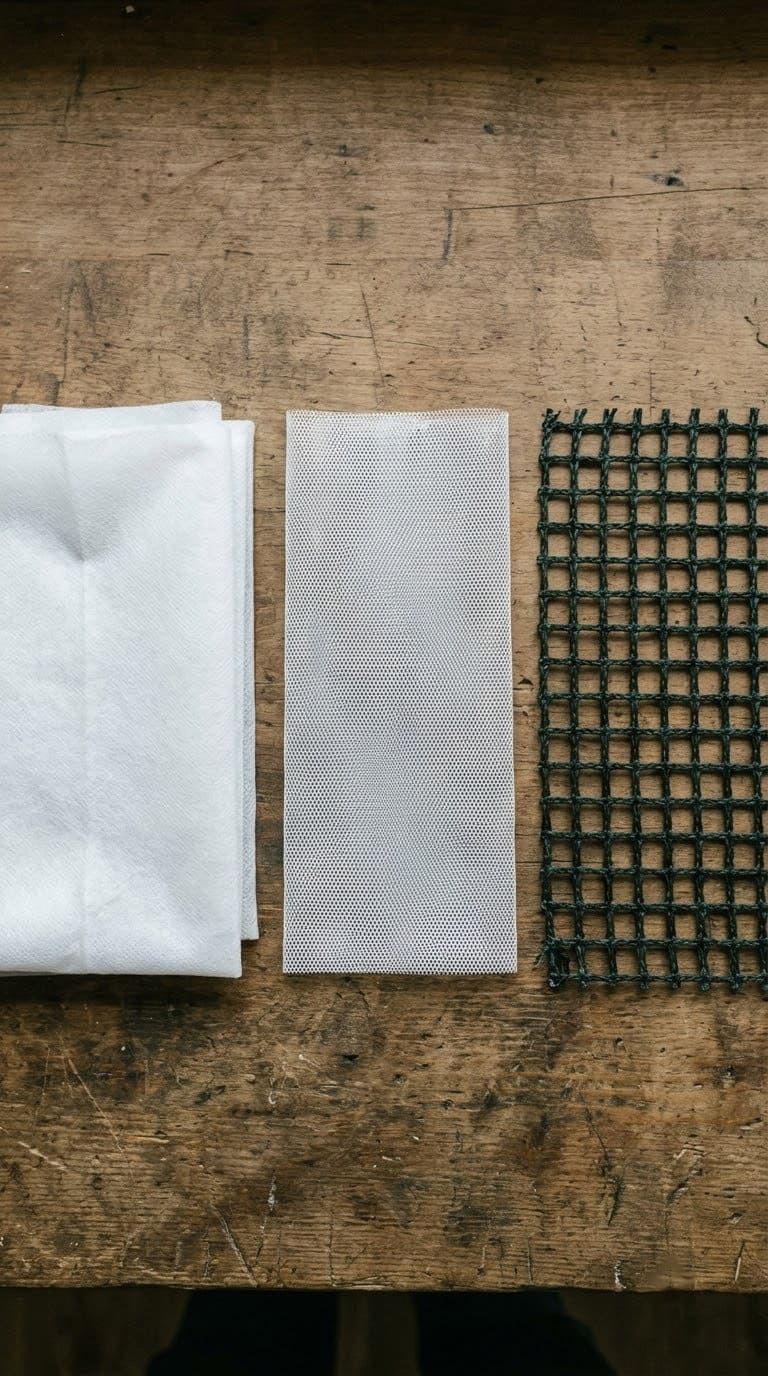
Both exclude the adults. They differ in what else they do.
Floating row cover is a spun-bonded polyester or polypropylene fabric that is, per University of Wisconsin-Madison, “permeable to light, water and air.” It blocks something like 10 to 15 percent of light, traps a little heat, and gives some frost protection. That makes it a good choice in spring and in cool weather.
Insect mesh is a knitted net, usually with holes around 0.8 to 1 millimeter. It blocks very little light and adds almost no heat, which makes it the better pick for summer brassicas and hot climates.
There is also a coarser netting sold specifically as butterfly or cabbage-moth netting, with holes around 7 millimeters. It stops the cabbage whites and the moths but not aphids, flea beetles, or thrips, so pair it with your usual approach to aphids on brassicas if those turn up too.
| Cover type | Light and heat | Stops cabbage whites and moths | Stops aphids and flea beetles | Stays on cole crops all season | Best for |
|---|---|---|---|---|---|
| Spun-bonded row cover | Blocks 10 to 15% light, traps some heat | Yes | Yes | Yes | Spring and cool weather, some frost protection |
| Fine insect mesh, about 0.8 mm | Blocks little light, no heat gain | Yes | Yes | Yes | Summer brassicas, hot climates |
| Coarse butterfly netting, about 7 mm | Almost no effect on light or heat | Yes | No | Yes | When only the whites and moths are the problem |
| No cover | Full light | No | No | Not applicable | Not recommended without regular Bt spraying |
One thing that is not on the list is bird netting. Its holes are measured in inches, and a cabbage white walks straight through.
What size mesh stops cabbage moths?
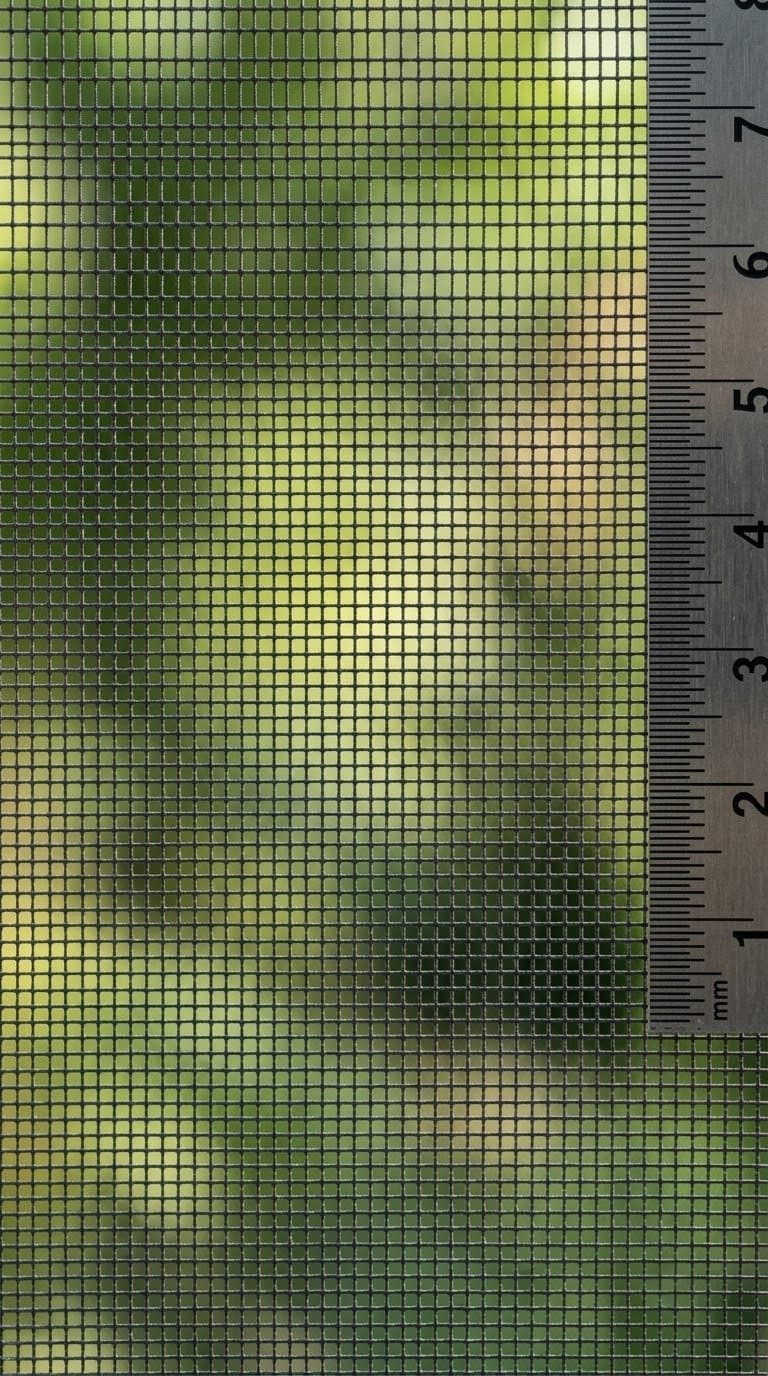
Any mesh with holes smaller than the adult insect’s body will keep the butterflies and both moths out, which in practice means roughly 7 millimeters and finer.
Go finer, down to about 0.8 millimeters, if you also deal with flea beetles, aphids, thrips, or cabbage root fly. Those pests need a much tighter weave than the caterpillar moths do.

Finer mesh does trim a little airflow and light. In a hot climate, watch covered plants for heat stress and water a bit more often than you would an open bed.
The average homeowner spends $616/year on yard fixes that don't address the real problem. Find out what yours actually is — before you spend another dollar.
Take the Free QuizFor most home gardens the simple answer is a general insect-barrier mesh around 0.8 to 1 millimeter. One net then covers every brassica pest at once, and you do not have to guess which one showed up this year.
When do I put the netting on?
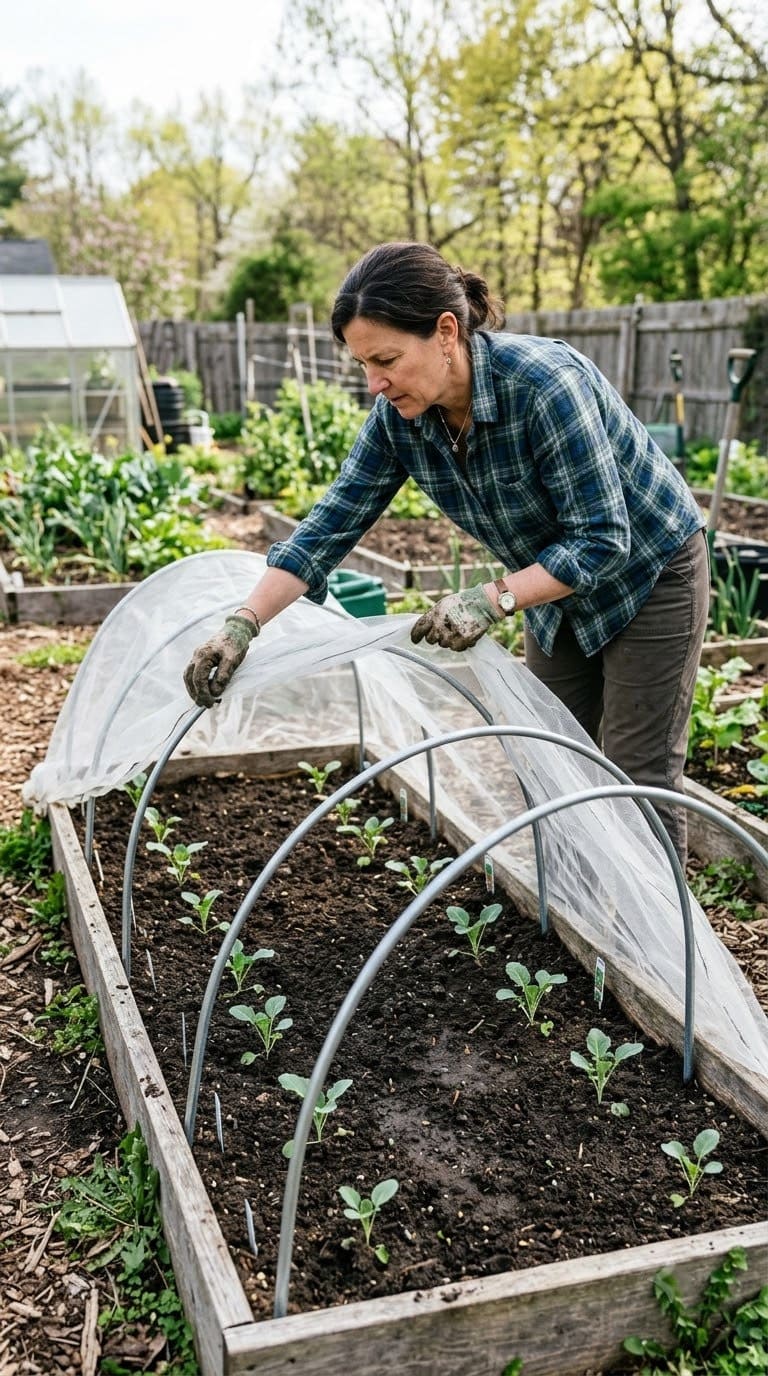
At transplant or at seeding. University of Wisconsin-Madison is blunt about it: row cover “must be put on at planting” for pest control.
The reason is what the net is doing. It is locking the adults out. If you cover a plant that already carries eggs or small caterpillars, you have instead locked the pest in, with no birds or parasitic wasps able to reach it.
So inspect your transplants before the net goes on. Cabbage white eggs are yellow and rice-grain shaped, usually on leaf undersides, laid singly. Rub off any eggs and squish any caterpillars you find.
If you are already past that point and the plants have caterpillars, spray Bt first, wait a few days, scout again, and only then cover.
How do I build the frame?
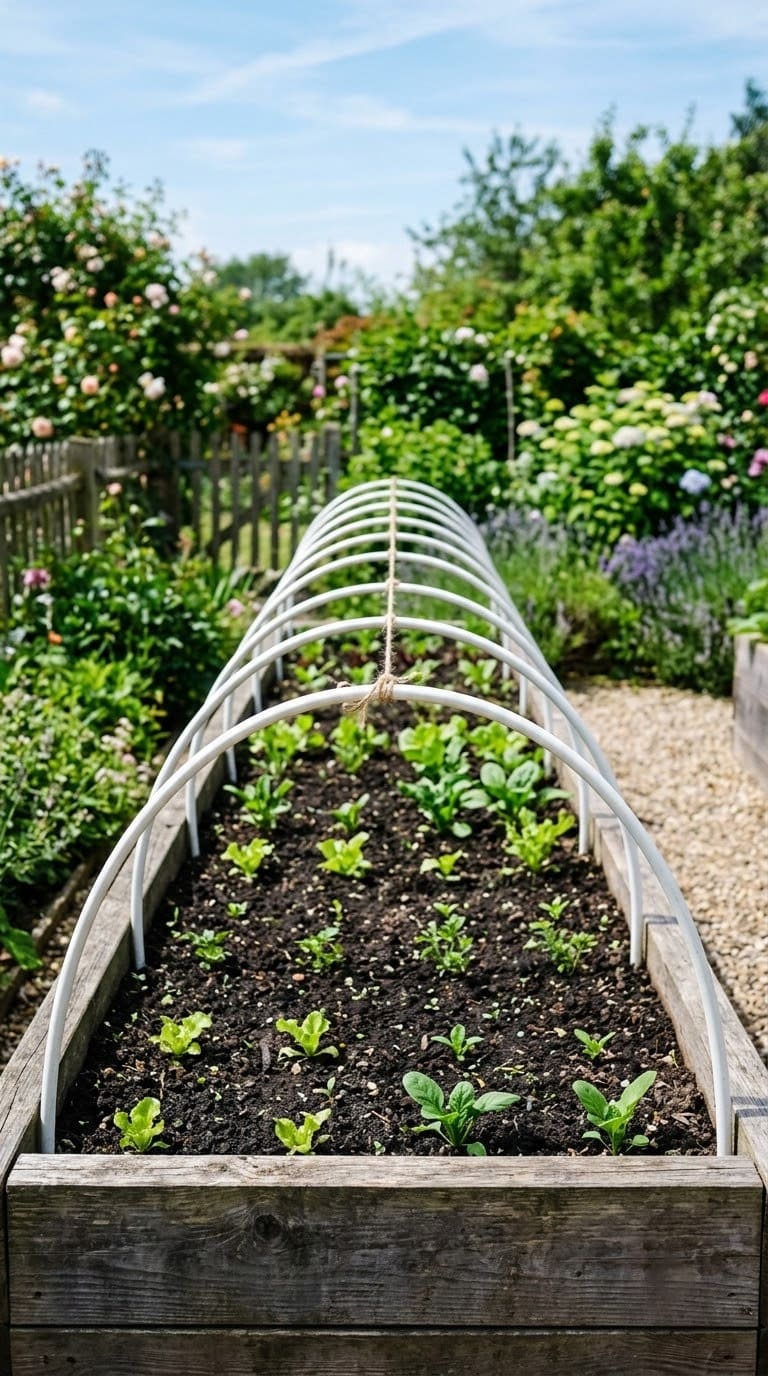
Set hoops every 3 to 4 feet down the bed. Fiberglass rod, 9-gauge wire, or half-inch PVC bent into a bow all work, pushed 6 to 8 inches into the soil on each side. Over a raised bed you can use hoop clips fixed to the sides.
Set the height for the crop’s finished size, not the transplant. The top of each hoop should clear the tallest leaves the plant will reach by 6 to 12 inches, and broccoli and collards get tall.
Run a ridge line along the tops, either a length of pipe or a tight string, so the net cannot sag onto the plants between hoops. University of Wisconsin-Madison notes that hoops matter because a cover resting on leaves can abrade them, and it also lets the adults lay through the mesh.
Drape the net over the frame with real slack in it. A drum-tight net presses against the hoop tops and against any leaf that reaches the mesh.
How do I seal the edges so nothing crawls or flies under?
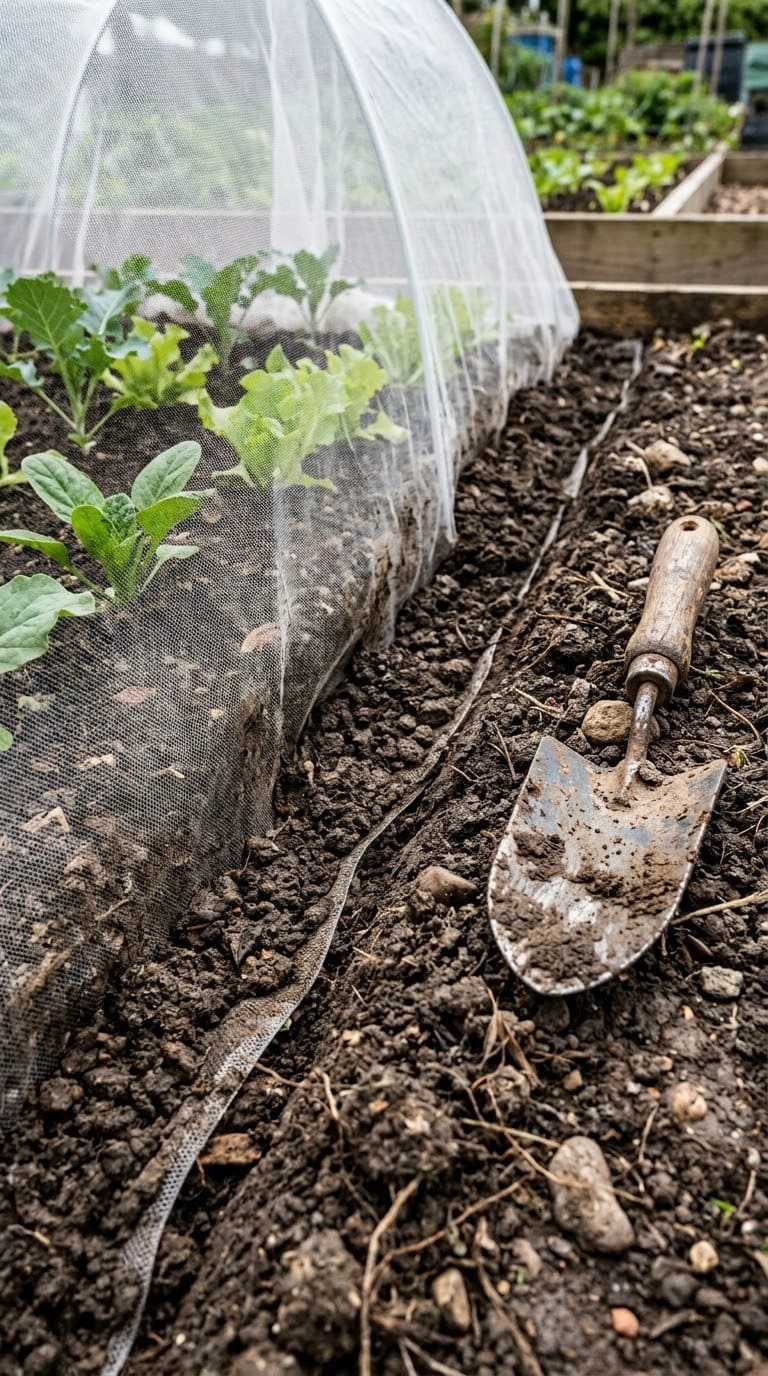
Bury them. University of Wisconsin-Madison puts it plainly: “you have to bury the edges completely if you’re using floating row cover for pest exclusion.” Open a shallow trench along each side of the bed, tuck the net in, and backfill.
If you cannot trench, lay a continuous weight along the whole edge instead. Soil, sand-filled fabric tubes, boards, or bricks all work, as long as the line is unbroken. Pinning only the corners leaves the long gaps open.
The seam between two pieces of net is the usual failure point. Overlap joined pieces by at least a foot and clip them every few inches, or sew the seam shut.
Then check the edges after every windy day and every time you have been under the net. One lifted corner overnight is all a female needs to get in and start laying.
Do I have to take the net off to water, weed, or fertilize?
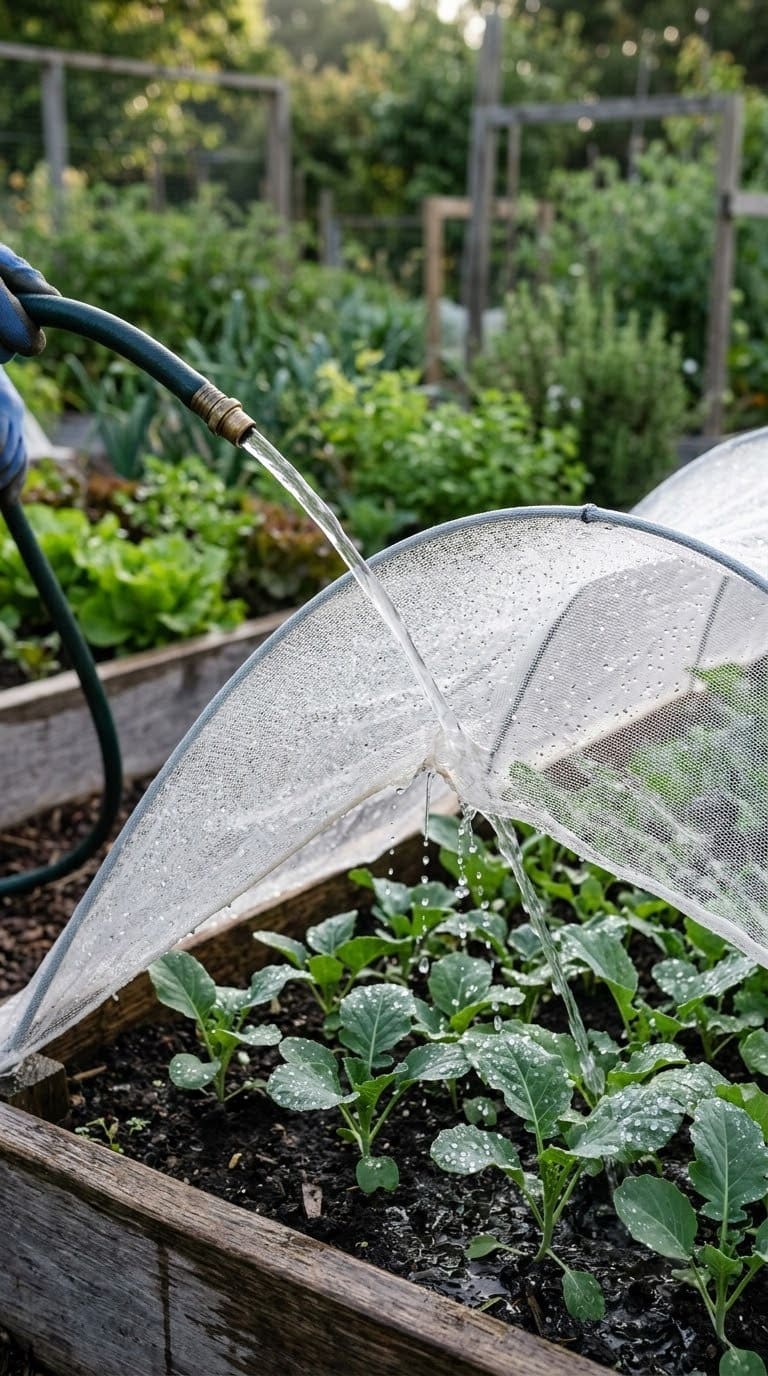
Mostly no.
Water goes straight through both mesh and row cover, so water over the top or run a drip line underneath before you cover. Liquid feed goes through as well, and granular fertilizer can be scattered under the lifted edge.
Weeding is the one job that means opening up. University of Wisconsin-Madison notes you will “periodically have to remove the row covers to eliminate weed seedlings.” Pull the brassica-family weeds first, since wild mustard and shepherd’s purse host the very same caterpillars.
Every time you open the net, pick a cool, dull, or early-morning window when the adults are not flying. Work quickly and reseal completely. An open net is an open door.
Pollination is not a concern here. Broccoli, cabbage, cauliflower, kale, and collards all form their edible parts without it, so unlike squash or cucumbers the cover never has to come off for bloom.
What if there are already caterpillars under the net?
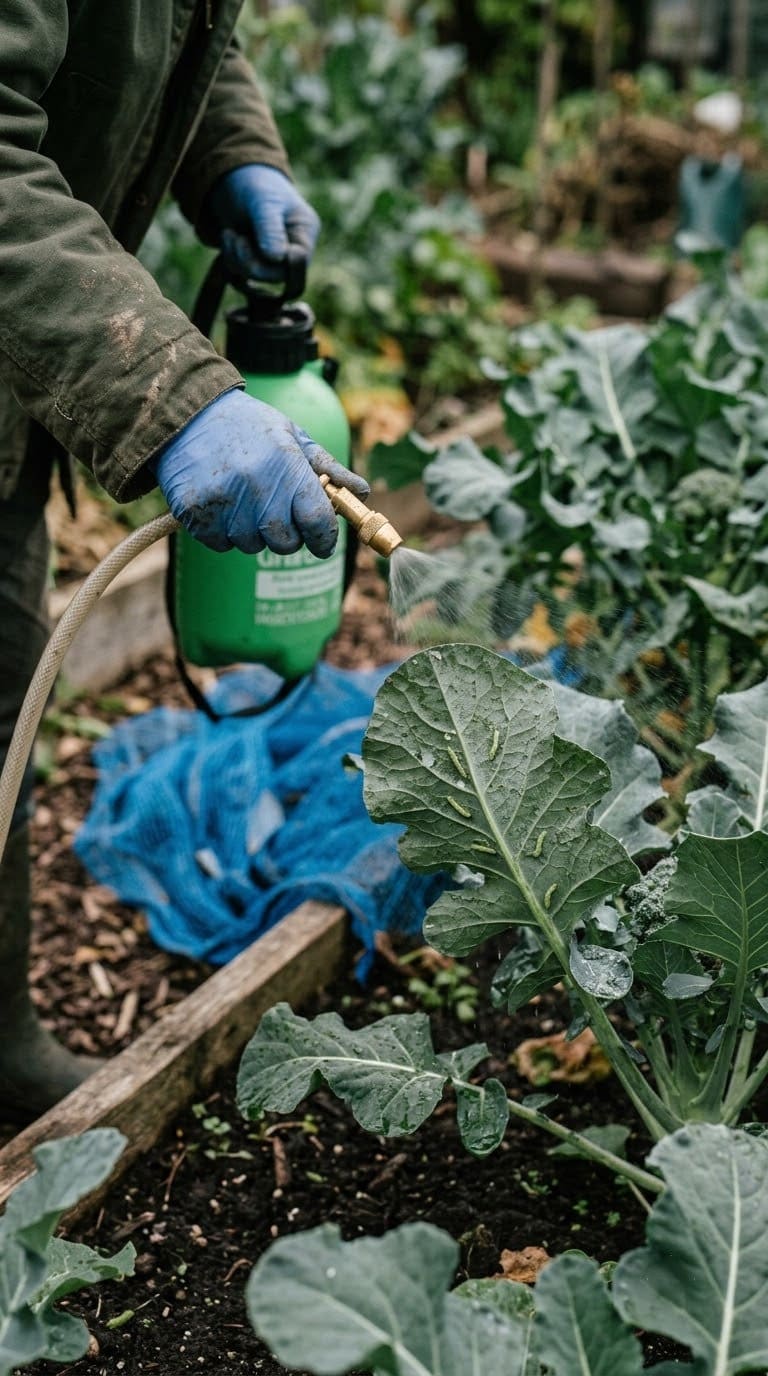
It happens. Eggs ride in on a transplant, a corner lifts, or the net touches a leaf.
Scout twice a week. Check the undersides of leaves and down in the heart of the plant, and remember that diamondback larvae drop on a silk thread when you disturb the leaf.
Utah State gives a threshold for head-forming brassicas: treat “when 1 larva has been found in 25 to 50 plants (or when 10% of plants have at least 1 larva).”
Bt kurstaki is the spray. It only works on small caterpillars, because, as Utah State explains, it “is a stomach poison that must be ingested” and “works best when caterpillars are young and actively feeding.” Cover the undersides of the leaves thoroughly.
Because diamondback moth resists some Bt products, rotate to a Bt aizawai product or to spinosad, which Utah State lists as effective on all three caterpillars. For a small bed, handpicking and dropping the caterpillars into soapy water works too, and costs nothing. Some gardeners also tuck in herbs that help against garden pests, though on brassicas that is a minor add-on next to the net.
Do I need to move the bed next year?

Yes. University of Wisconsin-Madison advises gardeners to “practice rotation practices to avoid planting susceptible crops in previously infested soil.”
Here is the trap with netting specifically. Cabbage looper and diamondback moth overwinter as pupae in the soil and in nearby plant debris. Seal a fresh net over the exact bed that grew brassicas last year, and the adults emerging from that soil are now under the cover, on the crop, with the net keeping their predators out.
Rotate your brassicas to a bed as far from last year’s as you can manage, ideally on a three-year cycle. It is the same planning habit behind companion planting against pests on other crops. Clear out old brassica stumps and leaves in the fall too, since they shelter overwintering pupae.
The cabbage netting setup cheat sheet
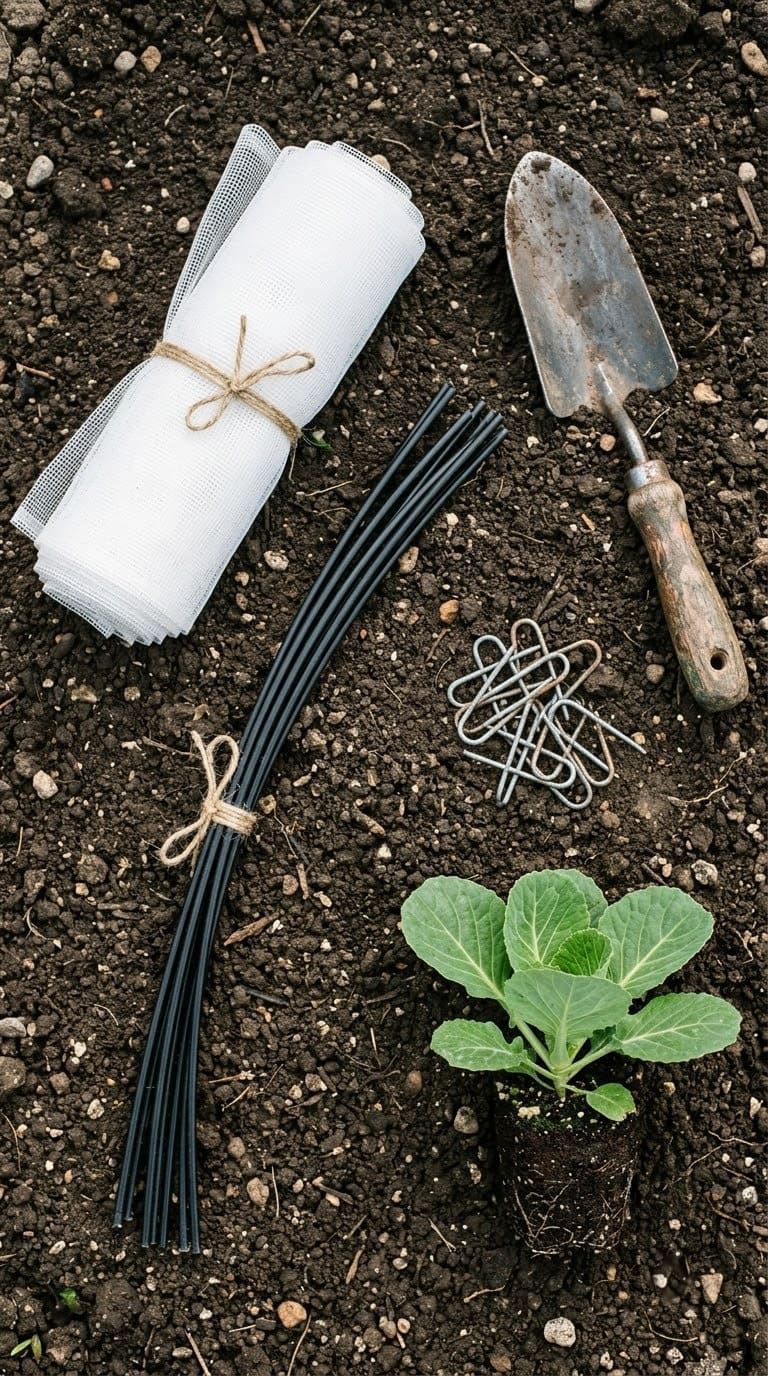
Run down this list before you clip the last edge.
| Step | Do this | Common mistake |
|---|---|---|
| Timing | Cover at transplant or seeding, before the whites fly | Covering plants that already carry eggs |
| Frame | Hoops every 3 to 4 feet, net 6 to 12 inches above the leaves | Net resting on foliage, so adults lay through it |
| Slack | Leave the net loose so plants grow into the gap | Pulling it drum-tight |
| Edges | Bury in soil, or weight the whole edge with boards or soil | Pinning only the corners |
| Access | Open from one end, reseal within a minute, on a cool or dull day | Leaving it open while you work |
| Weeds | Pull brassica-family weeds under the net | Leaving wild mustard as a caterpillar host |
| Rotation | New bed each year, away from last year’s brassicas | Sealing the net over last year’s infested soil |
| Backup | Bt kurstaki on young larvae, leaf undersides, if any get in | Waiting until the caterpillars are large |
A real netting-failure story
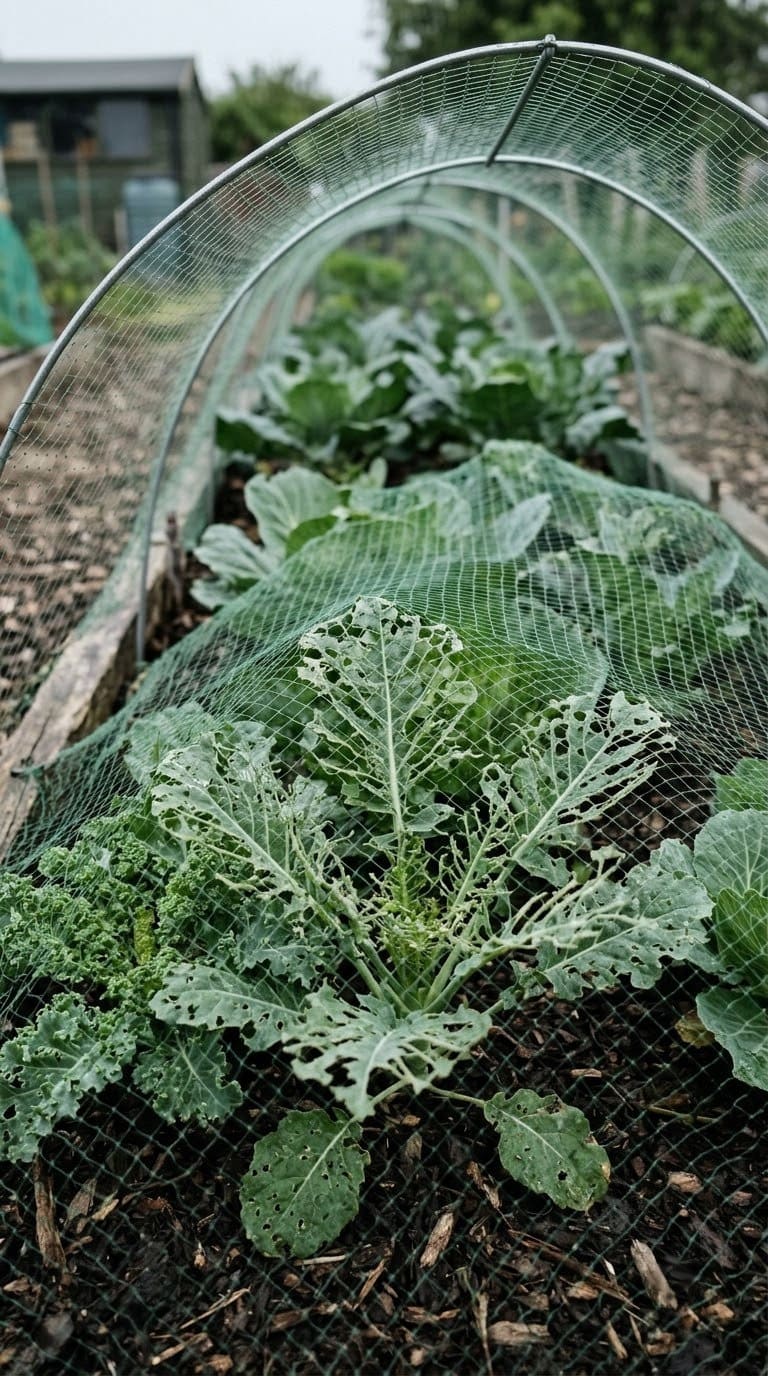
I netted a bed of fall broccoli, felt good about it, and still had lace for leaves three weeks later. Two mistakes did it.
The net was pulled tight and resting on the leaf tips, so the butterflies laid right through it. And I had never checked the transplants, which arrived from the nursery already carrying eggs.
The next spring I did it properly. A new bed, with tall hoops and a string ridge line for a foot of clearance.
The transplants got inspected, and two egg clusters got rubbed off. The edges went into a trench on all four sides, and the net only opened at dawn to pull weeds.
That bed produced clean broccoli with no spraying at all. The net was never the point. The gap-free, off-the-leaves, on-from-day-one setup was the point.
FAQ
Does netting really stop cabbage worms completely? Yes, if it is a true barrier. It has to go on at transplant, sit off the foliage on hoops, and have every edge sealed to the ground. A single gap at a seam or corner makes it nearly useless, because one female laying inside is all it takes.
Can I just use Bt instead of a net? You can, but it is a repeat-spray chase. Bt only kills small caterpillars, so you are scouting and spraying every week or so all season. A net stops the adults, so there is nothing to spray in the first place.
Will the net stop bees and hurt my harvest? No. Broccoli, cabbage, cauliflower, kale, and collards form heads and leaves with no pollination at all. You only need to lift covers for fruiting crops like squash and cucumbers.
What mesh size do I actually need? Roughly 7 millimeters stops the cabbage whites and both moths. Drop to about 0.8 millimeters if you also want to block aphids, flea beetles, and cabbage root fly, which a general insect-barrier mesh will do.
How long do I leave the net on? All season for cole crops. Take it off only to weed, then reseal it, and at the end of the season remove it gradually so the plants harden off rather than getting hit by full sun and wind at once.
Do I still have to rotate the bed if I net every year? Yes. Cabbage looper and diamondback moth pupae overwinter in the soil, and a sealed net over last year’s brassica bed can trap the emerging adults on top of your new crop.
Related Posts
Products We Recommend
This post contains affiliate links. We may earn a commission on qualifying purchases at no extra cost to you.
Agfabric 16-by-30-Foot Garden Insect Netting
Fine insect-barrier mesh to exclude cabbage whites, moths, and smaller pests
Shop Now
Garavigo Garden Hoops Kit (40 pieces)
Holds the net off the foliage over a bed or row so adults cannot lay through it
Shop Now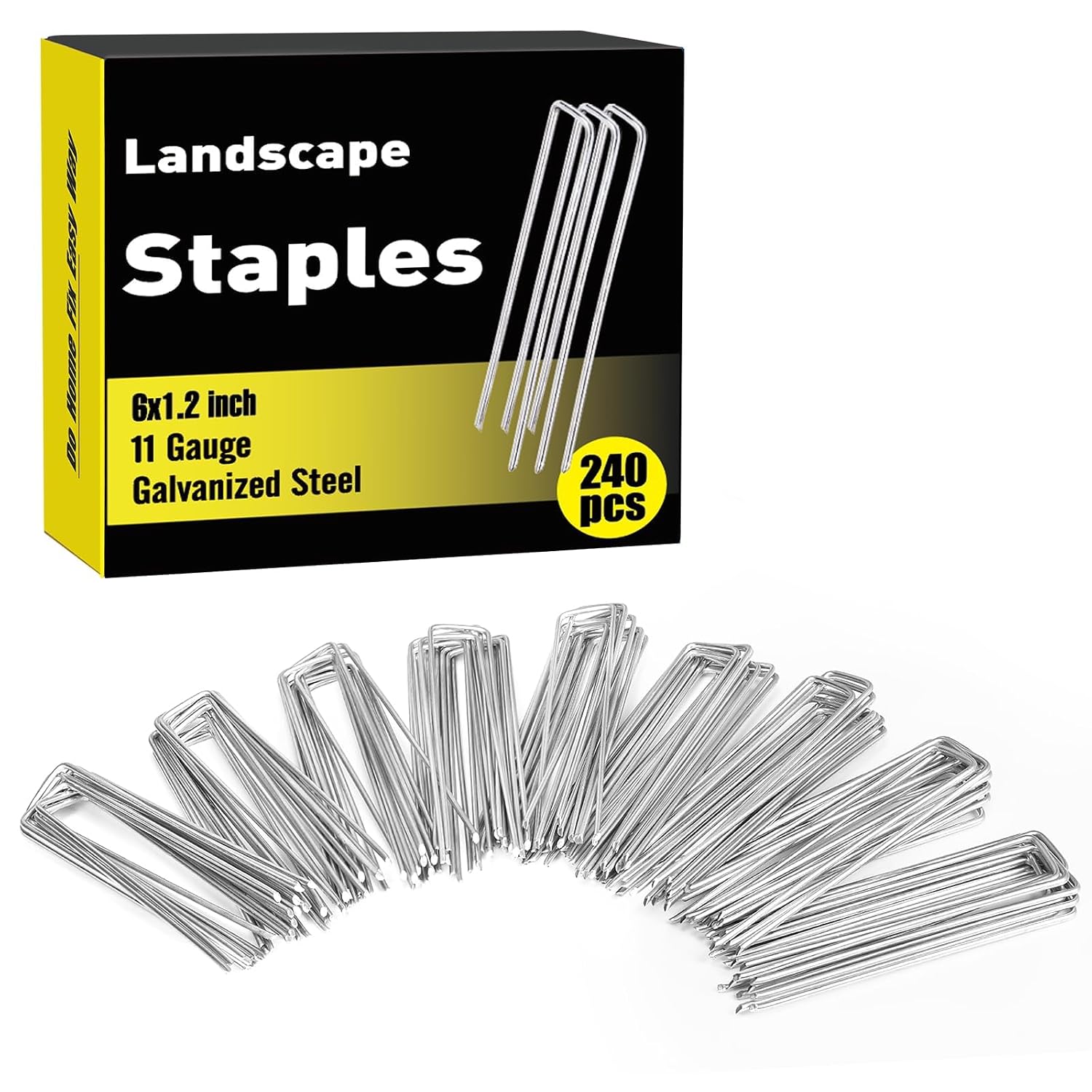
HongWay 6-Inch Landscape Staples (240 pack)
Pins the netting edge to the ground in a continuous line so nothing gets under
Shop NowNever miss an update — choose FarmFoodFamily as your preferred source on Google.
How it works: Tap the button below to open Google's settings page, then check the box next to FarmFoodFamily.
Tap the checkbox to turn it blue — that's how you know it's set.