Where to Position a Koi Pond for Good Luck, According to Feng Shui Experts
The short answer: southeast or east, visible from the house, angled so the water appears to flow toward you, not away, but the placement rule is only half the story once real fish and real water depth are involved.

Never miss an update — choose FarmFoodFamily as your preferred source on Google.
How it works: Tap the button below to open Google’s settings page, then check the box next to FarmFoodFamily.
Tap the checkbox to turn it blue — that’s how you know it’s set.
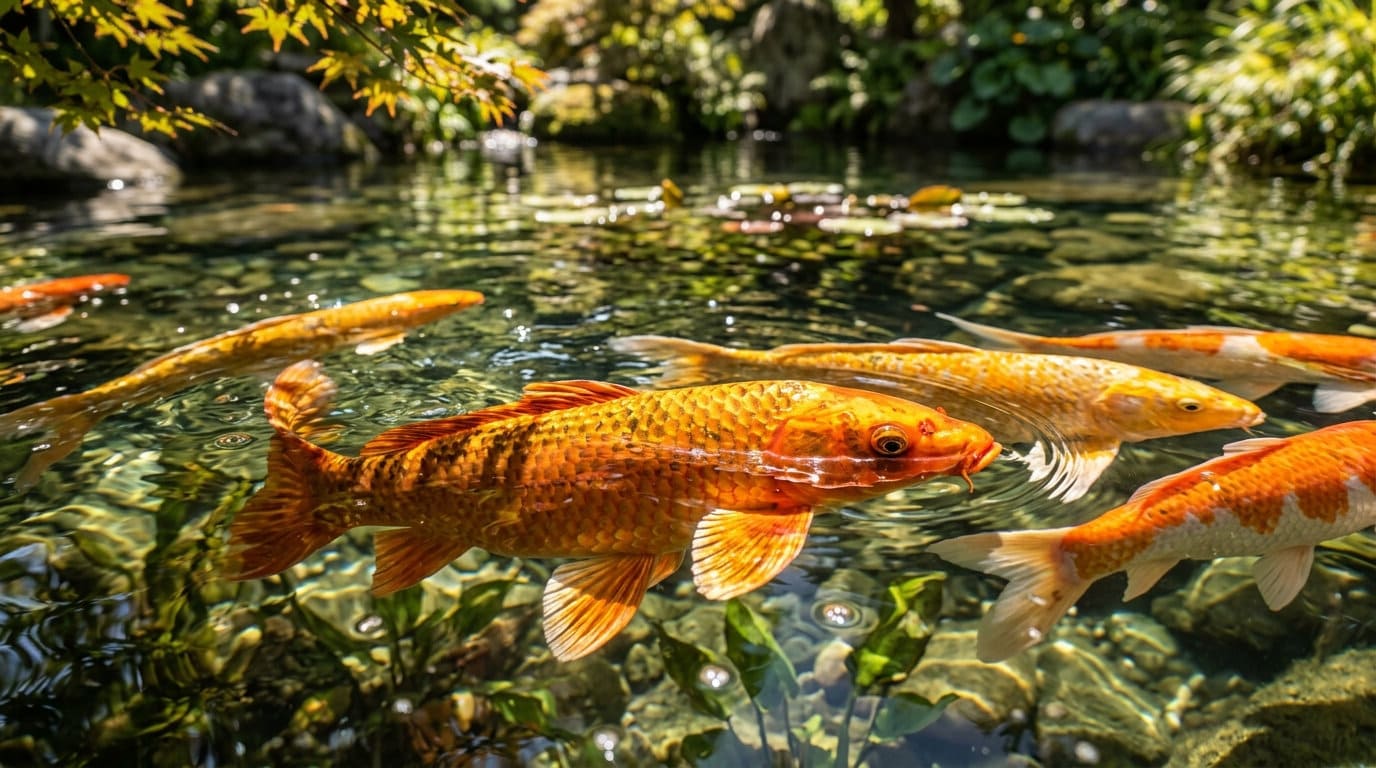
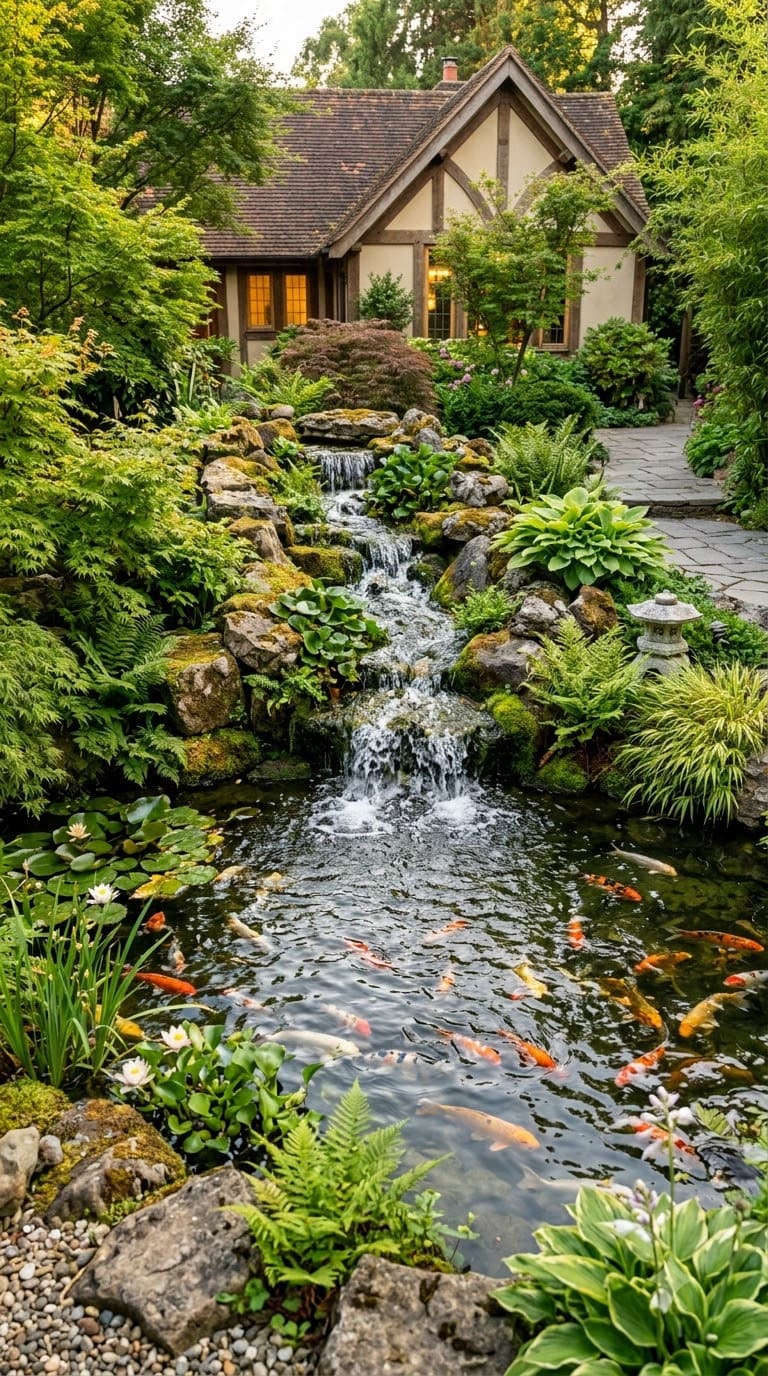
A koi pond is one of the more ambitious water features a homeowner can add, and feng shui treats it as correspondingly high-stakes. Water carries wealth energy more directly than almost any other element, and koi specifically are tied to abundance and perseverance (the old story of the koi swimming upstream to become a dragon).
Get the placement right and it’s meant to be one of the strongest luck-boosting features you can add to a property.
Get it wrong, or skip the very real safety questions a body of open water raises, and you’ve traded a decorative feature for an actual liability.
The best direction: southeast or east
Kathryn Weber, publisher of the Red Lotus Letter and a certified feng shui consultant, treats generating water, ponds, fountains, and aquariums included, as a wealth-activating feature when it’s placed correctly.
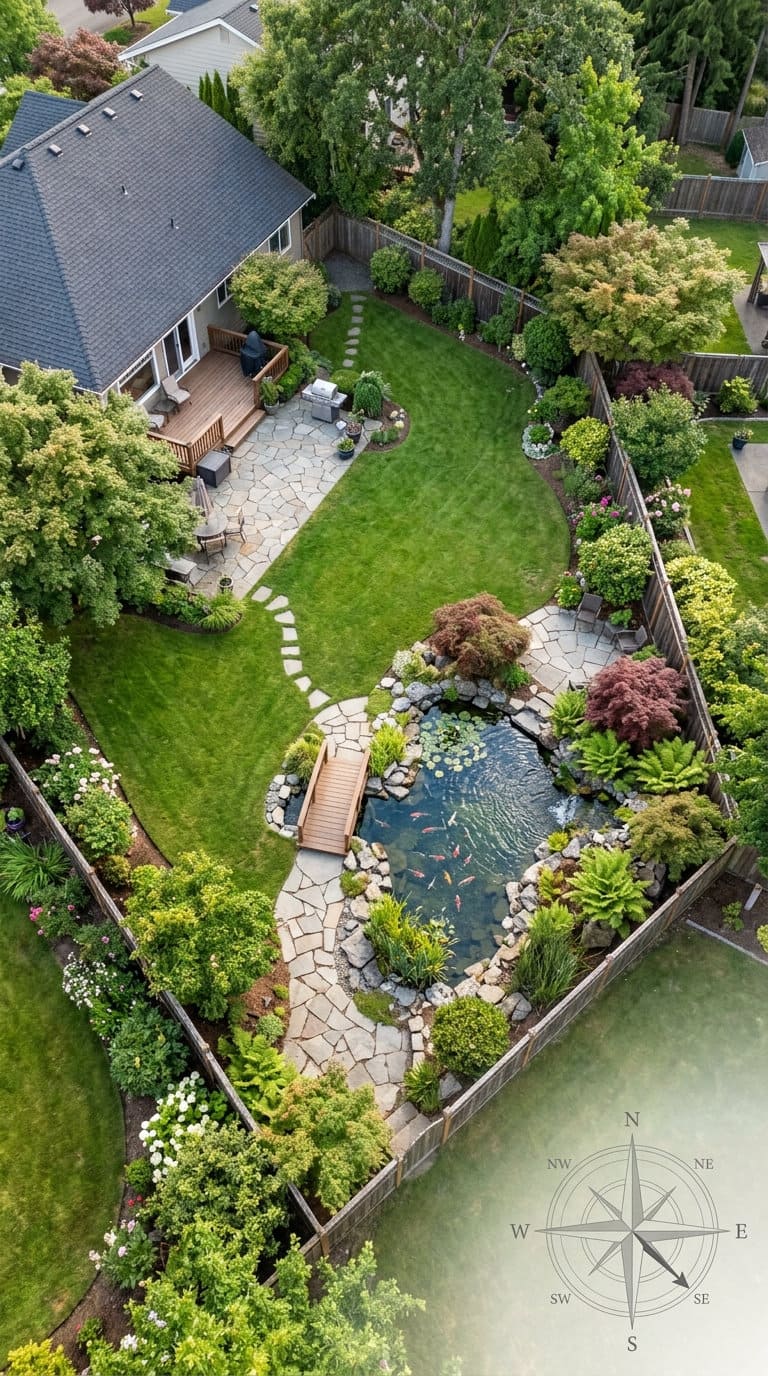
The consistent guidance across feng shui sources: southeast is the strongest “wealth corner” for a pond, with east (associated with growth, family, and new beginnings) as the next-best option.
Position the pond toward the front of the property, ideally visible from inside the house rather than tucked somewhere you never see it.
Answer 4 quick questions and get matched to the exact fix for your yard — drainage, budget, layout, or something else entirely.
Take the Free QuizA pond you can see from a window or the main living area keeps its wealth energy “active” in daily awareness instead of forgotten in a back corner, our small ponds with waterfalls gallery has real examples sized for a front-of-house placement.
Directions to actively avoid
South is specifically flagged as the direction to skip: it’s associated with the fire element, and fire and water are considered clashing, contradictory energies in the five-element system, placing a pond there is thought to create friction rather than flow.
Southwest is the second direction to avoid, tied to relationship energy, and a water feature there is thought to create blockages in that part of life rather than support it.
Keep real distance and visibility, don’t crowd the house
Don’t place the pond directly against the entrance or main door. Both real competitor sources on this exact topic agree here for a practical reason as much as a symbolic one: a pond right next to a doorway obstructs foot traffic and makes routine maintenance (netting debris, checking the filter) genuinely harder.
The better placement is set back somewhat, often described as slightly to the side of the main entrance rather than dead-center in front of it, close enough to see, far enough not to be underfoot.
Get the water flow direction right
If your pond includes a fountain, waterfall, or any moving water feature, the flow should visually move toward the house, not away from it. Water flowing away from the home is read the same way an infinity pool edge is: energy (and by extension, wealth) draining off the property instead of settling into it.
A waterfall or spillway angled so the water appears to return toward the main living space keeps this rule satisfied without needing exact compass precision.
Most yard problems trace back to one specific, fixable cause. Find yours in 4 quick questions.
Take the Free Quiz
A practical protective layer over the pond surface, pairs with (doesn't replace) the CPSC fencing standard for child safety
Shop NowThis post contains affiliate links. We may earn a commission on qualifying purchases at no extra cost to you.
The pond shape matters, but less rigidly than you’d expect
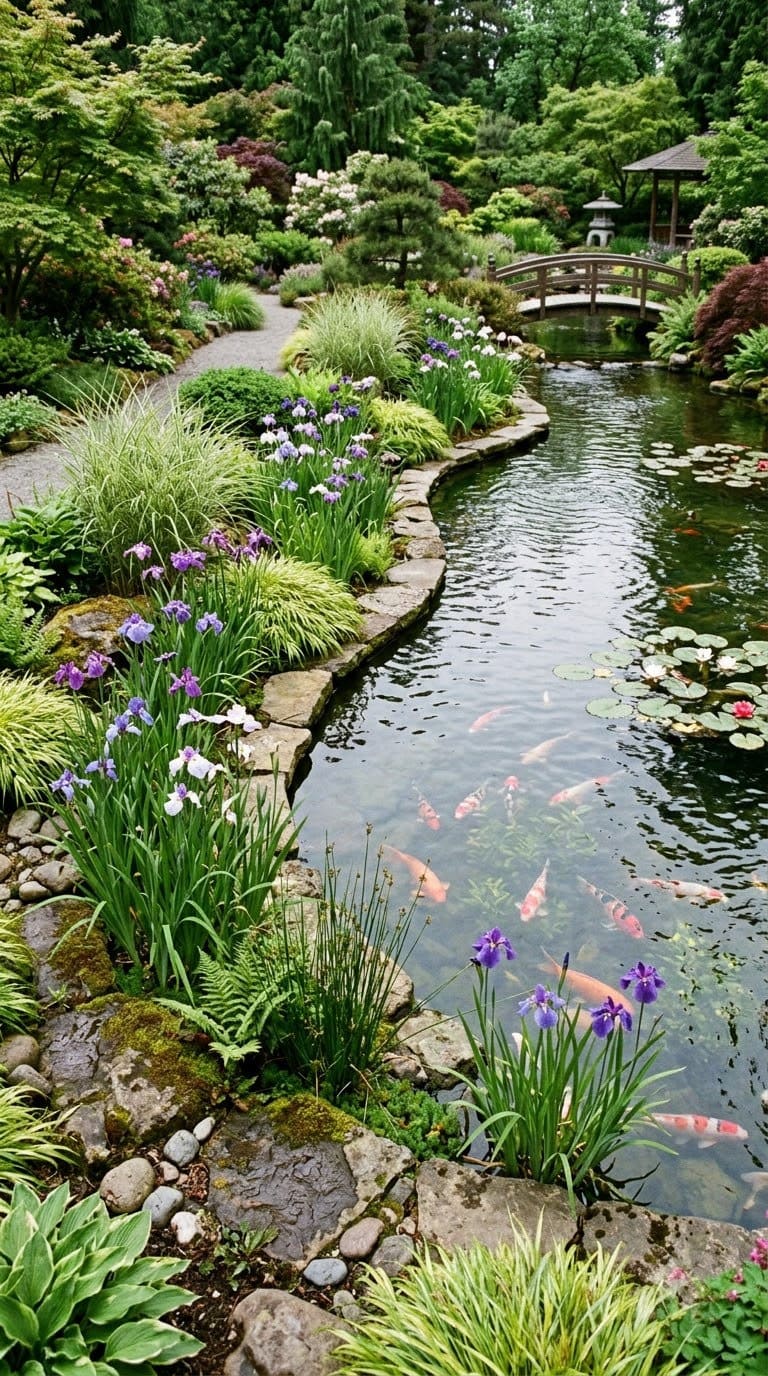
Round, oval, or naturally curved pond shapes are the most commonly recommended, consistent with the same “avoid sharp poison-arrow angles” principle that applies to garden pathways and pool shapes. Unlike those two, though, koi pond guidance is somewhat more forgiving here since ponds are often built to fit an existing garden layout rather than a blank slate.
If your space only works with straighter edges, softening the corners with dense marginal planting, iris, water lilies, or ornamental grasses at the pond’s edge, achieves most of the same effect, see our pond edging ideas for real planting combinations that do this well.
The fish tradition almost no design-focused guide mentions: 9 koi, 8 red or gold and 1 black
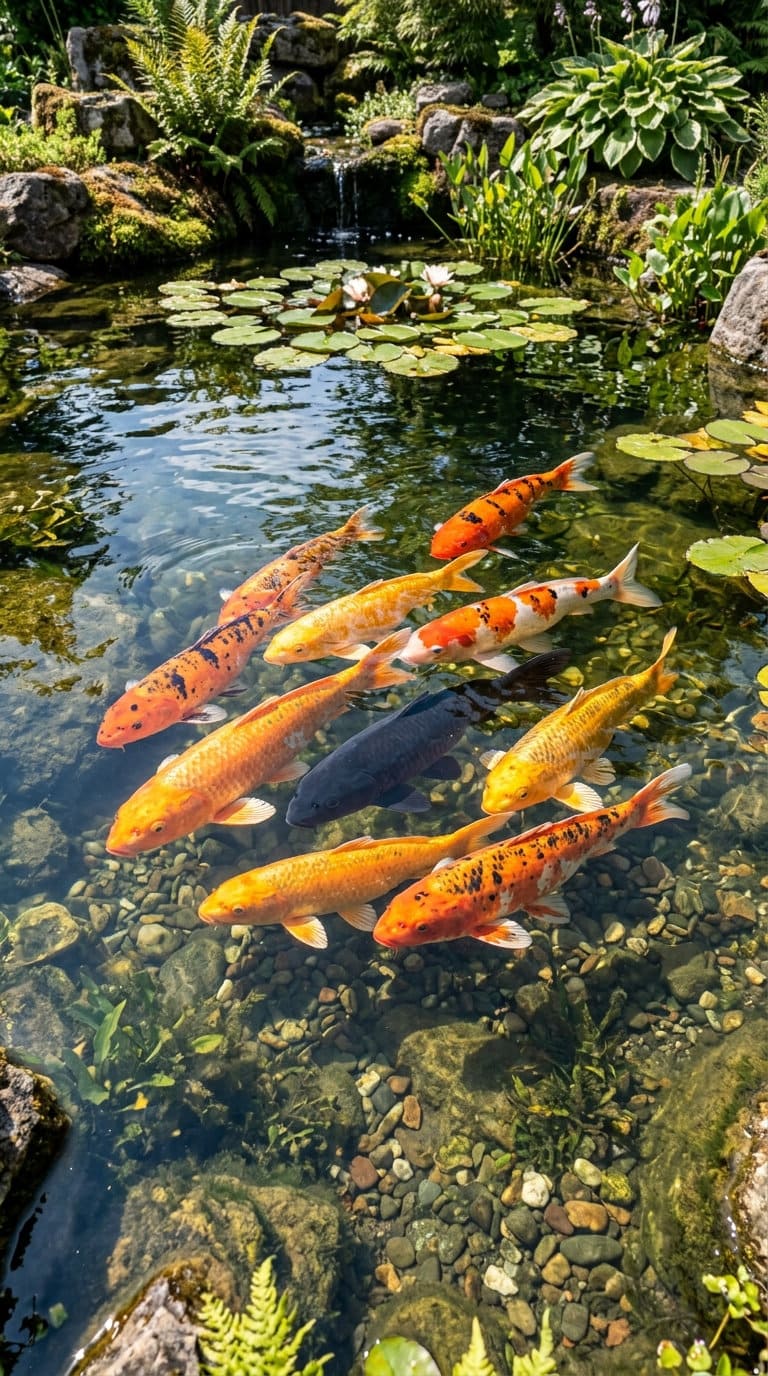
This is one of the most specific and widely repeated pieces of koi feng shui tradition, and it’s the detail both real competitor articles checked for this piece leave out entirely in favor of pure landscaping advice.
The traditional configuration is 9 koi total: 8 red or gold fish plus 1 black fish. The 8 bright-colored koi are believed to actively gather and multiply prosperity, while the single black koi is believed to absorb negative energy (sha chi) on their behalf, acting as a kind of protective anchor for the group.
You don’t need exactly 9 fish for a pond to “work,” but if you’re stocking intentionally with feng shui in mind, this is the configuration most consistently cited across sources, and it’s worth knowing before you default to whatever count your local koi dealer happens to have in stock that week.
The safety layer no feng shui guide covers, and it matters more than the compass direction
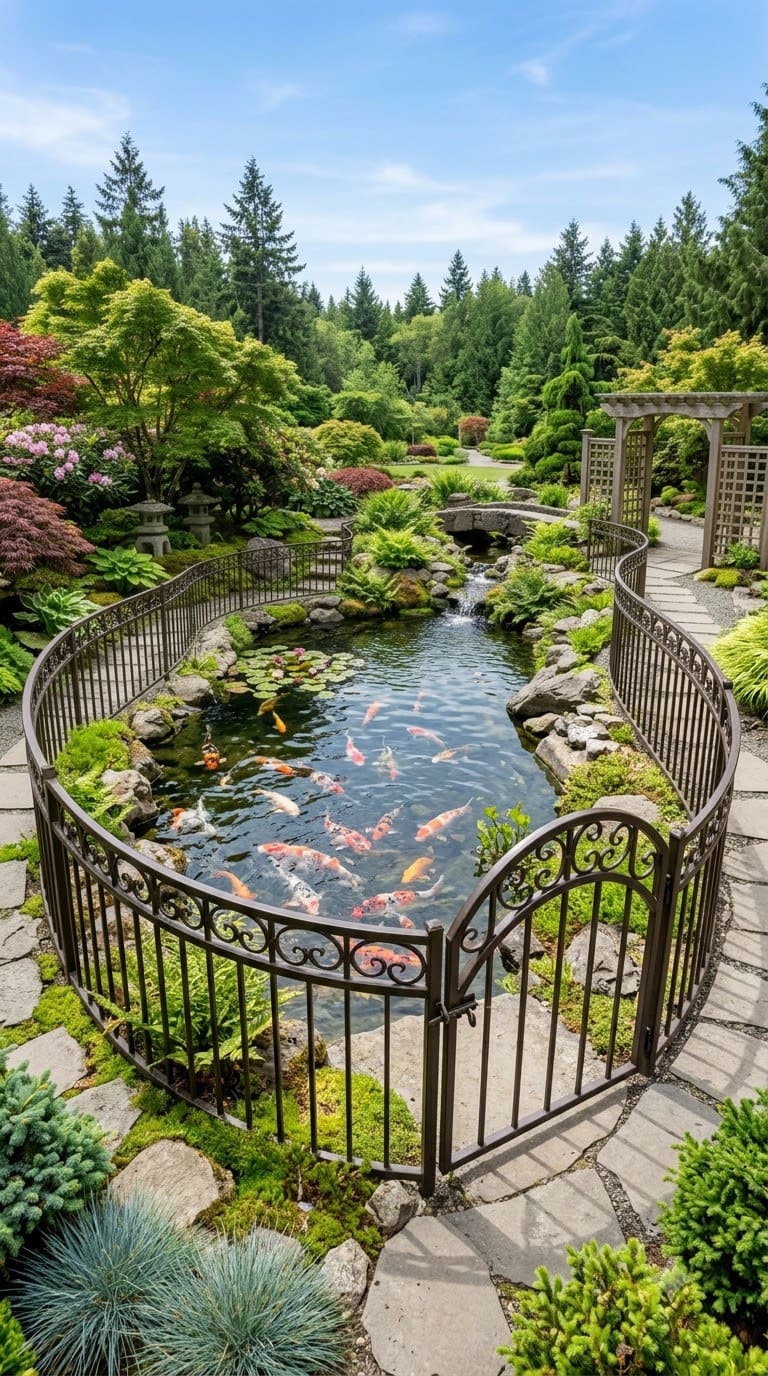
This is the gap in every source checked for this piece, including both direct competitors. A koi pond is open, standing water, often 2 to 4 feet deep, sitting at ground level in a yard, and the U.S. Consumer Product Safety Commission explicitly names decorative ponds and fountains, not just pools and spas, in its drowning-prevention guidance.
For homes with a pool, spa, or ornamental pond, CPSC recommends a fence at least 4 feet high fully separating the water from the house and yard, with a self-closing, self-latching gate, the same standard covered in more detail in our backyard pool feng shui guide.
This isn’t a reason to skip a koi pond, it’s a reason to treat the safety layer as non-negotiable alongside the placement rules, especially with young children or grandchildren who visit.

A pond that’s feng shui-perfect and unfenced is a real hazard first and a design feature second.
The average homeowner spends $616/year on yard fixes that don't address the real problem. Find out what yours actually is — before you spend another dollar.
Take the Free QuizGet the depth and stocking right, or the “clean, moving water” rule fails on its own
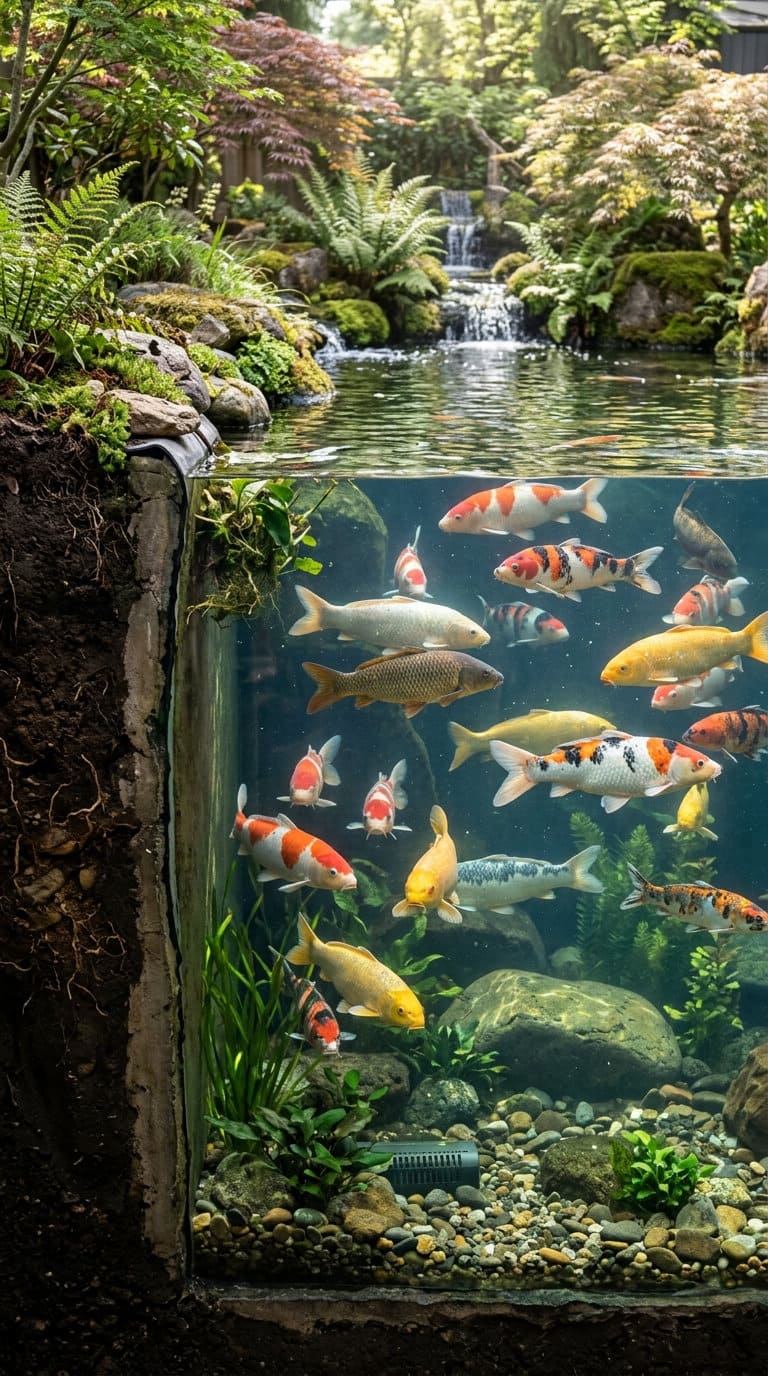
Feng shui wants the water clear and actively circulating, stagnant water traps stagnant energy, but that’s also just correct koi husbandry, not a symbolic add-on.
The Koi Club of San Diego, a real hobbyist authority organization, recommends a minimum depth of 3 feet for a genuinely healthy koi pond (shallower water heats up faster, stresses fish, and clouds more easily) and stocking guidance well under the “how many fish fit” instinct most new pond owners default to, doubling a fish’s length roughly multiplies its waste output tenfold, so an overstocked pond turns cloudy and stagnant no matter how good your filter is.
A properly stocked, adequately deep pond is easier to keep clear, which is the actual mechanism behind the “keep the water moving” feng shui advice, not a coincidence. Our guide on how water aeration can help your pond stay beautiful goes deeper into the mechanics of this.
Koi pond feng shui at a glance
| Factor | Feng shui guidance | Real-world backing |
|---|---|---|
| Direction | Southeast (best), east (next-best) | Consistent across feng shui sources |
| Directions to avoid | South, southwest | Five-element clash logic |
| Water flow | Toward the house, not away | Same logic as infinity-pool edges |
| Fish count | 9 total: 8 red/gold, 1 black | Most consistently cited tradition |
| Depth | 3+ feet | Koi Club of San Diego stocking guidance |
| Safety | 4-foot fence, self-latching gate | CPSC decorative-pond drowning guidance |
What we learned the hard way
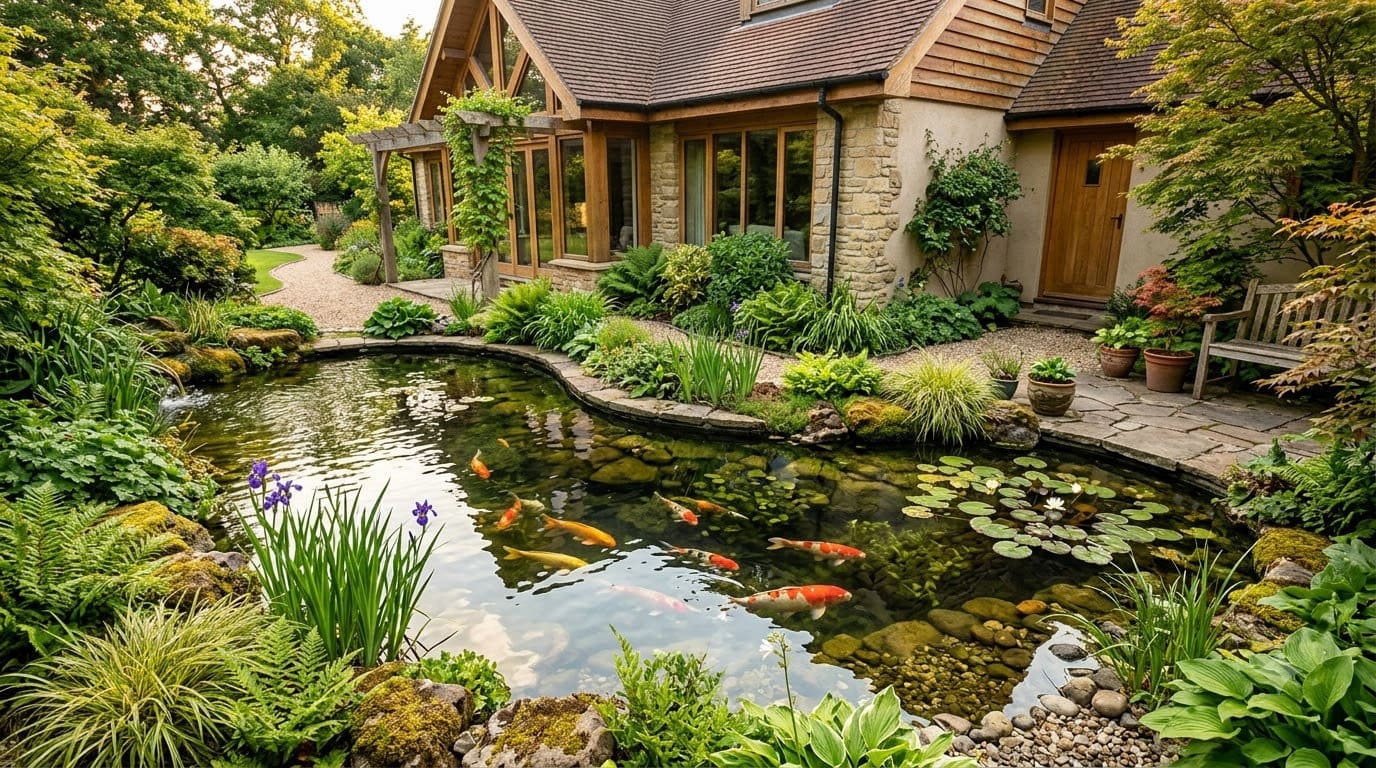
The safety fence is the thing people budget last and regret skipping first. It’s easy to treat a garden pond as inherently lower-risk than a swimming pool because it’s smaller, but CPSC’s own guidance puts decorative ponds in the same drowning-risk category as pools for a reason, small children don’t need much water depth to be in real danger.
Overstocking is the second regret that shows up almost every season. A pond that looked perfectly stocked with young 4-inch koi can be genuinely crowded within two to three years as they grow toward 12-18 inches, and by then, retrofitting a bigger filter system or adding a second pond is a much bigger project than starting with realistic stocking numbers from day one.
FAQs
Can I place a koi pond in my backyard instead of the front? Yes. The southeast/east direction guidance applies regardless of front or back yard, what matters is the compass sector relative to your house, not whether it’s in view of the street.
Does the pond need to be visible from inside my house? It’s preferred but not mandatory. Visibility keeps the wealth energy “active” in daily awareness, but a pond you walk past regularly, even outdoors, still counts.
How many koi should I actually get? The traditional feng shui configuration is 9 (8 red/gold, 1 black), but the more important number is what your pond can actually support: use the Koi Club of San Diego’s depth and stocking guidance so the pond stays healthy enough for the “clean, moving water” feng shui principle to hold up in practice.
Do I really need a fence around a decorative pond? Yes, if young children have any regular access to the yard. CPSC specifically includes decorative ponds in its drowning-prevention guidance alongside pools and spas, a 4-foot fence with a self-latching gate is the standard recommendation.
Related reading on farmfoodfamily.com: if you’re leaning toward a fountain instead of (or alongside) a koi pond, see our DIY garden fountain landscaping ideas for how the two water features can work together in the same yard. For the full safety-code breakdown this article references and for pathway placement rules using the same “poison arrow” logic, see our feng shui backyard pool and garden pathway guides
Related reading on farmfoodfamily.com: if you’re leaning toward a fountain instead of (or alongside) a koi pond, see our DIY garden fountain landscaping ideas for how the two water features can work together in the same yard. For the full safety-code breakdown this article references and for pathway placement rules using the same “poison arrow” logic, see our feng shui backyard pool and garden pathway guides.
Related Posts
- 7 Feng Shui Rules for Your Backyard Pool You Should Know Before You Swim
- 25 Beautiful Small Ponds with Waterfalls for a Peaceful Outdoor Retreat
- 5 Vital Things You Need to Know About Your Garden’s Pathway in Feng Shui
- Backyard Duck Pond Ideas
- Pond Edging Ideas
- How Water Aeration Can Help Your Pond Stay Beautiful
- DIY Garden Fountain Landscaping Ideas
Products We Recommend
This post contains affiliate links. We may earn a commission on qualifying purchases at no extra cost to you.
Koi Pond Netting Cover (7x10ft, stakes included)
A practical protective layer over the pond surface, pairs with (doesn't replace) the CPSC fencing standard for child safety
Shop Now
JNW Direct 7-in-1 Pond Water Test Kit
Supports the real water-quality maintenance behind the "clean, moving water" rule
Shop Now
Antfraer Solar Pond Pump & Aerator (1200GPH)
Keeps water moving and oxygenated, ties to both the feng shui flow rule and real koi health
Shop NowNever miss an update — choose FarmFoodFamily as your preferred source on Google.
How it works: Tap the button below to open Google's settings page, then check the box next to FarmFoodFamily.
Tap the checkbox to turn it blue — that's how you know it's set.