Planting Along Garden Paths: Fragrant Pollinator Borders That Keep Bees Around
A path border does two jobs at once. It releases scent every time you brush past, and it gives bees a strip of food they can work all season, so they nest nearby instead of just passing through.

Never miss an update — choose FarmFoodFamily as your preferred source on Google.
How it works: Tap the button below to open Google’s settings page, then check the box next to FarmFoodFamily.
Tap the checkbox to turn it blue — that’s how you know it’s set.
The path is the part of the garden you actually touch every day. You walk it to the shed, to the compost, to the car, a dozen times without thinking about it.
Line that path with the right plants and every one of those trips smells of lavender and warm thyme, and hums quietly with bees working the flowers a few inches off your elbow. It turns a bit of dead ground into the most-used feature in the garden.
The catch is that a path border is not the same as a back border. You brush it, you walk beside it, and children and dogs use the path too. The plants and the layout both have to be chosen for that.
Quick Answer
A fragrant pollinator path border is a narrow planting along a walkway, built from aromatic-leaved plants like lavender, catmint, and anise hyssop, and arranged so bees have something in flower from spring through fall.
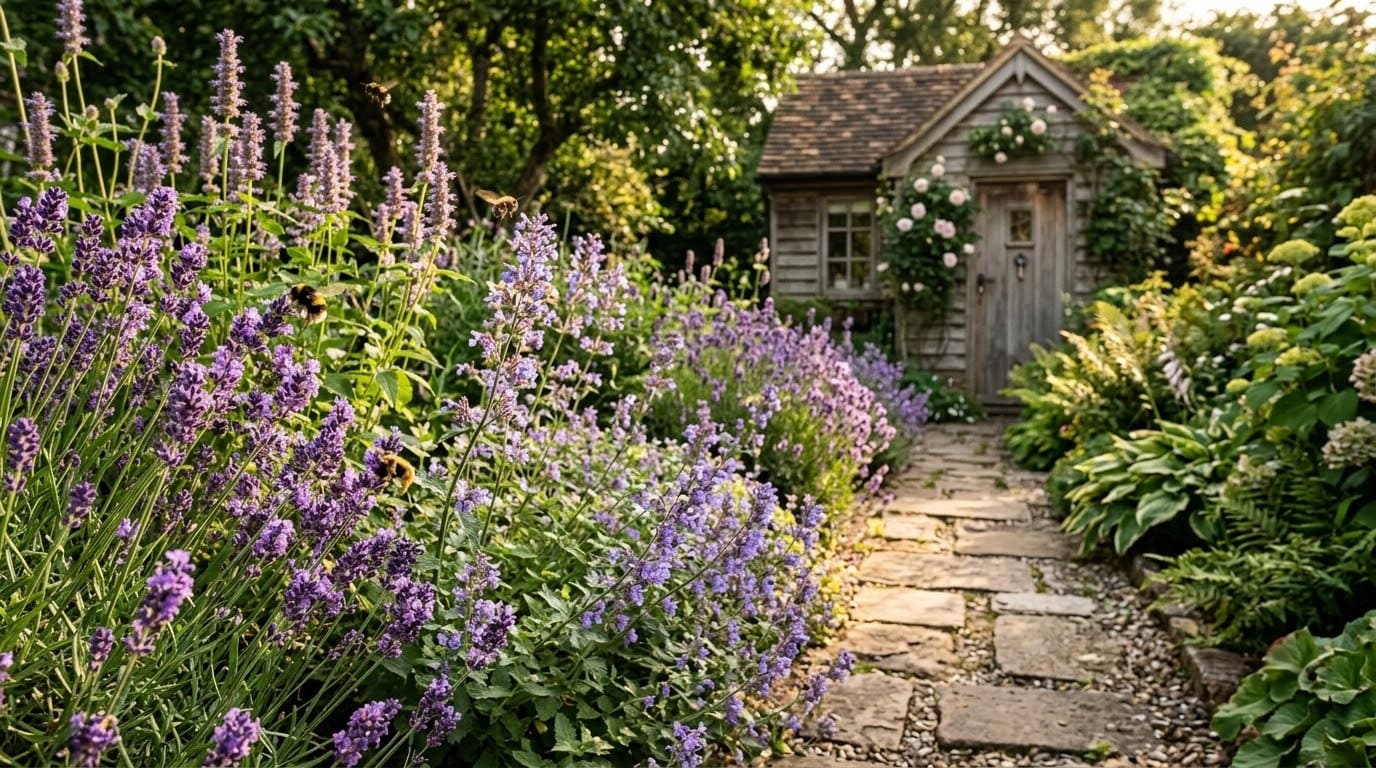
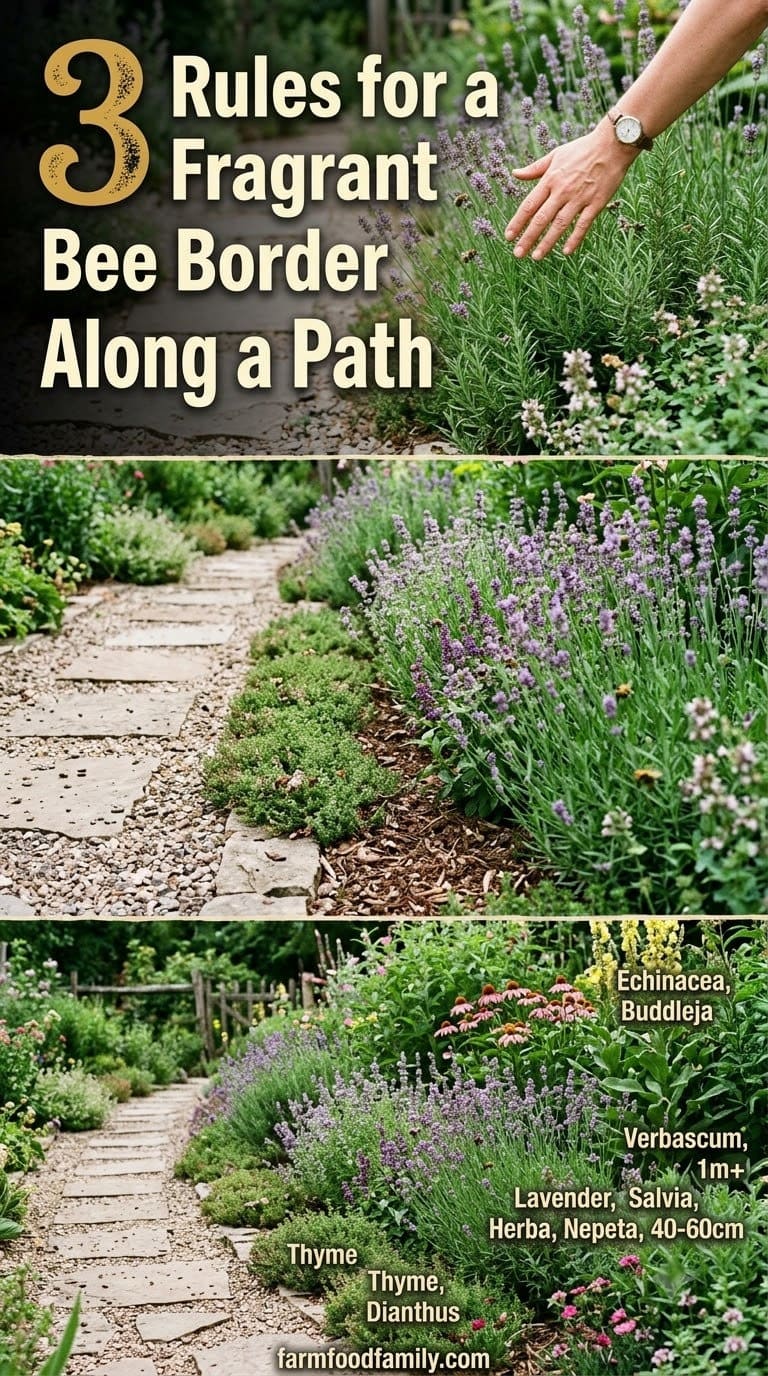
Choose plants whose foliage carries the scent, rather than just the flowers, because you brush the planting as you walk. Set the strip back a hand’s width from the path edge so foraging bees stay up at flower height rather than down on the tread.
Put low mounders at the front and taller spires behind, since you look along a path rather than at it. Plant in clumps, not singles. Per Penn State Extension, buy “3 or more” of each plant and group them so pollinators find them.
Answer 4 quick questions and get matched to the exact fix for your yard — drainage, budget, layout, or something else entirely.
Take the Free QuizTo keep bees resident rather than passing through, give them a bloom succession, a shallow water dish, a patch of undisturbed bare soil for nesting, and no pesticides near the border.
Why plant along the path instead of in a back border?
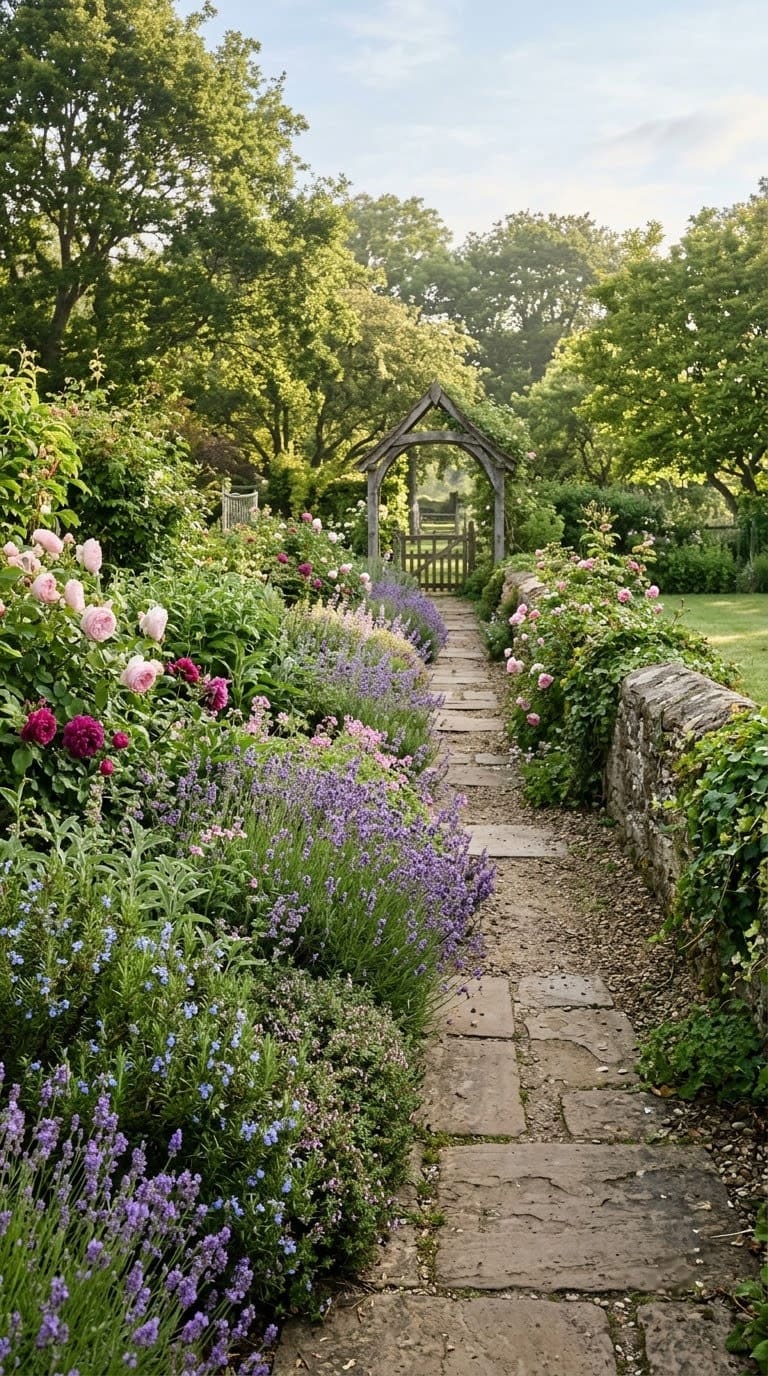
A back border you smell twice a year, when you happen to walk out to it. A path border you smell every single day, because you cannot avoid it.
That daily contact is the whole point of using aromatic plants here. Brush past lavender or catmint on the way to the bins and the scent lifts on its own, no need to bend down and crush a leaf on purpose.
The path also does you a design favor. It is a defined strip with a hard edge, which forces a tidy front-to-back plan and stops a pollinator planting from turning into a shapeless sprawl. And it concentrates the forage into a line that bees learn and patrol, so the whole planting feels busier than the same plants scattered around a lawn.
What the path takes away is slack. You have to plan around brushing, foot traffic, sightlines down the walkway, and the kids and the dog who also use it. The rest of this guide is about designing for those limits, and our garden path ideas cover the hardscape underneath.
Which plants give you scent when you brush past?
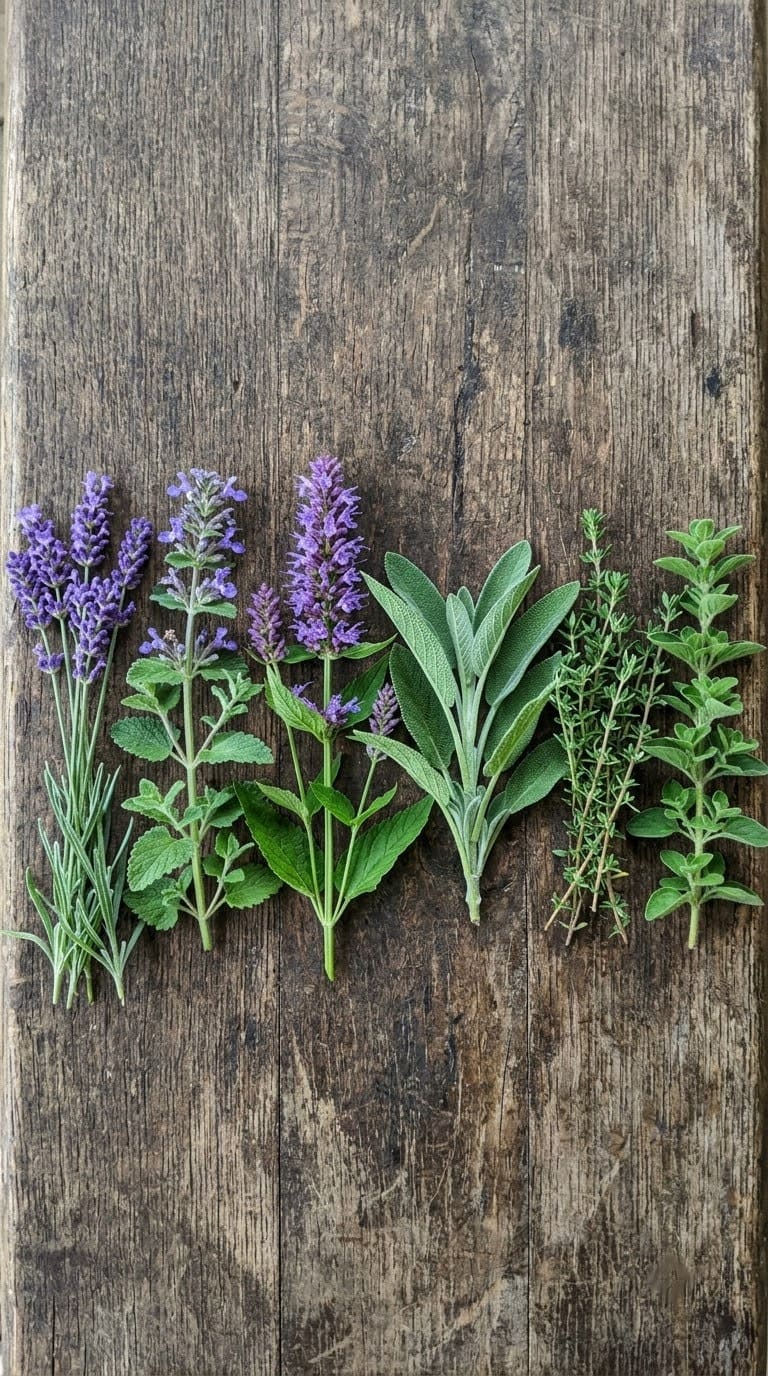
The key distinction is aromatic foliage versus fragrant flowers.
A rose smells wonderful, but only in bloom and only if you put your nose to it. On a path you want foliage scent, the kind released by a passing hand or a pant leg, available all season even before the plant flowers and after it finishes.
Most yard problems trace back to one specific, fixable cause. Find yours in 4 quick questions.
Take the Free Quiz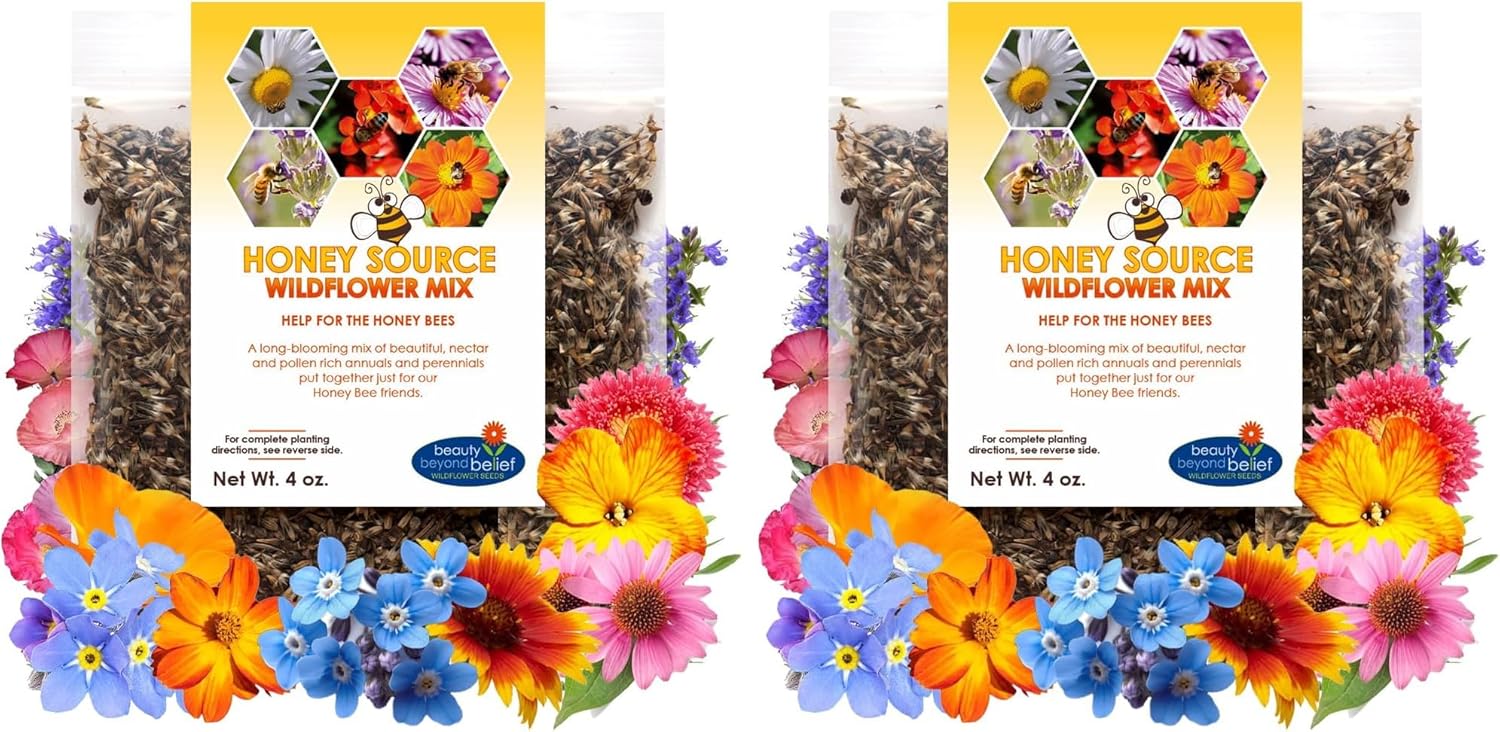
Fills gaps between the perennial herbs with fast pollen-and-nectar bloom the first year
Shop NowThis post contains affiliate links. We may earn a commission on qualifying purchases at no extra cost to you.
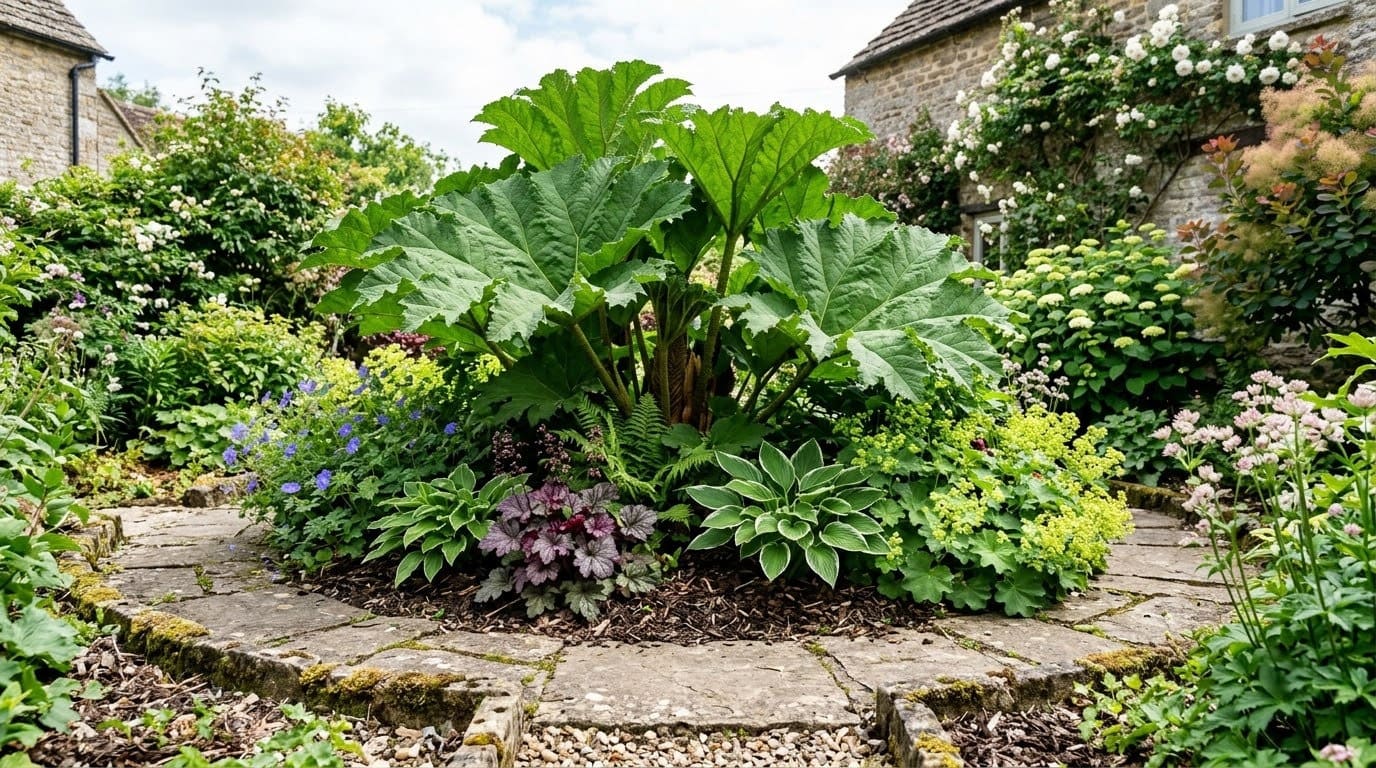
The plants that do both jobs, scented leaves and good bee flowers, are mostly in the mint and daisy families, which is why a dedicated herb bee garden works so well. Lavender, catmint, anise hyssop, creeping and upright thyme, oregano and marjoram, calamint, culinary sage, mountain mint, and rosemary in mild areas all carry oil in the leaf and feed bees heavily in flower.
Anise hyssop is a standout for a path. Piedmont Master Gardeners describe its “fragrant leaves with a licorice scent” and a bloom that runs from “the end of June and continuing to late summer or early fall.” They add that “bees are particularly fond of it, especially bumblebees.”
A few flower-fragrant plants are worth adding for scent and forage even though the leaves are plain, especially sweet alyssum, which smells of honey and blooms for months. Keep aggressive spreaders like the true mints in a buried pot, and keep anything spiny off the immediate edge.
How do I keep bees fed all season along one path?
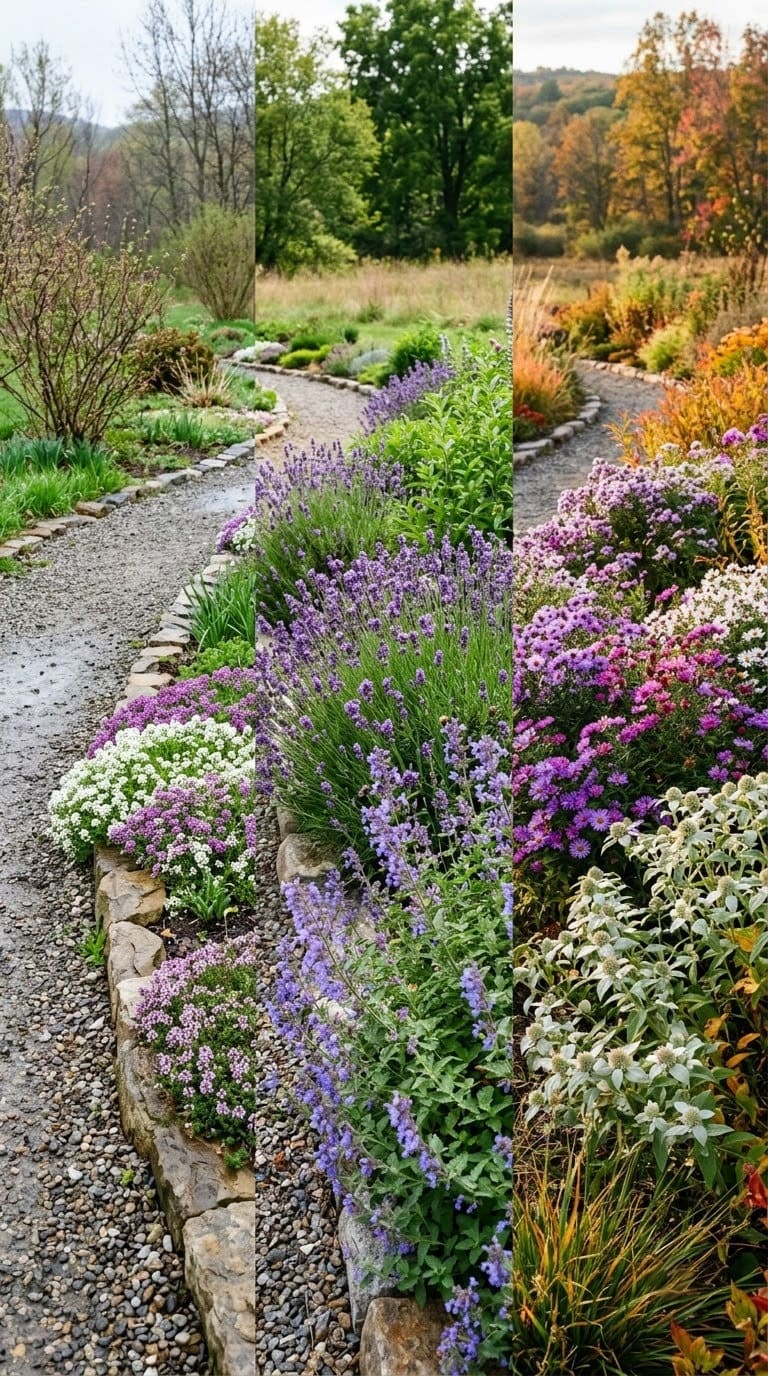
The goal is residency. If something is always in bloom along the strip, bees will nest nearby and patrol it, instead of visiting once in July and moving on.
Penn State Extension advises choosing “a succession of bloom from early spring through fall.” A workable target is at least three plants in flower in each of spring, summer, and late summer.
| Season | Fragrant path-edge plants | What it feeds | Role in the border |
|---|---|---|---|
| Early to mid spring | Creeping thyme, sweet alyssum, chives, dwarf catmint, wallflower | Early queen bumble bees, mining bees, hoverflies | Front edge, low mounds |
| Summer | Lavender, anise hyssop, calamint, catmint, oregano, culinary sage, salvia | Honey bees, bumble bees, butterflies, hummingbirds | Middle row, spires and mounds |
| Late summer to fall | Mountain mint, Russian sage, aster, goldenrod, sedum | Late bumble bees, migrating butterflies, solitary bees | Back row, taller, left standing over winter |
Build a native backbone and season it with the herbs. Penn State notes that native plants are “four times more attractive to pollinators than non-natives,” so anchor the strip with nectar-rich natives for wildlife like mountain mint, wild bergamot, aster, and goldenrod, then fill between them with lavender, catmint, and sage for the scent. A Penn State trial that compared 86 native pollinator plants found mountain mint drew the widest range of visitors of any of them.
Skip the doubled, ruffled hybrid flowers. Penn State points out that many of them “have lost their ability to produce nectar,” so they look the part and feed nothing.
How should I arrange the border by height?
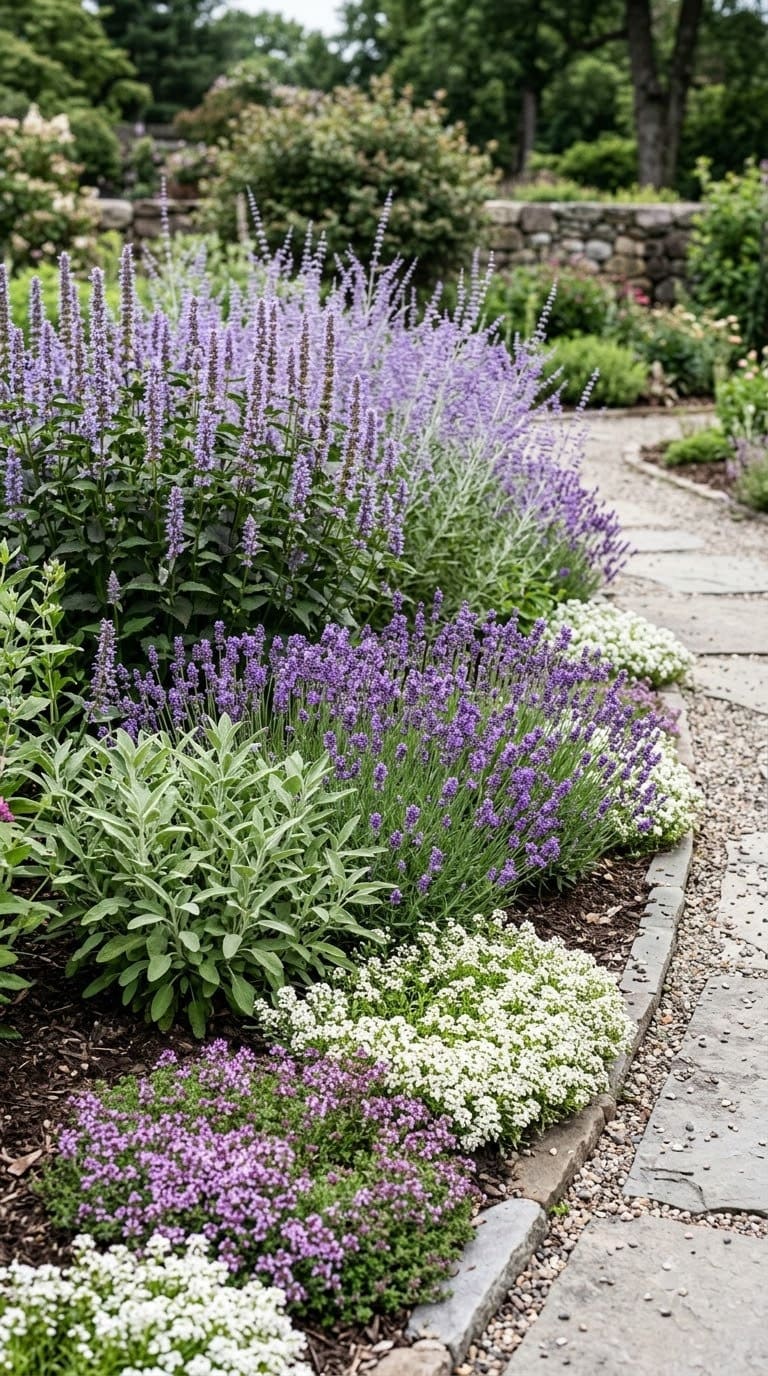
You look along a path, not at it, so front-to-back layering is what actually reads from where you stand.
Keep the front edge low, under about 10 inches: creeping thyme, sweet alyssum, dwarf catmint, and pinks. These can spill a little without blocking the walkway.
The average homeowner spends $616/year on yard fixes that don't address the real problem. Find out what yours actually is — before you spend another dollar.
Take the Free QuizThe middle row runs 10 to 24 inches: lavender, calamint, oregano, culinary sage, and shorter salvia. The back row, 24 to 40 inches, holds the spires: anise hyssop, mountain mint, Russian sage, tall salvia, and wild bergamot.
Two rules keep it working. Keep the tallest plants off the inside of any curve so you can see around the bend. And run one thread plant, lavender or catmint, every few feet down the strip, which ties the border together and gives the bees a continuous line to follow.
How far back from the path edge should the plants sit?
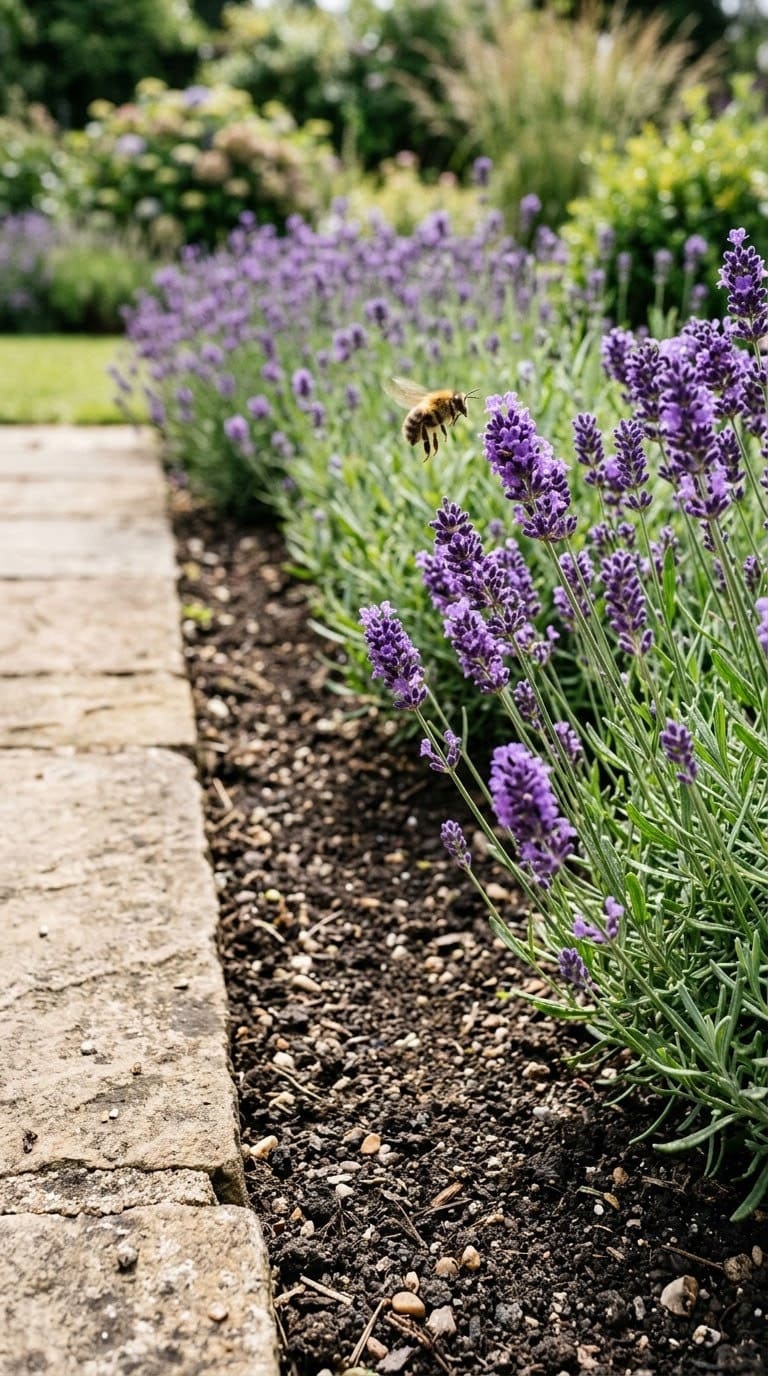
Leave a hand’s width, roughly 4 to 6 inches, of clear ground or hard edge between the tread and the first plants.
That gap does three things. It keeps foraging bees up at flower height instead of out over the walking line, it stops dew-soaked foliage from wetting your legs, and it lets you edge and weed without trampling the border.
Steppable aromatics are the exception. Creeping thyme and Corsican mint can go right in the path between pavers, where a light footstep releases the scent and the bees work the flowers above your shoe rather than at it. Keep lavender, catmint, and the tall plants to the edges.
On a narrow path, plant only one side, or alternate sides in blocks, so the walkway never closes in on you. A hard mowing strip of brick, steel, or timber along the border keeps the plants from creeping onto the path and keeps grass out of the planting.
What do bees need besides flowers to stay?
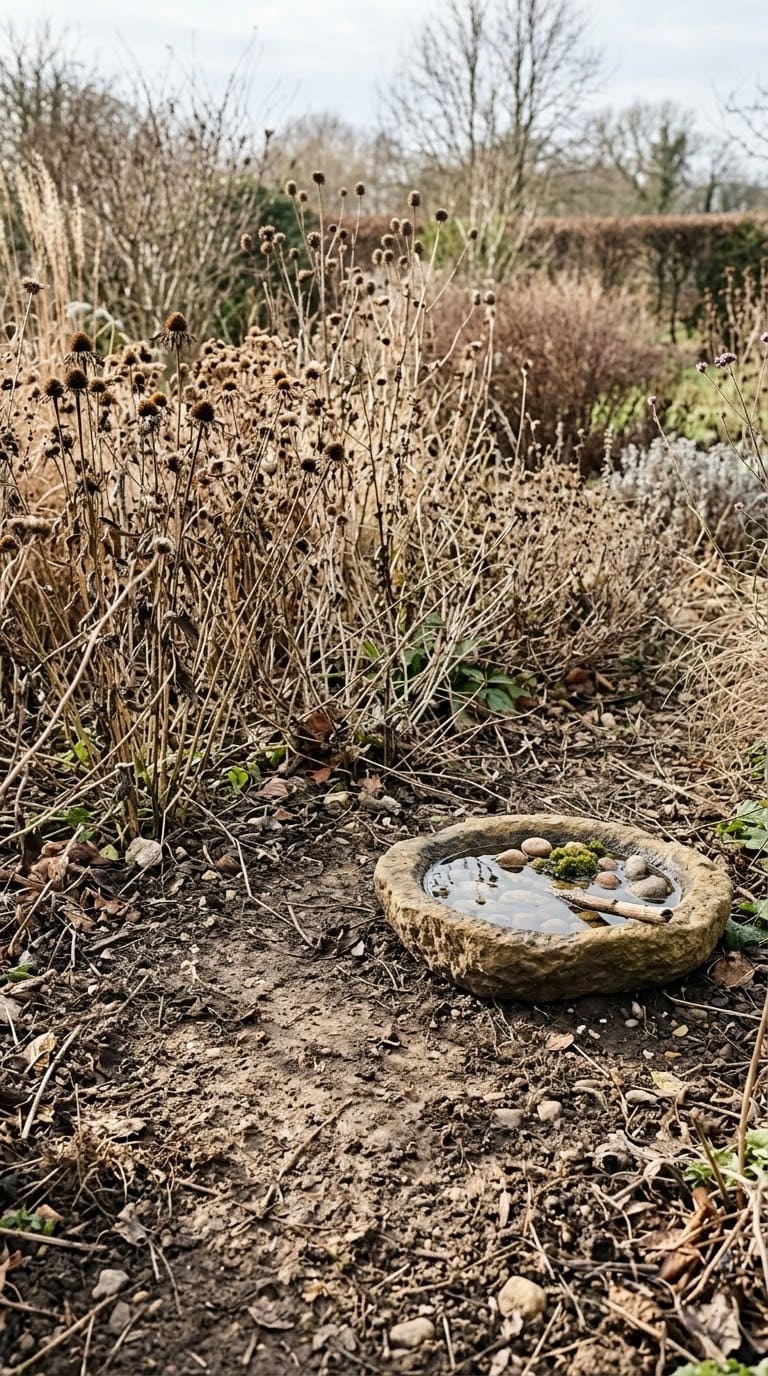
Flowers alone make a rest stop, not a home. The Xerces Society lists four things a real pollinator planting provides: “nectar and pollen, larval host plants, safe nesting and overwintering habitat, and clean shallow water.”
Most native bees nest in the ground. Xerces advises leaving “patches of bare ground” in a sunny, well-drained spot and not turning the soil there, because young bees spend “up to eleven months of the year underground.” So do not lay landscape fabric and mulch over every inch of the border. Leave one open patch behind the tallest plants.
Stem-nesting bees use the hollow and pithy stalks of last year’s plants. Leave the dead stems of anise hyssop, bergamot, and mountain mint standing over winter and cut them back to 8 to 15 inches in spring. Penn State Extension makes the same point: “plants left standing provide homes for pollinators.”
Set out a shallow dish with stones or gravel for landing and keep it topped up.
And keep pesticides away from the border entirely. Xerces warns specifically against “multi-use products marketed for disease, insects, and/or weed control,” and if you must treat a plant, use insecticidal soap or horticultural oil and never during bloom. The drought-tolerant pollinator plants in this palette rarely need spraying anyway.
Is a bee border along a path safe for kids and pets?
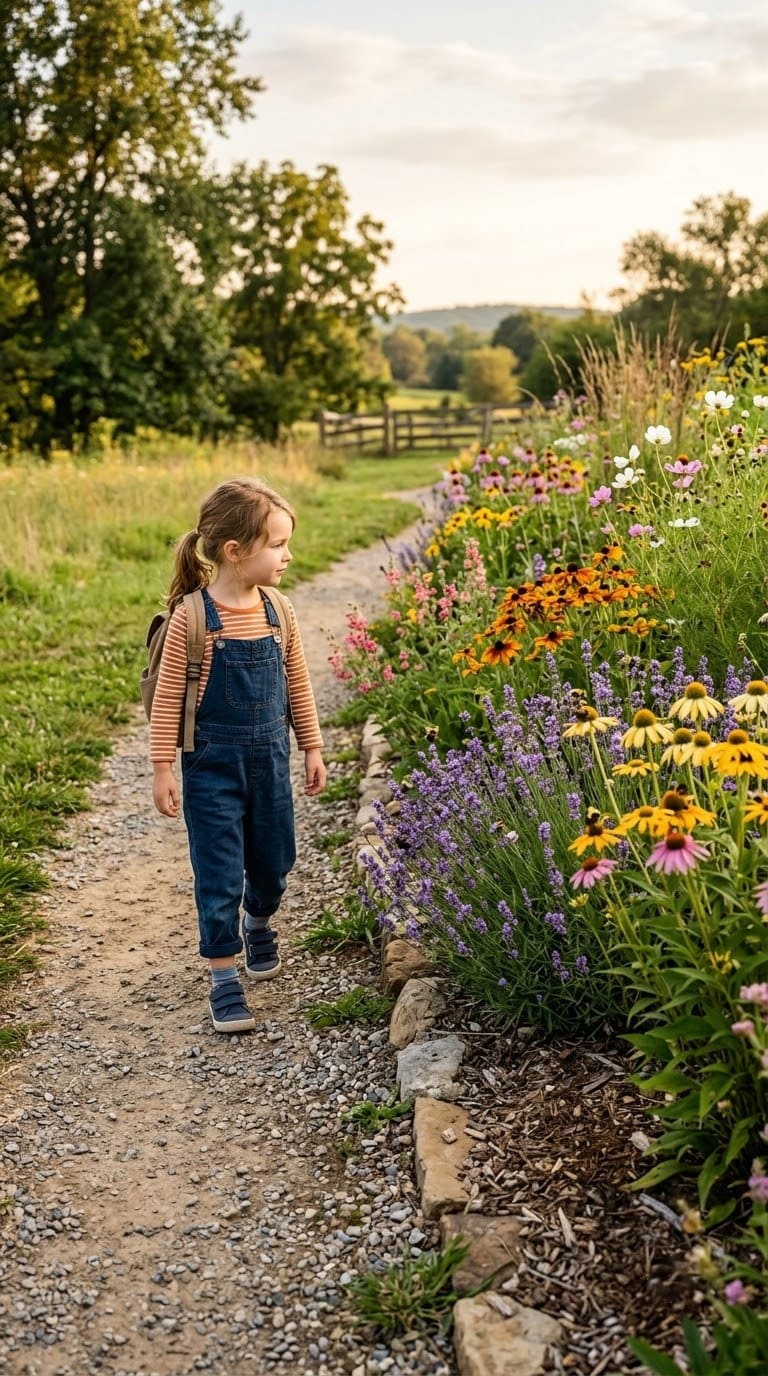
For a normal household, yes. Honey bees and bumble bees working flowers are focused on the food and are not defensive away from their nest, so stings on a path border are rare, and they usually come from a bee that got stepped on or grabbed.
You can shrink that small risk further. Set the densest nectar plants slightly back from the walking line, which is the set-back rule again. Tell children not to pick or squeeze the flowers, and have everyone wear shoes on a path that has clover or thyme growing in it.
Most dogs ignore bees. A dog that snaps at them can get stung on the mouth or throat, so route the busiest stretch of border away from a dog run.
If someone in the household has a known bee-sting allergy, treat it seriously. Put the border on the far side of the path from the door, lean toward foliage-fragrant, low-nectar plants like rosemary and past-bloom lavender near the entrance, and keep an epinephrine auto-injector on hand as your doctor advises. That is general information, not medical advice.
The insects people actually fear are wasps, and a nectar border draws very few of them compared to fallen fruit or an open bin.
How do I plant and space it?
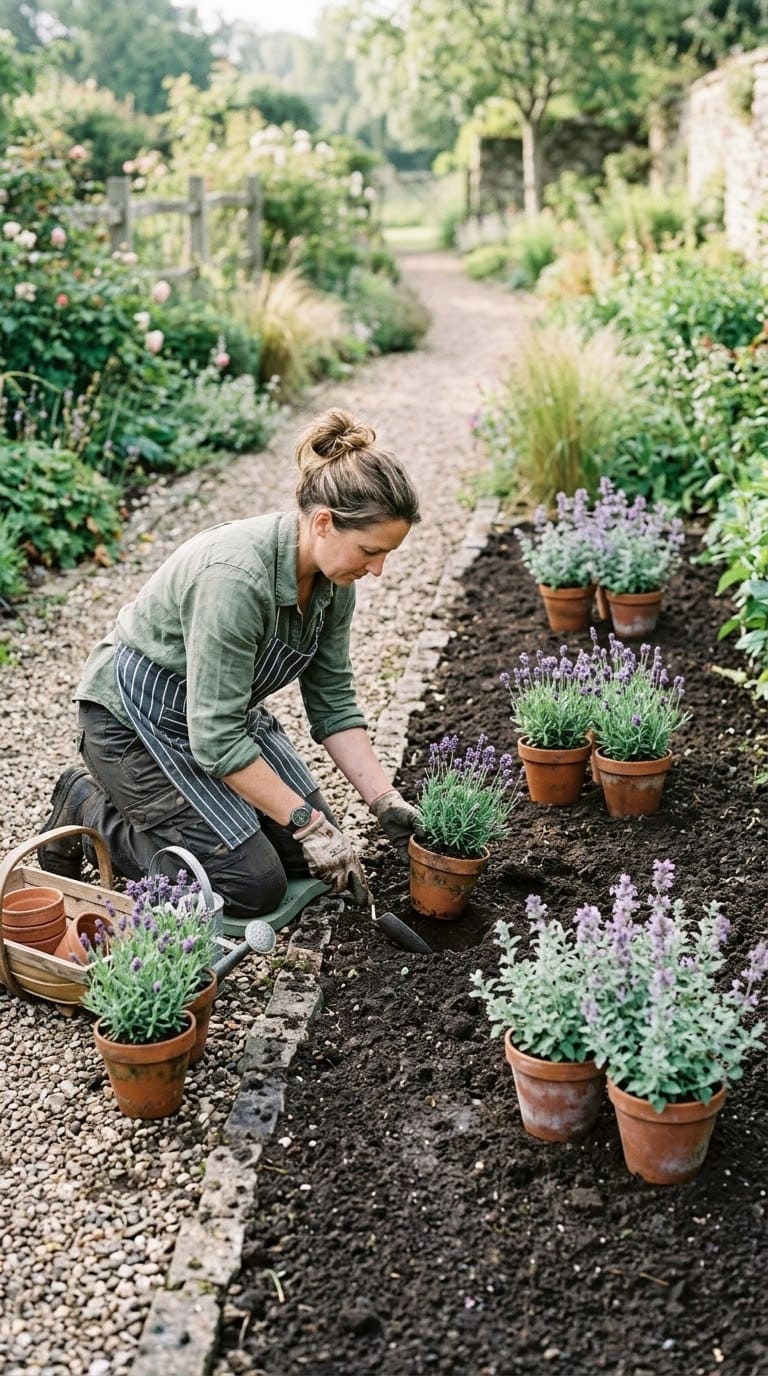
Start by stripping the turf line, digging in compost, and leaving that one sunny patch unamended and bare for nesting. Our guide to prepping a border covers the soil work.
Plant in clumps, not singletons. Penn State says to “purchase 3 or more and plant them together,” and Xerces notes that a clump makes “a more significant visual signal and scent footprint” that bees spot from a distance.
Space lavender and sage 18 to 24 inches apart, catmint and calamint 15 to 18 inches, anise hyssop and mountain mint about 18 inches, and thyme and alyssum 8 to 10 inches. Set them in drifts of three, five, or seven down the strip, repeating two or three of the plants along the whole run for rhythm.
Water them in well and through the first summer. After that most of this palette is drought-tolerant. In the first year, pinch the herbs back once to bush them out, and go easy on fertilizer, because lush feeding gives you leaves and floppy stems instead of flowers.
A sample 20-foot fragrant pollinator path border
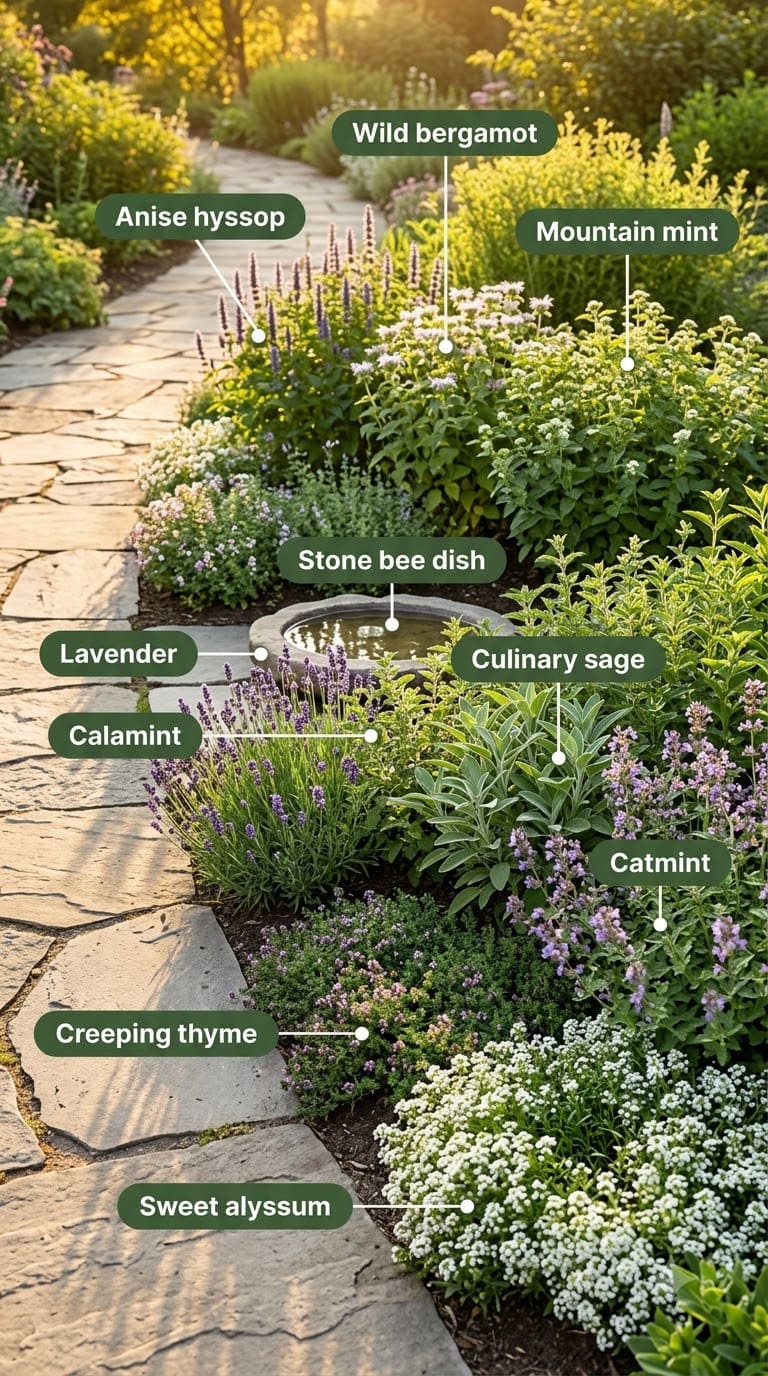
Here is a worked plan for a sunny strip about 2 feet wide along one side of a path.
Along the front edge, alternate creeping thyme and sweet alyssum in 2-foot blocks the whole length. In the middle, set three drifts of three: lavender at the house end, calamint in the center, culinary sage at the far end.
Across the back, space three clumps, anise hyssop, wild bergamot, and mountain mint, evenly down the run. Thread one catmint through the middle every 4 feet.
That gives a bloom chain with no real gap. Alyssum and thyme start in April, catmint and sage follow in May, lavender and calamint carry June through August, bergamot comes in July, anise hyssop runs late June into September, and mountain mint holds July to September. Tuck one fall aster at the back for October.
Finish with a bee dish on a flat stone at the midpoint and a 2-foot patch of bare soil behind the sage.
The path border cheat sheet
| Design choice | Do this along a path | Why it matters |
|---|---|---|
| Fragrance type | Choose aromatic-leaf plants, not just scented flowers | A path means you brush them, and leaves release scent on contact |
| Set-back | Plant the strip a hand’s width back from the path edge | Keeps foraging bees at flower height, not on the walking line |
| Height order | Low mounds at the edge, spires at the back | You look along a path, so front-to-back layering is what reads |
| Grouping | Clumps of three or more of each plant | Penn State: buy 3 or more and plant them together so bees find them |
| Bloom span | Three or more plants in flower each season, spring to fall | Keeps bees resident instead of just passing through |
| Nesting | Leave a sunny patch of bare, undisturbed soil and standing stems | Most native bees nest in the ground or in hollow stems |
| Water | A shallow dish with stones, kept topped up | Xerces lists “clean shallow water” as one of four essentials |
| Chemicals | No pesticides on or near the border | Even multi-use lawn products are toxic to bees |
A real path-border mistake
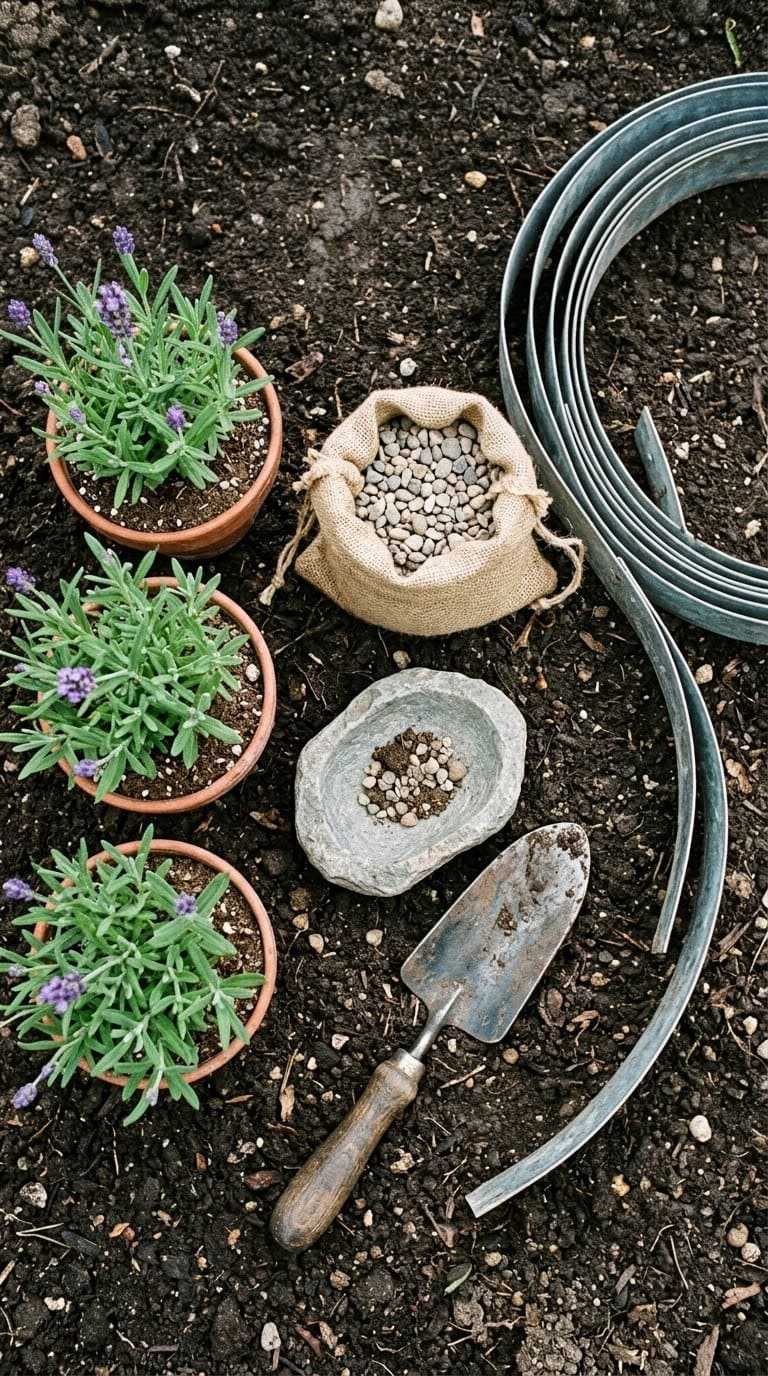
I once planted a lavender-and-catmint edge tight against a path, and in June it looked perfect. By August the catmint had flopped right over the walking line, soaked with dew every morning, and full of bees exactly where our feet went. Someone got stung reaching through it with a wheelbarrow.
The fix was not complicated. I pulled the whole planting back 5 inches behind a brick mowing strip, moved the catmint into the middle row with the lavender in front of it, and added a steel edge to hold the line. Now I shear the catmint hard after its first flush so it stays a tidy dome.
The bees still work the strip, just a foot off the path instead of over it, and nobody has been stung since. The set-back and the height order are not fussy details. On a path they are the whole design.
FAQ
What is the best fragrant plant for a bee path border? Anise hyssop is hard to beat, with licorice-scented leaves and a bloom that runs from late June into fall, and bumble bees love it. Lavender is the other obvious choice for the classic scent and the honey bee traffic.
Will planting flowers along my path make bees more likely to sting me? No. Bees at flowers are focused on foraging and are not defensive away from their nest. Set the plants back a few inches from the tread and do not grab the blooms, and stings stay very rare.
How do I keep bees in my garden instead of just passing through? Give them a reason to stay. Season-long bloom, a patch of bare undisturbed soil for nesting, standing stems, a water dish, and no pesticides all add up to bees nesting nearby and working your border daily.
Can I walk on the plants in the path? Only the steppable aromatics, creeping thyme and Corsican mint, and only light foot traffic. Lavender, catmint, and the taller plants belong at the edges, not underfoot.
How wide should a pollinator path border be? Anywhere from 18 inches to about 3 feet is enough for a full bloom succession. On a narrow path, plant one side only so the walkway does not close in.
Do the plants have to be native? A native backbone helps a lot, and Penn State says natives are four times more attractive to pollinators. But the Mediterranean herbs like lavender, sage, and thyme still feed bees heavily and bring the foliage scent, so a mix works well.
Related Posts
Products We Recommend
This post contains affiliate links. We may earn a commission on qualifying purchases at no extra cost to you.
BBB Seed Honey Bee Wildflower Seed Mix
Fills gaps between the perennial herbs with fast pollen-and-nectar bloom the first year
Shop Now
WTREEW Metal Bee Watering Station with Marbles
The shallow water source with landing stones that bees need alongside the flowers
Shop Now
Wax-Coated Wooden Mason Bee House
A stem-nest block for the mason and leafcutter bees that work the border
Shop NowNever miss an update — choose FarmFoodFamily as your preferred source on Google.
How it works: Tap the button below to open Google's settings page, then check the box next to FarmFoodFamily.
Tap the checkbox to turn it blue — that's how you know it's set.