20+ Best Front Yard Pool Ideas (Check Your Zoning First)
Before a single design idea: check your local zoning. Most residential zones in the U.S. prohibit a fixed swimming pool in the front yard entirely, pools and other accessory structures generally can’t sit inside the required front yard setback. This isn’t a minor technicality, it’s the difference between a project that’s legal and one that…

Never miss an update — choose FarmFoodFamily as your preferred source on Google.
How it works: Tap the button below to open Google’s settings page, then check the box next to FarmFoodFamily.
Tap the checkbox to turn it blue — that’s how you know it’s set.
Before a single design idea: check your local zoning. Most residential zones in the U.S. prohibit a fixed swimming pool in the front yard entirely, pools and other accessory structures generally can’t sit inside the required front yard setback.
This isn’t a minor technicality, it’s the difference between a project that’s legal and one that gets flagged the moment a neighbor complains or an inspector drives by. This one leads with that reality, then covers the design ideas that are actually realistic once you know the constraint.
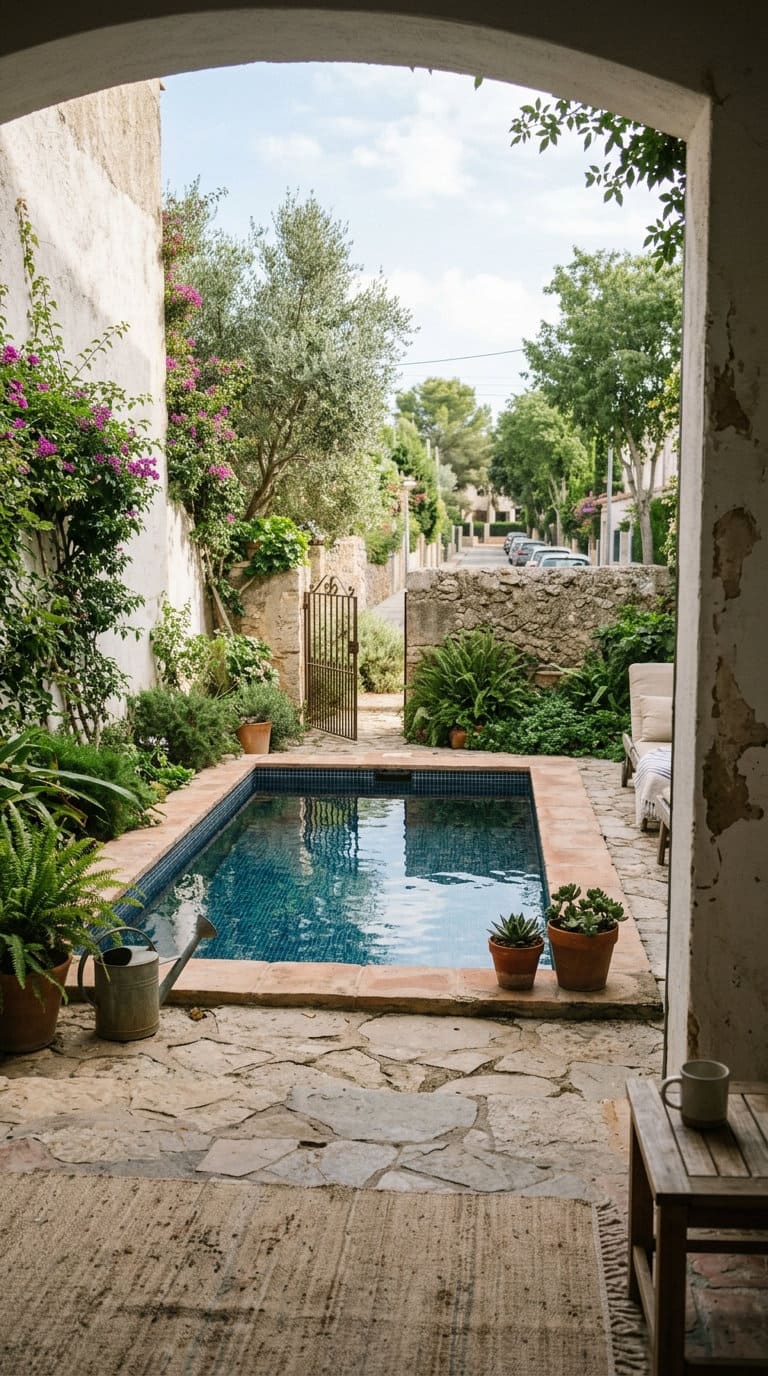
Check your zoning first
The city of Los Altos, California spells this out plainly in its own official zoning guidance: swimming pools “shall not be located in the required front or side yard setback areas.” That’s not an unusual rule, it’s the common pattern across most U.S. municipalities. Real examples turn up the same language over and over: “a swimming pool may be constructed and operated when the pool is not located in any required front or side yard abutting a street,” “in no case shall an accessory structure be located in a front yard.”
Where a front yard pool is allowed at all, it’s typically because the setback line itself sits well back from the street, meaning the “front yard” for zoning purposes is smaller than the visible front lawn, not because pools get a special exception.
Real setback figures vary by location but give a sense of scale: one homeowner’s local rule requires any pool to sit at least 6 feet back from the front of the house itself; another jurisdiction requires 8 feet from any property line or building. None of that is a number to design around without confirming locally, call your city or county zoning or planning department before you sketch anything, not after. A pool that looks perfect in a design plan and violates setback rules isn’t a design problem, it’s a demolition order waiting to happen.
Front Yard Pool Ideas
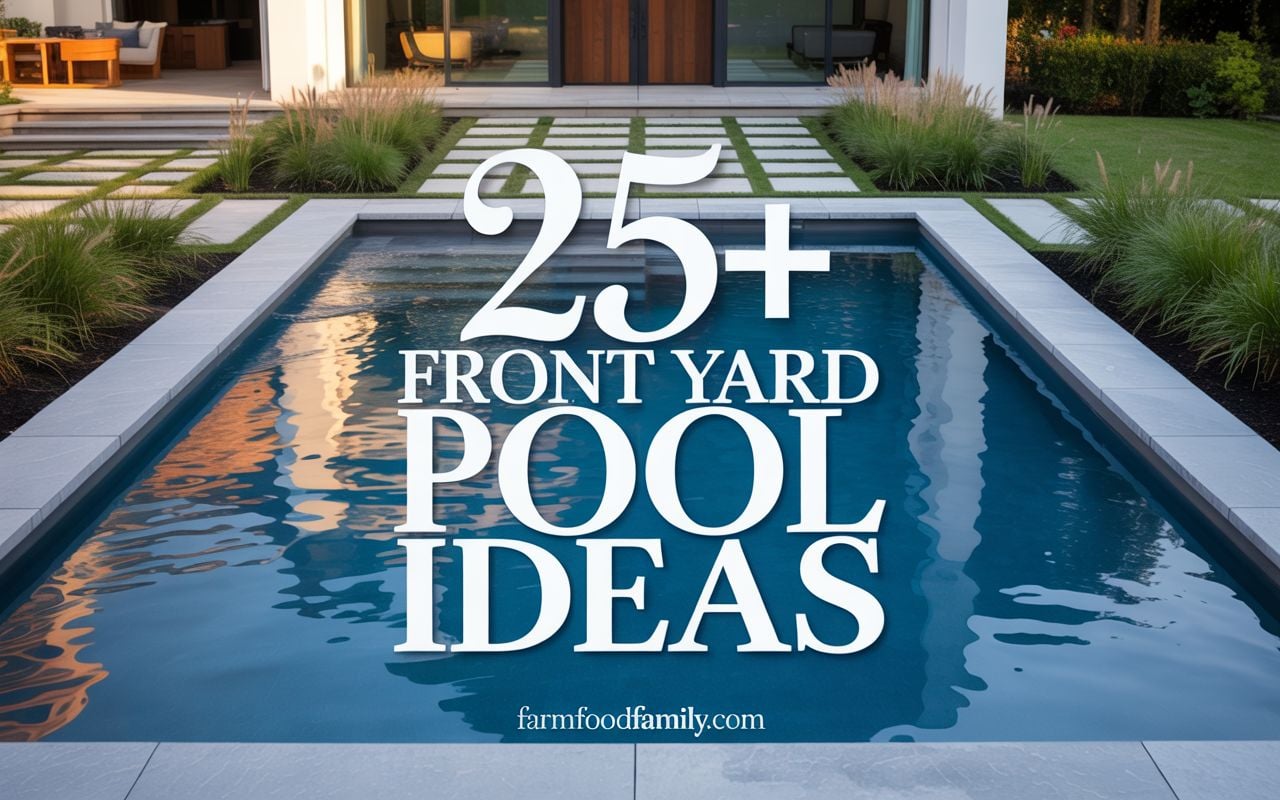
1. Modern rectangle pool, set back from the street
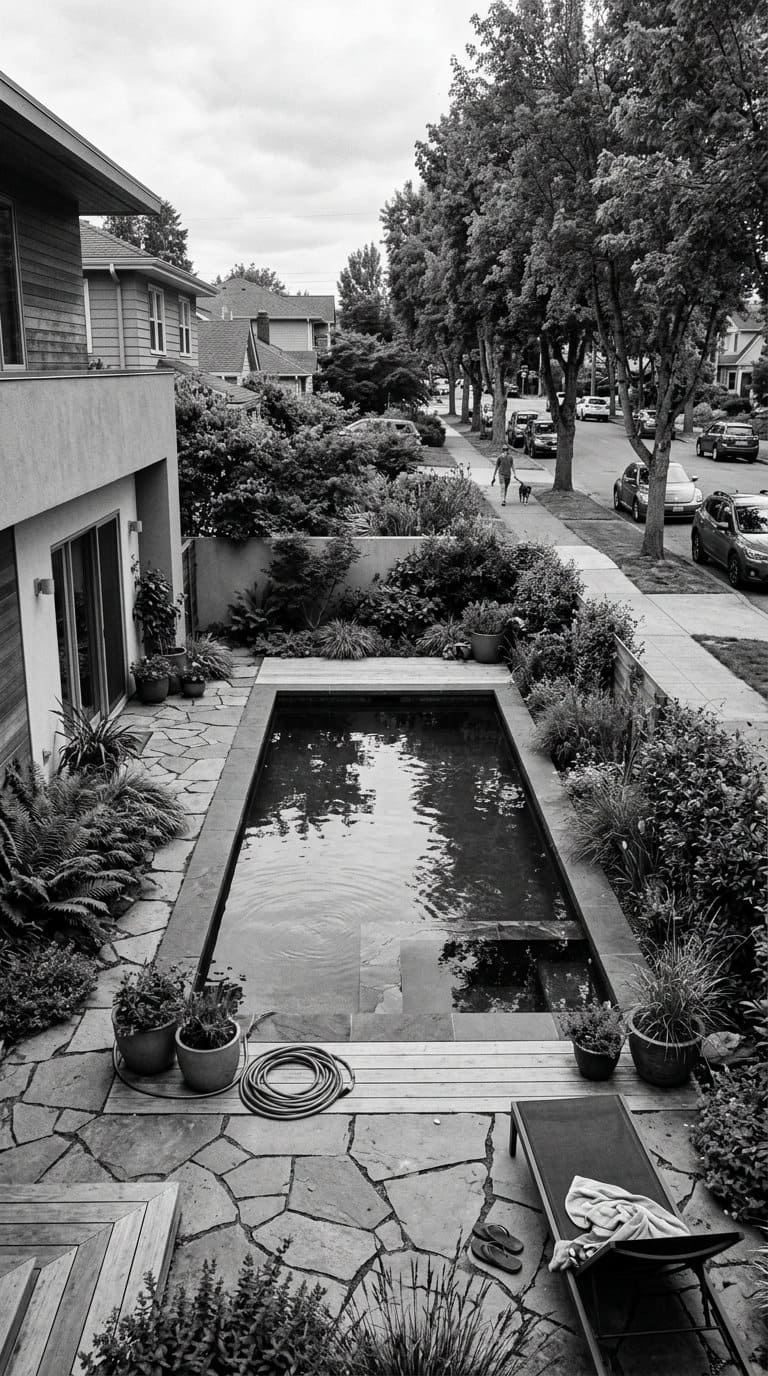
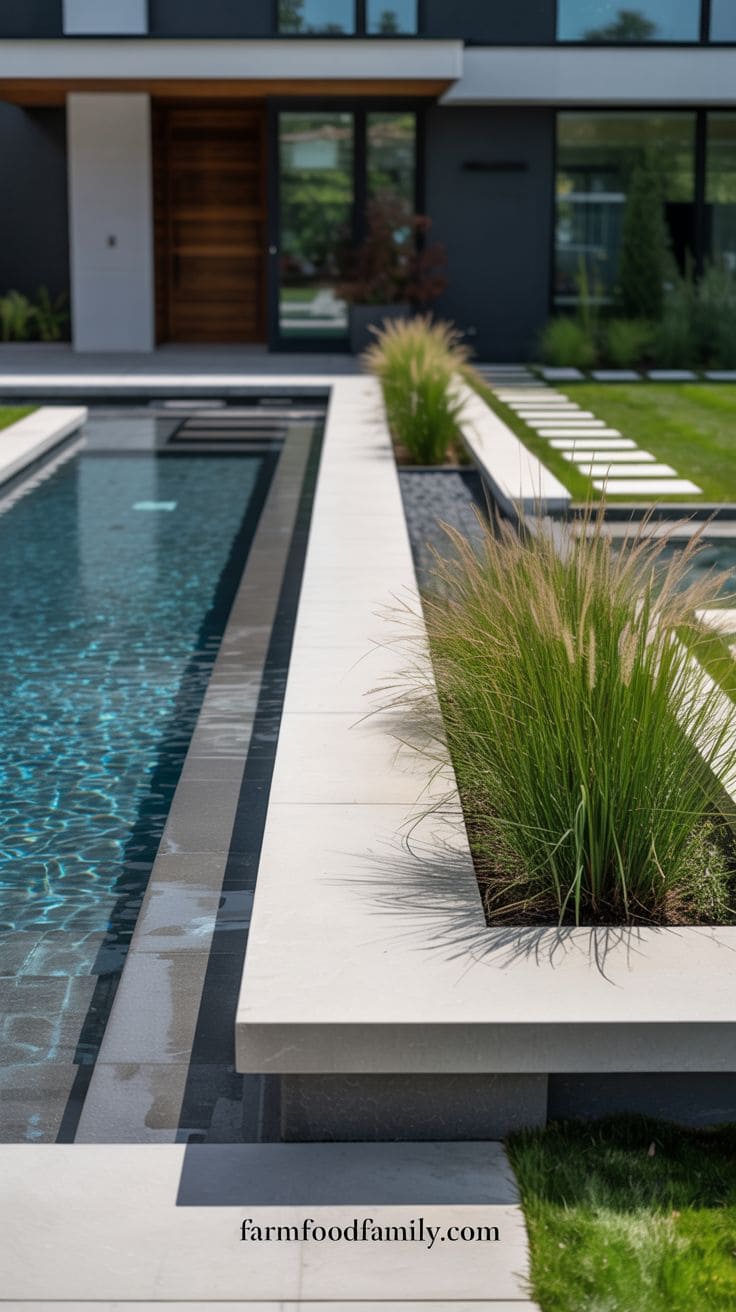
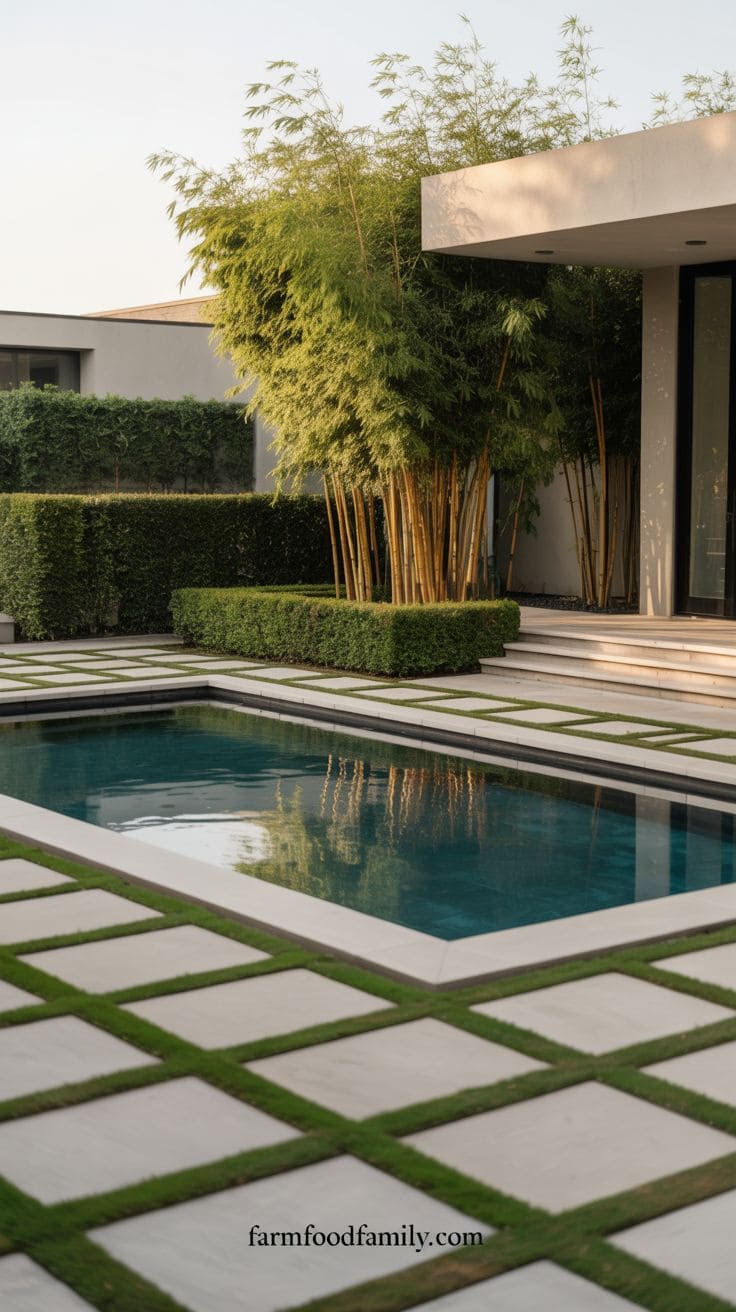
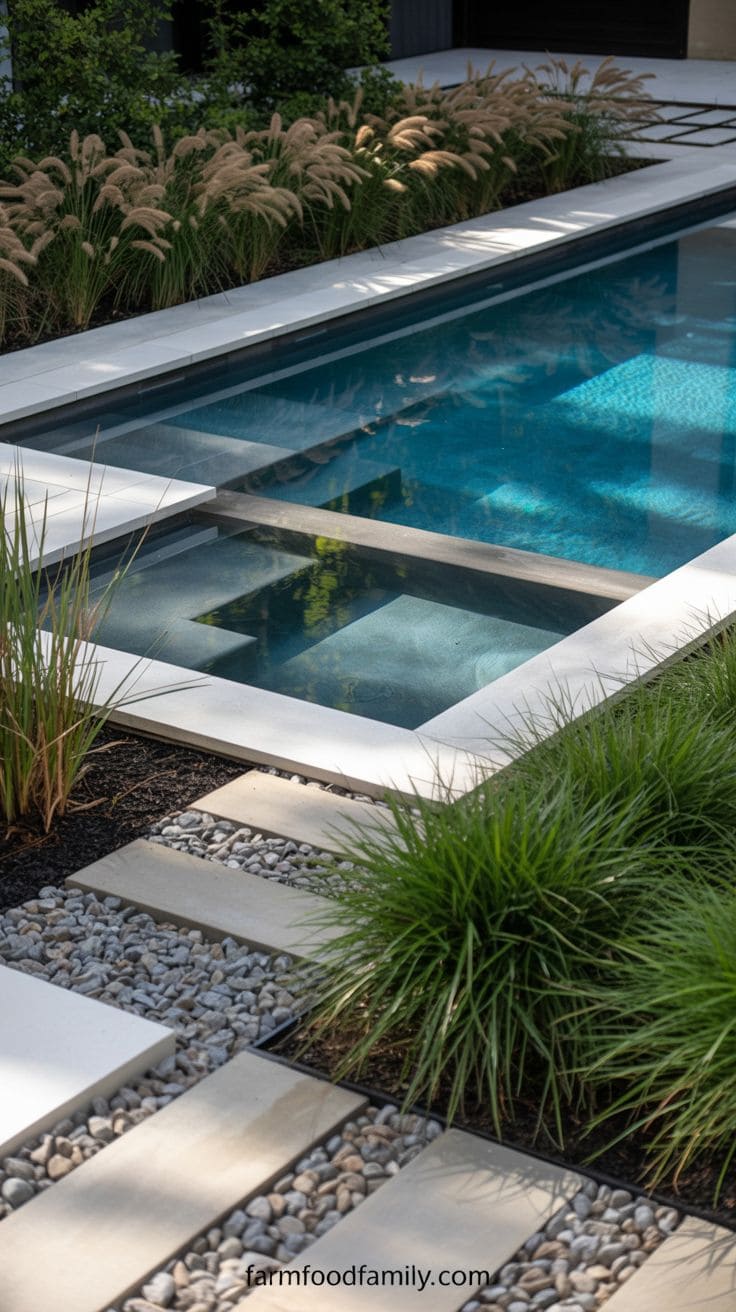
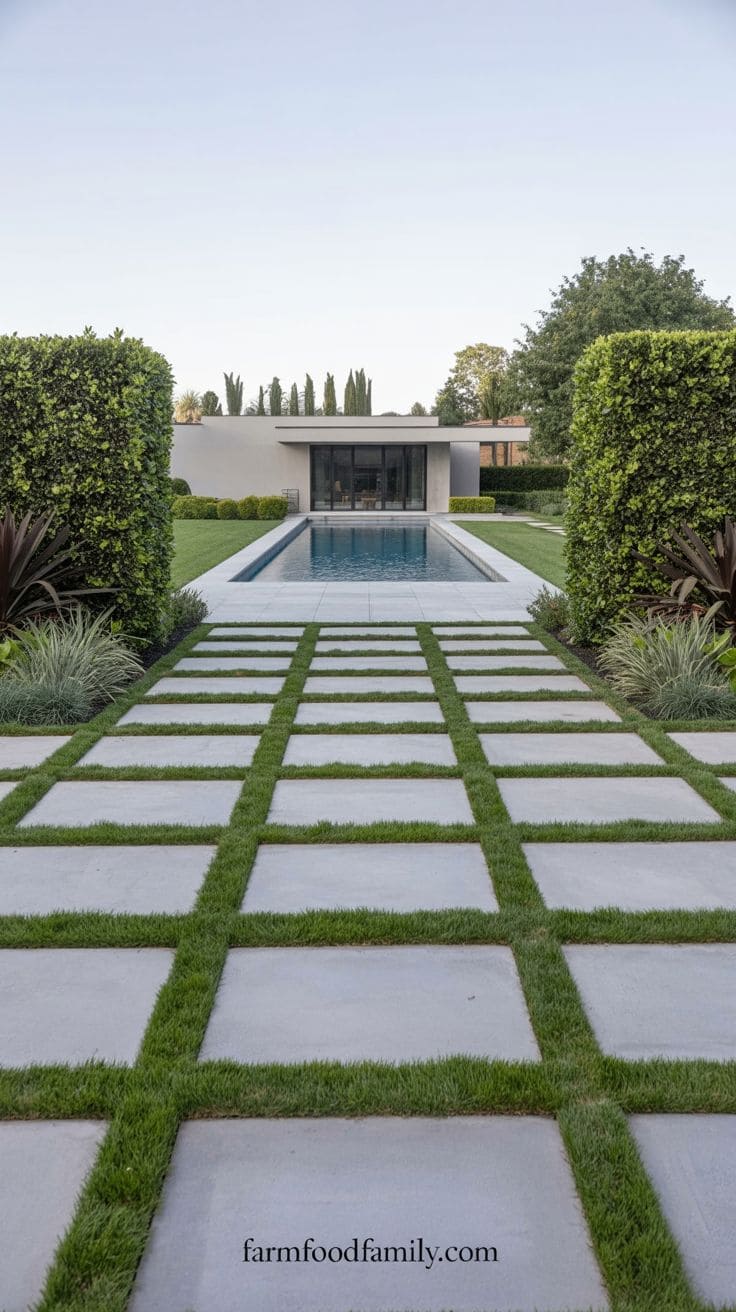
A clean rectangular pool with minimal coping and a monochrome palette reads as architectural rather than decorative, but the realistic version of this idea sits well back from the sidewalk, behind whatever setback line your zoning actually allows, not visible from the curb. Think of this as a pool that happens to be in the front portion of the lot rather than a pool facing the street.
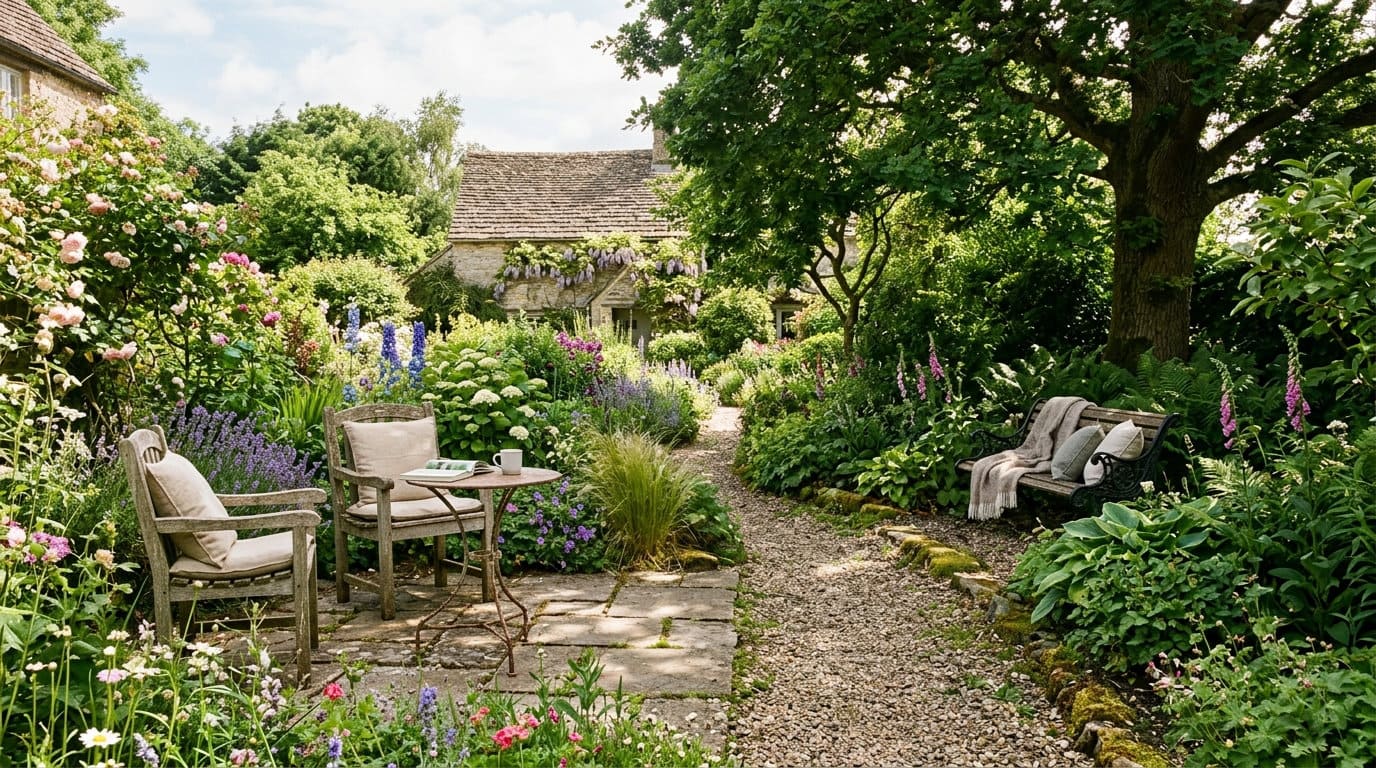
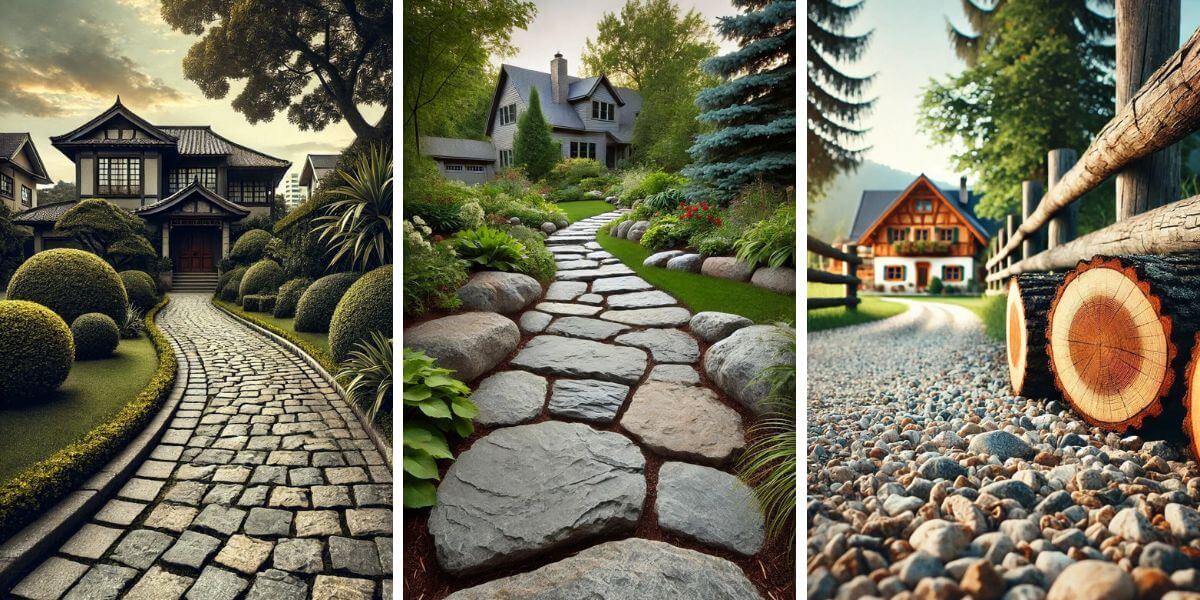
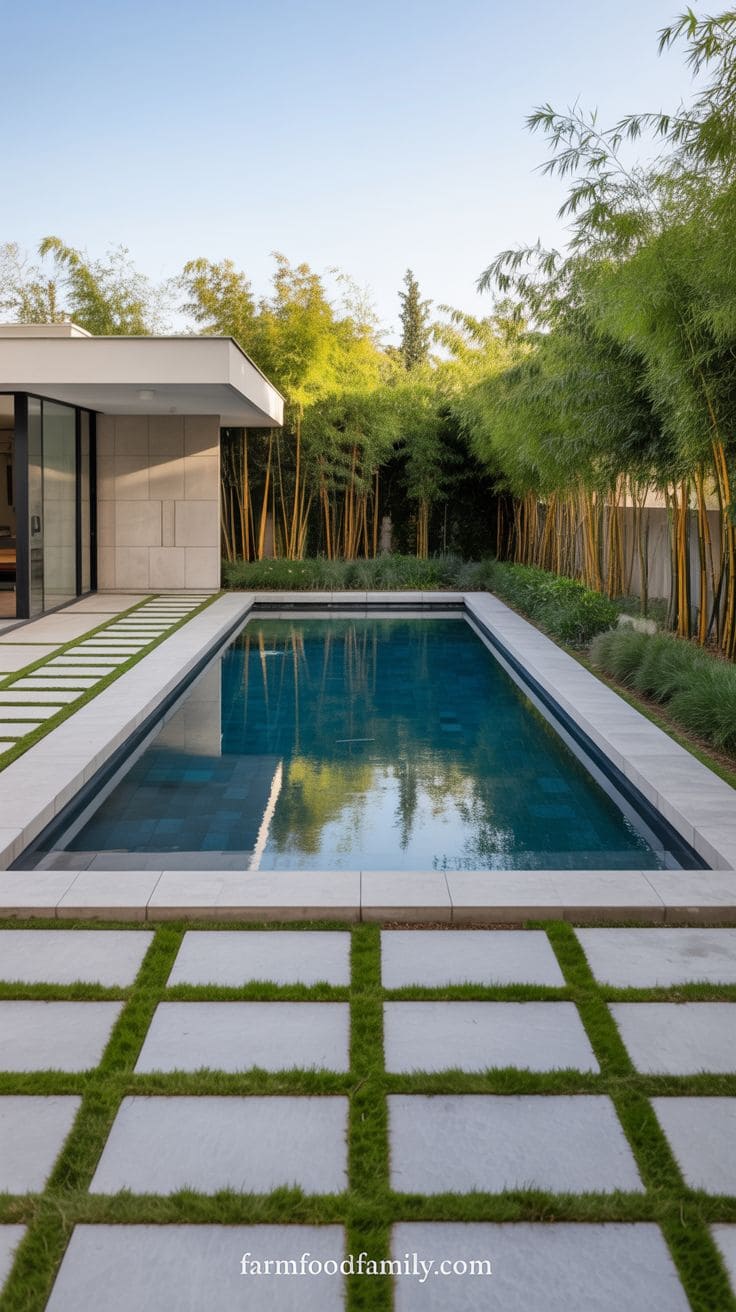
A sleek rectangular pool in the front yard immediately conveys refinement.
This style works well with modern or contemporary homes, particularly those with clean lines and minimalist architecture.
Answer 4 quick questions and get matched to the exact fix for your yard — drainage, budget, layout, or something else entirely.
Take the Free QuizTo achieve visual harmony, place the pool parallel to the front of the house and frame it with a low stone or concrete border for structure.
Tall hedges or layered planting with grasses, bamboo, or reeds can provide privacy without blocking the street view.
Modern and Clutter-Free
Integrated bench seating or a modest lounging ledge along one side provides usefulness without clutter.
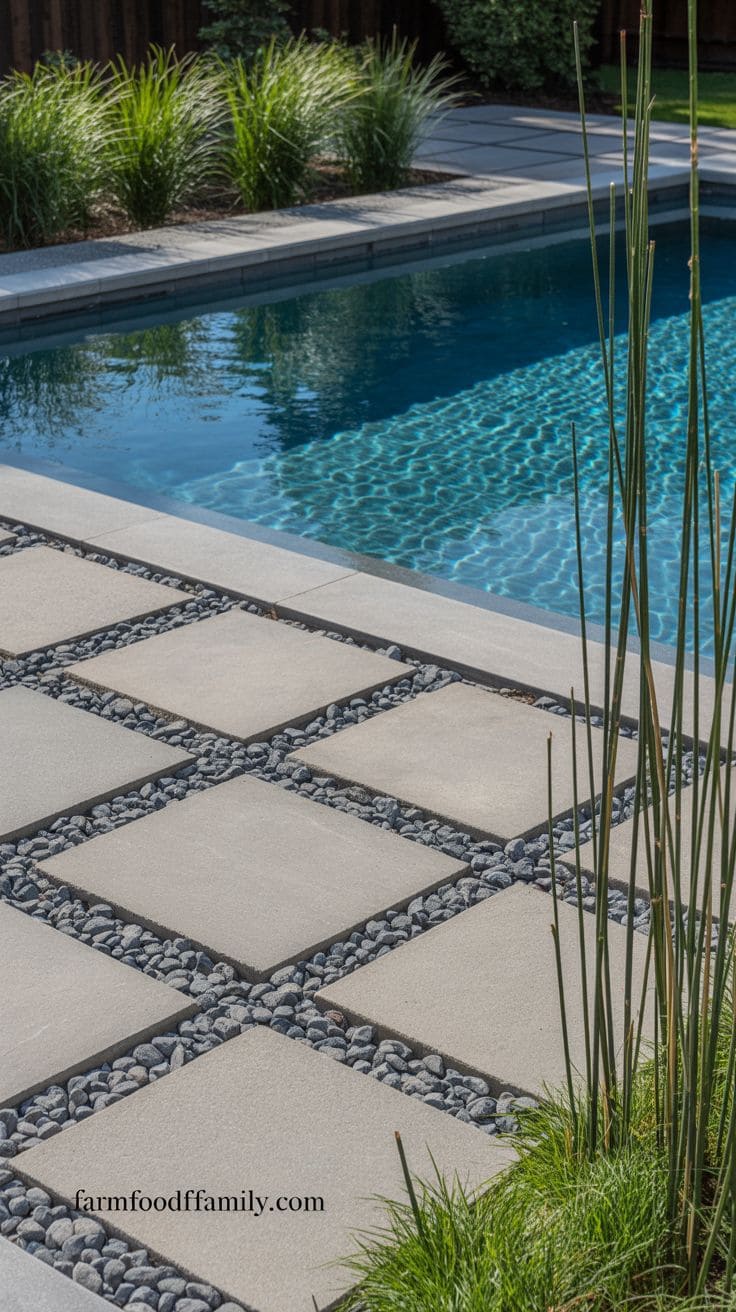
Concrete pavers interspersed with grass or gravel around the perimeter create a modern and breathable hardscape.
At night, LED strip lighting along the pool’s edges highlights the geometric shape and casts a soothing glow.
This design turns the front yard into a functional display by combining modern aesthetics with a cool, reflected water element that adds curb appeal.
Most yard problems trace back to one specific, fixable cause. Find yours in 4 quick questions.
Take the Free Quiz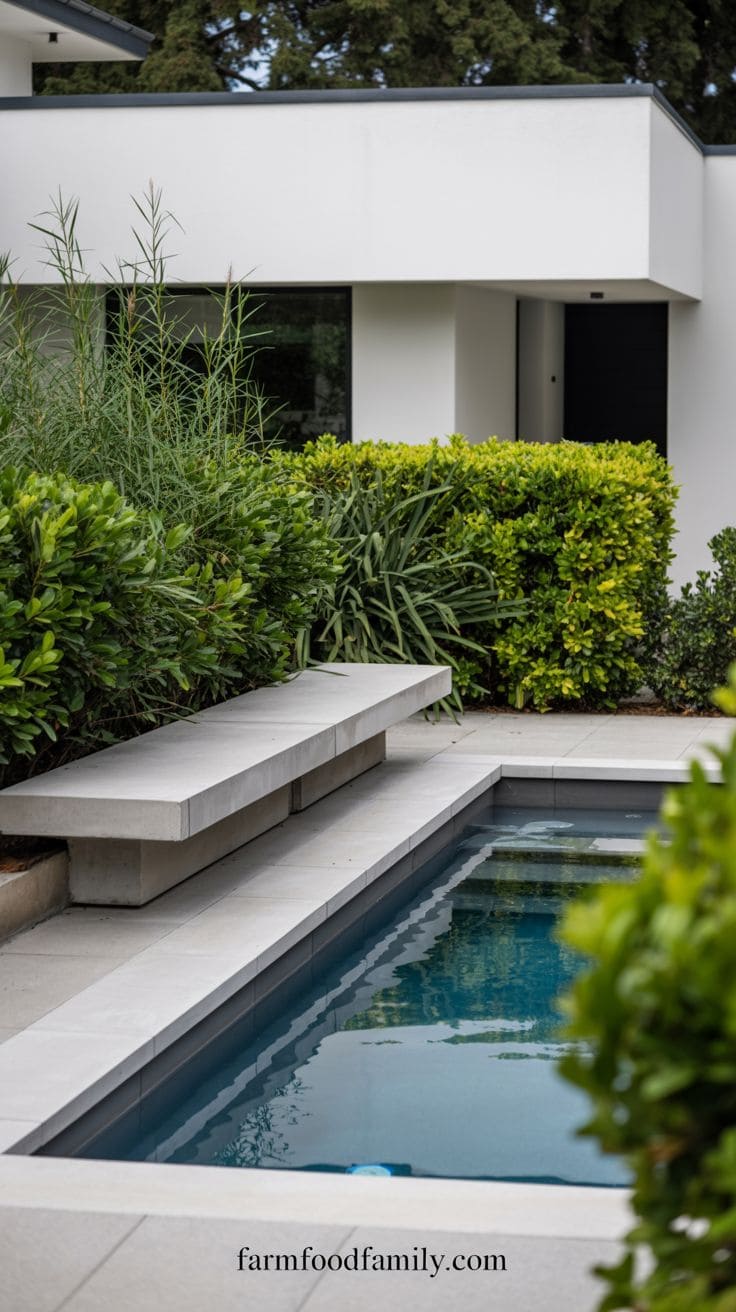
2. Courtyard-inspired plunge pool
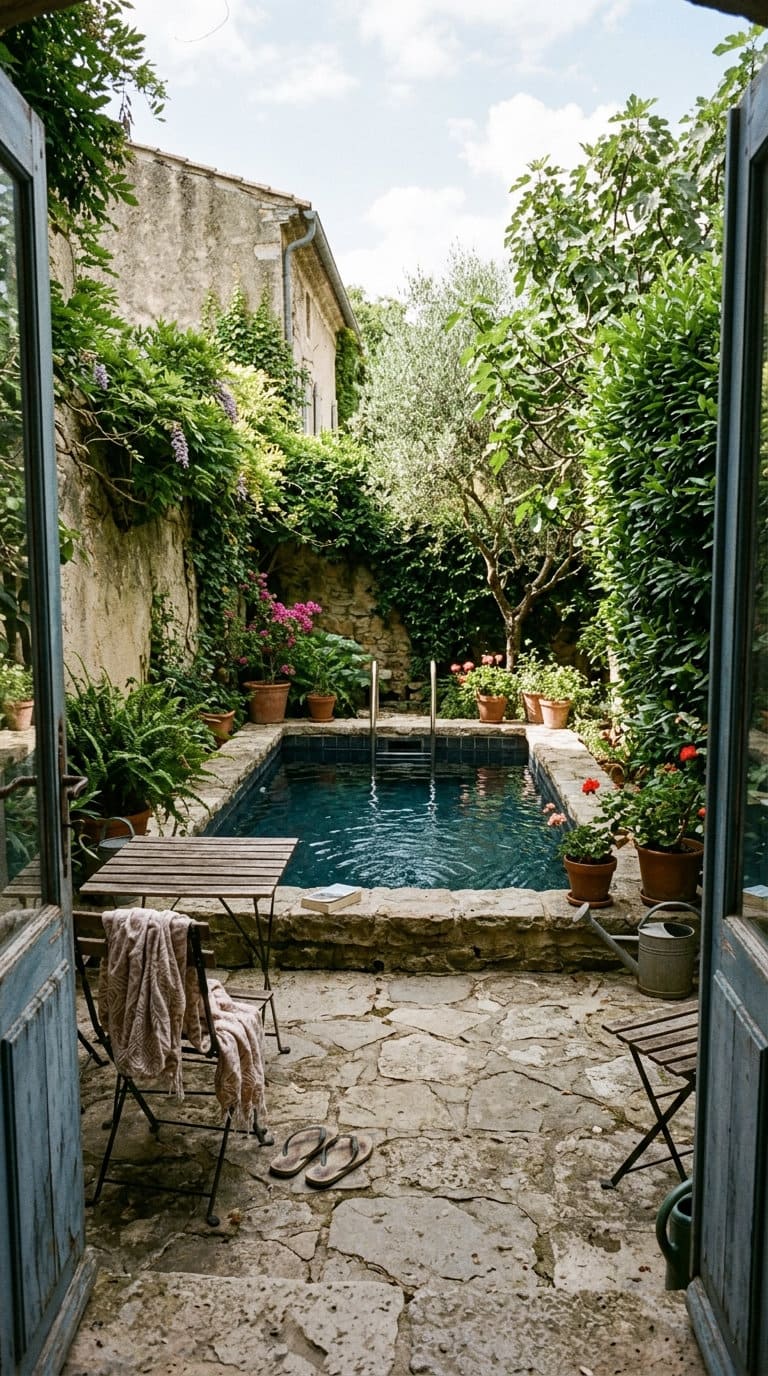
This is the most realistic and most often actually permittable version of a front yard pool, because a courtyard reads legally and visually differently than an open front lawn.
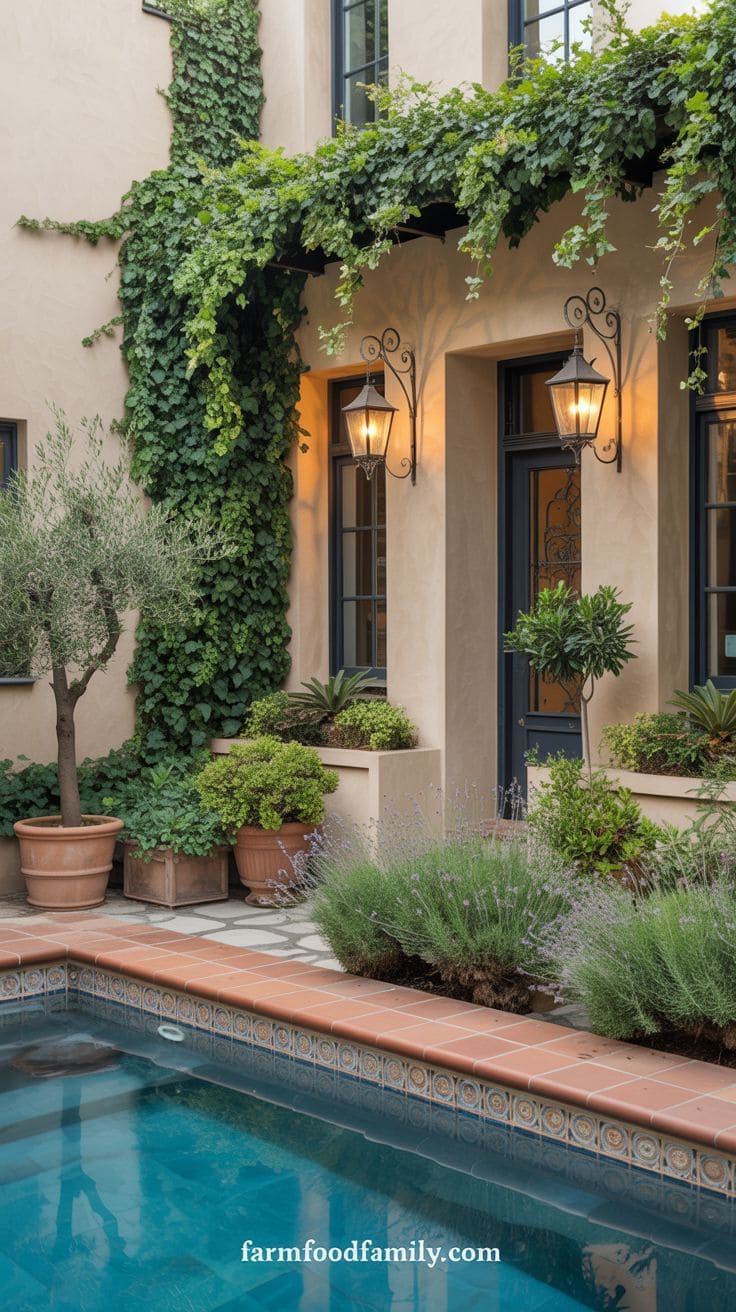
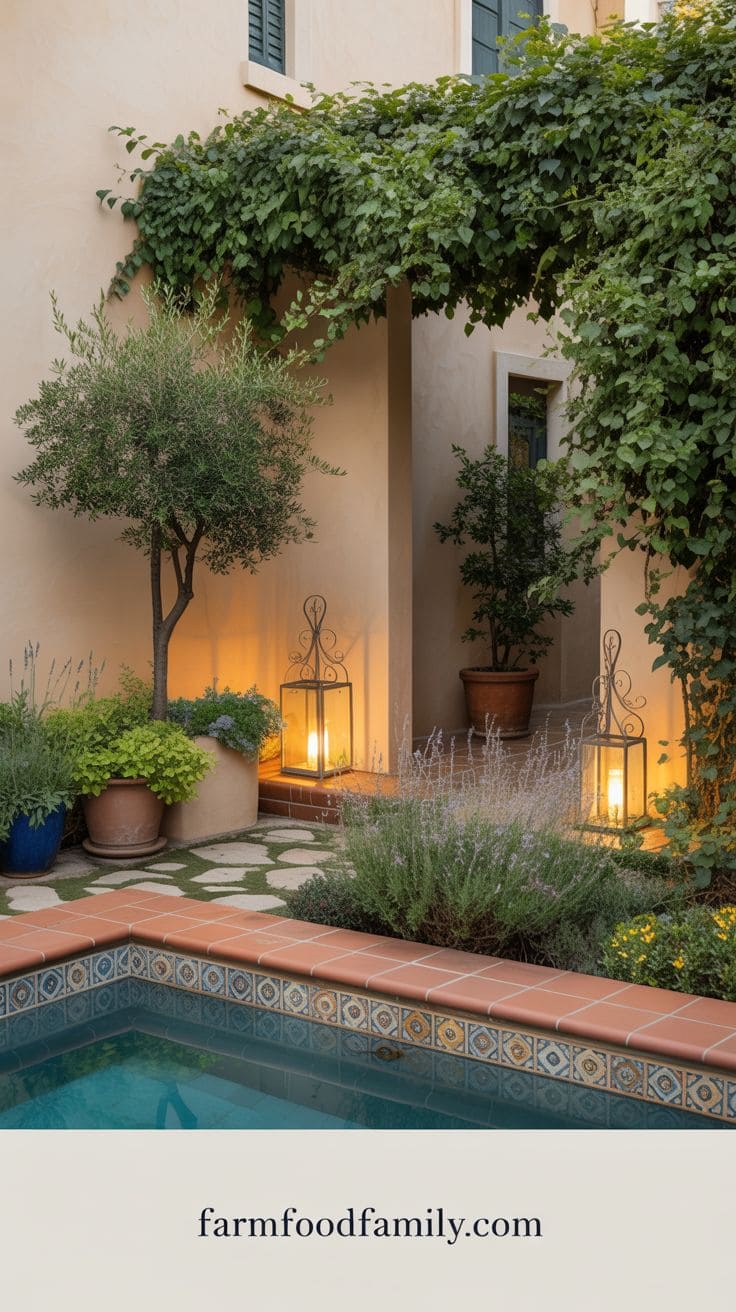
Walled or hedged on at least two sides, a small plunge pool tucked into a genuine courtyard space functions more like an interior space carved out of the property than a pool sitting in the open front yard, which is exactly why it’s more likely to clear setback requirements where a fully open front-lawn pool wouldn’t.
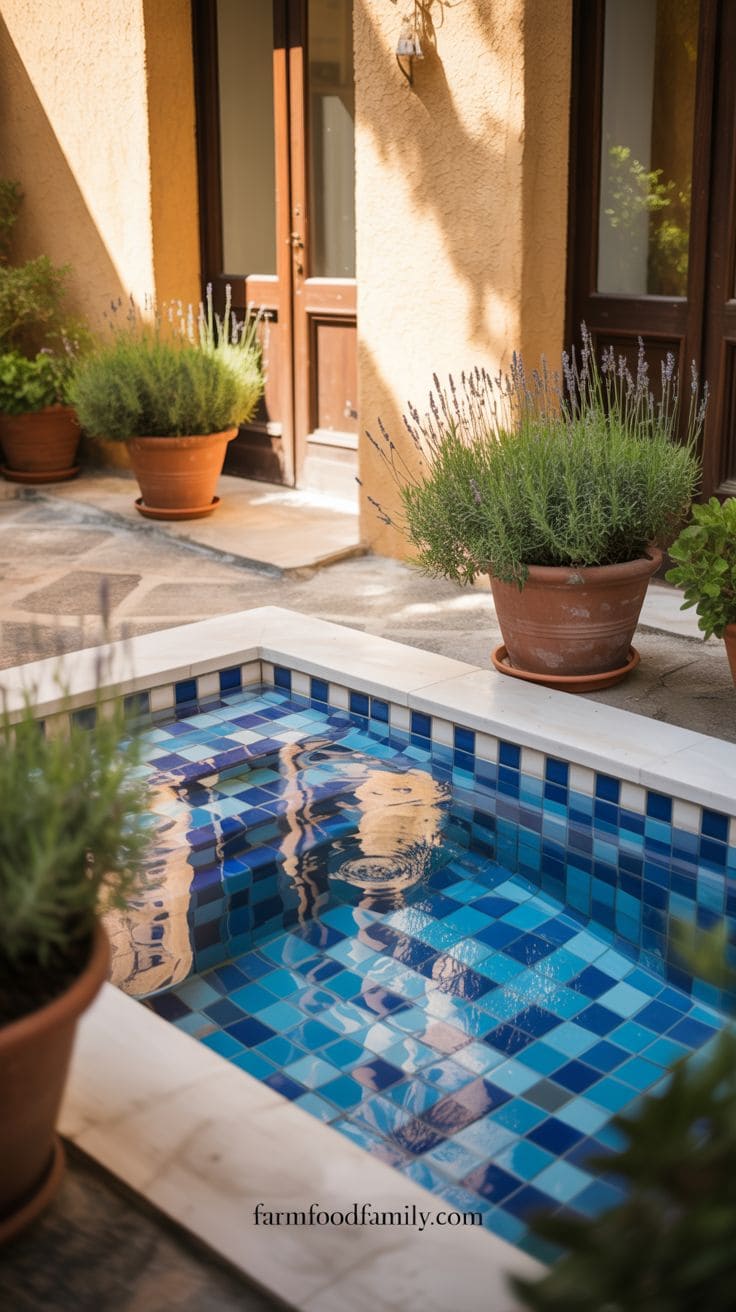
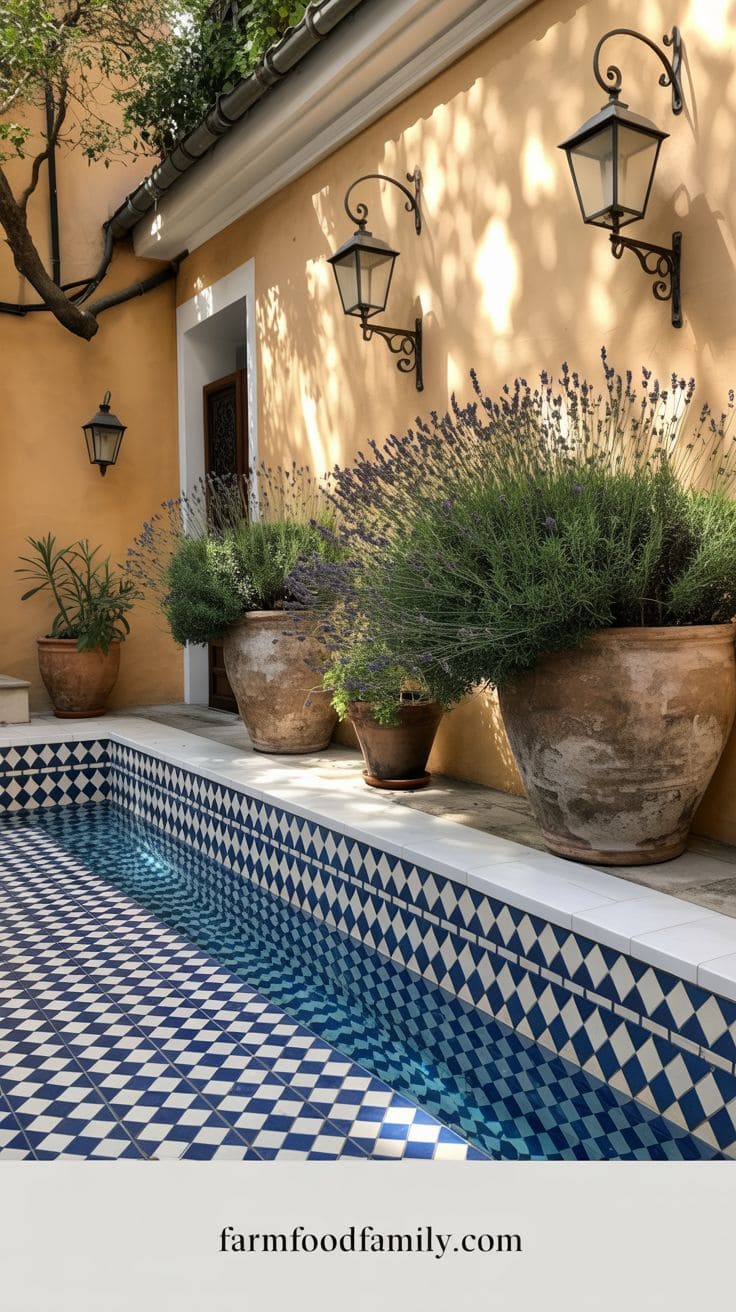
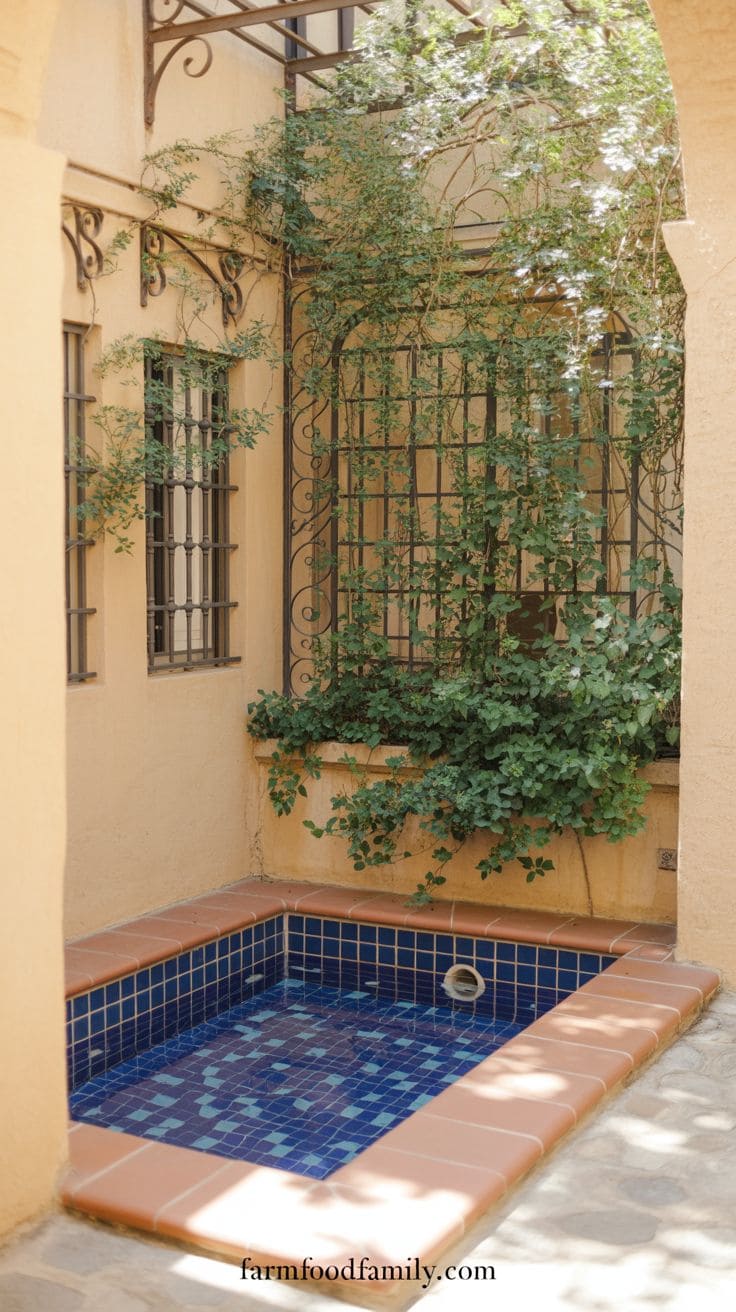
A front yard plunge pool in the manner of a Mediterranean courtyard is ideal for tiny urban lots or homes with enclosed front doors.
These pools are compact but opulent, with stucco or brick walls that provide solitude while adding to the old-world elegance.
Open and Welcoming Atmosphere
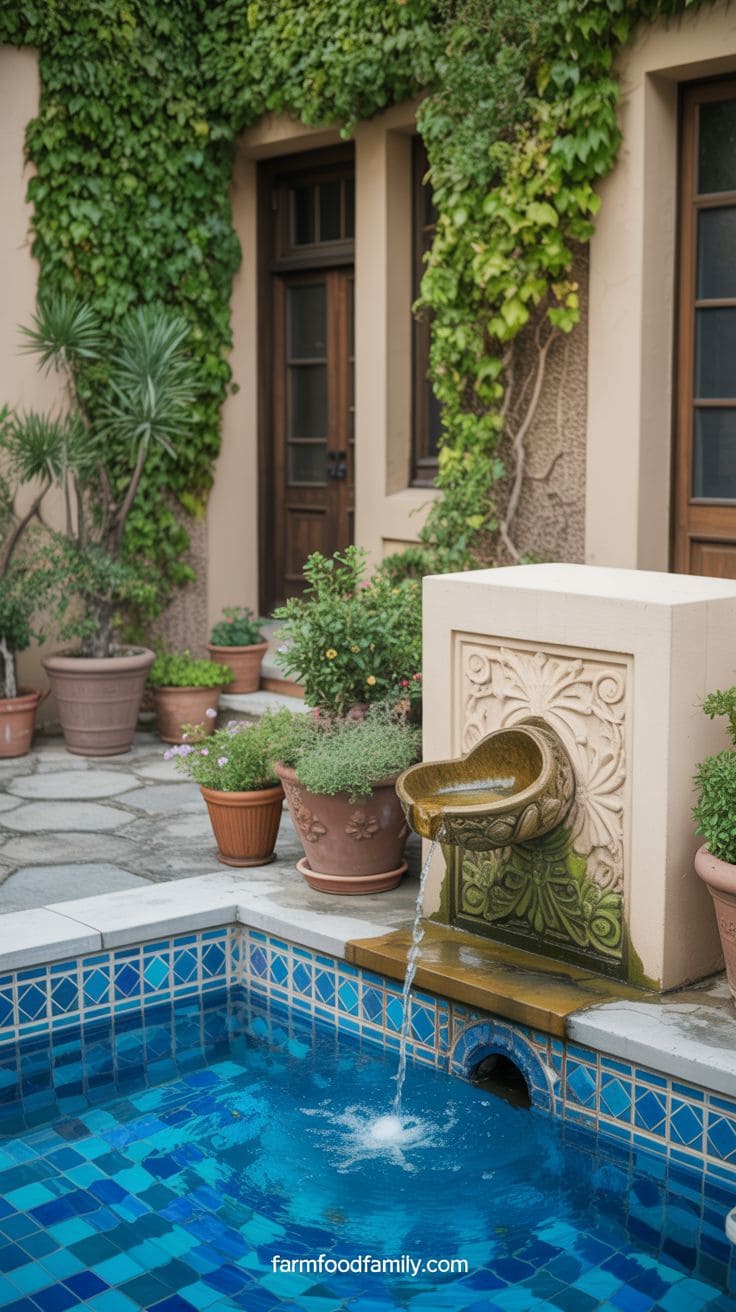
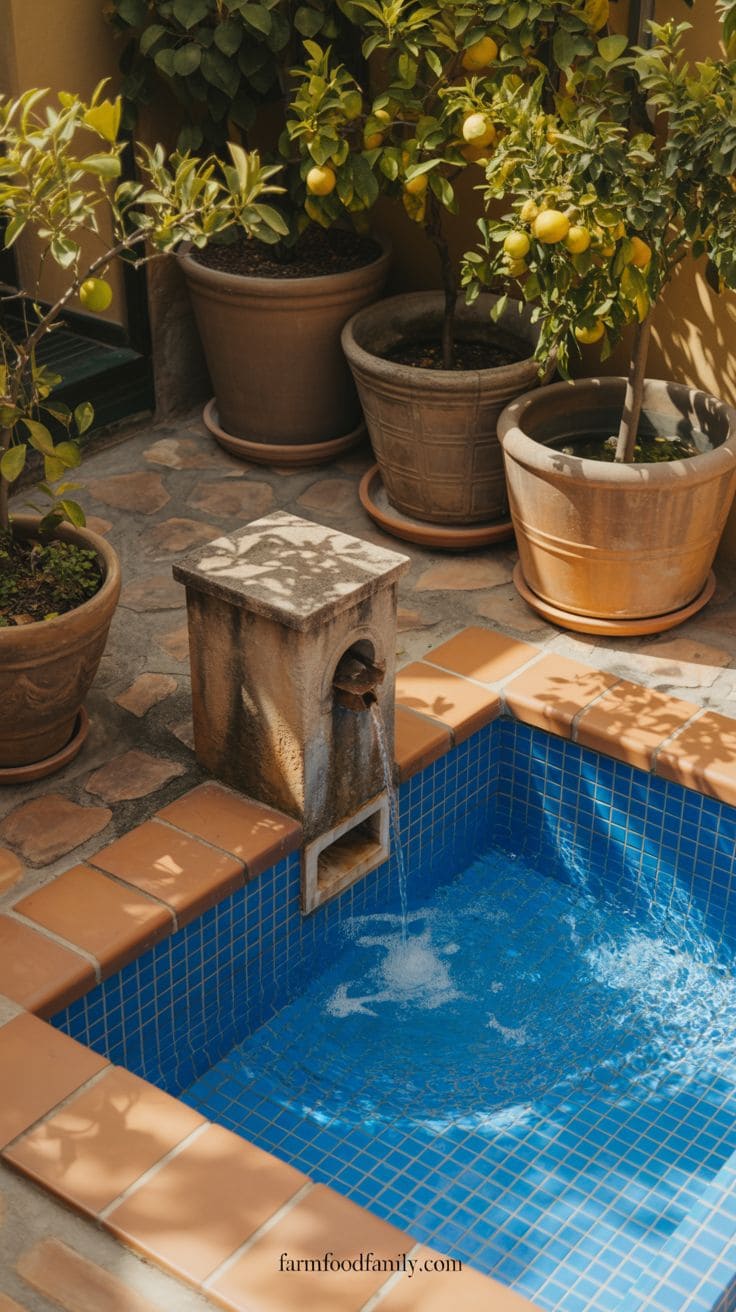
Include beautiful tilework inside the pool and along the coping, such as patterned mosaics in blue or terracotta colors.
Wrought-iron elements, lantern illumination, and climbing vines on the enclosure walls will complete the courtyard atmosphere.
Small fountains or spouts carved into the wall above the pool can provide a calming sound of water, while enormous terracotta pots filled with lavender or citrus plants provide scent and color.
This design is very adjustable, physically contained yet emotionally open, and creates an unexpected refuge that welcomes both guests and inhabitants with relaxing energy right at the front of the property.
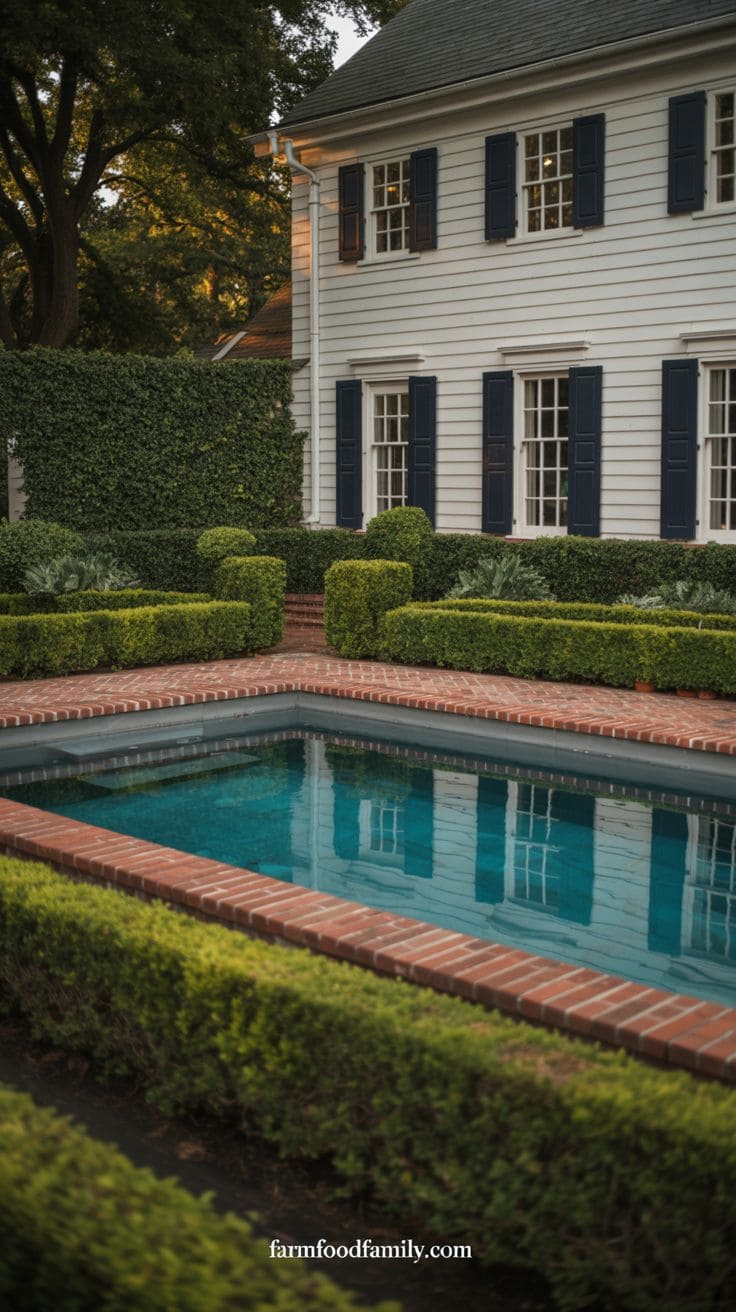
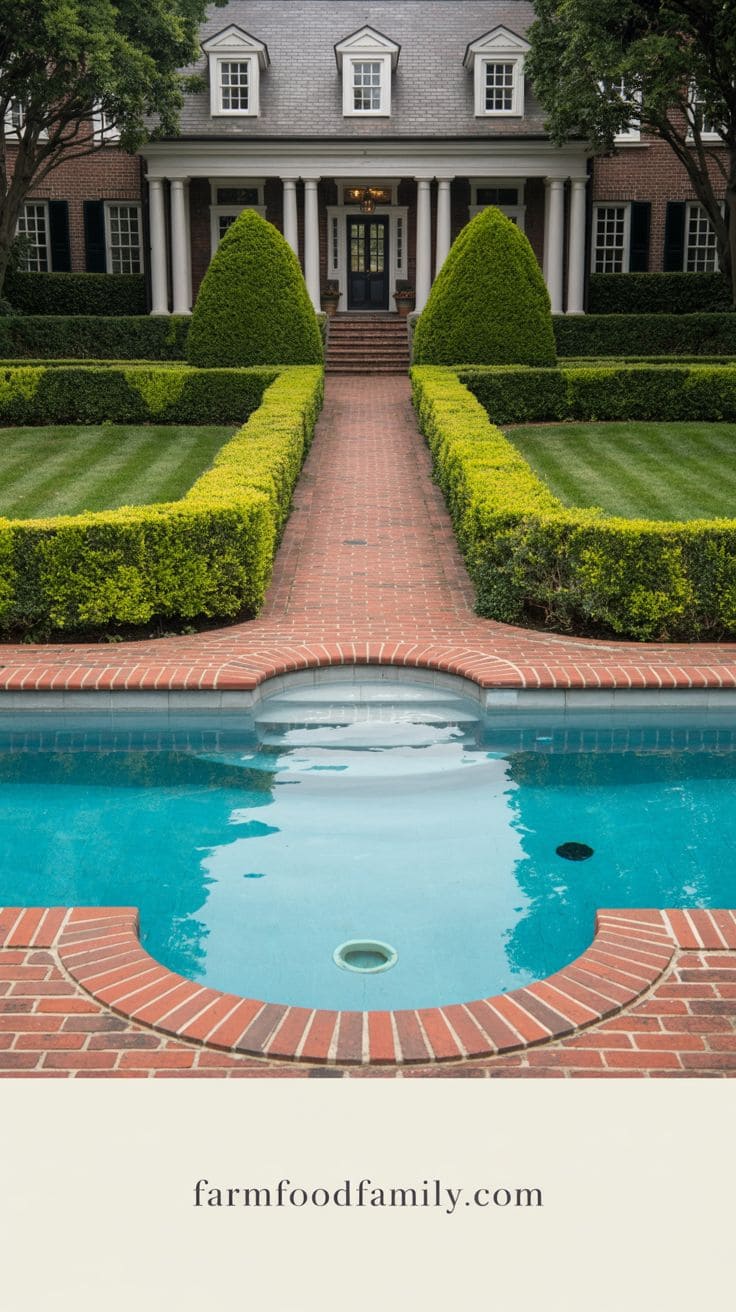
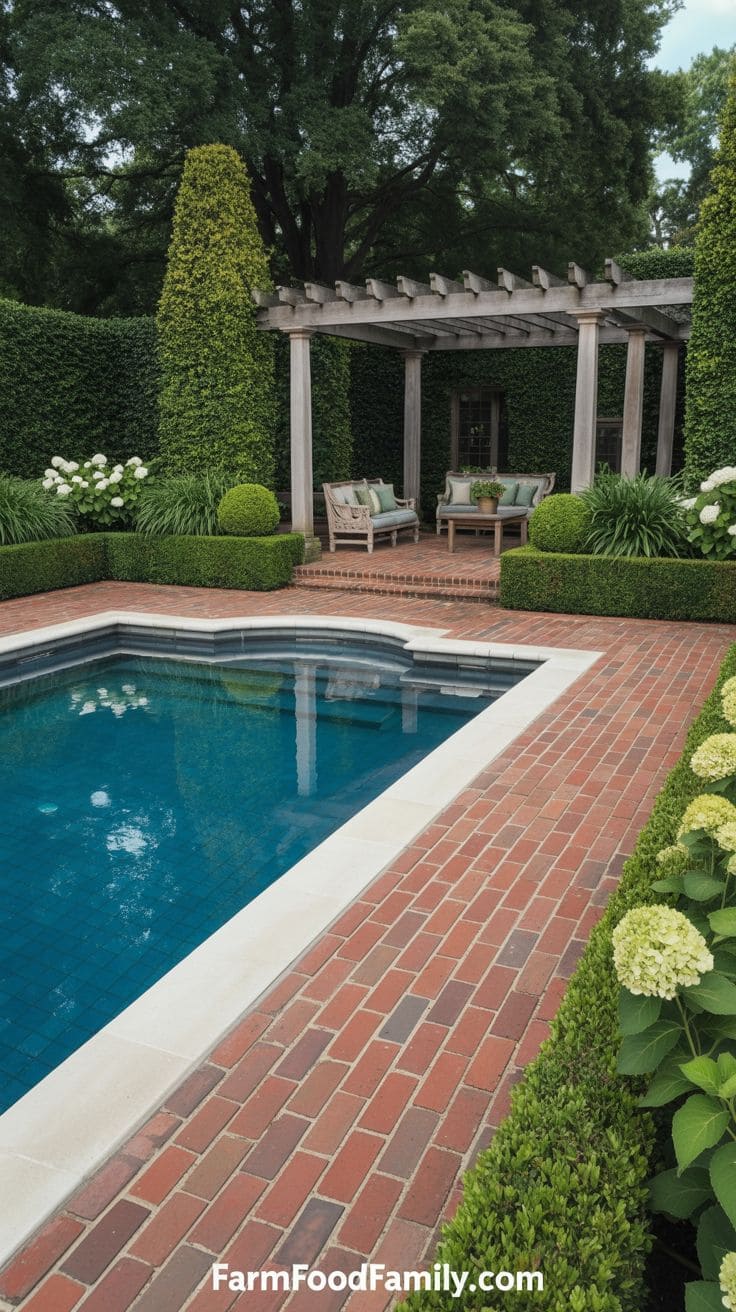
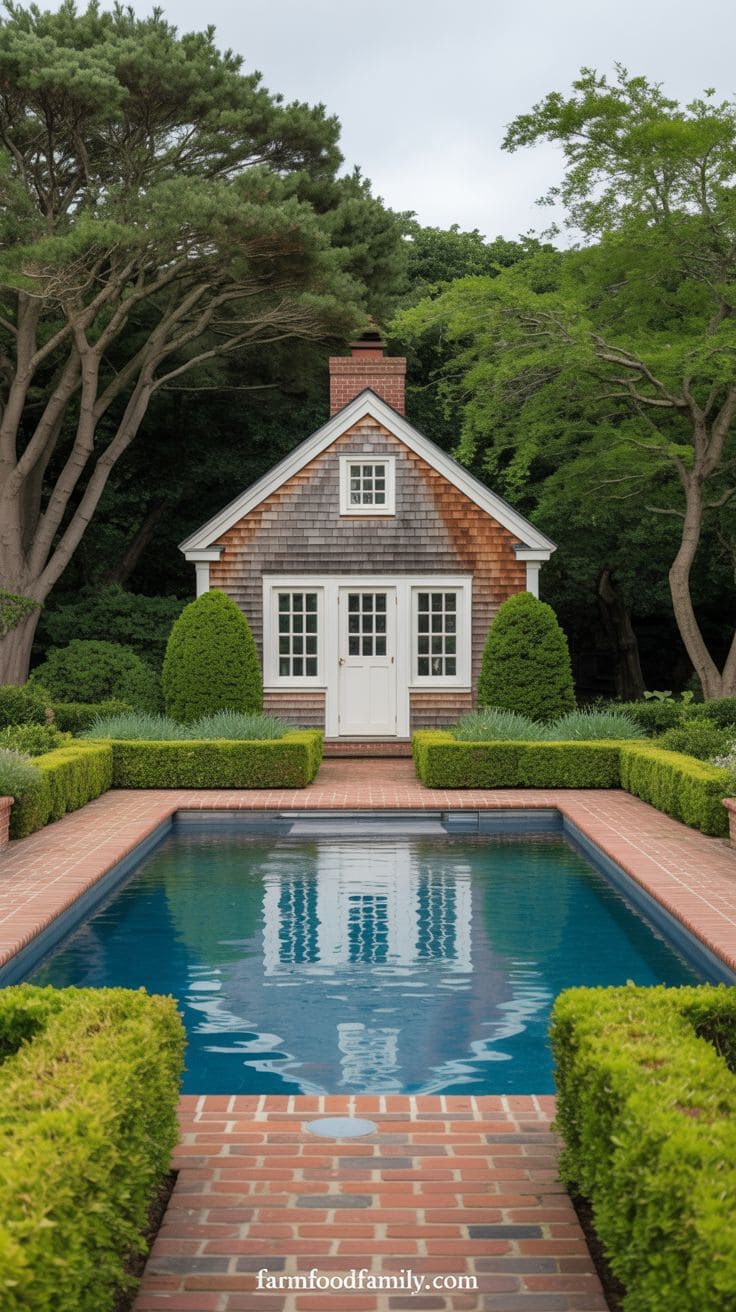
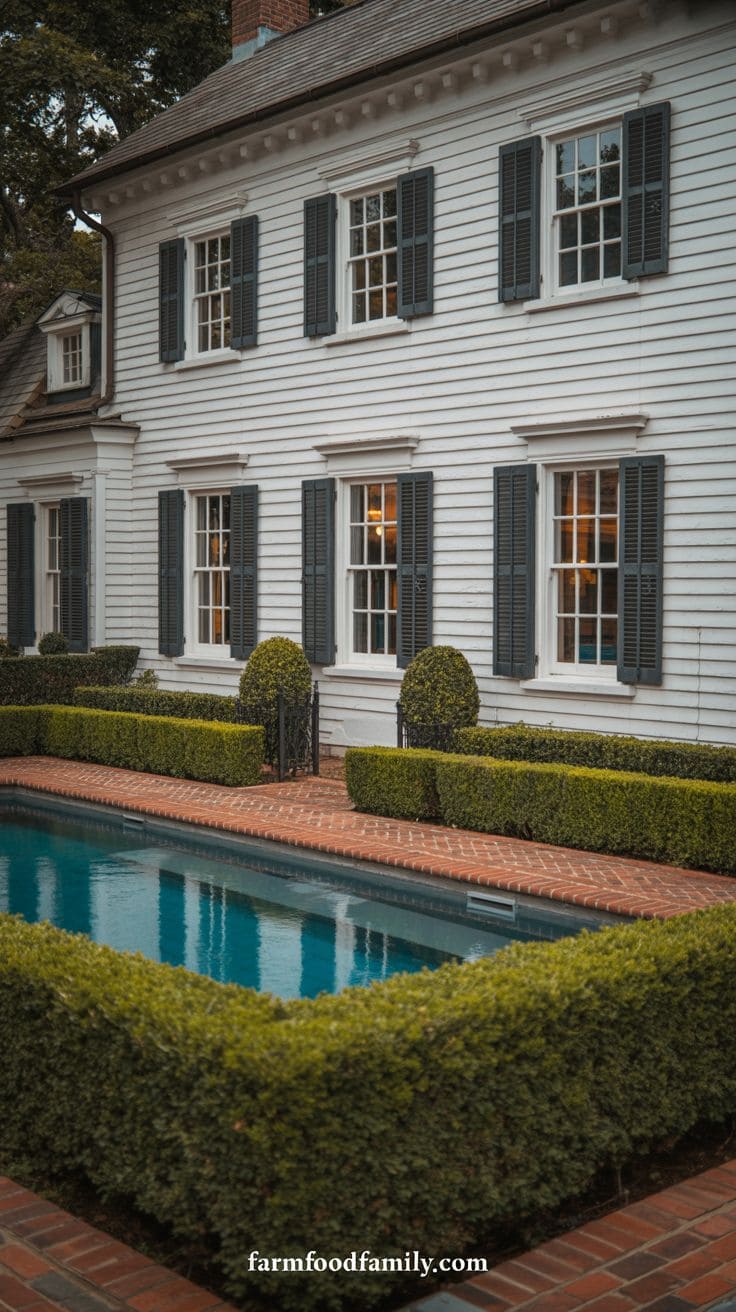
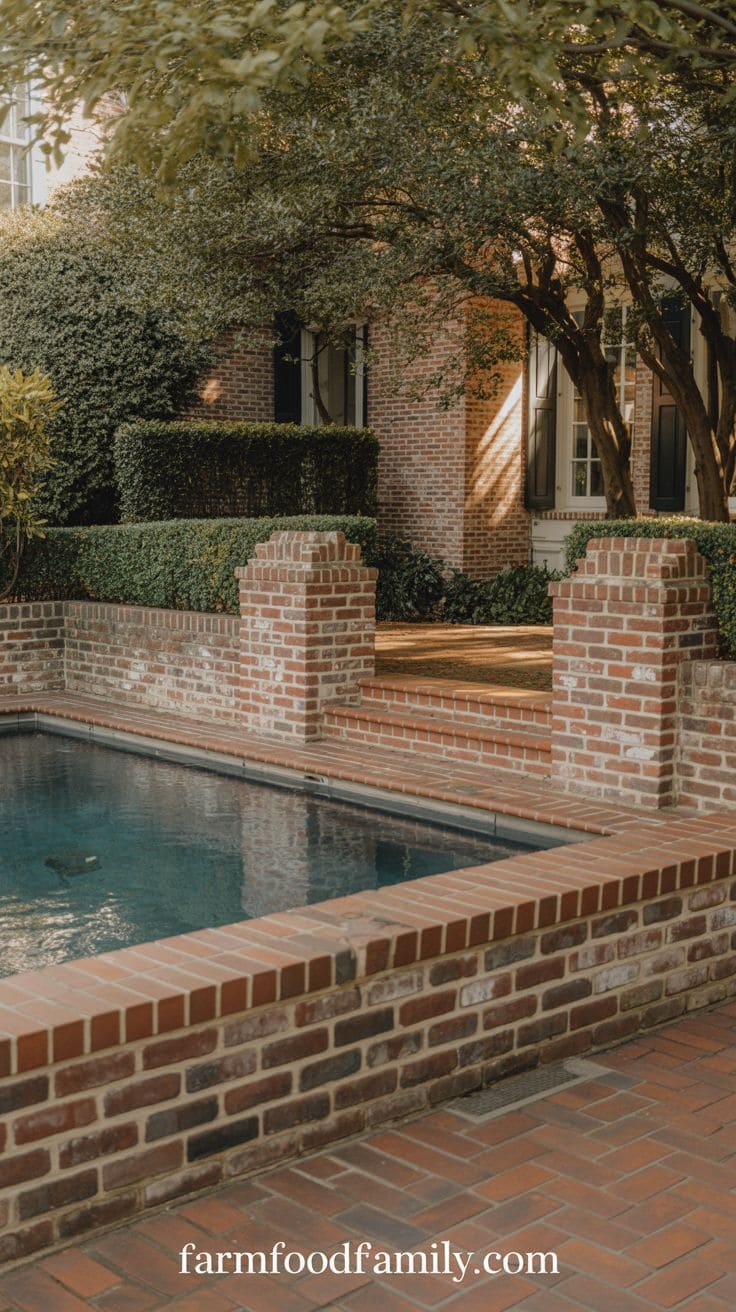
3. Brick and shingle colonial revival poolscape
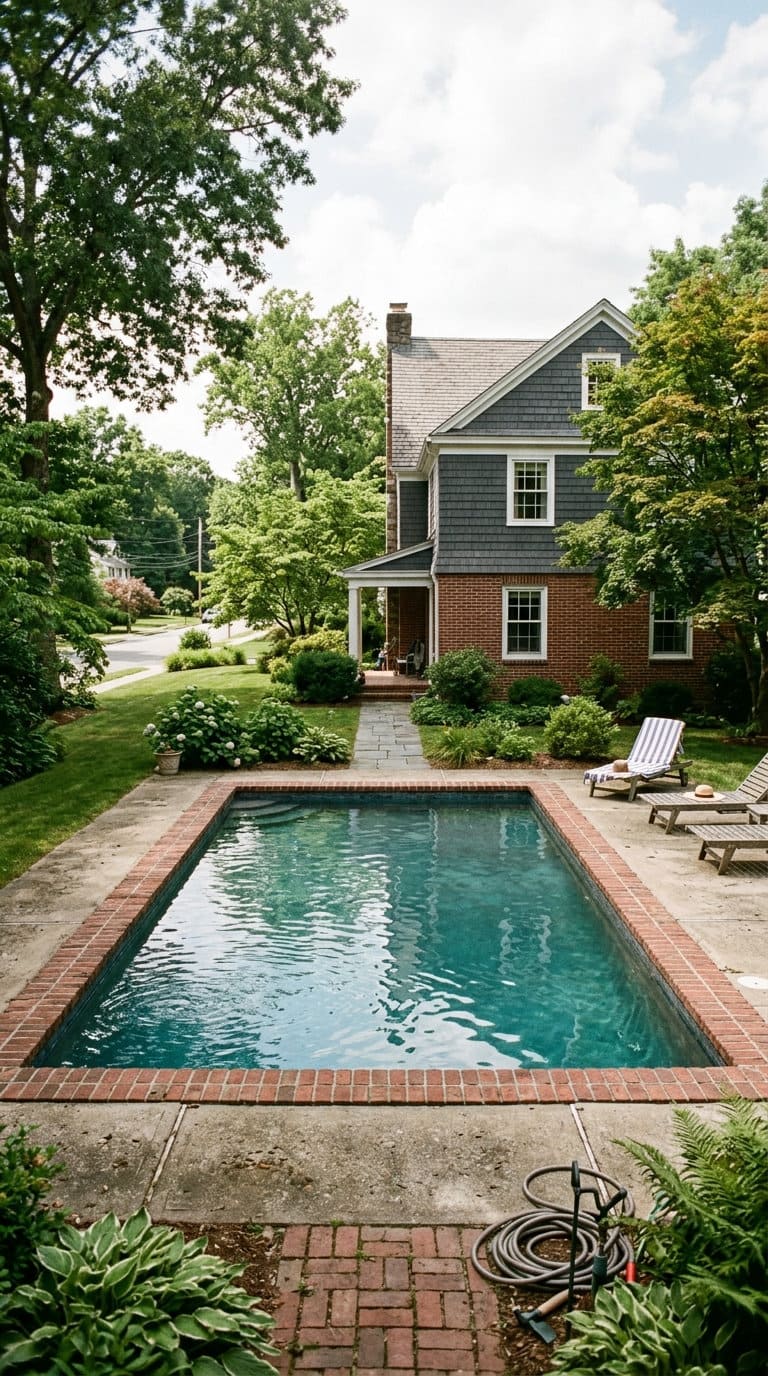
A pool that echoes the home’s own brick and shingle detailing, matching coping material to the house’s foundation brick, for instance, reads as original to the property rather than added on. Like the other two ideas here, the realistic version keeps this set back from the street rather than positioned as a visible front-lawn feature.
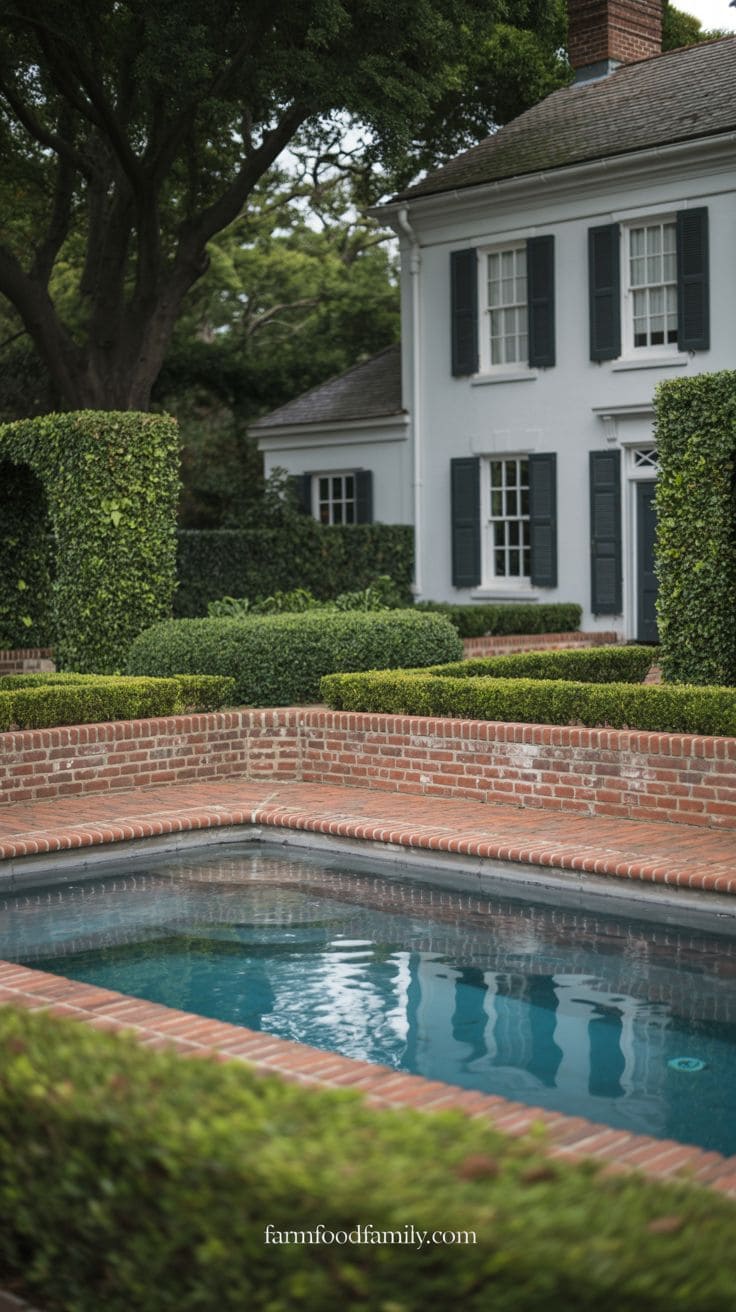
A brick-and-shingle front yard pool complements Colonial Revival or Cape Cod architecture, which uses historic materials to give a sense of timeless Americana.
The average homeowner spends $616/year on yard fixes that don't address the real problem. Find out what yours actually is — before you spend another dollar.
Take the Free QuizThe pool should be rectangular to suit the symmetry that is common in Colonial architecture.
Surround the pool with old red brick coping and incorporate it into the hardscaping, such as garden walls, walkways, or even a modest brick courtyard enclosure.
This visually correlates with the red or white-painted brick commonly found on the home’s facade.
Vintage but Inviting Pool
Natural wood, cedar, or terracotta shingles can be used to create a pool house, shade pergola, or even siding on nearby structures such as a garden shed or a changing cabana.
These tiles can weather over time to a mellow grey patina, adding to the setting’s historical character.
For a classic colonial look, surround the pool with black shutters, white trim, and boxwood hedges. This combination feels grounded, welcoming, and timeless.
4. A temporary, removable seasonal pool
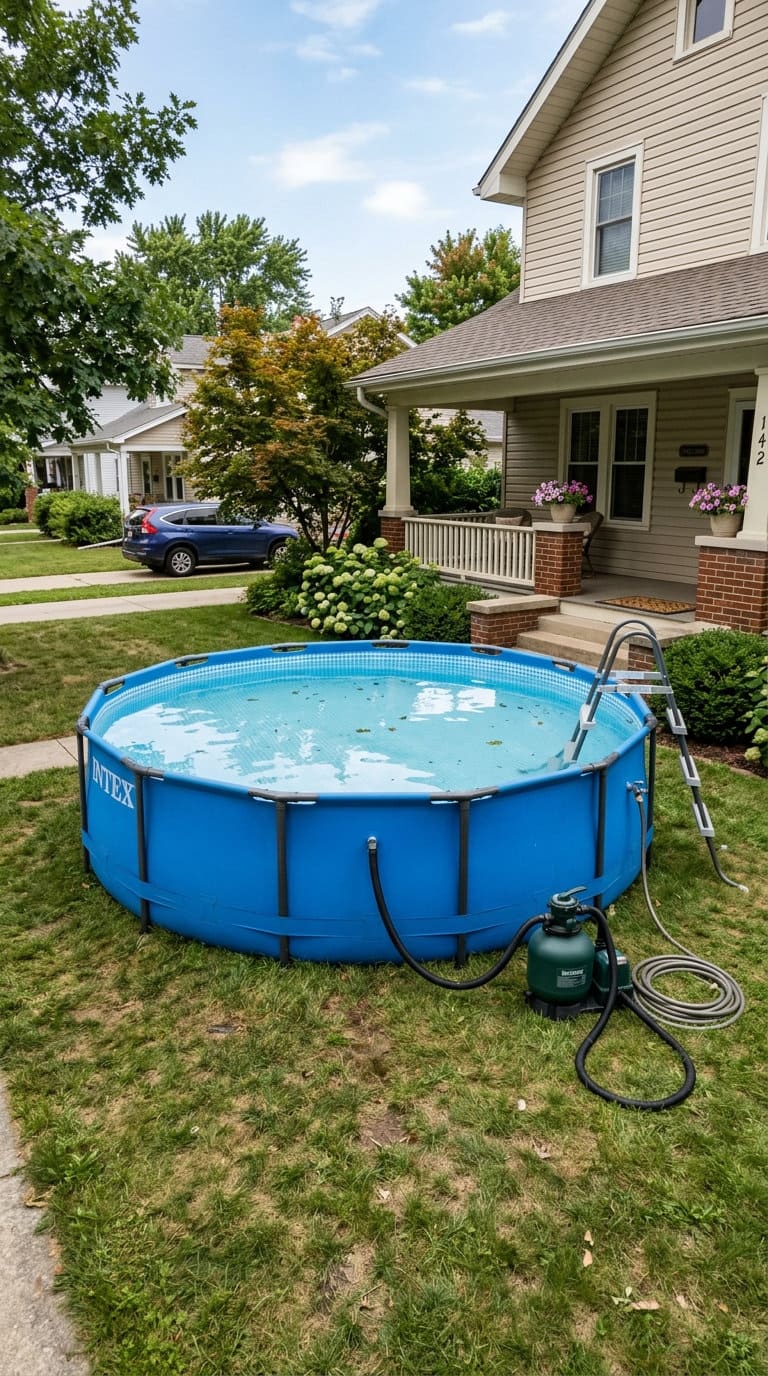
If a permanent front yard pool isn’t allowed where you live, a real, honest alternative some homeowners actually use: set up a removable pool for a specific occasion, visiting family, a birthday, a heat wave, and take it down afterward.
This sidesteps the permanent-structure zoning question entirely in a lot of jurisdictions, since a temporary, non-permanent setup isn’t treated the same as a fixed in-ground or built structure. Confirm this with your local zoning office too, “temporary” has its own definition locally, but it’s a genuinely realistic option worth knowing about rather than assuming a front yard pool is simply off the table.
5. Setback-compliant screened placement
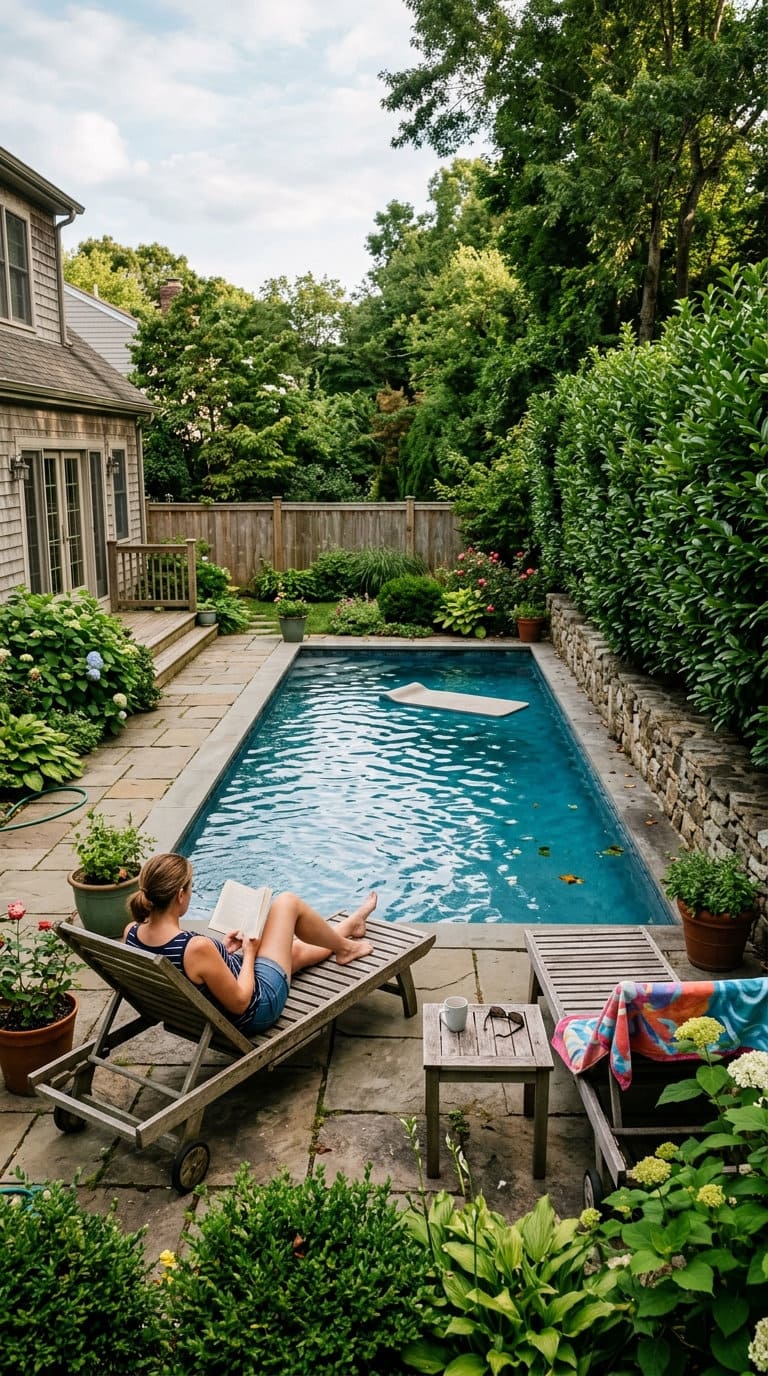
Position the pool as far back from the street as your lot and zoning allow, then use a hedge, low wall, or fence to screen it from direct street sightlines. This does double duty: it’s the placement most likely to actually clear your local setback requirement, and it also addresses the real safety consideration a street-facing pool has that a backyard pool doesn’t, unrestricted visibility and potential access from passersby, not just household members.
For the barrier itself, pool fencing ideas that look intentional rather than purely functional are worth a look, since a front-facing pool needs a genuinely secure barrier more than a backyard one does.
Real safety numbers
The general child-safety numbers that apply to any residential pool apply here too, and matter more for a front yard setup given its street-facing visibility. Drowning is the leading cause of death for children ages one to four, and the U.S. Consumer Product Safety Commission’s own data shows an average of 376 children under 15 fatally drowned in pool- or spa-related incidents each year from 2021 to 2023, nearly 80% of them under age five. A widely-cited study by Thompson and Rivara, originally published in the New England Journal of Medicine, found that a properly installed four-sided isolation fence reduces drowning risk by 83% compared to no fence or a three-sided fence where the house forms the fourth side.
For a front yard specifically, that fence needs to do more work than a backyard fence does: it has to address a passerby or a neighborhood child wandering up from the sidewalk, not just someone already inside the household. A self-closing, self-latching gate isn’t optional here the way it might feel optional on a fully enclosed backyard pool. If you’re deciding between above-ground and in-ground for a setback-compliant spot, above ground pool options are also worth comparing, since some jurisdictions treat temporary or above-ground structures differently under the same zoning rules discussed above.
FAQ
Can you legally have a pool in your front yard? Often no, most U.S. residential zones prohibit a fixed pool inside the required front yard setback entirely. Where it is allowed, it’s typically because the actual setback line sits back far enough from the street that the “front yard” for zoning purposes is smaller than the visible lawn. Confirm with your local zoning department before planning anything.
How far must a pool be from the front property line? It varies significantly by jurisdiction, real examples range from 6 feet from the house itself to 8 feet from any property line, and some zones prohibit a front yard pool regardless of distance. There’s no universal number, call your local planning or zoning office for your specific requirement.
What’s a realistic alternative if front yard pools aren’t allowed where I live? A temporary, removable pool set up for a specific occasion and taken down afterward is a real option many jurisdictions treat differently than a permanent structure. A courtyard-style plunge pool set well back from the street, behind walls or hedging, is also more likely to clear setback requirements than an open front-lawn design.
Check your local zoning department before you fall in love with any specific design here, that single phone call determines which of these ideas is actually realistic for your property, not just which one looks best in a photo.
Front yard pools push boundaries and redefine outdoor luxury by bringing the elegance of water into the most visible part of the home. Whether you prefer a modern layout or a classical one, there’s a way to make it work with thoughtful landscaping and smart design.
Each idea balances beauty with function, offering a unique approach to climate, architecture, and lifestyle. When paired with appropriate privacy measures and integrated hardscaping, a front yard pool becomes an architectural gesture and an everyday indulgence.
These pools can enhance curb appeal, cool the surroundings, and serve as a dynamic centerpiece that transforms the entire look and feel of your property.
If these ideas helped you out, leave a comment below and share the list with family and friends!
Never miss an update — choose FarmFoodFamily as your preferred source on Google.
How it works: Tap the button below to open Google's settings page, then check the box next to FarmFoodFamily.
Tap the checkbox to turn it blue — that's how you know it's set.