12 Serene Minimalist Thanksgiving Tablescapes That Prove Less Is More
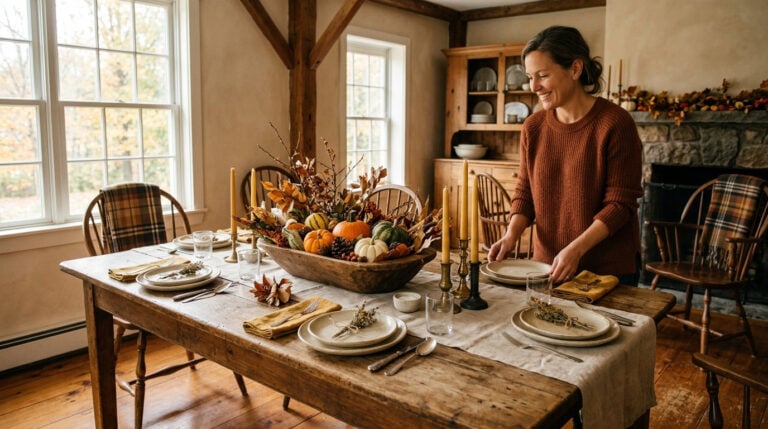
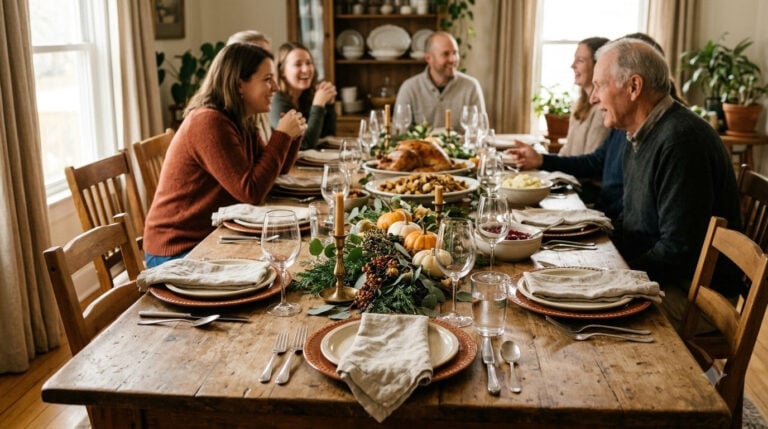
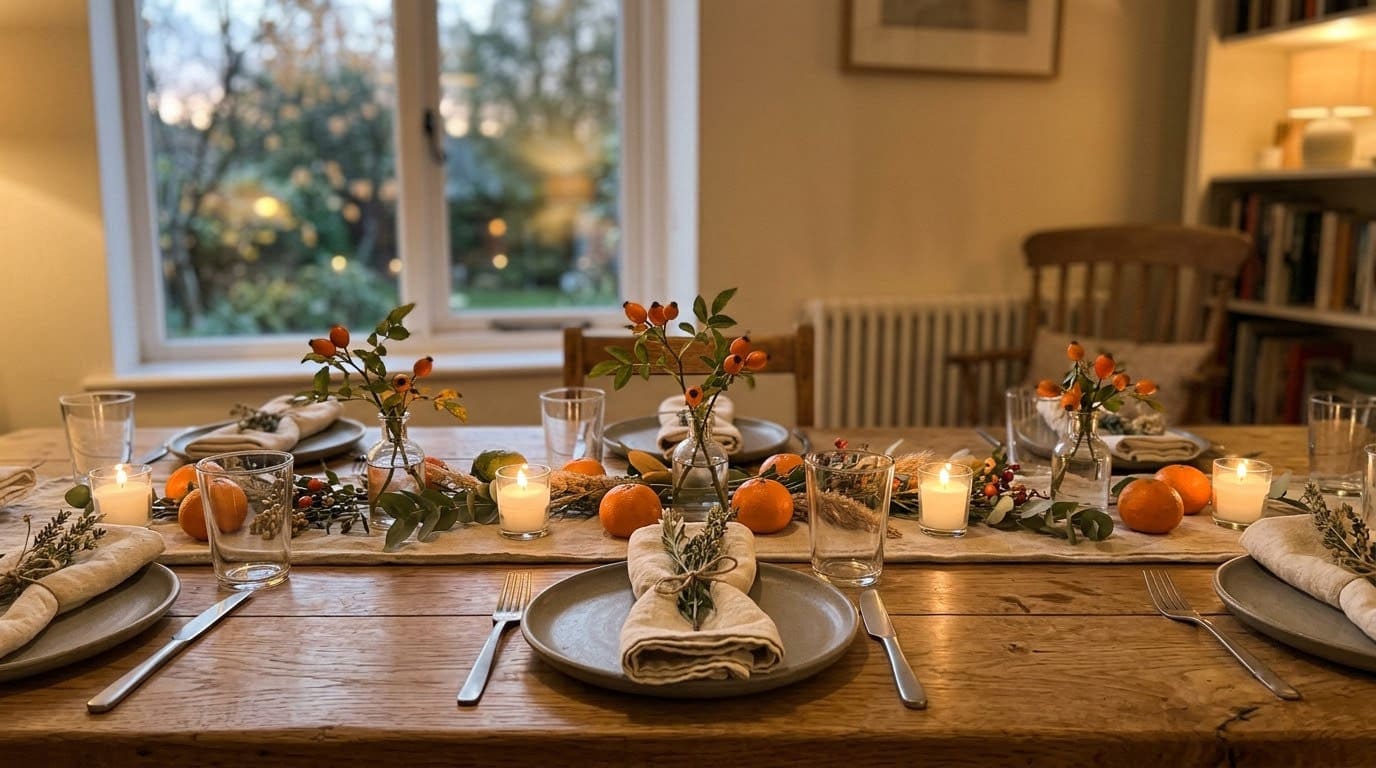
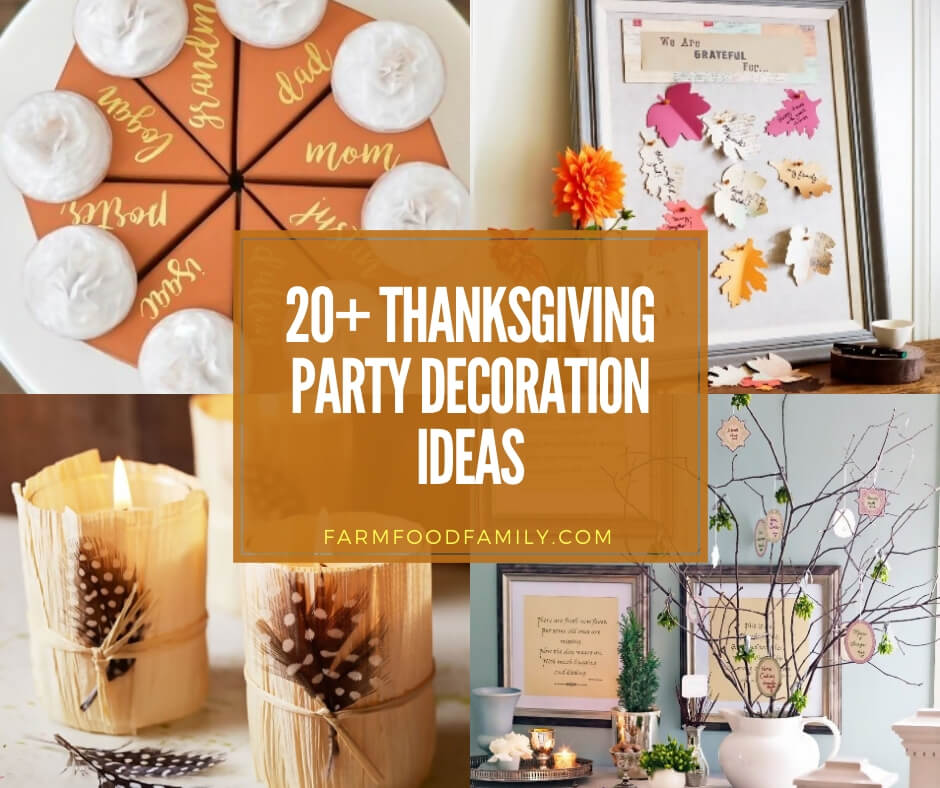
A minimalist Thanksgiving table looks calm and grown-up, as long as you give it texture and a few firm rules.

Never miss an update — choose FarmFoodFamily as your preferred source on Google.
How it works: Tap the button below to open Google’s settings page, then check the box next to FarmFoodFamily.
Tap the checkbox to turn it blue — that’s how you know it’s set.
Thanksgiving tables tend to get crowded. Pumpkins, candles, leaves, place cards, a cornucopia, and then 14 dishes of food on top.
A minimal table is the other way to do it. Fewer things, chosen with care, and room left for the food and the people.
The risk is that “minimal” can look unfinished. So each of these 12 setups comes with the small rules that make it look planned. You’ll also get sizes and a budget note.
Quick Answer
A minimal Thanksgiving table works when it starts plain and adds texture, not more stuff. Joanna Gaines puts it this way on Magnolia: “I typically like to start with a minimal table and incorporate a lot of texture on top.” So think linen, wood, and stoneware, not more things.
Keep the centerpiece low. UF/IFAS Extension says a short centerpiece should be “no taller than 12 inches,” so guests can see each other.
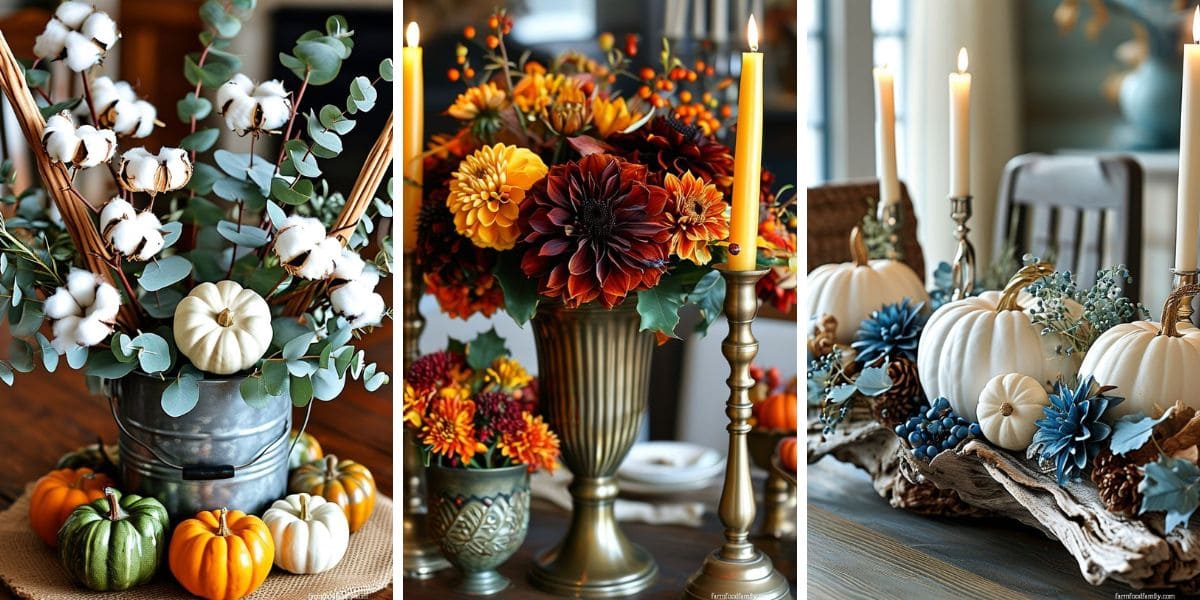
Use odd numbers.
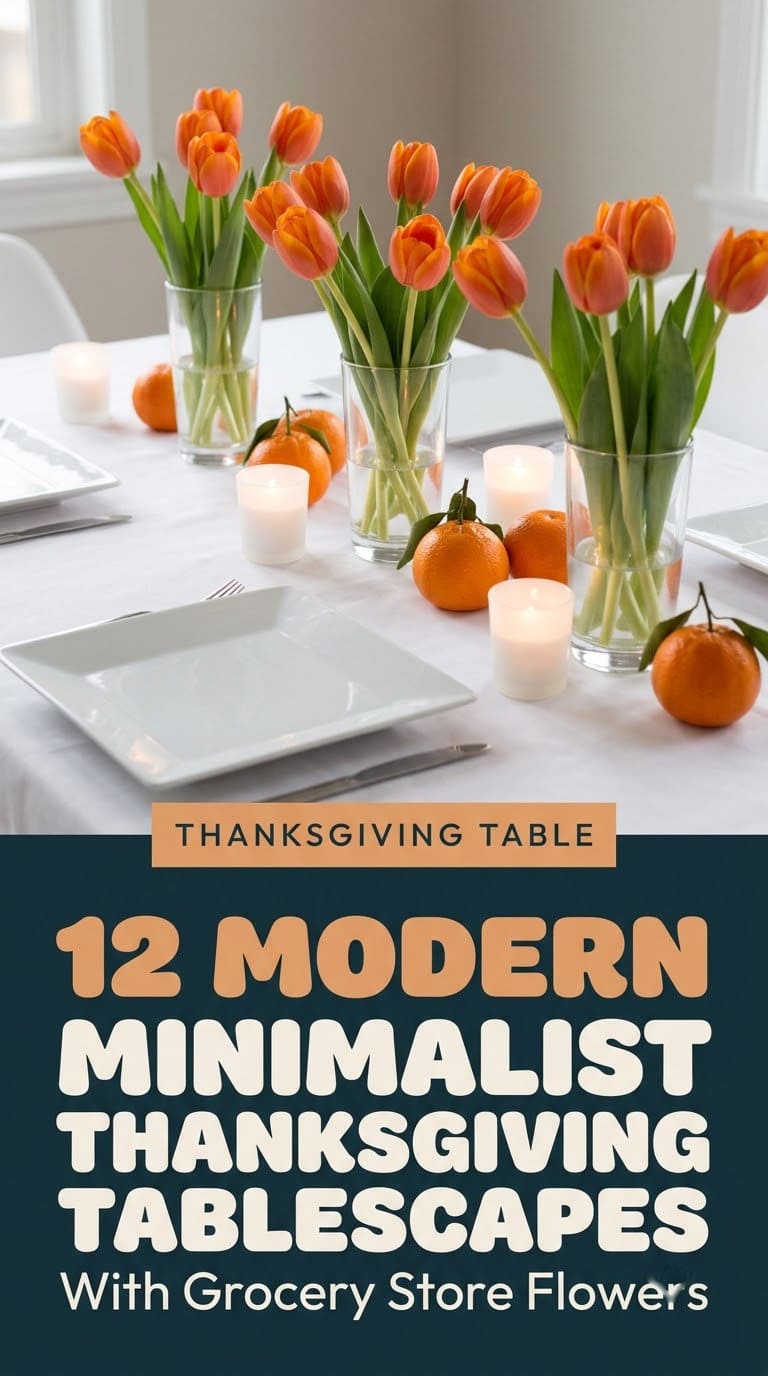
Ina Garten sets flowers in glasses “in odd numbers” in her Food Network table video. She uses three for a short table and five for a long one. Clementines between the glasses finish the look.
Pick unscented candles. Ina says scented ones “compete with the flavor of the food.” And keep flames at least 12 inches from anything that burns, per the U.S. Fire Administration.
Why Do Minimalist Tables Sometimes Look Unfinished?
Because “less” got mistaken for “nothing.” A bare table with plain plates reads as a Tuesday. A simple table with a plan reads as a choice.
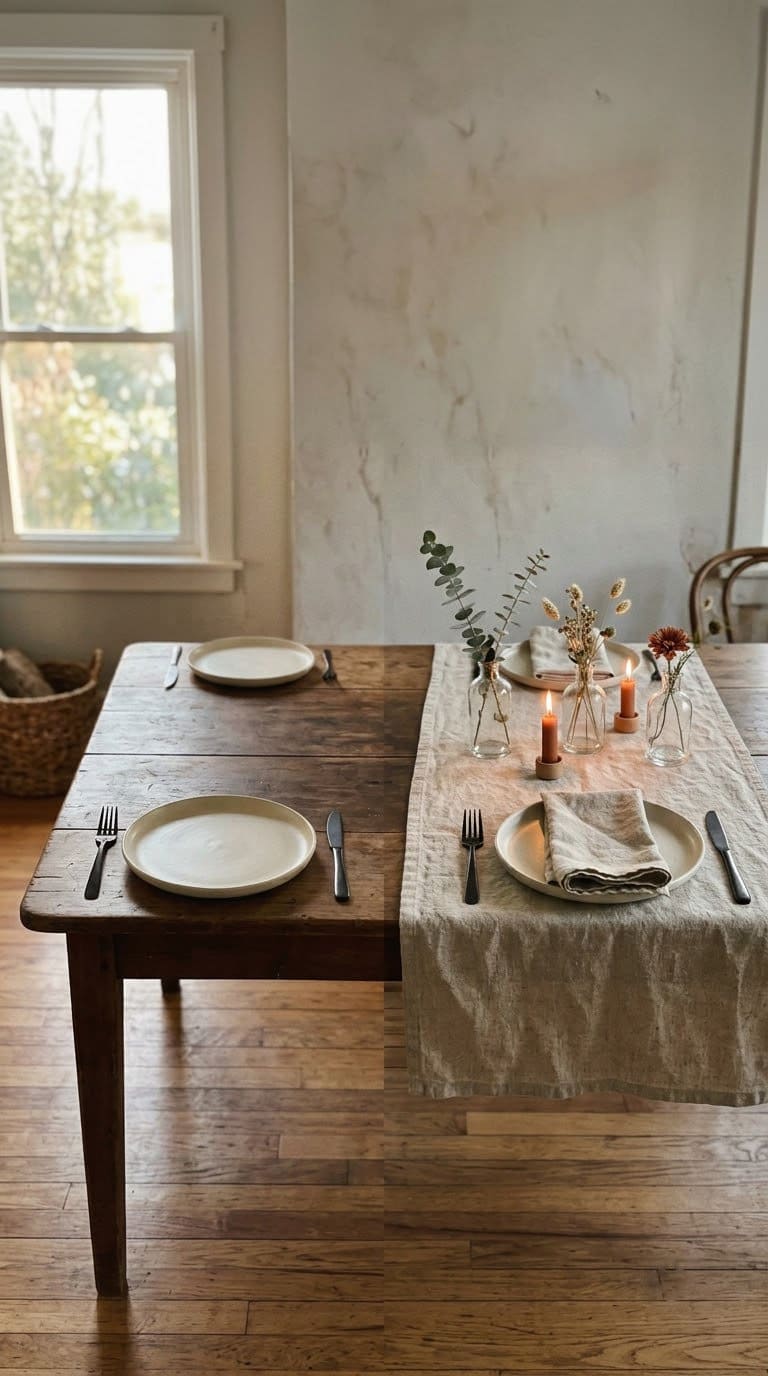
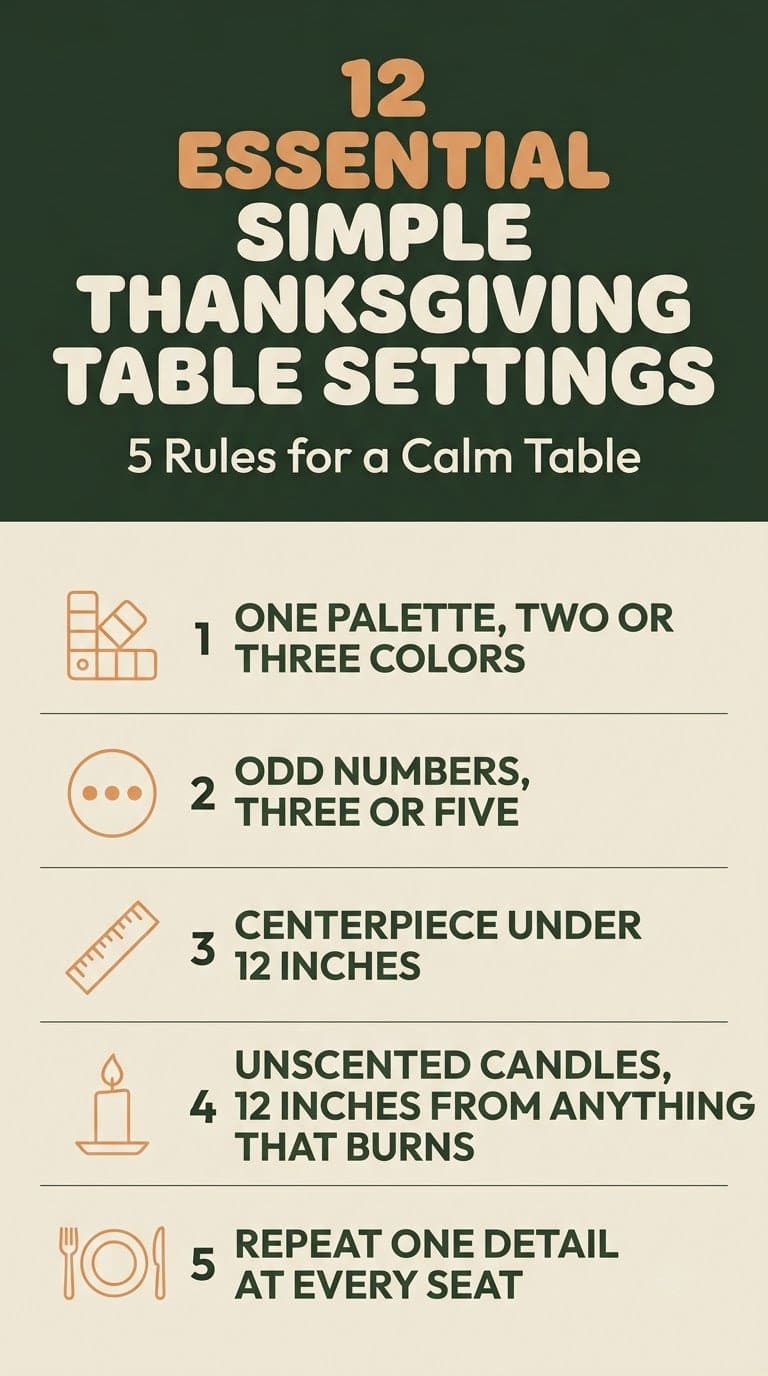
The difference comes down to five small rules.
| Rule | What it means | Why it works |
|---|---|---|
| One palette | Two or three colors, max | The eye reads it as one idea |
| Odd numbers | Three or five of anything | Groups of three look placed, not lined up |
| Stay low | Under 12 inches in the center | Guests can see and talk |
| Add texture | Linen, wood, stoneware, one natural element | Plain surfaces stop looking empty |
| Repeat | The same small thing at every seat | It reads as a design, not leftovers |
UF/IFAS says to choose one theme and carry its colors into the centerpiece. That’s the minimalist version of “one palette.”
Where Does the Food Go on a Minimalist Table?
This is the question that shows up under almost every simple table video. On Ina’s Food Network video, two different viewers asked some version of it. One wrote, “Where does the food go or is there a buffet table?”
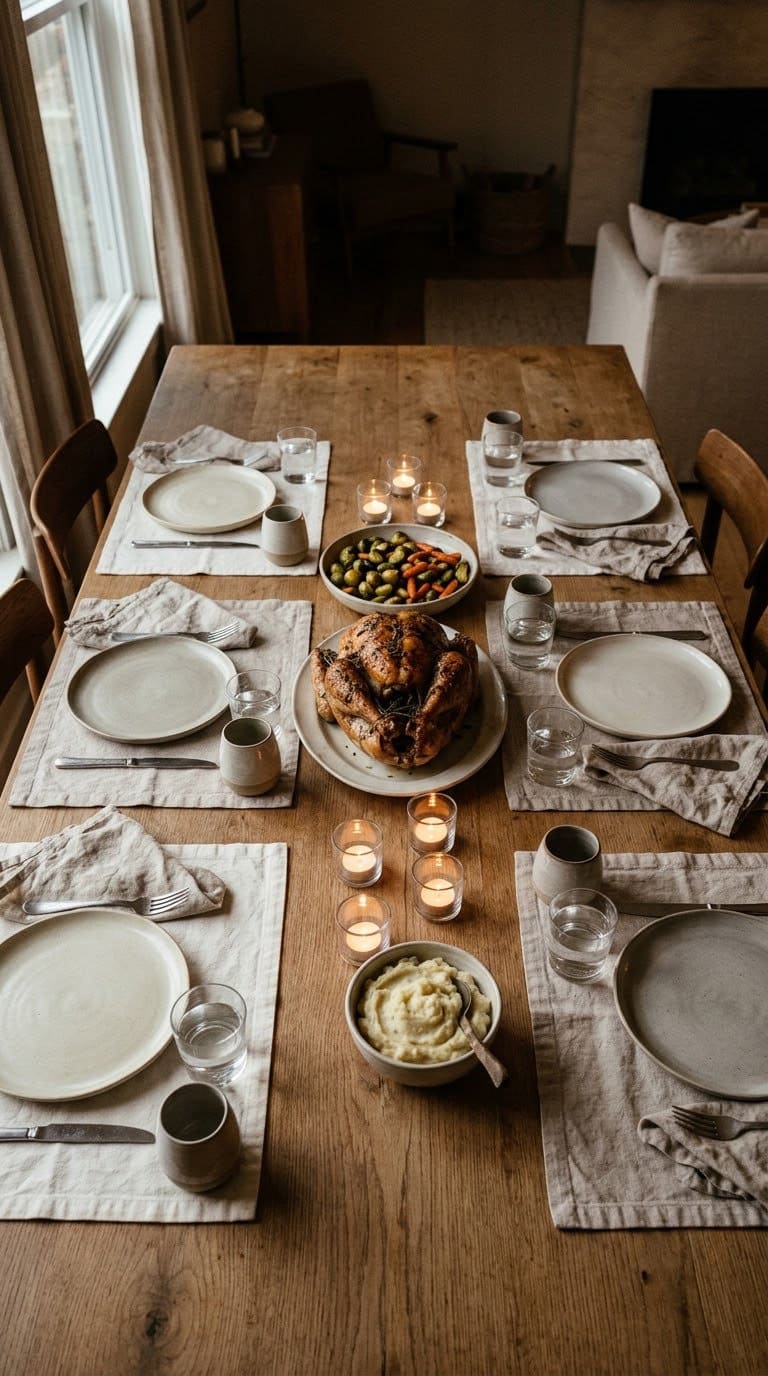
A simple table solves this better than a crowded one. Joanna Gaines keeps the centerpiece low so “there is plenty of room to place the food.”
For family-style serving, keep the center decor to a strip about 6 inches wide. Leave gaps between pieces for the platters. For 10 or more guests, put the food on a sideboard buffet and let the table stay spare.
1. Set Three Flowers in Drinking Glasses
This is Ina Garten’s simplest trick, and it’s hard to beat. Plain drinking glasses, one kind of flower, and a few pieces of fruit.
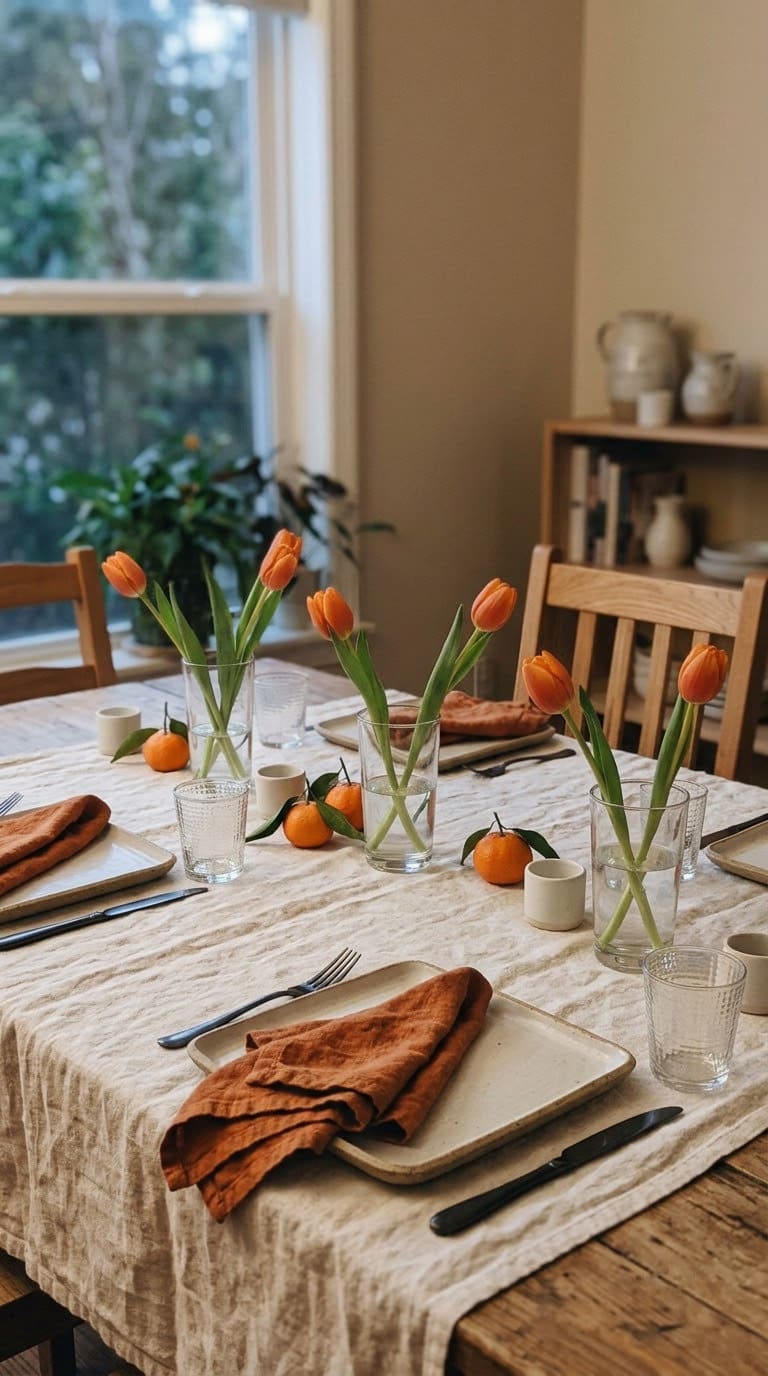
Ina puts orange tulips in regular drinking glasses down the middle of the table. She uses “three but if you have a long table maybe five,” with plates of clementines in between.
Use glasses about 4 to 5 inches tall. Trim the stems so the blooms sit just above the rim. Match the napkins to the flower color and keep everything else white or neutral.
Budget: $. The flowers and fruit come from one grocery trip.
Quick tip: buy the tulips a day early and keep them cool. Cut the stems again right before guests arrive so they stand up straight.
2. Let Candles Be the Only Centerpiece
No flowers, no pumpkins. Just candles at different heights on a pale cloth.
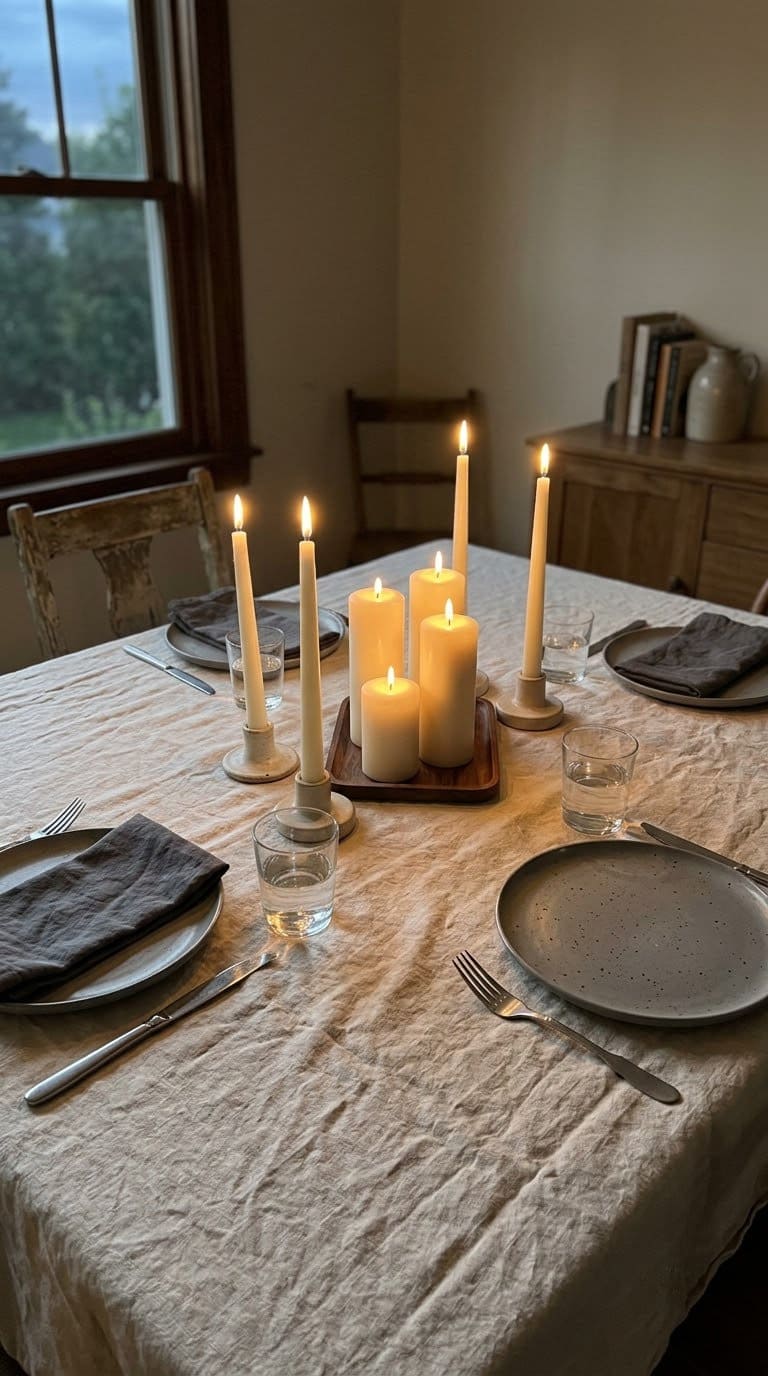
Star florist Jeff Leatham called a table like this “minimalist chic at its best,” as reported by Homes & Gardens. It was a cream cloth, candles at varying heights, and gray stoneware plates.

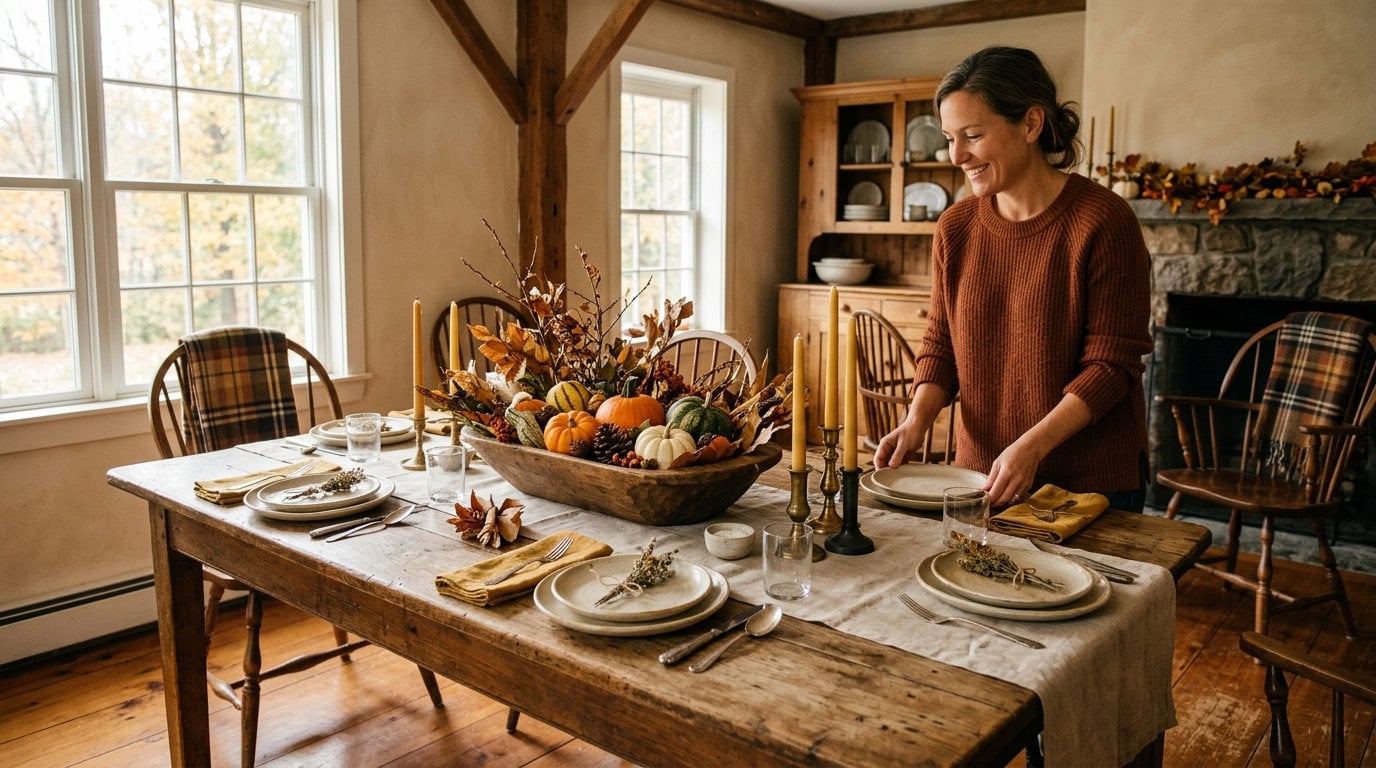
Group candles in clusters of three or five, with heights from about 3 to 12 inches. Keep every flame at least 12 inches from napkins and place cards, as the U.S. Fire Administration advises.
Budget: $ to $$. Flameless pillars work too, and the fire agency suggests them as a safer option.
Quick tip: light the candles just before guests sit. Blow them out when the table clears.
3. Lay Runners Across the Table, Not Down It
Most people run a table runner lengthwise. Ina does the opposite, and it changes the whole look.
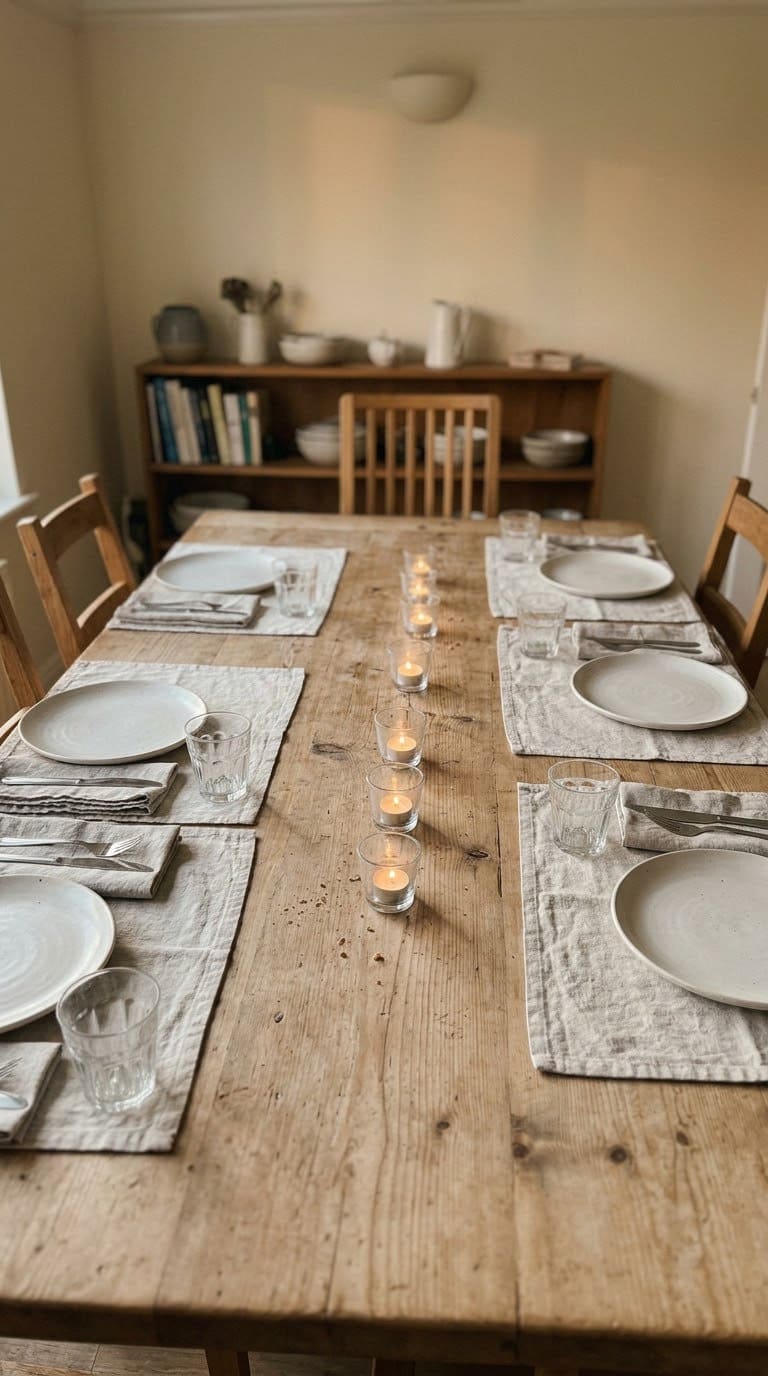
For one of her settings, Ina skips the cloth and lays runners “across” the table instead. Each runner becomes a shared placemat for the two people facing each other.
Space them to match your seating, about one runner per pair of chairs. Leave the wood bare down the middle for votives and serving dishes.
Quick tip: iron the runners flat first. On a bare table, every crease shows.
Budget: $ to $$.
4. Make Dessert the Decoration
This idea skips decor entirely. The fruit and sweets you’ll serve later sit on the table from the start.
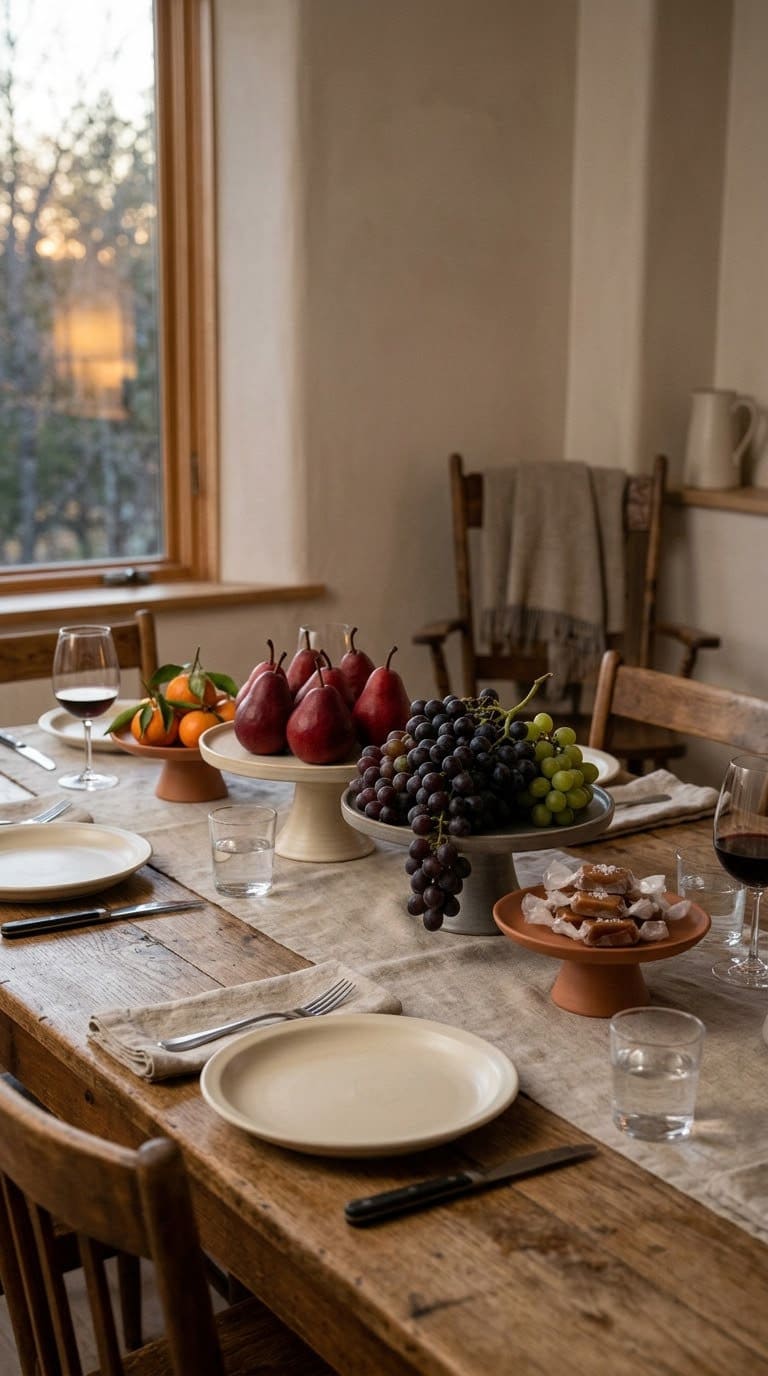
In Ina’s easiest setting, “the decoration is the dessert.” Red pears, clementines, and grapes spill over footed plates and cake stands down the middle.
Use two or three stands of different heights, all under about 12 inches. After the meal, the stands slide to the middle and become the dessert course.
Budget: $ to $$. Nothing goes to waste.
Quick tip: wash and dry the fruit the night before. Wet grapes leave rings on wood and marks on linen.
5. Line Up Pumpkins in One Tone
Pumpkins say Thanksgiving faster than anything. The minimalist trick is to keep them all one color and let the size do the work.
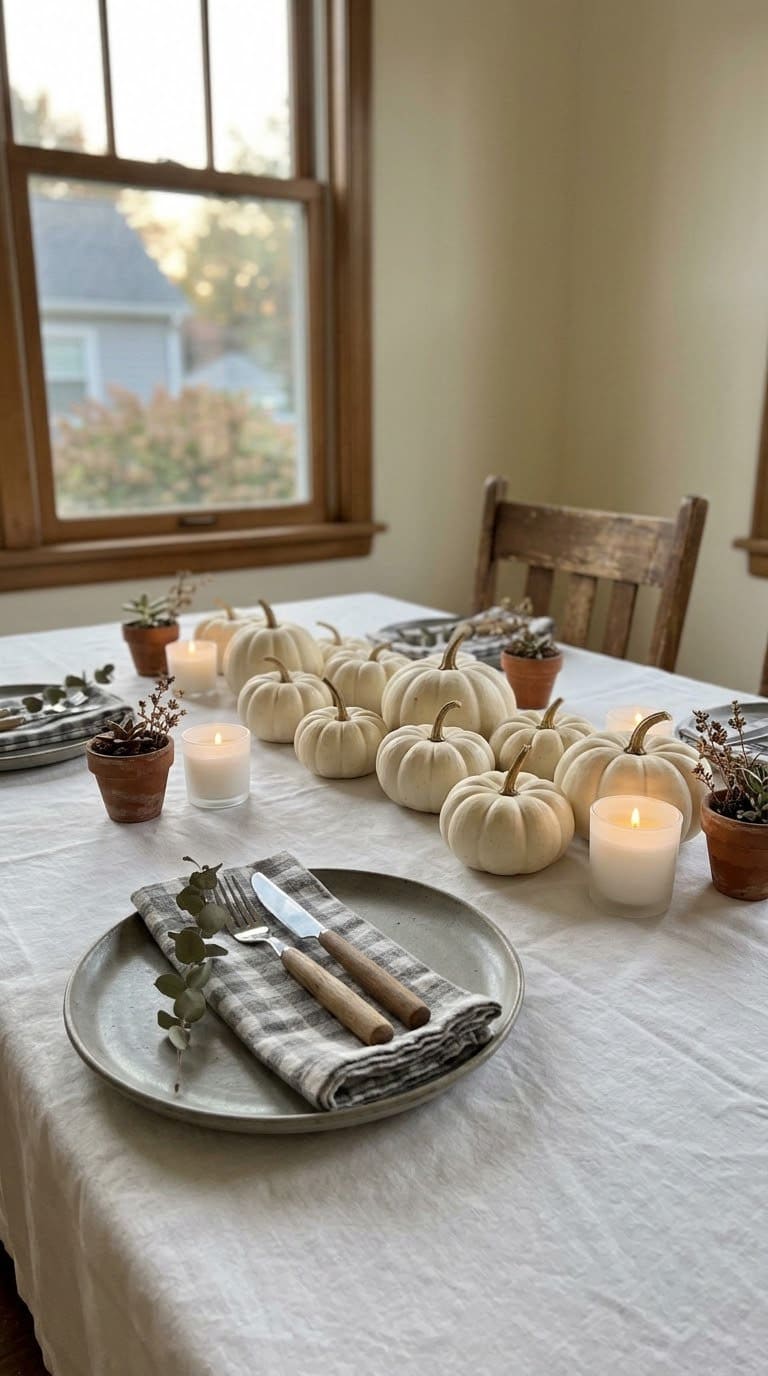
Ina lines pumpkins “in all different sizes” down the center of a plain white cloth, with white votives between them. She calls it “the table setting where less is more.”
Pick one tone, all white or all pale green or all orange. Use 5 to 9 small pumpkins, the largest no more than about 6 inches tall, spaced unevenly.
Quick tip: set the pumpkins on their sides or at a slight angle. A perfectly straight row looks stiff.
Budget: $. Our Thanksgiving centerpiece roundup has fuller arrangements if you want more later.
6. Build on Texture, Not Color
This is Joanna Gaines’ approach: a minimal base with texture layered on top. It’s how a plain table ends up looking rich.
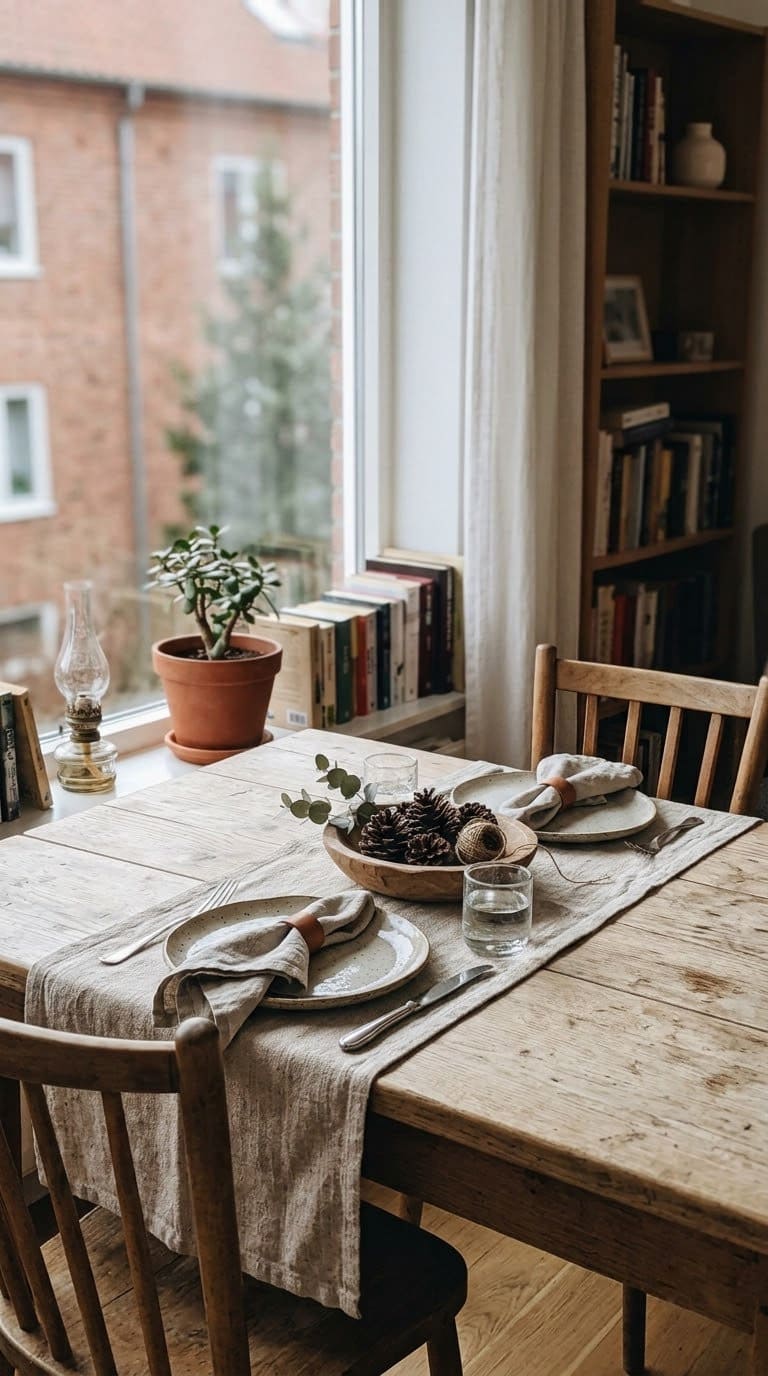
She adds texture “in the form of a runner, napkins and the centerpiece.” So keep the colors quiet and change the surfaces.
Aim for three textures. Pick something soft like linen, something rough like wood, and something smooth like glazed stoneware. Three is enough to feel rich without feeling busy.
Quick tip: if you only buy one thing, make it good linen napkins. They do more work than any vase.
Budget: $$. For more neutral pairings, see our neutral fall decor ideas.
7. Set a Tonal Stoneware Table
Pick one earth tone and use it everywhere: plates, napkins, and the centerpiece. The result looks designed, not matched.
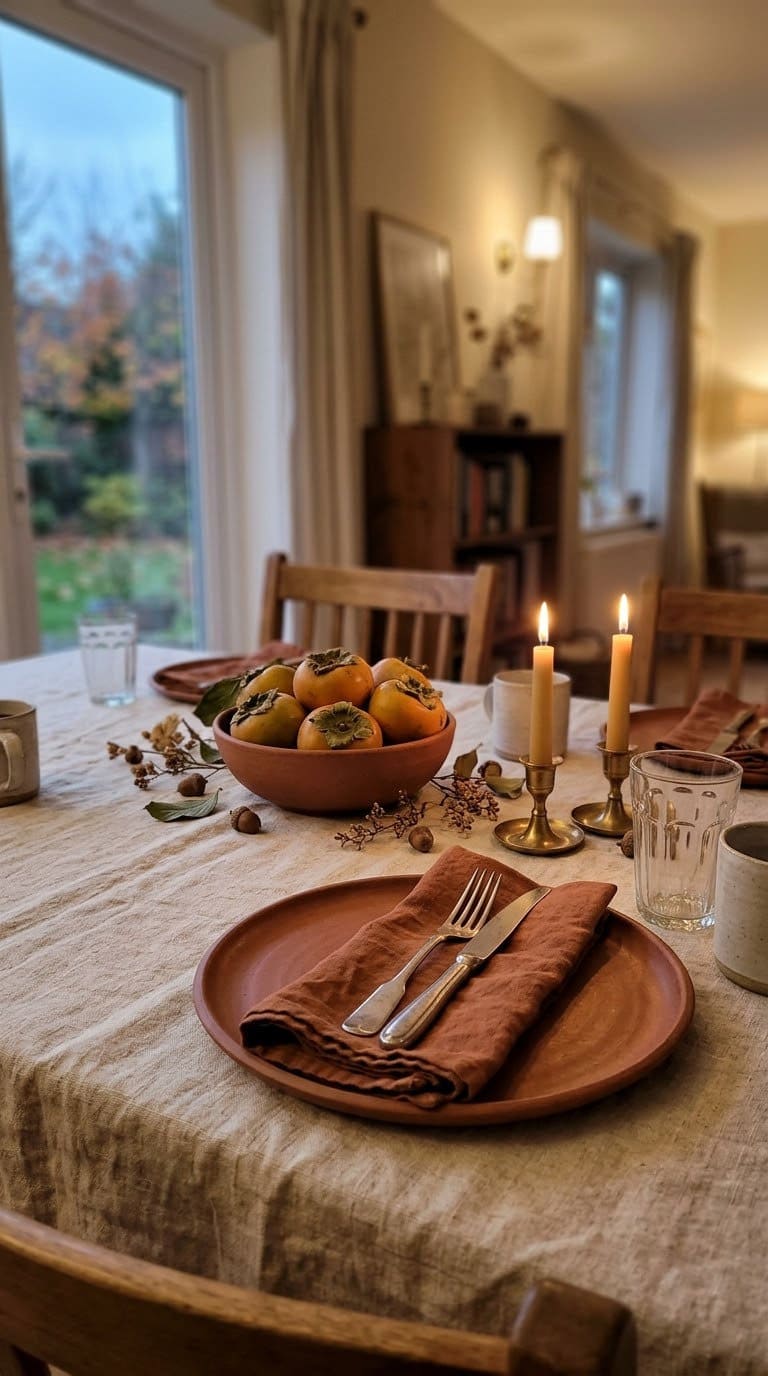
Choose a shade like terracotta, sage, or charcoal. Use it in three places at each seat, like the plate, the napkin, and a small vessel. Then keep the tablecloth pale so the color has something to sit on.
The persimmons or pears in the center should pick up the same tone. It’s the one-palette rule taken all the way.
Budget: $$. Japandi rooms use this same trick, as our Japandi living room guide shows.
8. Keep the Place Setting to the Basics
A simple table doesn’t need a charger, bread plate, salad plate, and three forks. The basic setting from the Emily Post Institute is plenty.
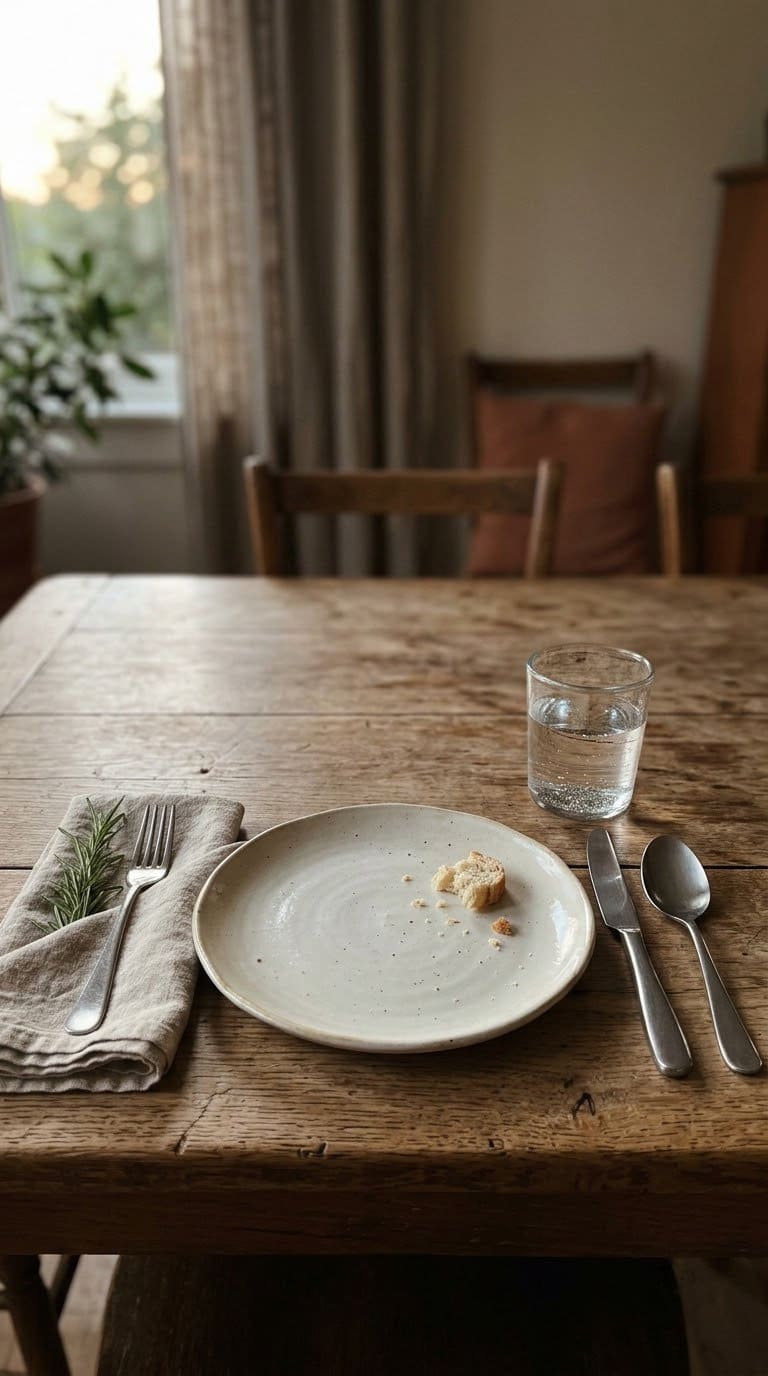
The Emily Post Institute sums up the order with the word “FORKS”: fork, then the plate (the O), then knives, then spoons. The water glass sits above the knife.
Add just one thing to each setting, like a sprig of rosemary or thyme tucked into the napkin. That one repeat is what makes it look finished.
Budget: $.
9. Lay a Low Trough of Eucalyptus
If you want greenery, go long and low instead of tall and round. A narrow trough keeps sightlines clear.
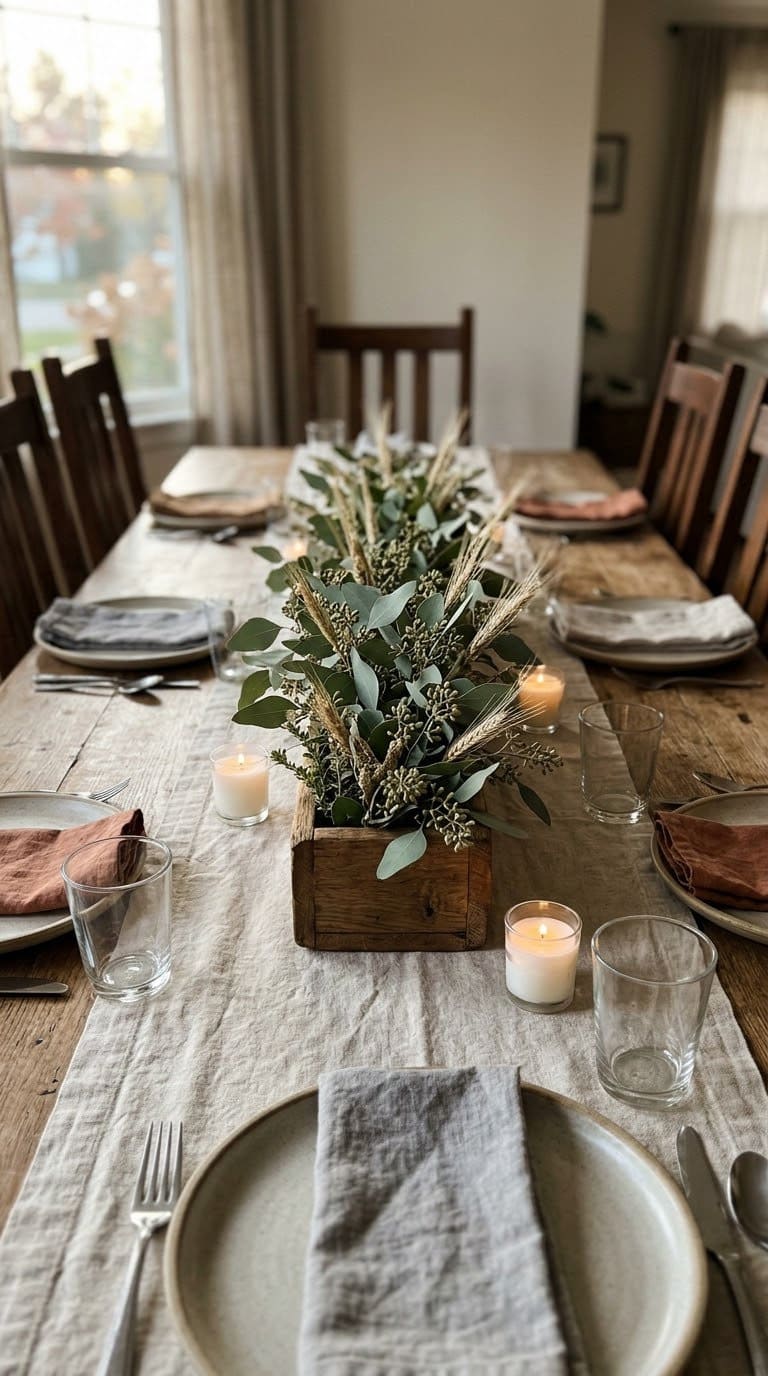
UF/IFAS says a short centerpiece should be “no taller than 12 inches.” A trough about 4 inches deep sits well below it. Just cut the stems so they stay under that line.
Use one kind of green, like seeded eucalyptus, plus one accent, like a few dried wheat stems. More than two plant types starts to look like a bouquet.
Budget: $ to $$. Our DIY fall centerpiece ideas walk through other low arrangements.
10. Use Edible Place Cards as the Only Decoration
When the place card is also a treat, it can carry the whole table. Ina uses pumpkin-shaped cookies with each guest’s name.
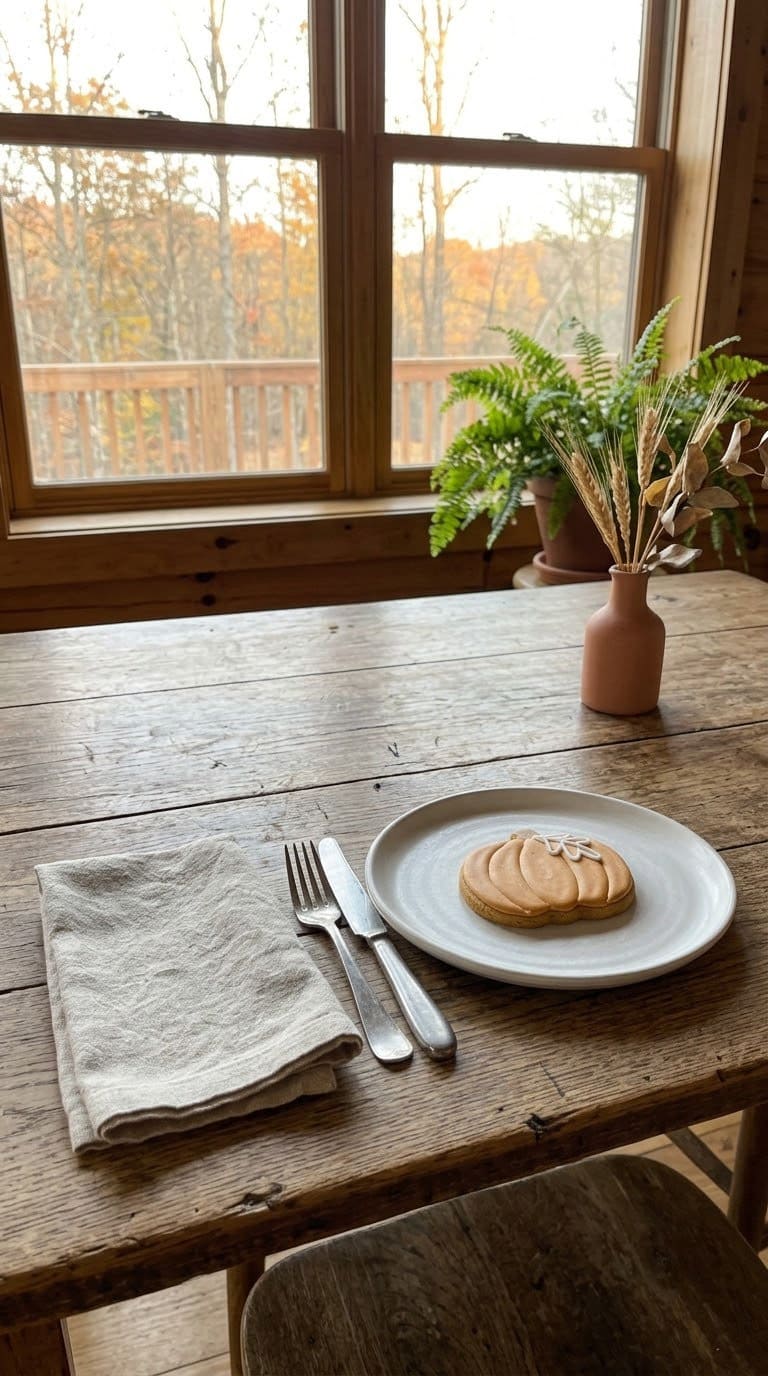
Pipe each name onto a simple cookie, about 3 inches across, and set it right on the plate. It gives every seat the same small repeat.
Skip everything else at the place setting. The cookie is the detail, and guests will eat it with coffee.
Budget: $.
11. Leave the Table Bare, With Linen Napkins Only
A good wood table doesn’t need a cloth. Let the grain show and put all the softness in the napkins.
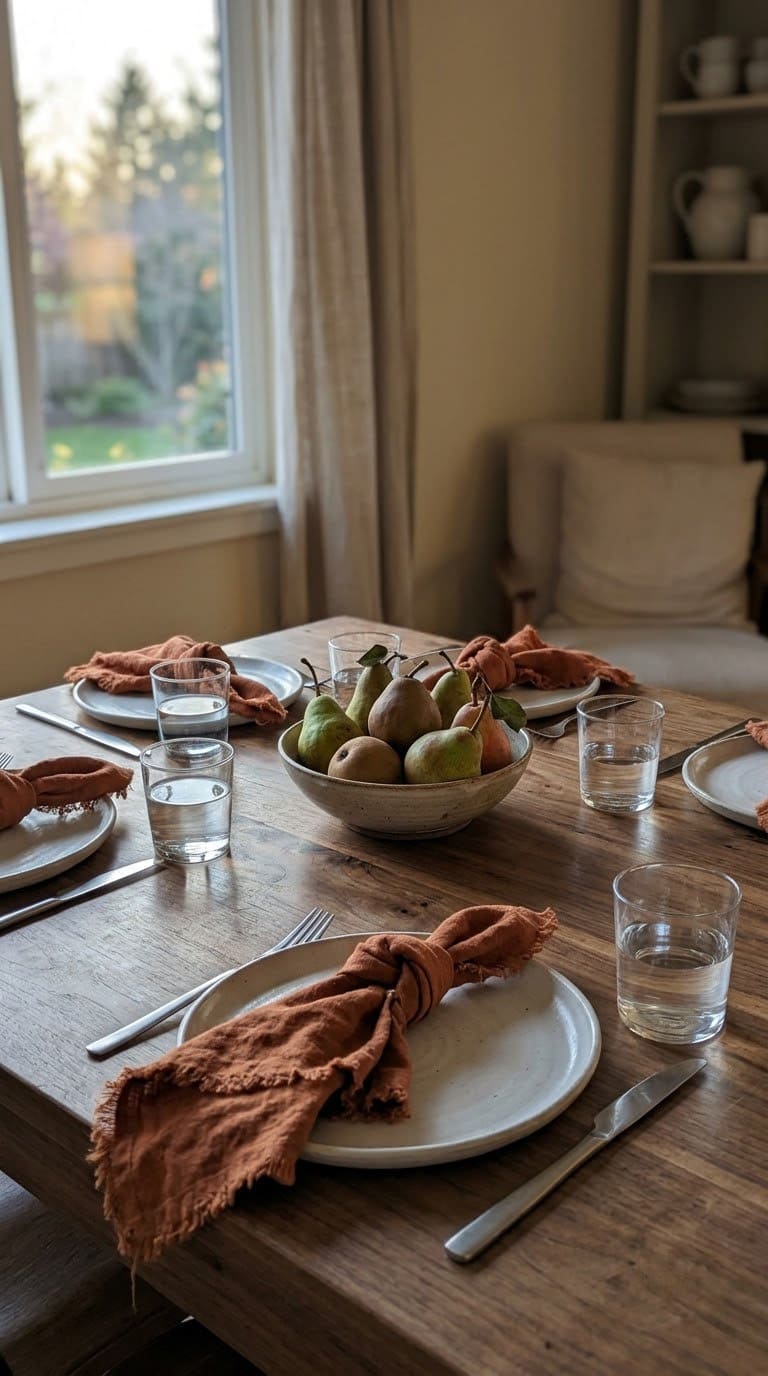
Use oversized linen napkins, about 20 inches square, knotted loosely or folded in thirds. Put them right on the plate so they read from across the room.
The only center piece is one low bowl of pears or apples. Use coasters or trivets under hot dishes to protect the wood.
Quick tip: wipe the table with a damp cloth and dry it well before you set it. Dust shows on dark wood.
Budget: $ to $$.
12. Put One Handwritten Menu at Each Plate
A handwritten menu card is the one piece of paper worth adding. It’s useful and it looks deliberate.
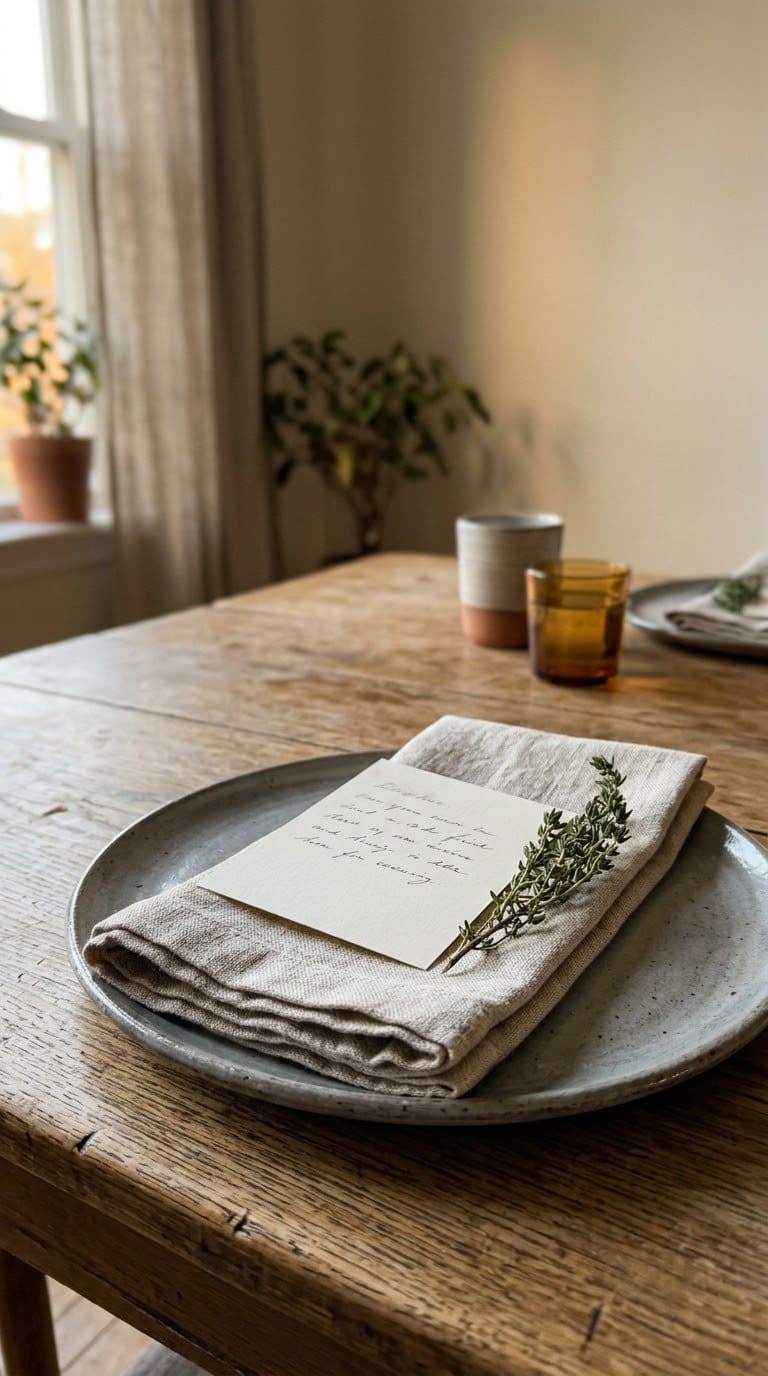
Write the menu on 4 by 6 inch cream cards and set one on each napkin. List dishes only, one per line, with no decoration.
It gives guests something to read while they wait. It also stands in for place cards if you don’t need set seats.
Budget: $.
Small Table, Long Table, or Kids’ Table: How Do You Scale It?
Minimal looks different at four seats than at fourteen. The rules stay the same, but the counts change.
For a small table of four to six, use three of everything. Three bud glasses, three candles, or three pumpkins is plenty. Leave the ends of the table bare.
For a long table of ten or more, repeat the same small group two or three times down the middle. Don’t make one big centerpiece.
A row of matching groups looks calm. One giant arrangement blocks half the table.
For the kids’ table, keep the same palette but drop the candles. Use a kraft paper runner they can draw on and one small pumpkin per child. It still matches the grown-up table, and nobody has to worry about a flame.
What We Learned the Hard Way
The first mistake is going minimal on the table but not on the room. A spare table next to a cluttered sideboard looks accidental. Clear the sideboard or use it as the buffet.
The second is too many kinds of “simple.” White plates, a white cloth, white candles, and white pumpkins can start to feel cold. Add one warm texture, like wood or linen, and one natural color.
The third is scented candles. It’s an easy grab from the cupboard. But Ina’s rule is to never use them, because they “overpower the aromas” of the food.
And the last one is height creep. One tall vase sneaks in “just for the photo,” and suddenly nobody can see across. Measure it, and keep the center under 12 inches.
How to Edit a Busy Table in 10 Minutes
Already set a table that feels too full? Take things off in this order.
Start with anything taller than 12 inches. Then remove any color outside your two or three main ones.
Next, cut every group down to three or five. Finally, check each seat and make sure it has the same small detail.
For more fixes, see our guide to common Thanksgiving tablescape mistakes. Our Thanksgiving table ideas cover fuller looks.
Frequently Asked Questions
How do you make a minimalist Thanksgiving table look finished?
Add texture instead of more objects. Use linen, wood, and stoneware, keep to two or three colors, and repeat one small detail at every seat.
How tall should a minimalist centerpiece be?
Under 12 inches. UF/IFAS Extension says a short centerpiece should be no taller than 12 inches so guests can see each other.
Should you use scented candles on a Thanksgiving table?
No. Ina Garten never uses them because they compete with the flavor of the food. Use unscented or flameless candles.
Where does the food go on a minimalist table?
Leave a strip down the center for platters if you serve family-style. For a big group, set the food on a sideboard buffet and keep the table spare.
How many items should a minimalist centerpiece have?
Use odd numbers, usually three or five. Ina Garten uses three glasses of flowers on a short table and five on a long one.
What is the simplest Thanksgiving place setting?
Use the basic setting from the Emily Post Institute. The fork goes on the left, then the plate, then the knife and spoon. The water glass sits above the knife.
Can a minimalist table be cheap?
Yes. Most of these ideas use grocery flowers, fruit, or candles you already own. If you’re watching every dollar, our Dollar Tree Thanksgiving table ideas pair well with a minimal look.
Related Posts
Never miss an update — choose FarmFoodFamily as your preferred source on Google.
How it works: Tap the button below to open Google's settings page, then check the box next to FarmFoodFamily.
Tap the checkbox to turn it blue — that's how you know it's set.