14 Veggies and Fruits to Grow in Pots
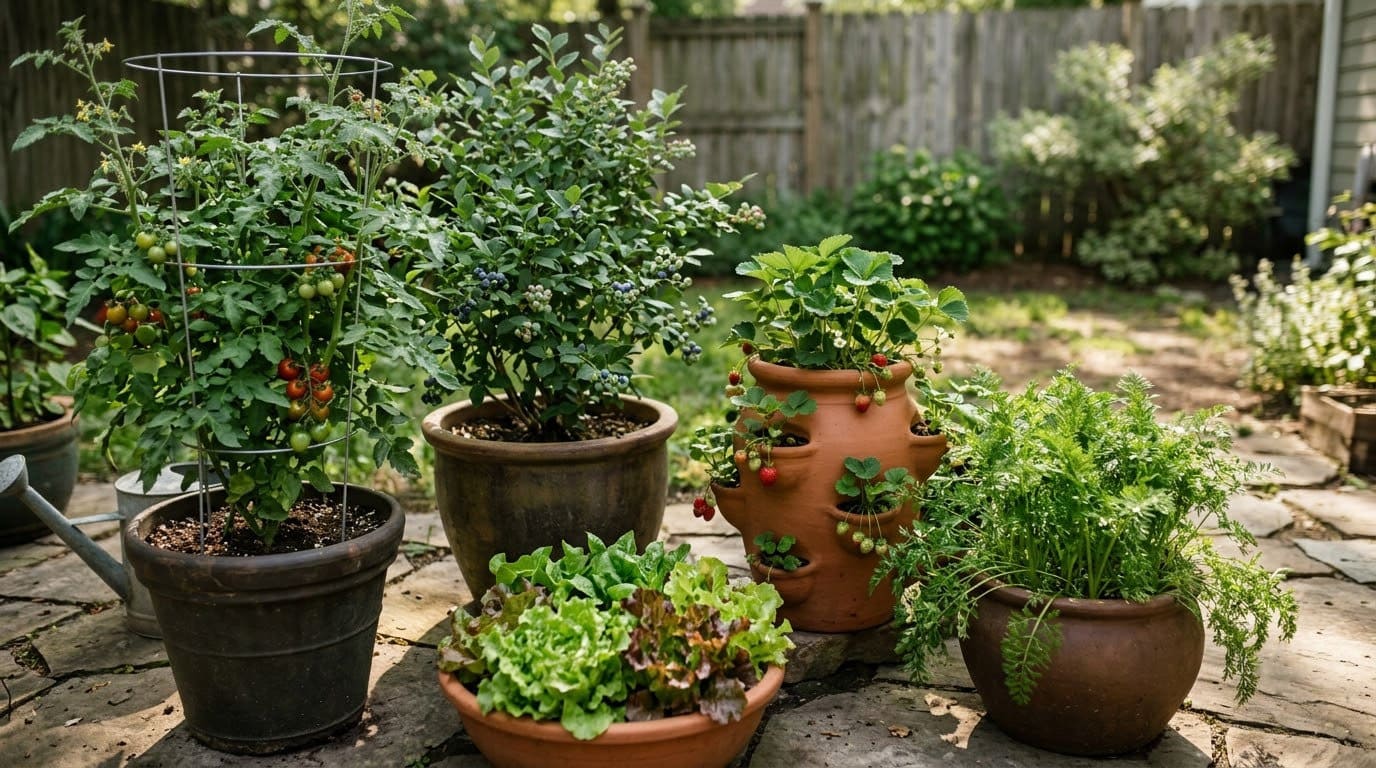
Tomatoes, peppers, greens, carrots, berries and herbs all grow in pots. Each needs the right pot, steady water and sun.

Never miss an update — choose FarmFoodFamily as your preferred source on Google.
How it works: Tap the button below to open Google's settings page, then check the box next to FarmFoodFamily.
Tap the checkbox to turn it blue — that's how you know it's set.
Tomatoes, peppers, greens, carrots, berries and herbs all grow in pots. Each needs the right pot, steady water and sun.
Products We Recommend
This post contains affiliate links. We may earn a commission on qualifying purchases at no extra cost to you.

12-Pack 5 Gallon Grow Bags, 300G Thickened Nonwoven, With Reinforced Handles
Fabric 5-gallon bags that match the 5-gallon size Oregon State and Clemson suggest for tomatoes and peppers. Fabric drains well, but it dries fast, so check the soil often.
Shop Now
3 Pack 48 in Tomato Cages, Plastic Coated Steel, Adjustable
Cages for compact tomatoes. Clemson says to add a cage at planting for types taller than two feet.
Shop Now
6 Pack 12 inch Clear Heavy Duty Plastic Plant Saucers
Saucers that catch drips from 10 to 12 inch pots. Empty them so the roots don't sit in water.
Shop NowMost veggies and some fruit grow well in pots. Match the pot, sun and drainage to the crop.
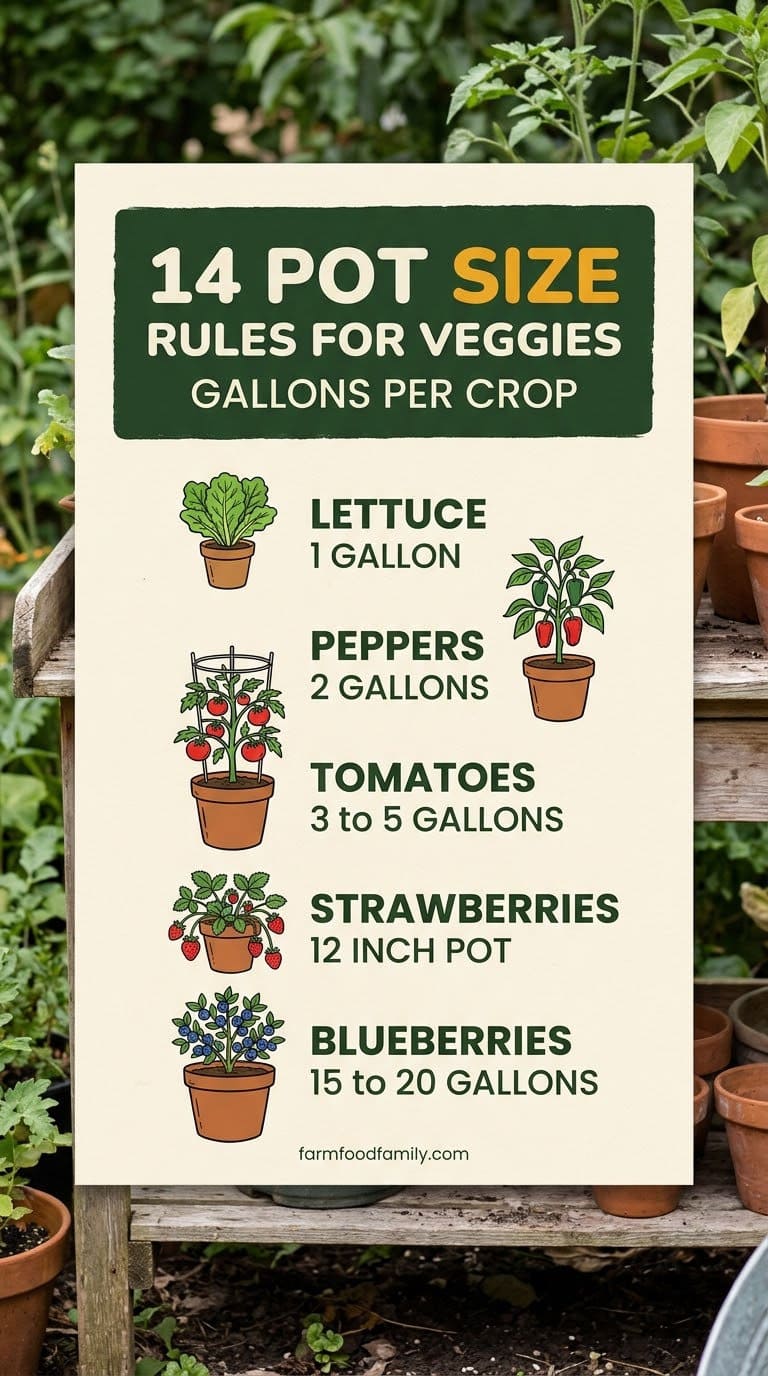
Illinois Extension says lettuce and bush cucumbers fit in a 1-gallon pot. Carrots and peppers need 2 gallons, and tomatoes need 3. Oregon State (OSU) says tomatoes, peppers and eggplant do best in 5.
But sun and water come first. OSU says fruiting crops need six to eight hours of direct sun. Pots in full sun may need daily water.
Answer 4 quick questions and get matched to the exact fix for your yard — drainage, budget, layout, or something else entirely.
Take the Free QuizDay-neutral strawberries grow in a 12-inch pot, and a highbush blueberry needs a 15 to 20 gallon one. Herbs and greens need far less room, so start with those if you are new to pots.
These 14 crops give you steps, a style tip and a pot size. Pick two or three, set them in your sunniest spot, and plant this weekend.
How Big Should the Pot Be?
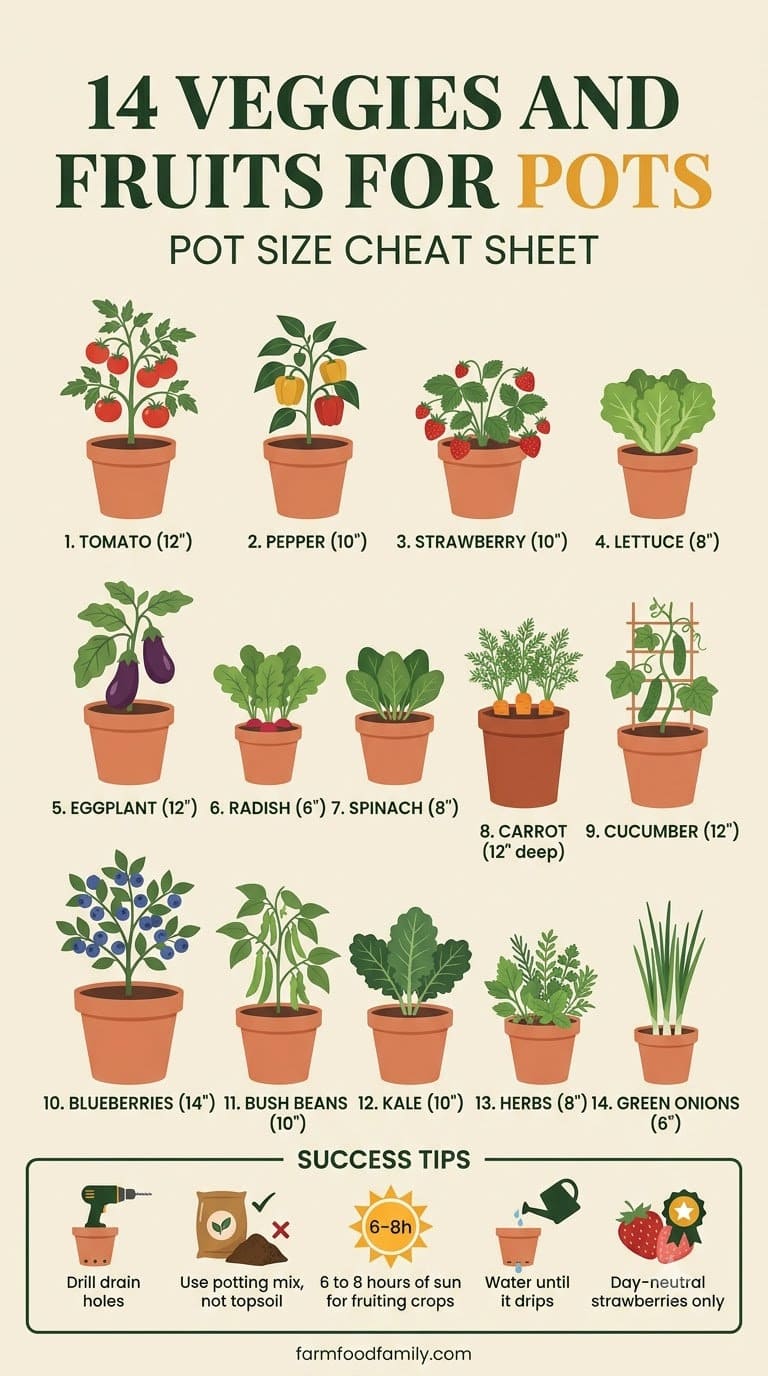
Bigger is safer. A small pot dries out fast. A tall plant can tip over.
Clemson Extension says a pot that is too small means constant watering, and the plant may even blow over.


Use this table. It follows the Illinois sizes. They are the least you need.
Most yard problems trace back to one specific, fixable cause. Find yours in 4 quick questions.
Take the Free Quiz| Pot size | Crop | Plants per pot |
|---|---|---|
| Half-gallon | Parsley | 1 |
| 1 gallon | Leaf lettuce | 4 to 6 |
| 1 gallon | Cucumber (bush types) | 2 |
| 1 gallon | Green beans | 2 to 3 |
| 1 gallon | Spinach, Swiss chard, cabbage | 1 to 2 |
| 1 gallon | Cherry or patio tomato | 1 |
| 2 gallons | Carrots, beets, radishes | Thin to 2 to 3 inches |
| 2 gallons | Peppers | 2 |
| 2 gallons | Eggplant | 1 |
| 3 gallons | Standard tomato | 1 |
Sources differ here. OSU says deep-rooted crops do best in 5-gallon pots.
Clemson says a 14 to 20 inch pot or a 5-gallon bucket suits most compact tomatoes. When in doubt, go bigger.
What Soil, Drainage and Water Do Pots Need?
Drainage first. OSU says to drill holes in the side about half an inch from the bottom. It says to raise pots on bricks or boards so water can escape.
Use potting mix. OSU says to use packaged potting soil or a composted container mix. It says to avoid topsoil or general planting mix, which can be heavy and drain poorly.
Water until it drips. Illinois says to water until water drips from the hole in the bottom. OSU says daily watering is common for pots in full sun on concrete, but soil should not stay soggy.
Feed often. OSU says the easiest plan is a soluble fertilizer at half strength every three to four days. Dry fertilizer on top is second best, every three weeks.
How Much Sun Do Container Crops Need?
Illinois says full sun means six hours or more. Partial shade means four to six.
Fabric 5-gallon bags that match the 5-gallon size Oregon State and Clemson suggest for tomatoes and peppers. Fabric drains well, but it dries fast, so check the soil often.
Shop NowThis post contains affiliate links. We may earn a commission on qualifying purchases at no extra cost to you.
OSU says fruiting crops like tomatoes, green beans and peppers need six to eight hours of direct sun. It says root and leaf crops, such as beets, lettuce, cabbage and mustard greens, can handle light shade.
Pick the sunniest spot for tomatoes and peppers. Use the shadier spot for lettuce and spinach.
The average homeowner spends $616/year on yard fixes that don't address the real problem. Find out what yours actually is — before you spend another dollar.
Take the Free QuizWhat Safety Rules Apply to Container Growing?
The sources we read didn’t cover these, so they are our own advice.
- Pick food-safe containers. Use new or food-grade pots. Skip old paint cans, treated lumber and tires, since we can’t check what leaches into the soil.
- Weigh your pots before a balcony. A big pot of wet soil is heavy. Check your balcony’s limit with your landlord or building manager.
- Anchor tall plants. Cages and stakes keep tomatoes from tipping a pot in wind.
- Wash your hands and your produce. Rinse what you pick before you eat it.
1. Patio and Determinate Tomatoes
Compact tomatoes are the easiest start. Clemson says tall types like Better Boy and Brandywine keep growing until frost, so they are hard in pots.
It suggests compact types such as Patio Choice Yellow and Bush Early Girl.
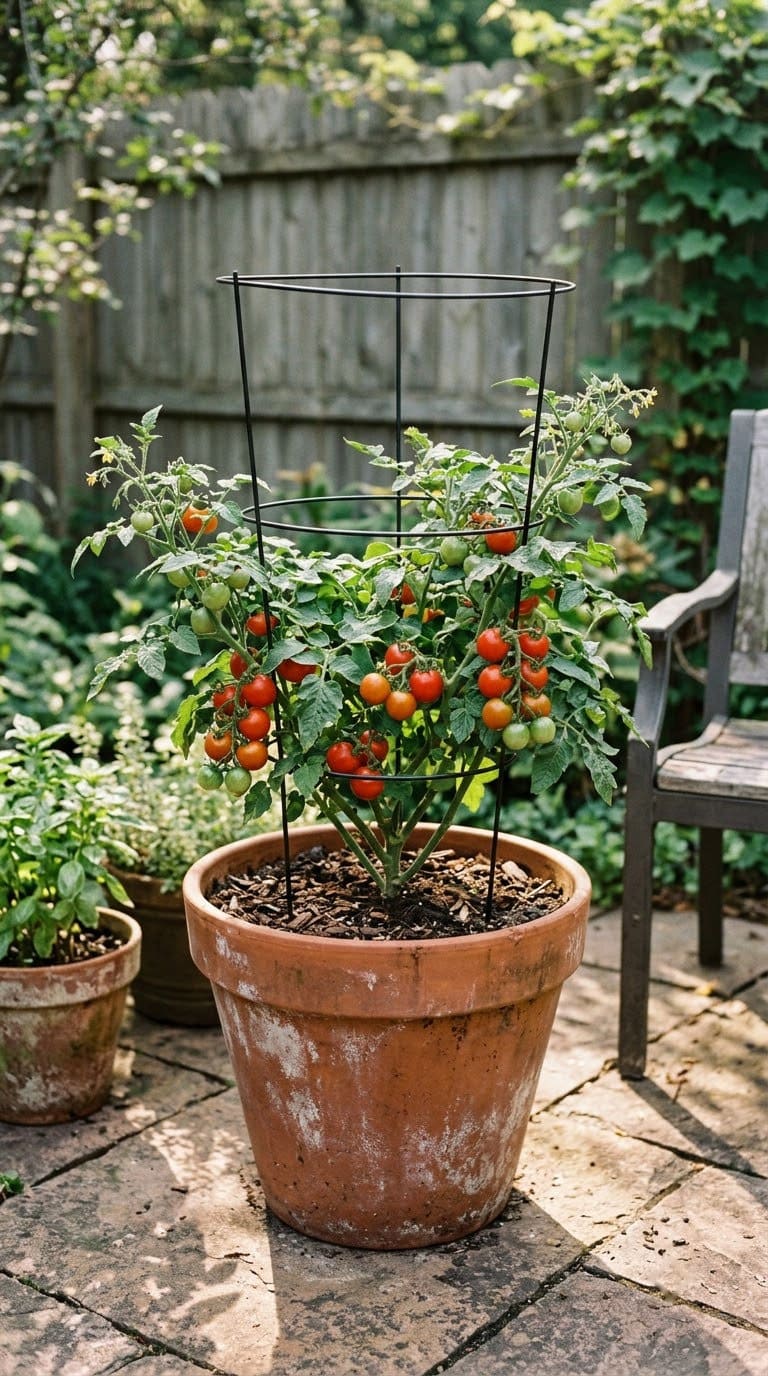
- Pick a pot with drain holes, at least 3 gallons, and ideally 5.
- Fill it with potting mix, and set the plant at the same depth as its nursery pot.
- Add a cage at planting for types taller than two feet, as Clemson says.
- Water until it drips, and check daily in midsummer.
- Feed with a balanced timed-release fertilizer or a weekly soluble one.
Style tip: use a clay pot with a black cage for a classic look.
Pot size: 3 gallons per Illinois, and 5 per OSU.
Tip: check the soil with a finger. If the top inch is dry, water.


More: see our how to grow tomatoes guide.
2. Peppers
Peppers like heat and a deep pot. Illinois lists peppers at 2 gallons for two plants, while OSU says 5-gallon pots are best for deep-rooted crops.
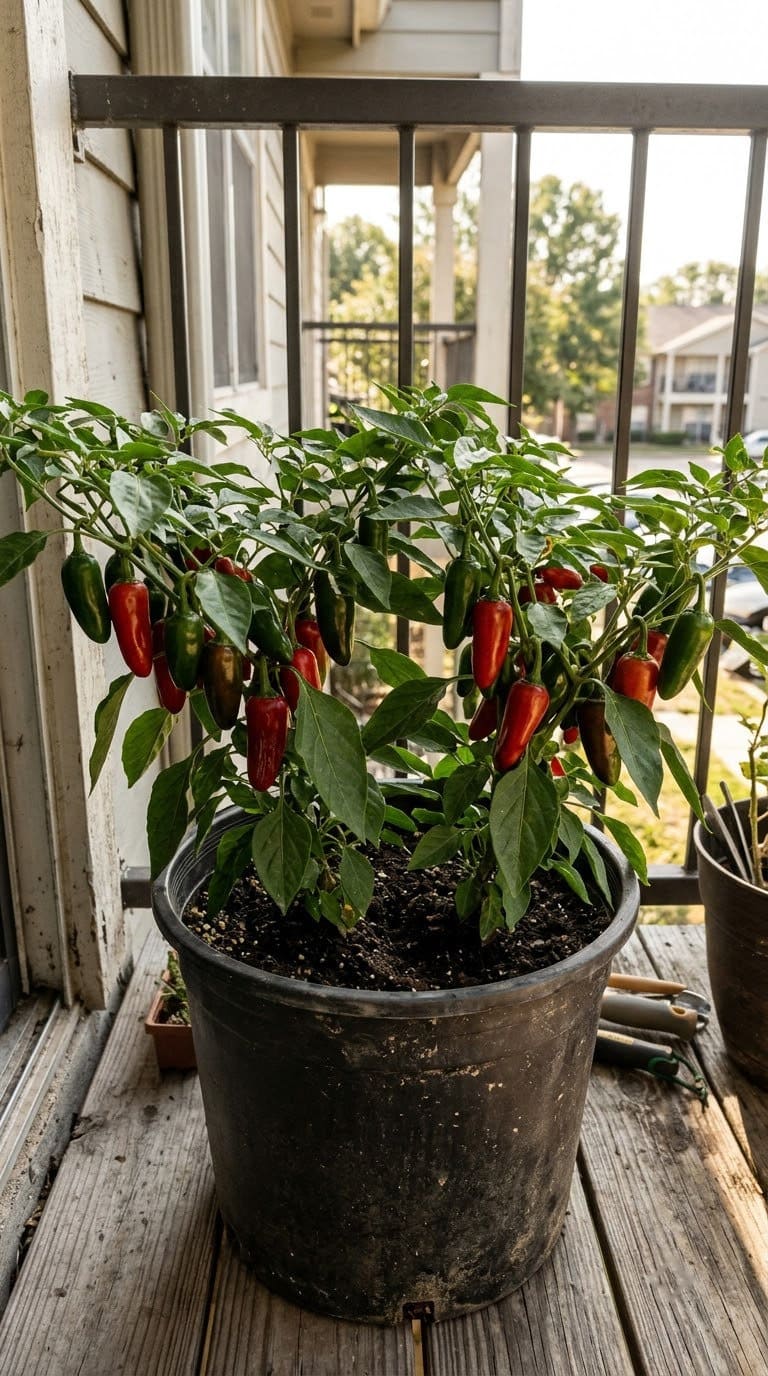
- Pick a pot at least 2 gallons, or 5 for one big plant.
- Fill with potting mix, and plant after nights stay warm.
- Put the pot in six to eight hours of direct sun.
- Water when the top feels dry.
Style tip: group peppers in one large trough for a harvest look.
Pot size: 2 gallons for two plants, per Illinois.
Test: lift the pot after you water. Lift it again when it feels light, and water.
Tip: check the soil with a finger. If the top inch is dry, water.
3. Eggplant
Eggplant needs warmth and room. Illinois lists one plant per 2-gallon pot, and OSU recommends 5 gallons.
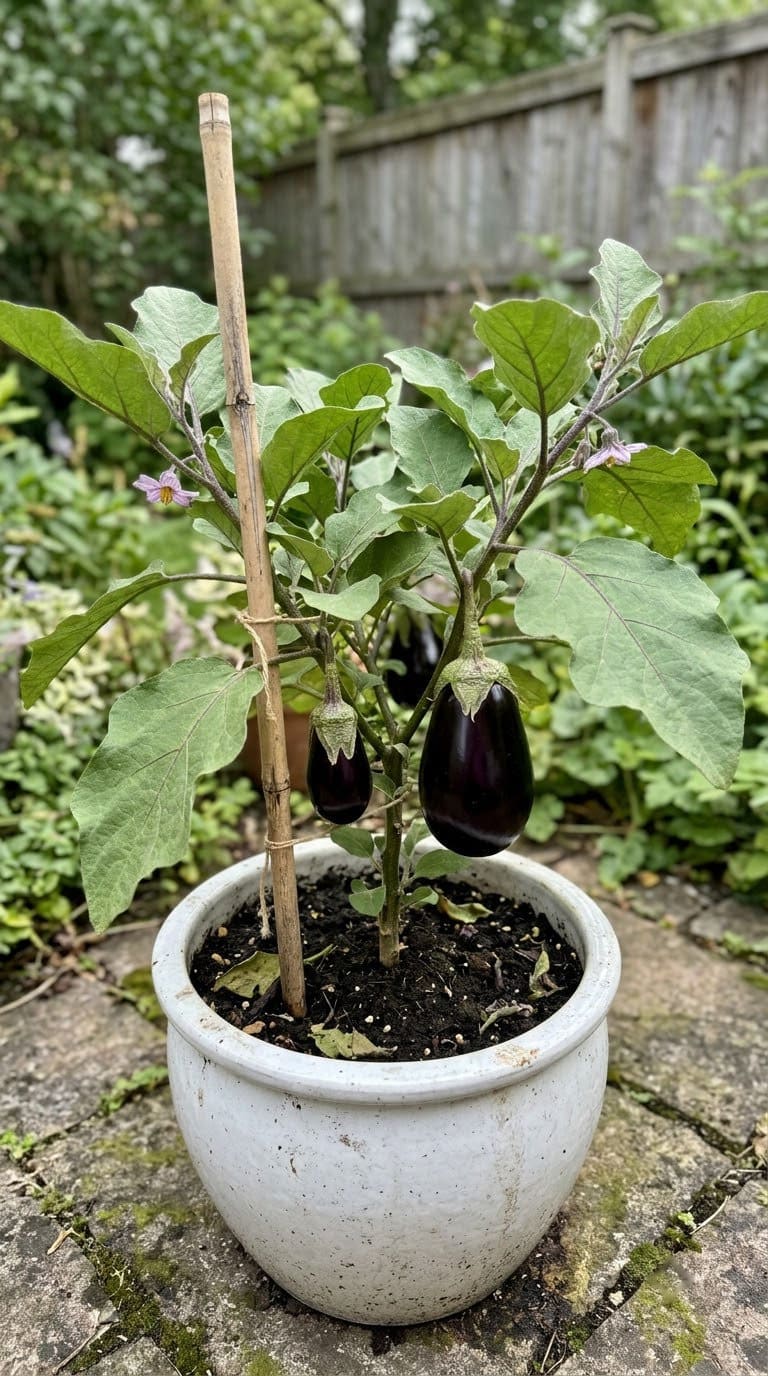
- Choose a dark or light pot, and set it in full sun.
- Add potting mix and one plant.
- Stake the plant when it gets tall.
- Feed on a steady schedule.
Style tip: purple fruit looks great in a white pot.
Pot size: 2 gallons per Illinois, 5 per OSU.
Test: lift the pot after you water. Lift it again when it feels light, and water.
Tip: check the soil with a finger. If the top inch is dry, water.
4. Bush Cucumbers
Bush cucumbers suit small pots. Illinois lists two plants in a 1-gallon pot, with varieties like Salad Bush and Spacemaster.
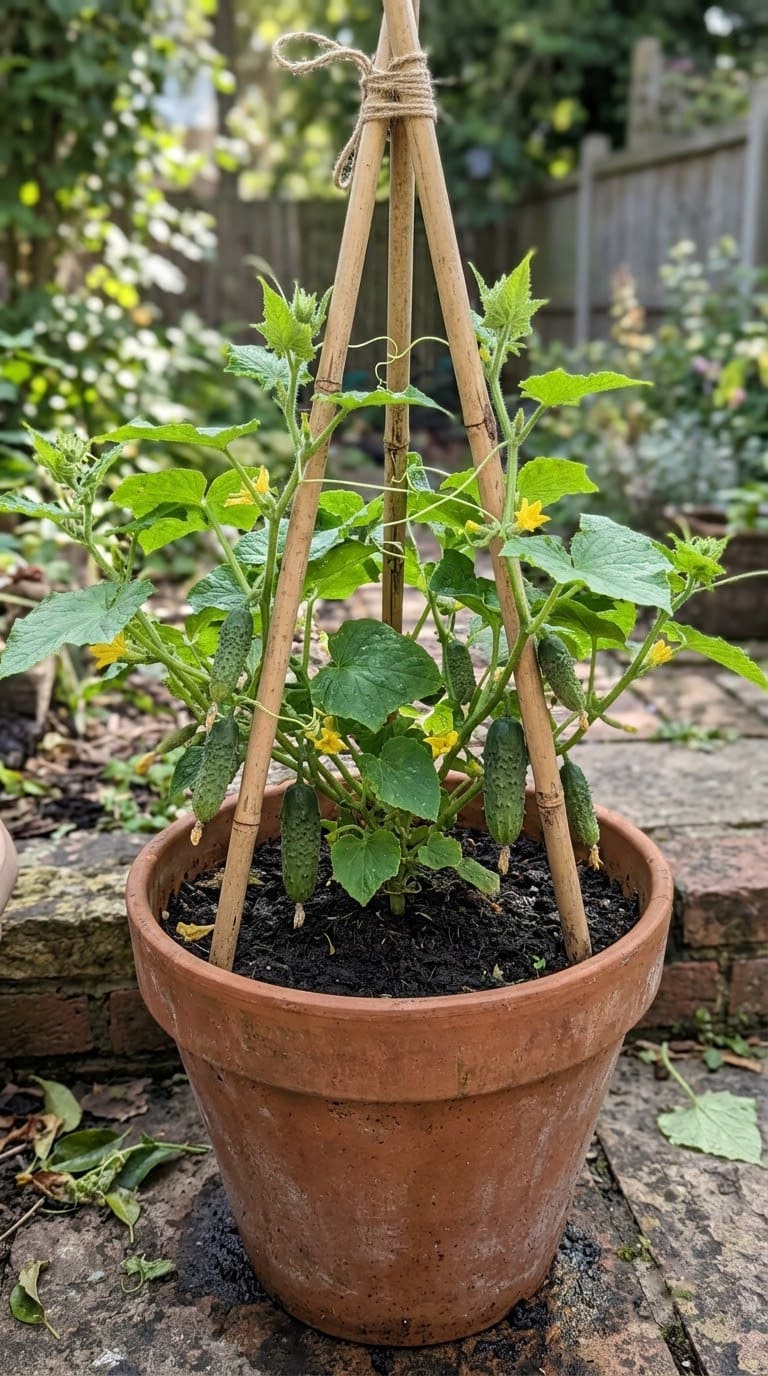
- Pick a pot at least 1 gallon, and bigger if you can.
- Plant two bush cucumbers.
- Add a small trellis, since our own tip is that trellised plants save space.
- Water steadily.
Style tip: train them up a tripod of bamboo canes.
Pot size: 1 gallon for two plants, per Illinois.
Test: lift the pot after you water. Lift it again when it feels light, and water.
Tip: check the soil with a finger. If the top inch is dry, water.
5. Green Beans
Green beans are quick and easy. Illinois lists two to three plants in a 1-gallon pot, with varieties like Topcrop and Tendercrop.
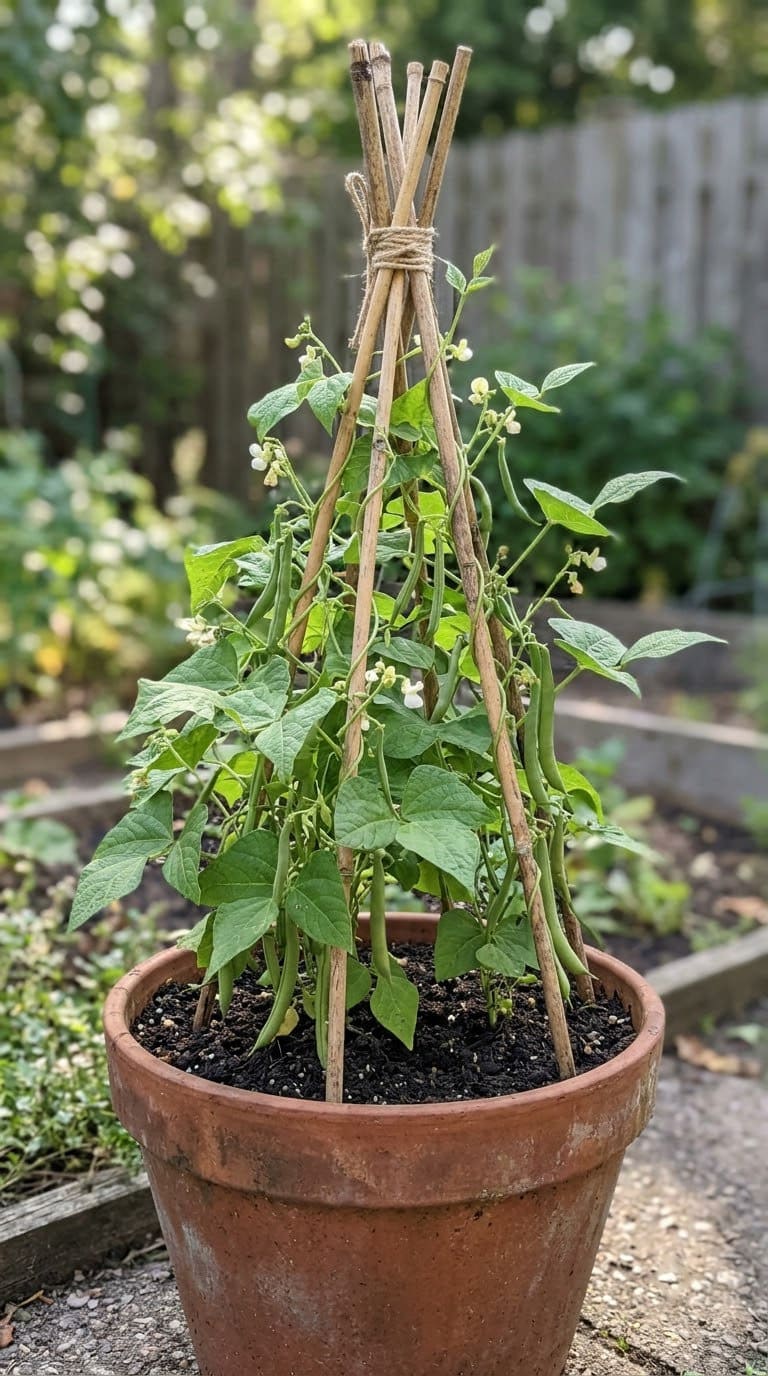
- Fill a pot with potting mix.
- Sow two to three plants, and water until it drips.
- Place the pot in six to eight hours of sun.
- Pick pods often to keep them coming. That tip is our own.
Style tip: a tall bean teepee looks lovely on a patio.
Pot size: 1 gallon, per Illinois.
Test: lift the pot after you water. Lift it again when it feels light, and water.
Tip: check the soil with a finger. If the top inch is dry, water.
6. Leaf Lettuce
Lettuce is perfect for a shady spot. Illinois lists four to six plants in a 1-gallon pot. OSU says lettuce handles light shade.
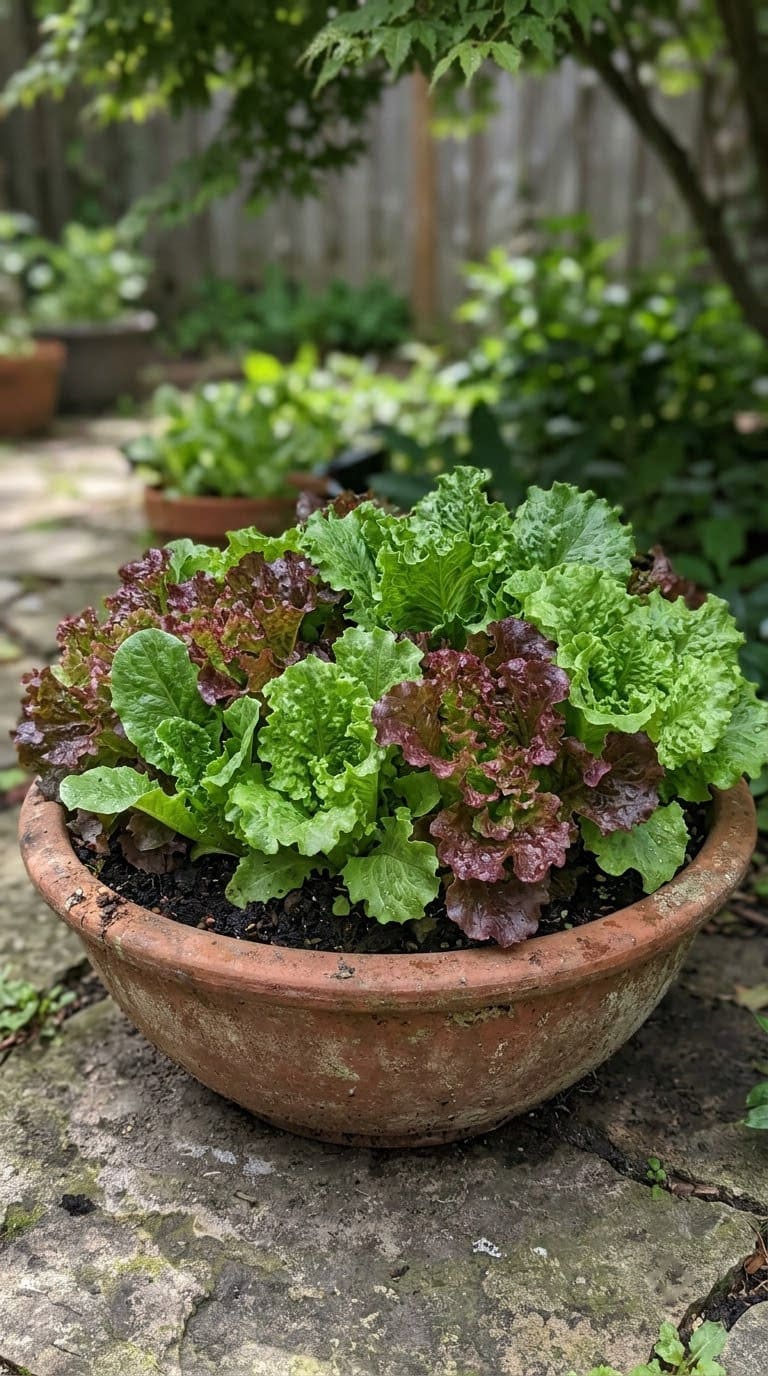
- Use a wide, shallow pot with drain holes.
- Sow seed thinly.
- Keep the soil evenly moist.
- Cut outer leaves to harvest.
Style tip: mix green and red lettuces in one pot.
Pot size: 1 gallon, per Illinois.
Test: lift the pot after you water. Lift it again when it feels light, and water.
Tip: check the soil with a finger. If the top inch is dry, water.
7. Spinach and Swiss Chard
Spinach and chard like cool weather. Illinois lists spinach sown directly and thinned to 1 to 2 inches apart, and one chard plant, in a 1-gallon pot.
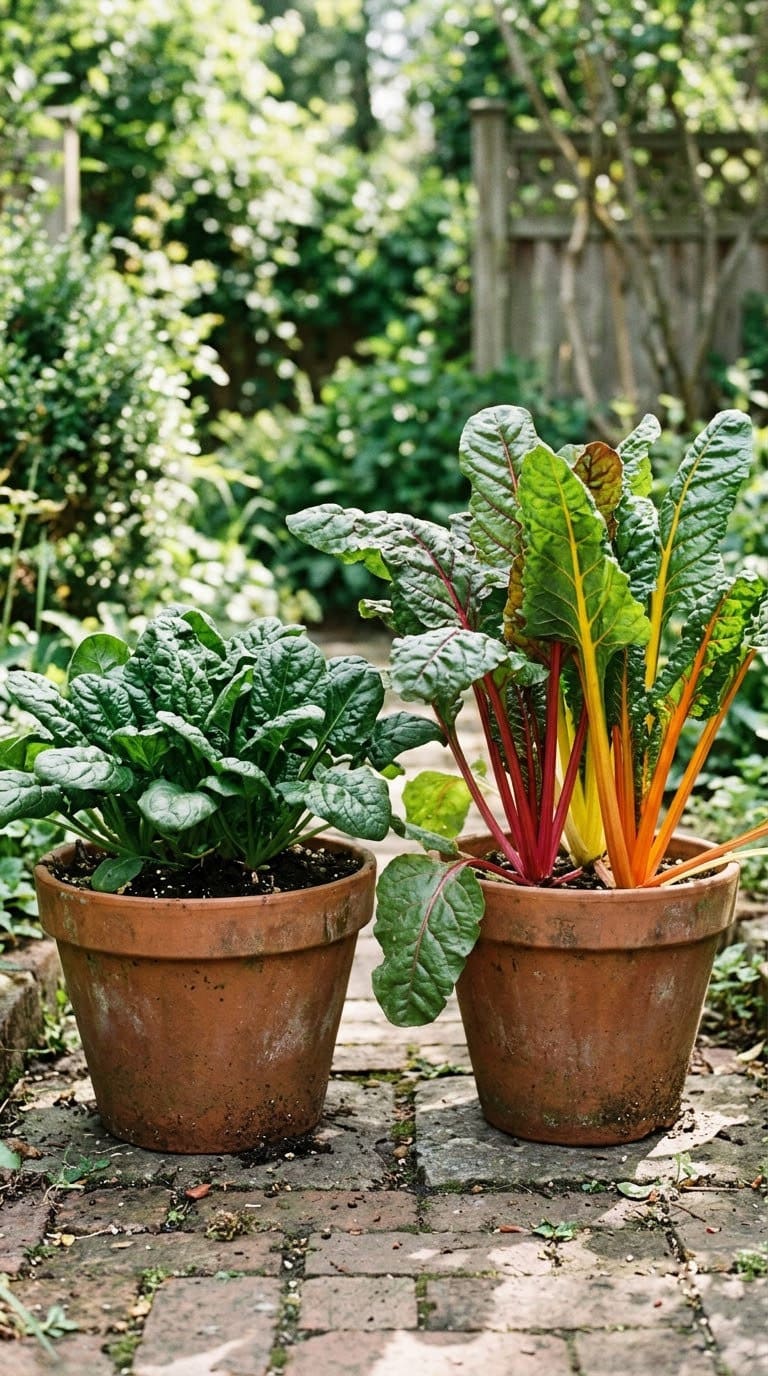
- Sow spinach seed, and thin as it grows.
- Plant one chard in its own pot.
- Keep both moist, and give light shade in hot weather.
- Cut leaves as you need them.
Style tip: chard with colored stems looks like a flower.
Pot size: 1 gallon, per Illinois.
Test: lift the pot after you water. Lift it again when it feels light, and water.
Tip: check the soil with a finger. If the top inch is dry, water.
8. Carrots
Carrots need loose soil and a deep pot. Illinois lists them in a 2-gallon pot, thinned to 2 to 3 inches apart, with varieties like Little Finger and Nantes Half Long. OSU says dwarf types like Thumbelina work in small spaces.
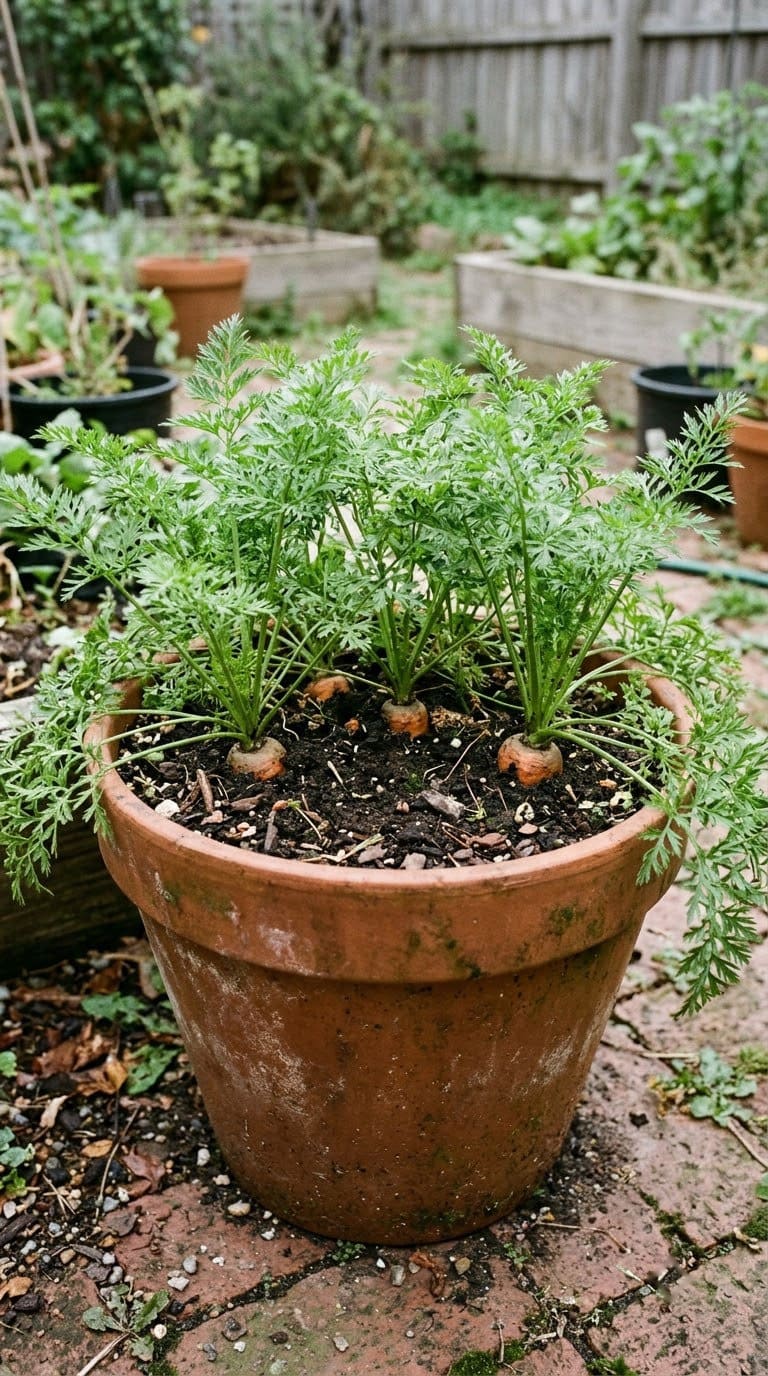
- Fill a deep pot with loose potting mix.
- Sow the seed thinly.
- Thin the seedlings to 2 to 3 inches apart.
- Water often, and pull when the roots are the size you want.
Style tip: pick a mix of colors for a fun harvest.
Pot size: 2 gallons, per Illinois.
Test: lift the pot after you water. Lift it again when it feels light, and water.
Tip: check the soil with a finger. If the top inch is dry, water.
9. Radishes and Beets
Radishes and beets are fast and easy. Illinois lists both at 2 gallons, with radishes thinned to 1 to 2 inches and beets to 2 to 3 inches.
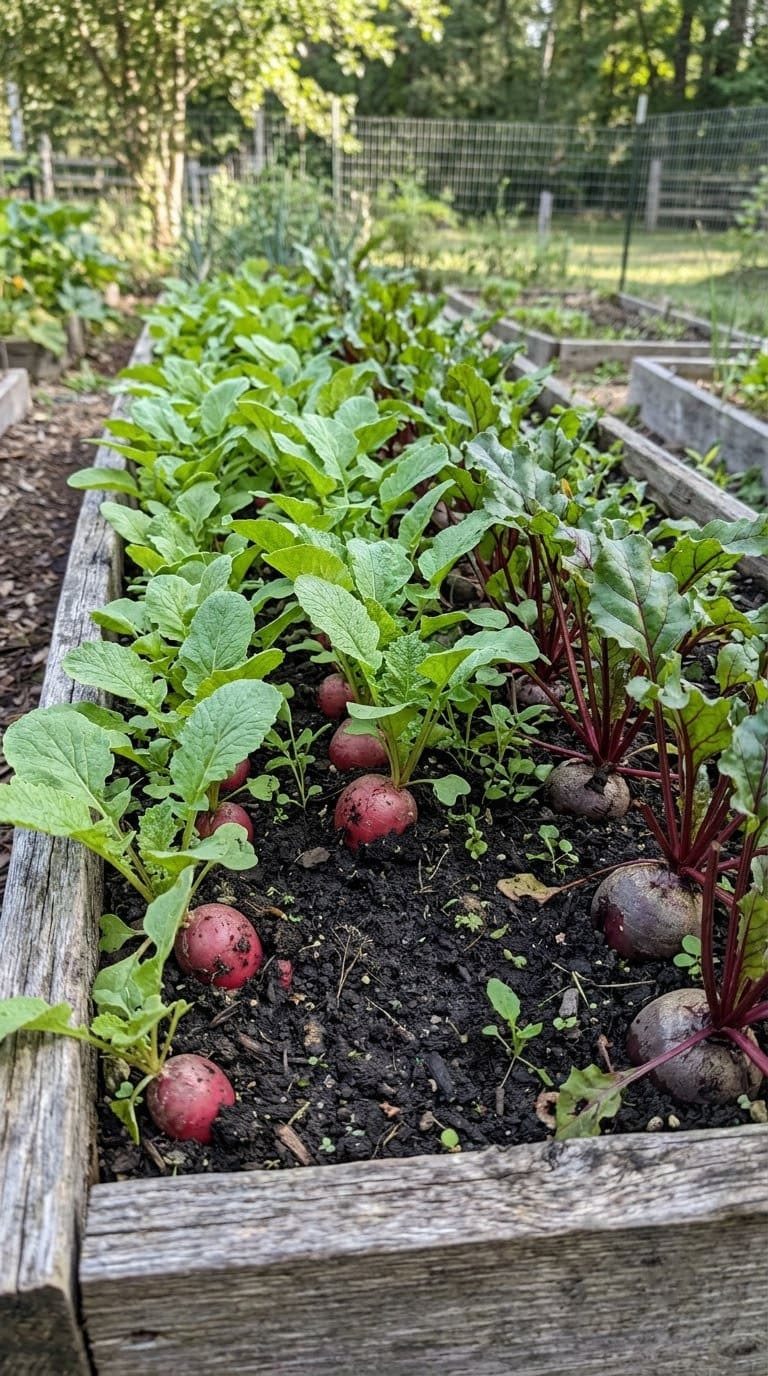
- Sow the seed in potting mix.
- Thin the seedlings.
- Water evenly, and keep out of hot sun.
- Harvest when roots are full size.
Style tip: mix the two in one long trough.
Pot size: 2 gallons, per Illinois.
Test: lift the pot after you water. Lift it again when it feels light, and water.
Tip: check the soil with a finger. If the top inch is dry, water.
10. Parsley and Herbs
Herbs are the easiest pot crop. Illinois lists parsley in a half-gallon pot. OSU says 10-inch pots suit parsley, green onions and many herbs.
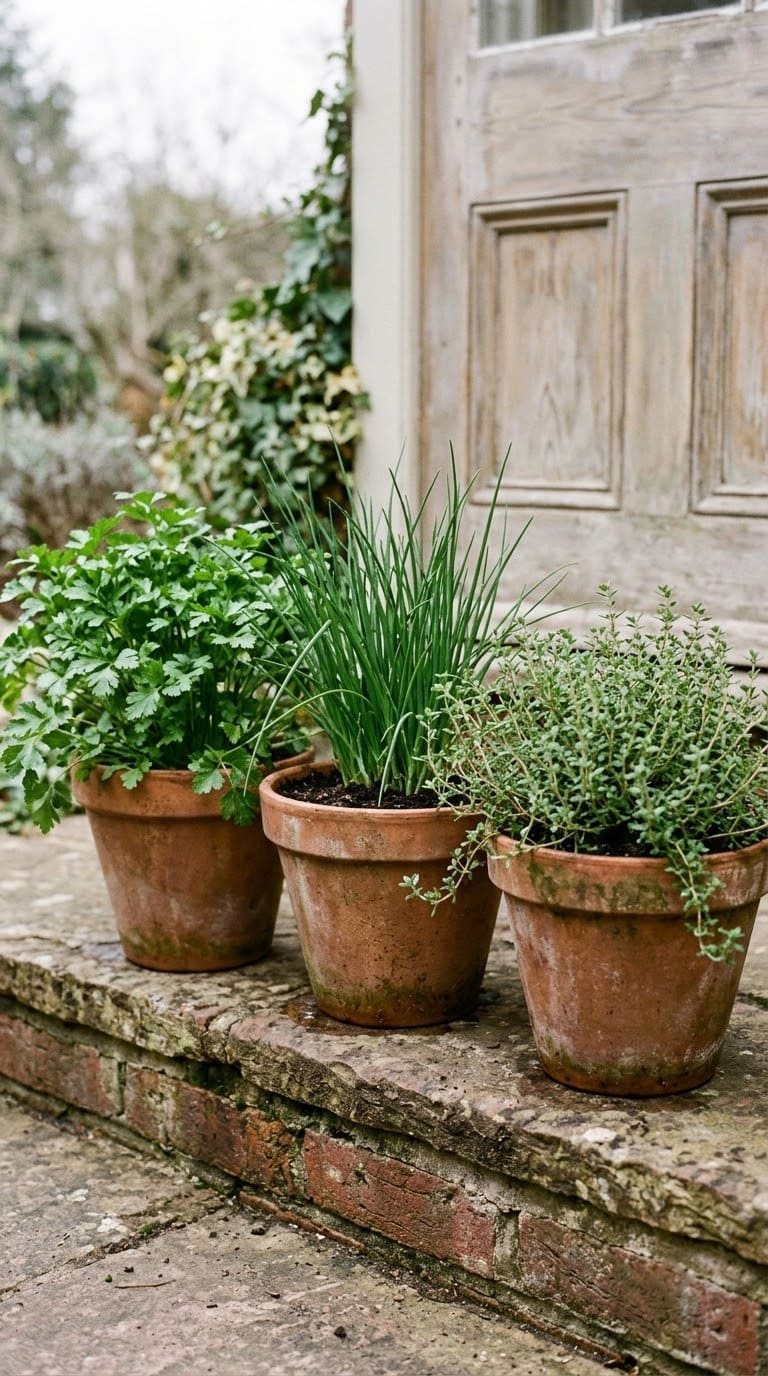
- Pick a 10-inch pot with drain holes.
- Fill with potting mix, and plant one herb.
- Place it in sun, near the kitchen door.
- Cut often to keep it bushy.
Style tip: line up three herb pots on a step.
Pot size: a half-gallon at least. OSU says 10 inches.
Test: lift the pot after you water. Lift it again when it feels light, and water.
Tip: check the soil with a finger. If the top inch is dry, water.
More: see our container herb garden.
11. Cabbage and Kale
Leafy brassicas fit in pots. Illinois lists one cabbage in a 1-gallon pot. OSU lists kale among suitable container crops.
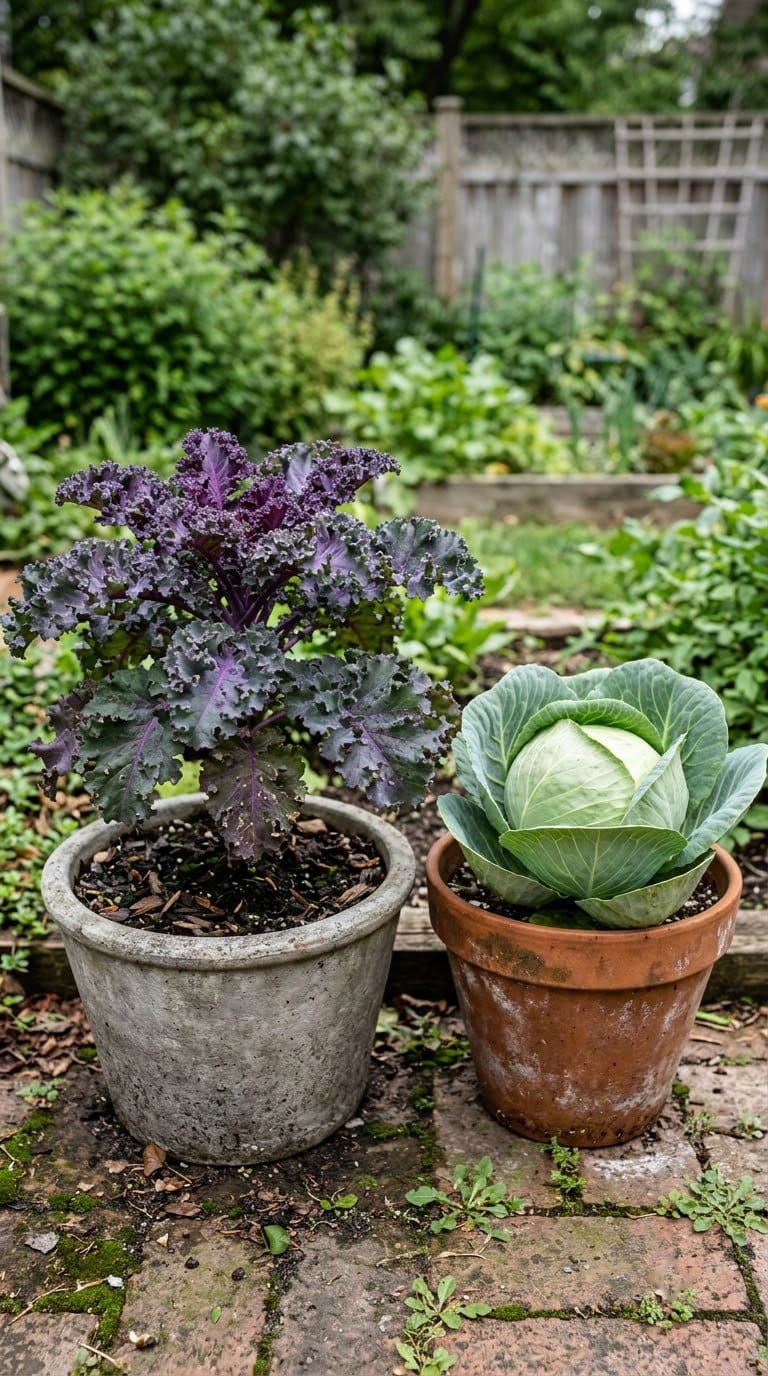
- Pick a pot at least 1 gallon, and bigger for kale.
- Plant one per pot.
- Water often, and keep cool.
- Cut outer leaves of kale as needed.
Style tip: purple kale looks great in a gray pot.
Pot size: 1 gallon for cabbage, per Illinois.
Test: lift the pot after you water. Lift it again when it feels light, and water.
Tip: check the soil with a finger. If the top inch is dry, water.
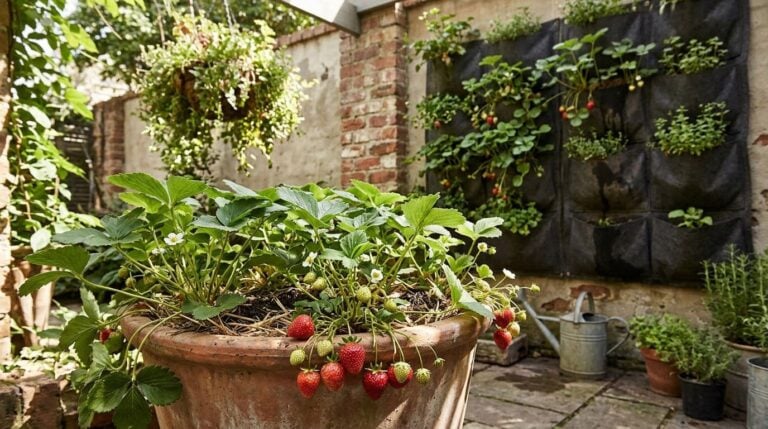
12. Strawberries
Strawberries look lovely in pots. Oregon State says day-neutral types are best.
Pick a pot 10 to 18 inches deep and at least 12 inches wide. Plant no more than four per 12-inch pot.
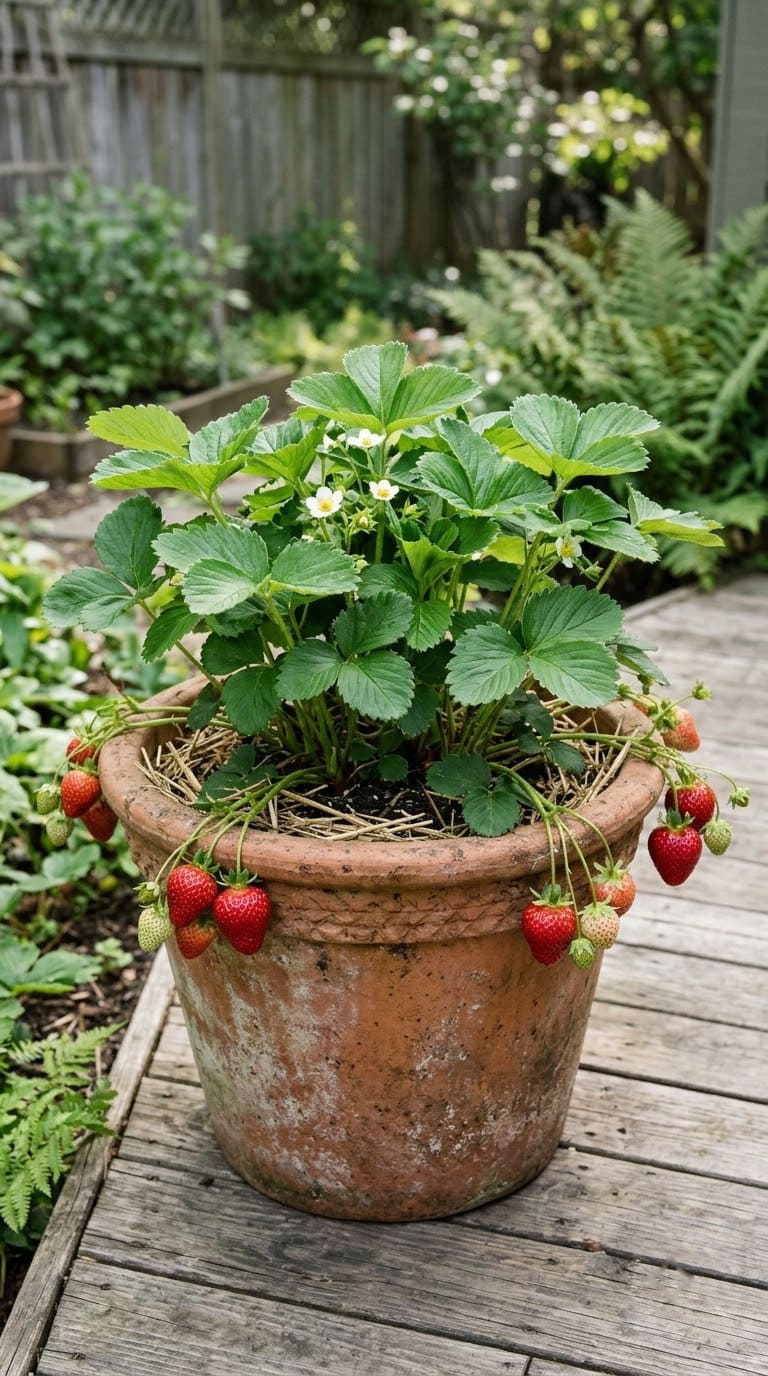
- Buy day-neutral plants. They fruit from mid-spring to autumn frost and make few runners.
- Mix 1 part perlite, 1 part fine bark and 2 parts garden or potting soil, as OSU suggests.
- Plant up to four per 12-inch pot.
- Remove any runners.
- Add soil at the start of the second and third seasons, without burying the growing point.
Style tip: hang a basket at eye level to keep berries clean.
Pot size: 12 inches or larger, 10 to 18 inches deep.
Safety: OSU says small nursery strawberry planters often last just one season.
Test: lift the pot after you water. Lift it again when it feels light, and water.
Tip: check the soil with a finger. If the top inch is dry, water.
More: see our grow a vertical strawberry garden.
13. Blueberries in a Big Pot
Blueberries need a big pot and an acid mix. Oregon State says larger types like northern highbush need a half wine barrel or a 15 to 20 gallon pot, and half-high types need 10 gallons or more.
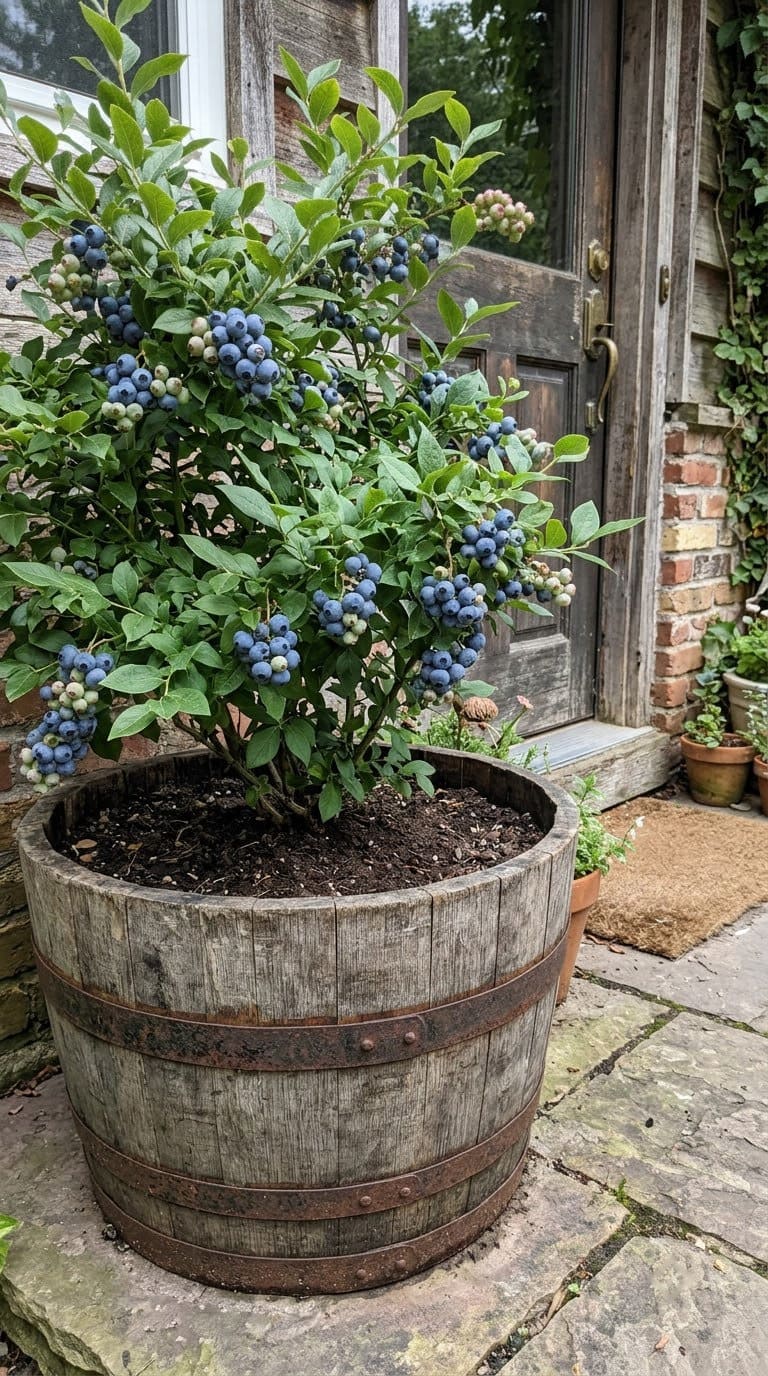
- Pick a pot with drain holes, at least 10 gallons.
- Mix 50 to 80 percent fine bark, 10 to 40 percent peat moss and about 10 percent perlite.
- Skip lime and heavy compost, which raise pH.
- Plant two different varieties for better berries.
- Test the mix. Blueberries need a pH of 4.5 to 5.5.
Style tip: set a half wine barrel by the door as a feature.
Pot size: 15 to 20 gallons for highbush.
Safety: cover the plant with netting to keep birds off the berries.
Tip: check the soil with a finger. If the top inch is dry, water.
14. Cherry Tomatoes in Hanging Baskets
Cherry tomatoes are great for baskets. Clemson says the Tumbler hybrid suits hanging baskets. Illinois lists a cherry or patio tomato in a 1-gallon pot.
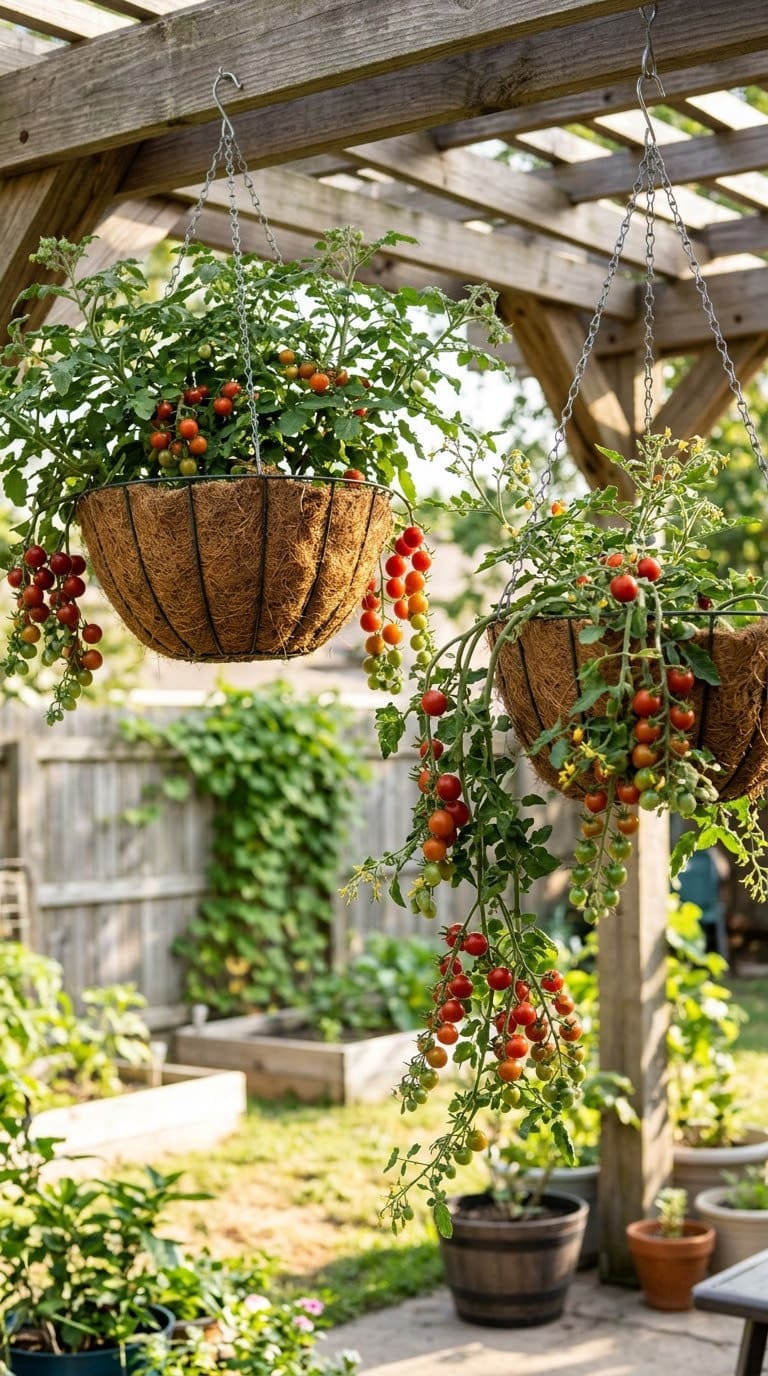
- Pick a sturdy basket with drainage.
- Fill it with potting mix.
- Plant one trailing cherry tomato.
- Hang it in full sun on a strong hook.
- Water daily in midsummer.
Style tip: hang two baskets at different heights.
Pot size: 1 gallon per Illinois.
Safety: a wet basket is heavy. Use a hook rated for the weight.
Test: lift the pot after you water. Lift it again when it feels light, and water.
Tip: check the soil with a finger. If the top inch is dry, water.
What Does Container Growing Cost?
Costs vary by store. The ranges below are our own guess, since the sources didn’t list prices.
| Item | Rough cost | Notes |
|---|---|---|
| Seeds | Low | Cheapest start |
| Plants | Low to mid | Faster harvest |
| Potting mix | Mid | The biggest cost |
| 5-gallon pot | Low | Buckets work |
| Large barrel pot | Mid | For blueberries |
Common Mistakes to Avoid
- Using garden soil. OSU says to avoid topsoil, which drains poorly.
- Skipping drainage holes. Clemson says drainage holes are required.
- Choosing a pot that is too small. Clemson says it means constant watering and tipping.
- Planting tall tomatoes. Clemson says tall types struggle in pots.
- Giving too little sun. Fruiting crops need six to eight hours.
- Forgetting to feed. OSU says feed every three to four days at half strength.
Your Weekend Plan
Friday evening: Pick your spot, and measure the sun. Buy pots and potting mix.
Saturday morning: Drill drain holes, and fill the pots.
Saturday afternoon: Plant two crops, such as a tomato and lettuce.
Sunday: Add cages and hooks. Water, and set a daily check.
FAQ
What is the easiest veggie to grow in a pot?
Leaf lettuce, radishes and herbs. Illinois lists lettuce in a 1-gallon pot.
How big a pot does a tomato need?
Illinois lists 3 gallons for a standard tomato. OSU recommends 5 gallons.
How much sun do pot veggies need?
OSU says fruiting crops need six to eight hours, and leafy crops can handle light shade.
Can I grow blueberries in a pot?
Yes. OSU says to use a 15 to 20 gallon pot for highbush types, with an acid mix at pH 4.5 to 5.5.
Should I use garden soil in pots?
No. OSU says to use potting mix, not topsoil.
Related Posts
Never miss an update — choose FarmFoodFamily as your preferred source on Google.
How it works: Tap the button below to open Google's settings page, then check the box next to FarmFoodFamily.
Tap the checkbox to turn it blue — that's how you know it's set.