20 Lush Balcony Garden Ideas (Lightweight, Wind-Ready, and Pet-Safe)
A balcony garden fits a lot of green into a small space, as long as you check the weight, tie down the pots, and choose pet-safe plants.

Never miss an update — choose FarmFoodFamily as your preferred source on Google.
How it works: Tap the button below to open Google's settings page, then check the box next to FarmFoodFamily.
Tap the checkbox to turn it blue — that's how you know it's set.
A balcony garden fits a lot of green into a small space, as long as you check the weight, tie down the pots, and choose pet-safe plants.
Products We Recommend
This post contains affiliate links. We may earn a commission on qualifying purchases at no extra cost to you.

RooTrimmer 5 Pack 10 Inch Plastic Plant Pots with Drainage Holes
Lightweight pots with drainage holes and plugs for balcony containers
Shop Now
16 Inch Deck Railing Planter Boxes with Adjustable Brackets (4 pack)
Rail-hung boxes with adjustable brackets for the railing planter idea
Shop Now
Heavy Duty Hanging Plant Bracket, 16 inch, 50 lb capacity
Wall-mount hook for the hanging garden idea, with a hardware kit
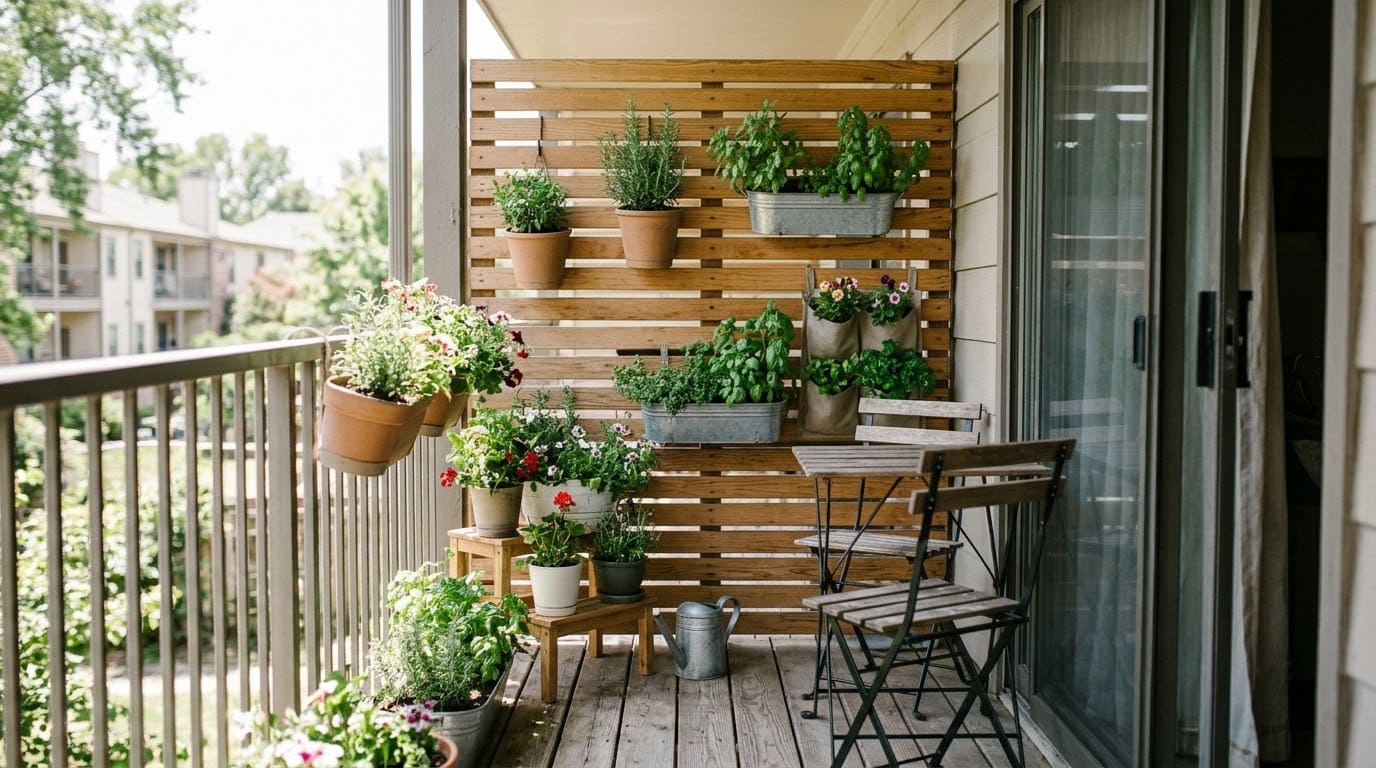
Shop NowA balcony is the smallest garden you can have, and one of the most rewarding. A few pots of herbs, a railing planter, and a trellis turn a concrete slab into a green room. You can pick basil for dinner without leaving the apartment.
A balcony also has rules that a yard does not. Soil is heavy, wind is strong, and water drips onto the floor below. This guide gives you 20 ideas with the weight, wind, drainage, and pet-safety checks built in.
In this article
Answer 4 quick questions and get matched to the exact fix for your yard — drainage, budget, layout, or something else entirely.
Take the Free QuizWhat’s the Quick Answer for a Balcony Garden That Lasts?
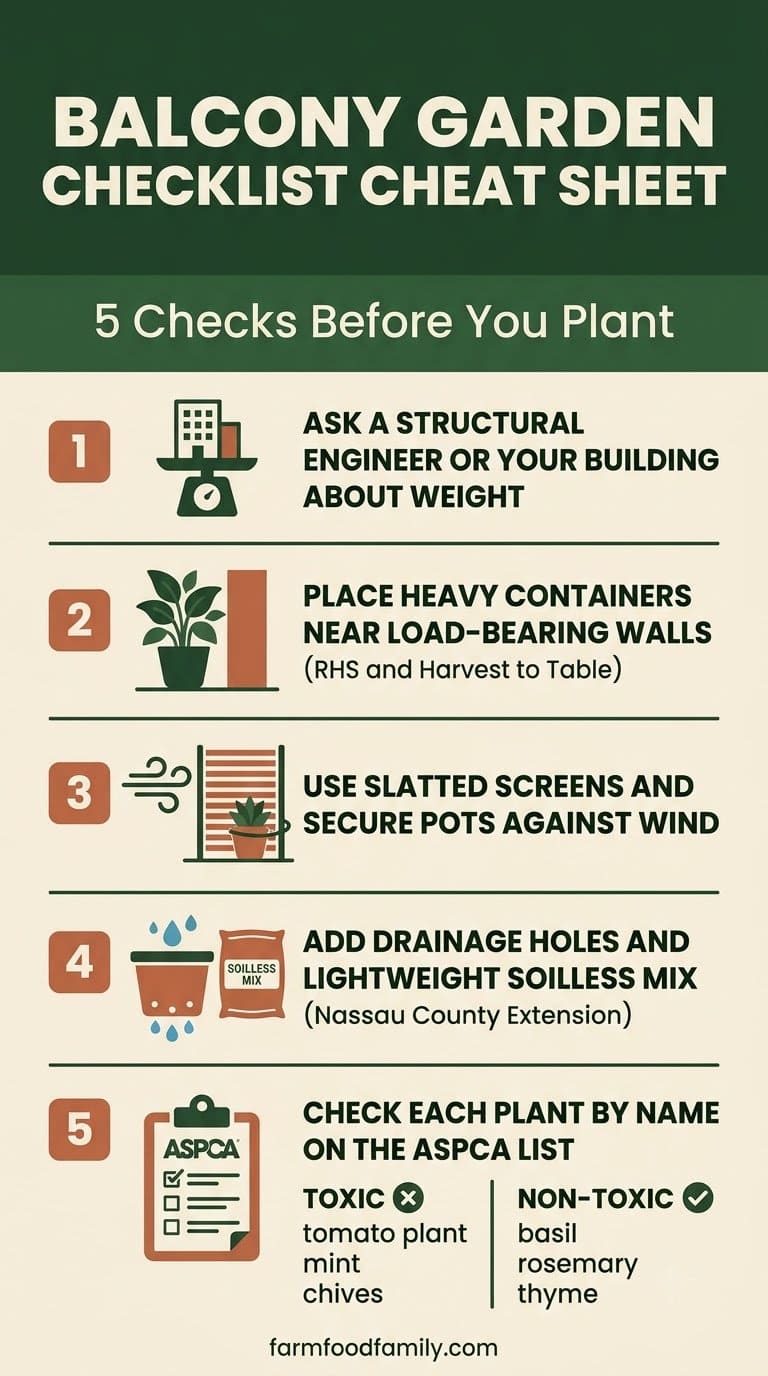
Start with the weight, because it is the one mistake you cannot fix with a trip to the garden store. Stephen Albert of Harvest to Table says balconies are often suspended from the side of a building and cannot bear heavy weight. He advises asking a structural engineer or licensed contractor, and spreading your containers out.
Use lightweight containers and soilless mix, and secure every pot against wind. The Royal Horticultural Society says to place heavy containers near load-bearing walls, and to choose slatted screens over solid ones.
Check each plant by name, since some of the most popular balcony crops are not safe for pets. The ASPCA lists tomato plants, mint, and chives as toxic to dogs and cats.
Plan to water daily in summer. Small containers dry out fast, and balcony wind and sun speed that up. A little planning before you shop keeps the garden light, safe, and easy to care for.
What Should You Check Before You Plant?
This table is our own checklist, built from the sources linked in this article. It is not a substitute for advice from your building.


| Check | What to look for | Why it matters |
|---|---|---|
| Weight | Ask your building or an engineer | Balconies hang from the building |
| Wind | Screens, secured pots | Top-floor gusts tip pots |
| Drainage | Holes, a slight floor slope | Water pools and drips down |
| Sun | Watch morning, midday, afternoon | Decides which plants will thrive |
| Pets and kids | Pet-safe plants, rail gap | Chewing and climbing risks |
| Lease | Written permission | Some buildings restrict planters |
Most yard problems trace back to one specific, fixable cause. Find yours in 4 quick questions.
Take the Free QuizBefore You Start: Weight, Wind, Drainage, and Sun
Weight comes first. Wet soil is heavy, and a full pot can weigh a surprising amount. Albert advises spreading containers instead of stacking them in one corner, and notes that rain barrels add weight too and need a structural check.
The RHS says heavy containers belong near load-bearing walls or over a beam, which can carry more than unsupported areas. It suggests a chartered structural engineer or surveyor when you are unsure.
Wind is the next limit. The RHS recommends slatted or mesh screens, because solid walls cause turbulence on the far side. Albert suggests woven reed or bamboo screens and securing lightweight pots to railings or fixtures.
Drainage matters on a balcony, since runoff reaches your neighbors. Cornell Cooperative Extension of Nassau County says containers must have drainage holes, and that window screening keeps mix from washing out. Raise pots off the floor, as the RHS advises, so roots do not sit in water.
Survey your sun before you buy plants. Albert advises checking the space in the morning, midday, and afternoon.
How Do You Choose Containers for a Balcony?
Pick wide, deep containers. The RHS says they dry out more slowly and give roots more room. For small pots, it says non-porous plastic, metal, or fiberglass loses less moisture than terracotta.
The Nassau County guide agrees on the water point. It says clay pots and moss baskets dry out faster because they absorb water through the container. It also notes that foam, resin, and fiberglass containers are lightweight and easy to move.
Lightweight pots with drainage holes and plugs for balcony containers
Shop NowThis post contains affiliate links. We may earn a commission on qualifying purchases at no extra cost to you.
Fill them with a lightweight soilless mix. Both Albert and the Nassau County guide recommend it over garden soil. Leave an inch or two at the top of each pot so water does not spill over the rim.
Raise pots off the floor on small feet, as the RHS advises. This keeps roots from sitting in water and lets the floor dry.
The average homeowner spends $616/year on yard fixes that don't address the real problem. Find out what yours actually is — before you spend another dollar.
Take the Free QuizWhere Should Each Plant Go on a Balcony?
Sort your plants by how much sun and wind they get. Put sun lovers like herbs, petunias, and sunflowers where the sun lands longest. Albert advises watching the space in the morning, midday, and afternoon before you decide.
Put wind-tolerant crops in the exposed spots. His list includes lettuce, carrots, dwarf bush beans, bay, and rosemary. Tuck taller or leafier plants behind a slatted screen.
Use the shady corner for ferns and foliage plants. Keep the heaviest pots closest to the load-bearing wall, as the RHS advises, and leave the railing for light boxes only.
Which Balcony Plants Are Safe for Pets?
We checked a short list of popular balcony plants on the ASPCA pages. The table shows what each entry said.
| Plant | Dogs and cats | Notes |
|---|---|---|
| Petunia | Non-toxic | Also non-toxic to horses |
| Thyme | Non-toxic | Also non-toxic to horses |
| Rosemary | Non-toxic | Also non-toxic to horses |
| Basil | Non-toxic | Dogs and cats only listed |
| Zinnia | Non-toxic | Also non-toxic to horses |
| Sunflower | Non-toxic | Also non-toxic to horses |
| Nasturtium | Non-toxic | Also non-toxic to horses |
| Boston fern | Non-toxic | Dogs and cats only listed |
| Tomato plant | Toxic | Solanine; ripe fruit listed as non-toxic |
| Mint | Toxic | Essential oils |
| Chives | Toxic | Toxic to dogs, cats, and horses |
| Lavender | Toxic | Toxic to dogs, cats, and horses |
| Geranium | Toxic | Toxic to dogs, cats, and horses |
Several balcony favorites are on the toxic list. We could not confirm lettuce, pansy, marigold, sweet alyssum, or snapdragon, because the ASPCA pages we pulled did not show an entry. Look them up by name before you plant.
20 Lush Balcony Garden Ideas
1. Sunny Herb Corner
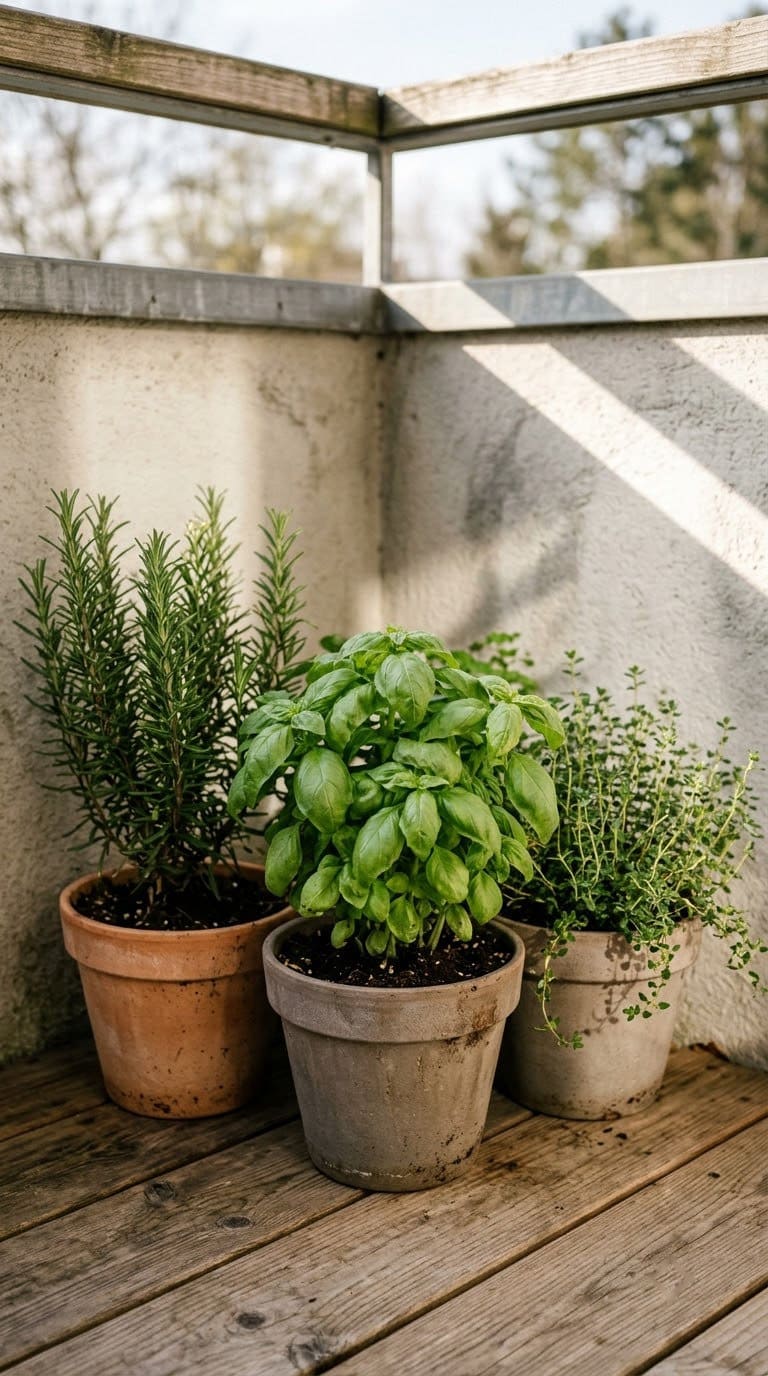
Group rosemary, thyme, and basil in one sunny corner. All three are non-toxic to dogs and cats per the ASPCA entries above. Albert lists rosemary among the wind-tolerant herbs.


Use lightweight plastic pots with drainage holes. Place them in the spot with the most sun.
Cost tier: low.
2. Scrap-Wood Planter Bench
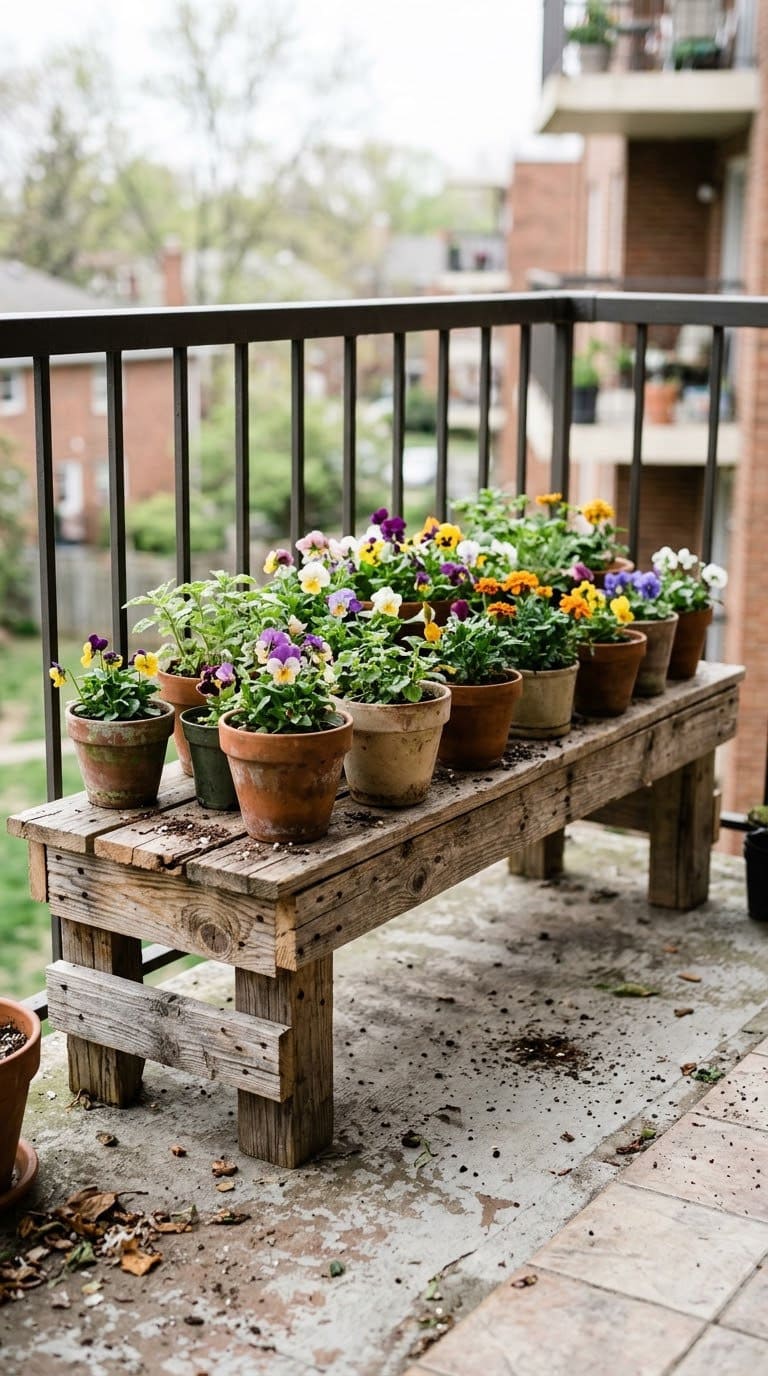
Build a low bench from scrap boards, and use it as a plant stand. Spread the load across the bench instead of one spot. Seal the wood so it survives rain.
Keep the bench short, so wind has less to grab. Set pots on the shelf, not in the wood.
Cost tier: low.
3. Micro-Park Tray
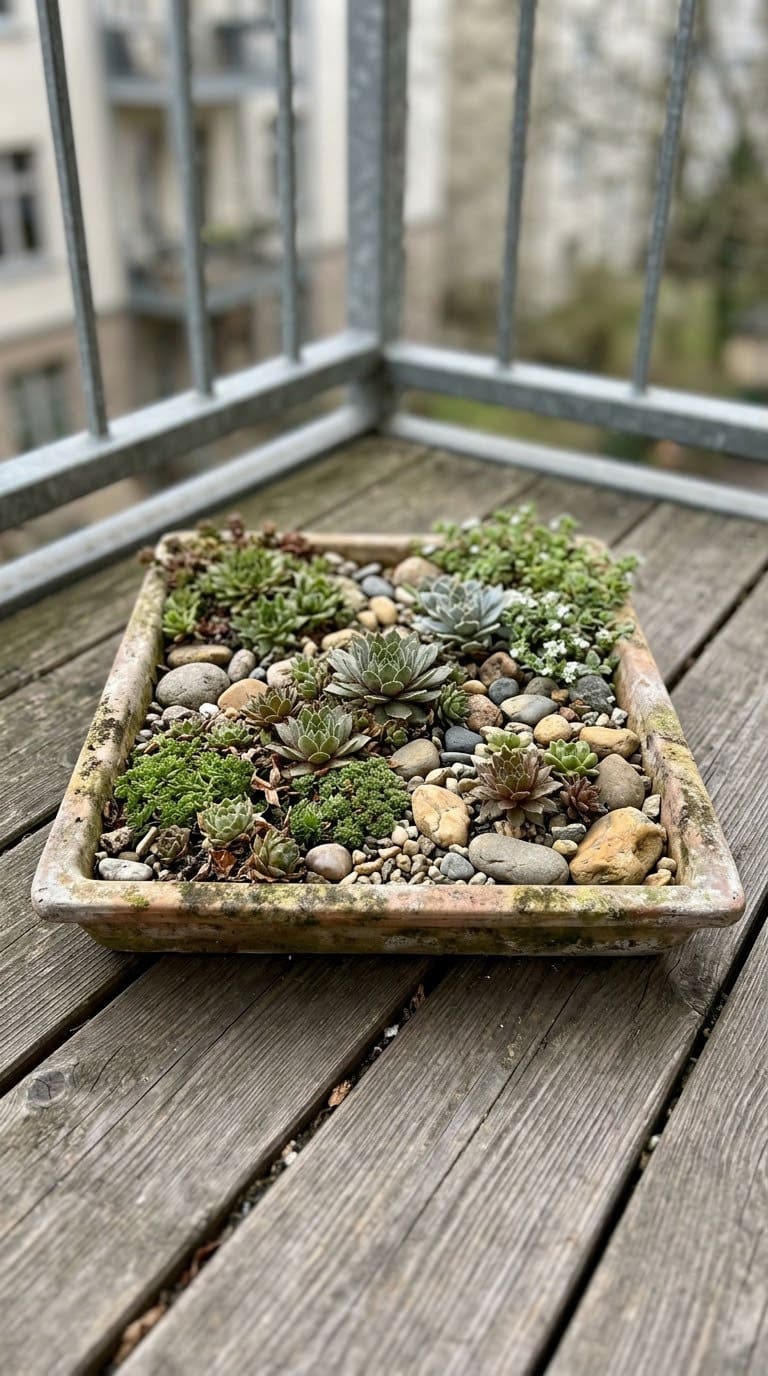
Fill a shallow tray with low plants and pebbles for a mini park look. A shallow tray weighs far less than deep pots. Keep it to petunias or thyme.
Raise the tray on small feet so water can drain. Check for runoff over your railing.
Cost tier: low.
4. Stacked Light-Pot Tower
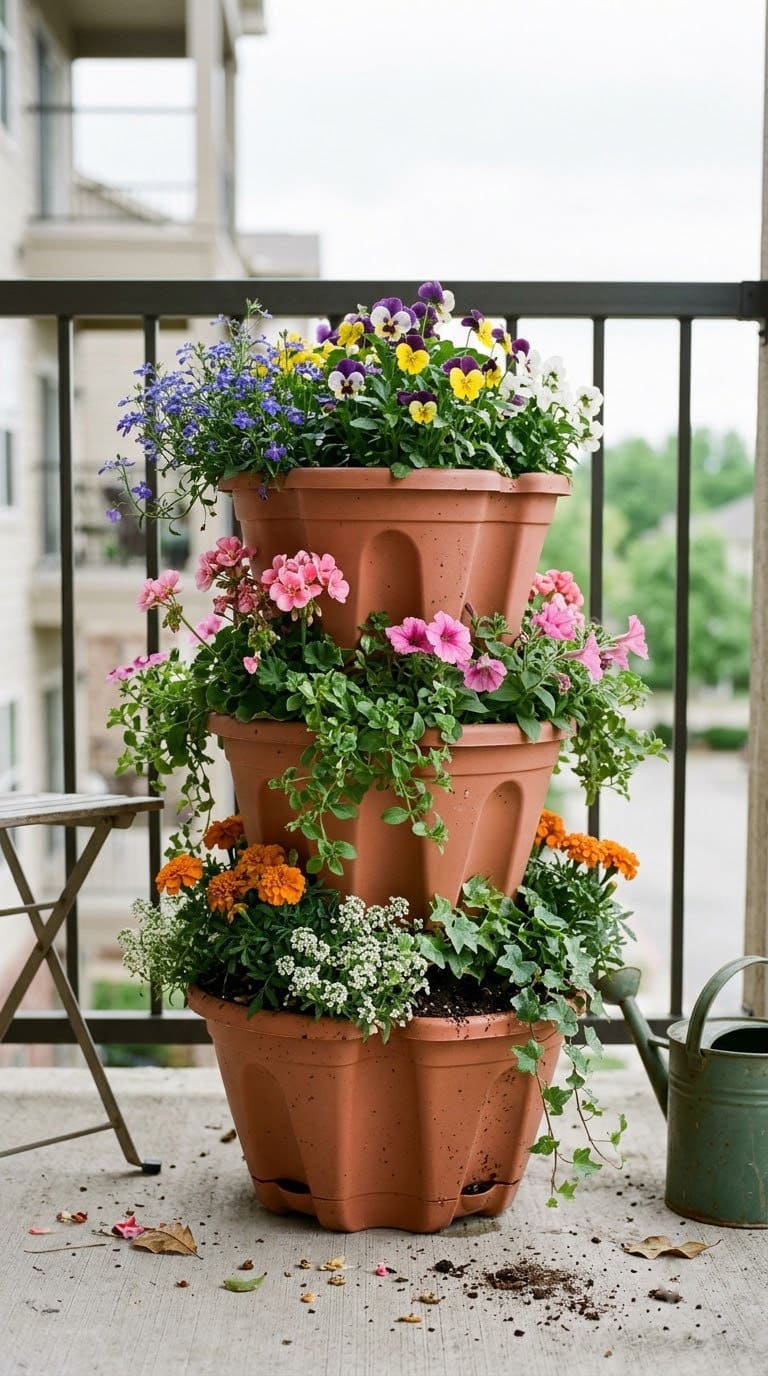
Stack lightweight pots in a tower to grow up, not out. Use plastic or resin pots, not terracotta, which the RHS says loses more moisture than non-porous materials. For build details, see our flower tower ideas.
Secure the base to a rail or wall. A tall tower can tip in wind.
Cost tier: low.
5. Railing Planters
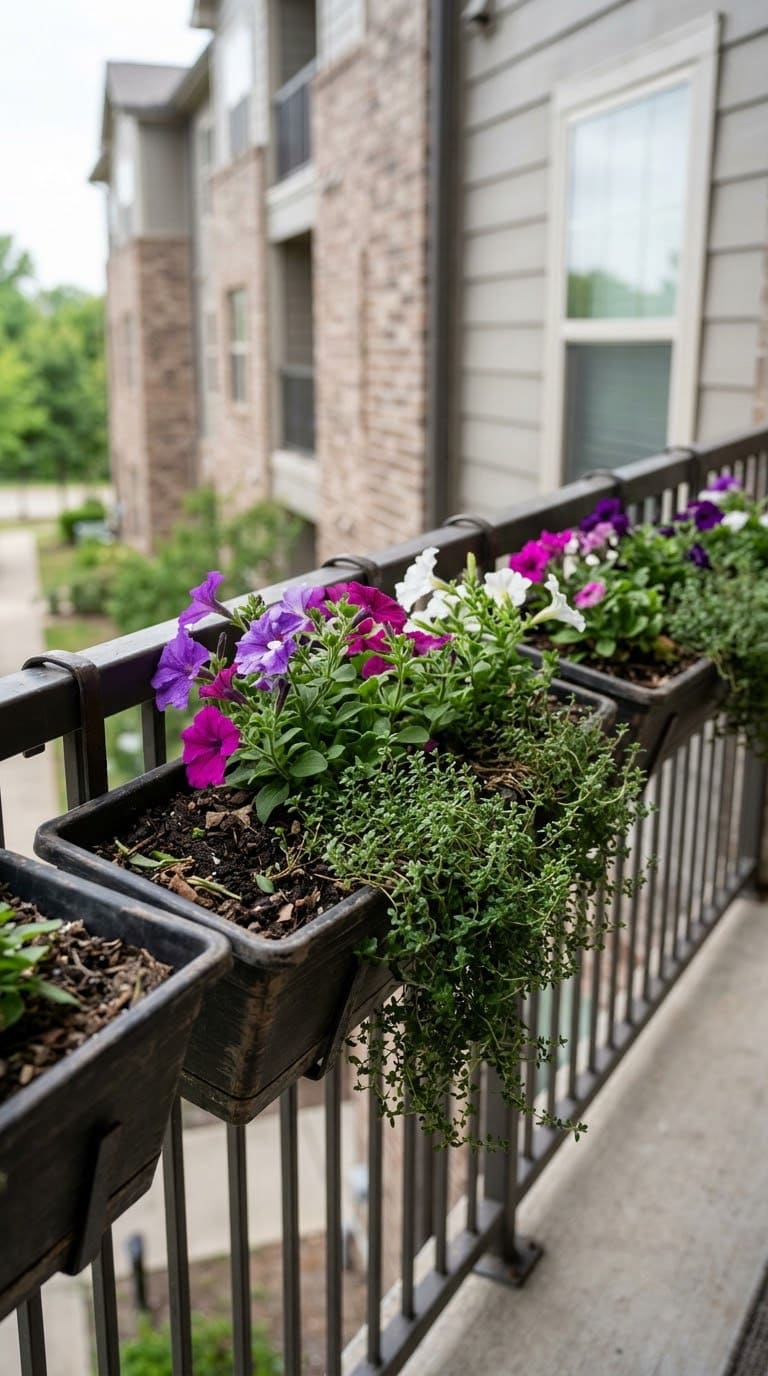
Hook boxes onto the railing, and fit them snugly. Add a strap so they cannot lift in a gust. Keep them lightweight, because a falling box is a hazard to people below.
Albert advises keeping planters far enough from railings that children cannot climb over them. If you have kids, put boxes on the inside of the rail instead.
Cost tier: low to medium.
6. Hanging Garden
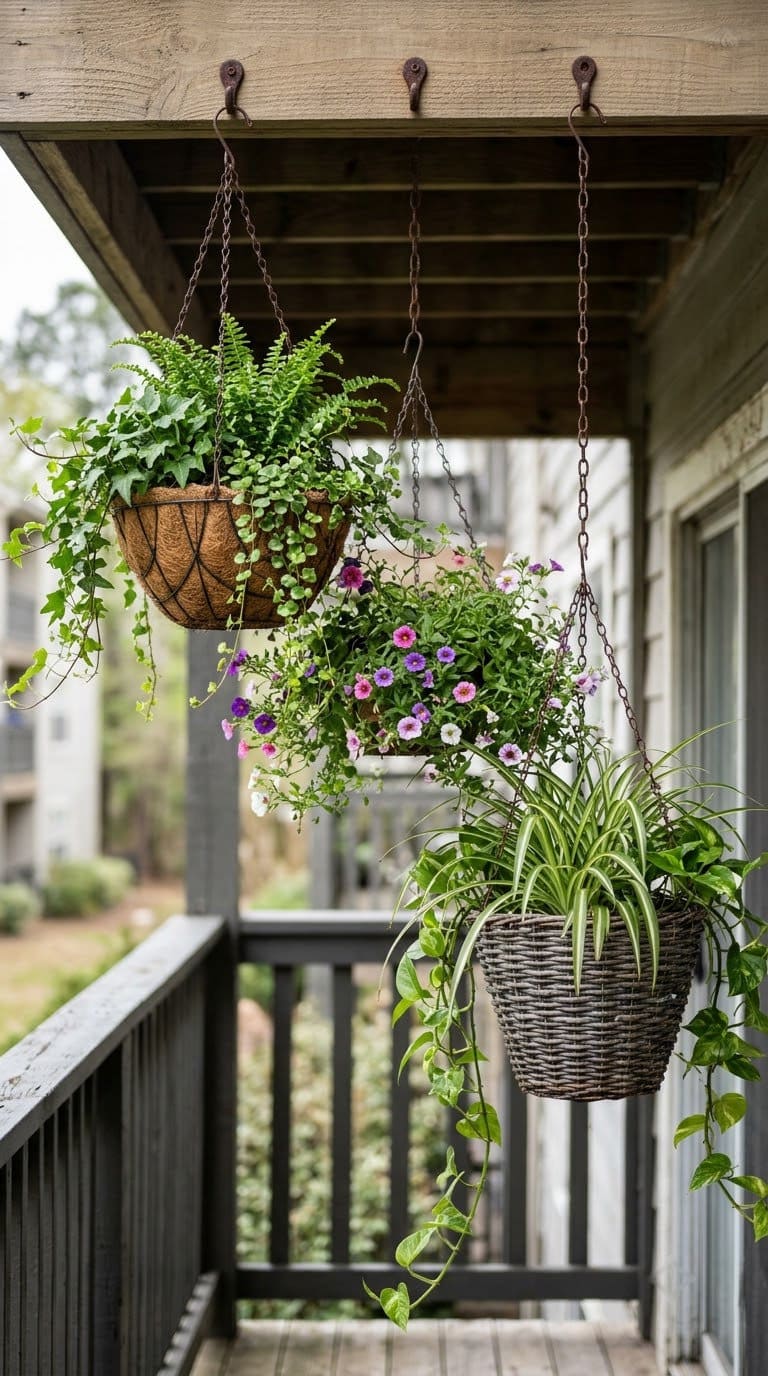
Hang baskets from an overhead beam or ceiling hook. Check that the hook is rated for the load. Water often, since hanging baskets dry fast.
See more ideas in our hanging planter guide. Take baskets down in storms.
Cost tier: low to medium.
7. Bakers Rack Garden
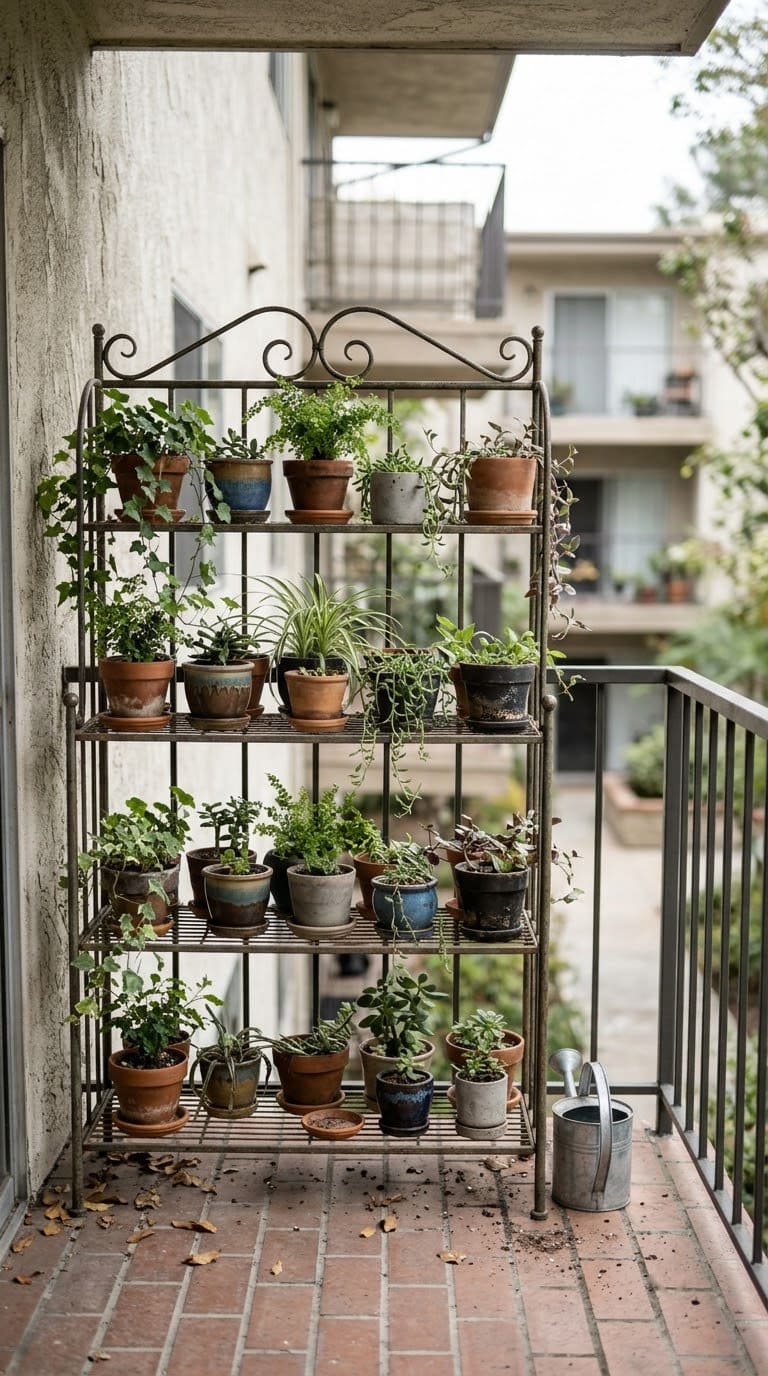
A bakers rack gives you shelves in a small footprint. Put the heaviest pots on the bottom shelf. Use light pots on top, so the rack is not top-heavy.
Anchor the rack to a wall if you can. Watch for wind.
Cost tier: medium.
8. Pallet Garden
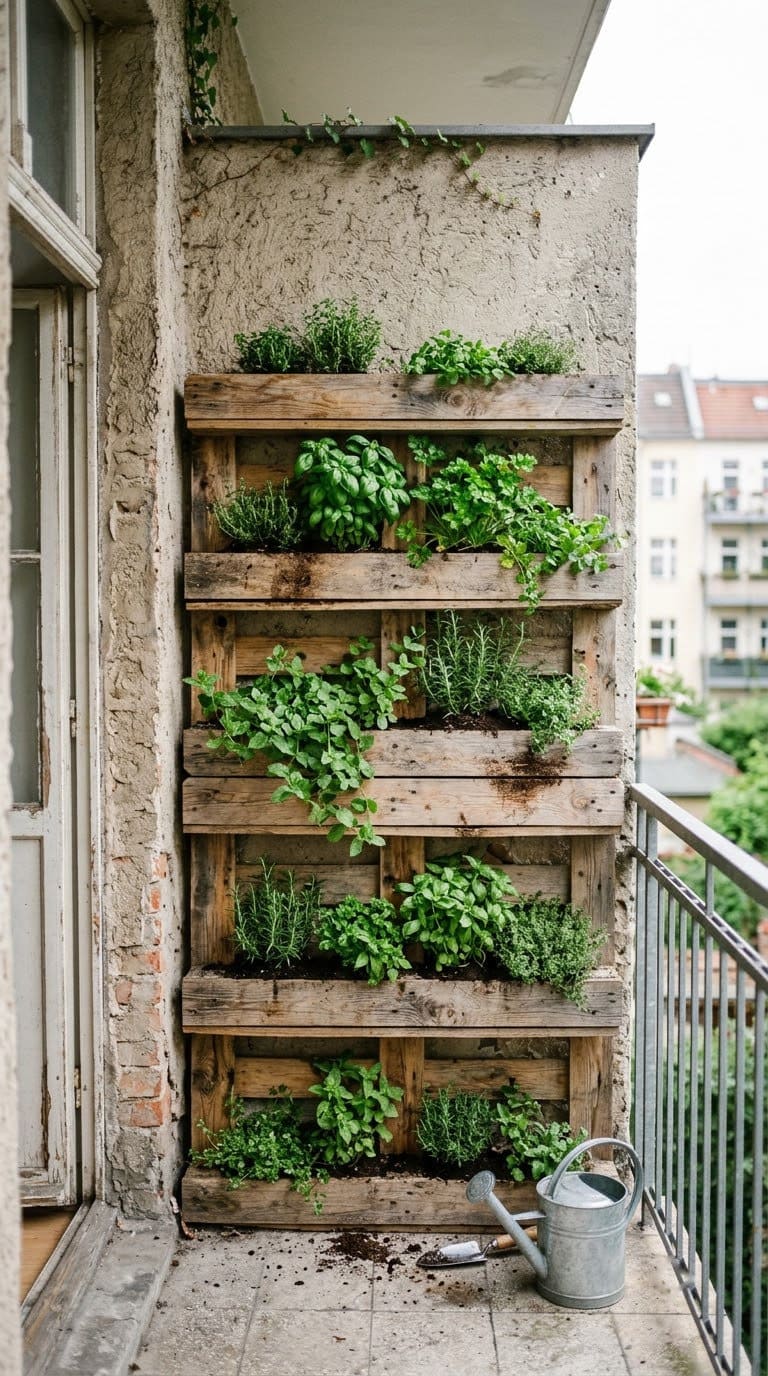
Stand a pallet against a wall, and plant herbs in the slots. Look for a heat-treated pallet and avoid stained ones. Line the slots with landscape fabric.
A filled pallet is heavy, so spread the planting over a few pallets. See our pallet planter ideas.
Cost tier: low.
9. Felt-Pocket Wall Garden
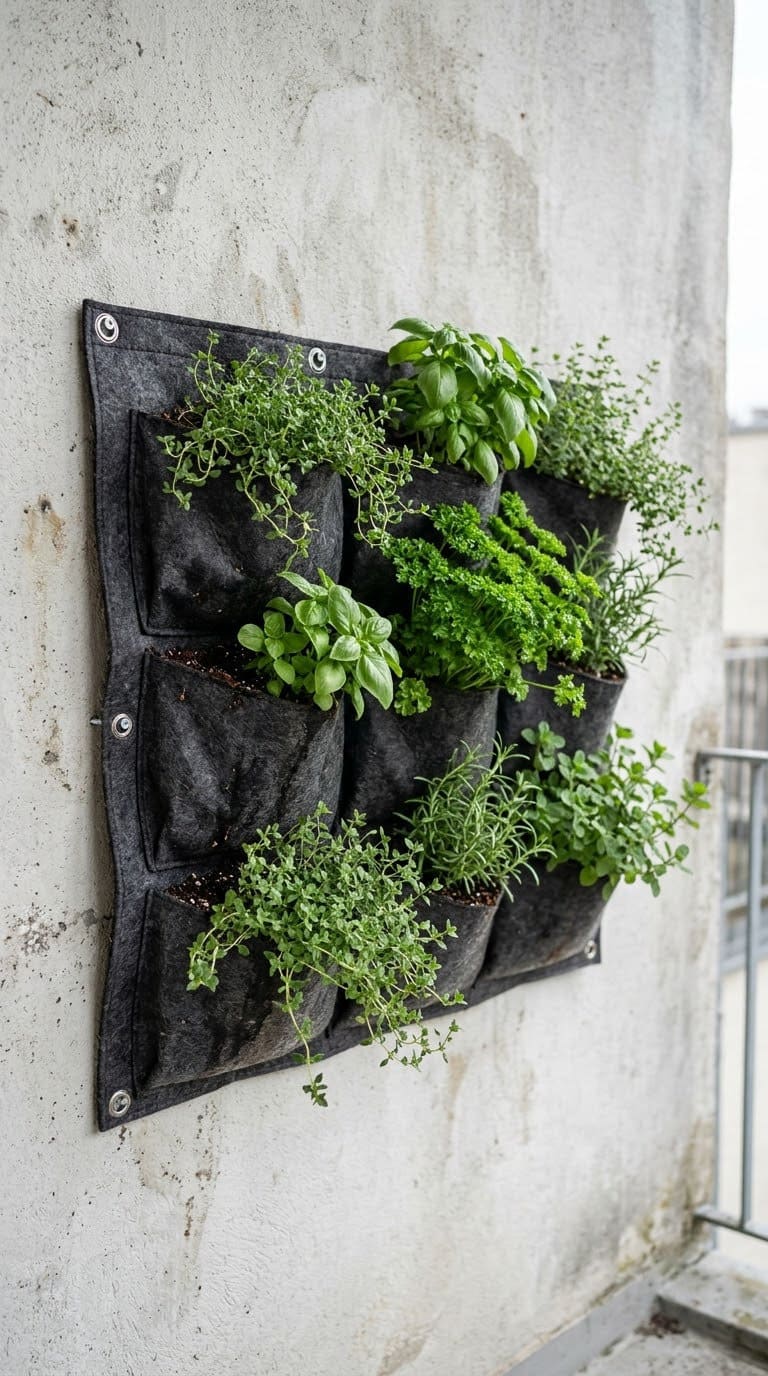
Felt pockets are very light and hold shallow roots. Mount them on a sturdy wall with rated hooks. Choose herbs and small flowers.
Fabric dries fast, so water daily in summer. Our pocket planter guide has more tips.
Cost tier: low.
10. Succulent Stack
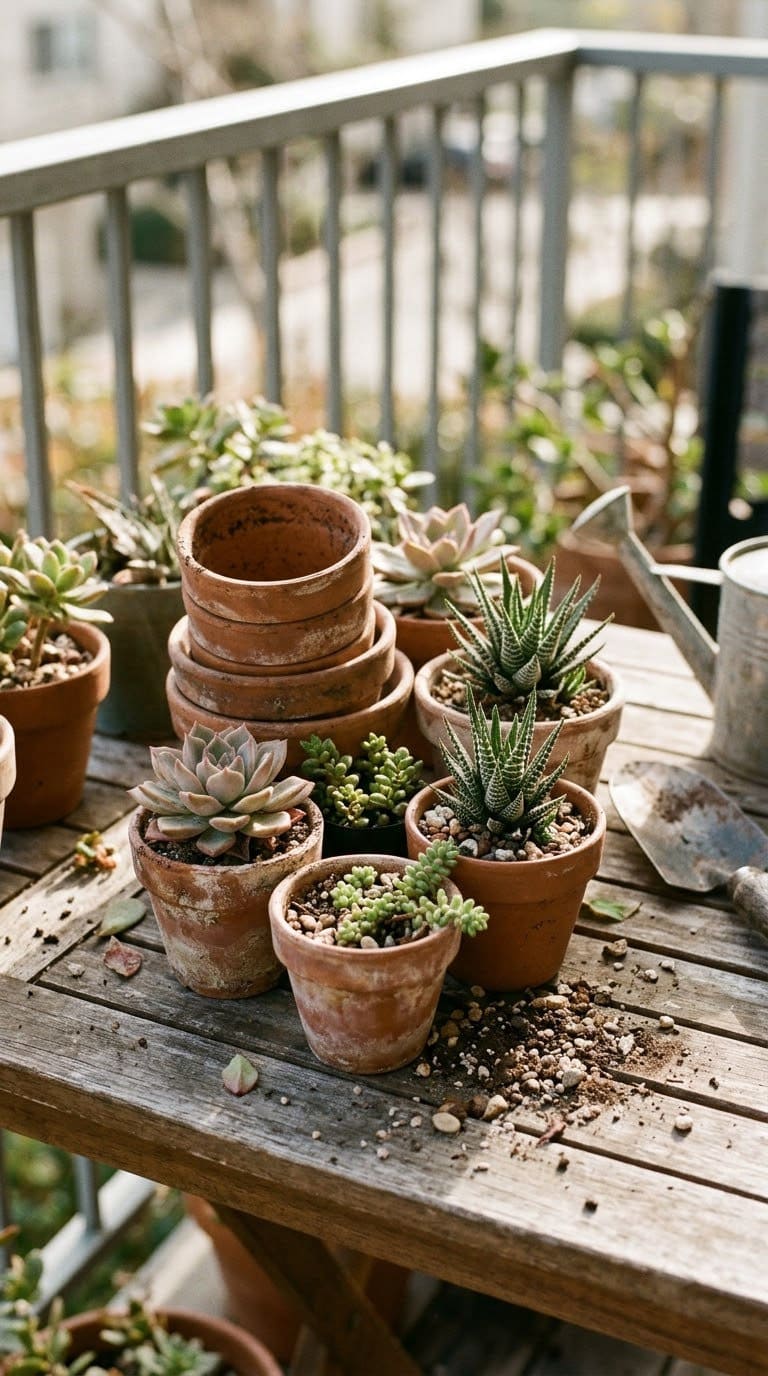
Succulents need little water and little soil, so they stay light. Use gritty cactus mix and pots with drainage holes. Check each succulent on the ASPCA list.
Keep them in a sunny spot. Bring them in before a frost.
Cost tier: low.
11. Edible Balcony
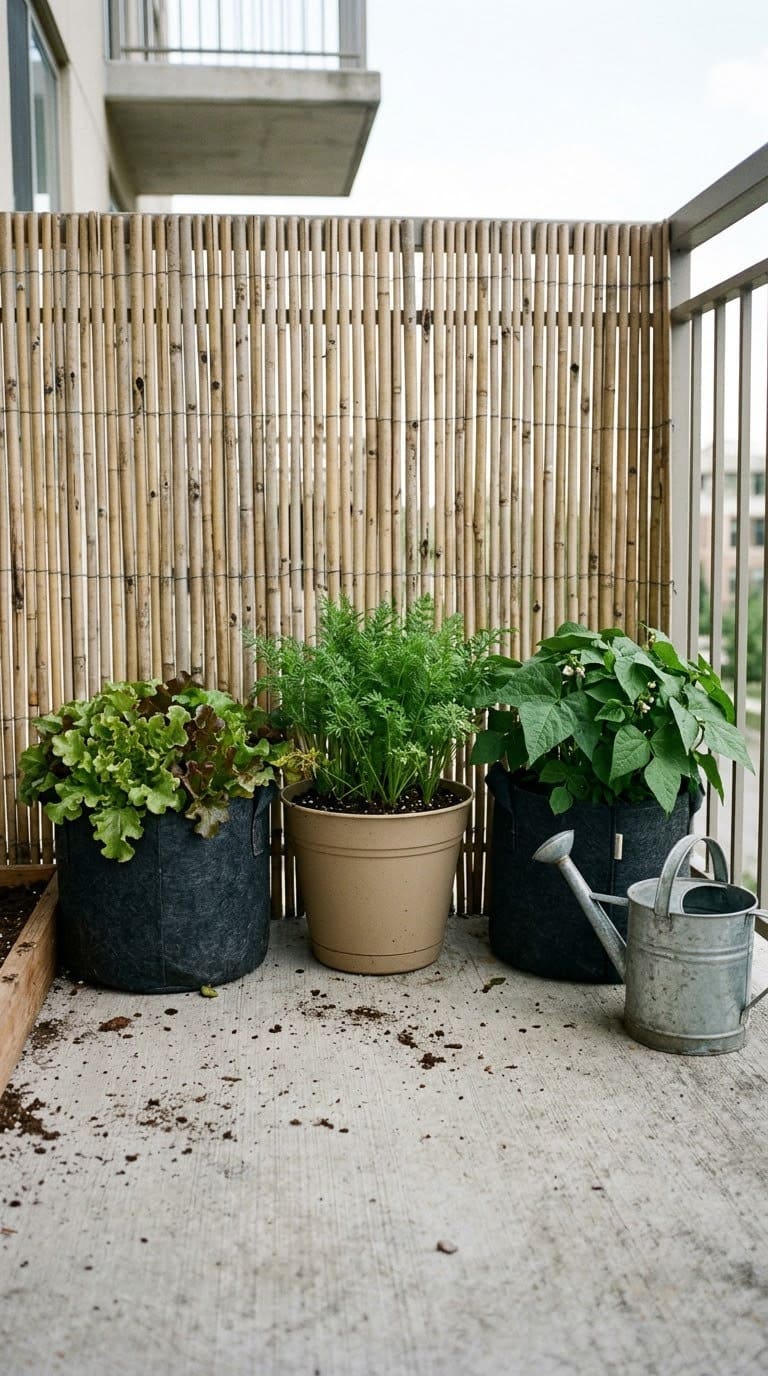
Albert names wind-tolerant crops: lettuce and greens, carrots, potatoes, dwarf bush beans, and herbs such as bay and rosemary. Use lightweight containers and soilless mix.
Tomato plants are toxic to dogs and cats per the ASPCA, though the ripe fruit is listed as non-toxic. Keep tomato plants out of reach of pets.
Cost tier: medium.
12. Pet-Safe Culinary Herb Corner
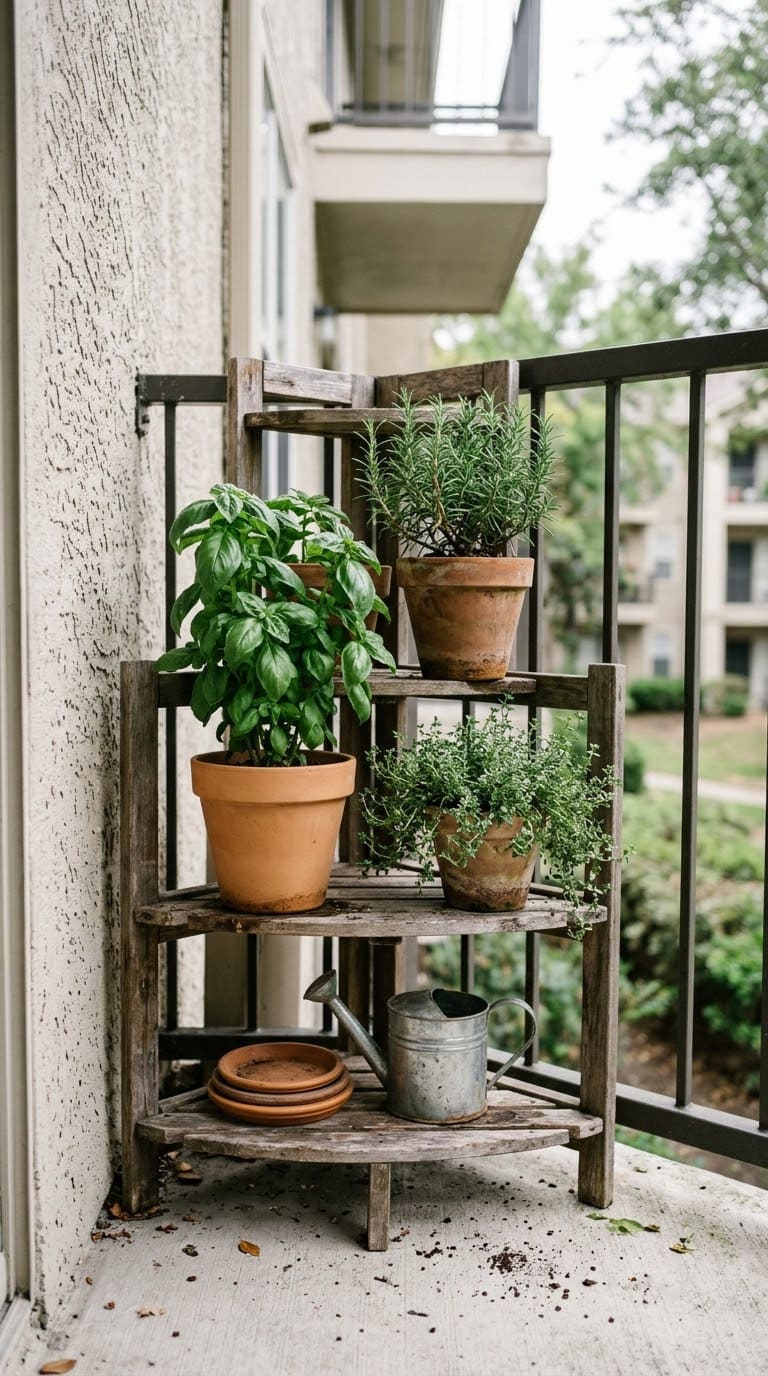
Pick only pet-safe herbs for a balcony where pets roam. Basil, rosemary, and thyme are non-toxic per the ASPCA entries above. Skip mint and chives, which the ASPCA lists as toxic.
Pair this with our container herb garden guide. Pinch the tips often.
Cost tier: low.
13. Trellis Privacy Screen
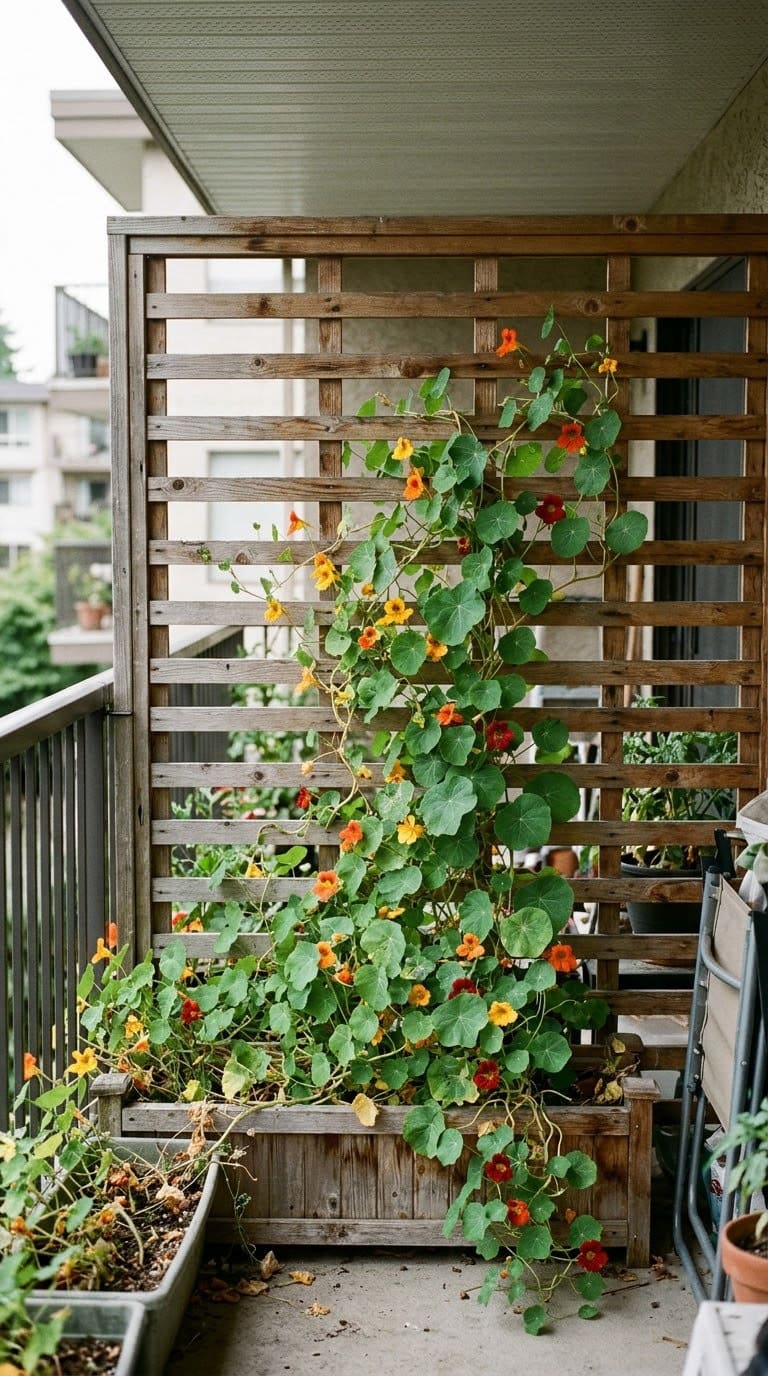
A slatted trellis blocks sight lines and lets wind pass through. The RHS prefers slatted or mesh screens to solid walls. Let nasturtiums or sweet pea climb it.
Fix the trellis well, as the RHS notes. Sweet pea is non-toxic to dogs and cats per the ASPCA, but toxic to horses.
Cost tier: medium.
14. Shade Garden
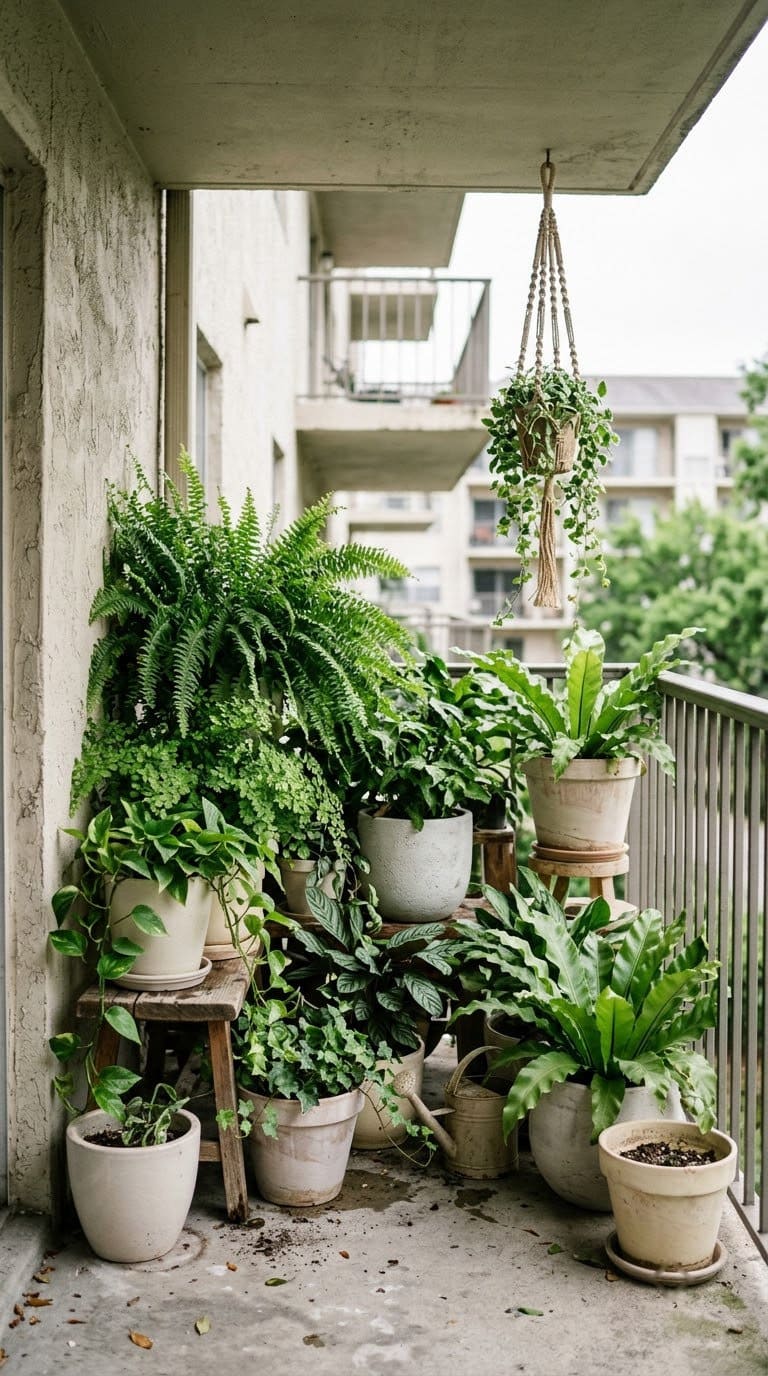
A north-facing balcony suits ferns and foliage. Boston ferns are non-toxic to dogs and cats per the ASPCA. Check other shade plants by name.
Our shade plant guide lists more choices. Keep the soil evenly moist.
Cost tier: low.
15. Fern Jungle
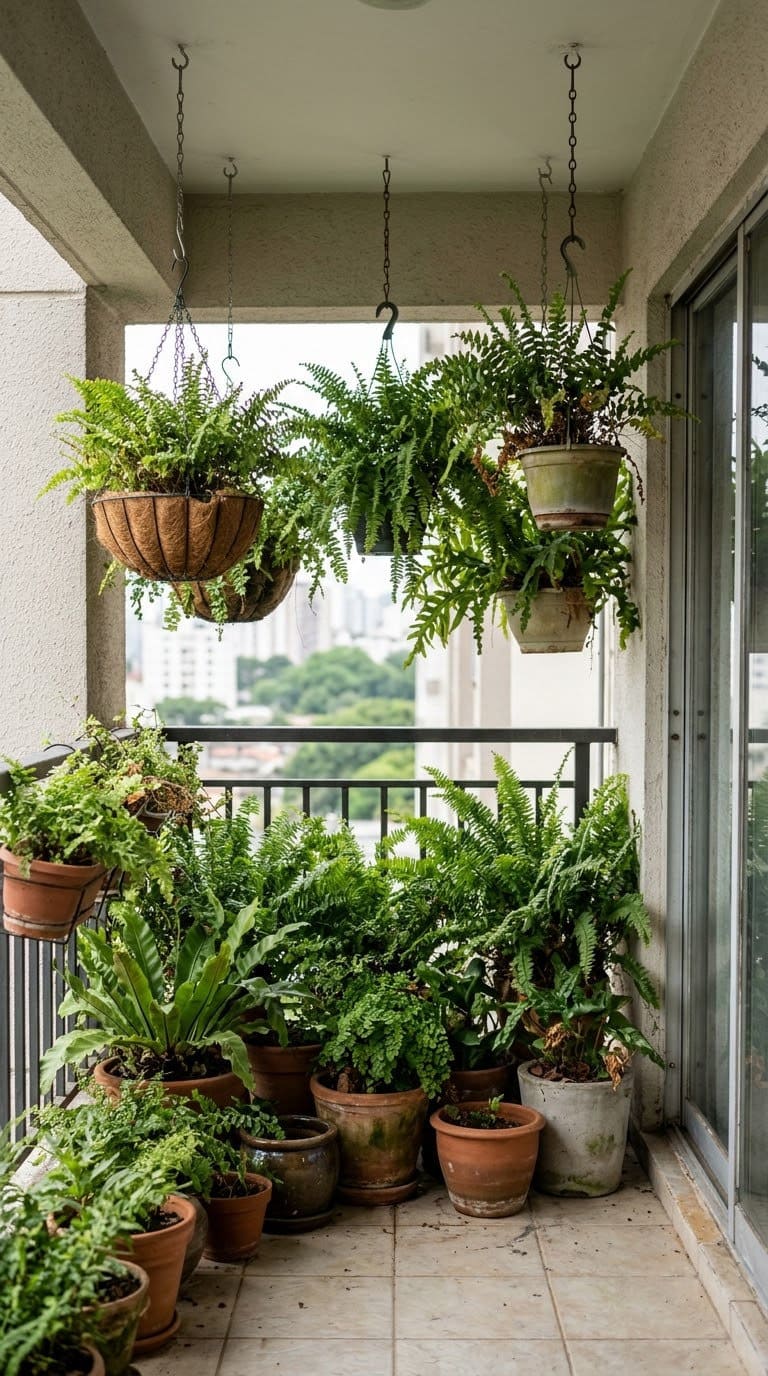
Layer ferns at different heights for a jungle feel. Use hanging pots and floor pots. Skip English ivy, which the ASPCA lists as toxic.
Mist during dry spells. Move ferns inside before a freeze.
Cost tier: medium.
16. Container Rose
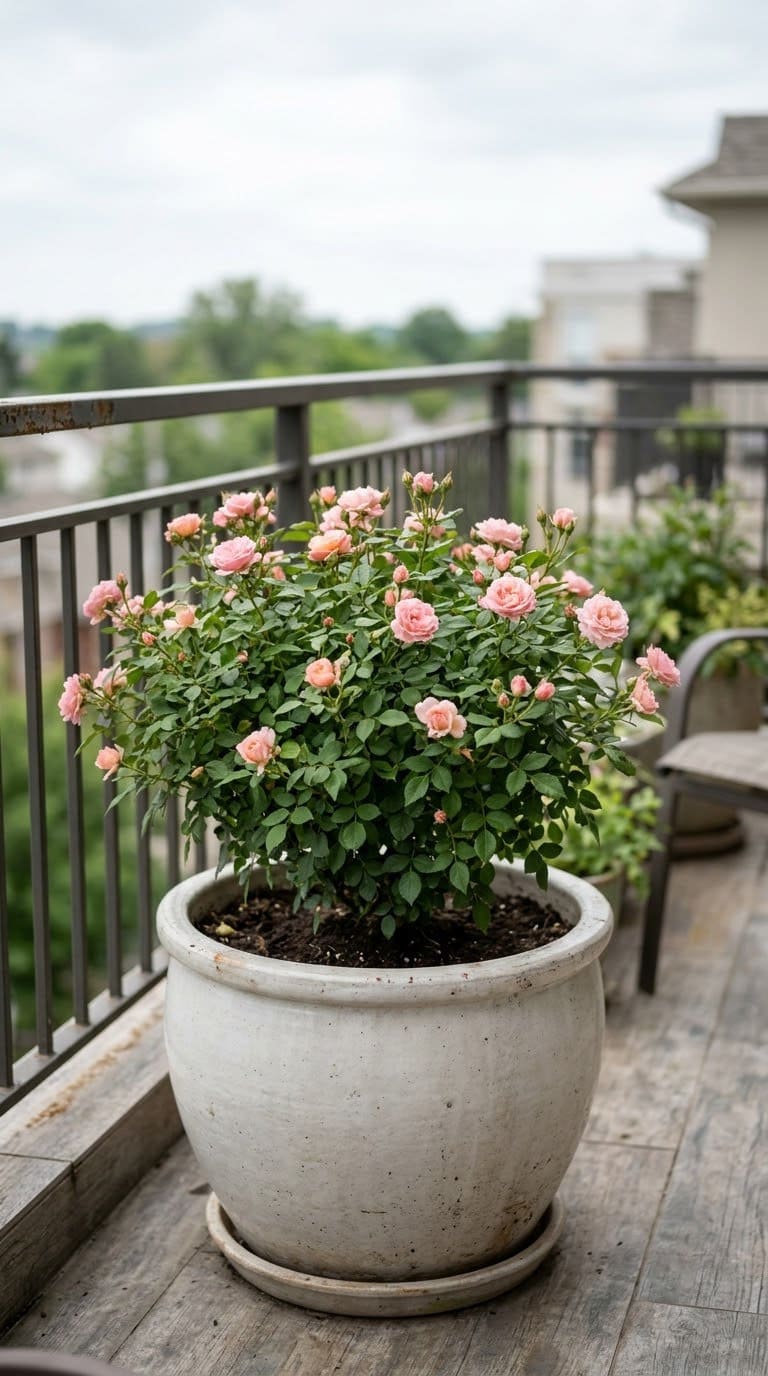
Pick a compact rose and a wide, deep container, which the RHS says dries out more slowly. Check the rose by name on the ASPCA list.
Water deeply, and feed on a schedule. Secure the pot against wind.
Cost tier: medium.
17. Zen Pebble Garden
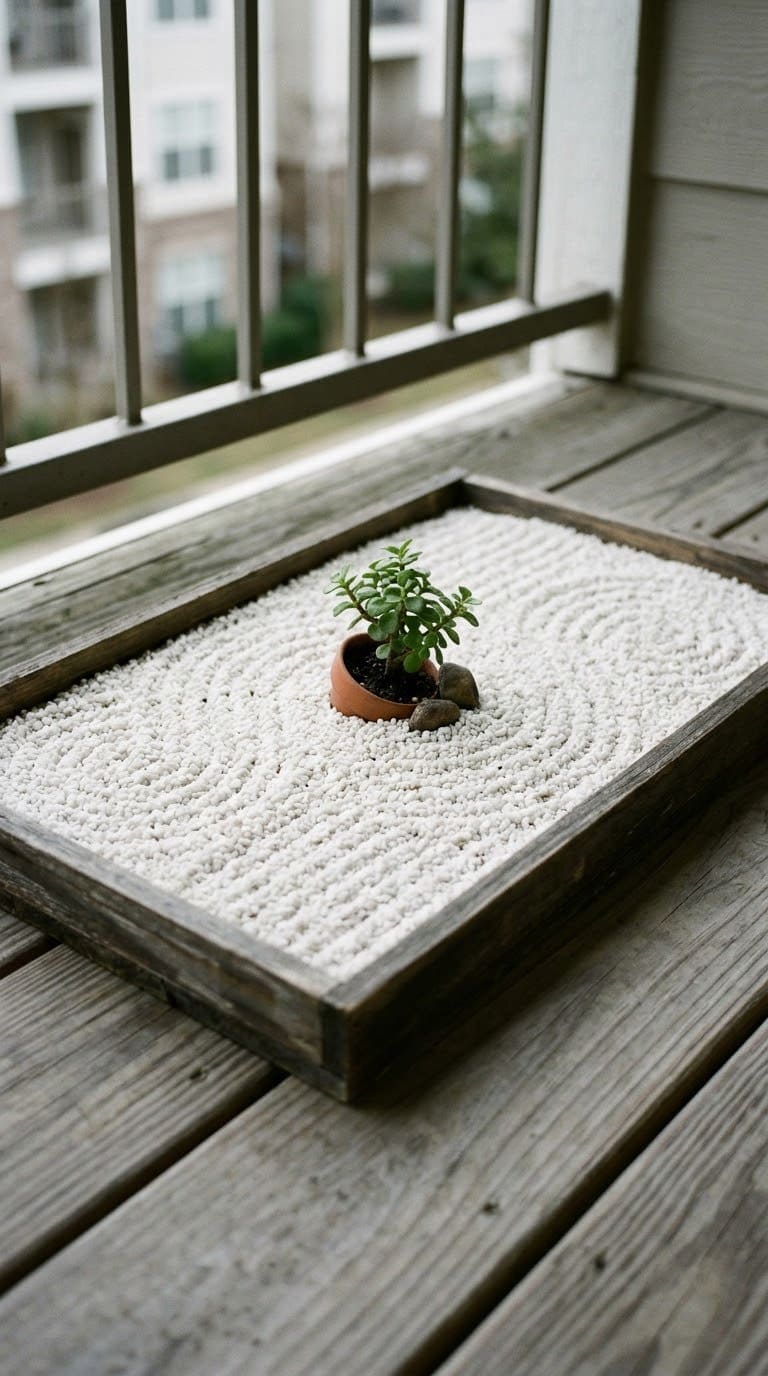
Fill a shallow tray with pebbles and one or two small plants. Rake the pebbles into lines. Keep the tray light.
Use fine gravel, not heavy rock. Check for sharp edges.
Cost tier: low.
18. Cottage-Color Pots
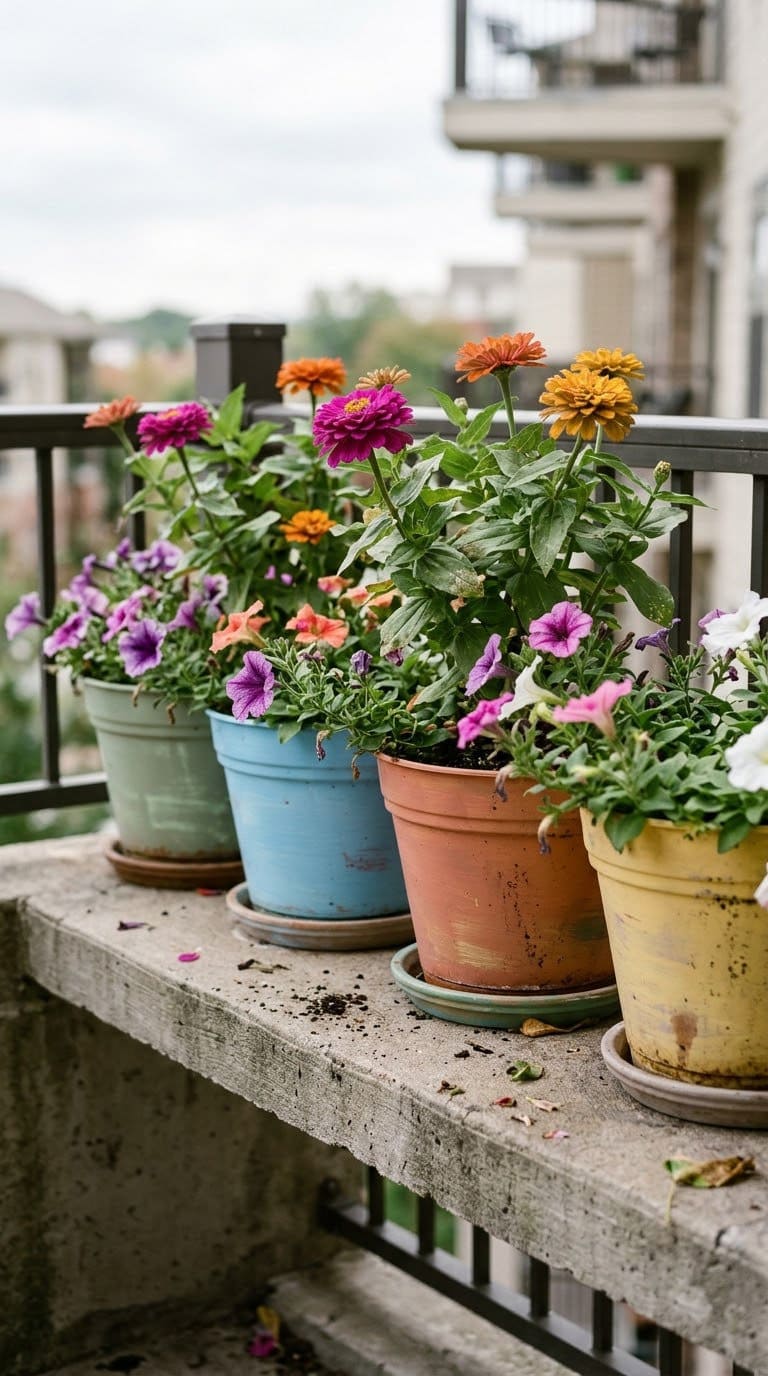
Paint plastic pots in two or three colors. Plant zinnias, petunias, and nasturtiums, which are all non-toxic per the ASPCA. Repeat the colors across the balcony.
Use outdoor paint. Group the pots in odd numbers.
Cost tier: low.
19. Dining Nook With Planters
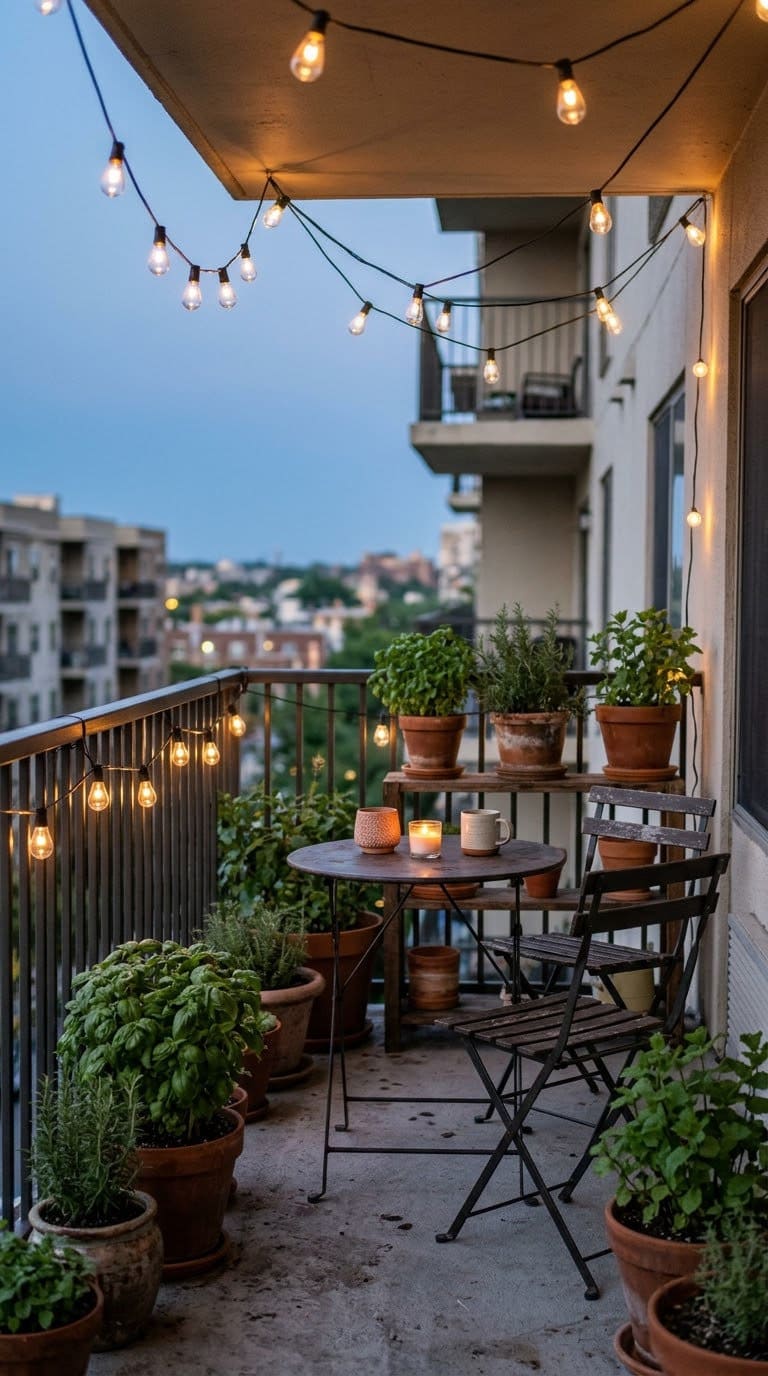
Add a bistro table and let herbs act as the centerpiece. Use string lights marked for outdoor use. Keep pots at the edge, not on the table.
For more balcony seating ideas, see our balcony decorating guide.
Cost tier: medium.
20. Hanging-Chair Garden Corner
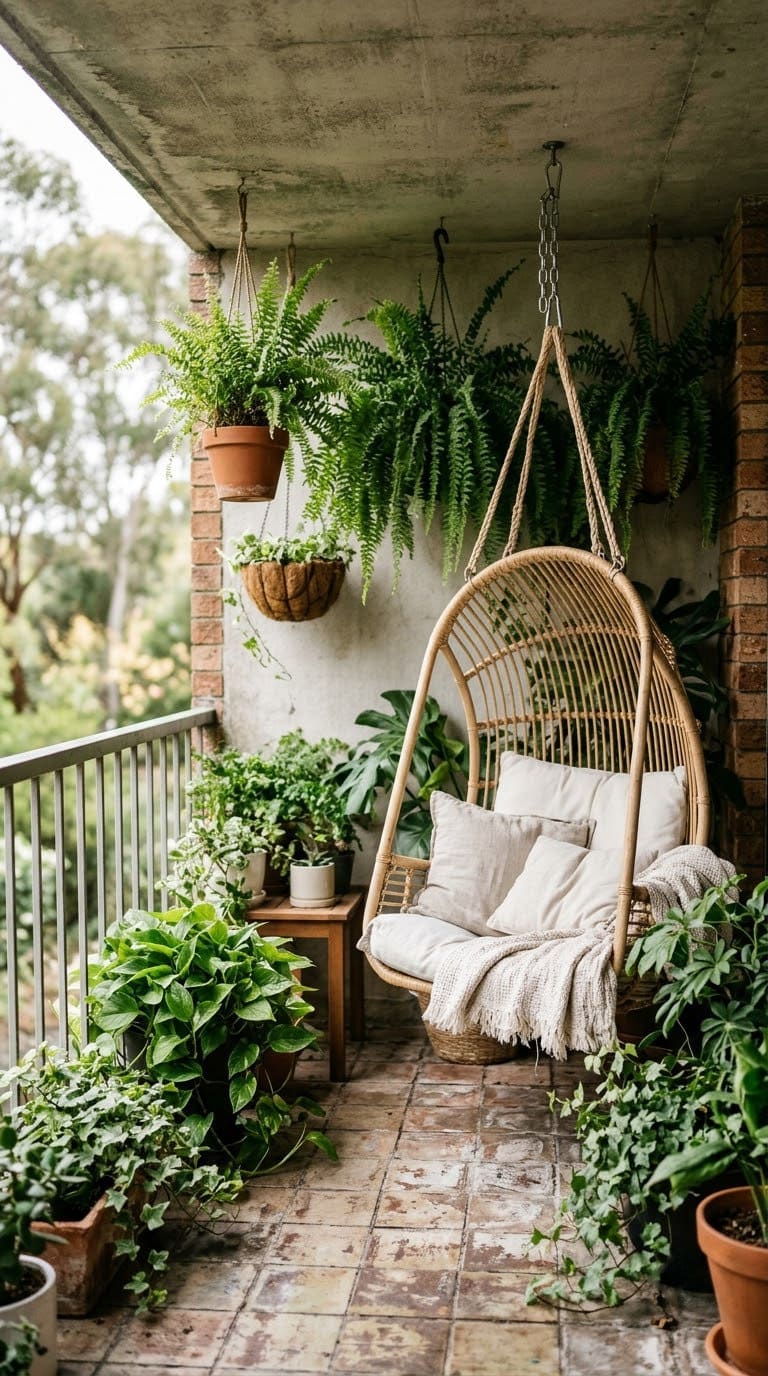
Frame a hanging chair with plants on three sides. Hang the chair from a rated beam, not the railing. Keep heavy pots away from the chair’s swing.
Ask your building about the ceiling anchor. Check it each season.
Cost tier: high.
How Do You Water a Balcony Garden?
Balcony pots dry out fast. The RHS says summer plants may need watering twice a day or more. It also notes that overhangs can stop rain from reaching your plants.
The University of Illinois Extension says to feel the soil and water if the top inch or so is dry. Water until it drips from the drainage holes.
Place a drip tray only if it will not overflow onto the floor below. Empty trays after rain.
Common Mistakes to Avoid
Skipping the weight check is the first mistake. Albert says balconies are often suspended and cannot bear heavy weight.
Using solid screens is the second. The RHS says solid walls create turbulence on the leeward side.
Planting without checking is the third. The ASPCA lists tomato plants, mint, and chives as toxic to dogs and cats.
FAQ
How much weight can a balcony hold?
It depends on the building. Harvest to Table’s Stephen Albert advises asking a structural engineer or licensed contractor, and the RHS suggests a chartered structural engineer or surveyor.
What should I put in balcony pots instead of garden soil?
Use a soilless potting mix. Nassau County Extension says garden soil is unsuitable for containers.
Which balcony herbs are safe for pets?
The ASPCA lists basil, rosemary, and thyme as non-toxic to dogs and cats. It lists mint and chives as toxic.
How often should I water balcony plants?
Check daily. The RHS says plants may need water twice a day or more in summer.
How do I stop pots from blowing over?
Use slatted screens, wide bases, and straps. Albert advises securing lightweight pots to railings or fixtures.
Never miss an update — choose FarmFoodFamily as your preferred source on Google.
How it works: Tap the button below to open Google's settings page, then check the box next to FarmFoodFamily.
Tap the checkbox to turn it blue — that's how you know it's set.