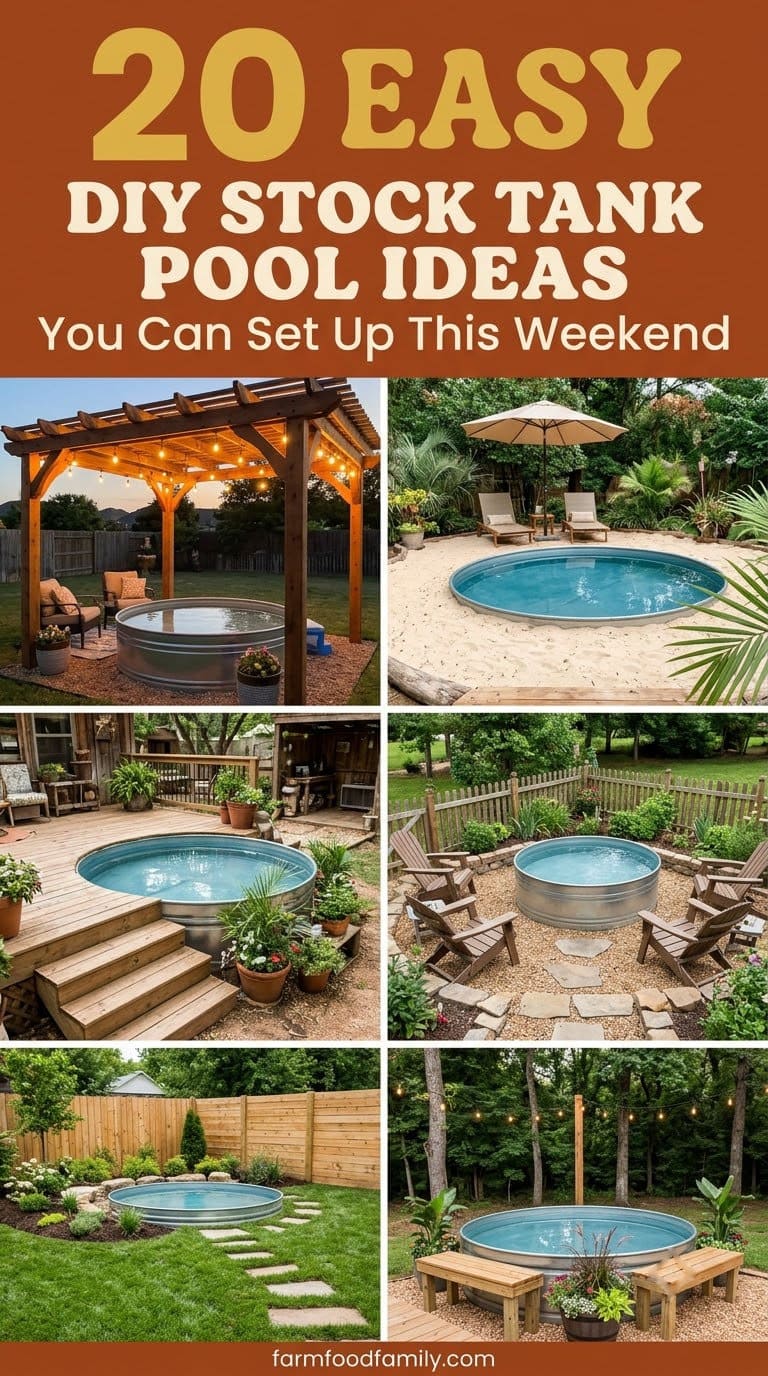
20 Galvanized Stock Tank Pool Ideas for a Safe, Stylish Backyard Dip
A galvanized stock tank makes a cheap, handsome backyard pool, as long as you plan the fence, the water, and the power before you fill it.

Never miss an update — choose FarmFoodFamily as your preferred source on Google.
How it works: Tap the button below to open Google's settings page, then check the box next to FarmFoodFamily.
Tap the checkbox to turn it blue — that's how you know it's set.
A galvanized stock tank makes a cheap, handsome backyard pool, as long as you plan the fence, the water, and the power before you fill it.
Products We Recommend
This post contains affiliate links. We may earn a commission on qualifying purchases at no extra cost to you.

LUPO 3-in-1 Pool Test Kit
A test kit for checking chlorine and pH, which the CDC says to test at least twice per day
Shop Now
GFCI Outdoor Power Strip Weatherproof IPX6, 6FT
A GFCI-protected outdoor strip for lights and pumps, matching the ESFI advice
Shop Now
Solar Lanterns Outdoor Waterproof, 2 Pack
Cordless solar lanterns for the evening glow idea
Shop NowA stock tank pool is a metal livestock trough filled with water. It is smaller than a pool, easy to set up, and good looking on a deck or patio.
The risk is that people treat it like a toy and skip the safety work. This guide gives you 20 setups plus the fence, water, and electrical rules that most idea lists leave out.
In this article
Answer 4 quick questions and get matched to the exact fix for your yard — drainage, budget, layout, or something else entirely.
Take the Free QuizWhat’s the Quick Answer for Stock Tank Pools?
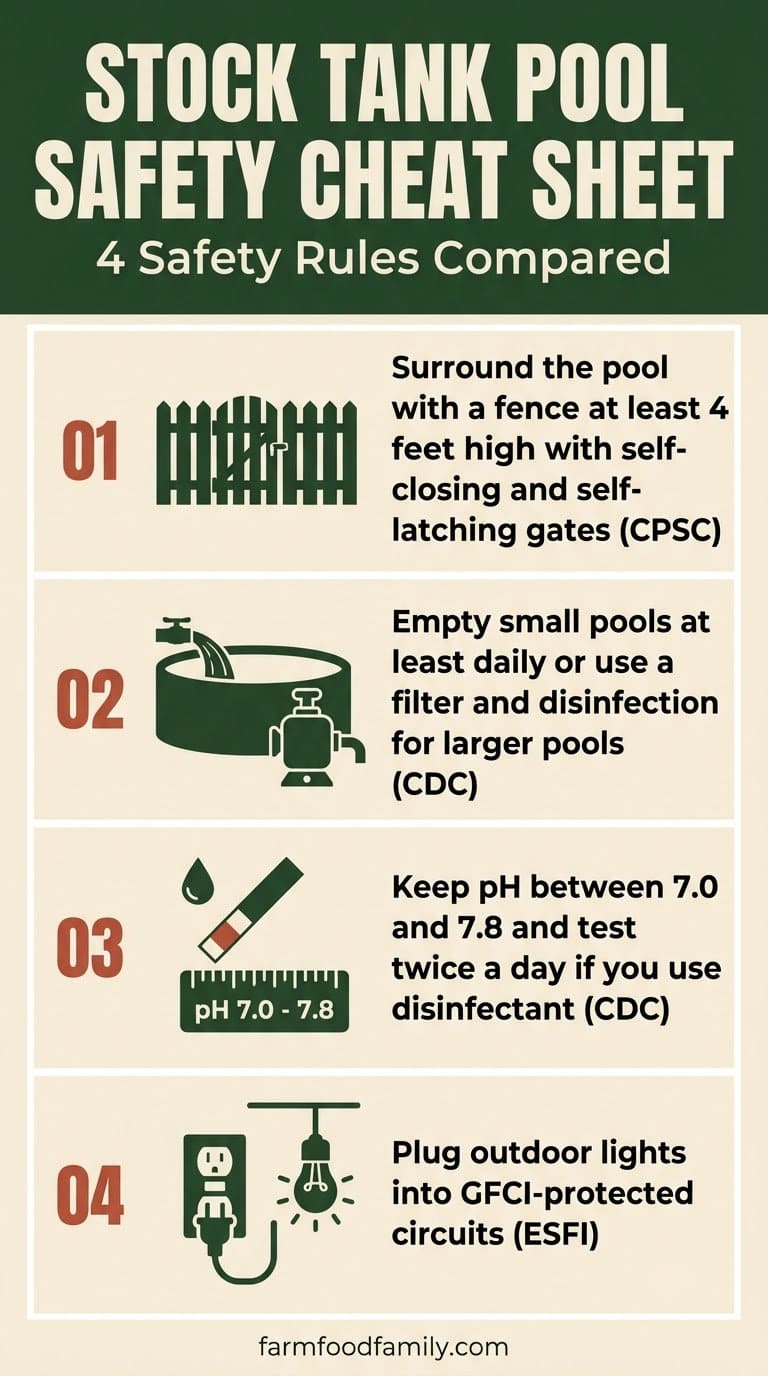
Add a barrier. The Consumer Product Safety Commission says a pool should be surrounded by a fence at least 4 feet high, with self-closing, self-latching gates. For portable pools, it says to fence it, cover it, or empty it and store it away.
Plan the water. The CDC says small kiddie pools should be emptied at least daily and that larger pools need a filter and disinfection. For pools with disinfectant, CDC home pool guidance says to keep pH between 7.0 and 7.8.
Power it safely. The Electrical Safety Foundation International says outdoor lights and cords should be marked for outdoor use and plugged into GFCI-protected circuits.
Always supervise. The CPSC says to assign an adult Water Watcher whenever children are in the water. Check your local code and your insurance before you fill the tank.
Which Stock Tank Setup Is Right for Your Yard?
This table is our own planning guide. The notes are general practice, not from a tested source.


| Setup | Best for | Water plan | Effort |
|---|---|---|---|
| Fill and empty daily | Kids and small yards | Empty every day | Low |
| Filtered tank with pump | Adults, longer season | Filter plus disinfectant | Medium |
| Hot tub style with heater | Cool climates | Filter plus heater | High |
| Sunken tank | Permanent yard feature | Filter plus drainage | High |
| Display or cooler tank | No swimming | Not for swimming | Low |
Most yard problems trace back to one specific, fixable cause. Find yours in 4 quick questions.
Take the Free QuizWhat Barrier Does a Stock Tank Pool Need?
The CPSC checklist says to surround a pool or spa with a fence at least 4 feet high around the entire perimeter. It says gates should be self-closing and self-latching and open out from the pool. It adds that a successful barrier prevents a child from getting over, under, or through it.
For portable pools, the CPSC says to fence it, cover it, or empty it and store it away when not in use. For above-ground pools, it says to secure, lock, or remove the ladder.
Add a pool alarm or a door alarm if the house forms one side of the fence. Keep a cover in good working order when the tank is not in use.
The CPSC says to check local and state codes for added rules. Some places treat any tank over a set depth as a pool.
How Should You Treat the Water?
The CDC gives two sets of rules. This table sets them side by side.
| Pool size | CDC guidance |
|---|---|
| Small inflatable or plastic pools | Empty at least daily, and do not add chlorine or bromine |
| Larger inflatable or plastic pools | Need a filter and disinfection |
| Pools with disinfectant | pH 7.0 to 7.8, free chlorine at least 1 ppm |
| Pools using cyanuric acid, dichlor, or trichlor | Free chlorine at least 2 ppm |
| Testing | Test chlorine and pH at least twice per day, with a DPD kit for the best accuracy |
The CDC says small kiddie pools have no filters, and that water is lost quickly through splashing. That is why it says not to add chlorine to them. For larger pools, it says a filter and disinfection are required.
A stock tank sits between the two. It holds more water than a kiddie pool and splashes out less. Pick one plan and follow it: empty it daily, or add a filter and test the water twice a day.
A test kit for checking chlorine and pH, which the CDC says to test at least twice per day
Shop NowThis post contains affiliate links. We may earn a commission on qualifying purchases at no extra cost to you.
How Do You Add Lights, Pumps, and Heaters Safely?
ESFI says outdoor lights, cords, and decorations should be marked for outdoor use. It says outdoor electric items should be plugged into GFCI-protected circuits, and that portable outdoor GFCIs can be bought where electrical supplies are sold.
ESFI also says to keep cords and light strings clear of standing water. So run the cord away from the tank’s edge. Do not use any cord that is not rated for the job.
The average homeowner spends $616/year on yard fixes that don't address the real problem. Find out what yours actually is — before you spend another dollar.
Take the Free QuizUse battery or solar lights near the water where you can. Leave pumps and heaters to a licensed electrician. Water and power need professional wiring.
How Do You Prepare the Site?
Choose a flat, level spot. A full tank is very heavy, and soft or sloping ground can shift. Clear sharp stones and roots from the base.
Lay a base of compacted sand or a layer of paver stones under the tank. This spreads the weight and protects the metal. Check the level in two directions.
Keep the tank away from trees that drop leaves and from power lines. Place it where you can see it from a window.
If you plan a sunken tank, call before you dig so buried lines are marked.
What Size Tank Should You Choose?
Pick the size by who will use it. A small round tank suits two adults sitting or a few children. A long oval tank gives more room to stretch out.

Think about depth. A shallow tank is easier to fence and safer for kids. A deeper tank lets adults sit with water at shoulder height, but it needs a stronger barrier and a firm plan for supervision.
Measure your space, then add room for a fence, a walkway, and a chair. The tank is only part of the footprint.
Check the delivery route. A tank has to fit through gates and around corners. A long tank may need a truck or a few friends.
When Is the Best Time to Use a Stock Tank Pool?
Late afternoon is the best time in most summer climates. The metal and the water have warmed up, and the sun is lower. Early morning water is coolest.
Metal gets hot in direct sun. Test the rim with your hand before anyone climbs in. A towel or a wooden rim cover keeps skin safe.
Use shade to extend the season. An umbrella or a shade sail cuts heat on the water and on you. In cool weather, a cover keeps the water warmer overnight.
20 Galvanized Stock Tank Pool Ideas
1. The Classic Galvanized Dip
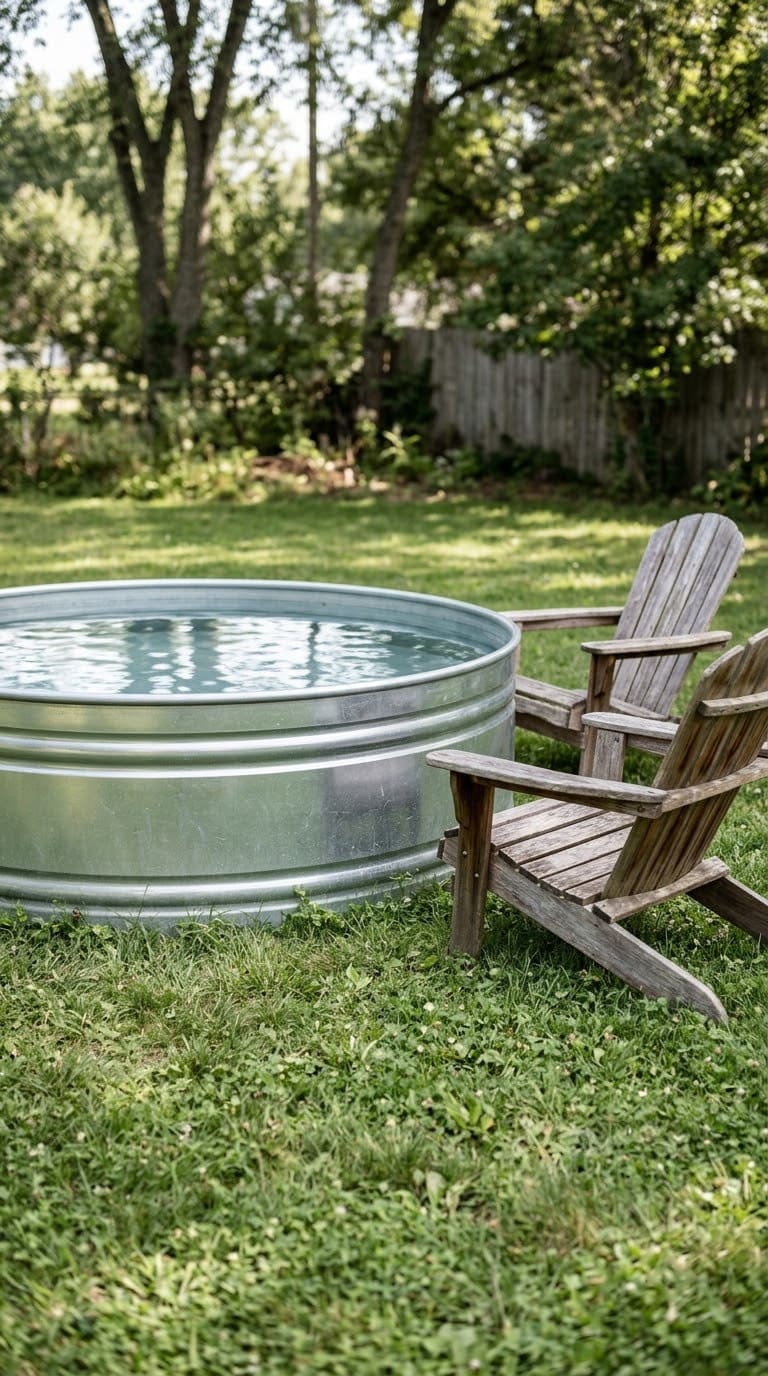
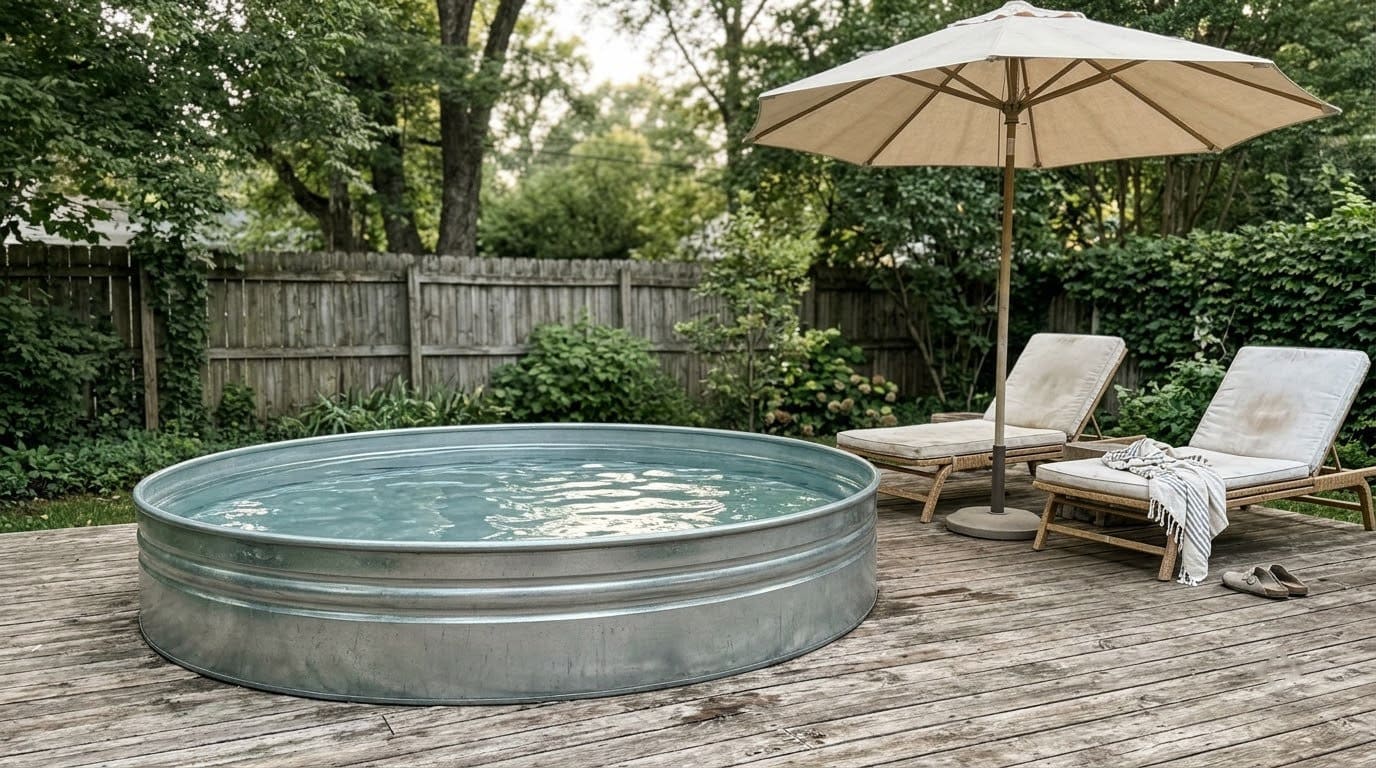
Keep it simple. A silver tank on level ground with two chairs beside it. The metal looks good as it is.
Add a fence and a latching gate around the area, per the CPSC.
Cost tier: low.
2. Tank With a Built-In Bench
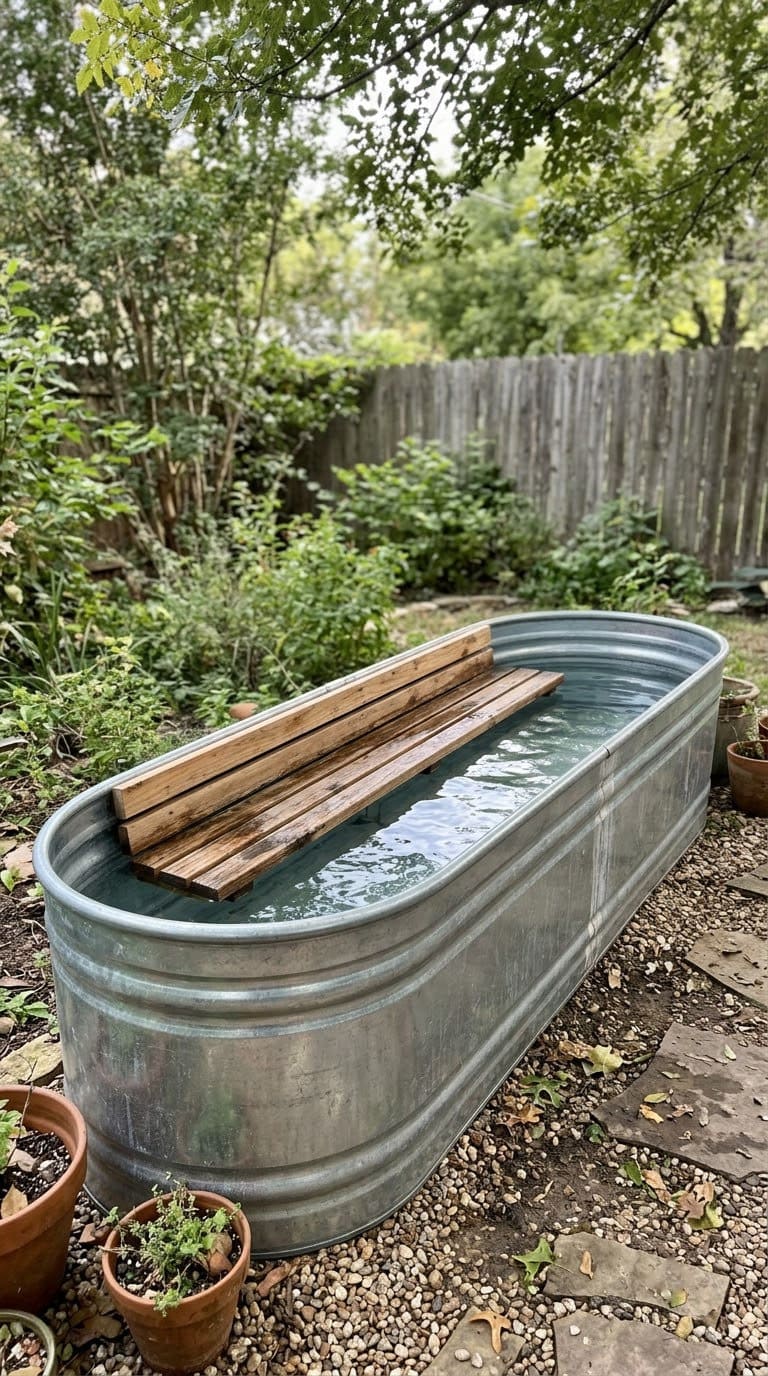
A bench lets adults sit in shallow water. Build it from rot-resistant wood and fasten it to the tank wall.
Smooth every edge. Metal and wood corners can scrape skin.
Cost tier: medium.
3. Wooden Deck Surround
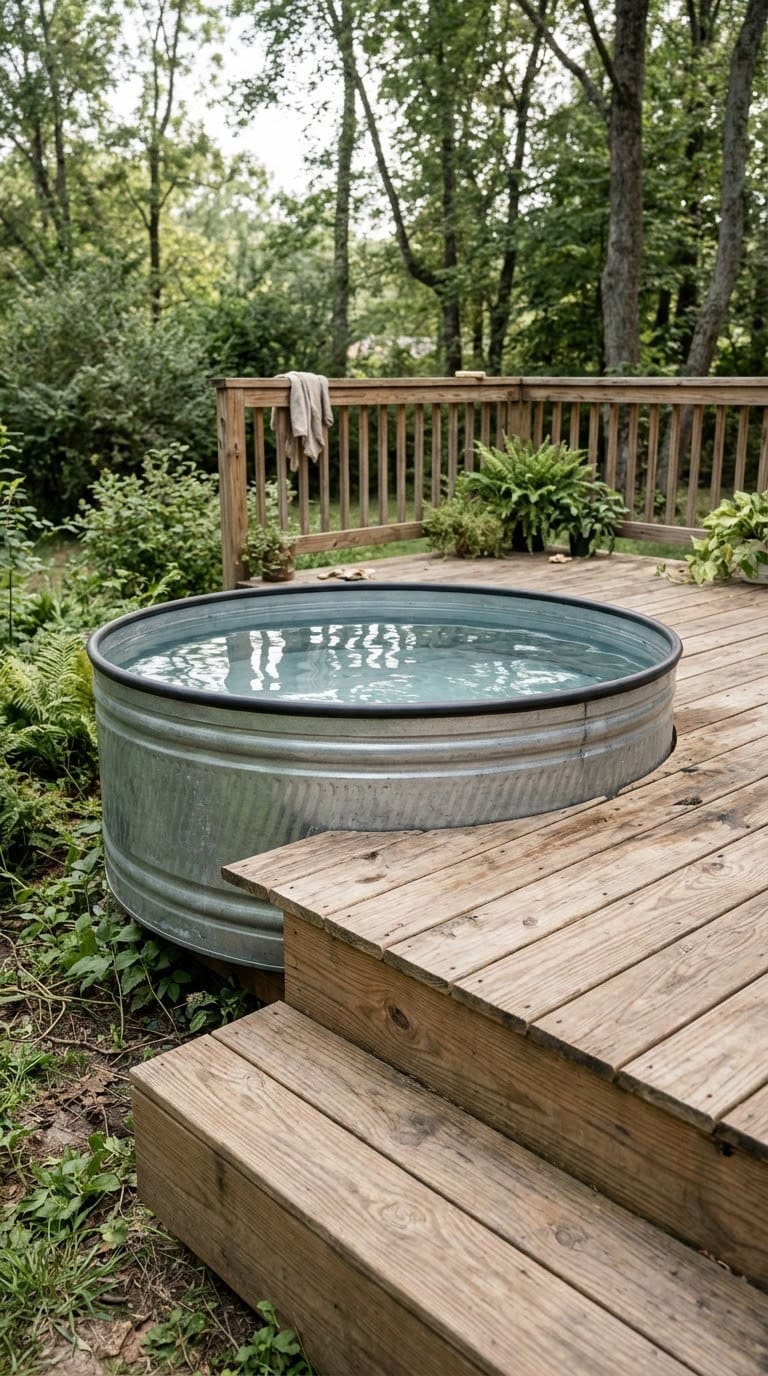
Build a deck around the tank so the rim is at seat height. Add a step for easy entry.
A deck must be strong enough for the water weight. Ask a builder to check the load. See our pool deck ideas.
Cost tier: high.
4. Umbrella Shade Pool
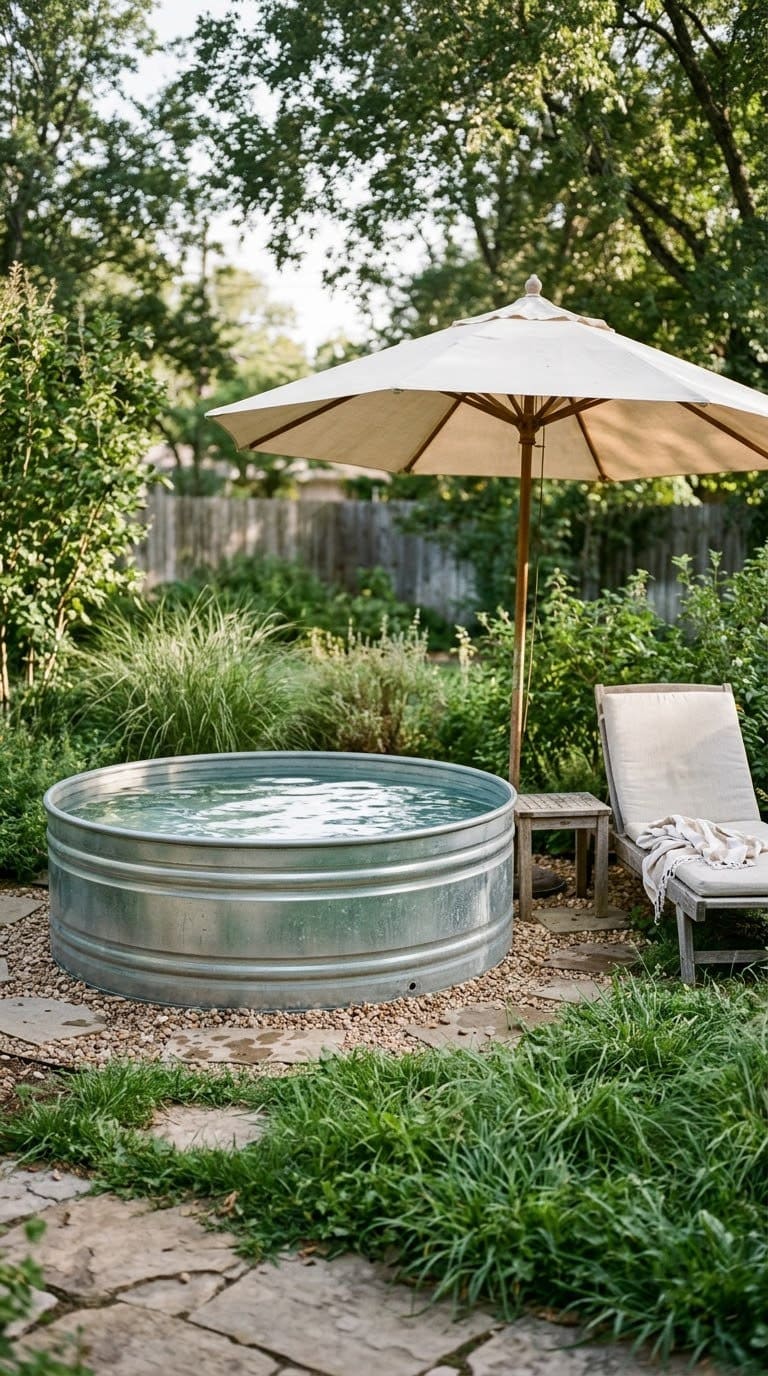
A big umbrella cuts heat on the metal and your skin. Anchor the base so wind cannot lift it.
Pick light-colored fabric. For more ideas, see our DIY sun shade ideas.
Cost tier: low.
5. Pergola Pool
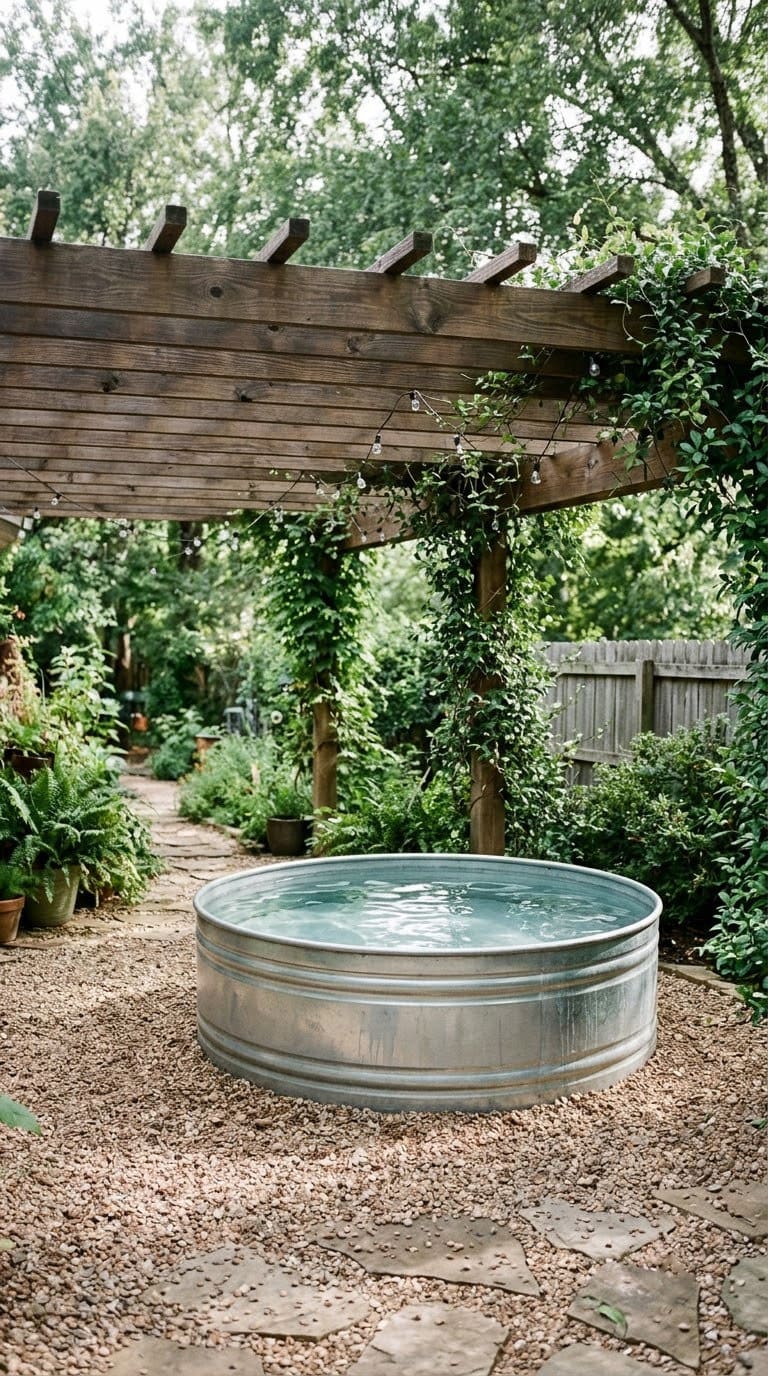
A pergola gives shade and a place for lights. Run outdoor-rated lights through the beams.
ESFI says to plug outdoor lights into GFCI-protected circuits. Keep cords clear of the water.
Cost tier: high.
6. Navy Tank With Solar Lanterns
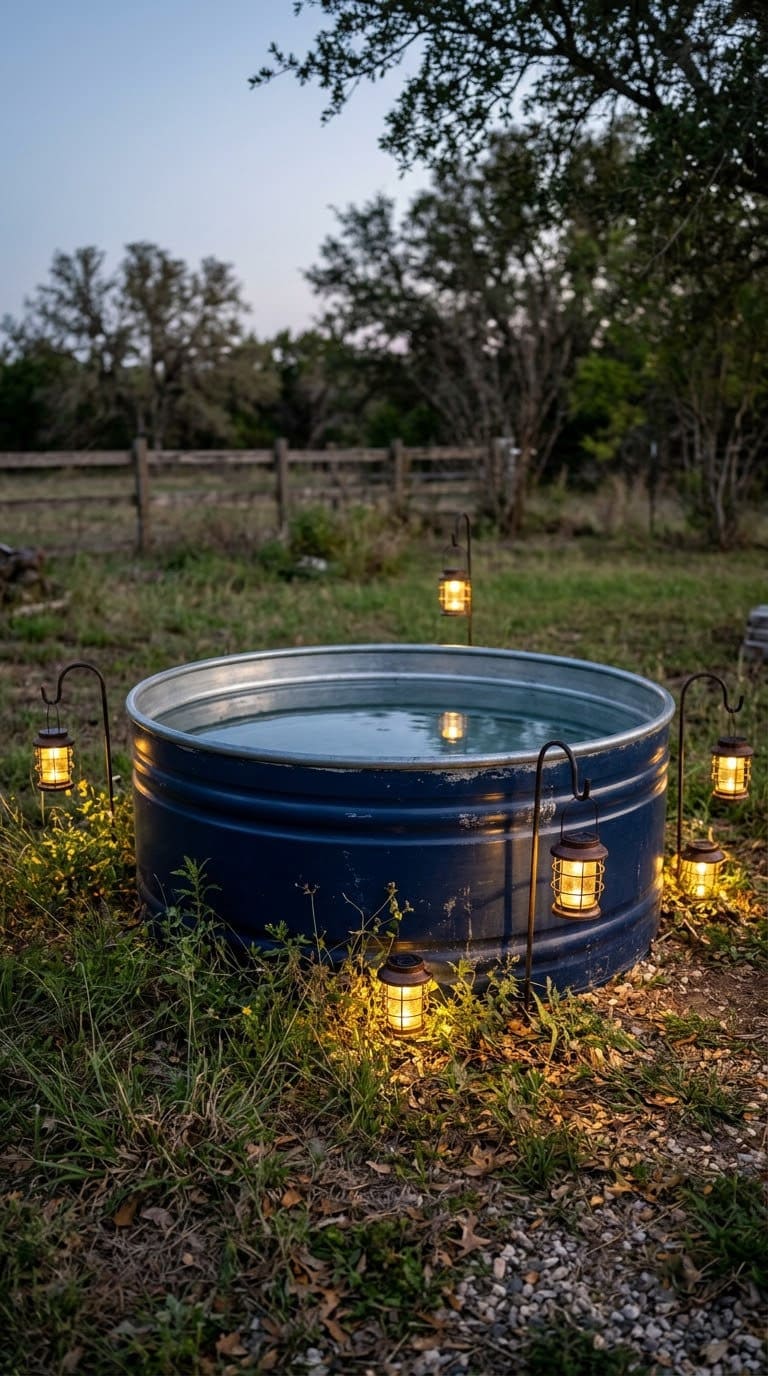
Paint the outside navy. Use a metal-safe exterior paint. Set solar lanterns on the ground, not in the water.
Solar lights need no cord, so they avoid the shock risk.
Cost tier: low.
7. Beach Corner
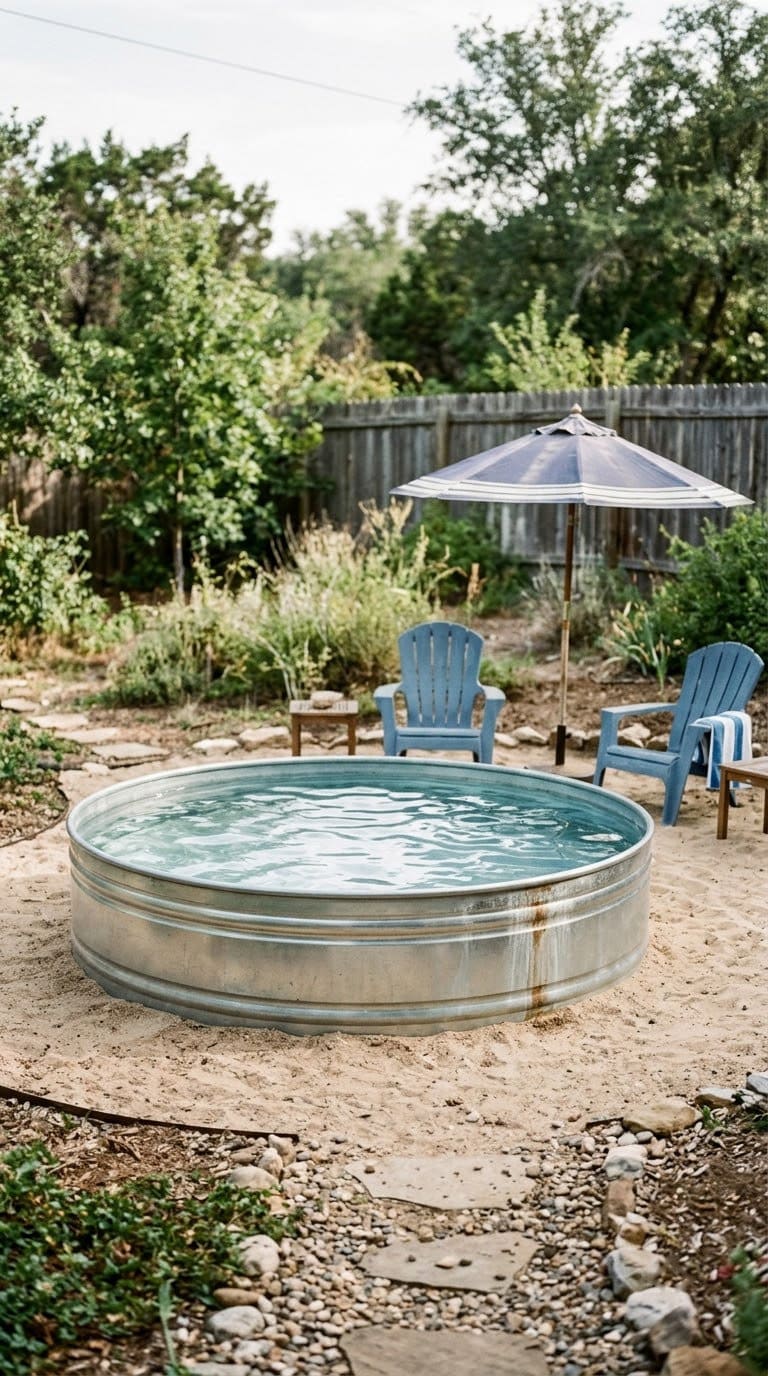
Make a sand border and add ocean-blue chairs. Lay landscape fabric under the sand to hold it in place.
Sand drifts into water. Keep a rinse station by the tank.
Cost tier: medium.
8. Zen Retreat
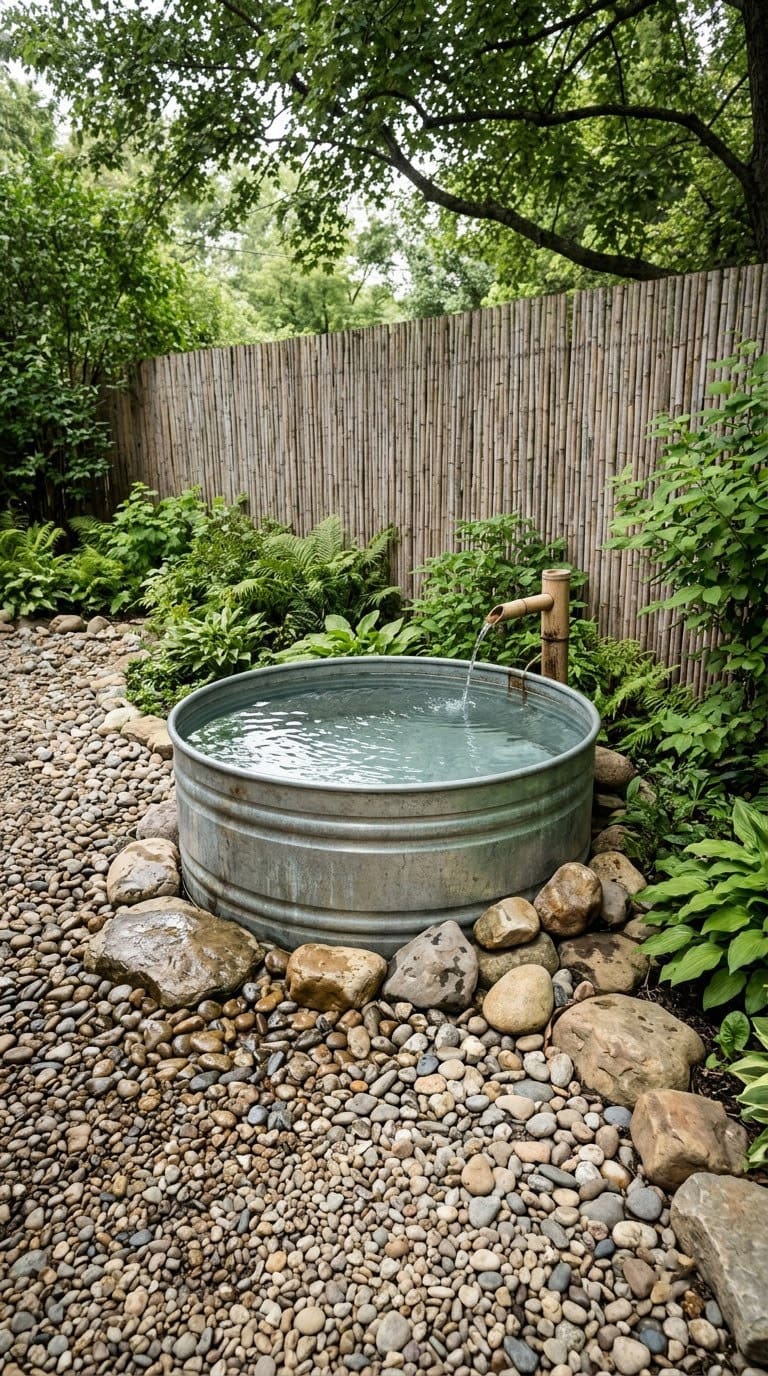
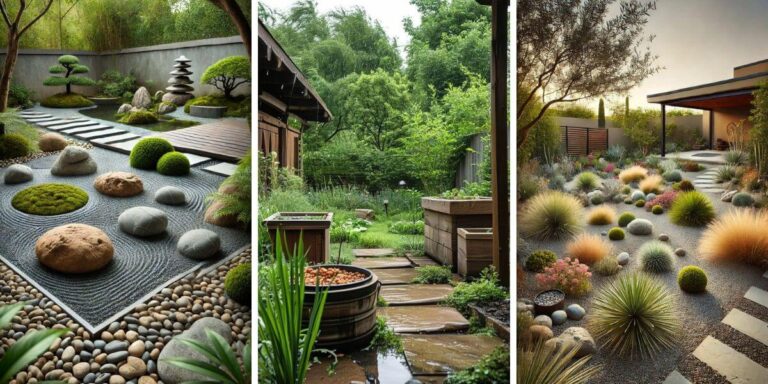
Use bamboo screens for privacy and a small fountain for sound. Place river stones around the base.
A privacy screen is not a safety barrier. Add a self-latching gate. See our bamboo fence ideas.
Cost tier: medium.
9. Farmhouse Picket Fence Pool
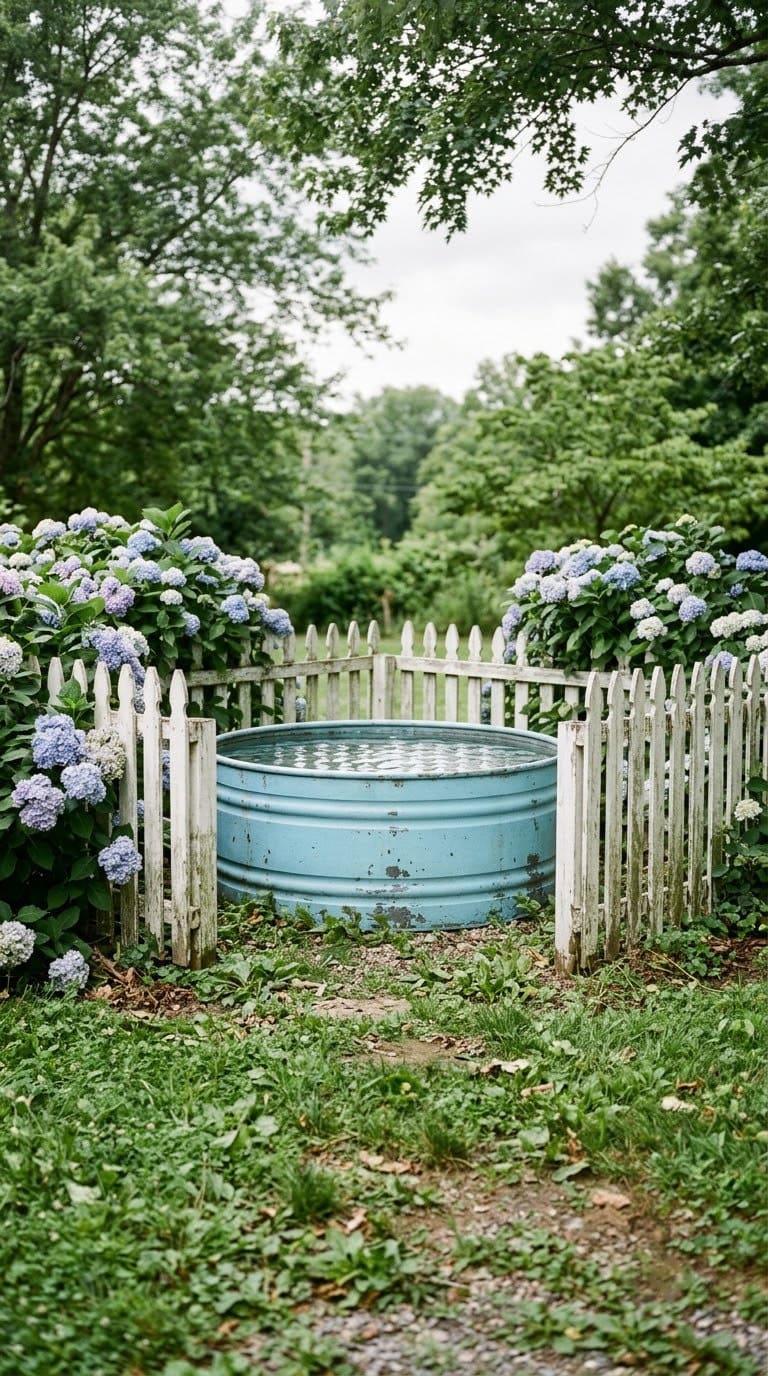
Surround the tank with a white picket fence. Make it at least 4 feet high, per the CPSC, with a self-latching gate.
Choose pickets close together. Keep planters away from the fence so children cannot climb.
Cost tier: medium.
10. Sunken Tank
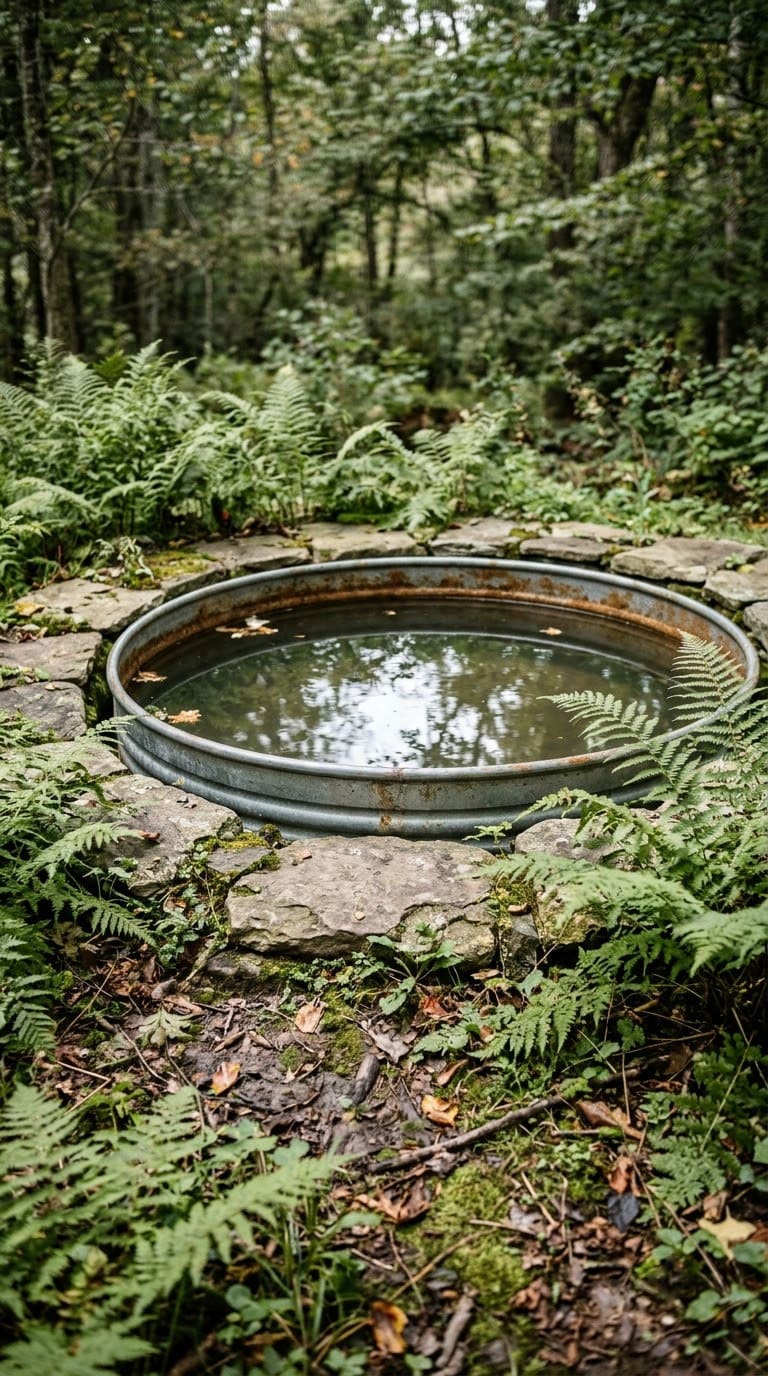
Dig a hole and set the tank in so the rim sits near ground level. Add gravel for drainage around it.
Call before you dig. Fence the area, since a ground-level tank is easy to fall into.
Cost tier: high.
11. Grecian Getaway
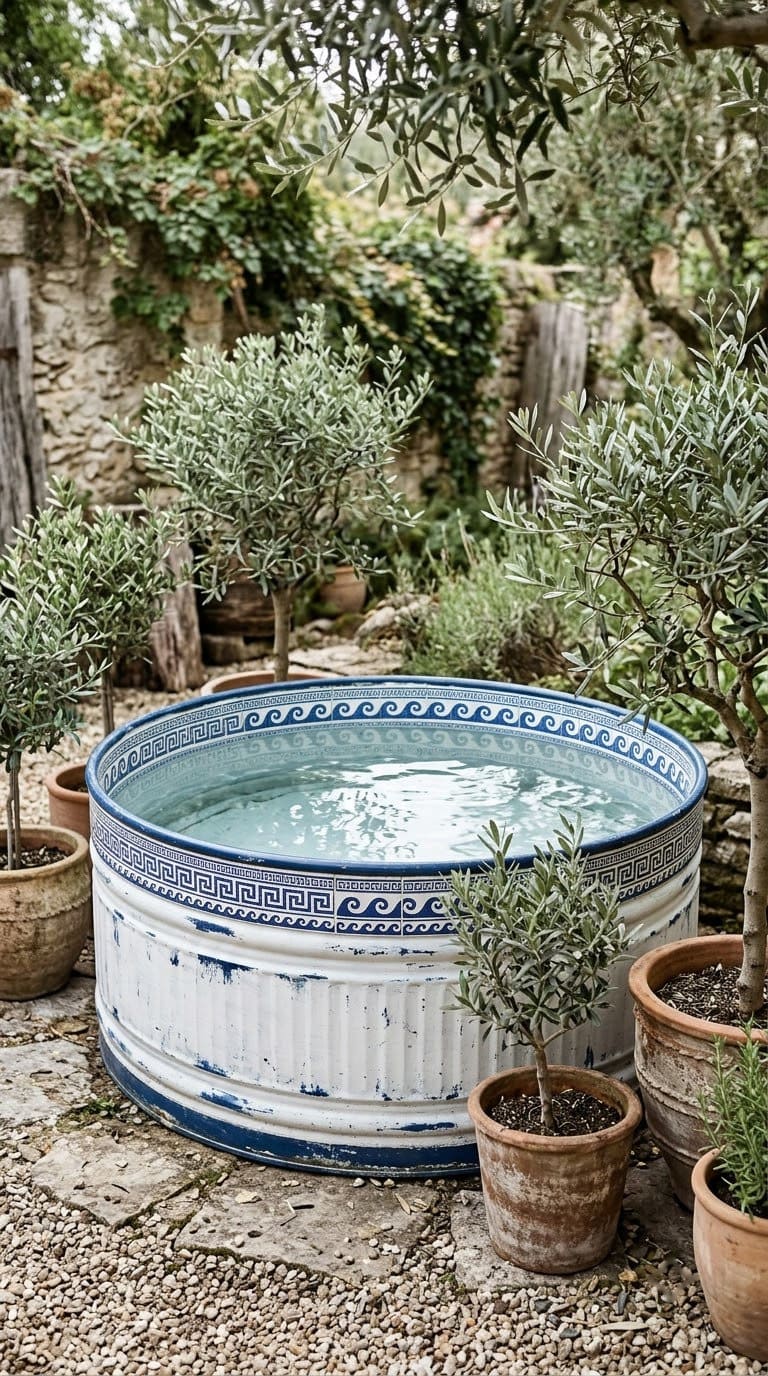
Paint the tank white with a blue stripe. Add tile trim to the edge. Potted olive trees add the look.
Use outdoor tile with a non-slip finish.
Cost tier: medium.
12. Fiesta Pool
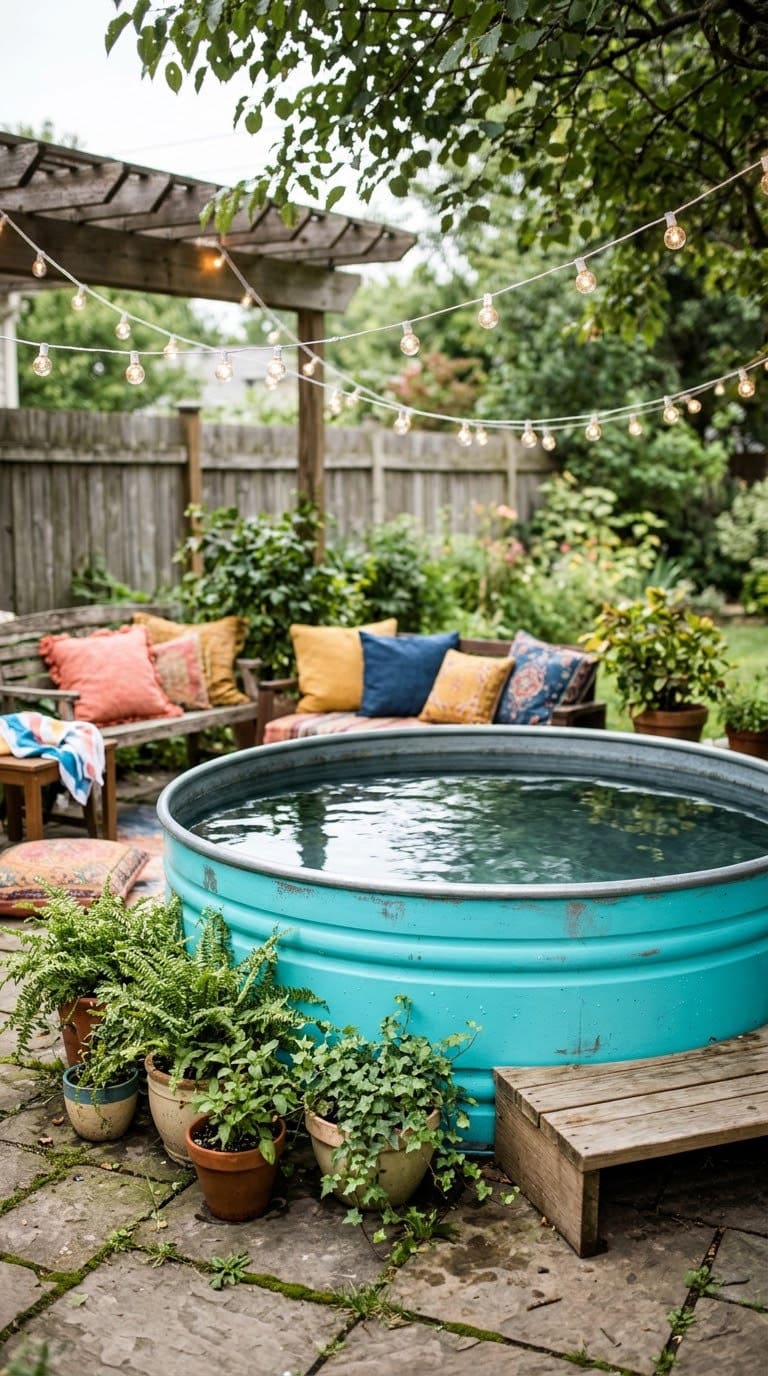
Use bright paint, patterned cushions, and string lights. It makes a fun party space.
Use outdoor-rated string lights only.
Cost tier: medium.
13. Reflecting Pool
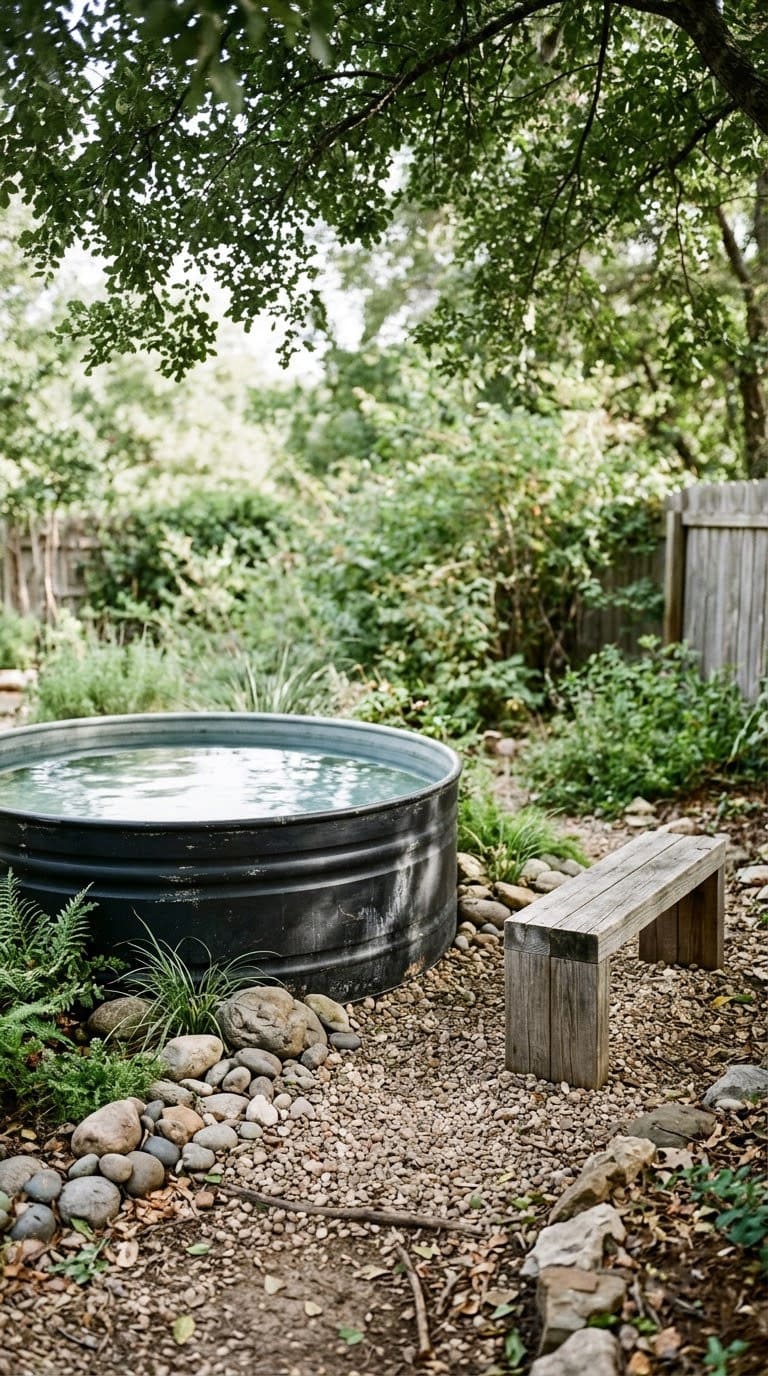
Paint the tank black and surround it with black river stones. A simple bench completes the look.
Keep the water clean so it reflects the sky.
Cost tier: medium.
14. Tiki Bar Pool
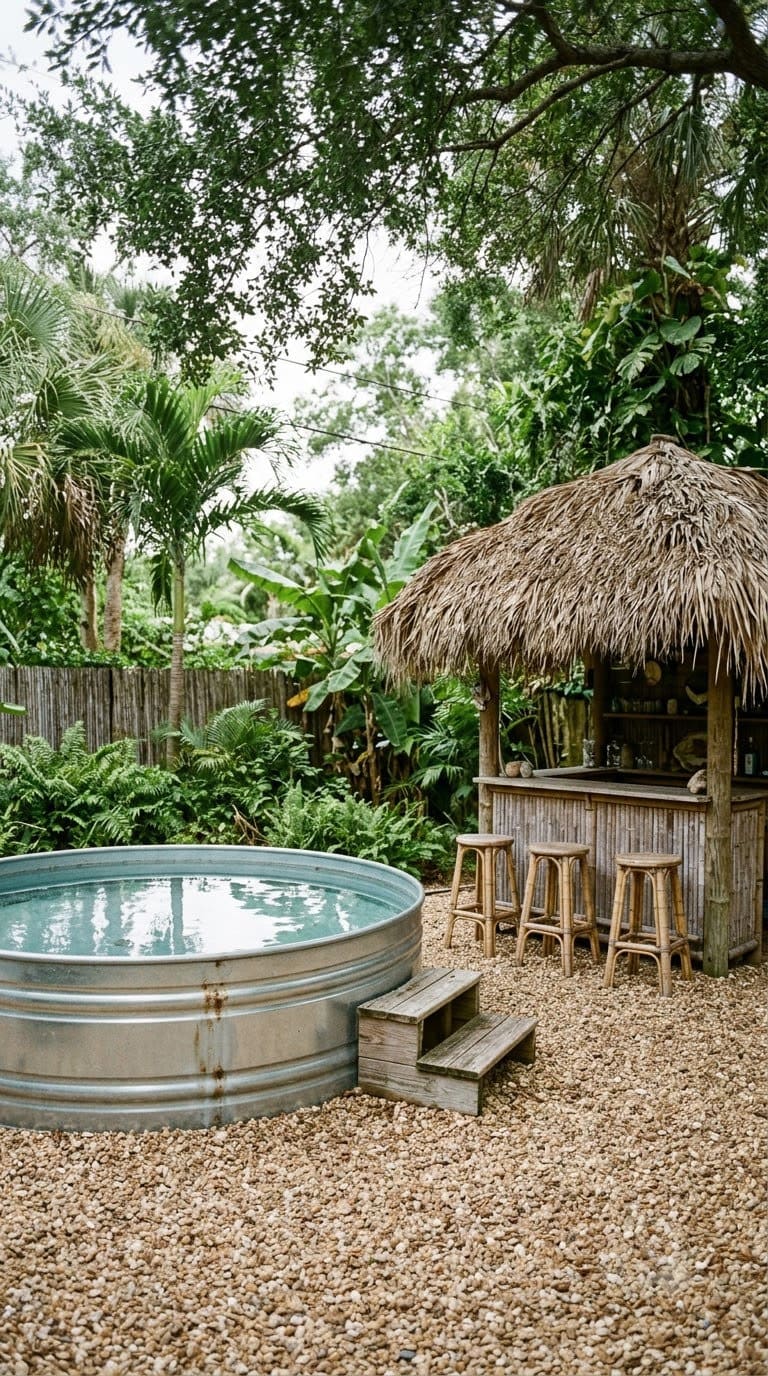
Add a mini tiki bar with a thatched roof. Keep the bar a few feet from the tank so walkways stay clear.
Wet feet and bar stools can lead to slips. Add a non-slip mat.
Cost tier: medium.
15. Flower Border Pool
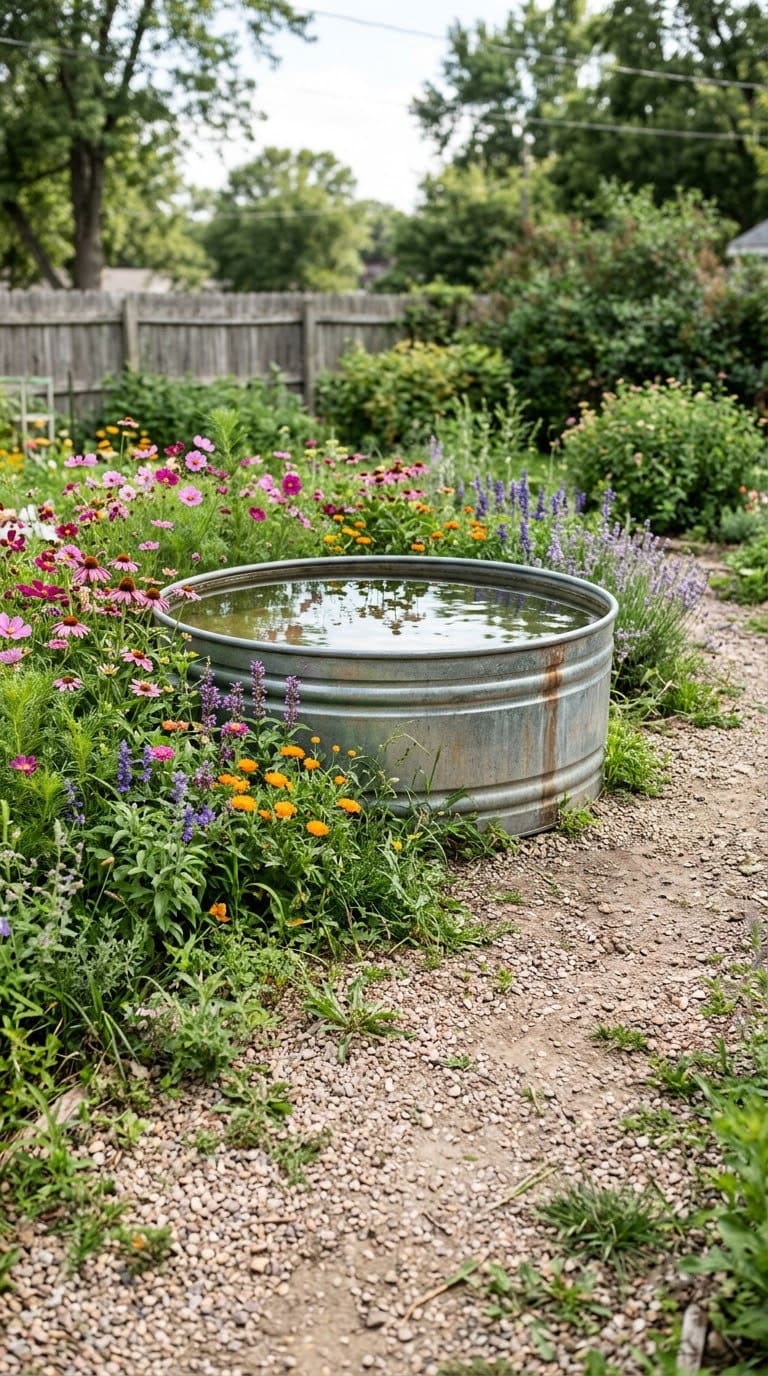
Plant a flower border around the tank. Keep plants low so they do not block your view of the water.
Choose pet-safe plants if you have pets.
Cost tier: low.
16. Boho Lounge
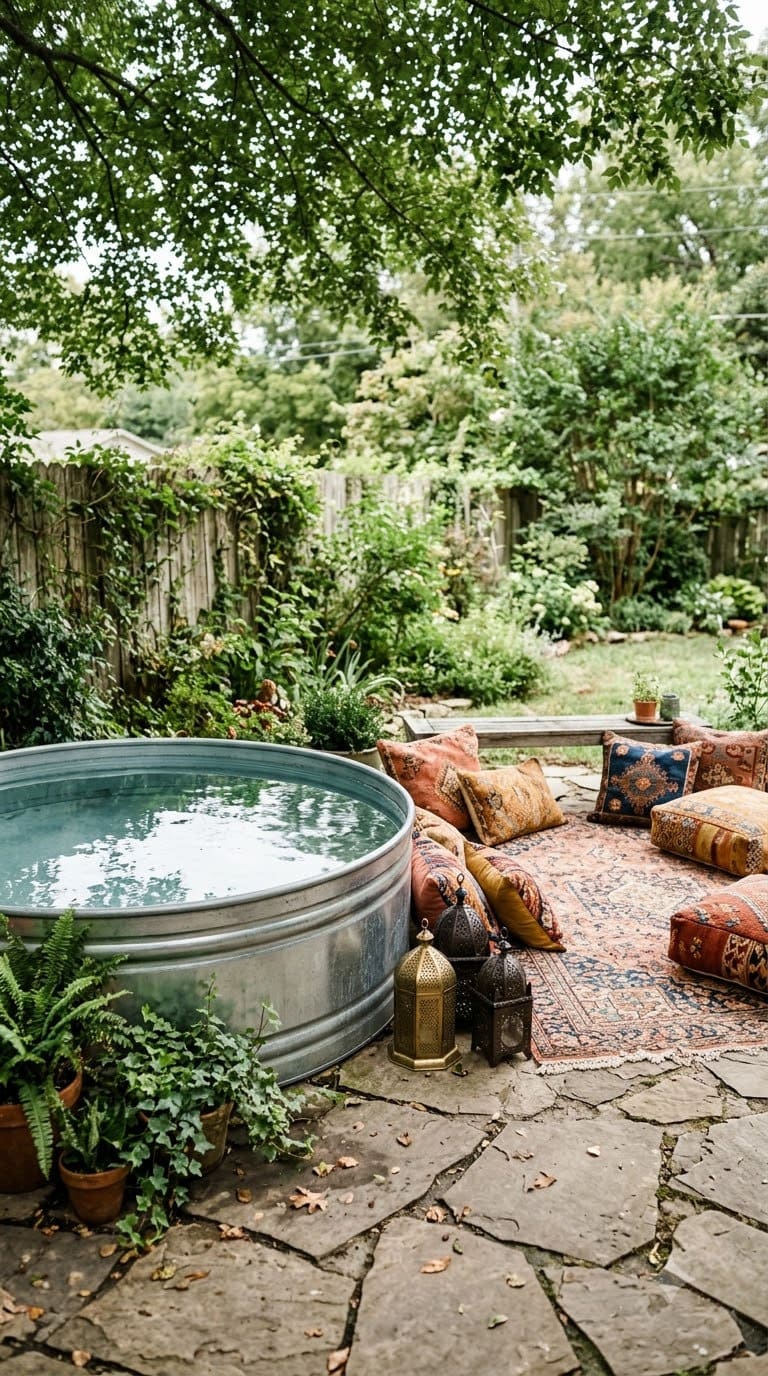
Layer rugs, cushions, and lanterns. Use outdoor fabrics that dry fast.
Choose battery lanterns, not candles, near the water.
Cost tier: medium.
17. Hot Tub Conversion
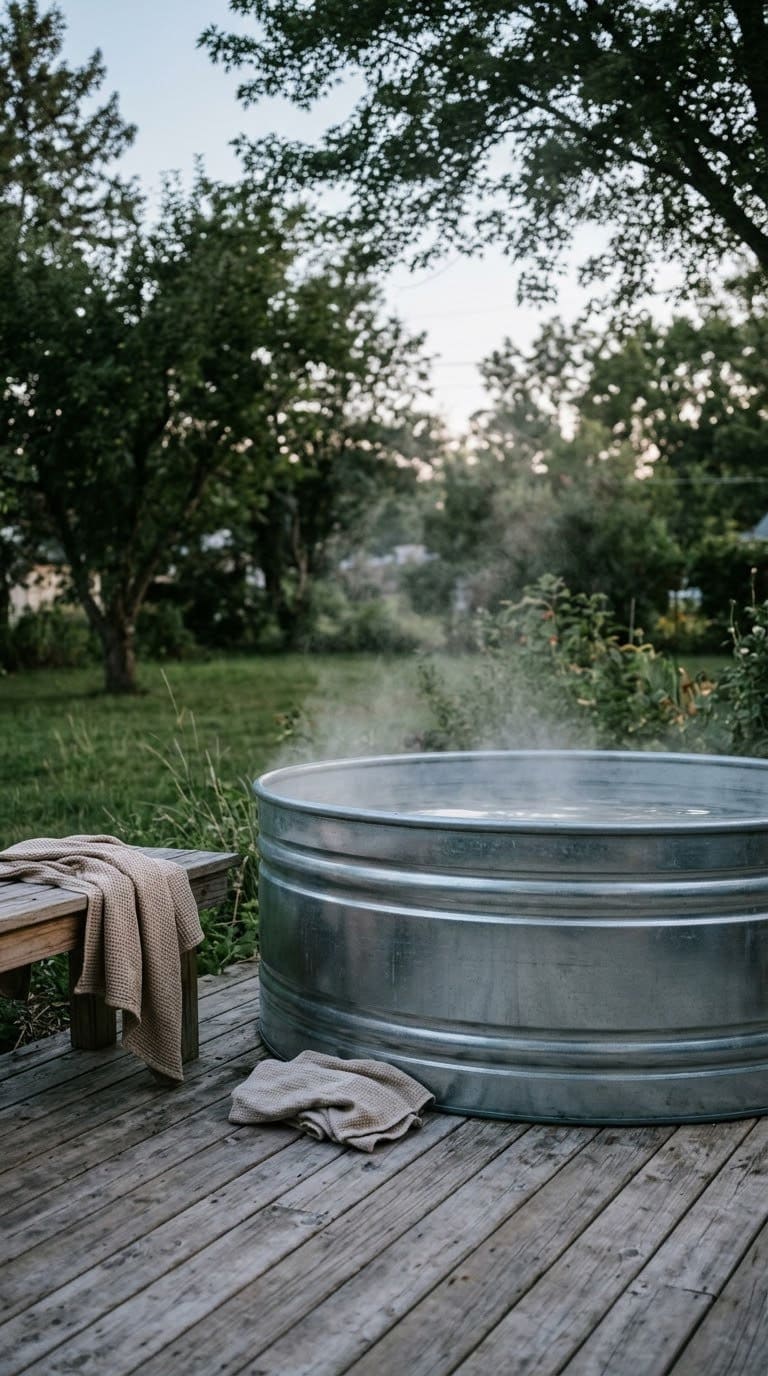
Some people heat a tank to use it in cool weather. The old page named no safe method, and we found no source on stock tank heaters.
Never put an electric heater in the water without a licensed electrician and GFCI protection. See our hot tub deck ideas.
Cost tier: high.
18. Evening Glow
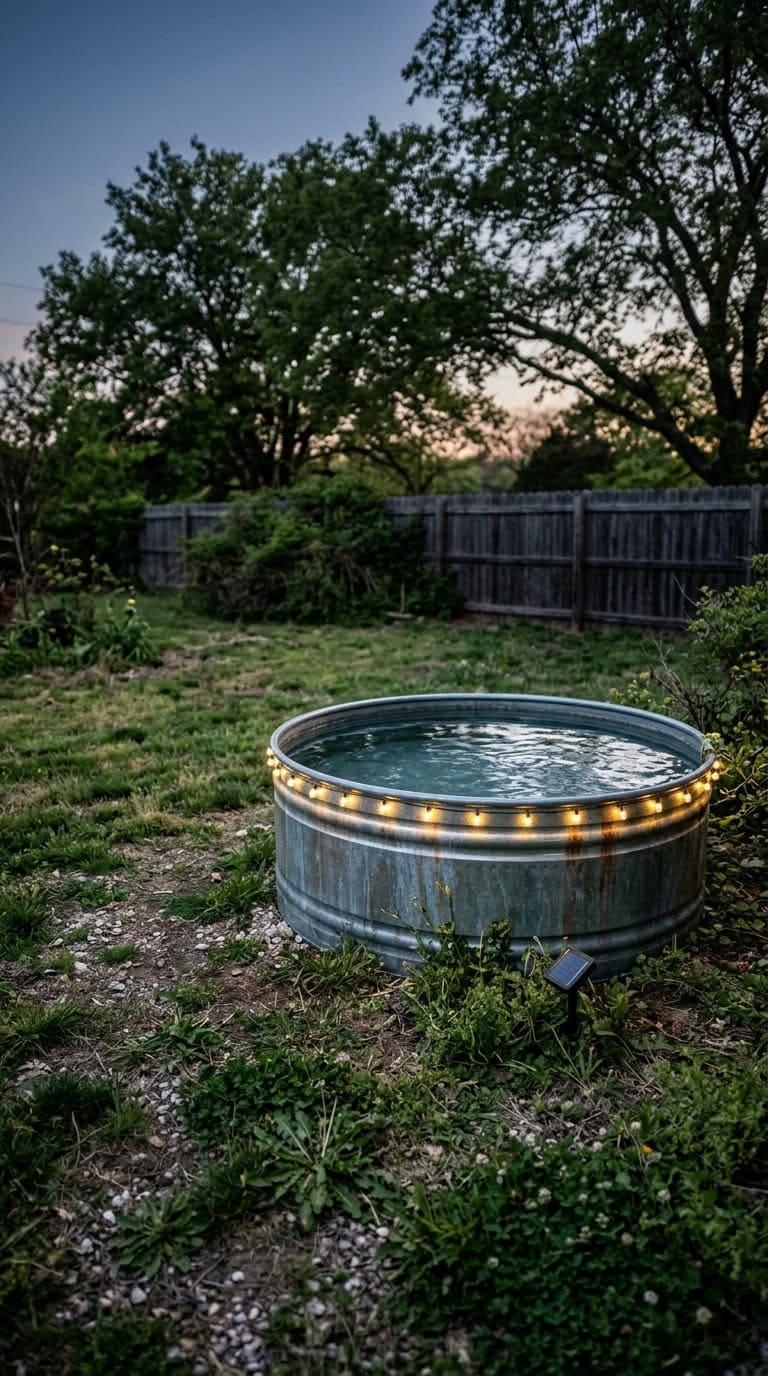
Line the edge with solar lights and string lights overhead. The tank glows after dark.
Keep cords away from the water and off the ground. Turn lights off when you leave, per ESFI.
Cost tier: low.
19. Kids’ Splash Zone
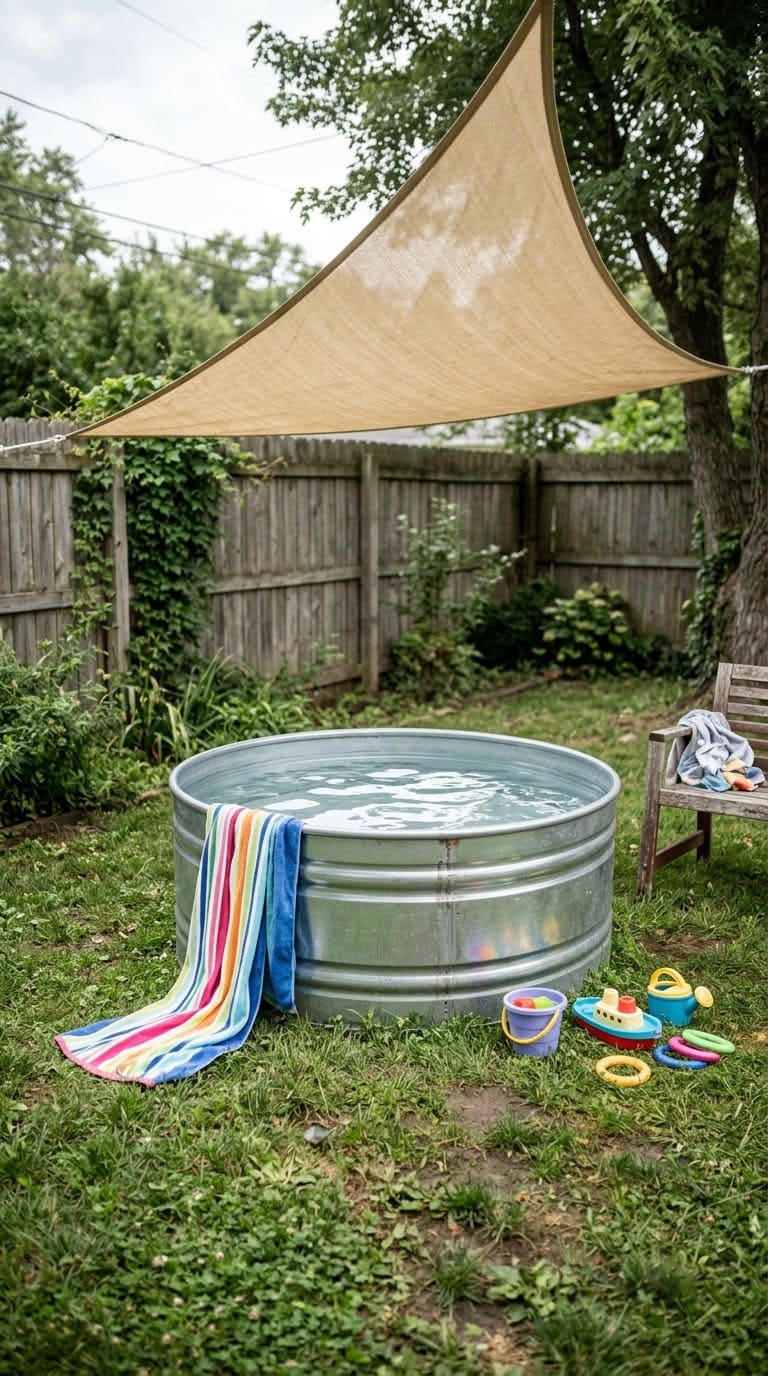
A small, shallow tank works for kids. Keep it fenced and empty it daily, per the CDC’s small pool rule.
Never leave children alone. The CPSC says to designate an adult Water Watcher.
Cost tier: low.
20. Cooling Shade Sail Pool
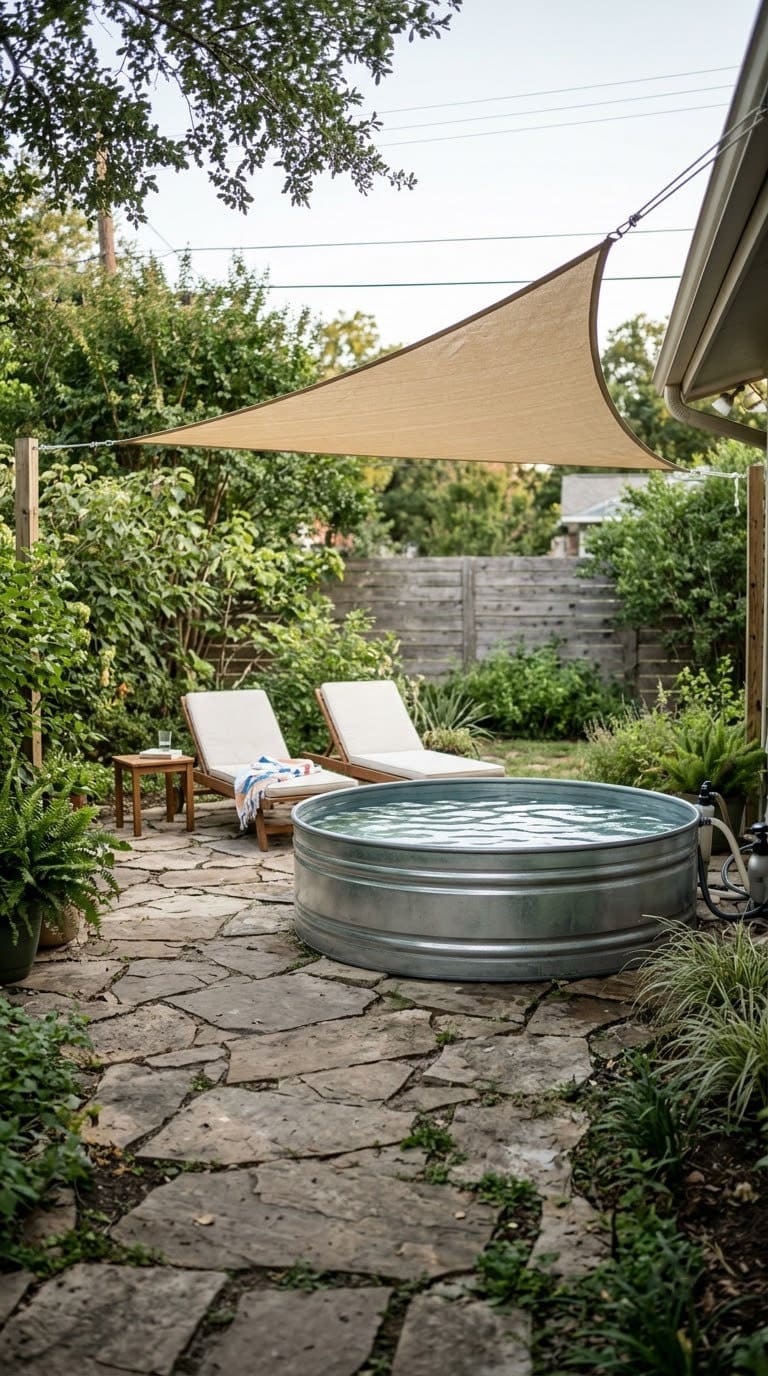
A shade sail covers the tank on hot days. Anchor the posts well.
Check the sail fabric for UV rating. See our deck shade ideas.
Cost tier: medium.
How Do You Care for a Stock Tank Pool?
Empty or treat the water on schedule, as in the water section. Scrub the sides when you drain the tank.
Check the metal for rust and sharp edges. Sand any rough spot and touch it up with metal paint. Look at the drain plug and gasket each season.
Cover the tank when it is not in use. A cover keeps out leaves, debris, and children. The CPSC says to keep covers in good working order.
Common Mistakes to Avoid
Skipping the fence is the first mistake. The CPSC says to surround a pool with a fence at least 4 feet high.
Leaving the water for days is the second. The CDC says small pools should be emptied at least daily.
Adding chlorine to a tiny pool is the third. The CDC says it is unsafe to add chlorine or bromine to small kiddie pools.
Plugging in lights without a GFCI is the fourth. ESFI says outdoor items should use GFCI-protected circuits.
Leaving children alone is the fifth. The CPSC says to always designate an adult Water Watcher.
FAQ
How high should the fence around a stock tank pool be?
The CPSC says at least 4 feet high around the entire perimeter, with self-closing, self-latching gates.
How often should I change the water?
The CDC says small inflatable or plastic pools should be emptied at least daily. Larger pools need a filter and disinfection.
What pH should the water have?
The CDC recommends a pH of 7.0 to 7.8 for pools with disinfectant.
Can I plug in pool lights?
ESFI says outdoor items should be marked for outdoor use and plugged into GFCI-protected circuits.
Can children swim alone?
No. The CPSC says never to leave a child unattended in or near water.
Never miss an update — choose FarmFoodFamily as your preferred source on Google.
How it works: Tap the button below to open Google's settings page, then check the box next to FarmFoodFamily.
Tap the checkbox to turn it blue — that's how you know it's set.