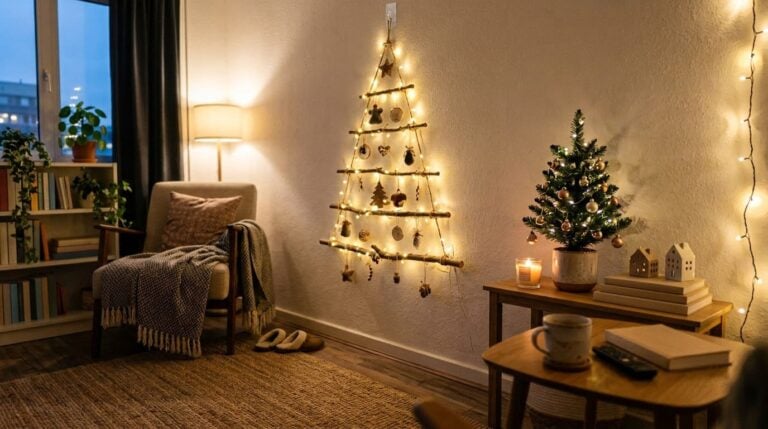
12 Colorful Christmas Tree Ideas That Feel Playful, Not Chaotic
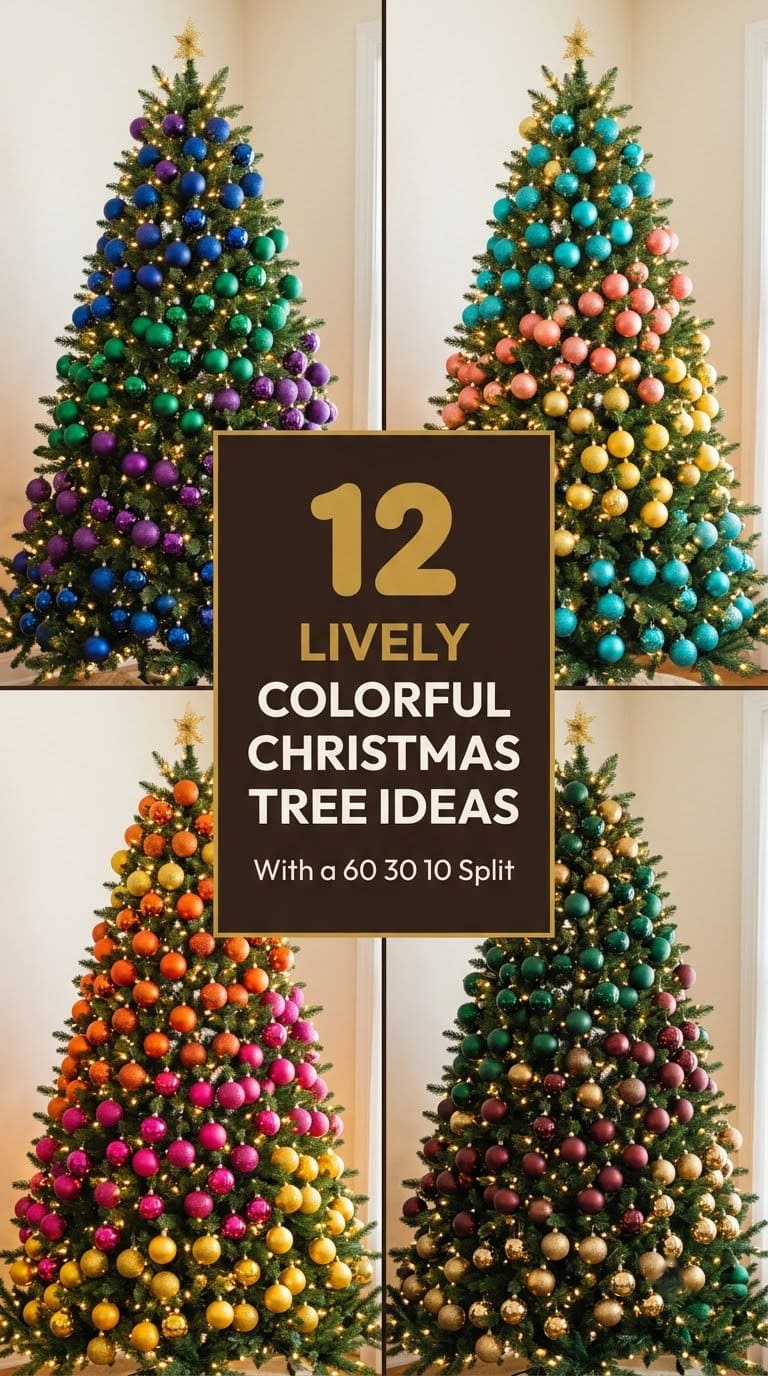
A colorful tree stays playful when you keep to three colors and sort each piece first. Skip both and it turns chaotic.

Never miss an update — choose FarmFoodFamily as your preferred source on Google.
How it works: Tap the button below to open Google’s settings page, then check the box next to FarmFoodFamily.
Tap the checkbox to turn it blue — that’s how you know it’s set.
Colorful trees have a bad name. Most of us have seen one that looked like a craft box tipped over.
The good news is that chaos has a cause. It’s usually too many colors, no leading color, and pieces hung wherever there was a gap.
Below are 12 colorful tree ideas with real palettes, ratios, and budget notes. We also cover colored lights, your room’s own color, and one safety check for old light strands.
Quick Answer
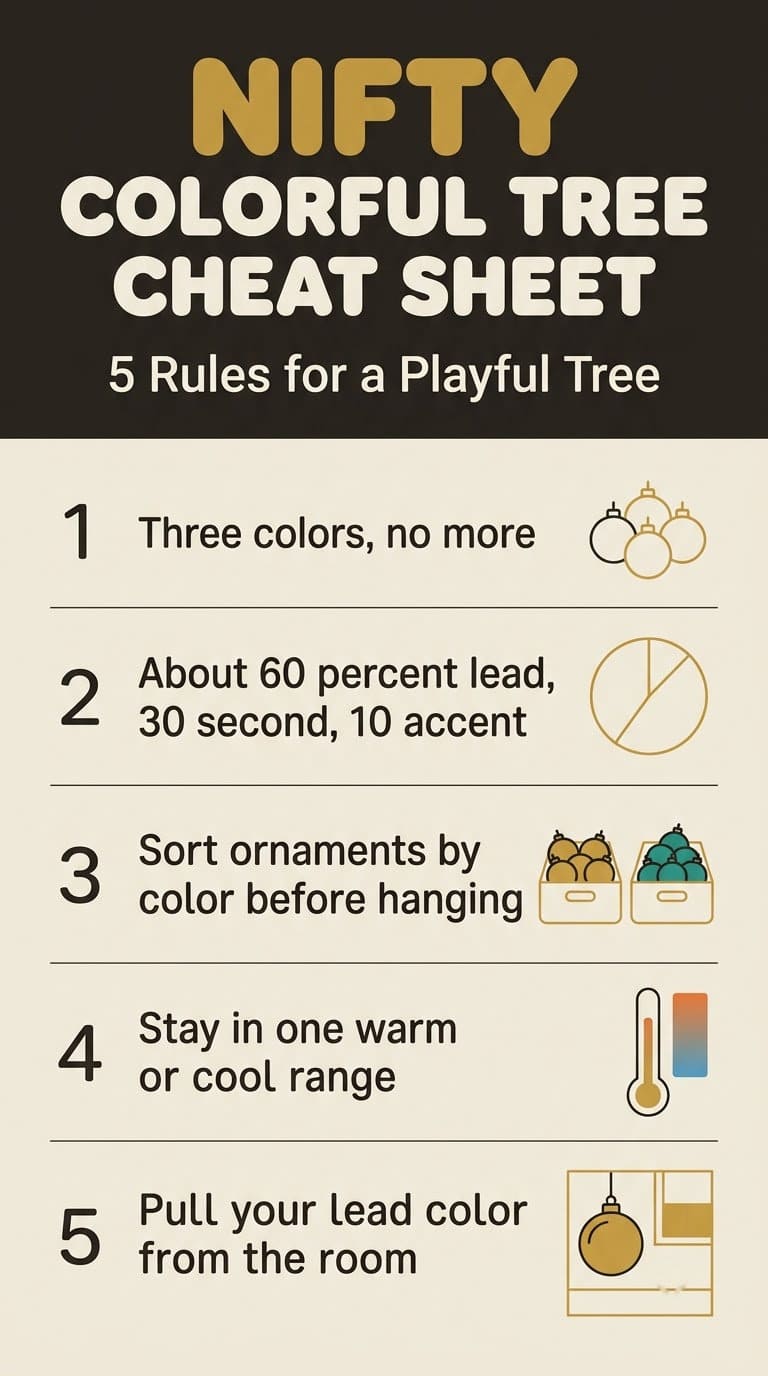
To keep a colorful tree playful, not chaotic, limit it to three colors. Kelley Gordon of Nielsen Norman Group says to “limit your palette to three colors.”
Her split is 60 percent for the main color, 30 for the second, and 10 for an accent. That advice comes from screen design, but it works on a tree too.
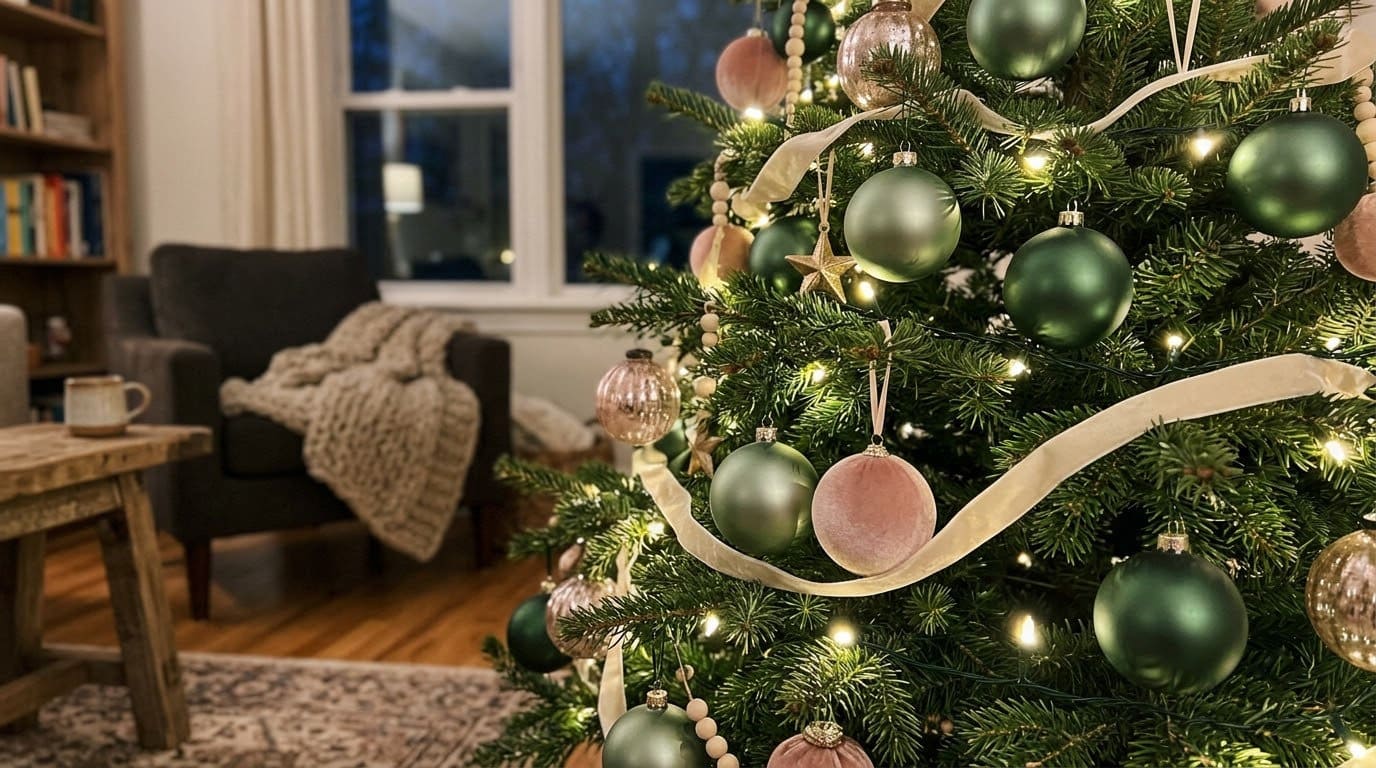
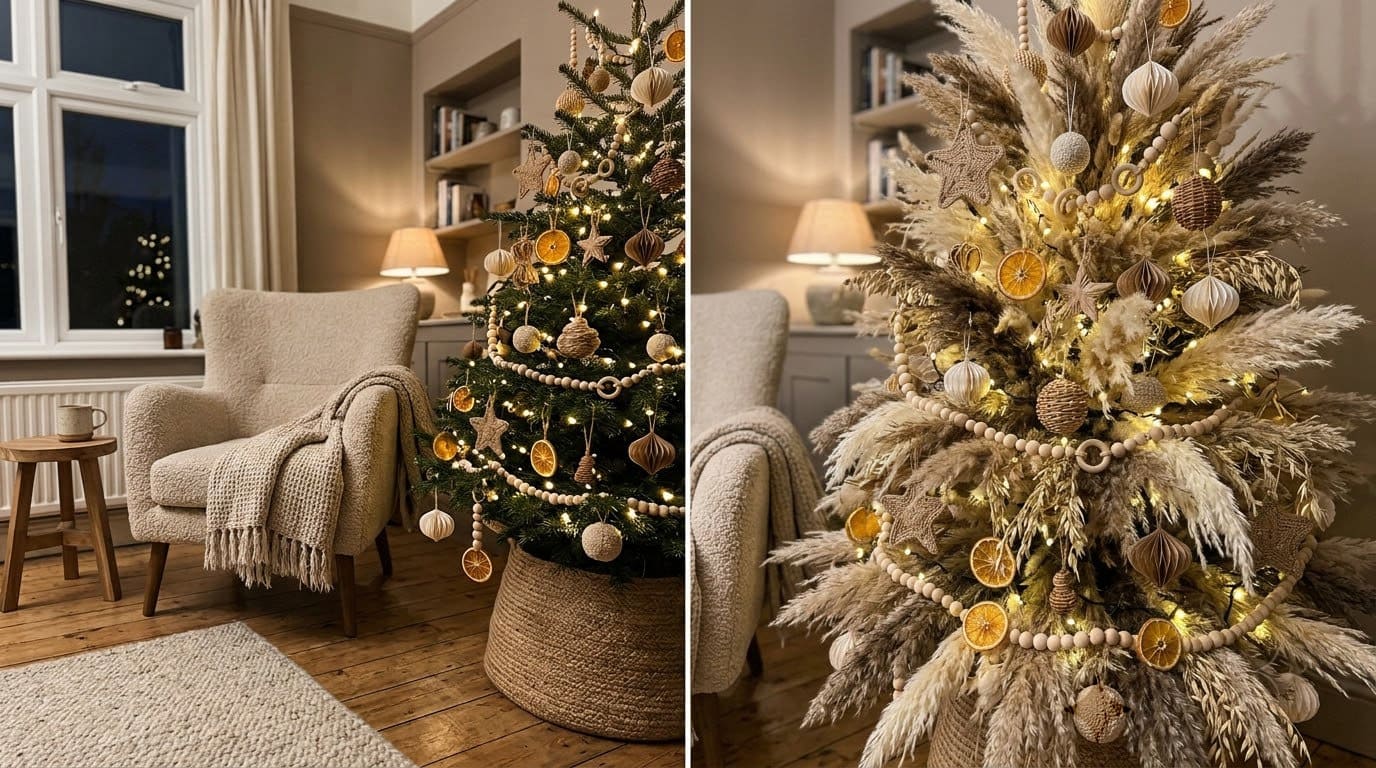

Sort your pieces by color before you hang anything. Then keep each color in the same warm or cool range. Designer Heather Luckhurst of Setting For Four Interiors says that “keeps it feeling designed, not random.”
Count your lights as colors too. With colored bulbs, keep the ornaments quiet, or use warm white bulbs and let the ornaments carry the color. Finally, pull your leading color from something already in the room, like a wall or a sofa.
Why Does a Colorful Tree Turn Chaotic?
Because color has no built-in limit, and most of us don’t set one. Each piece looks good alone, so we keep adding more.
Shelterness, a popular gallery of colorful trees, leans right into that. Its motto is closer to “too much is never enough” than to any restraint, and it shows.
| Problem | What it looks like | The fix |
|---|---|---|
| Five or more colors | Busy, no focus | Cap it at three |
| No leading color | Every ornament shouts equally | Give one color 60 percent |
| Random placement | Colors cluster by accident | Sort by color before hanging |
| Mixed warm and cool | Some colors look off | Stay in one undertone family |
| Colored lights plus busy ornaments | Double the noise | Quiet one of the two |
Most of these fixes cost nothing. You mostly take things off.
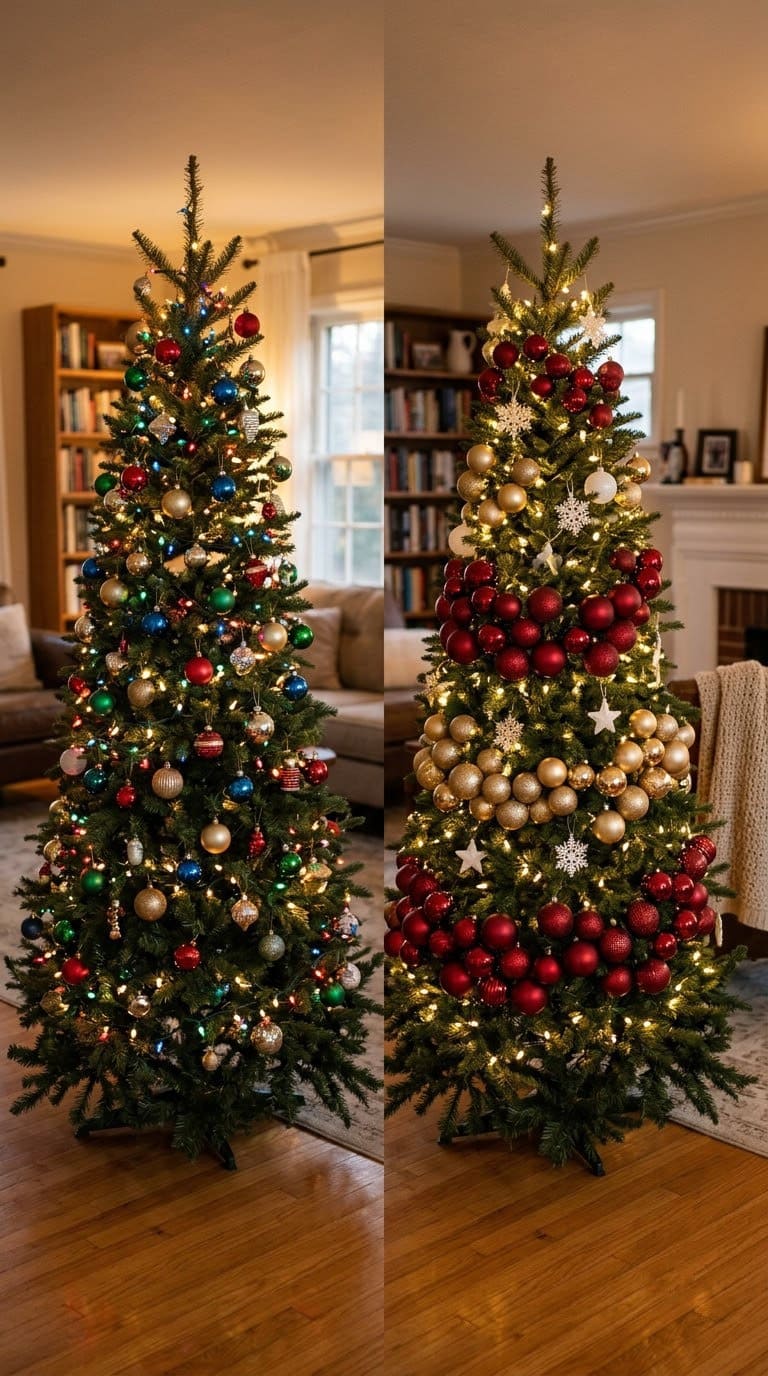
How Many Colors Is Too Many?
More than three, for most trees. That is the short answer from two independent places.
Nielsen Norman Group explains why. “There is less for users to consider and get distracted by.” Balsam Hill, a tree retailer, lands in nearly the same spot, telling readers to “pick three to four base colors for your design.”

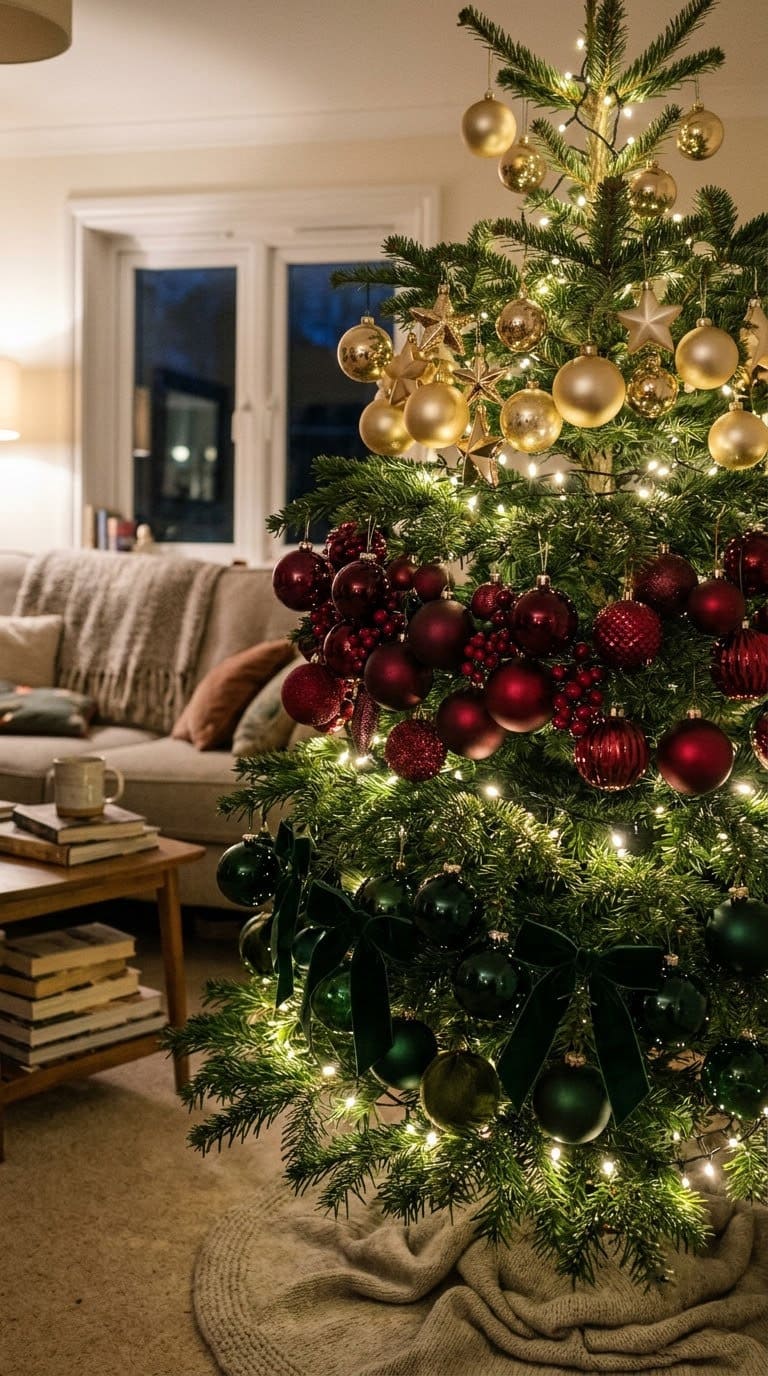
A deep green in real glass, sized to be a lead color in idea 2's jewel-tone palette. Buy a second glass set in your second color so each color reads as a matching set
Shop NowThis post contains affiliate links. We may earn a commission on qualifying purchases at no extra cost to you.
Then apply the 60-30-10 split. Put about 60 percent of your pieces in the leading color, 30 in the second, and 10 in the accent.
Here is what that looks like on a 7 foot tree with roughly 60 pieces.
| Role | Share | Ornaments | Example |
|---|---|---|---|
| Leading color | 60% | About 36 | Emerald |
| Second color | 30% | About 18 | Sapphire |
| Accent | 10% | About 6 | Gold |
Those piece counts are our own math, not a standard. Take them as a starting point.
What Do You Do With Multicolor Lights?
This is the question that trips people up most. A viewer under one colored lights video said she was “stuck with what in the world to do with these multicolor lights.”
She’s in good company. Even Balsam Hill’s guide admits colored lights can feel intimidating.
The simplest answer is to let the lights be one of your three colors. Pick pieces that “complement the light colors,” as Balsam Hill puts it, rather than fighting them.
Or go the other way. Use warm white bulbs and let the pieces carry the whole palette.
Glass and metallic pieces help either way. Balsam Hill notes they “can reflect the lights from your tree,” which gives colored bulbs a second life. Our roundup of Christmas light ideas covers the other rooms.
How Do You Keep the Colors From Fighting?
Three habits do most of the work.
First, stay in one undertone family. Heather Luckhurst is a Certified True Color Expert. Her advice: “Keep each tree in the same undertone family (warm or cool) for visual flow.”
A warm coral and a cool teal can work together. A warm coral, a cool teal and a cool purple start to argue.
Second, sort before you hang. Blogger Kate Decorates grouped each chosen piece by color first. Then she hung them in order, instead of letting people place them at random.
It’s the most practical anti-chaos trick I’ve come across.
Third, step back halfway through. Balsam Hill says to “remove some ornaments if it seems overcrowded.” You can also swap a few pieces for another color.
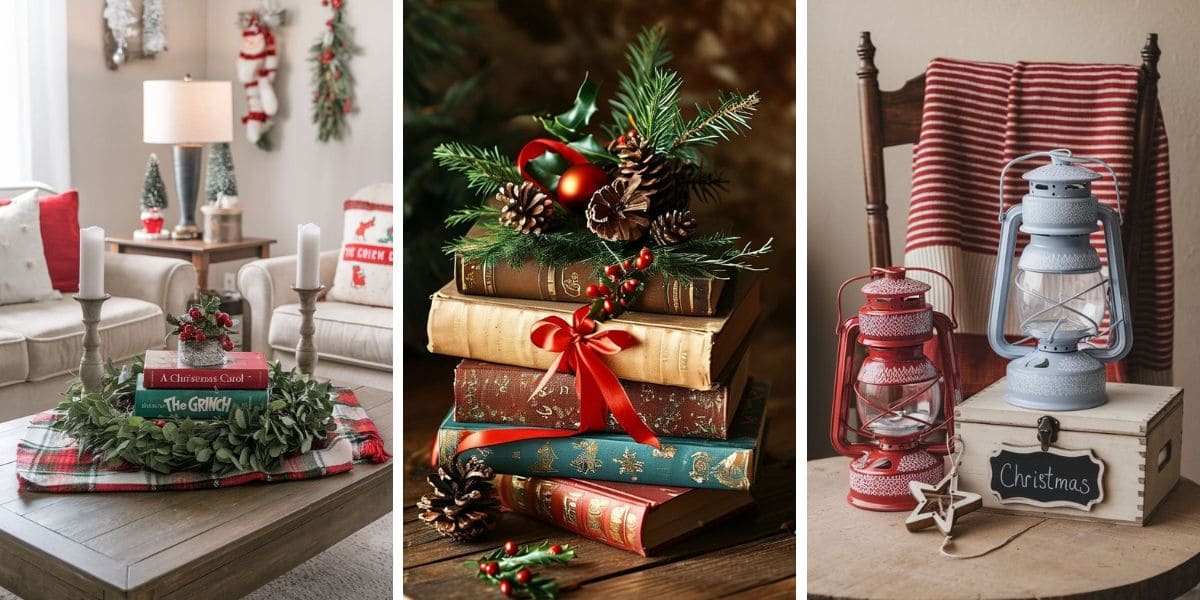
If you want a colorful finish up high, our tree topper roundup has more ideas.
Is Your Room Part of the Palette?
Yes, and it might be the most useful thing on this page. Viewers keep noticing it.
Under one jewel-tone tree video, a viewer called the room “a great backdrop for the rich colors on the tree.”
Another said the tree was “totally not my style but wow.” She added that even the room’s color caught her eye.
Luckhurst turns the same idea into a rule. Repeat a color from the room, “such as the wall color or pillow color,” on the tree. The room “will look pulled together and cohesive.”
So look at your walls and sofa before you buy a single piece. Pull your leading color from something already there.
Are Old Multicolor Lights Safe?
Sometimes. Colorful trees often carry an old family strand of colored bulbs, so this check matters here.
Consumer Reports test engineer John Banta is blunt. “Brittle or exposed wire indicates that your incandescent string lights are past their prime and potentially unsafe to use.”
Check that the wire is not broken or frayed, and that it still bends. If it does, swapping a few burnt-out bulbs for original spares is fine.
Consumer Reports says to switch to LED when you replace old sets. Look for the UL seal on anything you buy. And turn the lights off before bed.
Also read the label on each set for how many strands you can connect. The maker prints that number, so don’t guess it.
12 Colorful Christmas Tree Ideas
1. The Three-Color 60/30/10 Tree
The idea everything else is built on. Pick a leading color, a second, and an accent, and use the ratio from the table above.
On a 7 foot tree that’s roughly 36 pieces in the lead color, 18 in the second, and 6 in the accent. Budget: low to mid, since you’re often buying fewer colors than usual.
Pairs well with each other idea here. If you do only one thing on this list, do this.
2. Jewel Tones
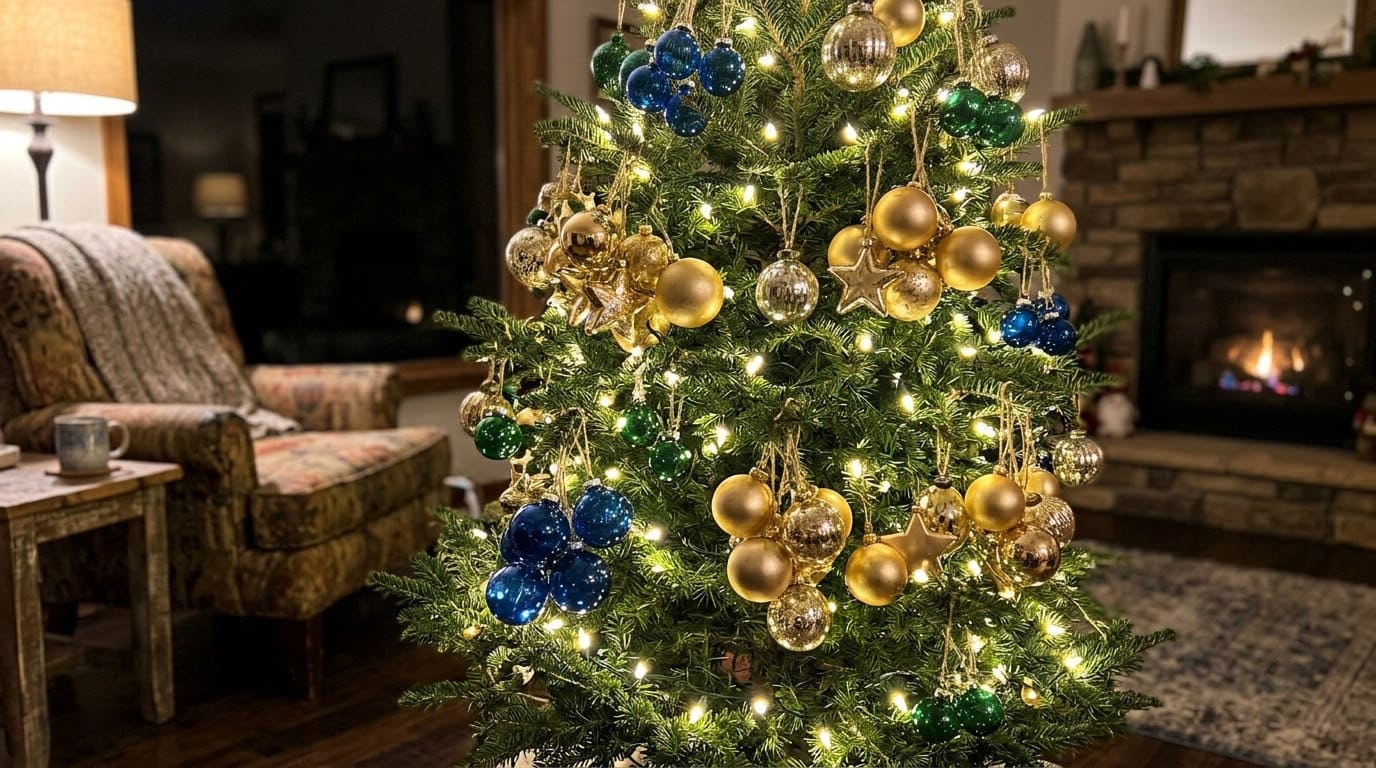
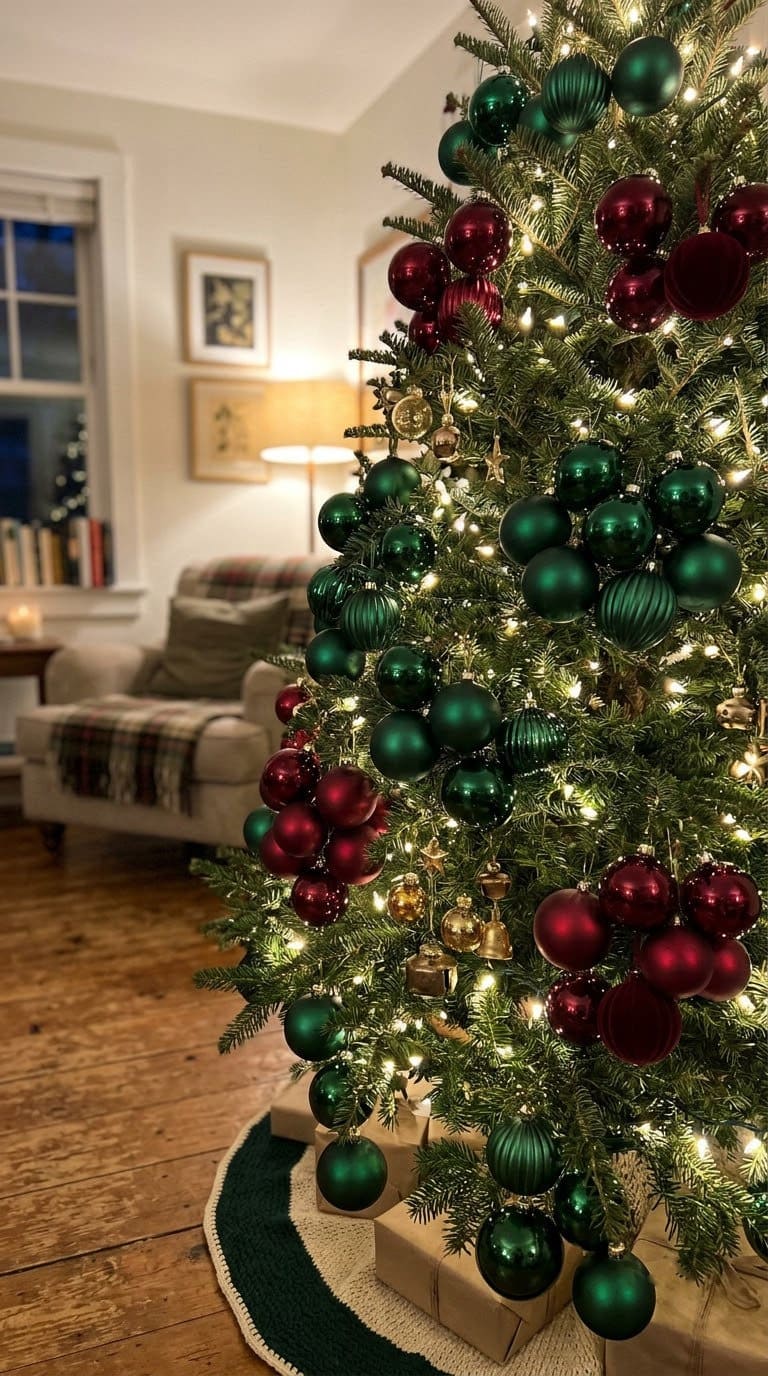
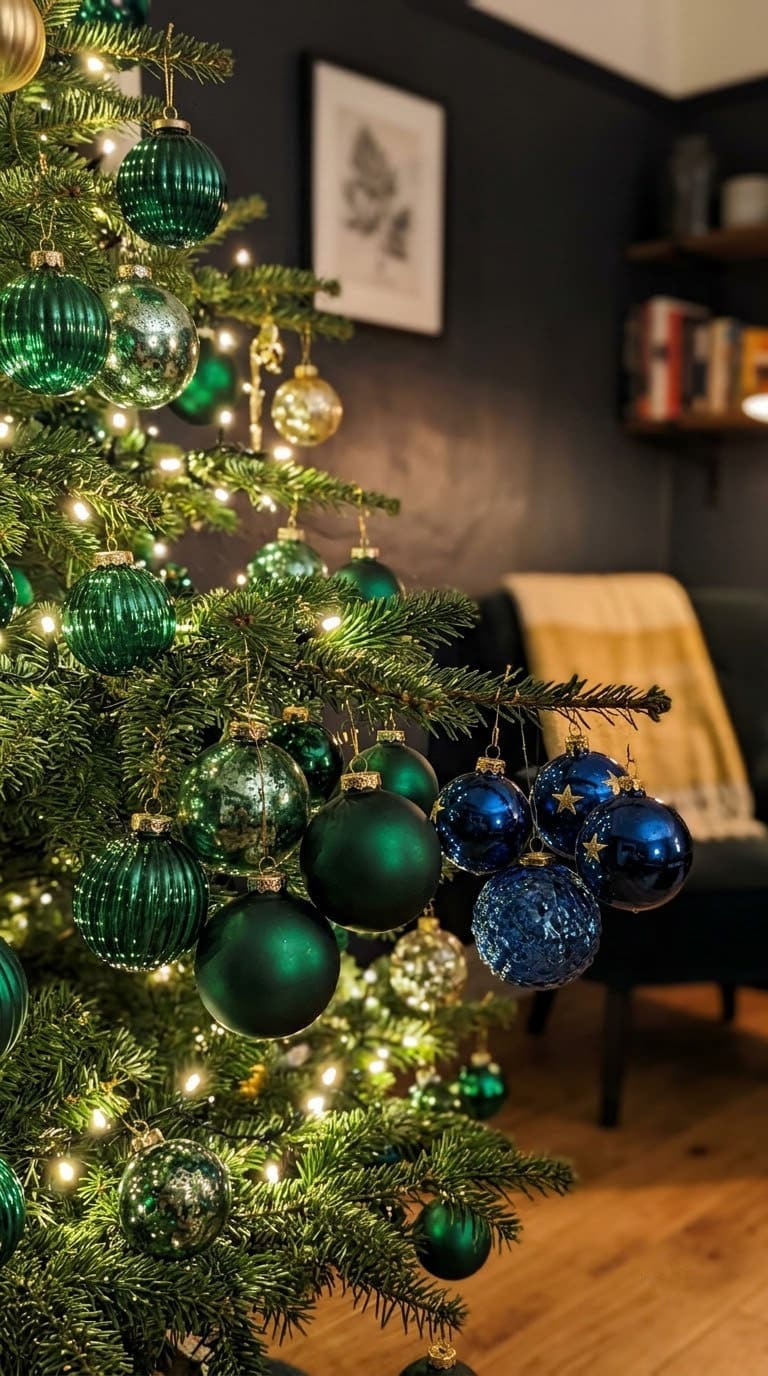
Emerald, sapphire, amethyst, and ruby, kept deep rather than bright. Use 4 inch glass balls in two of those colors, about 20 of each. Add a few gold pieces at 10 percent.
Jewel tones read as rich and grown-up, which suits a “colorful but not chaotic” brief. One viewer called that video’s look “very traditional design but not too over done.”
Budget: mid to invest, since deep glass costs more than plastic. Best against a painted wall in a dark or rich color.
3. Rainbow Ombre
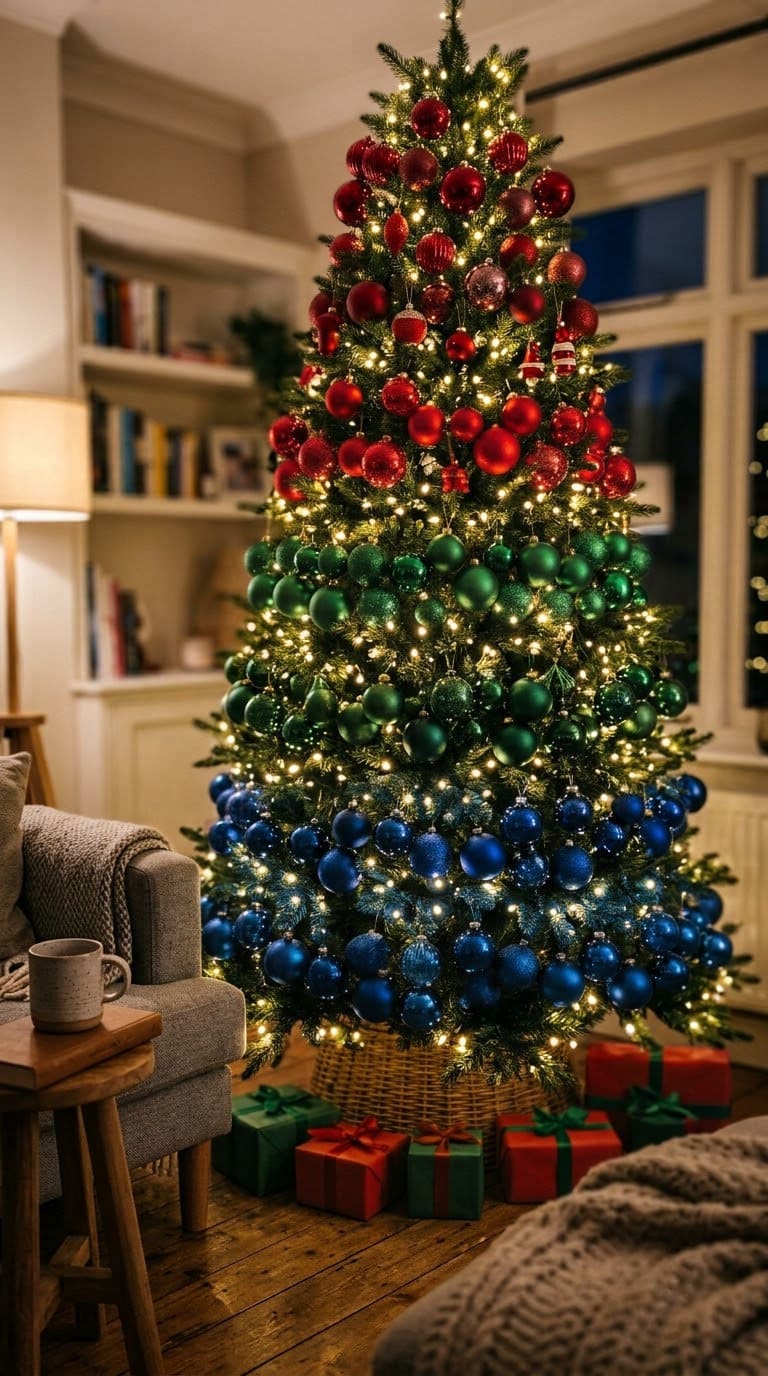
A gradient, not a jumble, which is why it feels planned. Hang pieces from the top down in rainbow order, red through violet. Make each band about 10 to 12 inches deep on a 7 foot tree.
Sorting first is essential here. Kate Decorates grouped each piece by color before starting. You will need to as well.
Budget: mid. The tradeoff is density, since a gradient needs at least 8 or 9 pieces per band to read clearly.
Keep the lights warm white so the bands stay readable.
4. Color-Blocked Sections
Like the ombre, but in three bold blocks rather than six or seven. Divide the tree into thirds and give each third one color from your three.
This is the easiest way to make a multi-color tree look planned. Each block should be about a foot deep. Blur the edges with a few pieces of the next color.
Budget: low to mid. It also works well as a project with children, because sorting is half the fun. There are more kid-friendly ideas in our Christmas crafts for kids roundup.
5. Coastal Brights
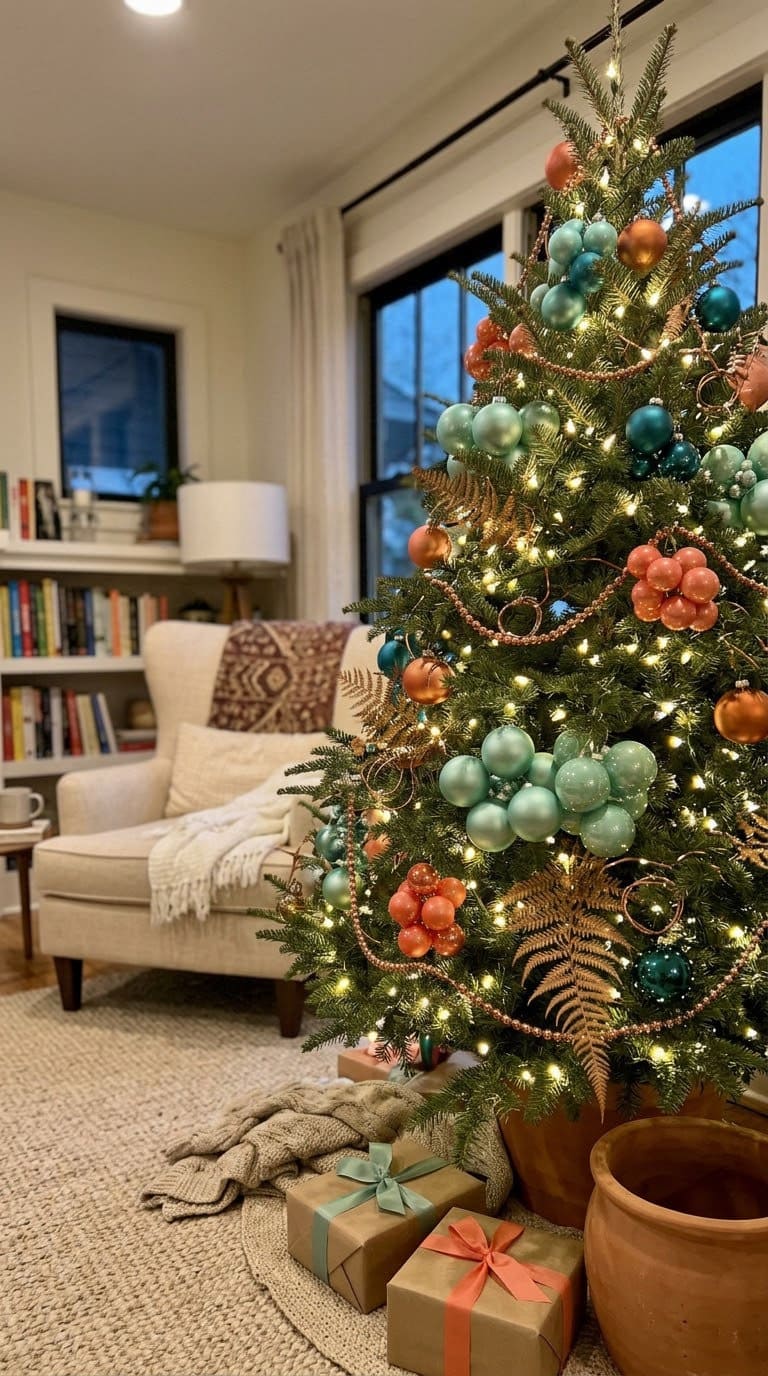
Seafoam, coral, teal, and a touch of copper. This one comes from a much-watched video of a tree in rose gold, seafoam, coral and teal. One viewer said of it: “Not colors I would ever have thought to use.”
Use seafoam as the lead at 60 percent, coral at 30, and copper as the 10 percent accent. Add real or faux fern fronds tucked deep.
Budget: mid. These are mostly cool colors with one warm accent, so keep the coral in one range.
6. Sunset Tones
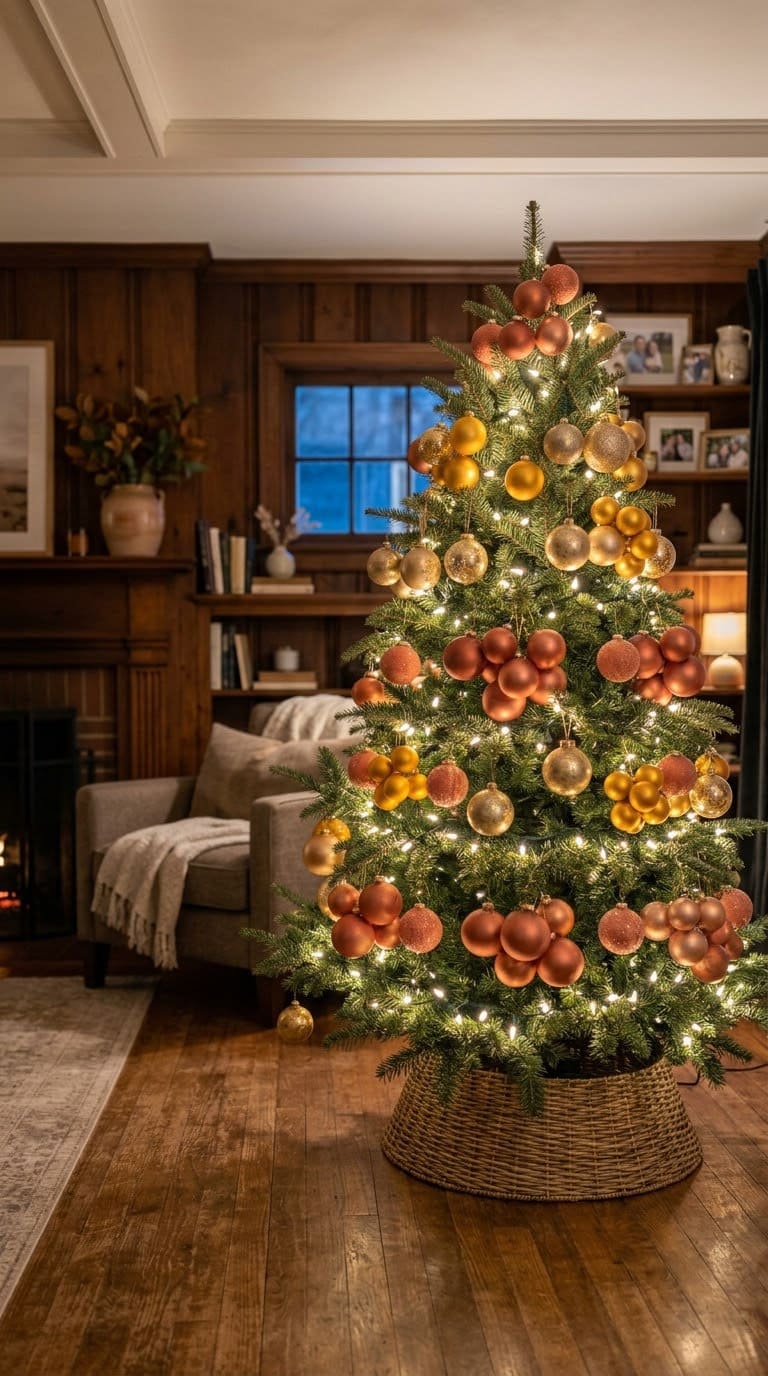
Warm and glowing, for people who find rainbows too cold. Use marigold, terracotta, and coral, with gold at 10 percent.
All of these sit in the warm family, so they blend naturally. About 20 pieces each of marigold and terracotta on a 7 foot tree does the job.
Budget: low to mid. This suits a room with wood tones and warm walls. Keep the bulbs warm white so nothing turns muddy.
7. Retro Mid-Century
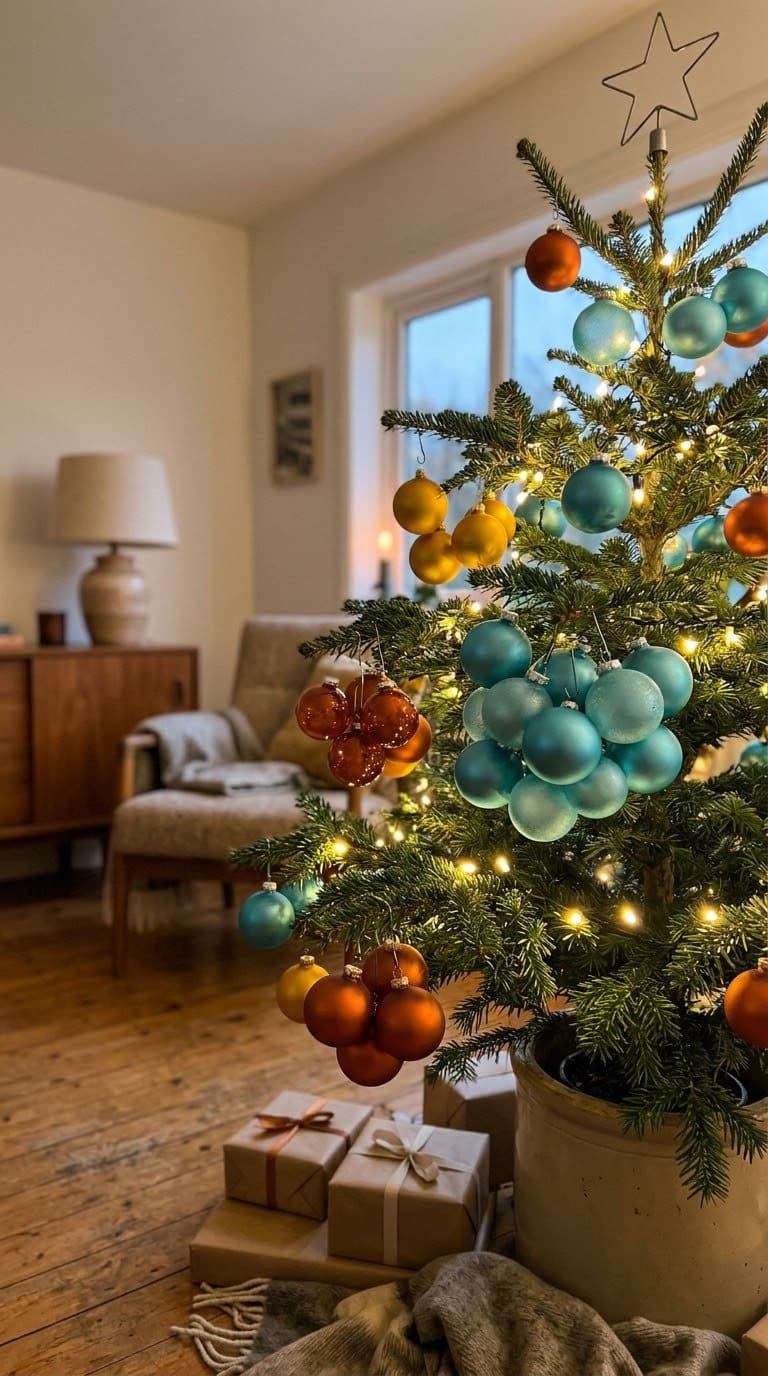
Turquoise, burnt orange, and mustard, the colors of a 1960s living room. Use turquoise as the lead at about 36 pieces, orange as the second, and mustard as the accent.
Set it off with a plain tree and simple round balls in 3 to 4 inch. The palette does the talking.
Budget: low. Vintage sets from thrift shops are often perfect here.
There’s a nostalgic cousin of this look in our vintage Christmas ideas.
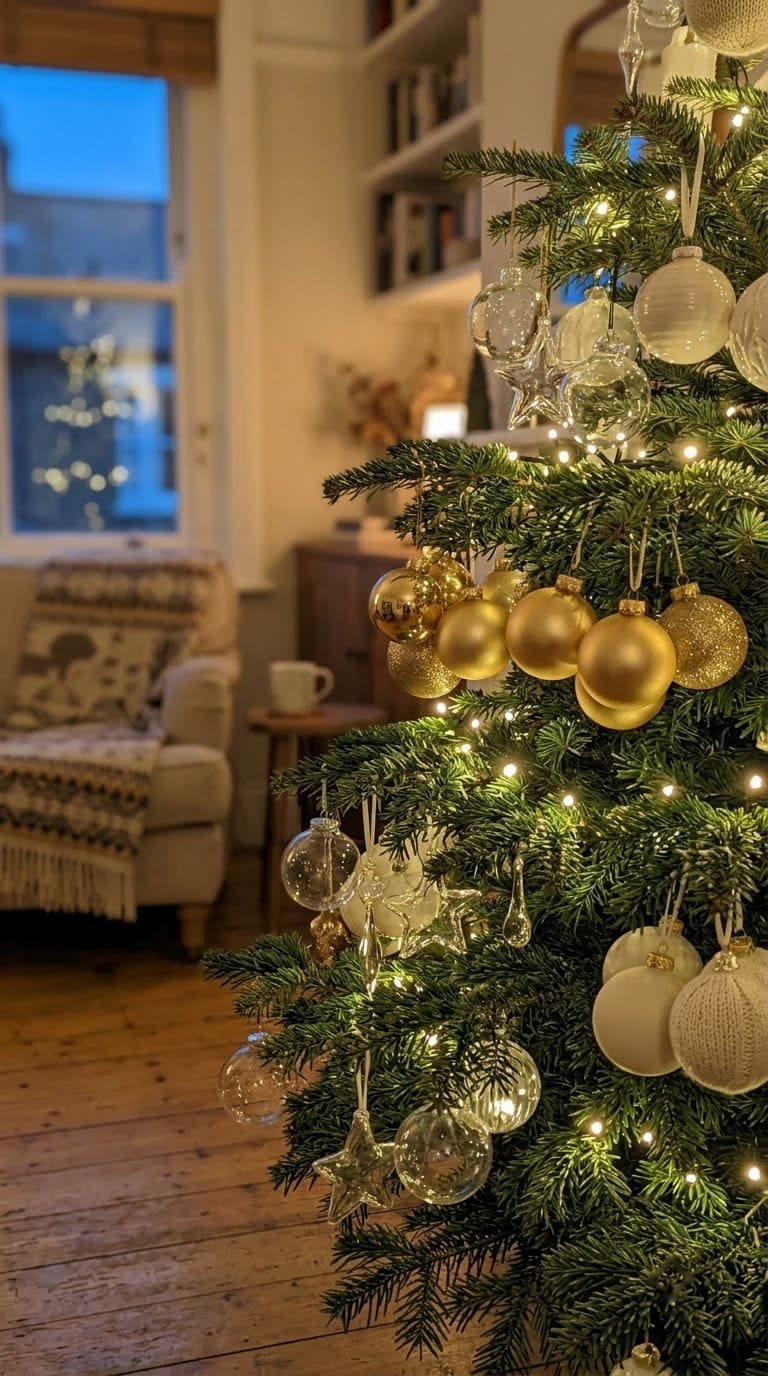
8. Multicolor Lights With Quiet Ornaments
The answer for anyone stuck with colored bulbs. Let the lights be the color, and choose pieces that stay quiet.
Use 3 to 4 inch balls in cream, gold, or clear glass, about 30 in all. The glass reflects the colored bulbs, which is where the sparkle comes from.
Budget: low. If your lights are old incandescent strands, run the Consumer Reports check above first.
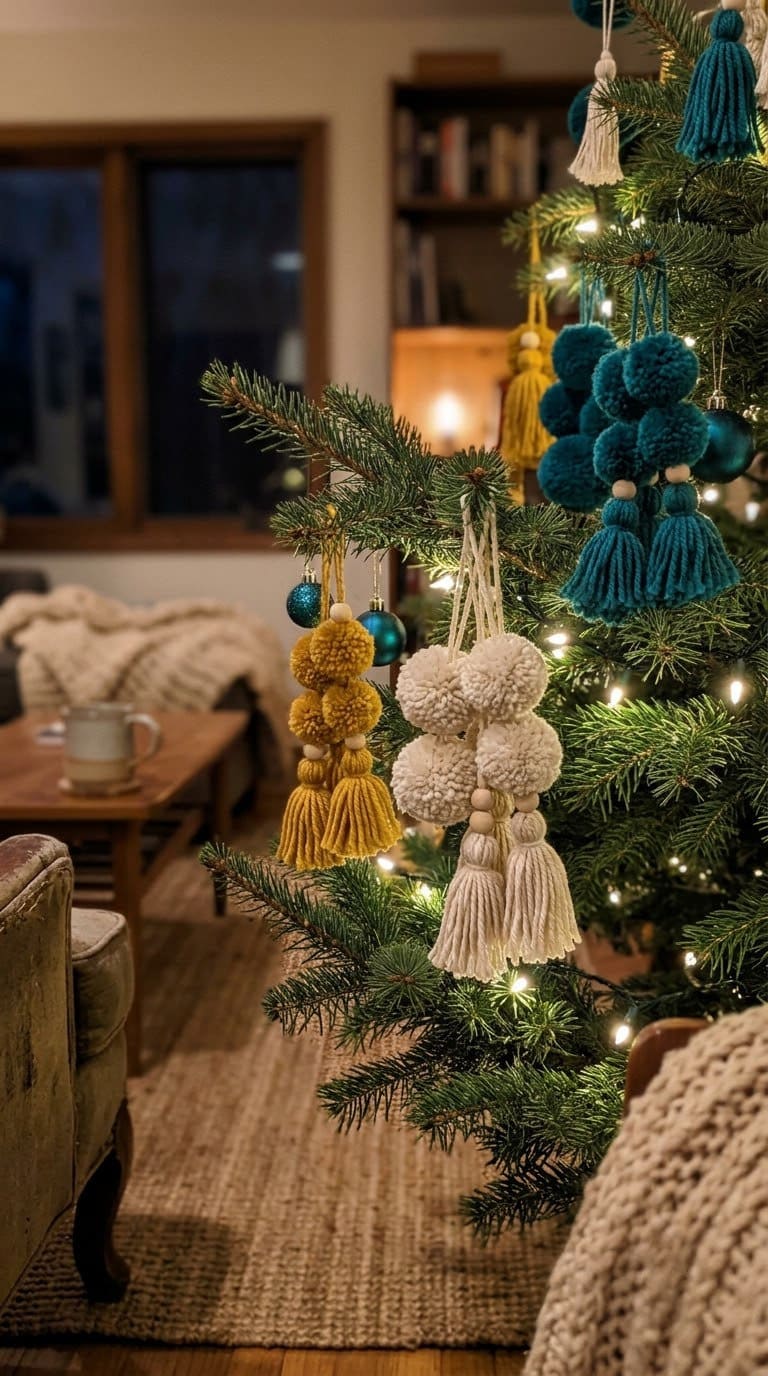
9. Pom-Poms and Tassels
Texture in color, and the cheapest route to a playful tree. Use 20 to 30 pom-poms in 1.5 to 3 inch and about 15 tassels in your three colors.
Cluster the pom-poms in odd groups of three or five rather than spacing them evenly. Budget: low, and many are easy to make.
This look leans boho, and our boho Christmas ideas carry it into the rest of the room.
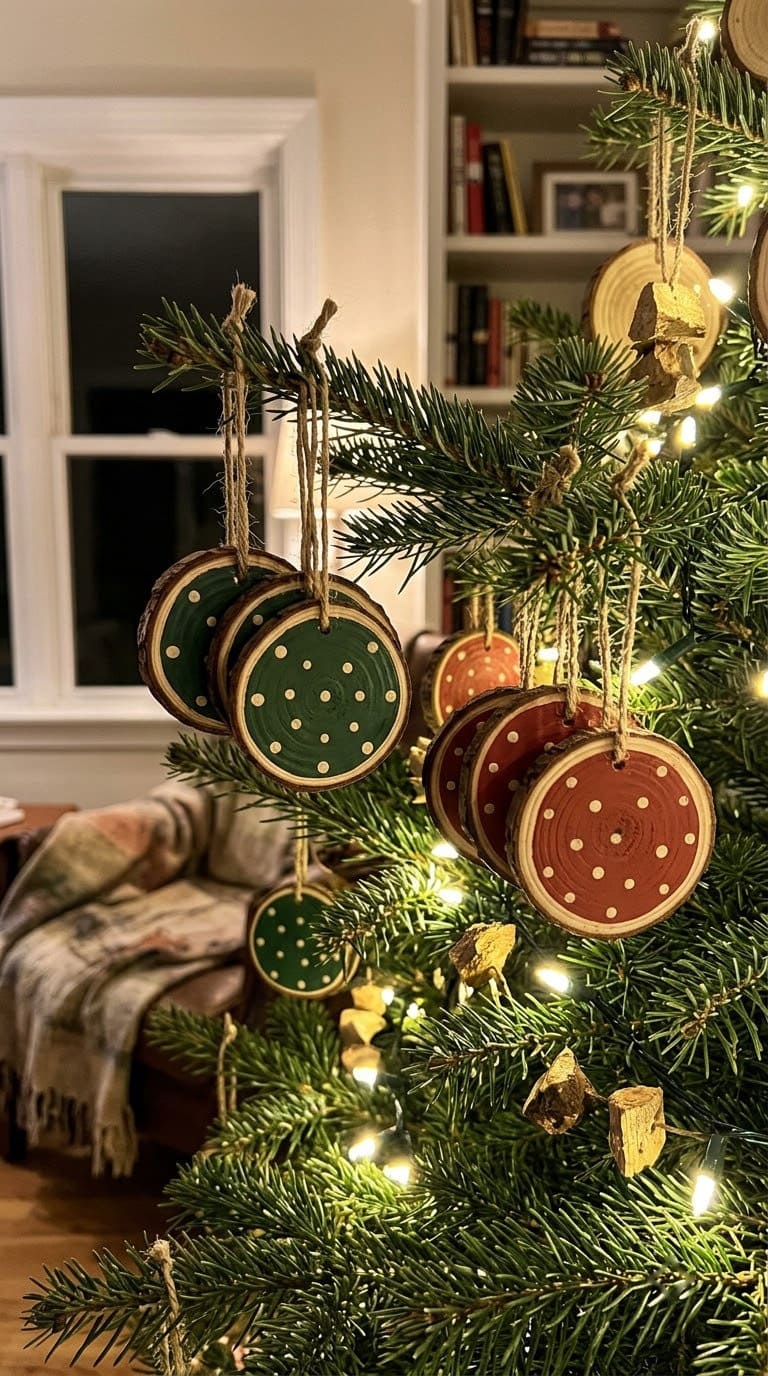
10. Hand-Painted Wood Slices
Color you make yourself, which is why it feels personal rather than themed. Paint 15 to 20 wood slices, 3 to 4 inch wide, in your three colors. Use one pattern, such as dots or stripes.
Keep to the palette even here. A dozen wild designs is how a handmade tree tips into chaos.
Budget: low. Let them dry fully before hanging, and paint them in a well-ventilated space.
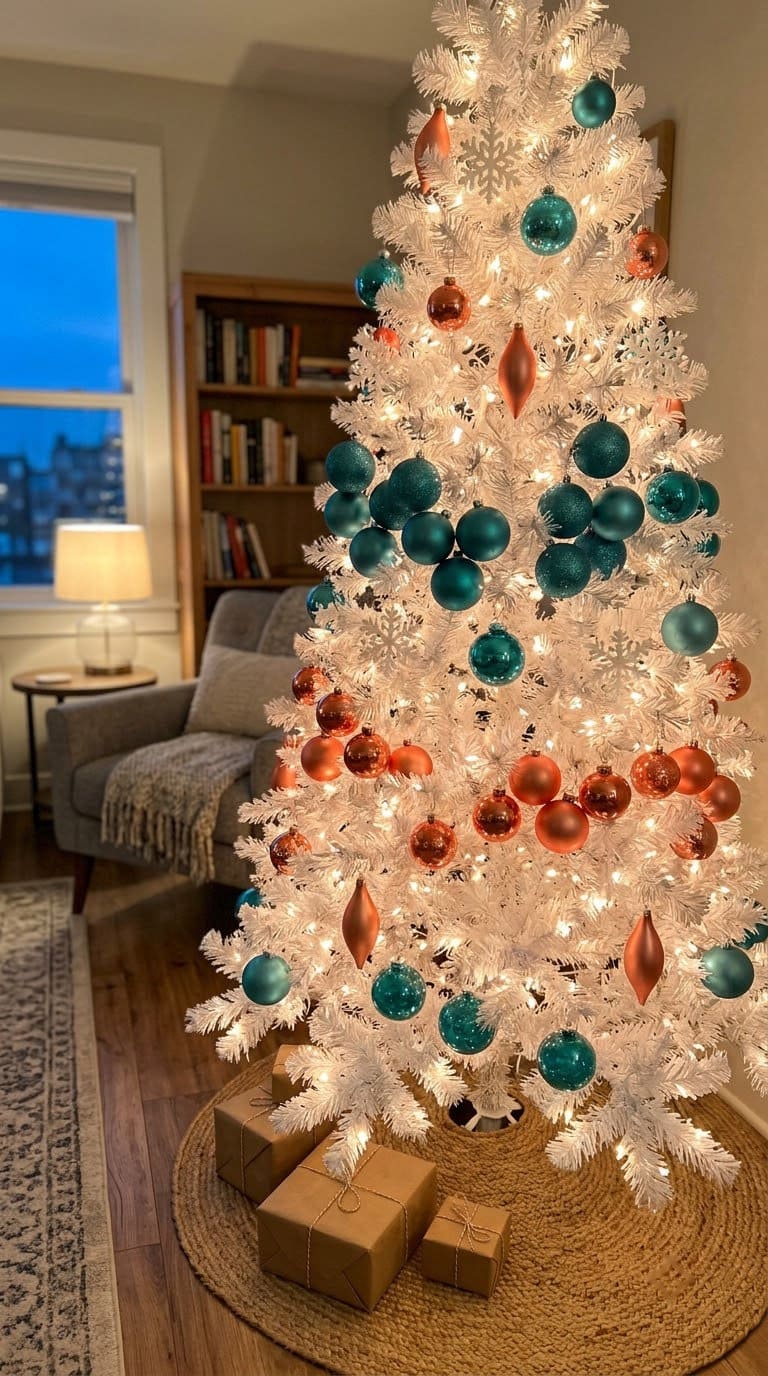
11. Colorful Accents on a White Tree
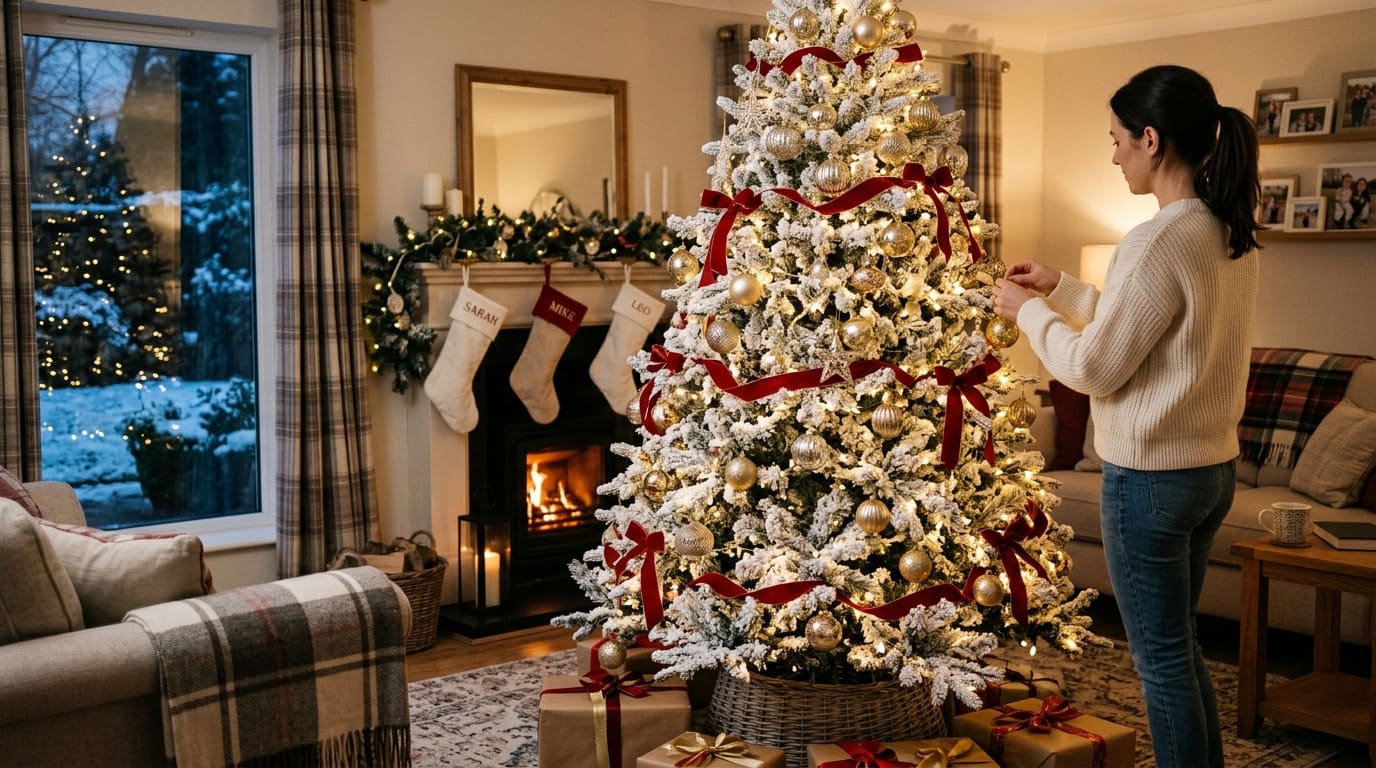
The safest way to try color at all. A white tree acts as the neutral. You can use one or two colors without it feeling loud.
Use about 25 pieces in a single bold color, plus a smaller number in a second. Budget: mid, since a white tree costs more than a green one.
It suits anyone who admires colorful trees but feels “totally not my style,” as one viewer put it.
12. Tabletop Colorful Tree
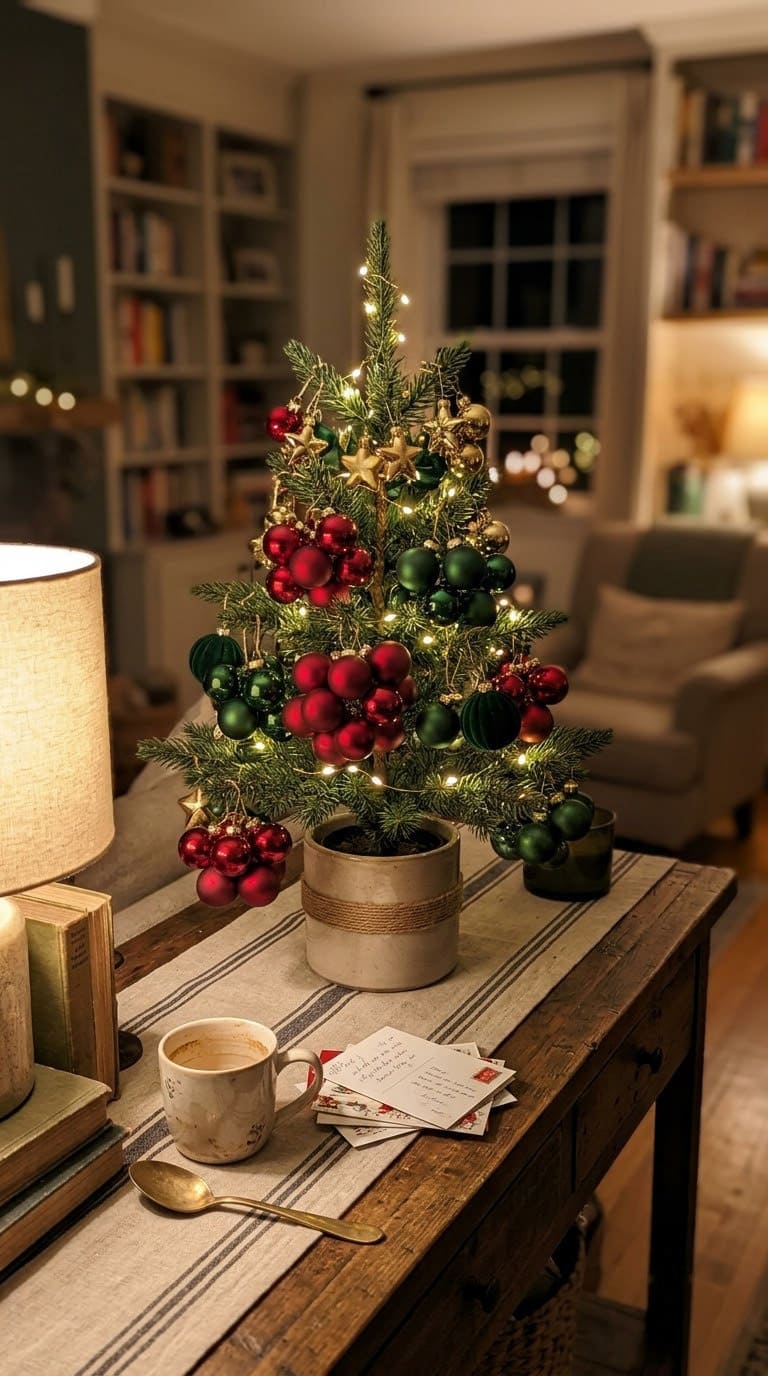
Everything above, at a quarter of the size. Use a 2 to 3 foot tree and 2 inch balls only, about 15 of them, in just three colors.
Small trees turn chaotic faster, because each piece looks bigger. Budget: low.
Good for renters, dorm rooms and kids’ rooms. For more small-space ideas, see our Christmas ornament roundup.
Which Ornaments Should You Buy for a Multicolor Tree?
Glass and shatterproof plastic act differently, and a viewer spotted a useful detail. Glass pieces have no seam, and you can take the metal loop out. Plastic ones have a seam and a fixed loop.
On a colorful tree that matters. Seams catch the light and can look cheaper, especially on dark jewel tones.
Use glass where an piece is seen up close, and shatterproof where children or pets can reach. Buy one finish within each color so the colors read as sets, then mix finishes across colors.
What Most People Get Wrong
The big one is treating each piece as its own decision. That is how you end up with seven colors and no plan.
The second is judging the palette too early. One viewer under a coastal-color video wrote that they “didn’t like it at first thought colors were too pale but boy was I wrong.”
A half-finished colorful tree always looks worse than the finished one.
The third is forgetting the lights and the room. Both count as colors, and both can quietly break a palette you thought was tidy.
And the fourth is not committing. If three colors feels too small, remember that Balsam Hill’s own range is three to four. That is the ceiling, not the goal.
Your Two-Weekend Plan
Weekend one is deciding. Look at your walls and sofa, and pull your leading color from something already in the room. Then choose a second and an accent from the same warm or cool range.
Then buy or gather your pieces and sort them into piles by color on a bedsheet. You will almost certainly find one pile is far bigger than the others, and that’s your lead.
Weekend two is the build. Lights first, then the leading color, then the second, then the accent, and step back after each layer.
Take a photo with your phone at each step. A photo shows quickly whether one color is leading, or whether you have drifted into an even mix.
Frequently Asked Questions
How many colors should a colorful Christmas tree have?
Three is the safest number. Nielsen Norman Group says to limit a palette to three colors, and Balsam Hill suggests three to four.
What is the 60-30-10 rule for a Christmas tree?
Put about 60 percent of your balls in one lead color, 30 percent in a second, and 10 percent in an accent. It comes from design guidance and works well on a tree.
How do I stop my colorful tree looking messy?
Cap the palette at three colors. Sort your pieces by color before hanging, and stay in one warm or cool range.
Can I use multicolor lights with colorful ornaments?
Yes, but count the lights as one of your colors. Either choose pieces that complement them, or keep the pieces quiet in cream, gold or clear glass.
Should my tree match my room?
It helps a lot. Designer Heather Luckhurst says repeating a wall or pillow color on the tree makes the room look pulled together.
Are old multicolor Christmas lights safe?
Only if the wire is still flexible and not frayed. Consumer Reports says brittle or exposed wire means an old set is past its prime. It recommends LED replacements.
What is a good colorful tree for a small room?
A tabletop tree in three colors, or a white tree with one bold accent color. Both keep the color from overwhelming the space.
Is a rainbow Christmas tree tacky?
Not when it is done as a gradient. Colors hung from top to bottom in order read as deliberate. Random rainbow placement reads as clutter.
Are glass or plastic ornaments better?
Glass has no seam and a loop you can remove, so it looks better up close. Shatterproof plastic is safer where children or pets can reach.
Related Posts
Products We Recommend
This post contains affiliate links. We may earn a commission on qualifying purchases at no extra cost to you.
DN Deconation 9 Pc Green Glass Christmas Ball Ornaments, 3.14 Inch
A deep green in real glass, sized to be a lead color in idea 2's jewel-tone palette. Buy a second glass set in your second color so each color reads as a matching set
Shop Now
Hearth & Harbor Christmas Ornament Storage Box With 4 Inner Tray Dividers, Holds 64 Ornaments
For the sorting step this whole article rests on. Dividers let you keep your three colors in separate trays, so next year's tree starts already sorted
Shop Now
Boao 3 Pc Wool Felt Ball Garland, Rainbow, 6.5 Feet Each
Soft color for idea 9's pom-pom tree. Swag it in loose loops and trim any colors that fall outside your three
Shop NowNever miss an update — choose FarmFoodFamily as your preferred source on Google.
How it works: Tap the button below to open Google's settings page, then check the box next to FarmFoodFamily.
Tap the checkbox to turn it blue — that's how you know it's set.