12 Cozy Earthy Living Room Ideas in Clay, Olive, and Warm Wood
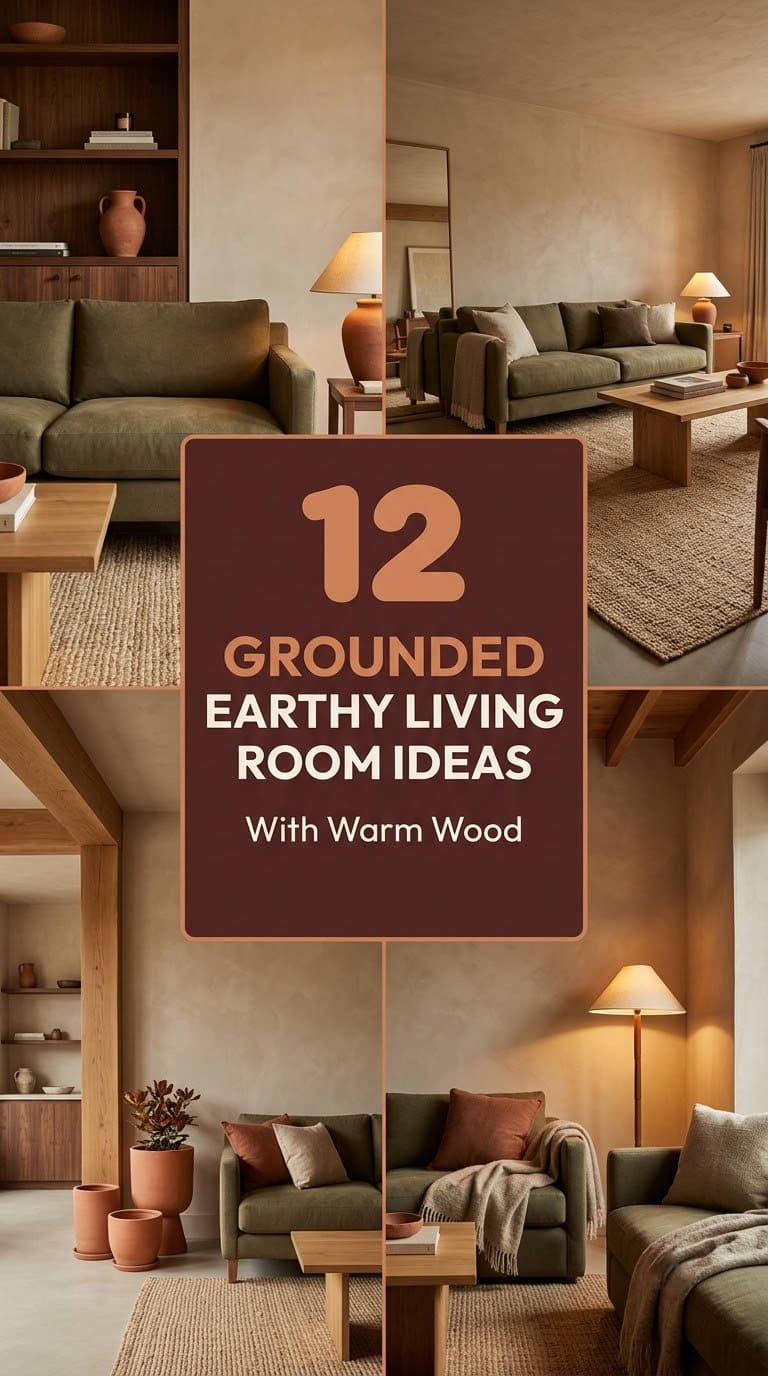
Clay, olive and warm wood make a calm living room, as long as the undertones match and the light is warm.

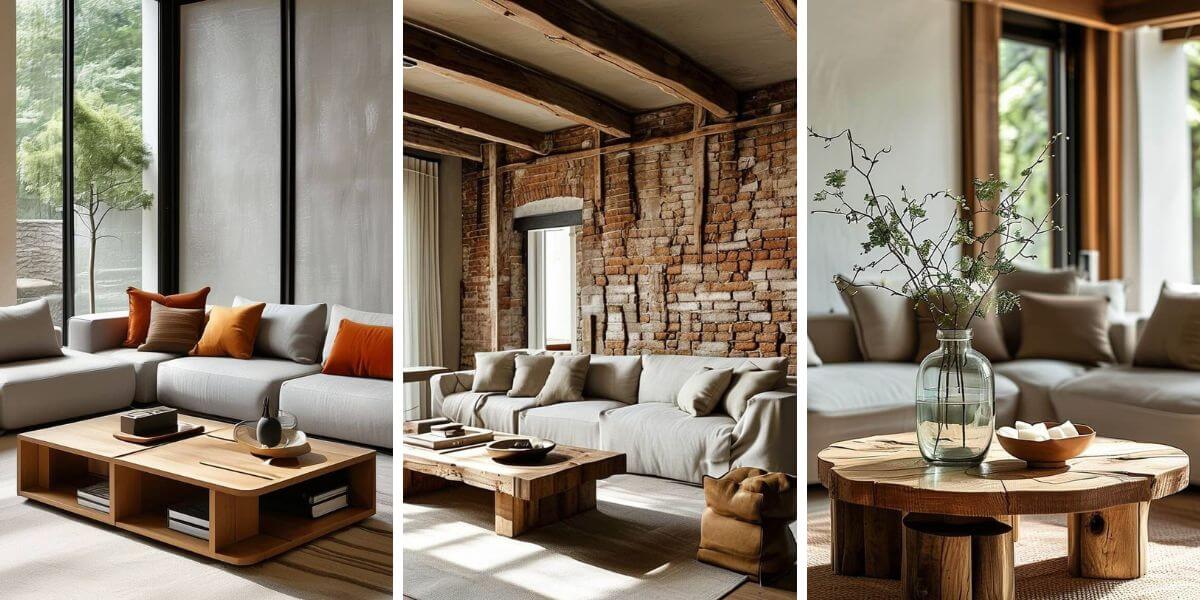
Never miss an update — choose FarmFoodFamily as your preferred source on Google.
How it works: Tap the button below to open Google’s settings page, then check the box next to FarmFoodFamily.
Tap the checkbox to turn it blue — that’s how you know it’s set.
Earthy rooms should feel like a deep breath. Too many of them feel like a beige waiting room instead.
The difference is rarely the colors. It comes down to undertone, texture and light, and all three are cheap to fix.
Below are 12 earthy living room ideas built on clay, olive and warm wood. Each one has a measurement and a budget tier. We also cover limewash costs, one real safety warning, and what sunlight does to wood over time.
This page replaces our older list of 25 short ideas, so the picks here go much deeper. If you want a paler take on the same mood, our guide to neutral living room ideas is the calmer cousin.
Quick Answer
An earthy living room works when three things agree. The colors share a warm undertone, the surfaces have real texture, and the light is warm.
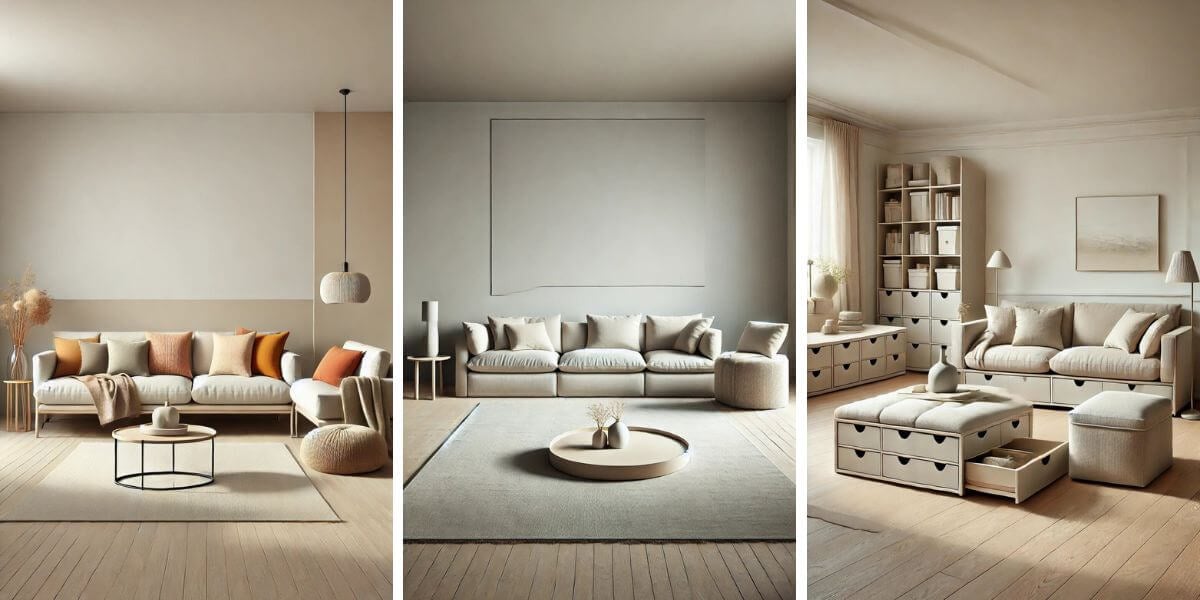


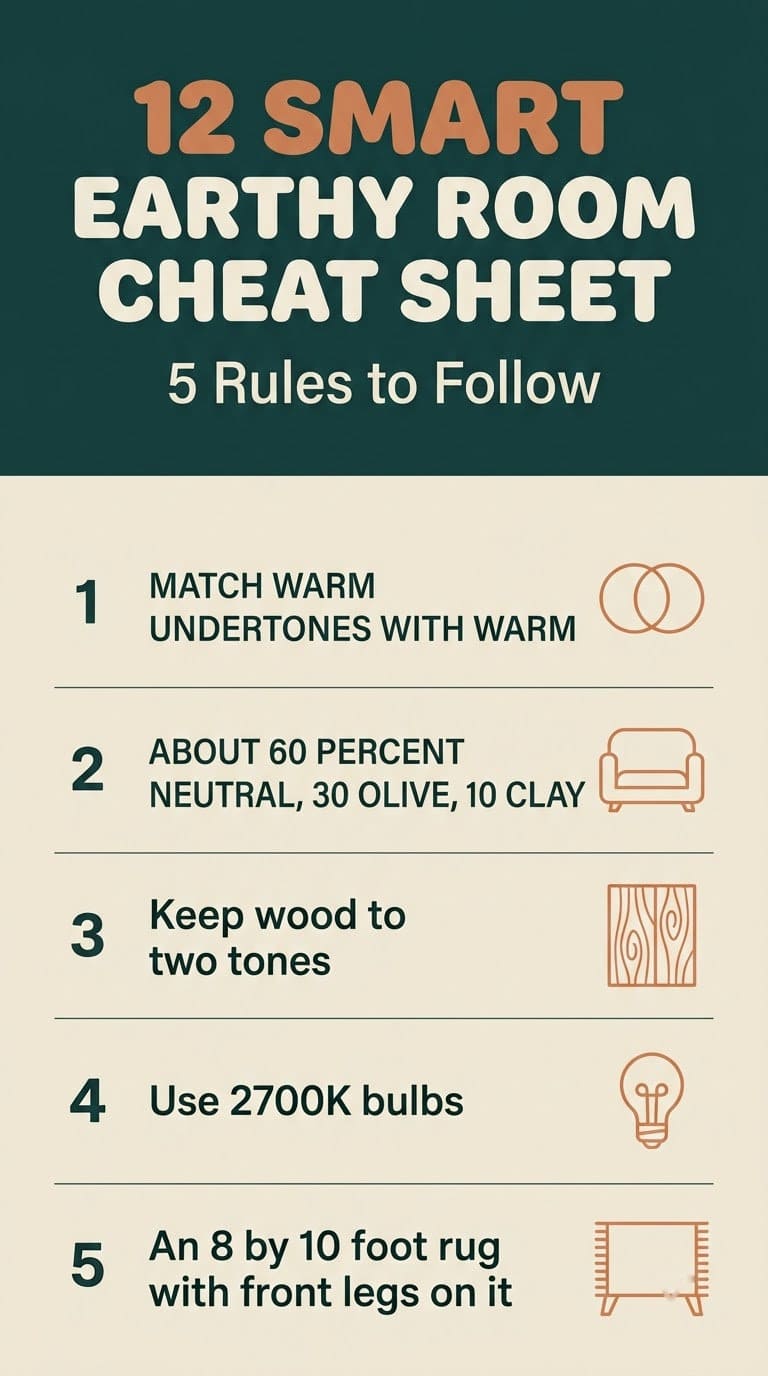
Pick a warm neutral for about 60 percent of the room. Use olive or another muted green for 30, and clay or terracotta for the last 10. Then add wood in one or two tones that share the same warmth.
Walnut and oak both work if they lean red or yellow-brown, never gray.
Nishia Shubert of Stay Interiors keeps it simple. Olive “has a warm, earthy undertone,” so match it with warm colors.
Finish with 2700K bulbs and matte, tactile fabrics like linen, jute and wool. Do that and the room reads as layered, not flat, even when every color sits in one family. It also costs far less than a full repaint.
Why Do Earthy Rooms Sometimes Look Flat?
Because everything in them sits at the same brightness. Tan wall, tan sofa, tan rug. Your eye has nowhere to land.
Sarah Barnard of Sarah Barnard Design is quoted by Livingetc saying that earth tones are “typically grounded in shades commonly found in nature.” Nature is never one flat tone. Bark is dark, moss is mid, sand is pale.
Copy that spread. Put one dark piece, a few mid pieces and one pale surface in every sightline.
| Problem | What it looks like | The fix |
|---|---|---|
| Everything one brightness | Flat, sleepy | Add one dark anchor, like walnut |
| Mixed undertones | Muddy, “something is off” | Match warm with warm |
| All smooth surfaces | Lifeless | Add limewash, jute, linen, clay |
| Cold white bulbs | Olive turns gray | Switch to 2700K |
| No pop of clay | Dull | Add three terracotta pieces |

The 2700K warm-white bulb from idea 9. It has a CRI of 90 so olive and clay stay rich, and a selectable color switch, so set it to 2700K and leave it
Shop NowThis post contains affiliate links. We may earn a commission on qualifying purchases at no extra cost to you.
None of these fixes needs a renovation. Most need a bulb, a pillow or a pot.
Which Shades Work Together?
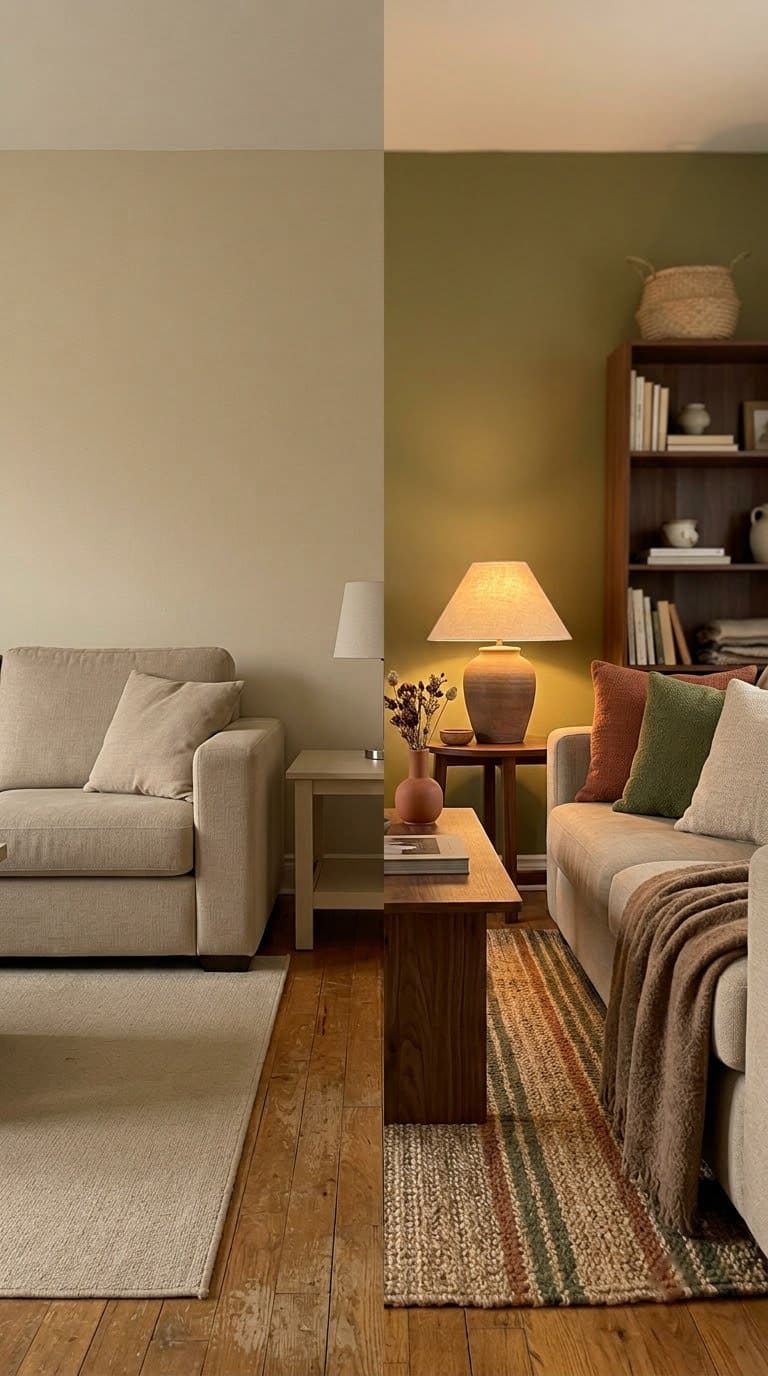
Warm with warm. That is the whole rule.
Nishia Shubert says olive pairs best with colors of similar warmth. Her examples are “terracotta or dusty pink.” She spoke to Yahoo Home for a piece on olive palettes.
A yellow-leaning olive sits well with oatmeal, camel and oak. A gray-leaning olive looks better with stone and a cooler wood.
Dvira Ovadia of Dvira Interiors says “terracotta and clay tones are gaining momentum” for 2026. We agree. Just use clay as a spice, not the whole meal.
Want more clay pairings? Our guide to colors that pair with terracotta has plenty.
What Ratio Should You Use?
Our own working ratio is 60, 30, 10. Sixty percent warm neutral, thirty percent olive, ten percent clay.
The neutral is your wall, rug and curtains. Olive is the sofa or a big chair. Clay is pots, pillows, one lamp base and a vase.


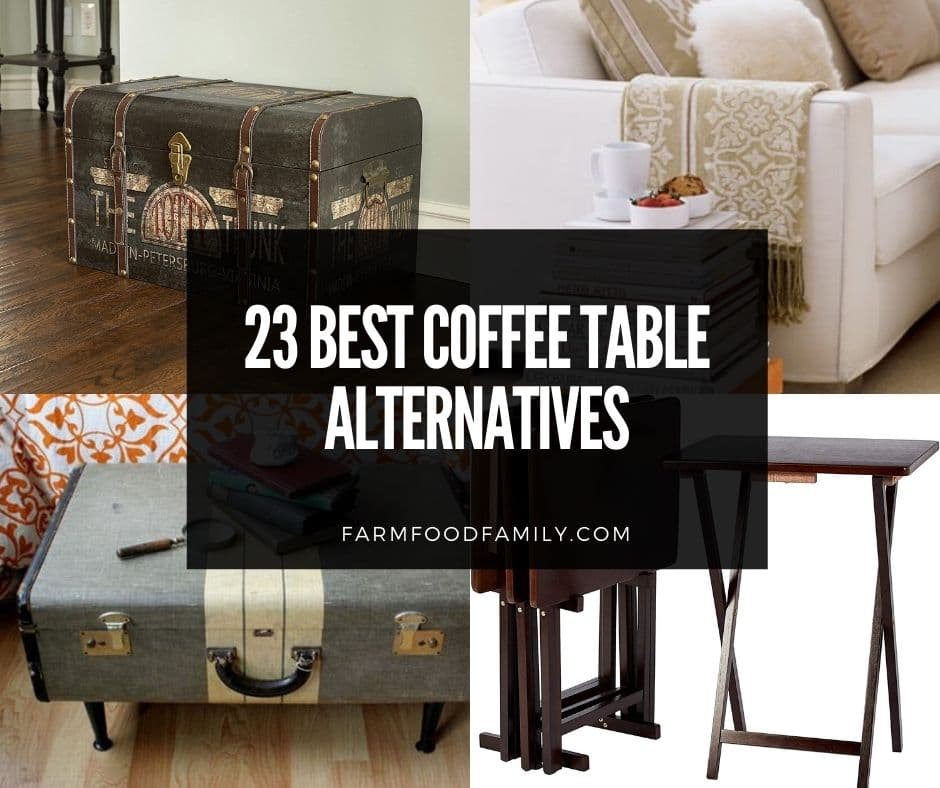
Wood sits across all three, so don’t count it. Just keep it to one or two tones.
If you’d rather lean greener, our page on sage green living rooms shows the lighter end of the same palette.
12 Earthy Living Room Ideas
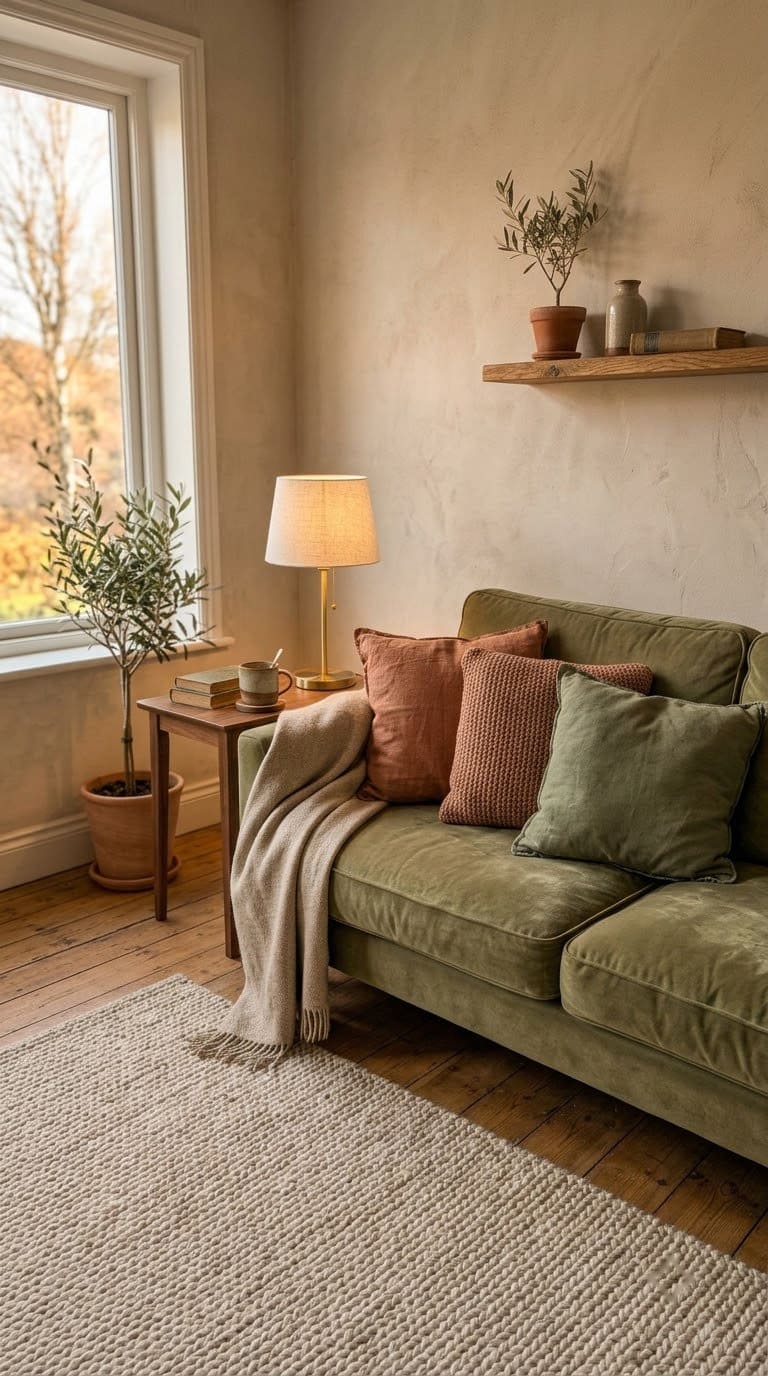
1. An Olive Sofa on an Oatmeal Wall
The anchor of the whole palette. A sofa in olive velvet or heavy linen acts like a neutral. Melanie Boyden of Melanie Jade Design calls olive “basically a neutral with personality.”
Choose a muted olive, not a bright lime. Hold the fabric swatch against your wall in daylight and again at night.
Pair it with an oatmeal or warm cream wall. Budget: invest, since a good sofa runs long.
Pairs well with idea 5’s jute rug, which repeats the warm neutral underfoot.
2. Limewash or Clay Wash on One Wall
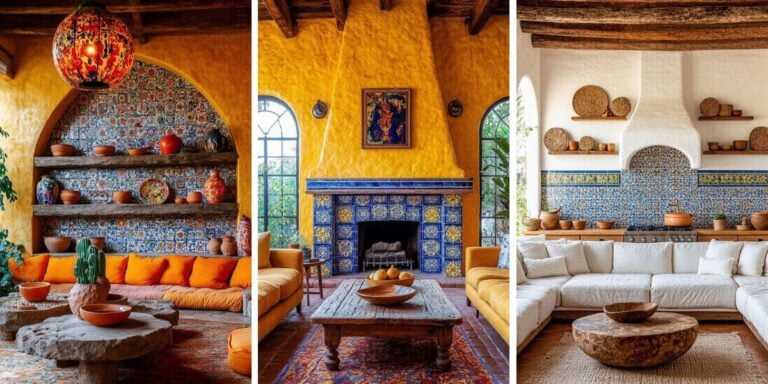
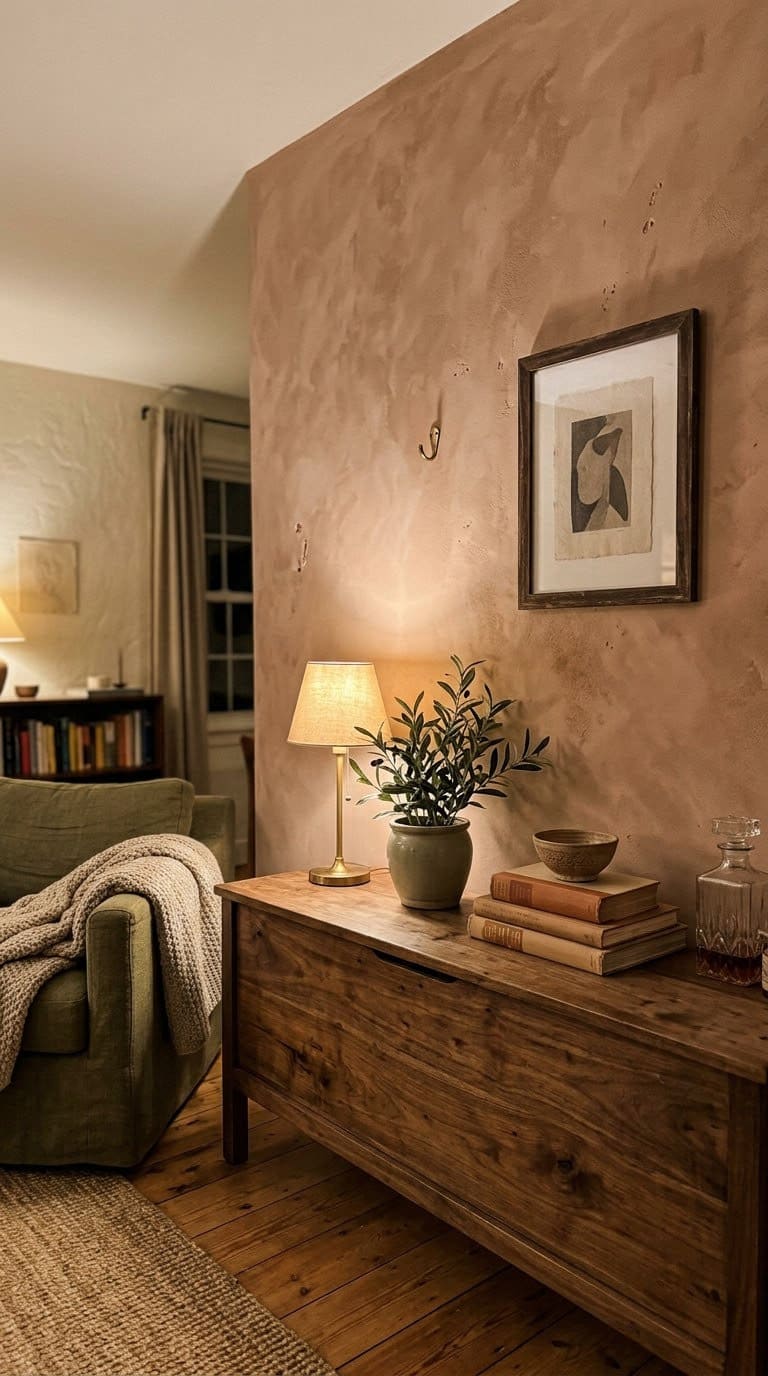
Nothing says earthy faster than a wall with soft, cloudy movement. Limewash and clay-style washes give exactly that.
Real limewash runs about $90 a gallon at Walmart, and you still need primer, a densifier and a sealer, per Livingetc. The same piece shows a DIY version for under $20 that thins sample pots with water.
Jen Dean of Jede Interiors says warm limewash tones feel “soft and dimensional,” which is the whole appeal.
Start with one wall, about 12 by 9 feet. Budget: low for the thinned-paint route, mid for the real thing.
3. A Walnut Coffee Table With an Oak Side Table
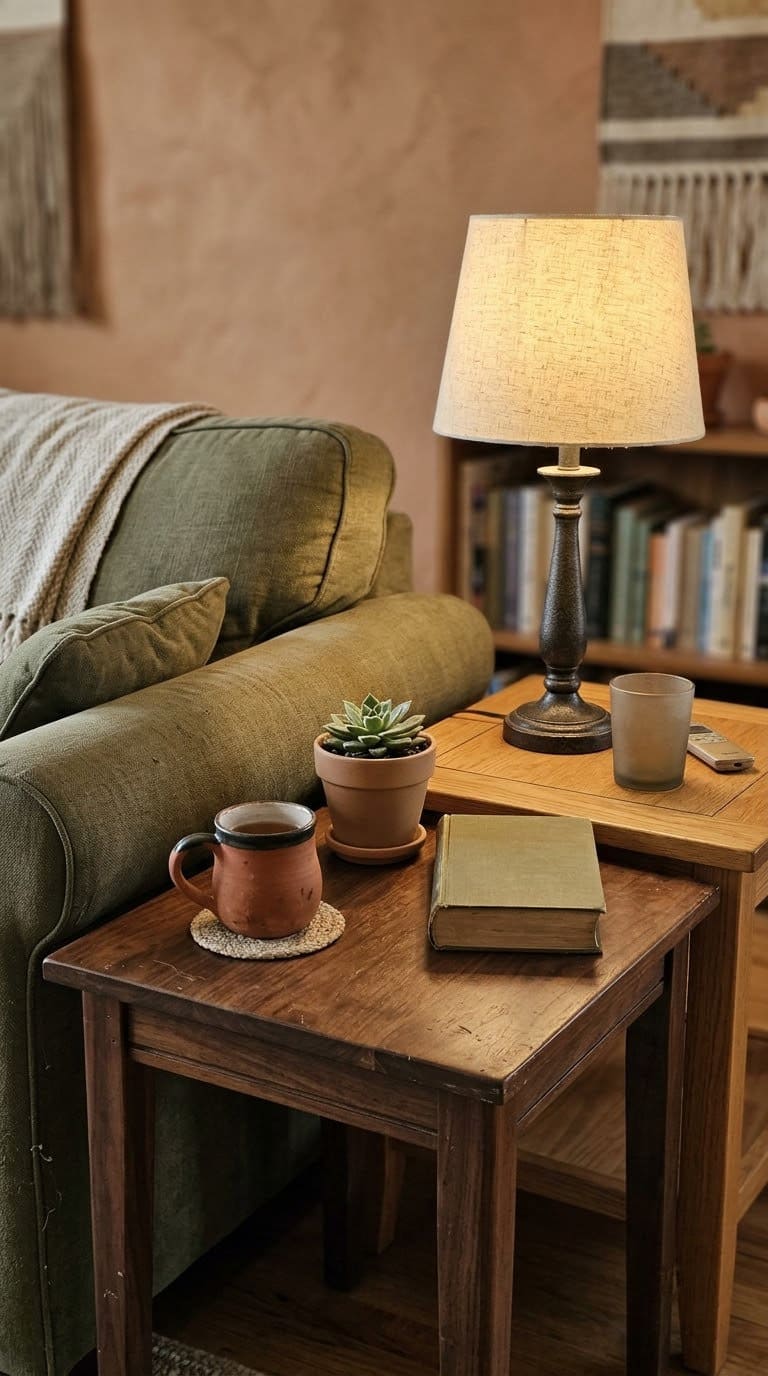
Two wood tones look collected. Five look chaotic.
Pick a dark anchor, like walnut, and one lighter partner, like oak. Check that both lean warm, meaning red or yellow-brown, never gray.
Keep the coffee table about 16 inches from the sofa edge. Budget: mid, and secondhand shops often carry solid pieces for less.
Pairs well with idea 7’s leather chair, since walnut and cognac share a warm base.
4. Terracotta as the 10 Percent
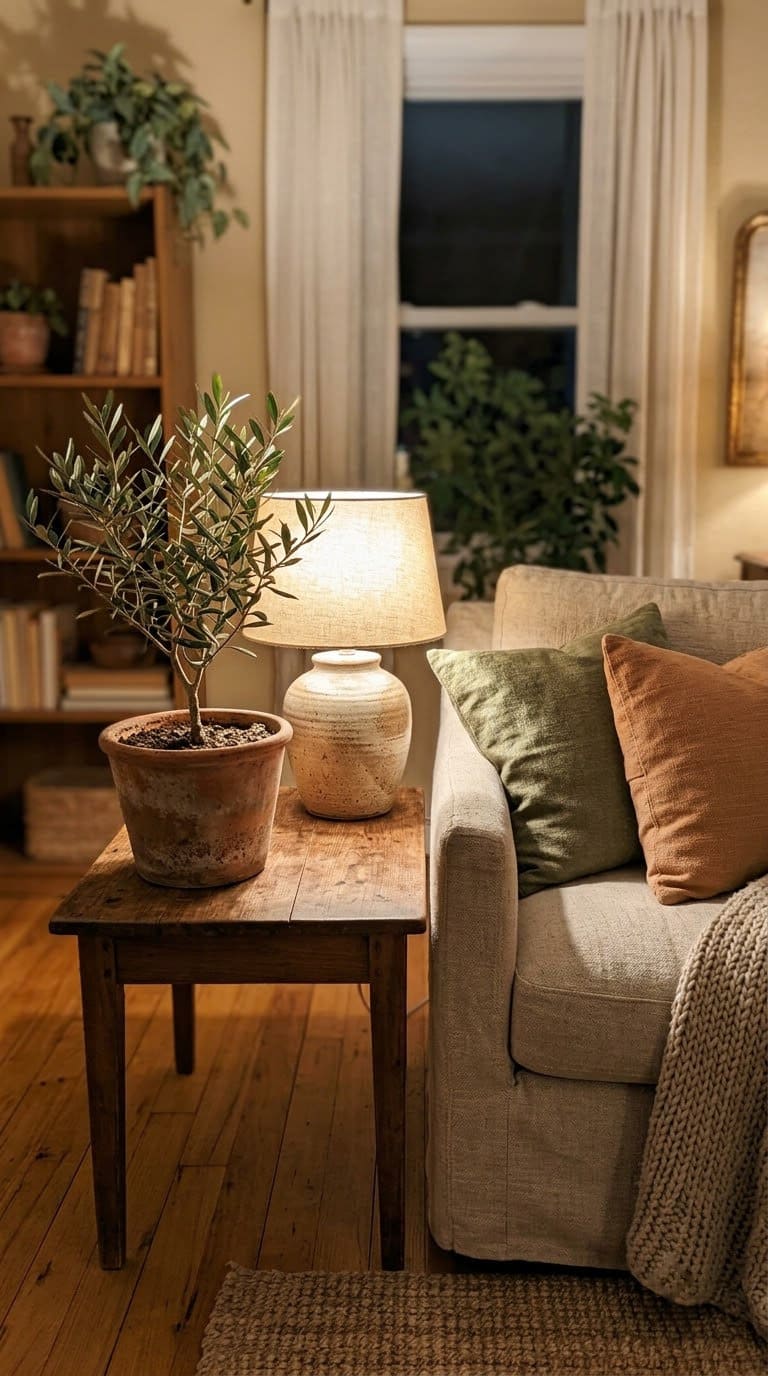
Terracotta works best in small doses, like a spice. Aim for three to five pieces, in different sizes, spread around the room.
Try a 12 inch pot, two pillows in 18 by 18 inch covers, and one lamp base. Rust and burnt orange pillows are fine cousins.
Repeat the color at least twice in different corners of the room. That way your eye travels. Budget: low.
5. A Jute or Wool Rug in Oatmeal
A rug is the biggest chunk of neutral on the floor, so it sets the mood. Jute brings texture. Wool feels softer underfoot.
For a sofa and two chairs, an 8 by 10 foot rug works well. Set the front legs of the furniture on it so the seating feels pulled together.
Skip anything with a cool gray cast. Our page on living room carpet ideas has more options if you want to compare. Budget: mid.
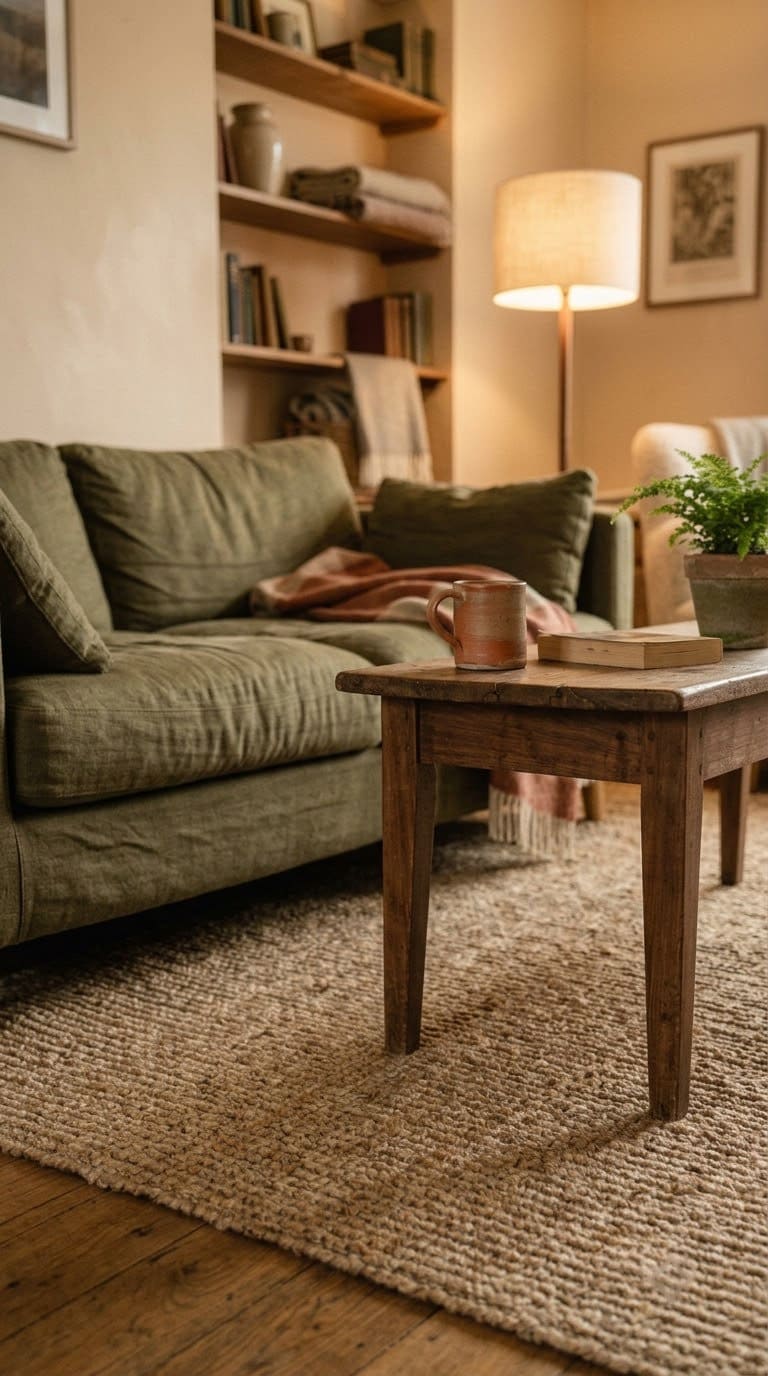
6. Clay Vases in Uneven Groups
Ceramics carry the clay tone without paint. Group them in threes with different heights, roughly 8, 12 and 16 inches.
Use handmade or matte-glazed pieces when you can. Glossy factory ones look like a showroom.
Leave one vase empty. Dried grasses or olive branches in another add height. Budget: low.
Works nicely on the walnut table from idea 3.
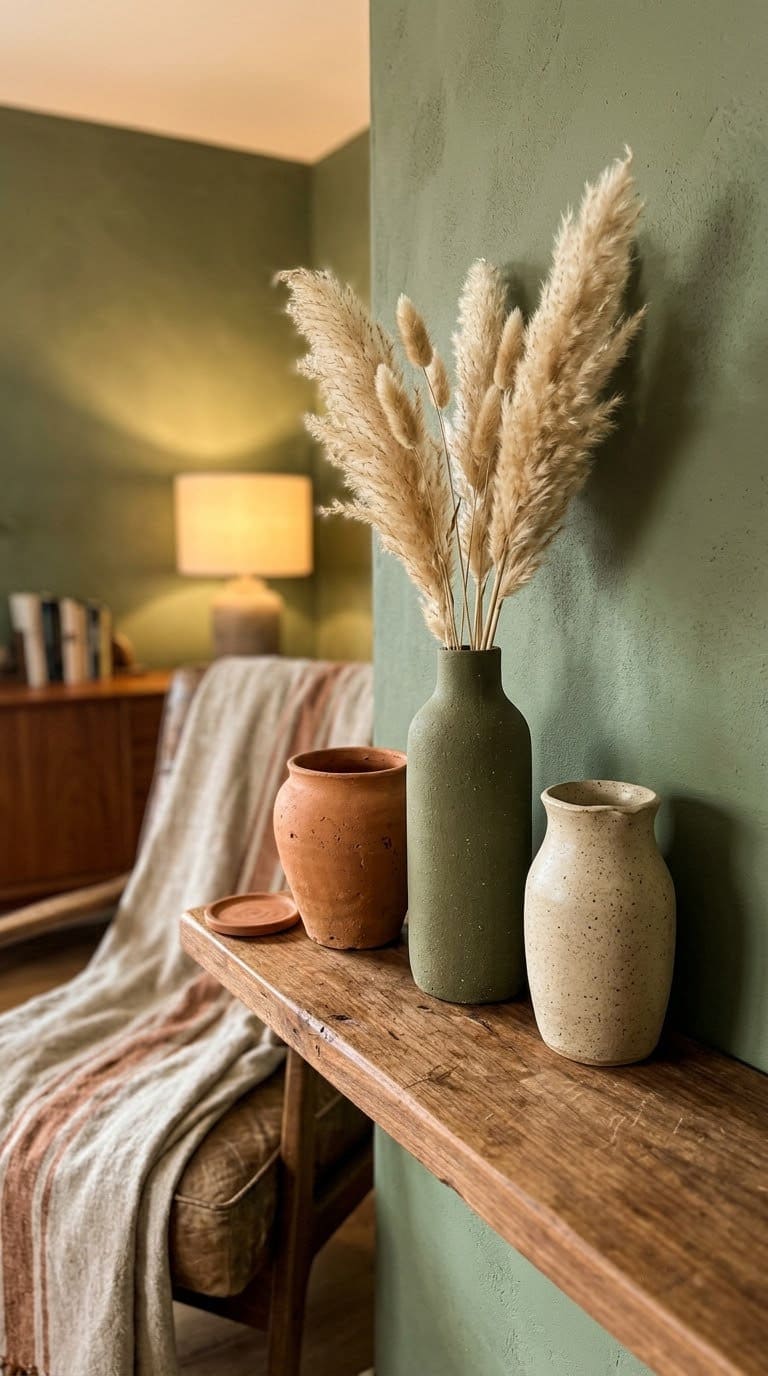
7. A Cognac or Rust Leather Chair
One leather piece adds age and depth. Cognac, saddle and rust all sit well against olive.
Choose a single chair, not a whole set. Leave about 30 inches of walkway around it so it reads as a deliberate accent.
Leather is warm to the eye and gets better with wear. Budget: invest, or hunt vintage for mid.
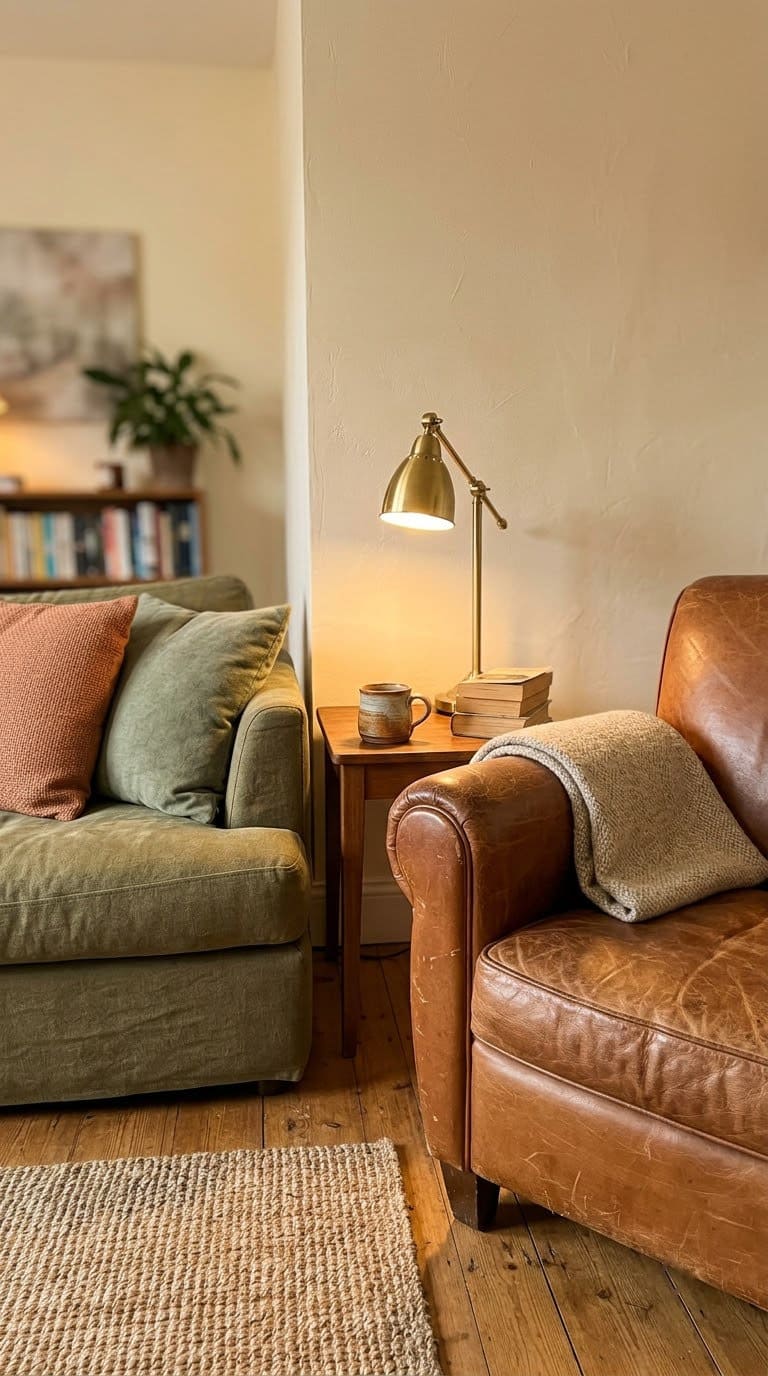
8. Linen Curtains Hung High
Linen curtains in oat or warm white soften light and add texture. Hang the rod 4 to 6 inches above the window frame, and let the panels reach the floor.
That trick makes windows feel taller. Our own habit is to use two panels at least twice the window width so they look full.
They also help with fading, which we cover below. Budget: mid.
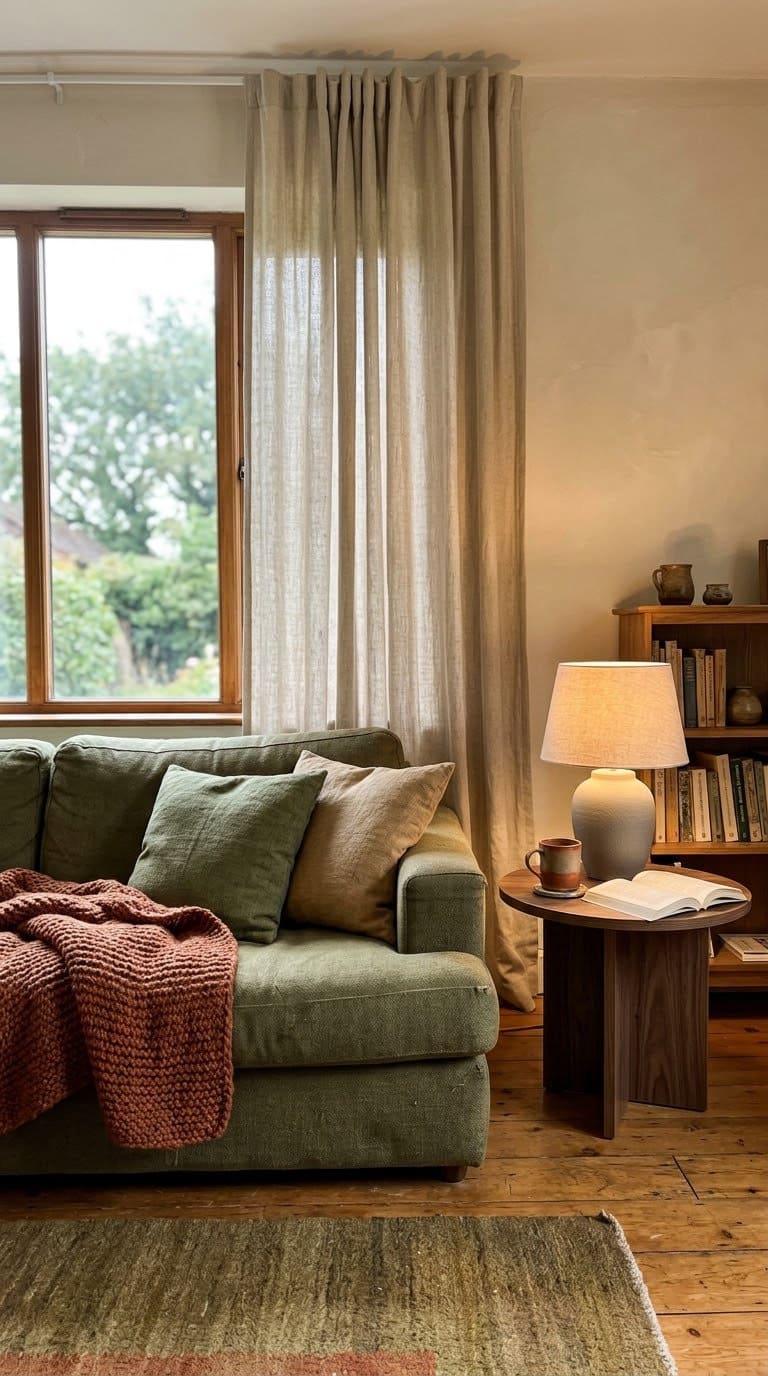
9. Layered Lighting at 2700K
Warm light matters more than any paint. Lighting company Waveform says 2700K “provides a very nice and warm atmosphere” for living rooms, per its 2700K versus 3000K guide.
Aim for three sources: one lamp beside the sofa, one by the chair, and one small accent light near the shelves. Look for a high CRI too. Waveform warns that a low CRI can make objects “appear washed out and dull.”
Don’t mix bulb colors in one fixture. Budget: low to mid.
| Bulb | Color | Best for |
|---|---|---|
| 2700K | Warm gold | Living rooms, evenings |
| 3000K | Soft white | Kitchens, task spots |
| 5000K | Cool daylight | Garages, not your sofa |
10. Plants in Terracotta Pots
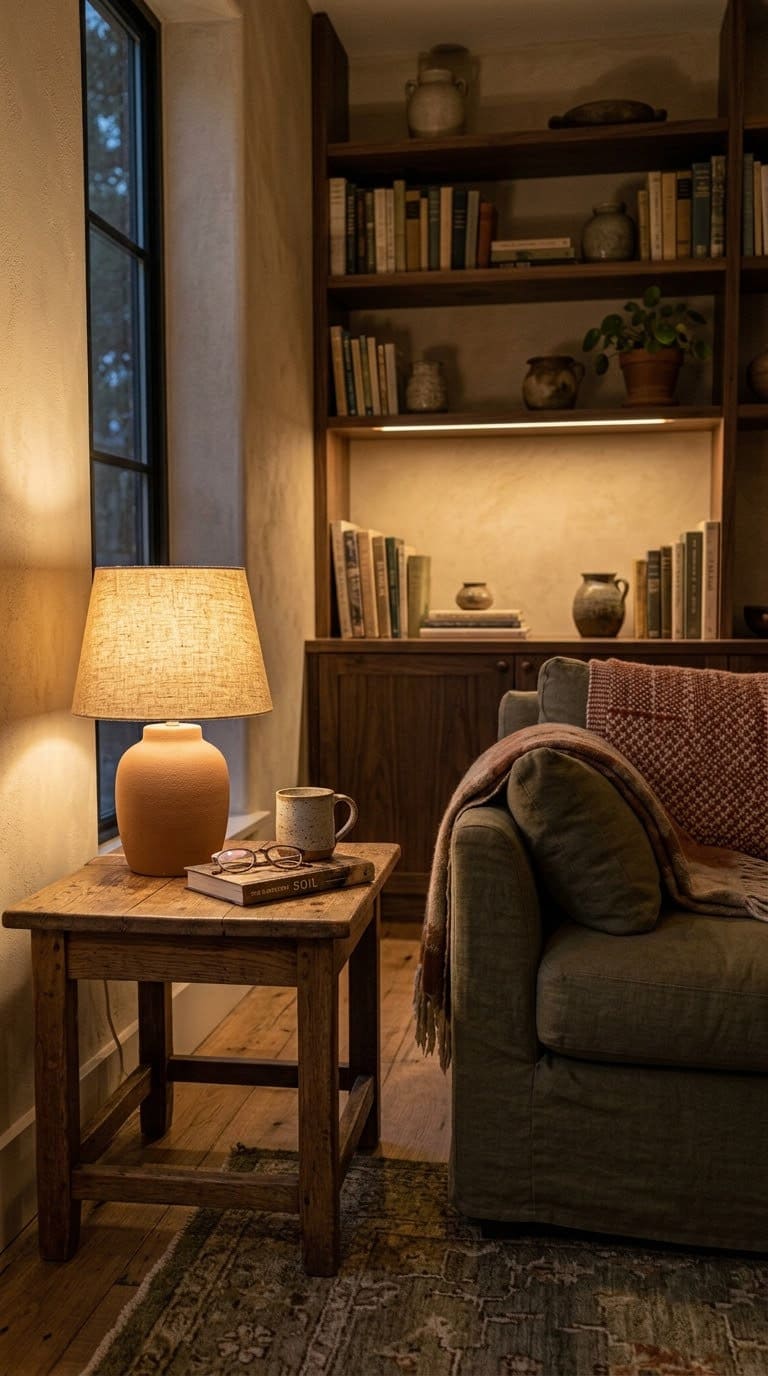
Plants tie the olive green to the room. A rubber plant or a small olive tree in a 12 to 14 inch pot gives height.
Add a trailing pothos on a shelf for softness. Always use a saucer under a terracotta pot, since the clay is porous and can leave a ring on wood.
Keep the pots close to the terracotta accents from idea 4. Budget: low. Our earthy bedroom ideas page uses the same trick on a smaller scale.
11. A Wood Feature: Beams, Slats or a Shelf Wall
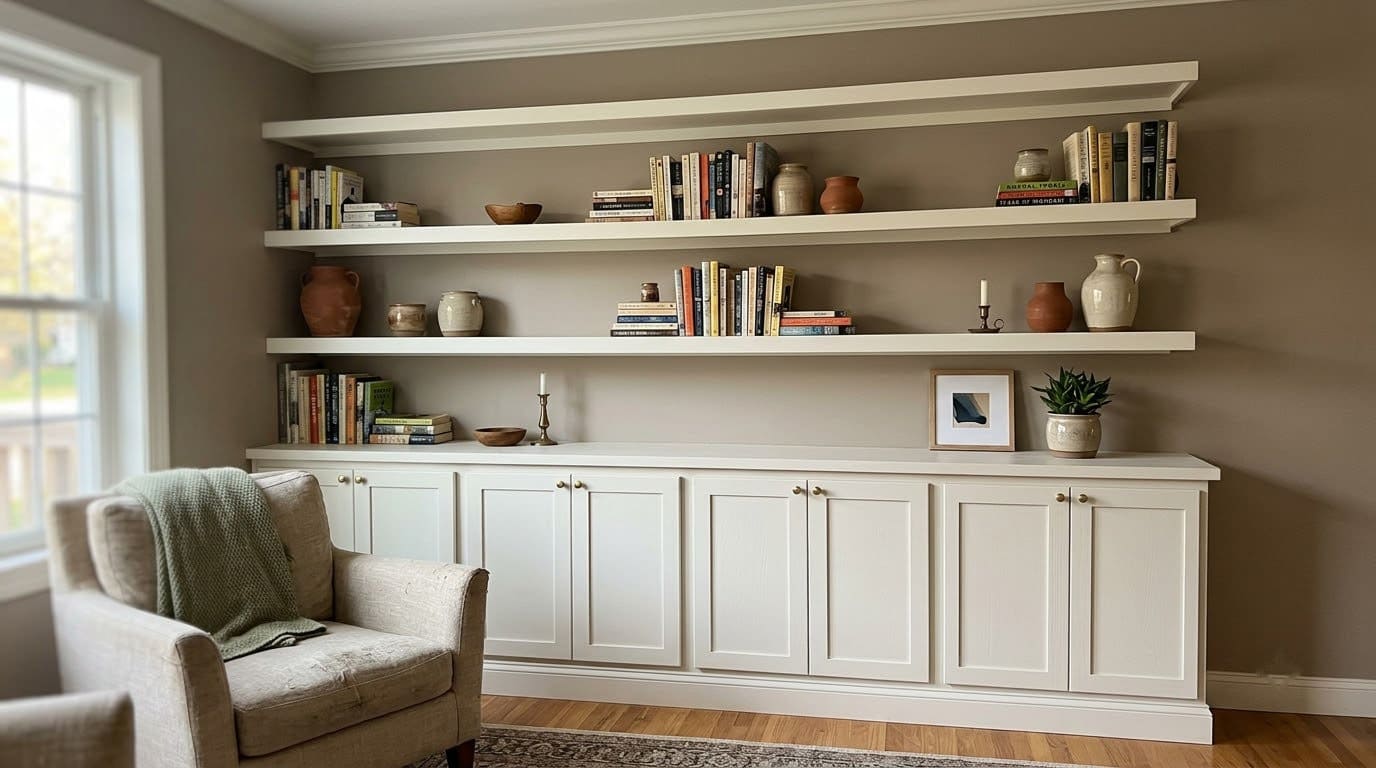
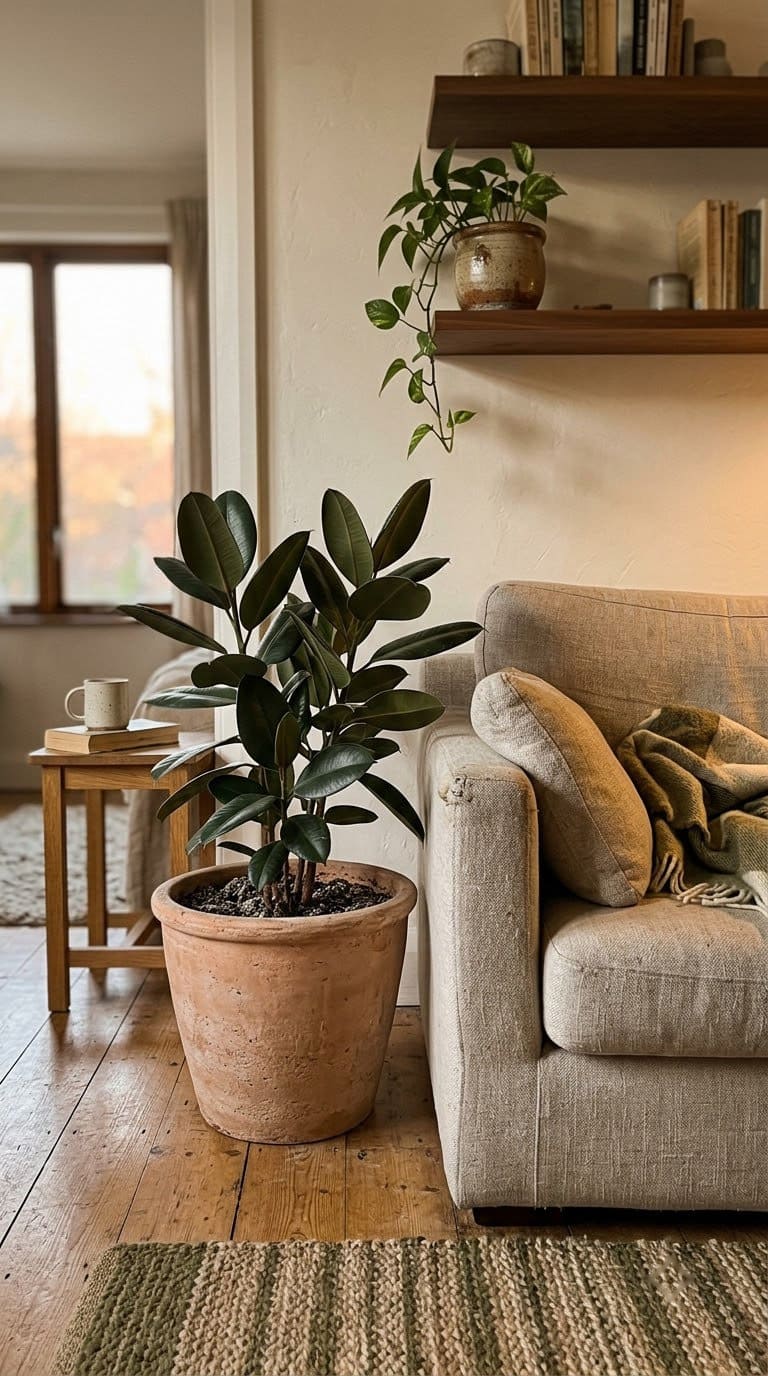
If you can add only one big wood element, pick a wall of slats or built-in shelves. Oak slats spaced about half an inch apart look modern, and the shadows add depth.
Ceiling beams work too, but check with a pro before adding anything structural. Budget: invest.
Pairs well with idea 2, where a limewashed wall softens all that wood.
12. Layered Throws and Textiles
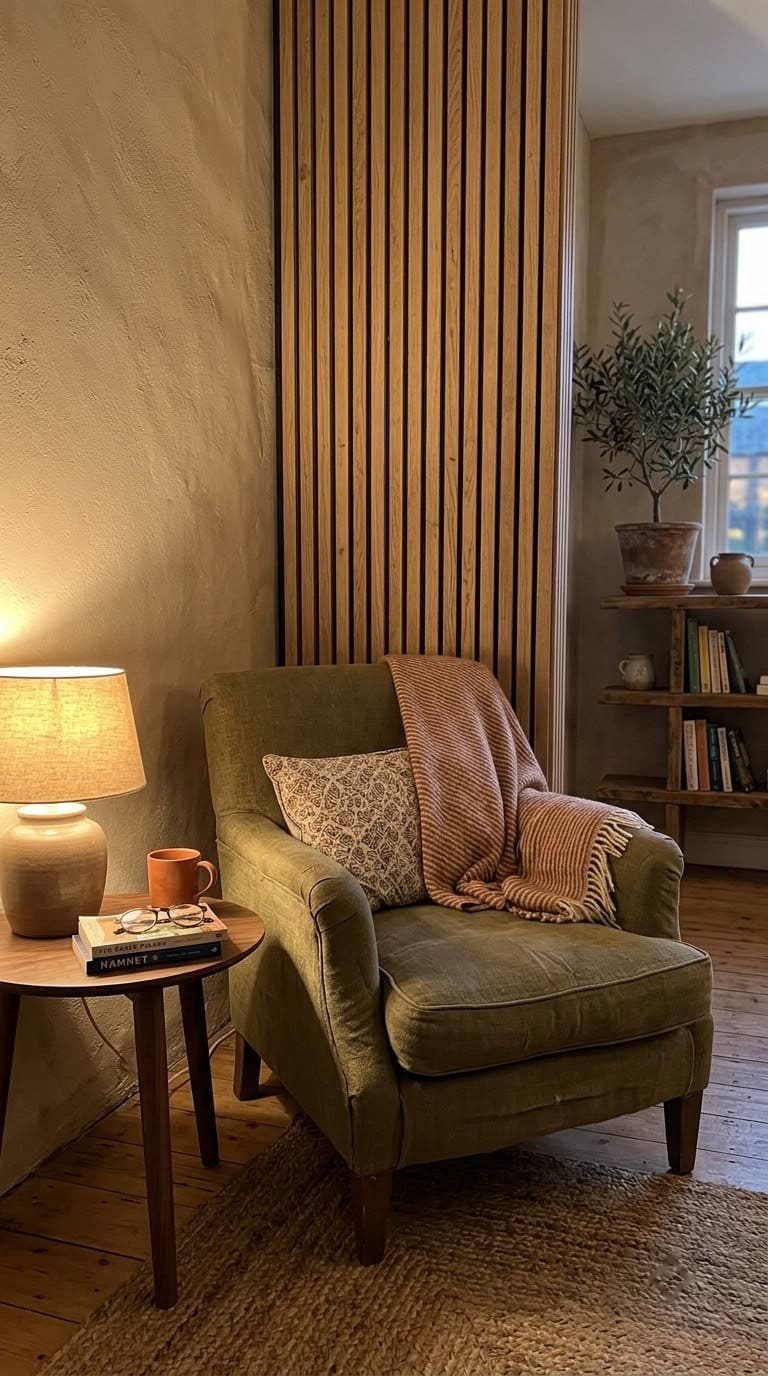
Texture is what keeps a warm neutral room from looking flat. Layer a chunky wool throw, a linen pillow and a nubby cotton one.
Keep to two or three colors, all warm. Two to four pillows per sofa is plenty, in mixed sizes like 20 by 20 and 12 by 20 inches.
This is the cheapest idea on the list and often the one guests notice. Budget: low.
What We Learned the Hard Way
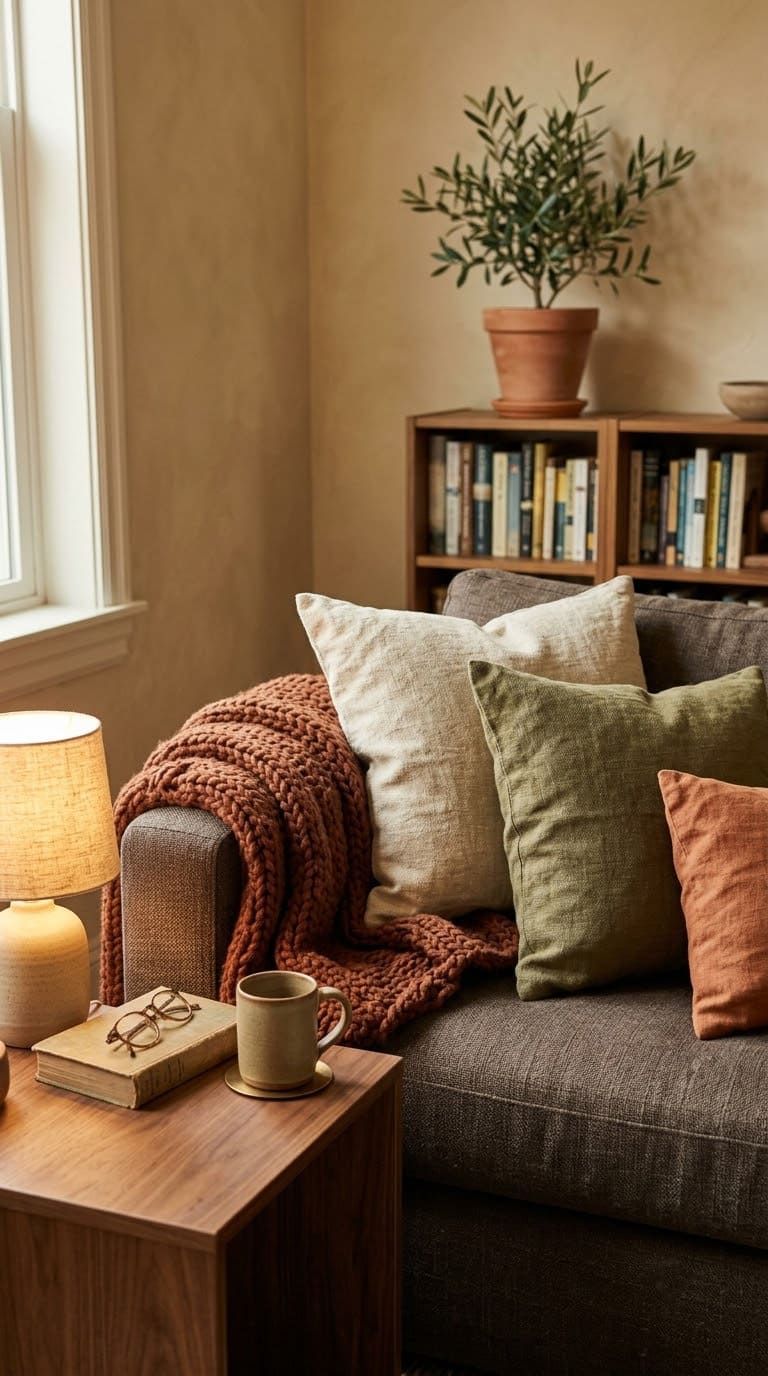
The biggest mistake is buying for the color name instead of the undertone. “Olive” on a website can look yellow in the store and gray at home.
One viewer under a color video keeps small samples of her carpet, floor and worktop in a bag. She takes it shopping. That is the best budget tip we’ve seen, because it saves you from returning a sofa.
Another trap is chasing one exact shade. Under a warm palette video, viewers kept asking which paint was “deep terracotta.” Nobody had a brand to name.
That hints the shade matters less than the undertone.
And don’t push the mood too dark. One commenter wrote that the older she gets, the “lighter and calmer” she needs her rooms. Earthy doesn’t have to mean moody, and our moody living room ideas page shows the darker version if you want it.
If you’re unsure, keep the walls light and put the depth in the furniture.
Is Limewash Safe to Mix Yourself?
Not casually. Raw hydrated lime is a caustic powder.
The New Jersey Department of Health has a fact sheet on calcium hydroxide, the main ingredient in hydrated lime. It says contact “can severely irritate and burn the skin and eyes with possible eye damage.”
Its first-aid advice for the eyes is to flush with water for at least 30 minutes and get medical help. That is much longer than most people expect.
If you buy ready-mixed limewash paint, the risk is lower, but wear gloves and eye protection anyway. We’d skip mixing powder at home. Do it only if you own the right gear.
The thinned sample-pot trick in idea 2 skips the powder.
Will Sunlight Fade Your Wood and Fabric?
Yes, over time. The National Park Service wrote a Conserve O Gram on upholstered furniture. It says “light damage is cumulative and irreversible.”
It also says light “will also fade wood stains and the natural color of the wood.” The same guide advises against placing upholstered furniture in direct sunlight.
Museums keep light far dimmer than any home, so you can’t copy their numbers. But you can move a sofa out of the hottest sun patch, and the linen curtains in idea 8 help too.
Rotate rugs and accessories now and then. Otherwise one side of your walnut table will end up paler than the other.
Your Two-Weekend Plan
Weekend one is testing. Buy fabric swatches and paint samples, then look at them in daylight and under your own bulbs.
Swap every bulb in the room to 2700K. It costs the least and changes the most.
Weekend two is the build. Start with the wall and rug, then the sofa, then wood, then accents.
Take a photo after each layer. If the room looks flat in the photo, add one dark piece and one texture.
Frequently Asked Questions
What colors are in an earthy living room?
Warm neutrals like oatmeal and camel, muted greens like olive, and clay or terracotta accents. Warm wood ties them together.
What is a good ratio for earthy colors?
Our working split is 60 percent warm neutral, 30 percent olive and 10 percent clay. It’s our own rule of thumb, not an industry standard.
What wood goes with olive green?
Walnut and oak both work if they lean warm. Match reddish or yellow-brown woods to a yellow-leaning olive.
Can I mix wood tones in one room?
Yes, but keep it to two. Pick one dark and one light, and make sure both share a warm base.
What lightbulb is best for an earthy room?
2700K warm white. Waveform Lighting recommends it for living rooms, and a high CRI keeps colors from looking dull.
Is limewash dangerous?
Raw lime powder can burn skin and eyes, per the New Jersey Department of Health. Ready-mixed paint is safer, but wear gloves and eye protection anyway.
Does sunlight fade wood furniture?
Yes. The National Park Service says the damage adds up and can’t be undone.
How do I stop an earthy room from looking flat?
Add one dark anchor, like walnut, plus texture such as linen, jute and clay. Then use warm 2700K lighting.
How much does limewash cost?
Livingetc reports real limewash at about $90 a gallon plus primer and sealer. A DIY thinned-paint version can come in under $20.
Related Posts
Products We Recommend
This post contains affiliate links. We may earn a commission on qualifying purchases at no extra cost to you.
LUXRITE A19 LED Bulbs, 60W Equivalent, 800 Lumen, CRI 90, 4 Pack
The 2700K warm-white bulb from idea 9. It has a CRI of 90 so olive and clay stay rich, and a selectable color switch, so set it to 2700K and leave it
Shop Now
LUKA Ceramic Terracotta Vase Set of 3
The uneven vase group from idea 6, in a matte clay tone. The set comes in graduated heights, so the trio is done in one order
Shop Now
D'vine Dev 3-Pack Terracotta Pots and Saucers, 8/10/12 Inch
Unglazed pots with matching saucers for the plants in idea 10. The saucers protect wood tables and floors from the porous clay
Shop NowNever miss an update — choose FarmFoodFamily as your preferred source on Google.
How it works: Tap the button below to open Google's settings page, then check the box next to FarmFoodFamily.
Tap the checkbox to turn it blue — that's how you know it's set.