How to Winterize Strawberry Plants: 7 Foolproof Steps for a Bigger Spring Harvest
Winterizing strawberry plants takes one weekend and a few bales of straw, but only if you wait for dormancy before you mulch.

Never miss an update — choose FarmFoodFamily as your preferred source on Google.
How it works: Tap the button below to open Google’s settings page, then check the box next to FarmFoodFamily.
Tap the checkbox to turn it blue — that’s how you know it’s set.
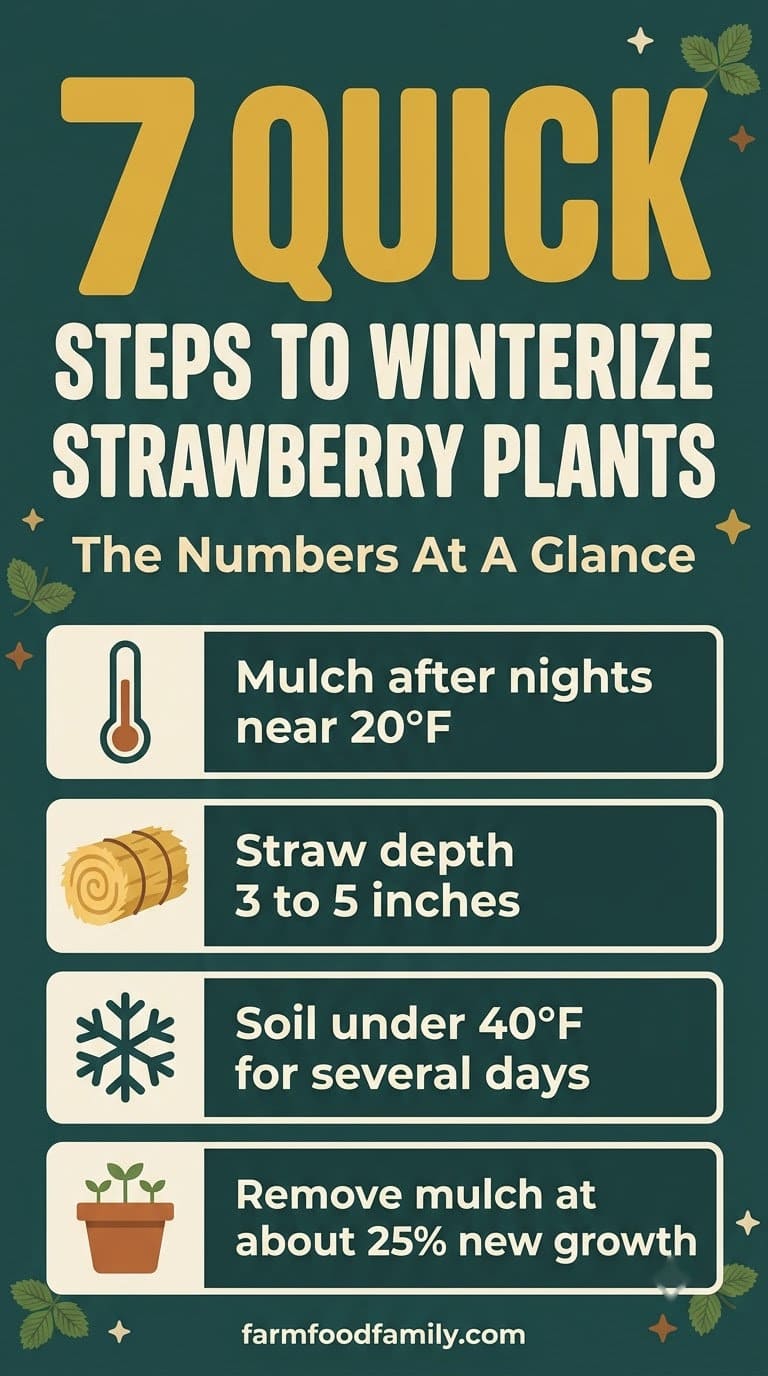
Clean out the bed, then wait. Mulch only after the plants go dormant, which means the leaves turn grayish or reddish and several nights in a row drop to about 20°F.
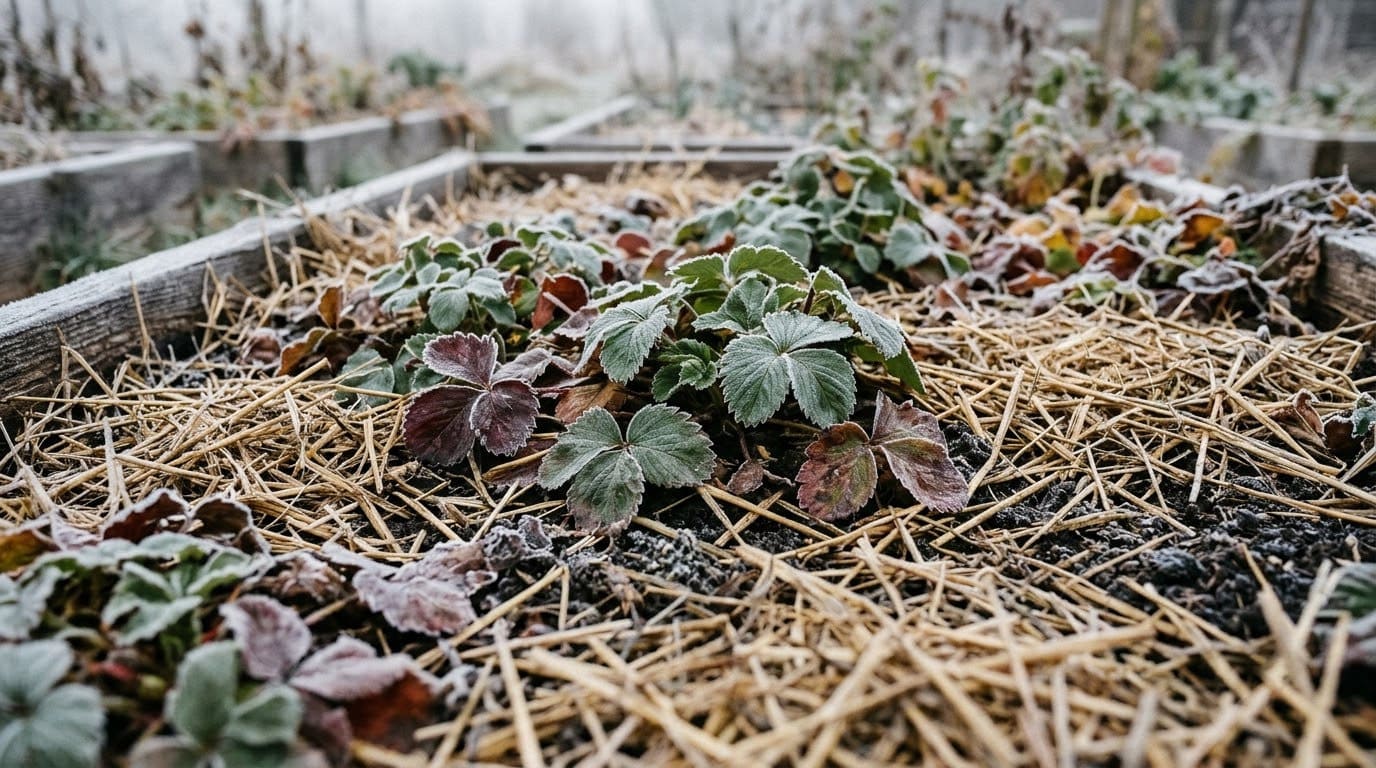
Then cover the whole bed with 3 to 5 inches of loose, clean straw. Skip leaves, hay, and grass clippings, because they mat down or sprout weeds. Straw keeps air moving around the crowns.
In zones 8 and warmer you can usually skip the mulch. Colder than zone 5? Add a woven row cover over the straw for a few extra degrees.
In spring, pull the straw back when about a quarter of the plants show new growth. Keep it nearby for late frosts.
Potted plants need their own plan, since a pot freezes from every side. An unheated garage is the easiest fix.

Why does winterizing matter at all?
Strawberries are tougher than most people think. Epic Gardening says they adapt to zones 3 through 10.
Answer 4 quick questions and get matched to the exact fix for your yard — drainage, budget, layout, or something else entirely.
Take the Free QuizBut the crown is the weak spot. That’s the short, woody stem at soil level where every leaf and flower stalk starts. Logan Hailey at Epic Gardening says crowns can die below 15°F.
Cold isn’t the only threat. Wet soil that freezes, thaws, and freezes again can heave shallow crowns right up out of the ground. Once the roots are exposed to dry winter air, the plant rarely recovers.
Good mulch evens out those swings. That’s the whole job.
Do you need to winterize in your zone?
Short answer: it depends on how low your winter lows go. Here’s how the sources line up.
| Your zone | What to do | Why |
|---|---|---|
| 8 and warmer | Usually nothing. Keep a cover handy for rare hard freezes. | Winters rarely hit crown-killing temperatures. |
| 6 to 7 | Straw mulch, 3 to 5 inches. | Crowns face 15°F or colder in some winters. |
| 5 and colder | Straw mulch plus row cover. | Epic Gardening recommends row cover here. |
| Any zone, in pots | Move or insulate the pot. | Soil in a pot freezes faster than ground soil. |
Zone numbers are a starting point. Your own yard may run colder or warmer, so trust a cheap thermometer over the map.
What do you need before you start?
The list is short, and most of it is cheap. Gather it all before the first hard frost.
- Clean, weed-free straw. Figure one bale per 100 square feet or so as a starting guess, since we haven’t found a sourced coverage number.
- A rake and a pair of gloves.
- A soil thermometer, which tells you when the ground is truly cold.
- Woven row cover and sandbags, only if you garden in zone 5 or colder.
- Wire fencing and bricks, only if your bed sits in a windy spot.
Total cost depends on bed size and your local straw price. For a small raised bed it’s a modest weekend project, not a big investment.
Most yard problems trace back to one specific, fixable cause. Find yours in 4 quick questions.
Take the Free Quiz
A white woven frost blanket for the row-cover step in zones 5 and colder. Light enough to lay over straw-mulched beds.
Shop NowThis post contains affiliate links. We may earn a commission on qualifying purchases at no extra cost to you.
Why buy the thermometer? Air temperature swings all day, but soil temperature moves slowly. It’s the calmer signal that plants are asleep.
How do you winterize strawberry plants step by step?
Here’s the order we’d follow, from the last fall chores to the final blanket of straw. Set aside one weekend in early fall and one afternoon when the weather turns.
1. Clear the bed
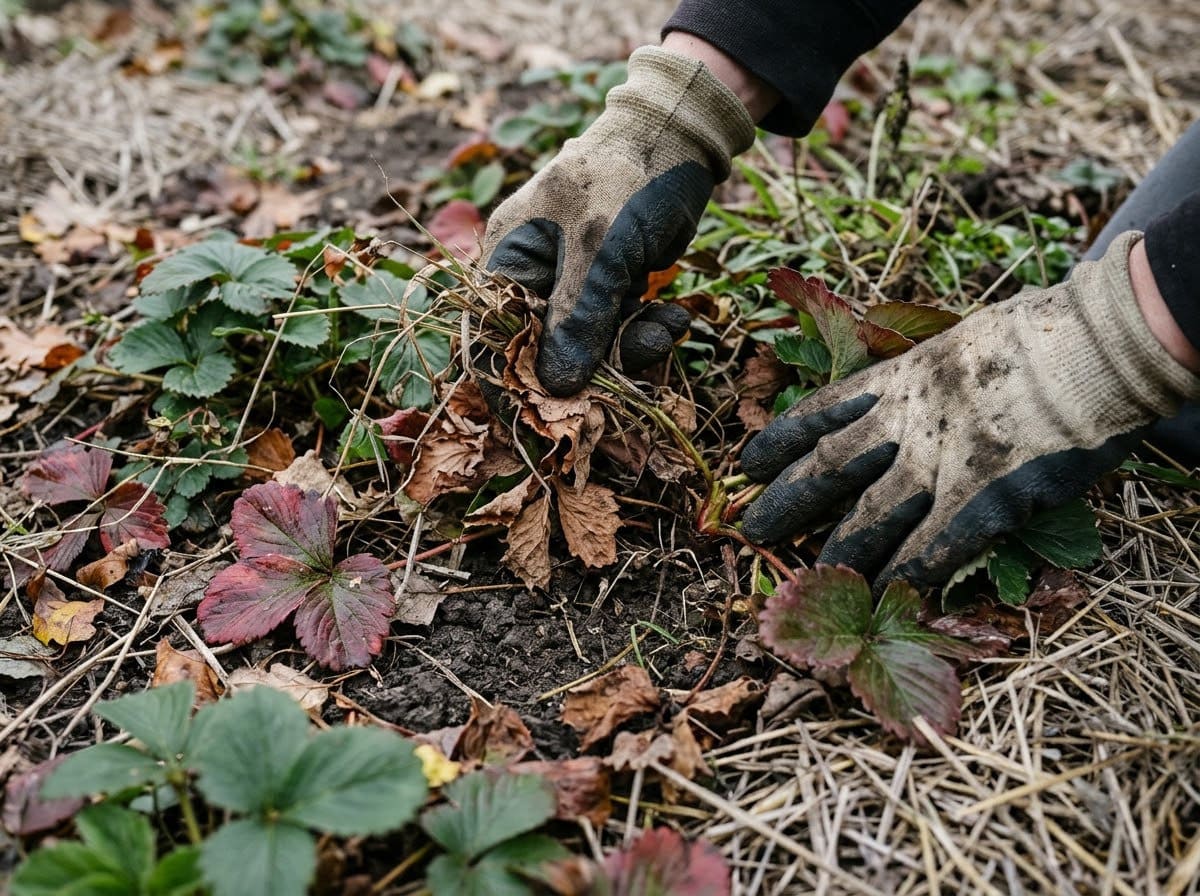
Start with a clean slate. Pull weeds, pick off dead or spotted leaves, and rake out old mulch from the summer.
Why bother? Old leaves hold fungal spores, and weeds hide slugs. Epic Gardening lists leftover debris as a common way disease sneaks through winter and shows up again in spring.
Work gently around the crowns. They sit right at the soil line and bruise easily.
Quick tip: bag the debris and toss it in the trash, not the compost pile. Most home piles don’t get hot enough to kill disease spores, and that’s our own caution rather than a sourced rule.
If your bed is overcrowded, thin it now. Plants about 10 to 18 inches apart get better airflow, and airflow means fewer rotted leaves.
2. Trim only what you need to
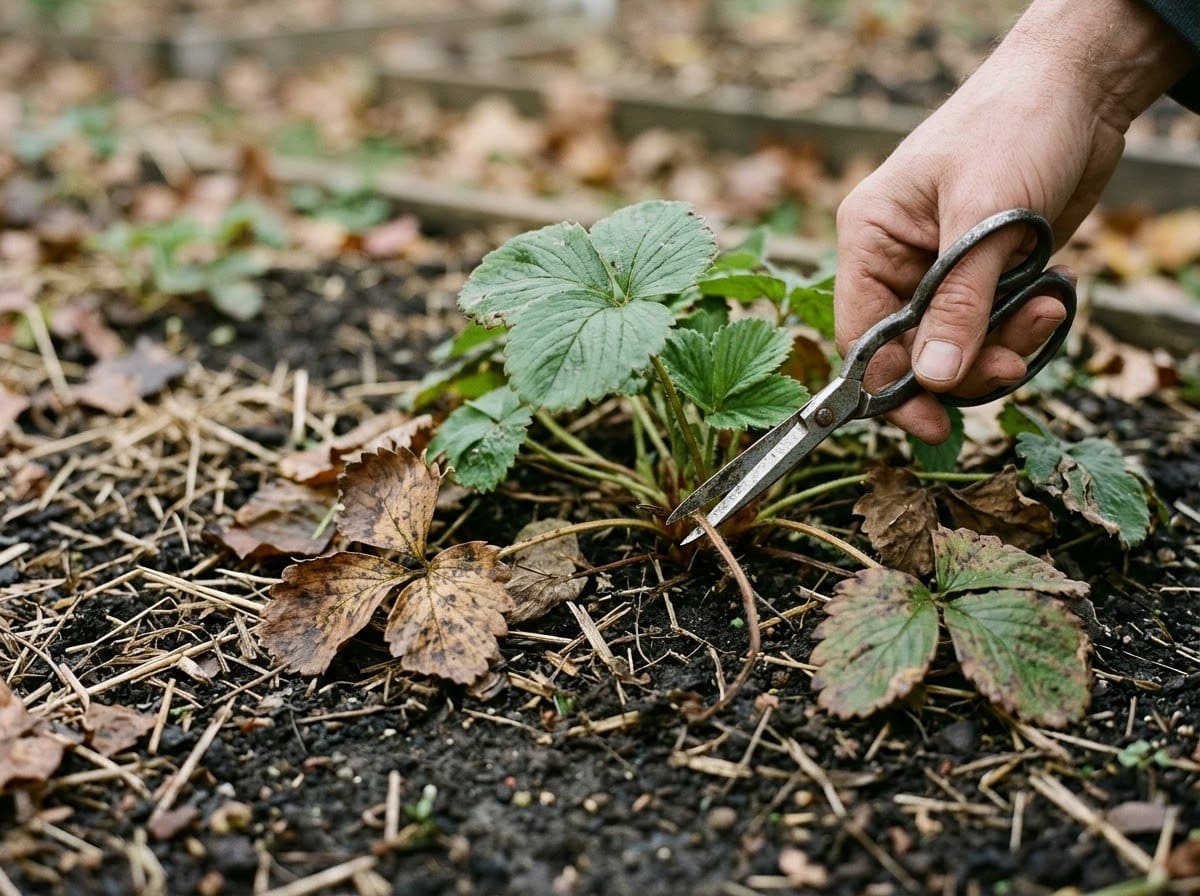
Pruning confuses a lot of gardeners. Here’s the simple version.



June-bearing plants get their big renovation right after harvest in summer, so by now there’s little left to cut. Everbearing and day-neutral types usually just need dead leaves and stray runners removed.
The average homeowner spends $616/year on yard fixes that don't address the real problem. Find out what yours actually is — before you spend another dollar.
Take the Free QuizIf you’d rather mow, keep the blade at least 4 inches high, per Epic Gardening. And never cut into the crown.
We’d rather under-trim than over-trim. Green leaves keep making sugar for the roots until the freeze comes.
3. Feed once, late in the fall
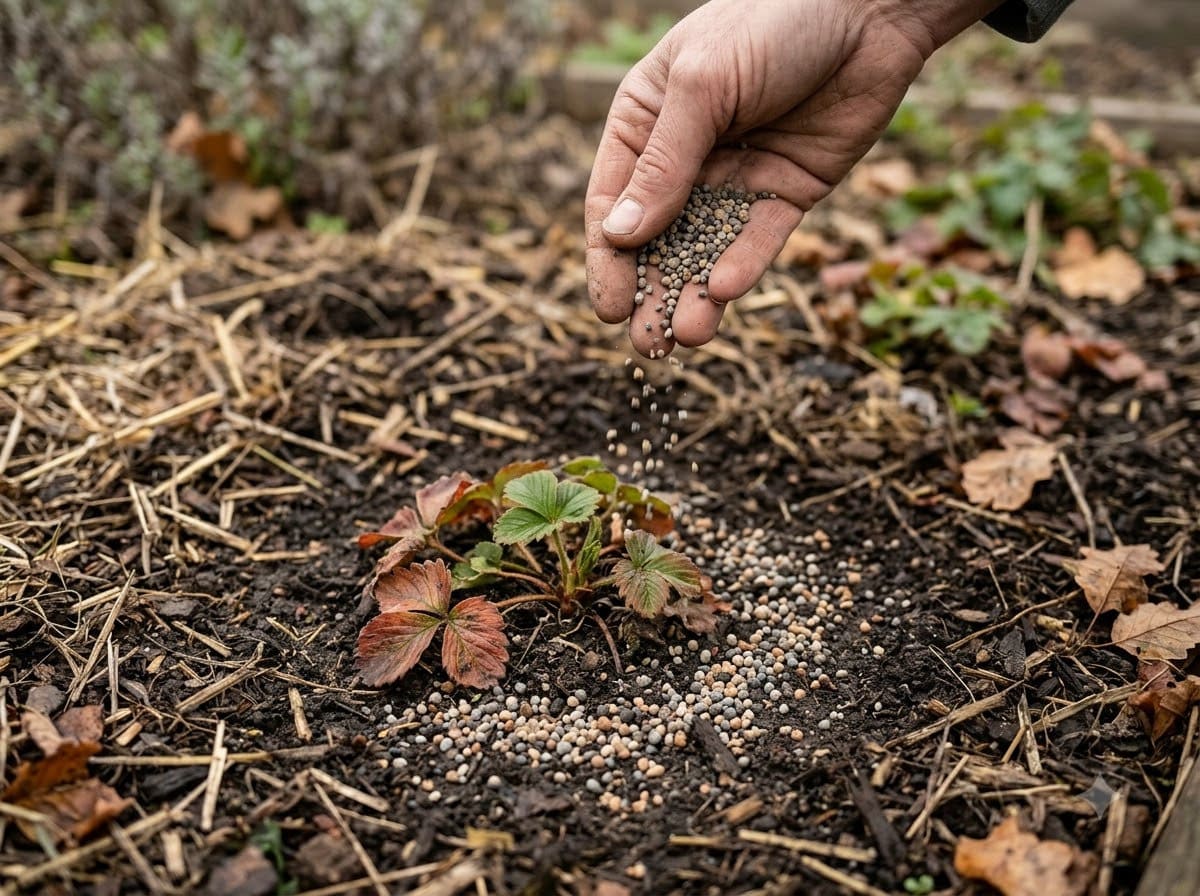
A light feeding in late fall helps the plant store energy for spring. Epic Gardening suggests a handful of 4-8-4 fertilizer sprinkled around each plant, not on top of the crown.
An organic, slow-release blend works well because it won’t push soft new growth. And hold off on nitrogen in spring, since too much near flowering gives you mushy berries.
Water deeply before the ground freezes, too. Stephen Albert at Harvest to Table schedules that deep watering for late fall, and warns that overwatering can rot crowns.
4. Wait for dormancy, then mulch
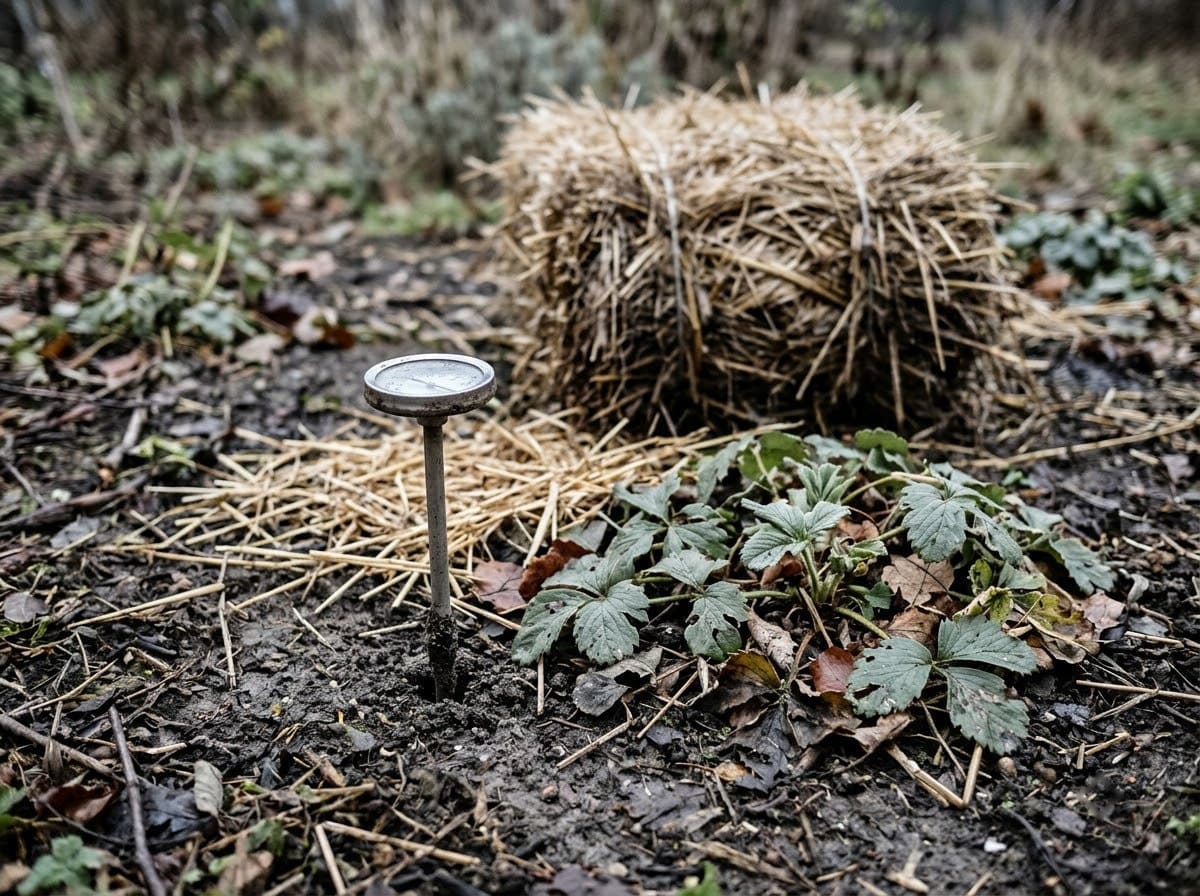
This is the step people rush. Don’t.
Richard Jauron at Iowa State University Extension says to mulch before temperatures fall below 20°F, but only after the plants have hardened off. He says mulching too early leaves them more open to winter injury.
How do you know they’re ready? Look for these signs.
- Several nights in a row near 20°F.
- Soil staying under 40°F for several days in a row.
- Leaves gone grayish or reddish instead of bright green.
For most northern gardeners that lands in November. Bruce Bordelon at Purdue puts it as late as mid-December in Indiana, after a few nights of 20°F.
Mulch too soon and the plants stay soft and green. Mulch too late and a surprise freeze gets to the crowns first.
5. Choose the right mulch and spread it right
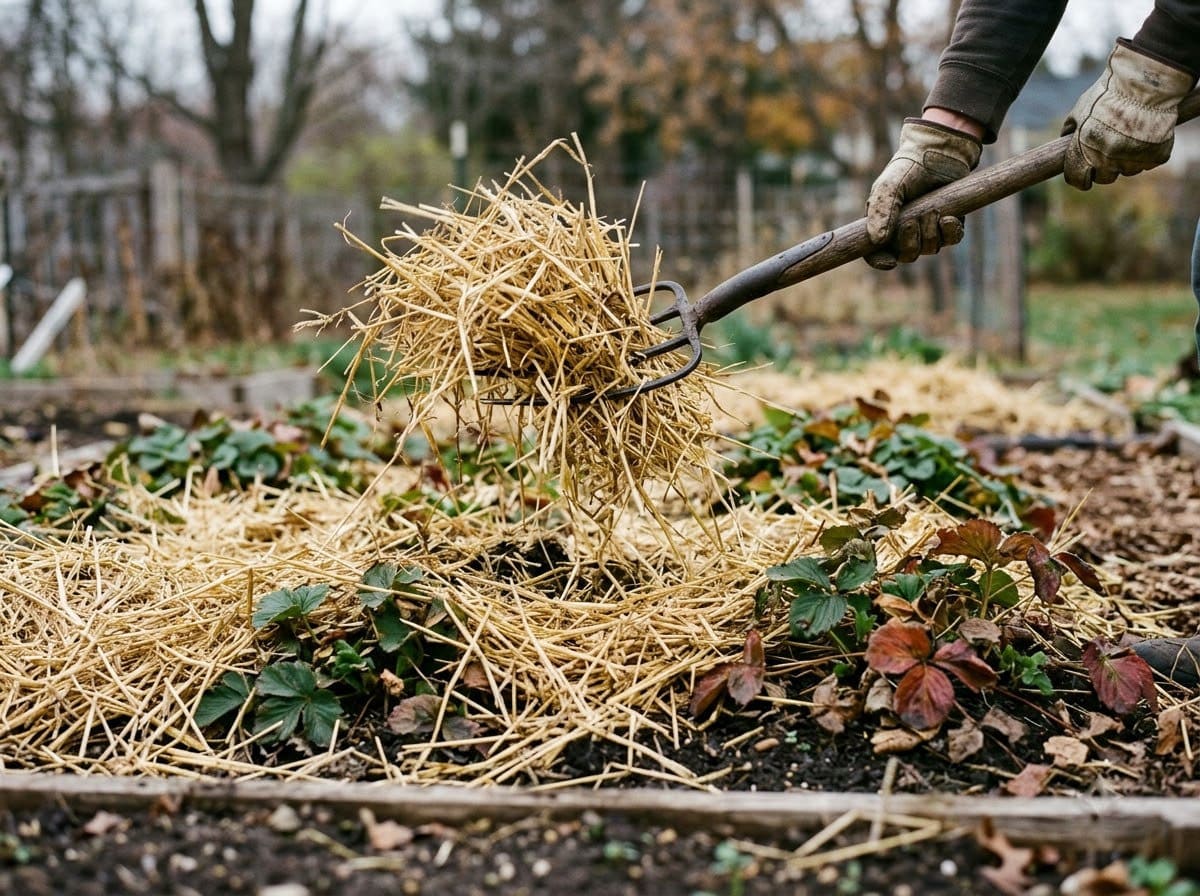
Clean, weed-free straw wins. Oat, wheat, or soybean straw all work, according to Iowa State. Pine needles also work, per Epic Gardening.
Spread it loosely over the whole bed, crowns included. Iowa State says 3 to 5 inches, which settles to 2 to 4 inches. Purdue prefers 4 to 6 inches.
Raised beds lose heat faster, so go thicker. Iowa State recommends 6 to 8 inches of straw for them.
Windy spot? Lay wire or plastic fencing over the straw and weigh it down with bricks. Otherwise your mulch ends up in the neighbor’s yard.
What should you skip?
- Leaves. Iowa State says they mat down and trap ice and moisture against the plants.
- Hay. It’s full of seed, and that seed sprouts into a spring weed carpet.
- Grass clippings. Purdue notes they stay wet and smother plants.
How cold can a mulched bed take? Purdue says mulched plants survive -20°F with little damage.
6. Add a row cover only when you need one
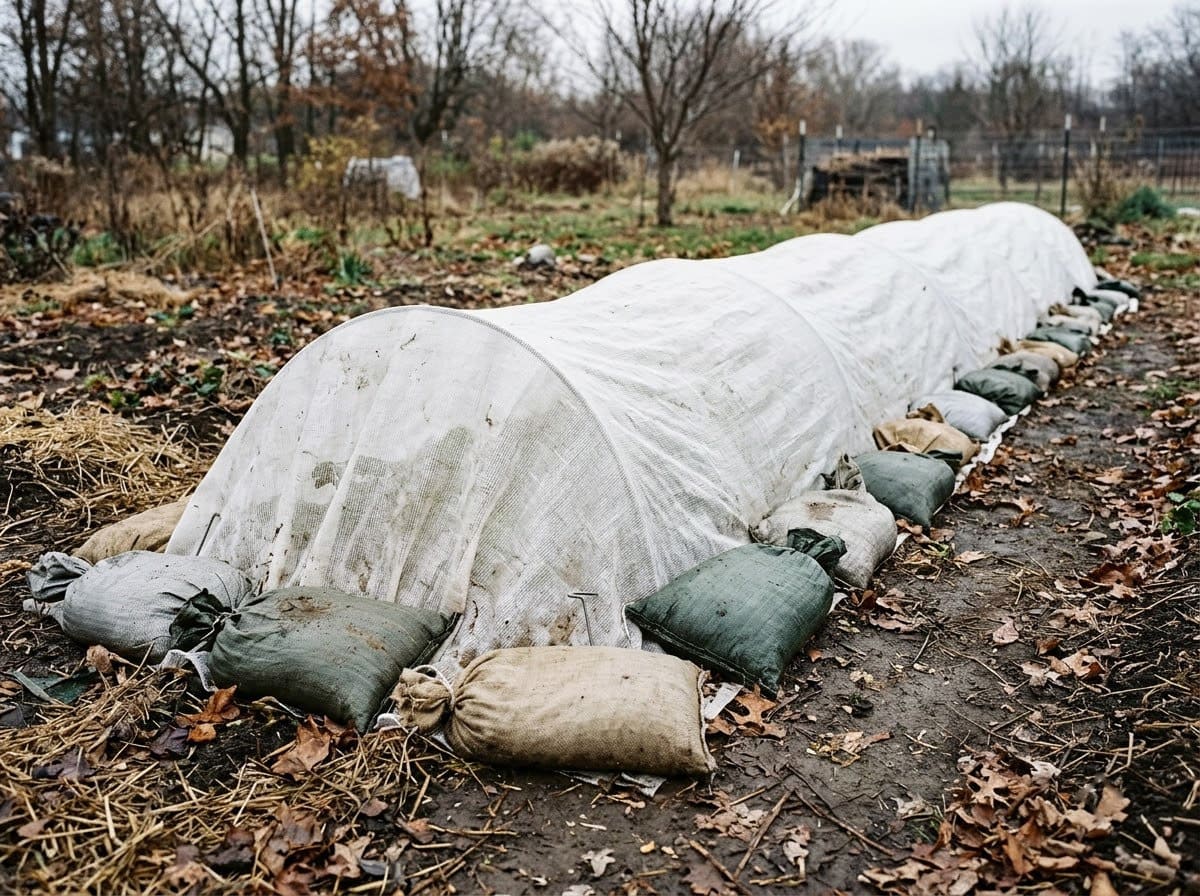
In zone 5 and colder, extra insulation pays off. A woven row cover adds roughly 2 to 8 degrees of warmth, according to Epic Gardening.
Secure the edges with sandbags or soil so wind can’t peel it back. Make sure it’s a breathable woven fabric.
Two covers cause trouble. Clear plastic can wake plants up too early, and Epic warns an opaque blanket on green plants blocks photosynthesis.
Take the cover off at bloom time, too. Pollinators can’t reach flowers under fabric.
Quick tip: row cover works best on top of the straw, not instead of it. Think of the straw as the sweater and the cover as the coat.
7. Give container strawberries their own plan
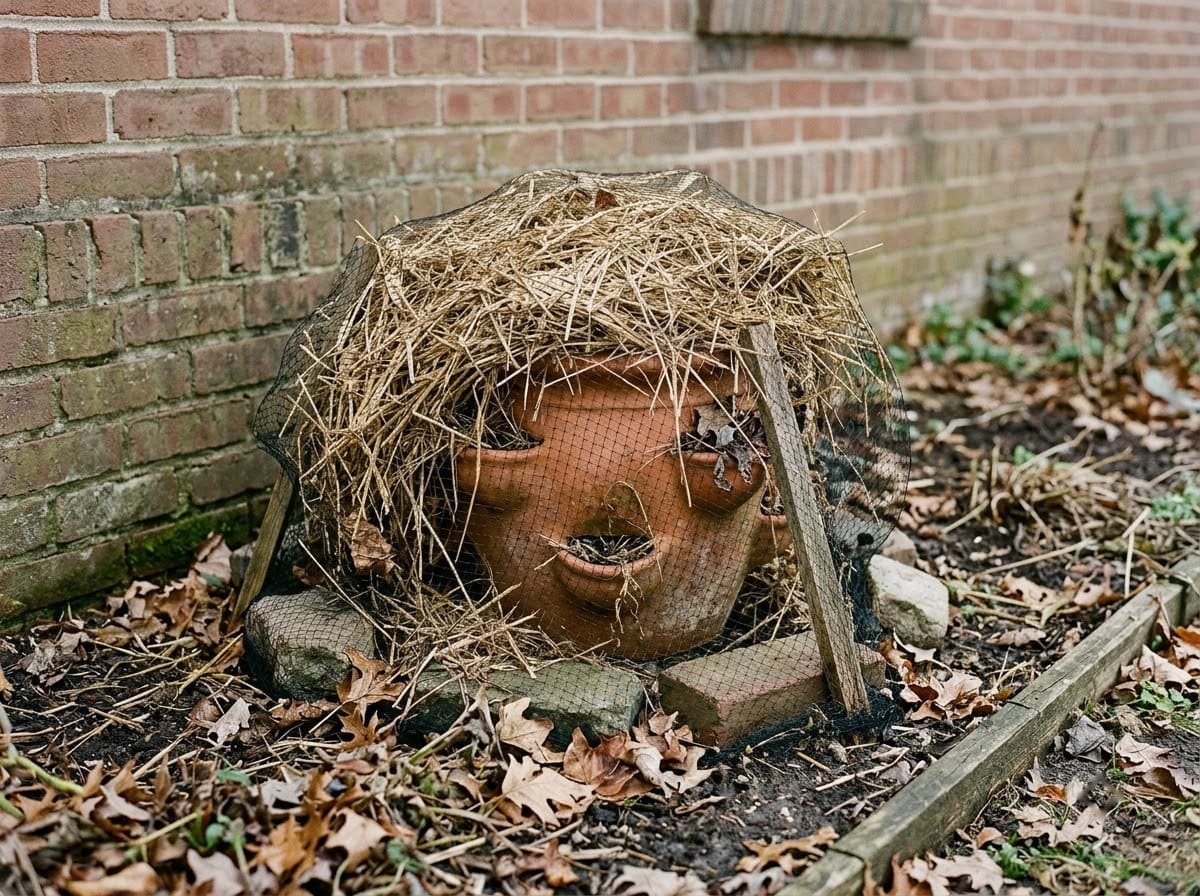
Pots are the risky spot. The soil can freeze solid because cold reaches the roots from every side, including underneath.
Iowa State is blunt about it: plants left outdoors in containers will likely be badly damaged or killed. So pick one of these methods.
| Method | How | Best for |
|---|---|---|
| Unheated garage | Move the pot in around November. Water lightly now and then. | Anyone with a cold, frost-free garage |
| Against the house | Set the pot by a wall and pile straw over it. Hold it with netting. | Mild to moderate winters |
| Sink the pot | Dig a hole, set the pot in, and mulch over it. | Gardeners with spare bed space |
| Plant out, repot later | Move the plant into the ground, mulch, and repot in spring. | Hardy in-ground winters |
The first two ideas come from Iowa State and Epic Gardening. The last three come from Larry Hodgson of the Laidback Gardener, who adds that pots can freeze solid and need protection in zone 7 and colder. We like the garage most, since the plant stays dormant and needs almost no care.
One caution from Epic Gardening: don’t dig an in-ground plant up and move it into a pot for winter. The shock does more harm than the cold.
Planning a tower? Our guide to building a vertical strawberry garden covers designs, but remember a tower is just a pot with more roots exposed. And if you’re squeezing berries into a tiny space, pick everbearing or day-neutral varieties, which Iowa State says do better in containers.
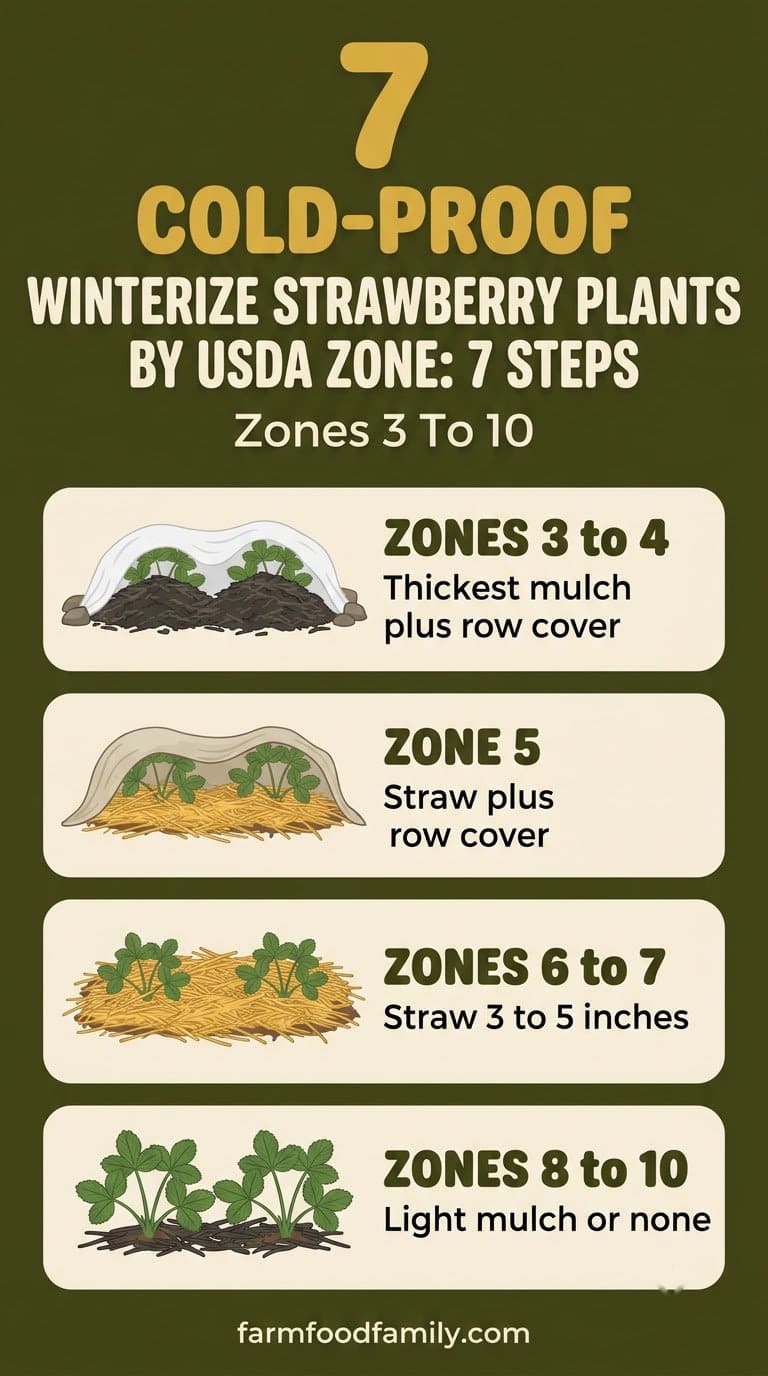
How do you winterize strawberries by USDA zone?
Zone is the quickest way to size up your workload. Use this as a planning table, then adjust for your own yard.
| Zone | Winter risk | What to do |
|---|---|---|
| 3 to 4 | Longest, coldest winters. | Thickest mulch plus row cover. Use the top of the 3 to 5 inch range. |
| 5 | Crowns can face 15°F or colder. | 3 to 5 inches of straw plus woven row cover. |
| 6 to 7 | Cold snaps and freeze-thaw cycles. | 3 to 5 inches of straw. Add a cover for cold nights. |
| 8 to 10 | Mild winters, rare hard freezes. | Light mulch or none. Keep frost cloth ready. |
No source we read gives separate numbers for zone 3 versus zone 4. So we’ve grouped them and told you which end of the range to use. That’s our call, not a sourced rule.
Where does the table come from? Epic Gardening says frost protection is generally needed in zone 7 and colder, and that row cover is recommended in zone 5 and colder. It adds that zone 8 and warmer can usually overwinter outdoors.
Albert splits the country into two groups. His cold zones are 3 to 7, and his warm zones are 8 to 10.
In cold zones he puts mulch down in October, then adds more in November, at 2 to 4 inches. He also recommends the occasional row cover. The mulch stays on until late winter or early spring.
Warm zones get lighter measures. He still mulches in October, then thins it out gradually in March before growth resumes.
That’s a small disagreement. Epic says zone 8 and warmer usually needs nothing, while Albert still lays a light October mulch. Our take: skip it if your winters rarely dip below freezing, but keep straw and frost cloth on hand for a surprise cold snap.
Two more zone notes:
- Zones 3 to 5: snow is not a plan. We found no source recommending snow as insulation, so mulch anyway.
- Zones 9 and 10: many gardeners treat strawberries as a cool-season crop here. That’s common practice, but we didn’t confirm it with an extension source, so check your county office for planting dates.
When do you take the winter mulch off?
Patience pays here. Leaving the straw on as long as you safely can keeps plants from blooming early.
Iowa State says to start removing mulch when about 25% of the plants show new growth. That growth looks white or yellow under the straw. Purdue uses a different trigger: pull it when the soil 4 inches down reaches about 40°F.
Don’t rush it, even if a warm week tempts you. Pulling it in March can trigger early blooms, and a later freeze then catches them open.
Rake the straw into the aisles instead of hauling it away. Leave a thin layer around the plants so berries stay clean and weeds stay down.
Keep the pile close. If frost threatens during bloom, rake it lightly back over the plants. Open flowers can be badly damaged or killed at 32°F or lower, per Iowa State.
Where do the sources disagree?
Plenty of winter advice looks contradictory. Here’s why.
| Question | Iowa State | Purdue | Epic Gardening |
|---|---|---|---|
| Mulch depth | 3 to 5 inches | 4 to 6 inches (2 minimum) | 2 to 4 inches |
| Mulch timing | Before 20°F, once hardened | Mid-December, after nights near 20°F | Before 20°F |
| Remove when | About 25% new growth | 4-inch soil near 40°F | After the last frost date, soil above 40°F |
Why the gap? Iowa and Indiana winters differ, and so do their soils and snow cover.
Our take: use 4 inches, since it sits inside two of the three ranges. Then watch the plants for the 25% new-growth sign and keep a soil thermometer handy to double-check.
What mistakes should you avoid?
Most winter losses come from a handful of habits. We’ve seen all of these show up in the research again and again.
- Mulching in early autumn while plants are still green and growing.
- Using leaves or hay because they’re free.
- Covering plants with clear plastic or a solid tarp.
- Leaving row cover on through bloom.
- Pulling the mulch off in March on a warm day.
- Piling mulch against pots and forgetting the roots under the pot.
Honestly, the first one is the most common. It feels responsible to tuck plants in early, but plants need a few real frosts to settle down.
What have we learned the hard way?
The pattern we keep seeing in the extension advice is this: strawberries rarely die from cold alone. They die from wet, warm, or sloppy protection.
A thick layer of wet leaves feels cozy. But a mat of leaves holds water against the crown through every thaw, and that’s how crowns rot.
[EDITOR NOTE: add 1-2 first-person lines from the site team’s own bed here, with a real photo, so this section isn’t only research. We have no verified in-house winter log.]
If we had to pick one thing to do differently, it’s this. Buy the straw before the first frost, not after. A bale in the garage by Halloween beats a scramble in a snowstorm.
And label your pots. A dormant strawberry in a garage looks like a pile of dead leaves, and that’s how people toss them in spring.
Already planning other cold-season chores? Our rundown of easy winter garden projects pairs well with this one.
You can also tuck the herb bed in for the season the same weekend. Or learn how to overwinter other potted plants and herbs.
And when a hard freeze is in the forecast, protecting crops from a sudden frost explains the quick cover tricks.
Frequently Asked Questions
Do strawberry plants come back every year?
Yes, most do. June-bearing and everbearing types are perennials. Day-neutral types do well but Epic Gardening suggests treating them as annuals in cold areas.
Should I cut back strawberries for winter?
Not much. Remove dead leaves and runners, but leave healthy green leaves in place. Heavy renovation belongs after harvest in summer for June-bearing types.
Can I use leaves to cover strawberries?
We’d skip it. Iowa State says leaves are not recommended because they mat down and hold moisture and ice against the plants.
When should I cover strawberries for winter?
Cover them after they go dormant and before temperatures drop below 20°F. In many northern yards that means November, and sometimes December.
Do strawberries survive winter in pots?
Rarely, unless you protect them. Move the pot to an unheated garage or insulate it, as covered in step 7.
Products We Recommend
This post contains affiliate links. We may earn a commission on qualifying purchases at no extra cost to you.
Agfabric Plant Covers Freeze Protection Row Cover (0.55 oz, 7 x 15 ft)
A white woven frost blanket for the row-cover step in zones 5 and colder. Light enough to lay over straw-mulched beds.
Shop Now
Taylor Soil Thermometer, 4-inch stainless stem
An analog dial thermometer that reads 20 to 180°F. It helps you check when soil has stayed under 40°F before you mulch.
Shop Now
EZ-Straw Just Straw Clean Processed Straw, small bale (1 cubic foot)
Clean processed straw for small beds and pots. A 1 cubic foot bale only covers a small area, so larger beds need farm-store bales.
Shop NowNever miss an update — choose FarmFoodFamily as your preferred source on Google.
How it works: Tap the button below to open Google's settings page, then check the box next to FarmFoodFamily.
Tap the checkbox to turn it blue — that's how you know it's set.