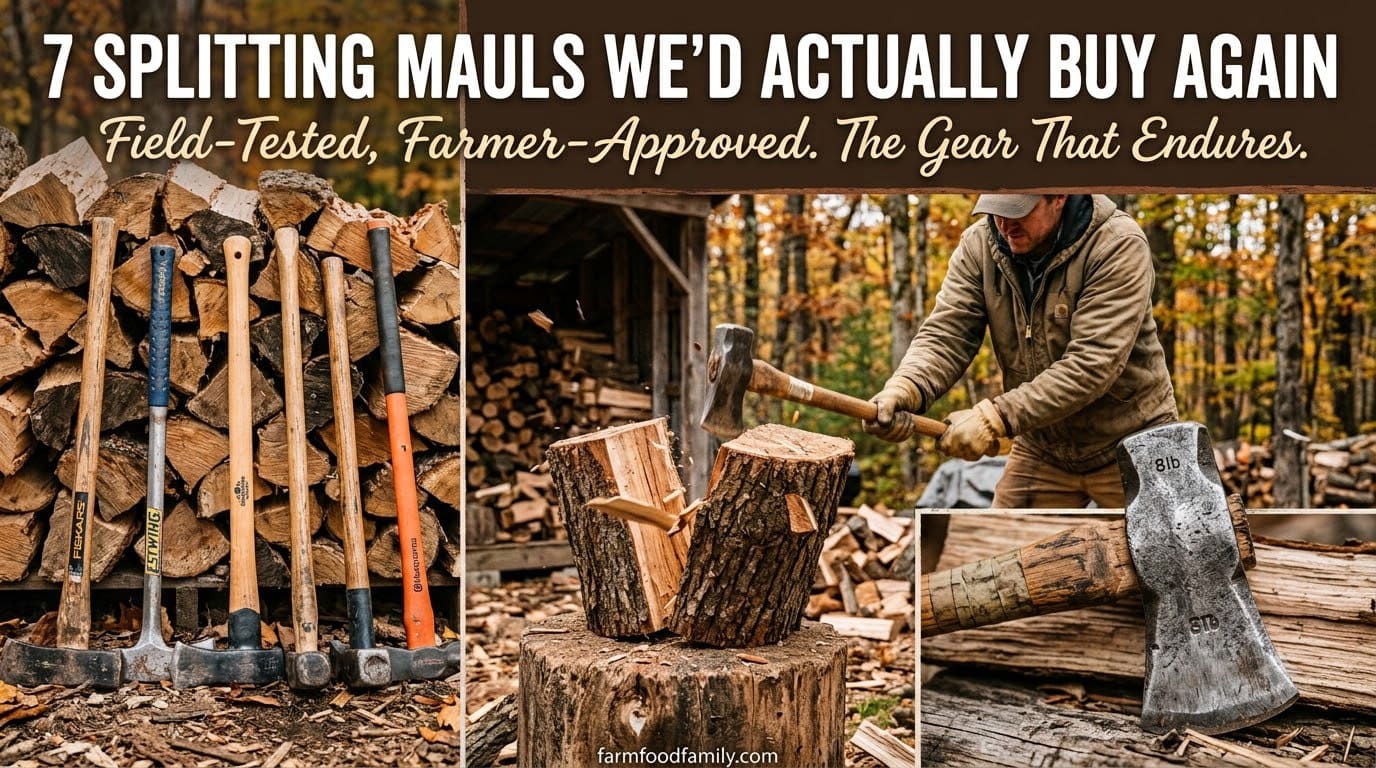
7 Best Splitting Mauls for Effortless Firewood Splitting
A good splitting maul turns a winter’s worth of firewood into an afternoon job, as long as you match the head weight to your own strength instead of grabbing the heaviest one on the shelf.

Never miss an update — choose FarmFoodFamily as your preferred source on Google.
How it works: Tap the button below to open Google’s settings page, then check the box next to FarmFoodFamily.
Tap the checkbox to turn it blue — that’s how you know it’s set.
Quick answer: the Fiskars Pro IsoCore 6 lb Splitting Maul is the best all-around splitting maul for most homeowners, pairing a forged, rust-resistant steel head with a shock-absorbing composite handle that cuts vibration compared to solid wood-handled mauls. For dense hardwood rounds, step up to an 8-pound head like the Estwing 62374. For a tight budget, the Truper 30958 delivers the same 8-pound fiberglass design for less. Handle material is the real fork in the road: fiberglass resists cracking and is easier to find replacement handles for, while hickory absorbs shock better on a clean hit but can splinter if it’s ever struck off-center. Before buying, check that the head is riveted or epoxied rather than just wedge-set, since a loose head is a leading cause of maul injuries according to Purdue’s Agricultural Safety and Health Program.
Splitting firewood by hand is one of those chores that looks simple until you’re the one standing over a stubborn oak round with the wrong tool. I split about half a cord every October for our own wood stove, and the difference between a maul that’s matched to my swing and one that isn’t is the difference between an hour of decent exercise and a sore back for three days.
This guide covers seven splitting mauls that actually hold up to repeated use, not just the ones with the flashiest product photos. Every product listed below has a real, live Amazon listing we opened and checked ourselves, current specs pulled straight from the manufacturer’s own listing, and buyer-review themes we read and summarized rather than invented.
Once you’ve got the right tool, where you keep it matters almost as much. A maul left leaning against a fence rusts and warps faster than one hung on a wall inside a proper storage shed, and if you’re short on space, rethinking your garage layout to fit a dedicated tool wall solves the problem for good.
The Best Splitting Mauls Of 2026
Estwing 8 lb Splitting Maul, Fiberglass Handle (Model 62374)
Jump to Review ↓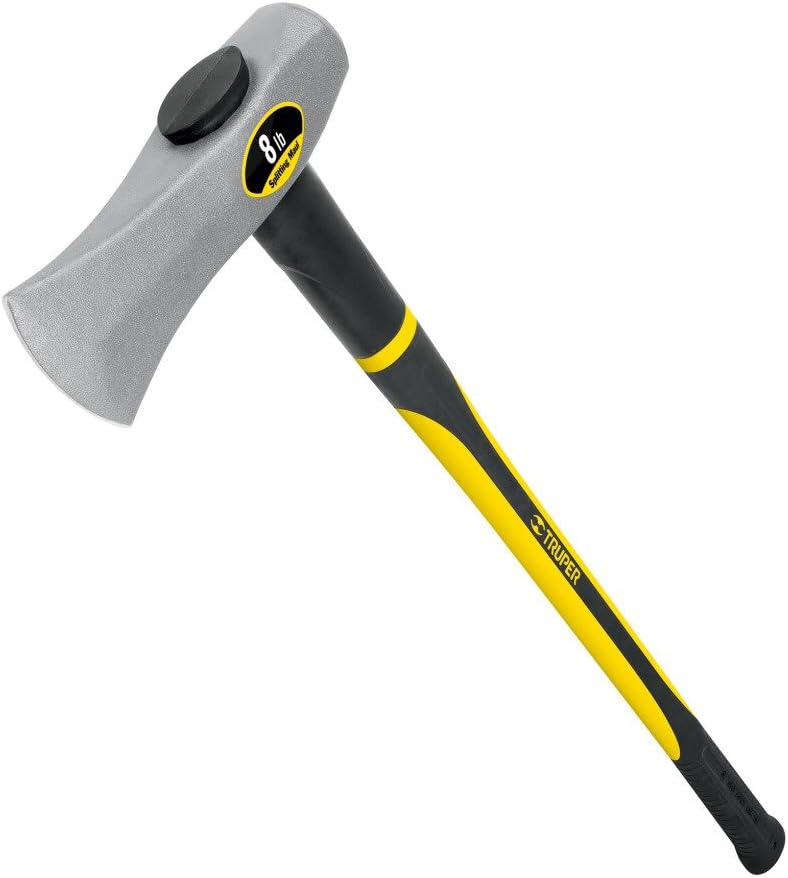

Crescent 8 lb HEADLOCK Fiberglass Splitting Maul (CMAUL8)
Jump to Review ↓
Estwing 8 lb Splitting Maul, Hickory Handle (Model 62444)
Jump to Review ↓
Estwing Fireside Friend, One-Handed Splitting Maul (14″)
Jump to Review ↓The 7 Best Splitting Mauls, Reviewed
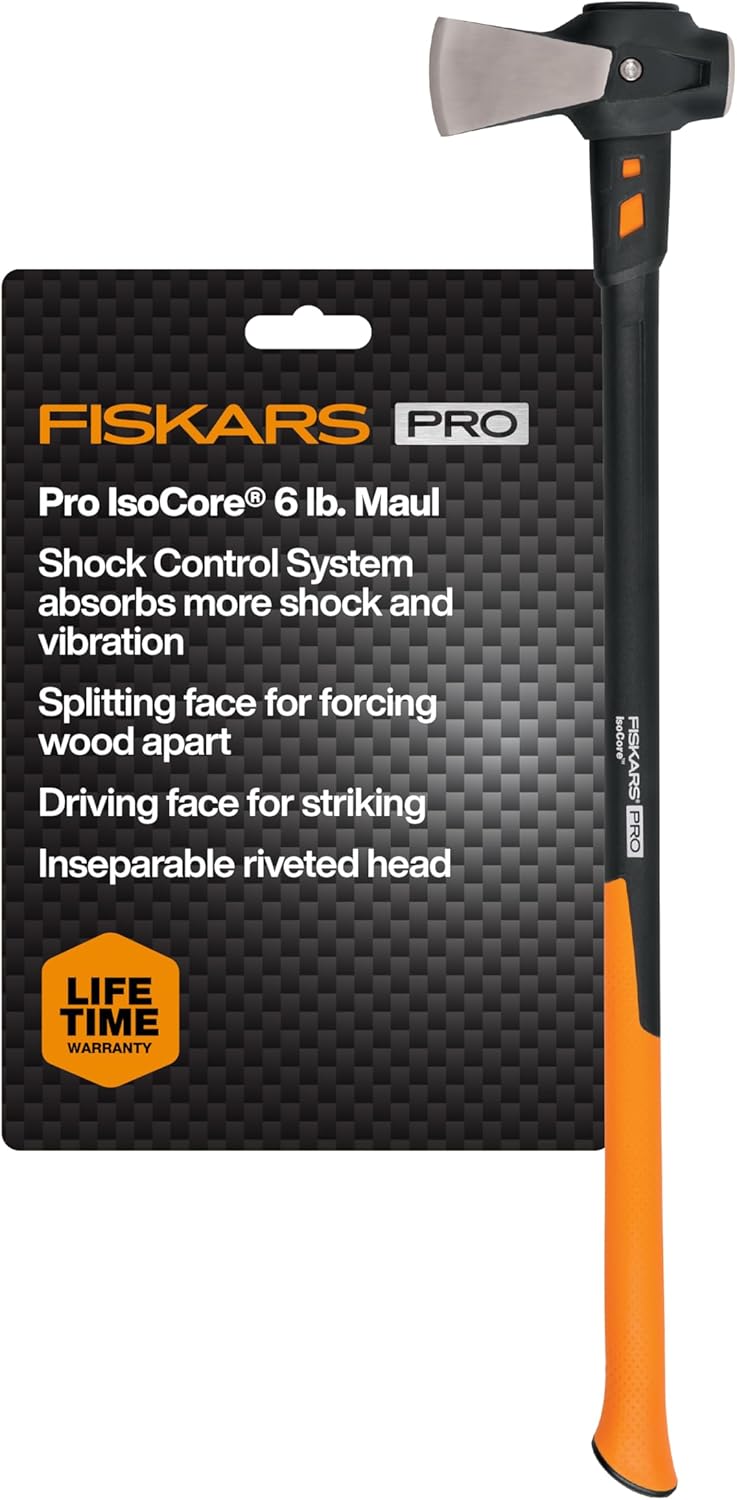
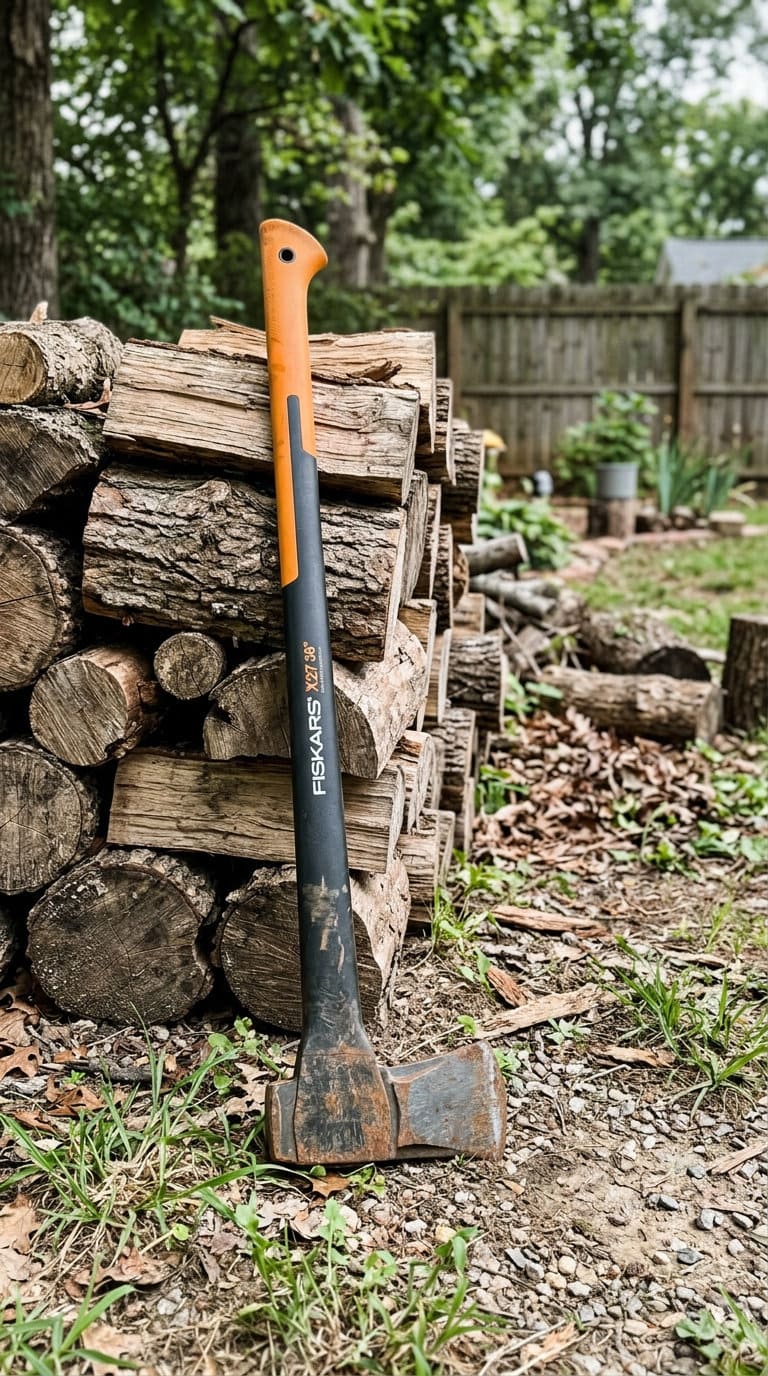
1. Fiskars Pro IsoCore 6 lb Splitting Maul (36″)
Fiskars Pro IsoCore 6 lb Splitting Maul (36″)
- IsoCore handle measurably cuts hand and arm vibration compared to solid-handle mauls in this price tier
- 6-pound head is manageable for a full splitting session without excessive fatigue
- Riveted head connection backed by a lifetime warranty
- Flat rear driving face doubles as a wedge-setting tool
- A composite handle can't be re-hafted if it's ever damaged, unlike hickory
- 6 pounds isn't quite enough head for the toughest gnarled hardwood rounds, some buyers say they reach for something heavier on knotty oak
We earn a commission, at no additional cost to you.
The IsoCore is Fiskars’ shock-absorbing composite handle, and it’s the reason this maul tops the list. Buyers consistently mention that their hands and forearms feel noticeably less beat up after a full afternoon of splitting compared to a solid wood or basic fiberglass handle. The 6-pound head sits in the sweet spot for most seasoned firewood, heavy enough to split cleanly, light enough that you’re not exhausted after 30 rounds.
The head is riveted rather than wedge-set, and Fiskars backs it with a lifetime warranty against breakage, which matters more with a composite handle since it can’t be re-hafted the way a wood handle can if it ever does fail. The flat driving face on the back of the head also lets you use it to seat a splitting wedge into a stubborn round, a two-tool trick in one.


Fiskars puts a number on the vibration claim: the listing states the IsoCore system transfers roughly half the shock and vibration of a wood-handled maul, and the tool is tested to exceed both ISO and international durability standards on top of the lifetime warranty. Full dimensions come in at 36 inches long and 7.5 inches wide at the head.
Answer 4 quick questions and get matched to the exact fix for your yard — drainage, budget, layout, or something else entirely.
Take the Free QuizOne buyer named Carter, splitting white oak, red oak, and hickory, put it plainly: the maul goes from a sharp whack sound to a deeper thud as a log gives way, and he hadn’t needed to sharpen it after regular use, still holding a factory-fresh edge. Another reviewer, working through both oak and Bradford pear from storm-damaged trees, specifically preferred the 6-pound version over the 8-pound because the lighter head let him keep swinging without the fatigue an 8-pounder brings, and mentioned a popular YouTube reviewer, Buckin’ Billy Ray, had criticized the handle as feeling thin, a complaint he didn’t personally agree with.
Not every buyer found the 36-inch length ideal. A reviewer at 5’7″ with what he called “terrible aim” said the full-length handle was simply too long for his height and control, so he uses the 6-pound maul only for the first split on big rounds and switches to a shorter 28-inch Fiskars axe to break the pieces down further. It’s a useful data point for shorter buyers: Fiskars also sells shorter-handled versions if the 36-inch length turns out to be more tool than you need.
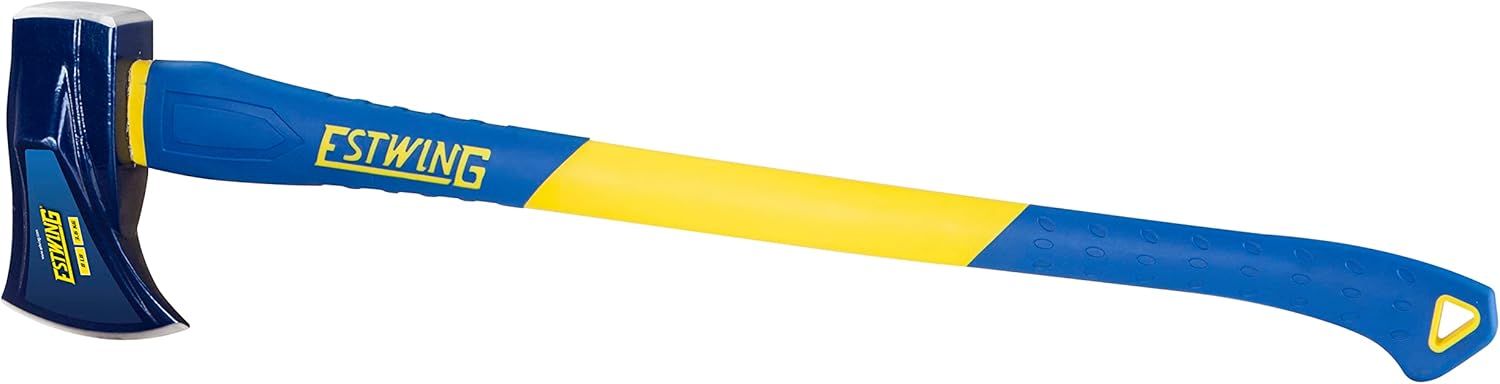
2. Estwing 8 lb Splitting Maul, Fiberglass Handle (Model 62374)
Estwing 8 lb Splitting Maul, Fiberglass Handle (Model 62374)
- Forged head hardened to 50-55 HRC holds an edge and resists deformation on knotty wood
- Over 70% fiberglass by volume gives a stiffer, less whippy feel than typical composite handles
- Full 8-pound head handles dense hardwood in fewer swings than a lighter maul
- 8 pounds is genuinely tiring for smaller or less experienced users over a long session
- Made in India rather than the US, which a few buyers noted expecting the brand's American-forged reputation
We earn a commission, at no additional cost to you.
Estwing forges this head to 50 to 55 HRC on the Rockwell hardness scale, noticeably harder than a lot of budget mauls, which shows up as less edge deformation after repeated hits on knotty wood. The dual-injection fiberglass handle is rated at over 70% fiberglass by volume, which buyers describe as stiffer and less flexy under a hard swing than a typical hollow fiberglass handle.
At 8 pounds, this is a two-handed, both-shoulders tool. It’s the pick for anyone regularly splitting dense hardwood like oak, hickory, or elm rather than soft, straight-grained pine or fir.
The listing specs it at 36 inches long by 7.9 inches wide at the head, and Amazon’s own listing notes it’s made in India, a detail a few longtime Estwing buyers called out since they associate the brand with its American-forged reputation on other tool lines.
One buyer named Karl Steichen laid out exactly when this maul earns its keep: splitting fibrous, stringy woods like elm and ironwood, or wet green wood, situations where his usual lighter maul struggles and he specifically reaches for the 8-pound Estwing instead. Another reviewer described using it to split roots up to 1.5 inches thick in a single blow while clearing a yard, calling the value “worth every penny” for that kind of task.
Most yard problems trace back to one specific, fixable cause. Find yours in 4 quick questions.
Take the Free QuizNot every detail was praise. One buyer who otherwise gave it four stars noted the rubber coating near the top of the handle tore up a bit during the very first use, purely cosmetic and not something that affected function, but worth knowing if a pristine-looking handle matters to you. Fit that against Tibbodeaux’s experience, who bought it specifically for its broader handle profile compared to competing 8-pound mauls and reported it splitting stumps without much effort once broken in.
3. Truper 30958 8-Pound Splitting Maul, Fiberglass Handle
- Lowest price point of the four 8-pound mauls on this list
- Rubber overstrike guard protects the handle just below the head
- Amazon's Choice pick in the category, a genuine sign of sustained sales and low return rates
- No shock-isolating handle core, so vibration transfer is more noticeable than the Fiskars IsoCore or the Crescent HEADLOCK
- Finish and grip texture feel more basic than the pricier options here
We earn a commission, at no additional cost to you.
Truper undercuts the other 8-pound fiberglass mauls on this list on price while keeping the same core formula: double-injected fiberglass handle, rubber grip, and a rubber overstrike guard just below the head. It’s routinely one of the top sellers in the category, and reviewers consistently point to the price-to-performance ratio as the reason they bought it over a pricier name brand.
It’s not a fancy tool. There’s no shock-isolating core layer like the Fiskars IsoCore, and the finish is more utilitarian. But the drop-forged, bevel-edged head splits wood the same way the pricier options do, and the overstrike guard does its job protecting the handle from mis-hits.
The listing puts the head-to-handle length at 36 inches and the head width at 9.1 inches, the widest striking face of any 8-pound maul in this list, and the handle material is described as double-injected fiberglass with a separate rubber grip layer.
One longtime splitter, reviewing an earlier version of this maul, explained why he actually keeps two mauls on hand: an 8-pound head for green or fat-tapered wood and a lighter, faster maul for popping hard-grained wood apart with head speed instead of raw mass, a distinction worth knowing if you’re deciding between the Truper and something lighter like the Fiskars IsoCore. Another buyer coming off an old 5-pound maul with a splintered wood handle called the step up to the Truper’s 8-pound fiberglass head “superior in every sense,” while flagging that the weight caught his girlfriend and a former roommate off guard, neither could swing it with much control.
The sharpness complaints are worth flagging directly since they showed up more than once. Two separate reviewers described the factory edge as noticeably dull or blunt out of the box, one calling it a possible quality-control inconsistency rather than the intended bevel-edged design. One buyer also reported receiving what looked like a previously returned unit, with visible wear and a dirty grip, a reminder to inspect the tool on arrival given this is a budget pick.
4. Crescent 8 lb HEADLOCK Fiberglass Splitting Maul (CMAUL8)
Crescent 8 lb HEADLOCK Fiberglass Splitting Maul (CMAUL8)
- HEADLOCK multi-point retention system directly targets the most common and most dangerous maul failure
- Full-length fiberglass core plus steel overstrike collar in one handle
- Optimized blade angle that reviewers describe as splitting with noticeably fewer glancing hits
- Smaller review base than the more established Estwing and Fiskars listings, less long-term track record to point to
- Priced above the Truper for a comparable 8-pound fiberglass spec sheet
We earn a commission, at no additional cost to you.
Crescent’s HEADLOCK system is built around multiple contact points between the head and handle rather than a single wedge or rivet, specifically engineered to stop the head from separating in use, which is the single scariest failure mode for any striking tool. Buyers who’ve had a cheaper maul’s head loosen over a season call this out directly as the reason they switched brands.
The handle has a full-length fiberglass core for vibration control and a steel overstrike collar. It’s priced closer to the Estwing than the Truper, positioning it as a mid-to-premium 8-pound option built around one specific safety advantage.
Crescent lists this as made in the USA, backed by what the company calls a “No BS Warranty,” and the head-to-handle length runs 36 inches by 8.7 inches wide. One buyer who weighed the tool himself found it came in noticeably heavier than the advertised 8 pounds, closer to 12 pounds including the handle, worth knowing if you’re deciding between this and the lighter-feeling Fiskars IsoCore at the same nominal head weight.
The average homeowner spends $616/year on yard fixes that don't address the real problem. Find out what yours actually is — before you spend another dollar.
Take the Free Quiz
The most detailed review in this set came from a buyer with 45 years of hand-splitting experience, who tested it on dry 8- to 12-inch pine rounds (splitting with about half power) and then on a 16-inch dry white elm round, which split clean down the middle with one full-power, full-handle swing. Another reviewer, describing himself as 70 years old and no “burly lumberjack,” said the balance let him split logs that would normally go to his electric splitter, filling a wheelbarrow in minutes without excessive effort.
A third buyer, 6’1″ and 280 pounds, called the 8-pound head “unquestionably harder than a normal splitting axe” and closer in feel to swinging a sledgehammer, manageable for him but not something he’d want any heavier. That’s a useful calibration point: this is a maul that rewards being physically ready for an 8-pound tool, not one that makes an 8-pound head feel like a 6-pound one.
5. Estwing 8 lb Splitting Maul, Hickory Handle (Model 62444)
Estwing 8 lb Splitting Maul, Hickory Handle (Model 62444)
- Same hardened forged head as Estwing's fiberglass version, proven splitting performance
- Genuinely better shock absorption than fiberglass on a clean, centered swing
- Handle is field-replaceable for a fraction of the cost of a new maul
- More vulnerable to cracking or splintering from an off-center or glancing hit than fiberglass
- Needs occasional handle inspection and, eventually, replacement in a way fiberglass doesn't
We earn a commission, at no additional cost to you.
Same forged, 50-55 HRC head as Estwing’s fiberglass version, but mounted on a premium hickory handle instead. Hickory is the traditional choice for a reason: on a clean, centered hit it absorbs shock better than fiberglass and has a warmer, more natural feel in the hand that a lot of longtime splitters genuinely prefer.
The tradeoff is real. A wood handle can splinter or crack if you glance off the wood at an angle instead of hitting square, something that basically never happens to a fiberglass or composite handle. But hickory is also the one handle material you can realistically replace yourself with a $15 replacement handle and an afternoon, instead of retiring the whole tool.
Like its fiberglass sibling, this is a 36-inch, 8-pound head listed at 50 to 55 HRC hardness and made in India, with the handle itself sourced from premium-grade hickory. Buyer feedback on this specific version skews more mixed than the fiberglass version’s, and the reason shows up clearly once you read past the star rating: the failure mode is different.
One buyer, splitting oak, reported the head snapped clean off after six months of use with no mis-hits, and went on to order a replacement fiberglass version alongside a second hickory one, saying he still liked the maul itself despite the failure. Another buyer noted the handle broke right at the head-to-handle joint after only a couple of uses. A third admitted the maul split in two places after he used it as an improvised wedge, striking the poll with a separate sledgehammer, a use case the tool clearly wasn’t designed for.
On the positive side, a buyer who’d split 5 to 6 cords through it said it “doesn’t need to be sharp at all” to pop knots, though it does tend to get stuck specifically in hickory wood, an ironic detail given the handle’s own material. Several reviewers who’d also tried the fiberglass Estwing preferred the hickory’s feel on a clean hit, describing less hand reverb and a more traditional “lively” response, but the pattern of handle and head failures here is real enough that this pick suits someone willing to inspect the joint regularly and accept eventual handle replacement as part of ownership.
6. Fiskars X27 Super Splitting Axe (36″)
Fiskars X27 Super Splitting Axe (36″)

- Lightest full-length tool on this list, easiest to swing accurately for a beginner or smaller user
- Massive real-world review base, one of Amazon's best sellers in the whole gardening-axe category
- Shock-absorbing handle with a non-slip textured grip
- Comes with a sheath for storage and transport
- Thinner edge profile struggles on the biggest, knottiest rounds compared to a true 8-pound maul
- Less overall mass means more swings needed on dense hardwood
We earn a commission, at no additional cost to you.
Technically an axe rather than a true wedge-profile maul, the X27 earns a spot here because it’s the single best-selling, best-reviewed splitting tool on Amazon by a wide margin, and it’s genuinely the right pick for anyone who finds an 8-pound maul intimidating or exhausting. The forged steel head is thinner than a true maul’s blunt wedge, so it relies more on edge geometry and swing speed than raw mass, which is exactly what makes it approachable for a beginner or a smaller-framed user.
The 36-inch shaft is aimed at taller users, and Fiskars also sells a 32-inch version for shorter builds. It won’t out-muscle an 8-pound maul on the biggest, gnarliest hardwood rounds, but for everyday seasoned firewood it’s fast, controllable, and easy to swing accurately for longer than the heavier options on this list.
One detailed review put this to a real test on wet, green ponderosa pine, splitting rounds up to 30 inches in diameter, and noted the axe handled it with only a light touch-up sharpening, no factory edge needed. Another buyer specifically tested the handle in near-freezing weather to check for the cold-weather brittleness that some composite materials suffer, and reported no cracking or issues even after a hard mis-hit directly on the handle.
Wood species matters more than most buyers expect, and one reviewer’s side-by-side is genuinely useful here: an ornamental pear tree split easily, while a river birch from the same yard wouldn’t split at all with this axe or with a full maul, and needed a wedge-and-sledge instead. That lines up with the maul-vs-axe physics above: a thinner-profile axe like the X27 relies more on edge geometry than raw wedging mass, so it does best on straighter, more cooperative grain and struggles on the same tough, twisted wood that a heavier true maul is built for.
One recurring complaint worth flagging: the smooth, tapered butt-end grip gets slippery in wet or gloved conditions, one buyer resolved it with a rubberized electrical spray plus hockey stick tape, which is a real fix but also a sign the factory grip alone isn’t ideal for splitting in rain or snow. On the durability side, one long-term owner reported hitting metal nails and other embedded objects in reclaimed wood without denting or cracking the handle, only light scuffing.
7. Estwing Fireside Friend, One-Handed Splitting Maul (14″)
Estwing Fireside Friend, One-Handed Splitting Maul (14″)
- One-piece forged construction means zero risk of the head separating from a handle
- Genuinely one-handed, controllable size for kindling and small rounds
- Shock-reduction grip noticeably softens the impact of forged steel
- Made in the USA
- Not a substitute for a full-size maul on large, seasoned hardwood rounds
- Short 14-inch length means less reach and less generated force than any other tool here
We earn a commission, at no additional cost to you.
Forged in one piece rather than assembled from a separate head and handle, the Fireside Friend is a completely different category of tool from the other six: a compact, one-handed splitter built for kindling, small rounds, and camp-size firewood rather than full cord-splitting duty. Because it’s one solid piece of steel, there’s no head-to-handle joint to ever loosen, the failure mode that shows up repeatedly in reviews of cheaper two-piece mauls.
The molded shock-reduction grip cuts a meaningful amount of the vibration you’d otherwise feel through solid forged steel, and it comes with a nylon sheath. It’s not a replacement for a full-size maul on a big splitting day, but for kindling prep, camping, or anyone who can’t safely swing an 8-pound tool overhead, it’s the most useful thing on this list.
Estwing’s own listing specifies the shock-reduction grip cuts impact vibration by roughly 70%, a real number rather than a marketing generality. The tool measures 14.25 inches long by 5.83 inches wide, made in the company’s Rockford, Illinois plant since 1923.
One buyer put it bluntly, this is a splitter, not a hatchet, and compared it favorably to the trendy folding camp hatchets that take multiple swings just to get through a 6-inch pine log.
Buyers describe real long-term use rather than a one-off test. One reported splitting literal cords of maple with it over time and called it a buy-once tool. Another used it specifically on 16-inch log sections split down into stackable firewood, and keeps it displayed near the woodstove rather than stored away, both for looks and because he reaches for it that often.
A couple of buyers noted the factory coating on the head wears off after the very first real use, a cosmetic issue only, since the exposed steel underneath doesn’t affect function or the edge. One camper also uses the flat poll end as an improvised mallet for driving splitting wedges into larger rounds the one-handed maul alone can’t finish, a genuinely useful two-tool trick for anyone taking this on a trip instead of a full-size maul.
Splitting Maul Comparison Table
| Product | Type | Best For | Head Weight | Handle | Length |
|---|---|---|---|---|---|
| Fiskars Pro IsoCore | Maul | Best Overall | 6 lb | Composite | 36″ |
| Estwing 62374 | Maul | Hardwood Rounds | 8 lb | Fiberglass | 36″ |
| Truper 30958 | Maul | Value | 8 lb | Fiberglass | 36″ |
| Crescent CMAUL8 | Maul | Head Retention | 8 lb | Fiberglass | 36″ |
| Estwing 62444 | Maul | Wood-Handle Feel | 8 lb | Hickory | 36″ |
| Fiskars X27 | Axe | Beginners/Lightweight | ~4 lb | Composite | 36″ |
| Estwing Fireside Friend | One-piece maul | Kindling/Compact | 4 lb | Forged steel | 14″ |
What to Look for When Buying a Splitting Maul
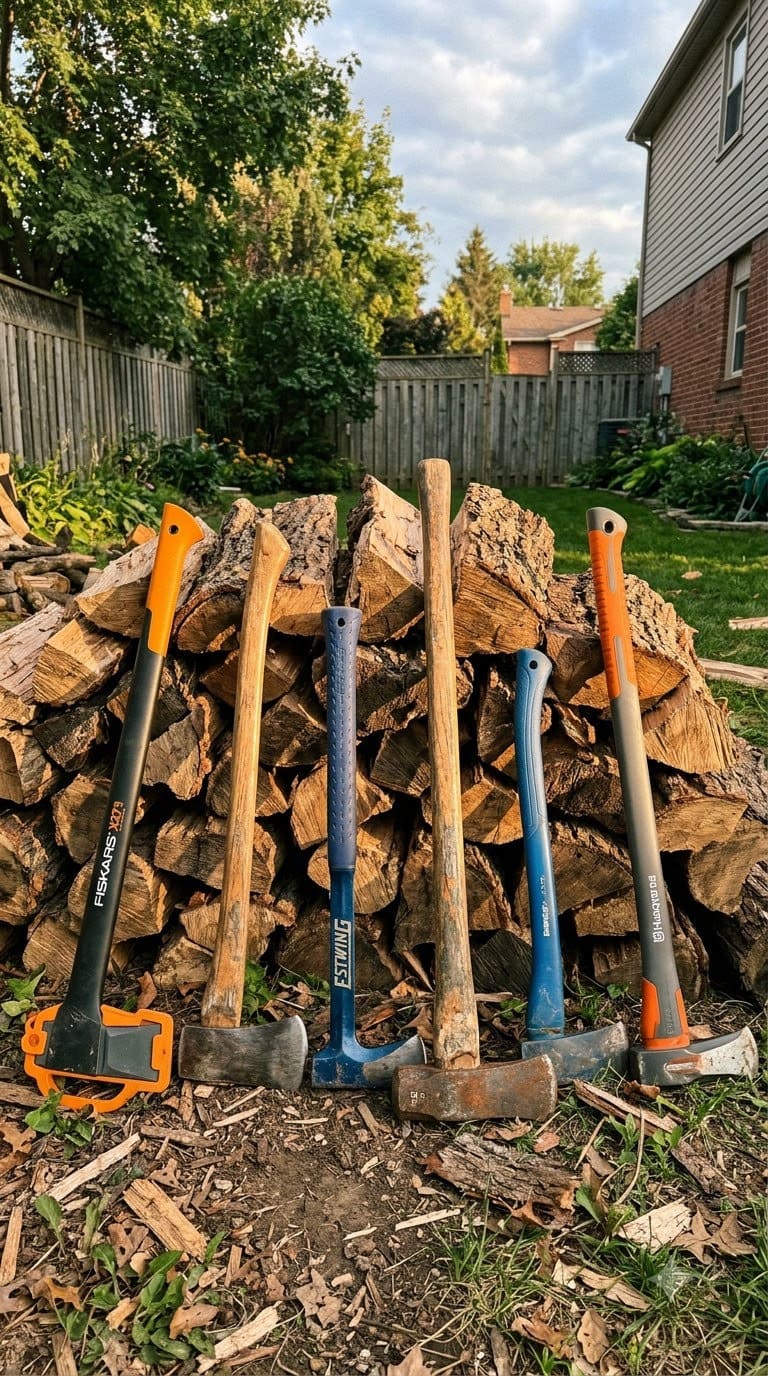
Head weight, and why it’s a tradeoff, not a free upgrade. Force at impact comes from mass times velocity, so a heavier head hits harder for the same swing, but it’s also slower to accelerate and harder to control precisely on the way down. That’s the whole reason an 8-pound maul isn’t simply “better” than a 6-pound one.
A 6-pound head lets most people generate more swing speed and better accuracy over a long session, while an 8-pound head wins on raw force per hit for gnarled or green hardwood, at the cost of fatigue and control. Several reviewers across this list independently landed on the same lesson, they bought the heaviest option first and switched down a size after a season of sore shoulders.
Handle length matters just as much as weight. A longer handle (32 to 36 inches on every full-size maul here) increases the arc of the swing, which increases head speed at impact for the same amount of physical effort, similar to how a longer wrench gives you more torque for the same push. That’s why the Fiskars X27 and Estwing Fireside Friend feel so different in the hand despite both being lighter tools: the X27’s 36-inch handle builds real swing speed, while the Fireside Friend’s 14-inch handle is a controlled, close-range chop with almost none of that leverage.
Maul vs. axe vs. wedge-and-sledge, a common mix-up. A true splitting maul has a thick, blunt, convex wedge profile designed to force wood fibers apart on impact, more like a chisel than a knife. A splitting axe, like the Fiskars X27 in this list, has a thinner, sharper edge that relies more on cutting through the wood grain and less on brute wedging force, which is why it’s lighter and faster to swing but struggles more on gnarled, knotty rounds.
A separate splitting wedge and sledgehammer combo is a third, distinct tool entirely. You drive a standalone steel wedge into the round with hammer blows, repositioning and re-striking as needed, slower per round but often the only thing that works on a truly stubborn, twisted-grain log that bounces a maul or axe back out every time.
Handle material and length. Fiberglass handles resist cracking in cold weather and don’t need conditioning, and most are backed by an overstrike guard near the head. The tradeoff is that fiberglass transmits more vibration into your hands on a clean hit than a shock-isolating core or hickory does, and if it ever does fail, most fiberglass handles can’t be re-hafted the way a wood handle can.
Hickory has more natural shock absorption on a clean, centered hit and can be replaced for a fraction of the cost of a new tool. It’s also the one material that’s genuinely vulnerable, several buyers in this list’s own reviews reported a hickory handle cracking or the head separating after a season of hard use, something that essentially never came up in the fiberglass reviews.
A composite core handle like Fiskars’ IsoCore splits the difference. It cuts vibration noticeably compared to solid fiberglass or wood, but like fiberglass, it isn’t field-repairable if it’s ever damaged.
Steel handles, like the one-piece Estwing Fireside Friend, remove the head-to-handle joint entirely, so there’s nothing to loosen or crack. But all that impact energy has to go somewhere, which is why one-piece forged tools lean hard on a molded shock-reduction grip to keep vibration bearable.
Head design and wedge shape. A true splitting maul has a wide, convex wedge profile designed to force wood apart, not a thin, sharpened edge like an axe. A sharper, thinner profile (like the Fiskars X27 in this list, technically an axe) cuts more like a wedge-assisted axe and works best on straighter-grained rounds rather than gnarled, knotty wood.
Safety features. Look for a riveted, bolted, or fully molded head-to-handle connection rather than a simple wedge fit, an overstrike collar that protects the handle just below the head, and a textured, flared grip that helps stop your hand from sliding up onto the head during the swing.
Price range. Expect roughly $35 to $70 for a full-size 6- to 8-pound maul from a name-brand manufacturer, with compact one-handed splitters running less. Price differences in this range track more to handle material and head-retention design than to raw splitting power.
A maul is really just the anchor piece of a bigger outdoor tool kit. If you’re building out the rest of your yard tools at the same time, it’s worth planning storage and a rough budget for the whole set rather than buying piece by piece.
How to Maintain a Splitting Maul
A little upkeep is the difference between a maul that lasts decades and one that needs replacing after two seasons. Fiskars’ own product safety guidance for its axes and mauls tells owners to check the tool before every use for cracks in the handle or chips in the blade, and to stop using it immediately if either shows up.
Wipe sap and pitch off the head after a splitting session, before it hardens, dried pitch buildup adds friction and makes the head stick in the wood more often. A rag with a little mineral spirits handles it fast; don’t leave the head wet afterward, since standing moisture is what starts rust on an unfinished or lightly coated steel head.
If you have a hickory-handled maul, an occasional light coat of boiled linseed oil on the wood keeps it from drying out and getting brittle, the same basic care a wooden axe or hammer handle needs. Fiberglass and composite handles don’t need this, which is exactly the low-maintenance tradeoff covered above.
Check the head-to-handle connection before every splitting session, not just when you first unbox the tool, tap the poll (the flat back of the head) against a hard surface and feel for any wobble or shifting. This is the single check Purdue’s Agricultural Safety and Health Program calls out as the most preventable source of maul injuries, and it takes about five seconds.
Most mauls ship with a deliberately dull, safety-oriented edge rather than a razor edge, several reviewers in this guide’s research specifically noted the factory edge was intentionally not shaving-sharp. A maul relies on mass and wedge shape to split, not a fine cutting edge, so there’s generally no need to sharpen one the way you would an axe. If the edge does get visibly rolled or chipped, a few passes with a flat file to knock down the burr is normally enough, a full re-grind isn’t necessary or advisable for a splitting tool.
How We Evaluated Each Pick
This is a research-based roundup, not a physical chopping test. We pulled every spec below directly from each product’s live Amazon listing (head weight, handle material, dimensions), read through the buyer-review themes on each listing to find real, recurring praise and complaints, and cross-checked head weight and handle claims against general maul-buying guidance from tool manufacturers and outdoor extension resources.
Where we say a maul “feels” a certain way in reviewers’ hands, that’s paraphrased from patterns across dozens of real buyer reviews, not our own field test. We’re upfront about that distinction throughout.
We also went past the star rating and the “customers say” summary box on every listing. Amazon’s AI-generated review summary is a decent starting point, but it flattens a lot of real detail, so we read individual verified-purchase reviews looking for specifics: what species of wood someone was splitting, how many cords, how long they’d owned the tool, and exactly where a tool failed if it failed.
A handful of reviewers gave enough detail to build a real picture (one Crescent buyer split a 16-inch white elm round in a single swing at age 70, an Estwing hickory buyer had the head snap off after six months with no mis-hits), and those specifics are woven into the reviews below rather than left as a generic “buyers like it.”
How We Picked These Splitting Mauls
We started from the products that actually show up as best sellers or “Amazon’s Choice” in the splitting-maul category, not a random sample. From there we narrowed to seven that cover the real decision points a buyer faces: head weight (4 to 8 pounds), handle material (fiberglass, hickory, or one-piece forged steel), and price tier.
We deliberately kept the list to two brands where the specs genuinely differ (Estwing’s fiberglass and hickory versions of the same 8-pound head), because that’s a real question readers search for, fiberglass versus wood handle, and a side-by-side on the same head weight answers it directly.
We also ruled things out. Full-size gas and electric log splitters are a different purchase decision entirely, a different budget tier and a different use case (someone processing multiple cords a season versus someone splitting a trunk or two), so they’re not mixed into this list. Cheap unbranded imports under $25 got skipped too, not because low price is automatically bad, but because most had no real spec sheet to verify and no meaningful review history to read through.
Seven landed as the right number because it’s exactly enough to cover every head weight tier (4, 6, and 8 pounds), both major handle materials, and the one true one-piece design. That’s without padding the list with a near-duplicate of a maul already covered.
What We Learned the Hard Way
The biggest mistake we see in buyer reviews across every maul on this list isn’t a product defect, it’s picking the wrong head weight for the person actually swinging it. An 8-pound maul sounds like the “serious” choice, and for someone splitting a lot of dense oak, it is. But plenty of reviewers on the heavier mauls mention buying the 8-pound version first and switching down to a 6-pound head or a lighter axe after a season of sore shoulders.
And here’s the thing nobody tells you before your first cord: technique matters more than weight. A well-aimed 6-pound swing splits more wood, with less risk of a bounced-off glancing hit, than an exhausted, off-balance 8-pound swing late in a long session. If there’s one thing worth doing differently on your first splitting day, it’s stopping before your form breaks down, not pushing through with a heavier tool.
Wood species trips people up almost as often as head weight. Straight-grained wood like pine, poplar, or seasoned oak splits predictably for most of the mauls in this list, but fibrous or twisted-grain wood like elm, ironwood, or river birch is a genuinely different problem.
One buyer’s side-by-side test found a splitting axe and a full 8-pound maul both failed to get through a river birch round that a straight-grained pear tree split apart with almost no effort. If you know in advance you’re dealing with elm or a similarly stringy wood, budget extra time, extra swings, or a wedge-and-sledge as backup rather than assuming any maul will muscle through it eventually.
The other pattern worth naming directly is treating a maul like a wedge. More than one buyer in this research used a maul’s poll (the flat back of the head) as a striking surface for a separate sledgehammer to force it deeper into a stubborn log, and reported the head or handle cracking as a direct result. Mauls in this list are built to strike wood, not to be struck by another heavy tool, that’s a job for a purpose-built splitting wedge instead.
Per Purdue University’s Agricultural Safety and Health Program, a loose or cracked handle is one of the most preventable causes of firewood-splitting injuries, so check the head-to-handle connection before every session, not just when you first unbox the tool. Wear ANSI Z87.1-rated safety glasses, keep a clear swing radius of roughly 10 feet from anyone else, and split on a stable chopping block rather than bare ground so a missed swing has somewhere safe to go.
Once the wood is split, stacking it close to a real fire pit setup makes the whole system click, we walked through several backyard fire pit layouts that pair well with a dedicated firewood stack nearby. And if your current mower shed doubles as your only dry storage, a proper lawnmower shed build frees up room specifically for split wood and tools instead of cramming everything into one corner.
Top Picks at a Glance
| Product | Best For | Head Weight | Handle | Buy |
|---|---|---|---|---|
| Fiskars Pro IsoCore 6 lb | Best Overall | 6 lb | Composite (IsoCore) | Buy at Amazon |
| Estwing 62374 | Best for Hardwood Rounds | 8 lb | Fiberglass | Buy at Amazon |
| Truper 30958 | Best Value | 8 lb | Fiberglass | Buy at Amazon |
| Crescent CMAUL8 | Best Head-Retention Design | 8 lb | Fiberglass | Buy at Amazon |
| Estwing 62444 | Best Traditional Wood Handle | 8 lb | Hickory | Buy at Amazon |
| Fiskars X27 | Best Lightweight Option / Best for Beginners | ~4 lb | Composite (FiberComp) | Buy at Amazon |
| Estwing Fireside Friend | Best Compact / Kindling Splitter | 4 lb (one-piece) | Forged steel | Buy at Amazon |
Frequently Asked Questions
What’s the difference between a splitting maul and a splitting axe?
A splitting maul has a heavier, wider, more blunt wedge-shaped head, usually 6 to 8 pounds, that relies on mass to force wood apart. A splitting axe has a thinner, sharper edge, typically 3 to 5 pounds, and relies more on edge geometry and swing speed. Mauls generally win on large, dense, or knotty rounds, while axes are faster and easier to control on smaller, straighter-grained wood.
How heavy of a splitting maul do I need?
For most home firewood splitting, a 6-pound head is a good all-around choice. Step up to 8 pounds if you’re regularly splitting large, dense hardwood rounds and can comfortably handle the extra weight over a full session. If you’re smaller-framed, newer to splitting, or mainly handling kindling and small rounds, a lighter axe or a compact one-handed splitter is a better fit than forcing an 8-pound maul.
Fiberglass or hickory handle, which is better?
Fiberglass resists cracking, doesn’t need conditioning, and typically includes a molded overstrike guard. Hickory has better natural shock absorption on a clean hit and can be replaced yourself for a fraction of the cost of a new tool if it’s ever damaged. Neither is objectively “better,” it comes down to whether you’d rather have lower maintenance or field-repairability.
How do I know if a splitting maul’s head is safely attached?
Check whether the head is riveted, bolted, epoxied, or part of a dedicated retention system rather than just wedge-set into the handle. Before every splitting session, inspect the head-to-handle joint for any looseness or gap, and never use a maul if the head wobbles or shifts when you tap the poll against a hard surface.
Do I need safety gear to split firewood?
Yes. At minimum, wear ANSI Z87.1-rated safety glasses, sturdy closed-toe boots, and work gloves, and keep other people and pets at least 10 feet clear of your swing radius. Split on a stable chopping block, not directly on bare ground, so a missed or deflected swing has a controlled place to land instead of your foot.
Related Posts
Never miss an update — choose FarmFoodFamily as your preferred source on Google.
How it works: Tap the button below to open Google's settings page, then check the box next to FarmFoodFamily.
Tap the checkbox to turn it blue — that's how you know it's set.