How to Tell Underwatered vs Overwatered Plants Apart: 5 Telltale Checks
Overwatered and underwatered plants wilt the same way. Skip the leaves at first and check the soil, the weight, the roots, and the drainage.

Never miss an update — choose FarmFoodFamily as your preferred source on Google.
How it works: Tap the button below to open Google’s settings page, then check the box next to FarmFoodFamily.
Tap the checkbox to turn it blue — that’s how you know it’s set.
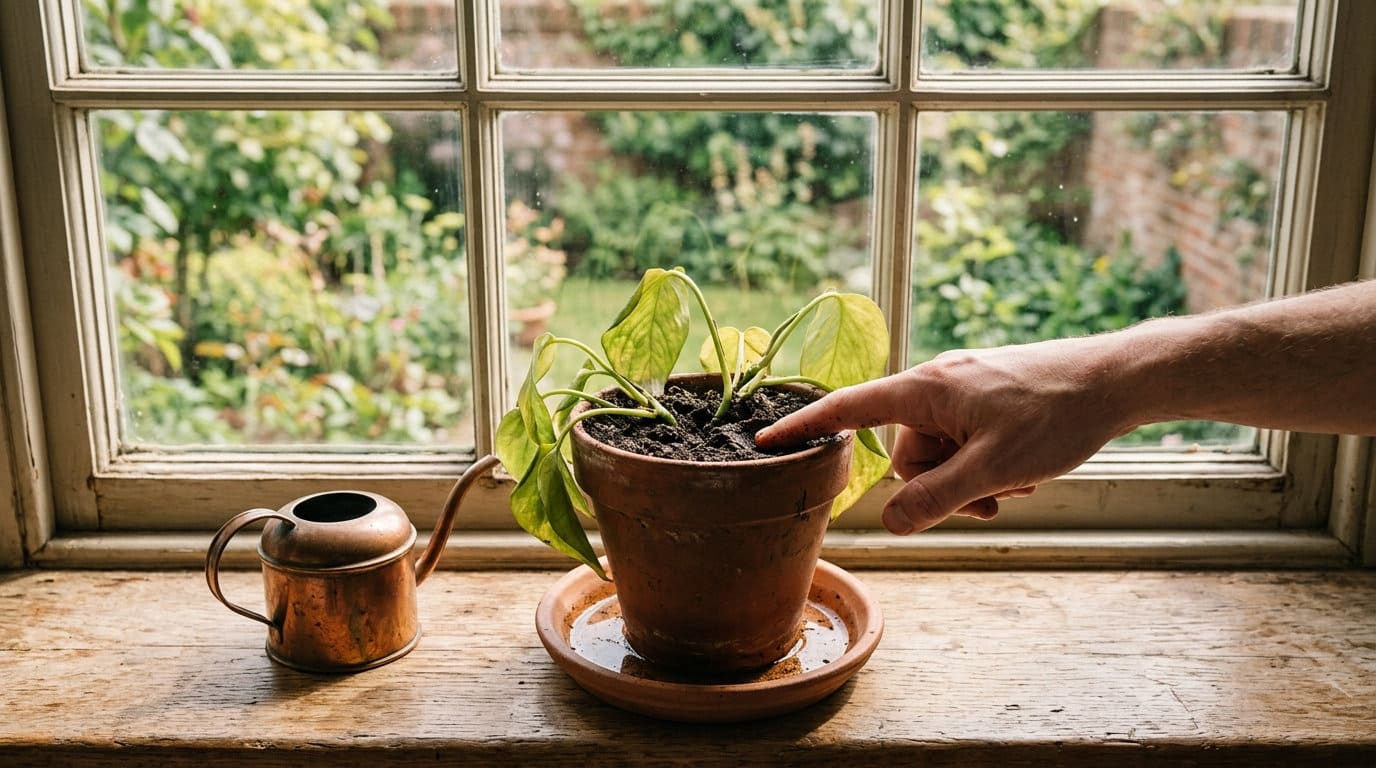
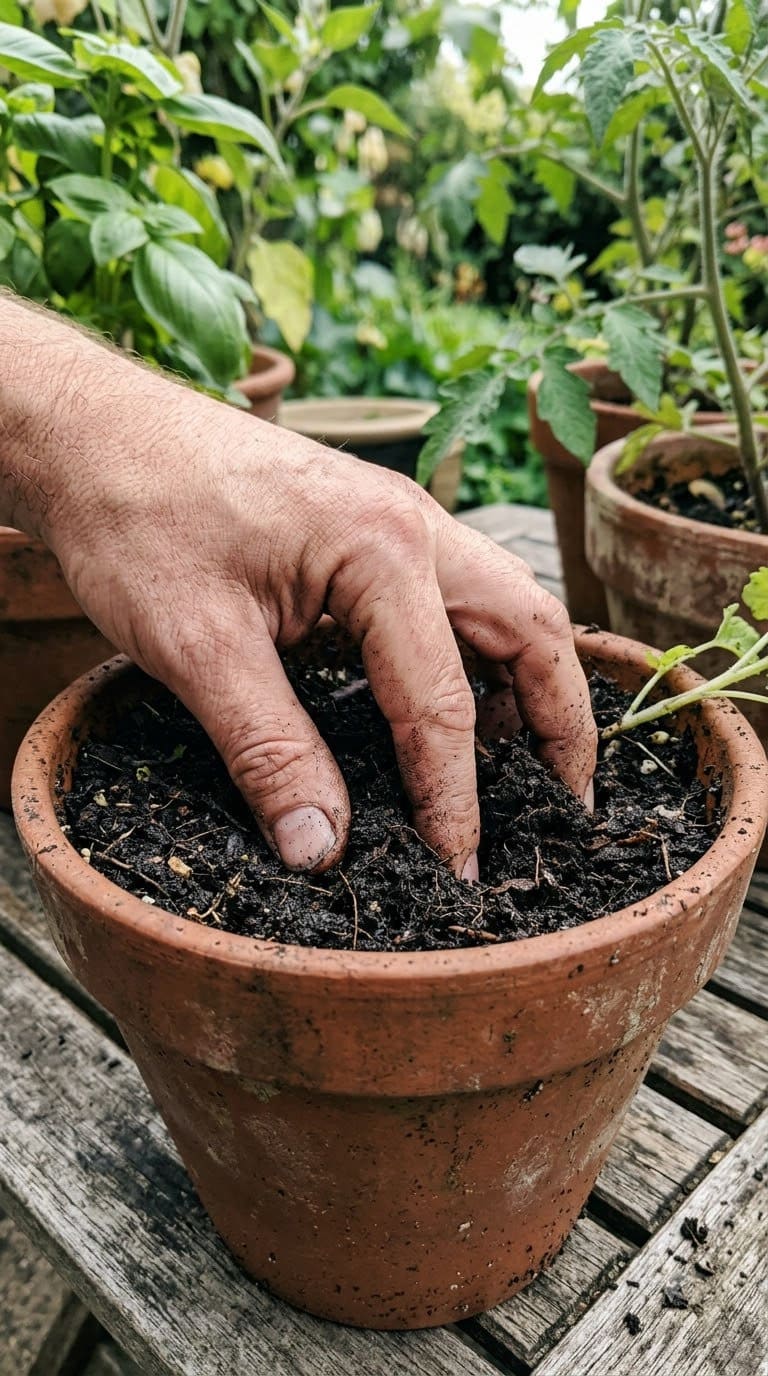
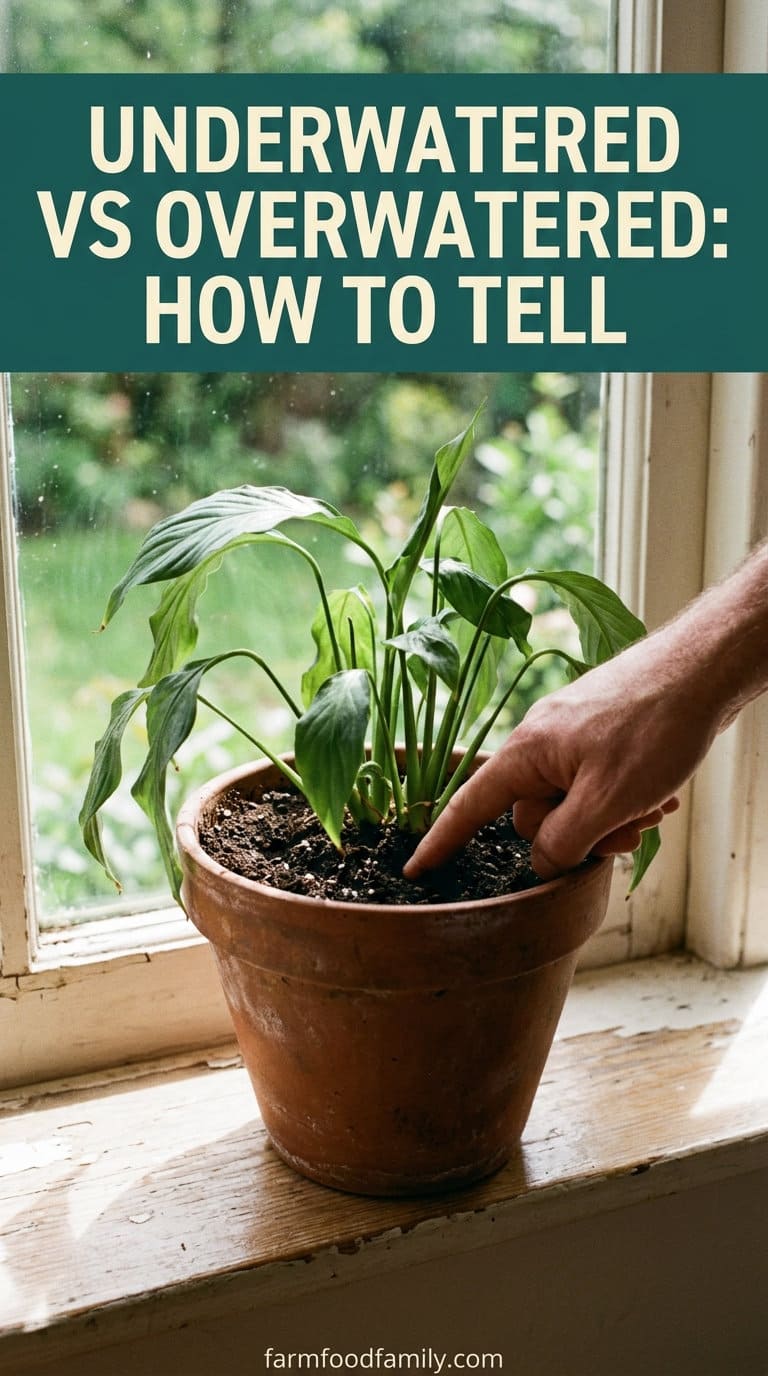
Overwatered and underwatered plants often wilt the same way, so don’t diagnose by the leaves alone. Check the soil first. Push a finger in up to the first joint, and lift the pot to feel its weight.
Dry soil and a light pot point to too little water. Wet soil, a heavy pot, and yellowing lower leaves point to too much. Clemson Extension says the symptoms are similar, and both hurt the roots.
Still unsure? Pull the plant out and look. University of Maryland Extension says healthy roots are light-colored and firm, and diseased roots look dark and soft.
Then fix the cause. Soak dry soil until water runs out the bottom of the pot. For soggy soil, stop watering, empty the saucer, and cut away any rotten roots.
Don’t water on a calendar. Water when the checks say the plant needs it, since pot size, light, and season change how fast soil dries.
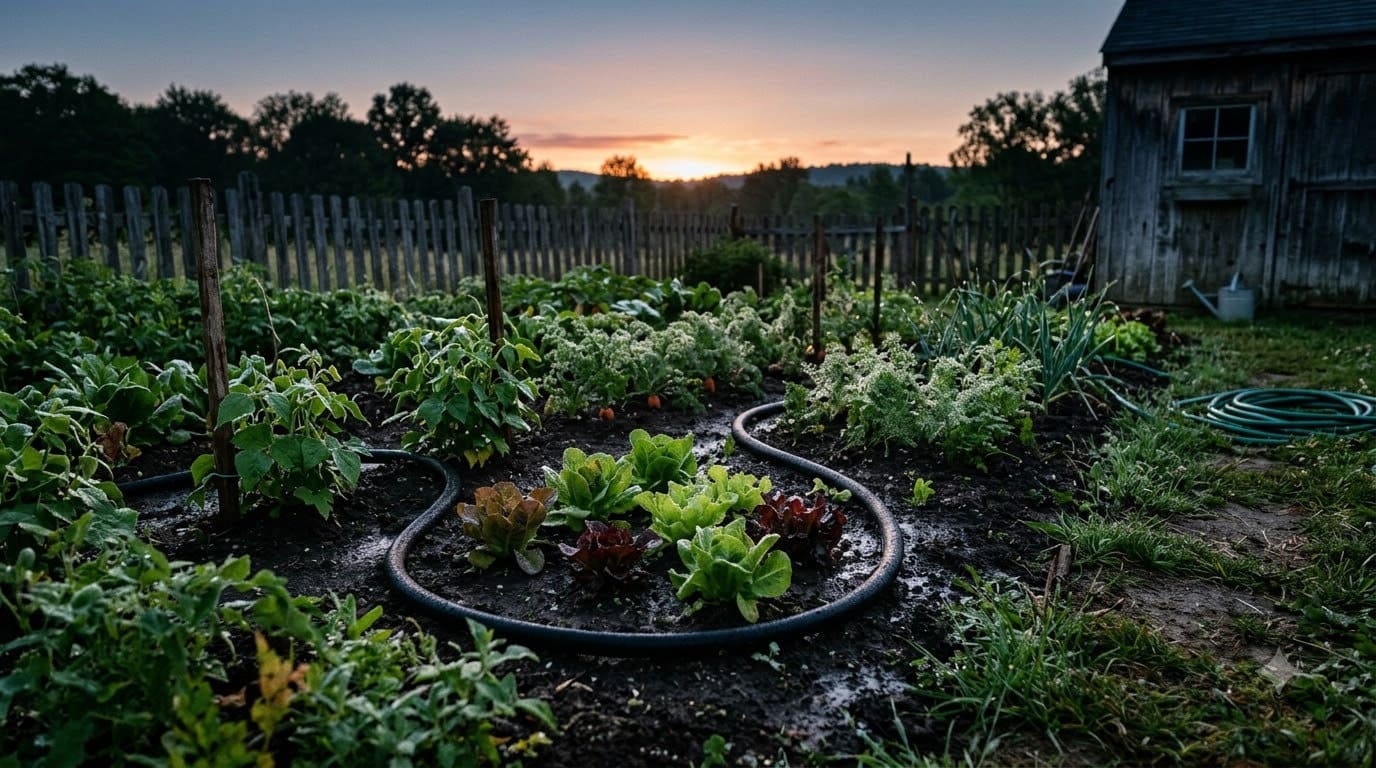
Why do overwatered and underwatered plants look the same?
Because both problems end at the roots. A plant can’t drink through damaged roots, so it wilts whether the soil is bone dry or soaked.
Answer 4 quick questions and get matched to the exact fix for your yard — drainage, budget, layout, or something else entirely.
Take the Free QuizUMD’s guide to overwatered indoor plants explains it. Excess water reduces oxygen in the soil, which damages fine roots and leaves the plant unable to take up water. Plants with too much moisture show the same symptoms as plants with root rot or drought stress.
Clemson agrees. It says the symptoms of overwatering and underwatering are similar. Both lead to root decline and possibly death.
Overwatering is the main cause of potted plant death, per Clemson. Roots need oxygen, and waterlogged soil can’t supply it.
That’s why guessing from a droopy leaf goes wrong. You need evidence from the soil and the roots.
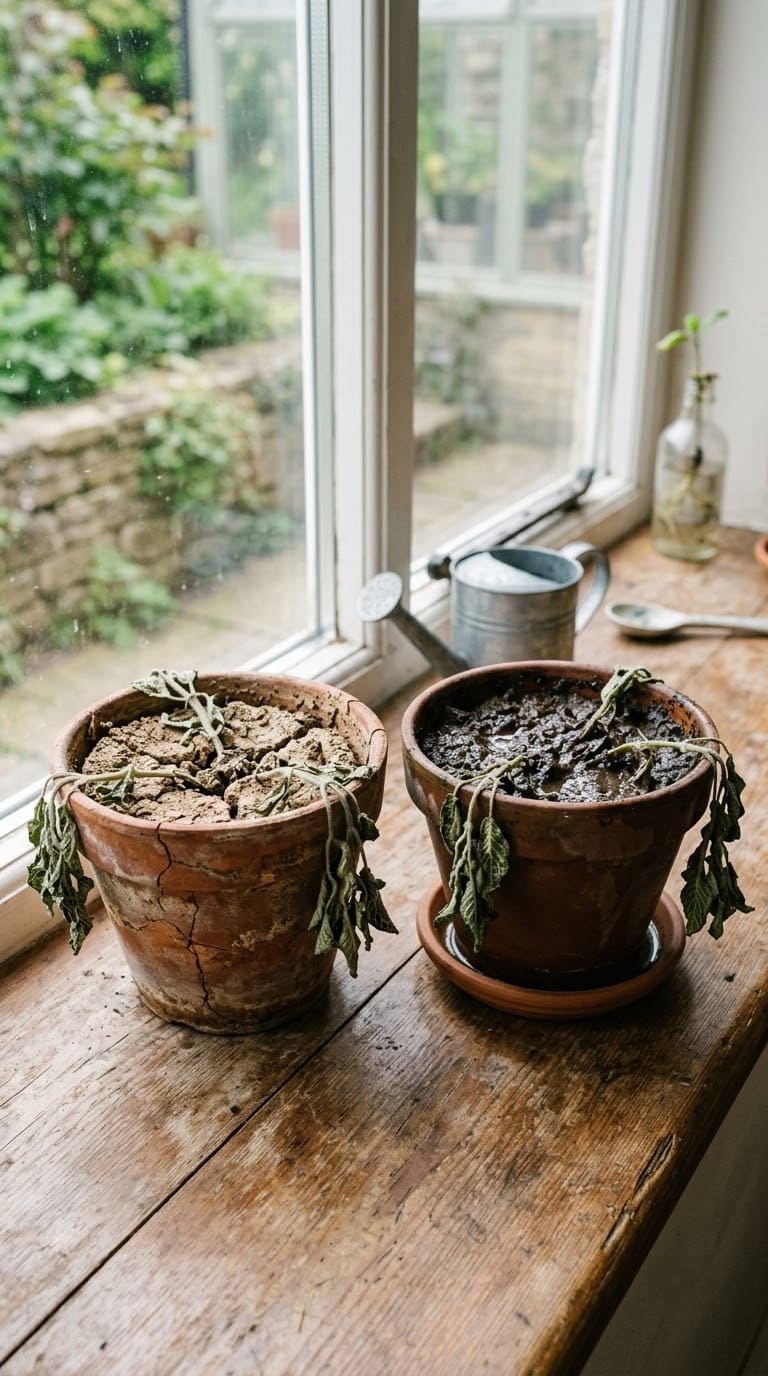
Have a specific plant in trouble? Our guides to a drooping snake plant, a droopy monstera, and a wilting hydrangea cover those species. This guide gives you the checks that work for any plant.
Check 1: Is the soil wet or dry?
Start here. It’s the fastest test, and it settles most cases.
The right depth depends on what you’re growing. Here’s what each extension source says.
Most yard problems trace back to one specific, fixable cause. Find yours in 4 quick questions.
Take the Free Quiz
Small rubber risers that lift a container so water drains freely, as UMD suggests for outdoor pots. Handy when a saucer keeps holding water.
Shop NowThis post contains affiliate links. We may earn a commission on qualifying purchases at no extra cost to you.
| Source | What to check |
|---|---|
| Clemson, houseplants | Stick a finger into the mix up to the first joint. If it’s dry at your fingertip, it needs water |
| Illinois Extension, containers | Feel the soil. If the first inch or so is dry, water |
| UMD, container vegetables | Press a finger into the soil. If it’s dry, water |
| Clemson, vegetable garden | Dig down 2 to 4 inches and feel the soil |
Moist soil at that depth with a wilting plant points to too much water. Dry soil at that depth points to too little.
For garden beds, try the squeeze test. Texas A&M’s San Angelo center says to squeeze a small amount of soil in your hand to form a ball. Its chart is written for field soils, so treat it as a guide.
| Soil feel | Medium soil (loam) | Heavy soil (clay) |
|---|---|---|
| Too dry | “Powdery, dry, sometimes slightly crusted” | “Hard, baked, cracked” |
| Just right | No free water on the soil, a wet outline on your hand | Same |
| Too wet | “Can squeeze out free water” | “Puddles and free water forms on surface” |
Skip the gadget for now. Clemson says moisture meters have variable accuracy, so use your finger first.
Check 2: How heavy is the pot?
Weight tells you what your finger can’t. It reflects the whole pot, not just the top inch.
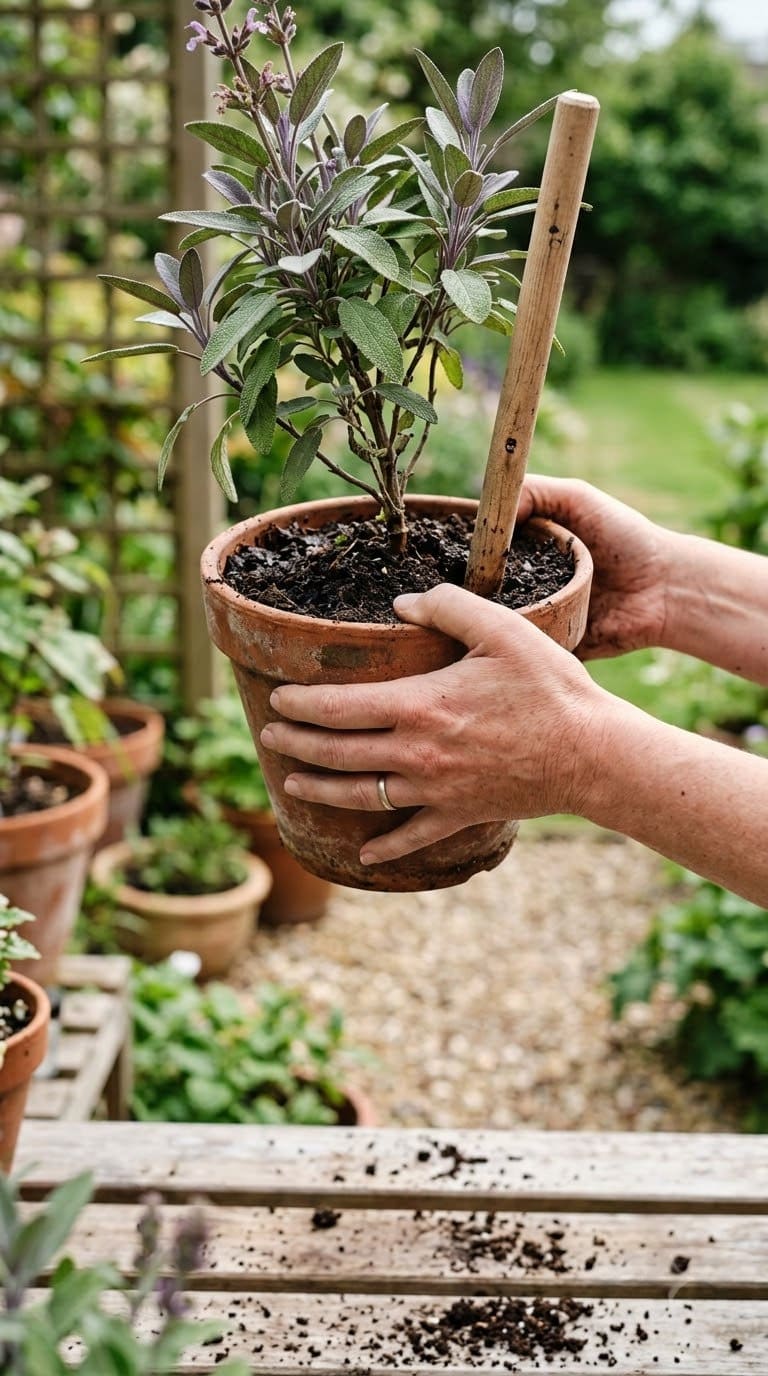
UMD says to lift the pot and compare its weight to when you last watered. As the plant uses water, the potting mix dries out and gets lighter. A pot that stays heavy for days after watering is holding too much.
For a large container, use a dowel or a stick long enough to reach the bottom. UMD says moist soil will stick to it or discolor it slightly. A clean dry stick means dry soil all the way down.
Clemson adds a tap test. If the sound is dull, the soil is moist. If it’s hollow, the pot needs water.
Watch for containers near a wall or porch. UMD says containers near a house or building don’t get natural rainfall. They can dry out even after a storm.
Check 3: Which leaves are struggling?
Leaves give clues, but they don’t give proof. Use them to narrow the answer, then confirm with the soil.
The average homeowner spends $616/year on yard fixes that don't address the real problem. Find out what yours actually is — before you spend another dollar.
Take the Free Quiz| What you see | Points to too much water | Points to too little water | Other causes to rule out |
|---|---|---|---|
| Wilting | Yes. Damaged roots can’t take up water (UMD) | Yes. The plant is thirsty | Root rots (UMD) |
| Yellowing lower and inner leaves | UMD calls this the primary symptom of excess moisture | Sometimes | Pests, root rots, high salts (UMD) |
| Brown or scorched leaf edges | Waterlogged soil stops trees from growing new roots (CSU) | Lack of water (UMD lists it as a scorch cause) | Over-fertilizing, high salts (UMD) |
| Young leaves dull, dark, or grayish | Not typical | Clemson says this means the plant needs water now | Not listed |
| Flower and fruit drop in containers | Not listed | Illinois Extension lists it as a sign of too little water | Not listed |
| Soil pulling away from the pot edge | Not typical | Yes. The mix has dried out (UMD) | Not listed |
| Tiny flying insects near the pot | Wet media invites fungus gnats (UMD) | Not typical | Not listed |
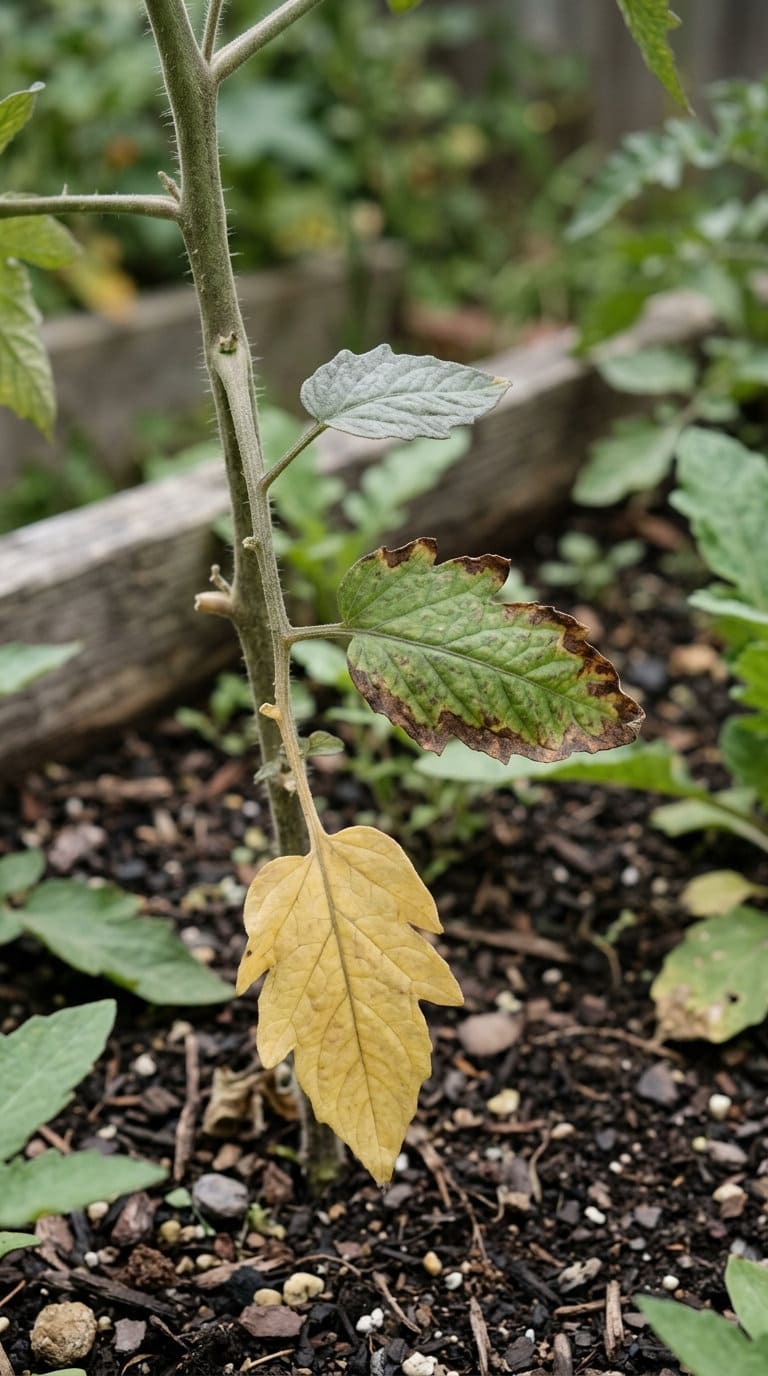
Yellow leaves fool people most. UMD’s diagnostic table lists aphids, spider mites, mealybugs, whiteflies, scale, root rots, and high soluble salts as other causes. So a yellow leaf alone isn’t a reason to change your watering.
Here’s one more clue for vegetables. UMD says blossom end rot is encouraged by inconsistent watering, shallow watering, and drought. Swings from soggy to dry can cause it.
Check 4: What do the roots look like?
When the soil check is unclear, look at the roots. It takes a minute, and it settles the question.
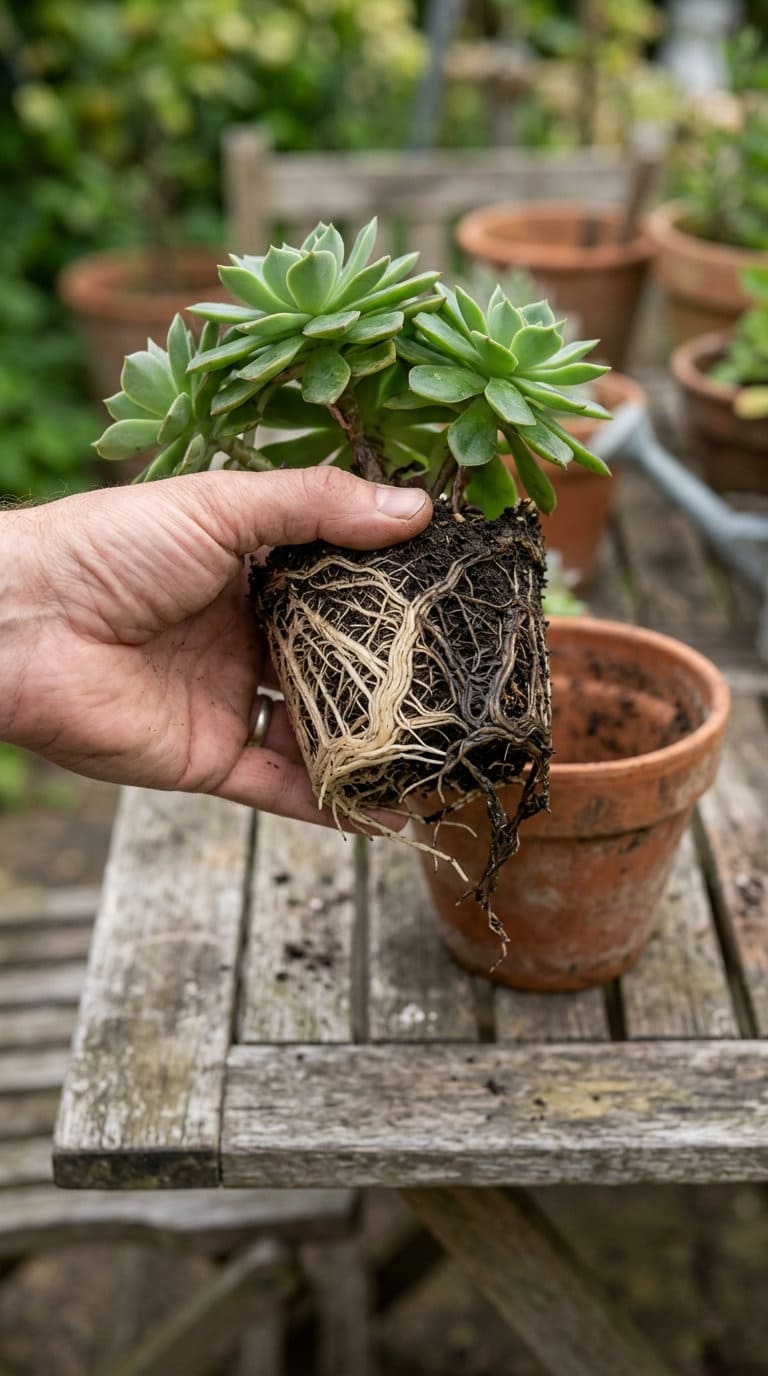
Slide the plant out of its pot. UMD says healthy roots should be light-colored and firm. Diseased roots look dark and soft.
UMD describes two common root rots. Pythium causes yellowing and wilting even when the potting media moisture is adequate. The roots are brown to black and soft or mushy, and the outer layer pulls away.
Phytophthora turns root tips dark brown and mushy. UMD says plants often wilt even when adequate moisture is present.
Firm, pale roots in bone-dry soil mean the plant needs water. Mushy, dark roots in wet soil mean the plant got too much.
Check 5: Can the water get out?
Sometimes the water isn’t the problem. The pot is.
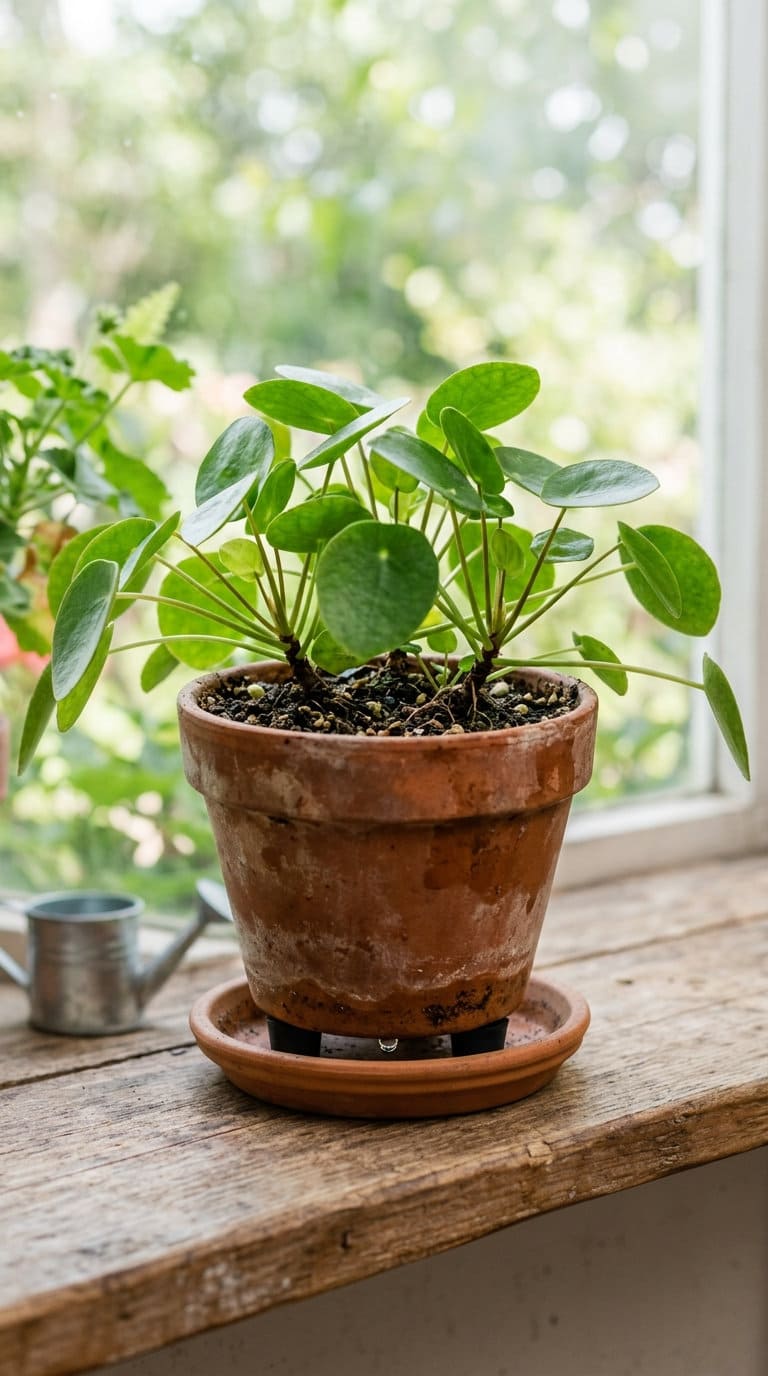
UMD says the potting mix should be well drained and soilless. Water should drain from the bottom of the container. It also says to avoid regular garden soil in pots.
Empty the saucer after watering. UMD says to pour off water that collects there, which prevents problems with fungus gnats and other insects. For outdoor pots, UMD suggests pot feet to raise the container for better drainage.
Pot material matters too. Clemson says clay pots need watering more often than plastic ones. It says soil mix matters as well, since peat moss holds more moisture.
What does each problem look like at a glance?
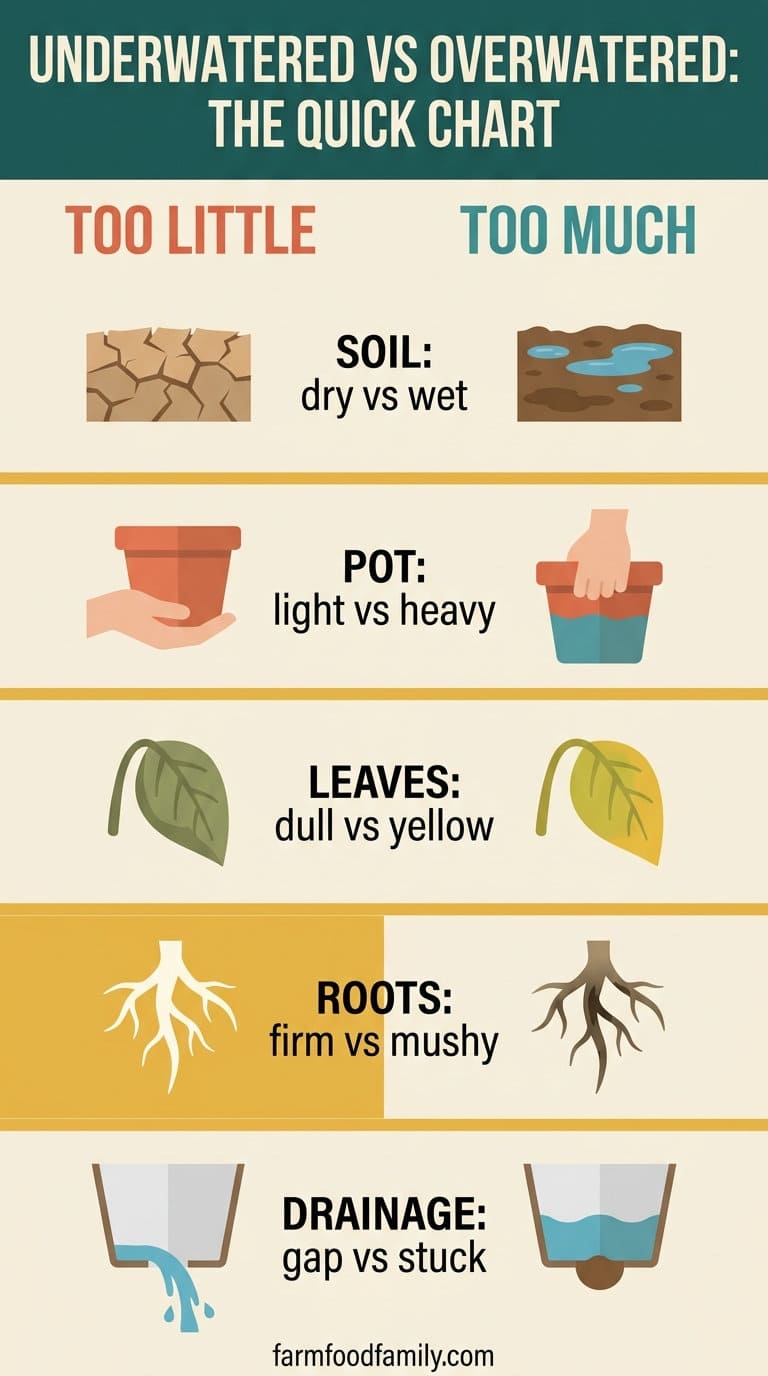
Here’s the cheat sheet. Run the five checks, then match your results.
| Check | Underwatered | Overwatered |
|---|---|---|
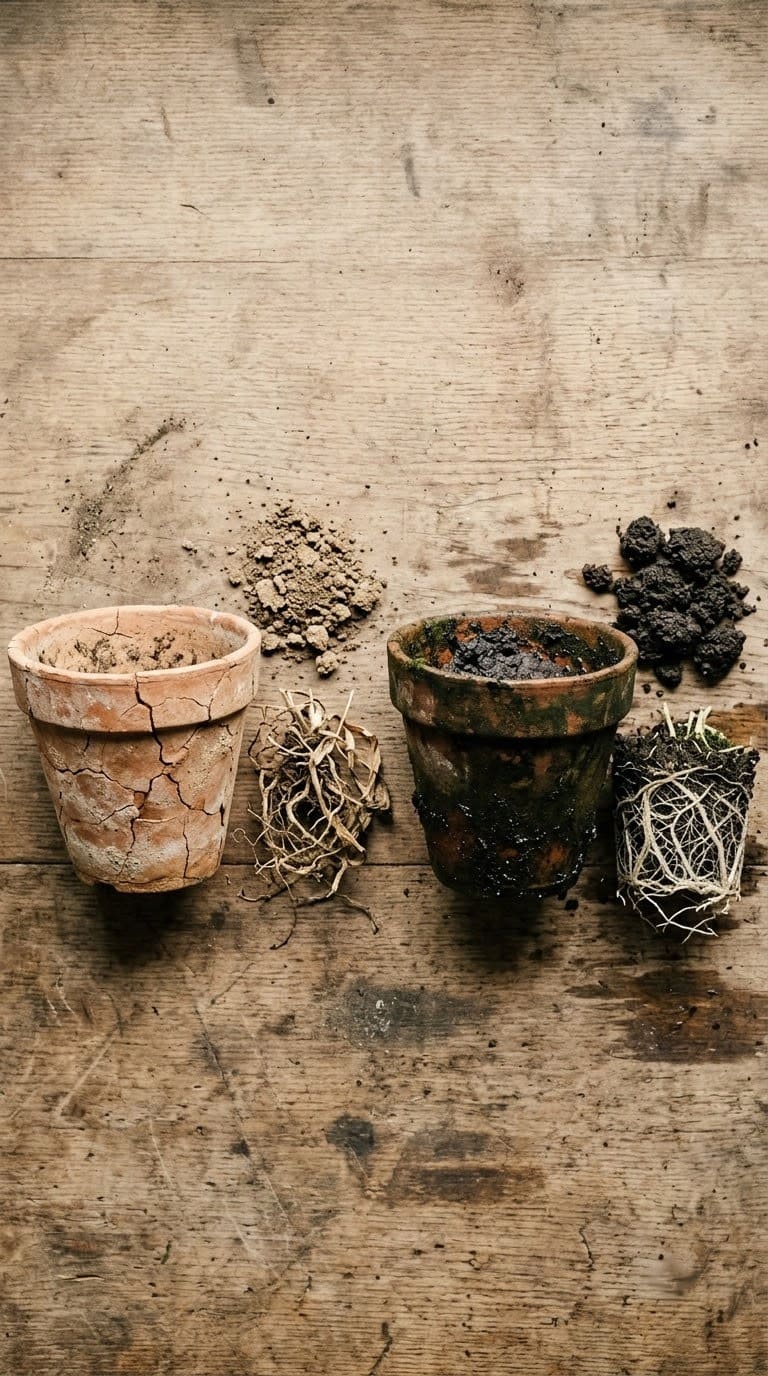
| Soil | Dry at your fingertip, may pull away from the pot edge | Wet at your fingertip, may be soggy |
| Pot weight | Light | Heavy for days after watering |
| Leaves | Wilting, dull gray-green young leaves, scorched edges | Wilting, yellowing lower and inner leaves |
| Roots | Firm and light-colored | Dark, soft, or mushy |
| Drainage | Water runs straight through a gap | Water sits in the saucer or won’t drain |
How do you fix an underwatered plant?
Water it well, and don’t sip. Clemson says to apply water until it runs out of the bottom of the pot. That washes out excess salts and gets water to the bottom two-thirds of the pot, where most roots are.
If the soil is hard and won’t take water, try a second pass. Clemson says to water once and then again half an hour later. Or set the pot in a sink or bucket of water.
UMD says a pot that has pulled away from its sides may need several applications to rehydrate. It also says to immerse a container halfway in a bucket or sink until the soil surface is moist.
Use water between 62 and 72°F, per Clemson. Skip softened water, which has sodium and chloride that can damage plants.
In garden beds, don’t wait for wilting. Clemson says wilted or dull, grayish young leaves mean the plant may already be hurt. It says vegetables need an inch of water per week in summer, roughly six gallons per square yard.
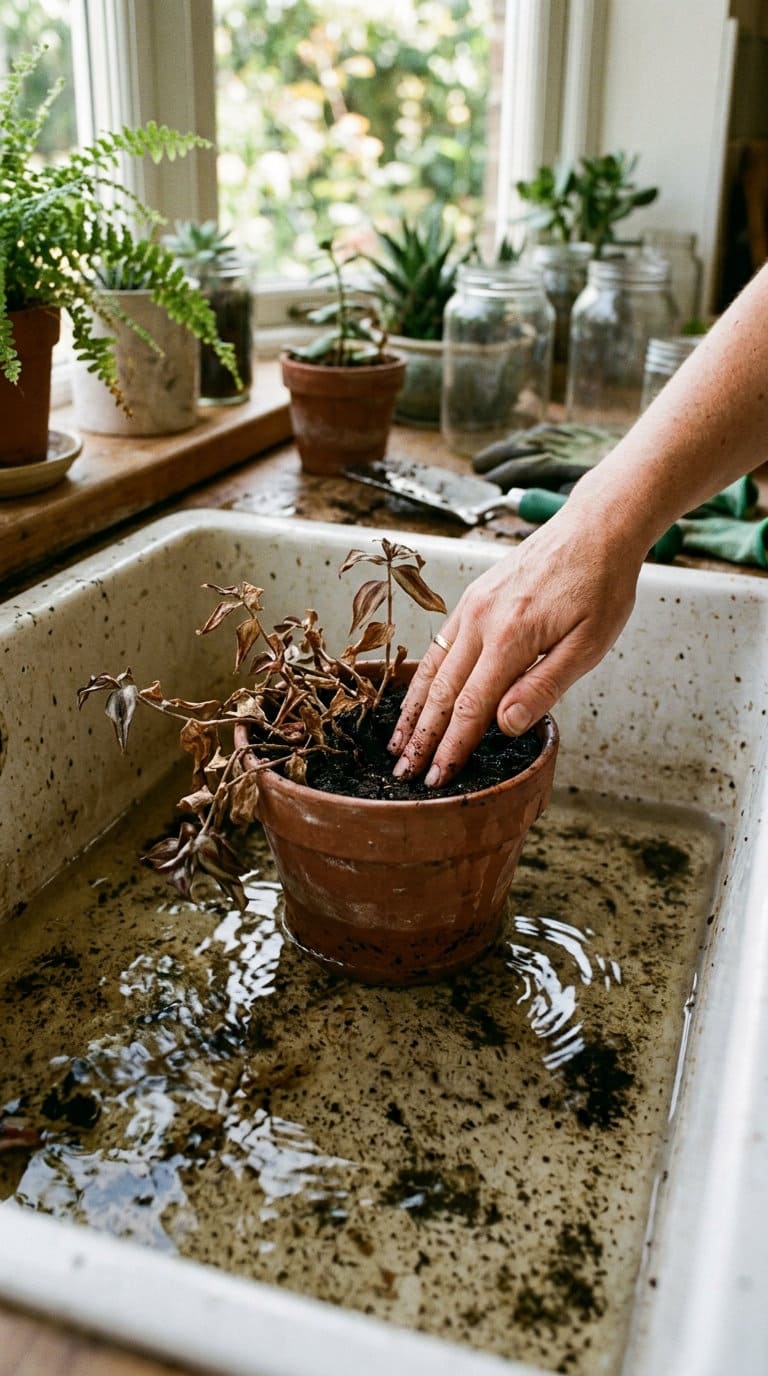
How do you fix an overwatered plant?
Stop watering and let the pot drain. Empty the saucer. UMD says to allow potting media to dry between waterings, which also helps with fungus gnats.
If the roots are dark and soft, act on them. UMD says to remove the plant from its pot, cut out the rotten portions, and replant the healthy sections. Use a sterile potting mix and a clean pot.
UMD warns that severely damaged plants should be discarded. Don’t hold onto a plant with no firm roots left.
Not all yellowing is rot. If the plant has high soluble salts, UMD says to leach the soil. Run fresh water through it at least three times the pot’s volume.
Outdoors, the same idea applies. Colorado State says to resist the urge to keep adding water once leaf scorch appears. It says scorch has no cure, and waterlogged soil can stop trees from growing new roots.
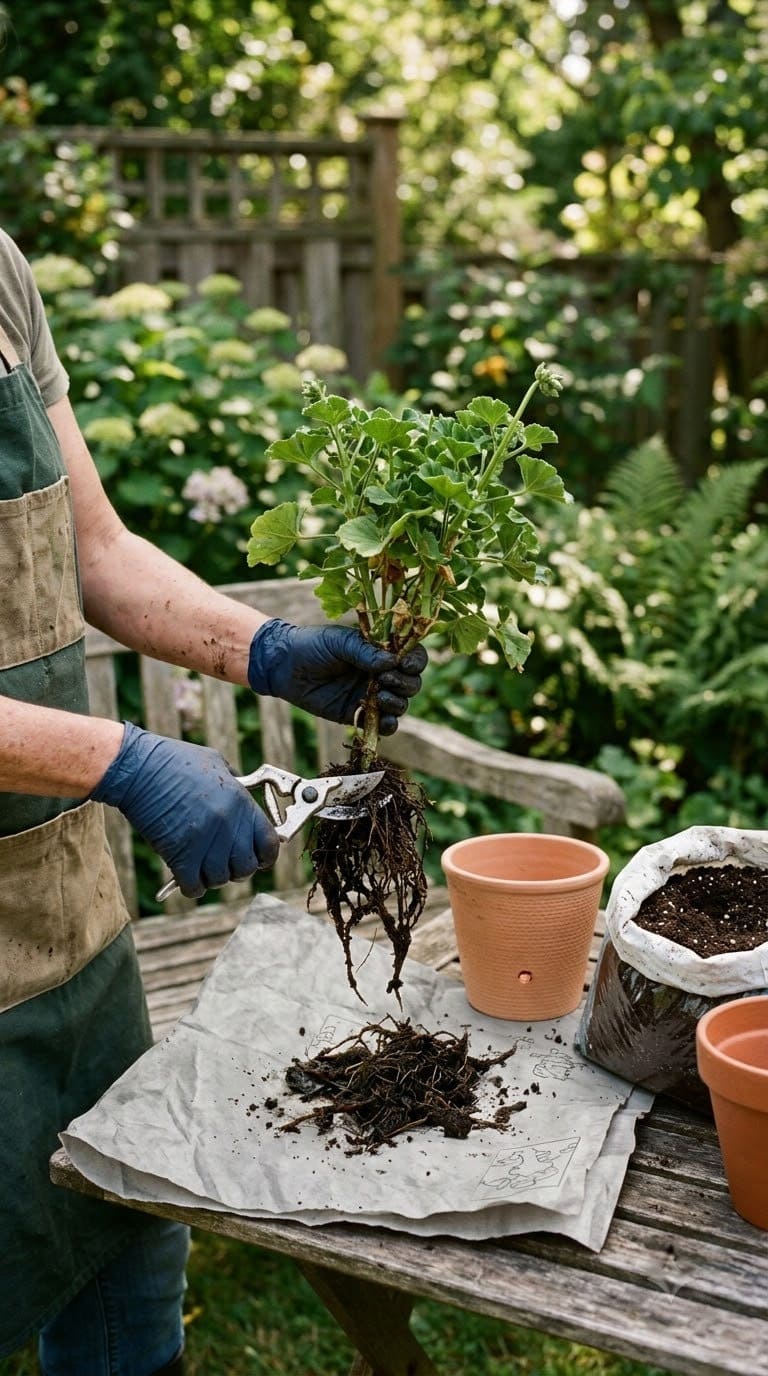
How do the signs change by plant type?
The five checks work everywhere. But each plant type has its own quirks.
Houseplants
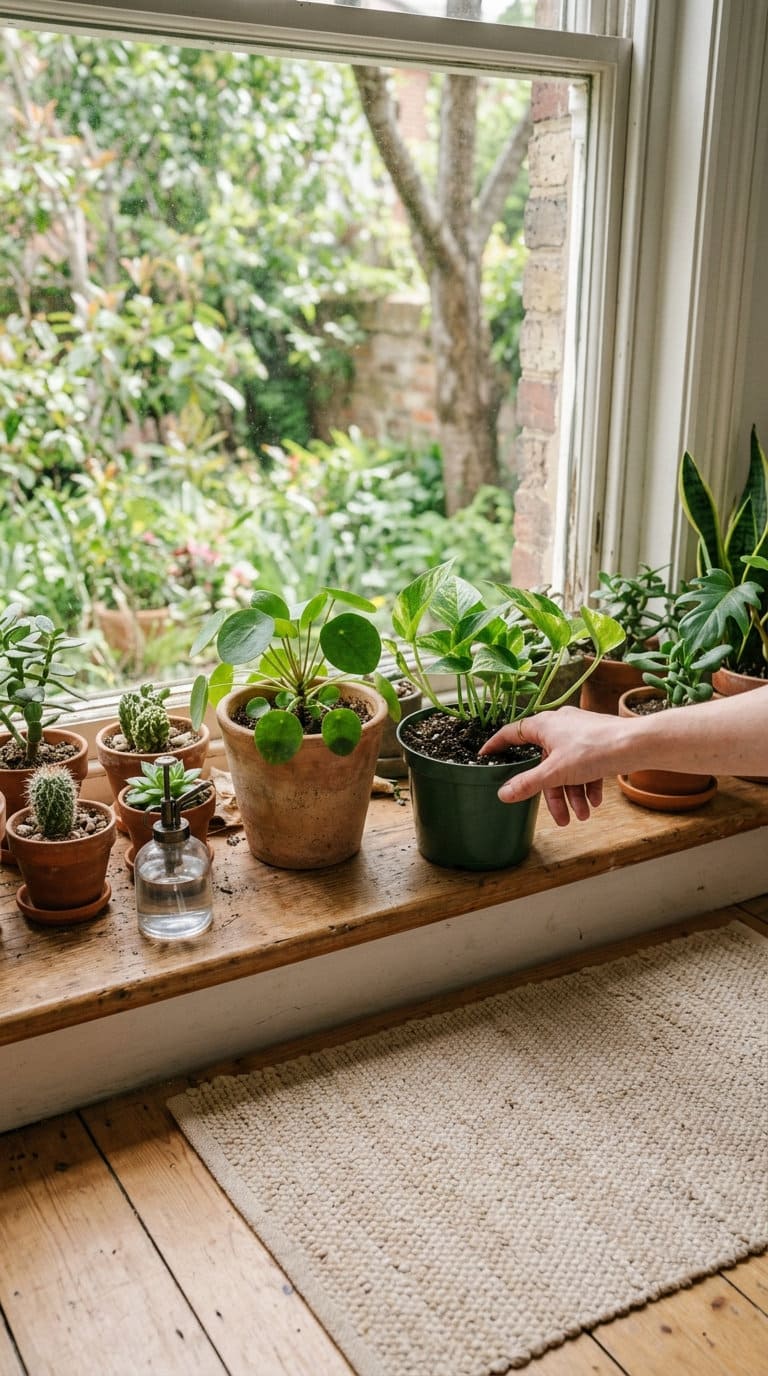
There’s no universal schedule. Clemson says watering depends on the species, growth stage, location, pot type, soil mix, and dormancy. A plant in a warm, sunny spot dries faster than one in a cool, dim room.
So water by the check, not the calendar. Our list of low-maintenance indoor plants has forgiving options if you tend to overdo it.
Container vegetables
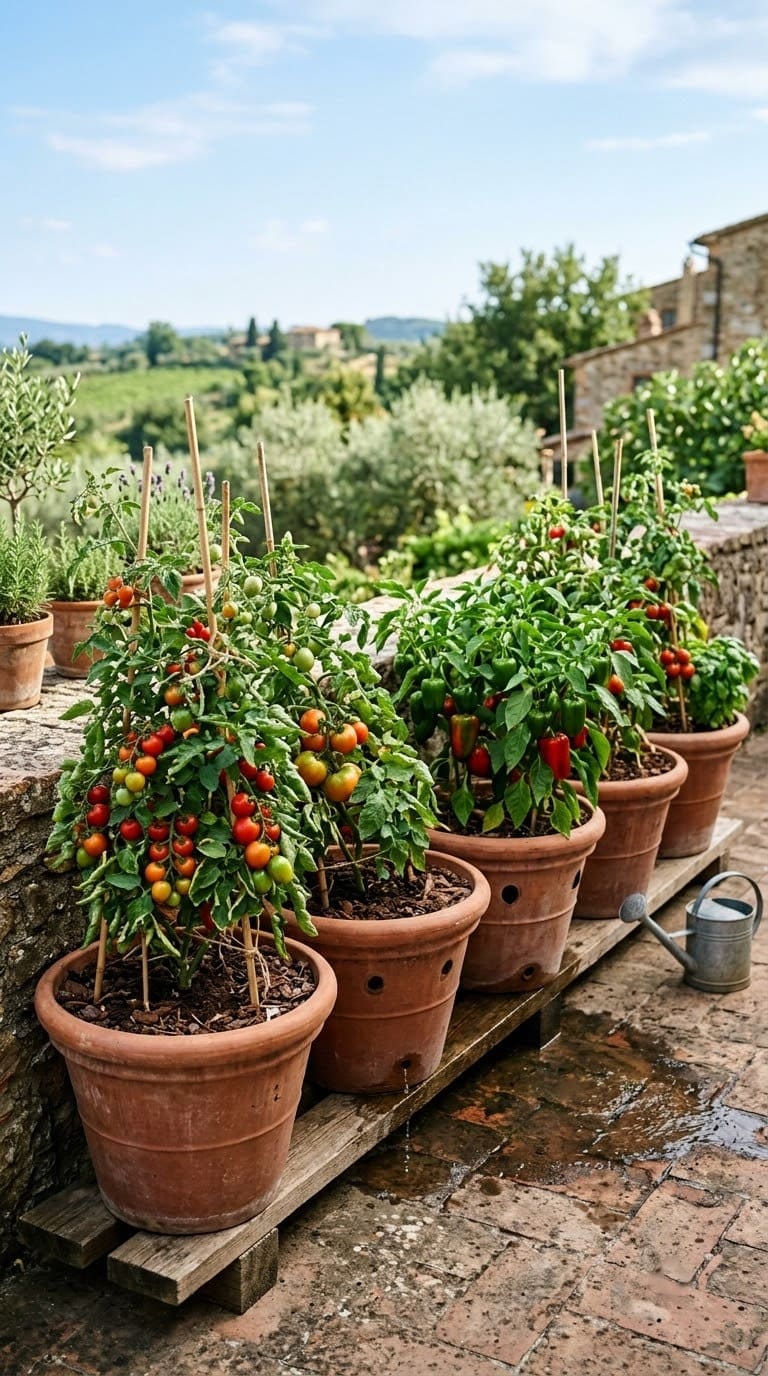
Containers are unforgiving. UMD says improper watering, both too much and too little, is the number one reason for failure in container gardening.
Water until it runs out of the drainage holes. UMD says several shallow waterings aren’t nearly as effective as one long application. Illinois Extension says daily watering is necessary during the growing season.
Our guide to growing vegetables in containers covers pot sizes and crops.
Garden beds and vegetables
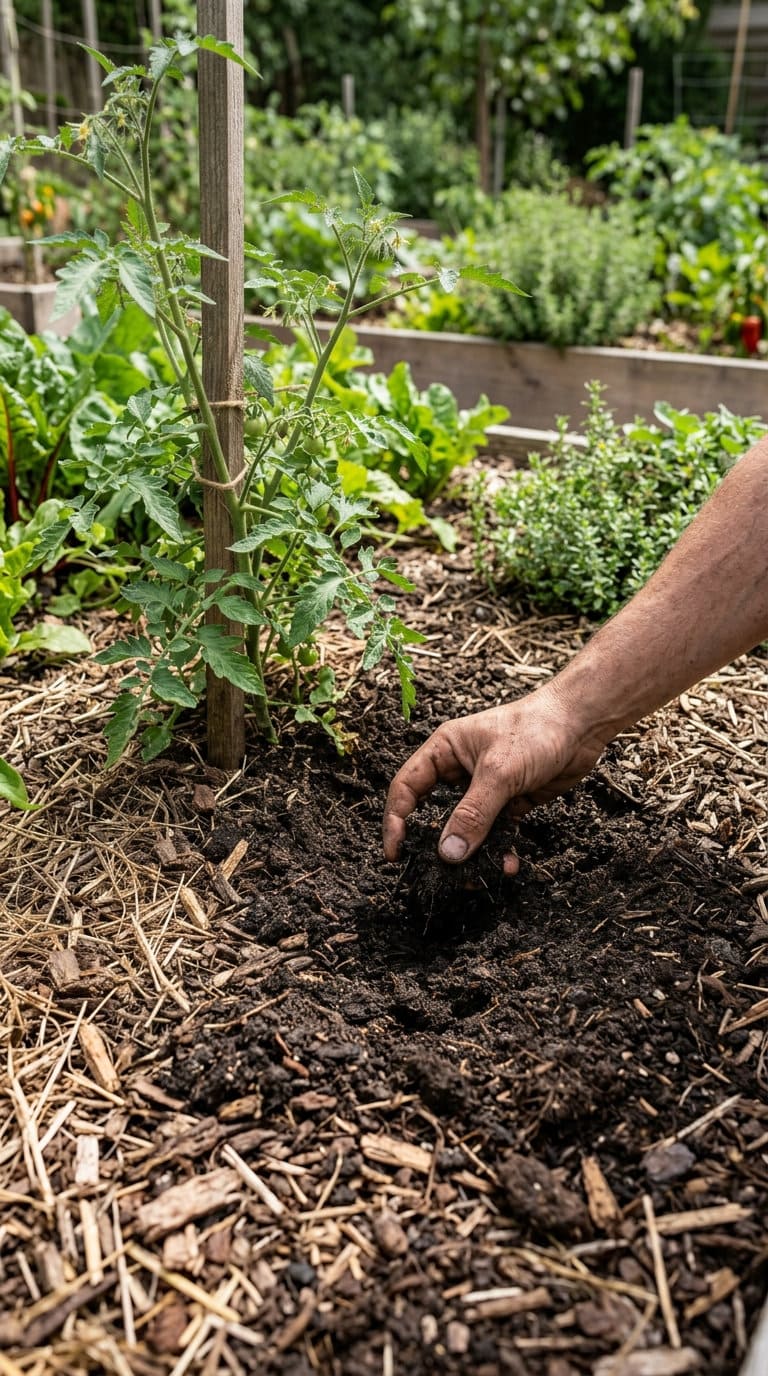
Beds hold water longer, so you can check less often. Clemson says to dig 2 to 4 inches down and feel the soil. It says an inch of water per week wets the soil 6 to 8 inches deep.
Root depth matters. Clemson lists lettuce, corn, potato, and radish as shallow-rooted. Tomato, asparagus, and watermelon are deep-rooted.
Both errors cost you. Clemson says overwatering leaches nutrients, encourages diseases, and may reduce flavor. UMD says blossom end rot follows inconsistent watering, and a mature tomato may need 2 to 3 gallons a week.
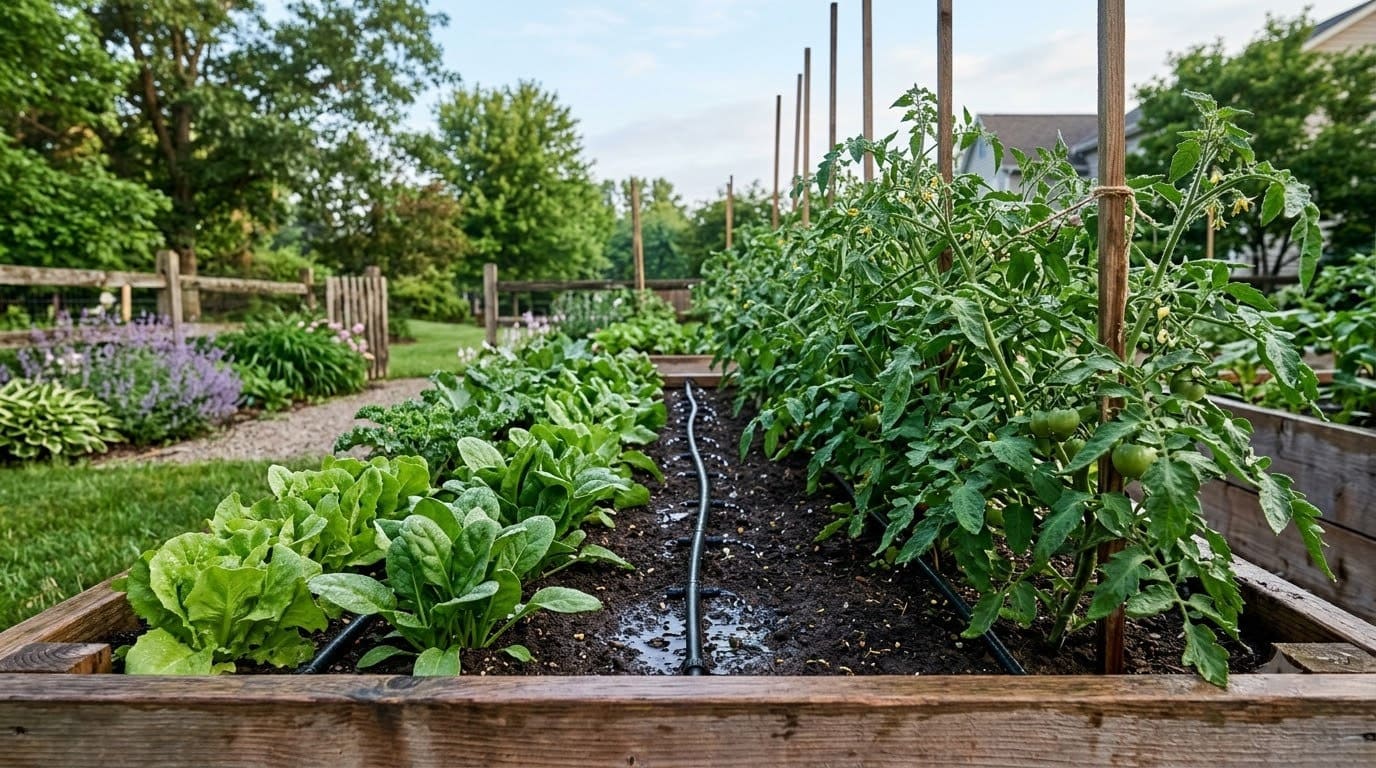
Our post on water-saving vegetable irrigation and our drip irrigation guide help you water steadily.
Trees and shrubs
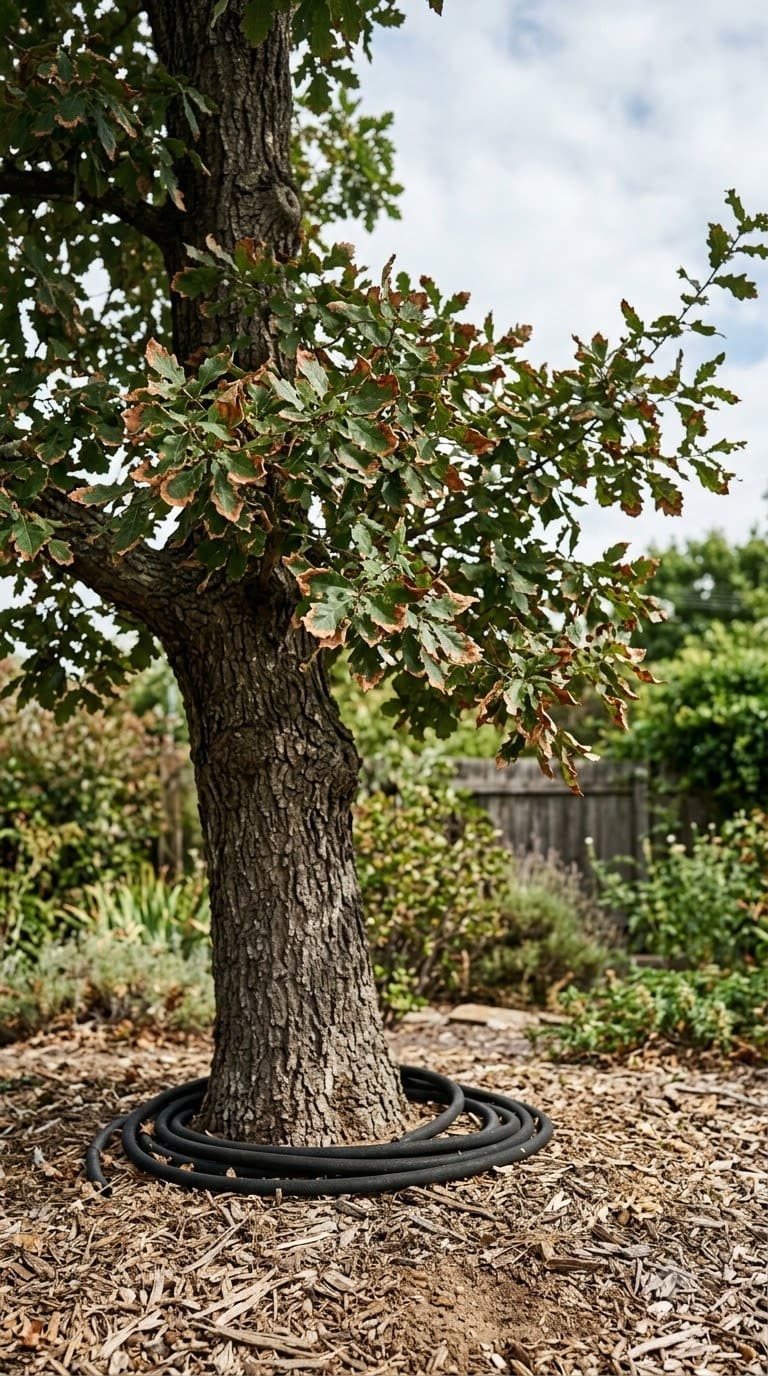
Trees show scorch, and scorch has many causes. Colorado State says leaf margins scorch first, because tissue farthest from the veins dries first. It says the most frequent problem is a root system too small for the plant’s needs.
Watering guidance is simple. In the growing season, CSU says to water deeply and as infrequently as possible. In winter with no snow cover, it says a deep soaking once a month.
Want a way to check soil without digging? Our guide to soil moisture sensors covers the options.
What do gardeners get wrong?
Most watering mistakes come from routine, not from lack of care. The extension guides warn about the same few.
Watering by the calendar is the first. Clemson says frequency depends on species, pot, soil, and season. A fixed schedule ignores all of that.
Treating every wilt as thirst is the second. UMD says a plant can wilt from root rot in wet soil. Pouring more water on it makes it worse.
Sipping is the third. UMD says quick shallow watering isn’t effective. Water until it runs out of the drainage holes.
Leaving water in the saucer is the fourth. UMD says to pour it off to prevent gnats and other insects.
Assuming yellow means water is the fifth. UMD lists pests, root rots, and salts as other causes. Check the soil and the roots before you change anything.
Using garden soil in pots is the sixth. UMD says to avoid regular garden soil and use a sterile potting media. And forgetting sheltered pots is the last, since containers near a building get no natural rain.
We’d start with the finger test. It costs nothing, and it beats a schedule.
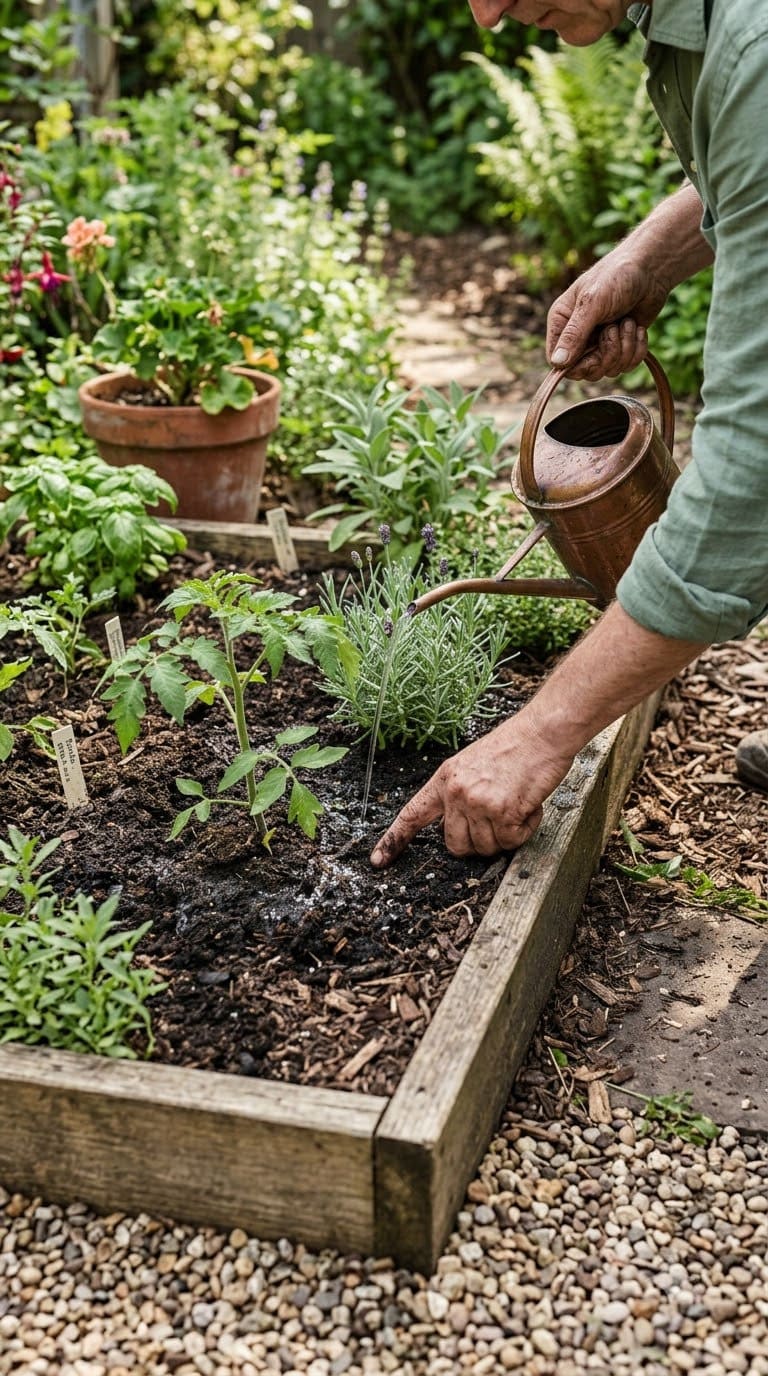
Frequently asked questions
Can a plant wilt from both too much and too little water?
Yes. UMD says overwatering damages roots so the plant can’t take up water, and Clemson says the symptoms are similar. Check the soil and roots to tell them apart.
Should I water a wilting plant right away?
Not until you check. Push a finger into the soil first. If it’s wet, more water will make it worse.
How often should I water my plants?
There’s no universal rule. Illinois Extension says frequency varies with season, location, container type, and species. Water by the soil check.
Do soil moisture meters work?
Sometimes. Clemson says their accuracy is variable. Use them as a second opinion after the finger and weight checks.
Can an overwatered plant recover?
It can if the roots aren’t too far gone. UMD says to cut out rotten portions and replant the healthy sections in sterile mix. It says to discard severely damaged plants.
Why does water run straight through my pot?
The soil may have dried and pulled away from the pot edge. UMD says water flows through the gap and leaves the soil dry. Water several times, or soak the pot in a bucket.
Related Posts
Products We Recommend
This post contains affiliate links. We may earn a commission on qualifying purchases at no extra cost to you.
24 Pack Invisible Pot Feet, Non-Slip Solid Rubber Pot Risers
Small rubber risers that lift a container so water drains freely, as UMD suggests for outdoor pots. Handy when a saucer keeps holding water.
Shop Now
Small Watering Can for Indoor Plants, 1 Liter, Long Spout
A long narrow spout that makes it easy to give a slow, measured pour at the base of the plant, so you can water until it drains without splashing.
Shop Now
Gouevn Soil Moisture Meter, 2-Pack, No Batteries
A dial probe for a second opinion on soil moisture. Clemson says meter accuracy varies, so use it after the finger and weight checks.
Shop NowNever miss an update — choose FarmFoodFamily as your preferred source on Google.
How it works: Tap the button below to open Google's settings page, then check the box next to FarmFoodFamily.
Tap the checkbox to turn it blue — that's how you know it's set.