Gardening Tasks to Do in October: The Essential Guide for Every US Region
October’s garden jobs change with your region, from planting garlic in the north to sowing greens in the desert, so match each one to your first frost and not to the calendar.

Never miss an update — choose FarmFoodFamily as your preferred source on Google.
How it works: Tap the button below to open Google’s settings page, then check the box next to FarmFoodFamily.
Tap the checkbox to turn it blue — that’s how you know it’s set.
October is the month to plant garlic and bulbs, clean up with care, and protect tender plants. Timing depends on your region. Garlic goes in by mid-October in Alaska and across the North, and from mid-October into early December in Central Texas.
Spring bulbs need cold, so they go in before the ground freezes. Leaves can become mulch instead of trash. But the exact dates follow your frost.
In the desert Southwest and Florida, October is a planting month for cool-season vegetables. In the Rockies, the big job is winter watering. Colorado State University Extension says trees and shrubs need it from October through March when snow cover is missing.
Everywhere else, focus on leaves, lawns, tender plants, and tools. Ask your county extension office for your first-frost date. Then plan backward from it, and check your region’s section below.
How do you find the October tasks for your area?
Start with two facts about your yard. You need your hardiness zone and your first-frost date. They aren’t the same thing.
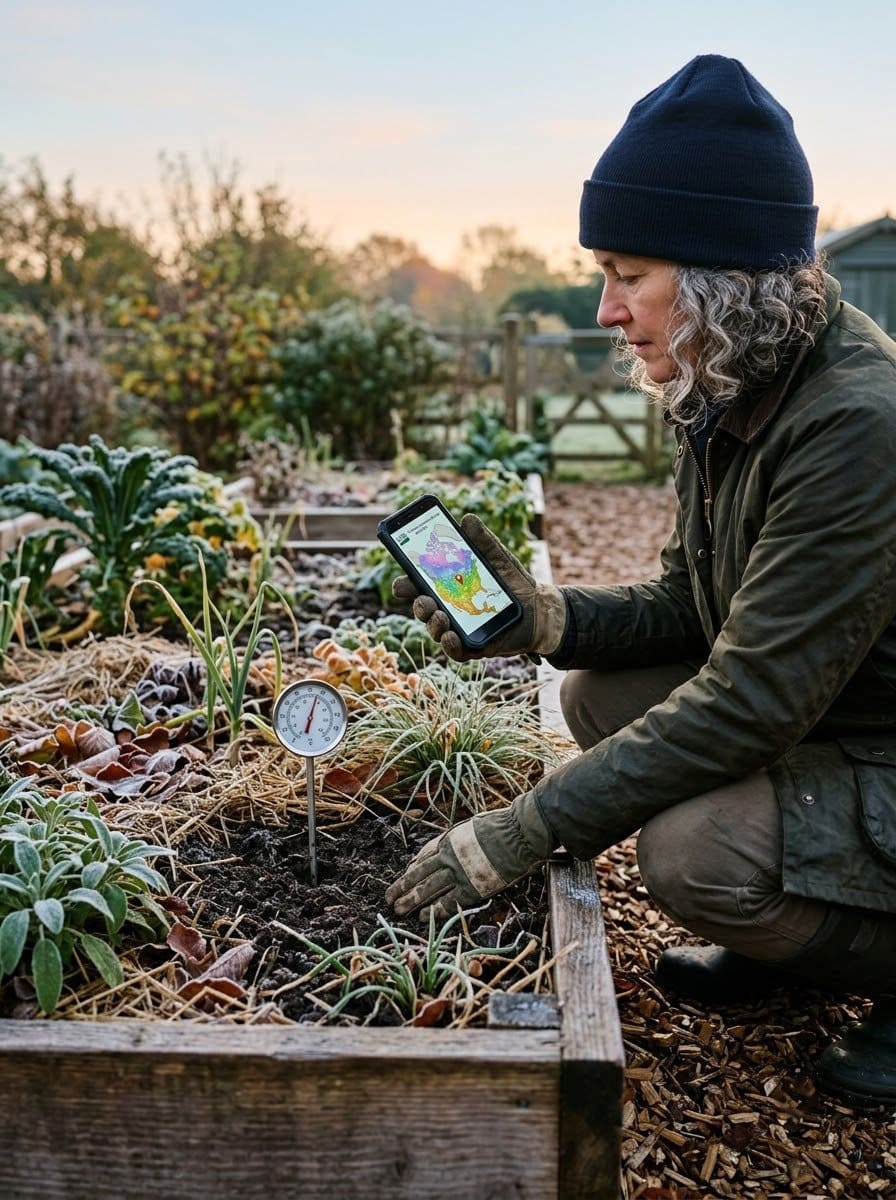
The USDA Plant Hardiness Zone Map is based on the average annual extreme minimum winter temperature. It shows 10-degree zones and 5-degree half zones. You can look up yours by zip code.
Answer 4 quick questions and get matched to the exact fix for your yard — drainage, budget, layout, or something else entirely.
Take the Free QuizUNH Extension’s Sean O’Brien explains the 2023 edition. It uses 1991 to 2020 data from 13,412 weather stations. About half the country moved up a half zone.
A zone tells you how cold winter can get. But it doesn’t tell you when the first frost arrives. For that date, ask your county extension office.
Here’s the whole country at a glance. Each row has a full section further down.
| Region | The main October job |
|---|---|
| Northeast | Plant garlic and spring bulbs before the ground freezes |
| Mid-Atlantic | Plant garlic mid to late month, then protect fall crops |
| Southeast | Plant cool-season vegetables, divide perennials, plant trees |
| Florida | Start cool-season vegetables, herbs, and winter annuals |
| Great Lakes | Clean up debris, plant garlic, lift tender bulbs |
| Upper Midwest and Northern Plains | Feed the lawn early, protect tender plants, plant garlic |
| Texas | Plant garlic and cool-season greens, watch for early freezes |
| Southwest desert | Sow cool-season vegetables, herbs, and flowers outdoors |
| Rocky Mountains | Plant bulbs, then start winter watering |
| Pacific Northwest | Plant garlic, weed the lawn, drain irrigation |
| California | Plant natives and cool-season crops, protect from heat |
| Alaska | Plant garlic, mulch perennials, sharpen tools |
| Hawaii | Ask your county Master Gardeners (see the note below) |
Which October tasks apply almost everywhere?
Seven jobs show up in many of the guides we read. We start with the two that pay off next spring.
Plant spring bulbs
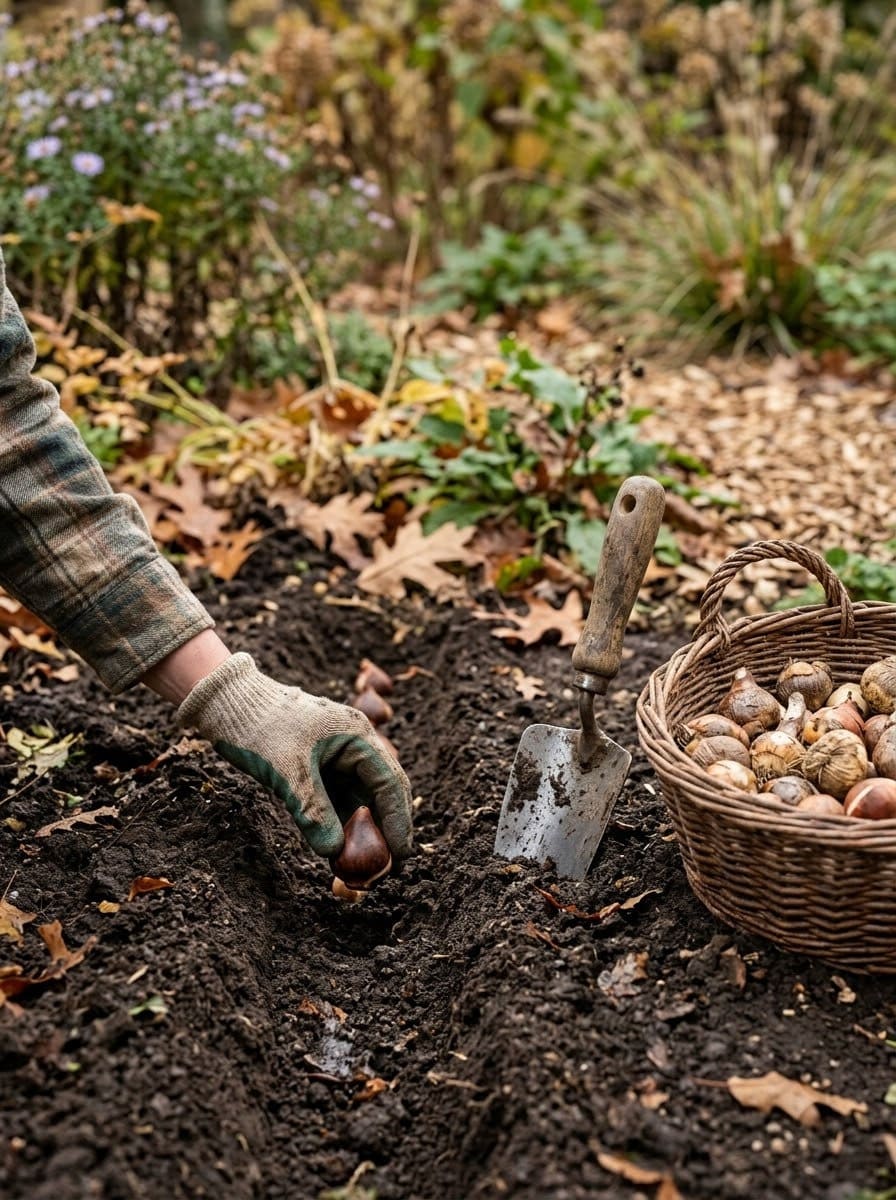
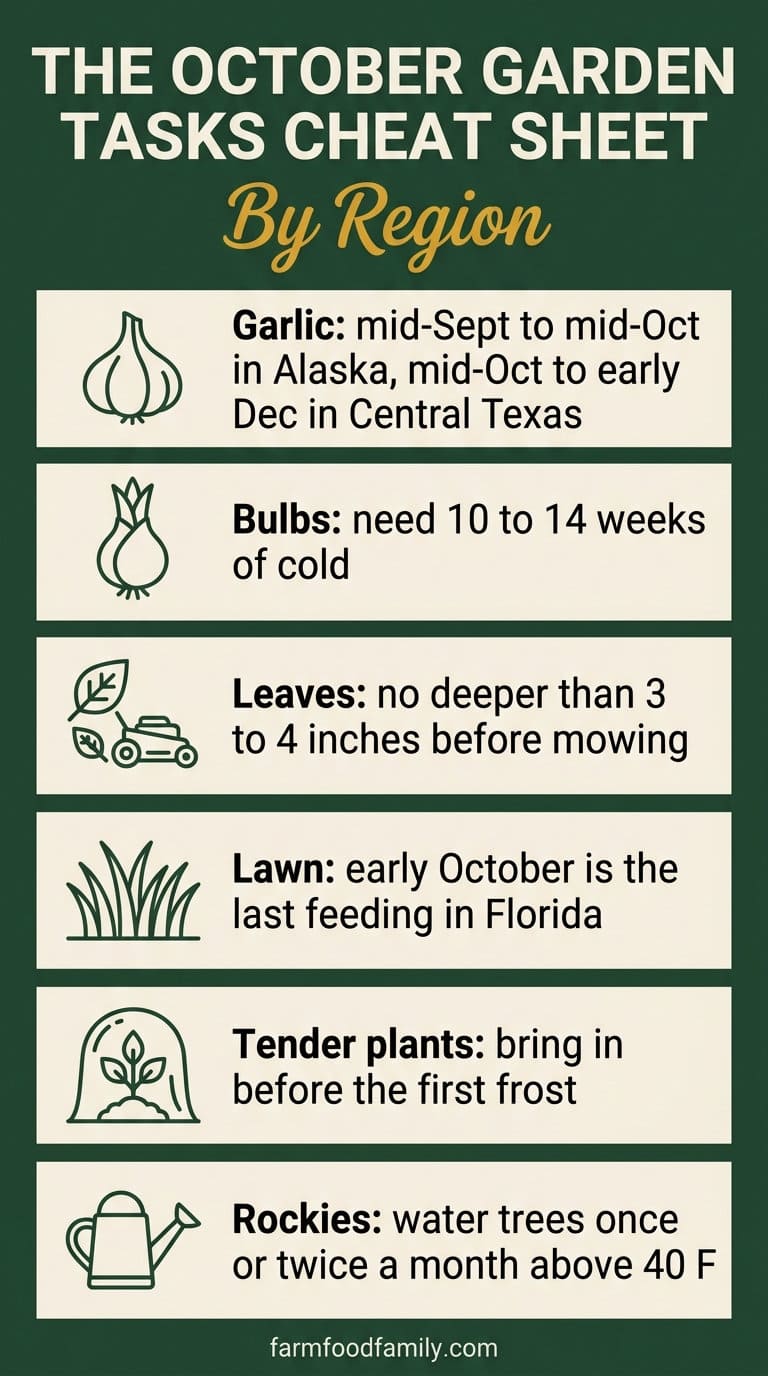
Spring bulbs need a long cold spell to bloom. UNH’s Nate Bernitz says bulbs need 10 to 14 weeks of cold, close to freezing or about 40°F and under. He puts the planting window at October, or maybe into November.
In Colorado, CSU PlantTalk gives mid-September to late October. It says to plant at three to four times the bulb’s diameter. In sandy soil, go 2 inches deeper.
Squirrels dig up bulbs, and voles eat them. Michigan State University Extension suggests covering new plantings with hardware cloth or chicken wire. If voles are the problem, try daffodils or allium, or plant in cages made from hardware cloth.
Most yard problems trace back to one specific, fixable cause. Find yours in 4 quick questions.
Take the Free Quiz
A reusable fabric cover for beds and shrubs when a frost warning hits, useful in the Southwest, Texas, and anywhere a late-October freeze can surprise you.
Shop NowThis post contains affiliate links. We may earn a commission on qualifying purchases at no extra cost to you.
Want ideas for what to plant? Our guide to planting fall bulbs for a spring garden has more options.
Plant garlic
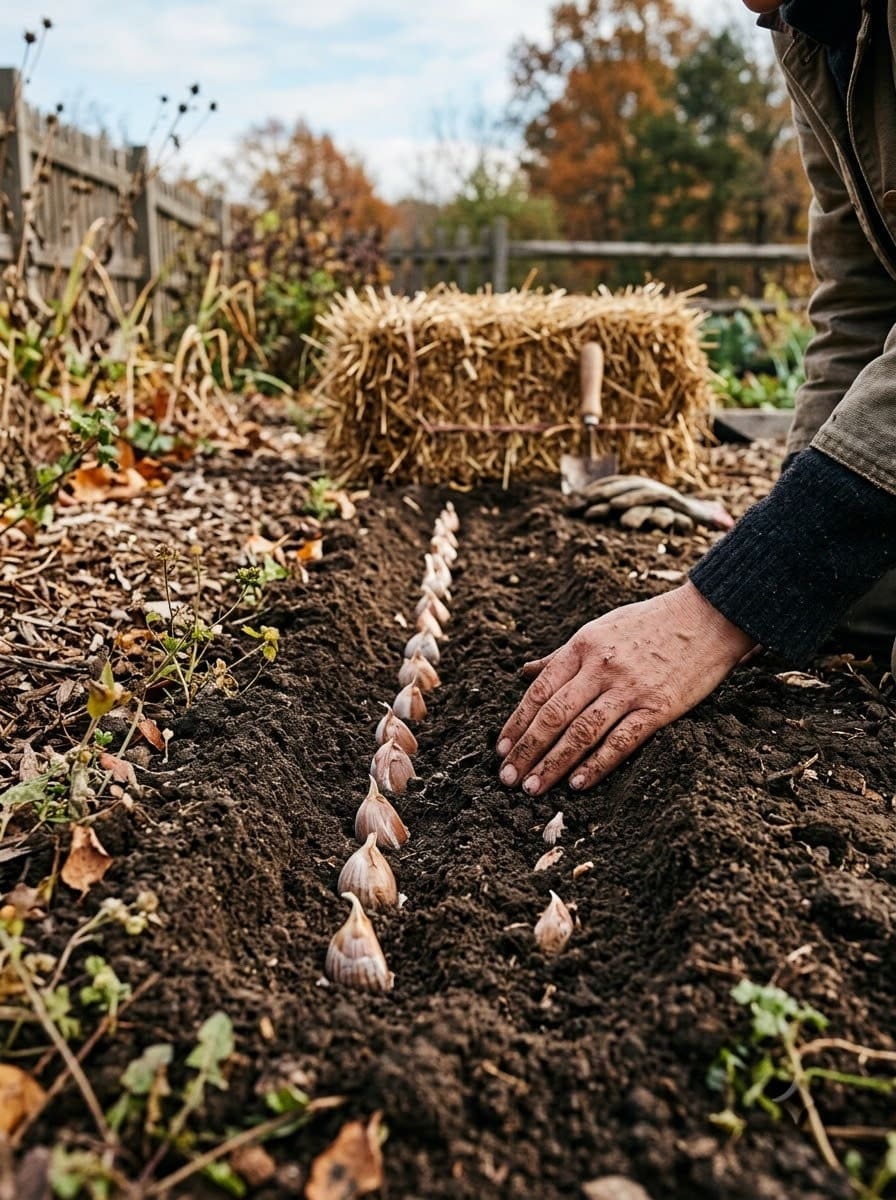
Garlic is the classic October crop. It grows roots this fall and leaves next spring. You harvest around July in the North.
The rules change a lot by region. Depth and mulch differ by source, so the table gives each one’s own numbers.
| Source and region | When | Depth and spacing | Mulch |
|---|---|---|---|
| University of Maryland Extension, Maryland | Mid to late October | 5-inch furrow, 1 to 2 inches of soil over cloves, 3 to 6 inches apart | Shredded leaves or straw, optional |
| Cornell Cooperative Extension, northern New York | Fall, before the ground freezes | 2 to 3 inches deep, 6 inches apart | About 6 inches of straw or mowed leaves |
| NDSU Extension, North Dakota | Soon after the first hard frost, late September or early October | 2 inches deep, 4 to 6 inches apart | 4 inches of straw or hay |
| UAF Cooperative Extension, Alaska | Mid-September to mid-October, a week or two after the first killing frost | 3 to 4 inches deep, 5 to 6 inches apart | About 4 to 10 inches |
| Texas A&M AgriLife Extension, Central Texas | Mid-October through early December | Not given | Not given |
Two more timing rules. UNH says plant in October in northern New Hampshire and November in the south. MSU says best planting in Michigan is October.
Buy certified disease-free bulbs. UMD says never plant grocery store garlic because it may carry disease with no symptoms.
Deal with leaves the smart way
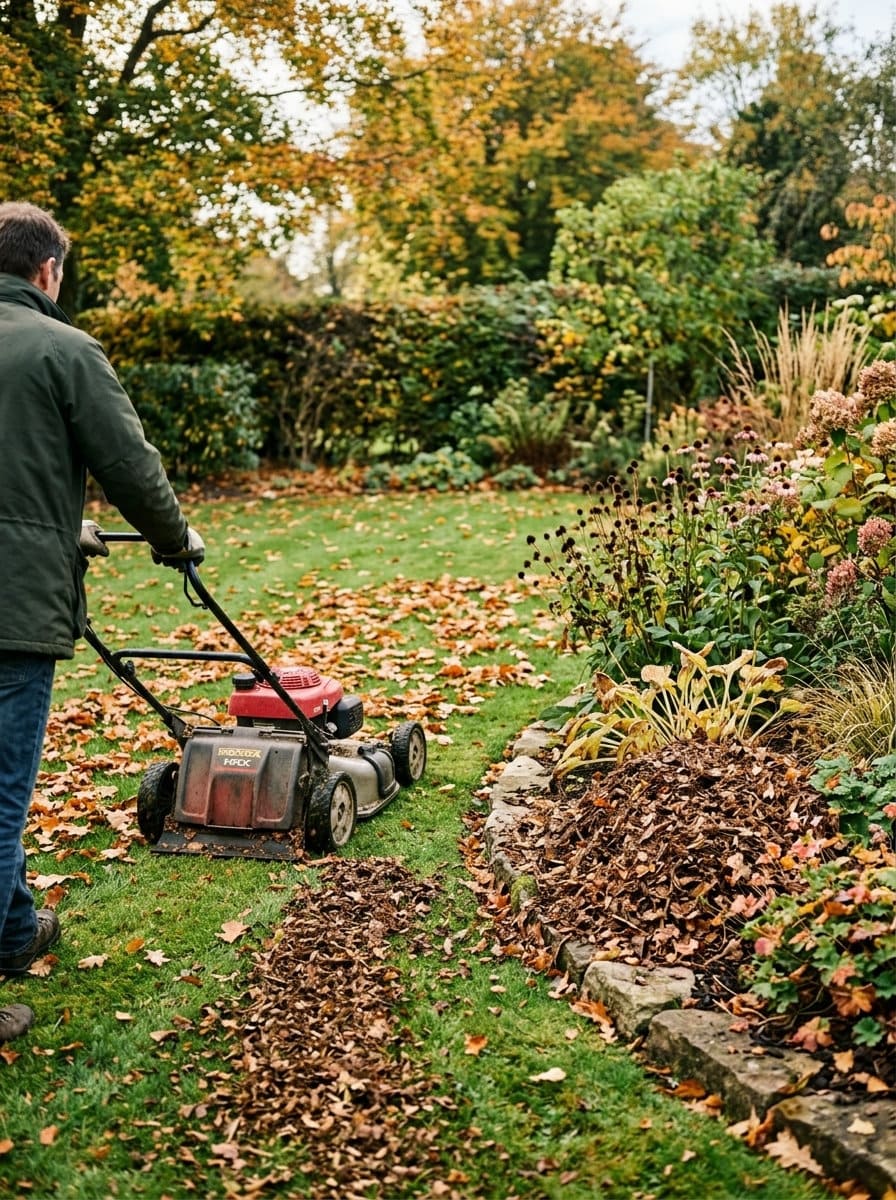
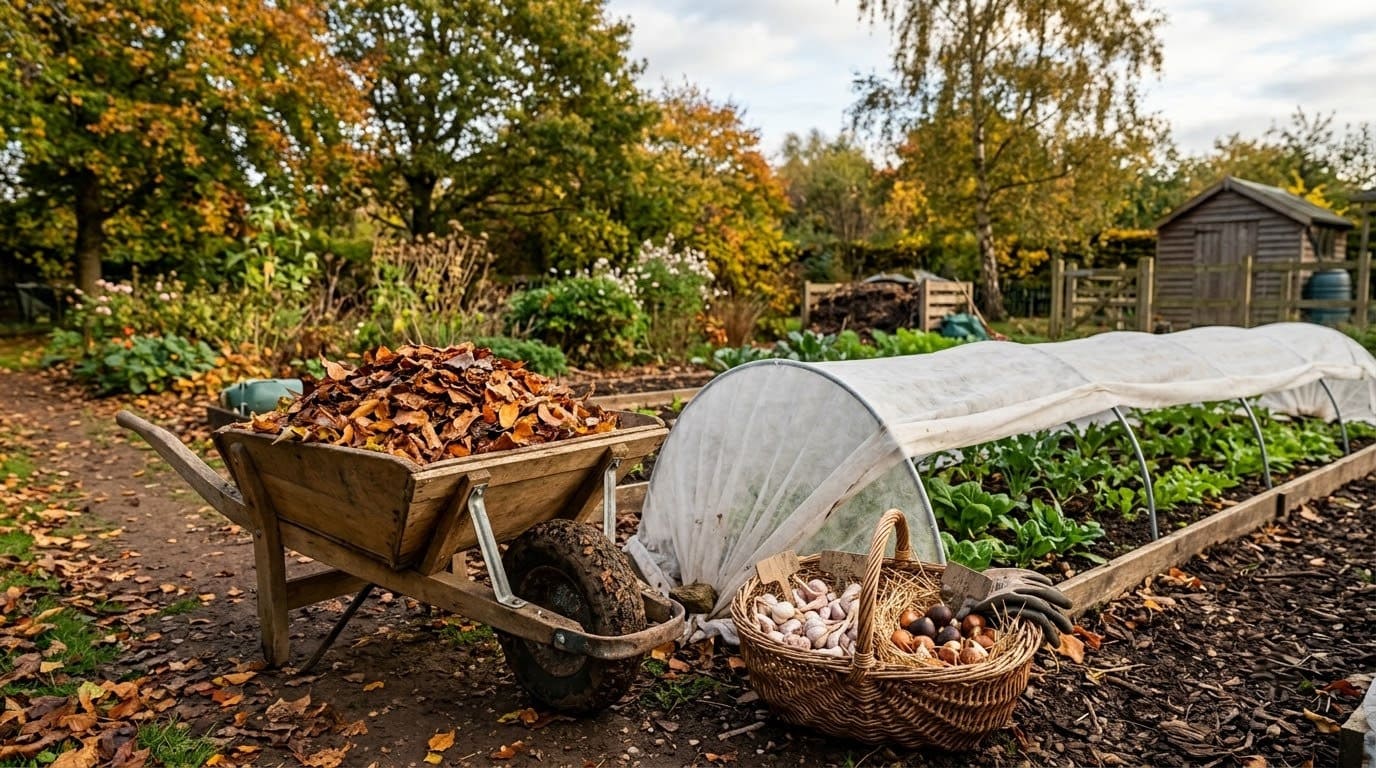
Don’t bag all your leaves. MSU says to use fallen leaves as mulch around trees, shrubs, and perennials. Leaves insulate and help less-hardy perennials overwinter.
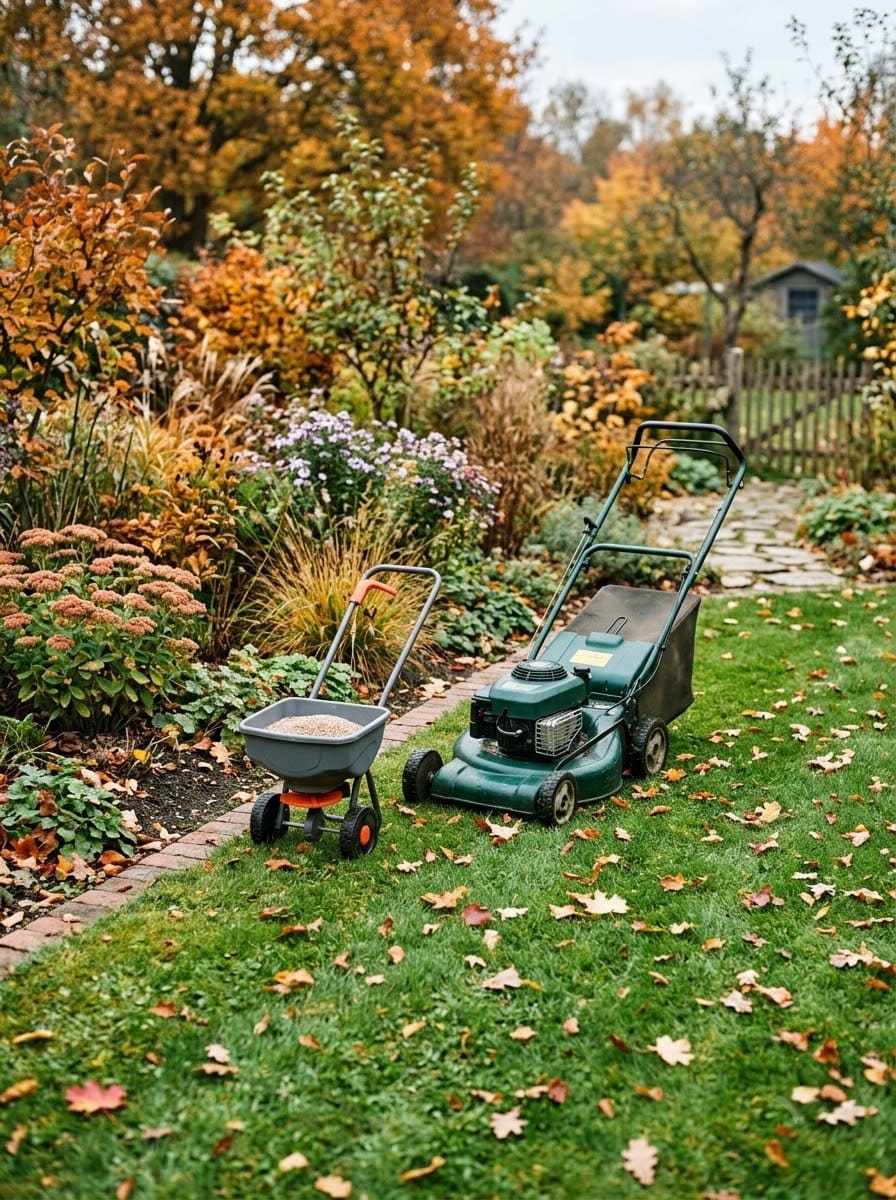
On the lawn, mulch them with a mower. MSU says don’t let leaves pile up more than 3 to 4 inches deep before mowing. Use a sharp blade and mow when the leaves are moist from dew, but not wet.
Clemson Extension’s LayLa Burgess suggests shredding leaves to make leaf mold, or adding them to compost. Our guide to making compost at home shows how to start a pile.

Clean up, but not everything
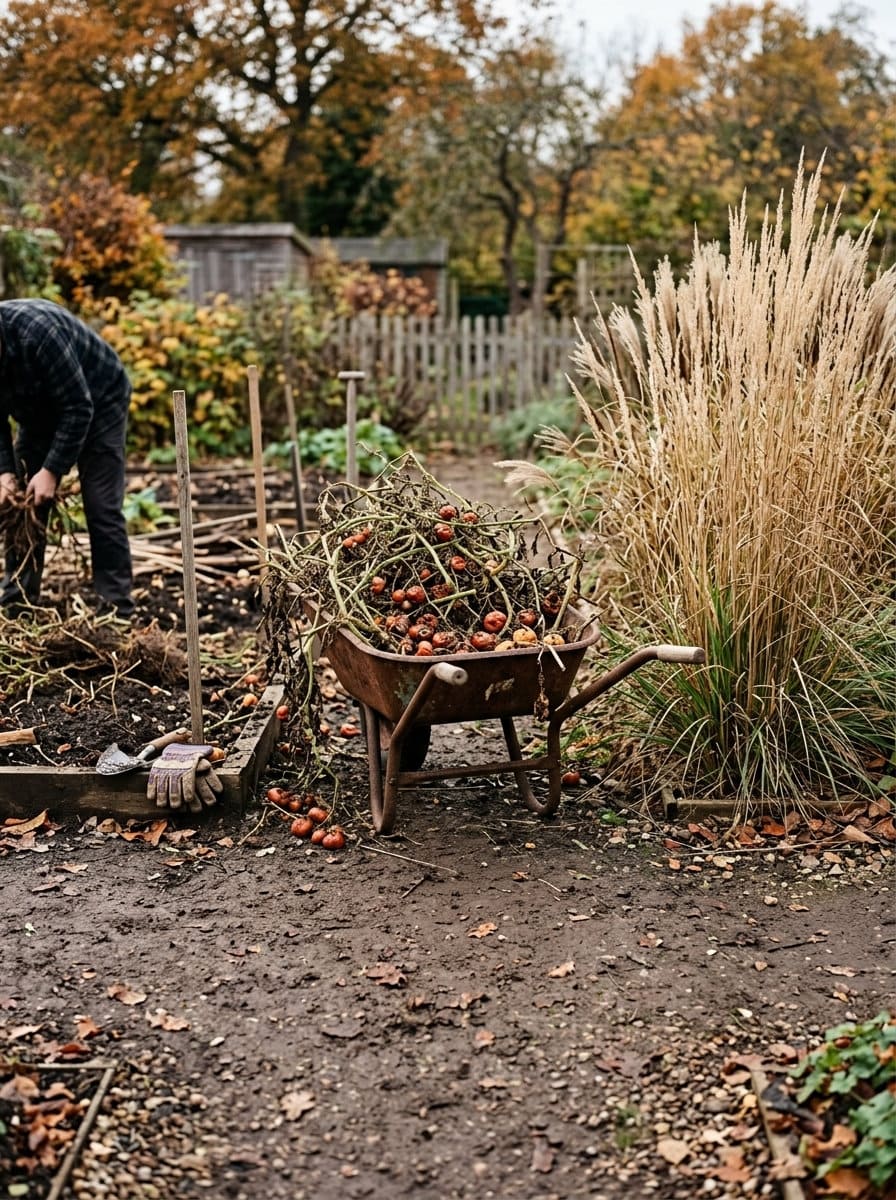
Fall cleanup isn’t all-or-nothing. MSU says to clean up vegetable debris and rotting fruit to reduce overwintering pests and diseases. It also says to leave ornamental grass and perennial stems standing for overwintering bees and beneficial insects.
The average homeowner spends $616/year on yard fixes that don't address the real problem. Find out what yours actually is — before you spend another dollar.
Take the Free QuizUniversity of Minnesota Extension says to remove diseased stems and flowers from edible and ornamental plants. Managing disease this year can lessen pests and diseases next year. MSU adds that diseased material shouldn’t go into home compost.
Want a generic checklist too? Our fall garden cleanup checklist covers 17 tasks, and this guide focuses on what changes by region.
Bring in or protect tender plants
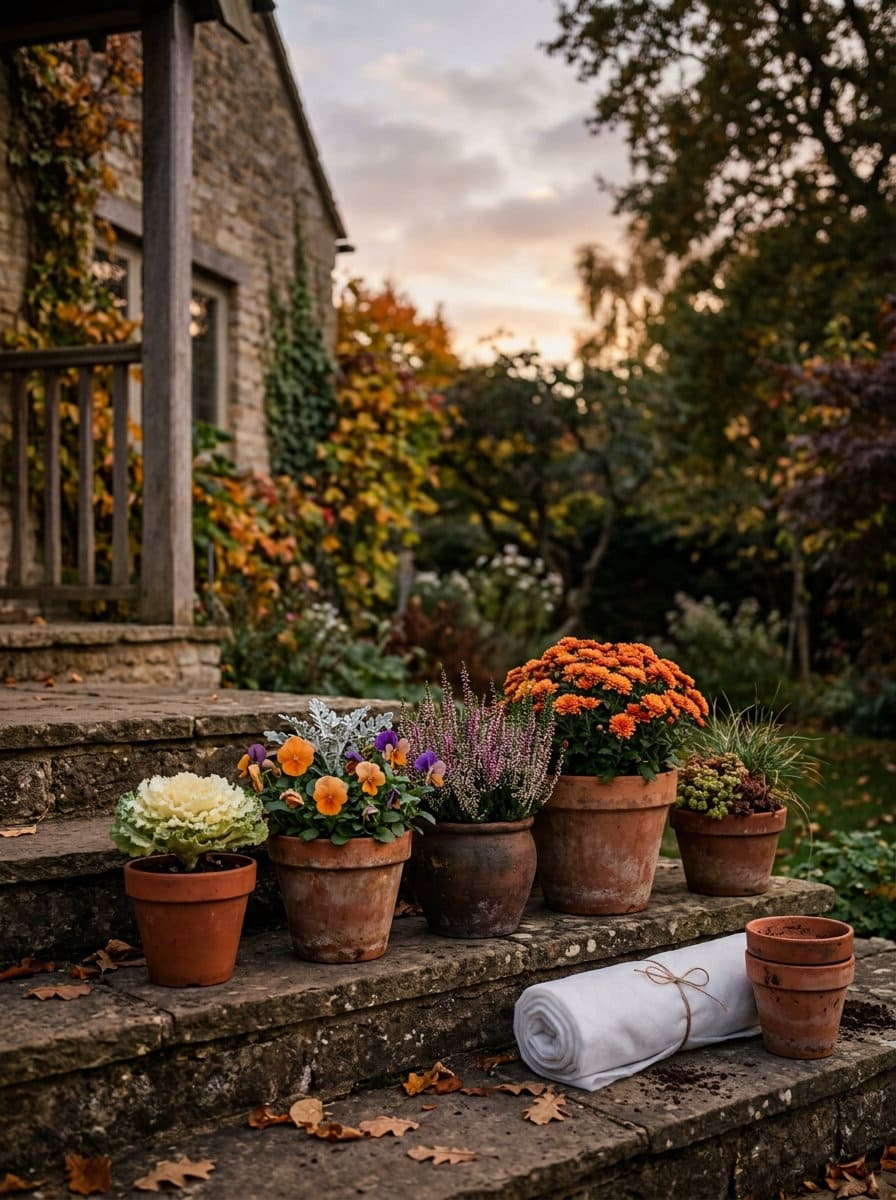
Move houseplants inside before the first frost. Clemson says to inspect them for insects and repot if needed. MSU adds a two-week quarantine for returning plants that will join others indoors.
Place them where light and temperature suit them. UMN says some plants are badly hurt below 50°F. That can happen against poorly insulated windows.
Lift tender perennials like cannas, dahlias, and gladiolus. MSU says to store them dormant in a cool, dark place, ideally 45 to 55°F. Also bring in pots that can’t take a freeze, such as terra cotta and ceramic.
Adjust your lawn care
Lawn advice splits sharply by climate. Cool-season lawns want fall feeding and a careful last mow. Warm-season lawns want the opposite.
| Region | What the extension source says |
|---|---|
| New Hampshire (UNH) | Mow high, and make the last cut no lower than 2 to 2.5 inches. Fall is one of the best times to fertilize |
| Michigan (MSU) | Lower the final mowing height by no more than one notch, typically half an inch, once the lawn stops growing |
| Minnesota (UMN) | October is the last chance to prepare the lawn for next year. Fertilize in early October |
| Florida (UF/IFAS) | Early October is the last time to fertilize the lawn |
| South Carolina (Clemson) | Keep the mowing height raised on warm-season lawns |
| Southern Arizona (UA Extension) | Overseed Bermudagrass with annual rye once daytime highs are under 90°F and nights are in the 60s |
Our guide to getting rid of lawn weeds covers weed control beyond October.
Service tools and irrigation
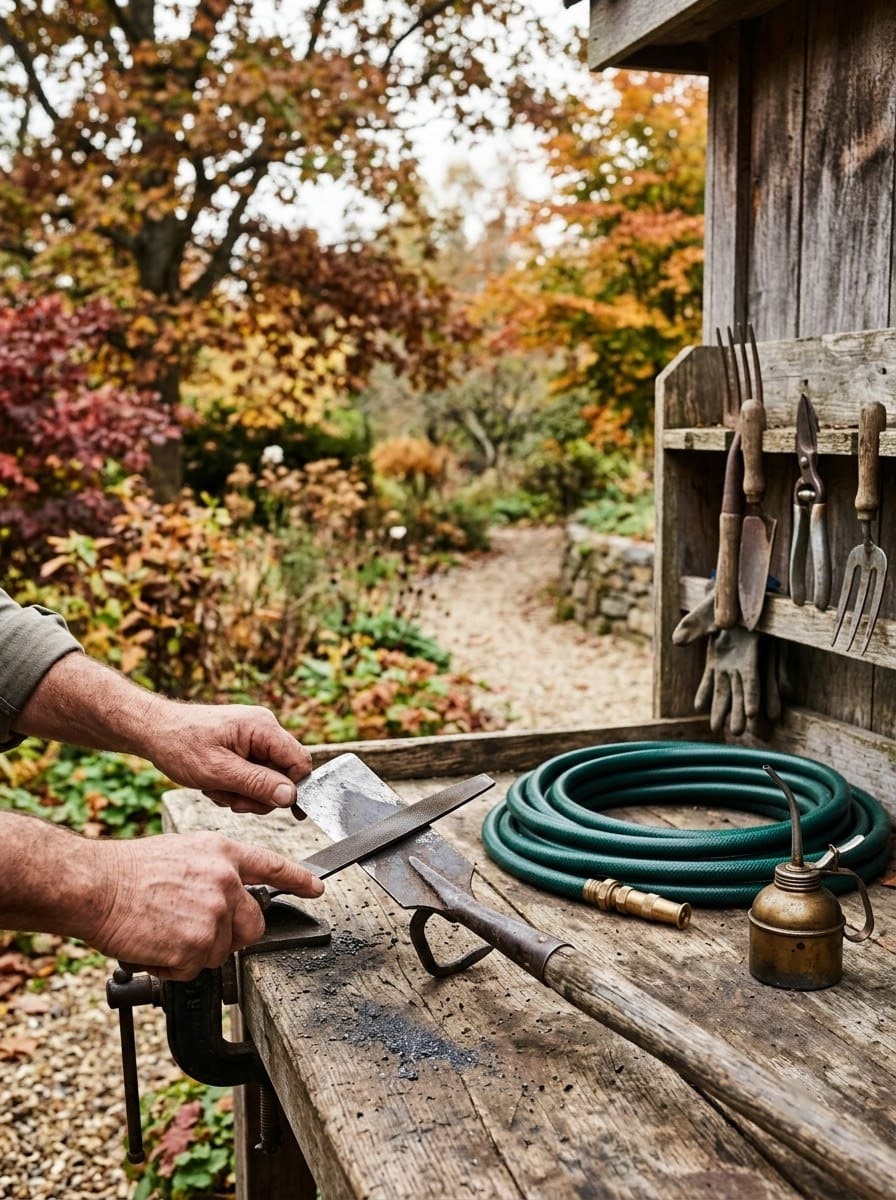
Most guides end with the same two chores. Sharpen your tools, and empty your irrigation before a hard freeze.
Oregon State University Extension says to clean, sharpen, and oil tools before storing them. It also says to drain or blow out your irrigation system and insulate the valve mechanisms. MSU says to blow out irrigation before a hard freeze.
UAF Cooperative Extension suggests sharpening hoes to a blunt angle of about 30 degrees with a flat file.
What should you do in October in each US region?
Each section below follows one extension source. Weather changes a lot inside every region. Treat these as starting points, and confirm timing with your county office.
Northeast
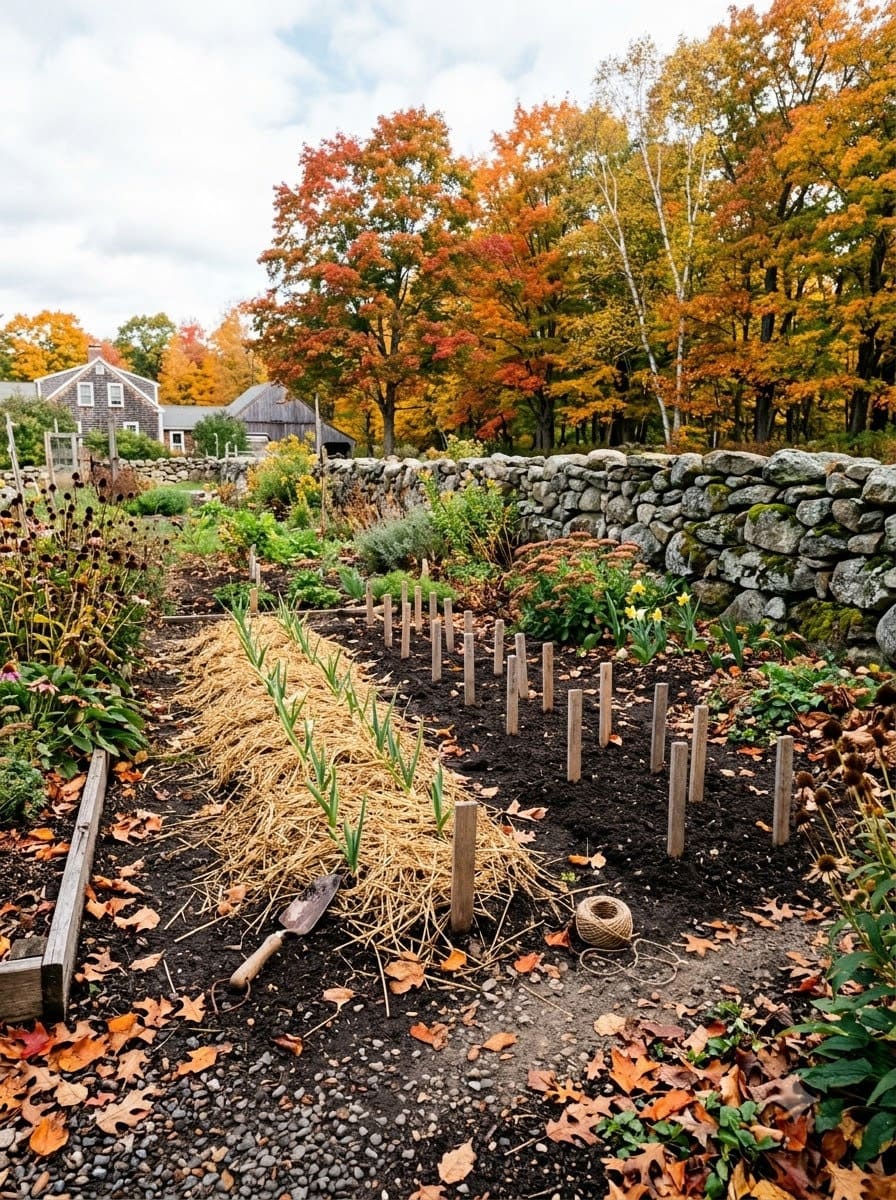
The Northeast has one big deadline. Get bulbs and garlic in before the ground freezes.
UNH’s Nate Bernitz says spring bulbs go in during October, or maybe into November. He says garlic needs six to eight weeks or so of root growth before the ground freezes. Add nitrogen before planting.
Cornell Cooperative Extension says to break bulbs into cloves two to three days before planting. It suggests buying locally grown garlic from farm stands or farmers’ markets.
On lawns, keep mowing high through fall. Overseeding works best in early fall because weeds are fewer and moisture is better. Check whether your window has passed.
Mid-Atlantic
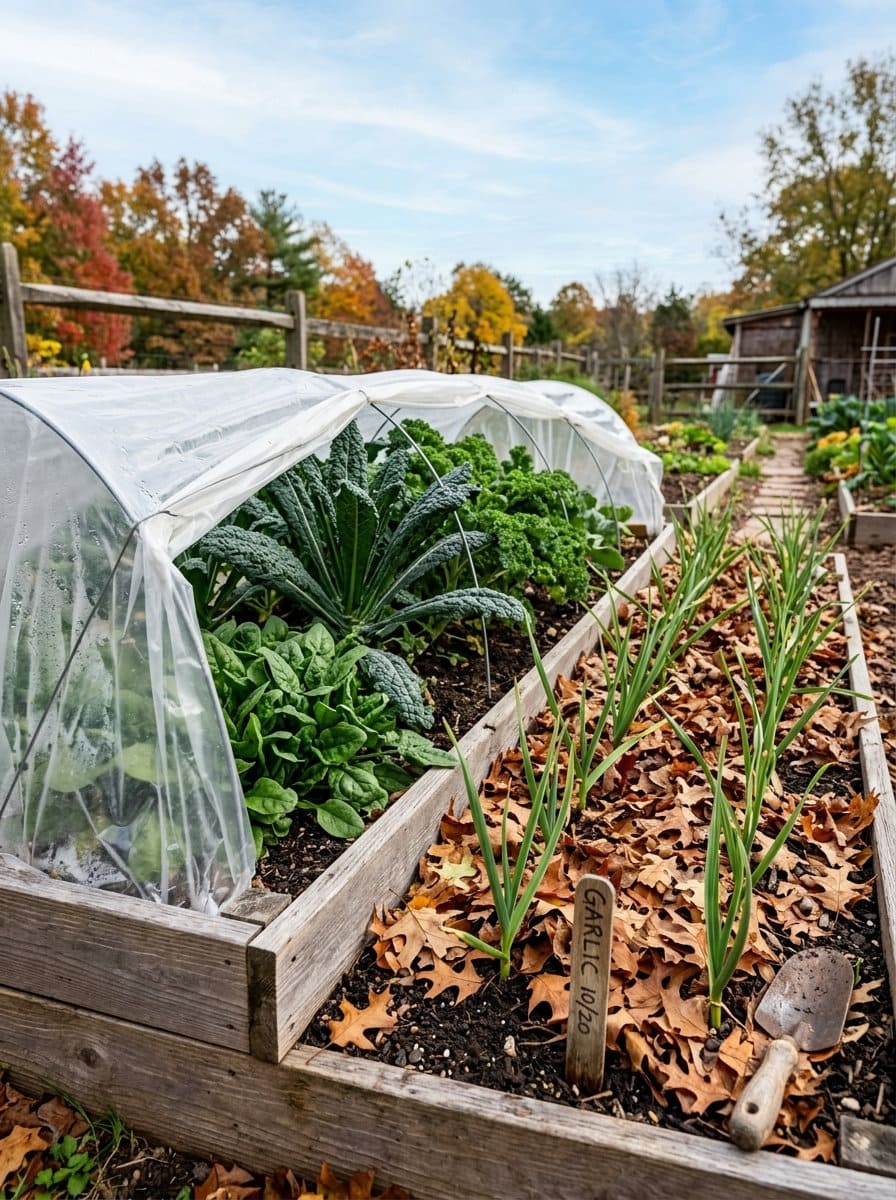
October is a garlic month in the Mid-Atlantic. UMD says to plant cloves mid to late month. Roots and a few leaves can grow before cold sets in.
Spring garlic won’t match it. UMD says cloves need 32 to 50°F temperatures for two months before bulbs enlarge. Fall-planted garlic takes 250 to 270 days to mature.
Fall vegetables need care too. UMD’s Jon Traunfeld says hardy crops like kale, spinach, broccoli, and cabbage withstand a hard frost. Half-hardy beets, carrots, chard, and radishes tolerate light frosts.
He lists late September as the end of the repeat-planting window for quick greens. In October, focus on covering and harvesting.
Beets, turnips, and carrots can stay in the ground through December under insulating mulch. Spinach, arugula, kale, and parsley can overwinter with protection.
Southeast
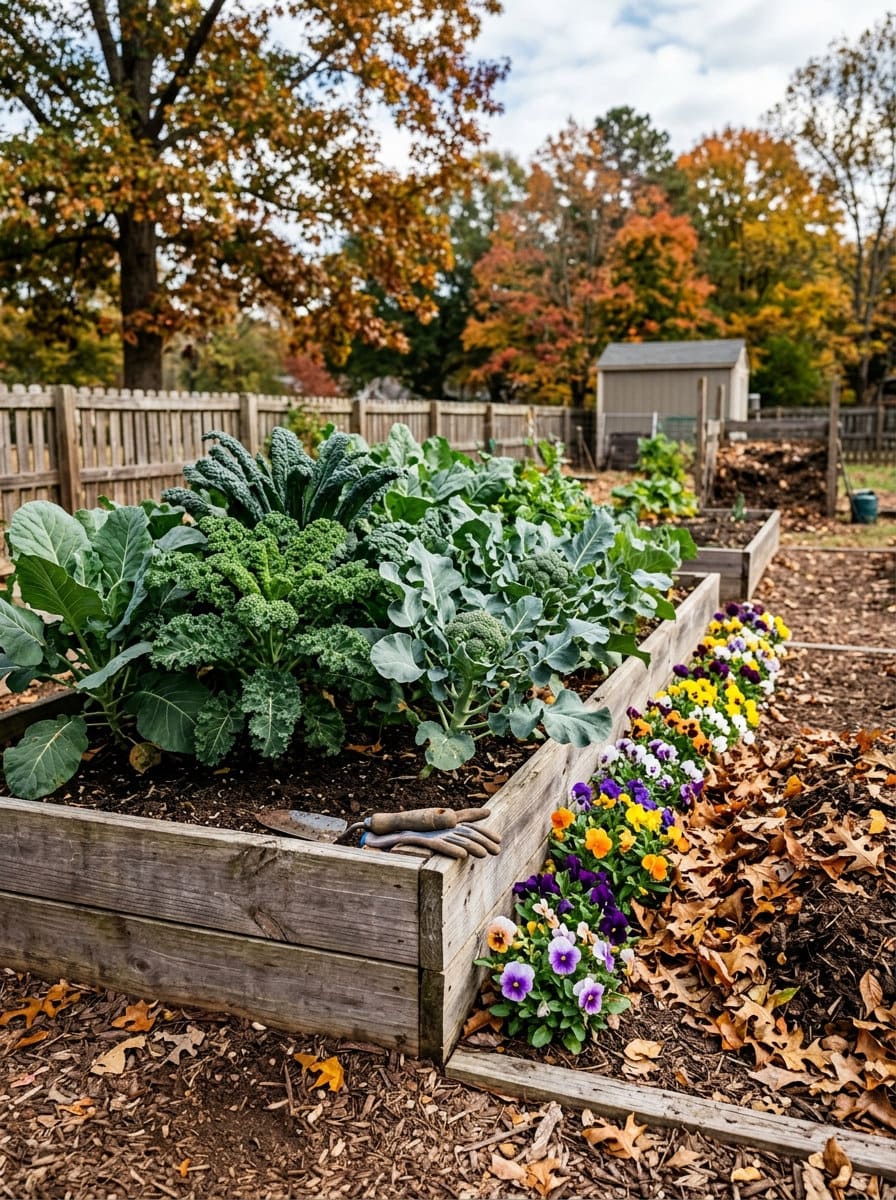
Clemson’s guide splits South Carolina into three regions. Each has a different focus.
On the coast, Glen Payne says to take soil samples this fall. Soil pH can be corrected now. It may take 2 to 6 months to reach plants.
He says to apply pre-emergent for winter weeds. Mulch 2 to 3 inches deep, starting about 6 inches from tree trunks.
In the Midlands, Jackie Jordan says to get broccoli, cabbage, collards, kale, and cauliflower in soon. Carrots, radishes, onions, garlic, leeks, and turnips also go in this month.
She says to sow hardy annual seeds like California poppy and calendula now. It’s also time to divide iris, daylilies, and hostas.
In the Upstate, LayLa Burgess says to plant garlic, onion sets, and shallots. She says to plant garden peas outdoors through the end of the month.
Spinach can grow in cold frames. She also says to collect seeds from cleome, sunflower, zinnia, and cosmos.
Florida
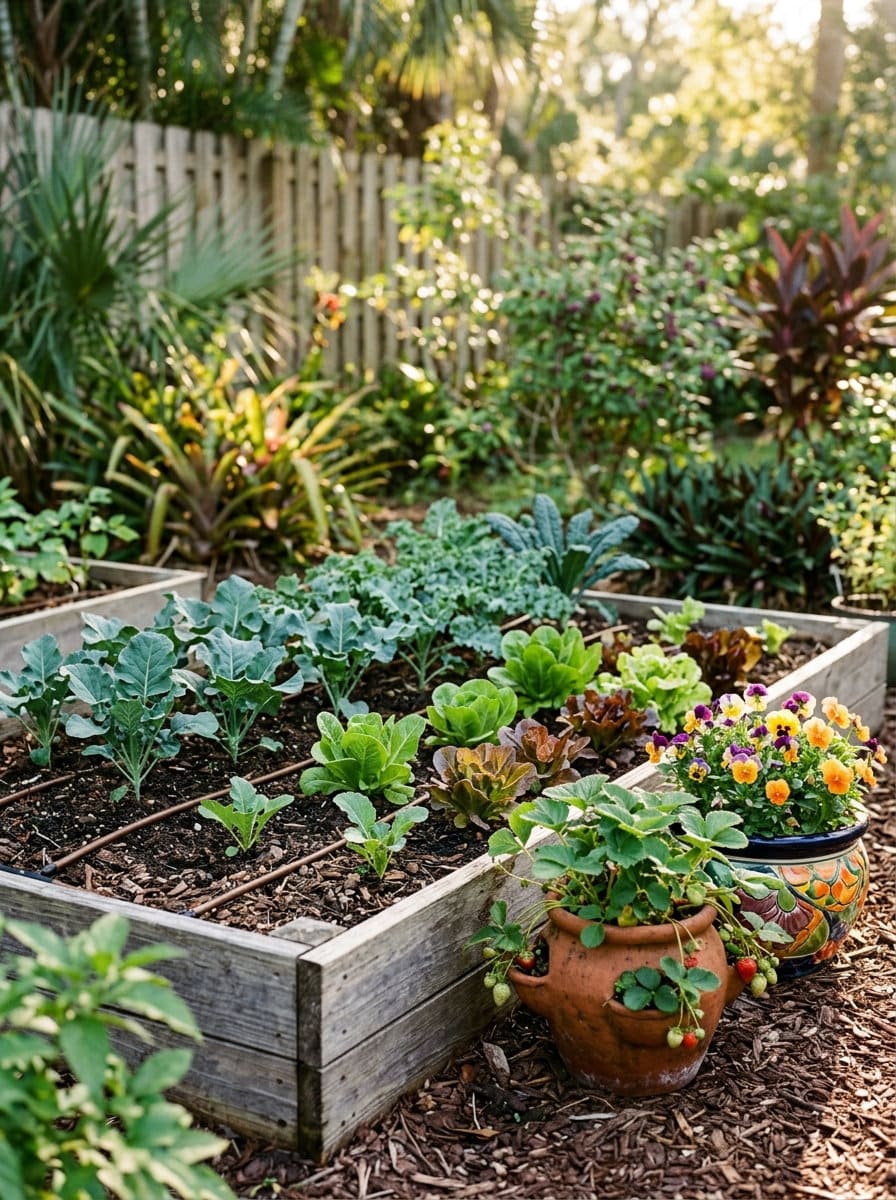
Florida gardeners plant as the weather cools. UF/IFAS’s Central Florida Gardening Calendar lists dianthus, petunia, and pansy for annuals. It lists agapanthus and rain lily among the bulbs.
It suggests herbs like parsley, cilantro, chives, garlic, and sage. For vegetables, it lists broccoli, collards, kale, and lettuce.
The same calendar says to prepare beds and set strawberry plants this month. Water them daily until established. It says early October is the last time to fertilize the lawn.
Winter weeds need attention too. UF/IFAS says to apply preemergence when nighttime temperatures stay at 55 to 60°F for 4 to 5 days. It says to avoid “weed and feed” products.
UF/IFAS says planting dates for edible gardening in Florida are being updated. North, Central, and South Florida each have their own calendar, so call your county extension office.
Great Lakes
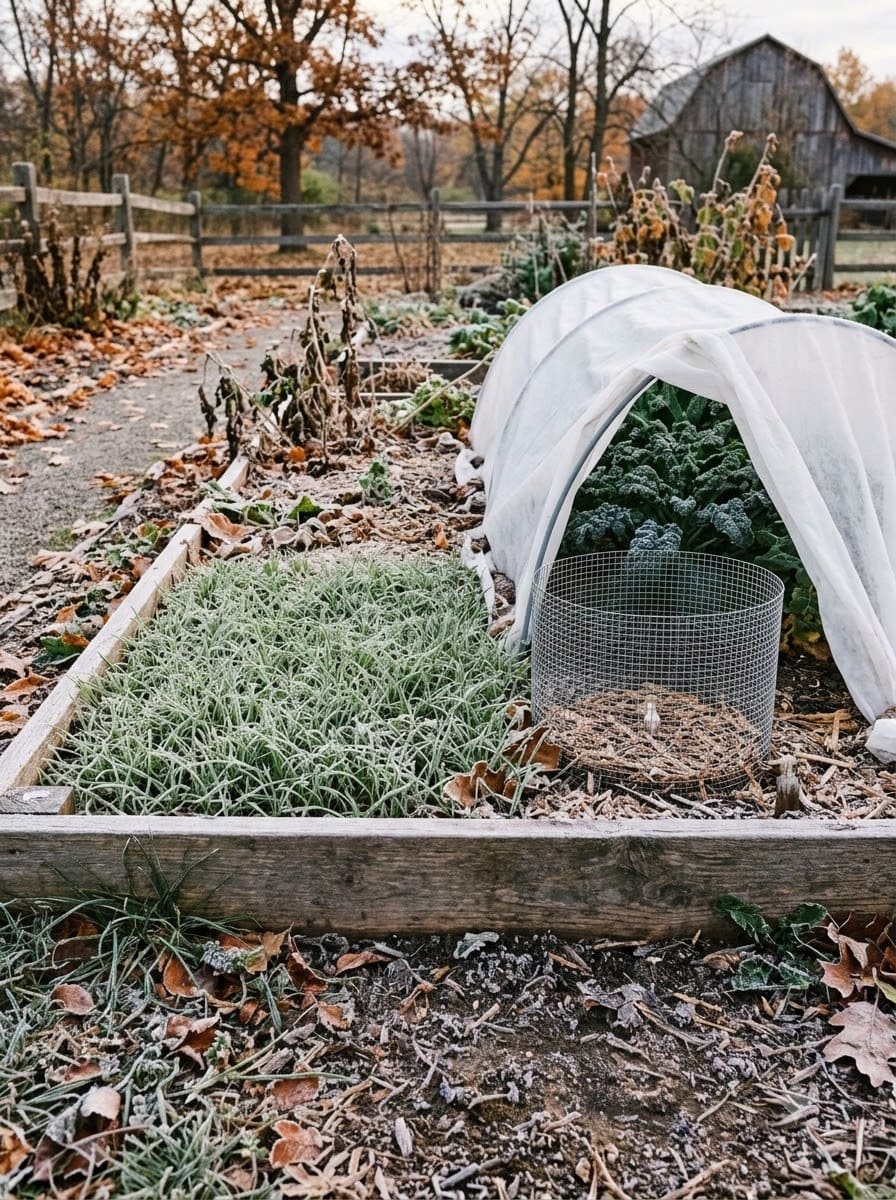
The Great Lakes region is a cleanup-and-protect region. MSU Extension’s Lindsey Kerr and Nate Walton give a long list.
Clean up plant debris and fallen fruit in the vegetable garden. Remove fallen apples that may harbor apple maggot or codling moth larvae. Sow a cover crop like winter rye, and use row covers to extend the season for cole crops.
Plant garlic and spring bulbs. Lift tender perennials such as cannas and dahlias. Move trees and shrubs after leaf drop but before the ground freezes.
Protect trees from deer rubbing. MSU suggests livestock fencing around trees.
Use chicken wire cages around small shrubs like roses. Burlap on frames prevents windburn on evergreens like boxwood.
Upper Midwest and Northern Plains
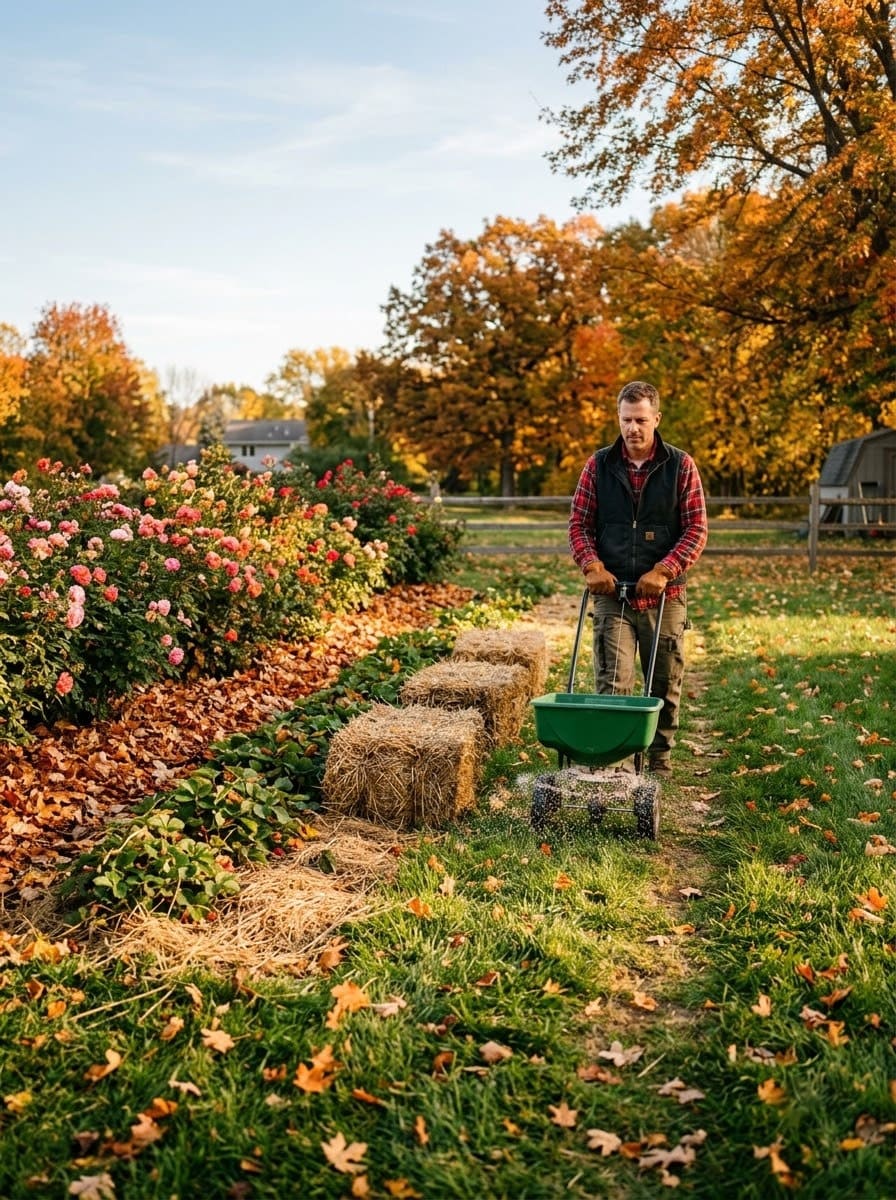
Minnesota and the Dakotas have the shortest fall window. UMN’s checklist says to harvest most fruit from annuals before the first forecasted frost. Tomatoes may ripen indoors, but peppers stop ripening once picked.
Winter squash and pumpkins need curing for long-term storage. Roses benefit from a thick layer of leaves or mulch. Strawberries can be damaged once temperatures drop below 12°F, and straw mulch insulates better than leaves.
The Minnesota lawn advice is direct. October is the last chance to prepare the lawn for the entire next year.
Fertilize in early October. It’s also the best time to spot treat perennial broadleaf weeds with selective herbicides.
In North Dakota, NDSU’s Tom Kalb says to plant garlic soon after the first hard frost. Hardneck types are hardiest, and ‘Music’ is a popular variety. Add 1 inch of compost and 2 to 3 pounds of 10-10-10 fertilizer per 100 square feet.
Texas
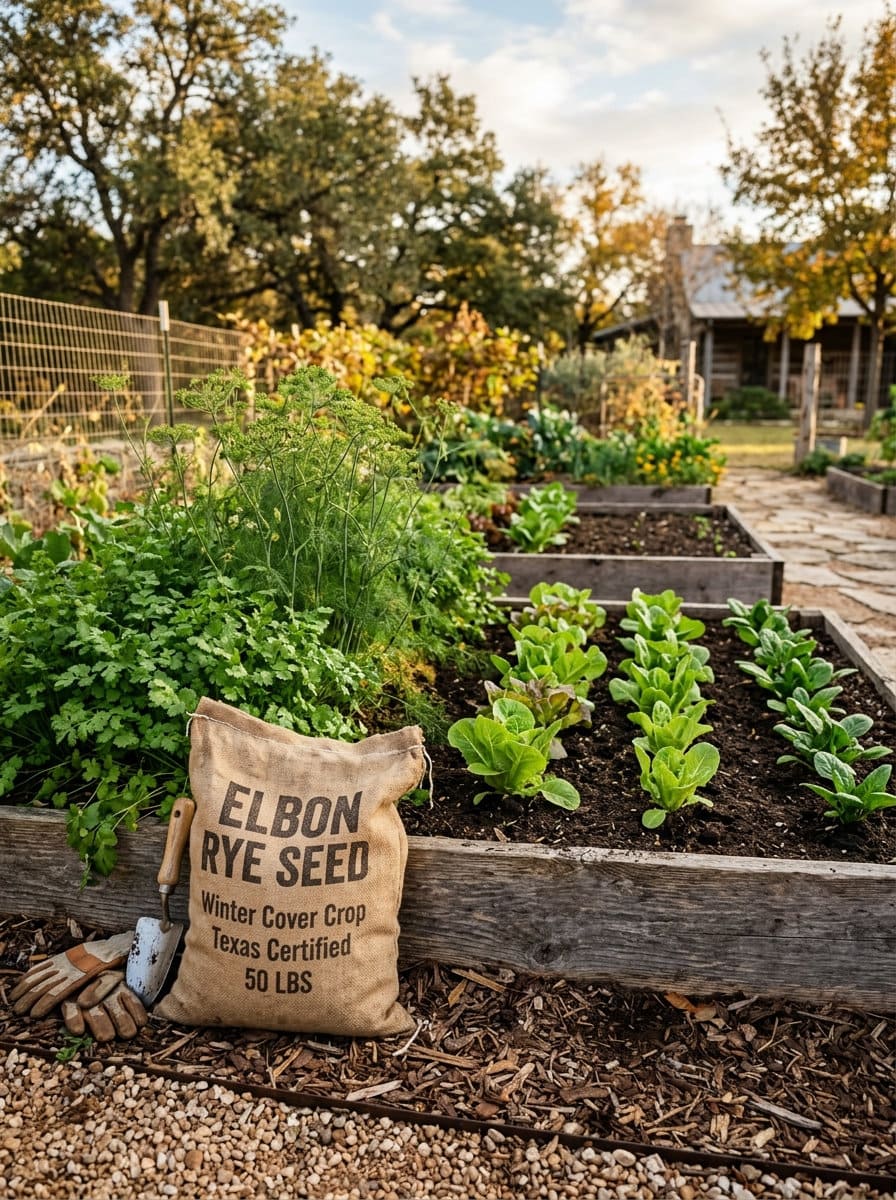
Texas is a planting state in October, but the freeze can come early. Texas A&M AgriLife’s Sheryl Williams notes the Austin area has had a freeze as early as Halloween.
She says garlic can go in from mid-October through early December. She lists hardneck varieties like Purple Stripe, Music, Ajo Rojo, and Metichi. She lists softneck varieties for mild winters, including California Early, Lorz, and Inchelium Red.
She says to start lettuce and spinach as temperatures cool. Cool-season herbs like cilantro, dill, chives, fennel, parsley, and sage also go in now.
Plant cover crops in empty beds. She suggests Elbon rye, clover, Austrian winter peas, and hairy vetch. Sweet potatoes and winter squash are ready to harvest this month.
This guide is written for Travis County in Central Texas. West and North Texas differ a lot, so check your own county.
Southwest desert
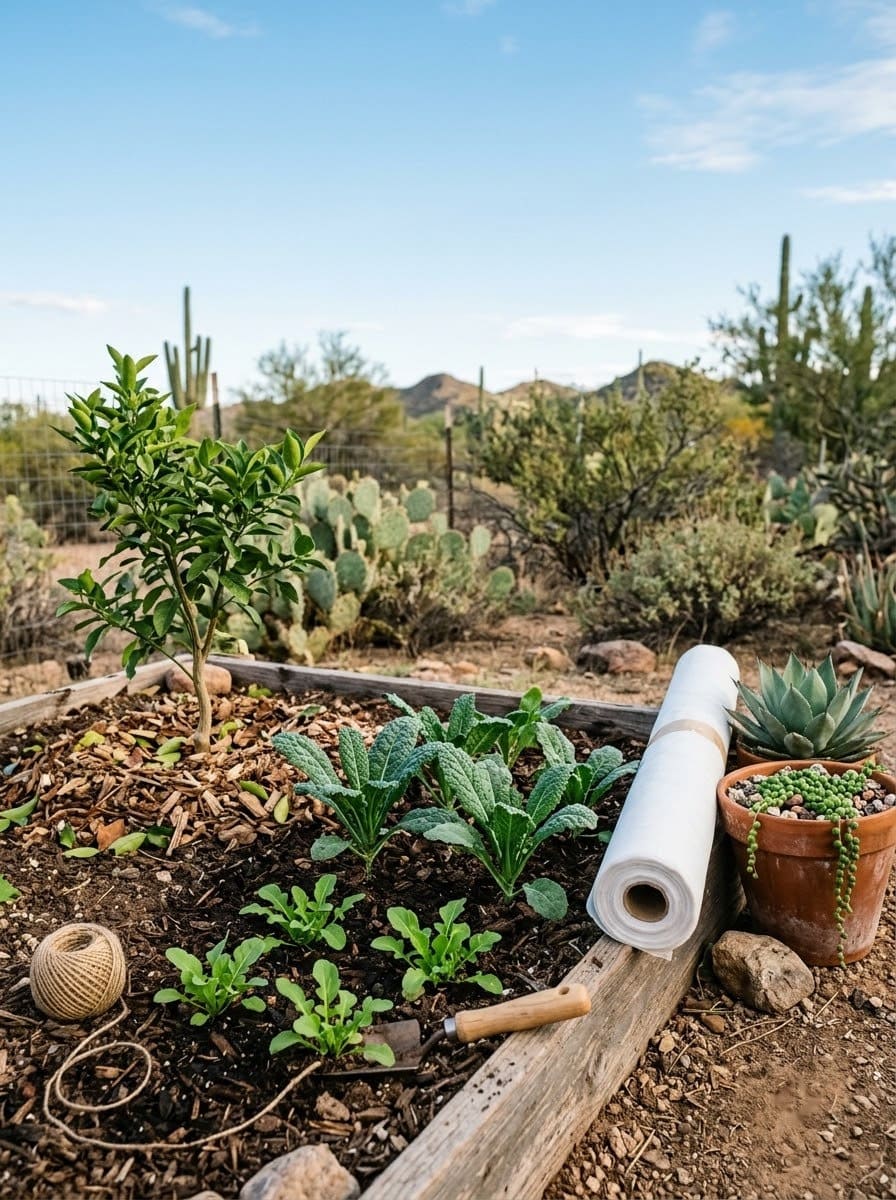
October is the desert gardener’s spring. UA’s Pima County guide says cooler weather lets you finally spend more time in the garden.
Early in the month, sow seeds or plant starts of arugula, beets, broccoli, carrots, kale, and lettuce. By mid-month, sow cilantro, dill, parsley, and sage.
Plant trees and shrubs early in the month. Warm soil and cooler air give new plants ideal conditions. The guide says trees in smaller 5 to 15 gallon containers establish and grow faster.
Plant cool-season annuals now so they flower in spring, such as petunias, snapdragons, alyssum, dianthus, and calendulas. Mulch 3 inches or more, keeping it a few inches from trunks.
Have frost cloth ready, because frost can arrive late in the month. Bring frost-sensitive potted succulents indoors until nights reach the mid-50s. UA also says to adjust irrigation frequency, not length of time, and to skip major tree pruning.
Rocky Mountains
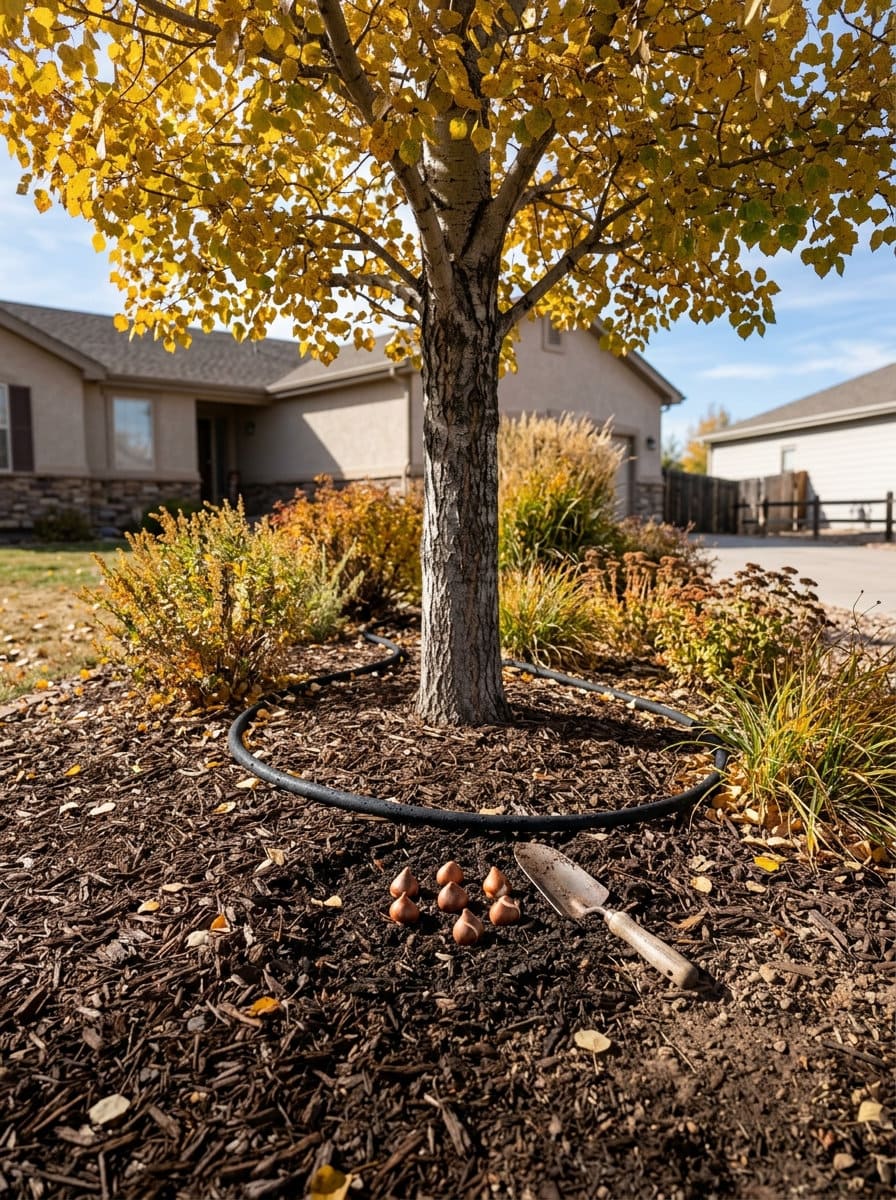
The Rockies have a winter-watering season. CSU’s fact sheet says fall and winter are dry. There’s little or no snow cover from October through March.
Water trees, shrubs, perennials, and lawns about once or twice a month during dry spells. Do it only when air and soil are above 40°F with no snow cover. Water at midday.
CSU gives amounts. Apply 10 gallons per diameter inch of trunk to trees.
Newly planted shrubs need 5 gallons twice a month. Small established shrubs need 5 gallons monthly, and large ones need 18 gallons monthly.
Shallow-rooted woody plants are most at risk. CSU lists birches, maples, lindens, alders, dogwoods, willows, and mountain ashes. Also plant bulbs before late October.
Pacific Northwest
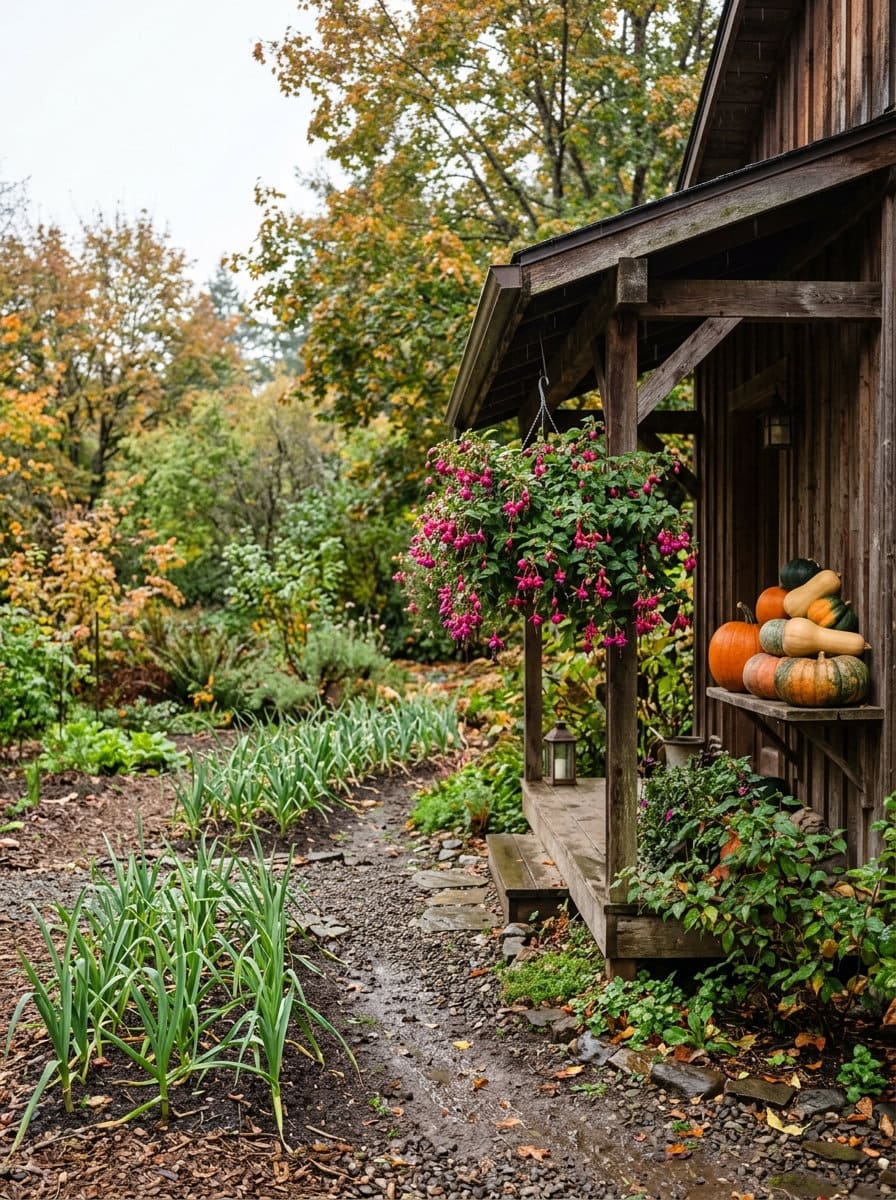
OSU’s October calendar covers Western Oregon. It says to plant garlic for next summer, and to control fall-germinating lawn weeds while they’re small.
Hand weeding and weeding tools work best at that stage. Hang fuchsia pots where they won’t freeze, and don’t cut them back until spring.
Harvest squash and pumpkins, and store them in a dry area at 55 to 60°F. Spade organic material and lime into garden soil if soil test results call for it and weather permits. Finish by draining or blowing out your irrigation system.
California
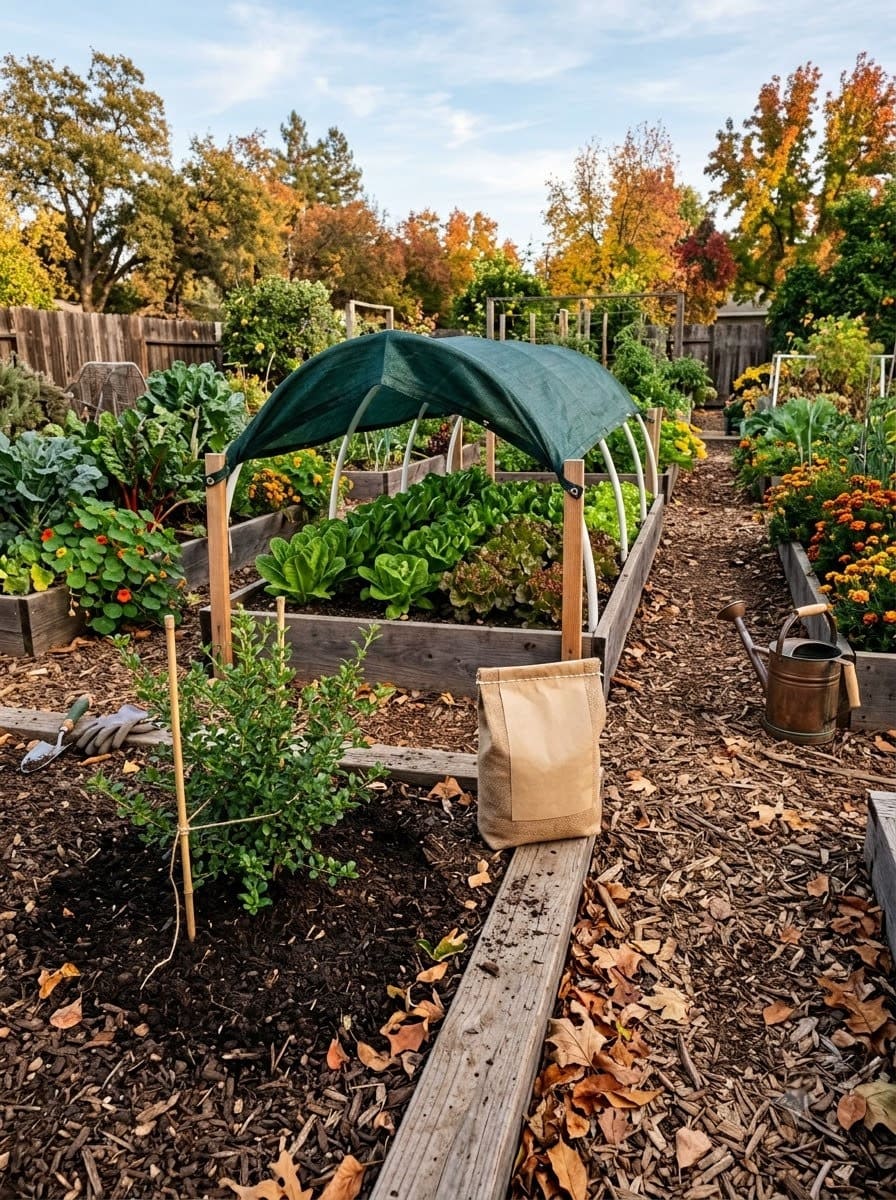
Fall in California can still be hot. UC Master Gardener Denise Pinard writes for Monterey, San Benito, and Santa Cruz counties. She says to plant quick-maturing, heat-tolerant cool-season crops in the coolest part of the garden.
Shade cloth helps during a heatwave. Direct seed beets, radishes, turnips, and carrots, and thin them. Sow spinach, lettuce, and radishes every 2 to 3 weeks for a steady supply.
For resting beds, sow cover crops like clover, fava beans, or vetch. Or add compost and mulch heavily with straw or leaves.
It’s also a good time for native plants, but water them regularly in their first year. Keep mulch at least 6 inches from tree trunks. Clean up fallen fruit, and sterilize containers with 1 part bleach to 9 parts water.
Alaska
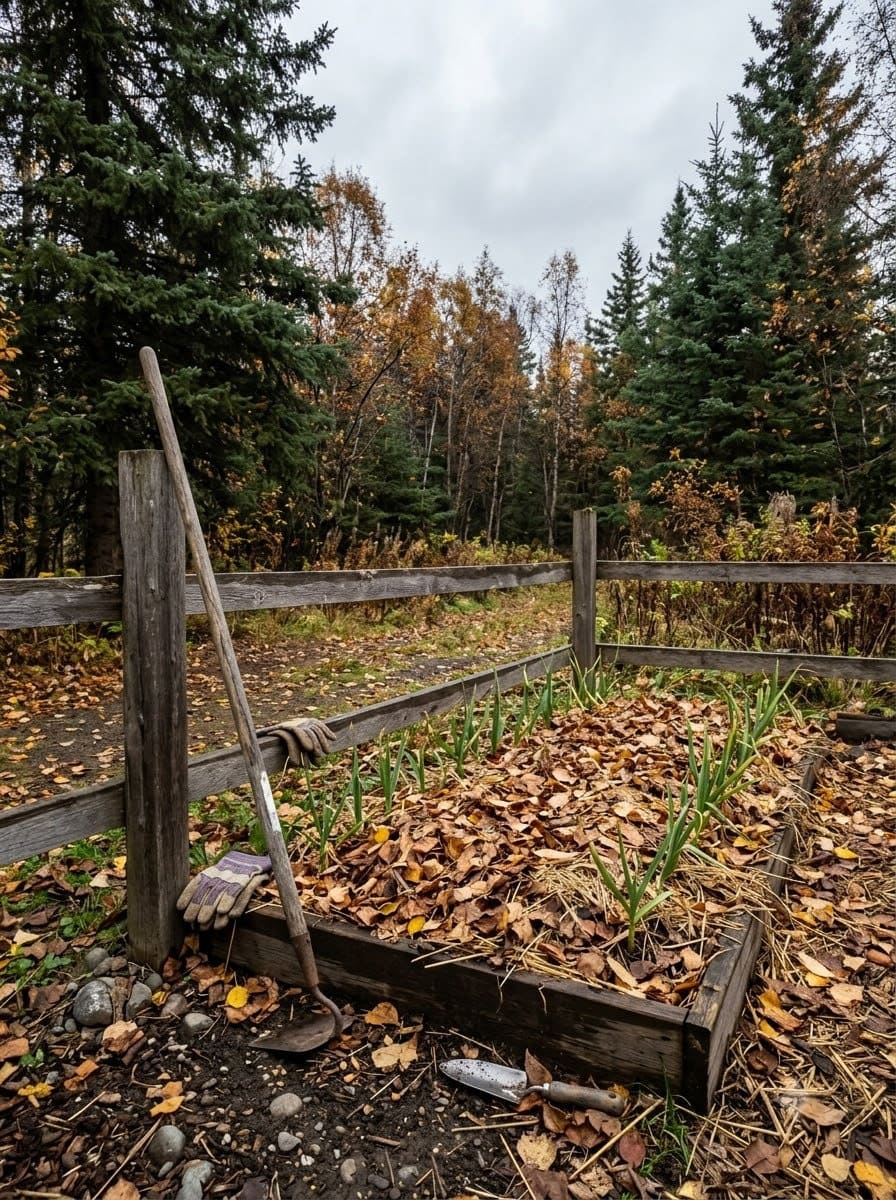
Alaska’s garlic window closes fastest. UAF says garlic should go in between mid-September and mid-October. That’s within a week or two after the first killing frost.
Set cloves 3 to 4 inches deep and 5 to 6 inches apart. Mulch about 4 to 10 inches with chopped leaves, straw, compost, or seaweed.
UAF’s Heidi Rader also lists fall chores. Remove crop residues, mulch perennials, and plant bulbs in well-drained soil. Build a compost pile, and till or turn heavy soils before adding organic matter.
Hawaii
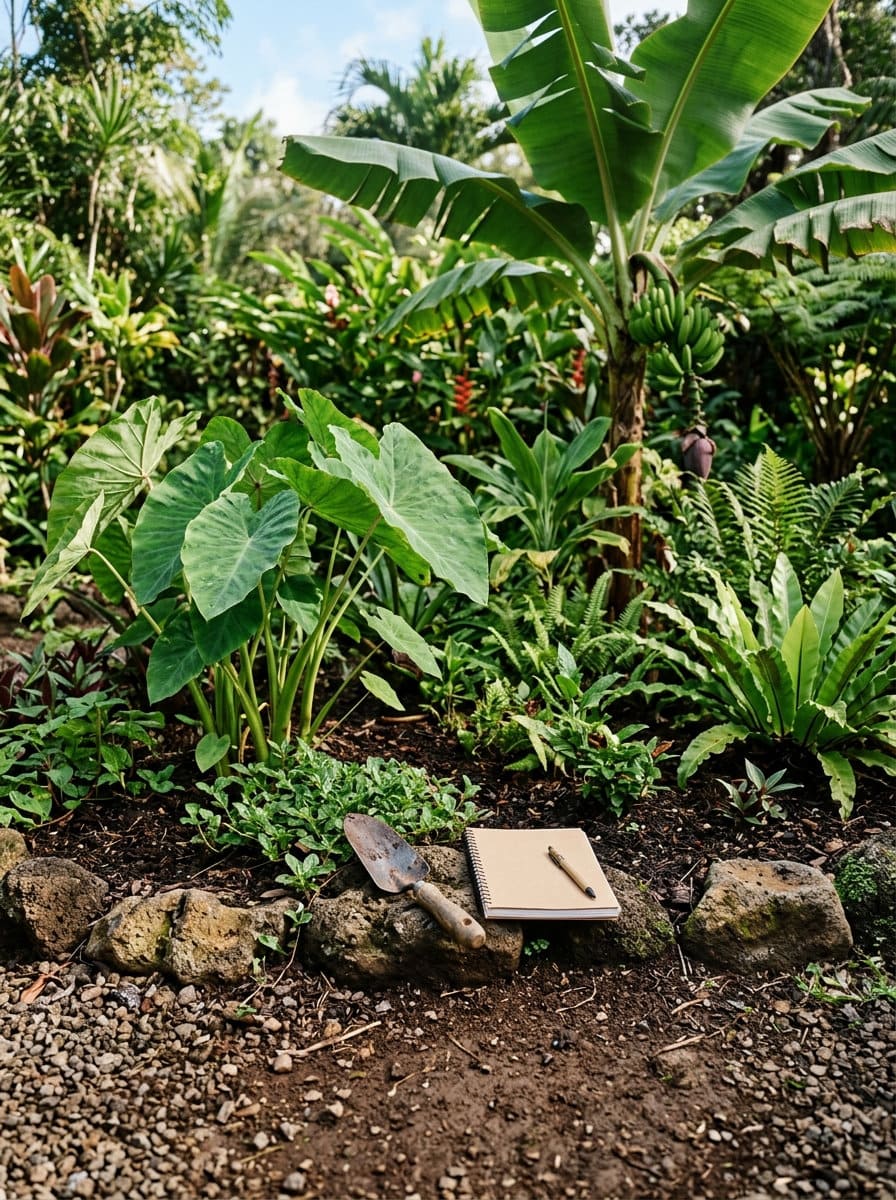
We couldn’t find a current University of Hawaii October calendar. Hawaii’s climate varies a lot by island and elevation. The University of Hawaii’s CTAHR points home gardeners to their county Master Gardeners for vegetable questions.
Check with your local Master Gardener office for October timing. We’d rather send you there than guess.
What does the October timeline look like?
Here is one rough month across the country. Every entry comes from one of the sources above, so dates shift with your local frost.
| When | Task | Source region |
|---|---|---|
| Early October | Plant trees and shrubs, sow desert vegetables | Southwest |
| Early October | Fertilize the lawn | Minnesota, Florida |
| Before your first frost | Bring houseplants in | Southeast |
| Mid-October | Sow desert herbs like cilantro, dill, and parsley | Southwest |
| Mid to late October | Plant garlic | Maryland, Central Texas |
| By late October | Finish planting spring bulbs | Colorado |
| Late October | Protect tender perennials as temperatures drop | Minnesota |
| Late October | Be ready for frost | Southwest, Central Texas |
What do gardeners get wrong in October?
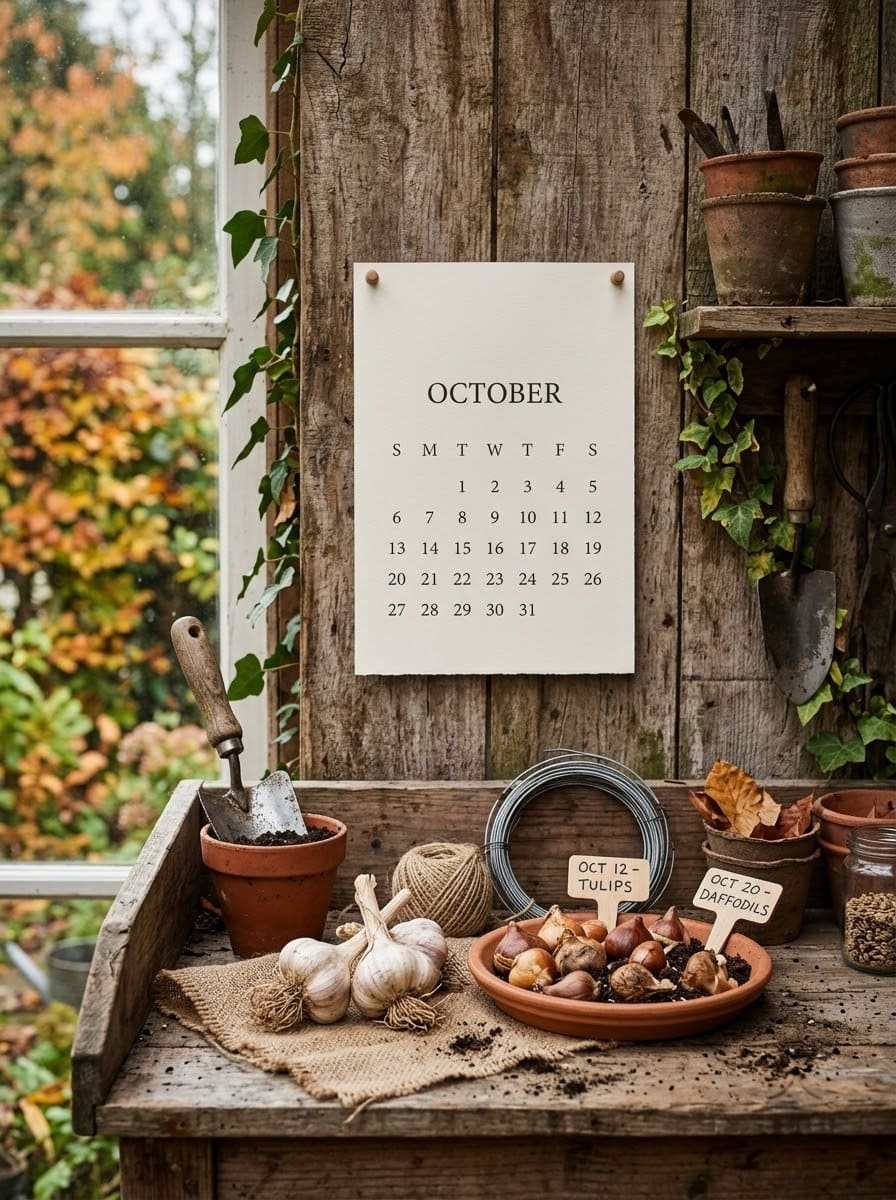
Most mistakes come from planting on the wrong day or over-tidying. The extension guides warn about the same ones.
Planting grocery store garlic is the first. UMD warns it may be a symptomless disease carrier, so buy certified disease-free bulbs.
Seeding greens into warm soil is the second. UMD says lettuce and spinach seeds are hard to sprout when soil is above 70°F.
Wait for cooler weather. The same source says fall crops often fail because they’re planted too late.
Piling on leaves is the third. MSU says not to let leaves pile up deeper than 3 to 4 inches before mowing.
Cutting everything back is the fourth. MSU says to leave ornamental grass and perennial stems for overwintering bees and other beneficial insects. UAF’s Heidi Rader says to prune dead, damaged, or diseased parts and mulch perennials.
Fertilizing the lawn too late catches Florida gardeners. UF/IFAS says early October is the last time.
Forgetting winter water hits Rocky Mountain gardeners. CSU says plants can look fine in spring. Then they die in late spring or summer when it heats up.
Trusting the calendar over the thermometer also catches people. Texas A&M notes a freeze as early as Halloween near Austin. The desert guide warns of frost late in the month.
We’d start with one non-negotiable job for your region. Plant the garlic, or drain the irrigation, or get the tender pots inside. Then work through the rest.
Frequently asked questions
When is the last day to plant garlic?
It depends on your region. Alaska’s window runs from mid-September to mid-October.
UMD says mid to late October. Central Texas runs from mid-October through early December. Roots need time to grow before the ground freezes.
Can I still plant vegetables in October?
In warm regions, yes. Arizona’s guide lists arugula, beets, broccoli, and carrots for early October.
Clemson says broccoli, cabbage, collards, kale, and cauliflower should go in soon. In colder regions, focus on garlic and protecting what’s growing.
When should I plant spring bulbs?
October is the main month. UNH says October or maybe into November.
CSU says mid-September to late October for Colorado. Plant before the ground freezes.
Should I cut back perennials in fall?
Not always. MSU says to leave ornamental grass and perennial stems standing for overwintering insects. Remove diseased stems, per the University of Minnesota.
Is it too late to fertilize my lawn?
It depends where you live. UMN says to fertilize in early October.
UF/IFAS says early October is the last time in Florida. UNH calls fall one of the best times to fertilize.
Do I need to water in the fall and winter?
In dry regions like Colorado, yes. CSU says to water once or twice a month during dry spells with no snow cover. Do it only when air and soil are above 40°F.
Related Posts
- Daffodil Bulb Ideas for Autumn Gardening
- Make Compost Without a Bin
- How to Fertilize Soil for a Vegetable Garden
Products We Recommend
This post contains affiliate links. We may earn a commission on qualifying purchases at no extra cost to you.
10 FT x 40 FT Frost Cloth, Plant Covers for Freeze Protection
A reusable fabric cover for beds and shrubs when a frost warning hits, useful in the Southwest, Texas, and anywhere a late-October freeze can surprise you.
Shop Now
20GA Galvanized Hardware Cloth, 16 in x 50 ft, 1/2 inch Mesh
Galvanized mesh for capping new bulb plantings against squirrels or forming small cages against voles, as MSU suggests.
Shop Now
Altdorff Long Handle Bulb Planter Tool
A step-and-twist planter that digs neat holes for tulips, daffodils, and other spring bulbs without bending over.
Shop NowNever miss an update — choose FarmFoodFamily as your preferred source on Google.
How it works: Tap the button below to open Google's settings page, then check the box next to FarmFoodFamily.
Tap the checkbox to turn it blue — that's how you know it's set.