How to Get Your Lawn Mower Ready After a Long Break
A few checks before you pull the cord can catch old fuel, a loose part, or a dirty filter while the mower is still off.

Never miss an update — choose FarmFoodFamily as your preferred source on Google.
How it works: Tap the button below to open Google’s settings page, then check the box next to FarmFoodFamily.
Tap the checkbox to turn it blue — that’s how you know it’s set.
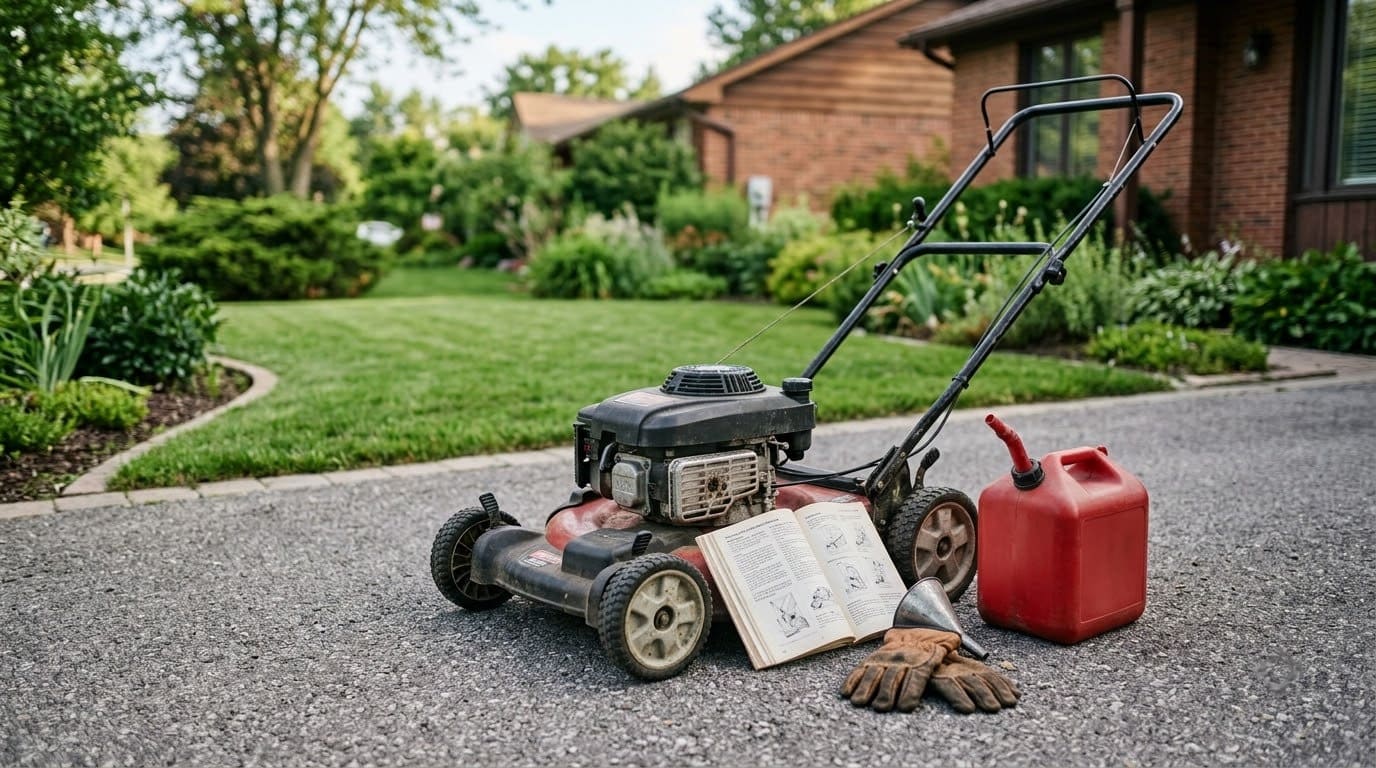
A lawn mower can spend weeks untouched while rain, travel or a busy household pushes yard work down the list. When you finally have time to cut the grass, it is tempting to roll it out and pull the cord immediately. A few checks beforehand can help you spot a problem while the machine is still off.
Start by separating three jobs: getting the mower ready, finding out whether it starts normally, and deciding how much grass to remove. Taking them in that order gives you a useful stopping point if something needs attention.
This routine is for a gasoline-powered walk-behind mower. Battery, corded and riding models need their own preparation procedures.
Quick Answer
To get a gasoline mower ready after a long break, check the manual, the fuel, and the machine before you start it. Toro says to buy only the gas you’ll use in 30 days and to add stabilizer the day you buy it.
Inspect the mower while it’s off and cool, with the spark-plug wire disconnected. Check the oil and the air filter as the manual says, then start it in a clear outdoor spot and note what it does. Write down anything unusual, since those details help a service dealer.



Don’t cut a tall lawn in one pass. UMN says to remove no more than one-third of the leaf tissue at a time. But if the mower won’t run after several tries, stop and call a service dealer, because buying parts before you find the fault only adds cost and confusion.
Answer 4 quick questions and get matched to the exact fix for your yard — drainage, budget, layout, or something else entirely.
Take the Free QuizWhat is the order of the checks at a glance?
Use this table as a checklist on the day you restart the mower. It follows the order of the article. If you’re still deciding which type of mower to own, see our comparison of electric mowers vs gasoline mowers.
| Step | What to do | Stop if |
|---|---|---|
| 1. Manual | Find the model number, serial number, and operator’s manual | You can’t find the manual |
| 2. Fuel | Check the age of the gas in the can and in the mower | The fuel’s age is unknown |
| 3. Cold inspection | Engine off and cool, spark-plug wire disconnected, check handle, guards, oil, and air filter | You see damage or a leak |
| 4. First start | Follow the manual’s sequence in a clear outdoor spot | The mower won’t start after several attempts |
| 5. First cut | Clear the lawn, wear protection, and cut only part of the height | The mower vibrates or a safety control fails |
| 6. Warning signs | Watch for vibration, damage, or a broken safety control | Any of these appears |
| 7. Record | Write down the fuel date, service, and symptoms | Nothing. This one is for next time |
For a broader routine, read our lawn mower maintenance tips.
Find the instructions for the mower you actually own
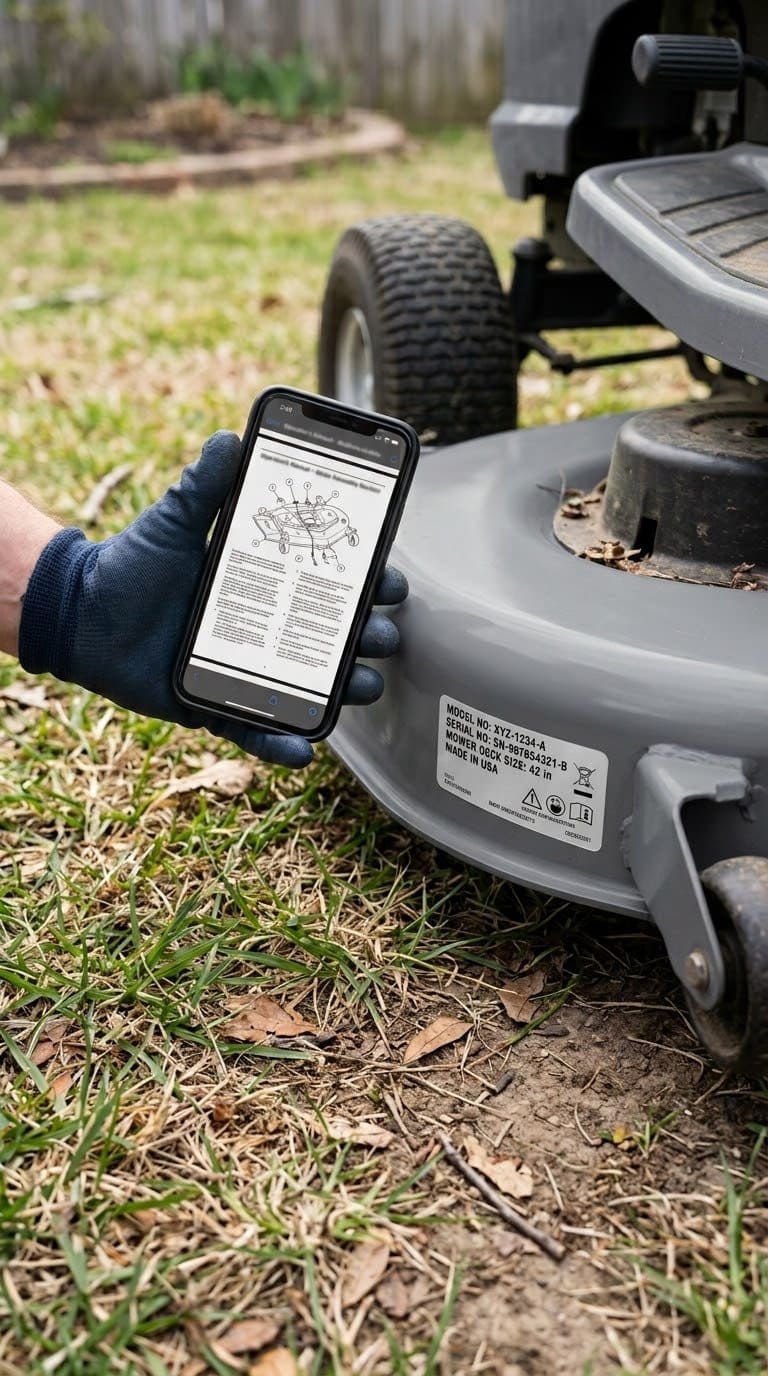
Locate the model and serial numbers, then find the matching operator’s manual. Keep the engine manual alongside it if the manufacturer supplies a separate one. Save both on your phone so you can refer to them beside the mower.
Look up the starting procedure, oil check, air-filter care and storage instructions. Highlight the pages you need rather than trying to remember a maintenance routine from a previous machine. A neighbor’s mower may look similar and use different controls.
Write down when yours last ran normally and whether anything happened before it was put away. Perhaps the handle was folded, someone completed a service, or the engine stopped during the last cut. These details give you a clearer starting point than the broad description “it has been sitting.”
Check the fuel before topping up the tank
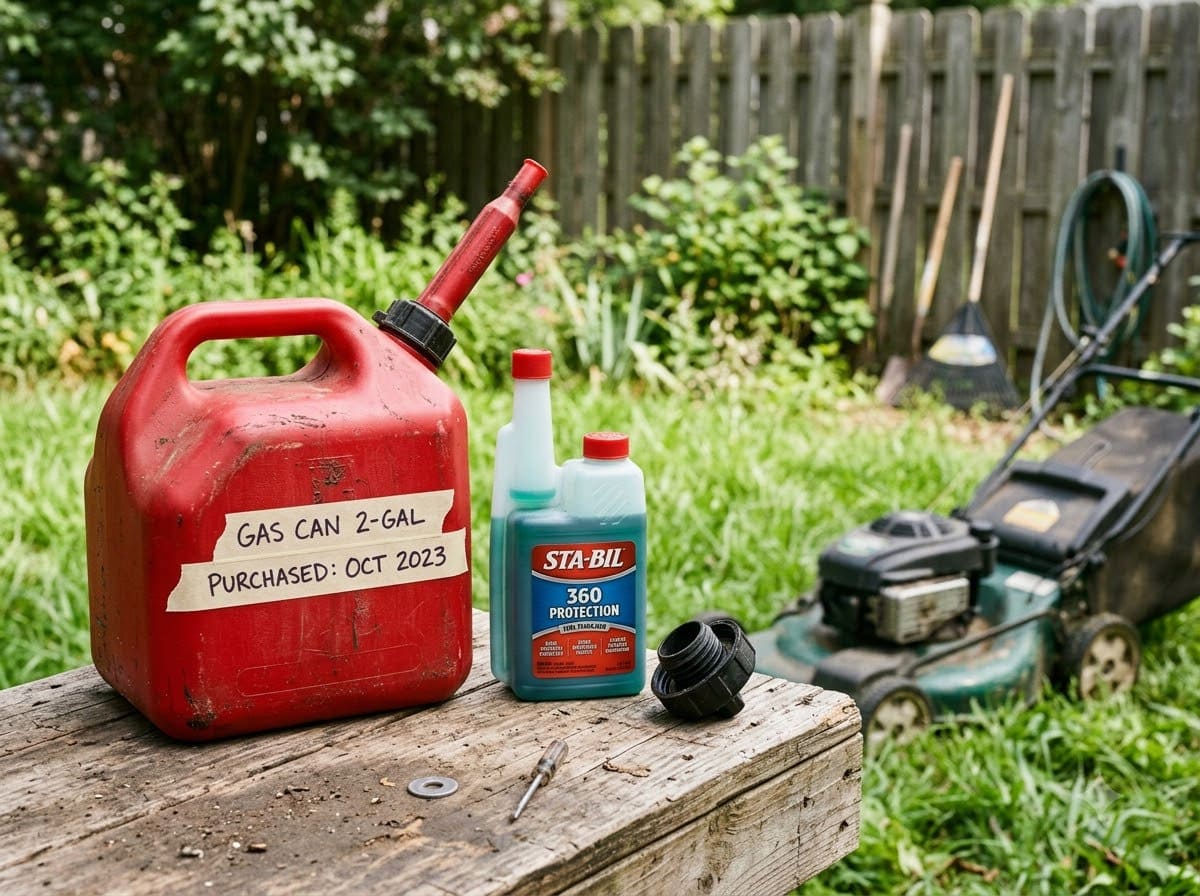
The purchase date matters for the fuel in the storage can as well as the fuel already in the mower. Adding gasoline from an old can does not give you a fresh supply.
In its fuel-care guidance, Toro recommends buying only what you will use within 30 days and adding stabilizer when the gasoline is purchased. Fuel deteriorates during storage, and deposits can interfere with the carburetor. Check your own manufacturer’s fuel requirements before filling up.
Most yard problems trace back to one specific, fixable cause. Find yours in 4 quick questions.
Take the Free QuizIf the fuel’s age is unknown, pause and follow the manual’s replacement procedure or ask a service dealer to handle it. Do not improvise a way to empty the tank.
Refuel outdoors with the engine off and cool, away from smoking, flames and sparks. Use an approved container.
If fuel spills, clean it up and wait for the vapors to disperse before attempting to start the mower. A visible fuel leak needs attention before the machine runs.
Inspect the machine while it is cold
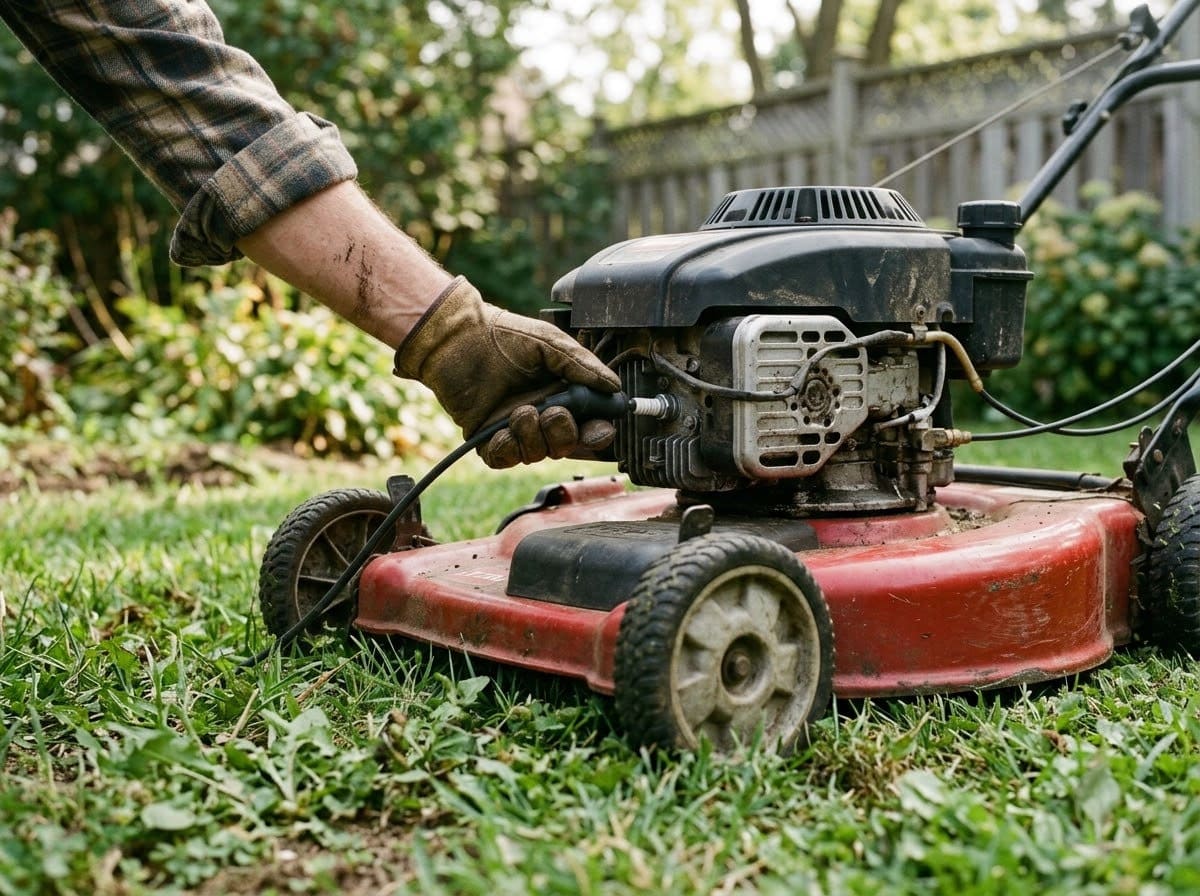
Before maintenance, shut off the engine, wait for moving parts to stop, let it cool and disconnect the spark-plug wire as the manual directs. Keep your hands out from under the deck. A look around the outside is enough to identify several reasons to pause.
Check that the handle is secure and that its cables have not been trapped during folding or unfolding. Look for damaged guards, loose components or a catcher that no longer fits correctly. Leave damaged controls and cables to a service dealer; never bypass a safety control to get the job finished.
Check the oil using the engine’s prescribed method, and inspect the air filter according to its instructions. Briggs & Stratton includes a dirty filter among the possible causes of starting trouble. Use the cleaning or replacement method specified for your filter rather than assuming every type can be washed.
Finish the checks and refit covers before reconnecting the spark-plug wire for starting.
Notice what happens during the first starting attempt
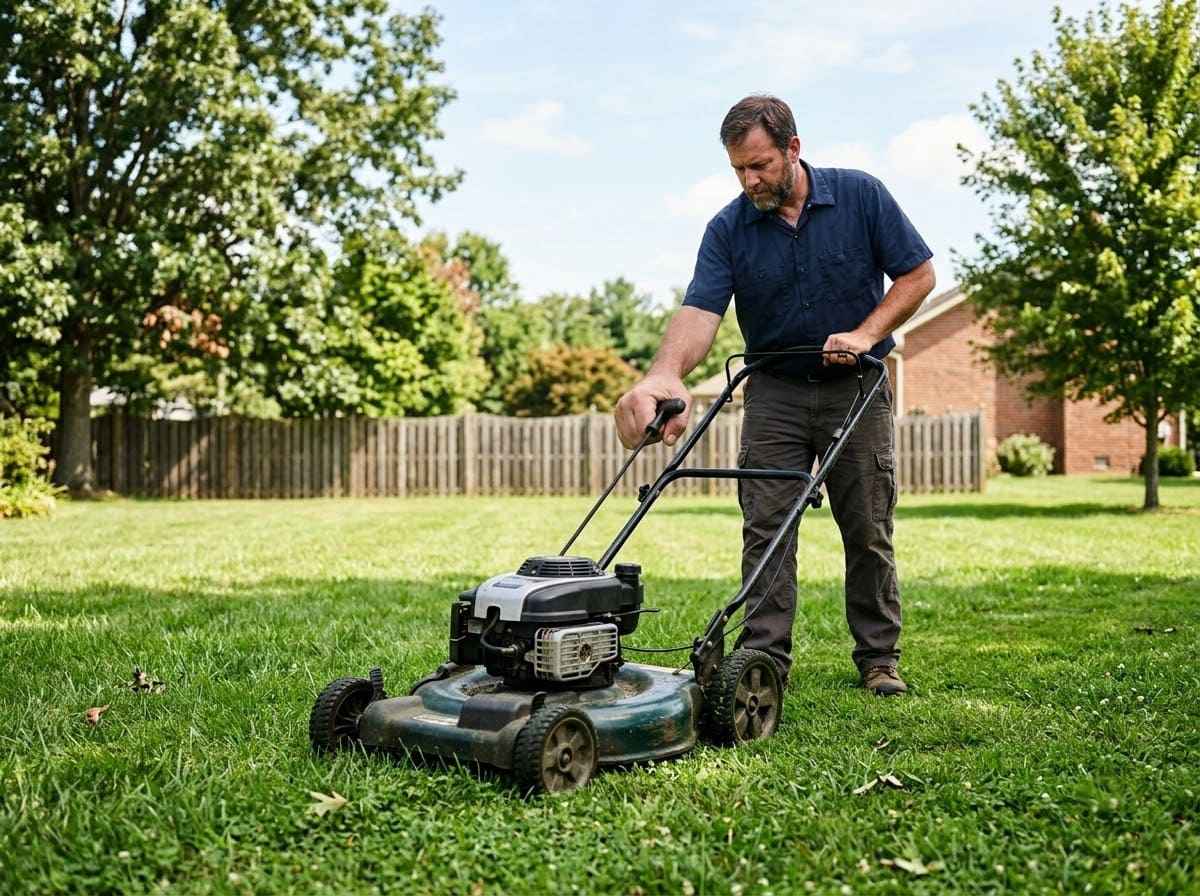
Move to a clear, level outdoor area and use the starting sequence in the manual. Engines differ: Briggs & Stratton’s ReadyStart system, for example, requires neither manual priming nor choking. Adding steps from another mower’s routine can make troubleshooting harder.



Pay attention to the symptom. A cord that will not move normally is a different problem from an engine that turns over but never catches.
An engine that starts and then stops is another useful detail to record. Avoid treating all three as the same fault.
For a lawn mower that cranks but will not start, this illustrated guide walks through the fuel, spark-plug wire, air-filter and starting checks, with clear points for seeking service.
The average homeowner spends $616/year on yard fixes that don't address the real problem. Find out what yours actually is — before you spend another dollar.
Take the Free QuizIf the normal routine does not work after several attempts, stop and arrange help. Buying parts before identifying the fault makes it harder to keep track of what changed and adds expense before you have a diagnosis.
Plan the first cut around the grass

A mower that starts successfully still needs a sensible job to do. Walk the lawn first and collect stones, toys, fallen branches and other loose objects.
Keep children and pets away from the mowing area, and wear sturdy footwear, eye protection and hearing protection. Toro’s mower safety guidance provides a useful preparation checklist.
If the grass has grown tall, avoid trying to return it to its usual height in one aggressive cut. University of Minnesota Extension’s mowing guidance recommends removing no more than one-third of the leaf tissue at a time. Its suggested three-inch minimum height applies to typical Midwest residential lawns, so use advice suited to your grass and region when choosing a final height.
For example, reducing six-inch grass to four inches removes one-third of its height. That illustrates the limit; it is not a universal height setting for every lawn or mower. If the machine cannot safely handle the growth, arrange suitable help instead of forcing it through.
Use warning signs to decide when to stop
Unusual vibration, visible damage or a safety control that does not work properly is a reason to stop using the mower. Shut it off, wait for movement to end and follow the manual’s precautions before any inspection. Do not reach under the deck to investigate a noise or vibration.
When booking service, have the model and serial numbers ready. Describe what the mower does, when it last worked, the fuel’s age if known, and which checks you completed. Mention a recent impact or a folded handle if either is relevant.
Ask the shop to explain the fault and provide an estimate before approving repairs. That gives you something concrete to compare with the mower’s condition and your plans for the yard. A refusal to start, by itself, is not enough information to decide whether replacement makes sense.
Leave a useful record for next time
After mowing, shut the engine off and let the machine cool before cleaning or storing it. Follow its cleaning instructions and maintenance schedule. If blade work or another service is due, note it now rather than relying on memory before the next cut.
For a longer storage period, use the manufacturer’s specific fuel-storage procedure. Briggs & Stratton’s equipment-storage guidance describes fuel treatment and, in specified circumstances, fuel removal; one blanket rule does not cover every setup.
Keep a short note with the fuel purchase date, recent maintenance and any unresolved symptoms. A photograph of the model label saves another search when ordering the correct filter or booking service. With those details ready, the next mowing session can begin with a clear check of the machine and the lawn, even after another long break.
What do Toro’s fuel facts say?
The fuel-care guidance linked above has more detail than the article summarizes. Here are the main points from Toro’s fuel page.
| Question | Toro’s answer |
|---|---|
| How much gas should you buy? | Only what you’ll use in 30 days |
| When should you add stabilizer? | The day you buy the fuel |
| How much ethanol is acceptable? | Up to 10 percent |
| What isn’t approved? | E15, E20, and E85 |
| What octane does Toro recommend? | Unleaded, 87 |
Toro also says that ethanol-blended fuel absorbs water from the air over time. That’s one more reason to buy fresh fuel. Always check your own manufacturer’s fuel requirements before you fill up.
What do the symptoms tell you?
The article says to avoid treating three symptoms as one fault. This table lines them up.
| What happens | What it suggests | Next step |
|---|---|---|
| The cord won’t move normally | A mechanical problem | Stop and check your manual or call a dealer |
| The engine turns over but never catches | A fuel, spark, or air issue | Check the fuel age, plug wire, and air filter |
| The engine starts, then stops | Another clue worth recording | Note when it stops, and see why a mower starts then dies |
Briggs & Stratton’s troubleshooting tips list a dirty air filter and old gas among the possible reasons a mower won’t start. Its ReadyStart page says that system needs no choke and no priming, and it tells you to check the oil level before starting.
What is the best way to mow a lawn that has grown tall?
Cut in stages, and never remove more than one-third at a time. UMN says that to keep a lawn at 3 inches, you should mow before the grass reaches 4.5 inches.
If the clippings come out too long, UMN says to mulch by mowing several times or rake them off. It also says decomposed clippings add the equivalent of one fertilizer application each year.
UMN also suggests changing the mowing direction often, since alternating patterns prevent continuous scalping and soil compaction. It suggests raking or bagging excess debris after the first mow of the year.
How do you keep the blade sharp?
Sharp blades cut cleanly. UMN says dull blades leave jagged edges and make plants more susceptible to disease.
Blade work is a job for your manual. Disconnect the spark-plug wire first, and follow the maker’s steps. Our list of things to keep in mind while sharpening mower blades covers the details.
If you’re not sure, ask a service dealer to sharpen the blade.
What do the storage guides say?
Briggs & Stratton’s equipment storage guidance gives specific steps for a longer break. It says to add an alcohol-free fuel stabilizer, and to top off the tank so moisture doesn’t condense inside.
It also says to remove all fuel and run the engine until it stops if you don’t use stabilizer or if the fuel contains alcohol. It says to change the oil while the engine is still warm.
Store the mower somewhere dry. For ideas, see our DIY lawn mower shed ideas.
When is it time to replace the mower instead of repairing it?
The article says a refusal to start isn’t enough to decide whether replacement makes sense. Ask for the shop’s explanation and estimate first.
Then compare the estimate with the mower’s age, its condition, and your plans for the yard. If you decide to replace it, see how to choose the right mower.
What do people get wrong when they restart a mower?
A few mistakes repeat.
They refuel with old gas. It can plug the carburetor and cause a no-start.
They skip the manual. Steps from another mower can make troubleshooting harder.
They refuel a hot engine. Toro’s safety tips say to let the mower cool before refueling, cleaning, or storing.
They cut too much at once. The one-third rule protects the grass.
They keep trying. After several failed starts, stop and arrange help.
Frequently asked questions
How long can gasoline sit in a mower?
Toro says to buy only the gas you’ll use in 30 days. Add stabilizer the day you buy it.
Can I use old gas in my mower?
Don’t guess. If the fuel’s age is unknown, follow the manual’s replacement procedure or ask a service dealer. Don’t improvise a way to empty the tank.
What type of gas should I use?
Check your manual first. Toro says unleaded 87 octane, with up to 10 percent ethanol acceptable and E15 not approved.
Do I need to prime or choke my mower?
It depends on the engine. Briggs & Stratton says ReadyStart engines need neither. Follow your own manual.
How much grass should I cut at once?
No more than one-third of the leaf tissue, per UMN. Cut tall grass in stages.
When should I take my mower to a service dealer?
If it won’t run after several attempts, or if you see damage, unusual vibration, or a broken safety control.
Related Posts
Never miss an update — choose FarmFoodFamily as your preferred source on Google.
How it works: Tap the button below to open Google's settings page, then check the box next to FarmFoodFamily.
Tap the checkbox to turn it blue — that's how you know it's set.