The Foolproof Seasonal Watering Guide for a Raised-Bed Vegetable Garden
A raised bed needs four different watering schedules across the year, and running the summer one in spring is how most people rot their seedlings.

Never miss an update — choose FarmFoodFamily as your preferred source on Google.
How it works: Tap the button below to open Google’s settings page, then check the box next to FarmFoodFamily.
Tap the checkbox to turn it blue — that’s how you know it’s set.
Almost every watering guide gives you one number. Water twice a week, water an inch, water when the top inch is dry. Then August hits, or a cold wet April, and the number is suddenly wrong.
A raised bed makes this worse than the open ground does. It drains freely and has soil exposed to air on four sides plus the top. And it’s usually filled with a light, compost-heavy mix that gives up water fast.
The same schedule that keeps a bed perfect in June will drown seedlings in April and starve tomatoes in July.
Below is that schedule, broken into the four versions you actually need. The weekly amounts are grounded in university extension guidance, the seasonal timing is field experience, and there’s a cheat sheet at the end you can save.
Quick Answer
A raised-bed vegetable garden needs about 1 to 2 inches of water per week during active growth. But the frequency changes with the season, because raised beds dry out faster than in-ground soil. According to Utah State University Extension, raised beds warm up sooner and lose moisture faster, so they need more frequent irrigation in summer heat.
In spring, cool soil and a fresh mix hold water well. Most established plants need watering only every 4 to 7 days, though new transplants should be checked every 1 to 2 days for the first couple of weeks.
Answer 4 quick questions and get matched to the exact fix for your yard — drainage, budget, layout, or something else entirely.
Take the Free QuizIn summer, deep watering every 1 to 2 days is normal in real heat. In fall, demand drops fast as the days shorten, so you stretch the interval back out. In winter, most beds need little or nothing beyond rainfall.
Water deeply each time to moisten the soil 6 to 12 inches down, and water in the morning.
Why do raised beds need a different watering schedule than the ground?
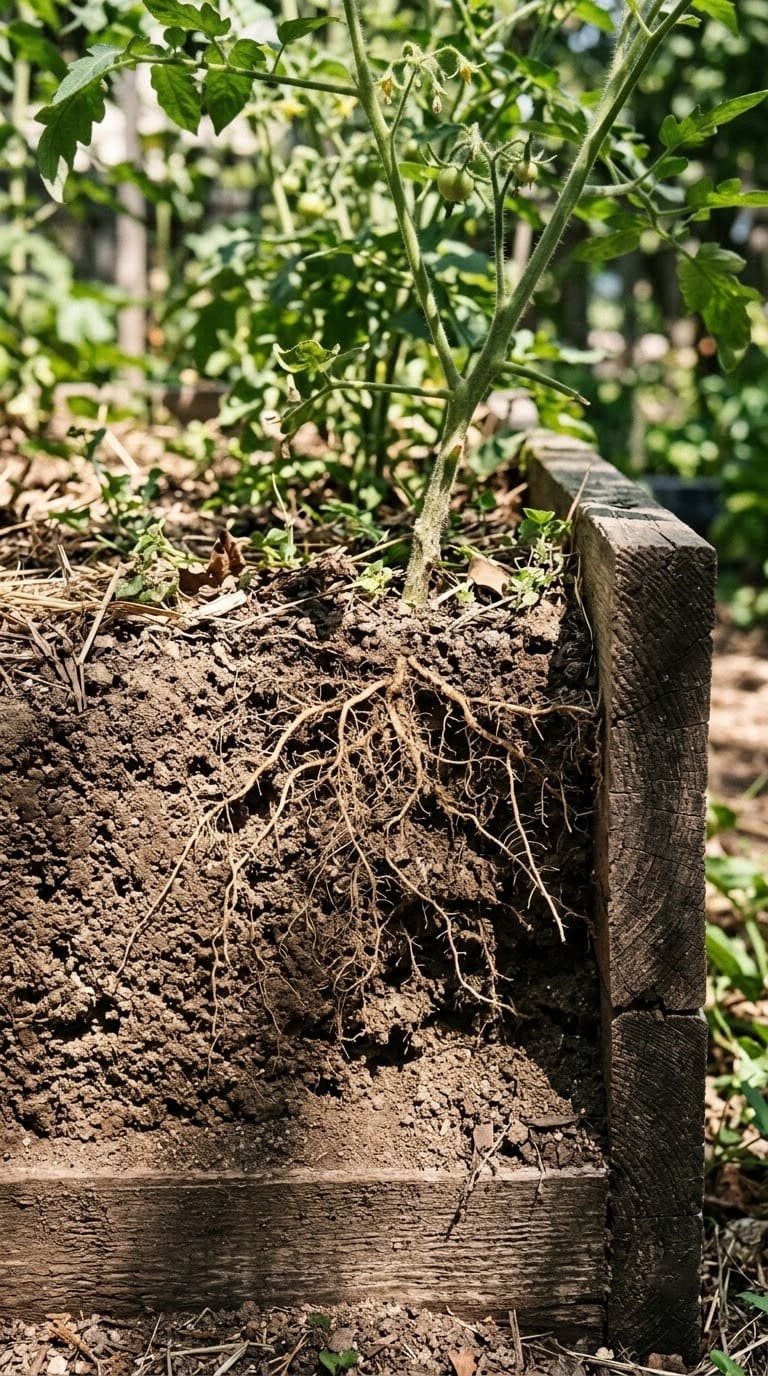
An in-ground plant can send roots down and sideways into a large reservoir of surrounding soil. A raised-bed plant cannot.
University of Maryland Extension puts it directly: raised beds “dry out more quickly because plant roots can’t access water in soil below the raised bed” and are “entirely dependent on the moisture within the confines of the raised bed.” Once that box dries out, there’s no deeper layer to pull from.
The structure makes it dry faster, too. Utah State University Extension notes that raised-bed soil “warms more quickly in the spring,” which is great for early planting. But that same warmth means “higher soil temperatures will increase evaporative moisture loss, requiring more frequent irrigation during the hot summer months.”
Add the free drainage, the exposed sides, and the fluffy mix most beds are filled with. Put together, a raised bed can dry out days ahead of the same crop in open ground, and in a heat wave it can go from damp to bone dry between a morning and an evening.
How much water does a raised-bed vegetable garden actually need?
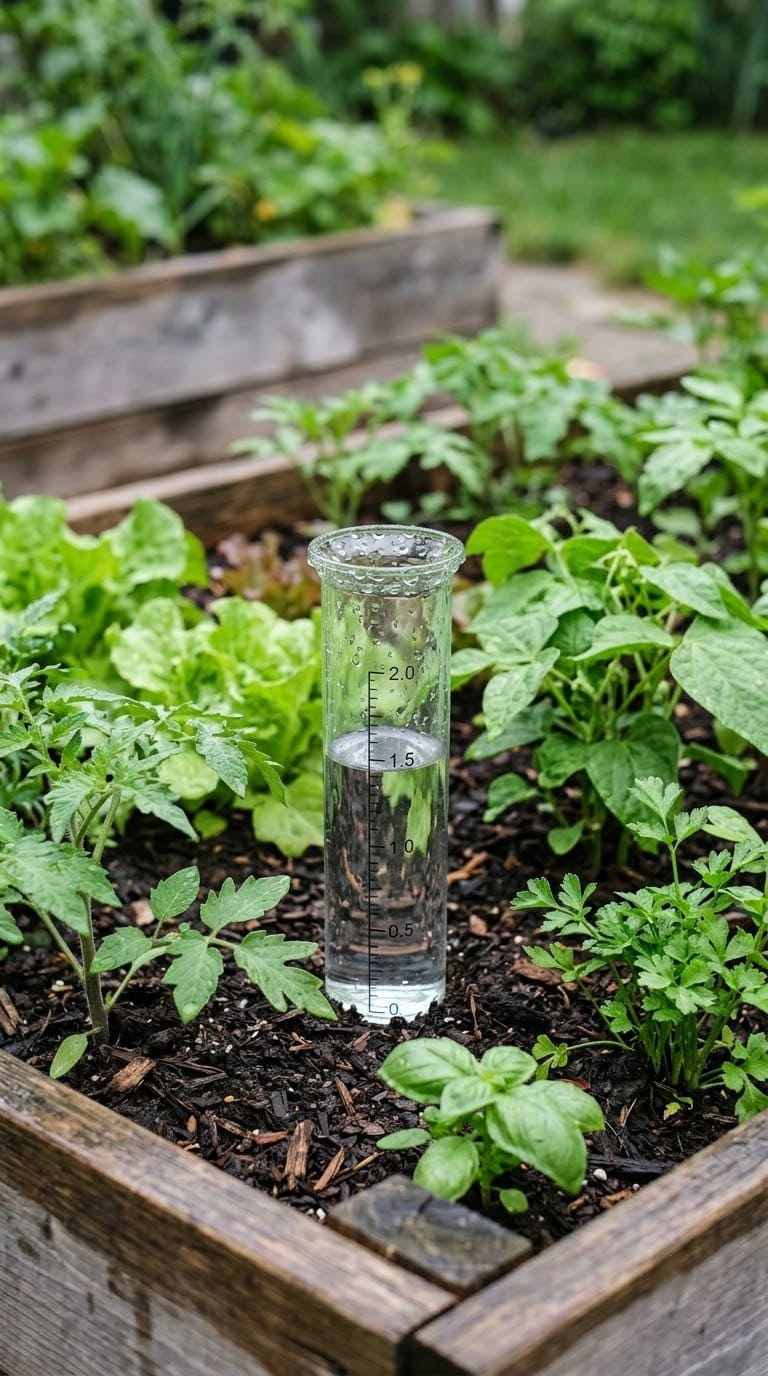
The baseline number is one inch per week. Iowa State University Extension says “most vegetable gardens need about 1 inch of water per week from rainfall and irrigation combined.” Utah State puts the range a little higher for vegetables specifically, at 1 to 2 inches per week.
Most yard problems trace back to one specific, fixable cause. Find yours in 4 quick questions.
Take the Free Quiz
Puts the whole seasonal schedule on autopilot, adjust the timer a few times a year instead of deciding daily
Shop NowThis post contains affiliate links. We may earn a commission on qualifying purchases at no extra cost to you.
How you deliver that inch matters as much as the amount. Iowa State is clear that “one thorough watering per week is preferable to frequent light watering.” The goal is to “apply enough water to moisten the soil 6 to 12 inches deep, where most vegetable roots are located.” Shallow daily sprinkles keep roots near the surface, where they cook first in a heat wave.
Heat raises the number. As Utah State’s vegetable water recommendations explain, “as ambient and soil temperatures rise, plants will use more water to support and cool themselves.” A rough working rule is to add about half an inch per week for every 10°F the weather runs above mild.
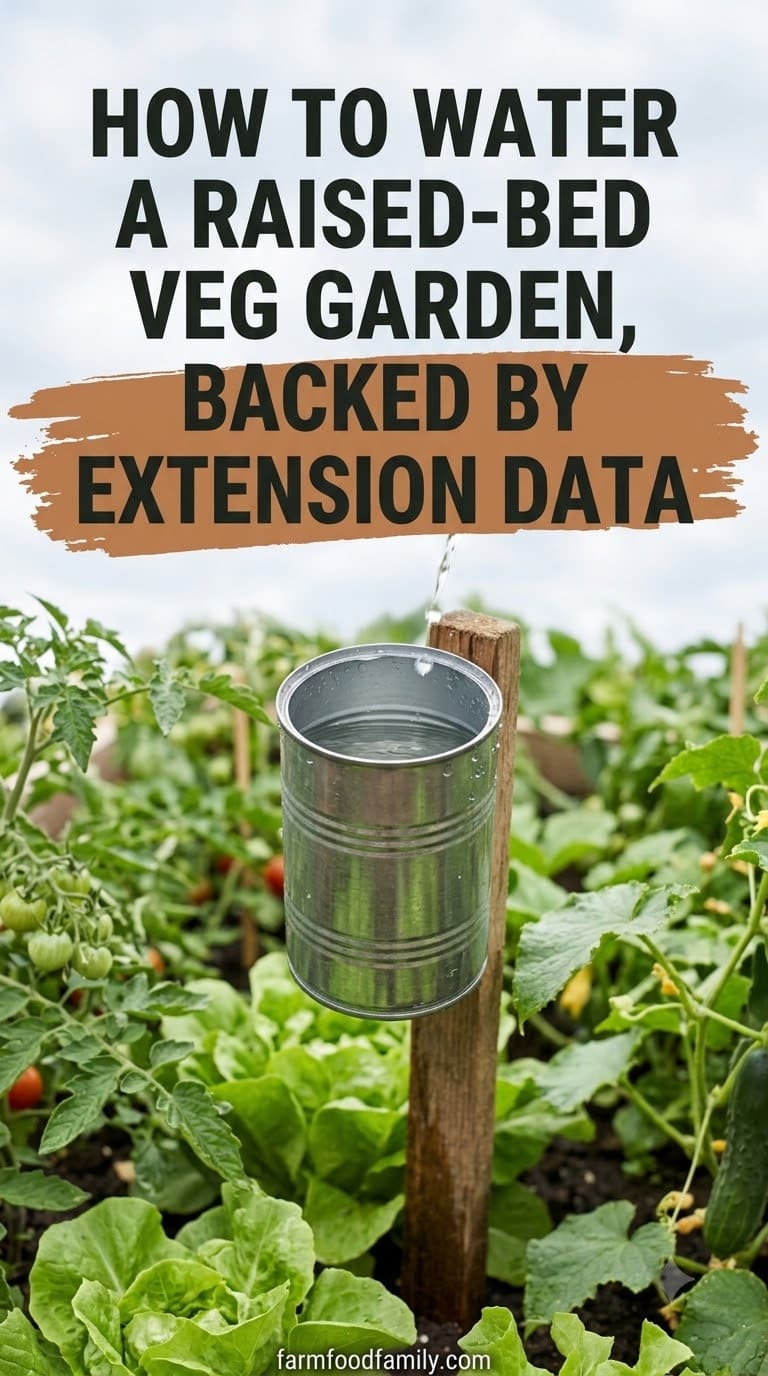
To see what an inch actually looks like on your bed, set a couple of straight-sided cans, like empty tuna cans, among the plants while you water. When they hold an inch, you have applied an inch.
Spring: the season it’s easiest to overwater
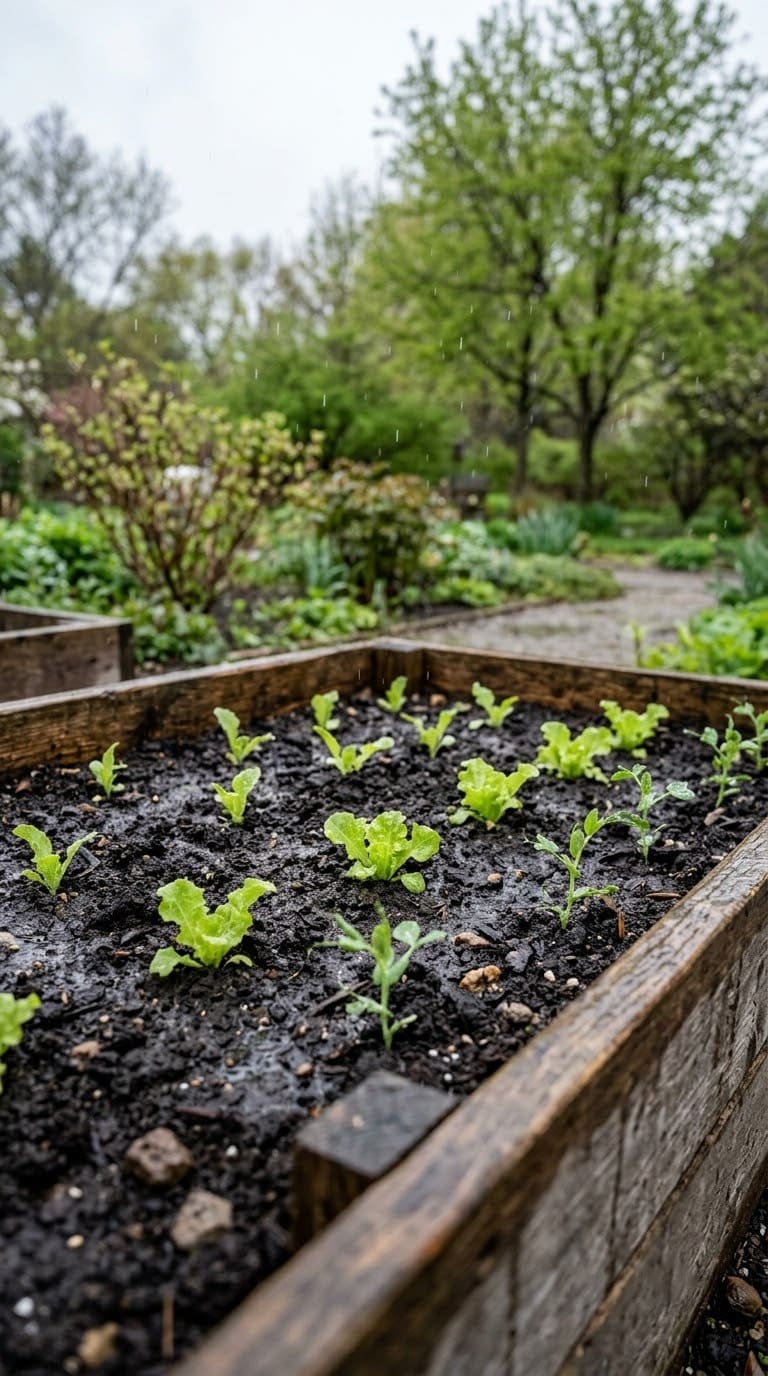
Spring is where most people get a raised bed wrong, because the instinct is to water a lot and the bed doesn’t need it yet. Cool soil evaporates slowly, spring rain does part of the job, and a freshly filled mix can stay waterlogged for days.
Established cool-season crops like lettuce, peas, and spinach want steady moisture, not saturation. Every 4 to 7 days is usually enough once they’re growing, adjusted down whenever it rains.
New transplants are the exception. Their small root ball dries out before the surrounding bed does, so check them every 1 to 2 days for the first week or two.
After that, taper deliberately toward deep and infrequent. It’s the same principle University of Maryland uses for hardening off, where you “reduce the frequency of watering” once plants are growing.
Summer: the peak-demand stretch
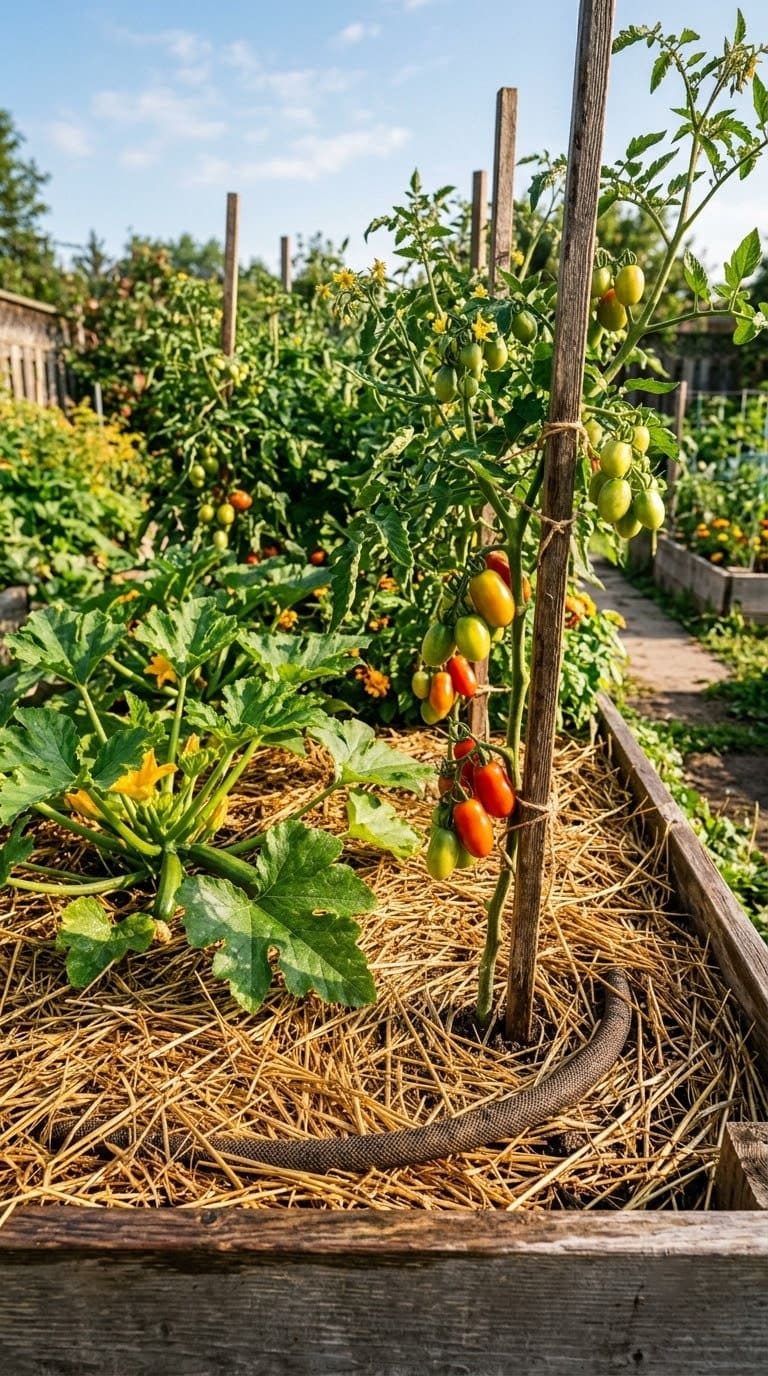
This is the season the raised bed’s downside shows up in full. In real heat, deep watering every 1 to 2 days is normal, and beds in full sun with heat-loving crops may need it daily.
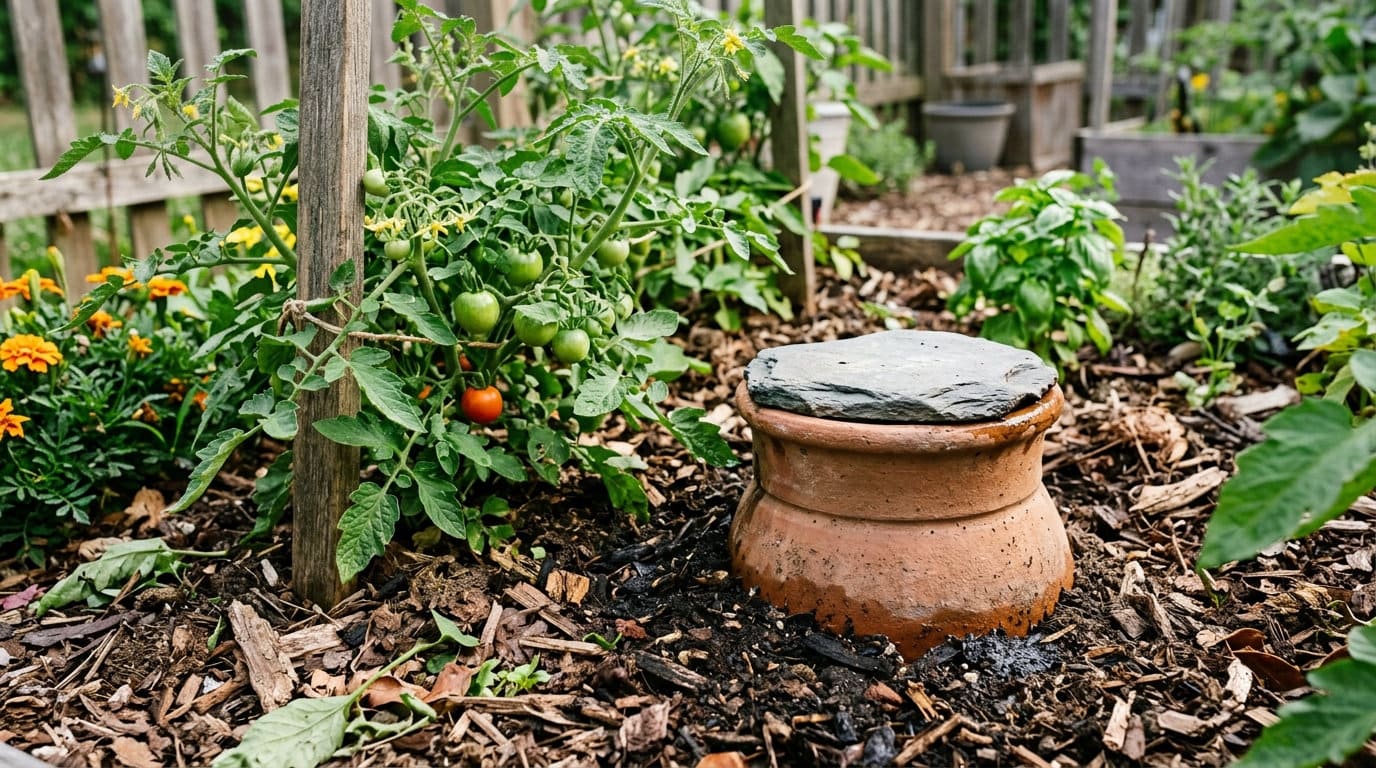
Three things make summer manageable. Mulch first: Utah State recommends “1 to 2 inches of mulch on top of the soil” to cut evaporation, and 2 to 3 inches is better on a raised bed.
The average homeowner spends $616/year on yard fixes that don't address the real problem. Find out what yours actually is — before you spend another dollar.
Take the Free QuizWater in the morning, so foliage dries fast and plants go into the afternoon fully charged. Our guide to the best times of day to water covers why. And water deep every time, never a quick surface pass.
Timing matters most during fruiting. Utah State notes beans are “most sensitive to drought when flowering and producing pods,” and the same holds for tomatoes and squash. A bed that dries out hard during fruit set drops flowers and splits fruit later.
One thing that looks alarming but usually isn’t: leaves wilting at midday in high heat, then recovering by evening. That’s the plant protecting itself, not a watering emergency. Wilting that’s still there at sunrise is the real signal.
Fall: taper down as the days get shorter
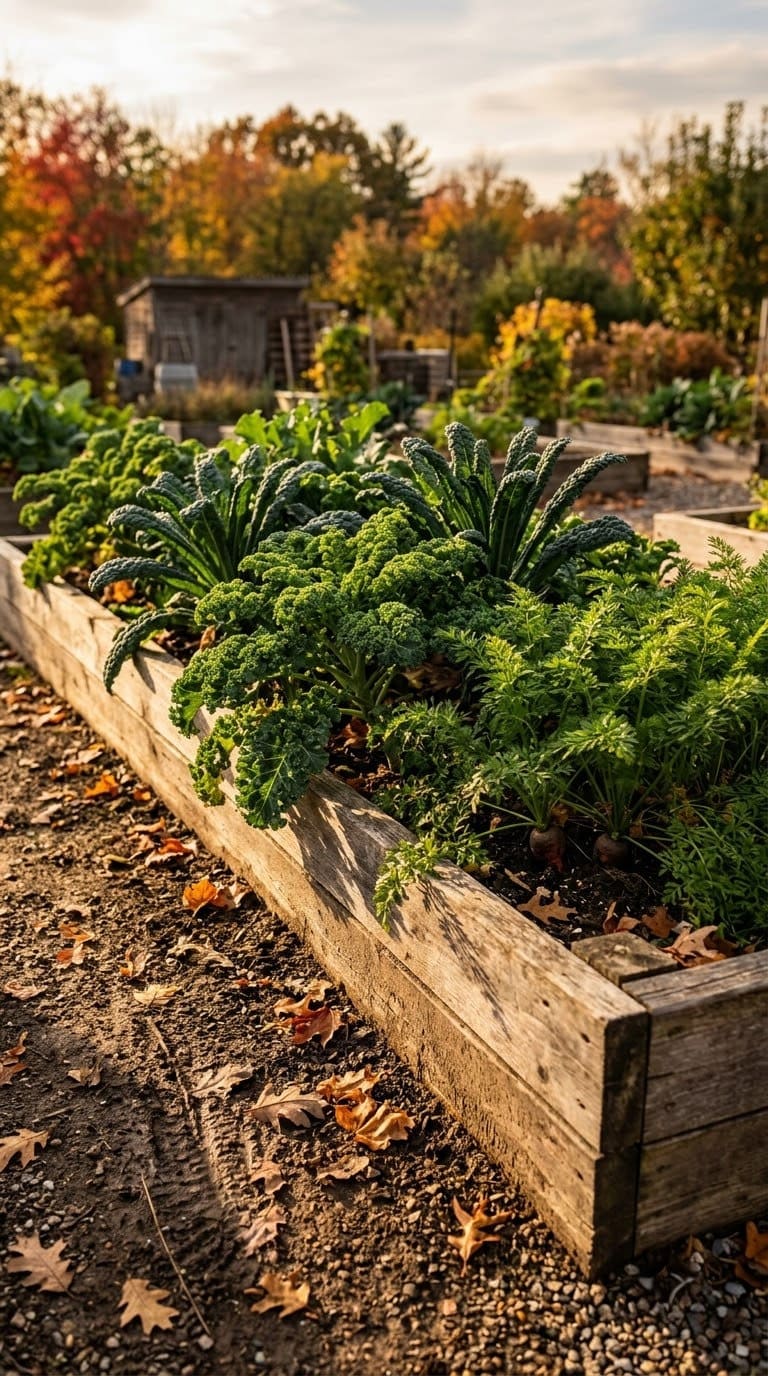
Fall demand falls off a cliff and people keep watering on the summer schedule out of habit. Shorter days, weaker sun, and cooler soil all cut how much water a plant loses.
Stretch the interval to every 5 to 10 days for most crops, and keep dropping it as the weather cools. Fall crops like kale, carrots, and late lettuce still need consistent moisture, so don’t stop entirely, just slow down.
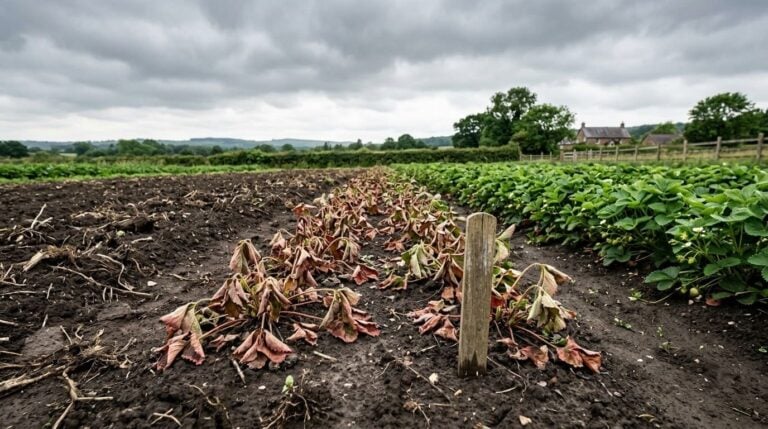
Watch for the same overwatering problem you had in spring. Cool fall soil holds water for a long time, and lingering summer crops sitting in constantly wet soil pick up fungal problems fast.
Winter: near-zero for most beds
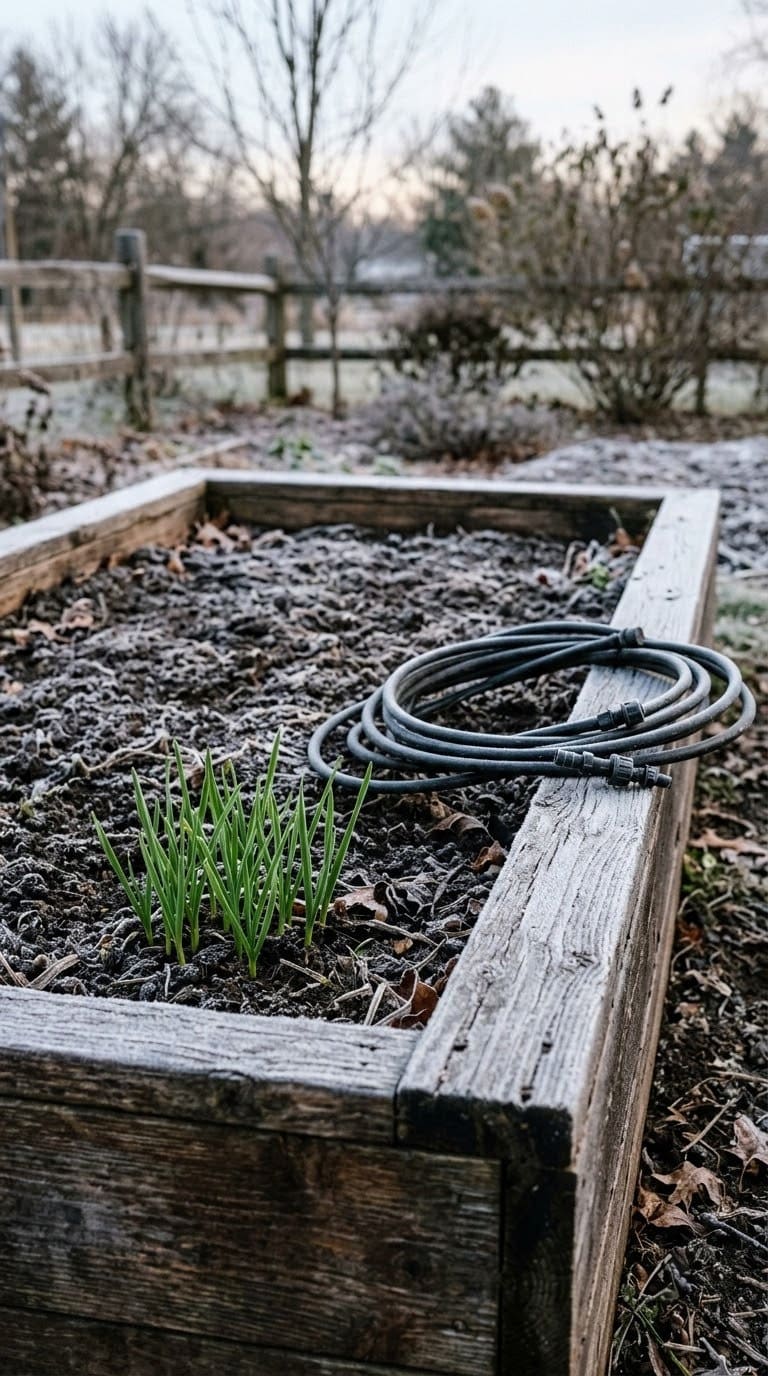
For most gardeners, winter watering of a raised bed is close to nothing. Rain and snowmelt cover an empty or lightly planted bed, and cold soil barely evaporates.
Overwintering crops need very little. Utah State notes that garlic “requires little to no initial water as moisture is often supplied through precipitation from fall through spring.” A deep soak once during a long dry, windy cold spell is about all an overwintered bed of garlic or alliums wants.
The real winter job is the irrigation system, not the plants. Drain and blow out any drip or soaker lines before the first hard freeze, or the water inside them expands and cracks the tubing and emitters.
How do you know when a raised bed actually needs water?
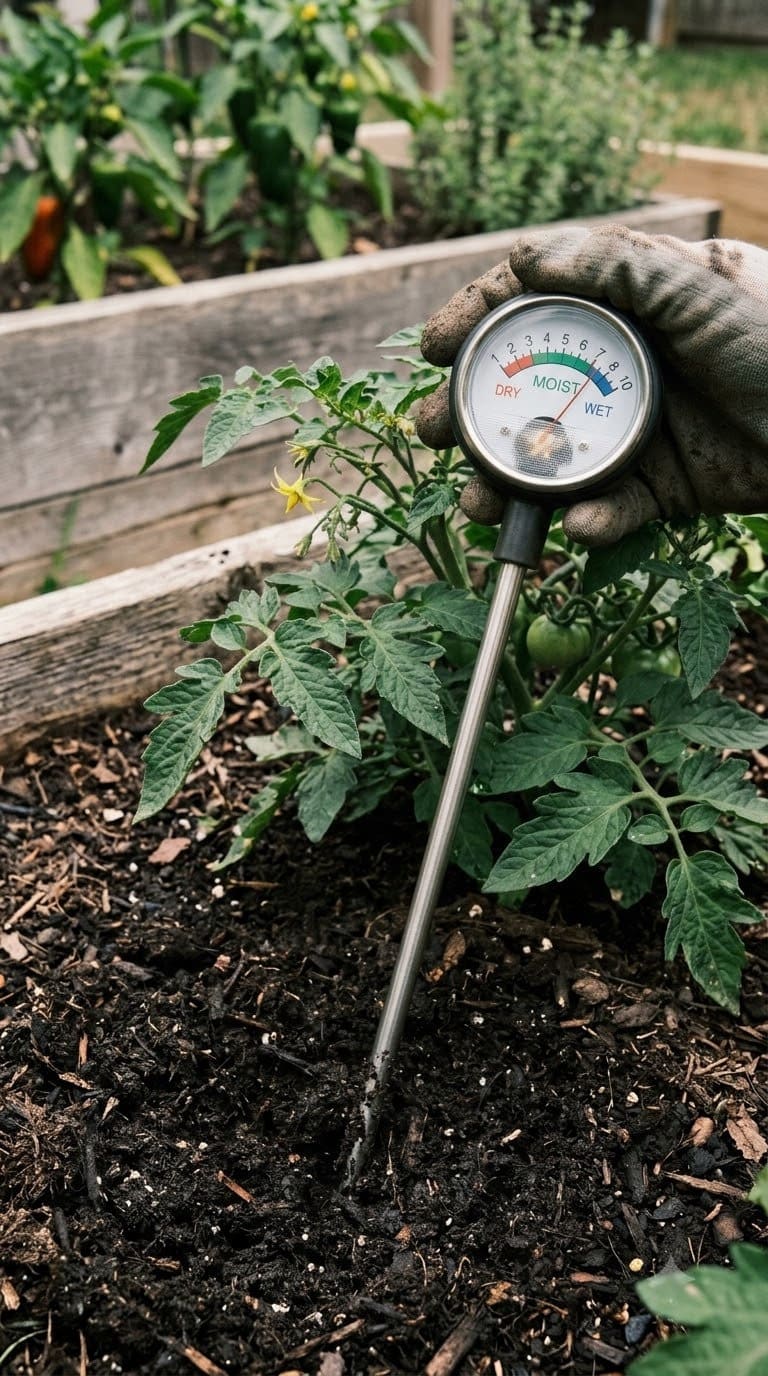
The calendar is a starting point. The soil is the answer.
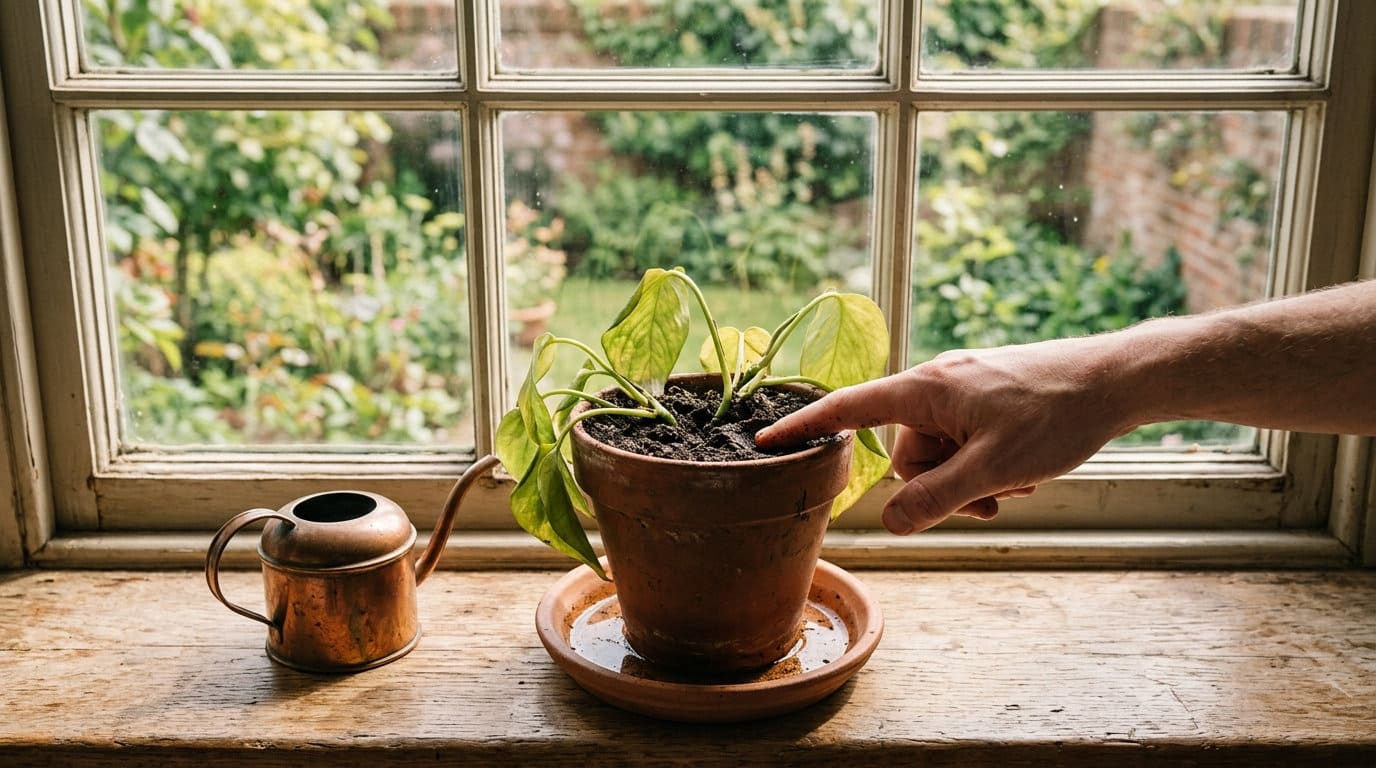
Push a finger 2 to 3 inches into the bed near a plant’s root zone. Dry and crumbly means water, cool and damp means wait.
Iowa State suggests going further and digging a small hole occasionally to see how deep your water actually soaked, so you can calibrate how long to run things.
A cheap moisture meter with a long probe takes the guesswork out. In a deep bed the surface often lies about what’s happening down at root depth. Check in a few spots, too, since the edges of a raised bed dry faster than the center.
Setting up drip or a soaker hose so you stop guessing
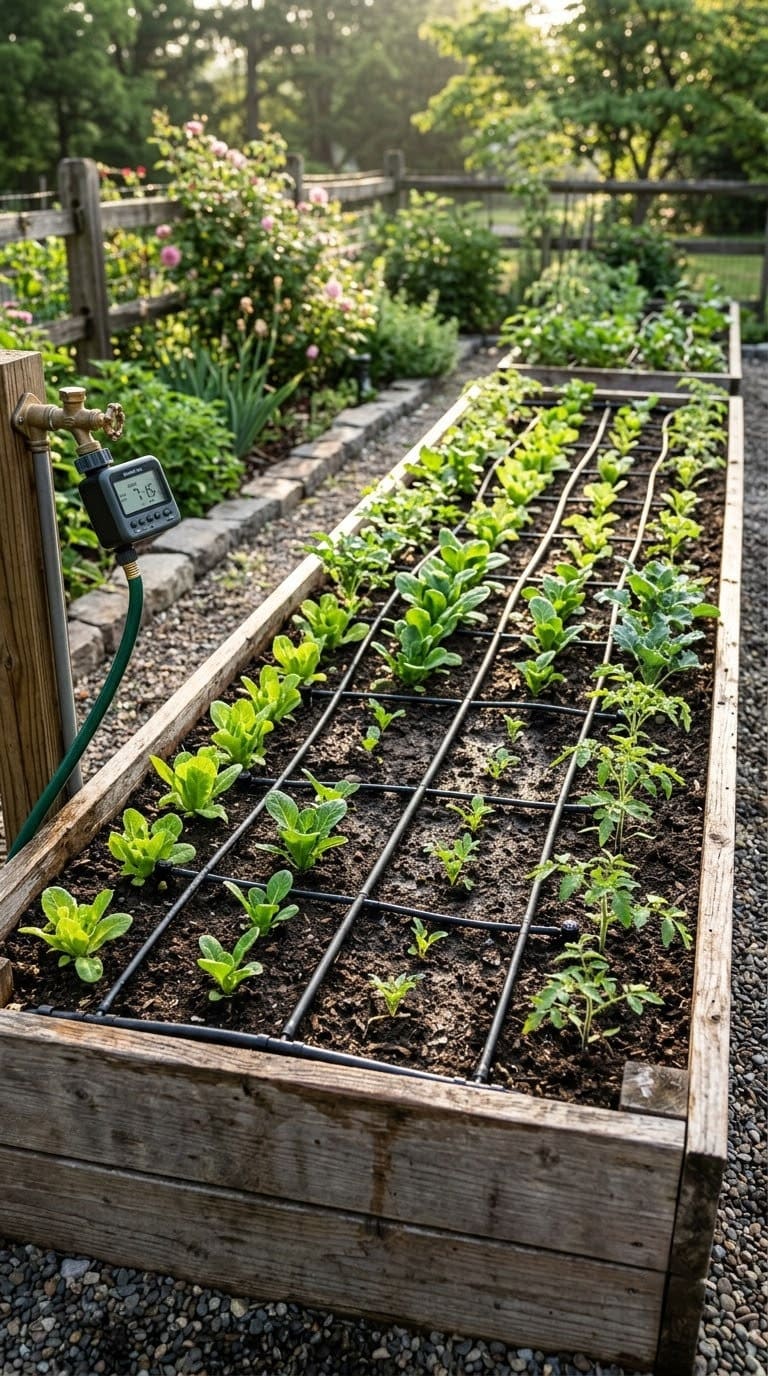
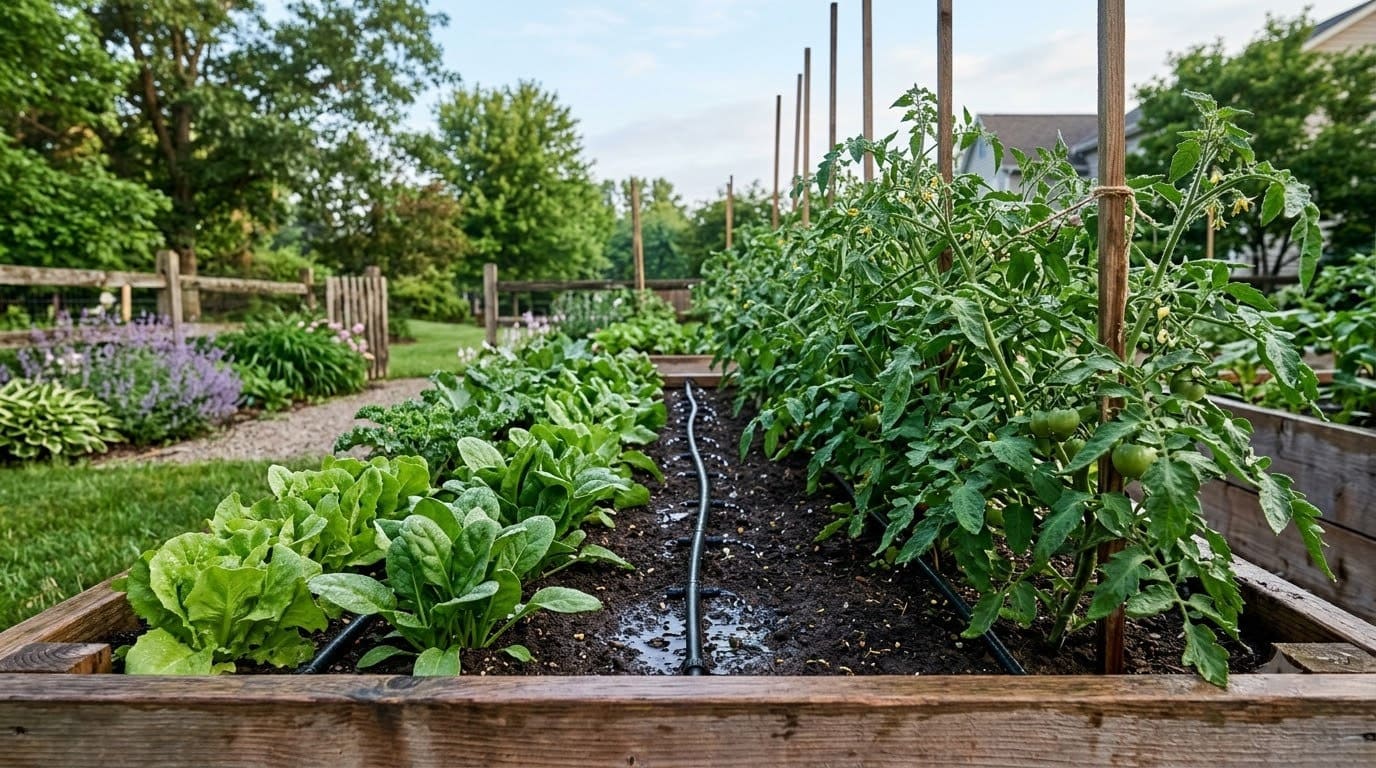
Hand watering works, but it makes you decide every single day. It’s the first thing to slip when life gets busy. Utah State is blunt that “a raised bed garden must be irrigated,” and that drip or trickle irrigation is the most efficient way to do it.
The simplest version is “a soaker hose wound throughout the box.” The better version is “drip tubing controlled by a timer.” That removes the daily decision entirely, and you just adjust the schedule a few times a year as the seasons change.
Drip also uses 30 to 50 percent less water than overhead watering, per Iowa State, and keeps foliage dry, which cuts disease. Our rundown of drip irrigation benefits and these water-saving irrigation tips cover the parts you need.
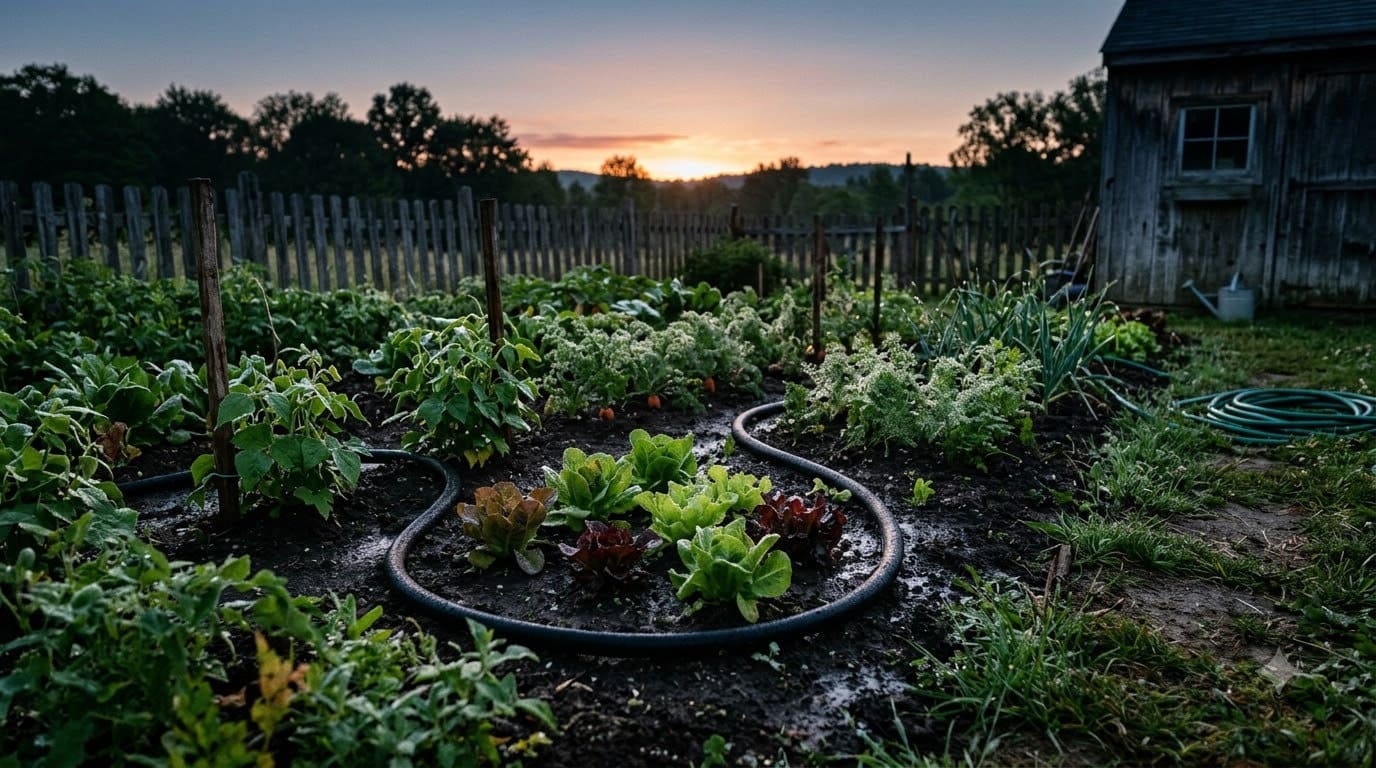
Set the timer to the season, not once for the year. A schedule that runs 20 minutes every other day in July should be more like 20 minutes every fifth or sixth day by late September.
Seasonal watering cheat sheet
Save this or screenshot it. Frequencies assume established plants and get adjusted down for rain.
| Season | How often (established plants) | Target amount | Method note | What to watch |
|---|---|---|---|---|
| Spring | Every 4 to 7 days, or every 1 to 2 days for the first 1 to 2 weeks after transplanting | Around 1 inch per week including rain | Hand water or short drip cycles, do not run a summer schedule | Cool wet soil, damping off in seedlings, a fresh mix staying waterlogged |
| Summer | Every 1 to 2 days in real heat, sometimes daily in full sun | 1 to 2 inches per week, add about half an inch per 10°F above mild | Drip or soaker on a timer, water in the morning, 2 to 3 inches of mulch | Midday wilt that recovers by evening is normal, all-day wilt is not |
| Fall | Every 5 to 10 days, stretching further as it cools | Back toward 1 inch per week or less | Keep drip running but lengthen the interval | Overwatering cool soil again, fungal problems on lingering summer crops |
| Winter | Little to none, one deep soak during a long dry windy cold spell | Rain usually covers it | Drain and blow out drip and soaker lines before a hard freeze | Garlic and overwintered alliums need almost nothing until spring |
A real raised-bed watering mistake
My first raised bed went in during a cold, wet March, and I treated it like the container garden I’d had the summer before, which meant water every other day no matter what.
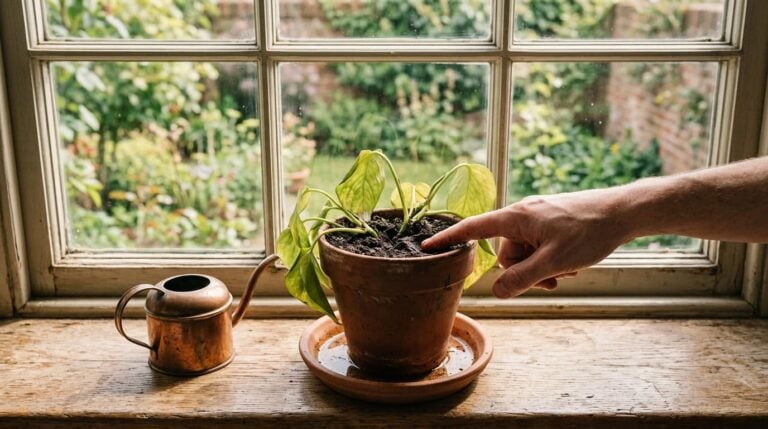
Three weeks in, a full tray of lettuce and pea seedlings I’d transplanted had gone soft and brown at the soil line. I assumed they needed more water and gave them more. They kept dying.
A neighbor finally stuck her finger in the bed and told me it was soaking wet three inches down and had been for a week. The mix I’d filled it with held spring rain like a sponge, the cool soil wasn’t evaporating any of it, and I’d been topping up a bed that was already drowning. Now the first thing I do every spring is dig a small hole before I water anything, and I don’t turn the drip timer to its summer setting until the weather actually earns it.
FAQ
How often should I water a raised bed in summer? In real heat, deep watering every 1 to 2 days is typical for established plants, and beds in full sun with tomatoes, peppers, or squash may need it daily. Always water deep enough to moisten the soil 6 to 12 inches down rather than giving a quick surface pass.
Do I need to water a raised bed in winter? Usually very little. Rainfall covers most empty or lightly planted beds, and cold soil barely evaporates. Overwintering garlic and alliums need almost nothing beyond an occasional deep soak during a long, dry, windy cold spell.
Why does my raised bed dry out so fast? It drains freely, has soil exposed to air on all four sides plus the top, and is usually filled with a light compost-heavy mix. University of Maryland Extension notes that raised-bed roots are “entirely dependent on the moisture within the confines of the raised bed,” with no deeper reservoir to reach.
Is it better to water a raised bed in the morning or evening? Morning. Foliage dries quickly, plants are hydrated going into the afternoon, and you avoid the overnight leaf wetness that feeds fungal disease. Drip and soaker systems are the exception, since they never wet the leaves.
How long should I run drip irrigation on a raised bed? It depends on your emitters and soil, so calibrate once by running it, then digging a small hole to see how deep the water reached. Aim to wet the top 6 to 12 inches, then adjust the run time up in summer and down in fall.
Should I water every day when it’s really hot? Often yes for a raised bed in a heat wave, but water deeply each time, not lightly. Shallow daily watering keeps roots near the hot surface. If a moisture check 2 to 3 inches down still reads damp, skip the day.
Related Posts
- Urban Gardening: The Raised Bed Method
- Simple Drought-Fighting Strategies for Gardeners
- How to Grow Lettuce and Harvest It So It Keeps Growing
Products We Recommend
This post contains affiliate links. We may earn a commission on qualifying purchases at no extra cost to you.
HEKIWAY 60 ft Drip Irrigation System with Smart Water Timer
Puts the whole seasonal schedule on autopilot, adjust the timer a few times a year instead of deciding daily
Shop Now
Suneed Flat Soaker Hose, 25 ft x 4 linkable
The simplest way to water a raised bed evenly without wetting foliage, wind it through the box
Shop Now
YAMRON 4-in-1 Soil Moisture Meter
Reads moisture down at root depth in a deep bed, where the surface lies about what's underneath
Shop NowNever miss an update — choose FarmFoodFamily as your preferred source on Google.
How it works: Tap the button below to open Google's settings page, then check the box next to FarmFoodFamily.
Tap the checkbox to turn it blue — that's how you know it's set.