11+ Affordable Backyard Lazy River Pool Ideas That Look Expensive
A guy at my gym spent two years planning his backyard lazy river before he ever broke ground, and the thing that took the longest wasn’t picking a theme, it was getting the permit paperwork and the pool fence inspection sorted out. Nobody warns you about that part. Most articles on this topic show you…

Never miss an update — choose FarmFoodFamily as your preferred source on Google.
How it works: Tap the button below to open Google’s settings page, then check the box next to FarmFoodFamily.
Tap the checkbox to turn it blue — that’s how you know it’s set.
A guy at my gym spent two years planning his backyard lazy river before he ever broke ground, and the thing that took the longest wasn’t picking a theme, it was getting the permit paperwork and the pool fence inspection sorted out.
Nobody warns you about that part. Most articles on this topic show you pretty pictures and skip straight past the two things that actually determine whether you can build one at all: what it costs, and what code requires.
“Lazy rivers require experienced designers and builders,” says Lucas Congdon, designer at Lucas Lagoons. “A lazy river is ideal if you want a backyard built for time, movement, and experience.” That’s honestly the right way to think about it going in, this isn’t a weekend DIY project, it’s a real construction undertaking with real numbers behind it.
Planning your backyard lazy river pool
Assessing your space
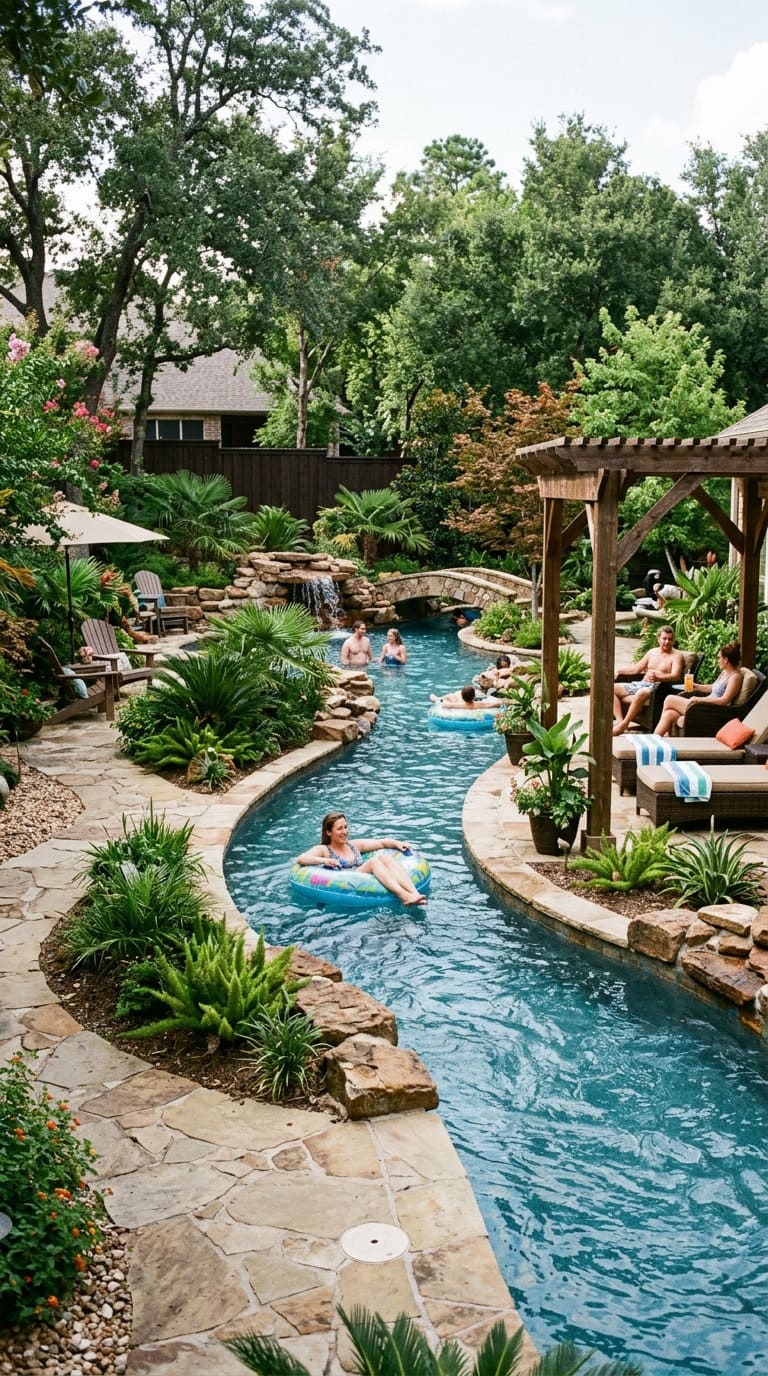
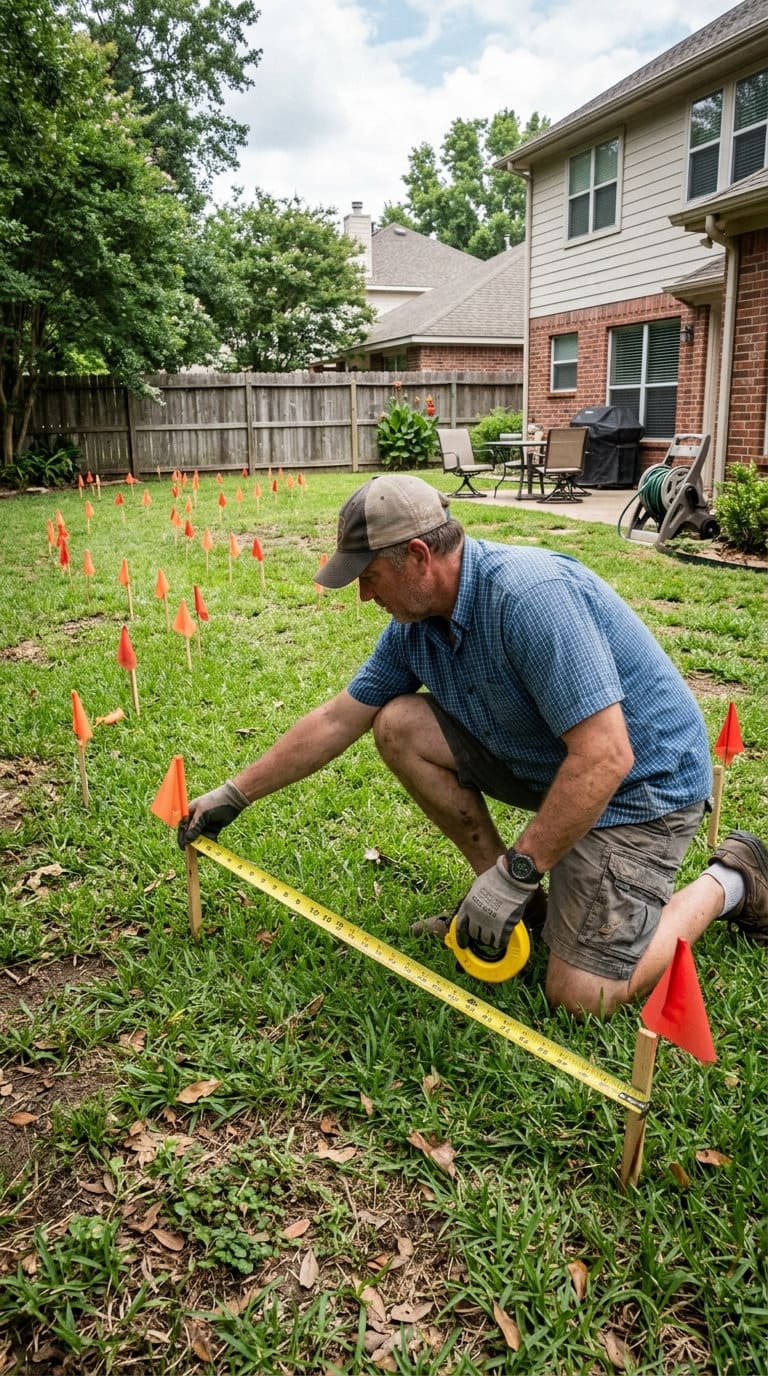
Start by walking your actual yard with a tape measure, not a mental estimate. A lazy river needs a continuous loop or curved channel, so the shape of your lot, existing trees, slope, and property line setbacks (more on those below) all constrain what’s realistically possible before you fall in love with a design that won’t fit.
Budgeting and costs
Here’s the number most articles on this topic won’t give you: a backyard lazy river costs $120,000 to $500,000 on average, according to HomeGuide, depending heavily on size and materials.

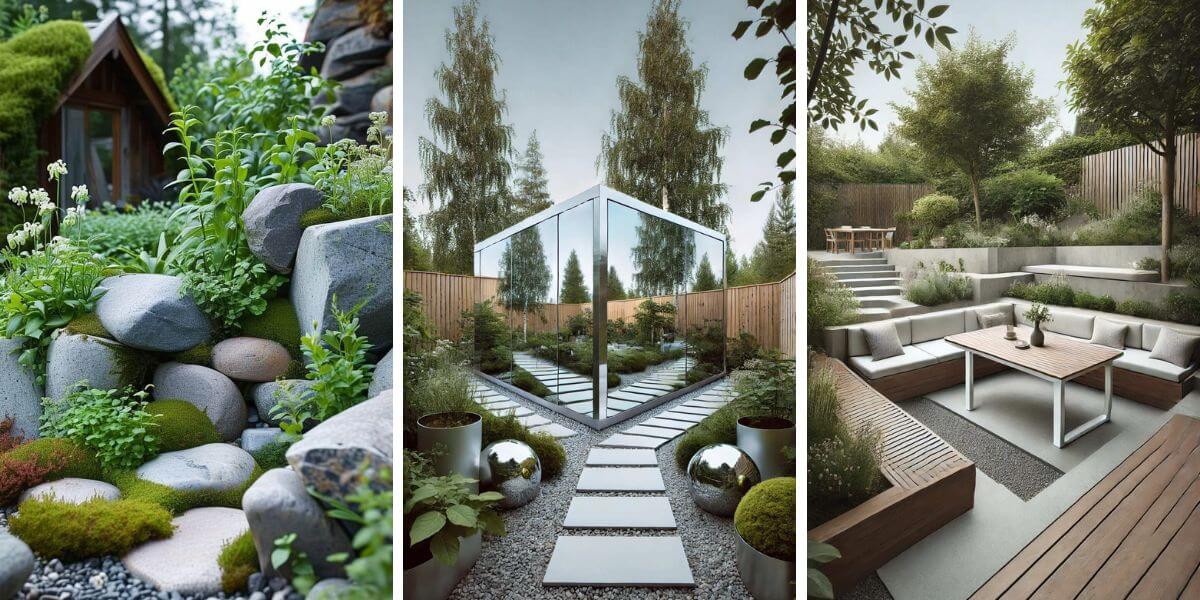
A small, simple oval-shaped lazy river runs $30,000 to $100,000 on the low end. Custom, premium builds with waterfalls and grottos typically start around $300,000 to $500,000 and can exceed $1 million.
Answer 4 quick questions and get matched to the exact fix for your yard — drainage, budget, layout, or something else entirely.
Take the Free QuizA large, 400-foot lazy river can run over $600,000. And the costs don’t stop at construction, ongoing monthly maintenance (pump operation, chlorine, electricity) has been reported around $1,000 for homeowners running one of these systems regularly.
Designing the layout
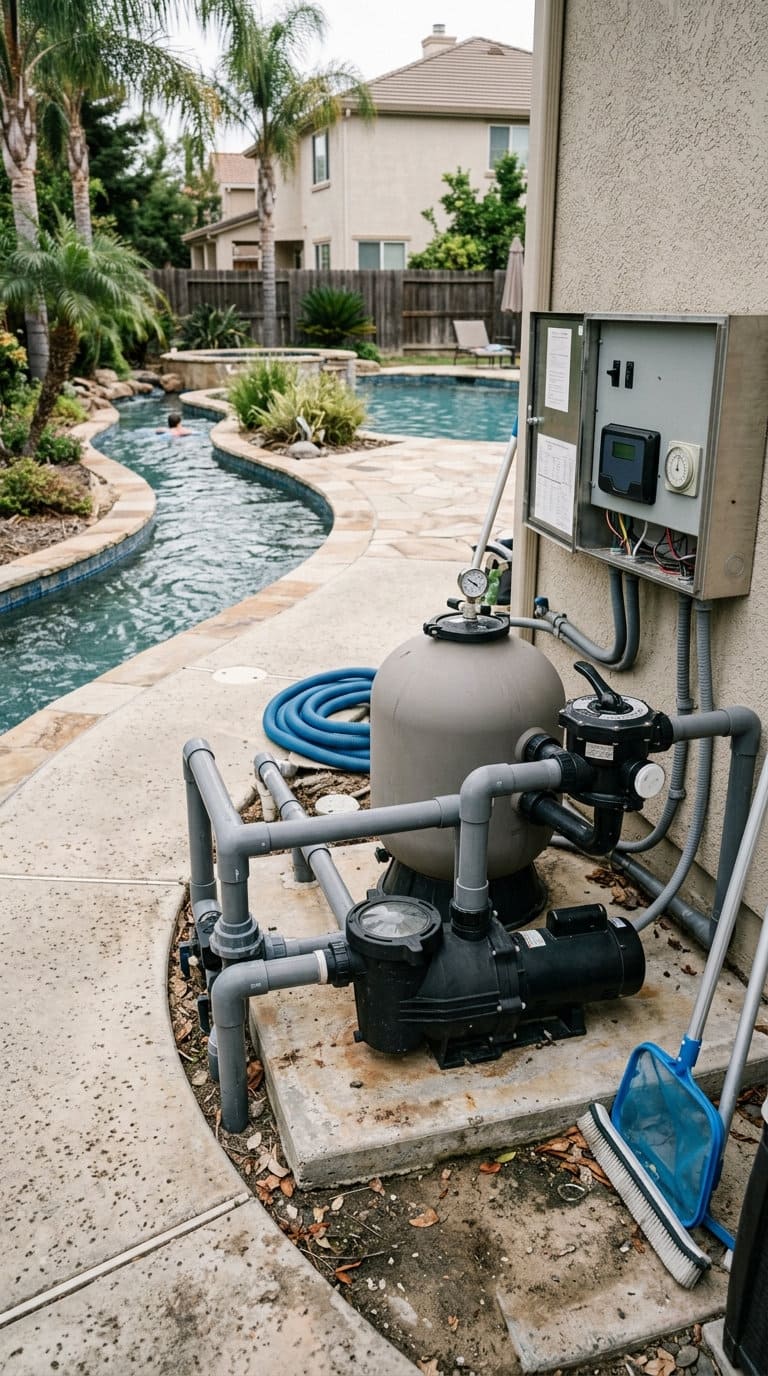
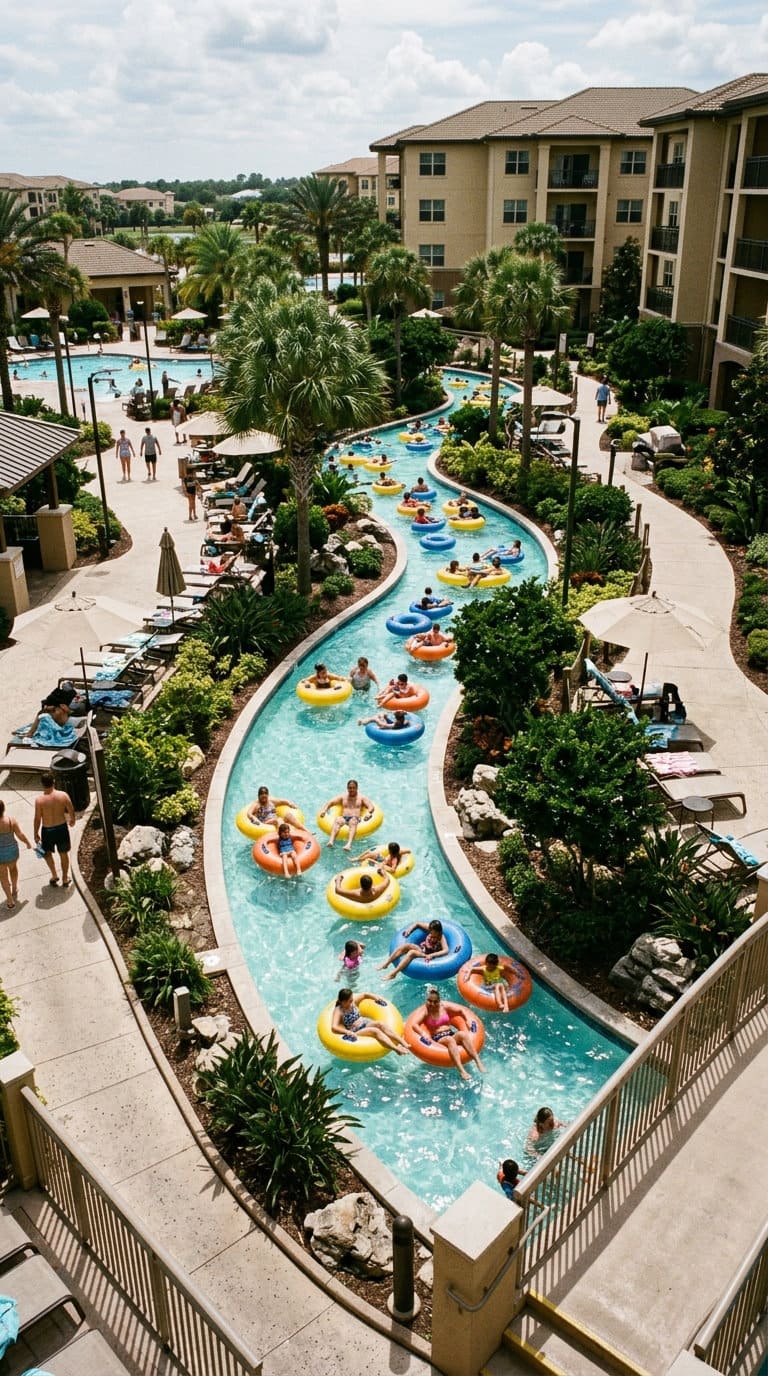
Choosing the right shape and size is where the creative decisions happen, but it’s constrained by real mechanics: a lazy river needs a continuous current, driven by jets or a pump system, so the channel width and depth have to stay consistent enough for that current to keep moving water (and people) along the full loop.
Incorporate natural features like rock outcroppings or planting beds along the outer edge, but keep the inner channel itself simple and unobstructed.
Permits and regulations
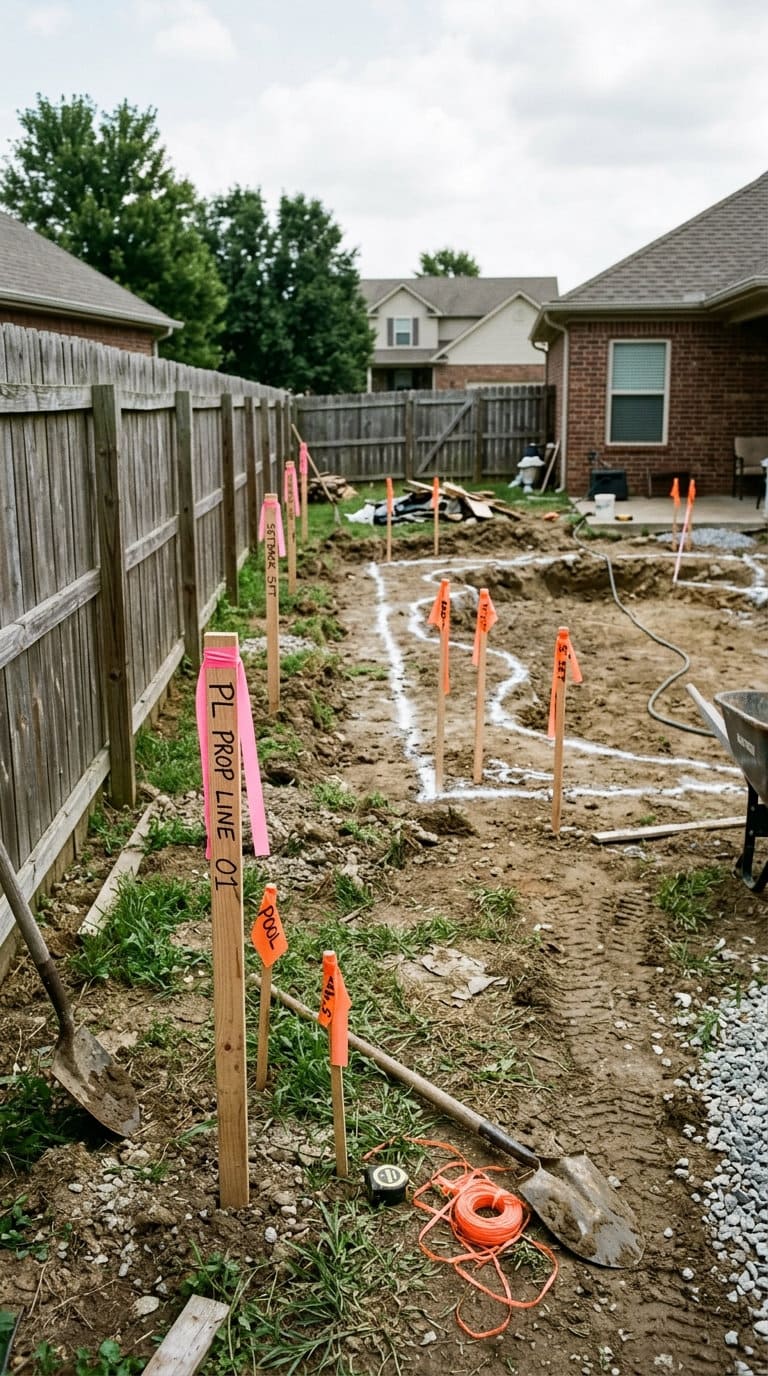
Requirements vary a lot by where you live, which is exactly why “check local codes” as generic advice doesn’t help much. To give a real sense of the range: San Antonio requires 5-foot side and rear setbacks from the property line for residential pools, while Nashville requires a minimum side setback equal to half the normal zoning requirement (but never less than 3 feet) for pools extending more than 12 inches above ground.
Your setback, depth limits, and required inspections will differ from both of these, so the one universal step is calling your local building department before you dig, not after.
Backyard Lazy River Pool Ideas
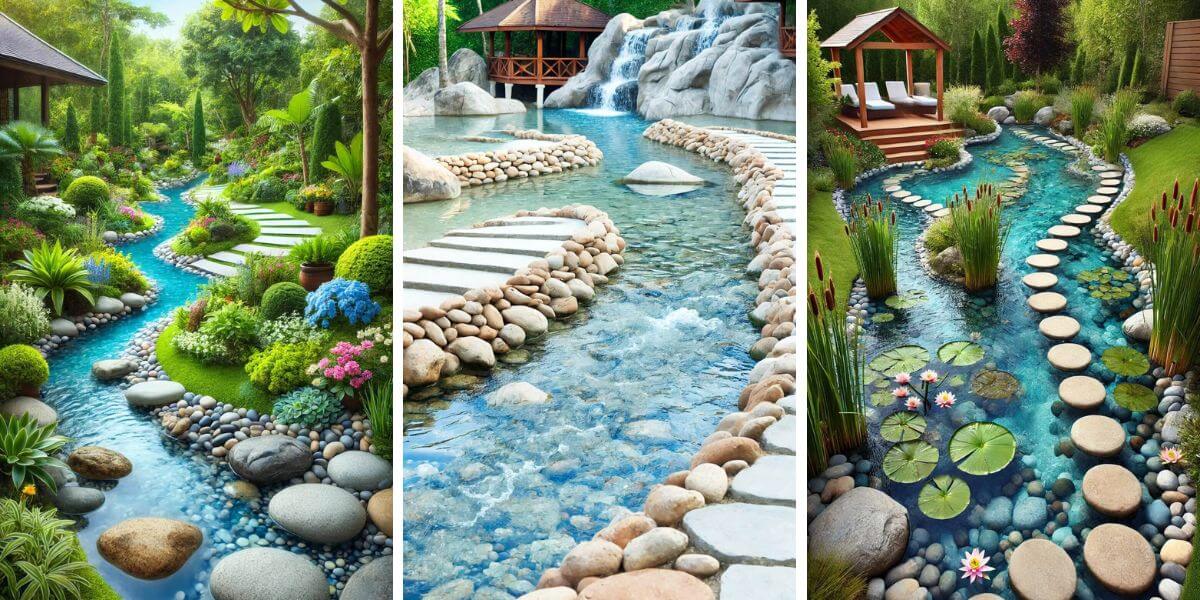
1. Tropical Paradise Theme
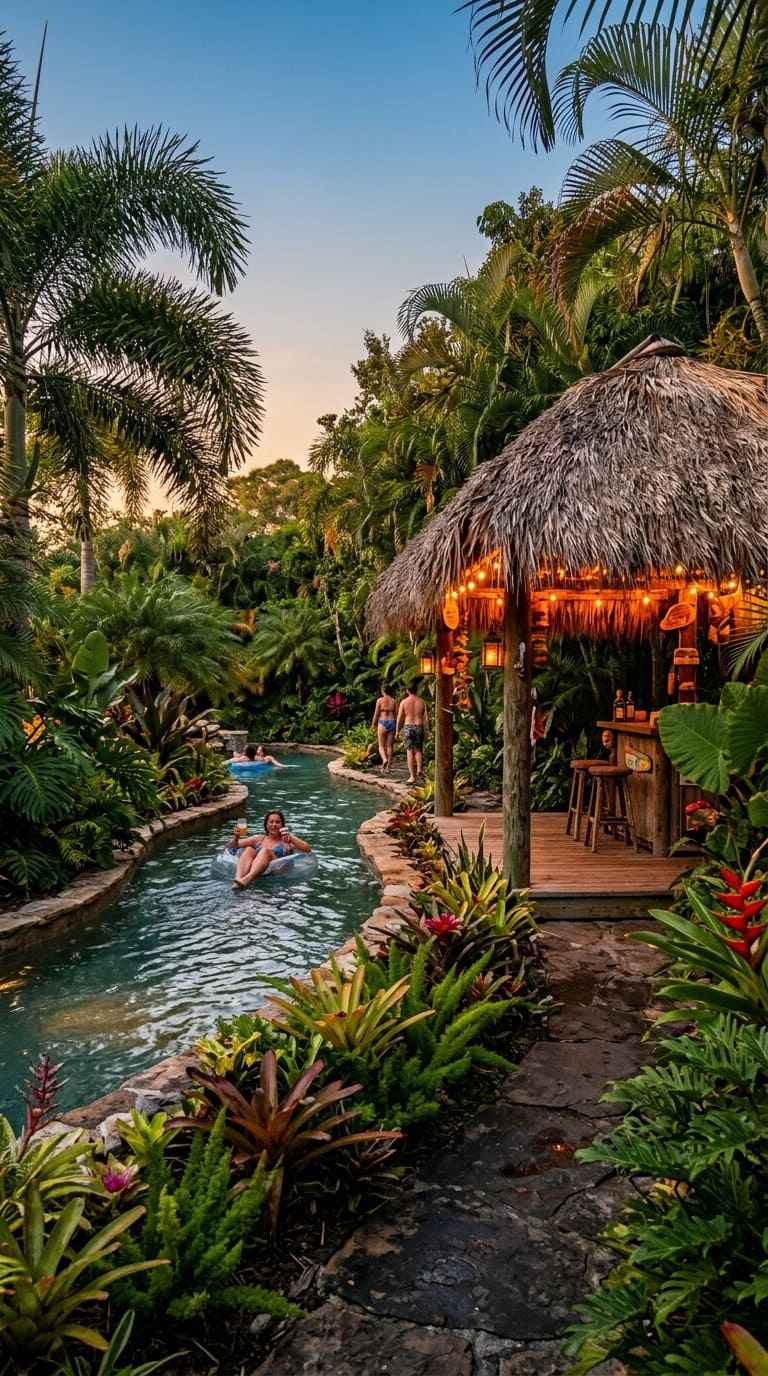
Lean into thick tropical planting (bird of paradise, canna lily, and hardy bamboo all hold up well around pool humidity), a thatched-roof tiki bar or shade structure at one bend in the river, and warm amber lighting rather than cool white.
Stone or pebble-finish decking reads more tropical than smooth concrete and stays cooler underfoot in direct sun.
Most yard problems trace back to one specific, fixable cause. Find yours in 4 quick questions.
Take the Free Quiz2. Rocky Mountain Retreat
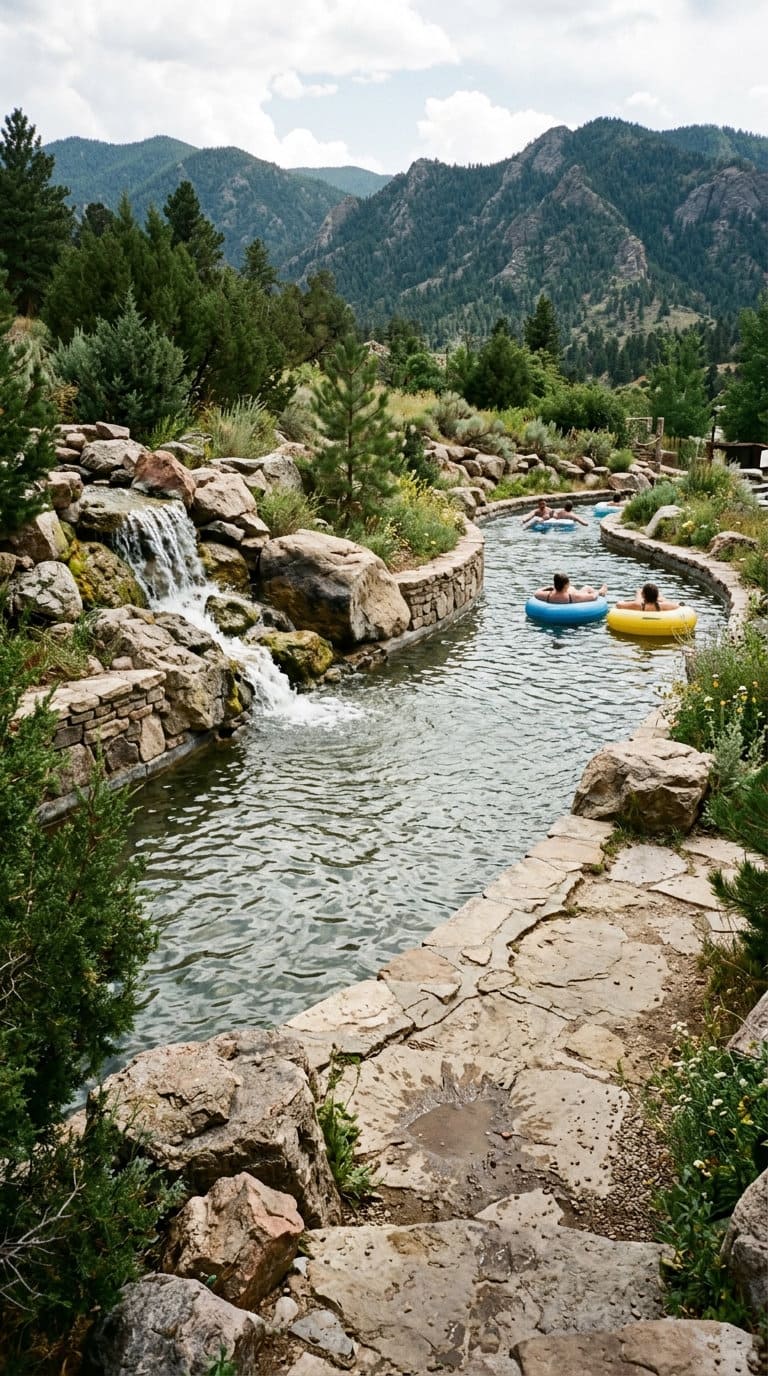
Real or faux boulder formations along the river’s edge, paired with a small waterfall feature at one point in the loop, give this theme its rugged look.
Use natural stone (or a high-quality faux stone product, real boulder placement adds significant excavation cost) and keep the plant palette to drought-tolerant, mountain-adjacent species like ornamental grasses and junipers rather than tropical foliage that would clash with the look.
3. Modern Minimalist Design
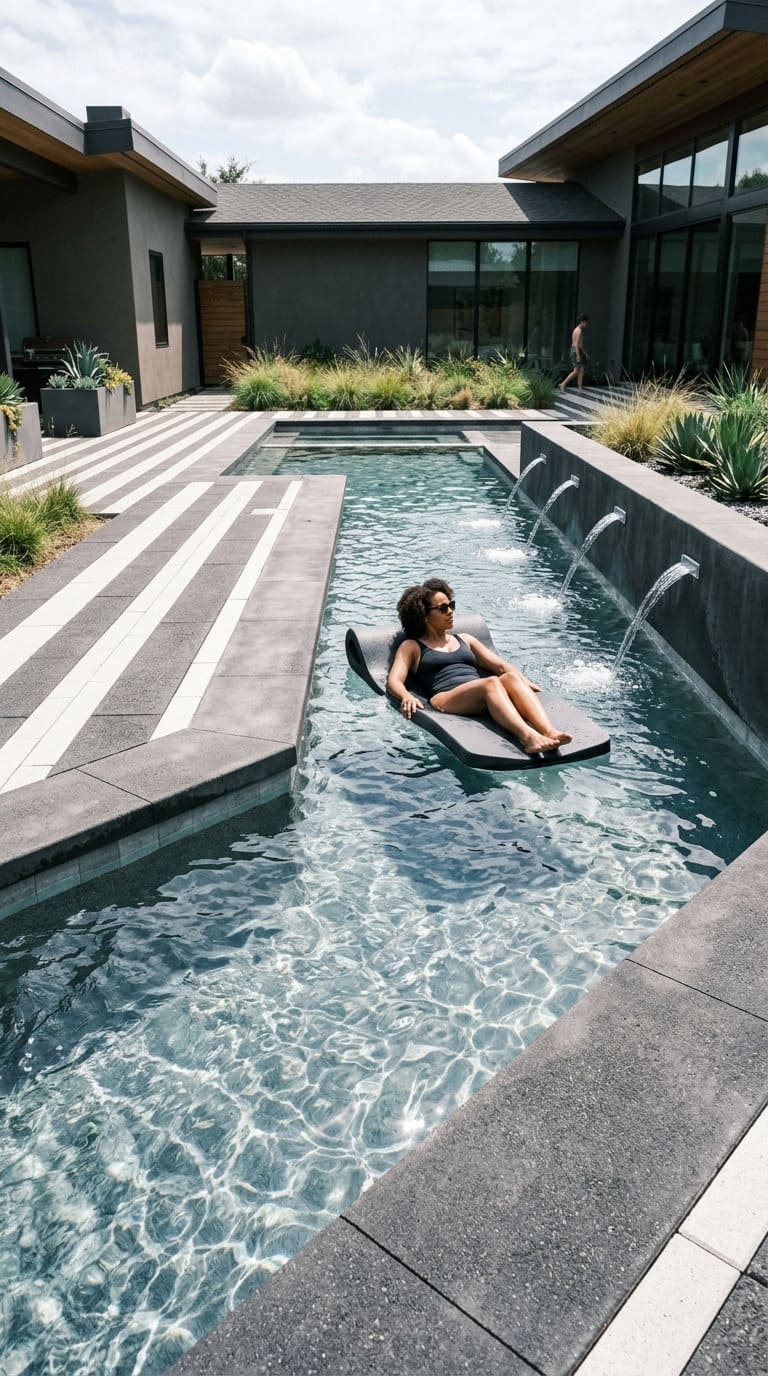
Sharp geometric lines, a monochrome palette (charcoal or white decking, minimal plant color), and clean linear water jets instead of ornamental fountains keep this style restrained.
This is usually the least expensive theme to execute of the eleven here, since it avoids the labor-intensive stone work and dense planting the tropical and mountain themes require.
4. Family-Friendly Fun
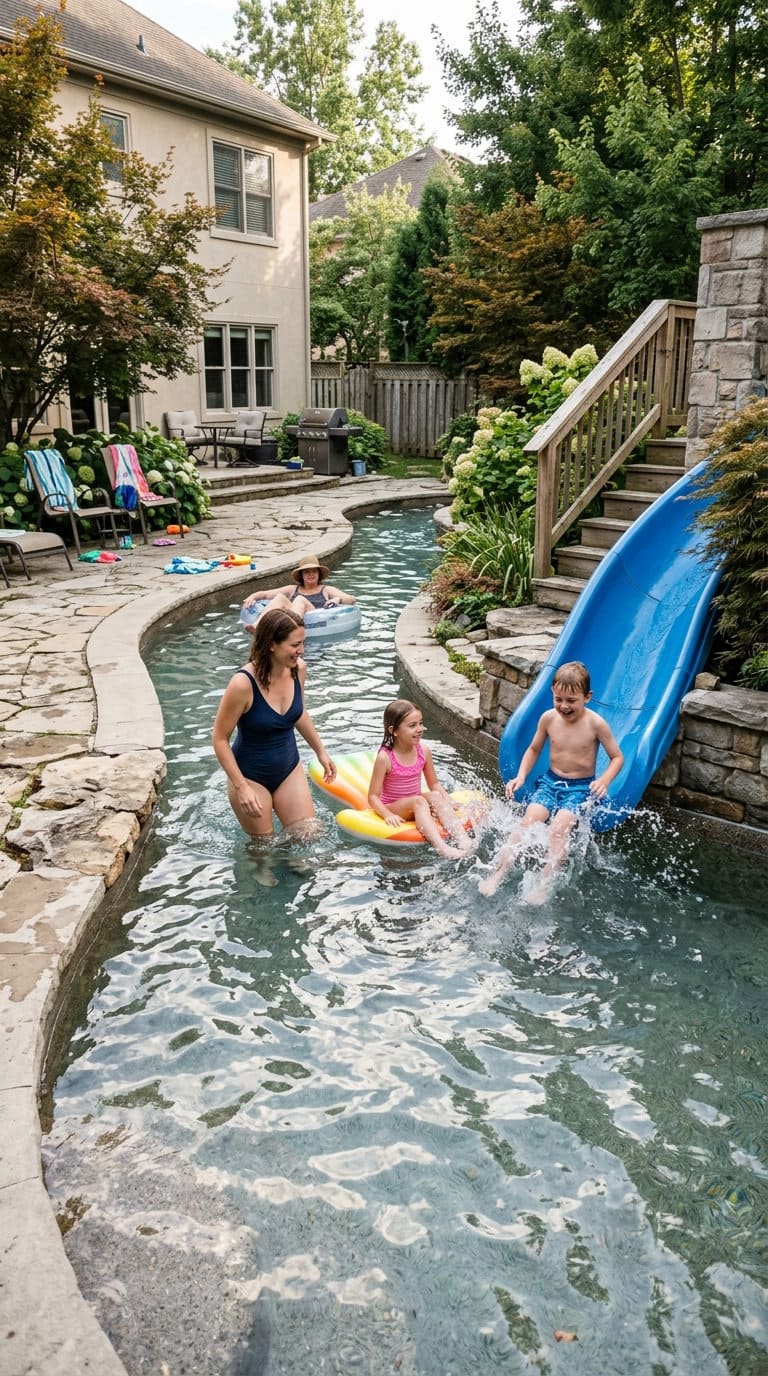
A shallower, wider section of the channel (kept to a depth where younger kids can stand) works well paired with a small slide or a designated splash zone at one bend.
Keep this section visually separated, a change in decking material or a slight rise, so kids and adults doing laps around the main loop don’t collide.
5. Natural Oasis
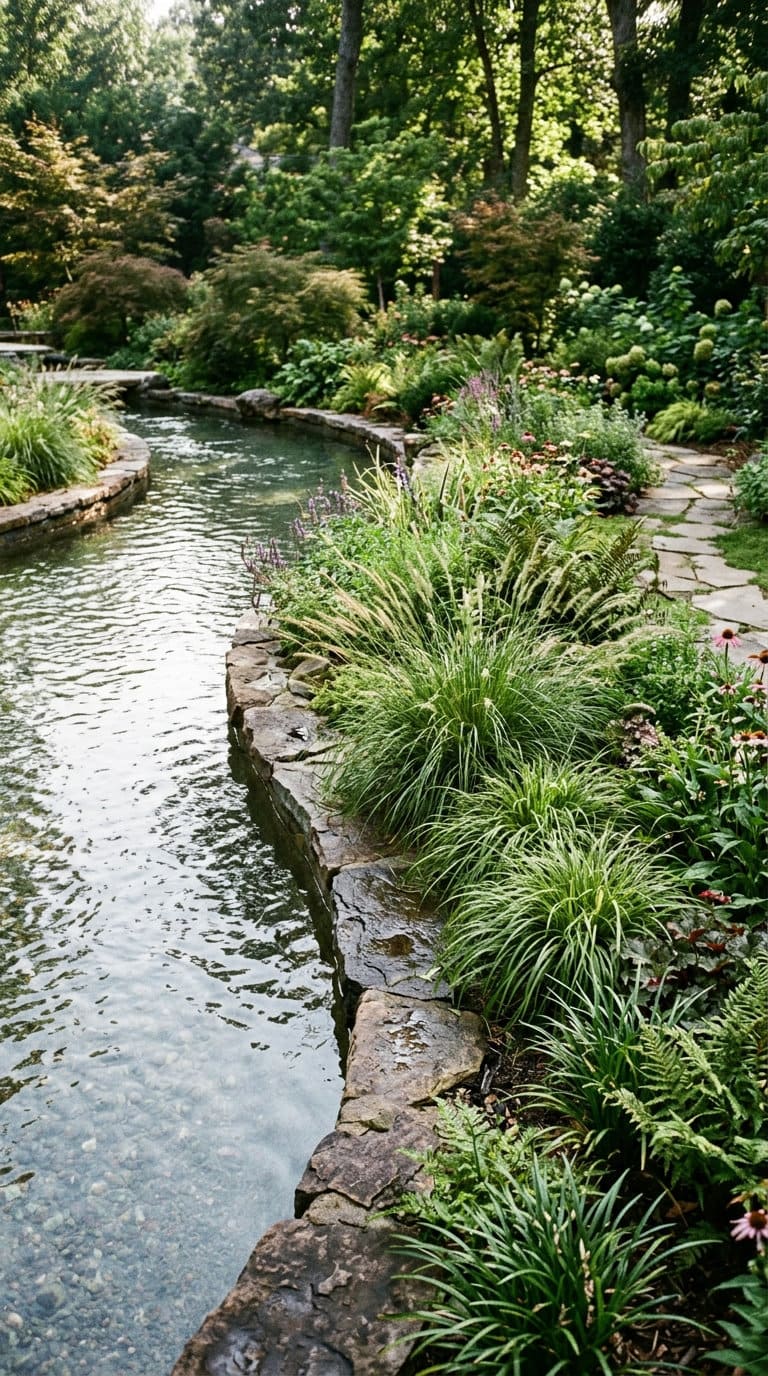
Blend the river’s edge directly into garden beds rather than a hard decking border, using plants that tolerate both full sun and occasional splash-over (ornamental grasses, most succulents, and many native perennials handle this well).
This theme reads as the least “constructed” of the eleven, which is the point, the pool should look like it grew into the landscape rather than being dropped on top of it.
6. Luxury Resort Style
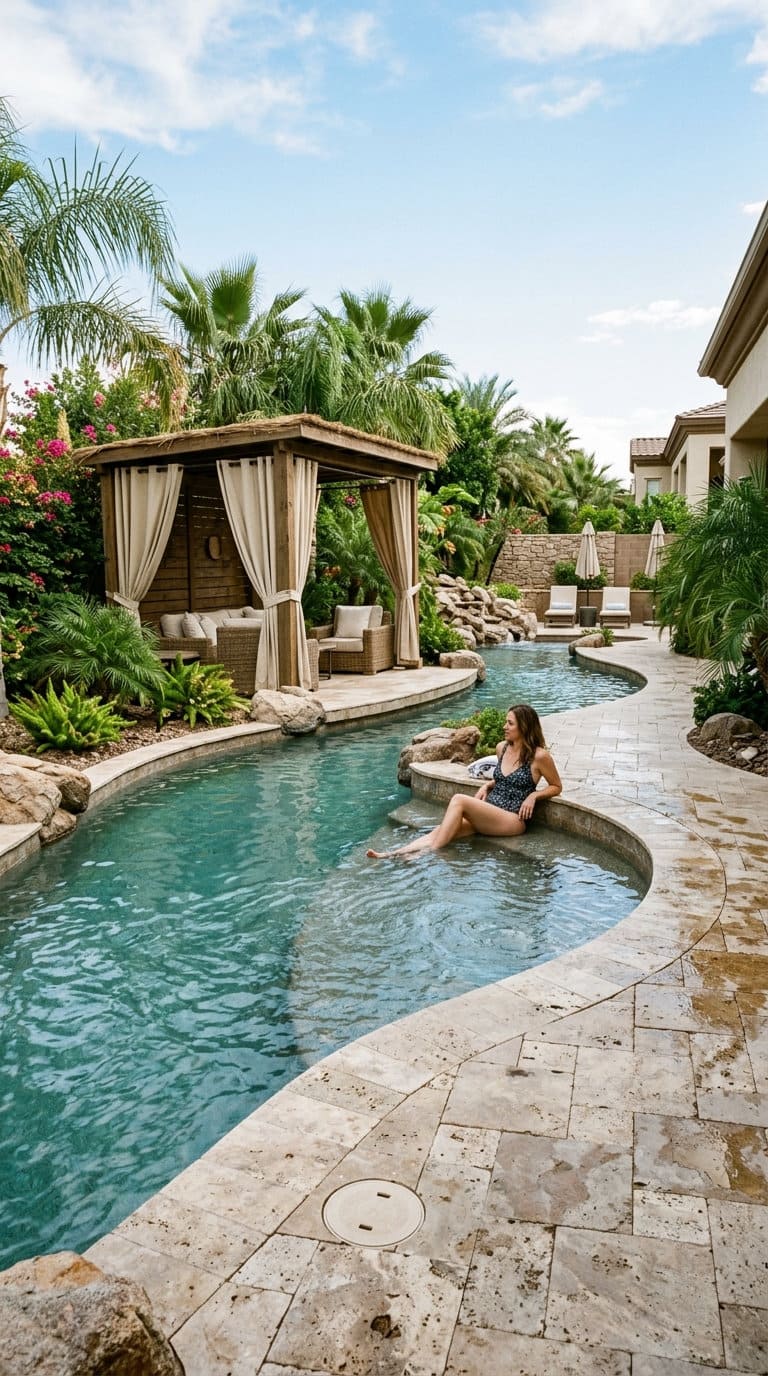
Cabana-style shade structures, upgraded stone or travertine decking, and integrated in-water seating ledges push this theme toward the top of the cost range mentioned above, closer to the $300,000+ premium tier.
A swim-up bar ledge at one point in the loop is the single feature that most reliably signals “resort” over “backyard.”
7. Eco-Friendly Design
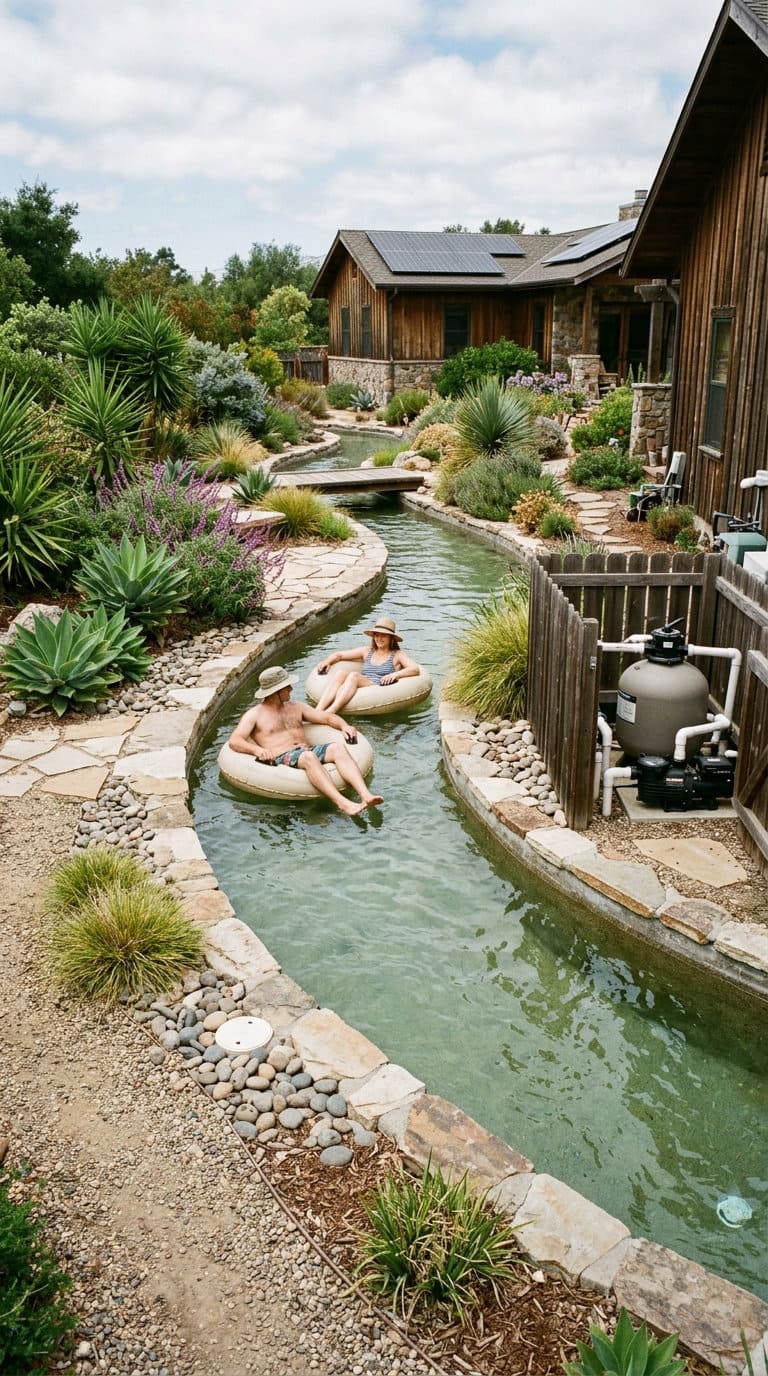
A saltwater chlorination system reduces the chemical load compared to traditional chlorine, and a variable-speed pump cuts electricity use significantly versus a single-speed pump running constantly, a real, meaningful cost offset against the roughly $1,000/month maintenance figure mentioned above.
The average homeowner spends $616/year on yard fixes that don't address the real problem. Find out what yours actually is — before you spend another dollar.
Take the Free QuizNative, drought-tolerant landscaping around the river’s edge also cuts irrigation costs beyond the pool itself.
8. Nighttime Magic
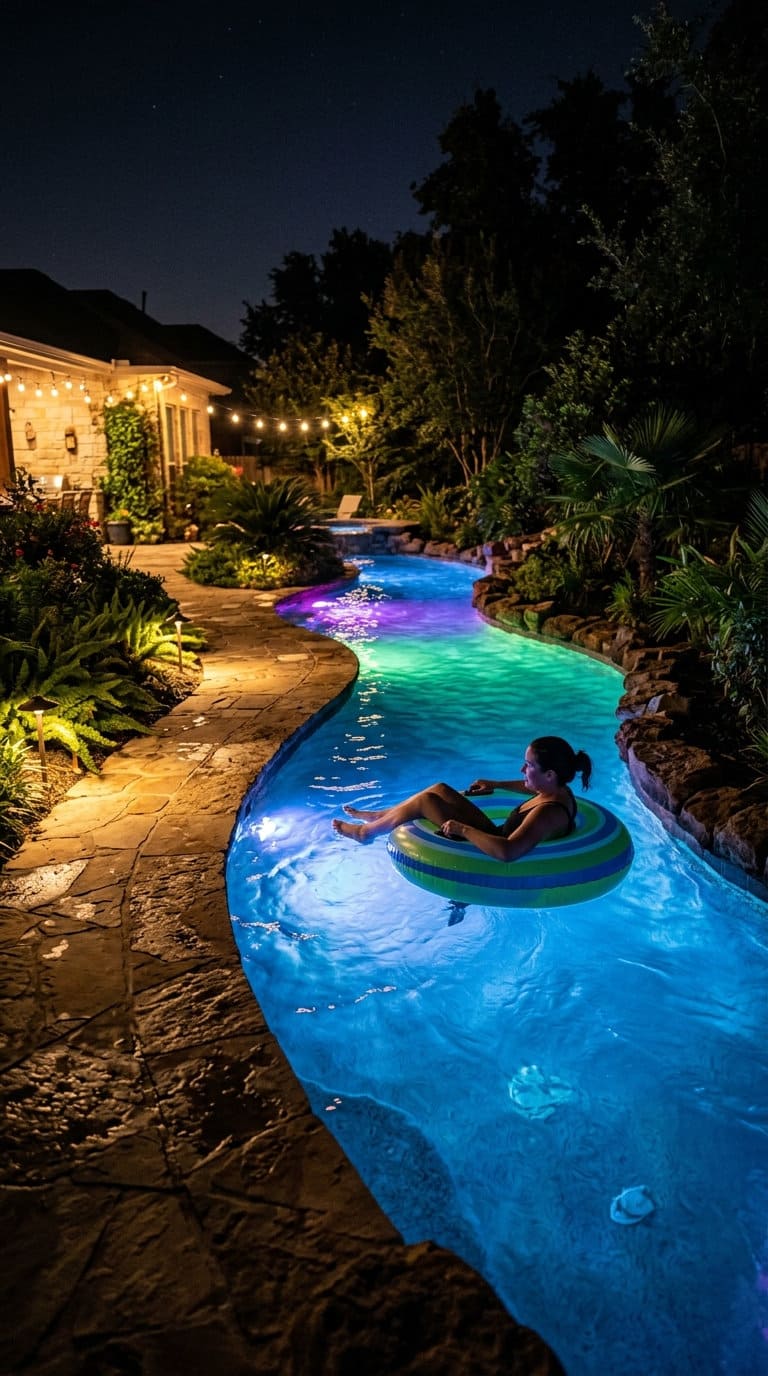
LED pool lighting (color-changing fixtures let you shift the mood without rewiring anything) combined with low path lighting along the river’s outer walking edge extends how usable the space is after dark.
Keep fixture placement away from direct sightlines when swimming, underwater lights aimed upward into a swimmer’s eyes is a common installation mistake.
9. Compact Urban Design
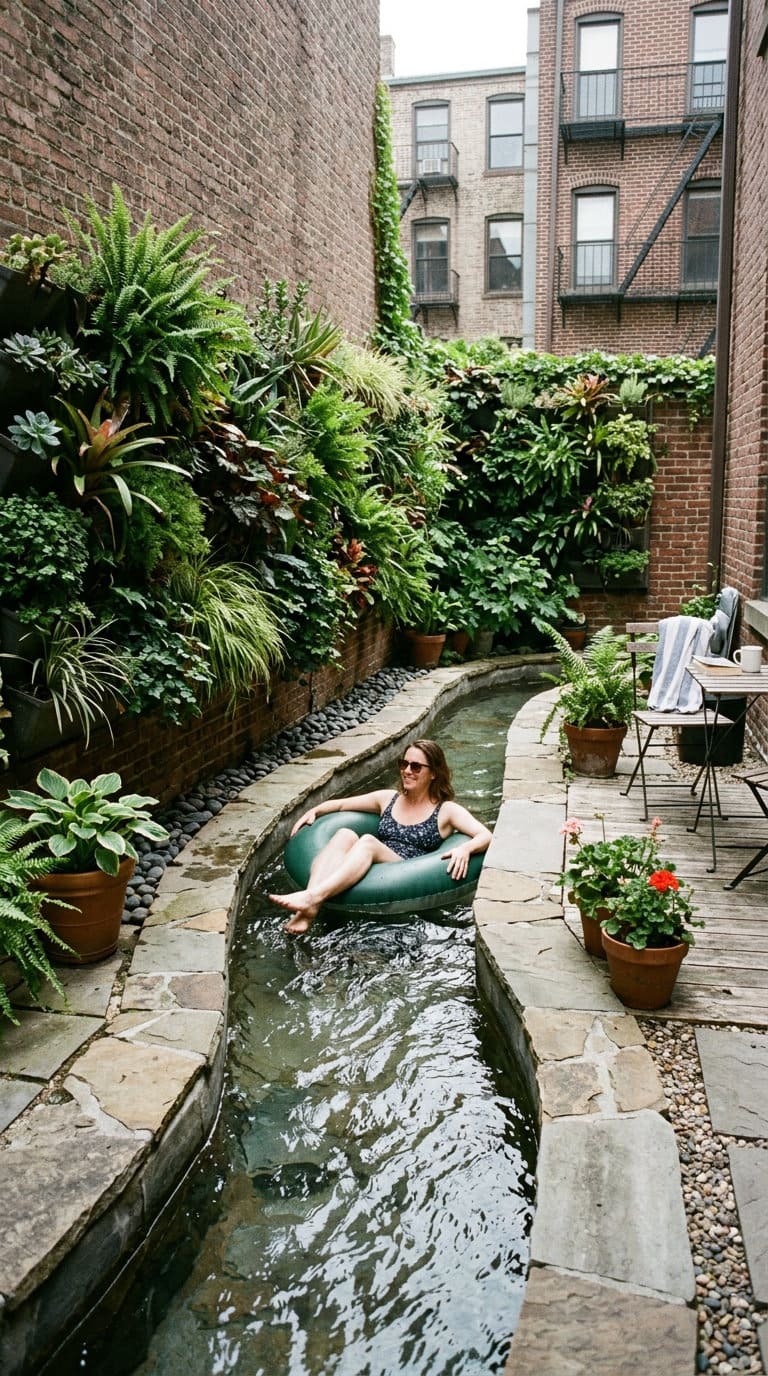
A tight lot doesn’t rule out a lazy river, it just means a shorter loop (sometimes closer to a large circulating spa than a true “river”) with a narrower channel and a single-pass rather than multi-bend layout.
Vertical landscaping, planted walls or tall narrow containers, adds greenery without eating into the limited footprint a full garden bed would need.
10. Integrating Water Features
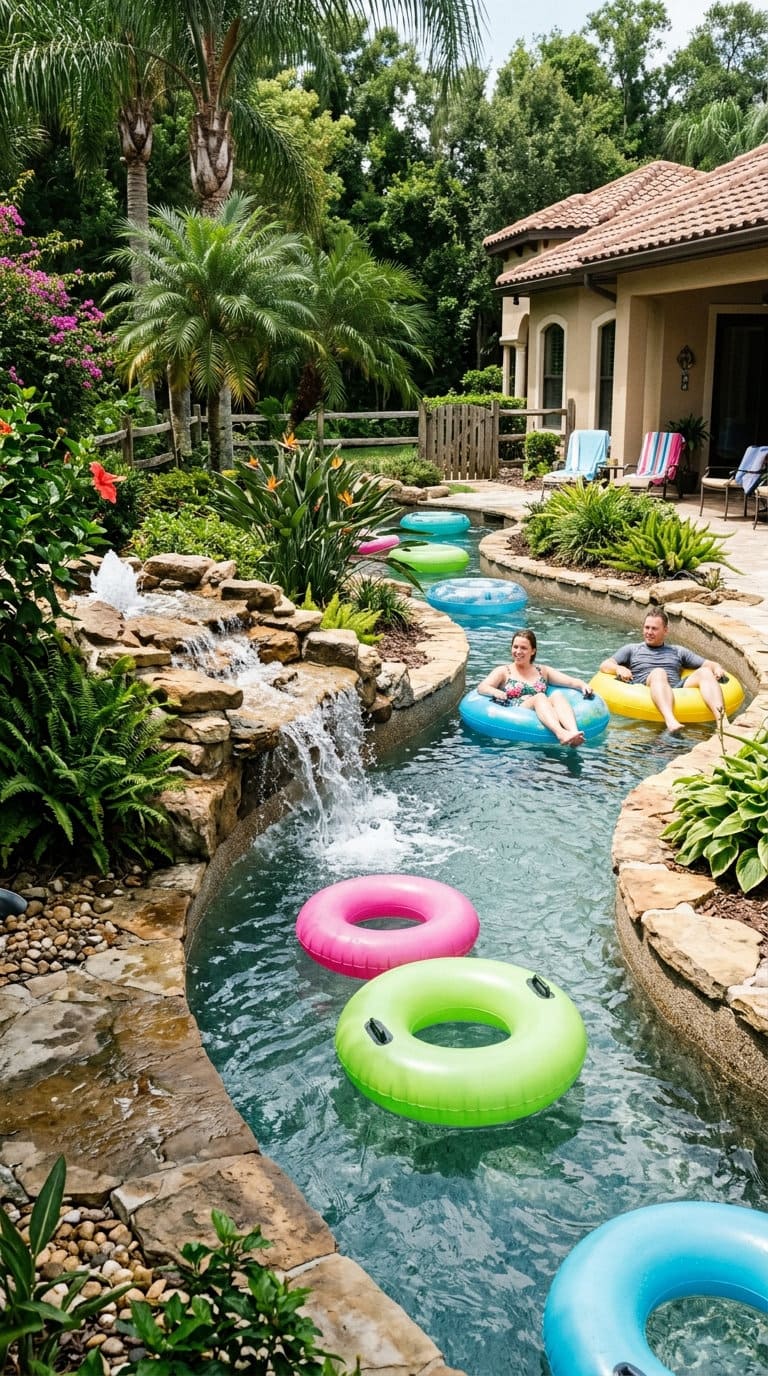
A small waterfall or bubbling fountain feature at one point in the loop adds both sound and visual interest without disrupting the current, as long as it’s positioned so its water flow doesn’t fight the main jet system’s direction.
See our pool water feature ideas article for more on choosing and placing a feature like this.
11. Custom Shapes and Sizes
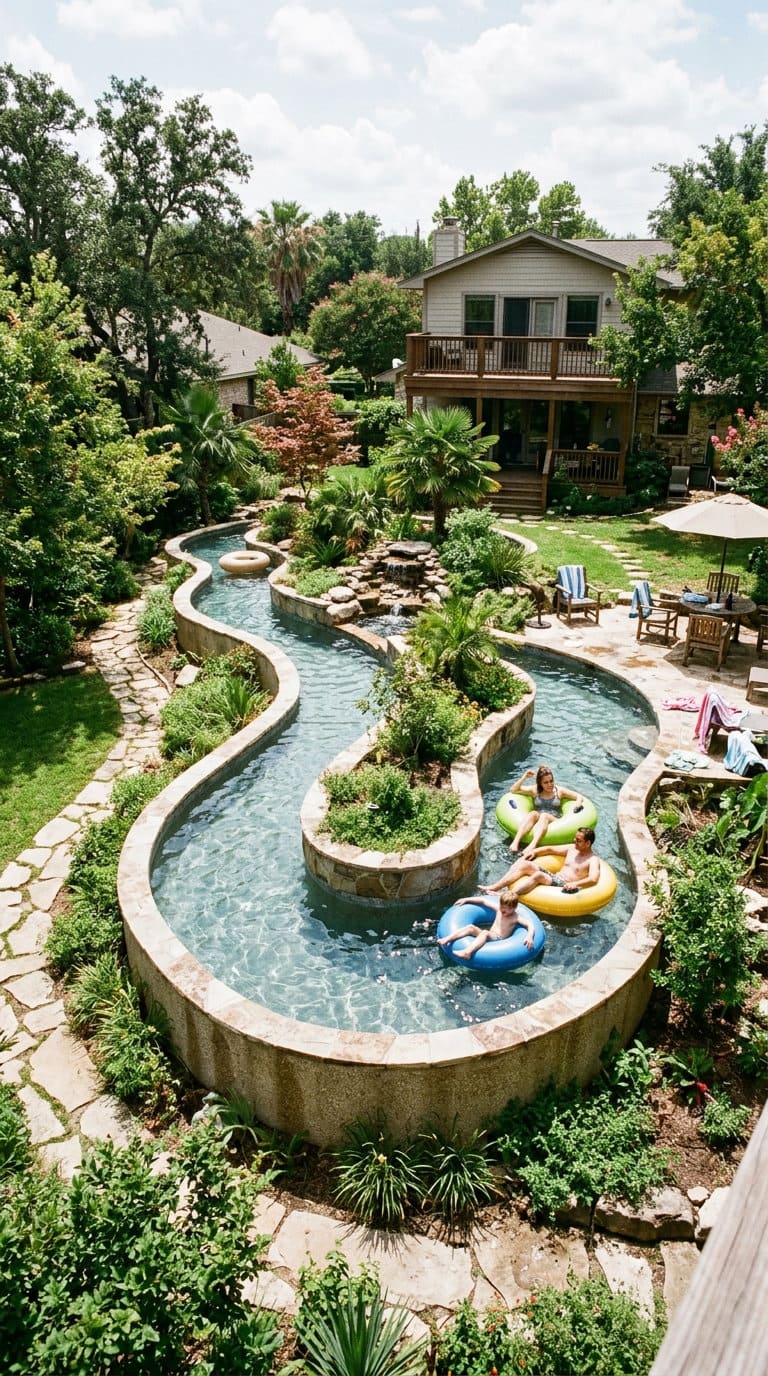
The channel doesn’t have to be a simple oval, figure-eight layouts, a loop with a wider central “lagoon” area, or an irregular shape that follows your yard’s existing contours are all real options, though every added bend increases both excavation cost and the pump power needed to keep the current moving through the full loop.
Work with your designer on the tradeoff between shape complexity and system cost before finalizing a plan.
Enhancing your lazy river experience
Comfort and seating
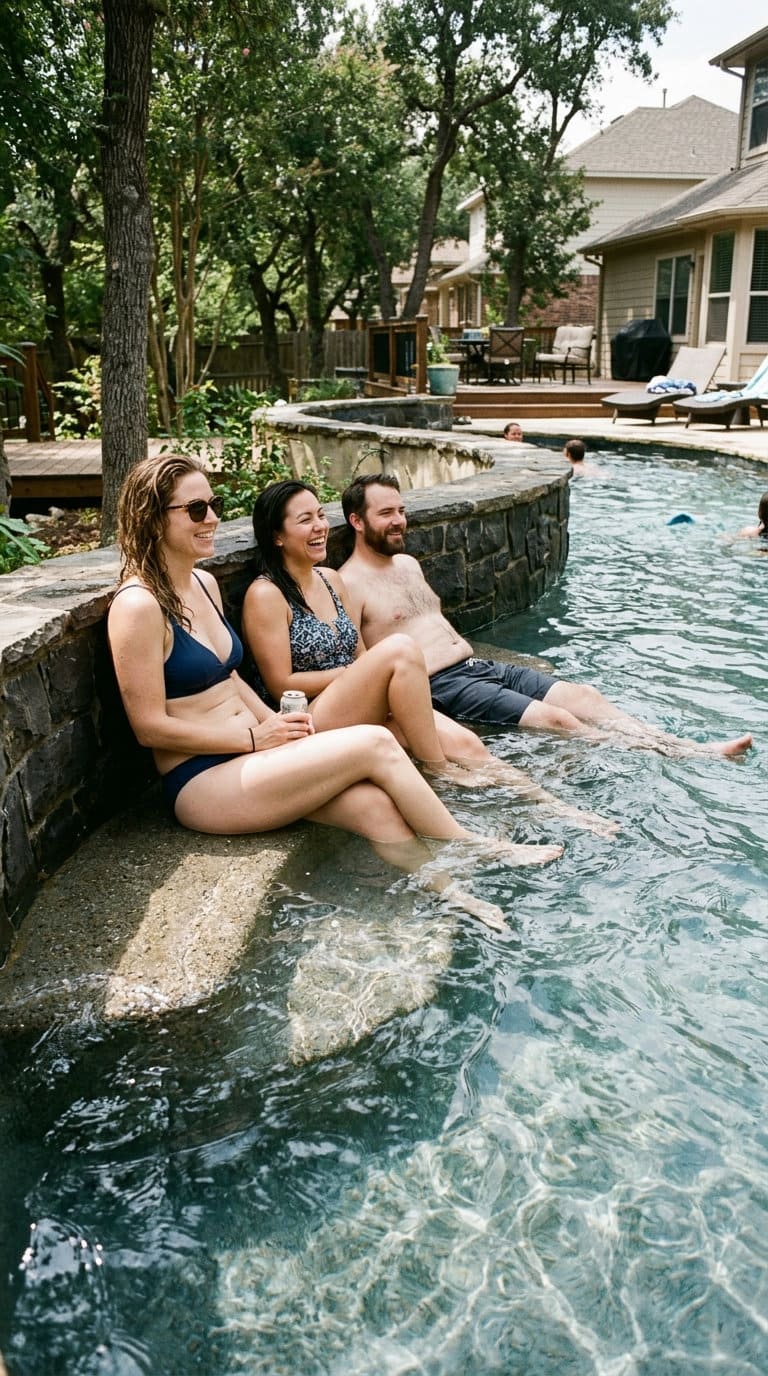
In-water seating ledges (built into the channel wall at a shallow depth) let people sit and let the current pass without fully swimming, genuinely one of the most-used features in a real lazy river. Pair with weather-resistant outdoor furniture around the perimeter for people who want to be near the water without being in it.
Shade solutions
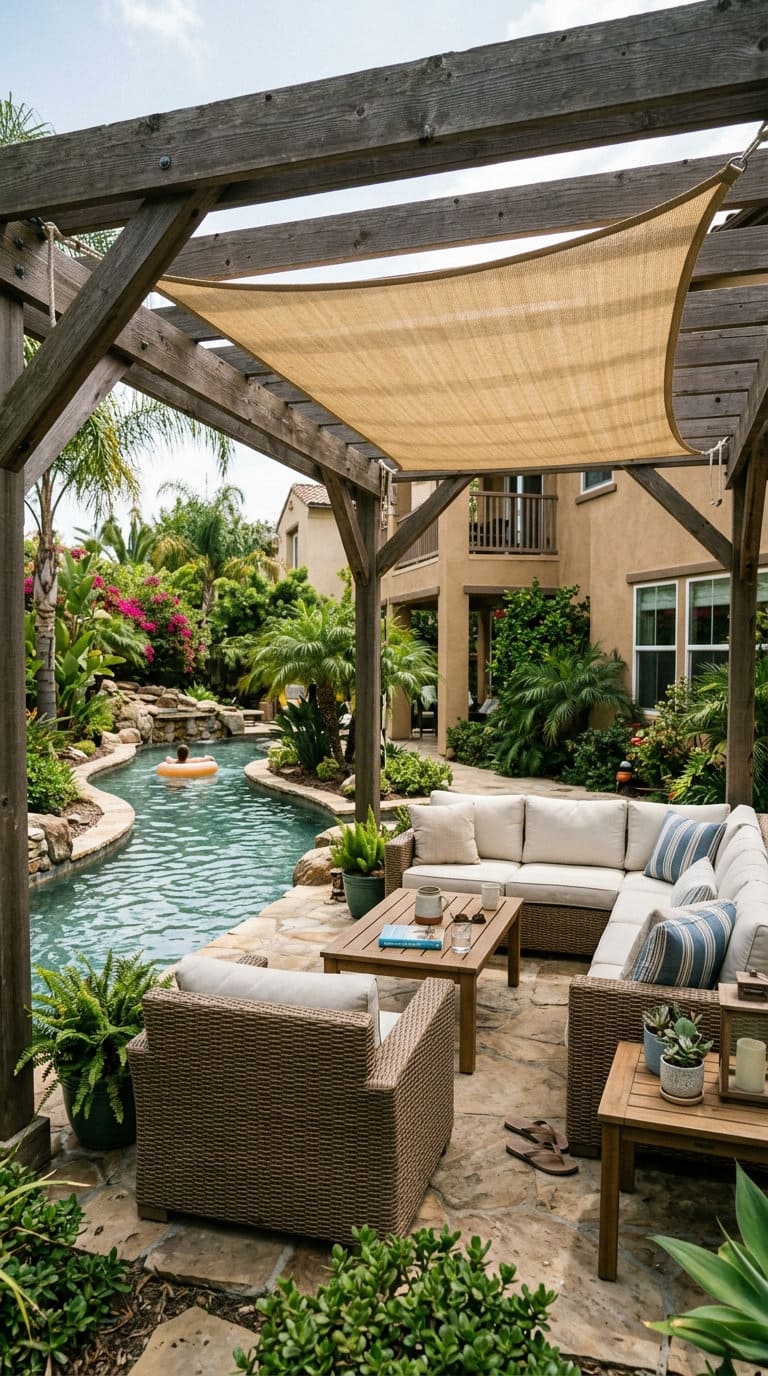
Pergolas, umbrellas, or shade sails positioned over seating areas (not over the swimming channel itself, shade structures over moving water complicate maintenance and cleaning) keep the space usable through the hottest part of the day without blocking the river’s sightlines.
Outdoor entertainment
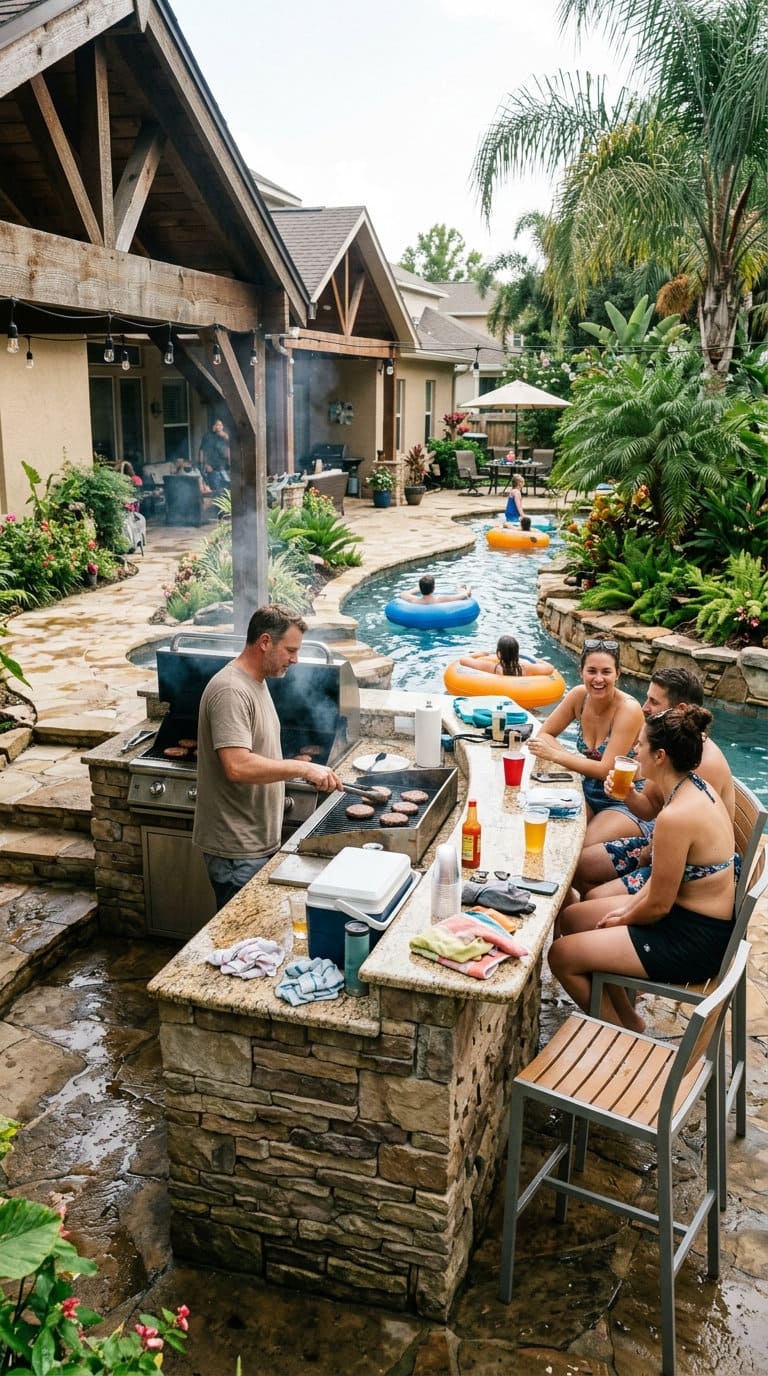
An outdoor kitchen, a small bar, or a sound system extends the space beyond just swimming, but budget this as a separate line item from the pool itself, these additions aren’t included in the lazy river cost figures above and can add tens of thousands of dollars depending on scope.
Landscaping and greenery
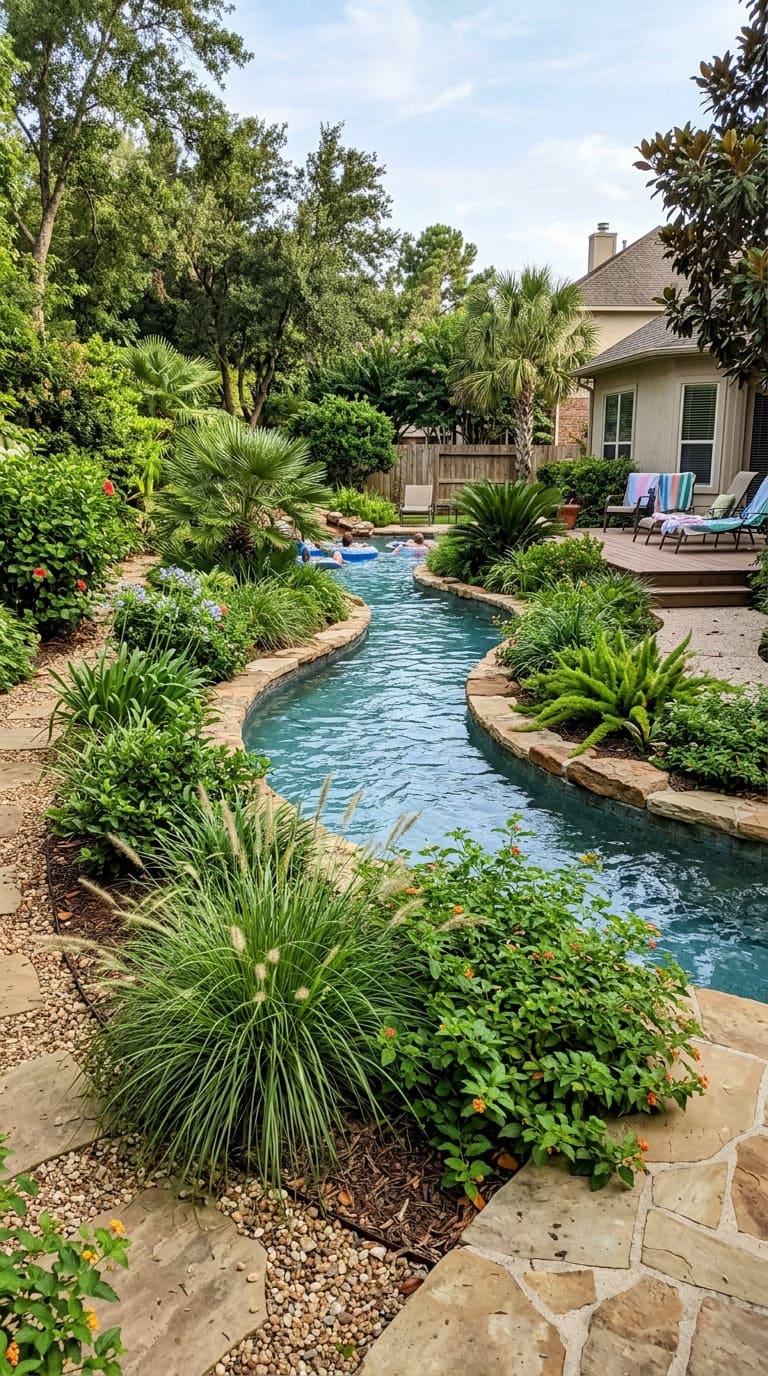
Beyond the theme-specific planting mentioned in each idea above, choose plants specifically rated for pool-adjacent conditions, tolerant of splash, humidity, and pool chemical drift. A landscaper familiar with pool environments specifically (not just general landscaping) will know which species actually hold up here versus which ones look good in the nursery and struggle within a season.
Safety considerations
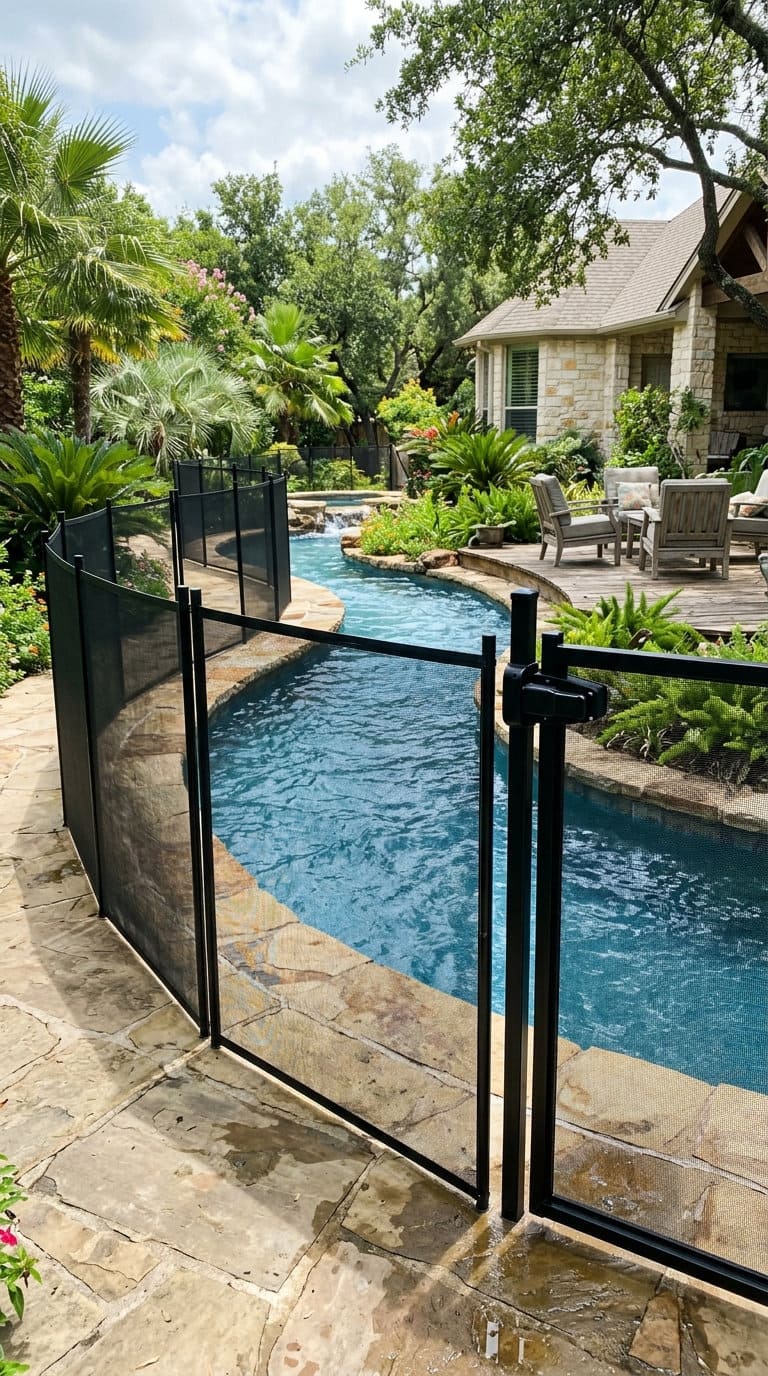
This is the part worth taking seriously, not glossing over. Per the CPSC’s Safety Barrier Guidelines for Residential Pools and the ISPSC 2021 edition, a pool barrier needs a minimum height of 48 inches on the exterior side (California requires 60 inches under Health & Safety Code §115923).
Openings in the barrier, whether mesh, pickets, or ornamental infill, can’t allow passage of a 4-inch sphere, a standard based on the average head diameter of a child aged 1 to 5. Gates must be self-closing and self-latching, swing outward away from the pool, and have the latch release positioned at least 54 inches above ground so a small child can’t reach it.
Horizontal rails that could work as footholds are restricted within the first 45 inches of barrier height specifically to prevent climbing. These aren’t arbitrary numbers: per CPSC data, an average of 379 pool-or-spa-related fatal drownings occur annually among children under 15, and children under 5 account for about 75% of those. See our pool fencing ideas article for more on meeting these requirements without the fence looking like an afterthought.
For layout and edging details beyond what’s covered here, our pool edging ideas article has more on decking material choices.
Conclusion
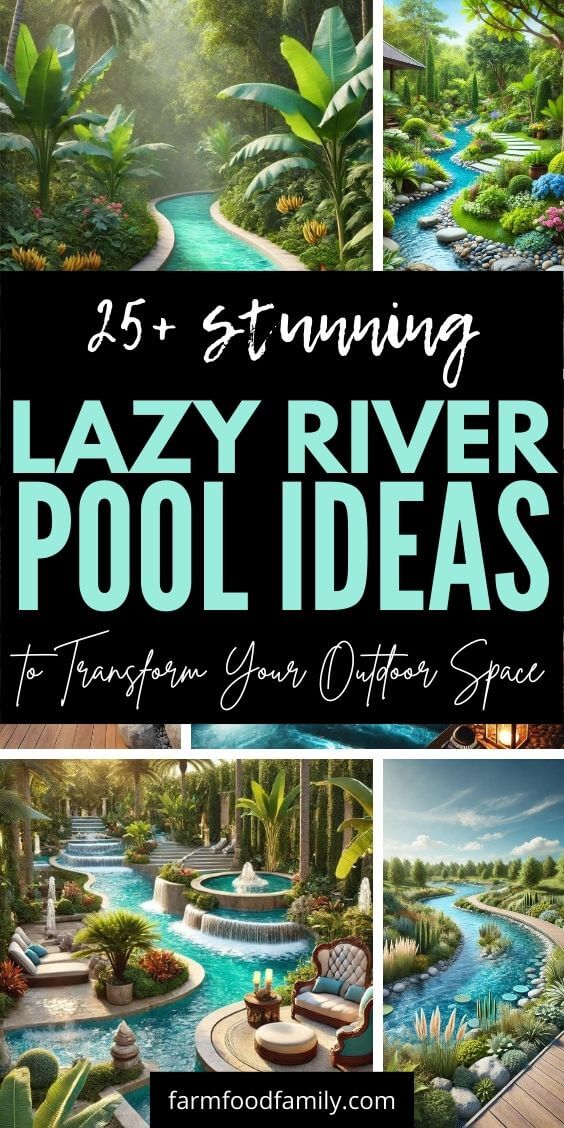
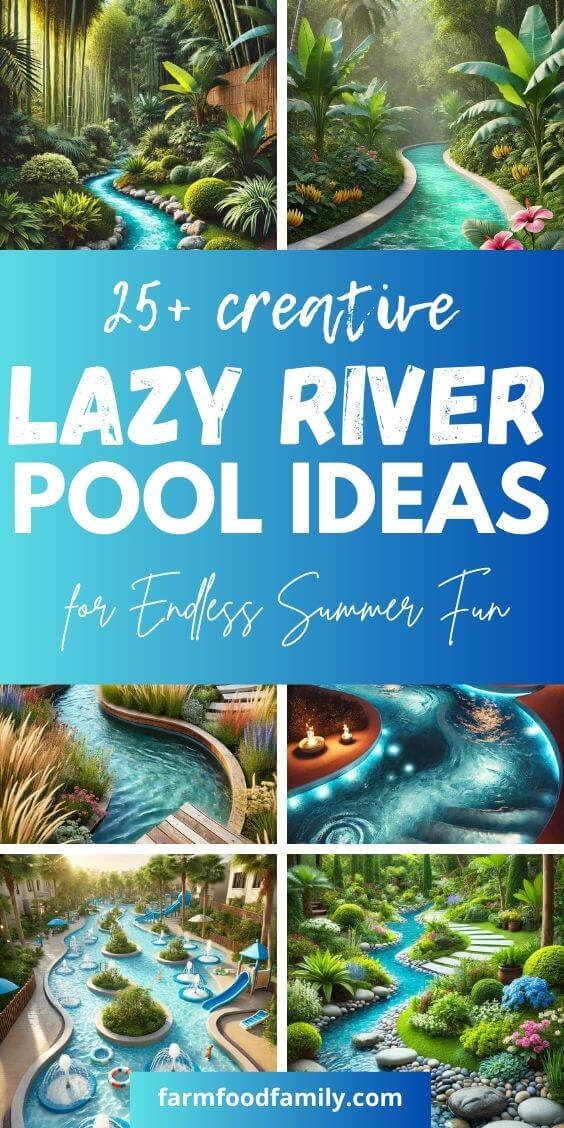
We’ve walked through a variety of lazy river pool ideas, from the tranquil Eco-Friendly Design to the enchanting Nighttime Magic setup. Now’s the time to start planning and designing your own backyard lazy river pool. Whether you have a vast yard or a compact urban space, there’s a lazy river design waiting to transform your outdoor area into a relaxing and enjoyable oasis.
So, grab a pen, sketch out your ideas, and consider how each feature will enhance your backyard. Think about the comfort and seating where you can unwind, the shade solutions that’ll keep you cool, and the landscaping that’ll transport you to a green paradise. Remember, your lazy river can be more than just a water feature; it can be the centerpiece of your outdoor lifestyle.
Start your project today and soon, you’ll be floating along in your own slice of heaven, right in your backyard.
FAQs on backyard lazy river pools
How much does a real backyard lazy river actually cost?
Per HomeGuide, the average runs $120,000 to $500,000, with small, simple designs starting around $30,000-$100,000 and custom premium builds with waterfalls or grottos starting around $300,000-$500,000 and sometimes exceeding $1 million. A large, 400-foot lazy river can run over $600,000. Monthly maintenance has been reported around $1,000.
What does pool fence safety actually need to meet code?
Per the CPSC’s Safety Barrier Guidelines and ISPSC 2021, a barrier needs a minimum height of 48 inches (60 inches in California), openings that don’t allow a 4-inch sphere to pass through, a self-closing/self-latching gate with the latch at least 54 inches high, and no climbable footholds within the first 45 inches of height. Always confirm your specific local requirements too, since some jurisdictions add stricter rules on top of these baseline standards.
Do you need a permit to build a lazy river pool?
Almost certainly, yes, and requirements vary significantly by location. As real examples of that variance: San Antonio requires 5-foot side and rear setbacks from the property line, while Nashville requires a setback equal to half the normal zoning requirement (never less than 3 feet) for pools extending more than 12 inches above ground. Call your local building department before you start digging, not after.
Is a backyard lazy river actually “affordable”?
Compared to what, matters here. At $30,000 on the low end for a small, simple design, it’s a genuinely major home project, not an affordable weekend upgrade, though it’s less than the $300,000-$1 million range a premium custom build with waterfalls and grottos can reach. If budget is the primary constraint, a smaller, simpler oval design with standard decking and no elaborate rock work is where the real savings are.
Never miss an update — choose FarmFoodFamily as your preferred source on Google.
How it works: Tap the button below to open Google's settings page, then check the box next to FarmFoodFamily.
Tap the checkbox to turn it blue — that's how you know it's set.