5 Vital Things You Need to Know About Your Garden’s Pathway in Feng Shui
Your garden path isn’t just how you get to the door, in feng shui it’s the first thing that decides whether energy (and good luck) actually makes it inside with you.

Never miss an update — choose FarmFoodFamily as your preferred source on Google.
How it works: Tap the button below to open Google’s settings page, then check the box next to FarmFoodFamily.
Tap the checkbox to turn it blue — that’s how you know it’s set.
Most people plan a garden path around looks: what stone matches the house, how wide it needs to be for a wheelbarrow. Feng shui asks a different question first.
Chi, the energy that’s supposed to nourish your home, moves the same way water does, and a pathway is the channel that either lets it pool and settle near your door or rushes it straight past.
Get the shape, material, and placement wrong and you’re not just fighting aesthetics, you’re fighting the flow the whole practice is built around.
Here are the five things that actually matter, verified against real feng shui practitioners and real safety standards, not just repeated blog folklore.
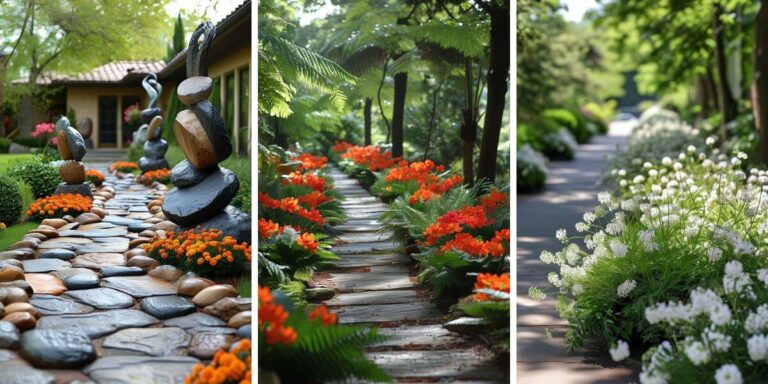
1. Curve it, don’t run it straight
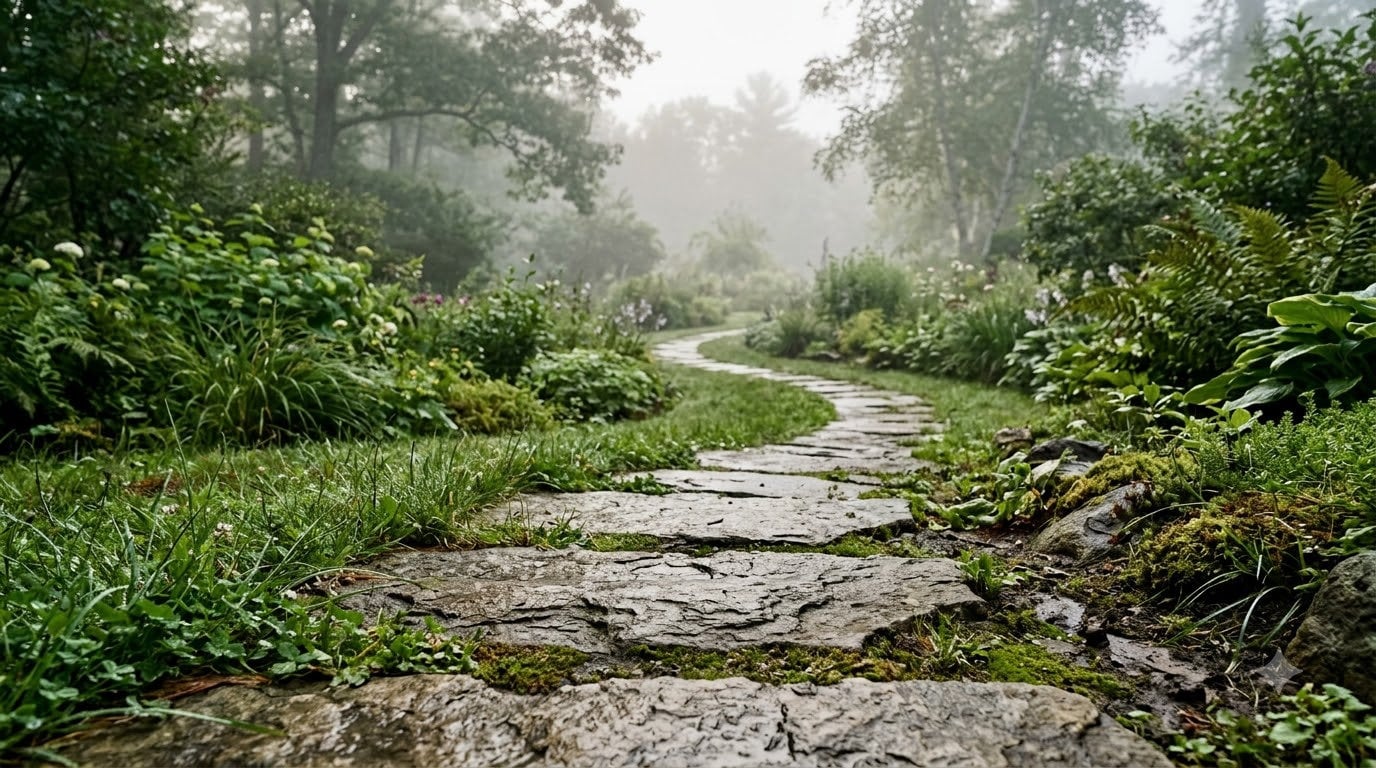
The single most repeated rule in feng shui garden design, and the one competitors get right but rarely explain: straight paths move energy too fast for it to settle.

Gary Hawkes, founder of Mr. Feng Shui in London, puts it bluntly: never run a straight path to the main door, keep it wavy so it slows the qi down before it reaches you.
Answer 4 quick questions and get matched to the exact fix for your yard — drainage, budget, layout, or something else entirely.
Take the Free Quiz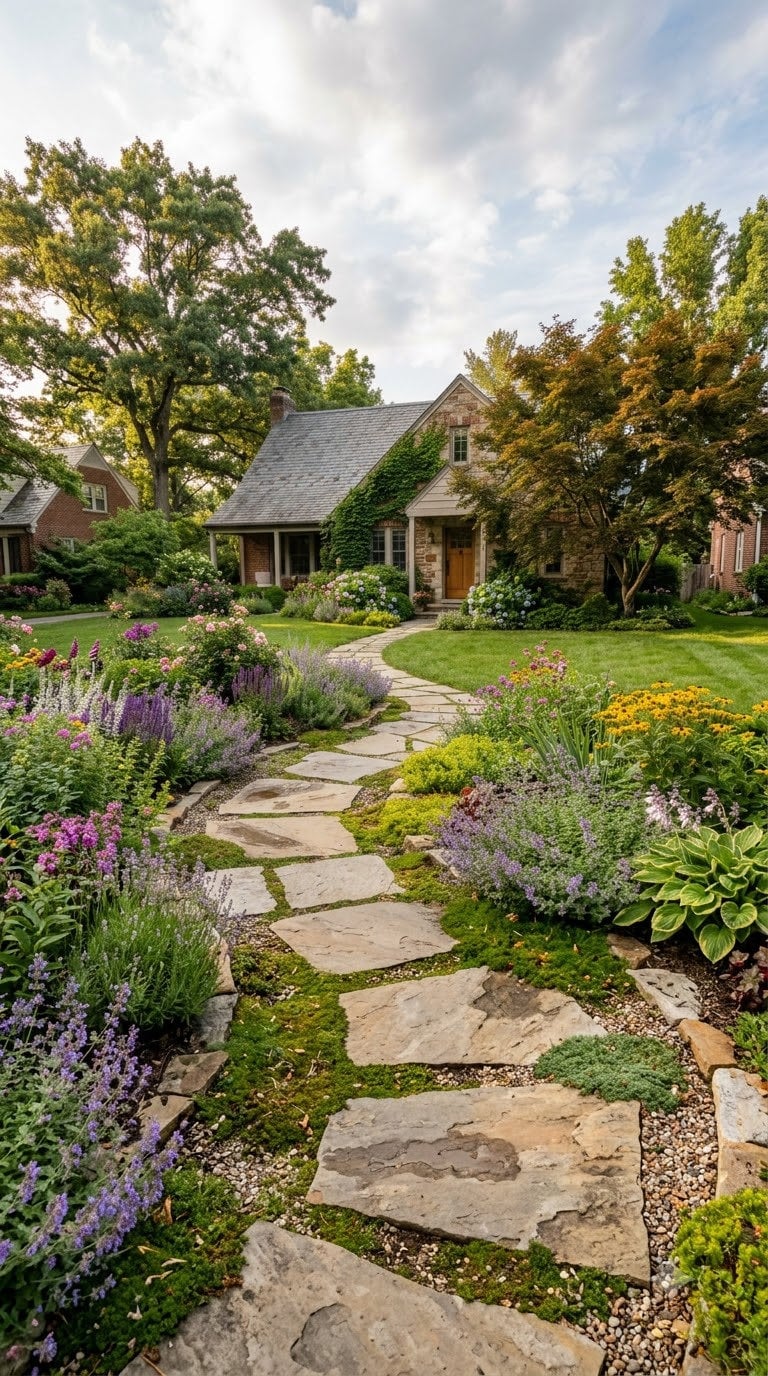
Feng shui consultant Anjie Cho makes a similar point about curvy, zig-zag paths creating room for movement and flexibility instead of a rigid, forced route.
There’s a practical read on this too, not just a symbolic one. A dead-straight path gives your eye nowhere to rest, so the whole approach to your house feels rushed even if you’re just walking normally. A gentle curve, even a shallow one, makes you slow down without realizing why.
Budget note: if you’re pouring new hardscaping, building in a curve from the start costs about the same as a straight run of the same length, the labor difference is minor. If you already have a straight path, see #2 for a fix that doesn’t involve repaving.
2. Does a path pointing straight at your front door really hurt you in feng shui?
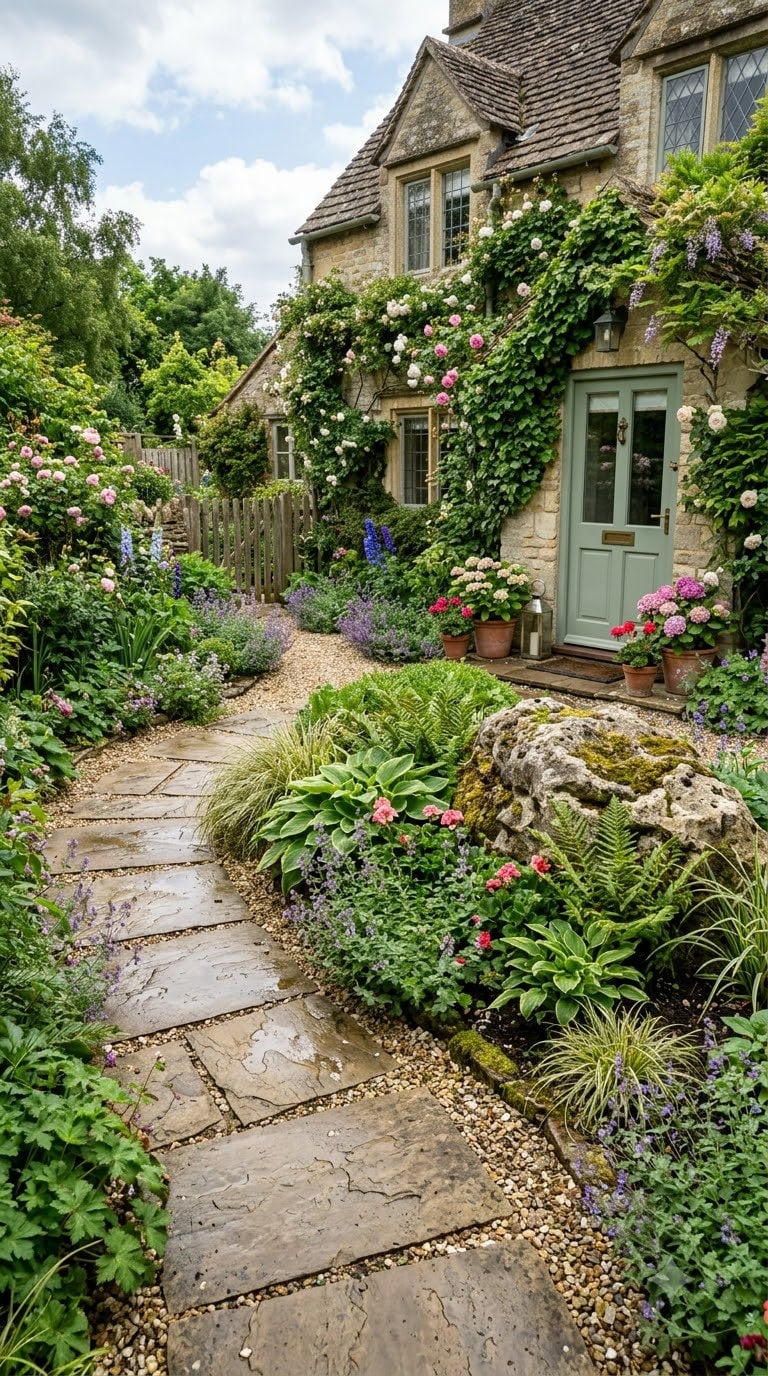
This is the specific case of rule #1 that matters most, and it’s the one with real consequences if you ignore it.
A path that runs in a dead-straight line directly into your front door is what feng shui calls a “poison arrow”: energy moves too fast and hits the entrance like a dart instead of flowing in gently. WOFS.com’s guidance is explicit on this: don’t have steps or a path running straight toward your main door.
If you already have this exact problem, you don’t need to repave. This is the fix most articles skip: break the sightline instead of the pavement.
- Add a low planted bed or a single large stone at an angle partway down the path so the eye (and the “energy”) has to shift direction before reaching the door.
- Offset a run of stepping stones slightly to one side instead of keeping them dead-center with the doorway.
- A freestanding trellis or an arbor a few feet before the entrance does the same job and adds a real design feature at the same time.
Any of these run well under the cost of tearing out and repouring concrete, and they solve the actual complaint (a straight shot at the door) rather than the whole path.
Most yard problems trace back to one specific, fixable cause. Find yours in 4 quick questions.
Take the Free Quiz
Covers rule #5's lighting fix, no wiring needed, 4.5 stars/9.2K ratings
Shop NowThis post contains affiliate links. We may earn a commission on qualifying purchases at no extra cost to you.
3. What pathway material is actually safe to walk on, not just feng shui-correct?
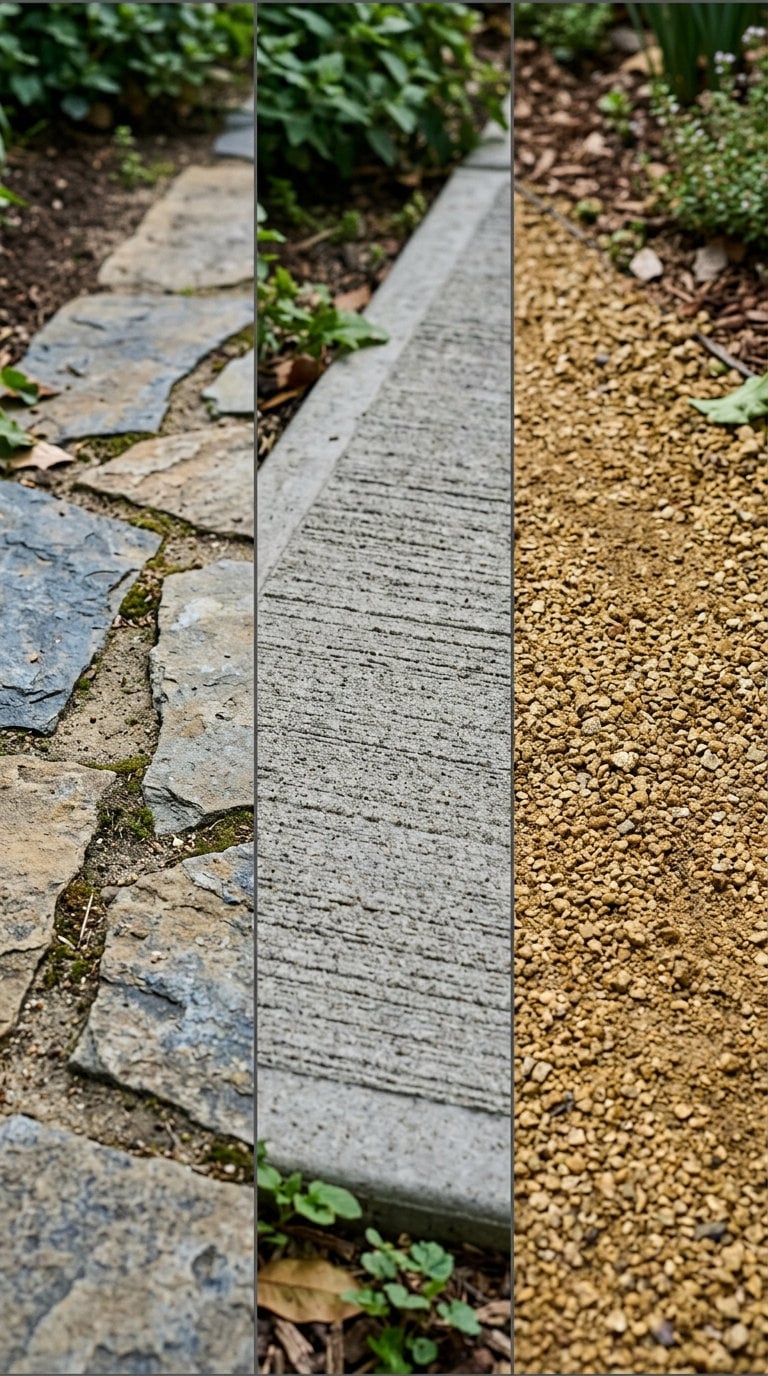
This is the gap in almost every feng shui pathway article: they’ll tell you to avoid uneven surfaces, but they never explain what “safe” actually means in a way you can act on.
The ASTM International F13 Committee maintains two real standards relevant here: ASTM F1637, the standard practice for safe walking surfaces, and ASTM F3132, which covers how to select walkway surfaces specifically to reduce slip-and-fall risk.
Neither competitor article mentions either standard, but the underlying principle, consistent surface texture and no abrupt level changes, is exactly what feng shui’s “solid, long-lasting, inviting, easy to walk on” language is gesturing at without the specifics.
In practice, here’s the real tradeoff between your three common options:
| Material | Slip resistance | Maintenance | Cost |
|---|---|---|---|
| Natural flagstone (see our stone walkway ideas) | High when properly set, textured surface grips well even wet | Needs occasional regrouting/releveling as stones settle | Higher upfront, DIY-feasible for a small path |
| Poured concrete | Can be slick when wet unless broom-finished or textured | Very low, occasional sealing | Mid-range, usually needs a pro for a clean pour |
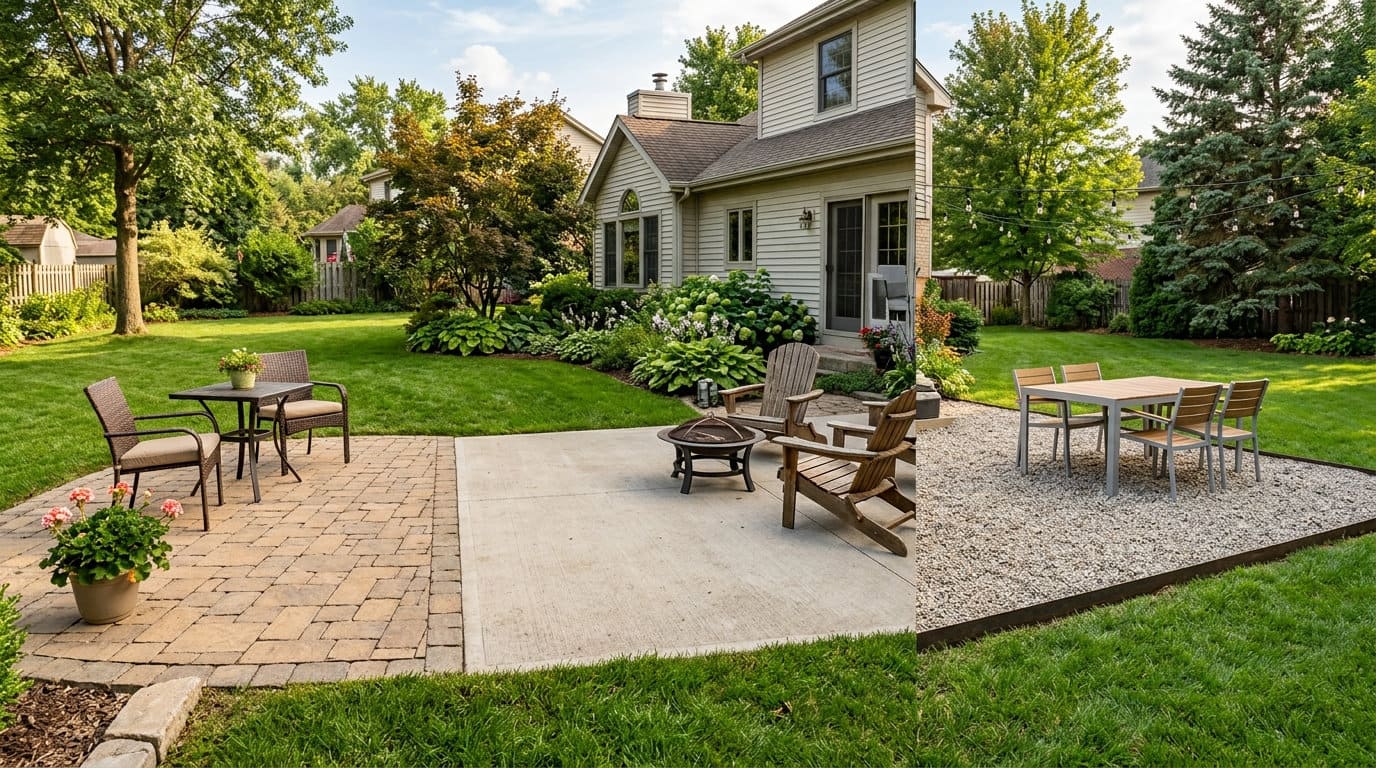
| Gravel/decomposed granite | Naturally high grip, but loose stone can shift underfoot | Needs periodic top-up and edging to stay contained | Lowest cost, easiest DIY |
If you’re going the concrete route for a feng shui-correct curved path, ask your installer specifically for a broom or exposed-aggregate finish, not a smooth trowel finish, the smooth version is the one that gets slick.
4. Let the width breathe instead of keeping one uniform strip
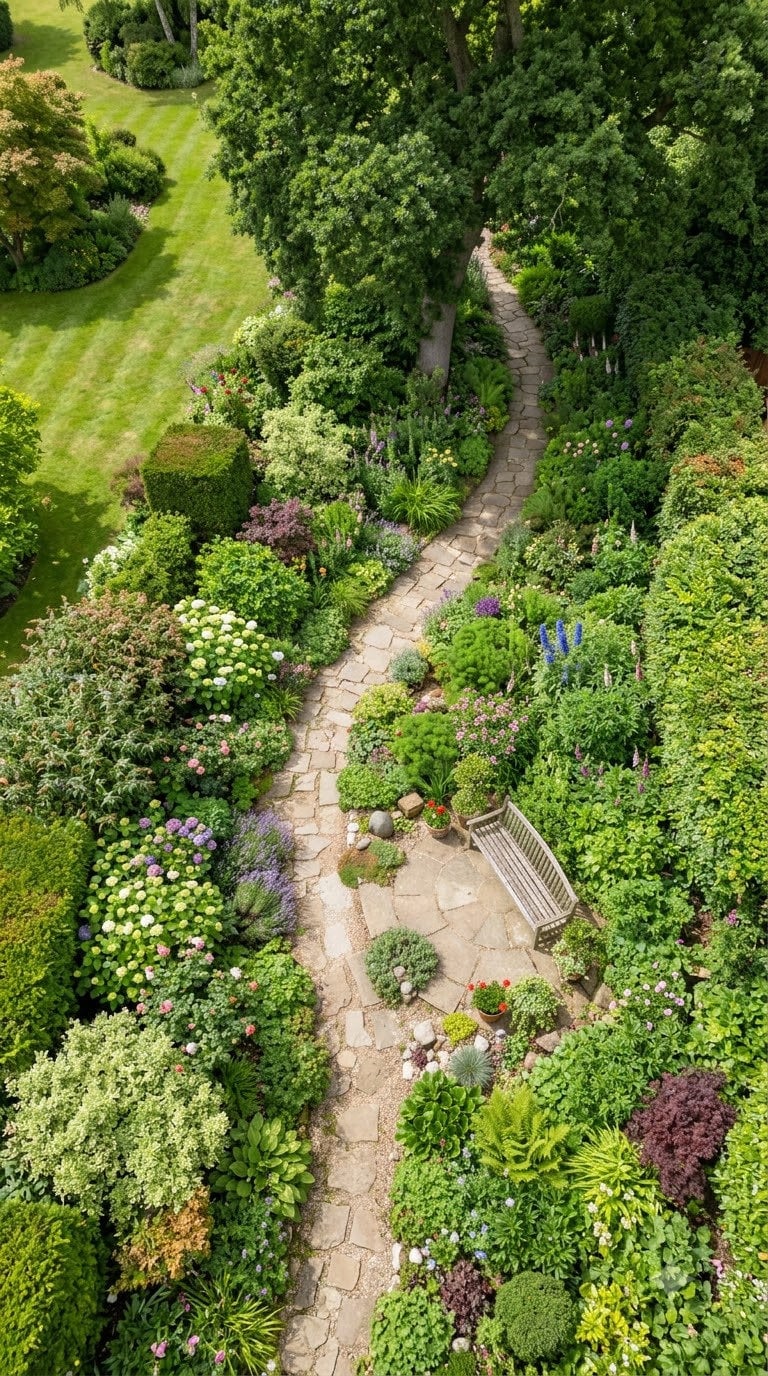
Feng shui treats a pathway that widens and narrows as more dynamic and energetically interesting than one flat, unchanging ribbon of stone. Beyond the symbolism, it’s also just better function.
A single-file path (comfortable for one person) needs roughly 2 feet of width. A path meant to feel welcoming, where two people can walk side by side or pause to talk, needs closer to 4 feet.
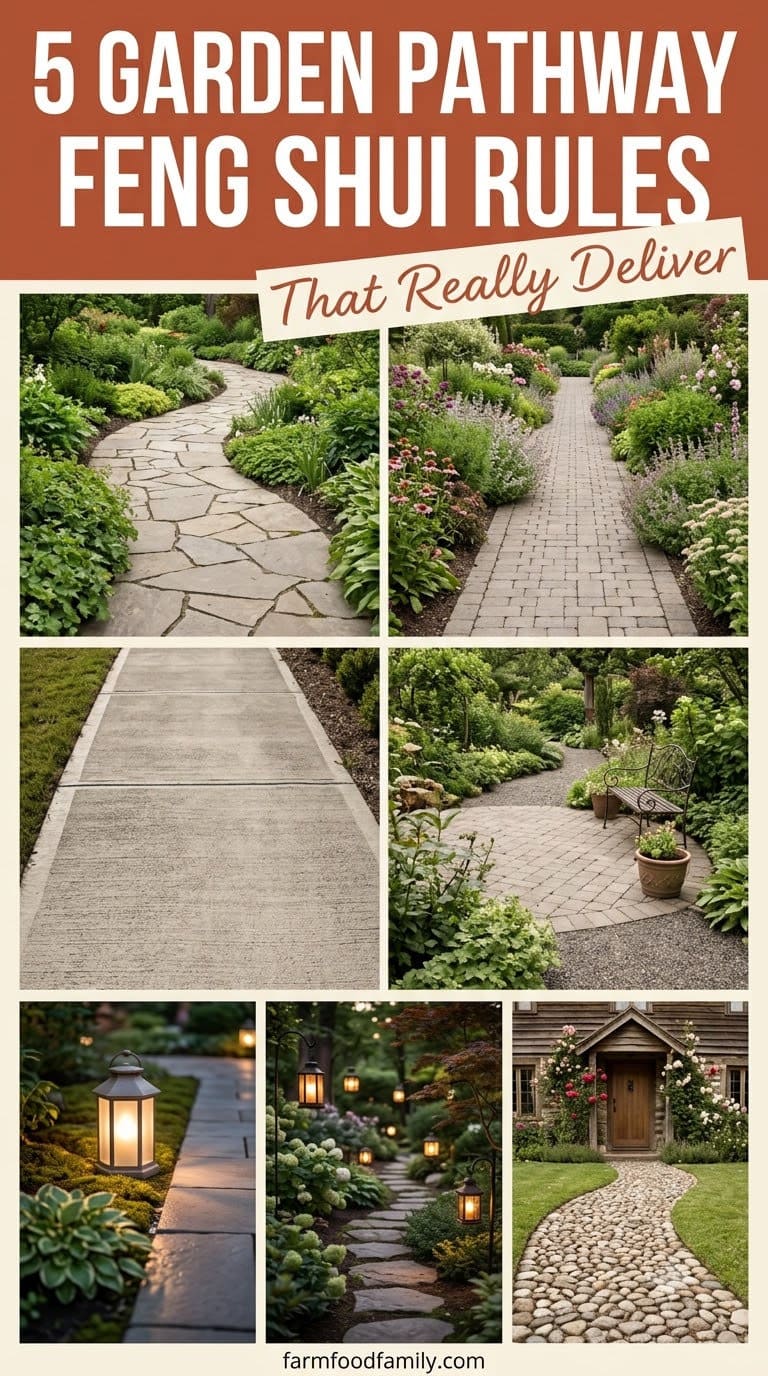
Widening the path near a gathering point, a bench, a garden gate, a spot where the path splits, and narrowing it again through a planted section creates the “breathing” feng shui asks for without needing to guess at proportions, our front walkway ideas gallery has real examples of this widen-and-narrow effect done well.


Widening the path near a gathering point, a bench, a garden gate, a spot where the path splits, and narrowing it again through a planted section creates the “breathing” feng shui asks for without needing to guess at proportions.
The average homeowner spends $616/year on yard fixes that don't address the real problem. Find out what yours actually is — before you spend another dollar.
Take the Free QuizRenter/no-budget note: if you can’t change the hardscaping itself, flanking a straight, uniform-width path with staggered planting (taller plants set back at the wide points, low groundcover at the narrow points) creates the same visual widening and narrowing effect without moving a single paver.
5. Soften the edges with planting and light, don’t leave them bare
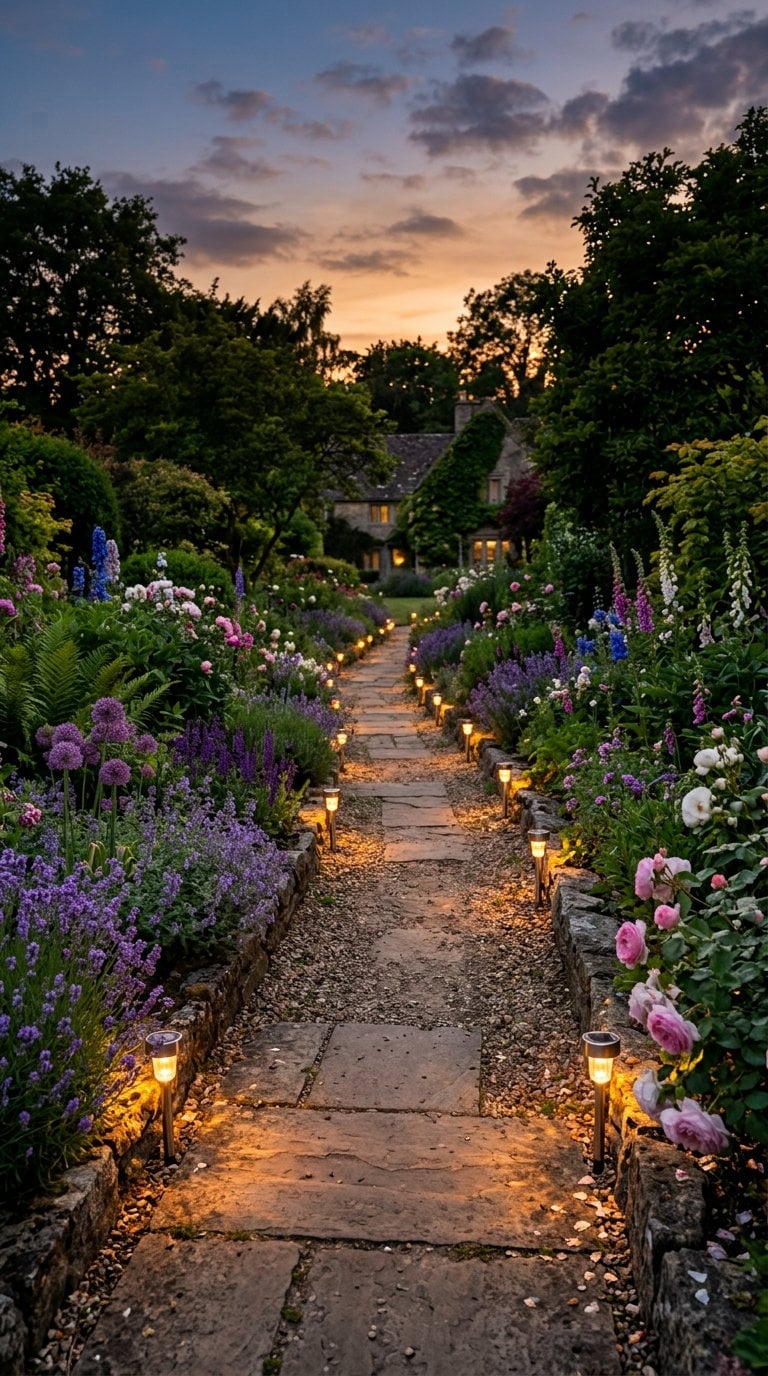
A hard-edged path with nothing growing along it reads as sterile in feng shui terms, it’s all yang structure with no yin softness to balance it.
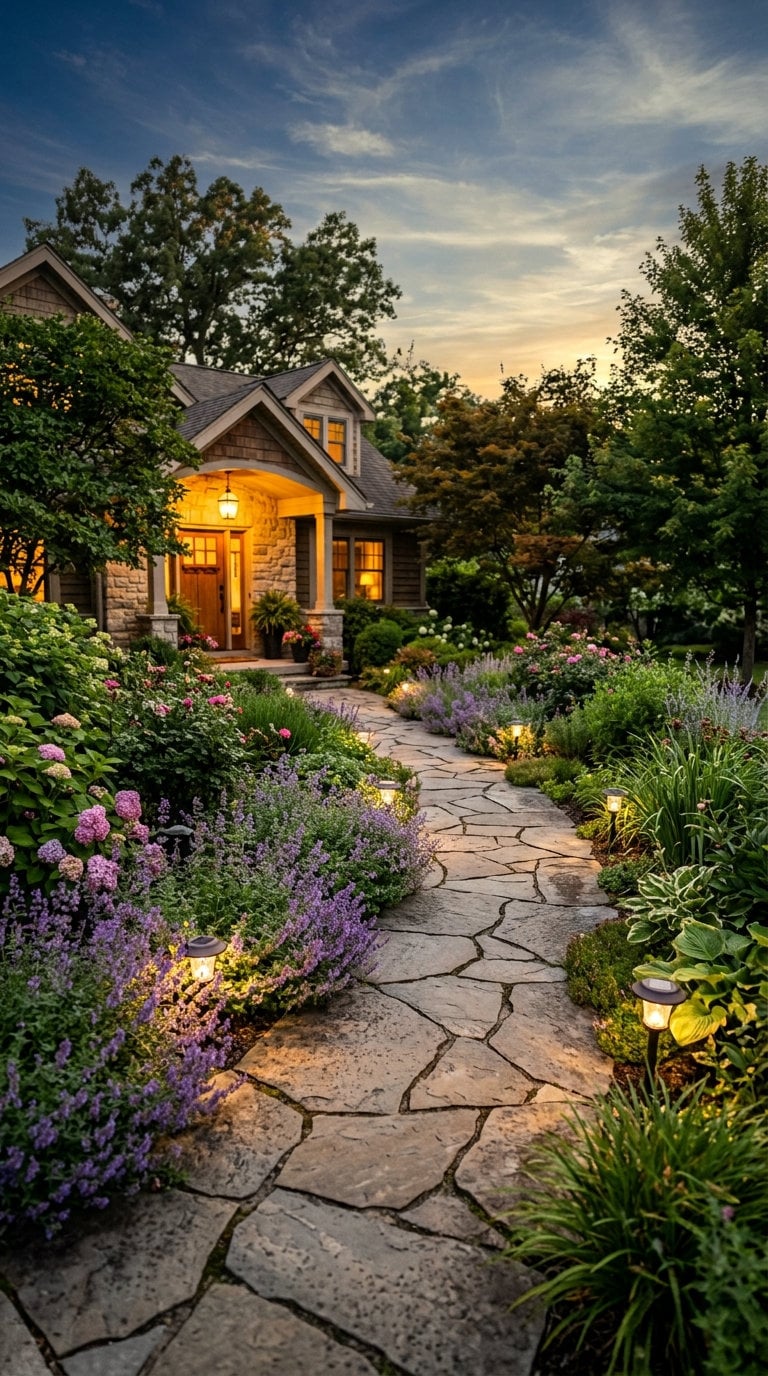
Flowers planted along both sides are specifically called out as encouraging chi to settle rather than rush through, which is the same goal as the curve in rule #1, approached from the landscaping side instead of the hardscaping side.
Lighting matters here for two real reasons, not just ambiance. A well-lit path is a genuine safety fix, uneven stone or a gravel path that’s invisible after dark is a real trip hazard regardless of what feng shui says about it. And in feng shui terms specifically, lighting along a path is one of the more common ways to add yang energy to an otherwise shaded, plant-heavy route without changing the layout at all.
Stake-mounted solar lights spaced every 4 to 6 feet along the path edge cover both goals at once: they’re a low-effort weekend project, and they don’t require running electrical line the way built-in fixtures do. Browse our garden path ideas for planting and lighting combinations that pull this off well.
What we learned the hard way
The mistake almost nobody plans for is drainage. Curve a path or add planted beds along the edges and you’ve changed where water runs during a heavy rain, and if it now pools against your foundation instead of away from it, you’ve traded a feng shui win for a real moisture problem.
Slope any new planted border slightly away from the house, not just away from the path, before you commit to the layout.
Weed creep is the second thing that catches people off guard. A curved gravel or stepping-stone path with planted beds on both sides gives weeds far more edge to work with than a straight poured strip does, budget for a proper landscape fabric layer under any gravel section or you’ll be back out there every few weeks.
And the material regret is real: more than one homeowner has gone with the cheapest smooth-poured concrete for budget reasons, only to find it’s genuinely slick the first wet morning after leaves start falling. If you’re set on concrete, the broom-finish upcharge from rule #3 is worth paying for.
FAQs
Does a straight path really make that much difference if the rest of my feng shui is good? It’s one factor, not the whole picture, but it’s a high-visibility one because it’s literally the first thing energy (and every visitor) encounters. Fixing rule #2’s “poison arrow” problem with a planted break or offset stones gets most of the benefit without a full repave.
What if my lot layout only allows a straight path? Use the fixes in rule #2, a planted bed, an angled stone, or a small arbor partway down, to interrupt the sightline. The goal is breaking the straight energy line, not necessarily curving the actual pavement.
Is gravel or stone better for feng shui? Both work; feng shui cares more about shape (curved) and material solidity than the specific type. Use the comparison table in rule #3 to decide based on your real slip-resistance, maintenance, and budget priorities instead.
Do I need a permit to regrade or add a curved pathway? Usually not for a standalone garden path, but if you’re changing grading enough to redirect stormwater toward a property line or a shared drainage easement, check with your local building department first, this is a real (if often overlooked) legal consideration, not just a feng shui one.
Related reading on farmfoodfamily.com: if your path includes any elevation change, see our garden step and stair ideas for how to handle the transition without breaking the curve.
Products We Recommend
This post contains affiliate links. We may earn a commission on qualifying purchases at no extra cost to you.
DenicMic Solar Pathway Lights (10-Pack, Stainless Steel)
Covers rule #5's lighting fix, no wiring needed, 4.5 stars/9.2K ratings
Shop Now
EasyFlex No-Dig Landscape Edging
Lets you shape a curved bed line (rule #1/#4) without digging a hard trench edge
Shop Now
DOMINATOR Polymeric Sand for Pavers (40 lb)
Locks paver joints against weed growth and shifting, addresses the maintenance column in rule #3's table
Shop NowNever miss an update — choose FarmFoodFamily as your preferred source on Google.
How it works: Tap the button below to open Google's settings page, then check the box next to FarmFoodFamily.
Tap the checkbox to turn it blue — that's how you know it's set.