20 Small Bathroom Tile Ideas (That Won’t Make the Floor a Slip Hazard)
Twenty real ways to make a small bathroom feel bigger with tile, plus the slip-resistance ratings and waterproofing specs most tile galleries never mention.

Never miss an update — choose FarmFoodFamily as your preferred source on Google.
How it works: Tap the button below to open Google’s settings page, then check the box next to FarmFoodFamily.
Tap the checkbox to turn it blue — that’s how you know it’s set.
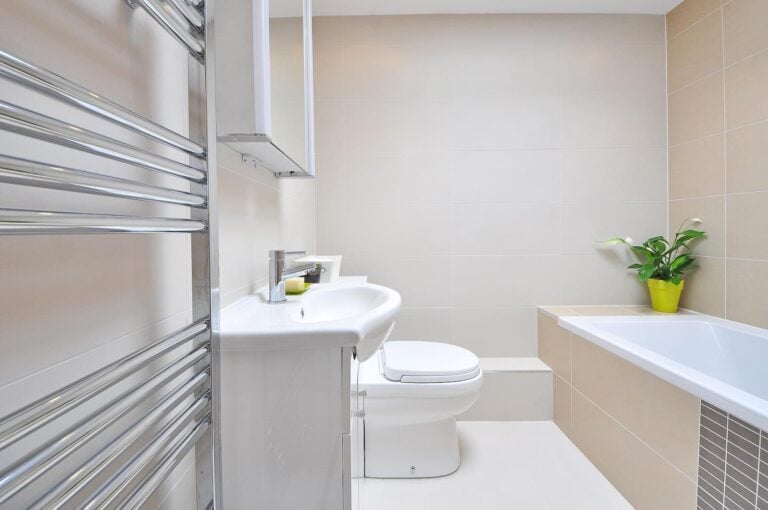
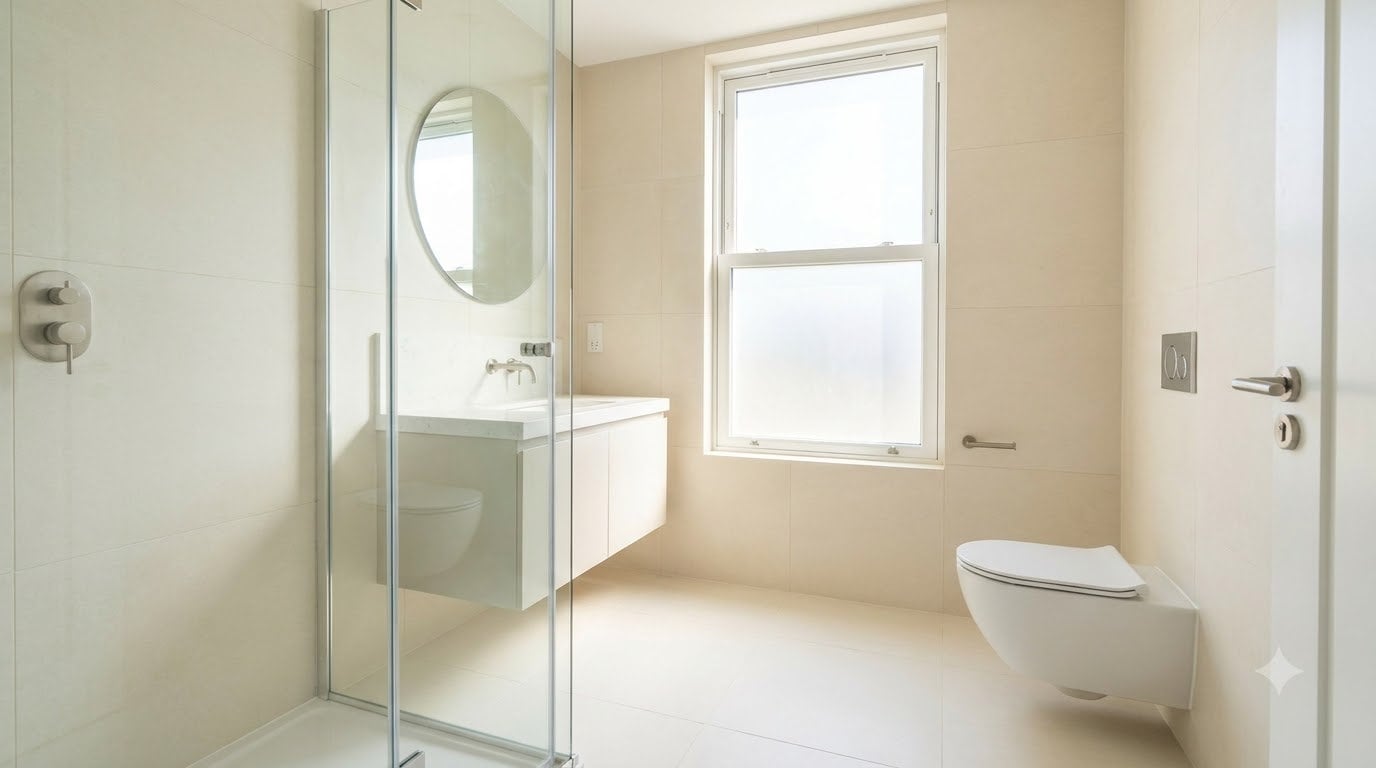
A small bathroom lives or dies on its tile choices more than almost any other room in the house, the wrong grout line count, the wrong finish, the wrong tile size, and a genuinely tiny bathroom reads as even smaller.
The good news: real tile tricks can visually expand a small bathroom, but a few of the same choices that make a room look bigger (glossy floor tile, for instance) come with a real safety tradeoff worth knowing about first.
Does Tile Size Actually Change How Big a Small Bathroom Feels?
Most small bathroom tile galleries show pretty finished rooms and skip the two things that actually determine whether a tile choice is safe and durable, not just pretty.
Quick answer: Tile size and grout line count genuinely change how big a small bathroom feels, fewer, thinner grout lines read as a more continuous surface and visually expand the room, which is why large-format tile (12×24 inches or bigger) has become the default recommendation over small mosaic tile for small bathrooms.
But the same glossy finish that helps a small bathroom feel brighter also tends to be less slip-resistant, per ANSI A137.1, wet floor tile should carry a DCOF (Dynamic Coefficient of Friction) of at least 0.42, with many professionals recommending 0.60 or higher specifically for shower floors.
Behind the tile matters just as much as the tile itself: per the TCNA Handbook, wet-area floors and shower receptors need a real waterproofing membrane (meeting ANSI A118.10 or A118.12) with at least 95% mortar coverage at edges and corners, not just tile set directly on drywall.
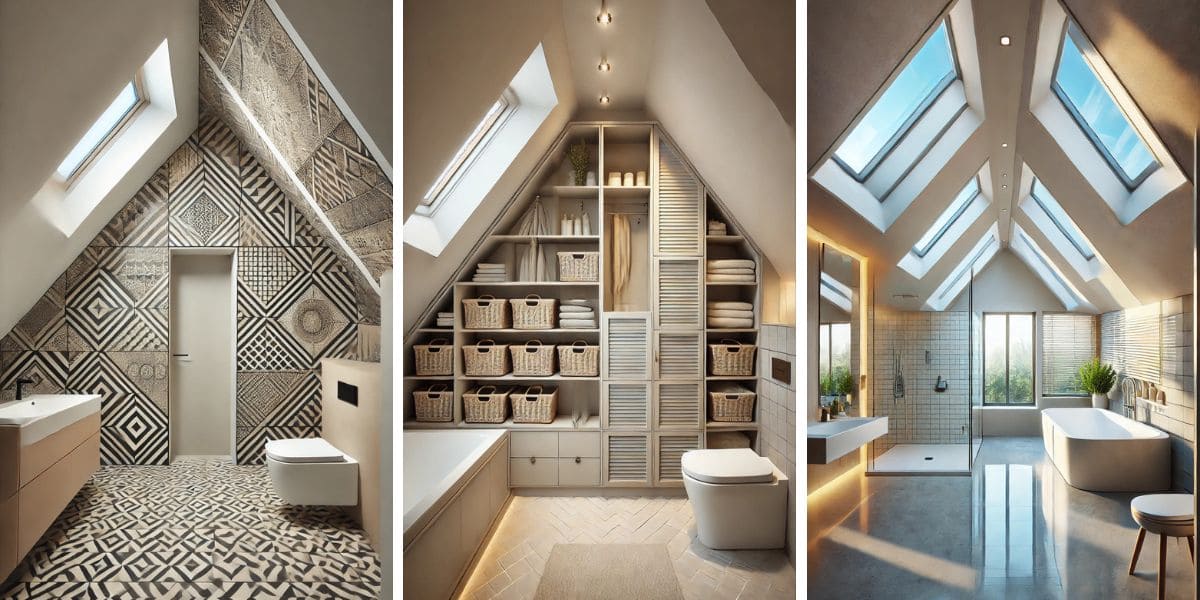
Two more things worth knowing before you pick a tile. First, Founder and Principal of Asprea Studio Karen Asprea frames the large-vs-small tile choice as a genuine either-or: large-format tile creates a modern, expansive feel with minimal grout interruption, while smaller tile creates continuous texture, both are real design directions, not one being objectively “more correct” than the other.
Second, if your bathroom includes a shower or tub surround, that wet zone needs the higher DCOF rating and the full waterproofing membrane described above, even if the rest of the floor is a drier, lower-traffic zone.
Porcelain, Ceramic, Natural Stone, or Mosaic: Which Tile Fits a Small Bathroom Best?
| Material | Typical Cost | Slip Resistance (DCOF) | Maintenance | Best For |
|---|---|---|---|---|
| Porcelain | Moderate | High, easy to find rated 0.42+ options | Low, dense and low-porosity | Floors and wet zones needing real durability |
| Ceramic | DIY-cheap to moderate | Moderate, check individual product rating | Low to moderate | Walls and lower-traffic floor areas |
| Natural stone | Bigger investment | Variable, often needs a honed or textured finish for safe DCOF | Higher, needs periodic sealing | A high-end look where upkeep is genuinely planned for |
| Mosaic (small-format) | Moderate | Often higher due to grout-line grip, check rating | Higher, more grout to clean | Shower floors needing slope, accent details |
Which Tricks Actually Make a Small Bathroom Feel Bigger?
1. Large-format tile on the floor and walls
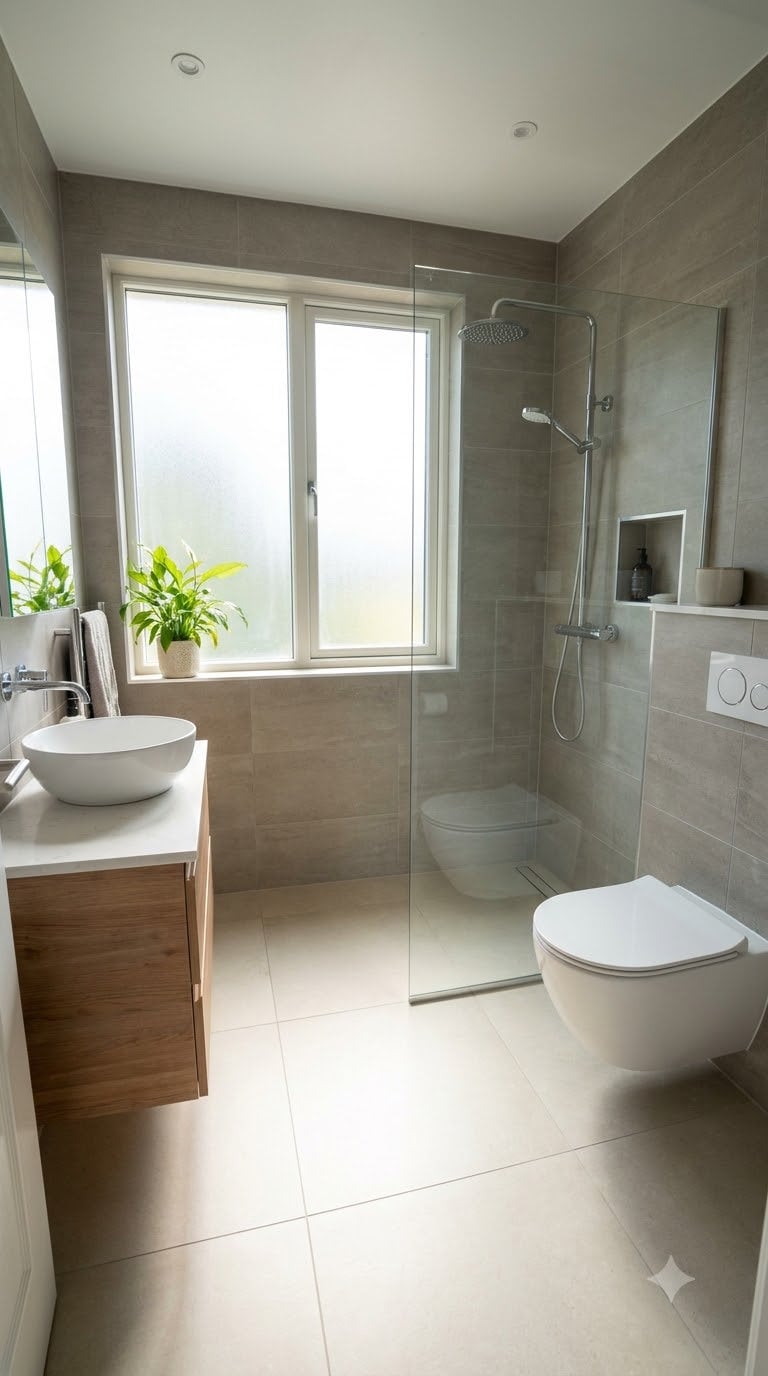
Tile sized 12×24 inches or larger on walls and 24×24 or larger on the floor cuts the total number of grout lines dramatically compared to a standard 12×12 layout, roughly a 75% reduction in grout lines for a 24×24 floor tile versus 12×12.
Choose rectified tile (precision-cut edges) for the tightest possible grout joints, as thin as 1/16 inch versus a standard 1/8 inch.
Budget tier: moderate.
2. Floor-to-ceiling vertical tile
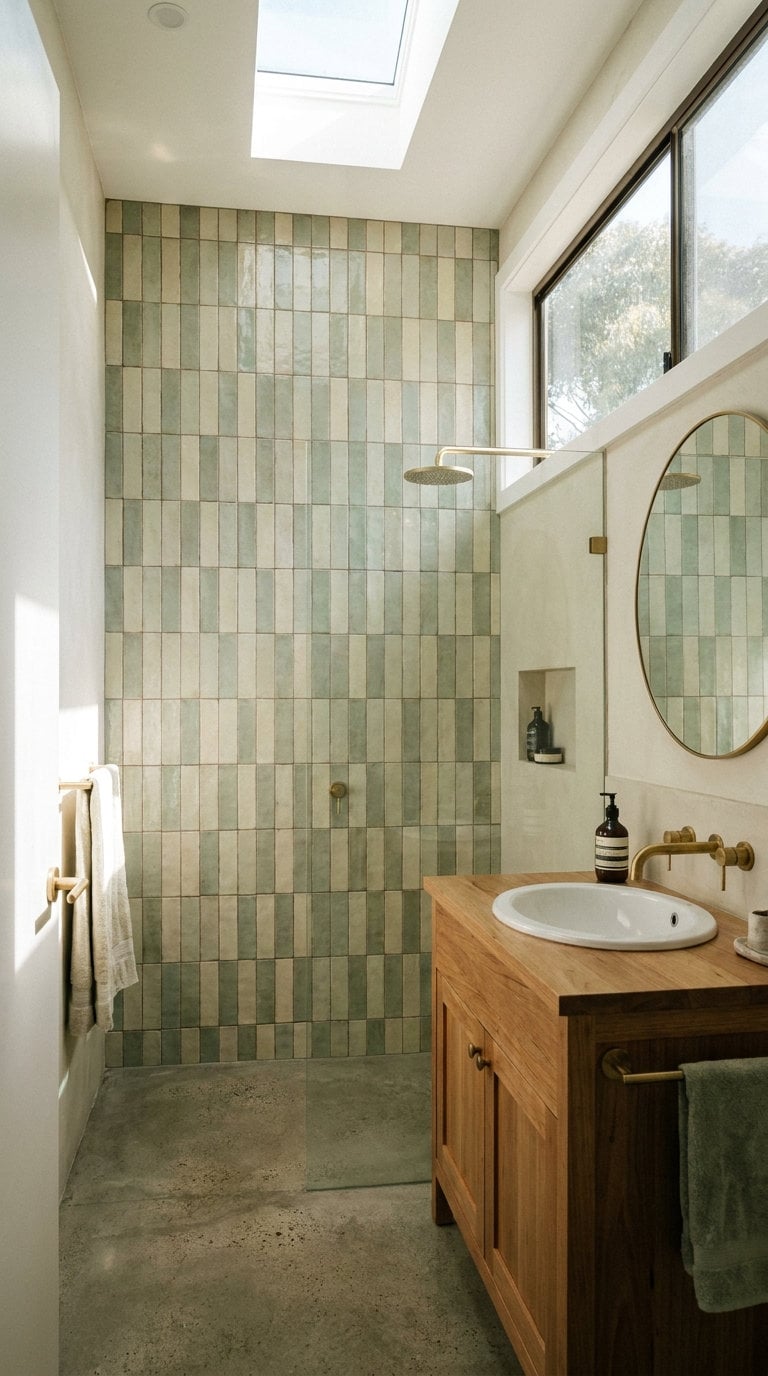
Running tile from floor to ceiling on at least one wall, rather than stopping at a standard 4-5 foot wainscot height, draws the eye upward and makes a low-ceilinged small bathroom feel taller.
Vertical rectangular tile set in a stacked (not staggered) pattern reinforces the upward line even further.

Direct product match for idea 1/11, large-format with a sample option to test first, live-verified in stock
Shop NowThis post contains affiliate links. We may earn a commission on qualifying purchases at no extra cost to you.
Budget tier: bigger investment given the added material and labor for full-height coverage.
3. Monochromatic tile-and-grout matching
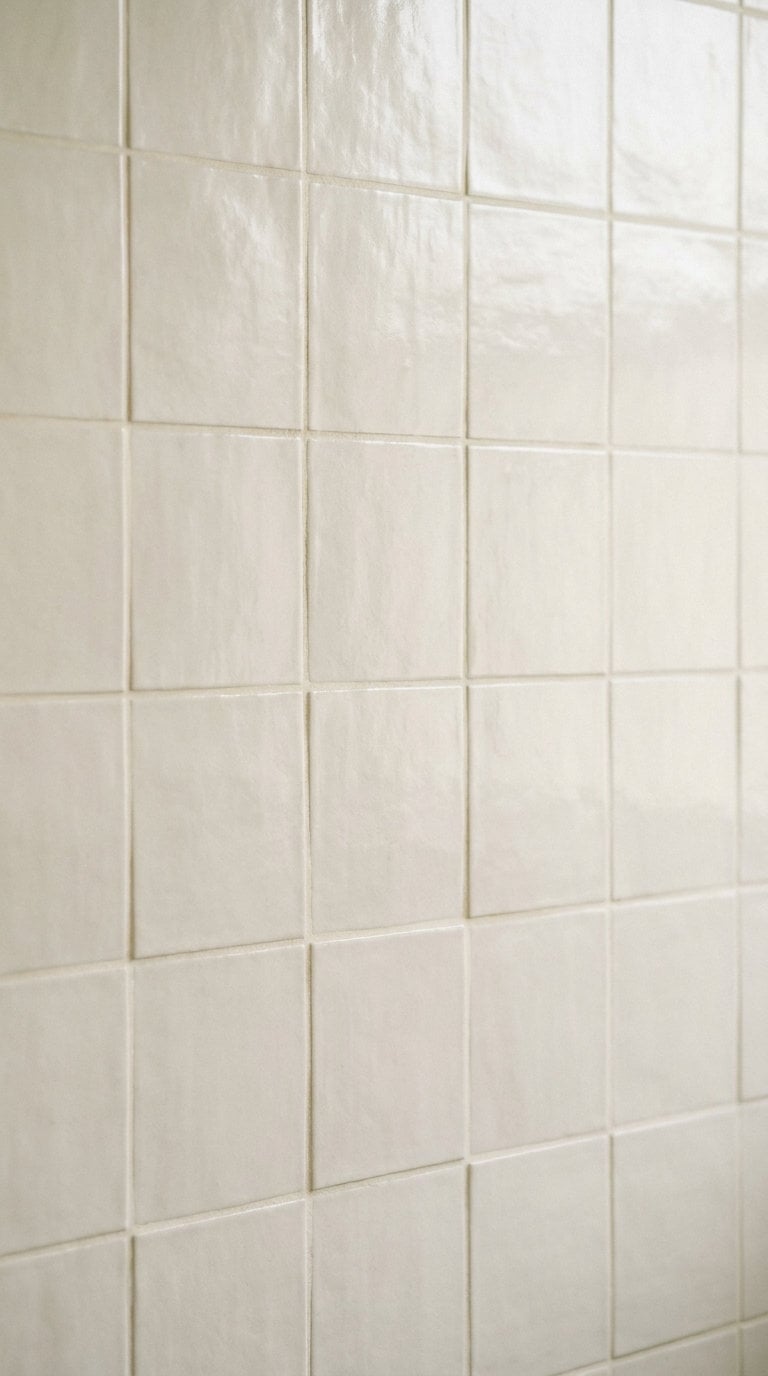
Choosing grout within one or two shades of the tile color itself, rather than a high-contrast grout, removes the grid-line effect entirely and lets the surface read as one continuous plane.
This works on both large and small format tile, and is one of the cheapest tricks on this list since it changes zero material choices, only the grout color.
Budget tier: DIY-cheap, no cost difference from standard grout.
4. Horizontal running-bond pattern
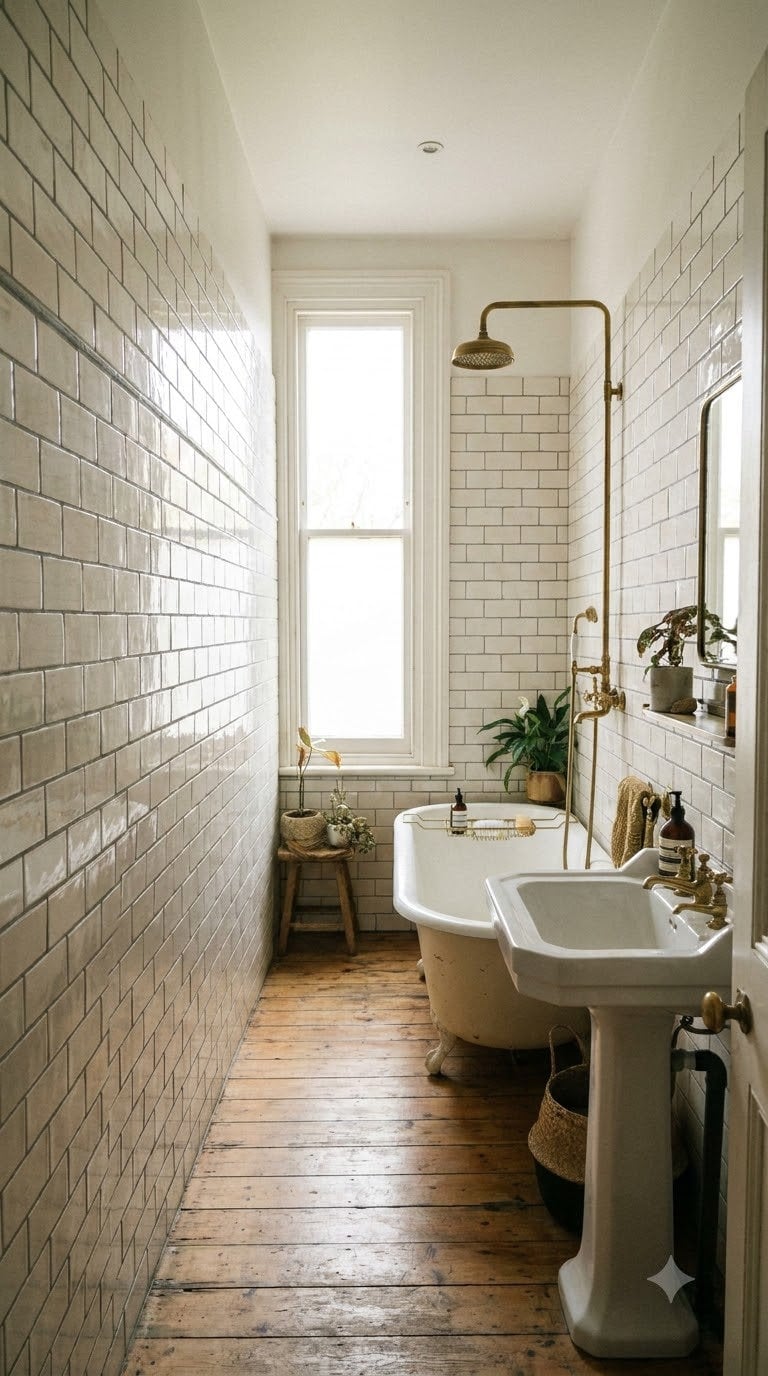
Laying rectangular tile horizontally in a brick-style offset pattern (each row shifted by a third to half the tile length) genuinely widens the visual read of a narrow bathroom, the same principle as horizontal stripes in clothing.
Best on the longer wall of a narrow room.
Budget tier: DIY-cheap, no material cost difference from a standard grid layout.
5. A glossy finish for light reflection
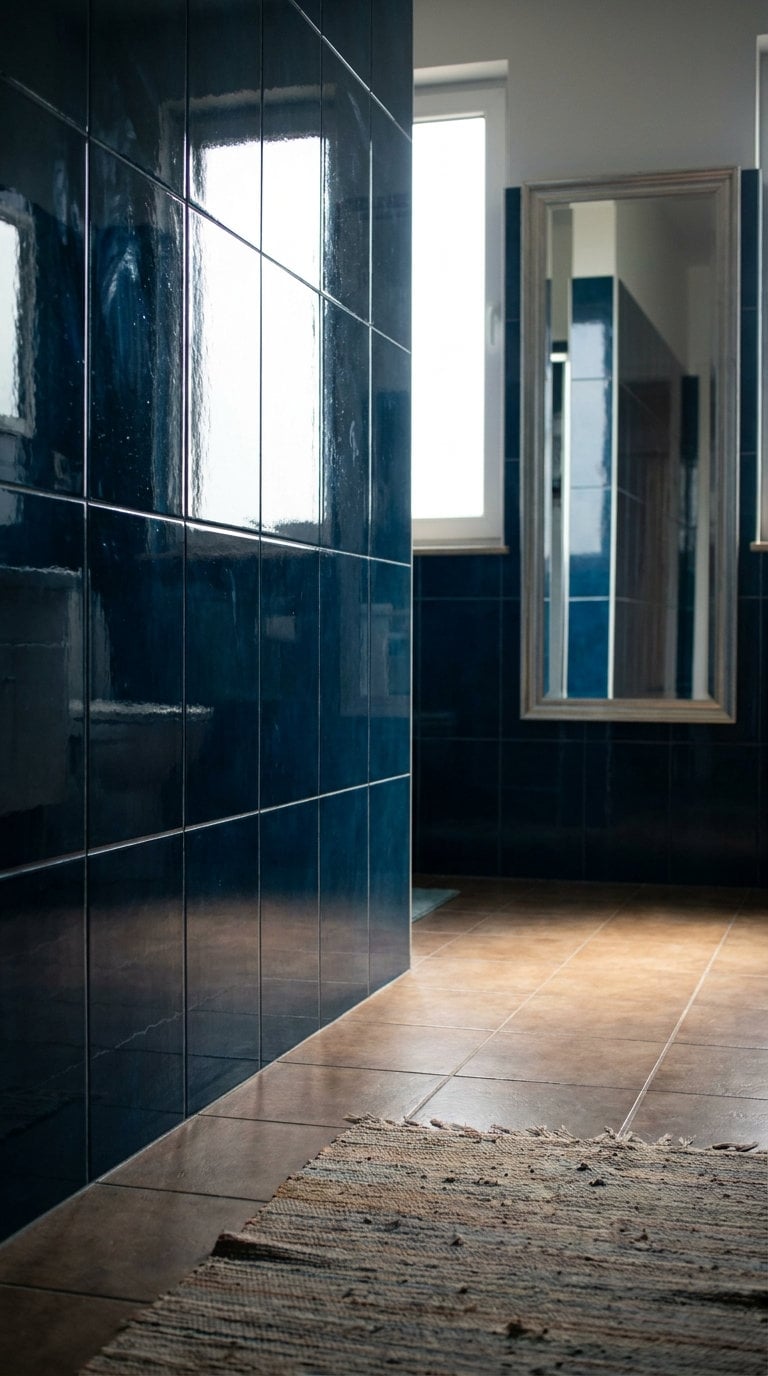
Glossy tile reflects light from windows, mirrors, and fixtures in a way matte tile simply doesn’t, genuinely brightening a small bathroom that often lacks natural light.


The real tradeoff: glossy tile is typically less slip-resistant than matte or textured tile, reserve gloss for walls and vertical surfaces, and choose a matte or textured tile with a verified 0.42+ DCOF rating for the actual floor.
Budget tier: moderate.
Which Layout and Pattern Choices Work Best?
6. A herringbone accent
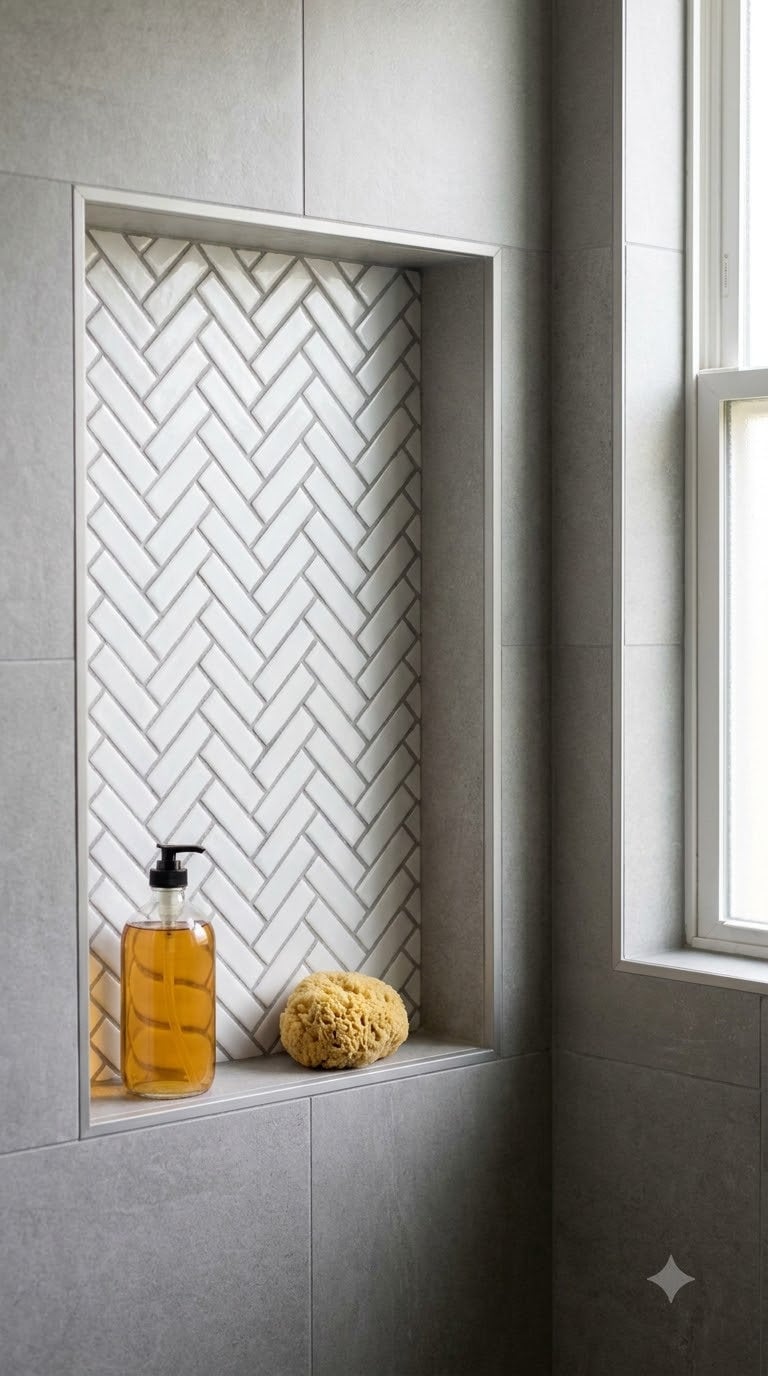
A herringbone-laid section, usually on a shower floor, niche, or single accent wall rather than the whole room, adds real visual interest and pattern without overwhelming a small space, since it’s contained to one focal area.
Budget tier: moderate, herringbone typically adds 10-20% to installation labor over a straight-lay pattern due to the extra cuts.
7. A single statement accent wall
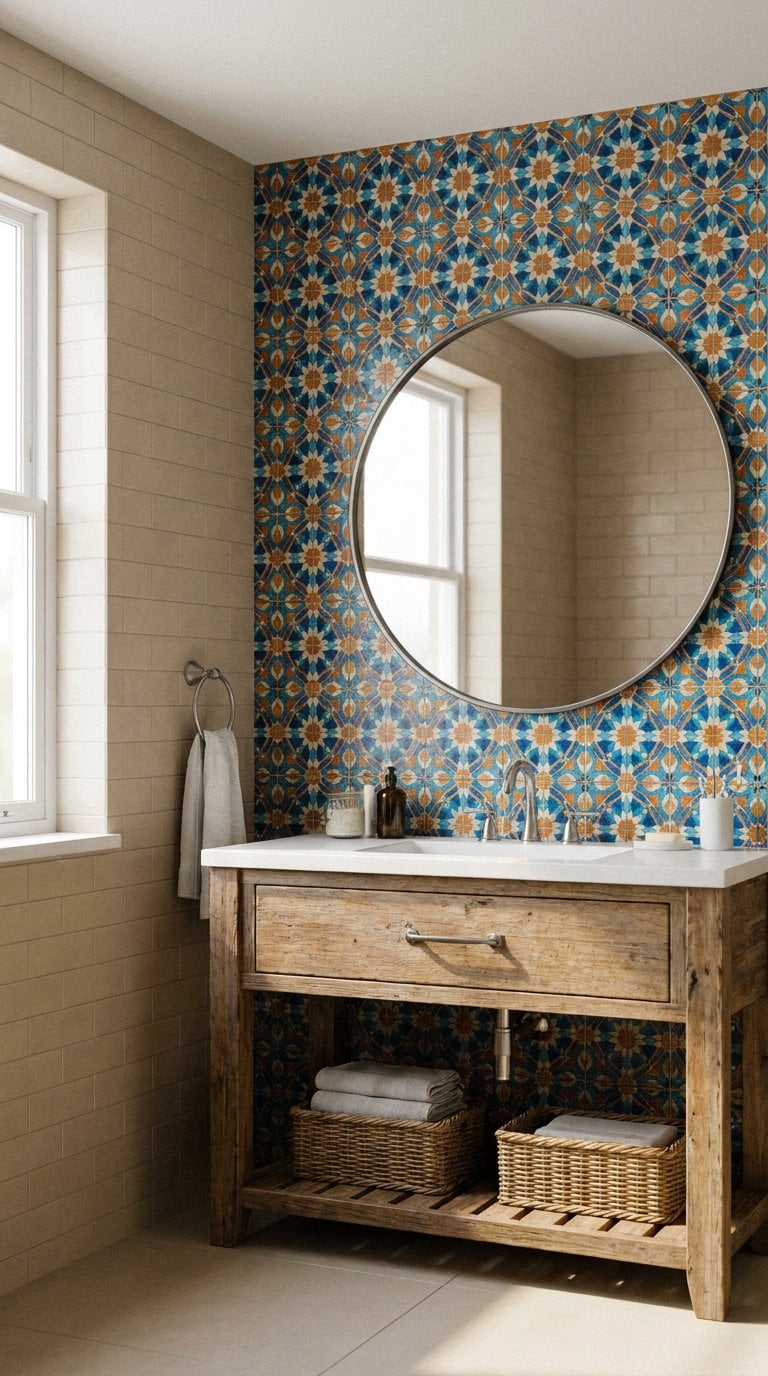
Confining a bold pattern, color, or mosaic to one wall (typically behind the vanity mirror or inside a shower niche) rather than the whole room lets you use a genuinely striking tile without visually shrinking the space the way an all-over pattern can.
Pairs well with idea 3’s monochromatic approach on the remaining walls.
Budget tier: DIY-cheap to moderate, since only one wall’s worth of the pricier tile is needed.
8. A diagonal floor layout
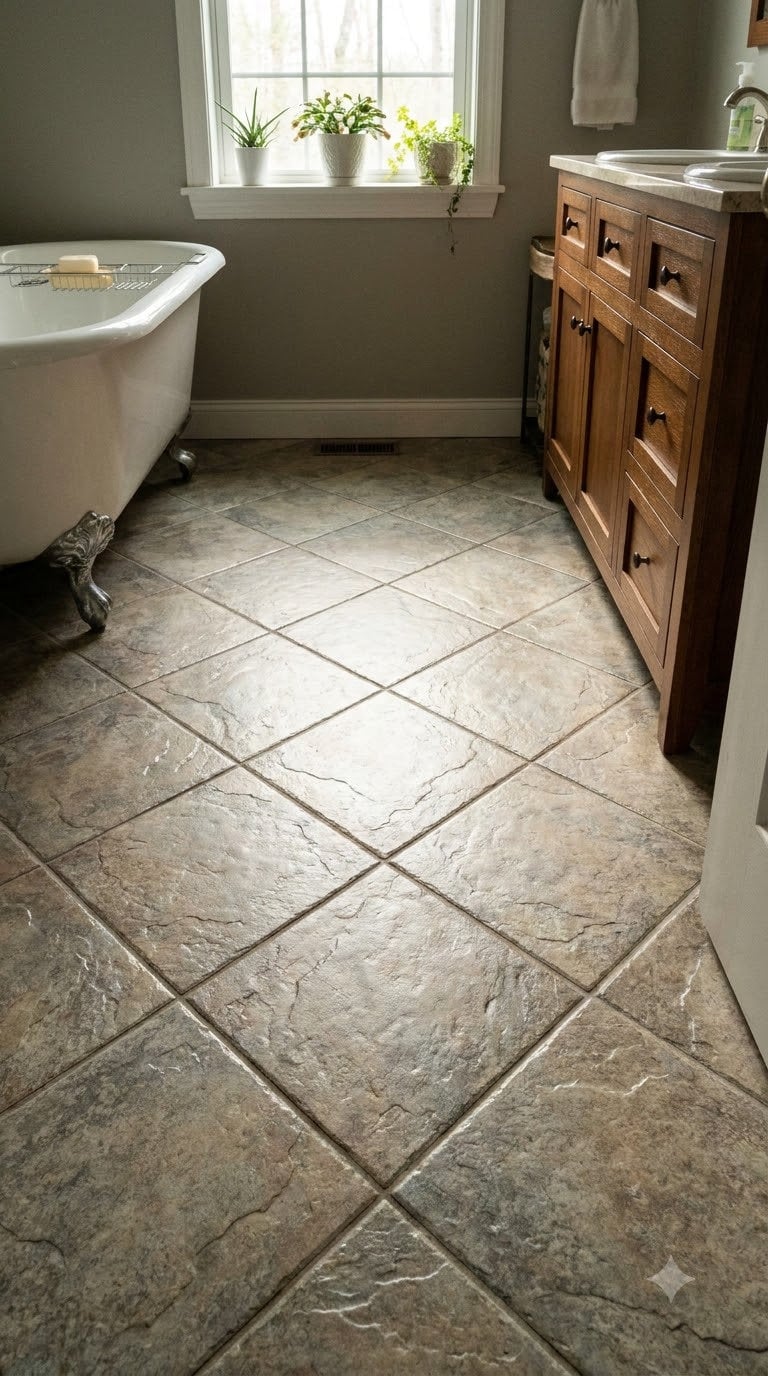
Setting floor tile at a 45-degree angle to the walls genuinely elongates the visual sightline across a small room’s diagonal, which is longer than either the width or length measured straight across.
Budget tier: moderate, diagonal layouts typically use 10-15% more tile due to the angled cuts at the room’s edges.
9. Continuous wall-to-floor tile with no threshold break
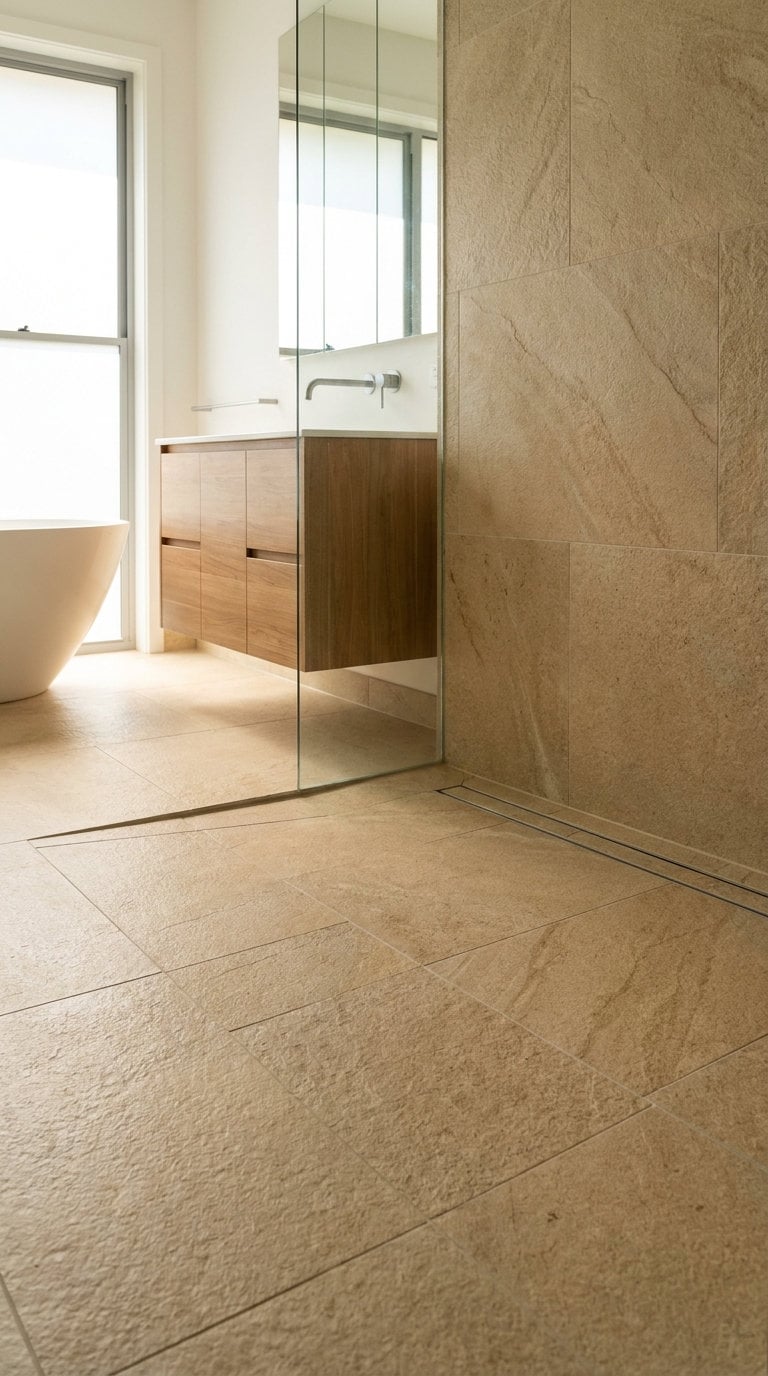
Running the same tile from the shower floor onto the bathroom floor with no visible transition strip or material change removes a hard visual stopping point, letting the eye read the whole floor as one continuous surface.
This requires careful attention to the waterproofing transition at the shower’s edge, exactly where the TCNA membrane requirements matter most.
Budget tier: bigger investment given the added waterproofing detail work.
10. A tiled niche or shelf matching the wall tile
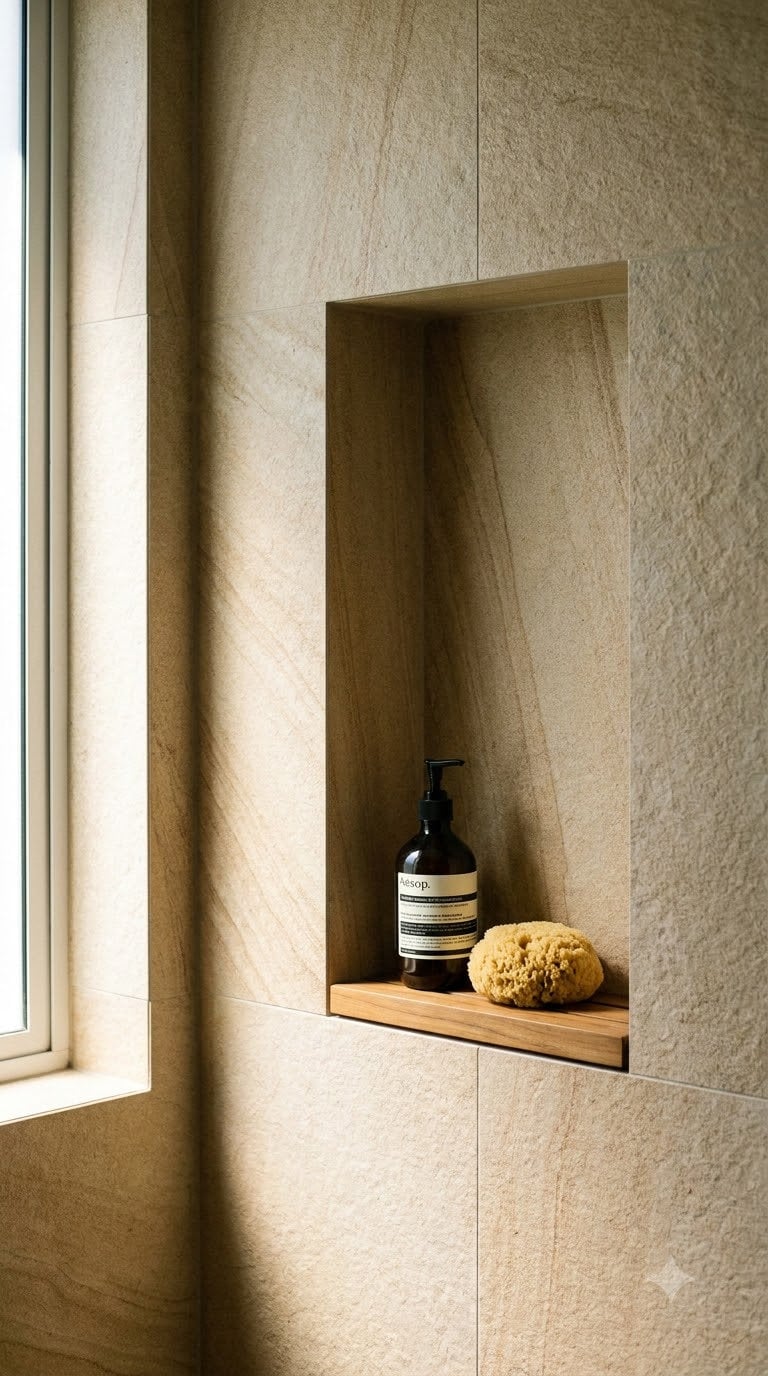
A recessed shower niche tiled in the same material as the surrounding wall (rather than a contrasting accent) disappears into the wall visually instead of adding another competing element to a small room.
Budget tier: DIY-cheap add-on if the niche is built during the main tile installation.
Which Materials Actually Hold Up in a Small, Hardworking Bathroom?
11. Porcelain for real floor durability
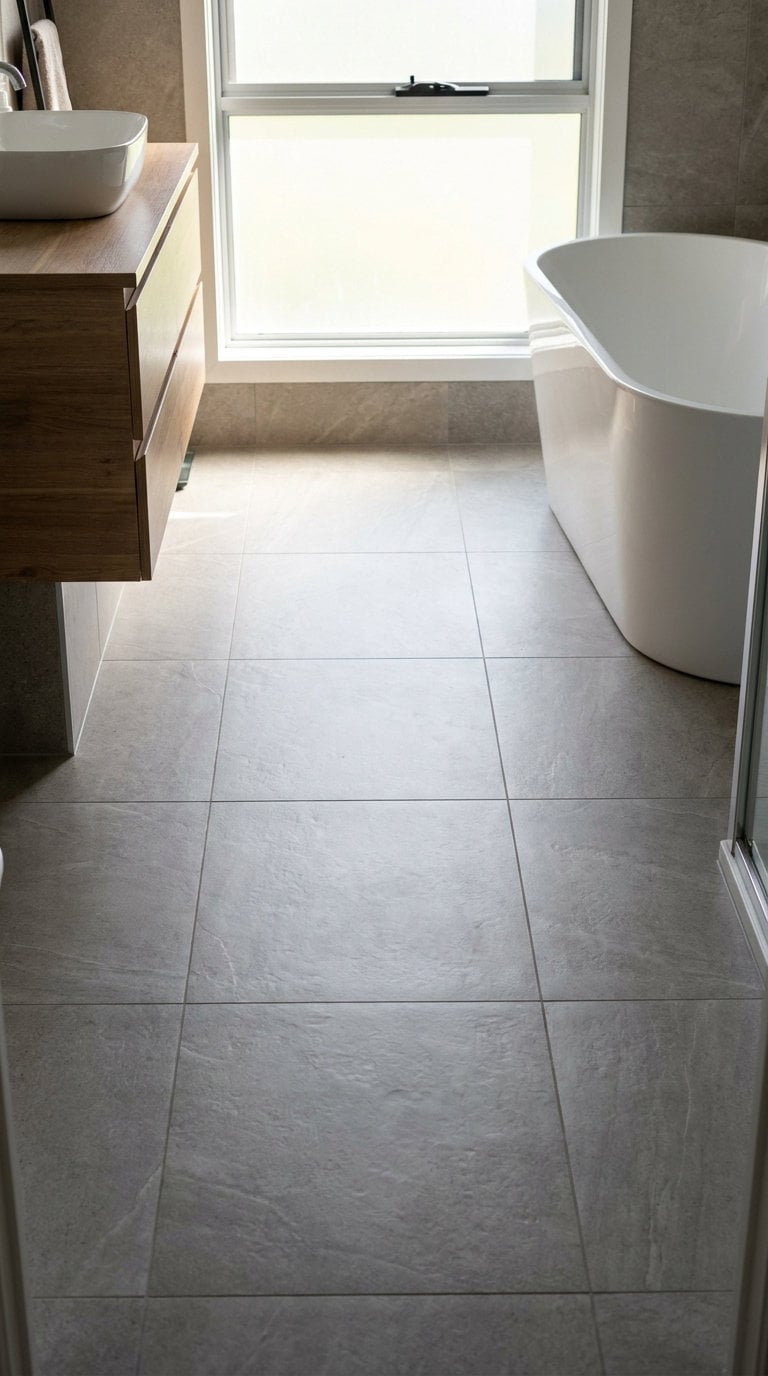
Porcelain’s low porosity (typically under 0.5% water absorption, versus ceramic’s 0.5-3%) makes it the most durable, easiest-to-maintain option for an actual bathroom floor, and rated options with a verified 0.42+ DCOF are widely available.
Budget tier: moderate.
12. Ceramic for walls and lower-traffic zones
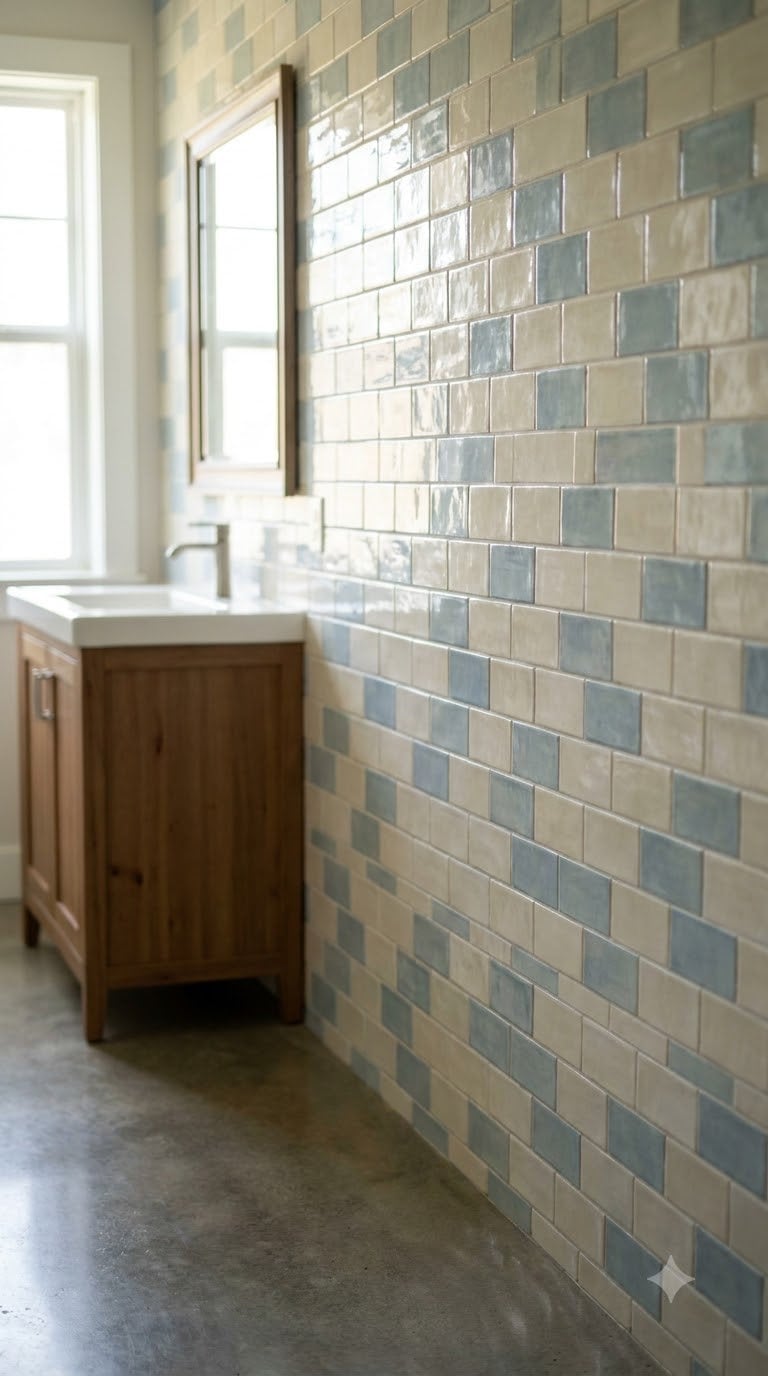
Ceramic tile, generally 20-30% less expensive than comparable porcelain, works well on walls and in drier zones where its lower durability and porosity matter less than on a wet floor.
Budget tier: DIY-cheap to moderate.
13. Honed natural stone for a high-end look
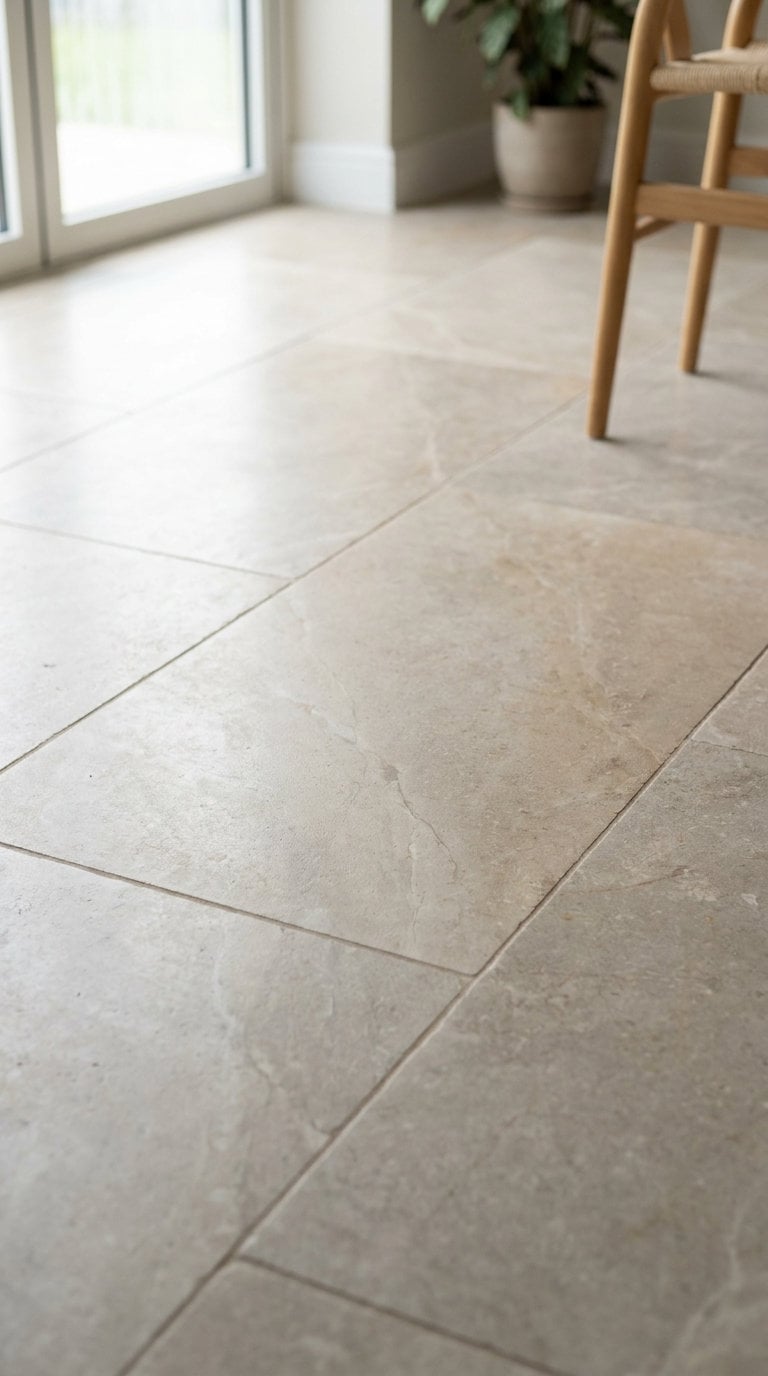
Natural stone (marble, travertine, limestone) in a honed (matte) rather than polished finish gives both a more slip-resistant surface and a softer, less glare-heavy look, genuinely worth the tradeoff if you’re set on stone specifically.
Confirm the specific stone and finish combination’s actual DCOF rating rather than assuming “honed equals safe.”
Budget tier: bigger investment, plus ongoing sealing (typically every 1-2 years) that porcelain and ceramic don’t need.
14. Small-format mosaic for shower floors specifically
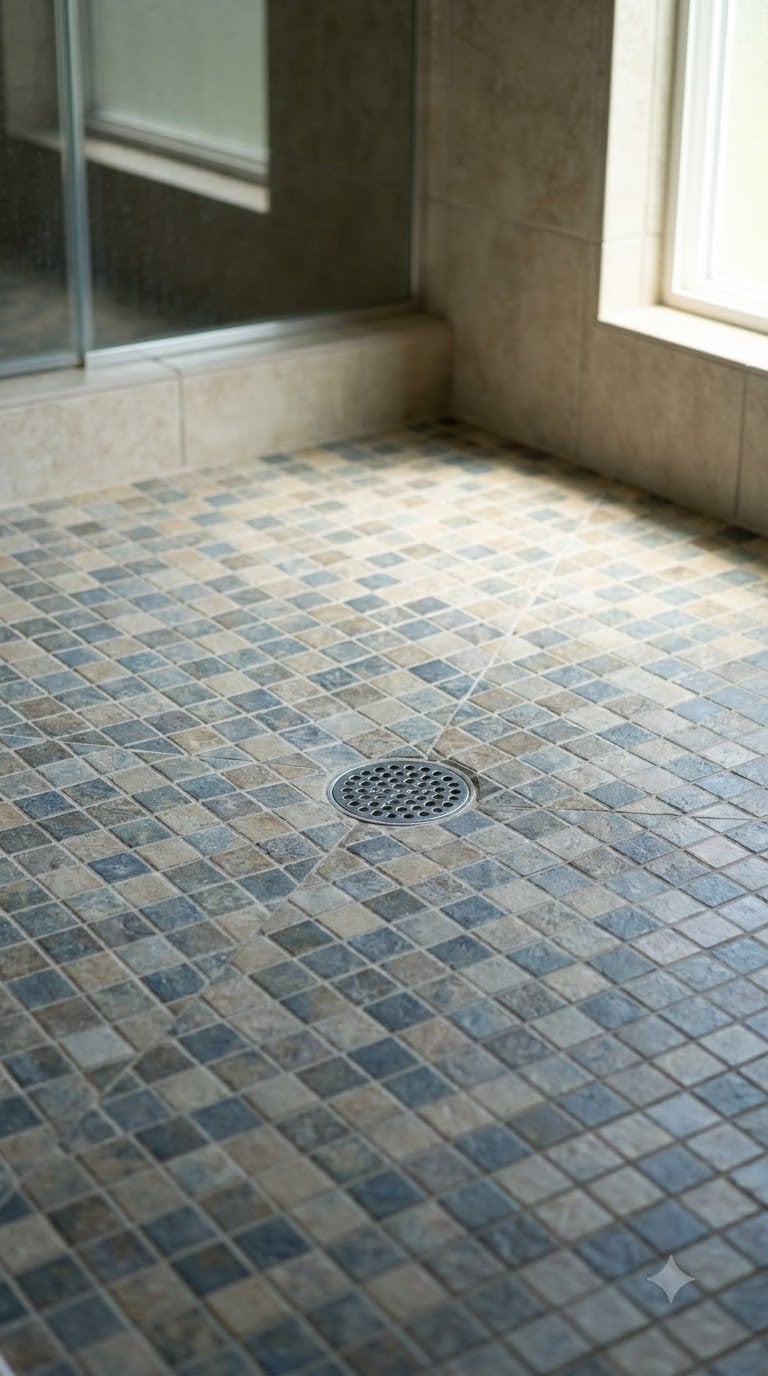
Small mosaic tile (typically 1-2 inch pieces on a mesh backing) is still the standard choice for a shower floor specifically, since the higher grout-line density lets the floor be sloped toward the drain in a way large-format tile can’t accommodate.
Budget tier: moderate.
Which Colors and Finishes Round Out a Small Bathroom?
15. A light neutral palette
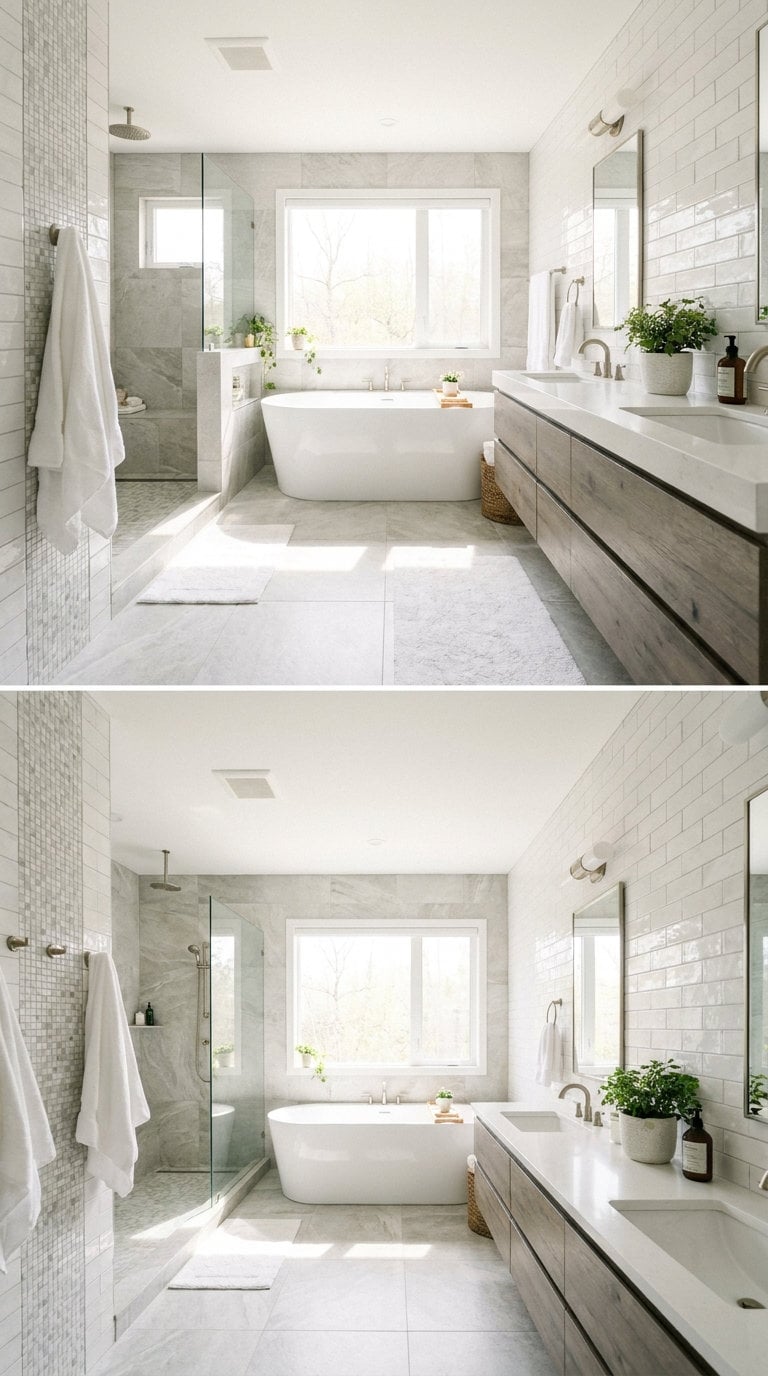
Soft whites, light grays, and warm beiges reflect more light than darker tones and read as more spacious, the same principle behind light paint colors in small rooms generally.
Budget tier: DIY-cheap, no cost premium over darker tile options.
16. A bold single-color pop
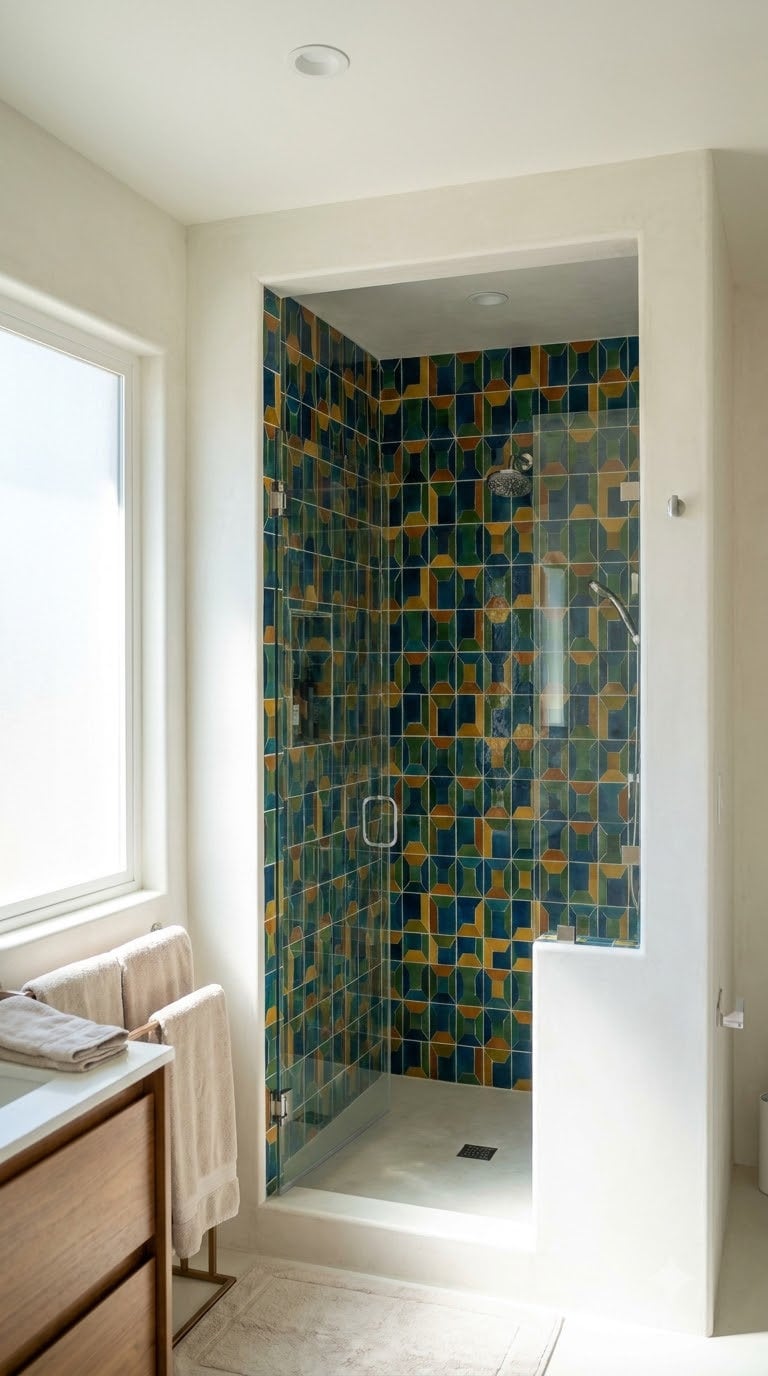
Rather than avoiding color entirely, a saturated color confined to one zone (idea 7’s accent wall, or just the shower surround) lets a small bathroom have real personality without the all-over darkness that can make a small room feel smaller.
Budget tier: DIY-cheap to moderate.
17. Mixed matte and glossy finishes
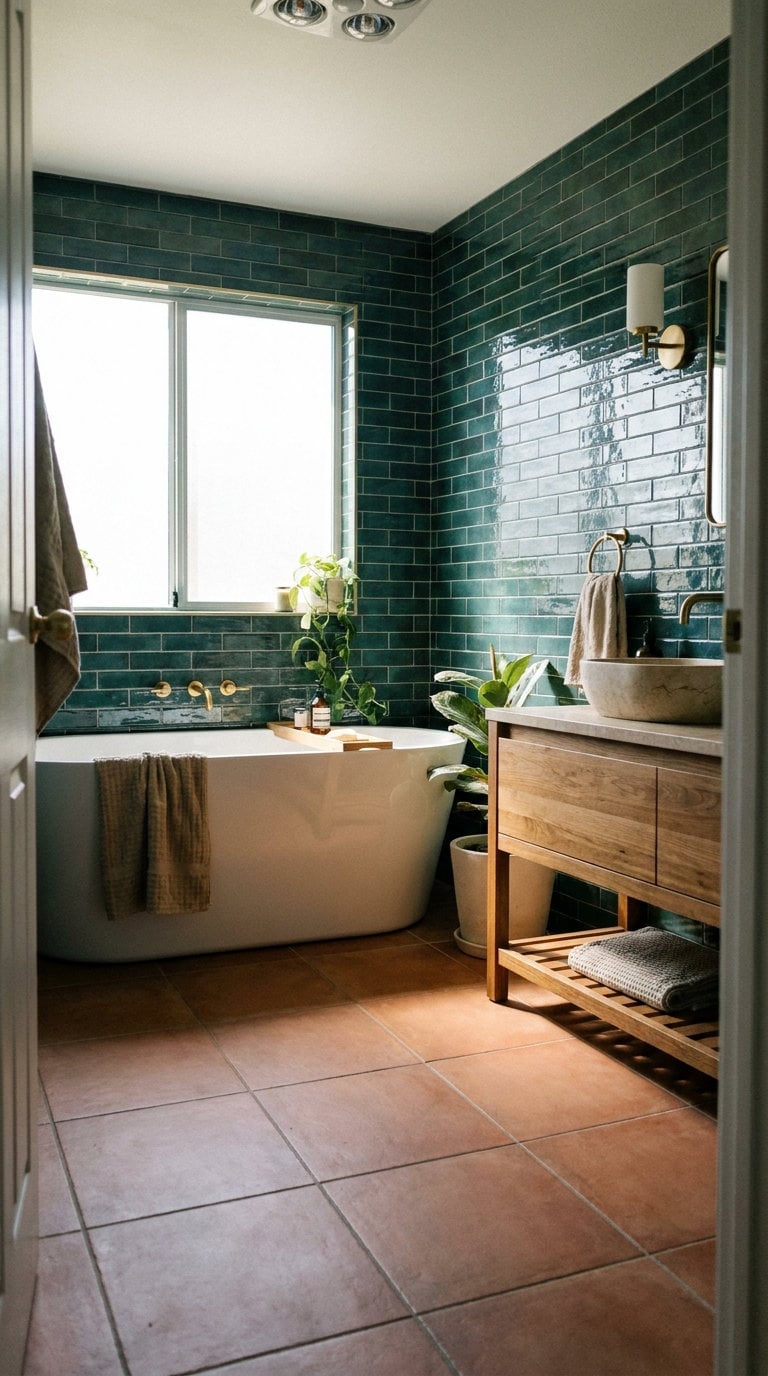
Using matte tile on the floor (for the real slip-resistance benefit) and glossy tile on the walls (for the light-reflecting benefit) gets both advantages in the same room instead of forcing a single finish to do both jobs.
Budget tier: moderate, typically no significant cost difference from an all-one-finish approach.
Which Practical and Budget-Friendly Options Are Worth Considering?
18. Peel-and-stick tile for renters
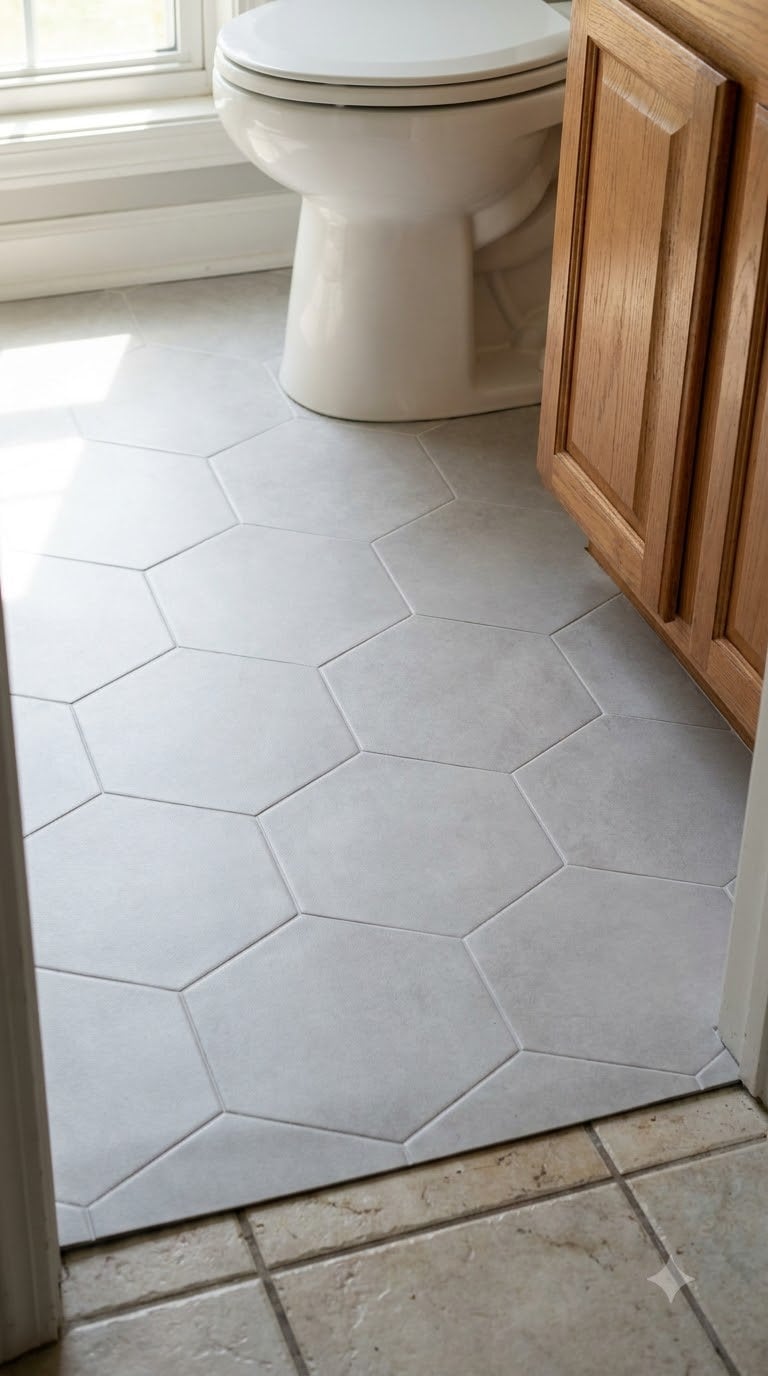
Vinyl peel-and-stick tile, typically installed over existing flooring or backsplash in a few hours with no demolition, gives a real style refresh for a renter who can’t do a permanent tile installation, just confirm it’s rated for bathroom moisture specifically before buying.
Budget tier: DIY-cheap.
19. Tile-look luxury vinyl for a lower-cost floor
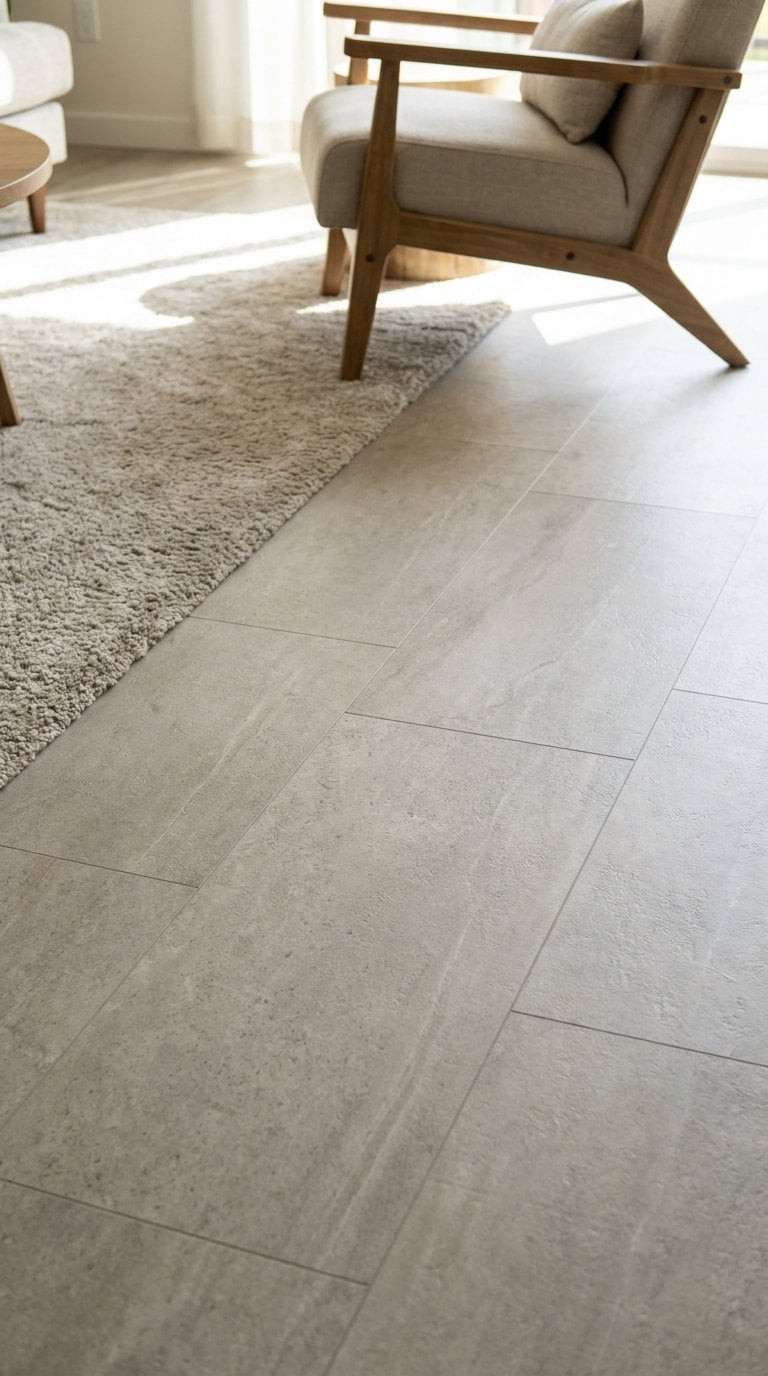
Luxury vinyl tile (LVT) styled to mimic porcelain or stone runs meaningfully less than real tile per square foot and installs faster, with the tradeoff of a shorter real lifespan (typically 10-20 years versus porcelain’s 50+) and less resale-value impact than genuine tile.
Budget tier: DIY-cheap to moderate.
20. A real grout-size sizing guide
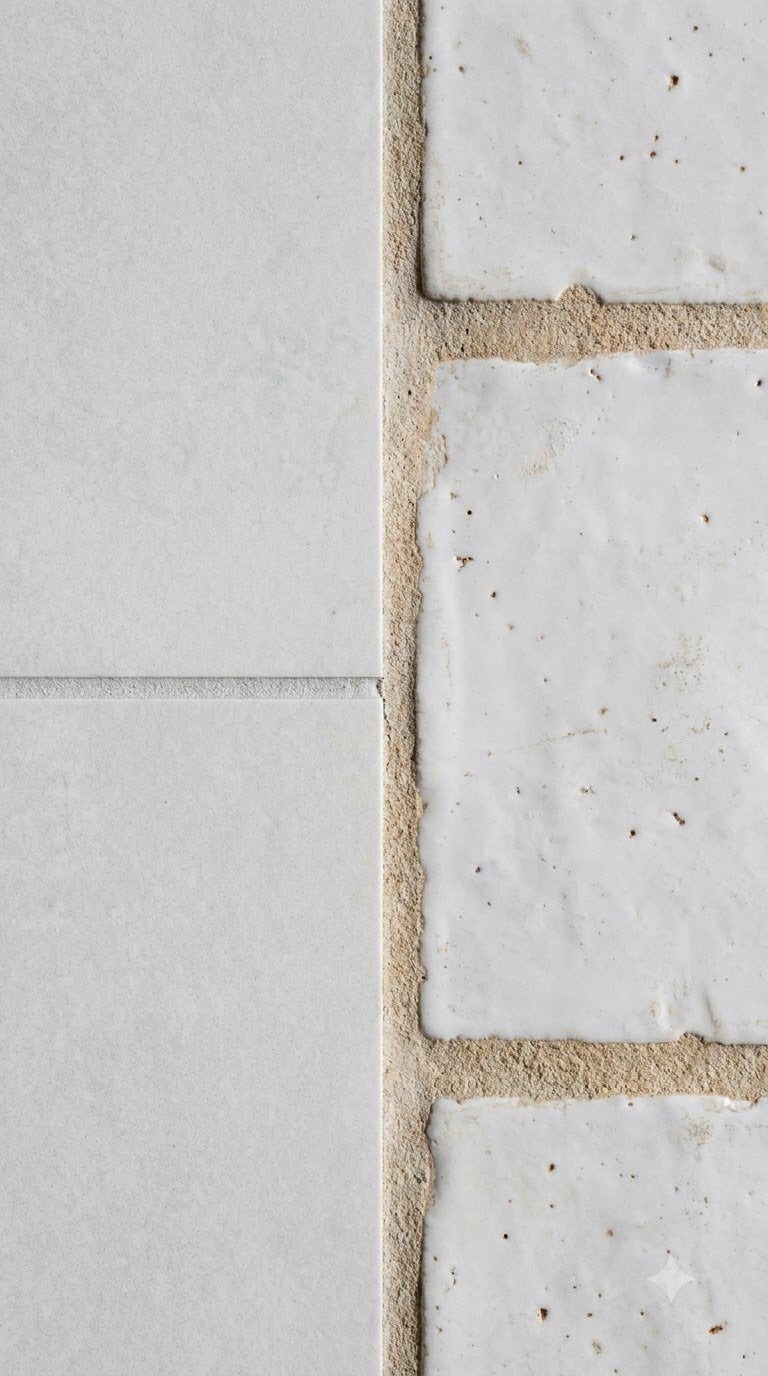
Standard grout joints run 1/16 inch for rectified large-format tile up to 3/8 inch for natural stone or handmade tile with irregular edges, using the correct size for your specific tile (not just picking the thinnest option) prevents the edge-chipping and uneven coverage that comes from forcing rectified-tile spacing onto a non-rectified product.
Budget tier: DIY-cheap, this is a technique choice, not a material cost.
What We Learned the Hard Way
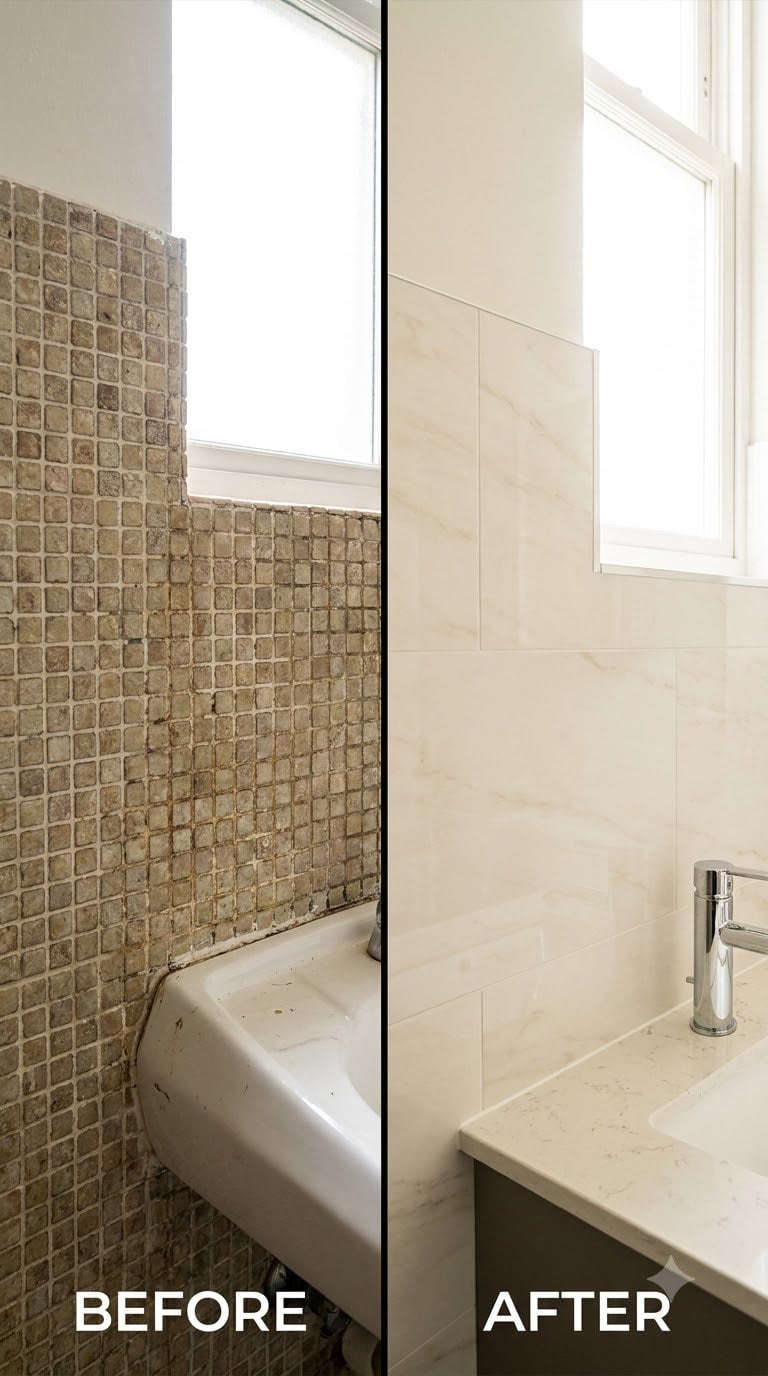
The most common mistake isn’t picking an ugly tile, it’s picking a beautiful glossy floor tile without checking its actual slip rating.
A high-gloss porcelain that looks stunning in a showroom can be genuinely hazardous underfoot when wet, exactly the condition a bathroom floor is in constantly. If there’s one thing worth checking before ordering floor tile, it’s the manufacturer’s stated DCOF rating, not just how the finish looks in a sample.
The second mistake is treating waterproofing as the installer’s problem to worry about, not something worth understanding yourself.
A tile job set directly over drywall with no real membrane looks identical to a properly waterproofed one on installation day, and the difference only shows up a year or two later as mold or water damage behind the wall.
Ask specifically whether your installer is using a membrane meeting ANSI A118.10 or A118.12, not just “waterproof paint” or a moisture-resistant backer board alone.
And the one that undermines an otherwise good tile choice: mismatched grout size. Forcing 1/16-inch rectified spacing onto a handmade or natural-edge tile that needs real joint width to accommodate its size variation leads to chipped edges and uneven lines within the first year.
Match your grout width to your specific tile’s actual edge tolerance, not just the thinnest look you’ve seen in photos.
FAQs
What DCOF rating should bathroom floor tile have? At least 0.42 per ANSI A137.1 for a standard wet floor, with 0.60 or higher recommended specifically for shower floors given standing water and soap residue.
Does my bathroom tile actually need a waterproofing membrane behind it? Yes, for any wet-area floor or shower receptor, per the TCNA Handbook. Look for a membrane meeting ANSI A118.10 or A118.12 with at least 95% mortar coverage at edges and corners.
Does large tile really make a small bathroom look bigger? Yes, genuinely. Fewer, thinner grout lines read as a more continuous surface, which is why 12×24 or 24×24 tile has become the standard recommendation over small mosaic tile for small bathrooms.
Is glossy tile safe for a bathroom floor? It’s generally less slip-resistant than matte or textured tile. Reserve gloss for walls and vertical surfaces, and choose a matte or textured floor tile with a verified 0.42+ DCOF rating.
What’s the cheapest way to update small bathroom tile? Matching grout color to tile (idea 3) and peel-and-stick tile for renters (idea 18) cost the least, both changing the room’s feel without a full tile replacement.
There’s more on shower-specific tile layouts elsewhere on the site if that’s the focus, and general bathroom tile styling beyond the size-specific tricks here is covered separately. If storage is the bigger challenge in a small bathroom, organizing a small bathroom’s storage rounds out the rest of the room.
Related Posts
- Walk-In Shower Tile Ideas
- Bathroom Tile Design Ideas
- Small Bathroom Storage Ideas
- Small Bathroom Lighting Ideas
Products We Recommend
This post contains affiliate links. We may earn a commission on qualifying purchases at no extra cost to you.
MSI Eden Statuary 24"x48" Matte Porcelain Floor Tile (sample or pallet)
Direct product match for idea 1/11, large-format with a sample option to test first, live-verified in stock
Shop Now
Custom Building Products RedGard Waterproofing Membrane (1 gal, ready to use)
Direct product match for the TCNA-aligned fix described in Before You Start, 3.7 stars / 26 ratings, live-verified
Shop Now
Spiareal Peel and Stick Waterproof Vinyl Floor Tiles (48-piece, 12x12)
Direct product match for idea 18, live-verified in stock
Shop NowNever miss an update — choose FarmFoodFamily as your preferred source on Google.
How it works: Tap the button below to open Google's settings page, then check the box next to FarmFoodFamily.
Tap the checkbox to turn it blue — that's how you know it's set.