DIY Soil Test for Under $10 (No Lab Required)
A real soil test tells you exactly what your garden needs, but you don’t need to mail off a sample to get a genuinely useful first read, a few kitchen staples and 48 hours will do.

Never miss an update — choose FarmFoodFamily as your preferred source on Google.
How it works: Tap the button below to open Google’s settings page, then check the box next to FarmFoodFamily.
Tap the checkbox to turn it blue — that’s how you know it’s set.
Professional soil testing is worth doing eventually, but it costs money and takes time most people never get around to spending, which is exactly why so many gardens, even ones with real prep work already put into the bed, go years without ever being tested at all.
The two DIY tests below use stuff already in most kitchens, cost well under $10 combined, and give you a genuinely useful first read on your soil’s pH and texture today, not in two weeks when a lab result comes back.
The Vinegar and Baking Soda pH Test
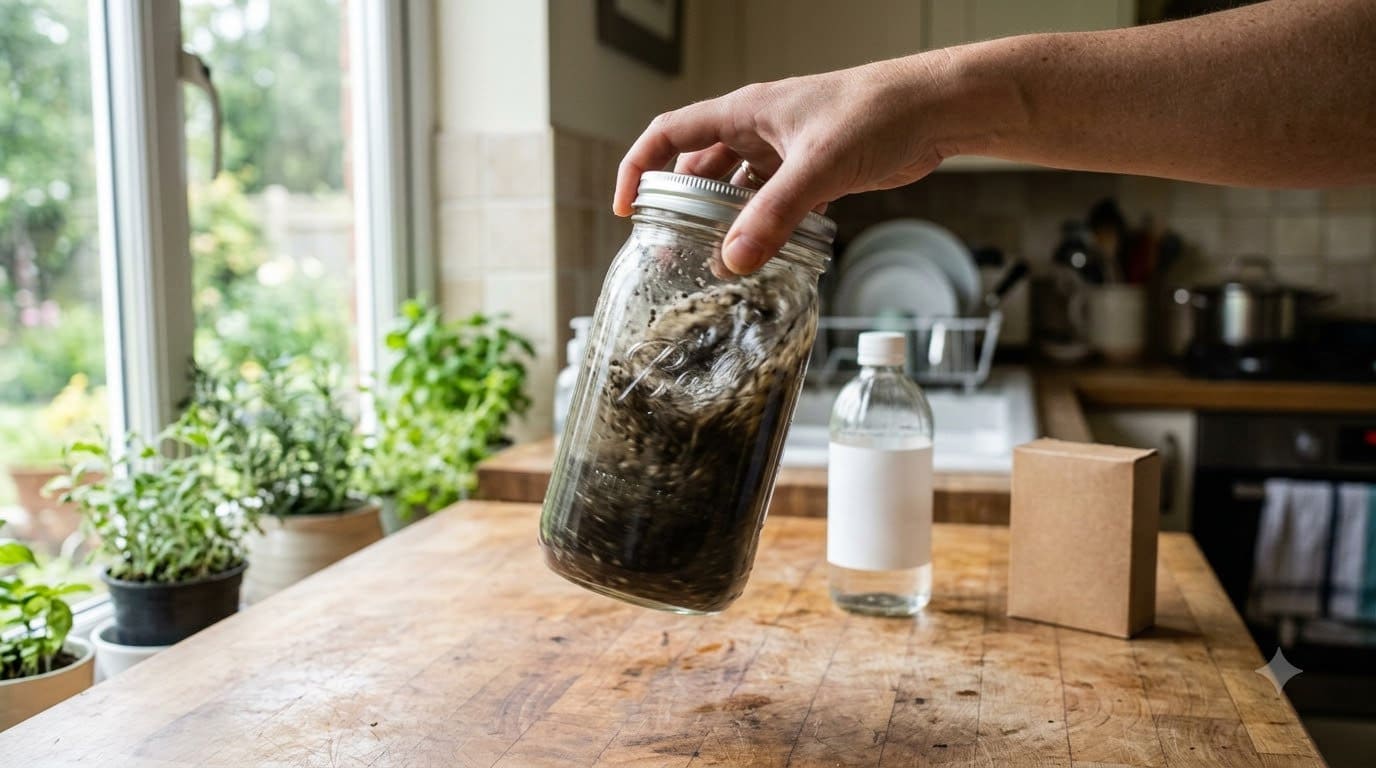
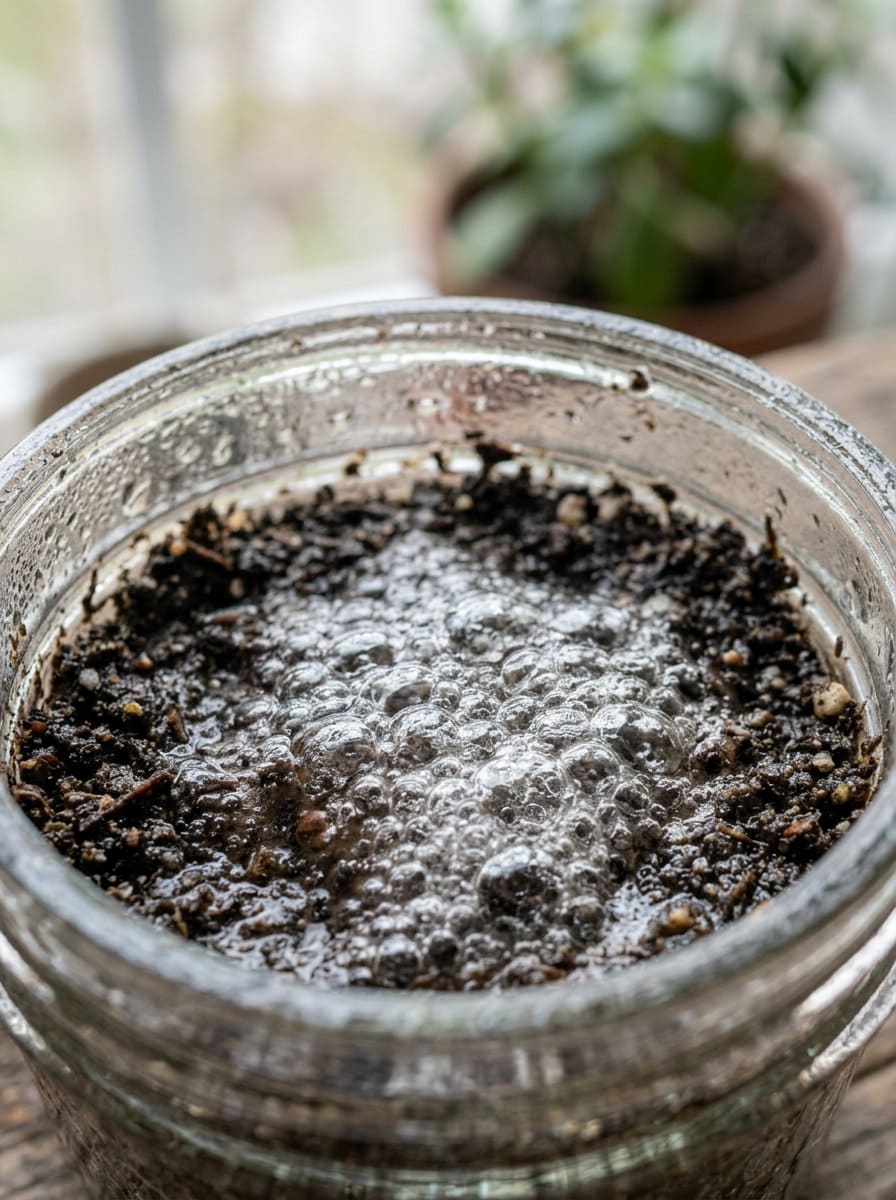
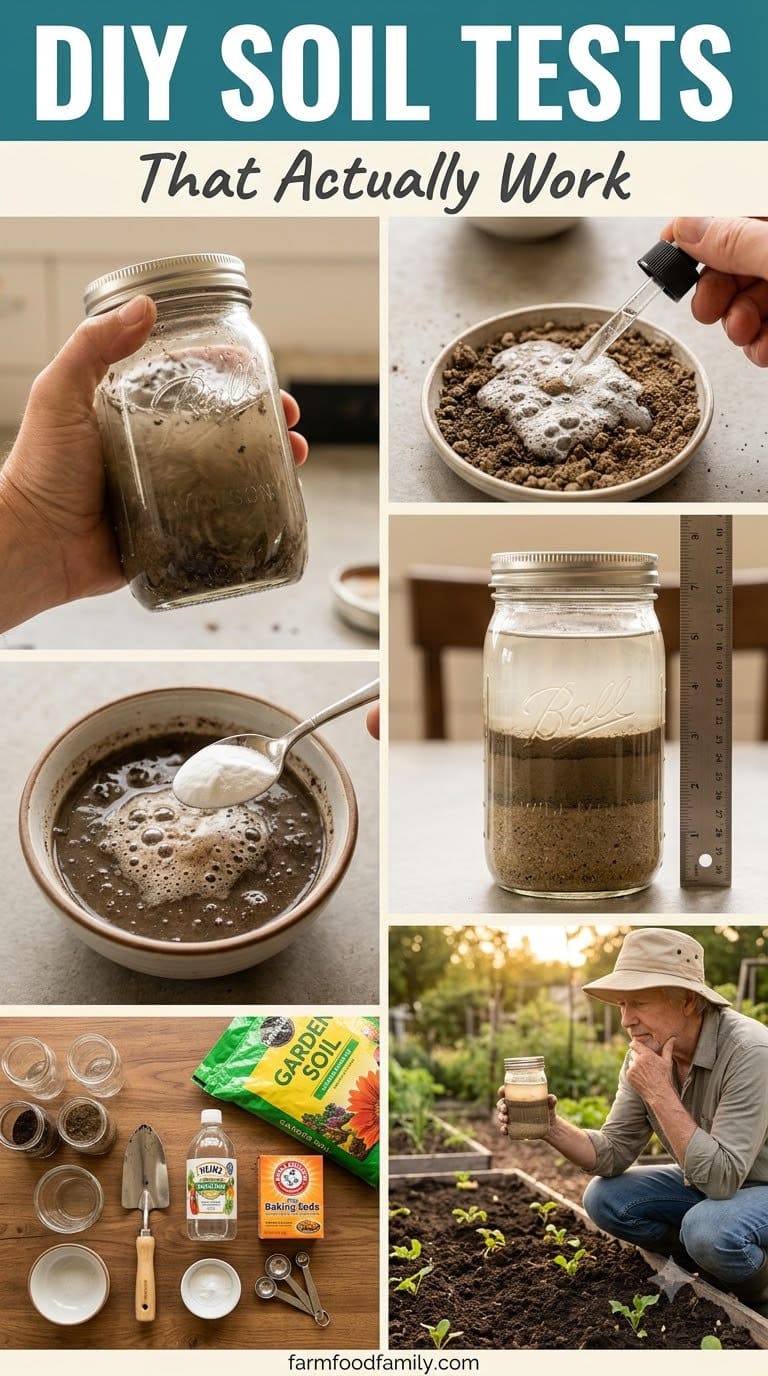
Start with the vinegar. Per Cornell SoilNOW, add a tablespoon of your soil to a container and drip vinegar directly onto it. If it bubbles or fizzes, your soil is alkaline, above pH 7, and you’re done, no need for the second test.
If nothing happens, move to a second container: add a fresh tablespoon of soil, mix in enough water to make a thick slurry, then add baking soda. If that bubbles, your soil is acidic, below pH 7.
If neither test produces any bubbling at all, your soil is roughly neutral, somewhere around pH 7. This test won’t give you an exact number, only a general direction, but that direction alone is often enough to tell you whether you need to amend at all before planting something with a strong pH preference.

Once you know which direction your soil actually leans, organic soil amendment techniques can help you act on that result instead of guessing at a fix.
Answer 4 quick questions and get matched to the exact fix for your yard — drainage, budget, layout, or something else entirely.
Take the Free QuizThe Jar Test: What Kind of Soil Do You Actually Have?
pH tells you acidity, but the jar test tells you something different and equally useful: whether your soil is sandy, heavy clay, or a workable loam.
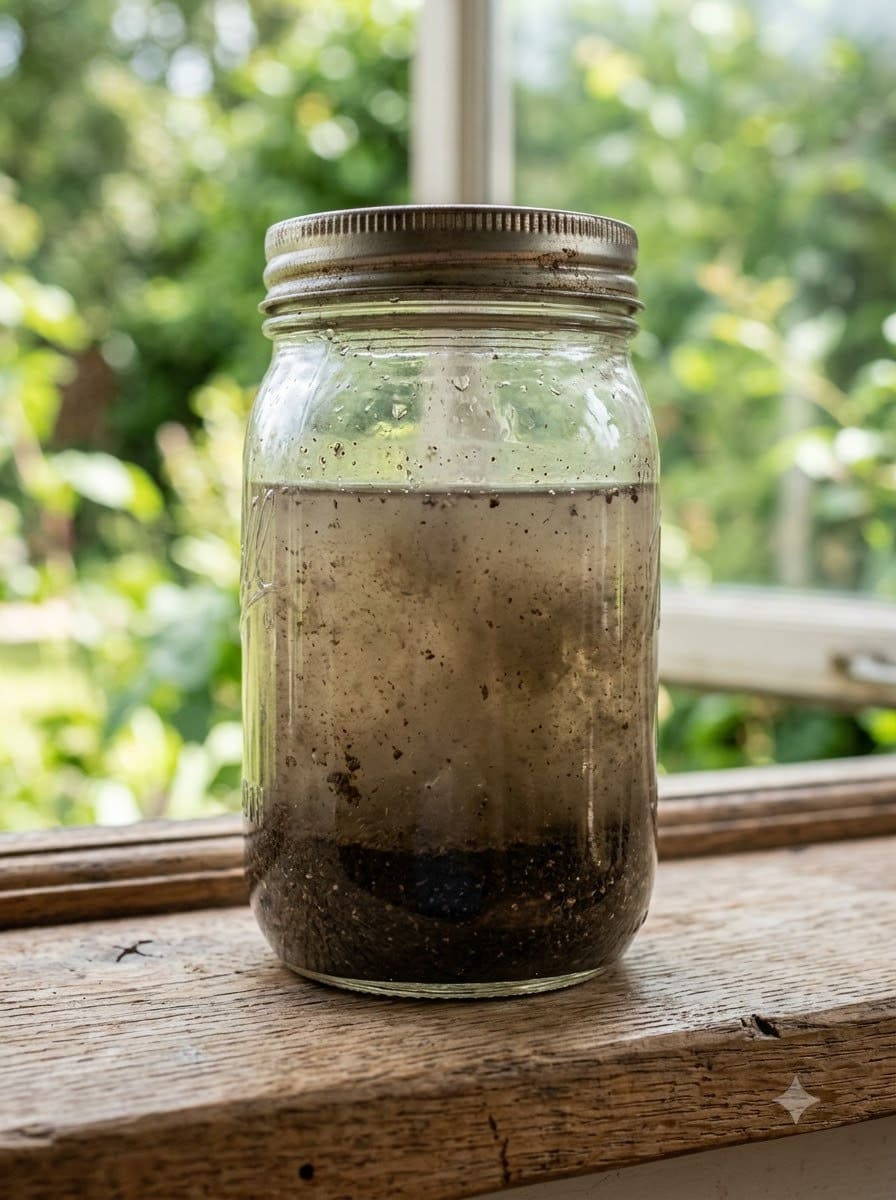
Per Clemson University HGIC, sift a soil sample to remove rocks, roots, and debris, fill a clear jar about a third full with it, then fill the rest with water and shake until it’s a uniform, cloudy slurry. Set the jar somewhere level and undisturbed, and here’s the part most people get wrong: the layers settle on very different timelines, not all at once.
Sand, the heaviest particle, settles within 1 minute, so mark that layer almost immediately. Silt takes 2 hours to settle on top of the sand. Clay, the finest particle, takes a full 48 hours to fully settle on top of the silt.
Once all three layers are marked, measure each one’s height with a ruler, divide each by the total height of all three layers combined, and plot those percentages on a soil texture triangle (widely available online) to find your actual soil type.
How Accurate Is This, Really?
Being honest about accuracy matters more than pretending a kitchen test is equivalent to a lab result.
| Method | Cost | What it tells you | Accuracy |
|---|---|---|---|
| Vinegar/baking soda test | Under $2 | General direction: acidic, alkaline, or neutral | Qualitative only, no exact number |
| Red cabbage juice indicator | A few dollars | A more precise color-based pH read | More precise than vinegar/baking soda, still not exact |
| Digital pH meter | $10 to $30 | An actual numeric pH reading | The most accurate home-testing option, per Cornell SoilNOW |
| Professional lab test | $15 to $50+ | Exact pH plus nutrient levels (N-P-K) | Most accurate overall, the only option that measures actual nutrients |
That progression, from vinegar/baking soda up through a lab test, is a genuinely useful way to decide how much precision you actually need before you spend more money or time than the situation calls for.
When You Actually Need a Real Lab Test
The DIY tests above are a real, legitimate first step, not a lesser substitute you should feel bad about using. But they only tell you pH direction and rough texture, they say nothing about actual nutrient levels (nitrogen, phosphorus, potassium) or specific deficiencies.
Most yard problems trace back to one specific, fixable cause. Find yours in 4 quick questions.
Take the Free Quiz
A step up from vinegar/baking soda for an actual numeric pH reading, the more accurate home-testing tier discussed in this guide
Shop NowThis post contains affiliate links. We may earn a commission on qualifying purchases at no extra cost to you.
If you’re about to invest real money into a new container setup, a fruit tree, or anything you’re planning to keep in the ground for years, or if a DIY test result surprises you and you want to confirm it before amending heavily, that’s the point where a real lab test through your local extension office is worth the $15 to $50 it typically costs.
Skipping straight to a lab test for a quick “should I even bother with this spot” question is usually overkill, save it for decisions with real money or years of growing time attached. Knowing your actual pH direction ahead of time also makes building a real fertilizing schedule far less guesswork-driven from the very first application.
The Jar Test I Ruined by Checking Too Early
The first time I ran a jar test, I checked it after about 20 minutes because I got impatient, saw a cloudy jar with no clear layers yet, and concluded the test just didn’t work for my soil. I moved on and never actually got a real texture read that season.
It wasn’t until I looked into it properly and found the real timing, sand in a minute, but silt needing 2 full hours and clay needing a genuinely inconvenient 48 hours, that I understood why my first attempt looked like nothing.
The second time, I set the jar on a shelf where it wouldn’t get bumped, marked it at the 1-minute point, came back at the 2-hour mark, and then genuinely forgot about it for two days before checking the final clay line, which turned out to be the right approach the whole time.
What surprised me most was how much a 48-hour wait matters here, most DIY advice glosses over that part, and skipping it is exactly why so many people, myself included the first time, write off the jar test as unreliable when it just needed more patience than expected.
Knowing your real soil texture beforehand also would have saved me a headache the season I tried to figure out what would actually thrive in a heavier clay bed without knowing that’s what I had.
FAQs
How accurate is the vinegar and baking soda soil test? It’s a qualitative test, meaning it tells you a general direction (acidic, alkaline, or neutral) but not an exact pH number. A digital pH meter or lab test gives a more precise, numeric result if you need one.
How long does the jar test take? The full test takes 48 hours to complete correctly. Sand settles within 1 minute, silt takes 2 hours, and clay takes the full 48 hours, checking any earlier will give you an incomplete or misleading read.
The average homeowner spends $616/year on yard fixes that don't address the real problem. Find out what yours actually is — before you spend another dollar.
Take the Free QuizCan I really test my soil for under $10? Yes. The vinegar and baking soda pH test and the jar texture test both use household items, vinegar, baking soda, water, and a jar, that most people already have or can buy for a few dollars total.
Do I still need a professional soil test if I do the DIY versions? Eventually, especially before a major planting investment. DIY tests give you pH direction and rough texture, but only a lab test measures actual nutrient levels like nitrogen, phosphorus, and potassium.
Want every test on one page?
Our free Soil Test Cheat Sheet puts five home tests, a lab sampling guide, and a pH chart on two printable pages. Take it out to the garden with you.
Related Posts
- Saving Water With Soil Moisture Sensors
- The Critical Role of Fertilizer in Soil Firming
- Plants and Herbs for Texas Soil
Products We Recommend
This post contains affiliate links. We may earn a commission on qualifying purchases at no extra cost to you.
XLUX Soil pH Meter, 3-in-1 Soil Tester
A step up from vinegar/baking soda for an actual numeric pH reading, the more accurate home-testing tier discussed in this guide
Shop Now
SEWANTA Wide Mouth Mason Jars, 32 oz (4 Pack)
Real, reusable jars sized correctly for a proper jar texture test
Shop Now
Luster Leaf 1601 Rapitest Soil Test Kit (pH, N, P, K)
A step-up home kit that adds basic nutrient readings beyond what either DIY test alone can tell you
Shop NowNever miss an update — choose FarmFoodFamily as your preferred source on Google.
How it works: Tap the button below to open Google's settings page, then check the box next to FarmFoodFamily.
Tap the checkbox to turn it blue — that's how you know it's set.