No Yard? Here’s How Apartment Composting Actually Works
No yard doesn’t mean no composting, it just means picking the one method (bokashi, worms, or electric) that actually fits your space and budget instead of assuming it’s not possible at all.

Never miss an update — choose FarmFoodFamily as your preferred source on Google.
How it works: Tap the button below to open Google’s settings page, then check the box next to FarmFoodFamily.
Tap the checkbox to turn it blue — that’s how you know it’s set.
If you’ve assumed composting requires a backyard, that’s not actually true anymore, even if general indoor composting advice sometimes glosses over what’s realistic in a small rental specifically.
Renters and apartment dwellers have three genuinely real options that work entirely indoors, no yard, no HOA fight, no outdoor bin required. The part that trips people up isn’t whether it’s possible, it’s picking the right one for their specific space and habits, since the three methods differ a lot more than generic “composting” advice usually explains.
Which No-Yard Method Actually Fits You?
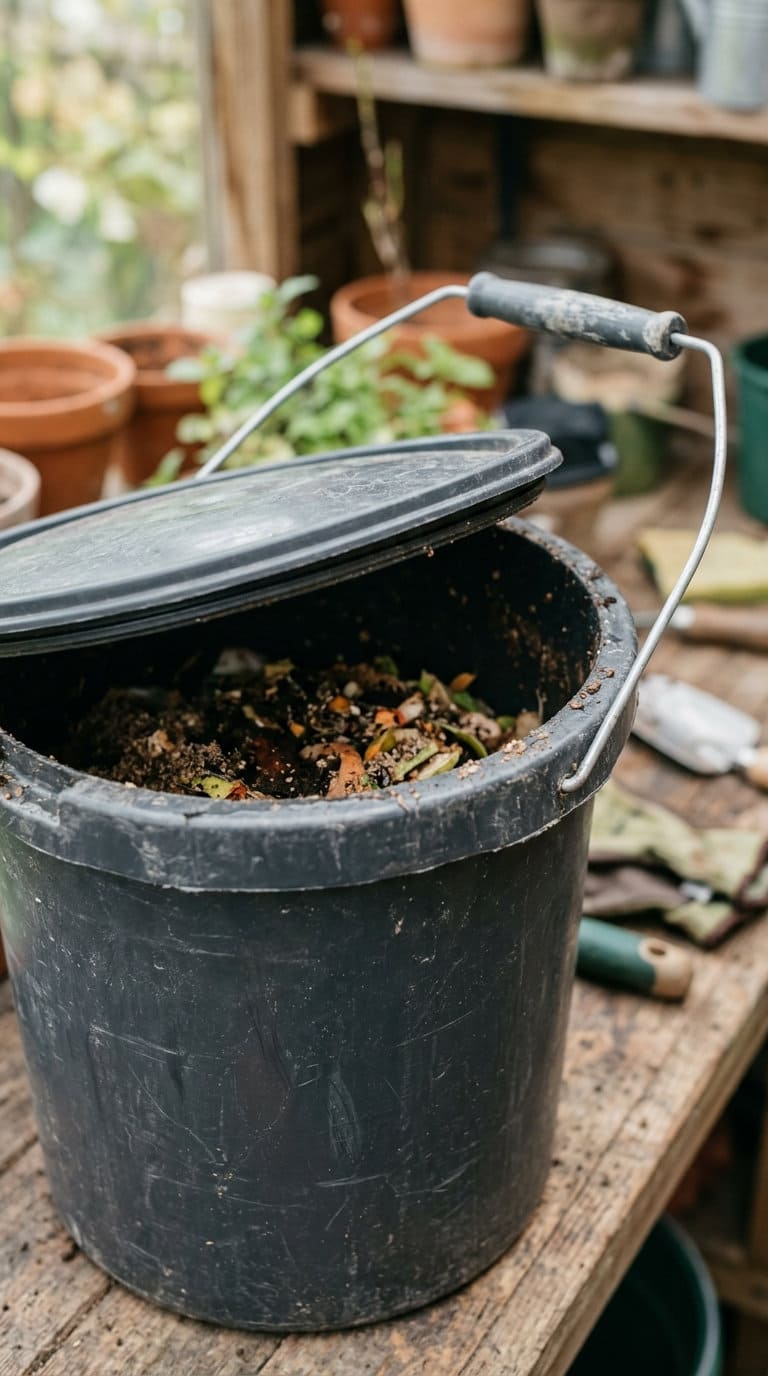
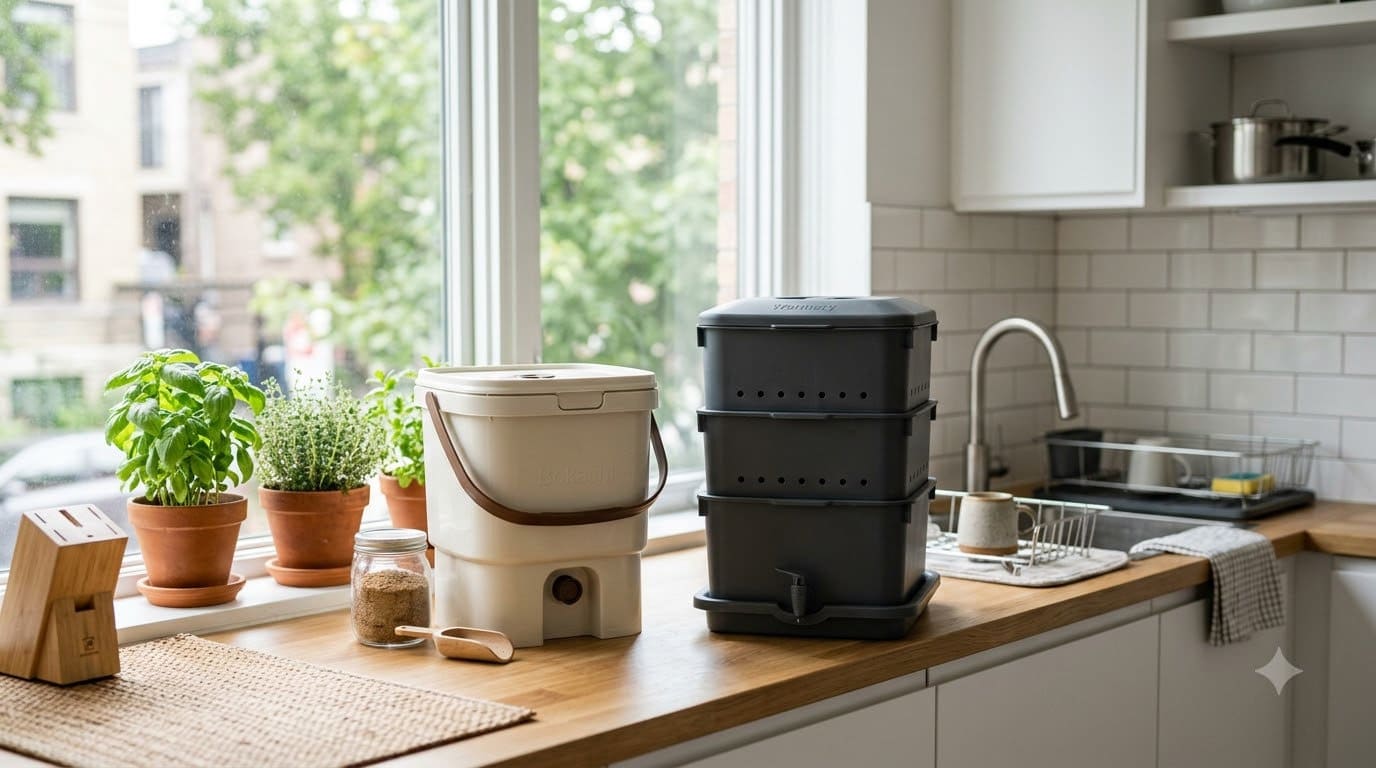
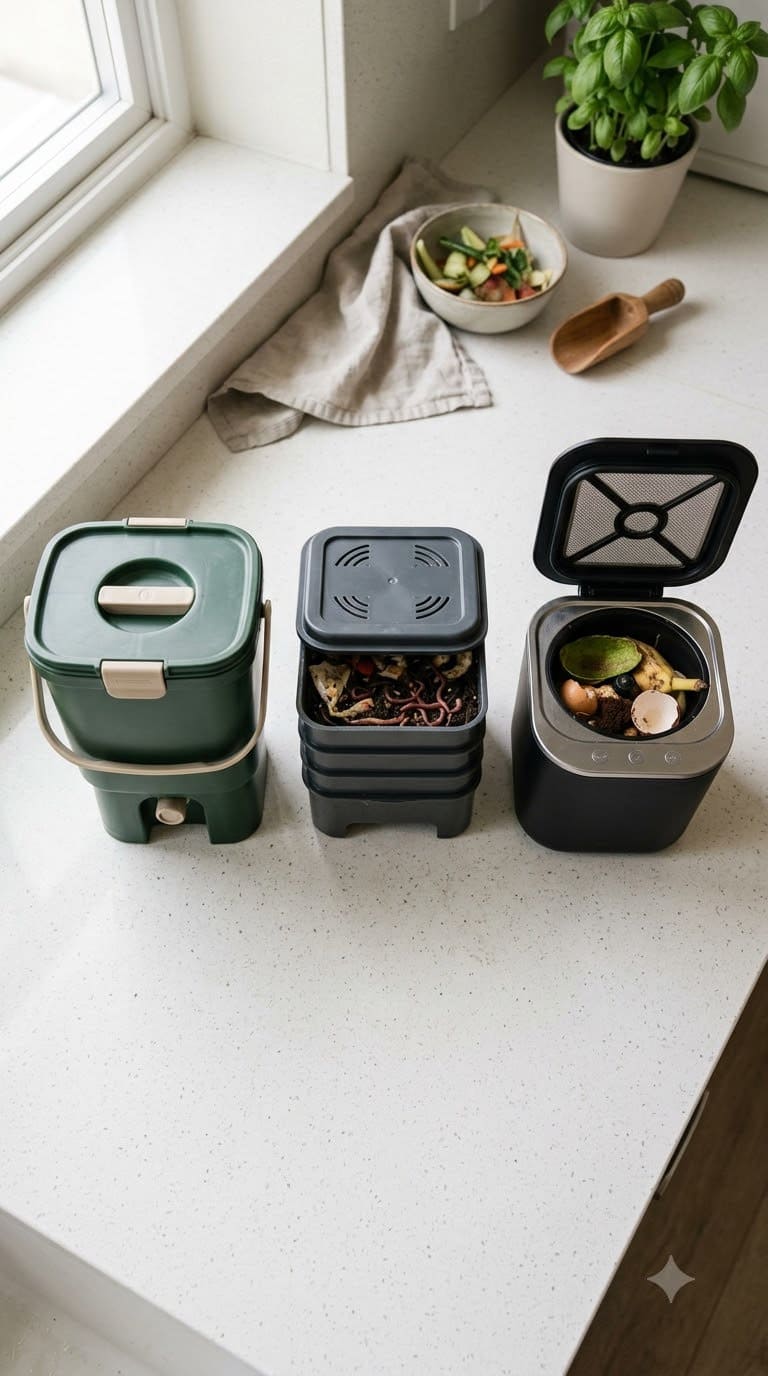
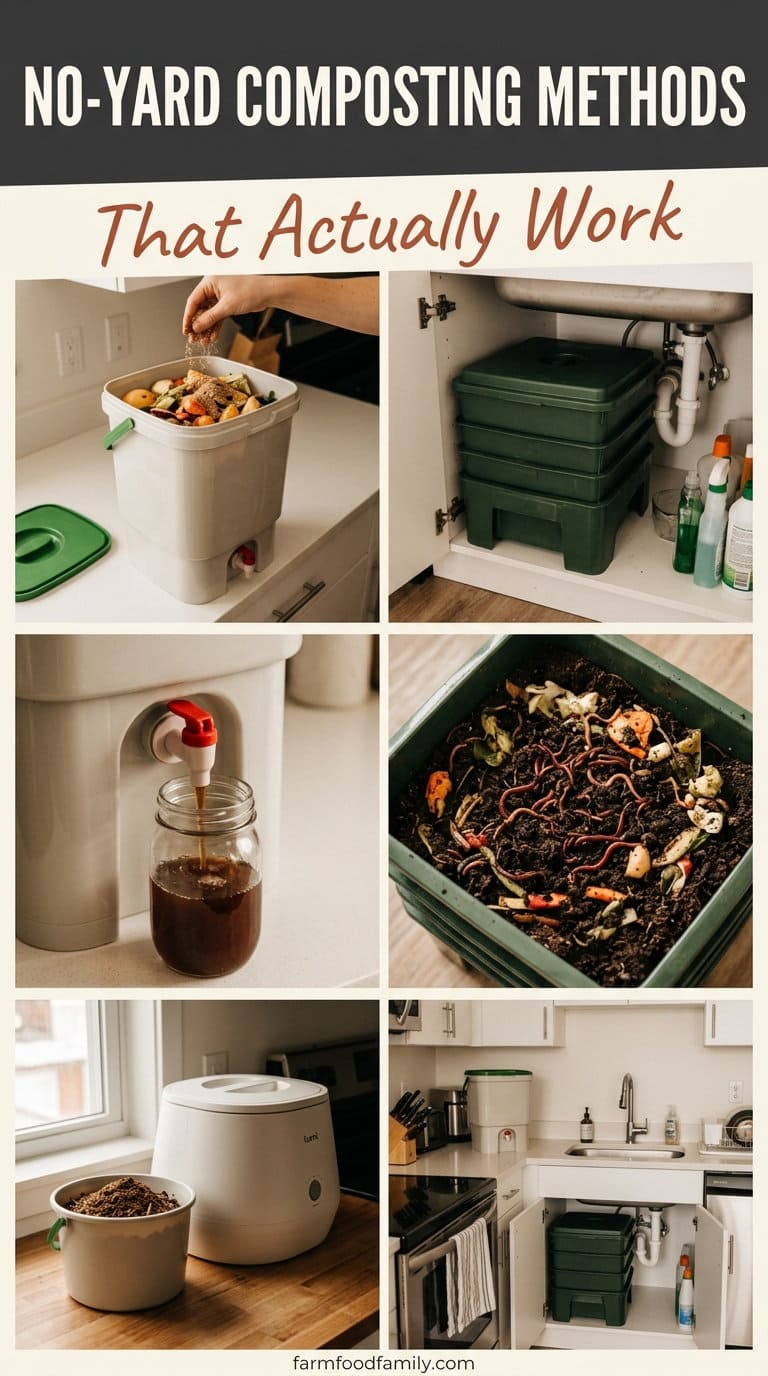
Three real methods work without any outdoor space at all. Vermicomposting uses red wiggler worms in a bin that fits under a sink or in a closet, and per Piedmont Master Gardeners, it runs cleanly with no odor or pest issues when kept in the 65 to 70°F range worms actually need.
Bokashi bucket composting ferments scraps anaerobically in a sealed container, and it’s the only one of the three that genuinely accepts meat, dairy, and cooked food, materials every other composting method excludes.
Electric countertop composters process scraps into a fine, dry material in a matter of hours using heat and grinding, the fastest and most hands-off option, though it comes with a real caveat covered below.
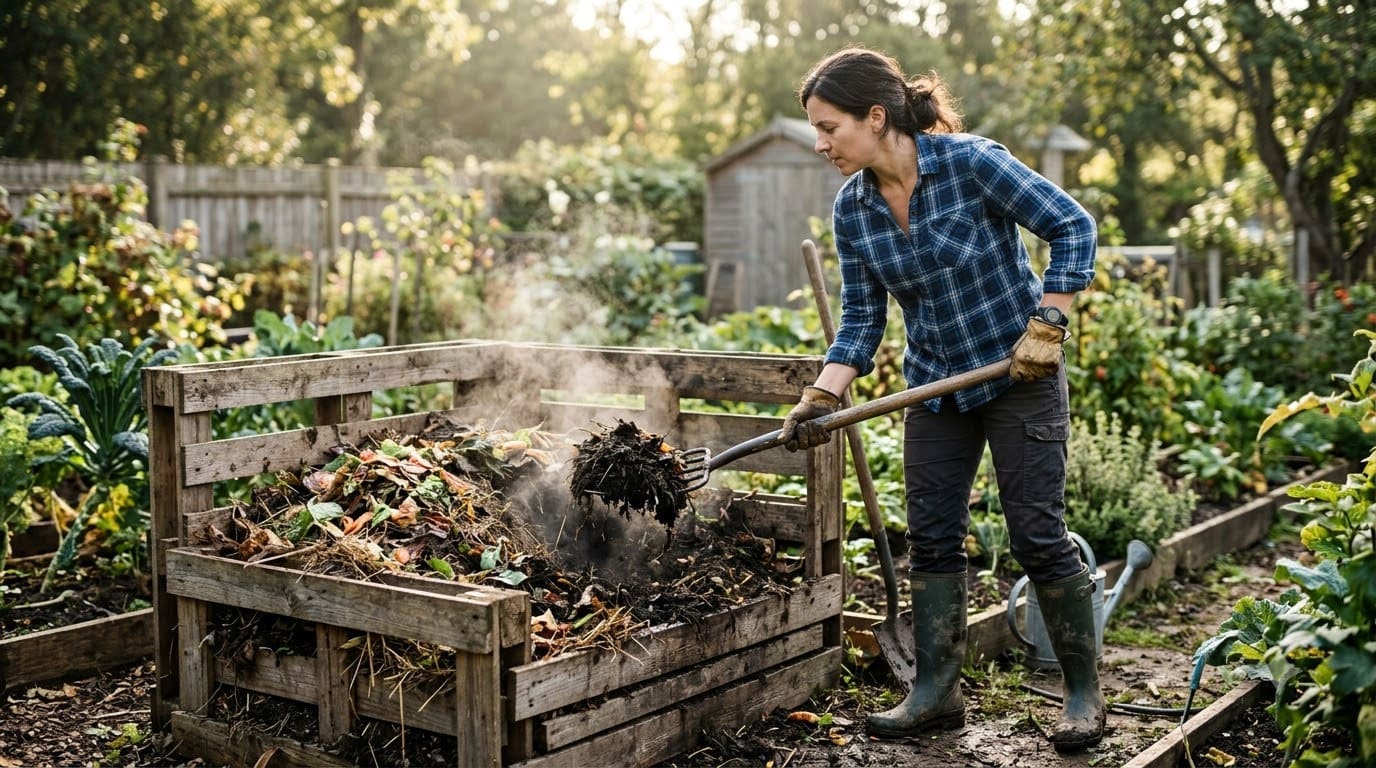
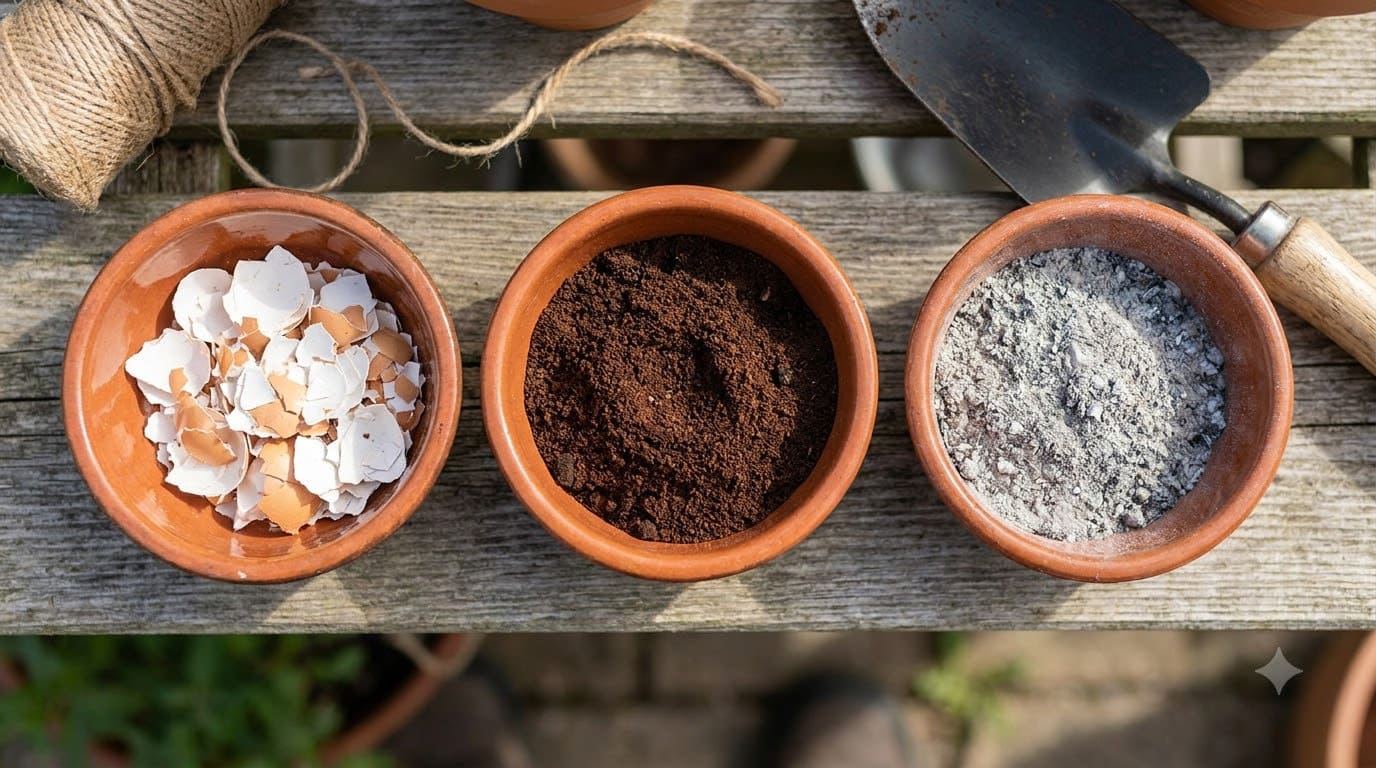
A fourth option exists if none of these fit your life: community drop-off, where you simply collect scraps and hand them off to be composted elsewhere, zero equipment required.
Answer 4 quick questions and get matched to the exact fix for your yard — drainage, budget, layout, or something else entirely.
Take the Free QuizThe Real Cost and Effort Comparison
| Method | Space needed | Real cost | Handles meat/dairy | Effort level |
|---|---|---|---|---|
| Vermicomposting (worm bin) | Small bin, under sink or in a closet | Low upfront, minimal ongoing cost | No | Low, occasional feeding and moisture checks |
| Bokashi bucket | Two 5-gallon buckets, counter or under-sink | Inoculant runs roughly $8 to $10 per month | Yes | Moderate, regular layering and liquid draining |
| Electric countertop composter | Sits directly on the counter | Equipment up to $500, plus roughly $40 per quarter in consumables | Yes (varies by model) | Low, but output needs further processing |
Per Piedmont Master Gardeners, the electric composter’s biggest real tradeoff isn’t cost, it’s that the output is a preparation step, not finished usable compost, an important distinction to know before spending several hundred dollars expecting a ready-to-use product.
Bokashi: The Only Method That Handles Meat and Dairy
If you’ve been told composting means no meat, dairy, or cooked food, that’s true for worm bins and traditional outdoor piles, but not for bokashi.
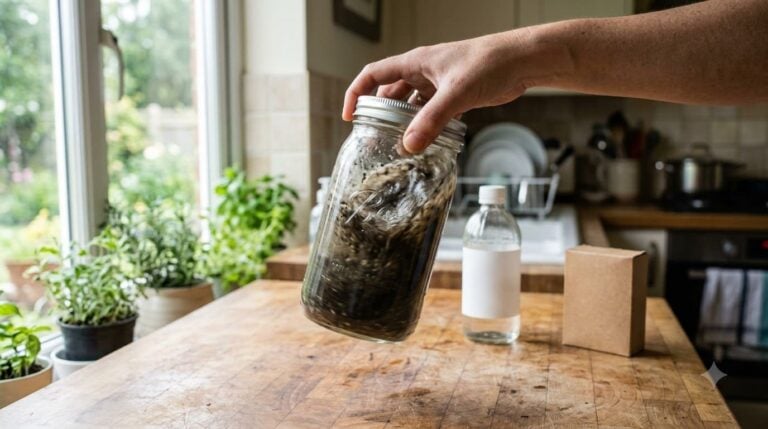
Per Washington State University Extension, the process works in six steps: collect scraps (including meat, dairy, and even small bones), sprinkle a bokashi bran inoculant over each addition, compress the material to remove air and seal the lid tightly, drain the nutrient-rich liquid every few days, let it ferment for about 10 to 14 days once the bin is full, then bury the fermented material in soil or a traditional compost pile.
A properly fermenting bin should smell sour, tangy, or pickled, almost like vinegar, not foul, which is a genuinely useful way to check it’s working correctly rather than guessing. After burying it, wait roughly 2 to 4 weeks before planting in that spot, depending on soil temperature, and the material fully breaks down within about 2 months.
Is an Electric Composter Worth It?
It depends on what you actually want out of it. If speed and hands-off convenience matter most and you’re comfortable spending up to $500 upfront plus roughly $40 a quarter in ongoing costs, an electric composter genuinely delivers processed material in hours instead of weeks.
But the output isn’t finished, usable compost the way bokashi or worm castings eventually are, it’s a dried, ground intermediate product that typically still needs to break down further in soil or a traditional pile before it’s ready to use on plants.
If your goal is finished compost you can use directly with minimal extra steps, bokashi or setting up a proper worm bin from scratch gets you there more directly, even though both take longer up front.
Most yard problems trace back to one specific, fixable cause. Find yours in 4 quick questions.
Take the Free Quiz
A complete bokashi starter kit with bin, spigot, and inoculant bran, suited to the apartment method covered in this guide
Shop NowThis post contains affiliate links. We may earn a commission on qualifying purchases at no extra cost to you.
What My First Month of Apartment Composting Actually Looked Like
I started with a bokashi setup in a two-bedroom apartment with zero outdoor space, mostly because I liked that it could take the meat scraps and leftover dairy my worm-bin-owning friend kept telling me she couldn’t add to hers, a real limitation worth knowing about before you settle on what actually works in a worm bin.
The first week felt weird, sealing food scraps into a bucket under the sink and trusting that a sour smell meant success rather than failure took some getting used to.
By week two, draining the liquid every few days had become routine, and by the time the bin was full and fermenting, the smell really was more like pickles than garbage, exactly what it was supposed to do.
The part that actually surprised me was how little space the whole system took, two stackable buckets tucked into a cabinet, nothing visible, nothing smelling up the kitchen the way I’d worried it would before starting.
If there’s one thing I’d tell someone hesitant to start because they assume apartment composting means a smelly mess, it’s that a working bokashi bin smells more like a fermentation project than trash, and that difference is the whole reason the system works indoors at all, right alongside the rest of an apartment gardening setup that finally puts the finished compost to use.
FAQs
Can you compost without a yard? Yes. Vermicomposting (worm bins), bokashi bucket fermentation, and electric countertop composters all work entirely indoors with no outdoor space required, according to Piedmont Master Gardeners and Washington State University Extension.
Which apartment composting method handles meat and dairy? Bokashi bucket fermentation is the only one of the common apartment methods that safely processes meat, dairy, and cooked food. Worm bins and most traditional composting methods exclude these materials.
Does an electric composter make real, usable compost? Not immediately. Electric countertop composters produce a dried, ground intermediate material in a matter of hours, but per Piedmont Master Gardeners, that output is a preparation step and typically needs further breakdown in soil before it’s finished, usable compost.

Is apartment composting smelly? It shouldn’t be if managed correctly. A properly fermenting bokashi bin smells sour or pickled, not foul, and a well-kept worm bin has no real odor at all. A bad smell in either system usually signals something needs adjusting, not that the method has failed.
The average homeowner spends $616/year on yard fixes that don't address the real problem. Find out what yours actually is — before you spend another dollar.
Take the Free QuizRelated Posts
- Troubleshooting Problems in Worm Composting Bins
- Step-by-Step Guide to Making Garden Compost
- Small Apartment Balcony Ideas
Products We Recommend
This post contains affiliate links. We may earn a commission on qualifying purchases at no extra cost to you.
SCD Probiotics All Seasons Indoor Composter Starter Kit, 5-Gallon
A complete bokashi starter kit with bin, spigot, and inoculant bran, suited to the apartment method covered in this guide
Shop Now
TeraGanix EM Bokashi Bran, 2 lb.
A standalone bran refill formulated by the original bokashi inventor, keeps the fermentation process going once a starter kit's supply runs out
Shop Now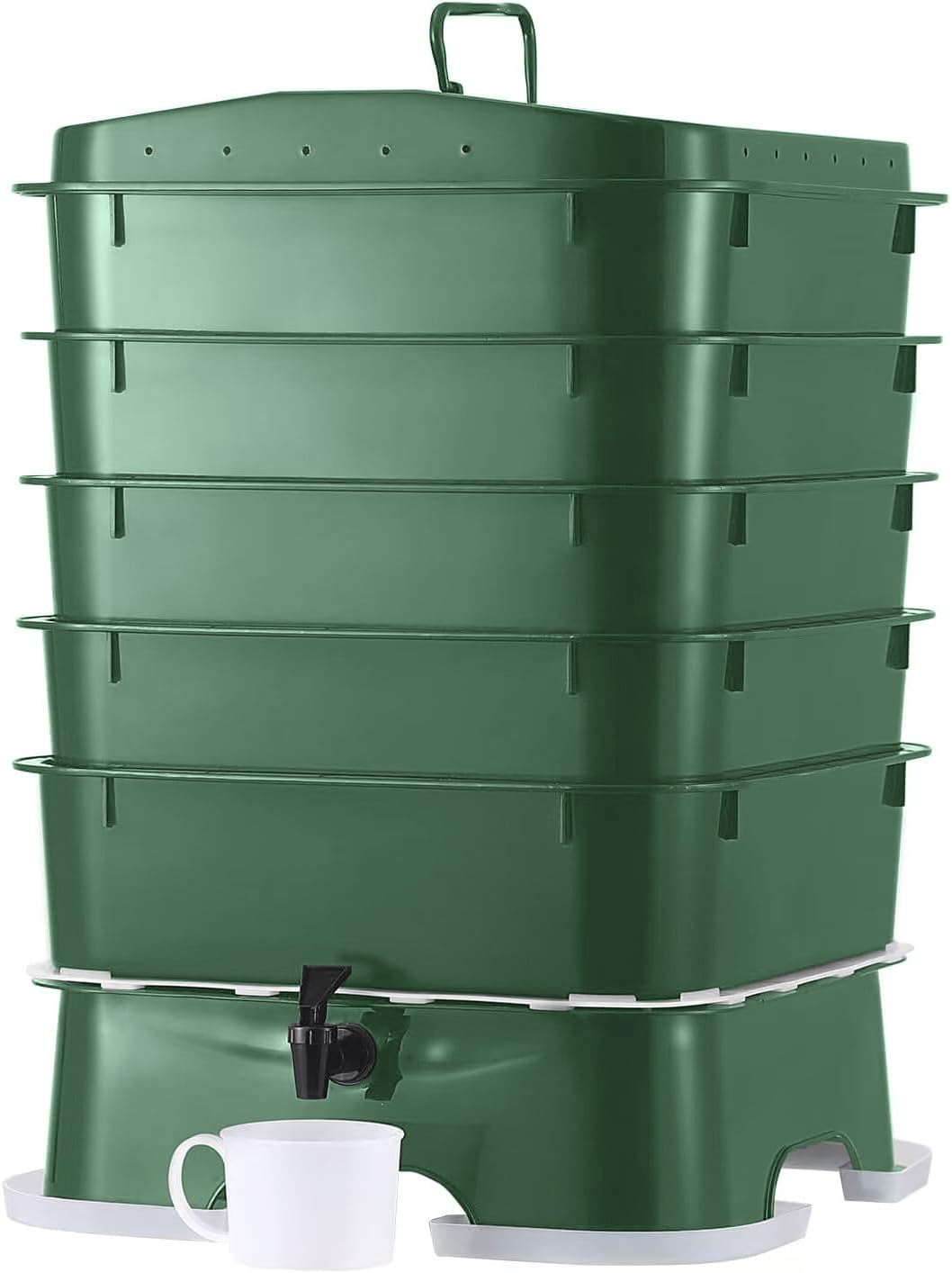
VermiHut Plus 5-Tray Worm Composting Bin
A compact, stackable worm bin suited to under-sink or closet placement for apartment vermicomposting, supports up to 10 lbs of worms
Shop NowNever miss an update — choose FarmFoodFamily as your preferred source on Google.
How it works: Tap the button below to open Google's settings page, then check the box next to FarmFoodFamily.
Tap the checkbox to turn it blue — that's how you know it's set.