August Lawn Care: 5 Steps to Repair Brown Patches Before Fall Overseeding
Not every brown patch means your lawn is dying, and not every “Brown Patch” is actually the fungal disease, here’s how to tell which problem you actually have before you spend a dollar fixing it.

Never miss an update — choose FarmFoodFamily as your preferred source on Google.
How it works: Tap the button below to open Google’s settings page, then check the box next to FarmFoodFamily.
Tap the checkbox to turn it blue — that’s how you know it’s set.
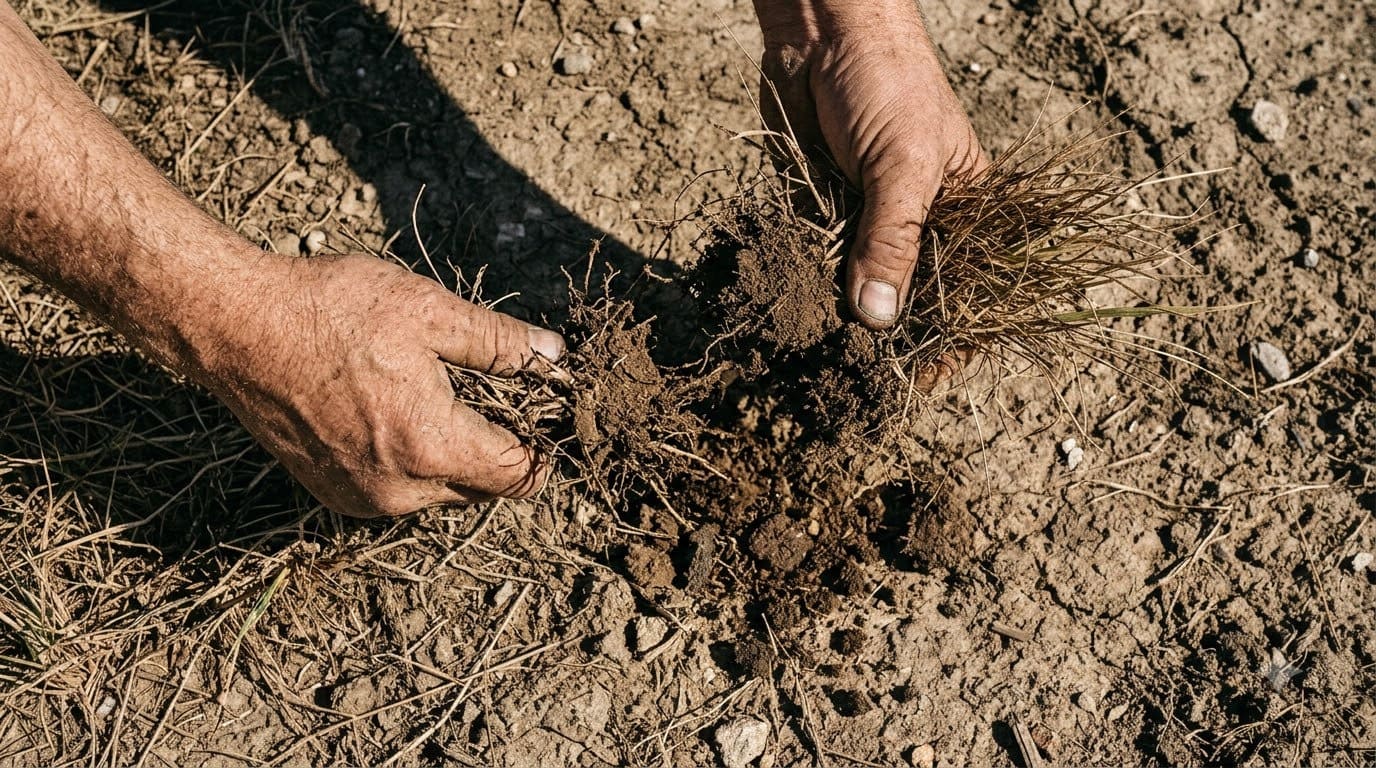
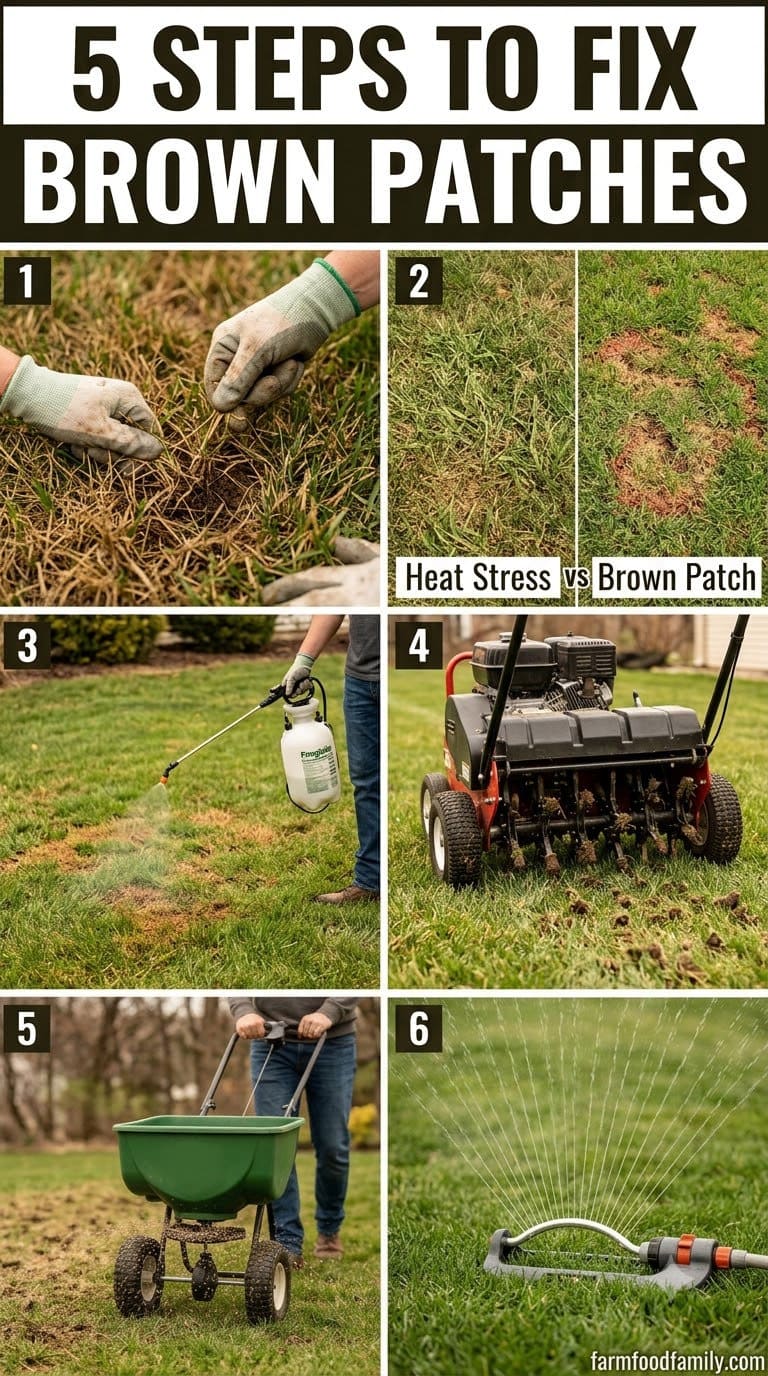
Not every brown patch in an August lawn needs reseeding, and not every brown patch is even the same problem. Grip a small clump and tug: if it resists and the crown (where blade meets soil) looks pale and firm, the grass is dormant, not dead, and will green up on its own once temperatures cool.
If it pulls free with no resistance and the crown is brown and crumbly, that section is dead and needs real repair. Separately, check the shape. Uniform tan patches that follow your driest, sunniest ground are heat stress, fixed with better watering.
Roughly circular patches with a darker ring around the edge, showing up during humid weather even with normal watering, are Brown Patch, a fungal disease that needs cultural changes and, if it’s bad, a properly timed fungicide, not just more water.
Get the diagnosis right first, then repair, then overseed on your grass type’s real calendar, cool-season lawns in September, warm-season lawns closer to late spring.
This builds on a broader beginner’s guide to growing grass from seed rather than repeating it, so check there first for basic seed-starting mechanics.

Diagnostic table: what’s actually wrong with your lawn
| Symptom | Likely cause | Dormant-or-dead test result | Fix |
|---|---|---|---|
| Uniform tan/straw color, follows sun exposure or a sprinkler’s dry zone | Heat or drought stress | Tug test resists, crown is pale and firm | Deep, infrequent watering; raise mowing height; wait it out |
| Circular patches with a darker “smoke ring” border, blades show tan lesions | Brown Patch disease (Rhizoctonia solani) | Varies by patch age, check crown at the patch edge, not the dead center | Morning watering only, moderate nitrogen, fungicide if severe |
| Patches lift like loose carpet, roots chewed short | Grub damage | Tug test pulls free instantly, almost no roots attached | Beneficial nematodes or a grub-specific insecticide, then reseed |
| Small silver-dollar-sized spots scattered across the lawn, not one big patch | Dollar spot | Tug test resists in most spots, spot-specific dieback | Same cultural fixes as Brown Patch, different fungus, similar prevention |
| Brown patch stays brown for weeks with zero green regrowth even after cooler, wetter weather | Actually dead | Tug test pulls free, crown is brown and crumbles | Rake out dead thatch, reseed or resod that section |
Step 1: Run the tug test before you do anything else
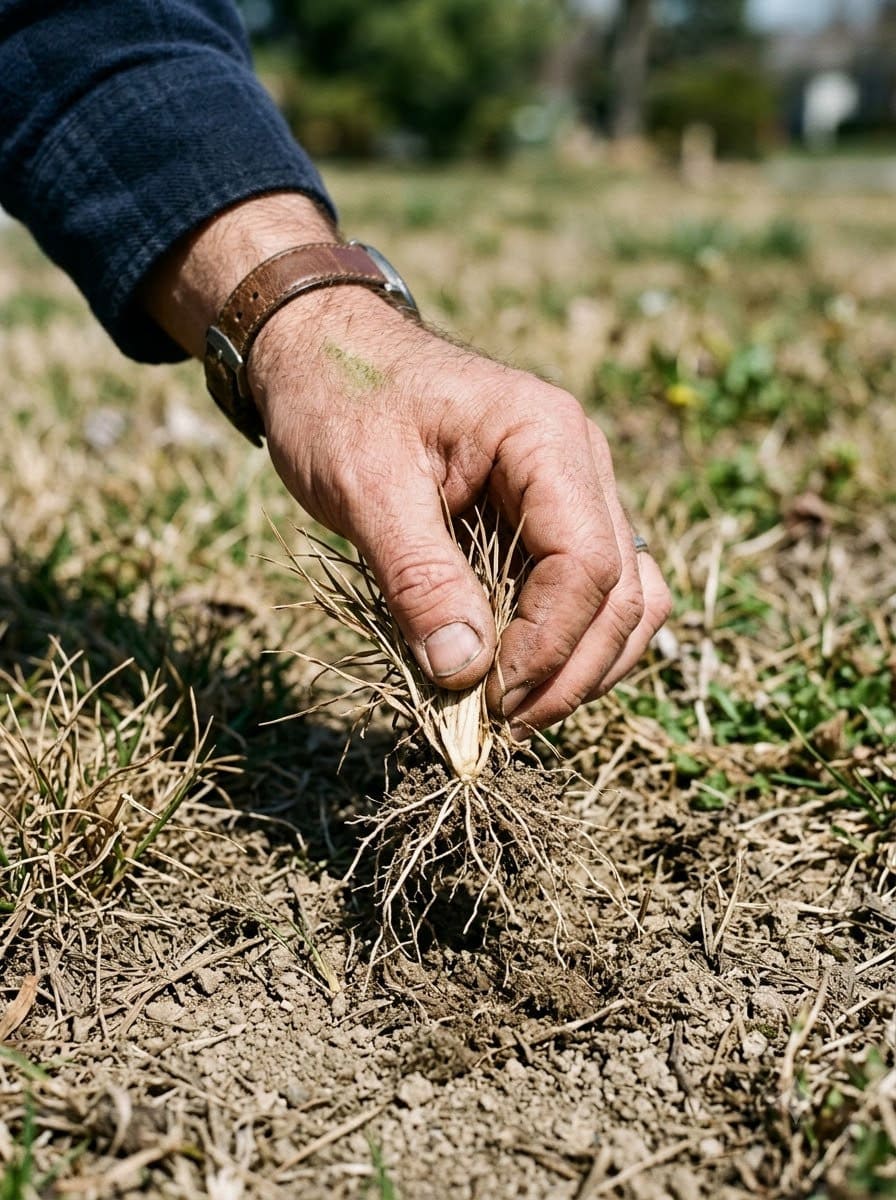
Grab a small handful of the brown grass, close to the soil, and pull with steady pressure. Don’t yank, a real tug is enough to tell you what you need to know in about five seconds.
Answer 4 quick questions and get matched to the exact fix for your yard — drainage, budget, layout, or something else entirely.
Take the Free QuizIf the blades resist and the roots stay anchored, look at the crown, the little swollen point right where the blade meets the soil. A pale, cream-white, firm crown means the plant is alive and simply dormant. It’s conserving water, not dying.
If the whole clump pulls free with almost no resistance, and the crown crumbles between your fingers instead of holding shape, that section is dead. No amount of watering brings it back. It needs actual reseeding, not patience.
Run this test in 3 to 4 different spots across the discolored area, not just once. A lawn under heat stress is often a mix of both, some fully dormant, some genuinely gone, especially right at the edge of a sprinkler’s reach.
Step 2: Tell Brown Patch disease apart from ordinary heat browning
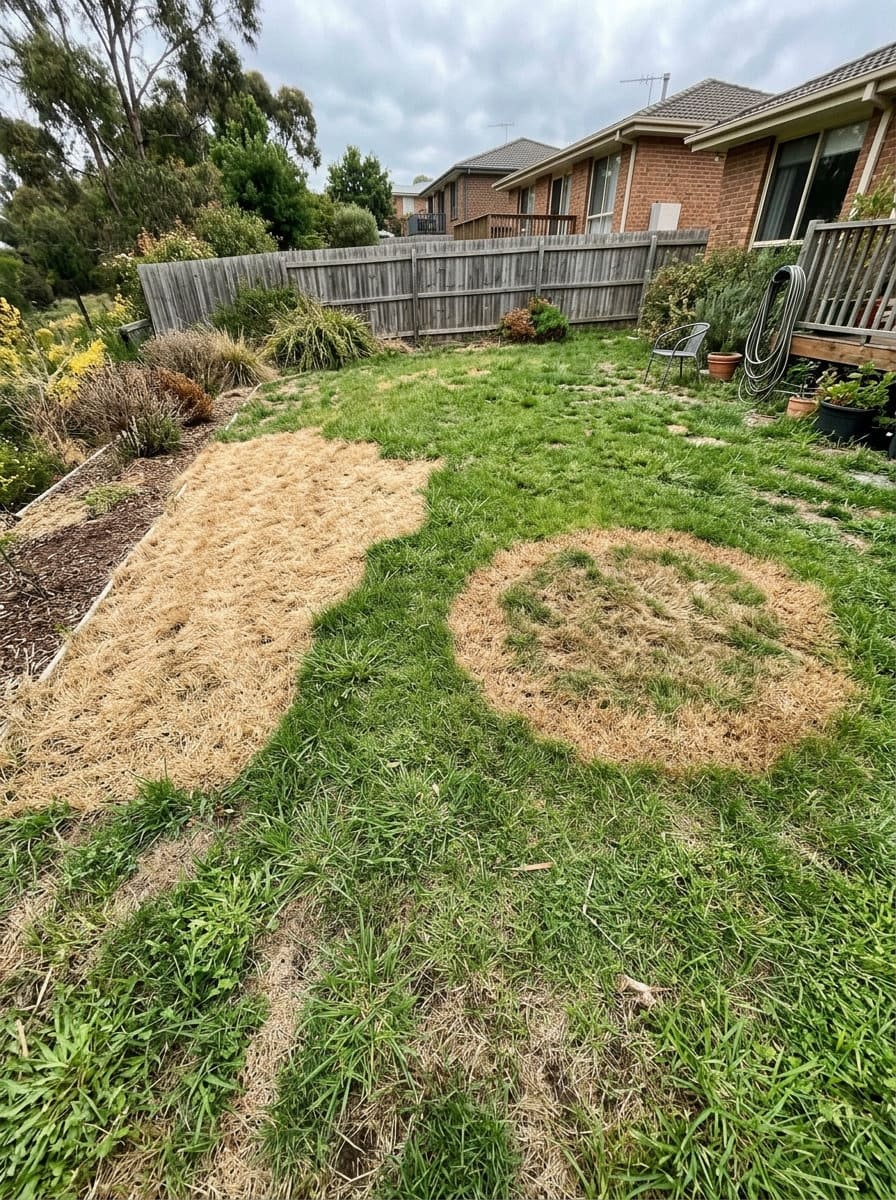
Here’s the mix-up almost every homeowner (and honestly, a lot of blog posts) makes. “Brown patches” is a description. “Brown Patch” is a specific fungal disease, caused by Rhizoctonia solani, and treating one like the other wastes money and time.
Penn State Extension’s turfgrass pathology fact sheet describes the disease hitting tall fescue, perennial ryegrass, and bentgrasses hardest, favoring nights above roughly 68°F with daytime highs of 80°F or more, plus rain or heavy humidity. On closely mowed turf you can sometimes see a dark purplish “smoke ring” around the patch edge in early morning, before the dew burns off.
Heat and drought stress, by contrast, doesn’t care about humidity at all. It follows your yard’s actual watering pattern. The driest, sunniest corner goes first, a strip under a gutter overhang stays green while the rest of the slope bakes, and every blade in the affected area is a uniform straw color with no darker ring, no lesions, no doughnut shape.
Clemson Cooperative Extension’s Brown Patch & Large Patch factsheet adds a genuinely useful confirming detail on warm-season lawns specifically. With Large Patch (the warm-season version of the same disease family), the individual leaf blades pull free from the sheath easily right at the edge of an active patch, distinct from the tug test in Step 1, which is about the whole plant’s crown, not a single leaf’s attachment point. If you’re tugging at the leafy edge of a suspicious ring and blades detach like wet paper, that’s disease activity, not dormancy.
Most yard problems trace back to one specific, fixable cause. Find yours in 4 quick questions.
Take the Free Quiz
4.5 stars, 242 ratings; needed for Step 4 soil prep on compacted cool-season lawns before overseeding
Shop NowThis post contains affiliate links. We may earn a commission on qualifying purchases at no extra cost to you.
And but here’s the part that trips people up the most: watering more when you’re actually dealing with disease makes it worse. Rhizoctonia needs 10-plus hours of continuous leaf wetness to really get going, so an evening sprinkler cycle on a disease patch is close to the worst thing you can do, even though “water it” feels like the obvious fix for anything brown.
Step 3: Treat the actual problem, not the symptom
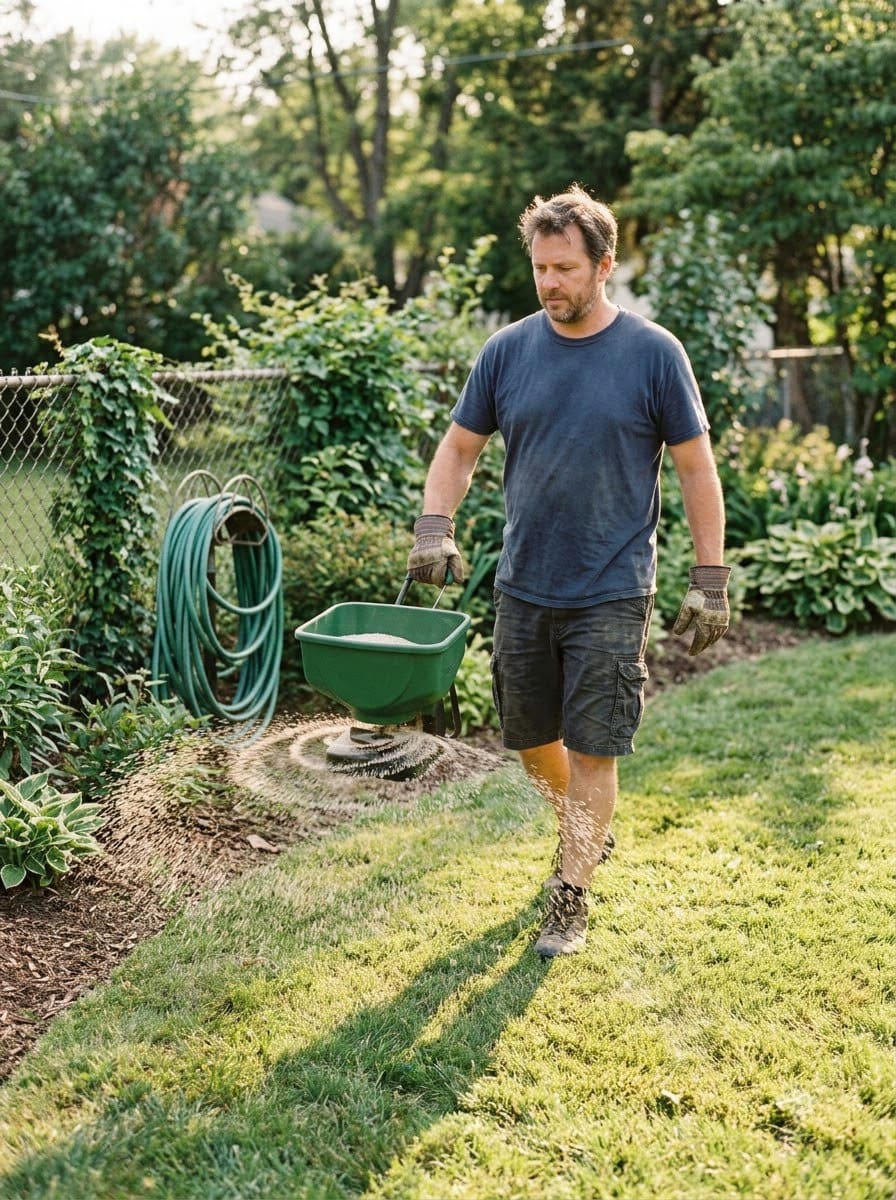
If it’s heat or drought stress: switch to one deep soak, roughly an inch of water, once or twice a week, instead of a shallow daily sprinkle. Shallow watering trains roots to stay near the surface, which is exactly what makes them fold under heat in the first place. Raise your mower deck to 3 to 3.5 inches too, since taller grass shades its own root zone.
If it’s Brown Patch or Large Patch: stop watering in the evening immediately, water only in the early morning so blades dry by mid-morning. Cut back on nitrogen fertilizer during the hot months. Clemson notes disease severity climbs on heavily fertilized, heavily irrigated turf compared to a moderately managed lawn, so the instinct to “feed it back to health” is backwards here.
If the disease is bad enough to warrant a fungicide, timing matters more than the product. Penn State’s guidance is that curative applications work best “immediately after the onset of symptoms,” not weeks later once a patch has already scarred. Homeowner-grade products should be rotated across different fungicide classes (DMI, QoI, SDHI) rather than the same one repeatedly, since Rhizoctonia can build resistance to a single mode of action over a season.
Budget note. A bag of granular lawn fungicide and a handheld spreader runs well under $50 and covers a typical residential lawn for a season. A professional lawn-care company’s preventive fungicide program, which usually means several applications timed across the humid stretch, costs meaningfully more but is worth considering if the disease has come back two years running despite cultural fixes.
Step 4: Prep the soil before you overseed anything
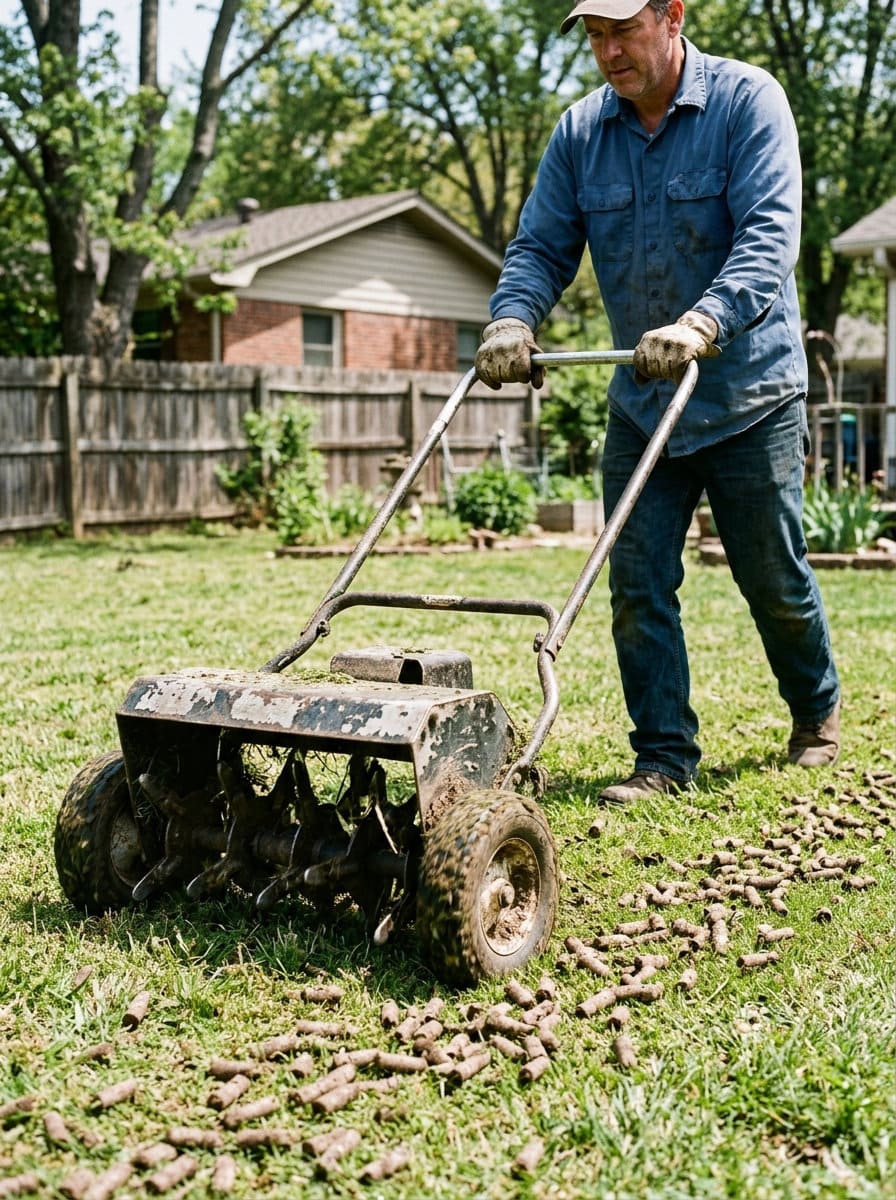
Once you know which sections are dead (not just dormant) and which disease or stress issue caused it, clear the dead thatch with a rake so bare soil is actually exposed, seed sitting on top of a mat of dead grass mostly just feeds birds.
If the soil feels hard underfoot or water pools instead of soaking in, run a core aerator over the area first. The Virginia Cooperative Extension’s fall lawn care guide, authored by Michael Goatley Jr., Extension Turfgrass Specialist at Virginia Tech, flags fall as the ideal aeration window for cool-season turf specifically, since active growth right after aerating supports fast recovery. Warm-season lawns are the opposite case, more on that in Step 5.
A thin layer of topsoil or compost, about a quarter inch, pressed lightly into the aerated holes and bare patches improves seed-to-soil contact, which matters more for germination than almost anything else in this whole process. Seed that isn’t touching soil mostly just dries out and dies before it ever roots.


Step 5: Overseed on your grass type’s real calendar, not a generic date
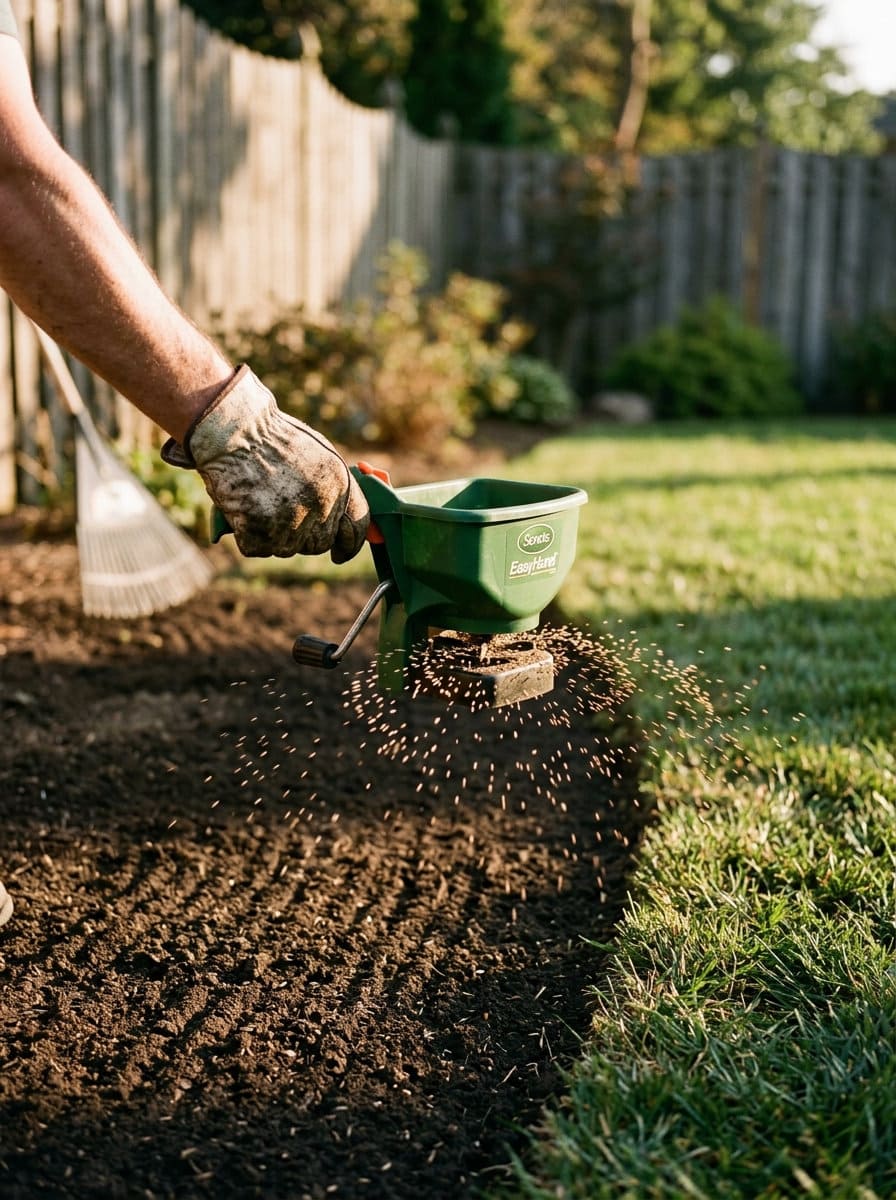
This is where a lot of generic advice quietly breaks, because a September overseed date is genuinely correct for a fescue lawn in Ohio and genuinely wrong for a St. Augustine lawn in Florida.
The average homeowner spends $616/year on yard fixes that don't address the real problem. Find out what yours actually is — before you spend another dollar.
Take the Free Quiz| Grass type | Overseed window | Why | Notes |
|---|---|---|---|
| Cool-season (tall fescue, Kentucky bluegrass, perennial ryegrass) | Late August through early October | Warm soil plus cooling air gives fast germination and a long root-in window before frost | Michael Goatley Jr./Virginia Tech: this is the single best window all year for cool-season establishment |
| Warm-season (Bermuda, St. Augustine, zoysia, centipede) | Late spring into early summer, NOT September | Warm-season grasses are entering dormancy by fall, seed sown then just fails to establish before cold | If a warm-season lawn has thin September patches, overseed with a temporary annual ryegrass for winter color instead, then reseed the permanent grass the following spring |
If you’re not sure which category your lawn falls into, a full breakdown of common lawn grass types is the faster stop than guessing from this table alone. St. Augustine and centipede owners specifically get more detail in the species-specific guides for St. Augustine grass and centipede grass, since both have their own quirks around fall dormancy timing that a generic overseed table can’t fully cover.
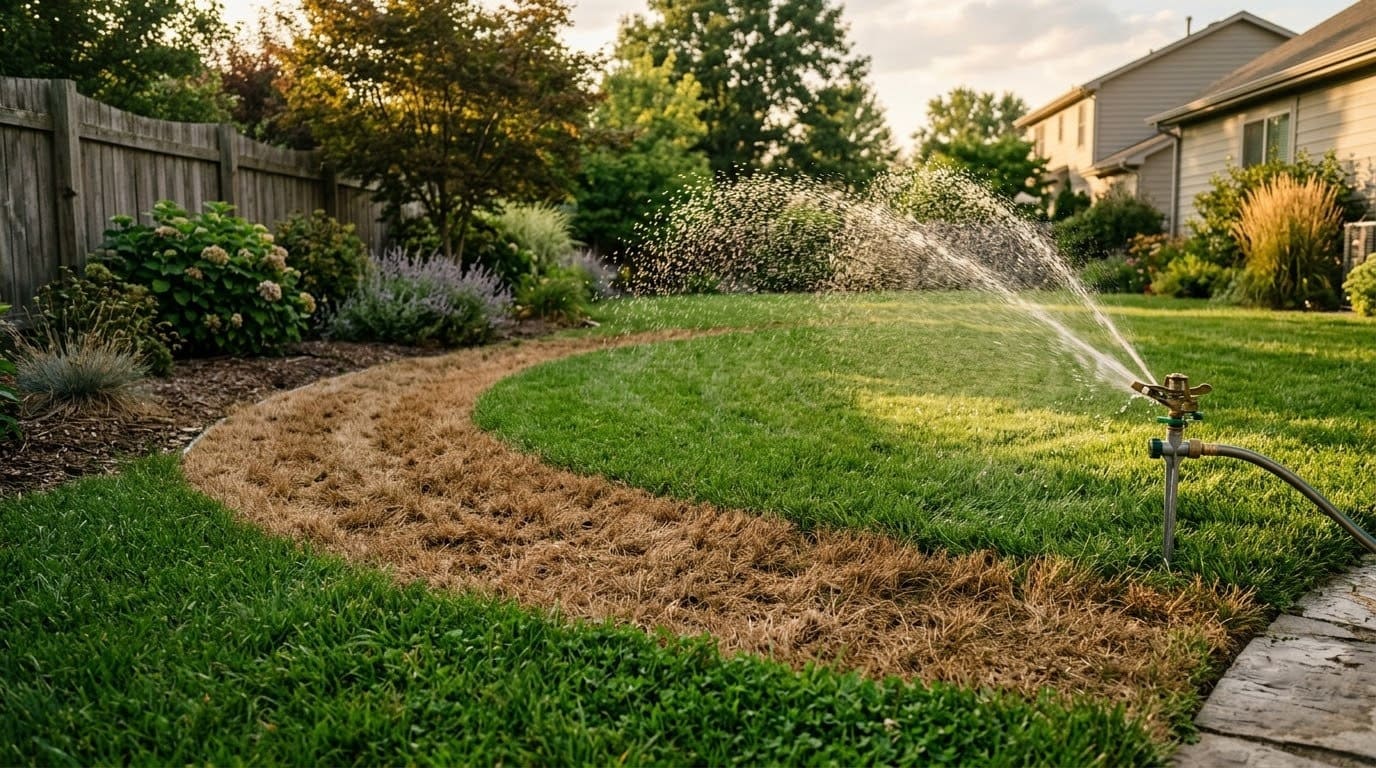
Once seed is down, water lightly but daily, enough to keep the top half-inch of soil damp, never soggy, until the new grass reaches about the same height as the surrounding lawn. Then taper to the deep-and-infrequent schedule from Step 3. Keep foot traffic and mowing off the new seed until it’s had 2 to 3 mows worth of growth, usually 3 to 4 weeks.
Does the repair timing change by region?
| Region type | Priority move in August | Bigger risk | Overseed timing shift |
|---|---|---|---|
| Cold-winter North (Upper Midwest, New England, Mountain West) | Start Step 4 prep by mid-August | Not enough weeks left before frost to root new seed | Overseed as early in the late-August window as possible, don’t wait for cooler weather to feel comfortable |
| Hot-humid South (Southeast, mid-Atlantic) | Prioritize disease diagnosis (Step 2) over drought diagnosis, humidity favors Brown Patch here more than dry stress | Evening thunderstorms leave overnight leaf wetness that feeds disease | Cool-season overseed can push into September-October; warm-season lawns should not be overseeded with cool-season seed at all |
| Dry Southwest / interior West | Prioritize the tug test, most August browning here really is drought dormancy, not disease | Fast moisture loss after any seeding, mulch and shade new seed | Warm-season (Bermuda) lawns dominate here, follow the late-spring window, not fall |
| Transition zone (mid-South, parts of TX/OK/NC) | Diagnose carefully, this region grows both cool- and warm-season lawns depending on the yard | Easy to apply the wrong region’s calendar to your specific grass | Check your actual grass species against the table above before picking a date |
What I learned fixing my own brown patches
The mistake I made the first year was watering every evening after work, because that’s when I had time, and it felt like the responsible thing to do for a stressed-looking lawn.
It wasn’t drought stress. It was Brown Patch, and I was basically running a humidity chamber for it every single night for about six weeks before I figured out what was actually happening.
The tug test would have told me in five seconds what three separate sections of fescue in my backyard actually looked like once I finally learned it, two dormant, one genuinely dead from the disease sitting in standing moisture against a fence line with bad airflow. I’d been treating all three the same the whole time.
And honestly, the part that annoyed me most in hindsight was how confidently a couple of blog posts I’d read described “brown patches” like it was one problem with one fix. It’s not. Fescue in full sun ten feet away and fescue in the shade of a fence post can have two completely different things wrong with them in the same week.
If there’s one thing worth doing differently from how I started it, it’s diagnosing before treating, every time, even when the “just water it more” instinct feels obvious. About 340 square feet of lawn near that fence line took a full extra season to recover because I fixed the wrong problem first.
FAQs
Is it too late in August to fix a brown lawn before winter? No, for cool-season grass, late August through early October is actually the best window of the whole year to reseed, per Virginia Tech’s extension guidance. For warm-season grass, August is too late to seed permanently, an annual ryegrass overseed for winter color is the realistic option instead.
Can I use a fungicide and also overseed at the same time? Not on the same section right away. Let a fungicide-treated area sit through its labeled reentry and reseeding interval (check the product label, it varies) before spreading new seed there, or the fungicide can interfere with germination.
My whole backyard looks dead, not just a few patches, what now? If the tug test comes back “dead” across most of the yard rather than a few isolated patches, spot-repair isn’t the right project anymore. A full renovation, covered in a step-by-step turf installation guide, is the more realistic path than reseeding piece by piece.
Does mowing height actually matter for brown patches? Yes, on both fronts. Taller grass (3 to 3.5 inches for most cool-season lawns) shades the soil and root zone, helping with heat stress, and Clemson’s guidance notes disease pressure tends to be worse on stressed, over-mowed turf too, so raising the deck helps either diagnosis.
Related Posts
Products We Recommend
This post contains affiliate links. We may earn a commission on qualifying purchases at no extra cost to you.
Manual Core Aerator Lawn Tool, 3 Hollow Tines
4.5 stars, 242 ratings; needed for Step 4 soil prep on compacted cool-season lawns before overseeding
Shop Now
Scotts DiseaseEx Lawn Fungicide, 10 lbs
4.4 stars, 14.3K ratings, labeled specifically for Brown Patch; needed for Step 3 if disease diagnosis is confirmed and cultural fixes aren't enough alone
Shop Now
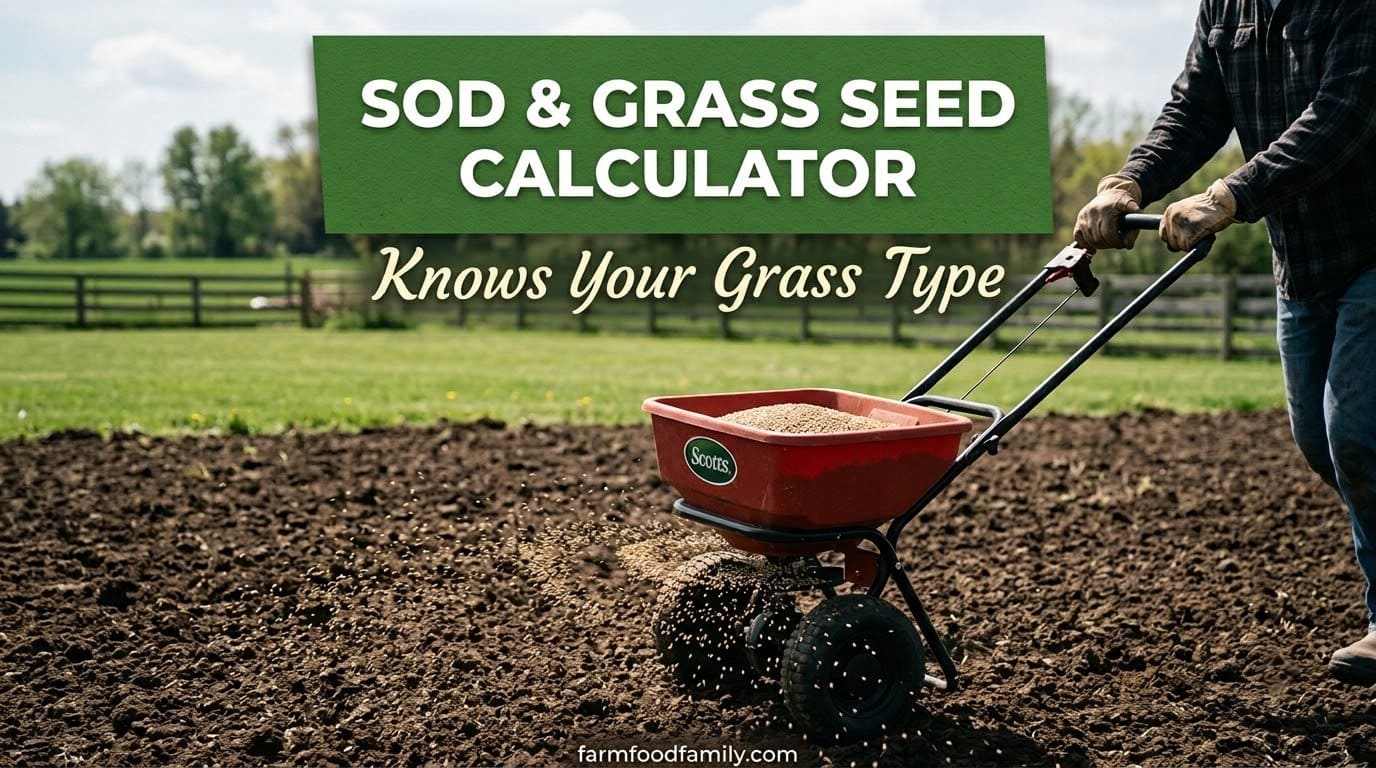
Scotts Turf Builder EdgeGuard DLX Broadcast Spreader
4.4 stars, 6.5K ratings; needed for even seed and starter fertilizer distribution in Step 5
Shop NowNever miss an update — choose FarmFoodFamily as your preferred source on Google.
How it works: Tap the button below to open Google's settings page, then check the box next to FarmFoodFamily.
Tap the checkbox to turn it blue — that's how you know it's set.