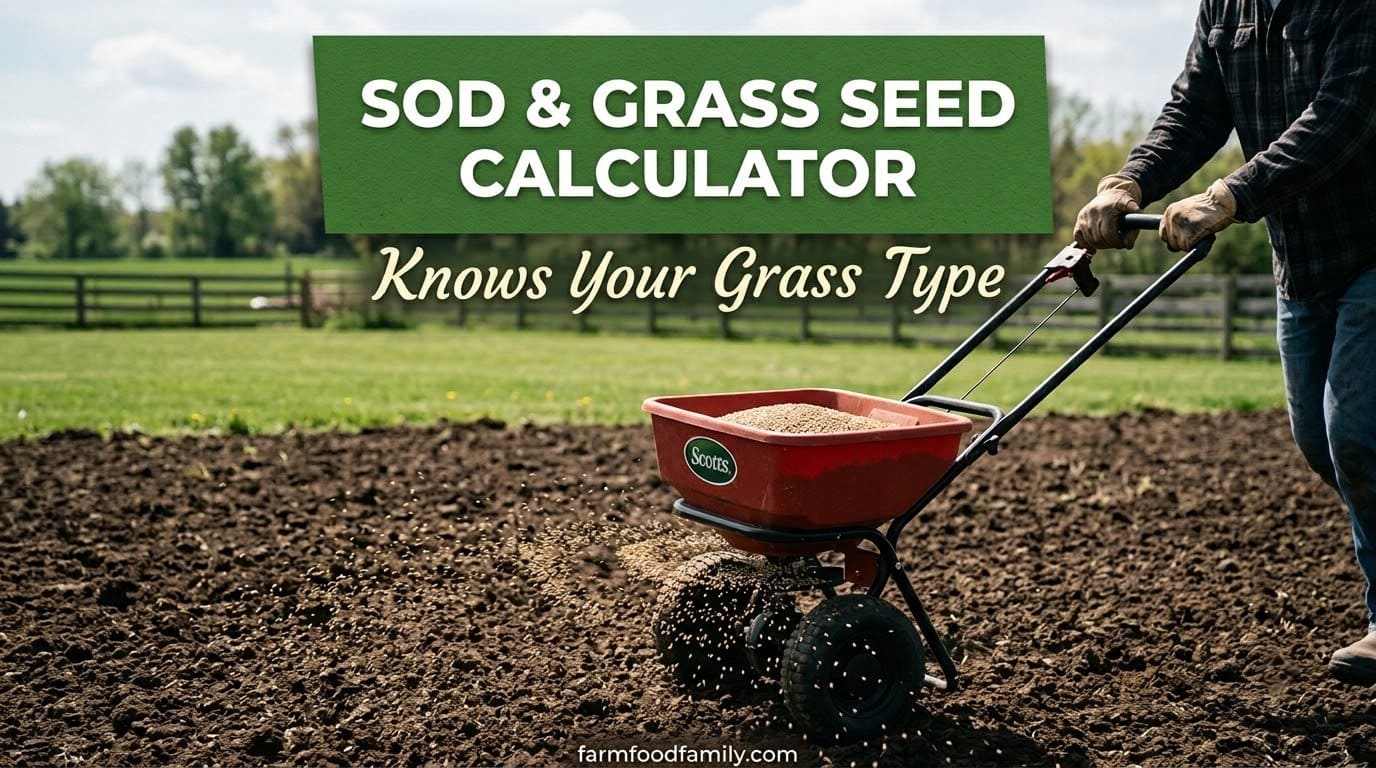
Sod & Grass Seed Calculator: The Right Rate for Your Grass Type
Enter your lawn size and grass type. Get exact seed pounds or sod pallets, using real per-species rates instead of one generic number for every lawn.

Never miss an update — choose FarmFoodFamily as your preferred source on Google.
How it works: Tap the button below to open Google’s settings page, then check the box next to FarmFoodFamily.
Tap the checkbox to turn it blue — that’s how you know it’s set.
Grass seed rate depends on the species, not just the area. Kentucky bluegrass needs about 2 to 3 lbs per 1,000 sq ft for a new lawn. Tall fescue needs 6 to 8 lbs for that same area, three times as much.
Warm-season grasses need far less seed by weight. Bermudagrass runs about 0.5 to 1 lb per 1,000 sq ft, since its seed is much smaller and denser per pound.
Overseeding an existing lawn uses roughly half the new-lawn rate, since you’re filling gaps, not starting from bare soil. Sod works differently, sold by the pallet, with each covering roughly 450 sq ft depending on the supplier.
The calculator below picks the right rate automatically once you choose your grass type and whether you’re seeding new ground or overseeding. Every rate is labeled by source, since generic one-size-fits-all seed calculators get this wrong constantly.
Sod & Grass Seed Calculator
Calculate exactly how much sod or seed your lawn needs. Auto-sets the seeding rate by grass species and whether you’re starting new or overseeding, sourced from university extension data, not a generic one-size-fits-all number.
1. Method
2. Area to cover
3. Waste & pricing (optional)
Results
Why a Single Seeding Rate Doesn’t Work
Most seed calculators online ask for your area and give you one number, or worse, just tell you to read the rate off your seed bag.
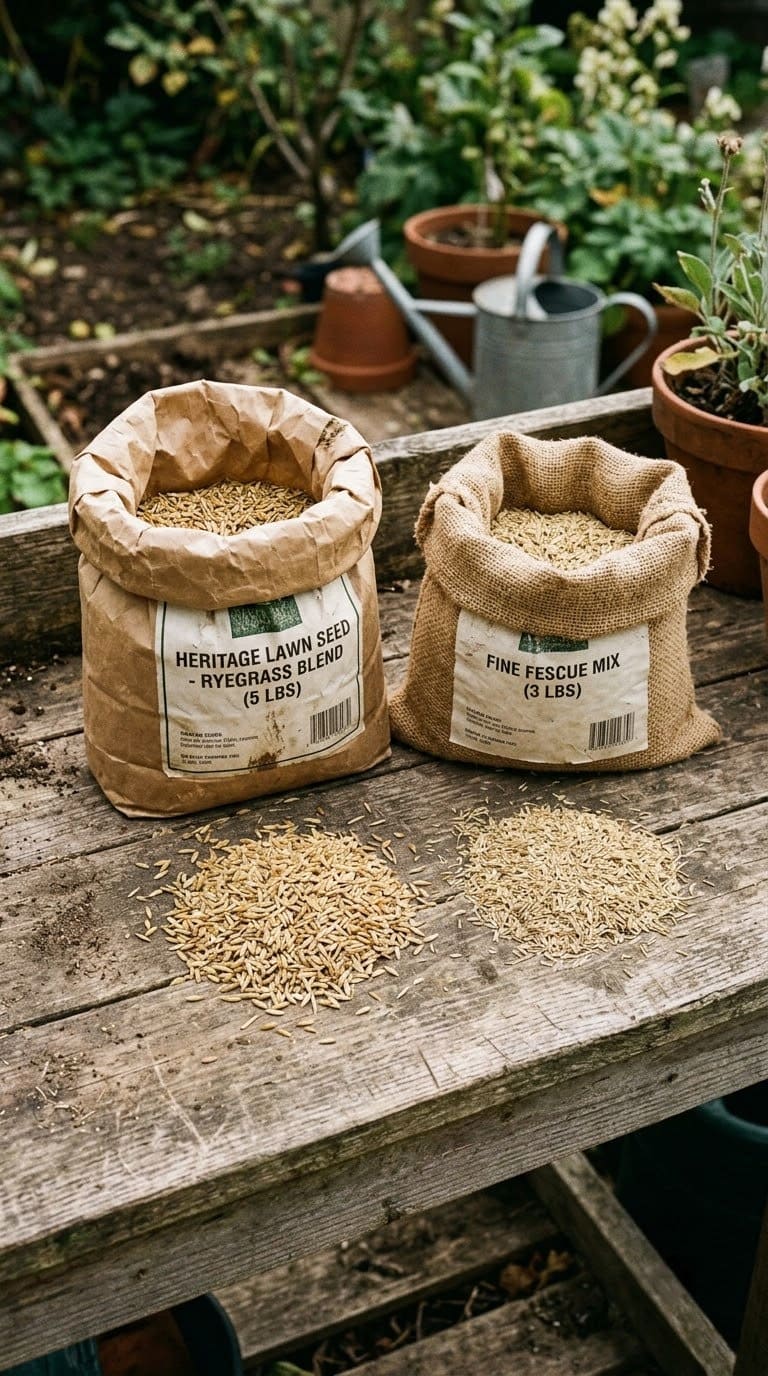
That’s a real problem, because seeding rate varies enormously by species. Tall fescue’s seed is large and needs a thick rate to establish well. Bermudagrass seed is tiny by comparison, and the same weight covers far more ground.
This calculator uses actual per-species rates instead, sourced from university extension seeding tables rather than a rounded average. It also automatically halves the rate for overseeding, since piling on a full new-lawn rate onto an existing lawn wastes seed and money.
Answer 4 quick questions and get matched to the exact fix for your yard — drainage, budget, layout, or something else entirely.
Take the Free QuizGrass Seed Rates by Species (New Lawn)
| Grass type | Rate (lbs per 1,000 sq ft) | Season | Source |
|---|---|---|---|
| Kentucky bluegrass | 2-3 | Cool-season | Penn State Extension |
| Perennial ryegrass | 4-5 | Cool-season | Penn State Extension |
| Tall fescue | 6-8 | Cool-season | Penn State Extension |
| Bermudagrass (hulled) | 0.5-1 | Warm-season | Clemson HGIC |
| Zoysia | 0.5-3 | Warm-season | Clemson HGIC |
| Centipedegrass | 0.25-0.5 | Warm-season | Clemson HGIC |
Cool-season grasses generally need more seed by weight than warm-season grasses. This isn’t random. Cool-season seed tends to be larger, and cool-season lawns are usually seeded at a thicker stand from the start.
Centipedegrass is often mixed with sand or a carrier material before spreading, since the seed is so light and fine on its own that even coverage is hard to judge by eye.
New Lawn vs. Overseeding: Why the Rate Cuts in Half
Starting a lawn from bare soil and thickening an existing one are different jobs, even though both involve spreading seed.
A new lawn starts with zero grass. Every seed has open soil to root into, so the full rate gives you a dense, even stand from scratch.
Overseeding fills in an already-established lawn. Most of the ground is already covered by existing turf, so a full new-lawn rate would be excessive and mostly wasted on top of grass that’s already there.
Penn State Extension and Oregon State Extension both confirm this principle in their lawn renovation guidance: use roughly half the new-lawn rate when overseeding. This calculator applies that automatically once you select “overseeding” as your application type.
Sod: How Pallet Coverage Actually Works
Sod isn’t sold by the square foot directly, it’s sold by the pallet, and pallet size varies by supplier and grass type.
Most yard problems trace back to one specific, fixable cause. Find yours in 4 quick questions.
Take the Free QuizA commonly used industry figure is about 450 sq ft per pallet, made up of individual pieces roughly 16 by 24 inches. That’s a supplier convention, not a university-published standard, so treat it as a solid planning estimate rather than an exact number.
Always confirm the exact pallet size with your specific sod farm before ordering. Warm-season sod (like Bermuda or zoysia) sometimes ships on smaller pallets than cool-season sod, since the rolls are cut and handled differently.
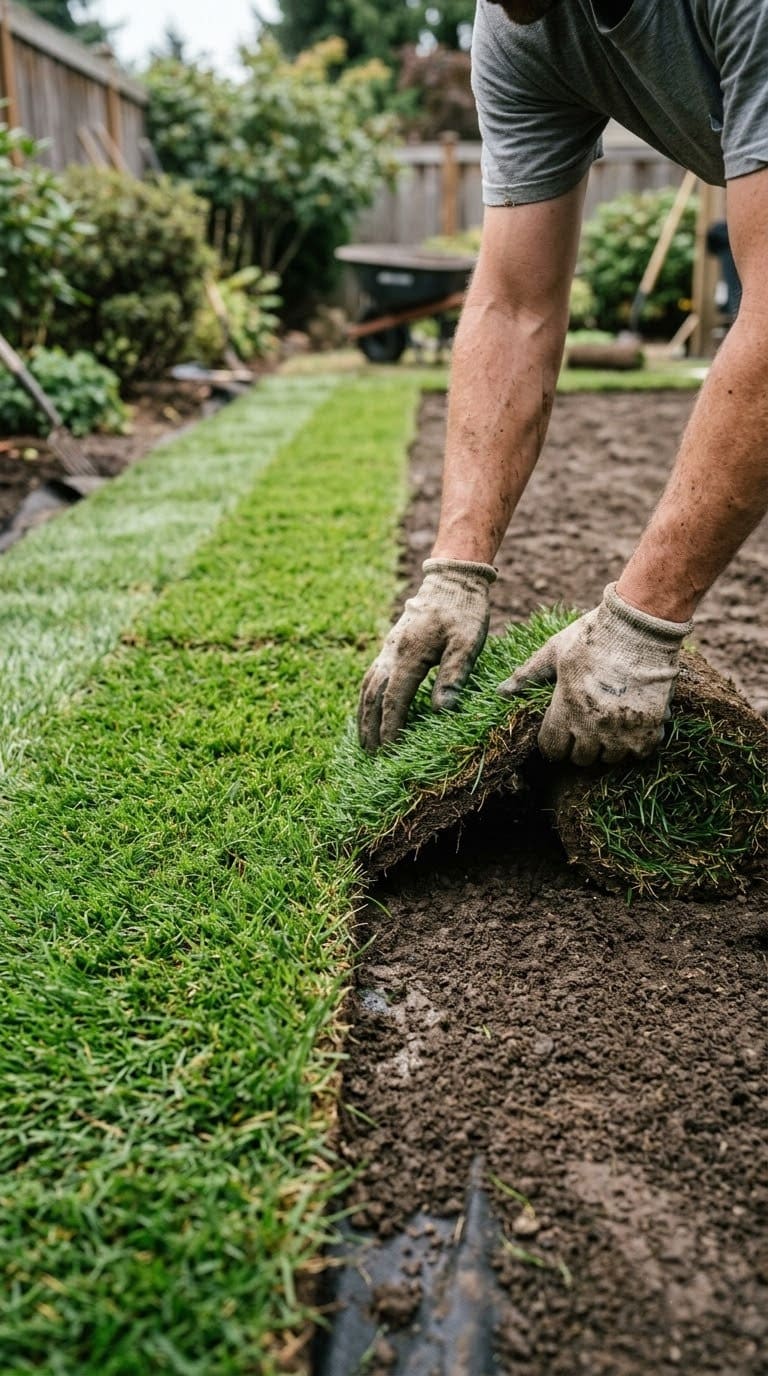
Sod vs. Seed: Which Makes Sense for Your Yard
Sod gives you an instant lawn, usable within two to three weeks of installation. Seed takes far longer, often six to sixteen weeks before it’s ready for light foot traffic, and six to twelve months for full root establishment.
That speed comes at a real cost difference. Sod typically runs noticeably more per square foot installed than seed, since you’re paying for a farm to grow, cut, and deliver mature turf rather than a bag of seed you spread yourself.
Seed wins on cost and lets you pick from a wider range of grass varieties, since not every species is commercially farmed as sod in every region. Sod wins when you need a usable lawn fast, or when you’re working on a slope or bare patch where erosion would wash seed away before it can root.
Timing plays into the decision too. Sod can go down almost any time the ground isn’t frozen, since it’s already established turf rather than something that needs to germinate. Seed is far more time-sensitive, tied to the right soil temperature window for whichever species you’re planting, which narrows the calendar considerably compared to sod’s flexibility.
Choosing Grass by Climate, Not Just Looks
Grass species split into two groups, and picking the wrong group for your climate is the single biggest reason a lawn struggles year after year.
Cool-season grasses, like Kentucky bluegrass, tall fescue, and perennial ryegrass, grow best in the northern half of the US and similar climates. They stay green through cold winters but can brown out or thin under intense summer heat.
Warm-season grasses, like Bermudagrass, zoysia, and centipedegrass, thrive in southern heat and humidity. They go dormant and brown in winter, which surprises some homeowners who expect year-round green.
There’s a wide transition zone across the middle of the country where either type can survive, but neither is perfectly suited. If you’re in that zone, local extension office recommendations matter more than a generic online guide, since microclimate and soil type shift the right choice more than climate alone.
How to Measure an Irregular Lawn
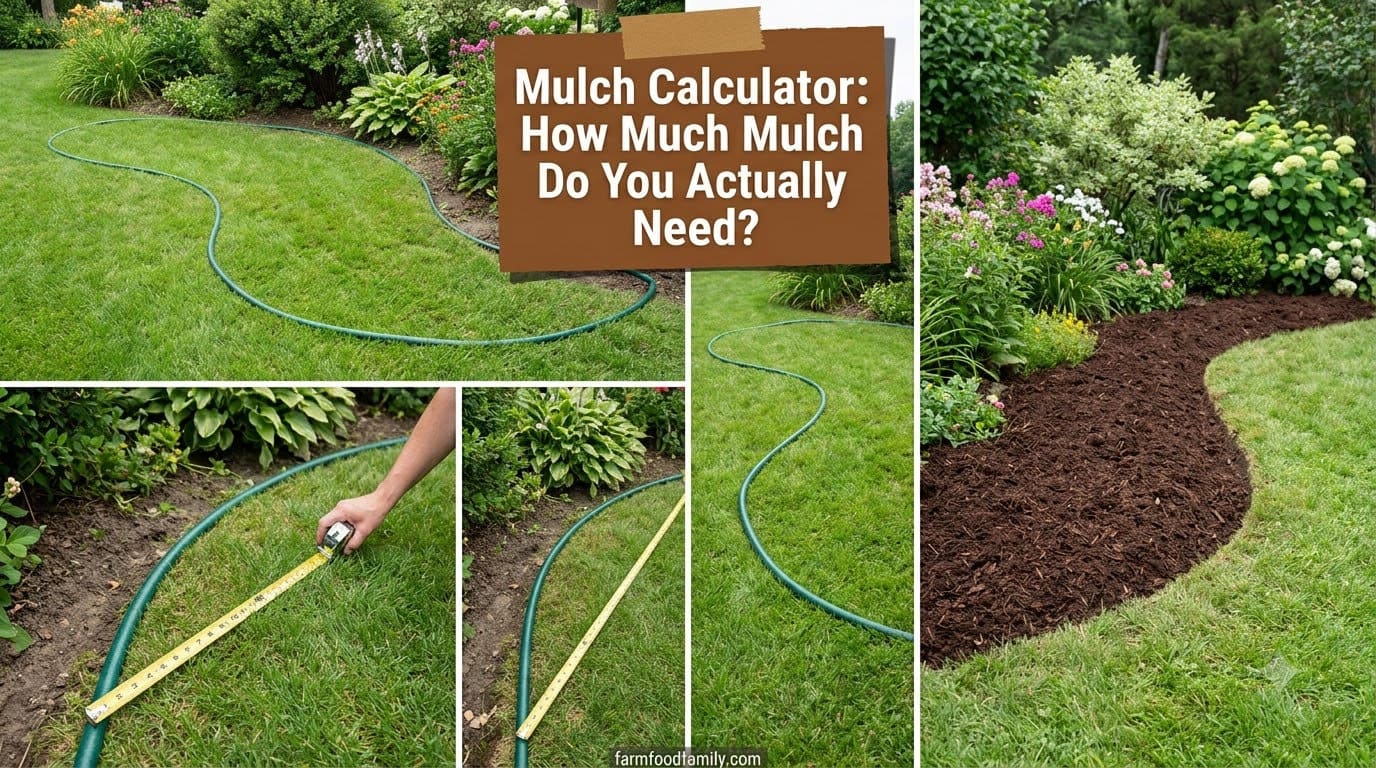
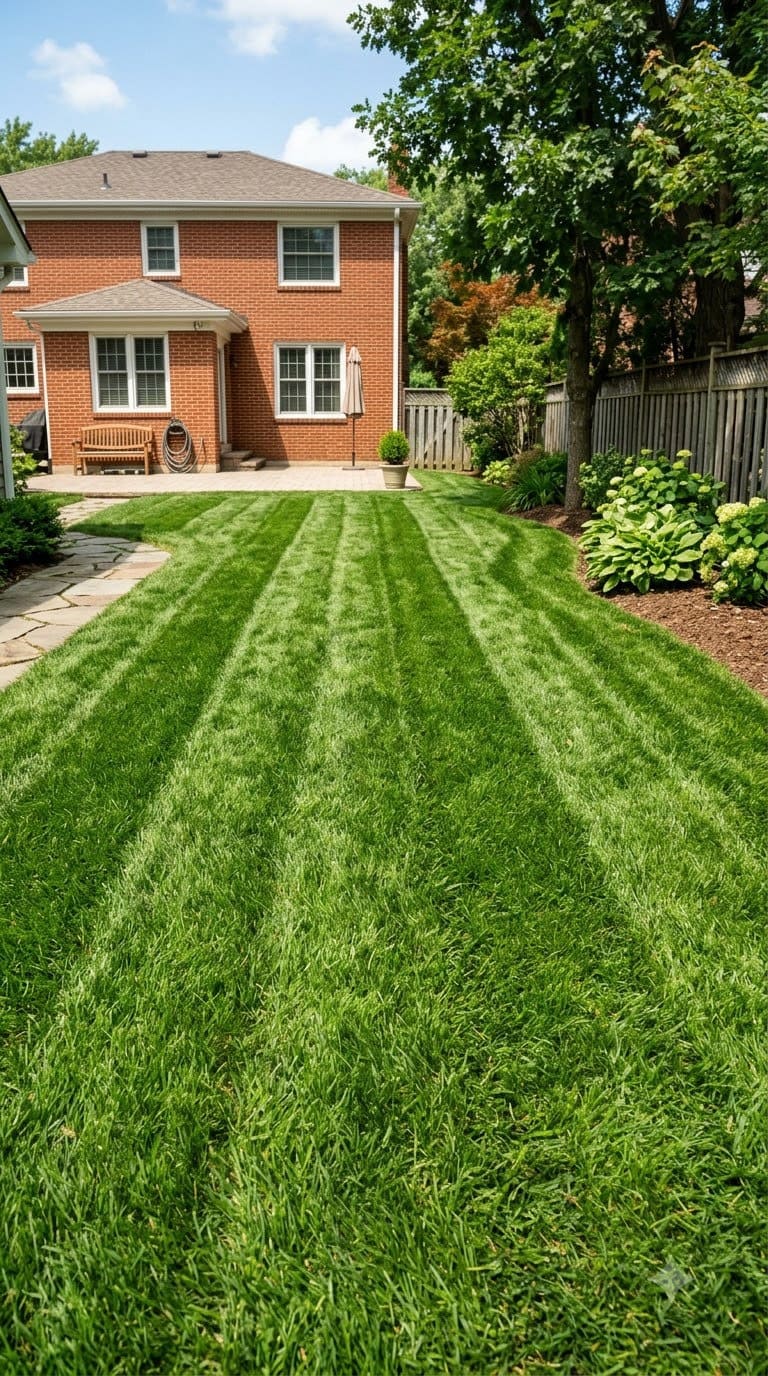
Most yards aren’t a clean rectangle. A front yard split by a walkway, a backyard with curved garden beds, or an L-shaped side yard all need a bit more measuring care than a single length-times-width calculation.
The average homeowner spends $616/year on yard fixes that don't address the real problem. Find out what yours actually is — before you spend another dollar.
Take the Free QuizBreak the space into simple shapes the same way you would for a patio or driveway project. A yard split by a walkway is really two or three separate rectangles. A curved bed edge can be approximated as a rectangle plus a triangle or a half-circle.
Measure and enter each section as its own area in the calculator above, and it adds the totals together automatically. This matters more for seed than most people realize, since under-ordering seed for a real, oddly-shaped yard is one of the most common reasons a new lawn comes in with visible thin patches at the edges.
Common Mistakes When Seeding or Sodding
A few mistakes account for most failed lawn establishment attempts.
Seeding at the wrong time of year. Cool-season grasses establish best in early fall, with spring as a distant second choice. Warm-season grasses need late spring to early summer soil temperatures to germinate well.
Skipping soil prep. Seed or sod laid on compacted, unprepared soil struggles to root. Loosening the top few inches and removing debris first makes a measurable difference in establishment success.
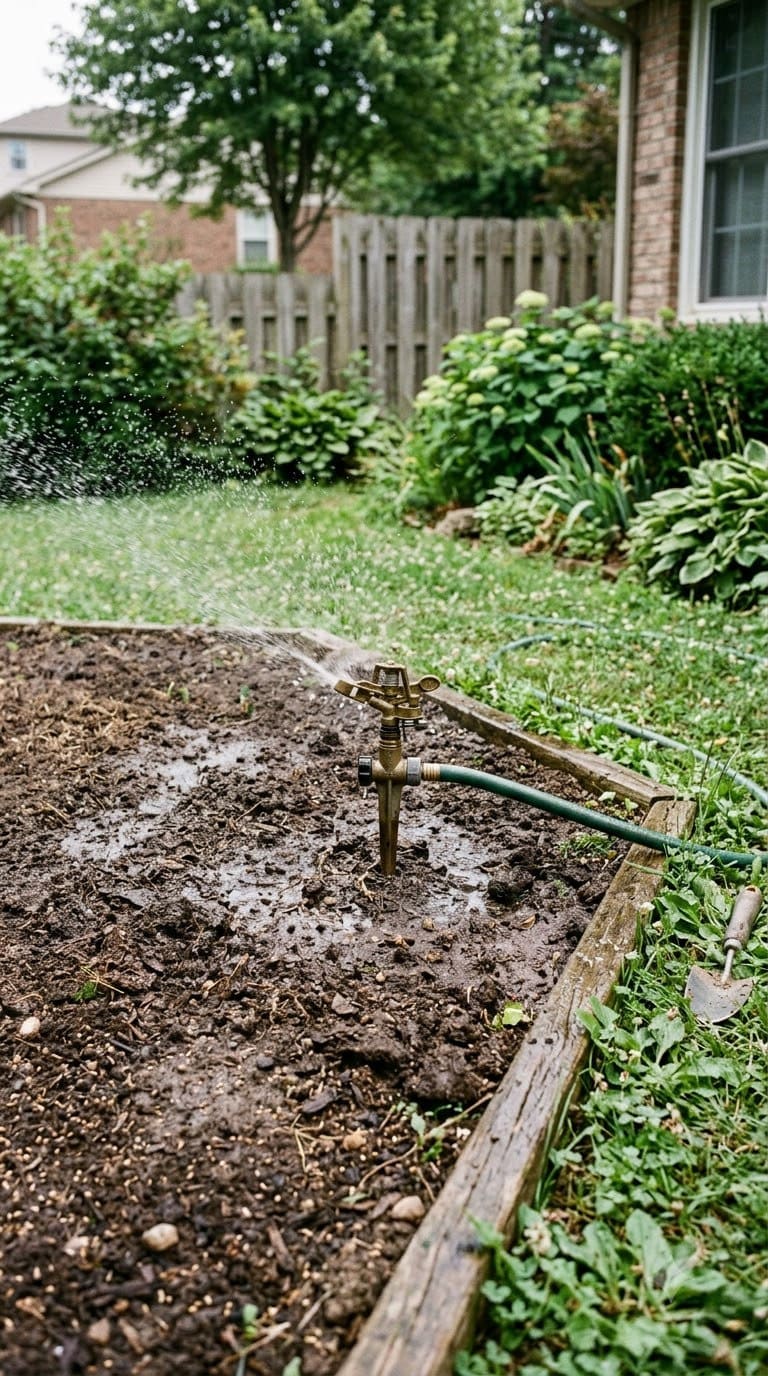
Watering too little, or too much, right after. New seed needs consistent light moisture, often daily, for the first couple weeks. Fresh sod needs deep, frequent watering for its first two weeks to root down into the soil beneath it.
Mowing too soon. Wait until new grass reaches mowing height and has been watered-in fully before the first cut, cutting too early stresses shallow, still-forming roots.
FAQs
How much grass seed do I need for a 1,000 sq ft lawn? It depends entirely on species. Kentucky bluegrass needs 2 to 3 lbs, tall fescue needs 6 to 8 lbs, and Bermudagrass needs just 0.5 to 1 lb, for that same 1,000 sq ft.
Is it cheaper to seed or sod a lawn? Seed is almost always cheaper upfront, often a fraction of sod’s installed cost per square foot. Sod costs more but gives you a usable lawn in weeks instead of months.
How many pallets of sod do I need for a quarter acre? A quarter acre is about 10,890 sq ft. At roughly 450 sq ft per pallet, that’s about 25 pallets, though your exact number depends on your supplier’s specific pallet coverage.
Can I mix grass seed species in one lawn? Yes, many seed blends do this intentionally, especially mixing tall fescue with a smaller percentage of Kentucky bluegrass for faster establishment plus long-term density. Check the blend ratio on the label rather than assuming an even split.
When should I overseed my lawn? Early fall is ideal for cool-season lawns, when soil is still warm but air temperatures have cooled. Late spring works best for overseeding warm-season lawns, once the grass is actively growing.
Do I need starter fertilizer with new seed or sod? Yes, generally. A starter fertilizer, higher in phosphorus than typical lawn feed, helps new roots establish faster. Apply it at seeding or sodding time, following the product’s specific application rate on the label.
Why did my seeded lawn come in patchy? Uneven watering is the most common cause, some areas dry out faster than others, especially on slopes or near structures that block irrigation. Seed washed away by heavy rain right after spreading, or bird activity on exposed seed, are the next most common culprits.
How soon can I walk on new sod or seed? New sod can usually handle light foot traffic within two to three weeks, once it’s rooted into the soil beneath it. Seeded lawns need much longer, often six weeks or more before the grass is established enough to tolerate regular walking without damage.
Glossary
- Cool-season grass: Grass species that grow best in spring and fall, going semi-dormant in summer heat, common in northern climates.
- Warm-season grass: Grass species that thrive in summer heat and go dormant (often brown) in winter, common in southern climates.
- Overseeding: Spreading new seed onto an existing lawn to thicken it, rather than starting from bare soil.
- Starter fertilizer: A fertilizer formulated with extra phosphorus to support new root development in freshly seeded or sodded lawns.
- Establishment: The period during which new grass develops a mature root system, distinct from simple germination or greening.
Sources & References
- Penn State Extension. Turfgrass Seed and Seed Mixtures
- Clemson Cooperative Extension, Home & Garden Information Center. Lawn Establishment
- Oregon State University Extension. Practical Lawn Establishment and Renovation, EC 1550.
For a full walkthrough of the seeding process, see our beginner’s guide to growing grass seed and lawn seeding for beginners. If your lawn already exists and needs help absorbing water and nutrients before overseeding, our lawn aeration guide covers that step. For ongoing care after establishment, see how to get a perfect lawn.
Never miss an update — choose FarmFoodFamily as your preferred source on Google.
How it works: Tap the button below to open Google's settings page, then check the box next to FarmFoodFamily.
Tap the checkbox to turn it blue — that's how you know it's set.