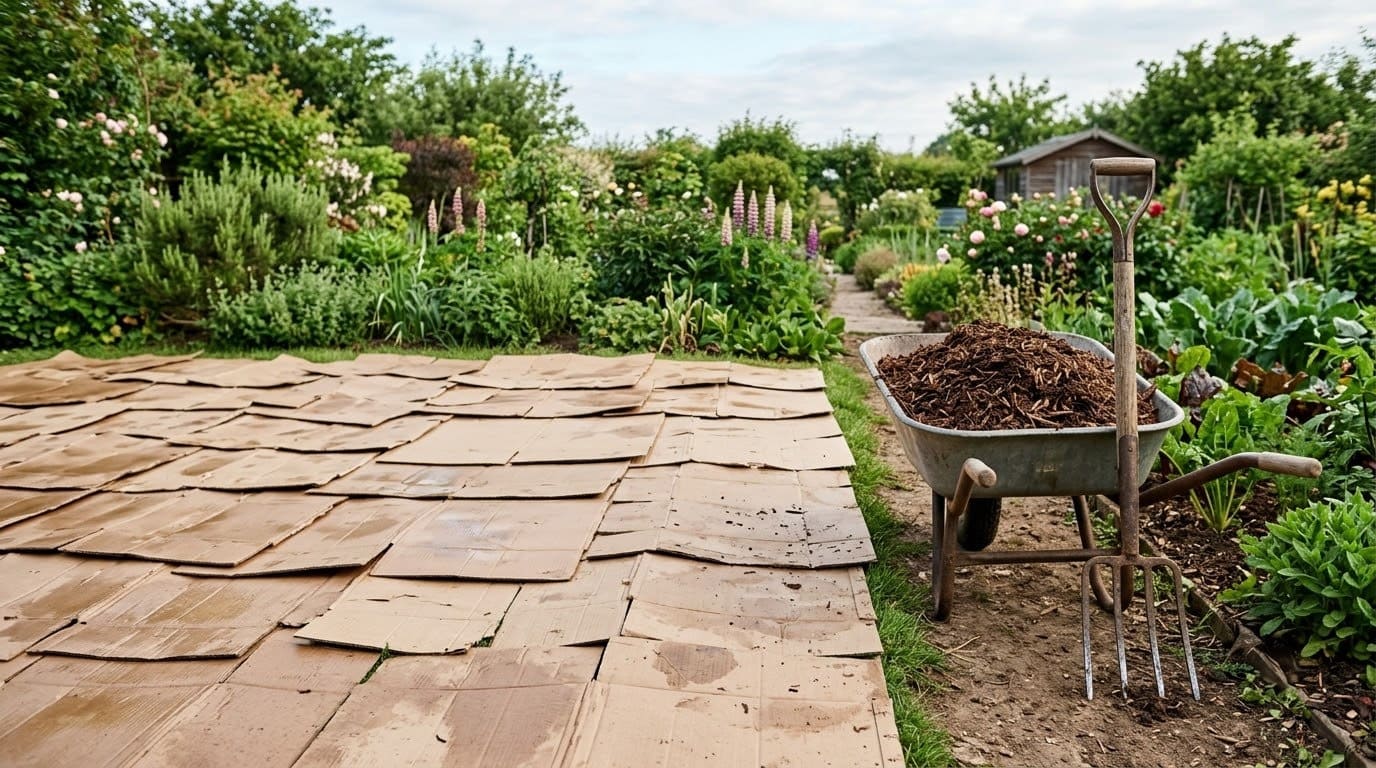
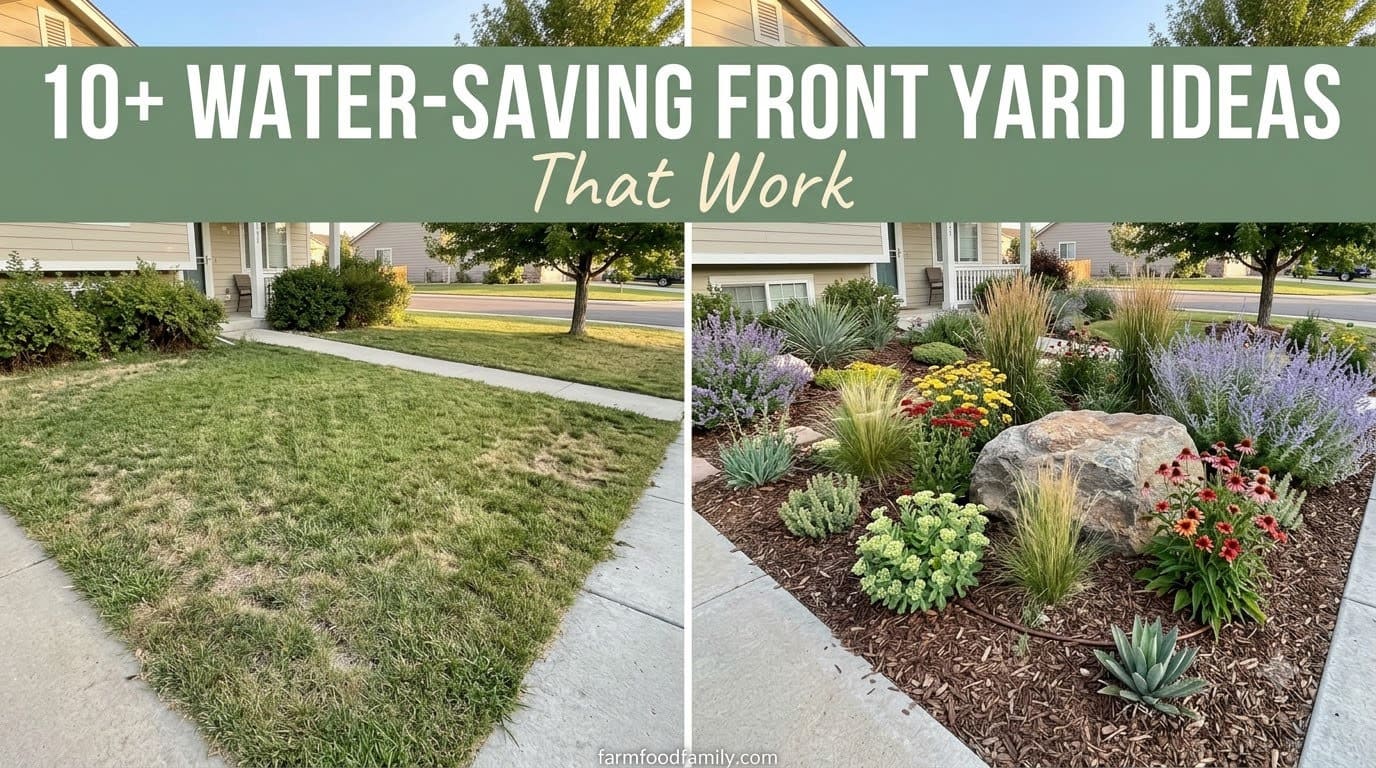
Thirsty Lawn to Water-Saving Front Yard Landscaping That Sells Curb Appeal
Cutting your front yard’s water use doesn’t mean a bare gravel lot, it means choosing the right plants, ratios, and legal footing before your HOA even notices.

Never miss an update — choose FarmFoodFamily as your preferred source on Google.
How it works: Tap the button below to open Google’s settings page, then check the box next to FarmFoodFamily.
Tap the checkbox to turn it blue — that’s how you know it’s set.
Your backyard can look however you want. Nobody drives past it. Your front yard gets judged from the sidewalk every single day, by neighbors, by your HOA board, and by anyone deciding whether to knock on your door.
That’s exactly why cutting water use out front feels riskier than doing it in back. You’re not just worried about the water bill anymore, you’re worried about the yard looking abandoned mid-project, or an HOA letter showing up before the plants fill in.
This guide covers real water-saving front yard ideas with actual plant names and cost ranges, the legal protections that exist in several states if your HOA pushes back, and where to find rebate money for tearing out turf.
What actually saves water in a front yard?
Water-saving front yard landscaping comes down to four things: shrinking the lawn area, grouping plants by how much water they actually need (a practice called hydrozoning), covering bare soil with mulch, and switching from a sprinkler system to drip irrigation.
Colorado State University Extension’s horticulture program, developed and explained by extension specialist John Murgel, formalizes this into seven xeriscape principles: planning and design, low-water plants, limiting grass areas, water harvesting, efficient irrigation, mulch, and proper maintenance.

Done together, these steps can cut outdoor water use by 30% to 50%, and in some yards more, without turning the front of your house into a gravel lot. The tradeoff is upfront cost and a transition period where the yard looks unfinished. Both are manageable if you plan the order of operations instead of ripping everything out at once.
Answer 4 quick questions and get matched to the exact fix for your yard — drainage, budget, layout, or something else entirely.
Take the Free QuizIs xeriscaping your front yard actually legal if you have an HOA?
Yes, in a growing number of states, and this is worth knowing before you spend a dollar. HOAs used to be able to flatly require grass, full stop, no exceptions.
That’s changed. Texas Property Code Section 202.007 now prohibits an HOA from banning xeriscaping or drought-resistant landscaping outright, and it protects your right to install water-efficient irrigation like a drip system.
California Civil Code Section 4735 goes further, voiding any HOA governing document provision that requires turf or restricts a homeowner’s compliance with a local water-efficient landscape ordinance.
Here’s the state-by-state snapshot as of this writing, based on statutes and legal summaries currently in effect. Laws change, so confirm current text with your HOA’s governing documents or a local attorney before you start tearing out grass.
| State | Legal protection | What your HOA can still control |
|---|---|---|
| Texas | HOAs cannot ban xeriscaping or drought-resistant landscaping (Property Code §202.007) | Can require a design plan submission for approval |
| California | HOA turf-mandate provisions are void (Civil Code §4735) | Can set maintenance and tidiness standards |
| Colorado | HOAs cannot bar xeriscape or drought-tolerant ground cover on qualifying single-family lots | Can set specific permissible design rules |
| Nevada | HOAs cannot prohibit drought-tolerant landscaping installation, with exceptions | Can require conformance with community aesthetic guidelines |
| Illinois | Homeowners’ Native Landscaping Act bars a full ban on native plantings (effective 2024) | Can regulate placement and edging |
| Maryland | Real Property Article §2-125 bars unreasonable limits on low-impact landscaping | Can still require a reasonable review process |
One honest caveat: a state law existing doesn’t mean zero friction. Most of these statutes still let your HOA require you to submit a plan, keep the bed edges defined, and maintain it so it reads as an intentional design instead of an abandoned lot. That distinction matters more than people expect, and it’s the whole reason the next section exists.
Why so many people stall out before converting
I’ve watched a neighbor two doors down start ripping out her front lawn in June, and by July it looked worse than before she started. Half-dead grass, exposed dirt, a pallet of gravel sitting in the driveway for three weeks.
She got two passive-aggressive comments from people walking dogs before the beds were even planted.
Most yard problems trace back to one specific, fixable cause. Find yours in 4 quick questions.
Take the Free Quiz
A 109-piece drip irrigation kit with drippers, micro-bubblers, and micro sprays plus a pressure regulator, sized to water up to 22 plants in a front yard bed layout
Shop NowThis post contains affiliate links. We may earn a commission on qualifying purchases at no extra cost to you.
That fear is real and it’s the actual reason a lot of water-saving conversions never happen, not the cost. One widely shared case covered by The Cool Down involved a homeowner whose intentionally xeriscaped yard got cited by their own HOA for “excessive weeds,” even though the planting was deliberate.
Texas actually fought this exact battle at the legislative level back in 2013, when lawmakers pushed bills specifically to stop HOAs from forcing homeowners to keep water-hungry lawns during drought years, according to reporting from the Texas Tribune.
So here’s the honest tradeoff. Converting a front yard costs real money upfront, often a few hundred to a few thousand dollars depending on size and how much you do yourself. The water savings pay that back over years, not weeks.
If you’re in an HOA, budget extra time for the plan-approval step and phase the project so the yard never sits half-torn-up for more than a weekend if you can help it. If you’re not in an HOA and just answering to your own neighbors, you still get judged on that transition window, so plan for it the same way.
Water-saving front yard ideas, ranked by real cost and effort
1. Hydrozone your beds before you plant anything
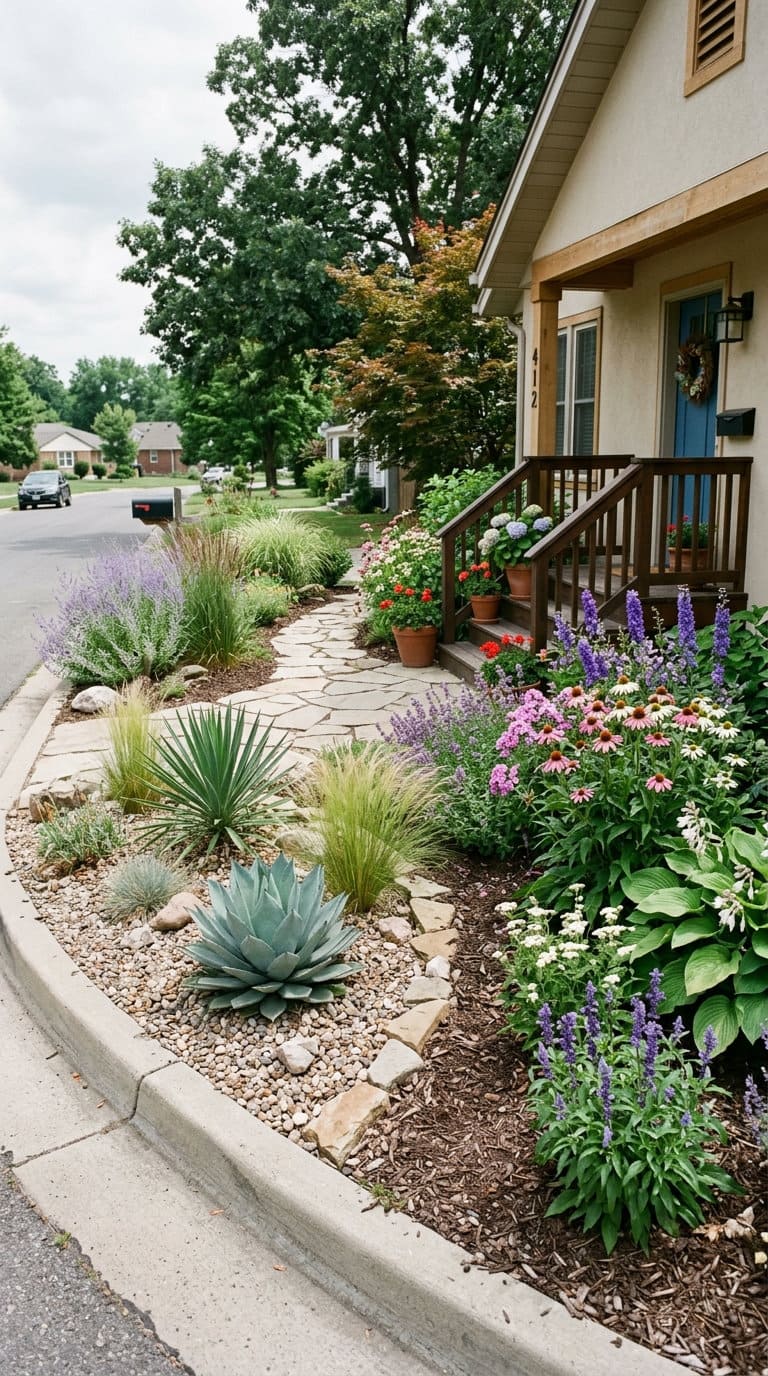
This is the CSU Extension principle that everything else builds on: group plants by how much water they actually need instead of scattering thirsty and drought-tolerant species together.
A bed near your porch that gets some hand-watering can hold slightly thirstier flowering perennials, while the strip along the street gets true low-water plants that survive on rain alone once established.
Cost is basically zero, it’s a planning decision you make before buying a single plant. Skip this step and you’ll end up overwatering the whole bed just to keep the thirstiest plant alive.
2. Shrink the lawn with a defined edge, not a slow die-off
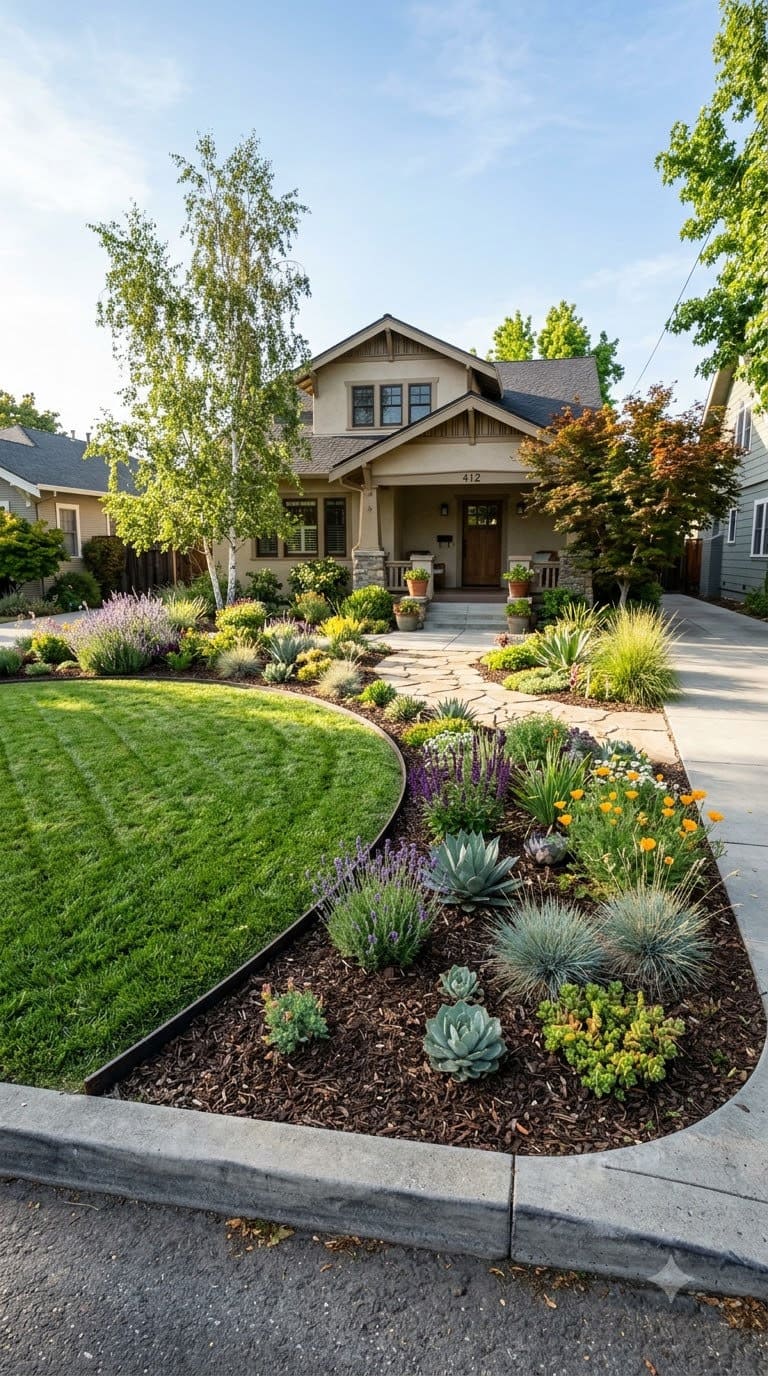
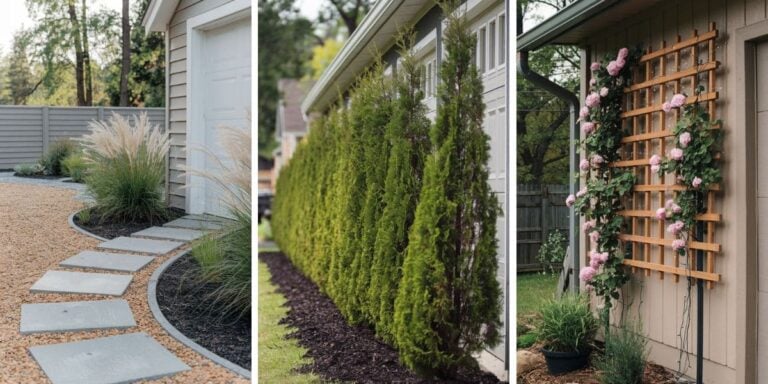
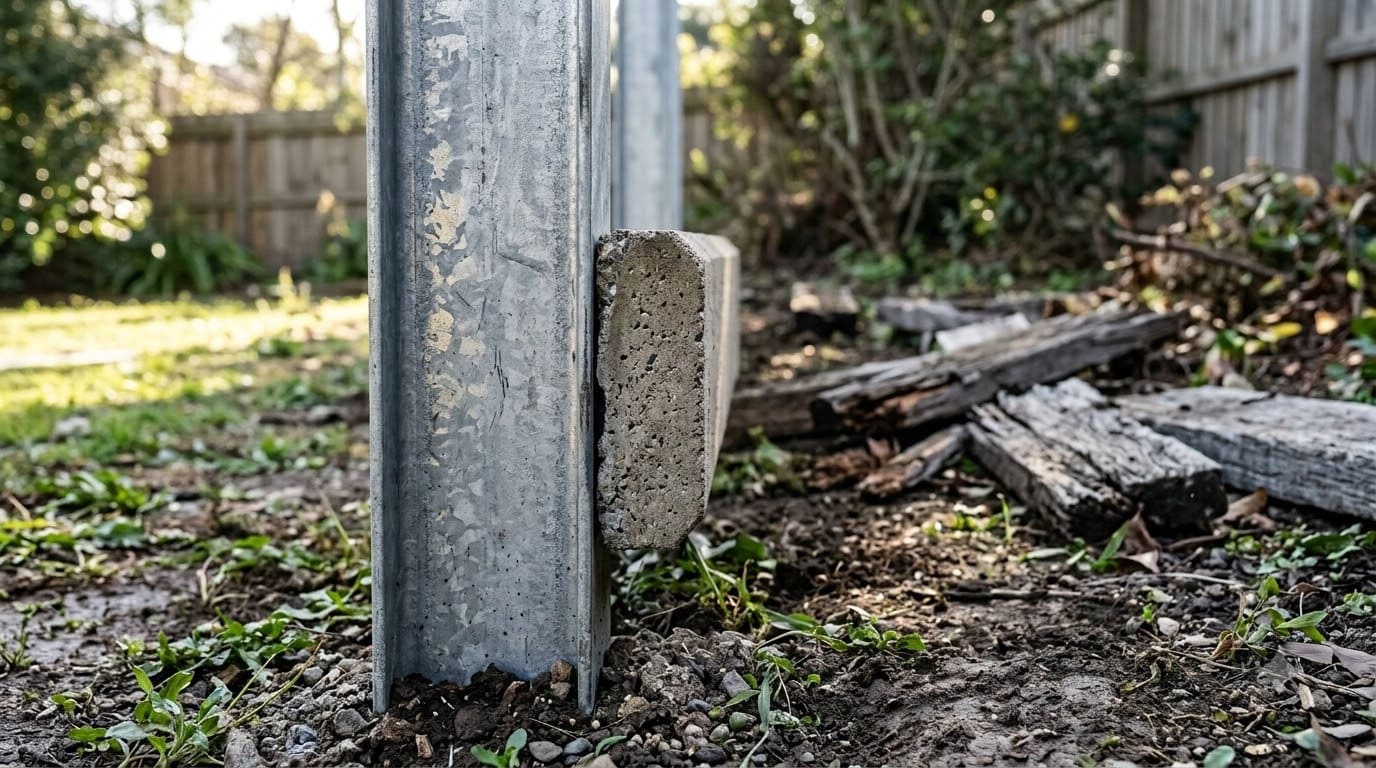
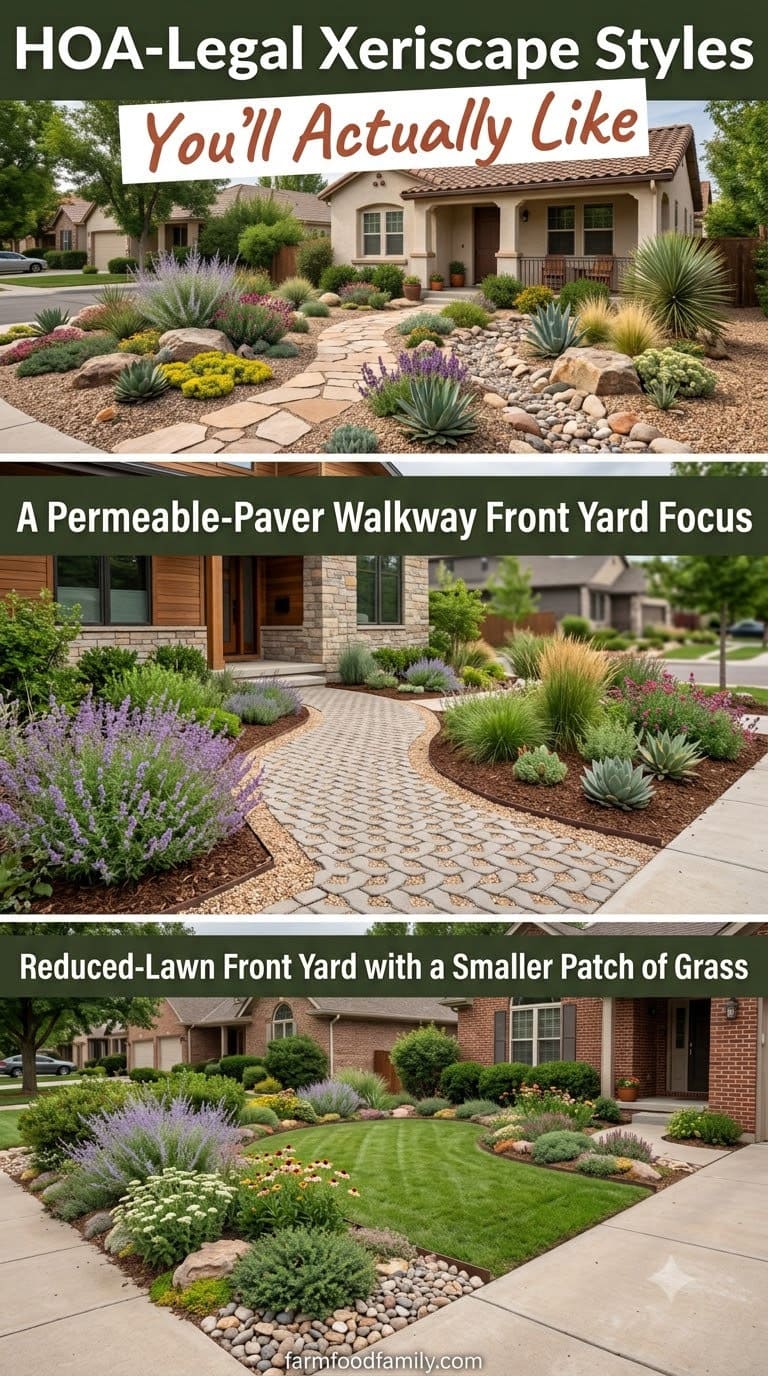
Don’t just stop watering the whole lawn and let it go patchy, that’s the “abandoned lot” look neighbors and HOAs actually react to. Instead, cut a clean, curved or straight edge around a smaller lawn area (or remove it entirely) and fill the rest with a planted bed.

A steel or paver edge restrainer runs roughly $2 to $6 per linear foot installed. The defined line alone does most of the work of making the yard read as intentional instead of neglected.
The average homeowner spends $616/year on yard fixes that don't address the real problem. Find out what yours actually is — before you spend another dollar.
Take the Free Quiz3. Build your plant palette around real drought-tolerant species
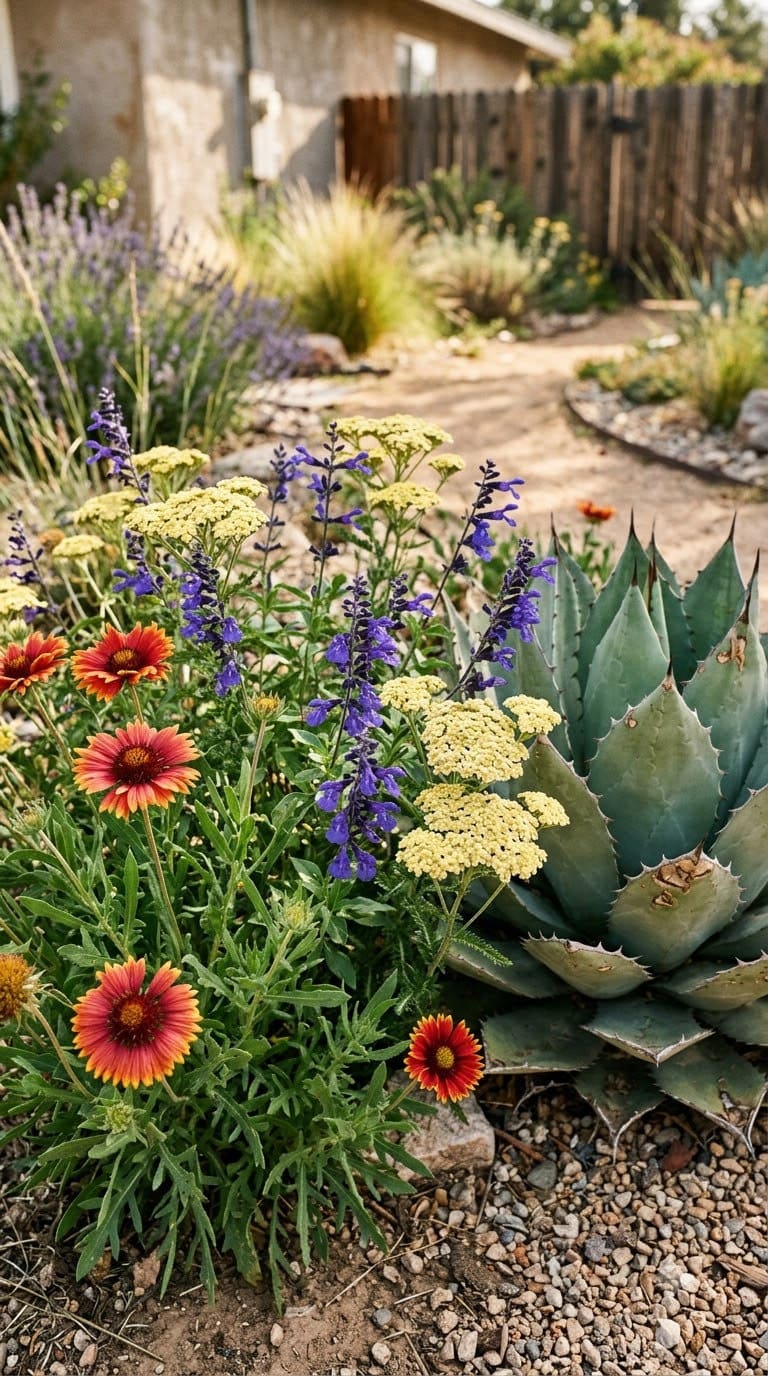
Skip the generic “native plants” advice and use actual names: blanket flower, salvia, and yarrow for color; agave and yucca for structural focal points in hot, arid climates; buffalo grass or blue grama grass if you want something that still reads as lawn but needs a fraction of the water.
Expect to pay $8 to $30 per plant for perennials and grasses, more for larger structural specimens like agave. In hot-arid climates (Southwest, parts of Texas), lean harder into agave, yucca, and true desert natives.
In temperate climates, ornamental grasses and native perennials do more of the work since your rainfall baseline is already higher. For more layout inspiration built around a smaller, plant-focused front bed, this site’s cute front yard ideas roundup has options that pair well with a drought-tolerant palette.
4. Get your mulch-to-hardscape ratio right
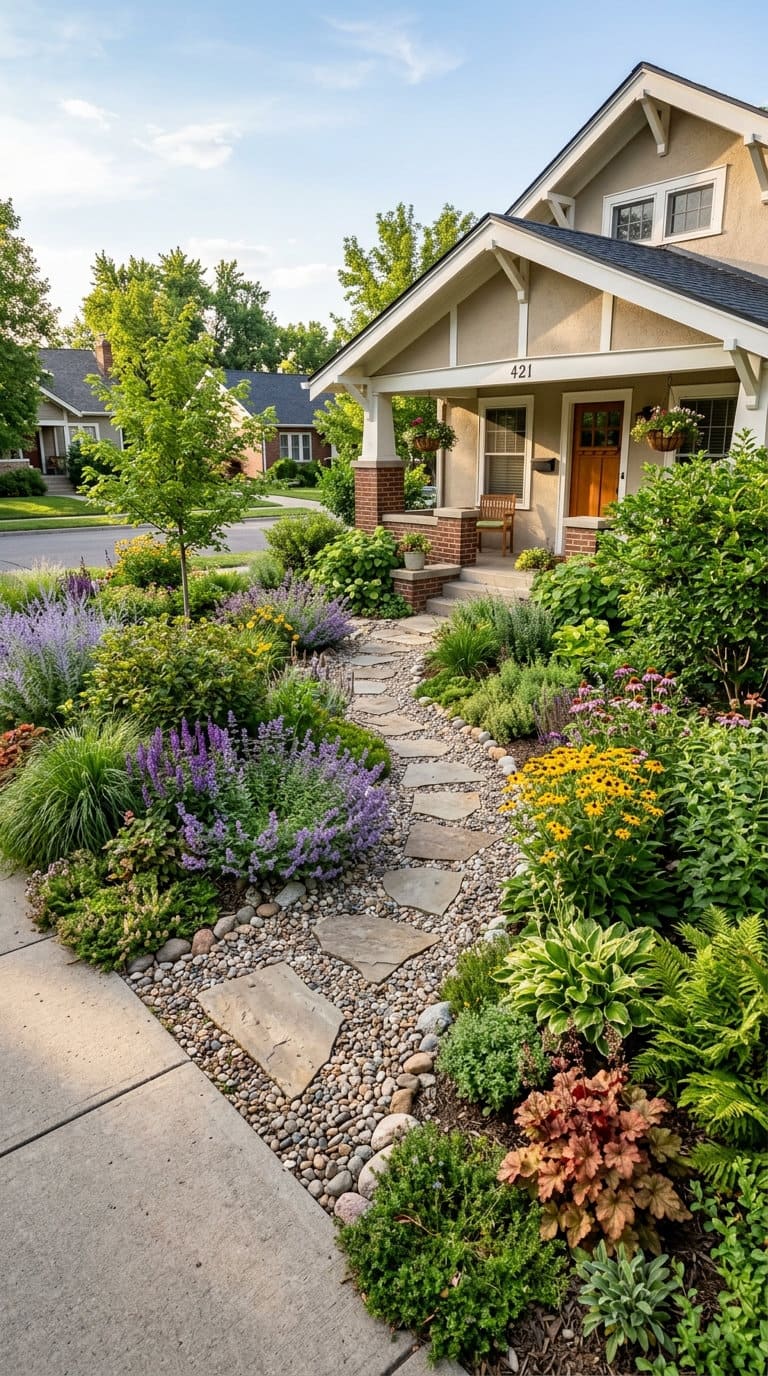
A commonly cited design target is roughly 40% hardscape (paths, gravel, boulders) to 60% living plant material, which keeps the yard from reading as either a bare rock yard or an overgrown mess. Mulch itself, whether hardwood chips, pea gravel, or rock, cuts watering needs by up to 40% by shading the soil and slowing evaporation.
Budget $3 to $6.50 per bag for smaller areas, or $34 to $185 per cubic yard delivered for a full front yard. Gravel mulch specifically should sit about 4 inches deep for real weed suppression.
5. Add a boulder or rock garden as your street-facing focal point
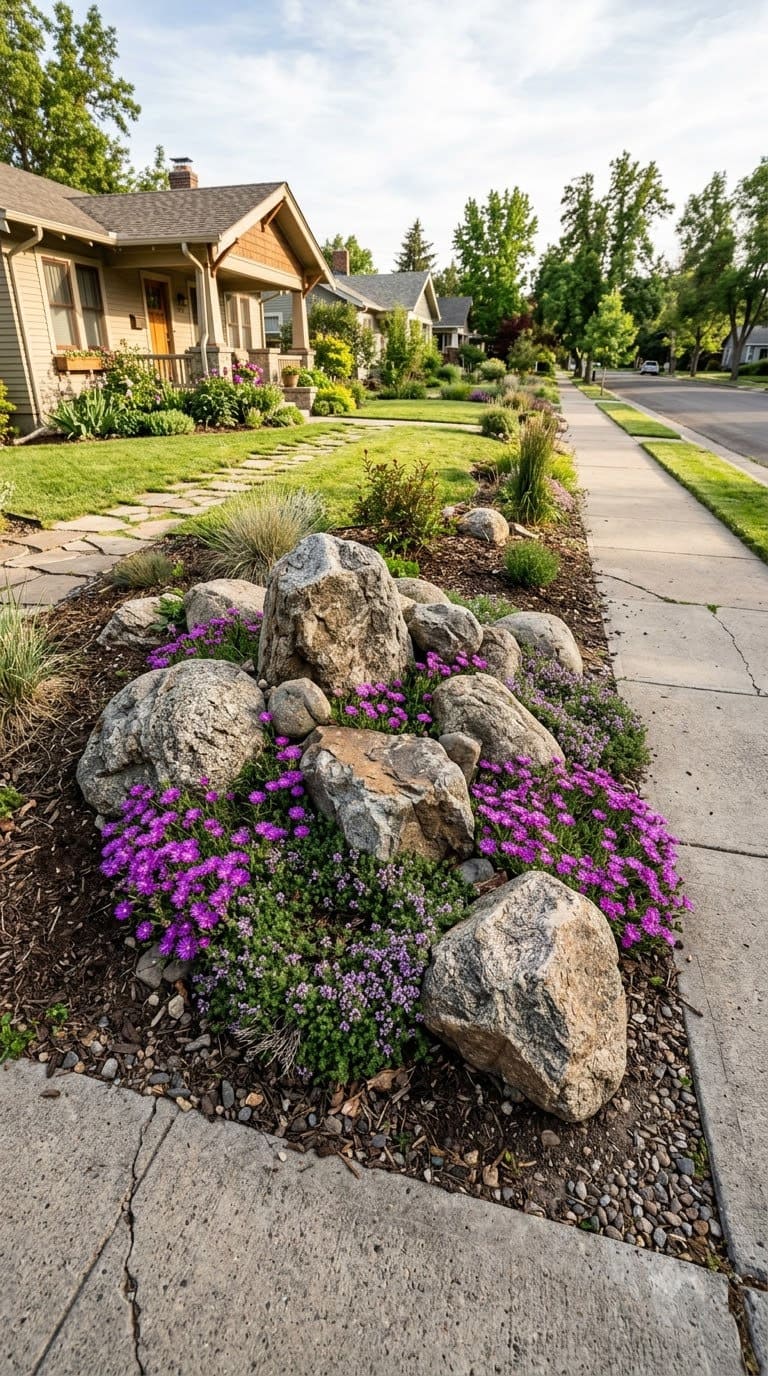
A front yard needs at least one thing that catches the eye from the sidewalk, and a well-placed boulder cluster or small rock garden does that year-round with zero water needed. Pair large boulders with low, spreading plants like ice plant or creeping thyme tucked around the base.
A modest 200-square-foot rock garden area runs roughly $460 to $1,000 depending on stone size and delivery. This is one of the highest curb-appeal-per-dollar upgrades on this list because it looks finished immediately, unlike plants that need a season to fill in.
6. Redo your front walkway with a permeable surface
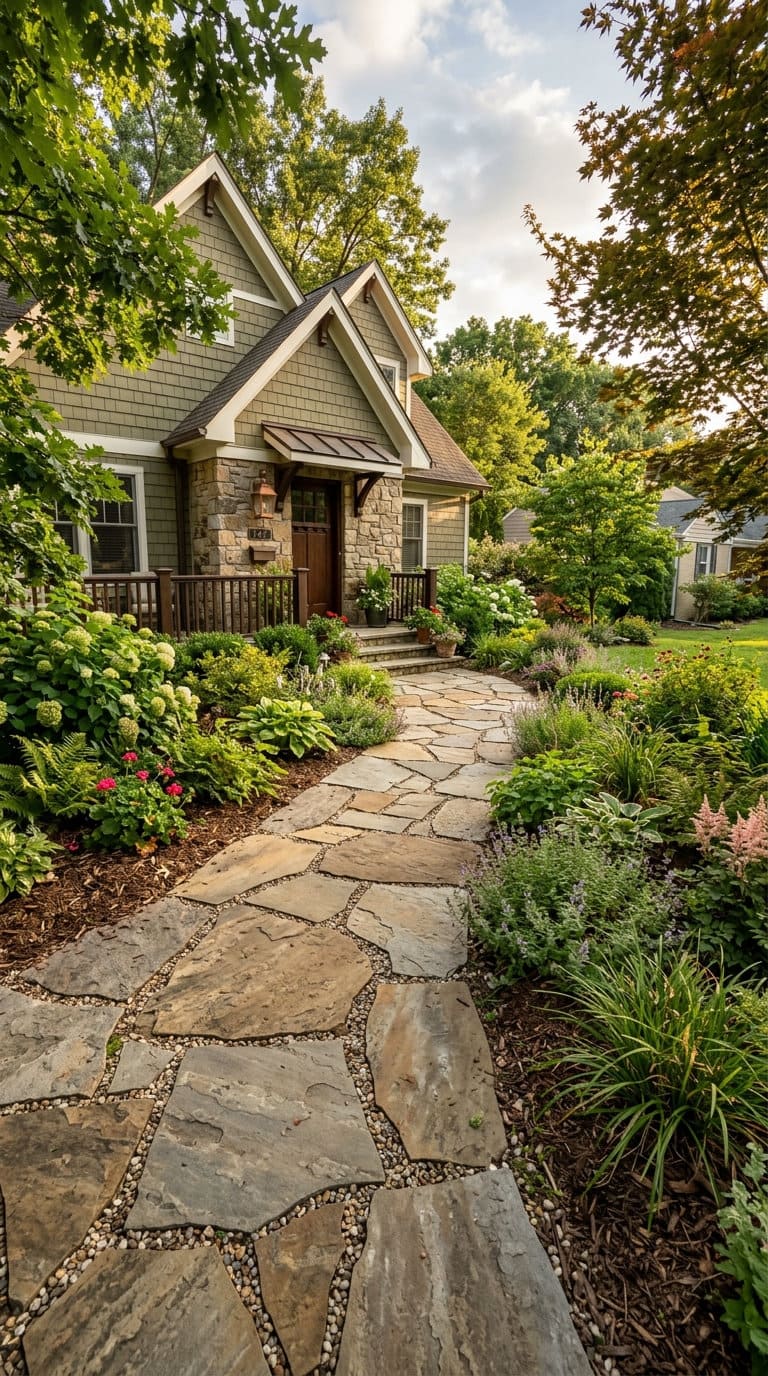
Swap a solid concrete walkway for permeable pavers, flagstone with gravel joints, or a gravel path. Rainwater soaks into the soil instead of running off into the street, which feeds the beds beside the path for free.
Check out this site’s front yard hardscape ideas for more layout options if you’re redoing the whole entry sequence.
Expect $10 to $25 per square foot for permeable pavers installed, less for a simple gravel path. If you’re also dealing with a sloped approach to the door, the same permeable logic applies to front yard retaining wall ideas where terracing can double as water capture.
7. Carve a small rain garden at your yard’s low point
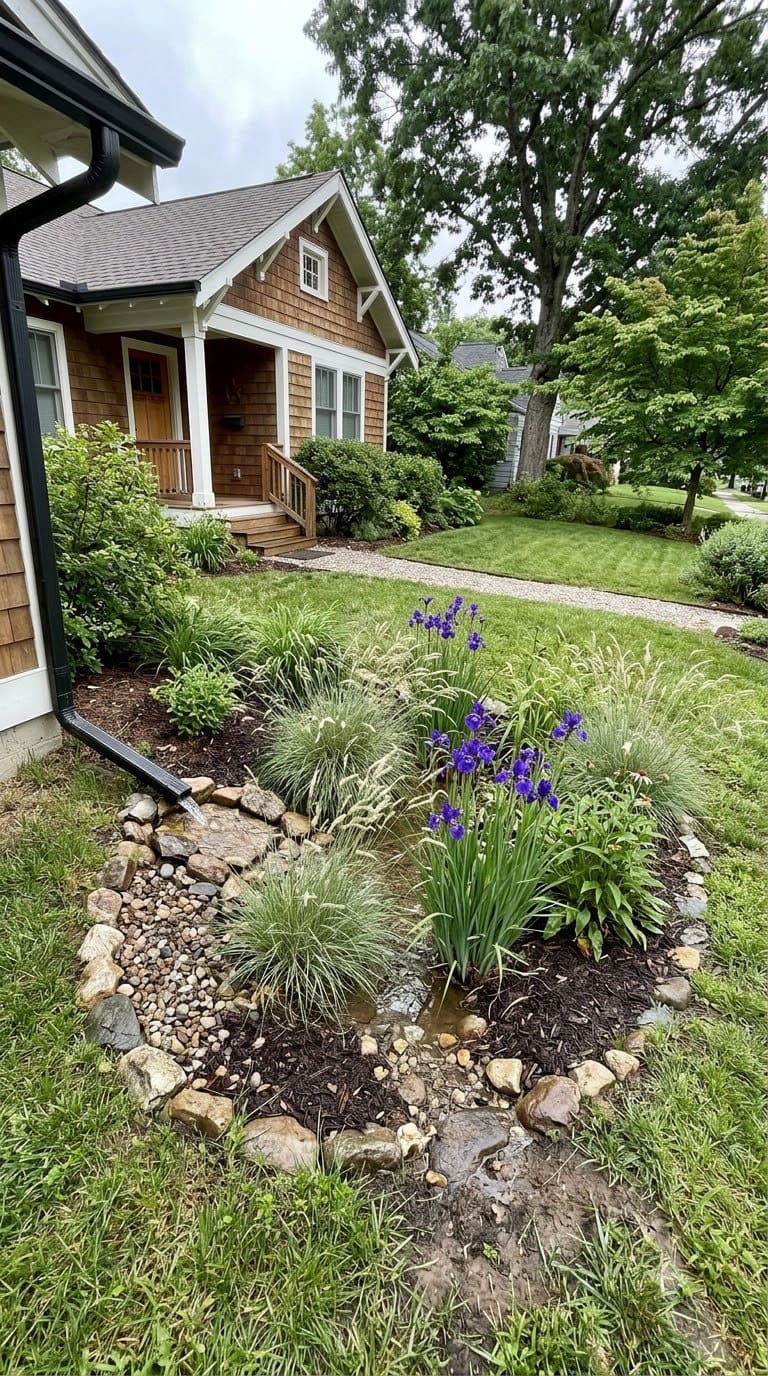
If your front yard has a spot where water naturally pools after rain, that’s a rain garden waiting to happen. A shallow basin planted with water-tolerant natives (blue grama grass, Siberian iris) captures runoff from your roof and driveway instead of sending it straight to the storm drain.
Sizing rule of thumb: the basin should be about 20% to 30% the size of the paved or roofed area draining into it. Cost runs $2 to $16 per square foot depending on how much excavation and planting is involved.
If your yard already has a natural low channel, this site’s dry creek bed landscaping ideas page covers how to turn that into a decorative, functional drainage feature instead of a mud strip.
8. Switch your sprinkler zones to drip irrigation
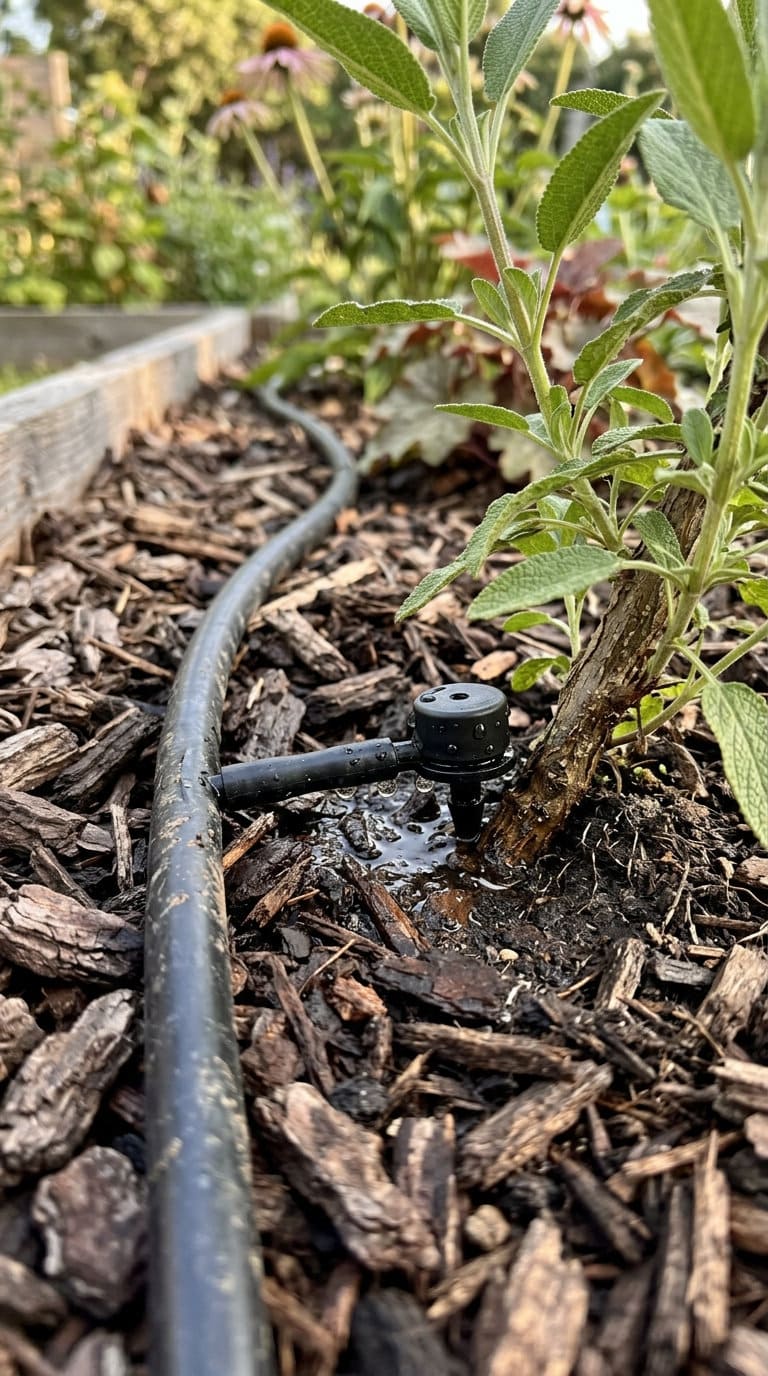
Overhead sprinklers lose a lot of water to evaporation and overspray onto the sidewalk. Drip irrigation delivers water straight to the root zone, which is a meaningful chunk of that 30-50% overall water reduction figure.
A typical front yard drip retrofit runs $300 to $815 depending on zone count and whether you hire it out. This is usually the single highest-ROI line item on this list since it saves water on the plants you’re keeping, not just the ones you’re removing.
9. Use structured mulch rings, not scattered mulch
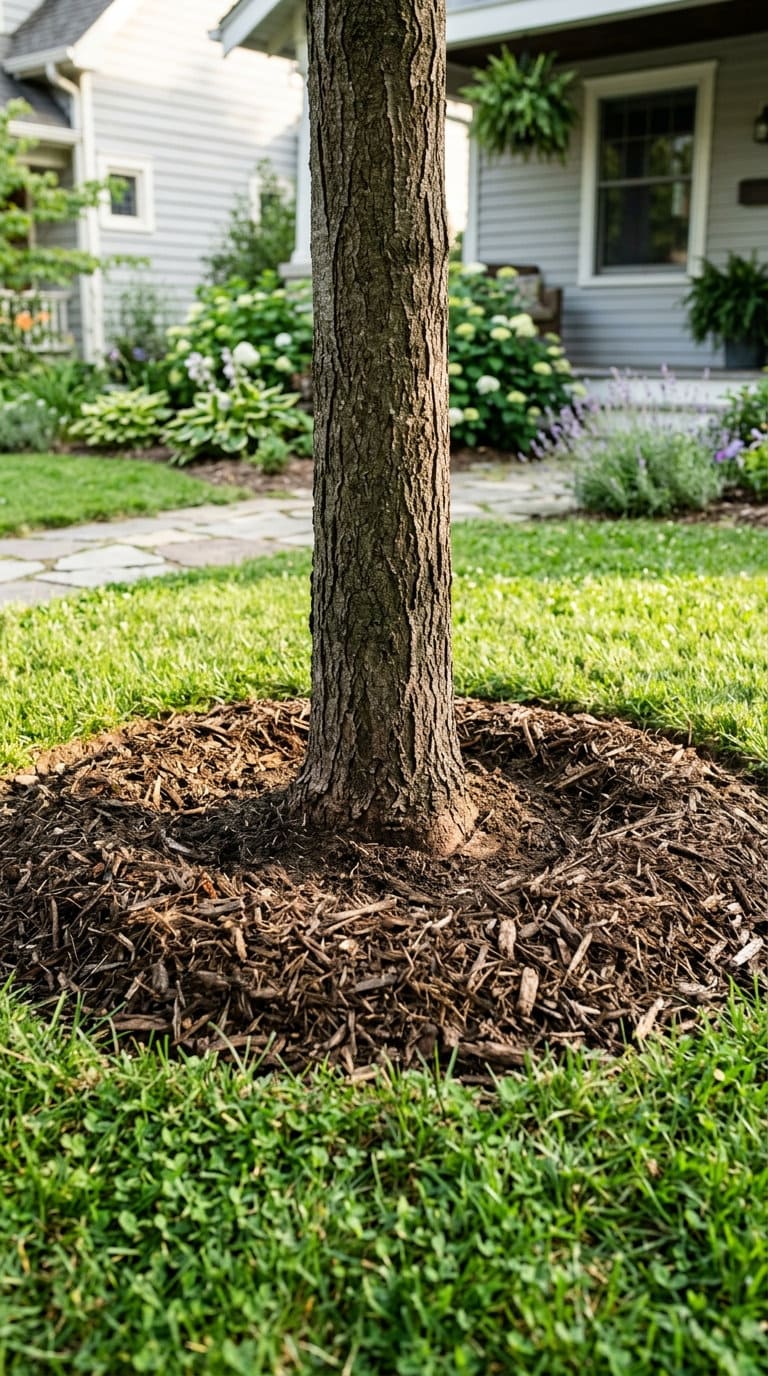
Around any trees or larger shrubs you keep, build a proper mulch ring, several inches deep, pulled back slightly from the trunk. This does more for those plants’ water retention than mulching the whole yard evenly.
For more layout ideas on combining mulch types with rock accents, see this site’s landscaping ideas with mulch and rocks.
Same cost range as general mulch, $3 to $6.50 per bag, but concentrated where it matters most instead of spread thin everywhere.
10. If you can’t remove the lawn entirely, swap the grass species
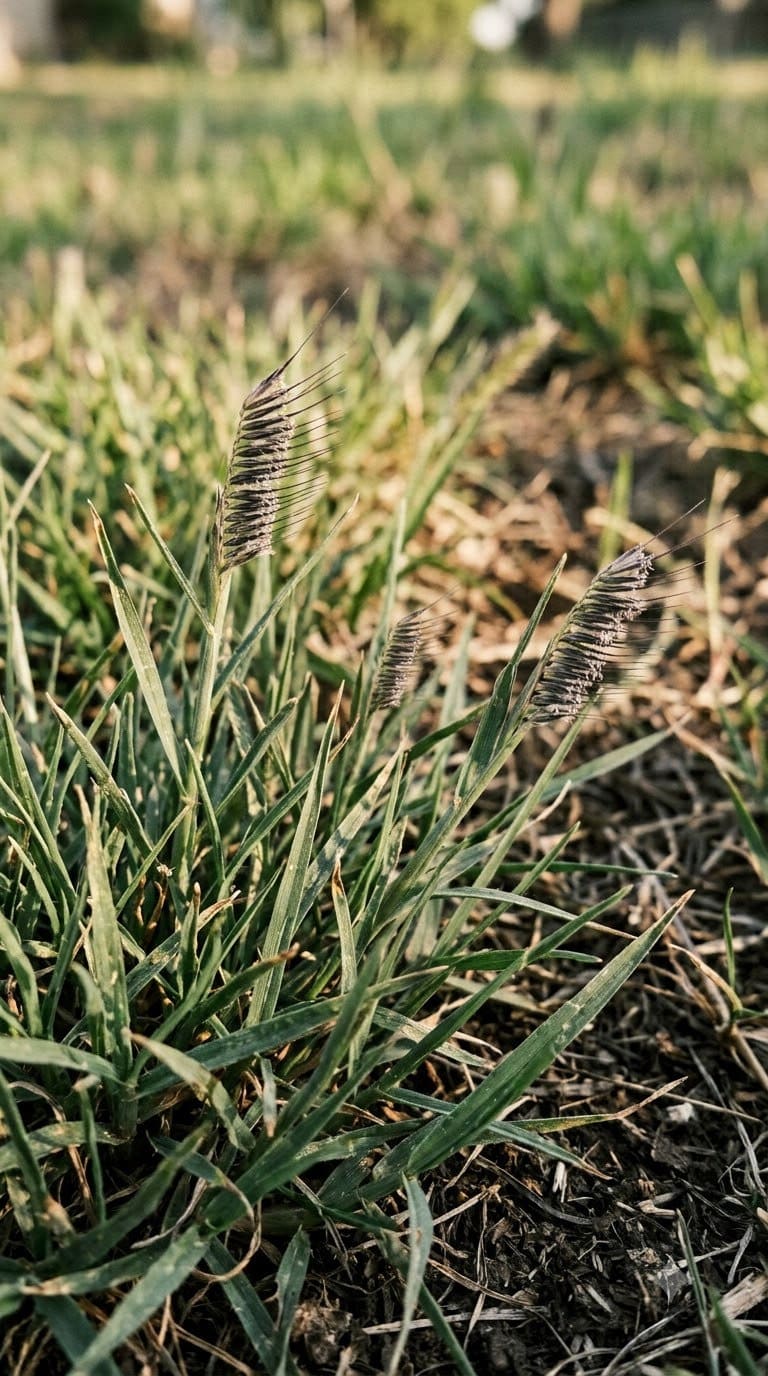
Some HOAs or households aren’t ready to lose the “lawn” look entirely, and that’s fine. Buffalo grass and blue grama grass both survive on roughly an inch of water every two to four weeks once established, a fraction of what Kentucky bluegrass needs, while still looking and feeling like a real lawn underfoot.
Resodding or overseeding with a drought-tolerant grass species costs roughly $1 to $2 per square foot depending on method. This is the lowest-friction option for an HOA that specifically requires “grass” rather than “landscaping.”
Can you get paid to remove your lawn?
In some regions, yes, and the money is real. Southern California’s SoCal Water$mart Turf Replacement Program offers residential rebates up to $3 per square foot, with commercial properties eligible for more.
The Los Angeles Department of Water and Power runs its own turf rebate at $5 per square foot for residential customers. Irvine Ranch Water District offers $3 per square foot capped at 5,000 square feet, with requirements around minimum plant density and a stormwater retention feature.
These dollar amounts vary a lot district to district, so treat the specific figures above as examples, not a guarantee for your address. What’s consistent across programs: you generally have to apply and get approved before you remove any turf, not after.
Starting work early is the single most common way people accidentally disqualify themselves. Search “[your water utility name] turf replacement rebate” to find your local program, then budget two to three weeks for the approval and inspection process before you touch a shovel.
Frequently asked questions
How much water does front yard xeriscaping actually save?
Most sources converge on a 30% to 50% reduction in outdoor water use for a properly designed xeriscape conversion, with some yards seeing more depending on how much lawn area is removed. The savings come from a combination of fewer thirsty plants, less evaporation loss, and drip irrigation replacing sprinklers.
Will a xeriscaped front yard hurt my home’s resale value?
Not when it’s designed with intention, defined edges, and a mix of color and structure rather than left as bare gravel. A rock garden focal point plus flowering drought-tolerant perennials tends to read as upgraded curb appeal, not neglect, especially in regions where water restrictions are already common knowledge among buyers.
What’s the fastest way to convert without a bare, torn-up look mid-project?
Phase it. Do one section at a time, ideally starting with the boulder or hardscape focal point since that looks finished immediately, then fill in plants around it over a weekend or two rather than tearing out the whole yard in one pass. This keeps the transition window short and avoids the exact “abandoned lot” appearance that draws HOA and neighbor complaints.
Do I need a permit to remove my front lawn?
Usually not for straightforward planting bed conversions, but check your local municipal code if you’re adding hardscape, changing drainage patterns, or building a retaining wall over a certain height. If you’re in an HOA, the plan-approval step functions like a permit even where the city doesn’t require one, so budget time for it either way.
Products We Recommend
This post contains affiliate links. We may earn a commission on qualifying purchases at no extra cost to you.
Rain Bird LNDDRIPKIT Drip Irrigation Kit
A 109-piece drip irrigation kit with drippers, micro-bubblers, and micro sprays plus a pressure regulator, sized to water up to 22 plants in a front yard bed layout
Shop Now
Perennial Wildflower Seeds Package, 31 Varieties
A 100,000+ seed non-GMO wildflower and pollinator blend for filling in a low-water bed around a rock garden, path, or reduced-lawn area
Shop Now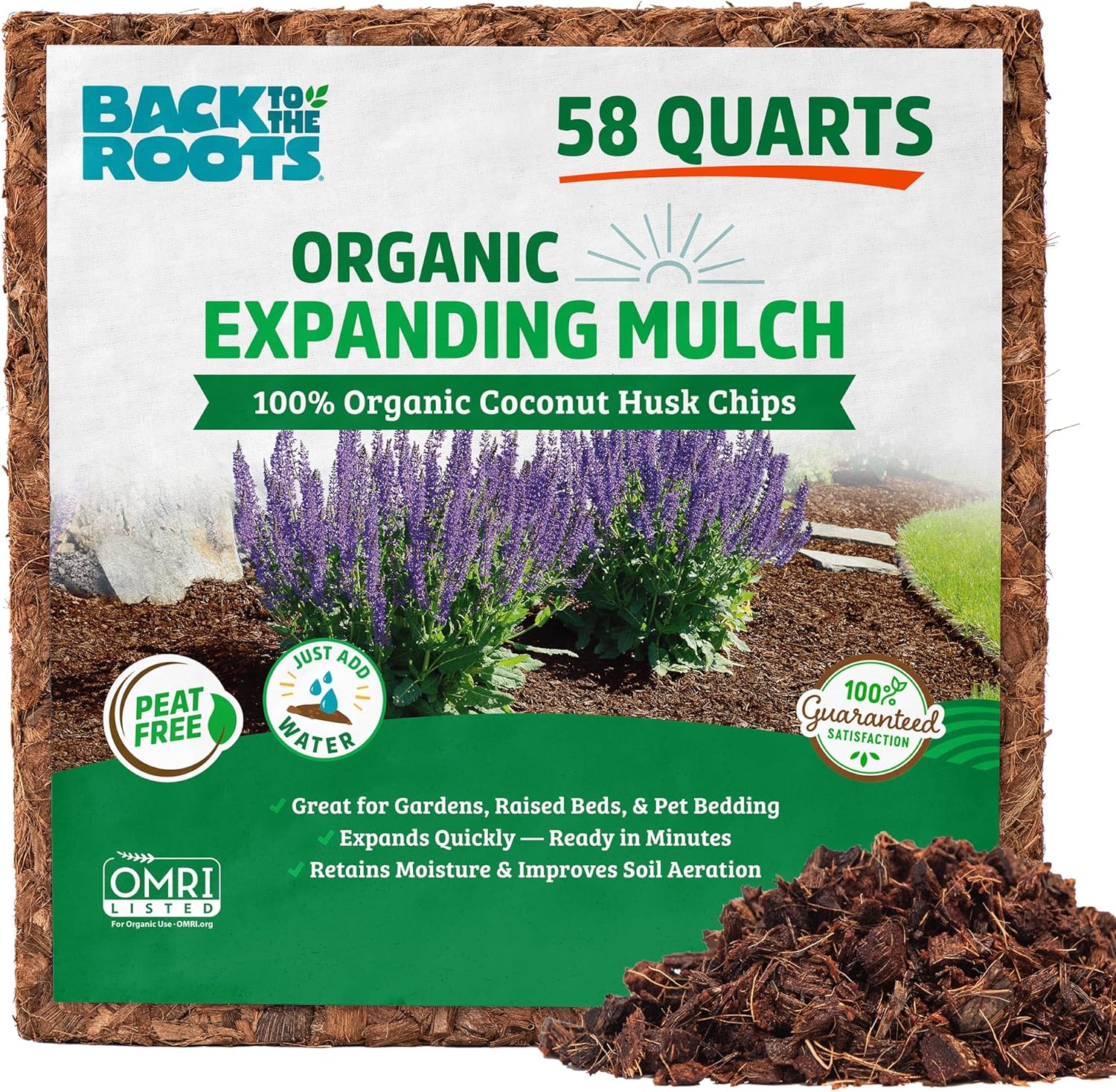
Back to the Roots 100% Organic Mulch, 2 cu. ft.
Expanding coconut husk mulch block for defined planting beds around drought-tolerant plantings, helps retain soil moisture and suppress weeds
Shop NowNever miss an update — choose FarmFoodFamily as your preferred source on Google.
How it works: Tap the button below to open Google's settings page, then check the box next to FarmFoodFamily.
Tap the checkbox to turn it blue — that's how you know it's set.