15+ Charming Front Yard Hardscape Ideas (Plus the Real Grading and Cost Numbers)
Most “hardscape ideas” articles show pretty photos and stop there. Nobody mentions that hardscape installed at the wrong grade can send water toward your house instead of away from it, or gives you real cost ranges to budget against. This one covers both, plus the design ideas. Front Yard Hardscape Ideas 1. Flagstone Path with…

Never miss an update — choose FarmFoodFamily as your preferred source on Google.
How it works: Tap the button below to open Google’s settings page, then check the box next to FarmFoodFamily.
Tap the checkbox to turn it blue — that’s how you know it’s set.
Most “hardscape ideas” articles show pretty photos and stop there. Nobody mentions that hardscape installed at the wrong grade can send water toward your house instead of away from it, or gives you real cost ranges to budget against. This one covers both, plus the design ideas.
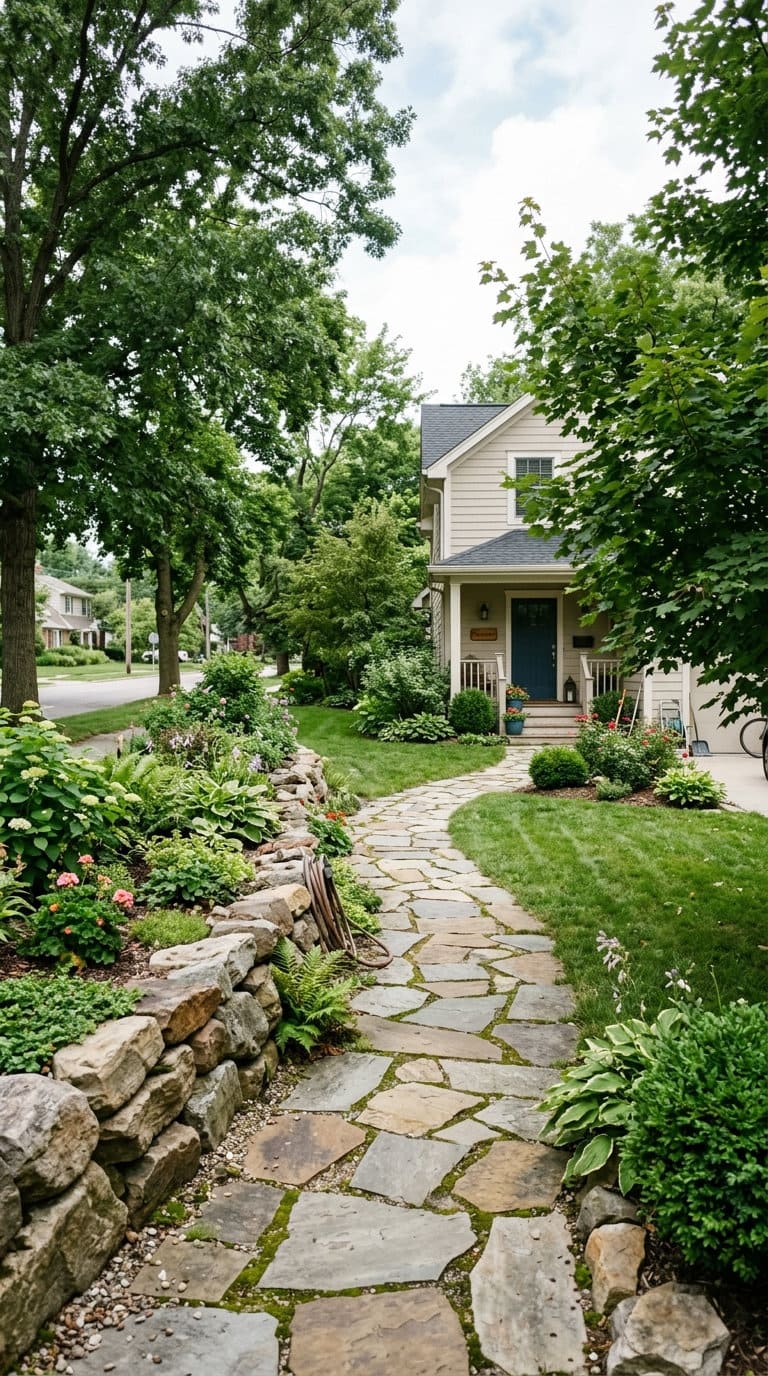
Front Yard Hardscape Ideas
1. Flagstone Path with Ground Cover Joints
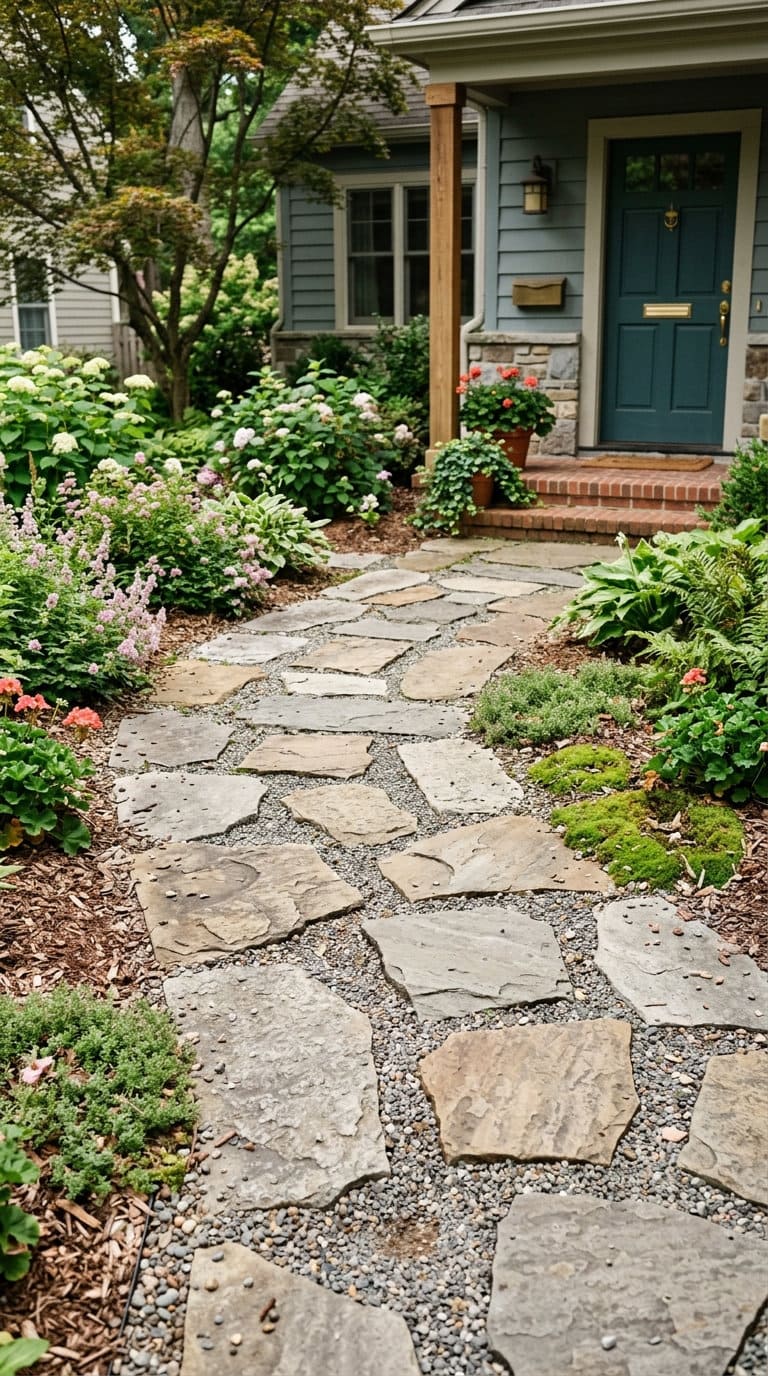
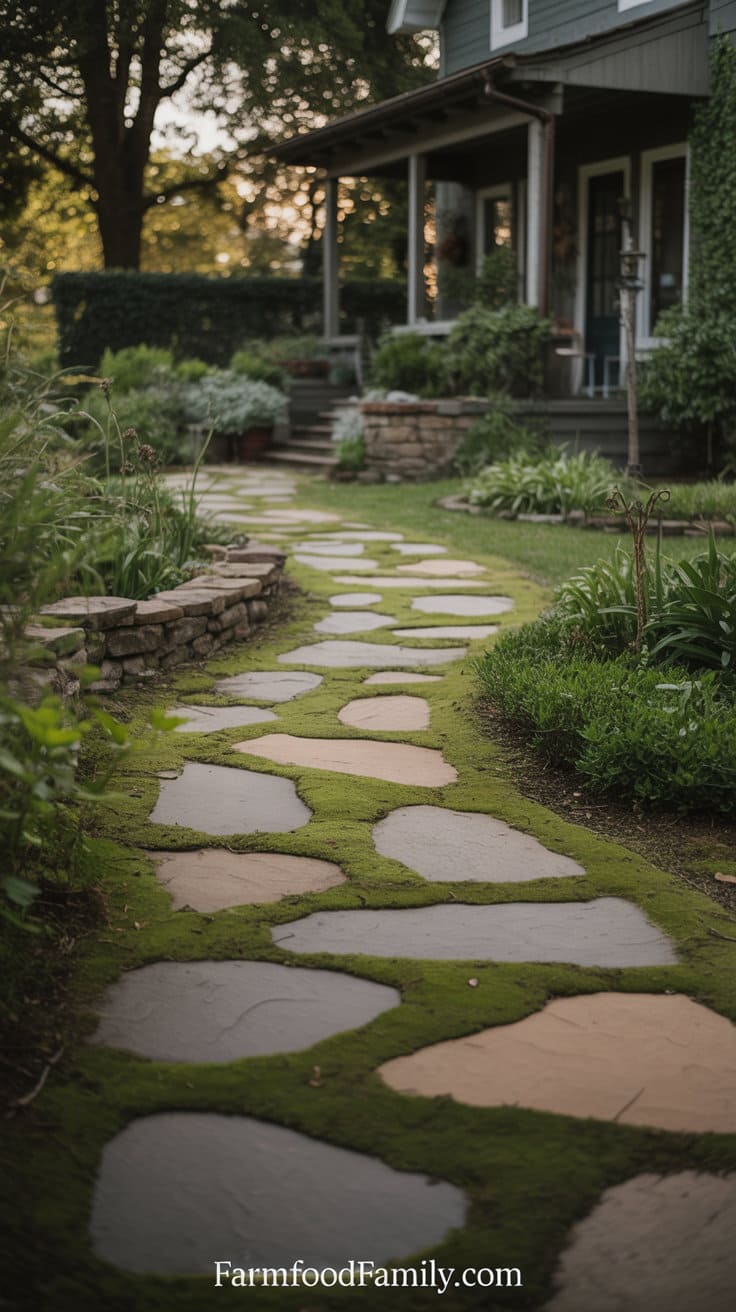
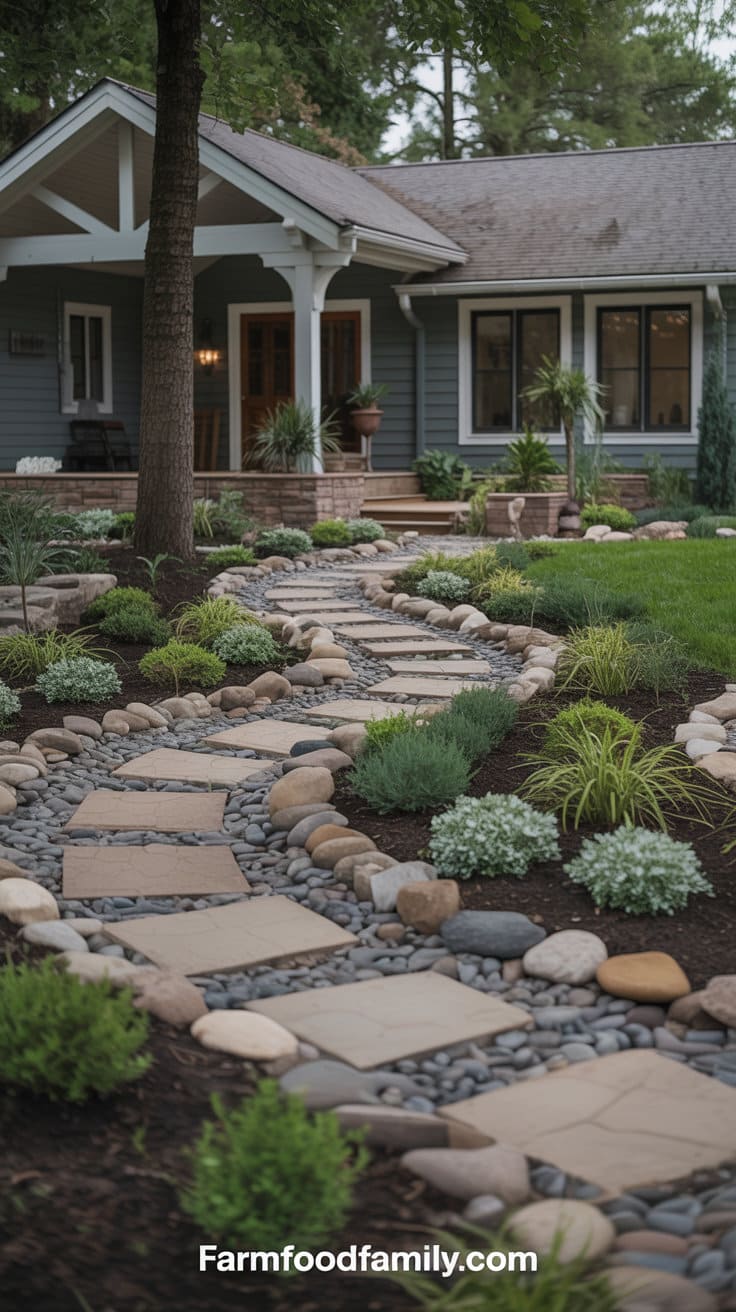
Irregular flagstone set into a compact gravel base reads as more natural and less rigid than a poured concrete walkway, and it gives you real design flexibility, wide spacing for a relaxed look, tight-fitted joints for a more formal one. The gravel base underneath isn’t just for looks either, it genuinely improves drainage compared to a solid impermeable surface.
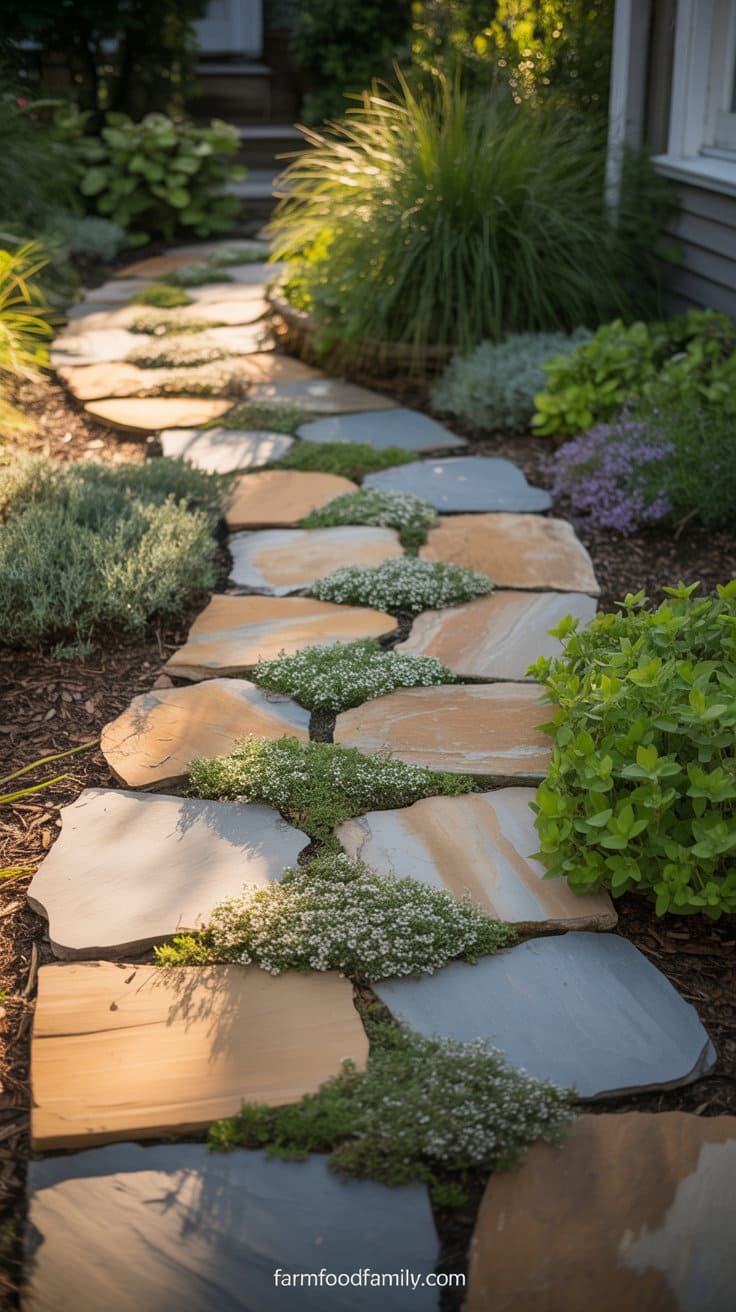
A classic flagstone walkway adds timeless elegance and natural texture to your front yard while providing a durable, walking surface.
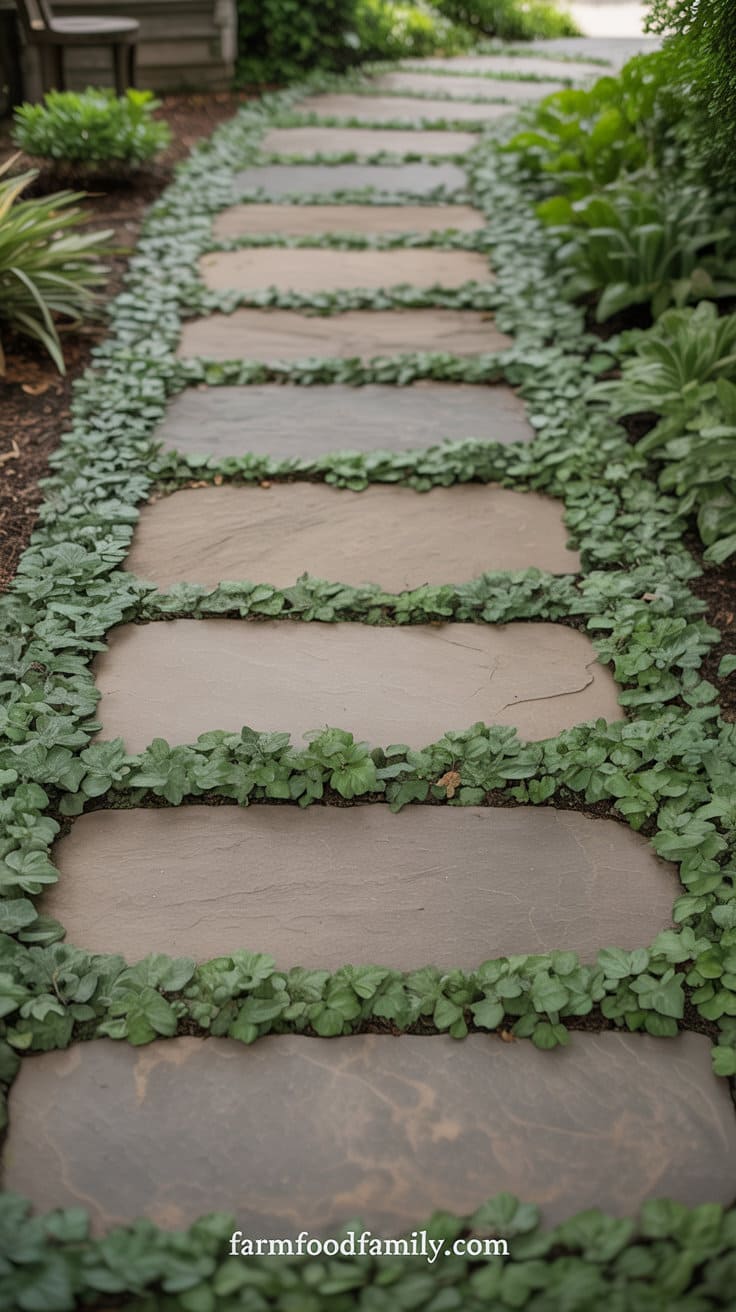
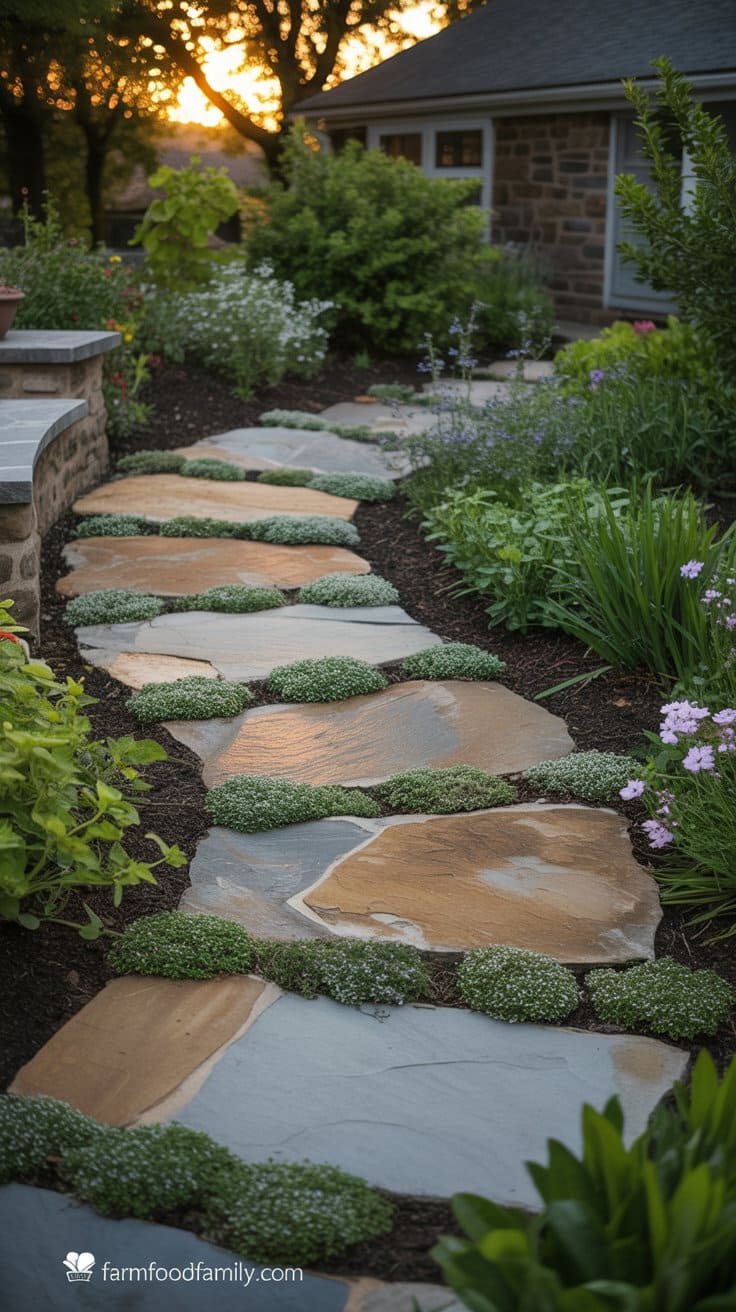
Instead of using typical mortar to connect stones, leave intentional gaps and fill them with soft ground coverings such as creeping thyme or Irish moss.
This combination improves drainage, adds vegetation, and softens the hardscape’s overall appearance.
Flagstones’ irregular shapes and earthy colors make them ideal for cottage-style residences or naturalistic settings.
Answer 4 quick questions and get matched to the exact fix for your yard — drainage, budget, layout, or something else entirely.
Take the Free QuizCurve the path slightly to achieve a more relaxed, organic appearance that encourages exploration.
Border the edges with low perennials or decorative grasses to help the route blend in with the surrounding landscape.
Beautiful and Functional
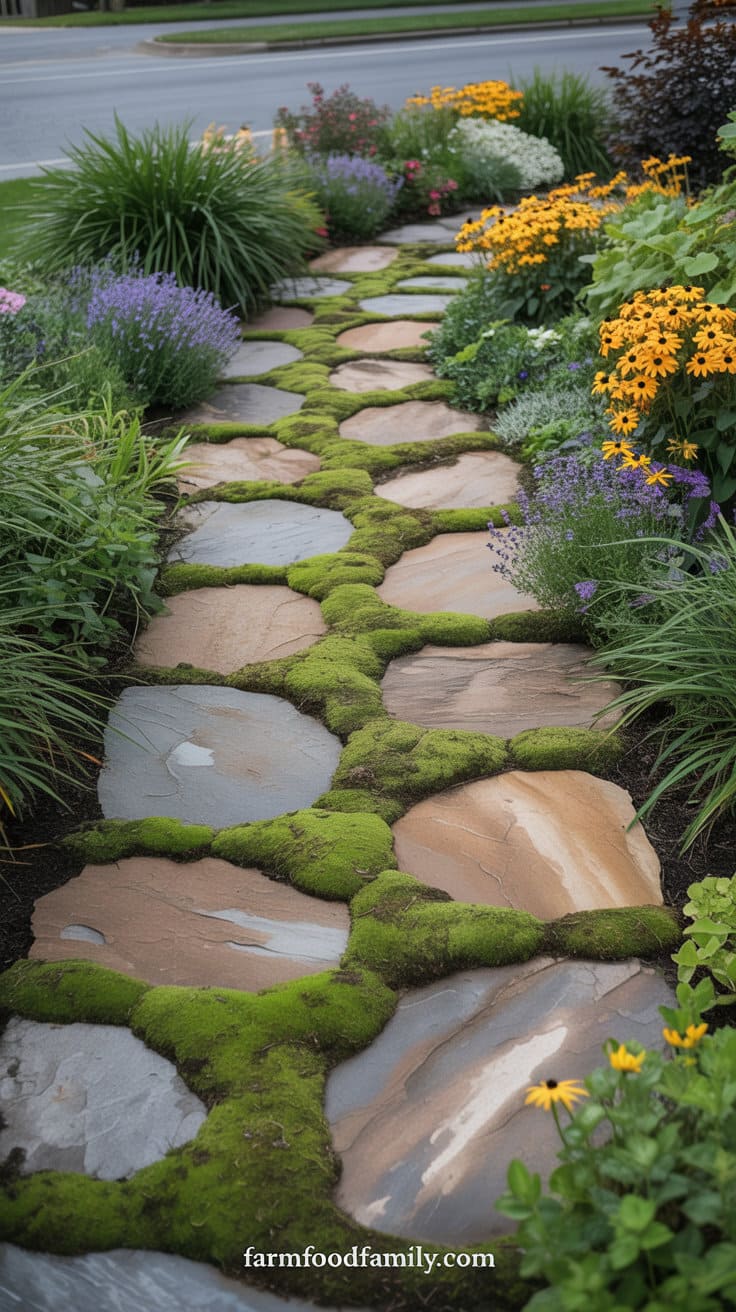
This method is not only visually appealing, but it also decreases runoff and heat reflection.
It strikes a balance between the permanence of stone and the vitality of plants, resulting in a welcoming path to your front door that feels alive but grounded.
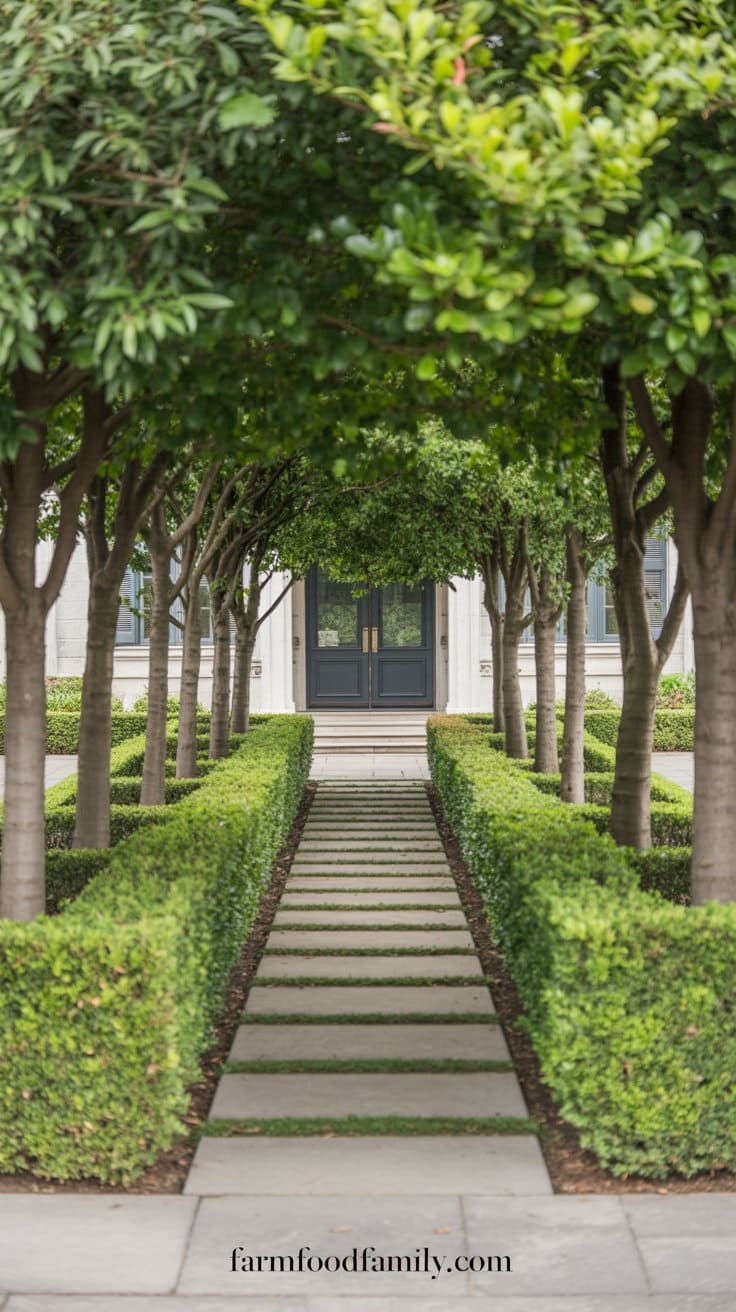
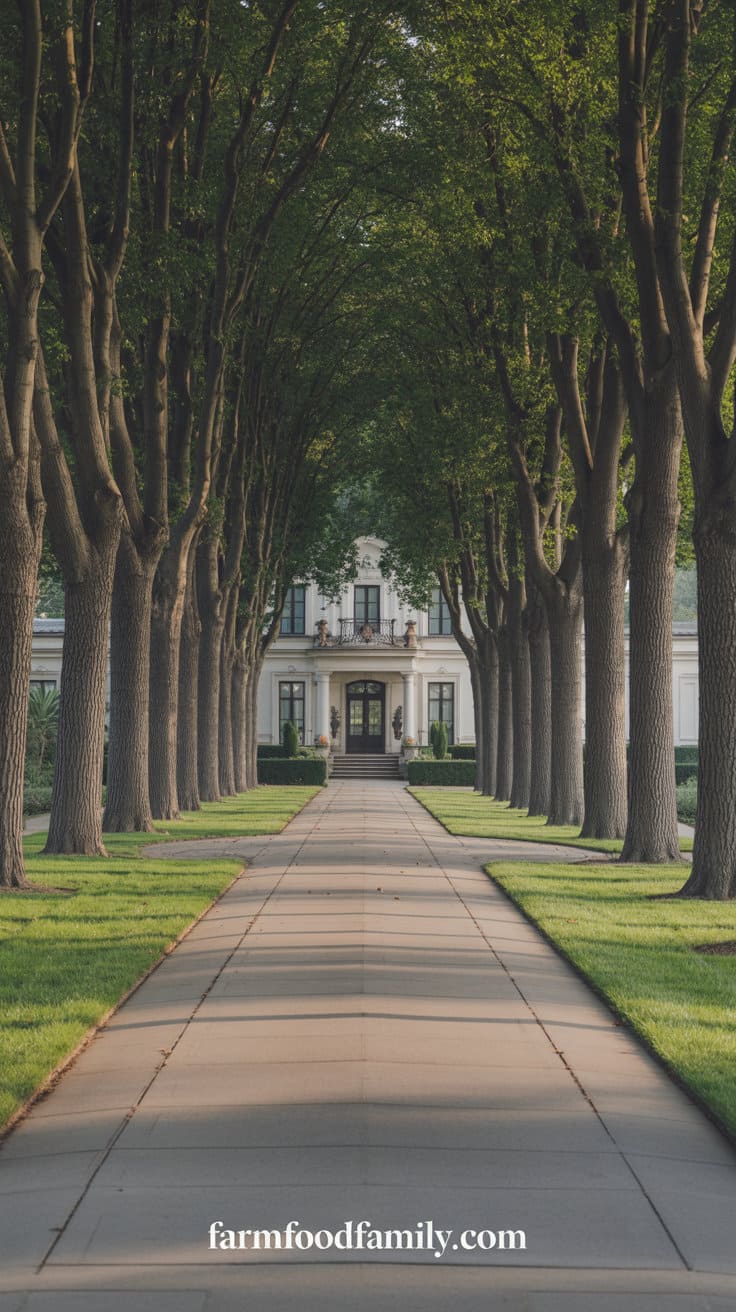
2. Tree-Lined Entry Path with Symmetrical Planting Design
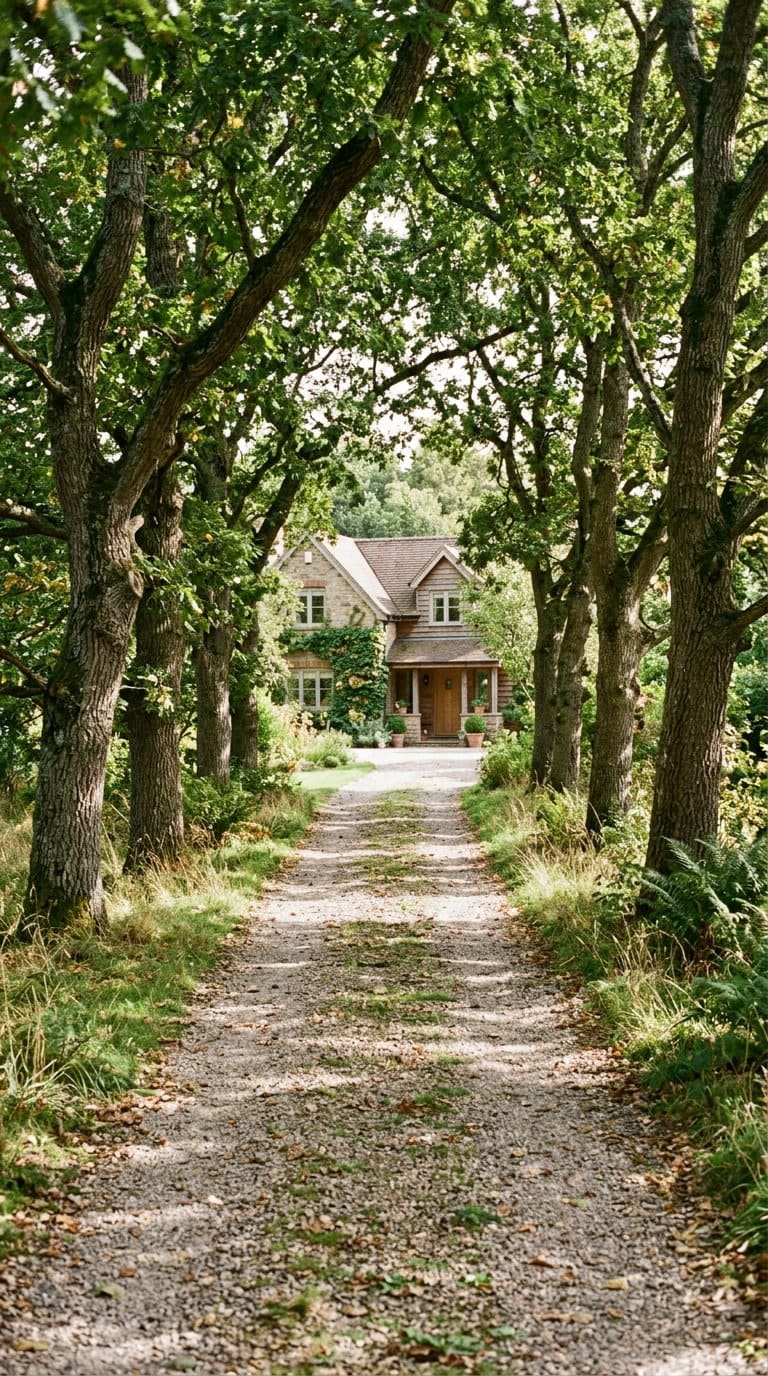
Planting matched trees along both sides of an entry path creates a genuine sense of arrival, especially with species that provide dappled shade rather than a solid canopy that blocks light from reaching the walkway itself.
Keep root systems in mind when choosing species close to a hardscape path, an aggressive root system will eventually heave and crack pavers or flagstone.
Most yard problems trace back to one specific, fixable cause. Find yours in 4 quick questions.
Take the Free Quiz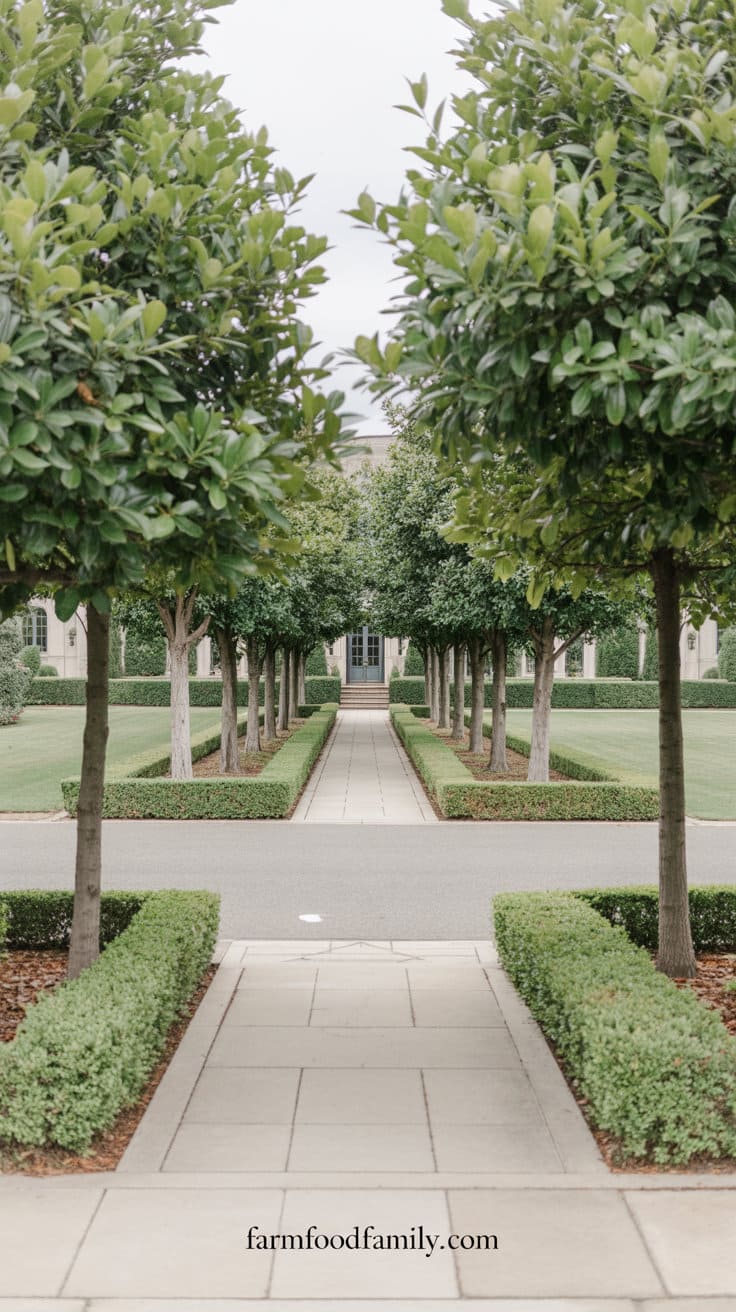
Creating a tree-lined path immediately enhances the grandeur of your front yard and adds timeless elegance to the journey from curb to front door.
Depending on your environment, flank a straight or gently curving sidewalk with small ornamental trees placed evenly between.
These trees serve as living architecture, creating a natural corridor that pulls the eye to your home while adding seasonal interest with leaf, blossoms, or bark texture.
Install the walkway with high-end hardscape materials to maintain a unified and elegant appearance.
To add refinement, edge the walkway with low groundcover or small hedges, resulting in layered symmetry.
Uplighting beneath the trees can create drama at night by casting romantic shadows and increasing visibility.
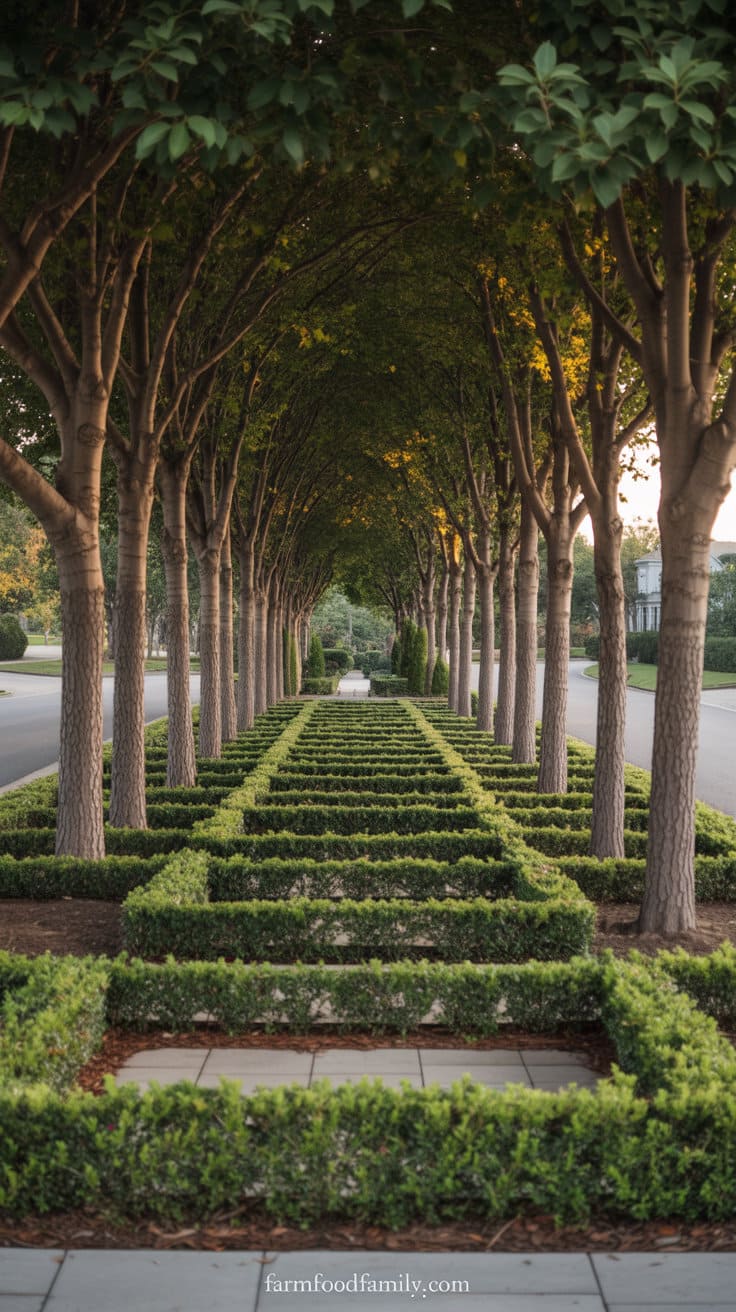
Memorable Visual Statement
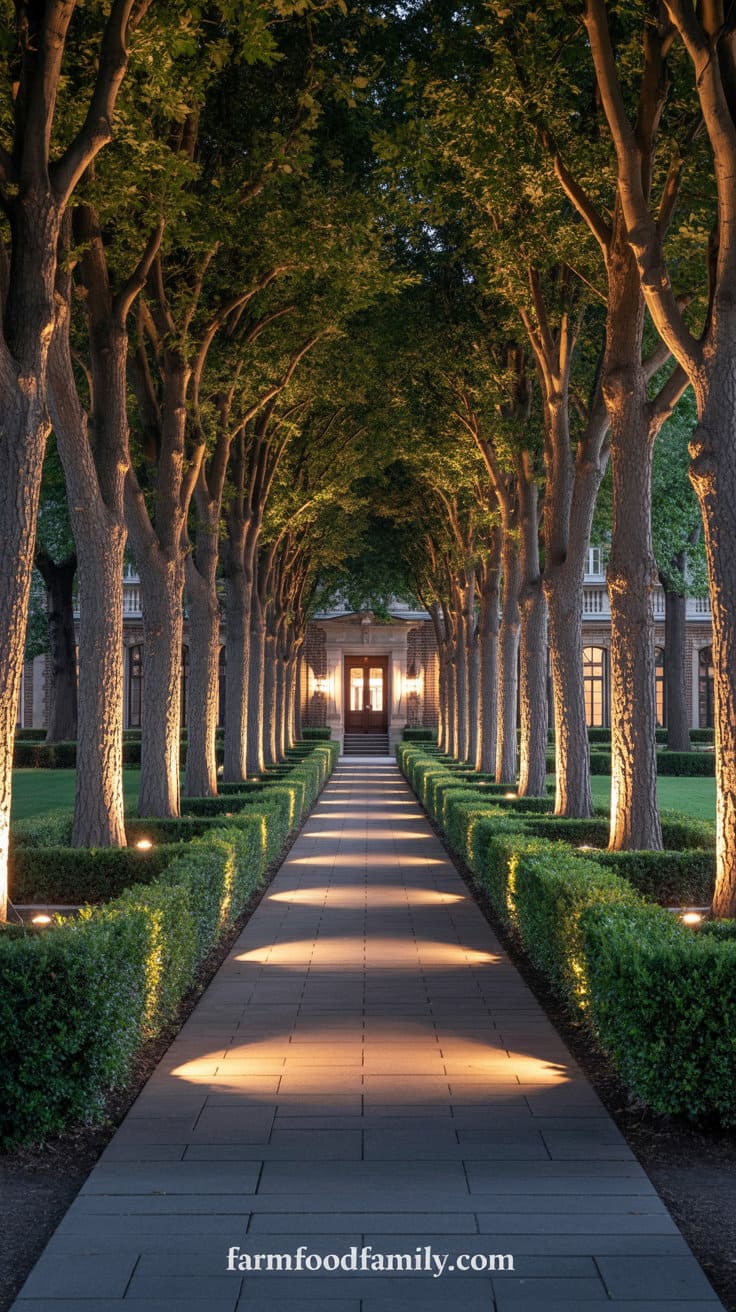
This type of hardscape design gives the impression of estate-style landscaping and converts your front path into a striking visual statement.
It is especially suitable for homes with long walks or conspicuous entrances that require attention.
This design not only improves curb appeal but also provides a memorable sensation of arrival for both residents and visitors by transforming a plain route into a sculptural landscape element.
3. Dry Creek Bed with Stone Edging
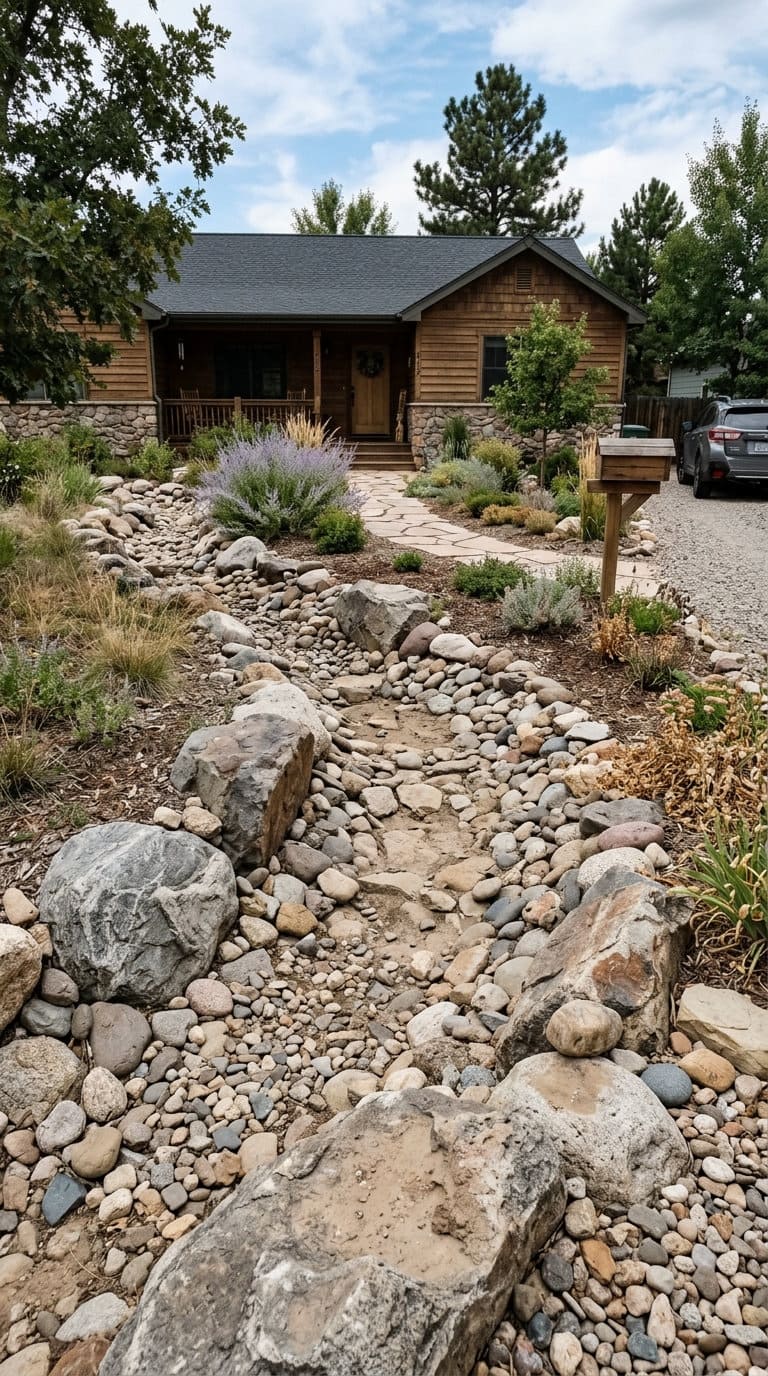
A dry creek bed, river rock in a meandering channel with boulders anchoring the curves, does real drainage work during heavy rain, not just decorative work the rest of the year. It’s especially useful for directing water around a low spot in the yard that would otherwise pool.
The average homeowner spends $616/year on yard fixes that don't address the real problem. Find out what yours actually is — before you spend another dollar.
Take the Free Quiz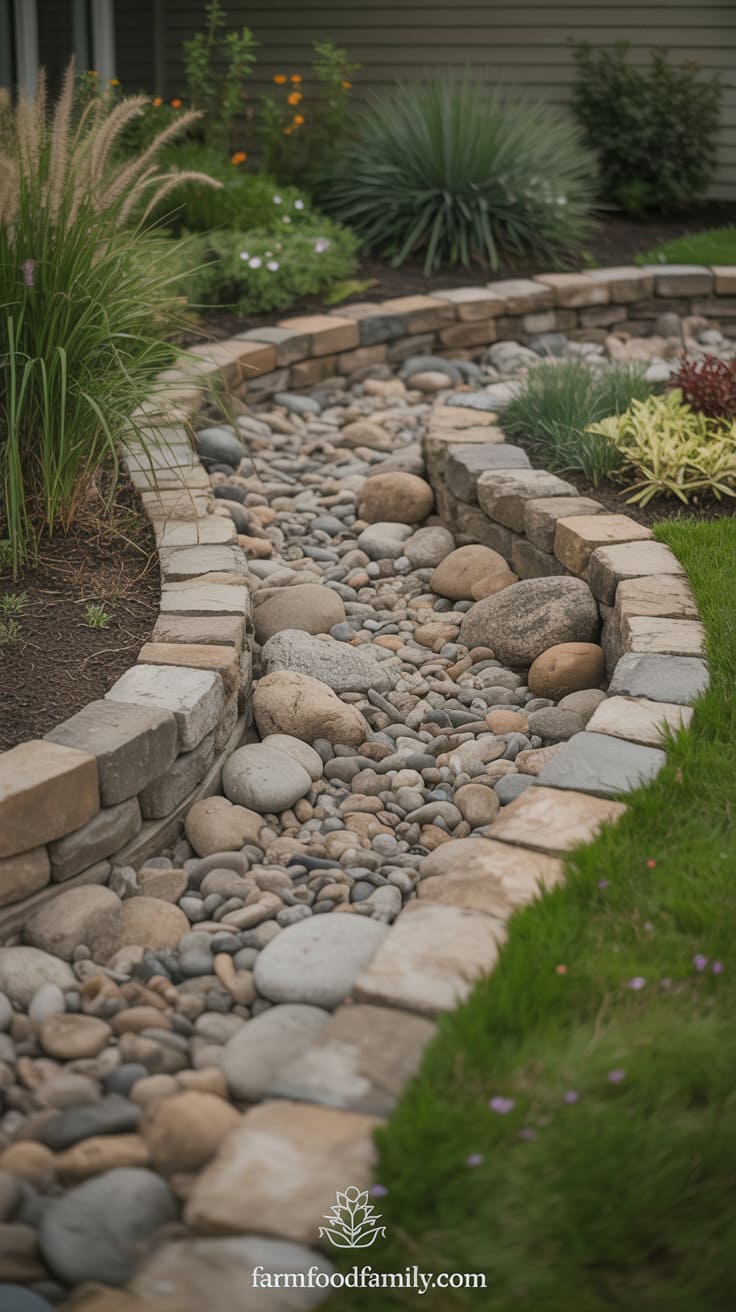
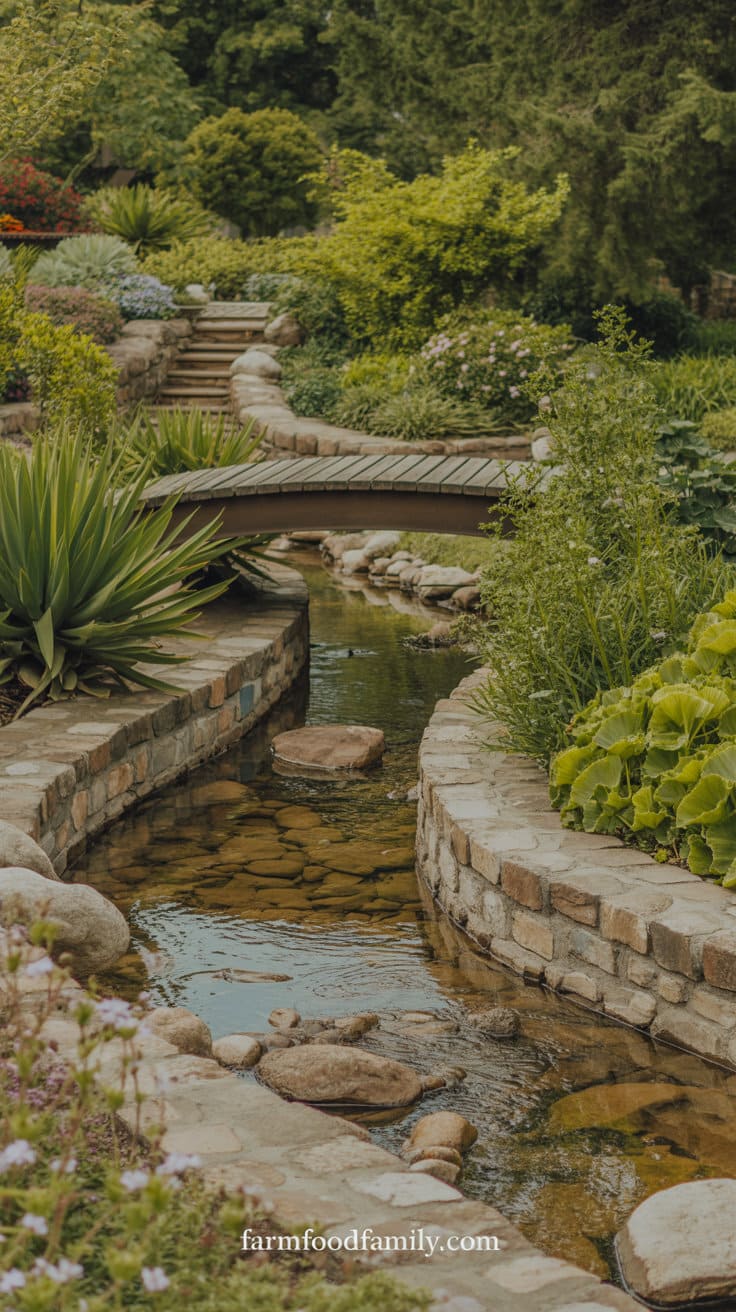
A dry stream bed is both ornamental and useful, acting as both a visual feature and a clever drainage solution in front yards where runoff accumulates.
Dig a shallow trench, line it with landscape fabric, and fill it with river rocks of various sizes, interspersed with larger boulders to add texture.
To define the shape of the bed and prevent displacement, use stacked flat stones or bricks. Along the banks, add plants that thrive in changing moisture levels, such as blue fescue, daylilies, and irises.
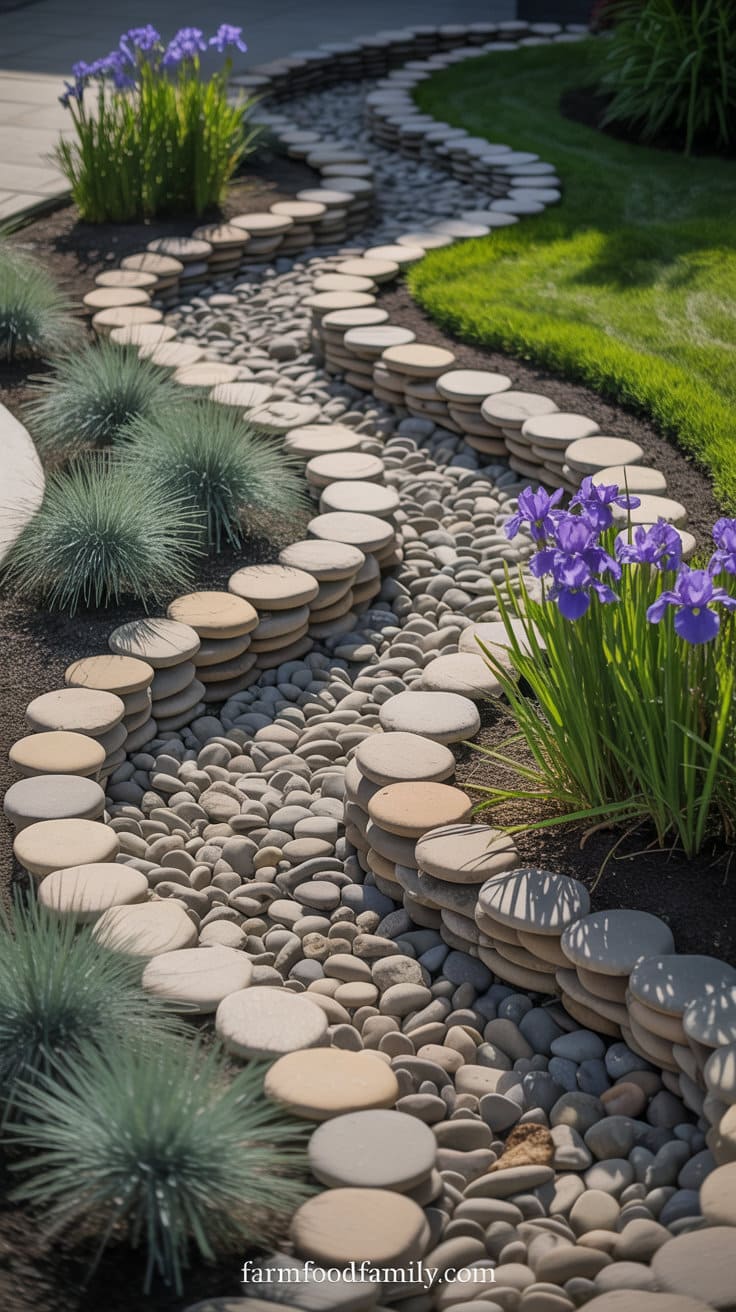
Eye-catching and Charming
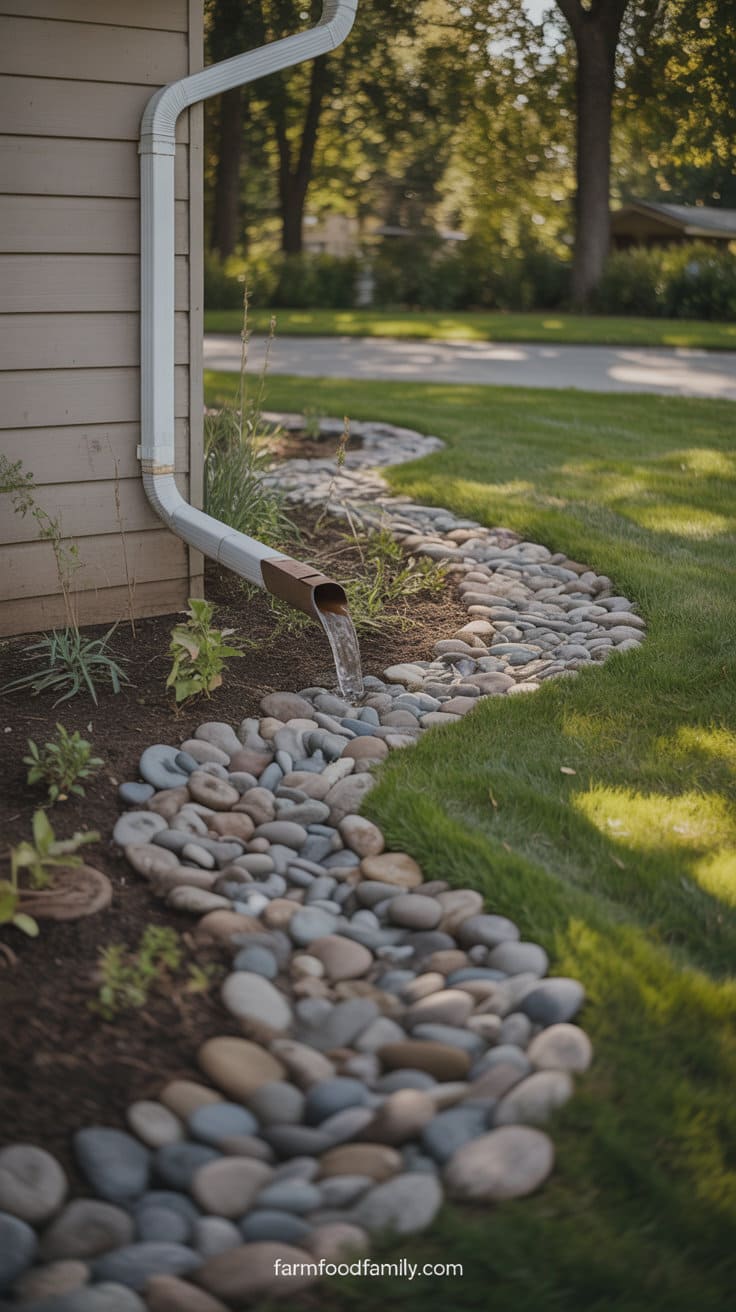
A dry creek bed gives the illusion of movement, drawing the eye naturally across the yard. It can also be smoothly integrated into downspout extensions, directing rainwater away from the house in a visually appealing manner.
This hardscape feature is ideal for naturalistic or woodland-themed front yards. When combined with a little bridge, sidewalk, or lanterns, it transforms into a charming and functional storybook feature.
4. Boulder retaining wall
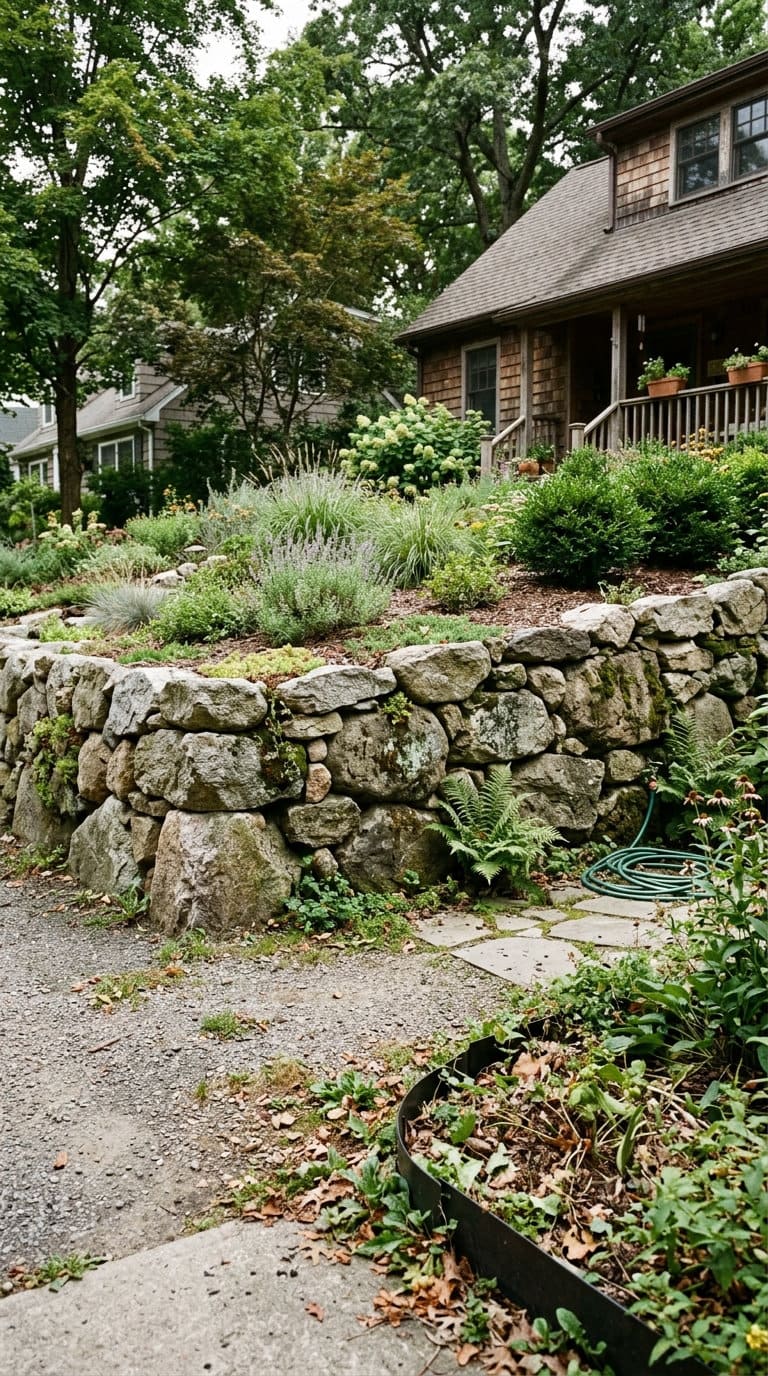
Large natural boulders stacked to rely on weight and placement, rather than uniform cut block, create a retaining wall with real depth and an organic, settled look rather than a manufactured one. The irregular faces lock together naturally, and a gravel base behind the wall manages runoff so water doesn’t build up pressure against it.
5. A low garden-bed wall
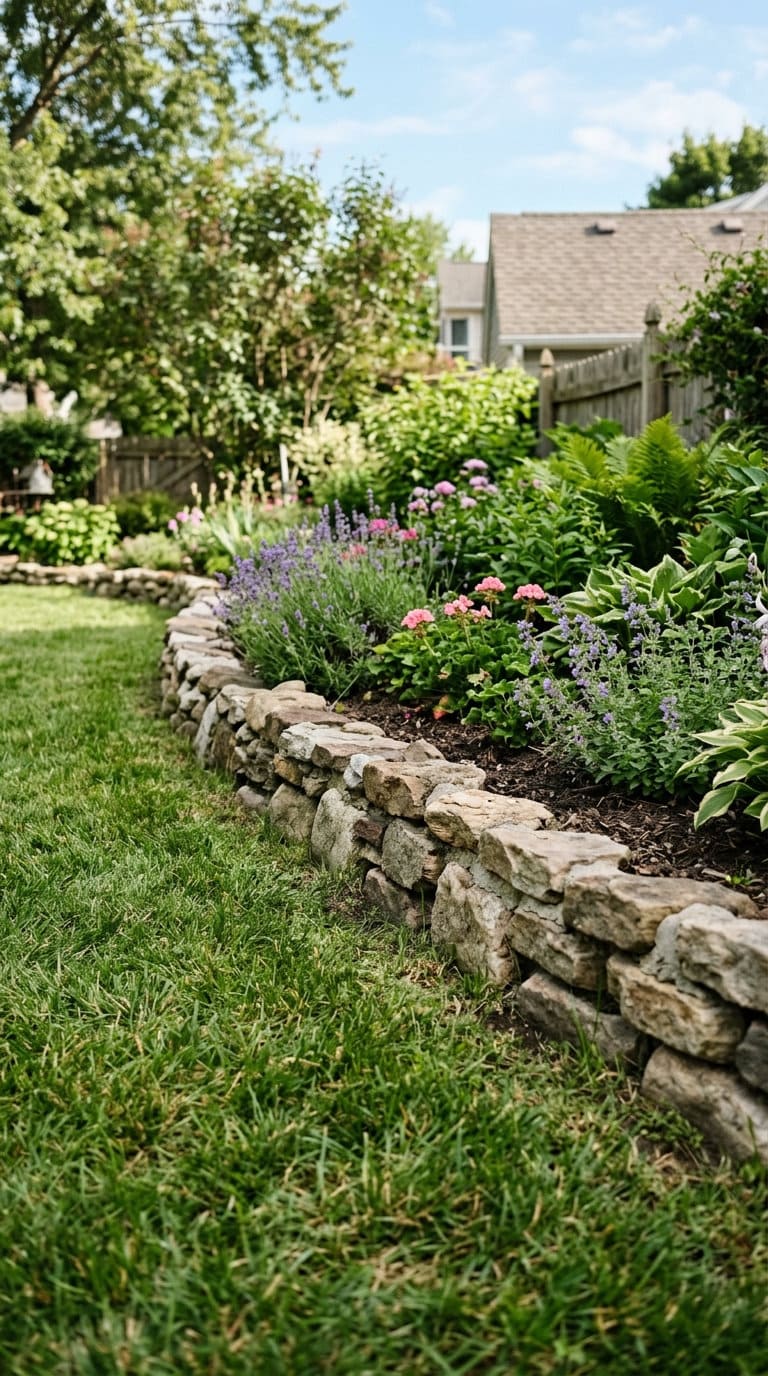
A low wall, 8 to 12 inches, separating a planting bed from lawn or walkway does real practical work: it stops soil erosion into the walkway and eliminates the ongoing hassle of edge-trimming where grass meets bed. Weathered fieldstone suits a cottage-garden look, clean-lined block suits something more contemporary.
6. Geometric concrete panel path
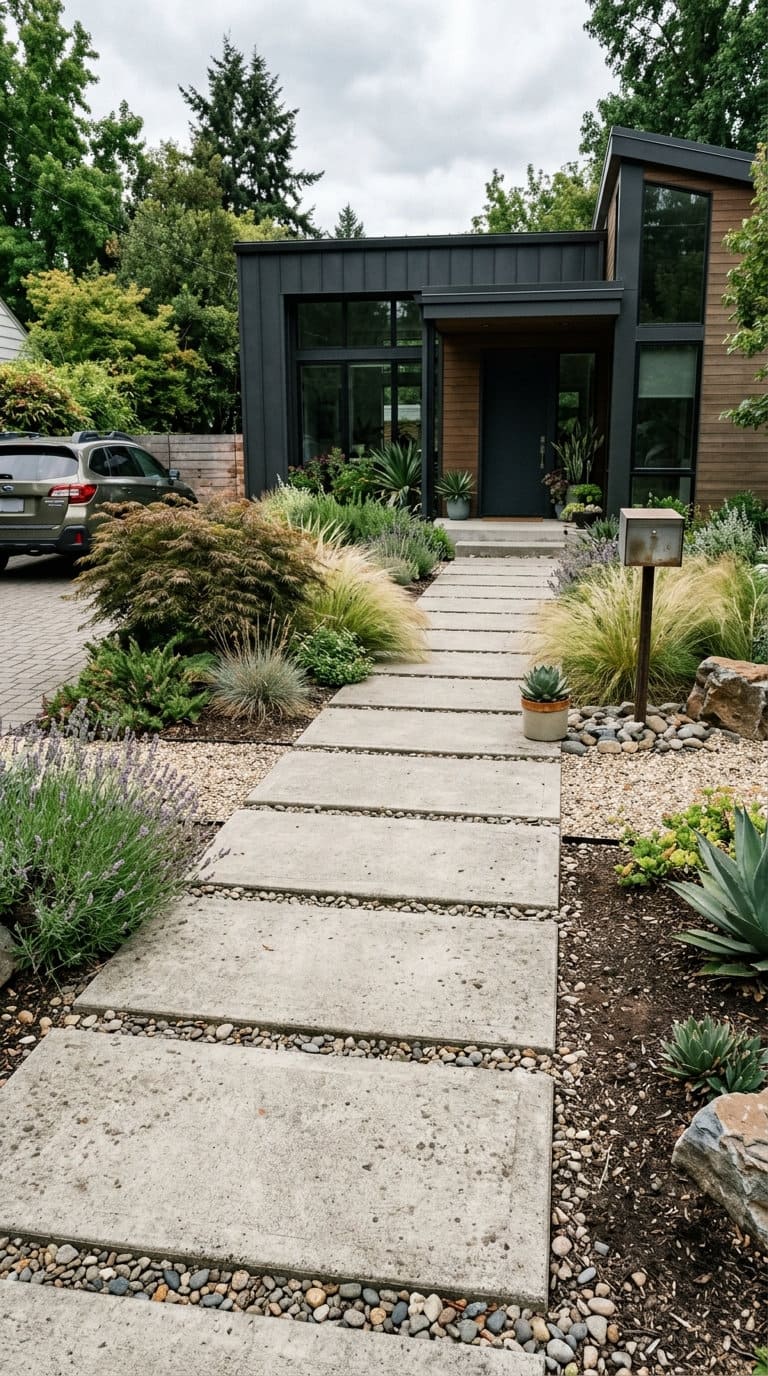
Concrete panels with exposed aggregate joints between them create real contrast, smooth panel surfaces against a textured joint line, and give a path a clean, architectural edge that suits a modern home better than irregular stone would. It’s one of the clearer 2026 hardscape trends specifically because it defines movement through a space rather than just decorating it.
7. A retaining wall that doubles as seating
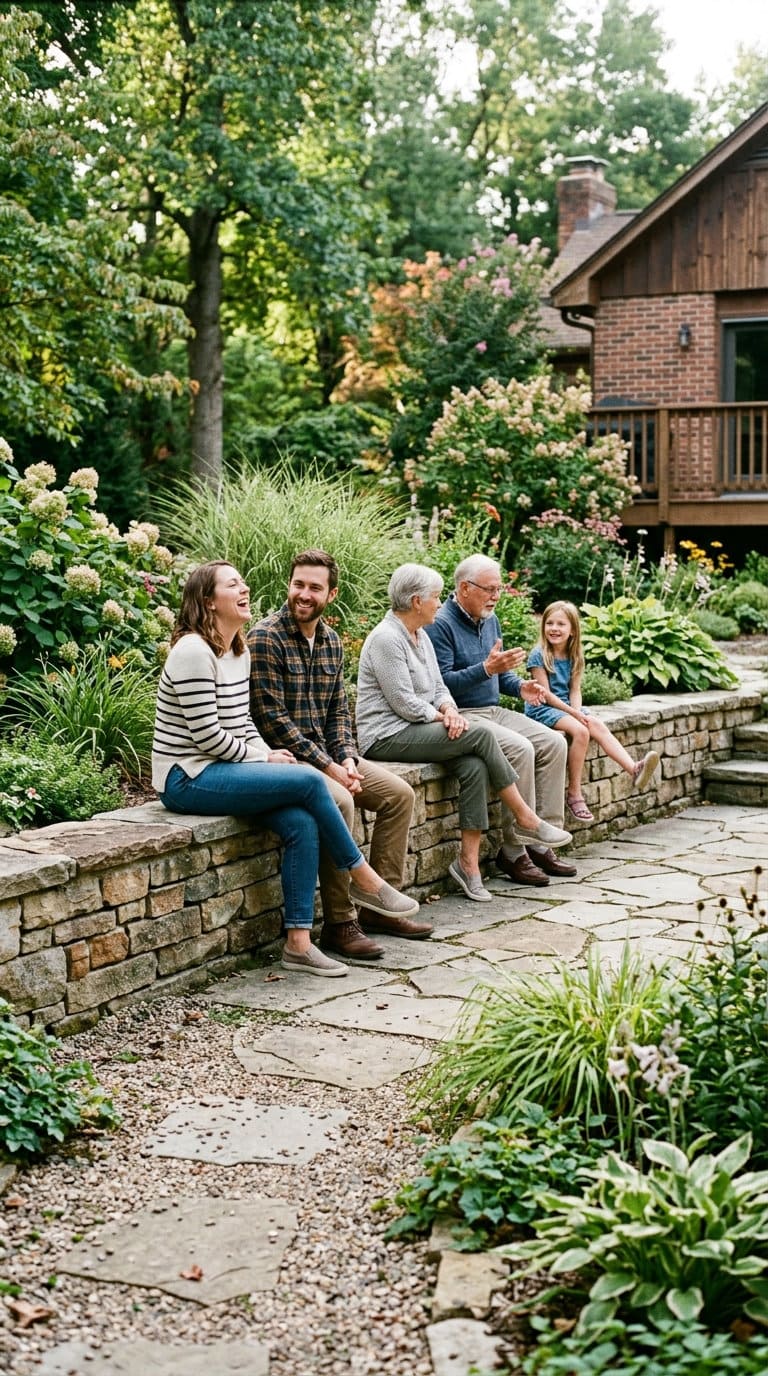
Building a retaining wall at seat height instead of a purely functional height gets you real usable seating without a separate furniture purchase, and it makes better use of a yard that’s short on flat space to begin with. It’s a small design decision at the planning stage that has a real, lasting payoff.
Grading and drainage: getting the slope right
This is the part almost every hardscape article skips, and it’s the one that actually matters most for avoiding a genuinely expensive mistake. Lee Gilliam, a landscape contractor featured on This Old House, gives a real, specific figure for directing water away from a home’s foundation: “about a 5% grade, which equals roughly a 6-inch drop over 10 feet.” Any hardscape surface near the house, a path, a patio, a retaining wall’s base, needs to respect that slope, not fight it.
Get this wrong and the consequence isn’t cosmetic. A flagstone path or concrete panel installed dead level, or worse, sloped slightly toward the house, will direct rainwater exactly where you don’t want it, and that’s a foundation and basement problem, not a landscaping one. This is worth confirming with whoever installs your hardscape before the first stone goes down, not after.
Real cost ranges
General hardscaping runs roughly $5 to $25 per square foot depending on material and labor. More labor-intensive work, retaining walls and patios specifically, runs higher, roughly $15 to $40 or more per square foot. Grading itself typically costs $1.25 to $4 per square foot, with simpler rough grading or slope correction closer to $1 to $2.
If your yard needs a French drain to handle real drainage problems, budget $10 to $35 per linear foot. And for a genuinely complex project involving grading, drainage, and retaining walls together, a landscape architect typically runs $70 to $150 an hour, or 5% to 20% of total project cost if they’re also supervising installation, money worth spending on a project where a grading mistake is expensive to fix after the fact.
FAQ
What slope do I need for proper drainage away from my house? Landscape contractor Lee Gilliam recommends roughly a 5% grade, about a 6-inch drop over 10 feet, directing water away from the foundation. Any hardscape surface near the house needs to respect this slope rather than sitting level or sloping toward the home.
How much does front yard hardscaping cost? General hardscaping runs roughly $5 to $25 per square foot, with more labor-intensive work like retaining walls and patios running $15 to $40 or more per square foot. Grading adds $1.25 to $4 per square foot, and a French drain runs $10 to $35 per linear foot if your yard needs one.
Do I need a landscape architect for a retaining wall? For a simple, low wall, not necessarily. But for anything involving significant grading, drainage, or a taller structural wall, a landscape architect (typically $70 to $150 an hour) ensures the engineering is correct, a mistake here is expensive to fix once the wall and surrounding hardscape are already in the ground.
Hardscaping is the art of using permanence to shape potential. In the front yard, it provides structure, flow, and visual consistency that welcomes guests and elevates curb appeal. Whether you opt for quaint or grand, each hardscape element adds depth and identity to your landscape.
The best designs find harmony between hard and soft, creating a seamless balance that feels both crafted and natural. Beyond beauty, hardscaping also offers practical benefits like erosion control, water conservation, and ease of maintenance.
By choosing the right combination of materials and layout, you turn your front yard into a stage that tells your home’s story from the very first glance, blending style with sensibility every step of the way. Leave a comment if you liked this list and make sure to share it with your friends!
Never miss an update — choose FarmFoodFamily as your preferred source on Google.
How it works: Tap the button below to open Google's settings page, then check the box next to FarmFoodFamily.
Tap the checkbox to turn it blue — that's how you know it's set.