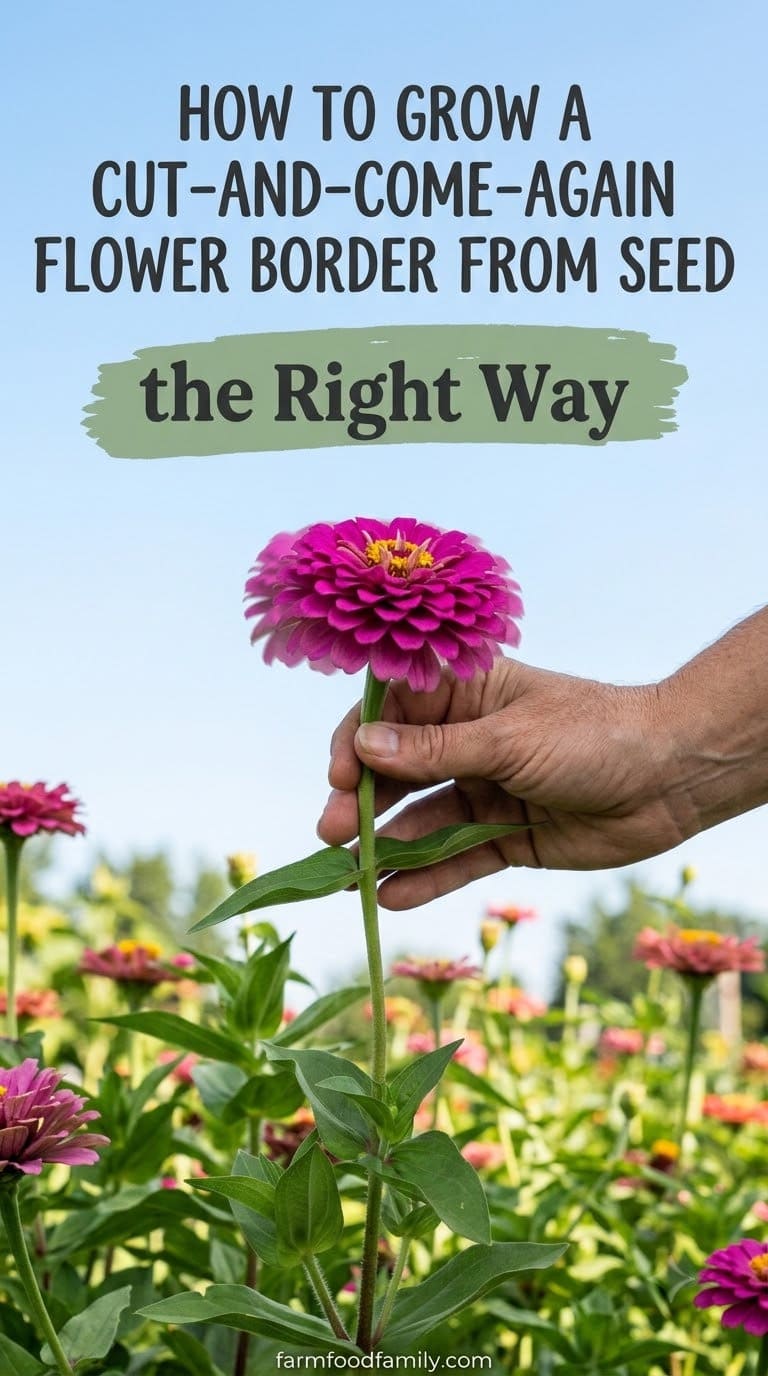
How to Grow a Cut-and-Come-Again Flower Border From Seed
A border you can raid for a bouquet every few days, all from a handful of seed packets, but only if you get four things right before the flowers ever bloom.

Never miss an update — choose FarmFoodFamily as your preferred source on Google.
How it works: Tap the button below to open Google’s settings page, then check the box next to FarmFoodFamily.
Tap the checkbox to turn it blue — that’s how you know it’s set.
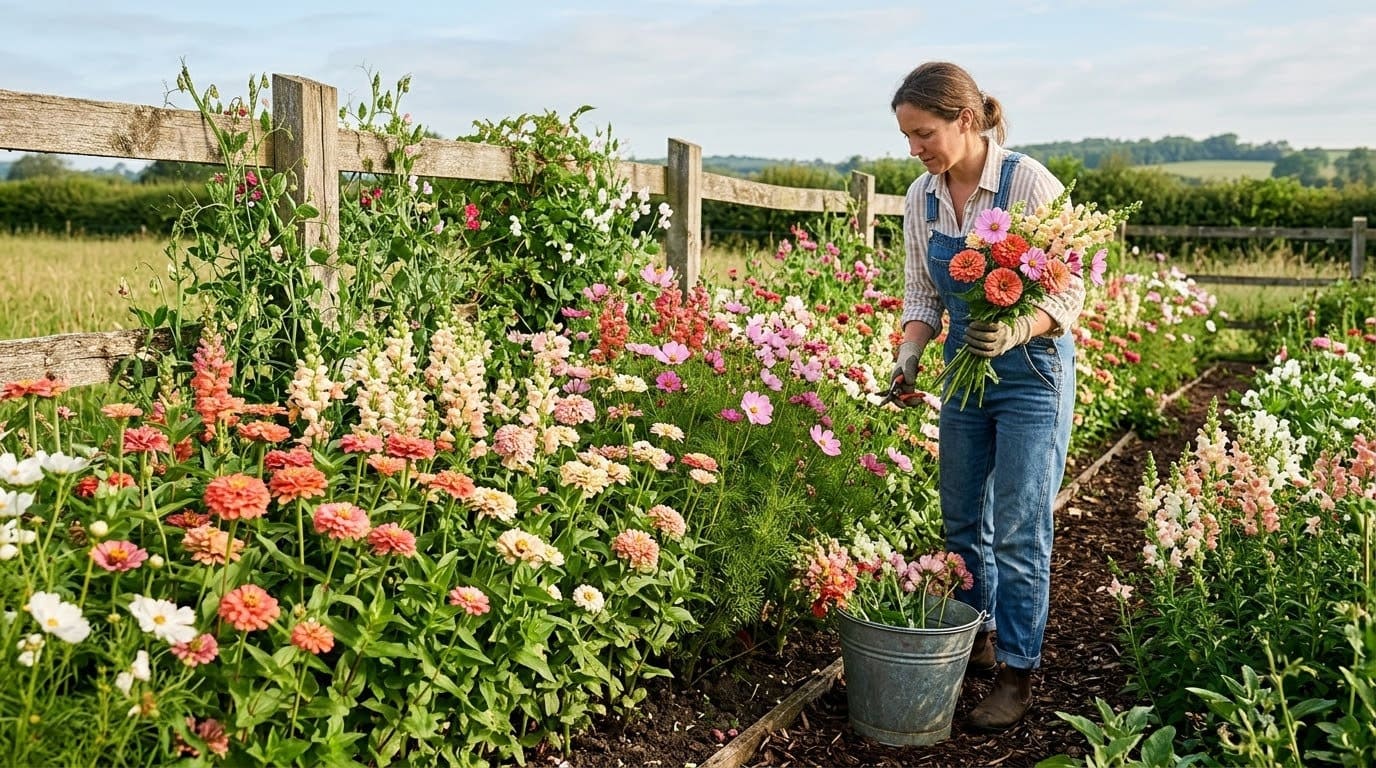
The dream is a strip along the fence or the path that you cut from all summer. It fills back in faster than you can empty it. And it is completely doable from seed, for the price of a few packets.
Most people just do not set it up for it. They plant a cutting border the way they would plant a flower bed, at the spacing on the packet, and never touch the young plants. Then they get one big flush in July, a lot of tall bare stems, and not much after that.
A productive cut-and-come-again border comes down to four decisions made before anything blooms: the right flowers, the right sowing time, tight spacing, and pinching the seedlings. Here is how to do all four.
Quick Answer
“Cut and come again” describes annual flowers that branch and rebloom from side shoots, so the more you harvest, the more stems they push out. To grow a border like this from seed, choose flowers with that habit: zinnias, cosmos, bachelor’s buttons, calendula, snapdragons, sweet peas, celosia, and branching sunflowers.
Sow hardy annuals like bachelor’s buttons and sweet peas in fall or very early spring, and tender annuals like zinnias and cosmos only after the last frost in warm soil. Space plants about 9 to 12 inches apart, tighter than the packet says, for more stems and straighter growth.


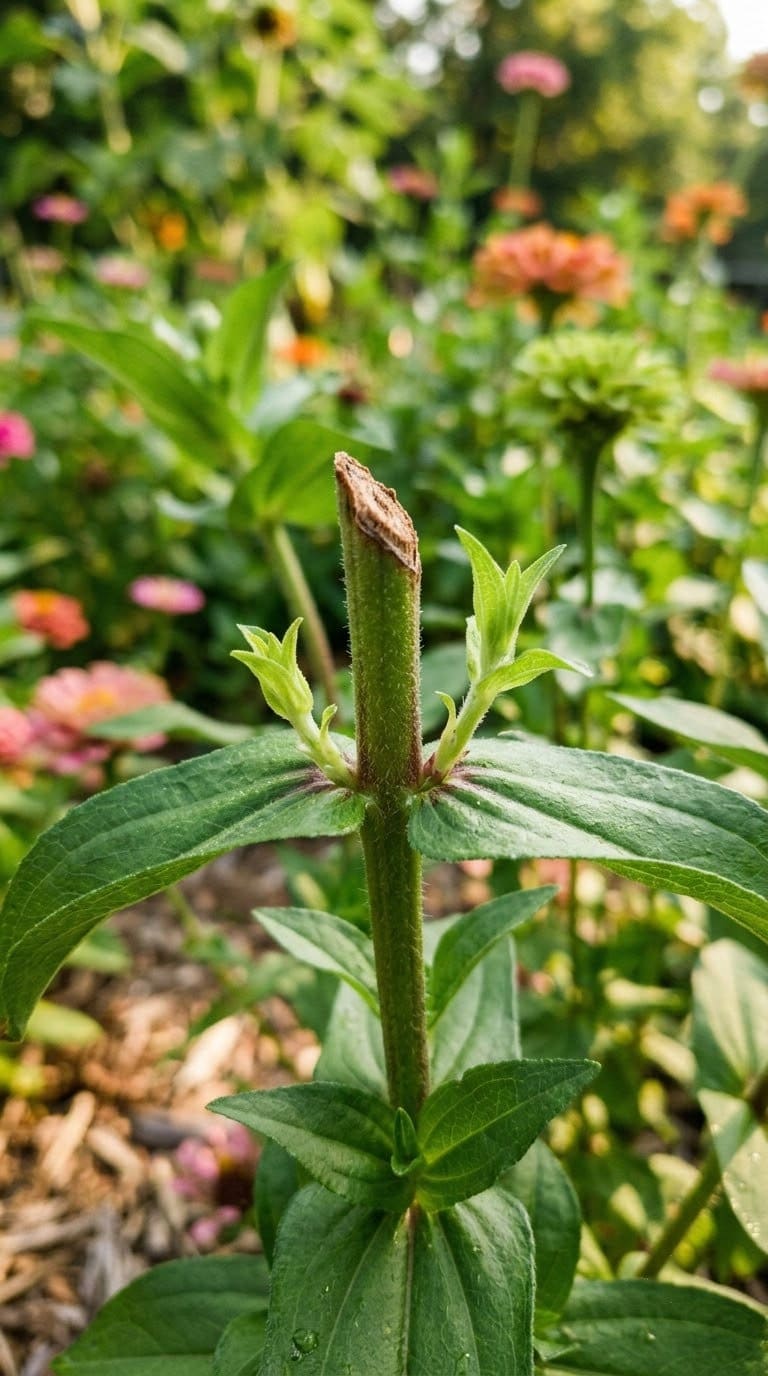
When seedlings are 8 to 12 inches tall, pinch out the top 3 to 4 inches to force branching, a step South Dakota State University’s cut-flower trial used on both zinnias and snapdragons. After that, harvesting deep and often is the entire maintenance routine.
Answer 4 quick questions and get matched to the exact fix for your yard — drainage, budget, layout, or something else entirely.
Take the Free QuizWhat makes a flower “cut and come again”?
It is a growth habit, not a marketing phrase. Certain annuals branch heavily and flower on every side shoot. Remove one stem and the plant pushes two or three more from lower down.
Cutting deep into the plant is what triggers it. A shallow snip just below the flower leaves a stub that makes one weak replacement. A cut that goes 12 to 18 inches down, into a leaf node, tells the plant to branch there. As Floret puts it for one hardy annual, “the more you cut it, the more it blooms.”
Not every flower does this. Single-stem sunflowers, most stock, and some celosia varieties give you one good bloom and then decline, no matter how you cut them.
Before you buy seed, check whether the variety is described as branching or as a single-stem cut flower. Our guide to the different sunflower types covers which ones keep producing.
Which flowers should I grow from seed for a cut-and-come-again border?
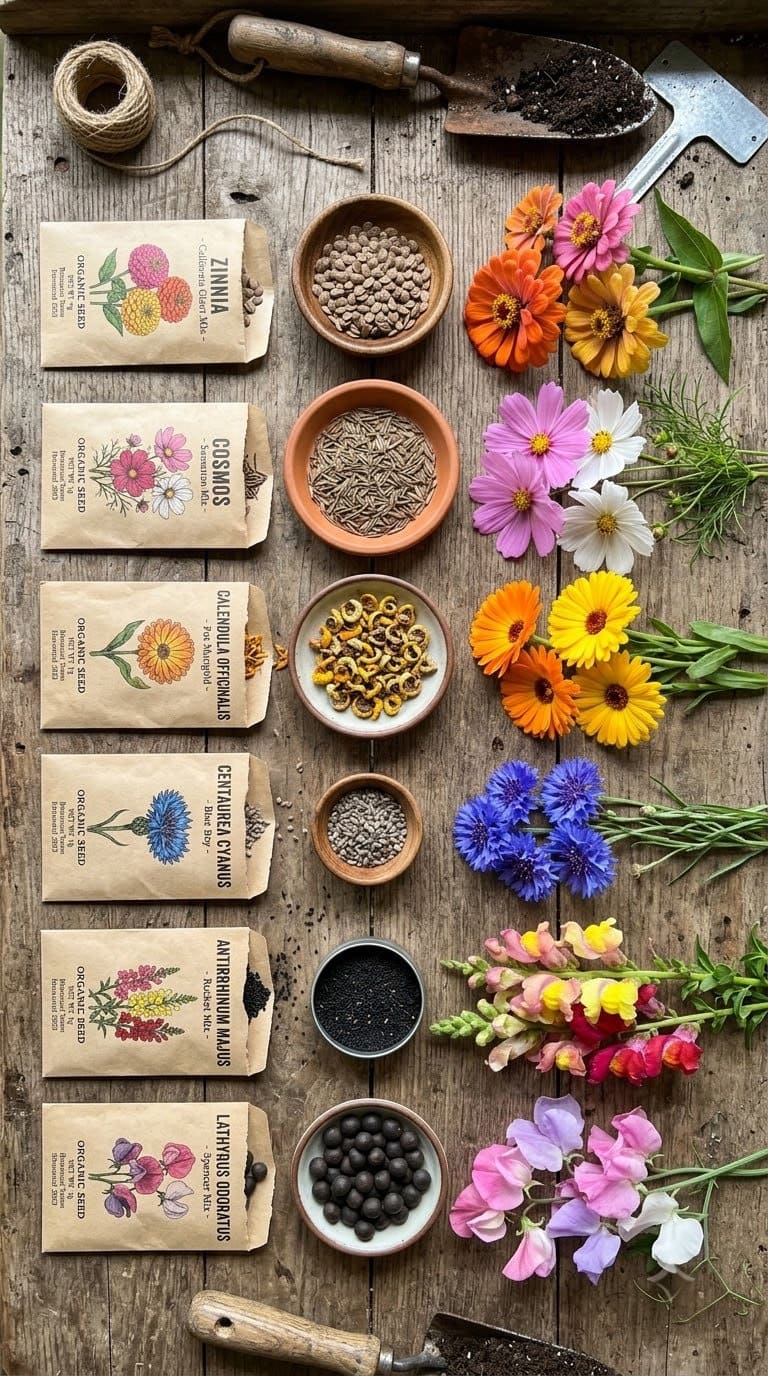
Split your list into two groups, because they get sown at completely different times.
Tender annuals hate cold and go in after your last frost: zinnia, cosmos, celosia, gomphrena, amaranth, and branching sunflowers. These are the summer and fall workhorses, and most can be direct sown.
Hardy annuals actually prefer cool weather: bachelor’s buttons, calendula, snapdragon, sweet pea, larkspur, and love-in-a-mist. Floret’s Erin Benzakein notes that “unlike tender annuals, such as cosmos and zinnias, which resent the cold, hardy annuals thrive in cooler temperatures.”
Most yard problems trace back to one specific, fixable cause. Find yours in 4 quick questions.
Take the Free Quiz
Clean deep cuts into a leaf node without crushing the stem, and the built-in stem stripper speeds up conditioning
Shop NowThis post contains affiliate links. We may earn a commission on qualifying purchases at no extra cost to you.
For a first border, plant zinnias and cosmos for volume, add calendula and bachelor’s buttons for the cool shoulder seasons, and try sweet peas once you have the rhythm. If you also want a bloom-time plan so something is always flowering, our cut flower garden planning guide handles the calendar side.
When and how do I sow: hardy annuals versus tender annuals?
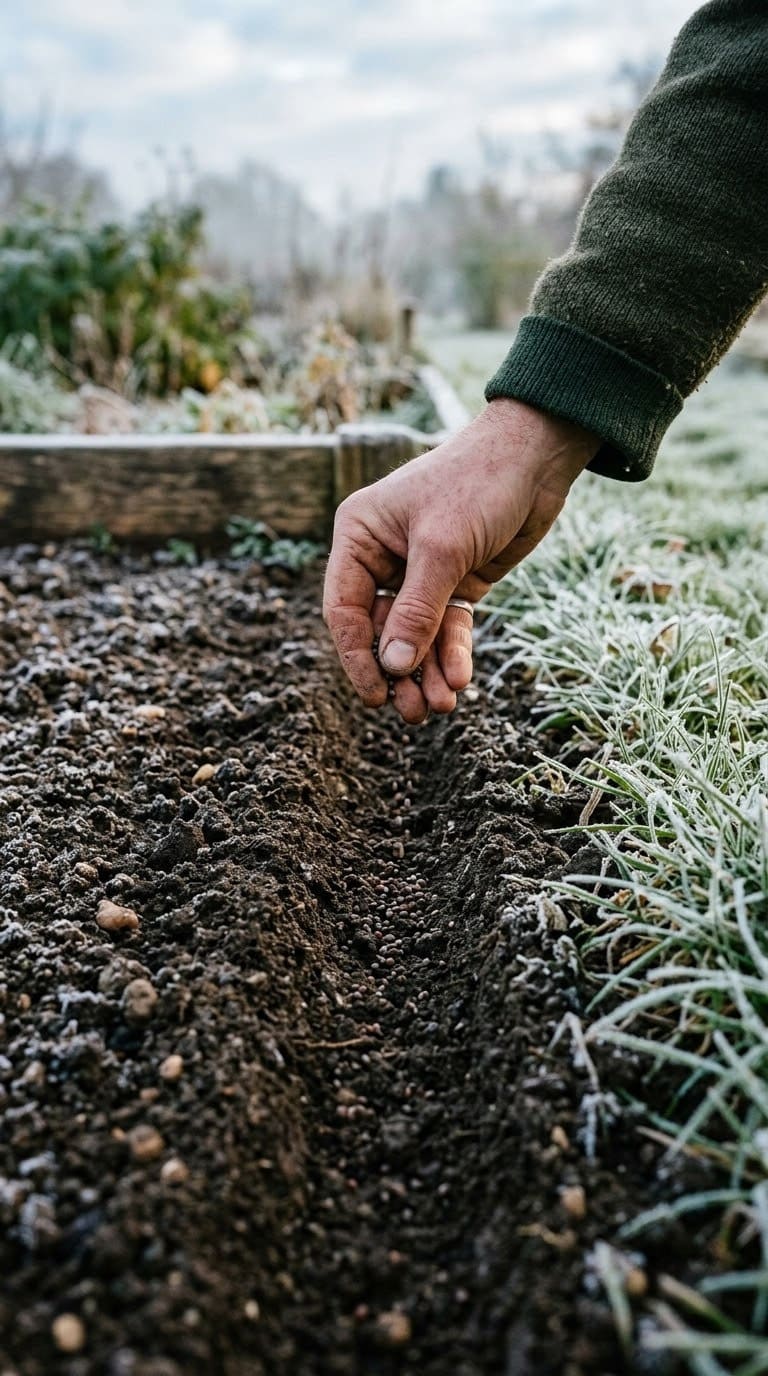
Hardy annuals have two windows. Floret lists them as “autumn and late winter/early spring,” and for a fall sowing you put the seed “directly into prepared planting beds, in full sun, 4 to 8 weeks before the first frost.”
Fall-sown hardy annuals overwinter as small plants and bloom weeks earlier and bigger than spring-sown ones. In a cold zone, skip fall and sow them as soon as the soil can be worked in spring.
Tender annuals are simpler. Wait until the last frost has passed and the soil has warmed, then direct sow them where they will grow.
Zinnias and cosmos resent transplanting, so direct sowing usually beats starting them indoors unless your season is very short. And if you do start seed inside, our notes on starting a garden from seed cover the basics.
Why should I space the plants tighter than the seed packet says?
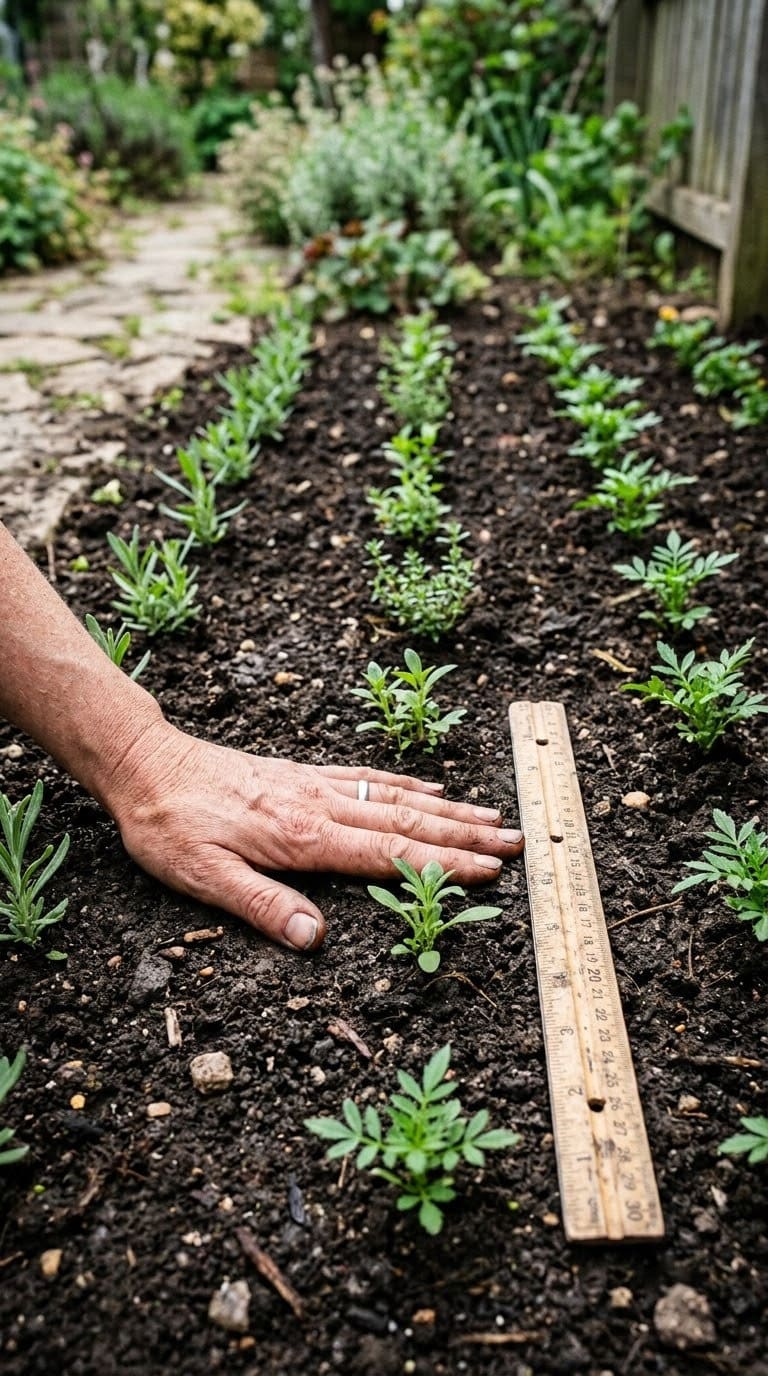
Seed packets space plants for a full, bushy garden display. A cutting border wants the opposite: tall, straight, single stems you can harvest.
Floret grows zinnias “9 in apart with 5 rows per bed,” and 9 to 12 inches works for most annuals on this list. Closer spacing means more stems per square foot, and it makes the plants stretch upward for light instead of branching out sideways low to the ground.
The tradeoff is airflow. Tight spacing in humid weather raises the risk of powdery mildew. Keep an open path down at least one side of the border, and water at the soil line rather than overhead.

How do I pinch the seedlings, and which ones need it?
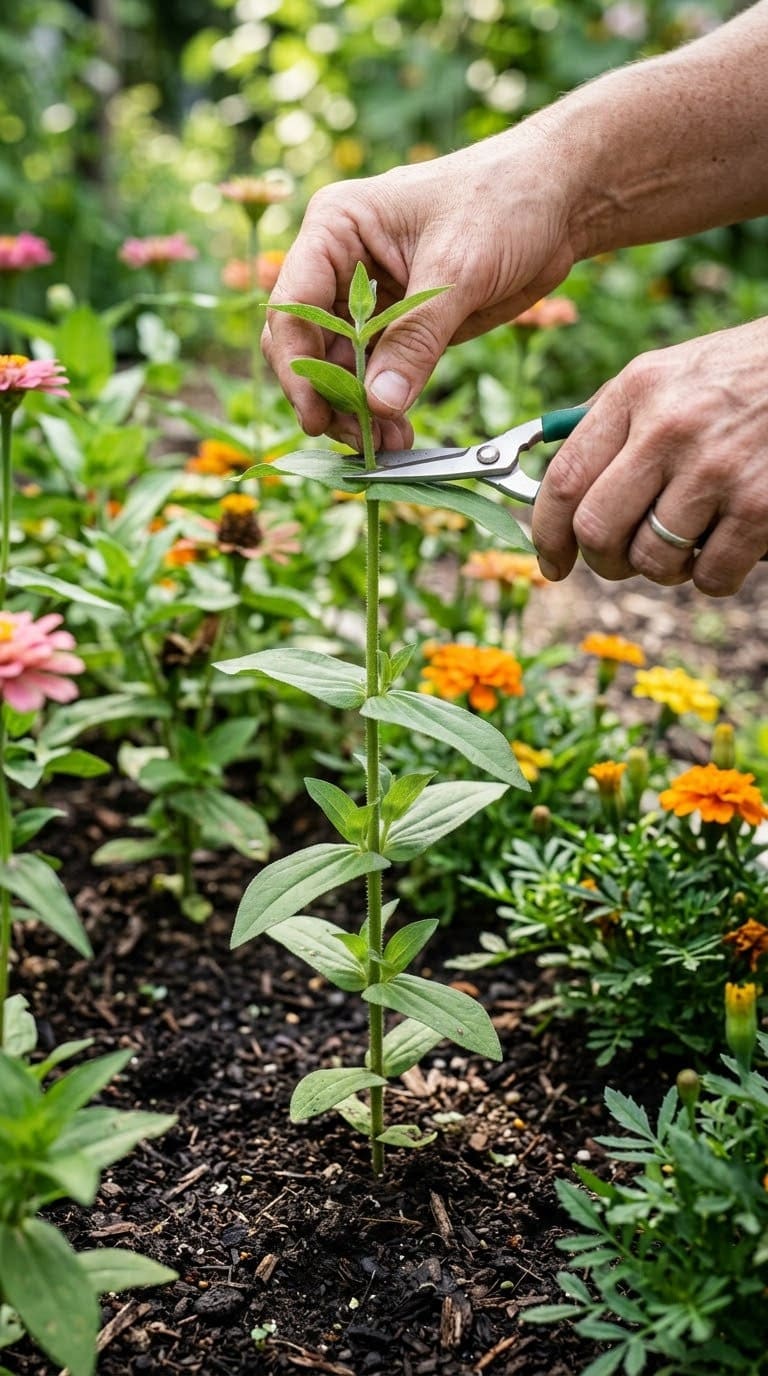
Pinching is the single step that separates a productive border from a disappointing one, and it feels wrong the first time.
The average homeowner spends $616/year on yard fixes that don't address the real problem. Find out what yours actually is — before you spend another dollar.
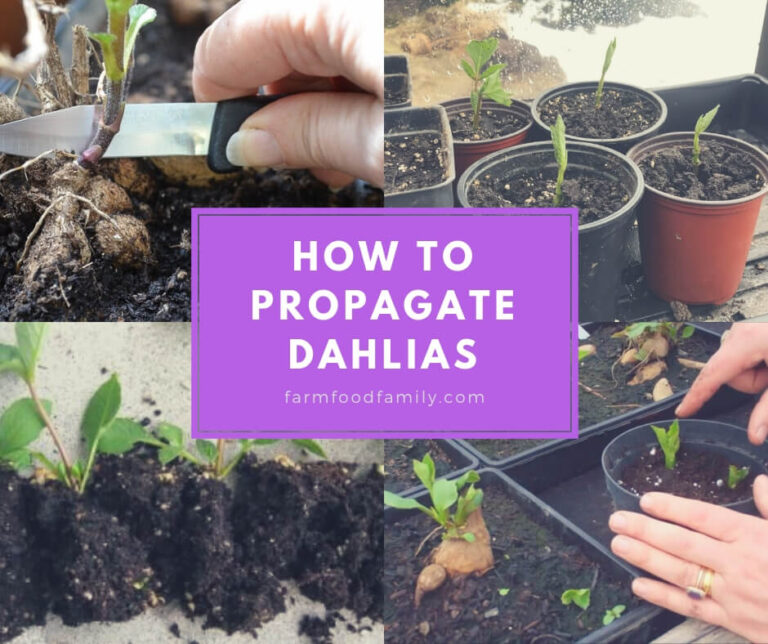
Take the Free QuizWhen a seedling is 8 to 12 inches tall, take clean snips and remove the top 3 to 4 inches, cutting just above a set of leaves. South Dakota State University’s cut-flower trial “pinched once prior to transplanting to encourage branching” on both zinnias and snapdragons. You are trading one early central stem for five or six longer, sturdier stems a couple of weeks later.
Pinch zinnias, cosmos, snapdragons, sweet peas, celosia, and most branching annuals. Do not pinch single-stem sunflowers or anything sold specifically as a single-stem cut flower, since the whole point of those is the one big bloom.
How do I tell when a stem is ready to cut?
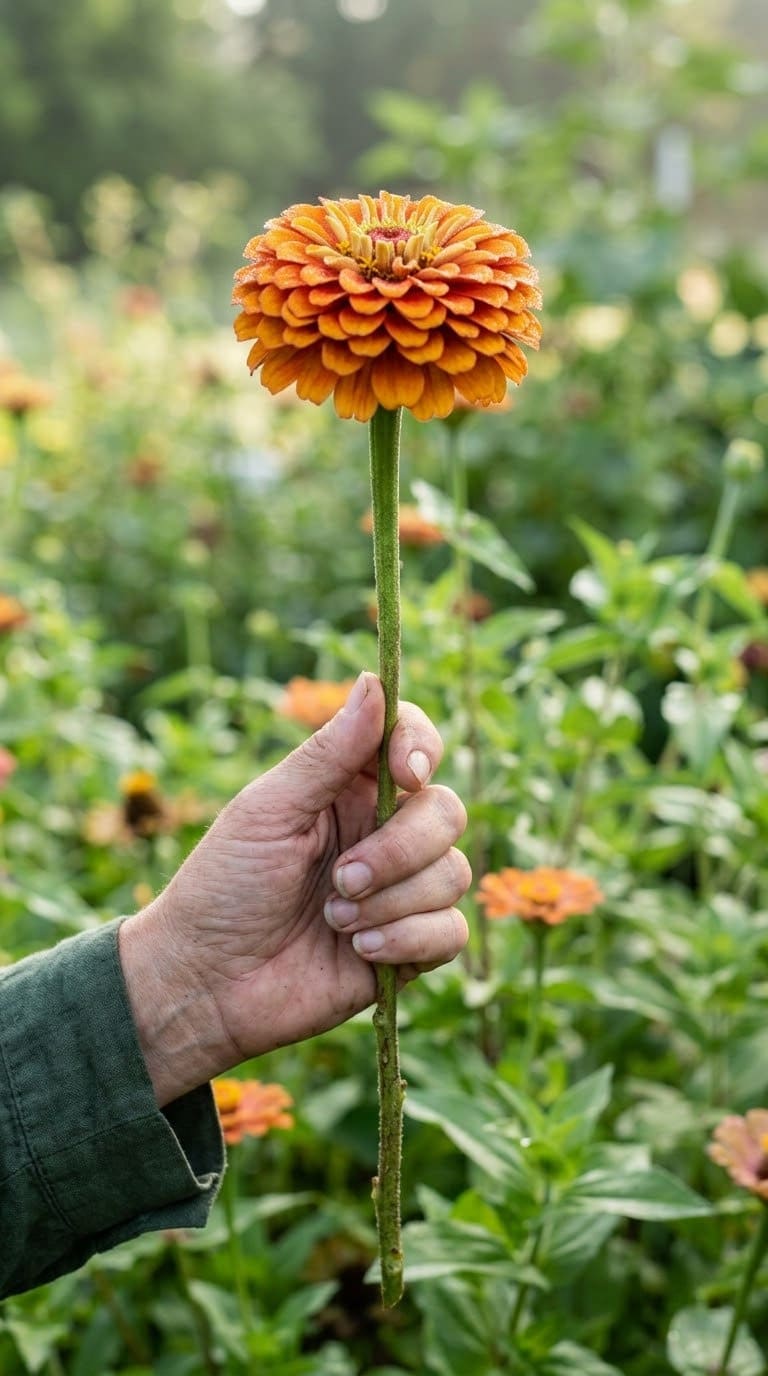
Cut a flower too early and it never opens in the vase. Cut it too late and it drops petals in a day. The right stage is different for each flower.
For zinnias, use the wiggle test from Floret’s zinnia guide: “grab the stem about 8 in (20 cm) down from the flower head and gently shake it. If the stem is stiff and remains erect, it is ready to harvest.” A floppy stem means the flower is not done yet.
Cosmos get cut as the buds are just cracking open, since they keep opening in water. Snapdragons come off when the bottom third to half of the florets on the spike are open. As Iowa State University Extension sums it up, “some flowers should be cut in the bud stage, while others should be fully open.”
Why is harvesting the actual maintenance?
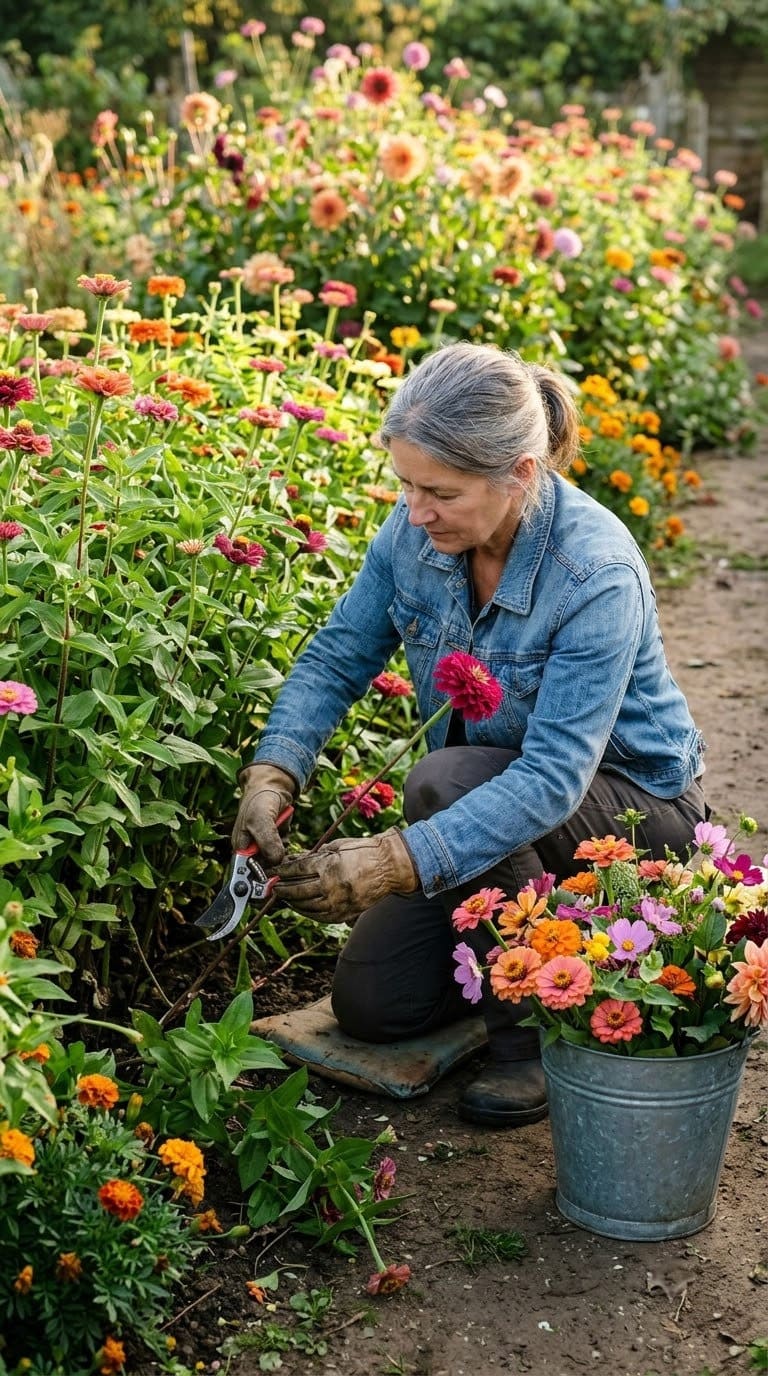
Once the border is pinched and growing, cutting is almost the only job left, and it is not optional. Every stem you take triggers new branching, and every bloom you leave on the plant moves it toward setting seed and shutting down.
Cut deep, into a leaf node well down the plant, not just under the flower. Cut every two or three days in peak season, even if you do not need the flowers, and compost what you do not use. Floret notes that with bachelor’s buttons, “if you harvest regularly, the plants will flower over a long period of time,” and if you fall behind, “be sure to deadhead any spent blooms.”
Sweet peas are the strictest. Miss picking them for four or five days and the vine starts making pods and stops flowering for the year.
Iowa State recommends harvesting “early in the morning – near sunrise” with “a vase or bucket of water” in hand so stems go straight into water. University of Illinois Extension takes the other side and suggests cutting “in the late afternoon or evening,” the idea being that the plant has banked more sugars through the day. Morning is the more common practice, but either works if you get the stems into water fast and out of the sun.
How do I keep the border producing all season?
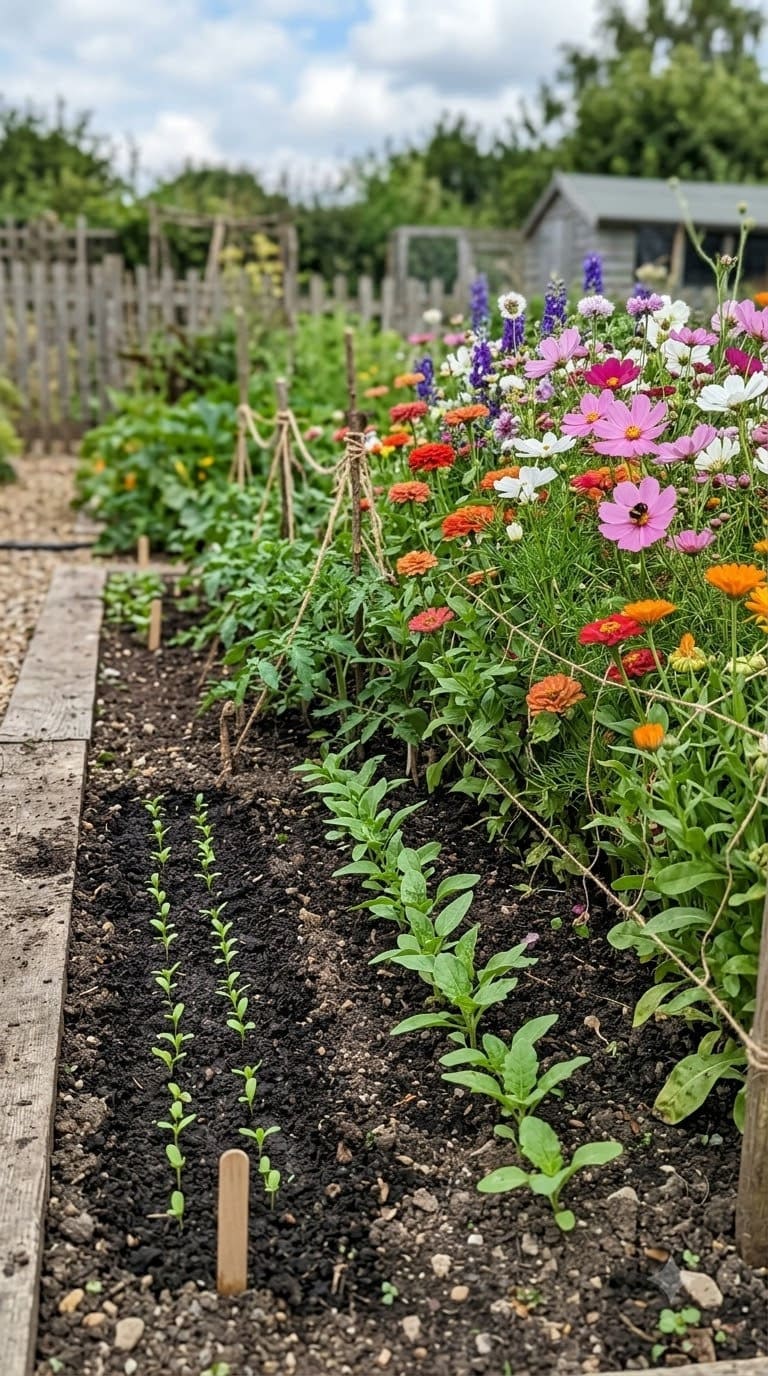
Tender annuals respond well to succession sowing. Put in a new short row of zinnias or cosmos every two to three weeks, stopping about 12 weeks before your first fall frost. The fresh plants take over as the older ones tire.
Hardy annuals usually give one long flush and then fade in summer heat. Pull them when they are clearly done, and either drop in a tender annual or sow a fresh batch of hardy annuals in mid to late summer for a fall show.
How do I condition the stems so they last in the vase?
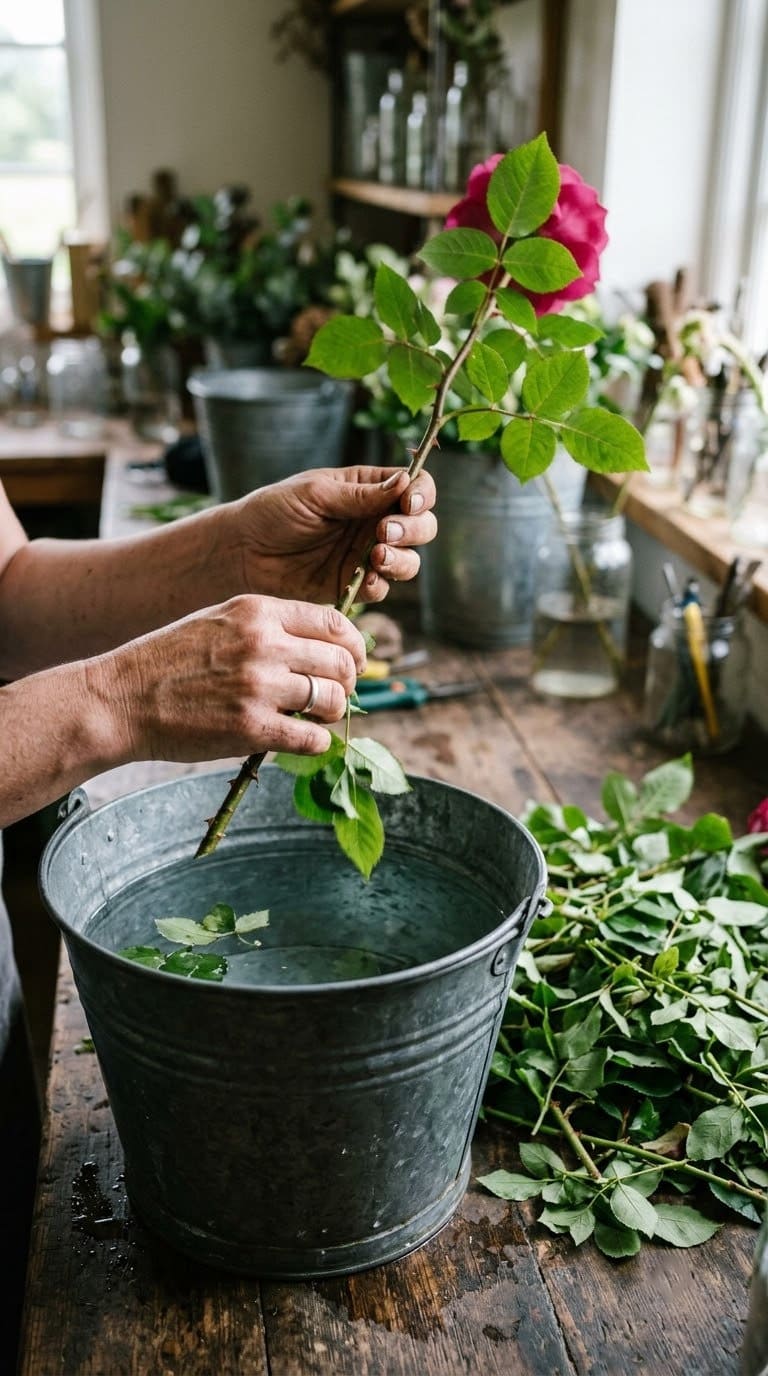
Good conditioning can double the vase life of a stem you cut at the right stage.
Strip every leaf that would sit below the waterline. Iowa State is blunt about why: “leaves that are submerged in water will rot and quickly discolor the water.” Re-cut each stem at an angle, put it straight into cool, clean water, and let the bucket sit somewhere cool and dark for a few hours before you arrange anything.
Zinnias and sunflowers are thirsty and want deep water. Woody-stemmed flowers and anything with milky sap, like some poppies, need their own conditioning, so look up a flower you have not cut before.
Cut-and-come-again cheat sheet
Save this for seed-buying and harvest day.
| Flower | Hardy or tender | Sow when | Pinch? | Cut at this stage |
|---|---|---|---|---|
| Zinnia | Tender | After last frost, warm soil | Yes, at 8 to 12 in tall | Wiggle test: stem stays stiff |
| Cosmos | Tender | After last frost | Yes, as a young seedling | Buds just cracking open |
| Bachelor’s buttons | Hardy | Fall, or very early spring | Optional | Buds just showing color |
| Calendula | Hardy | Fall, or very early spring | No | Newly open, petals firm |
| Snapdragon | Hardy | Early spring, or fall in mild zones | Yes | Bottom third to half of florets open |
| Sweet pea | Hardy | Fall, or very early spring | Yes | Lowest one or two flowers open |
| Celosia | Tender | After last frost | Optional | Plume about three-quarters developed |
| Branching sunflower | Tender | After last frost | No | Petals just lifting off the center disk |
How big does the border need to be?
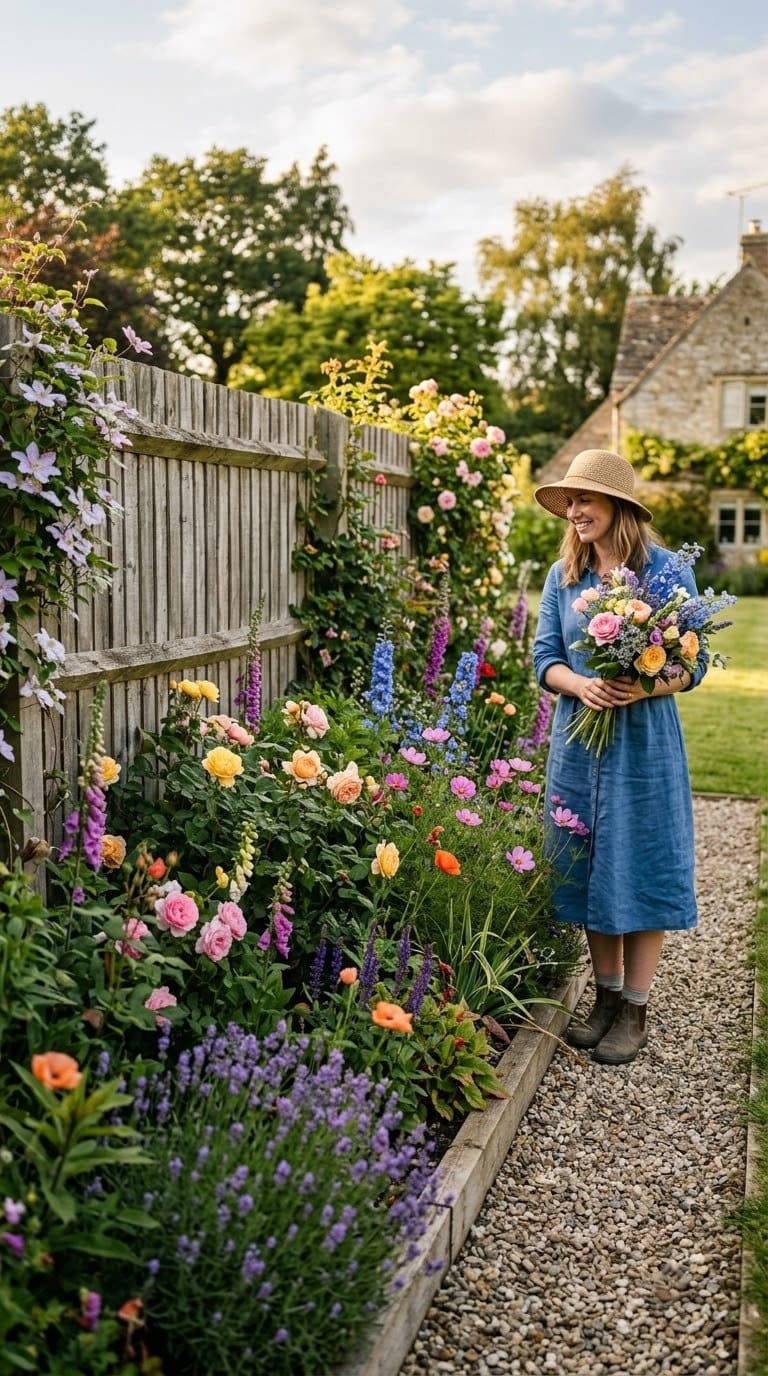
Less than most people think. A strip 3 feet wide and 10 to 15 feet long, well set up, keeps one household in bouquets through the season.
At 9 to 12 inch spacing that is roughly 40 to 60 plants. If a third of them are producing at any given time and each gives you a stem every few days, that is enough for a fresh arrangement most weeks with plenty to give away. A bed twice that size means you are composting flowers, which is fine, but you do not need to start there.
What matters more than square footage is that the whole border gets at least six hours of direct sun and has a path you can reach every plant from. A long thin border you can work from both sides beats a wide block where the middle rows never get cut.
A real first-cutting-garden mistake
My first cutting border was a 10-foot strip of zinnias and cosmos, planted at the 18 inches the packet suggested, and I never pinched a single plant because it felt like vandalism.
By July I had a row of shoulder-high stalks with one flower each on a stem too short to use, and cutting that one flower ended the plant. I got maybe two small bouquets out of the whole thing.
The next spring I sowed the same seed at 9 inches, pinched every plant at knee height, and forced myself to cut deep and often even when I did not need flowers. That border produced bouquets from late June to the first hard frost, from the same number of seeds and a smaller bed.
FAQ
Do I have to pinch, or will the plants branch on their own? Most will branch eventually, but pinching makes it happen weeks earlier and more evenly, and it gives you longer, sturdier stems. For zinnias, cosmos, and snapdragons the difference in total stem count is large enough that it is worth the delayed first bloom.
How often should I cut from a cut-and-come-again border? Every two to three days in peak season. Cutting is what keeps the plants branching and blooming, so harvest even when you do not need flowers and compost the extras. Sweet peas need picking every few days without fail or they stop.
Which cut flowers are easiest from seed for a beginner? Zinnias and cosmos. Both direct sow easily in warm soil, both are true cut-and-come-again, and both forgive rough handling. Add calendula and bachelor’s buttons for cool-weather blooms once those two feel routine.
Can I grow a cutting border in a raised bed? Yes. A raised bed at 9 to 12 inch spacing works well, and the tidy edges make it easy to keep a harvest path. Just plan for support, since a bed full of tall pinched annuals gets top-heavy.
Why did my zinnias get powdery mildew? Usually crowding plus overhead water plus humid air. Keep an open path along the border for airflow, water at the soil line in the morning, and pull the worst-affected plants rather than trying to save them.
When do I stop cutting for the year? Tender annuals produce until the first hard frost kills them, so cut right up to the forecast freeze. Hardy annuals fade in mid-summer heat, and a second sowing carries the border into fall.
Related Posts
Products We Recommend
This post contains affiliate links. We may earn a commission on qualifying purchases at no extra cost to you.
Fiskars Floral Bypass Pruning Shears
Clean deep cuts into a leaf node without crushing the stem, and the built-in stem stripper speeds up conditioning
Shop Now
Galvanized metal flower buckets, 8-pack
Go into the border with you so cut stems hit water within seconds
Shop Now
Heavy-duty plant support netting, 4 ft x 100 ft
Stretched horizontally over the border to hold tall pinched zinnias, cosmos, and snapdragons upright through summer storms
Shop NowNever miss an update — choose FarmFoodFamily as your preferred source on Google.
How it works: Tap the button below to open Google's settings page, then check the box next to FarmFoodFamily.
Tap the checkbox to turn it blue — that's how you know it's set.