How to Plant a Thriving 1-Square-Foot Kitchen Herb Garden by the Back Door
The smallest herb garden that is still worth having, planted three steps from the door so you actually walk out and cut from it on a Tuesday.

Never miss an update — choose FarmFoodFamily as your preferred source on Google.
How it works: Tap the button below to open Google’s settings page, then check the box next to FarmFoodFamily.
Tap the checkbox to turn it blue — that’s how you know it’s set.
A home herb garden usually fails in one of two ways. It is out at the back of the yard, too far to bother with when dinner is half made. Or it is big and ambitious, and by August half of it has bolted to seed because you were only ever going to use four of the fourteen things you planted.
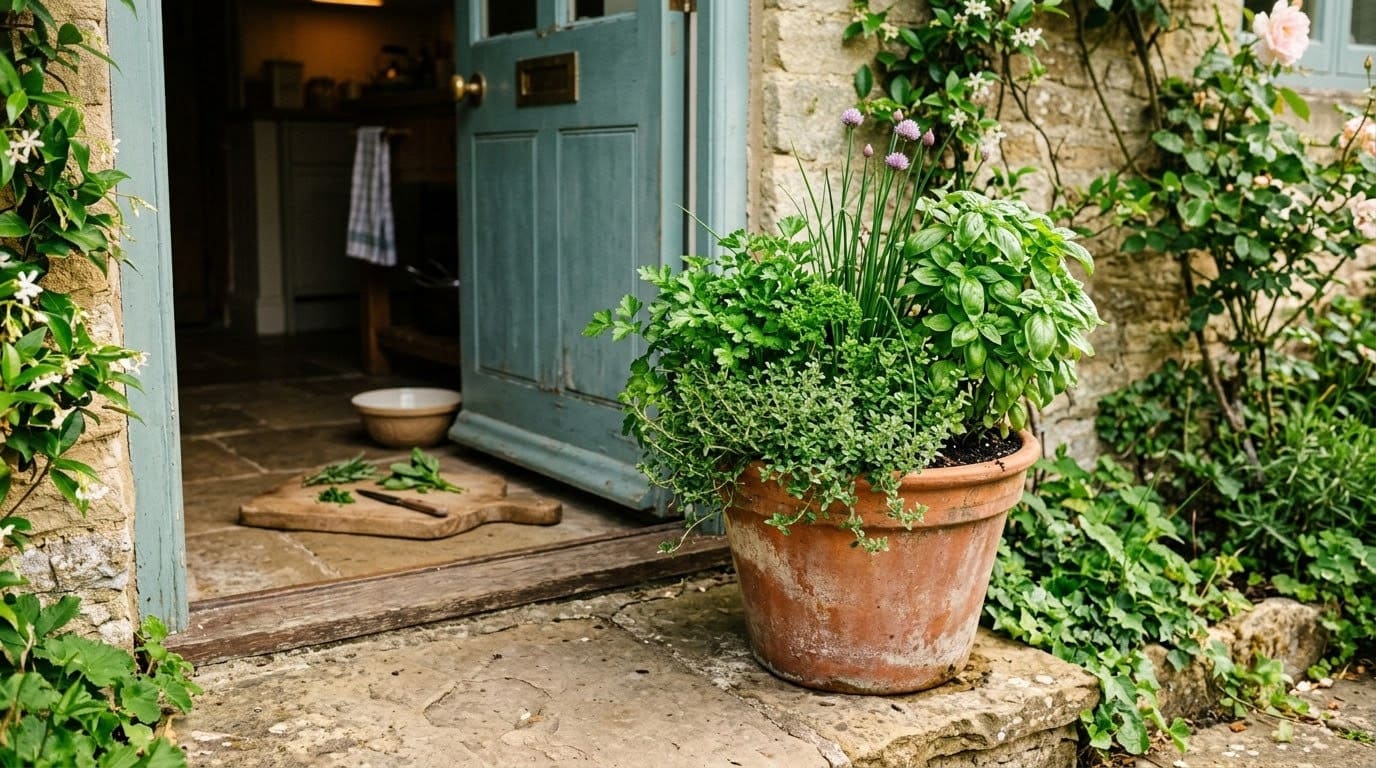
The fix is to go the other direction on both counts. Make it deliberately tiny, and put it deliberately close. One square foot, right by the door you carry the cutting board out of.
At that size it costs almost nothing, it never overwhelms you, and it is close enough that snipping a few stems mid-cooking is genuinely easier than not. Here is how to build one.
Quick Answer
A one-square-foot kitchen herb garden is a 12-inch planting area, in a pot, a lifted paver, or the corner of a bed, placed in the sunniest spot within a few steps of the door you cook from.
Using the Square Foot Gardening method, one square holds either a single large herb like rosemary or sage, or about four smaller herbs like parsley, thyme, or basil, or one clump of chives. Choose four or five herbs you actually cook with every week, not a collection.
Herbs need at least six hours of sun, and Clemson Cooperative Extension notes the well-drained soil should be only moderately rich, because “very fertile soils tend to produce lush leaves that lack flavor.” Keep mint in its own sunken pot or leave it out entirely, since it will take the whole square in one season.
Answer 4 quick questions and get matched to the exact fix for your yard — drainage, budget, layout, or something else entirely.
Take the Free QuizWhy one square foot, and why by the back door?
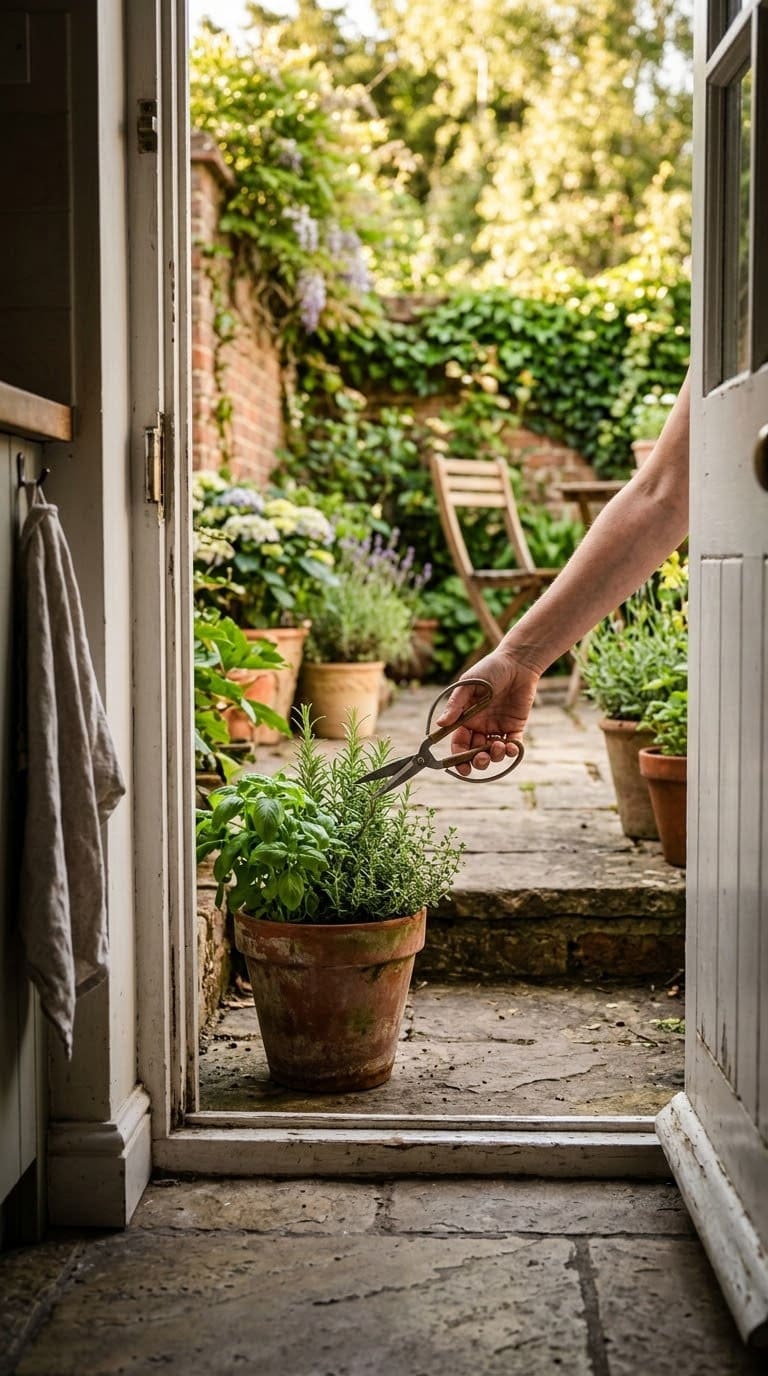
Proximity is the single biggest thing that decides whether an herb garden gets used. A square you pass every time you take out the trash gets watered when it is dry and cut when you cook. A plot 60 feet away gets skipped on a weeknight and forgotten for a week.
Kitchen herbs are the one crop where convenience beats better soil. A slightly less perfect spot you visit every day beats a perfect one you never walk to.
Small helps too. One square foot forces you to plant only what you use, so nothing goes to waste and the whole thing stays manageable. There is no “back half” of a one-square-foot garden to neglect.
Being close also means you notice problems while they are still small. A wilting plant, aphids on the basil, a chive clump flowering, all get spotted on day one instead of a week later, because you are looking at the square every single day without trying to.
What actually fits in one square foot?
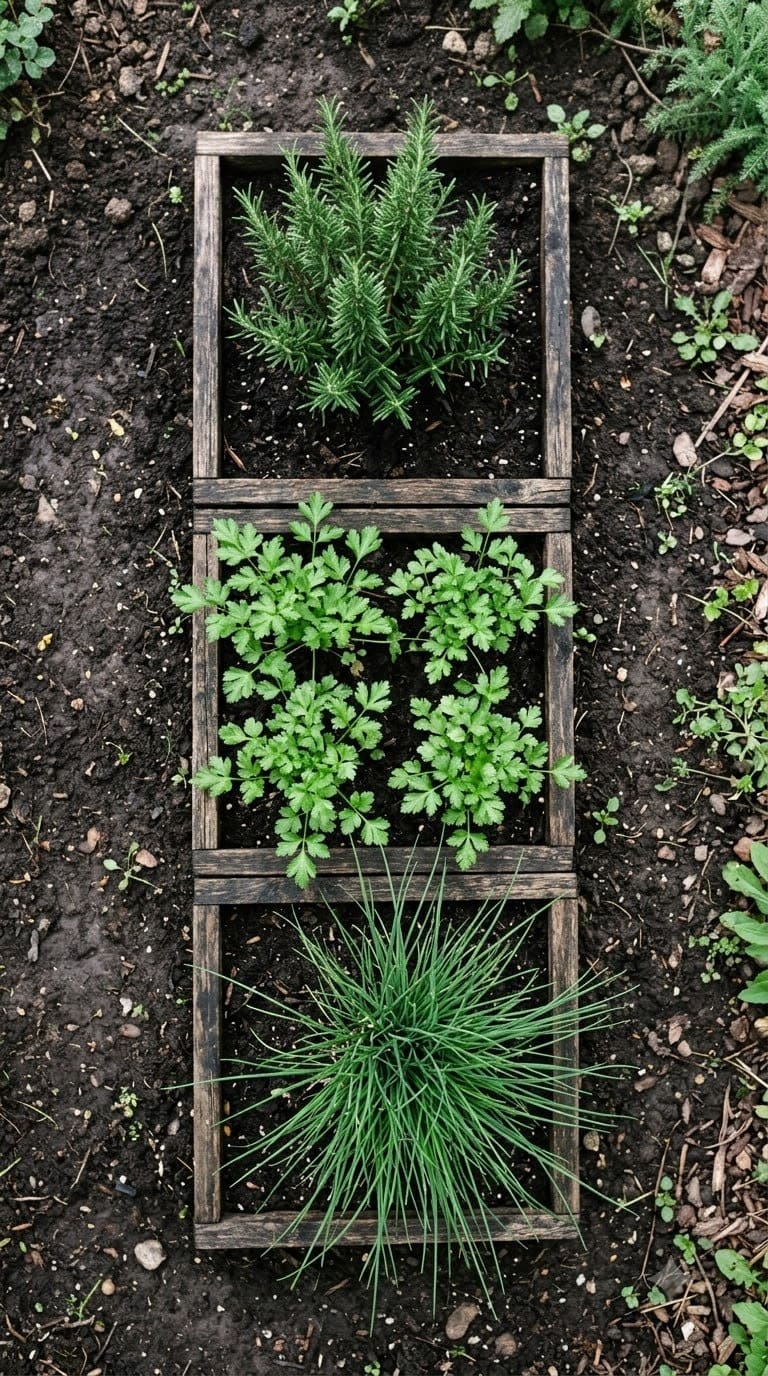
The Square Foot Gardening Foundation sorts plants into size categories, and a single square works out to one of these:
- One extra-large herb, spaced as if it were 12 inches on its own: rosemary, sage, or a large basil left to bush out.
- Four large herbs at 6-inch spacing: parsley, cilantro, dill, marjoram, or compact basil.
- One clump of chives, which technically fits 16 but you only need one.
For most kitchens, the useful plan is four herbs in the square, not one. A common setup is a thyme or small rosemary in one corner, two parsley plants, and a chive clump, with basil added in the warm season. If you cook a lot of Mexican or Asian food, swap in cilantro and re-sow it often.
Which herbs should I plant, and which should I leave out?
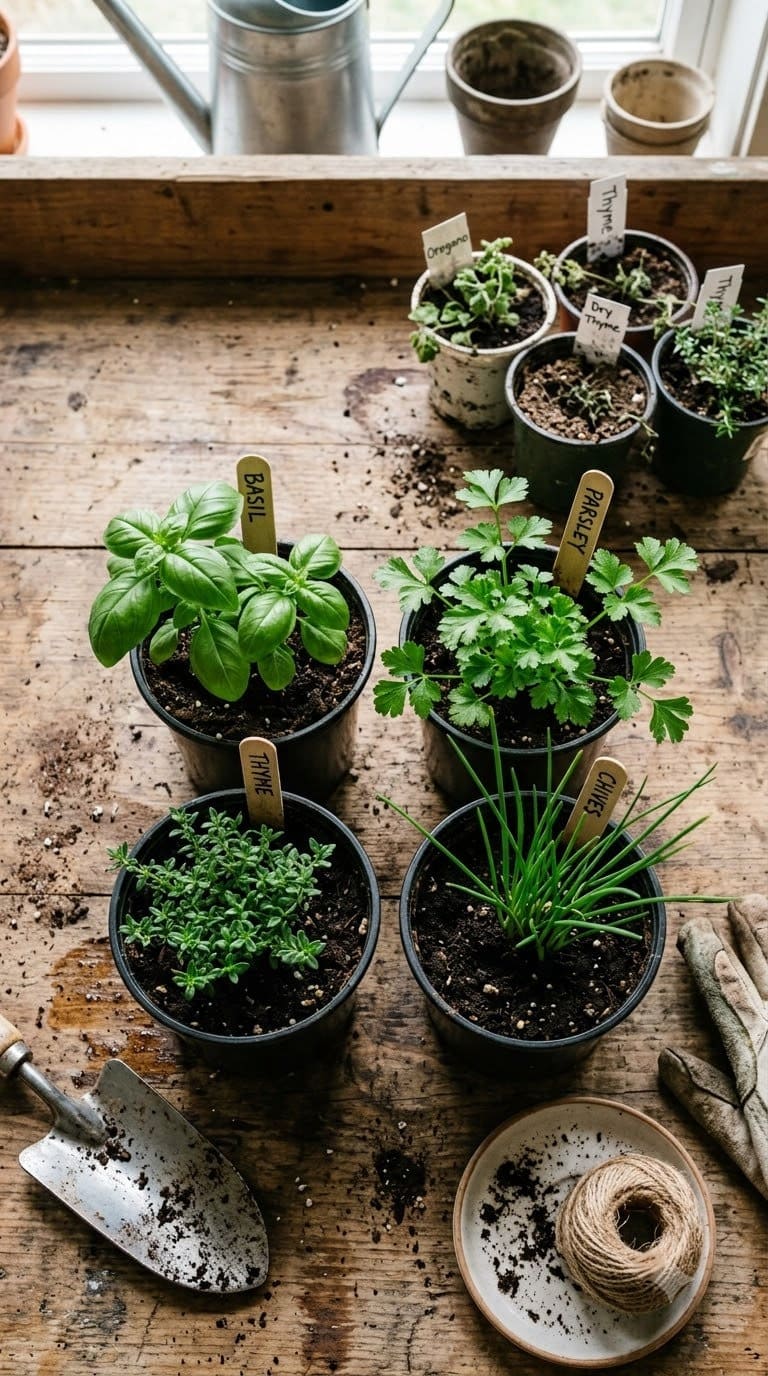
Pick the four or five herbs you have actually cooked with in the last month. That is the whole selection method.
Most yard problems trace back to one specific, fixable cause. Find yours in 4 quick questions.
Take the Free Quiz
The one-square-foot footprint itself, deep enough for rosemary roots and movable so you can chase the sun
Shop NowThis post contains affiliate links. We may earn a commission on qualifying purchases at no extra cost to you.
For most households the reliable core is parsley, chives, thyme, and basil, plus one or two picks that match how you cook: sage if you make brown-butter anything, cilantro for salsa and curry, oregano for pizza and Greek food, rosemary for roasts and bread.
Leave out anything you are growing because it “seems like a good herb to have.” In one square foot there is no room for aspirational planting. And leave mint out of the shared square unless you sink it in its own pot, because Clemson is blunt that you should “plant herbs that spread aggressively, such as the mints, in a container or planter to prevent them from taking over the garden.”
One more note from University of Missouri Extension: dill, cilantro, and fennel resent transplanting, so those get direct sown into the square rather than bought as plants.
Should the square be a pot, a paver cutout, or the corner of a bed?
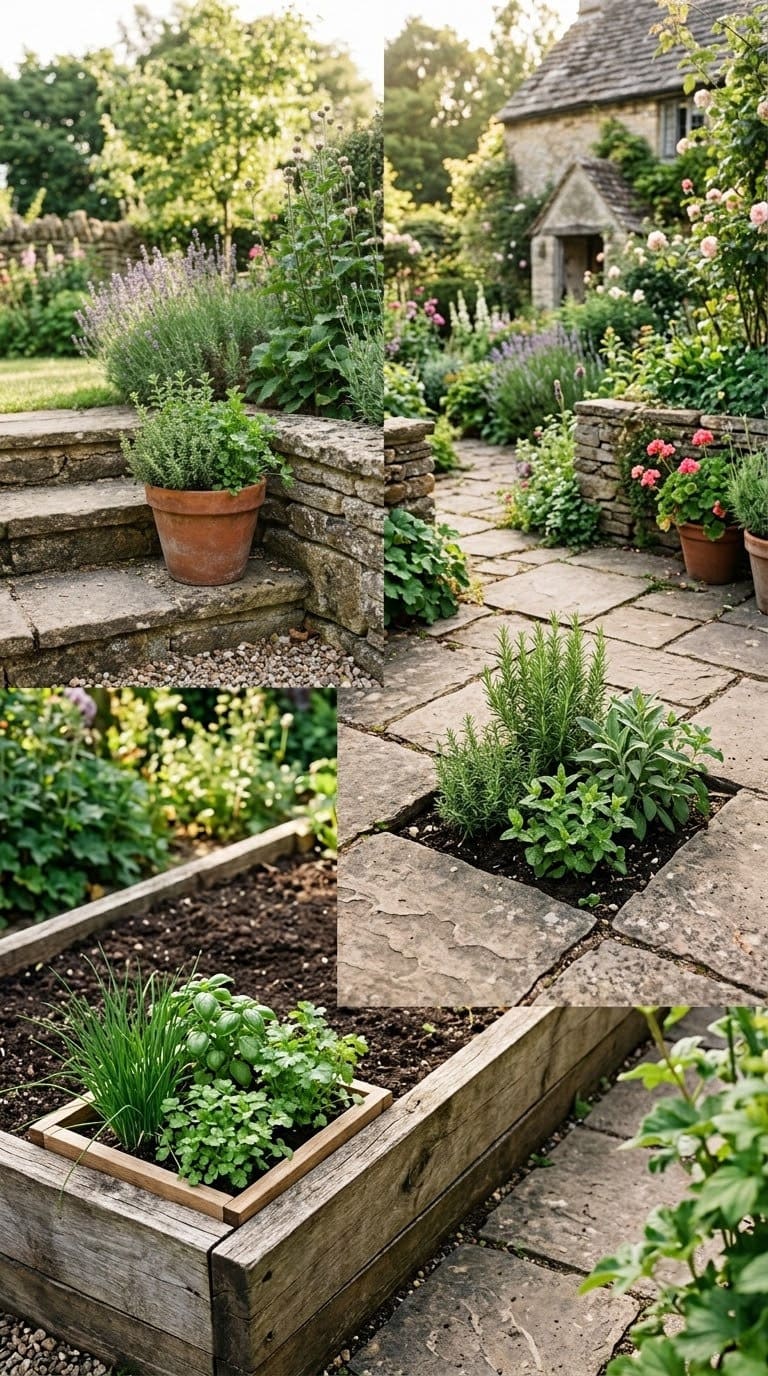
All three work. They just fail differently.
A 12-inch pot is the most flexible option. You can move it to chase the sun, drainage is excellent, and it is the obvious choice for a renter or a balcony.
The tradeoff is that it dries out fast in summer heat and needs watering more often. Our container herb guide covers pot care in detail.
A lifted paver in a patio, with the herbs planted in the gap, is permanent and self-contained. The surrounding stone warms the soil early and reflects heat, which Mediterranean herbs love, but you cannot move it if the light changes.
A 12-inch square framed in the corner of an existing bed gives the herbs the most soil to root into, so it is the most forgiving about water. It also has no sides against a spreading neighbor, so you need edging or a buried barrier if mint or oregano is anywhere nearby.
What soil and sun does the square need?
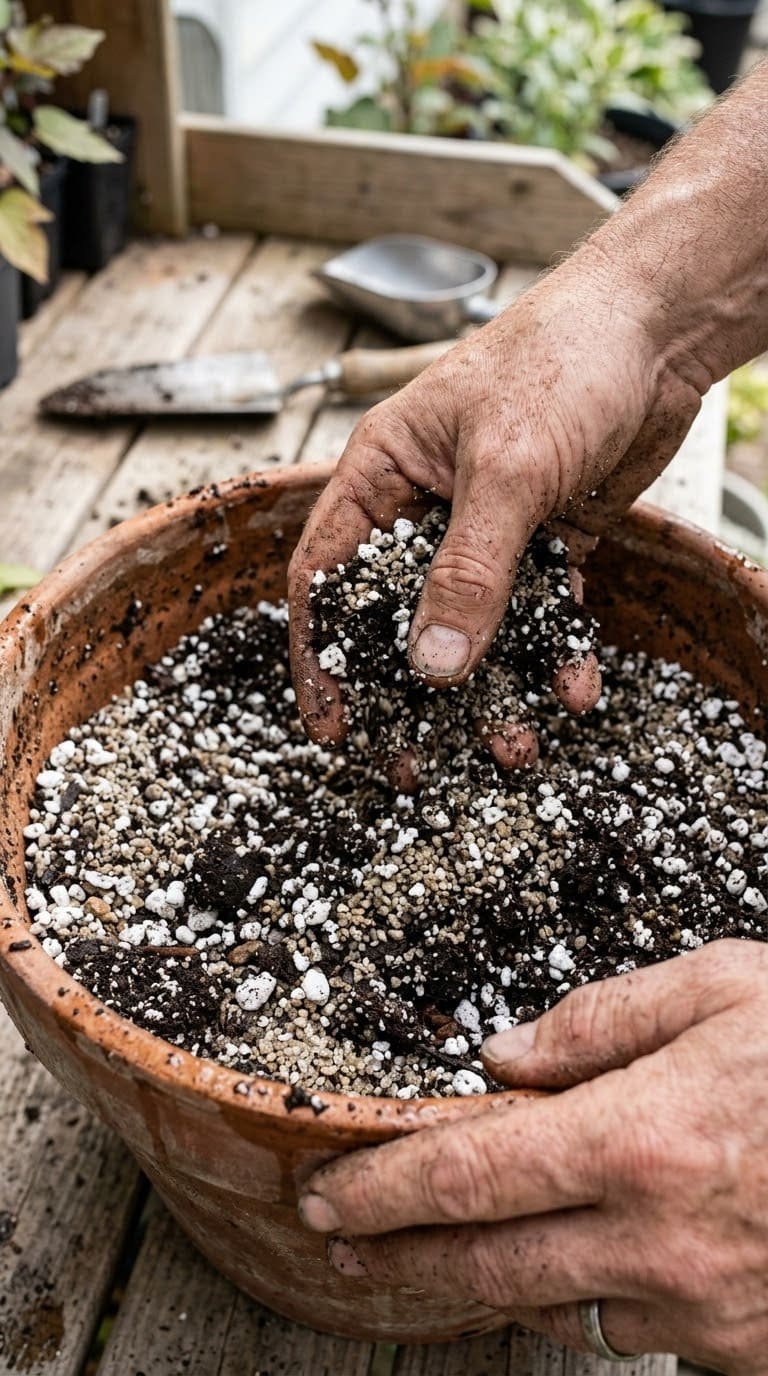
Herbs want sun and lean soil, which is the opposite of what most people give them.
The average homeowner spends $616/year on yard fixes that don't address the real problem. Find out what yours actually is — before you spend another dollar.
Take the Free QuizClemson says herbs “grow best in an area that is sunny for at least six hours each day,” and Missouri Extension puts the sweet spot for flavor oils higher, at six to eight hours of full sun. More sun means better flavor, not just more growth.
The soil should be well drained with a pH around 6 to 7 and only “a moderate amount of organic matter.” Do not enrich it heavily, and do not keep fertilizing through the season. Rich soil grows soft, fast, watery leaves with weak flavor. For a pot, a gritty mix with extra perlite or coarse sand beats a moisture-retentive potting soil.
How do I plant the square, step by step?
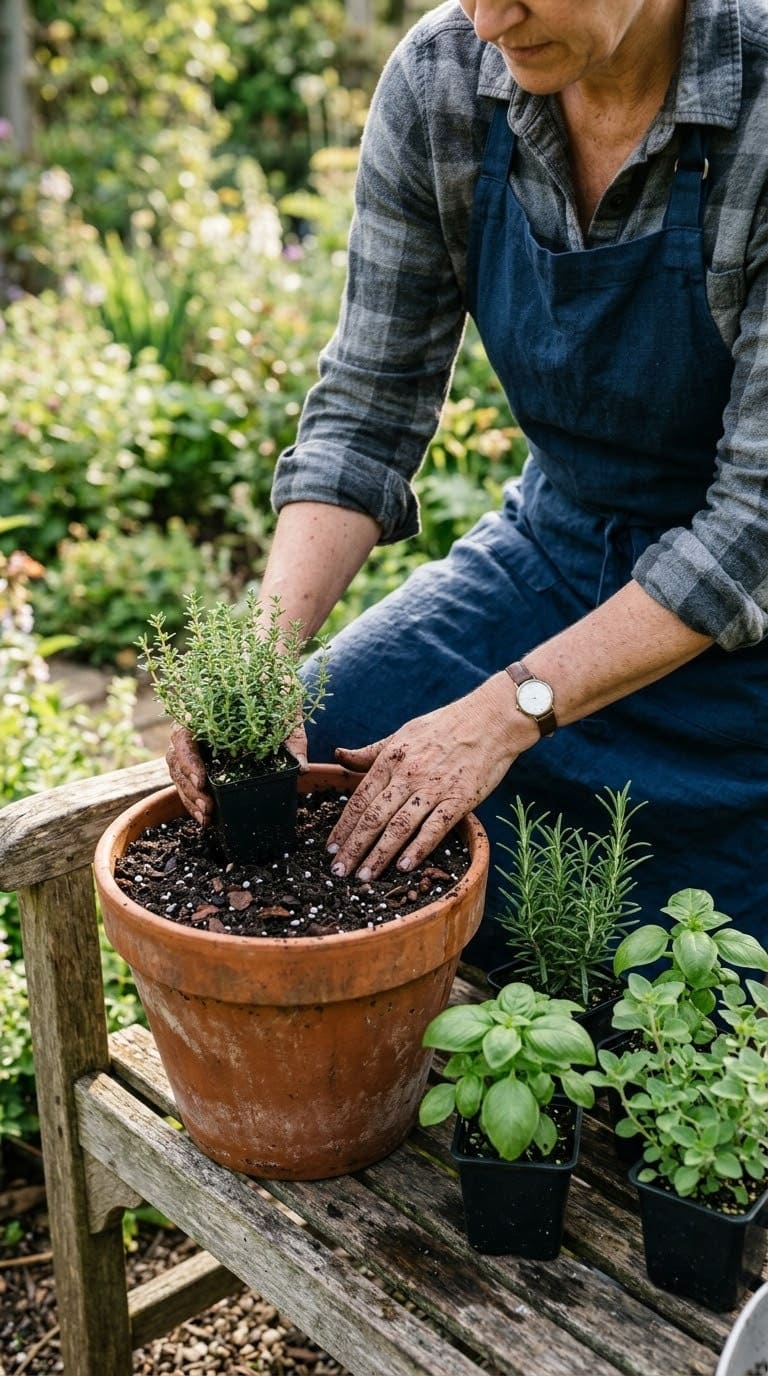
The whole job takes about 20 minutes.
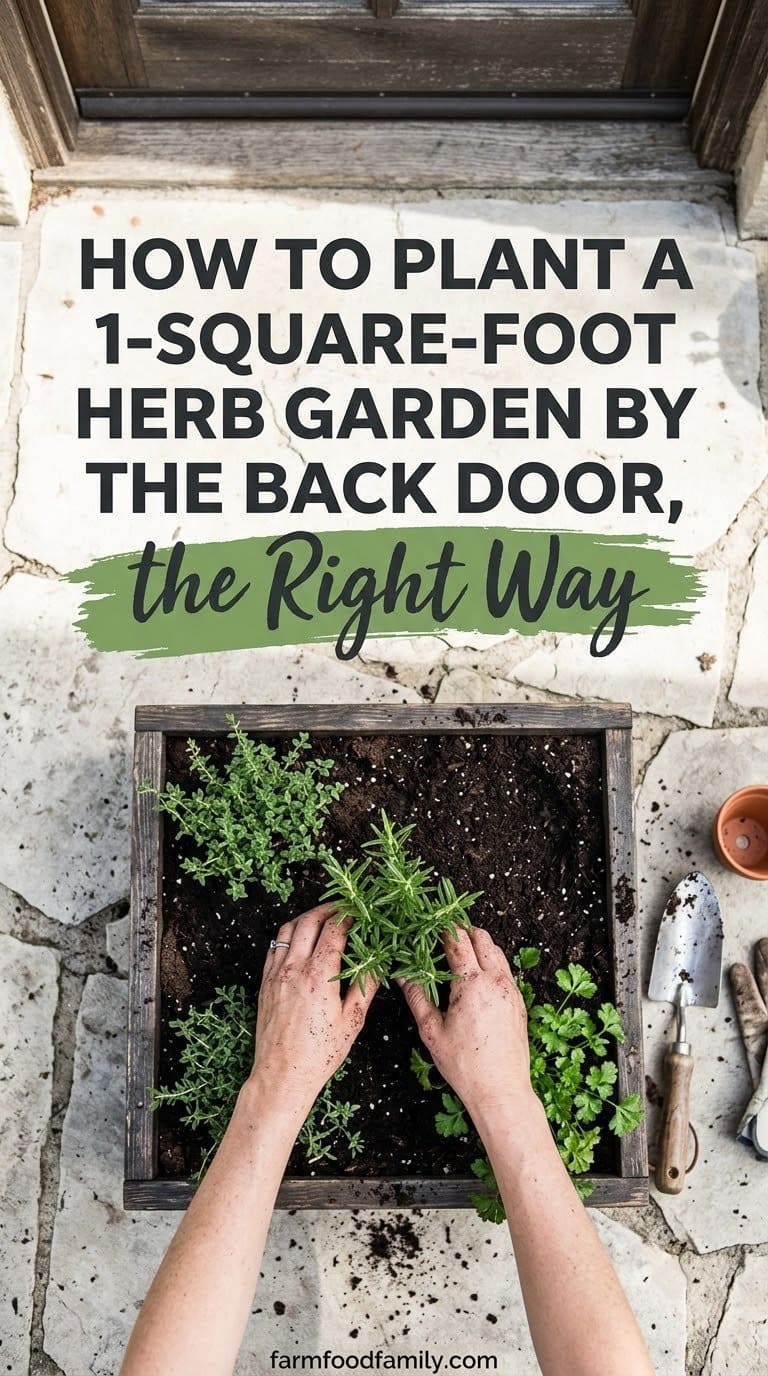
1. Mark the square. Outline a 12-inch square by the door, or fill your pot with a gritty, well-draining mix to within an inch of the rim.
2. Set the biggest herb first. Put it in a corner or the center so it does not shade the others as it grows.
3. Add the smaller herbs. Tuck them around the big one at square-foot spacing, roughly a hand-span apart.
4. Sink the mint pot. If you are growing mint, bury a bottomless nursery pot flush into the square and plant the mint inside it.
5. Water it in. Soak everything well, then let the surface dry before the next watering.
6. Mulch the surface. A layer of fine gravel or thin straw holds moisture and keeps soil splash off the leaves.
How do I keep it producing all season?
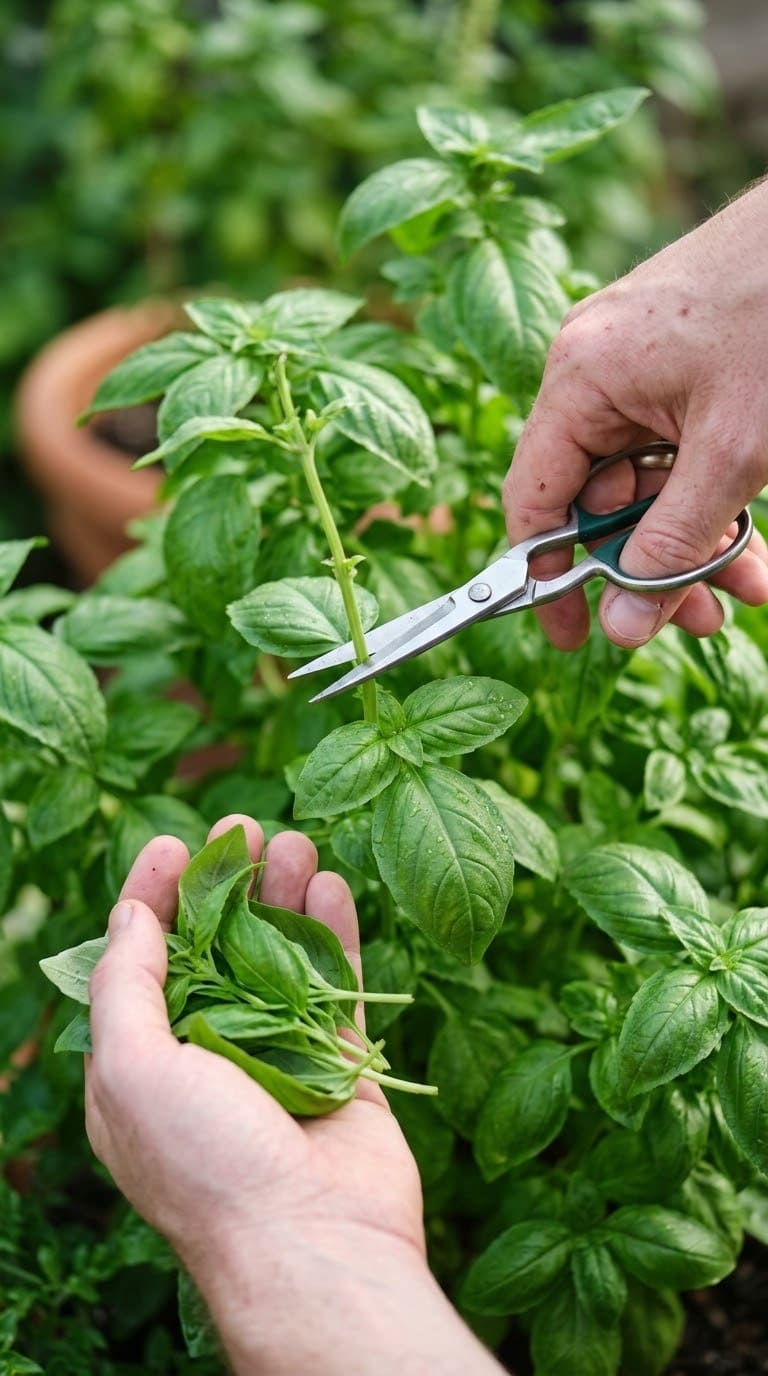
Harvesting is most of the maintenance, and the rule is little and often.
Never take more than about a third of a plant at once, and always cut just above a pair of leaves so the plant branches from there. Pinch off flower buds as soon as you see them, because Clemson notes herbs are at their best “just prior to blooming, which is when the essential oils are at their peak,” and a plant that flowers shifts its energy to seed and stops making good leaves.
Cut in the early morning, “after the dew dries, but before the heat of the day,” when the oil content is highest. Re-sow cilantro every two to three weeks since it bolts fast, and drop a basil plant into the square once the soil is reliably warm.
The upkeep beyond harvesting is small. Once a week, run a finger into the soil and water only if it is dry an inch down, pinch any flower buds, and pull the odd weed.
A potted square dries faster and may need water every day or two in a heat wave. That is the whole routine, and being right by the door is what makes it a 30-second job instead of a chore you put off.
What happens to the square in winter?
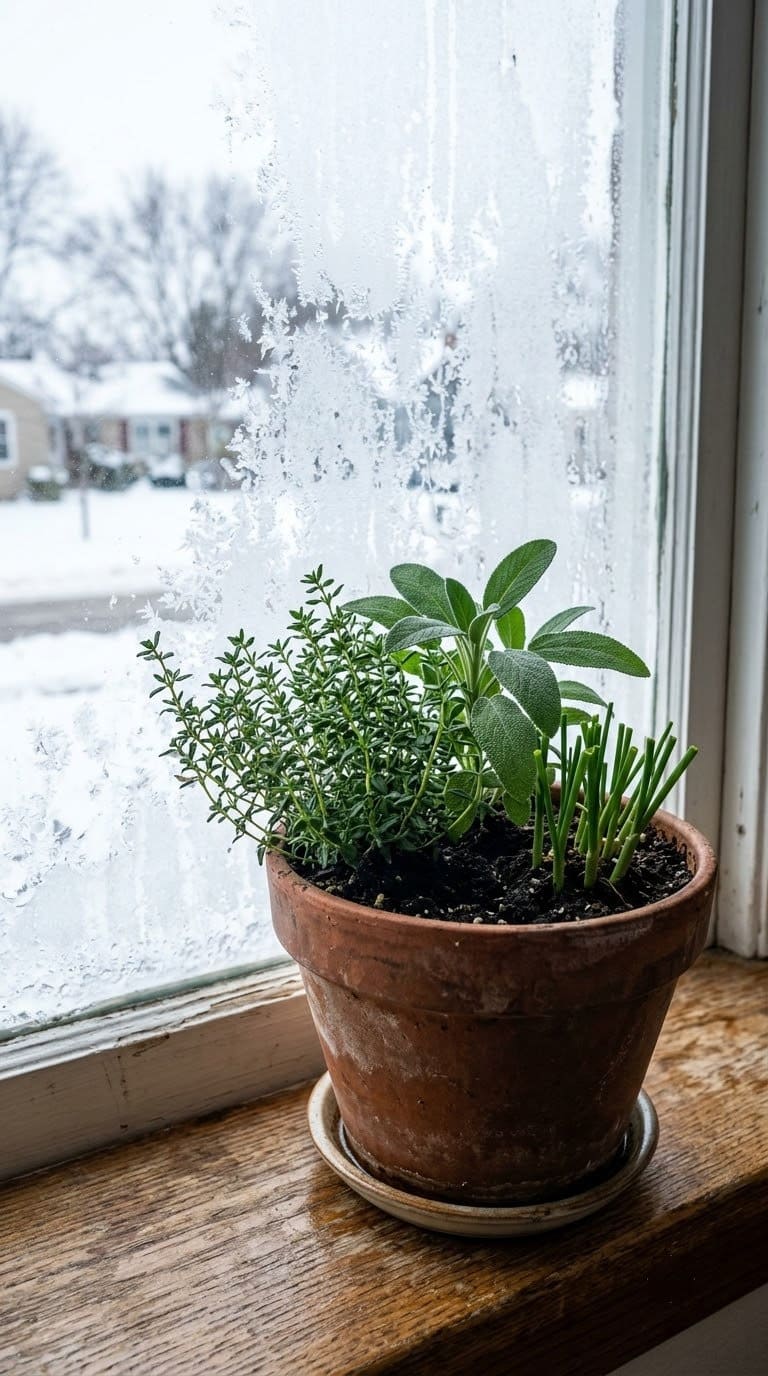
It depends what you planted. Thyme, sage, chives, oregano, and mint are perennial and come back on their own in most zones, so the square just goes quiet and returns in spring.
Rosemary is only reliably hardy in roughly USDA zone 7 and warmer, so in a colder zone it needs a sheltered spot, a heavy mulch, or a move indoors to a bright window. A potted square makes that easy, since the whole thing can come to a cool garage or a sunroom.
Basil, cilantro, and dill are annuals and die at the first frost. Pull them, and either leave the space for spring or start fresh transplants. Our guide to overwintering container herbs covers the perennials in pots.
What does it cost to set up?
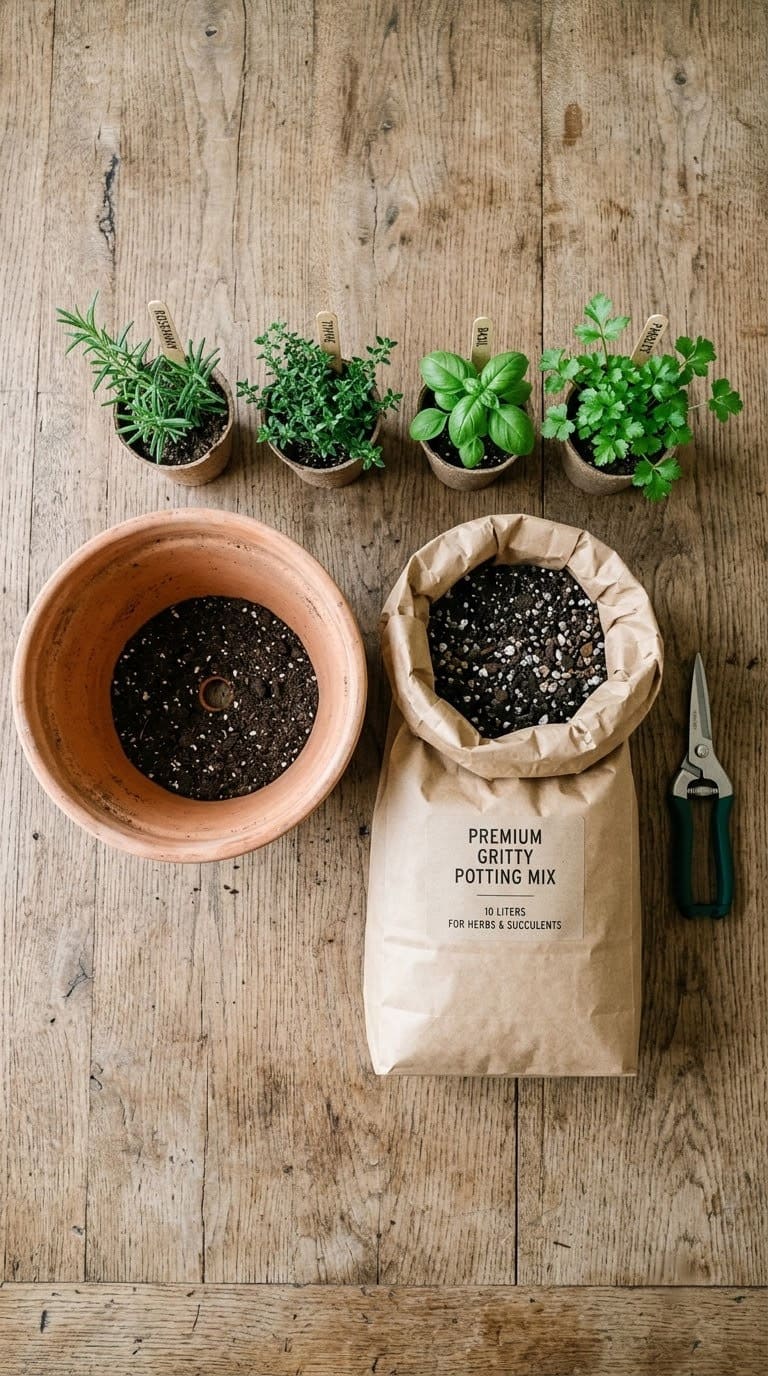
This is the cheapest useful garden there is. If you already have a pot and some soil, it is the price of four small herb plants.
Starting from nothing, a rough breakdown: a 12-inch planter runs 10 to 25 dollars, a bag of gritty potting mix is 8 to 15 dollars, and four 3-inch or 4-inch herb starts are 3 to 5 dollars each. Call it 40 to 60 dollars all in for a garden that, if the perennials survive, comes back for free every year after.
You can cut that further. Grow the annuals (basil, cilantro, parsley) from a seed packet for a couple of dollars, use a free food-safe bucket with holes drilled in the bottom instead of a planter, and take cuttings of a friend’s thyme, rosemary, or mint rather than buying plants.
The 1-square-foot herb garden cheat sheet
Save this for planting day and for the garden center.
| Herb | Per square | Annual or perennial | Best for | Watch for |
|---|---|---|---|---|
| Rosemary | 1 (takes the whole square) | Perennial, tender in cold zones | Roasts, potatoes, bread | Root rot in wet soil, move or protect in cold zones |
| Thyme | 1 mature, or 4 young | Perennial | Almost everything savory | Gets woody, shear it back each year |
| Sage | 1 | Perennial | Brown butter, poultry, beans | Wants it dry, struggles in humidity |
| Chives | 1 clump | Perennial | Eggs, potatoes, garnish | Flowers early, cut to the base to reset |
| Parsley | 2 to 4 | Biennial, grown as an annual | Nearly every dish | Bolts in its second year, replant |
| Basil | 1 large, or 2 to 3 small | Annual, tender | Tomatoes, pesto, summer cooking | Frost kills it, pinch flowers hard |
| Cilantro | 4, direct sown and re-sown | Annual, bolts fast | Salsa, curry, many Asian dishes | Bolts in heat, sow every 2 to 3 weeks |
| Mint | 1, in a sunken pot only | Perennial | Tea, lamb, drinks | Takes the whole square if planted loose |
A real tiny-herb-garden mistake
I once built a proper herb bed, 4 feet by 8 feet, along the back fence, with a little gravel path and 14 kinds of herbs. It looked great in June.
By the end of summer I had used maybe four of them, because walking to the back fence in the middle of cooking never actually happened. The dill and the lovage and the salad burnet went to seed untouched.
The next year I pulled it all and put one 14-inch pot on the step right outside the kitchen door: thyme, parsley, chives, and a basil. I cut from it almost every day and used more fresh herbs in a month than I had in the entire year of the big bed. Close beats big.
FAQ
Can one square foot really be enough herbs for a family? For fresh cooking, usually yes, if you harvest little and often and keep the plants from flowering. One square is not enough to dry big batches or make gallons of pesto, but it easily covers the handful of stems a normal weeknight dinner needs.
What if the spot by my door only gets 4 hours of sun? Lean the square toward the more shade-tolerant herbs, parsley, chives, cilantro, and mint, and accept somewhat softer flavor and slower growth. Or use a pot you can move into a sunnier spot for part of the day.
Do I need to buy special soil? For a pot, yes, use a gritty, fast-draining mix rather than a moisture-holding potting soil. In the ground, you mostly need good drainage and restraint with fertilizer, since rich soil weakens herb flavor.
How do I stop the mint taking over? Never plant it loose in a shared square. Sink a bottomless pot flush into the soil and plant the mint inside it, or keep it in a separate container beside the square. Cut the flowers off before they set seed.
Which herbs should a total beginner start with? Parsley, chives, thyme, and basil. All four are hard to kill, all four get used constantly, and three of the four come back on their own each year.
Can I do this on an apartment balcony or fire escape? Yes, this is close to the ideal use case. A single 12-inch pot of four herbs by the door you use most is a full herb garden for a small space, as long as it gets six hours of sun.
Related Posts
- Growing Culinary Herbs in Pots
- Perennial Herbs: 9 Herbs That Grow in the Heat
- Preparing the Herb Garden for Winter
Products We Recommend
This post contains affiliate links. We may earn a commission on qualifying purchases at no extra cost to you.
Novelty Majestic 12-Inch Cylinder Pot
The one-square-foot footprint itself, deep enough for rosemary roots and movable so you can chase the sun
Shop Now
Espoma Organic Cactus Potting Mix
A gritty, fast-draining base so Mediterranean herbs get the sharp drainage they need instead of sitting wet
Shop Now
Fiskars 6-Inch Non-Stick Pruning Snips
Clean cuts just above a leaf pair, so the plant branches instead of dying back
Shop NowNever miss an update — choose FarmFoodFamily as your preferred source on Google.
How it works: Tap the button below to open Google's settings page, then check the box next to FarmFoodFamily.
Tap the checkbox to turn it blue — that's how you know it's set.