How to Light a Kitchen Garden for a Quick Harvest After Dark
You don’t need to light the whole yard to snip parsley at night. A little light at the door and gate, plus one portable lamp at the bed, does the job.

Never miss an update — choose FarmFoodFamily as your preferred source on Google.
How it works: Tap the button below to open Google's settings page, then check the box next to FarmFoodFamily.
Tap the checkbox to turn it blue — that's how you know it's set.
You don't need to light the whole yard to snip parsley at night. A little light at the door and gate, plus one portable lamp at the bed, does the job.
Quick answer: how do you light a kitchen garden for a quick harvest after dark?
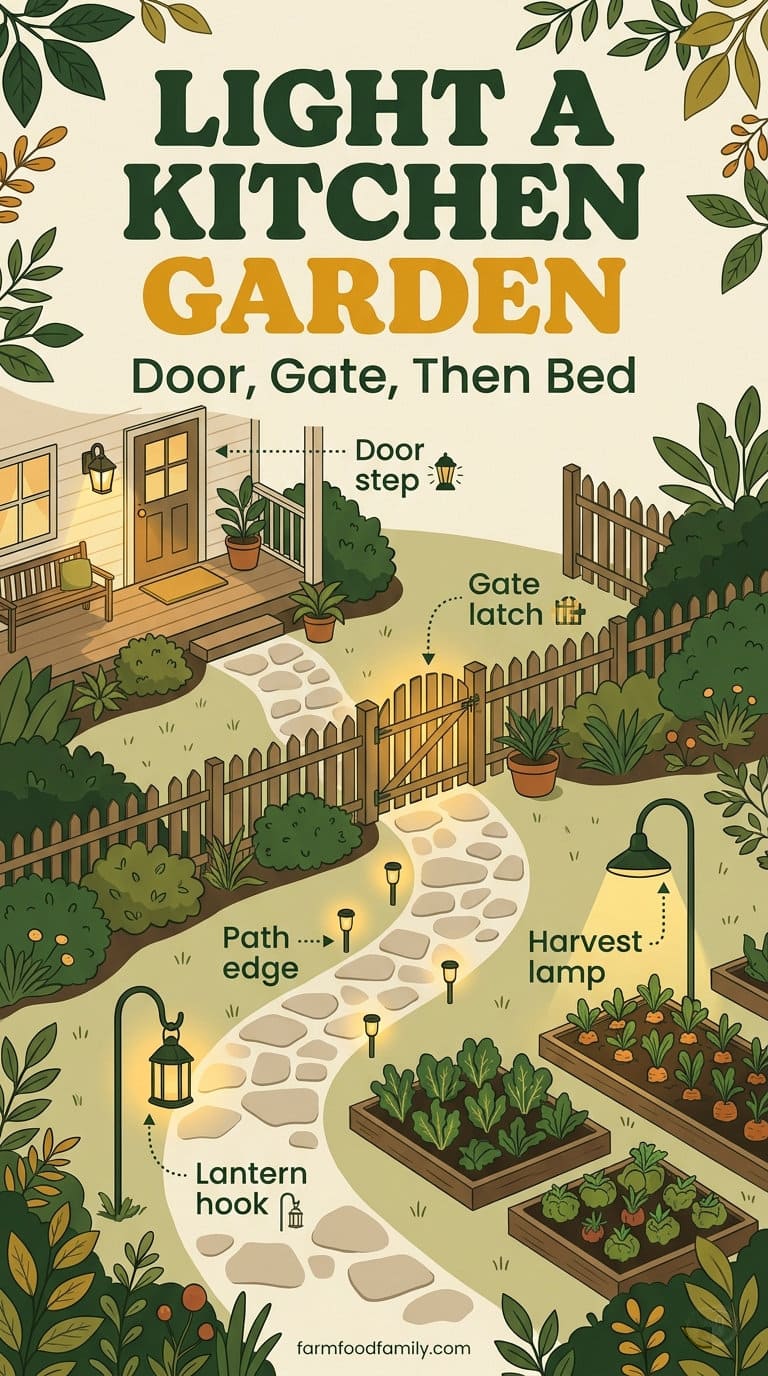
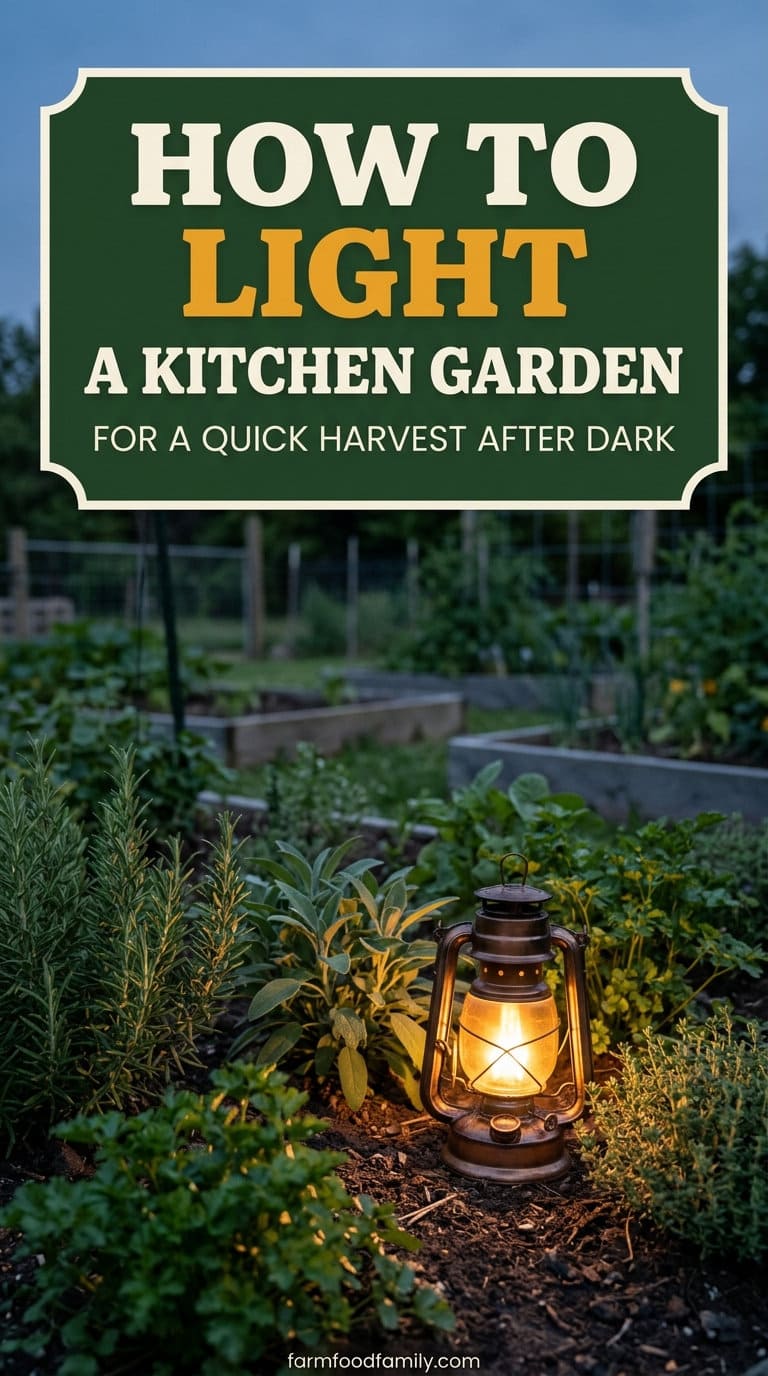
To light a kitchen garden for a quick harvest after dark, treat the trip as three jobs: getting out the door, following the path to the right bed, and seeing a few stems well enough to cut. Give the door and path a little permanent light, and keep the harvest light portable.
Test your route with an empty bowl before you buy anything. Note where you stop or change your grip, and check whether an open door or gate blocks the light.
Keep the light low and aimed down. DarkSky International advises fixtures that direct light where it’s needed, timers or occupancy sensors, and a color temperature of 3000 K or lower.
At the bed, set a small task light a little to one side, so your hand doesn’t shadow the stem you mean to cut.
The soup needs parsley. You know exactly where it grows: through the back door, past the hose reel, first bed on the left. In daylight you can make that trip while talking to someone in the kitchen. After dark, you’re holding the door with a hip, trying to turn on your phone flashlight with the hand that’s already holding a bowl. The parsley is about twenty steps away. It shouldn’t take this much choreography.
Answer 4 quick questions and get matched to the exact fix for your yard — drainage, budget, layout, or something else entirely.
Take the Free QuizFor a small kitchen garden, it helps to think of that trip as three separate jobs. You need to get out the door, follow the ground to the right bed, and see a few stems well enough to snip them. The first two jobs happen in the same places every night. The third moves with whatever is for dinner. That’s a good reason to give the route a little permanent light and keep the harvest light portable.
Start at the kitchen door, with a bowl in your hand
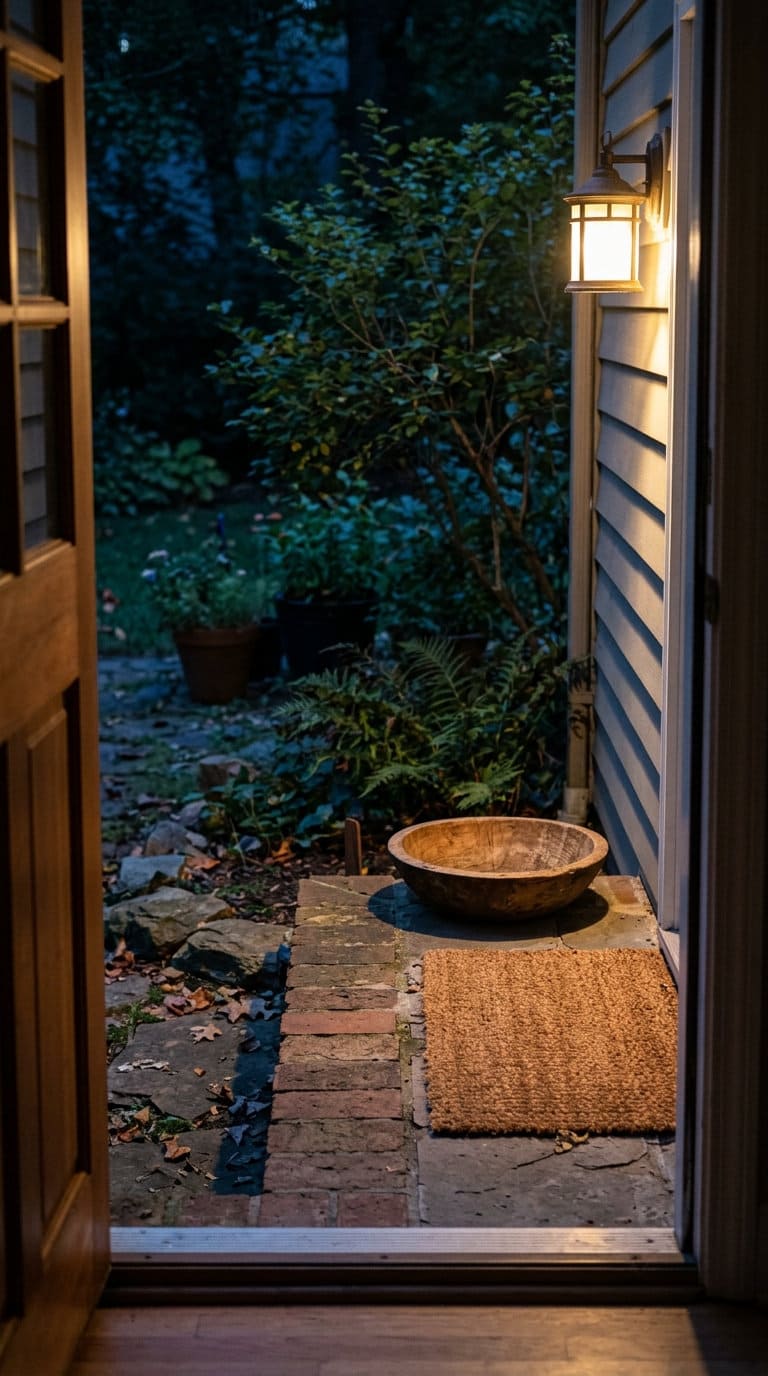
One evening, leave the garden scissors inside, take an empty bowl and try your usual route with the lights you already have. Start just inside the back door. Can you work the latch without putting the bowl down? When you open the door, does it block the light that was showing you the top step? Look again on the way back. It’s surprisingly easy to spot a dark doormat on the way out and lose its edge against a dark threshold on the way in.

Before browsing an Outdoor Lighting collection, write down exactly where you stopped or changed your grip. “Couldn’t see the bottom step with the door open” is a better shopping note than “backyard too dark.” If the lamp already lights that step and a tall planter is casting the shadow, try moving the planter. You might fix the first part of the trip without buying anything.
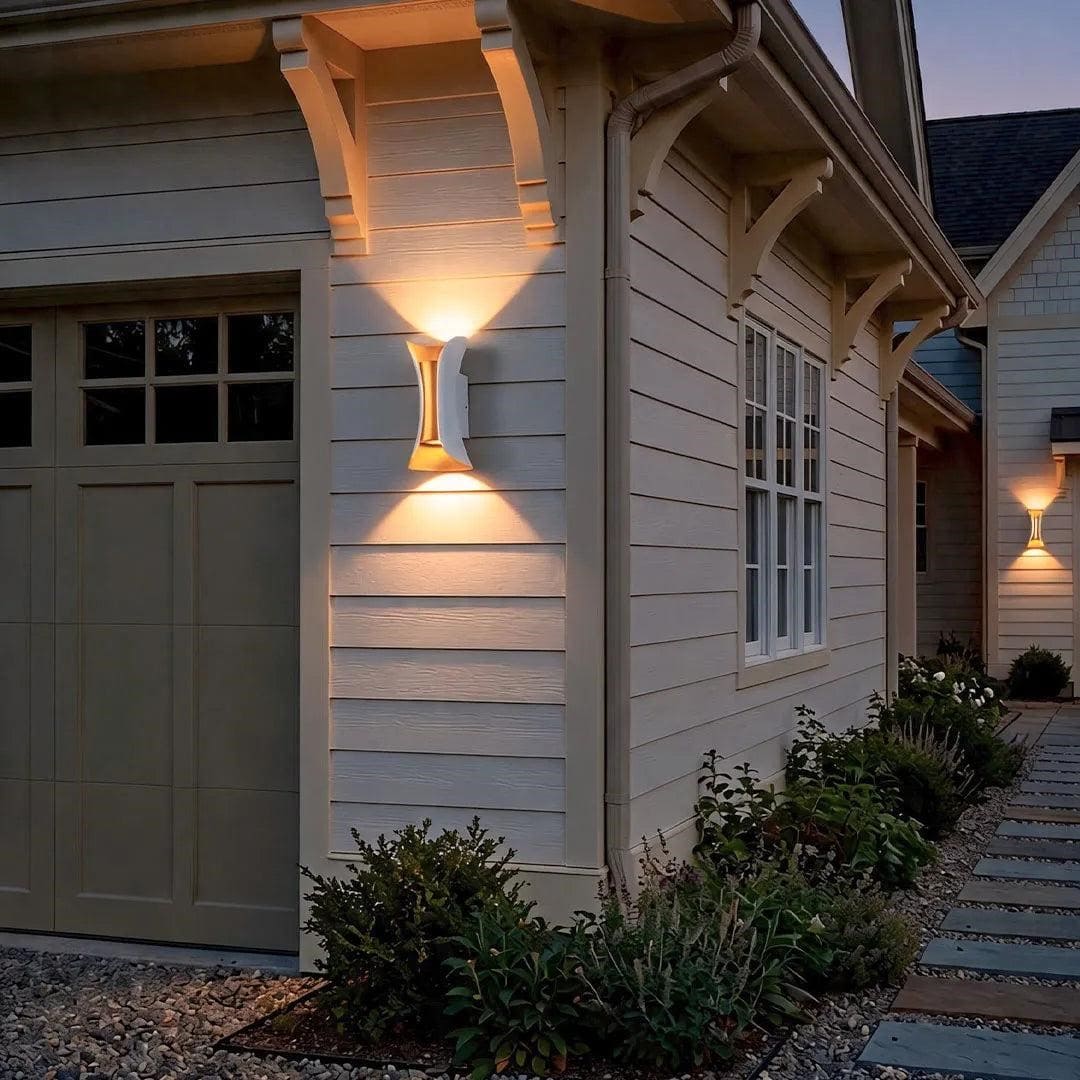
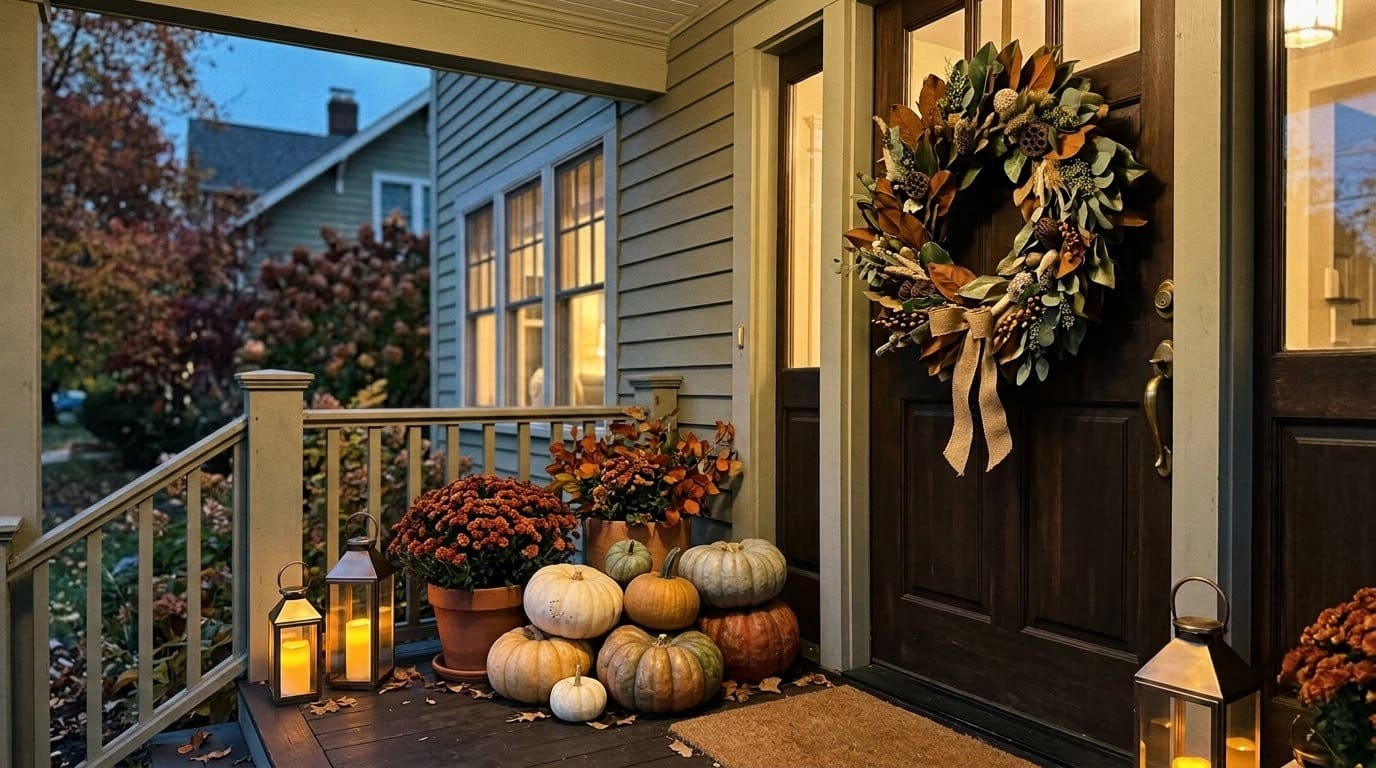
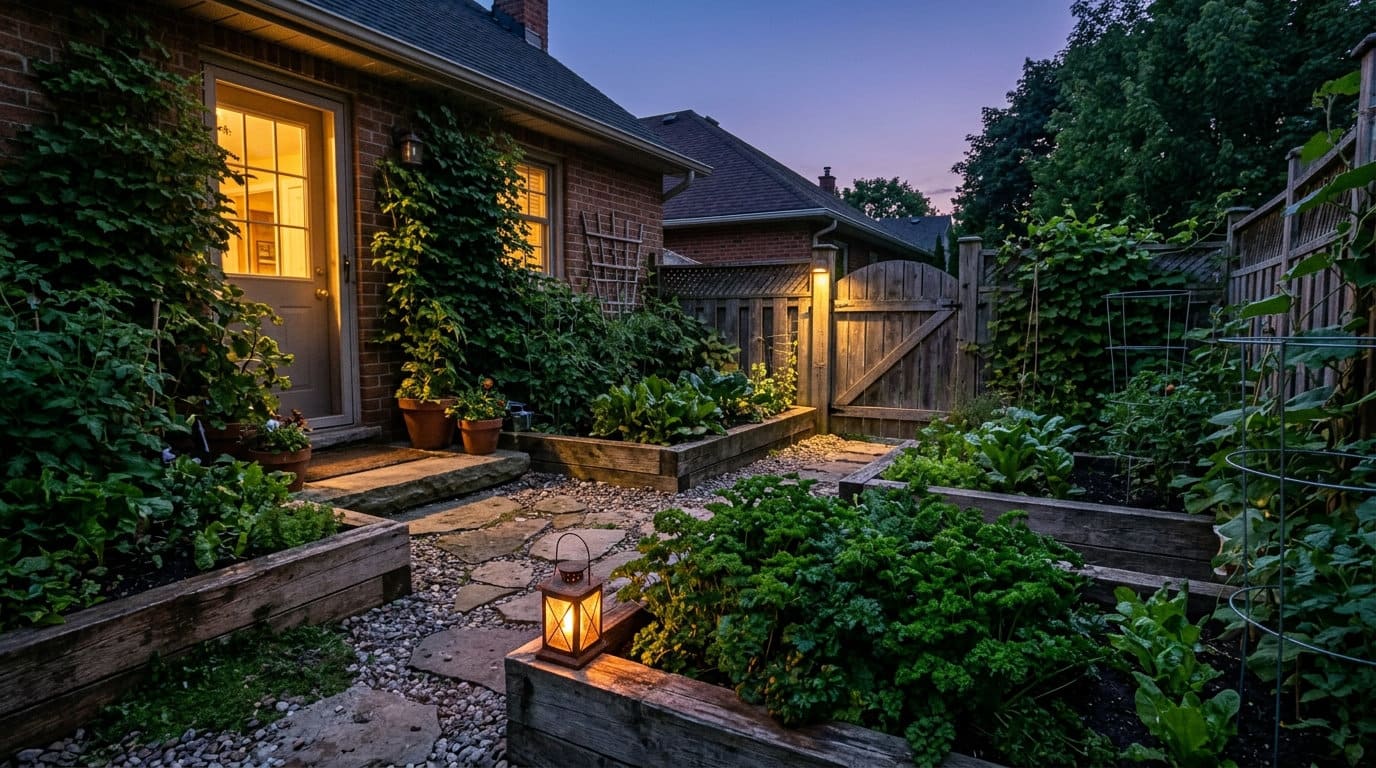
The siding is easy to see here. At your own door, look down as well: does the light reach the spot where your foot lands? Image: Dazuma.
At the garden gate, light the turn
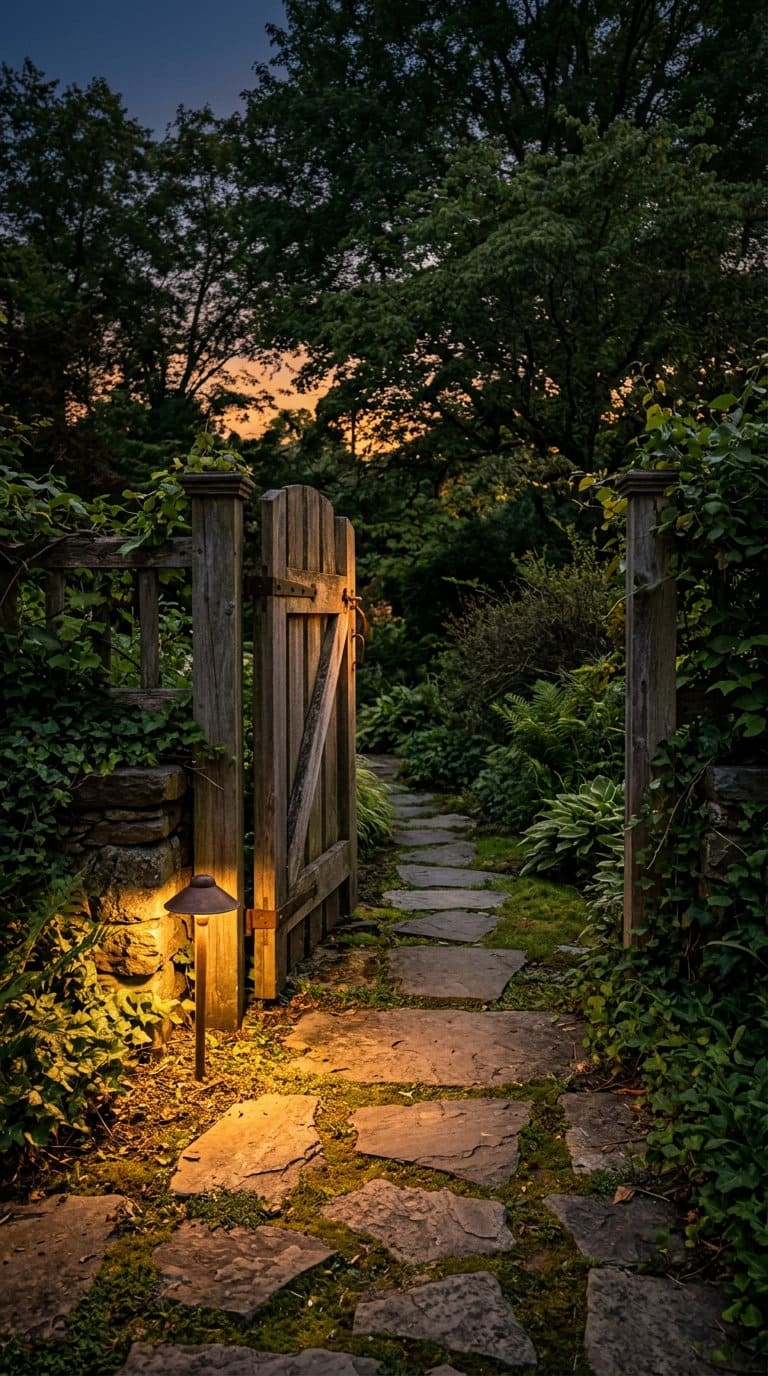
A kitchen garden rarely has a straight, empty aisle. There’s a hinge post, a place where the paving gives way to gravel, and usually a watering can that somebody meant to put away. From the kitchen, your eye goes to the gate. Once you get there with your hands full, what you actually need is the latch and the first bit of path on the other side. Open the gate before deciding where a light belongs. The gate itself may cut off the beam when it swings.
When comparing landscape lighting, look at the ground in the fixture photos. A glowing top tells you where the post stands. A visible patch of paving beside it tells you something about where its light goes. For a quick trial, ask someone to hold a shaded outdoor lantern at the edge of the bed while you approach from each direction. Put a flowerpot where a permanent post would stand, then wheel the garden cart through. If the wheel clips the pot in daylight, you won’t like a metal post there at night.
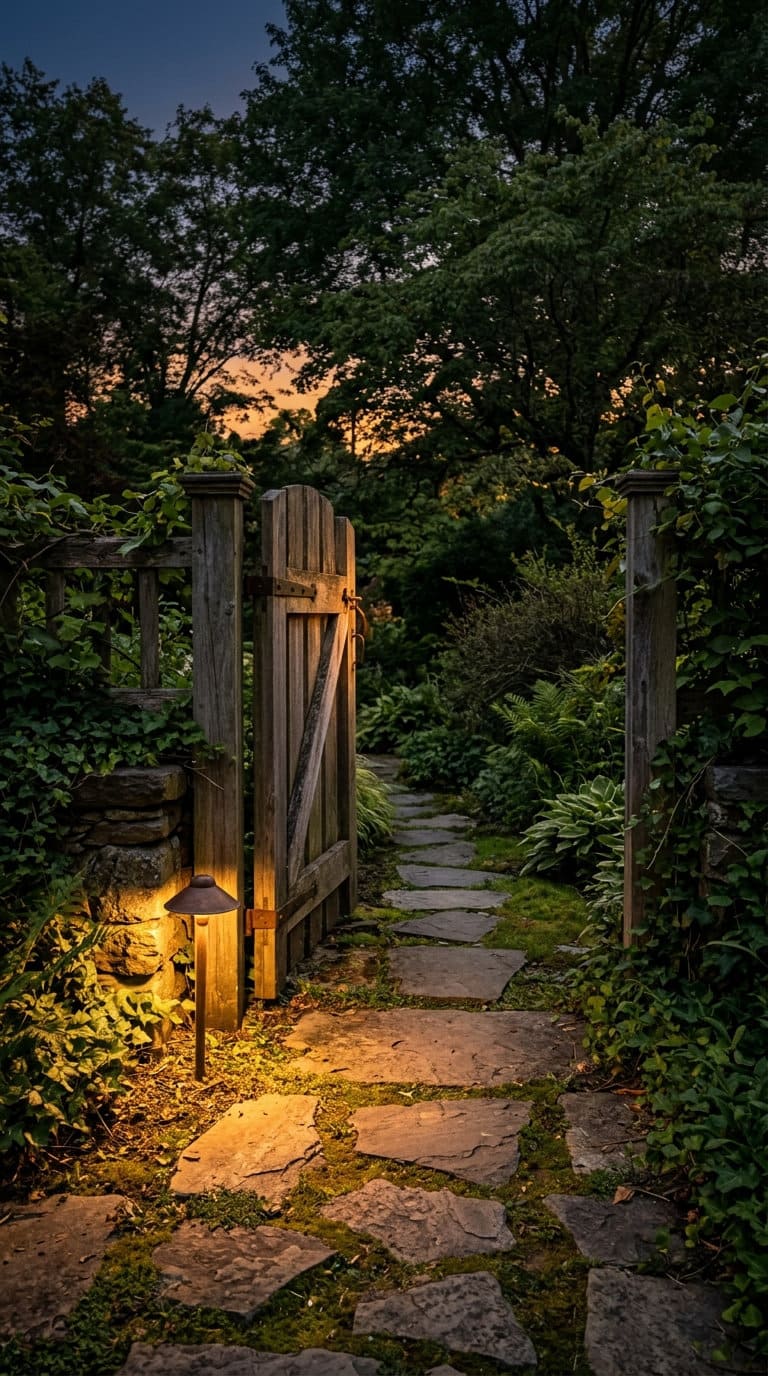
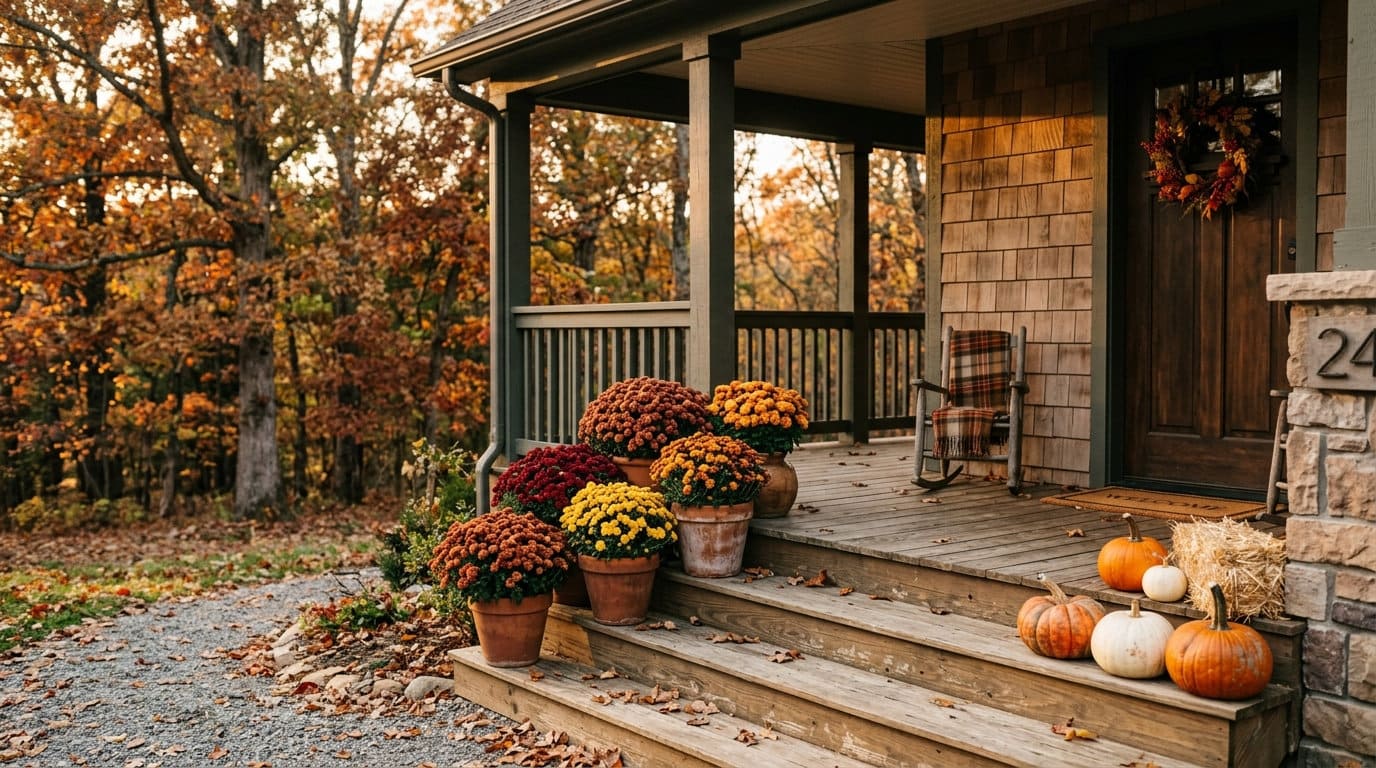
Small lights mark the planting around this gate. The useful check is whether you can also pick out the latch and the stones underfoot. Image: Dazuma.
Most yard problems trace back to one specific, fixable cause. Find yours in 4 quick questions.
Take the Free QuizGive the harvest light a place to sit
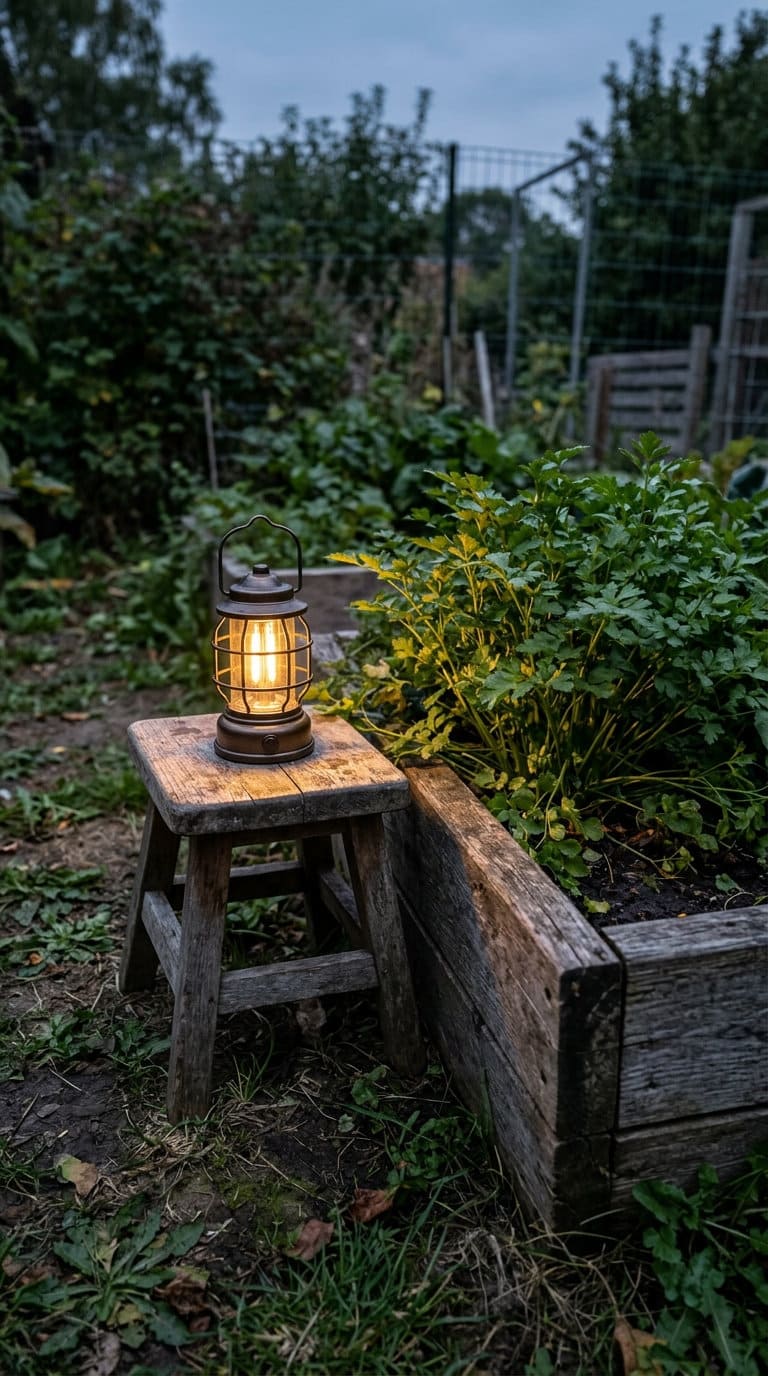
Parsley tonight, chives tomorrow, a handful of mint from a pot on the steps next week. You could light every plant. It’s cheaper and often more useful to carry one small outdoor task light to the plant you already know and intend to cut. Give it a flat place to sit: a broad bed corner, a low stool set clear of the aisle, or a shelf on the inside of the fence. Balance it on a narrow timber edge once and you’ll understand the appeal of the stool.
Set the light a little to one side. Hold a stem in one hand and bring the closed scissors toward it with the other. If the shadow of your knuckles covers the spot you mean to cut, move the lamp around the bed before you open the blades. Bring the bowl over, too. A light position that works with empty hands is no use if the bowl blocks the beam the moment you set it down. Keep the plant label legible. This arrangement is for finding what you planted, not for identifying an unfamiliar herb in the dark.
Give the next cook a fighting chance, too. In daylight, ask someone who didn’t plant the bed to find the parsley label from the aisle. A tag that faces the tomatoes may as well be blank from the path. Turn it toward the picking side and print the name in dark lettering. After sunset, try reading it with the little lamp in its usual place. Moving a tag costs less than lighting the back of the bed just so someone can read it.
When you’re finished, notice where the light ends up. A rechargeable lantern that lives at the back of a shed will probably stay there next time the soup needs something. A hook beside the kitchen door, with the scissors in their usual spot nearby, makes the next trip easy. Put the bowl on the counter, switch off the garden lights and taste the soup. The rest of the yard can wait until morning.
The three lighting jobs at a glance
Each part of the trip needs a different kind of light. This table pulls the advice above into one place.
| Job | Where it happens | Light that fits | Quick test |
|---|---|---|---|
| Get out the door | Back door, steps, doormat | A fixed light that reaches the spot where your foot lands | Open the door with a bowl in your hand and check the top and bottom step |
| Follow the path | Gate, latch, paving and gravel | A low fixed light at the turn, placed clear of the cart | Swing the gate open and wheel the cart past a flowerpot stand-in |
| See the stems | The bed you’re picking from tonight | One small portable task light on a flat spot | Bring closed scissors to a stem and look for knuckle shadows |
Choose a night-friendly garden light
A little light goes a long way at night. DarkSky International says 20% to 50% of outdoor residential lighting goes straight into the sky because of poor shielding, so aim for fixtures that point light down at the step, the latch, and the path.
It also suggests a dimmer or a lower-wattage bulb, timers or occupancy sensors so lights aren’t on all night, and a color temperature of 3000 K or lower. For a short trip to the garden, a motion-sensing light at the door and a switched light at the gate cover most of the route.
A 10-minute evening test
Do this once before you buy any fixtures. It turns “the backyard is too dark” into a shopping list.
- Take an empty bowl and start just inside the back door.
- Open the door and check whether it blocks the light on the top step.
- Walk to the gate and open it before you decide where a light should go.
- Set a flowerpot where you’d put a post light, then wheel the garden cart past it.
- At the bed, set a lantern to one side and bring closed scissors to a stem.
- Put the bowl down and check that it doesn’t block the beam.
- Walk back and look for the doormat edge against the threshold.
- Write down every spot where you stopped or changed your grip.
Where the harvest light should live
The light only helps if it’s where you reach for it. Pick one home for it and keep it there.
- A hook beside the kitchen door, at hand height.
- The garden scissors stored right next to it.
- A flat spot at the bed for it to sit on: a broad bed corner, a low stool, or a fence shelf.
- A charging spot indoors if it’s rechargeable, not the back of the shed.
What to buy, and what to skip
Start small and add only what the bowl test shows you need.
- Buy one portable task light for the bed, ideally rechargeable, with a hook to live on by the door.
- Consider a motion-sensing light at the door, so it isn’t on all night.
- Add a low, shielded light at the gate if the latch or the first stones disappear after dark.
- Skip floodlights that throw light into the sky and over the fence.
- Skip cool white bulbs above 3000 K for garden lighting.
Common mistakes to avoid
Most dark-garden frustrations come from a few habits. These come straight from the advice above.
The average homeowner spends $616/year on yard fixes that don't address the real problem. Find out what yours actually is — before you spend another dollar.
Take the Free Quiz

- Lighting every plant instead of the route and the bed you’re picking from.
- Placing a light where the open door or gate cuts off the beam.
- Putting a post light where the garden cart clips it.
- Setting the task light behind your hand, so your knuckles shadow the cut.
- Turning plant tags toward the back of the bed instead of the path.
- Balancing a lamp on a narrow timber edge.
- Shopping from a vague note like “backyard too dark.”
- Using the light to identify an unfamiliar herb. Only pick plants you know and planted.
Kitchen Garden Lighting FAQs
How do I light a garden path for a quick night harvest?
Light the spot where your foot lands outside the door, then the gate latch and the first bit of path beyond it. Test the route with a bowl in your hand and note every place you stop or change your grip.
Do I need to light every plant in a kitchen garden?
No. It’s cheaper and often more useful to carry one small outdoor task light to the plant you already know and intend to cut.
Where should a garden task light sit?
Give it a flat place to sit, such as a broad bed corner, a low stool set clear of the aisle, or a shelf on the inside of the fence. Set it a little to one side of the plant.
What color outdoor light is best for a garden?
DarkSky International recommends a correlated color temperature of 3000 K or lower for outdoor home lighting, with fixtures that aim light where it’s needed.
How do I keep my hand from shadowing the plant?
Hold a stem in one hand and bring closed scissors toward it with the other. If your knuckles shadow the cut, move the lamp around the bed, and check that the bowl doesn’t block the beam.
Is it safe to pick herbs in the dark?
Only pick plants you know and planted yourself. Keep plant labels legible from the path, and don’t use a night light to identify an unfamiliar herb.
Never miss an update — choose FarmFoodFamily as your preferred source on Google.
How it works: Tap the button below to open Google's settings page, then check the box next to FarmFoodFamily.
Tap the checkbox to turn it blue — that's how you know it's set.