15+ Arizona Front Yard Landscaping Ideas (Plus What Actually Survives the Heat)
A lot of “drought-tolerant” plant advice you’ll find online simply doesn’t hold up in Arizona. Creeping thyme, clover, and dichondra get recommended constantly as low-water groundcovers, and real Arizona gardeners will tell you the same thing every time: “none of them can handle the AZ heat unless you pour on the water.” This one corrects…


Never miss an update — choose FarmFoodFamily as your preferred source on Google.
How it works: Tap the button below to open Google’s settings page, then check the box next to FarmFoodFamily.
Tap the checkbox to turn it blue — that’s how you know it’s set.
A lot of “drought-tolerant” plant advice you’ll find online simply doesn’t hold up in Arizona.
Creeping thyme, clover, and dichondra get recommended constantly as low-water groundcovers, and real Arizona gardeners will tell you the same thing every time: “none of them can handle the AZ heat unless you pour on the water.”
This one corrects that upfront, and adds the legal and financial context most guides skip entirely, before getting into the design ideas.
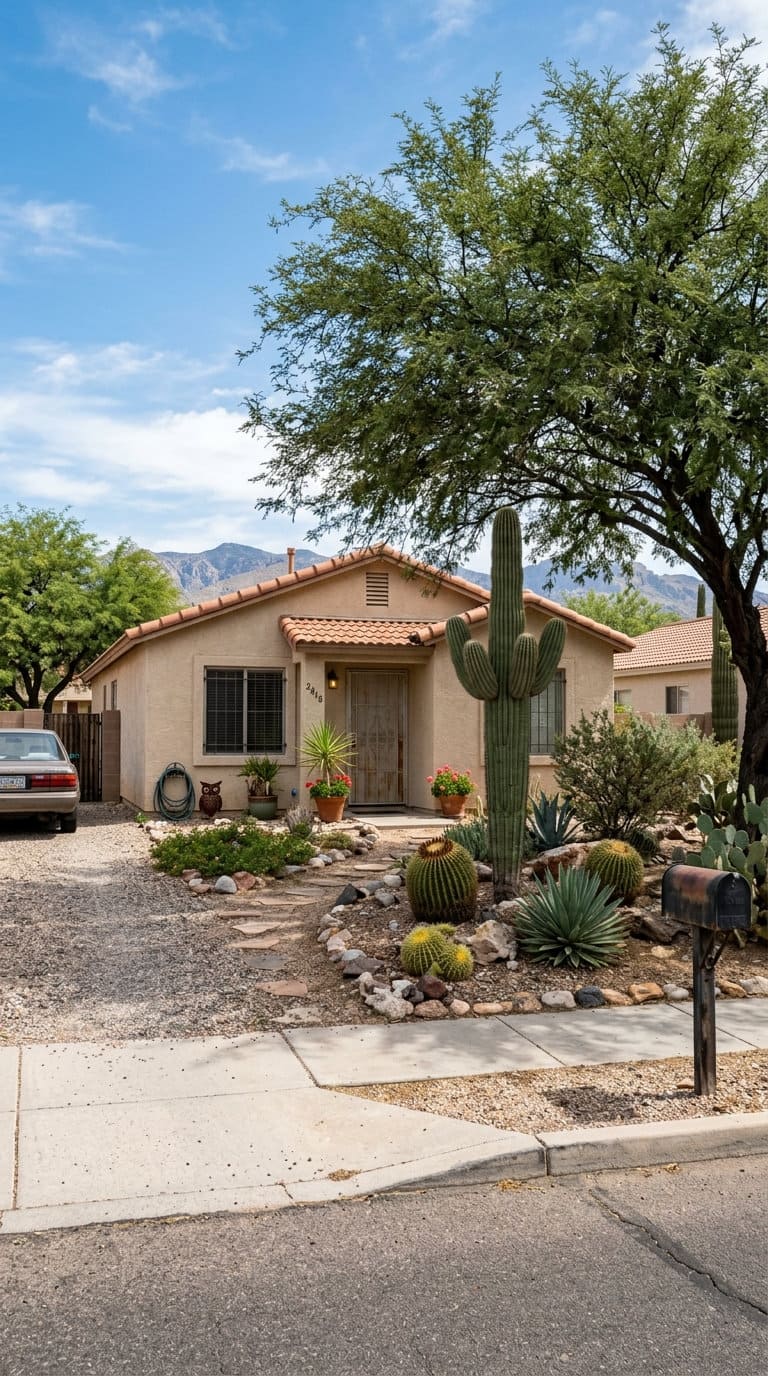
Arizona Front Yard Landscaping Ideas
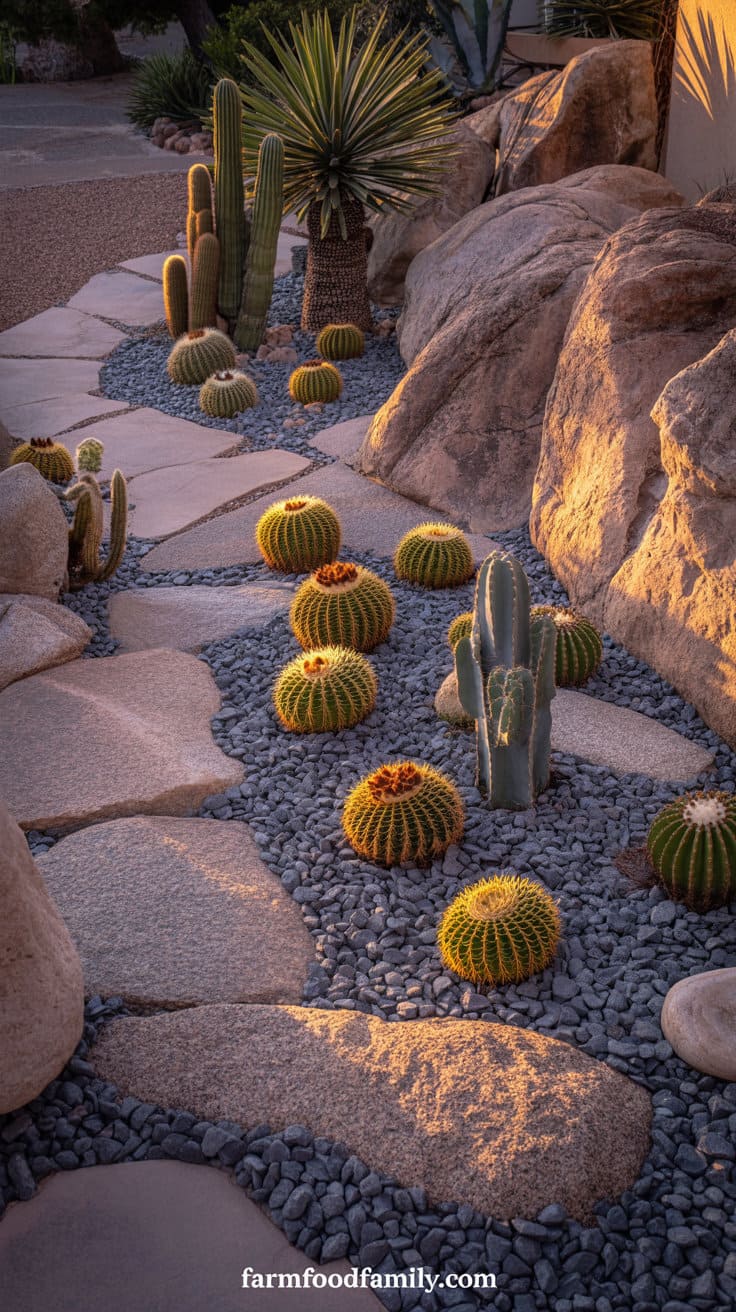
1. Desert Rock Garden with Cactus Variety
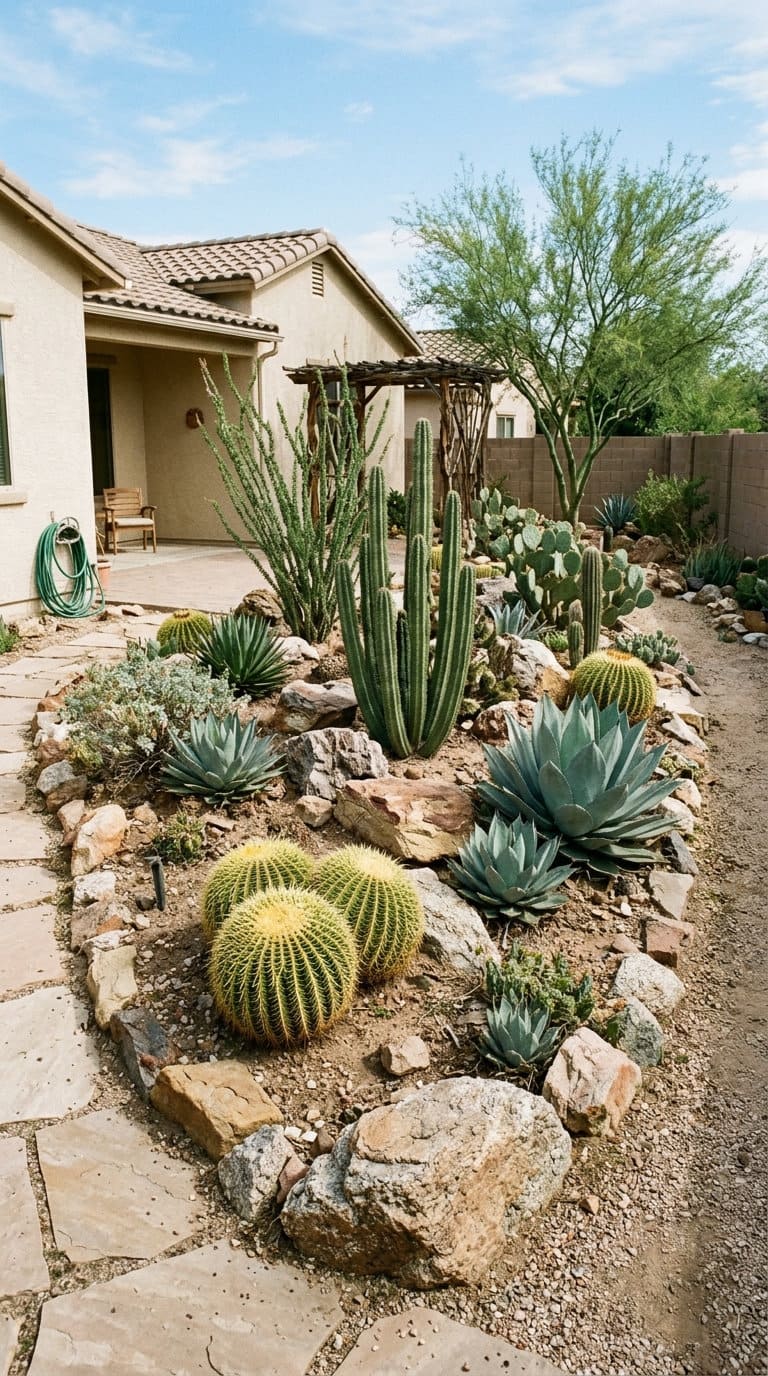
Golden barrel cactus, organ pipe, and agave or yucca varieties give a rock garden real structure and year-round presence. One real caveat worth stating plainly: don’t go all-rock.
A yard covered entirely in decorative gravel acts as a genuine heat sink and adds to the urban heat island effect, the same way a parking lot does, just at a smaller scale. Holly Banghart, Senior Designer at Straight Line Landscape and a certified Master Gardener, puts it simply: desert landscape design requires weighing “landscape design complexity and garden care” together, not defaulting to the lowest-maintenance option at the expense of a functional, cooler yard.
Mix in actual plants between the stone, the rock supplies structure and low maintenance, the plants do the cooling work rock can’t.


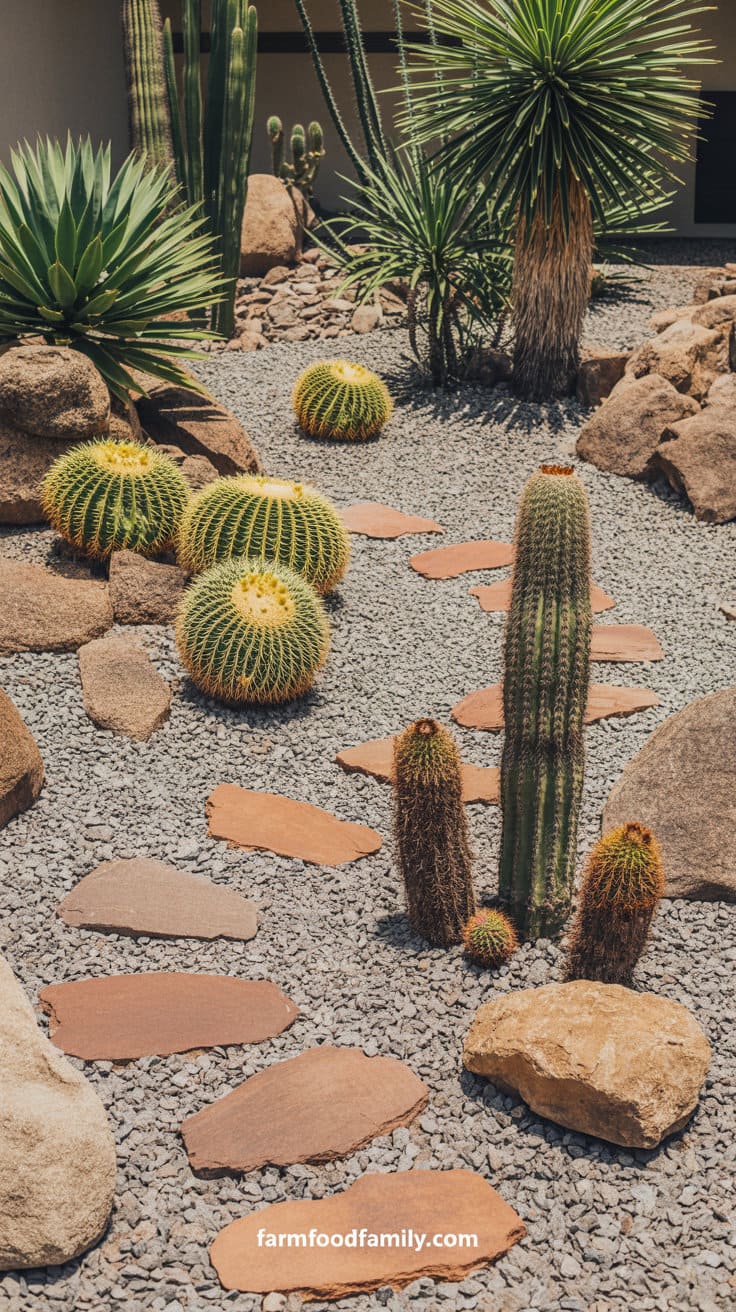
A desert rock garden is a timeless, low-maintenance design that thrives under the Arizona sun.
Begin with a neutral gravel base, such as pea gravel, decomposed granite, or crushed stone, to serve as ground cover, substituting typical grass.
Introduce vertical and sculptural interest with a variety of cacti, including golden barrel, saguaro, and organ pipe.
Complement with agave and yucca, which have architectural leaves that contrast well with the rounded cactus forms.
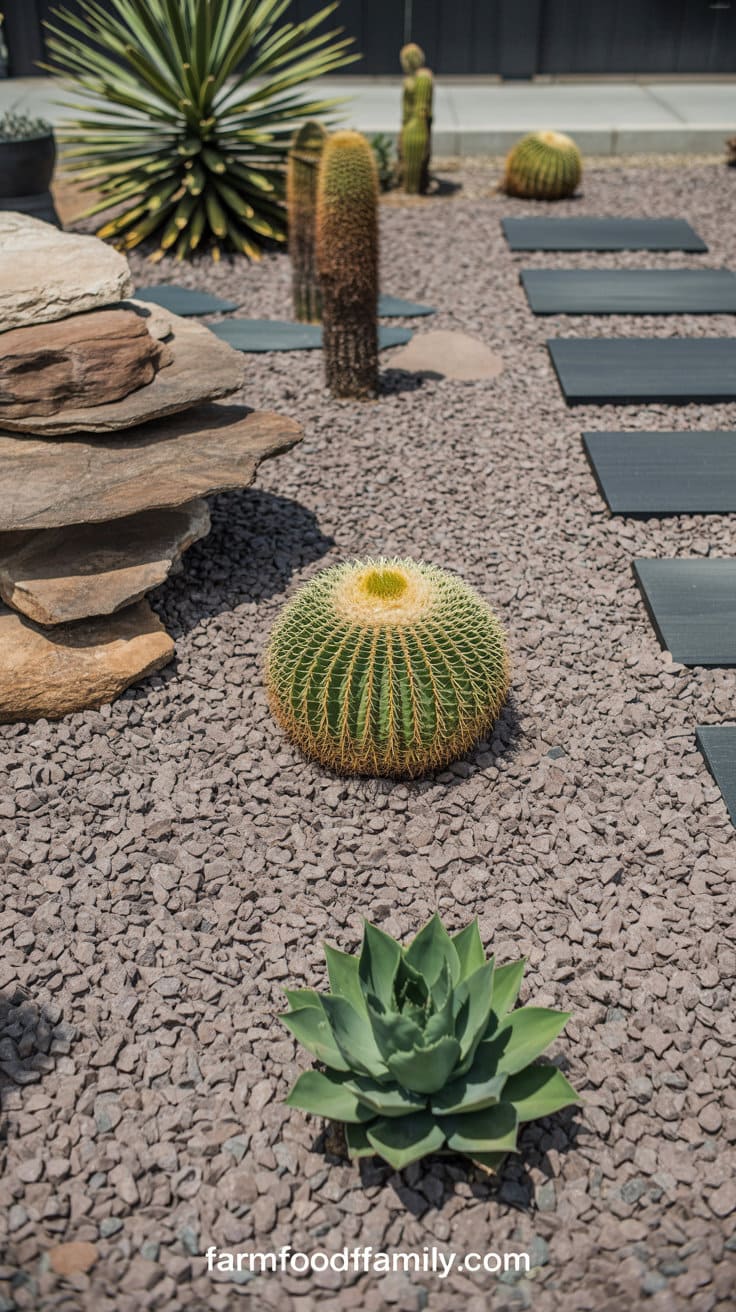
Keep The Rocks Balanced
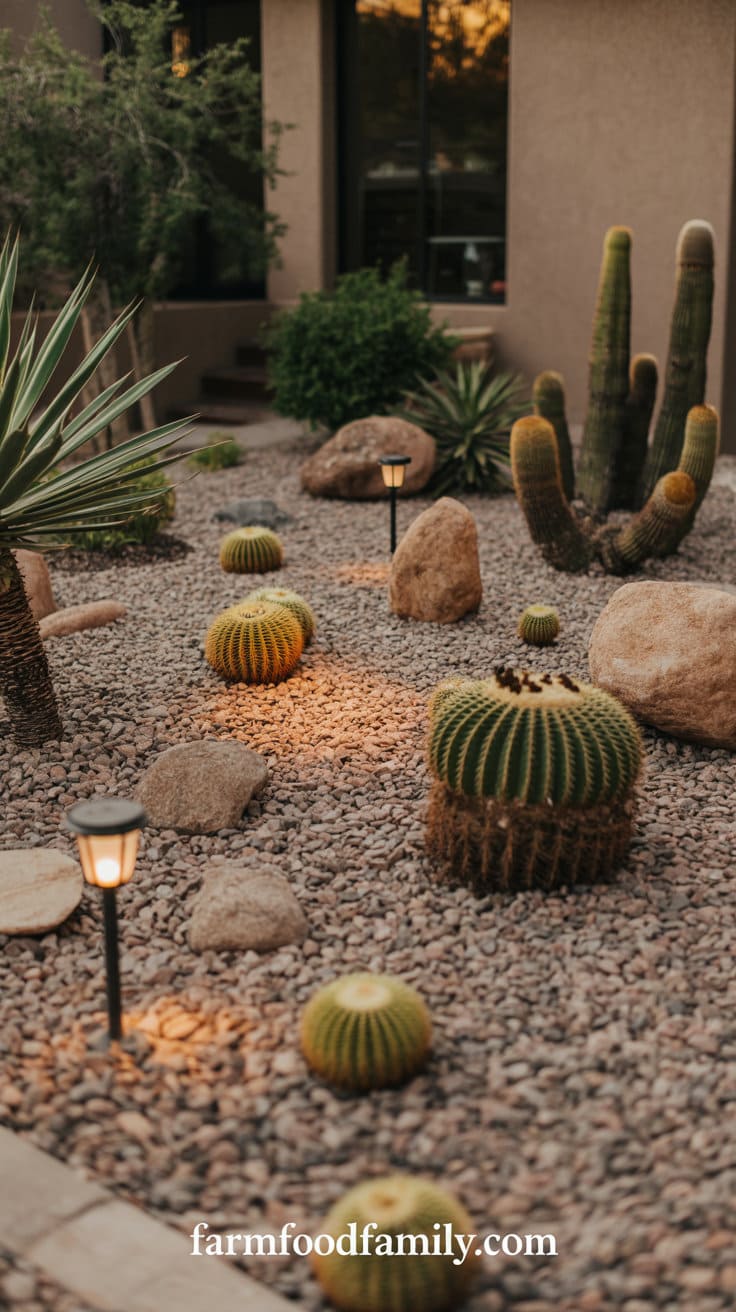
For texture and balance, intersperse smooth boulders and decorative rocks between groupings.
Create an informal route through the garden by laying down rust-colored or charcoal stepping stones. Use solar path lighting to highlight features and generate dramatic shadows at night.
Planting in odd numbers makes the design feel more purposeful and natural.
This plan can resist tough weather and provides year-round beauty, making it an excellent choice for an attractive yet rugged Arizona front yard.
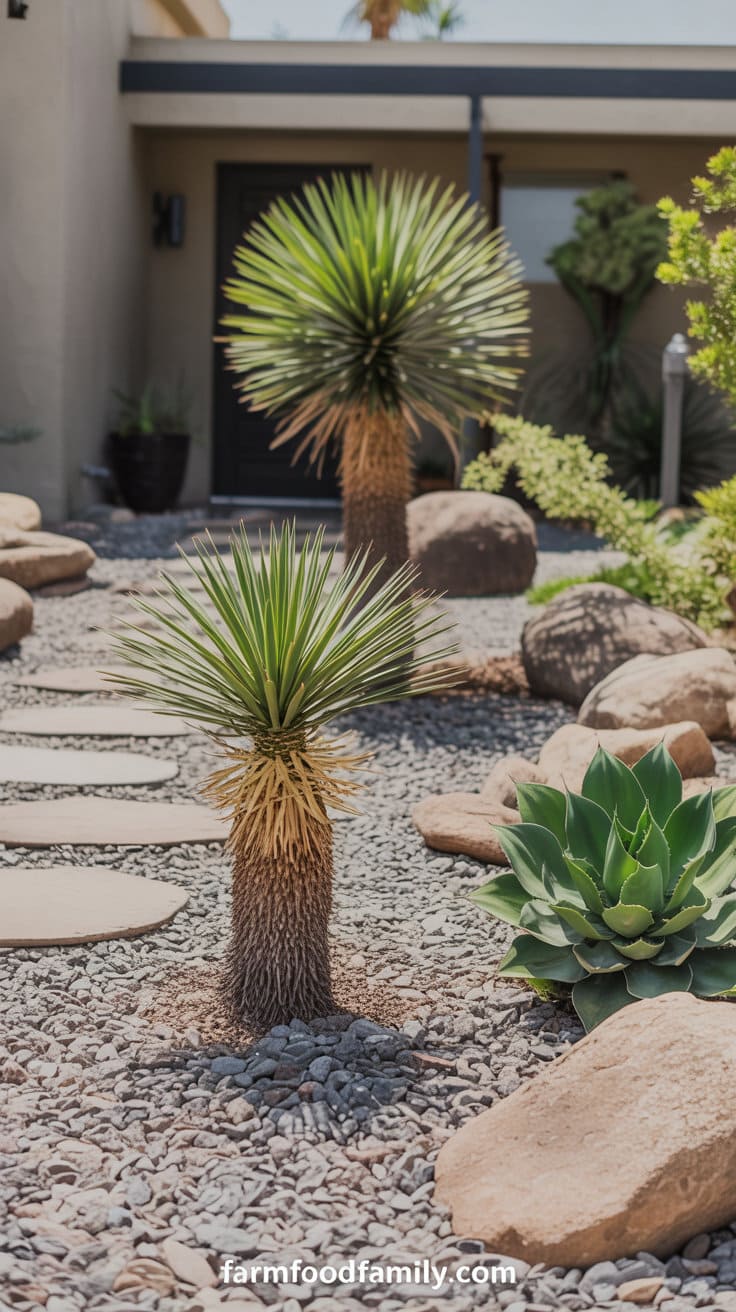
2. Dry Creek Bed with Boulders and Desert Plants
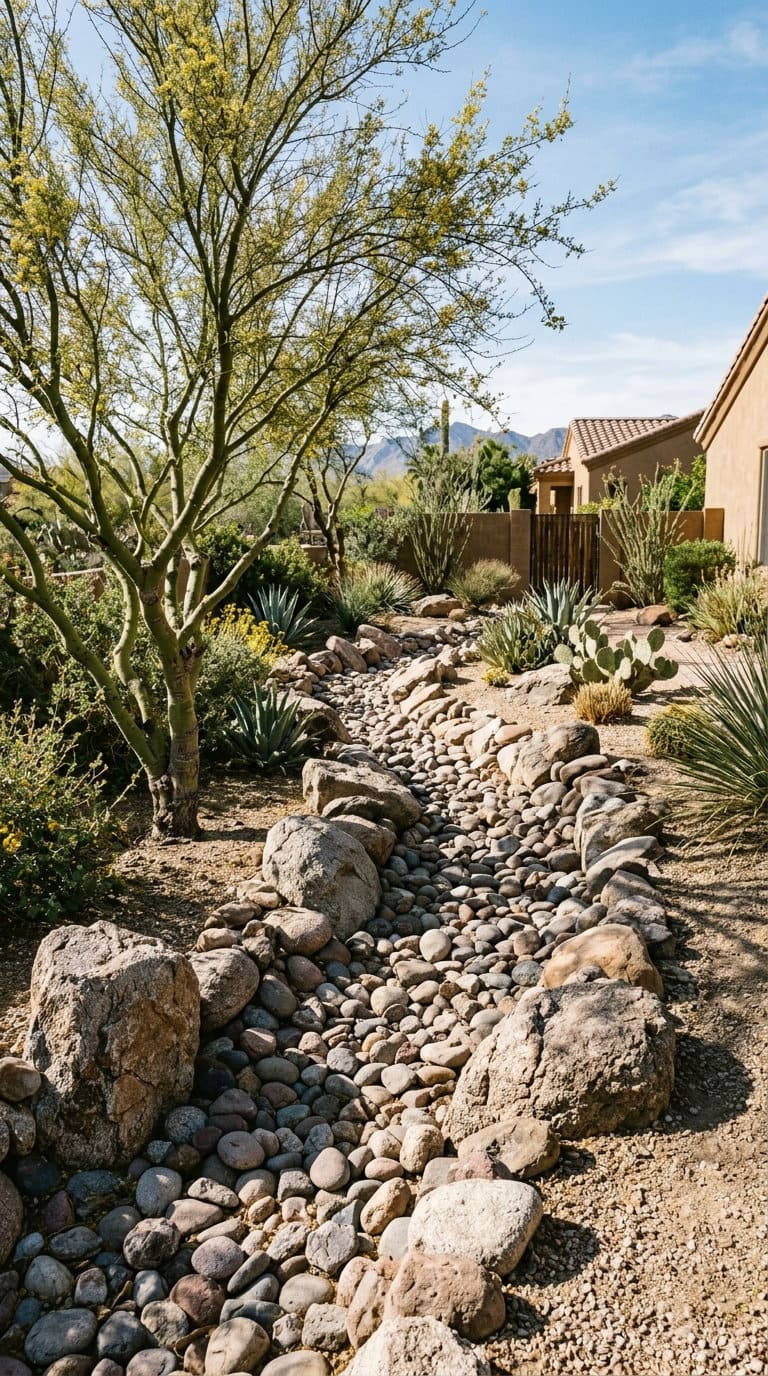
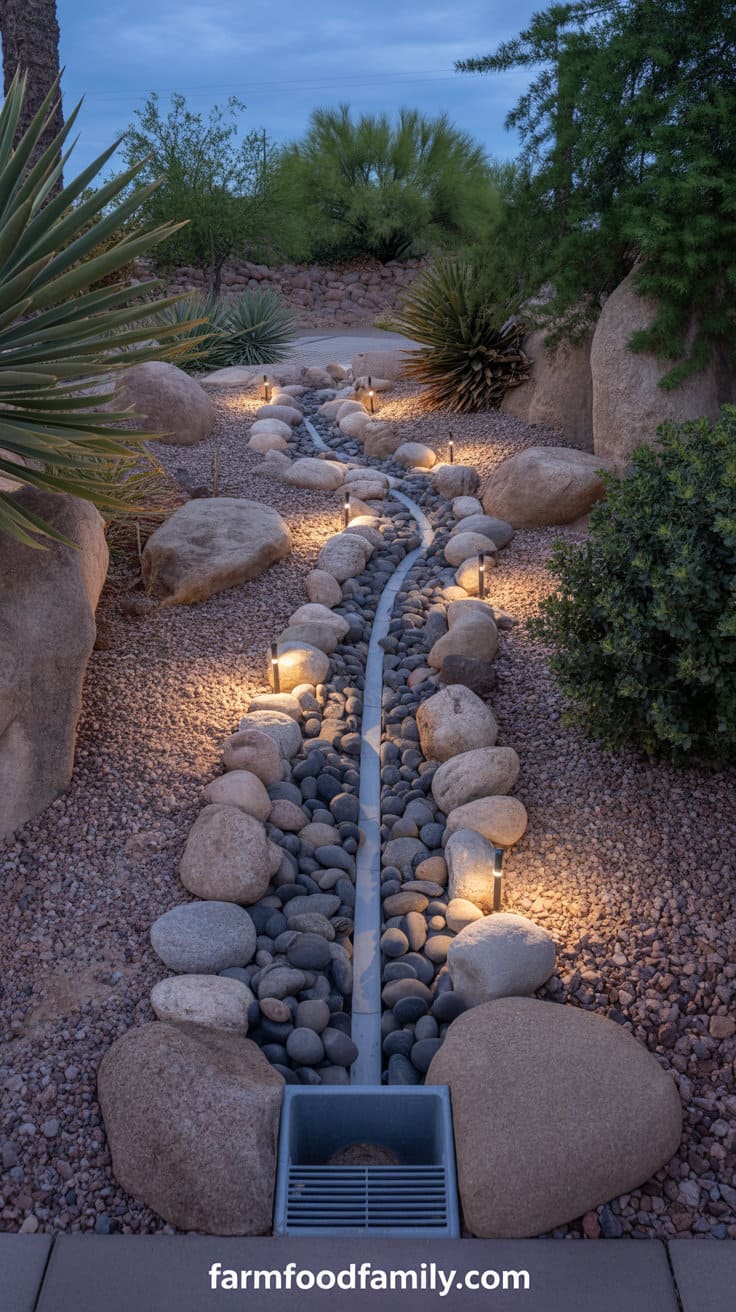
A dry creek bed, river rock laid in a meandering channel with boulders anchoring the curves, doubles as real drainage management for Arizona’s occasional intense monsoon downpours, not just a decorative feature. Plant palo verde or desert willow along the edges for shade and seasonal color without crowding the channel itself.
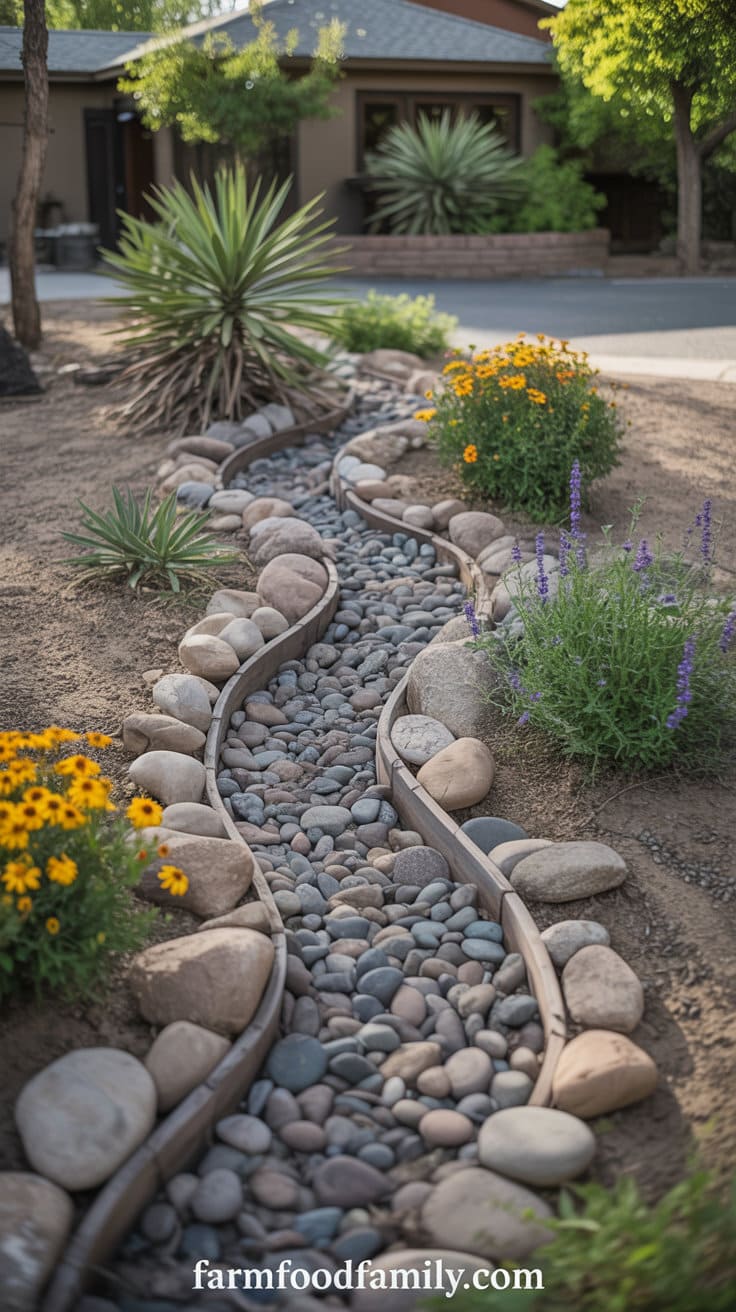
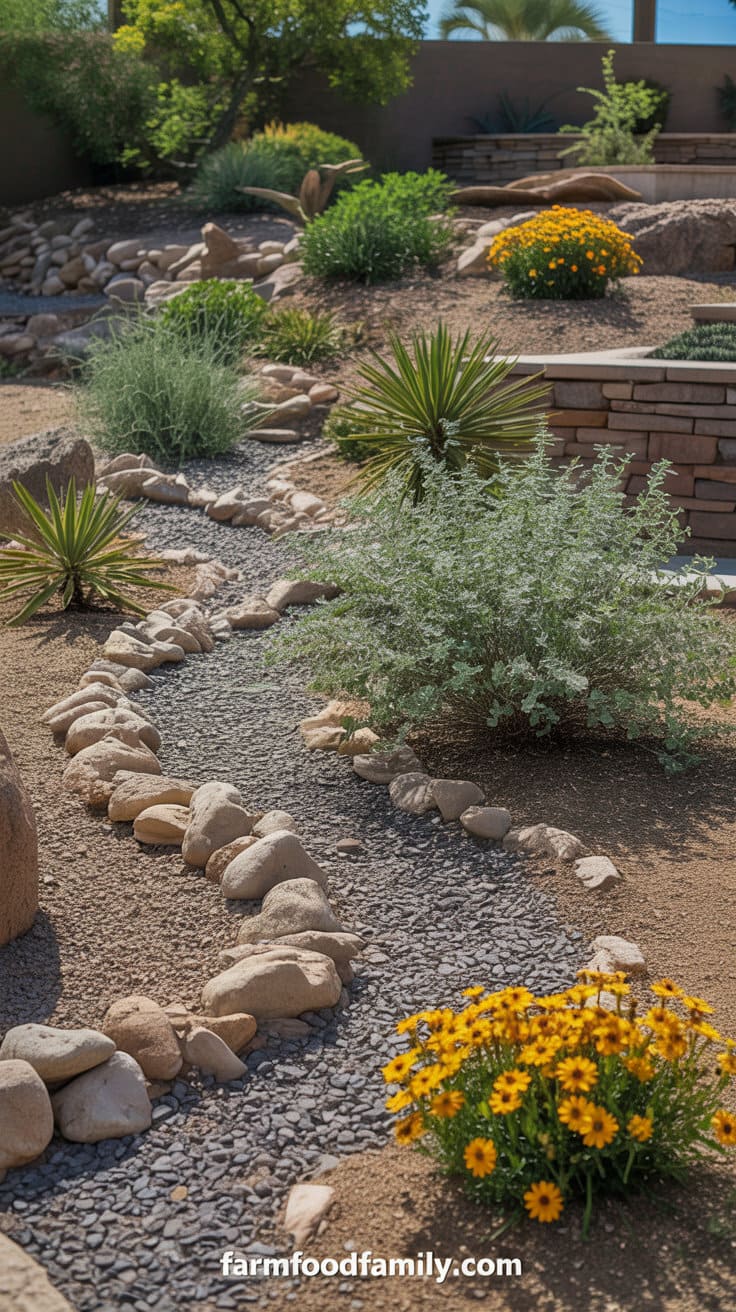
Create a flowing dry creek bed in your front yard that looks like a genuine arroyo.
Begin by digging a small, meandering trench to direct rainwater during monsoons. Line it with river rocks and larger boulders to give it a sense of movement, even when dry.
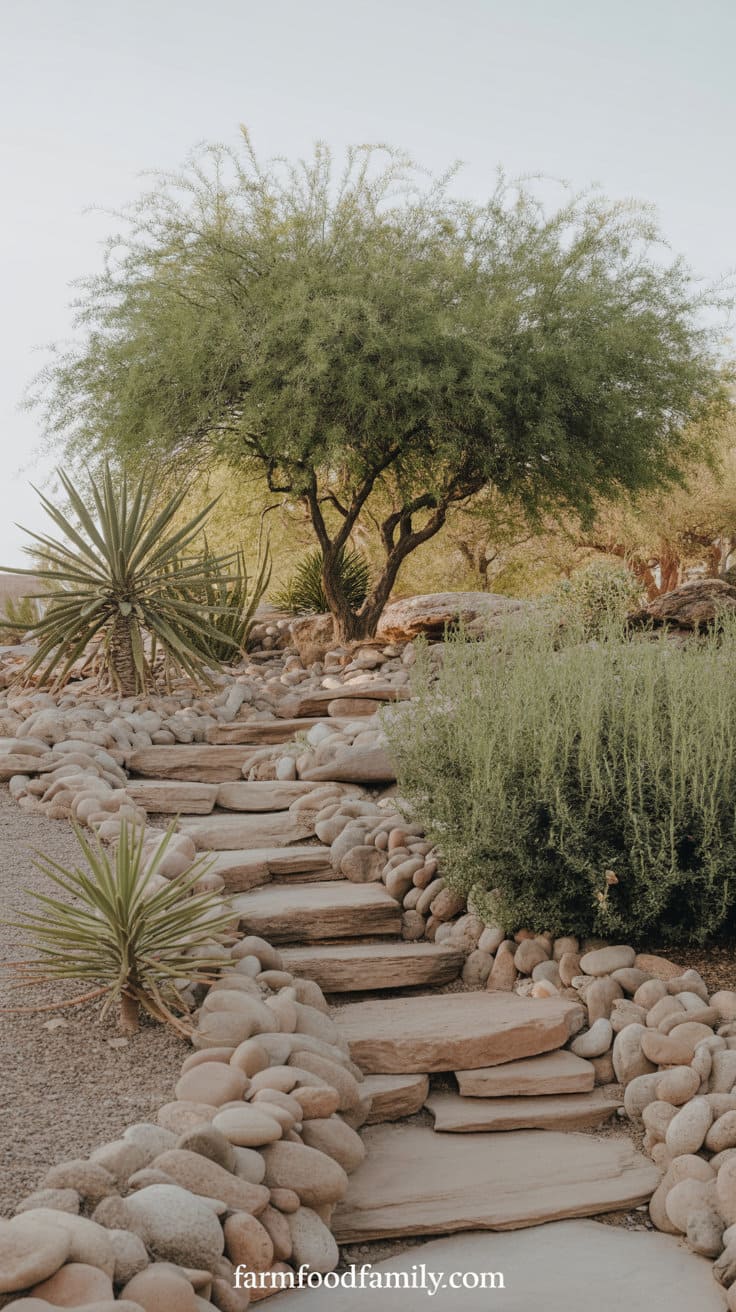
Seasonal Color and Shade
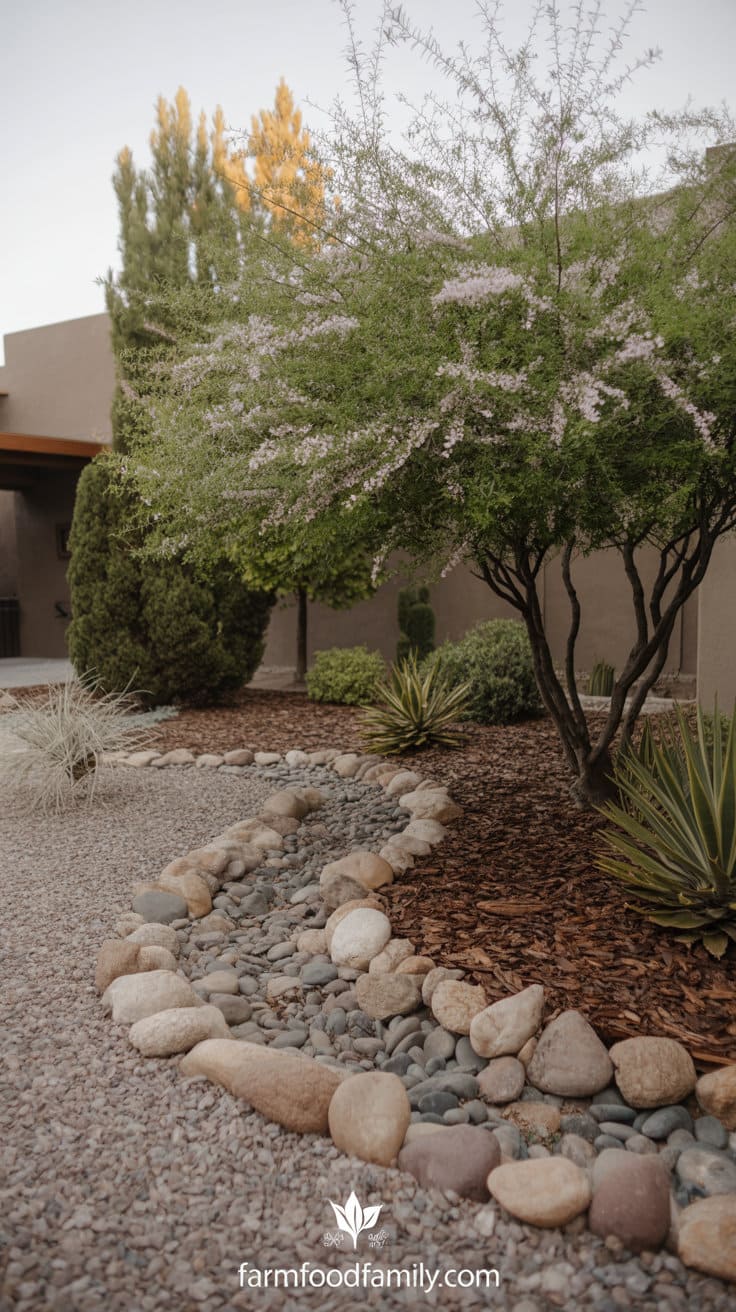
Plant desert-friendly plants such as desert marigold, trailing rosemary, and purple sage around both sides of the bed. A few palo verde or desert willow trees will add height as well as shade and seasonal color.
To keep moisture in and weeds out, use mulch or decomposed granite around the crops. To highlight the dry creek at night, use LED uplights behind large stones or path lights along the curve.
This realistic technique adds character and purpose to the landscape, providing erosion control and a cooling impact while keeping a distinct Arizona desert aesthetic.

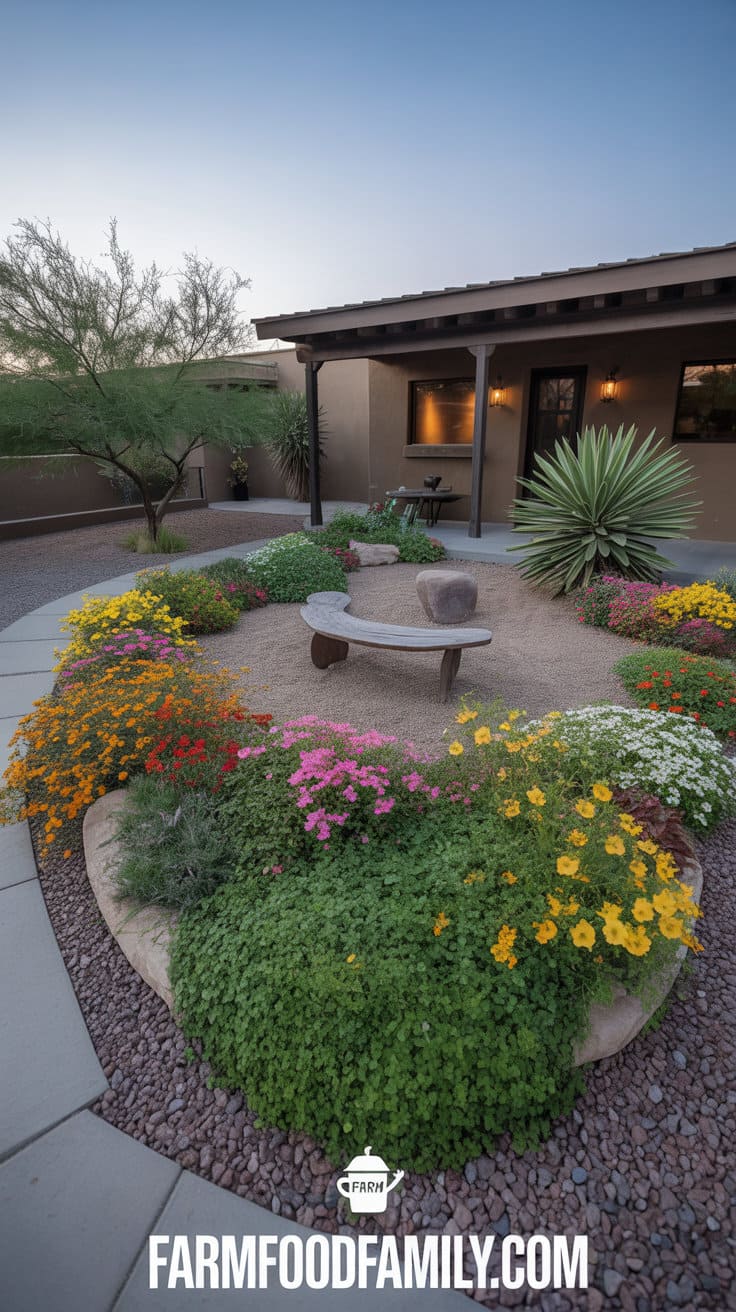
3. Colorful Wildflower and Groundcover Blend
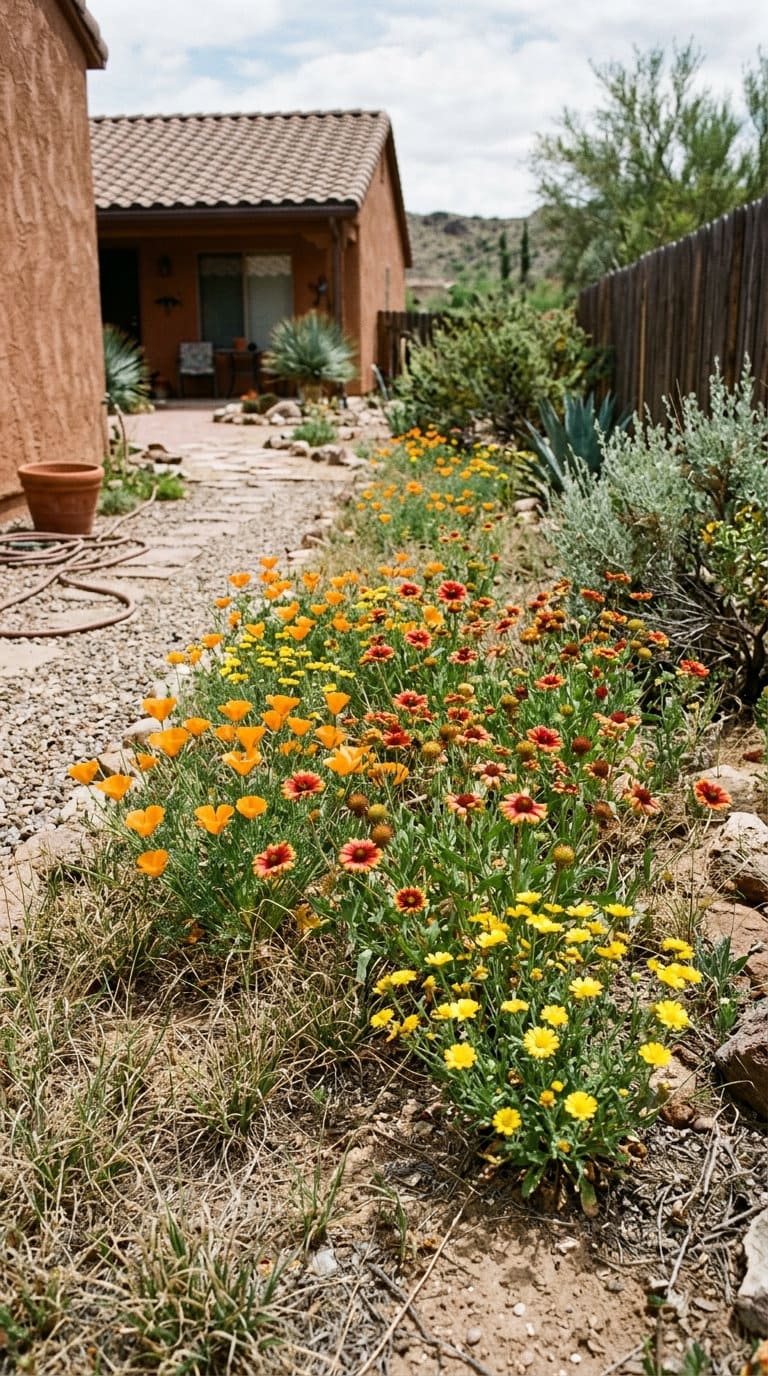
Desert marigold, firewheel, and golden poppy give real seasonal color without heavy water demand, they’re genuinely native and built for this climate.
The groundcover pairing needs a correction, though: trailing lantana holds up fine, but woolly thyme and creeping germander are both plants that struggle in full Arizona sun without regular supplemental water, they’re better suited to milder climates marketed as “drought-tolerant” in a much gentler sense than Arizona actually requires.
Swap them for a real desert-appropriate groundcover instead, like native buffalo grass or blue grama, both of which genuinely handle full desert exposure.
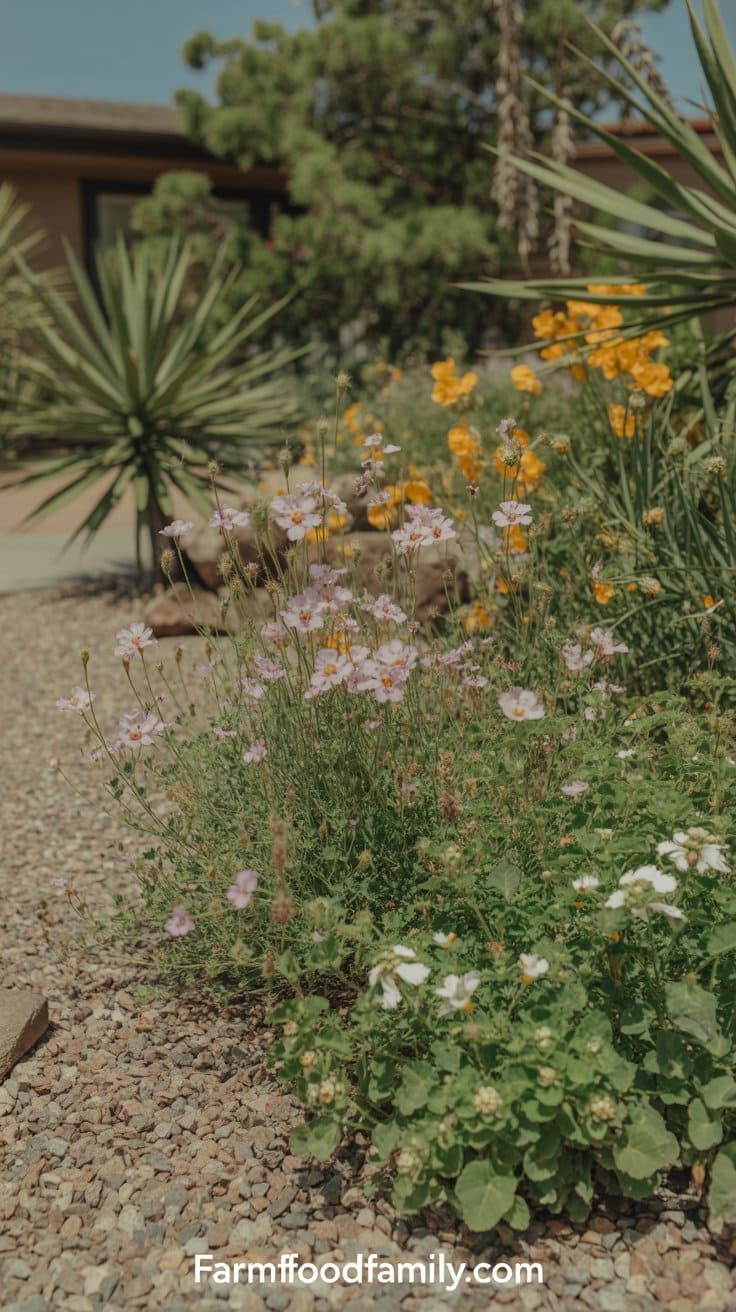
If you want a more natural look, a native wildflower meadow with drought-tolerant groundcovers can add gentle beauty to your yard.
Choose native Arizona blossoms such as desert bluebells, firewheel, and golden poppy to distribute across the landscape.
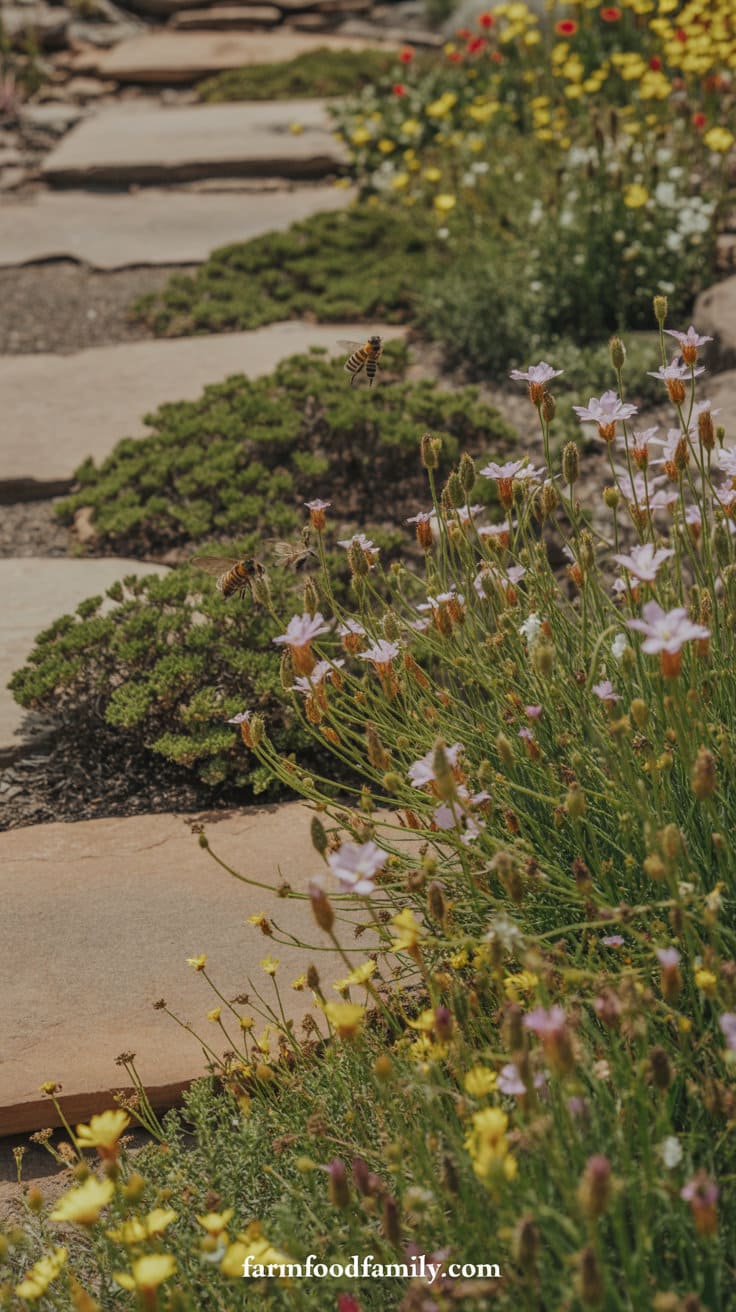
Structured Seasonal Color
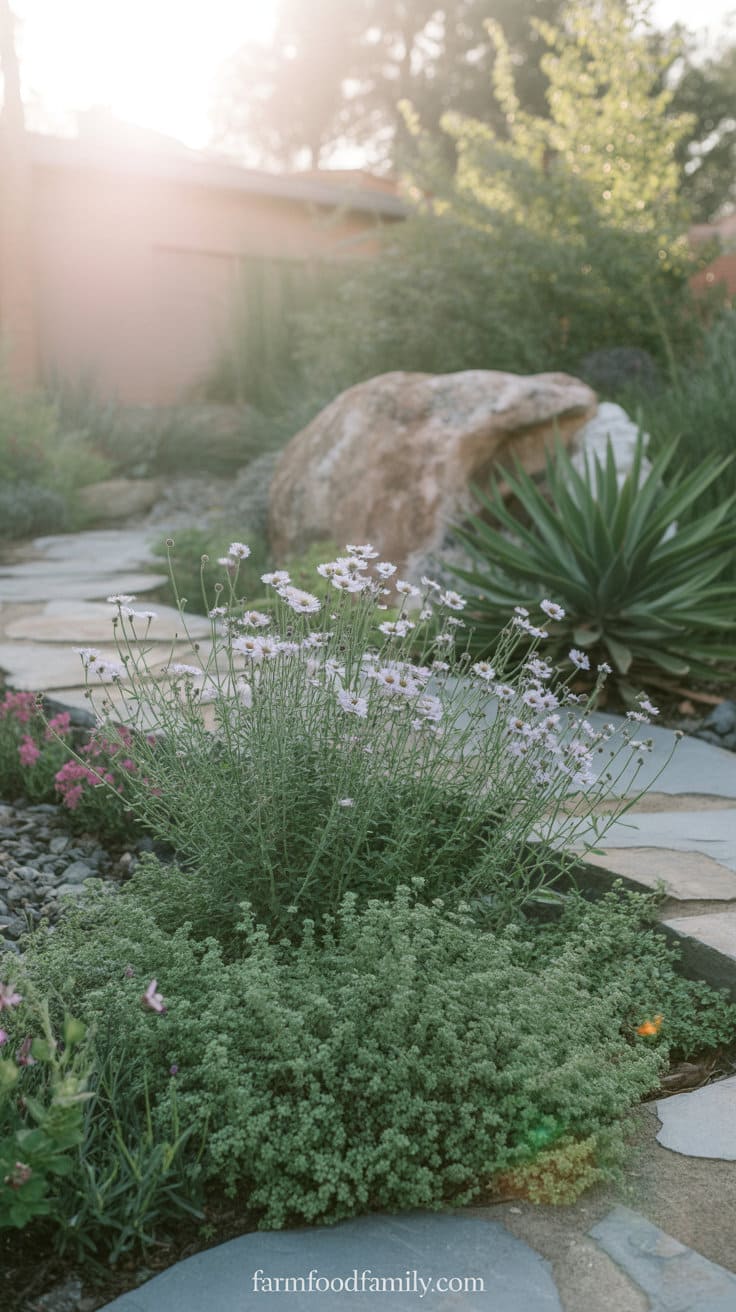
Plant creeping groundcovers such as trailing lantana, creeping germander, and woolly thyme to provide structure and coverage. These produce a living carpet that requires less water and provides bursts of seasonal color.
This sort of landscaping grows well with little irrigation and provides pollinator habitat for bees and butterflies. Include a stone or gravel walkway snaking through the floral area to encourage movement and structure.
Place a huge rock or two for seating or ornamentation, and define planting zones with small logs, metal edging, or even recycled adobe bricks.
This wildflower-forward yard is ideal for individuals seeking a soft and vibrant front yard that complements the region.
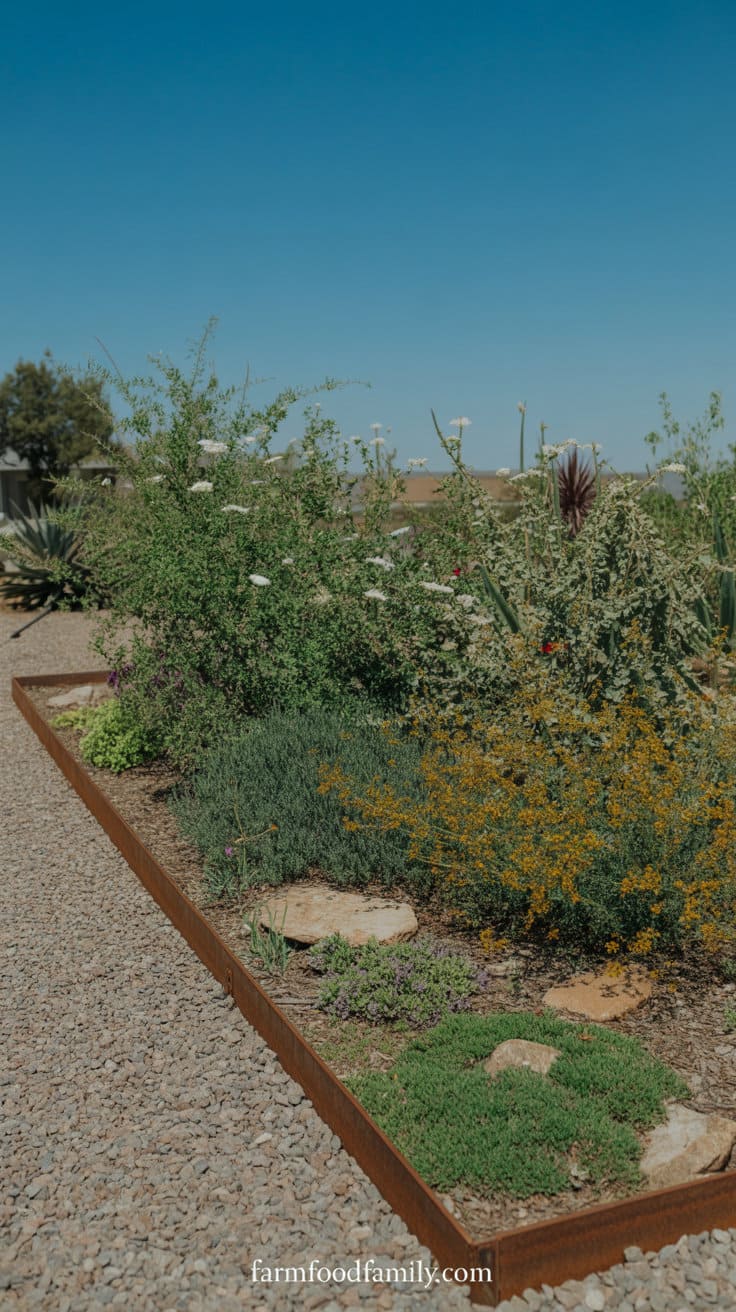
4. Hydrozoning by water need
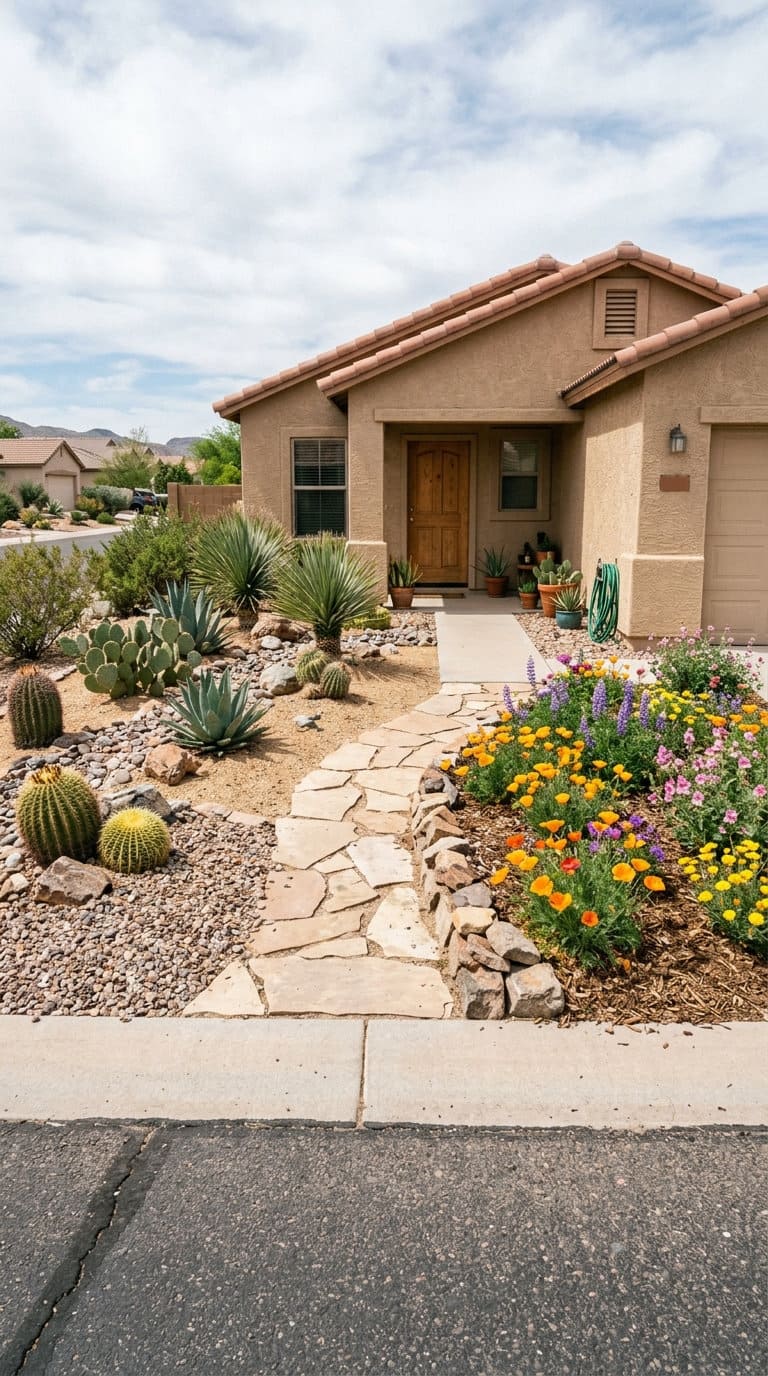
Group plants by how much water they actually need, not just by how they look together, and your irrigation system gets dramatically simpler to run and adjust seasonally.
A cactus-and-succulent zone on minimal drip, a slightly thirstier wildflower zone on its own valve, and a shade tree getting deep occasional watering all separately means you’re never overwatering the cacti to keep the wildflowers alive or vice versa.
5. A real shade tree canopy
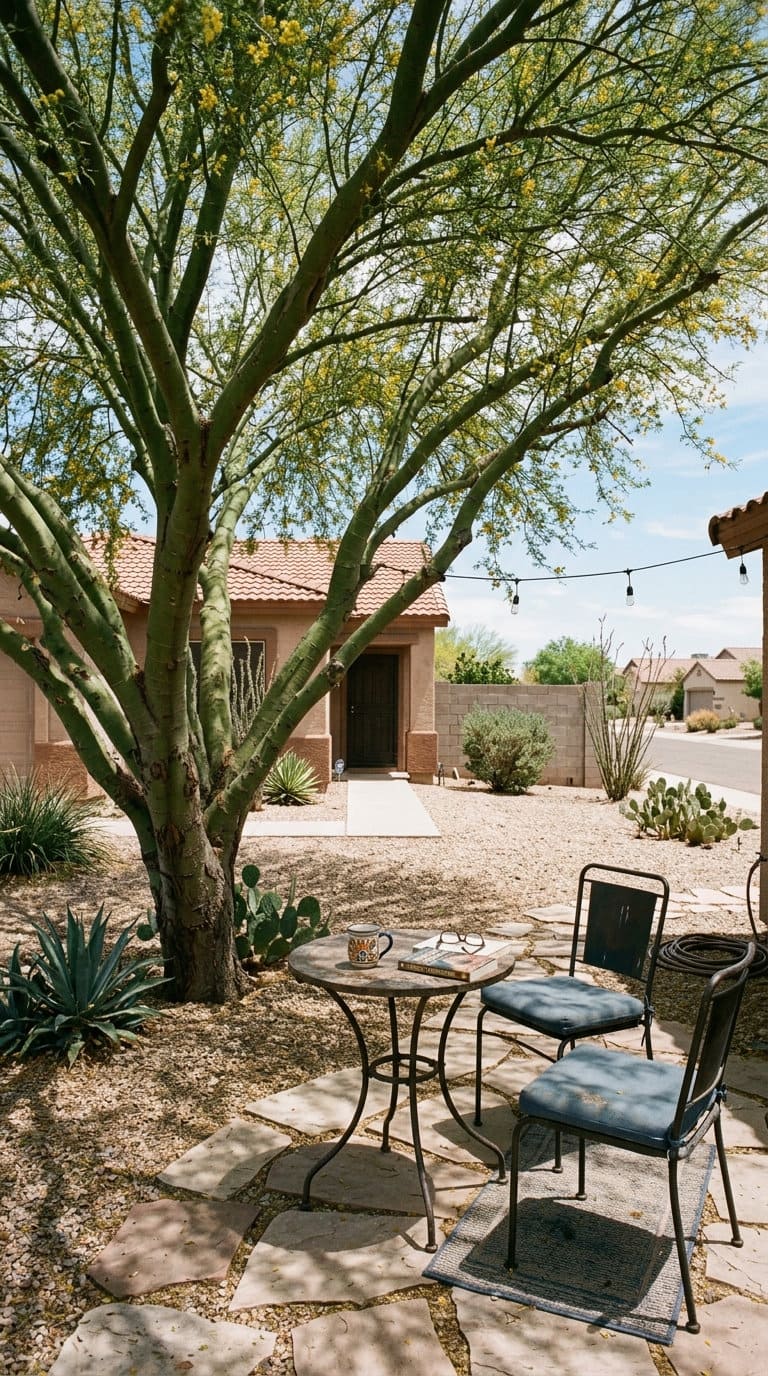
Palo verde, mesquite, and desert willow are the three trees that come up again and again from real Arizona gardeners as genuinely reliable, native, low-water shade options, not import trees that need constant babying.
The foothills palo verde specifically gets called out by real growers for its manageable size and edible beans. Desert willow is deciduous and looks best left unpruned as a small multi-trunk tree rather than shaped into a single-trunk standard.
6. Native grass instead of all-rock coverage
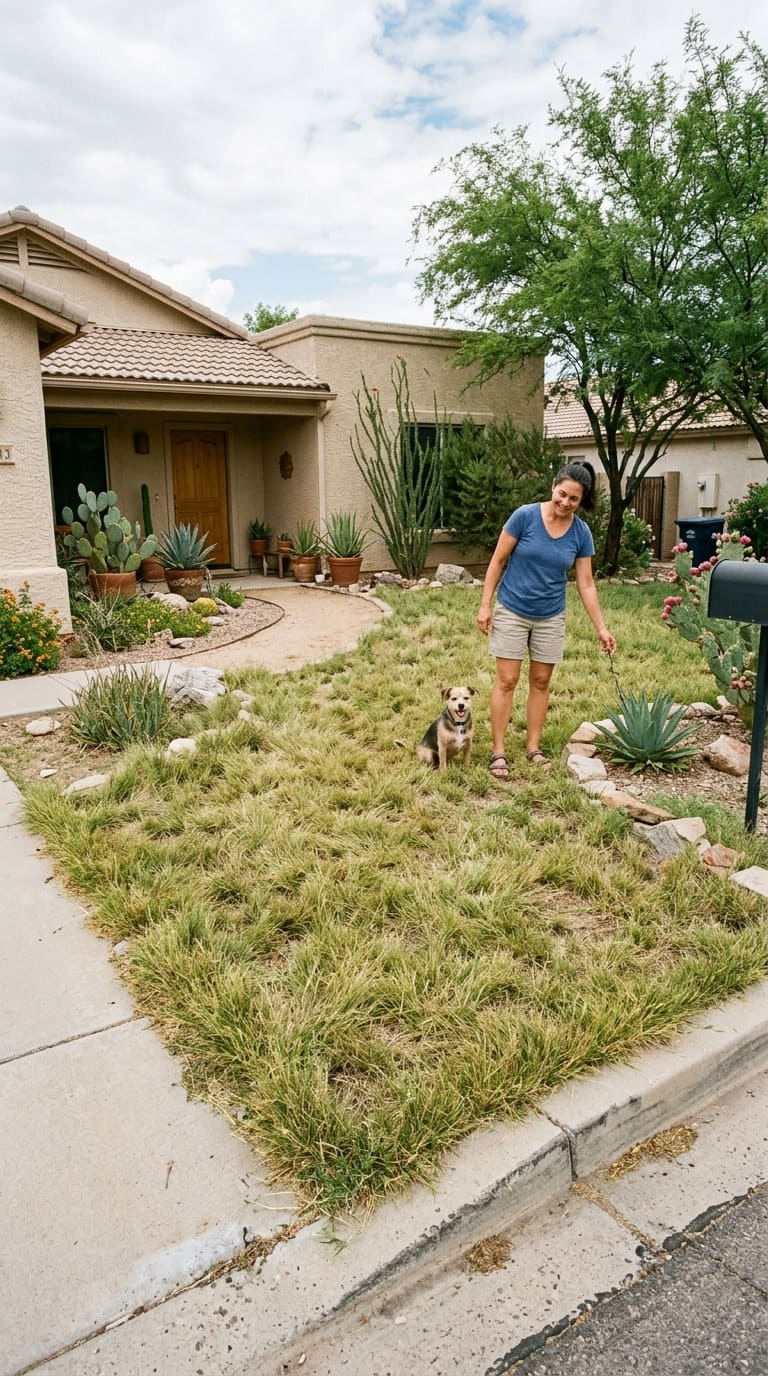
If the idea of an entirely rock-covered yard doesn’t sit right (see the heat-island note above), native bunch grasses like buffalo grass or blue grama give you movement and texture without the water demands of a traditional lawn, and without the heat-sink problem of wall-to-wall gravel. They’re also genuinely low-maintenance once established, no mowing schedule required.
7. A statement native shrub border
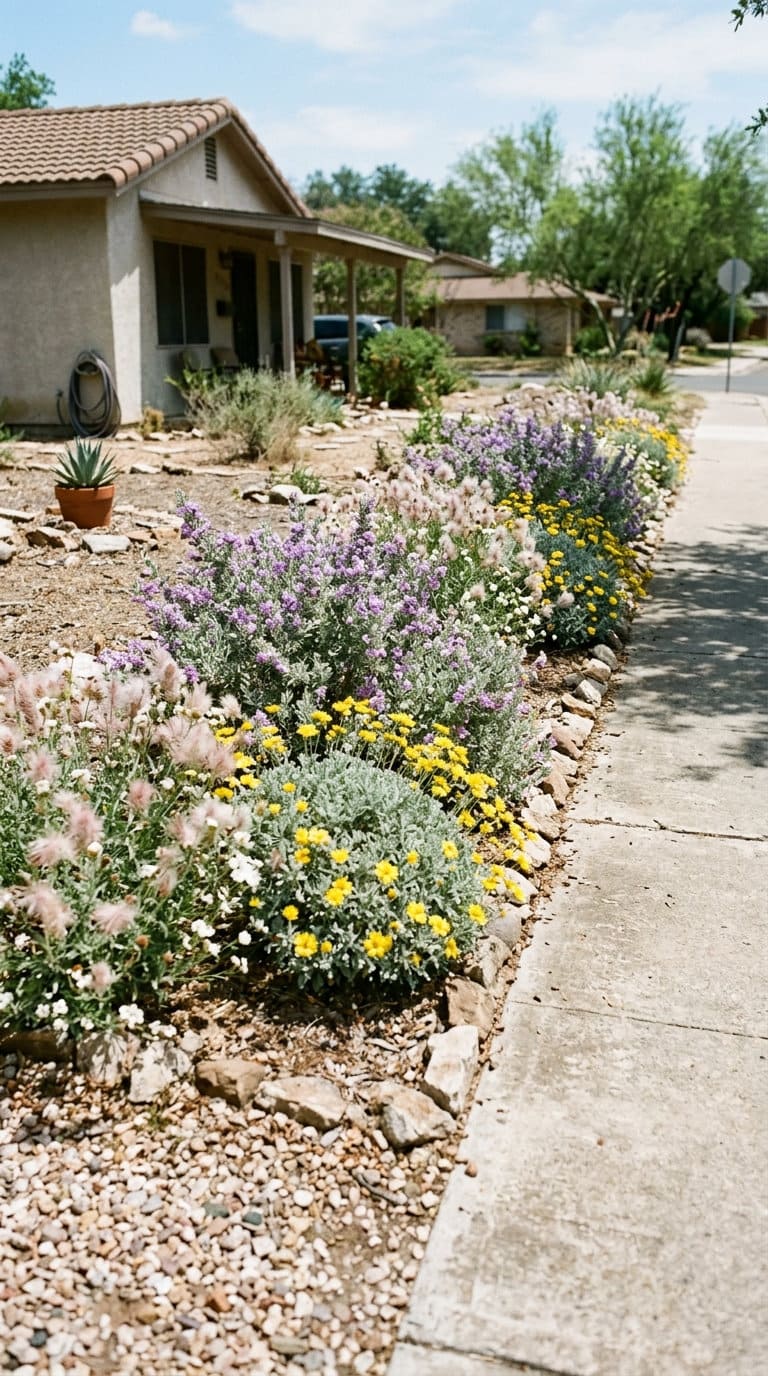
Texas sage, brittlebush, and Apache plume make a real, structural border planting that’s genuinely native to the region rather than merely drought-tolerant in general. Brittlebush in particular puts on a real, reliable bloom show in spring with minimal input once established.
What actually survives Arizona heat
This is the correction most Arizona landscaping content skips. Groundcovers that get marketed as universally “drought-tolerant,” creeping thyme, standard dichondra, most clover varieties, are usually rated for climates far milder than Arizona’s actual summer heat, and real Arizona gardeners confirm they fail without heavy supplemental watering that defeats the point of choosing them in the first place.
What genuinely holds up: native bunch grasses (buffalo grass, blue grama), native shrubs (Texas sage, brittlebush, Apache plume), and native wildflowers (chocolate flower, which genuinely smells like milk chocolate on a warm day, a small detail worth knowing before you plant a whole bed of it near a window).
One more nuance worth knowing: saguaro doesn’t grow naturally everywhere in Arizona, even within the state’s own low desert, some of the hottest, lowest-elevation spots are too extreme even for saguaro without irrigation. Plant choice in Arizona depends heavily on your specific elevation and microclimate, not just “it’s Arizona” as a blanket assumption.
Rules, rebates, and free help
Saguaro cactus is a legally protected, “Highly Safeguarded” species under Arizona’s Native Plant Law, confirmed via University of Arizona Cooperative Extension’s own native-plant-law guidance.
Moving, salvaging, or damaging a saguaro taller than 4 feet from anywhere other than its original growing location requires a permit, tag, and seal from the Arizona Department of Agriculture, and this applies even on your own property in some circumstances, landowners must notify the department within 20 to 60 days before removing a protected native plant. This isn’t a reason to avoid saguaro entirely, but it is a reason to look into the permit process before treating it as a casual addition to your rock garden.
On the more encouraging side: Arizona state law and multiple city ordinances specifically prohibit HOAs from banning drought-tolerant landscaping, so if you’re worried your HOA will fight a xeriscape conversion, the law is generally on your side.
Many Arizona municipalities also run grass-removal rebate programs, typically paying $1 to $3 per square foot of turf removed and replaced with water-wise landscaping, check with your specific city’s water department for current rates. And if you want real, personalized design help at no cost, the University of Arizona Cooperative Extension’s Master Gardener program offers free design consultations, a team visits, asks what you actually want to use the space for, and sketches a few real design options based on your specific yard and climate.
FAQ
Can I have a saguaro cactus in my front yard? Yes, but saguaro is a legally protected species in Arizona. Moving or damaging one taller than 4 feet from its original location requires a permit, tag, and seal from the Arizona Department of Agriculture. Nursery-propagated saguaros for sale are generally exempt from these restrictions, check with the nursery on documentation before you buy.
Can my HOA force me to have grass in Arizona? No. Arizona state law and multiple city ordinances specifically prohibit HOAs from banning drought-tolerant landscaping, so a well-designed xeriscape yard is legally protected in most cases. Check your specific city’s ordinance for details.
What ground cover actually survives Arizona heat? Native bunch grasses like buffalo grass and blue grama genuinely handle Arizona’s full summer heat. Popular “drought-tolerant” options like creeping thyme, dichondra, and most clover varieties are typically rated for much milder climates and will struggle or fail in Arizona without heavy supplemental watering.
Designing an Arizona front yard doesn’t mean sacrificing charm or variety as it means leaning into the climate’s strengths with intentional, creative choices.
From minimalist arrangements to colorful ones, each idea helps you express your taste while respecting the desert environment.
These approaches not only thrive in Arizona’s intense sun and dry conditions but also reduce your maintenance needs and enhance your home’s character.
Whether you prefer modernism, or something more rustic, there’s a solution that reflects your personality and your region.
With the right combination of hardscape, native plants, and architectural layout, your Arizona front yard can be both a visual masterpiece and a sustainable investment. If these ideas helped, leave a comment below and share the list with family and friends.
Never miss an update — choose FarmFoodFamily as your preferred source on Google.
How it works: Tap the button below to open Google's settings page, then check the box next to FarmFoodFamily.
Tap the checkbox to turn it blue — that's how you know it's set.